Thursday, December 30, 2010

Top Ten Christian Fiction

10.She Walks In Beauty by Siri Mitchell. 2010. April 2010. Bethany House. 400 pages.
9. Heart of Stone. Jill Marie Landis. 2010. [February 2010] Zondervan. 320 pages.
8. Touching the Clouds. Bonnie Leon. 2010. July 2010. Revell. 320 pages.
7. Courting Morrow Little by Laura Frantz. 2010. Revell. 368 pages.
6. Maid to Match. Deeanne Gist. 2010. June 2010. Bethany House. 368 pages.
5. Wildflowers of Terezin. Robert Elmer. Abingdon Press. 352 pages.
4. While We're Far Apart. Lynn Austin. 2010. October 2010. Bethany House. 416 pages.
3. Hearts Awakening. Delia Parr. 2010. [March 2010] Bethany House. 352 pages.
2. A Lady Like Sarah. By Margaret Brownley. (A Rocky Creek Romance). 2009. Thomas Nelson. 320 pages.
1. Sixteen Brides. Stephanie Grace Whitson. 2010. April 2010. Bethany House. 352 pages.

© Becky Laney of Operation Actually Read Bible

Tuesday, December 28, 2010

Top Ten Christian Books for Children and Families

Board Books:

Rise and Shine. Illustrated by Tim Warnes. (Song is in the public domain.) 2010. February 2010. Board Book. Simon & Schuster. 26 pages. My review. What I said:
If there was an award for adorableness, I would so give it to Rise and Shine! What we have is the traditional song published with oh-so-clever and oh-so-cute illustrations. The details! Oh the details! I love this bear family. I do. I love this bear child. There's just something so joyful, so right about this one. 
All God's Creatures. Karen Hill. Illustrated by Steve Johnson and Lou Fancher. 2010. Simon & Schuster. 16 pages. My review. What I said:
There are plenty of touch-and-feel books that celebrate animals. You'll find board books on farm animals, and pets--on cats, dogs, and bunnies, especially. What makes this one a little different is the emphasis on God, on creation. 
Picture Books:


Sunday Is For God. By Michael McGowan. Illustrated by Steve Johnson and Lou Fancher. 2010. January 2010. Random House. 40 pages. My review. What I said:
A sweet story focused on faith and family. A story about making God and family a priority in our lives. Our narrator is a young boy with a big heart. He may not love getting dressed up, wearing clothes that make him uncomfortable, but he does love God. This is a picture book that is rich in detail. I was surprised actually to see just how much detail is incorporated into this one.

Music From Our Lord's Holy Heaven. Gathered and Sung by Gloria Jean Pinkney. Art by Jerry Pinkney, Brian Pinkney, and Myles C. Pinkney. Prelude by Troy Pinkney-Ragsdale. 2005. HarperCollins. 48 pages. My review. What I said:
I loved this one. I just LOVED it. There are three sections in the book, "Adoration," "Spiritual Wayfarers," and "The Good Shepherd." Each section has seven to eight songs. Some of the songs included: "Old-Time Religion," "This Is My Father's World," "Glory, Glory, Hallelujah," "Go Down, Moses," "We Are Climbing Jacob's Ladder," "Joshua Fit the Battle of Jericho," "Go Tell It On the Mountain," "Tell Me The Stories of Jesus," "He's Got The Whole World In His Hands," and "This Little Light of Mine."
All Things Bright and Beautiful. Based on Work by Cecil F. Alexander. Illustrated by Ashley Bryan. 2010. January 2010. Simon & Schuster. 40 pages. My review. What I said:
You may be familiar with the words of this new picture book. But Ashley Bryan has provided new illustrations to this familiar song. His illustrations are bright, bold, colorful. Very expressive. I can't promise you that you'll love all the spreads equally, but I think you'll find it an interesting read all the same!
Bible Storybooks:

My First Read-Aloud Bible. Retold by Mary Batchelor & Penny Boshoff. 2010. February 2010. Scholastic. 256 pages. My review. What I said:
While it doesn't have every story in it, it has a good variety of stories. By reading this book cover-to-cover, you get a good idea as to what the Bible is all about. You can see how the stories are interconnected. You can see how the pieces of the puzzle fit together. I thought they did a great job in choosing what to include. There were some stories that I was surprised but quite happy to see represented! I expected to see some of the usual stories--Daniel in the Lion's Den, Jonah, David and Goliath, Noah, etc. But I wasn't expecting to see stories about Elijah, Elisha, Joash, Jeremiah, Ezra and Nehemiah. Some of these are among my favorites. I also loved how they covered the New Testament. I loved how they included so many stories from the book of Acts. How they showed that God kept working in people's lives--in believers' lives--after Christ ascended. I also loved the balance of stories from the gospels. How they included stories covering Jesus' teachings, his miracles, his parables, and, of course, his life story.  
The Jesus Storybook Bible: Deluxe Edition. Sally Lloyd-Jones. 2009. Zonderkidz. 352 pages. My review. What I said:
So what makes this one special? I think what makes this one work--really work--is how Sally Lloyd-Jones has every story whisper His name. Her ability to connect each story with the Big Story, keeps everything in perspective, keeps everything connected and relevant. It also helps that she's a good storyteller! She has a definite way with words! She keeps the stories on a child's level, but yet, the stories are beautifully and compellingly told. 
Mighty Acts of God: A Family Bible Story Book. Written by Starr Meade. Illustrated by Tim O'Connor. 2010. Crossway. 288 pages. My review. What I said:
What did I like about Mighty Acts of God? I liked the theology. I really liked the complexity of it. Some children's bible books are simple--really simple. And that does serve a purpose. I think with really young ones especially. This book offers a more challenging--and yes in some ways more biblical--approach to the concept of a bible story book. It doesn't stay away from doctrine, from theology, from defining faith essentials. It has a way of making you think--which in my opinion is a good thing. It is much more than a story. 
Novel for Children:

The Road to Paris. Nikki Grimes. 2006. Penguin. 160 pages. My review. What I said:
I loved this one. I just LOVED it. It's one of those oh-so-magical books for me. Proof that an author can weave faith into fiction. 
Devotional for Families:

God's Mighty Acts in Salvation. Starr Meade. 2010. August 2010. Crossway. 87 pages. My review. What I said:
Looking for a book of family devotions? You should definitely consider Starr Meade's God's Mighty Acts in Salvation. It's designed for use with children--aged 8 to 12. Forty messages that provide deeper insights (though still incredibly kid-friendly) into the book of Galatians. Why Galatians? Well it's an important letter that is all about getting the gospel right. It focuses on what the true gospel is, gives warnings about listening to false gospels, and highlights the fruit of the Spirit. I loved this book. I loved the subject, the focus. Loved hearing these kid-friendly definitions of grace, love, and justification. Loved the depth of it.

© Becky Laney of Operation Actually Read Bible

Top Ten Christian Nonfiction

My top ten list of Christian nonfiction read in 2010:

10. A Sweet and Bitter Providence: Sex, Race, and The Sovereignty of God. John Piper. 2010. Crossway. 160 pages. My review. What I said:
The book does stress the sovereignty of God. And I loved it for that reason. I did. I think there aren't enough books--can't be enough books--telling modern readers this absolute truth, this very fundamental, very biblical truth. What did I appreciate in this one? How rich it is in Scripture! In truth! I also loved how accessible it is to readers.
9. Choosing to SEE: A Journey of Struggle and Hope. Mary Beth Chapman. With Ellen Vaughn. 2010. Revell. 288 pages. My review. What I said:
This memoir by Mary Beth Chapman--wife of Steven Curtis Chapman--is more than just an accounting of what happened "the day the world went wrong." Yes, the book is about Maria--the (adopted) daughter she loved and lost. Yes, this book is about the grieving process--the healing process. But Mary Beth is sharing her life, her story. Some chapters of her life are not ones she'd have written for herself. Even before the tragic accident that changed her family forever. But God has written the story of her life. The book is about her personal journey to SEE God working for good in her life. To see God's blessing, his grace, mercy, and love.
8. What is the Gospel? by Greg Gilbert. Foreword by D.A. Carson. Crossway. 127 pages. My review. What I said:
Gilbert insists that for the good news to be the good news, you need to present the full picture. A full picture that includes plenty of bad news. The good news isn't good if you don't view it within the correct framework. For people to accept Jesus as their Savior--as their Lord--they need to know that God has authority over them--over the world, over creation; they need to realize that they are sinners, that God is a God who hates sin, a God who judges sinners; they need to know what they're being saved from. Only if they recognize that they are in need of a Savior, can the good news have power, have relevance. The good news about the "bad news" is that there is a but.
7. Scandalous: The Cross and Resurrection of Jesus. D.A. Carson. 2010. February 2010. Crossway Publishers. 173 pages. My review. What I said:
Scandalous: The Cross and Resurrection of Jesus is a collection of five messages from D.A. Carson. The five messages are: The Ironies of the Cross (which focuses on Matthew 27:27-51a), The Center of the Whole Bible (which focuses on Romans 3:21-26), The Strange Triumph of a Slaughtered Lamb (which focuses on Revelation 12), A Miracle Full of Surprises (which focuses on John 11:1-53), Doubting the Resurrection of Jesus (which focuses on John 20:24-31). I would definitely recommend this one. I thought each message was well written and quite relevant. I especially enjoyed The Center of the Whole Bible and A Miracle Full of Surprises.
6. Raised With Christ: How The Resurrection Changes Everything by Adrian Warnock. 2010. January 2010. Crossway. 272 pages. My review. What I said:
I loved, loved, loved this book. For me, it was an amazing read. It reminded me of why I read Christian nonfiction in the first place. I feel I learned so much--so very, very much--by reading this one. I can honestly say this one made me think. In a good way. It made me pray. The way Adrian Warnock presented his message, well, it worked for me. The way he incorporated the Bible, how he relied on Scripture, that's what I'm looking for. Always. I don't want anyone telling me what to think, what to believe, what's right and what's wrong...if they can't back it up. I want to encounter the Word of God when I read Christian nonfiction. I also appreciated Warnock's use of quotes from Christians (preachers, theologians, writers, etc.) throughout the centuries. Some of these quotes were oh-so-amazing.
5. Dig Deeper: Tools for Understanding God's Word. By Nigel Beynon and Andrew Sach. 2010. Crossway. 160 pages. My review. What I said:
Dig Deeper is a practical book. It gives you the tools. It walks you through using the tools by providing several examples for each one. It gives you homework if you choose to indeed dig deeper. It urges you to implement these tools in your own life, in your own studies.
4. The Gospel In Genesis: From Fig Leaves to Faith by Martin Lloyd-Jones. 2009. Crossway. 160 pages. My review. What I said:
What did I love about this one? (And I did love it, by the way!) How accessible it was. It wasn't dry, it wasn't boring. It was real, it was down-to-earth. I felt like I was listening to a man preach, really preach from the Word of God. It wasn't about how many big words he could use, it was about reaching people--real, every day people--right where they are with a message that is ever-relevant. Though many decades have passed since these sermons were originally preached, the message remains timeless.
3. Be Still, My Soul: Embracing God's Purpose & Provision in Suffering. Edited by Nancy Guthrie. 2010. February 2010. Crossway Books. 176 pages. My review. What I said:
This is such a great book! I absolutely love it and I definitely recommend it! It is a book of 25 readings (classic and contemporary) about suffering and "the problem of pain."
2. The Evangelicals: What They Believe, Where They Are, And Their Politics. Christopher Catherwood. 2010. August 2010. Crossway. 168 pages. My review. What I said:
I loved this one. I just loved it. It was such a fascinating read. Why? Because it was so much more than theology. Yes, there are a couple of chapters on what evangelicals believe. But. What makes this book so much more than just another theological book is what comes next. For the first time perhaps, you'll think about the who and the where. Chances are you'll be surprised--maybe even really surprised--at what you learn in the following chapters! These chapters are very informative. Very thought-provoking. Think sociology and statistics. What we learn is that evangelical Christianity is thriving. Not just surviving--but flourishing in astonishing numbers. In countries where it is dangerous to be a Christian.
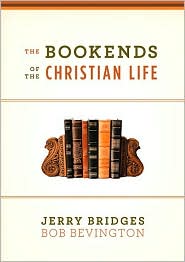
1. The Bookends of the Christian Life. Jerry Bridges and Bob Bevington. 2009. March 2009. Crossway Publishers. 160 pages. My review. What I said:
Bridges and Bevington argue that there are two bookends of the Christian life. The first bookend is the Righteousness of Christ. The second bookend is the Power of the Holy Spirit. (In a way, you could say this book was all about justification and sanctification.) By understanding these two bookends, these two concepts, readers will get a very good picture of the gospel, a good idea of what it means to be a Christian. The book also addresses three gospel enemies: self-righteousness, persistent guilt, and self-reliance. I can't say how much these three chapters helped me! I am so thankful that this book was written.

© Becky Laney of Operation Actually Read Bible

Monday, December 27, 2010

Things to Consider

I found Semicolon's post on "52 Ways To Read and Study the Bible in 2011" and I definitely wanted to share that with you.

Through that list, I discovered this project. Mom's Toolbox's READ THE BIBLE IN 90 DAYS. It starts January 3rd, ends April 2nd. Essentially, you read twelve or so pages a day for eighty-eight days.

I personally am not a big fan of Bible Reading Plans. Not because I have anything against people who are more organized than I am. But because I am not  rigid methodical in my reading.

If you are looking for a "plan" to read the Bible, I'd suggest a chronological one. Reading the bible this way, helps the bible 'make sense' as a whole, as a big picture. It helps you see how the prophets (Isaiah, Jeremiah, Ezekiel, Daniel, Jonah, Obadiah, etc.) fit in with the Kings and Chronicles. Knowing how a book fits into the "big picture" can help in your understanding.

© Becky Laney of Operation Actually Read Bible

Sunday, December 26, 2010

The Sunday Salon: Week In Review December 19-25

This week I

read Psalms 50 in the ESV MacArthur Bible
finished Revelation in the ESV MacArthur Bible

© Becky Laney of Operation Actually Read Bible
Saturday, December 25, 2010

Merry Christmas!


Merry Christmas! Have you read the nativity story today? I'd like to encourage you to read my favorite--the opening paragraphs of the Gospel of John. For me, this is what Christmas is ALL about! Jesus being the Light of the World.

© Becky Laney of Operation Actually Read Bible

Image from Gospel Gifs.

Friday, December 24, 2010

Operation Deepen Faith

This challenge has two parts. (You wouldn't necessarily *have* to do both parts. I could make exceptions. But. Ideally, participants would be interested in both!) Both will be for all of 2011.


I. Choose one book of the Bible to "study" over a period of time. (I'd probably recommend a book from the New Testament). Read this one book in multiple translations. Level one might be to commit to reading it in three different translations. Level two might be to commit to reading it in six different translations. Level three might be to commit to reading it in ten different translations. Level four--if anyone is that committed--might be to read it in fourteen translations. There are so MANY places to find the Bible online, that you wouldn't even have to *own* that many different translations.


  • English Standard Version (ESV) (2001)
  • Holman Christian Standard Bible (2004)
  • New International Version  (1984), NIV (2010), TNIV (2005)
  • New King James Version (1982)
  • New American Standard Bible Update (1995) (Original NASB 1971)
  • New Living Translation (1996) New Living Translation, Second Edition (2004)
  • King James Version 
  • Contemporary English Version (1995)
  • New Revised Standard Version (1990)
  • Revised English Bible (1989)
  • The Message (2002)
  • Revised Standard Version (1946-1977)
  • Good News Bible/Today's English Version (1976)
  • The Living Bible (1971)
  • New Century Version (1987)
  • Geneva Bible 
  • Tyndale New Testament
  • Wycliffe New Testament


You might find this site to be of use. Bible Gateway offers twenty-five versions in English. Bible.Logos offers quite a few as well. Including the Lexham English Bible and the NET Bible. And then there is this Online Parallel Bible.

II. Read some theology. Level one: you might commit to reading two theological books. (I'll give a list of suggested topics below.) Level two: you might commit to reading four theological books. Level three: you might commit to reading six theological books. Level four: you might commit to reading ten theological books.

  • books about God
  • books about the birth, life, death, resurrection of Jesus
  • books about the Bible 
  • books about prayer
  • books about worship
  • books about church life 
  • books about missions
  • sermon collections (sermon note collections), essay collections
  • biographies/memoirs of theologians, preachers, missionaries, etc.
  • books about pain, suffering
  • books about apologetics
  • books about evangelism
  • books about end times

Did I leave out a category you think 'fits' for the challenge? Ask me about it, and it might just fit.

Want to sign up for this one? Leave a comment. (It will probably go to comment moderation. But I will approve comments as I have the time.) You don't have to stay committed to a level. (You can read more or less.) Those are just general guidelines.

© Becky Laney of Operation Actually Read Bible