Showing posts with label realistic fiction. Show all posts

Monday, July 14, 2025

56. This Promised Land


56. This Promised Land. Cathy Gohlke. 2025. 358 pages. [Source: Library] [5 stars, christian fiction, general fiction, family]

First sentence: It was late in the season.

Premise/plot: Ginny Pickering Boyden is returning to her family home after almost five decades. Her family home is a Christmas tree farm, Wetherill Pickering's Christmas Tree Farm. She didn't leave under the best of circumstances--family drama, you see--and she never expected to come back again. Her plans are to be quick about it. Little does she know that this homecoming is a forever homecoming. 
Why did she return? Her brother Harold's death. Turns out he's been lying to her for decades as well as lying to other family members. The tree farm is now hers....but what can she do with it? 
Harold's two sons--Mark and Luke--are under the impression that they will inherit the Christmas tree farm. Luke and his wife, Bethany, do not have children. Mark has three children. Can they come together as a family to save the tree farm and be each other's true FAMILY? 

This family saga has a handful of flashbacks to the 1940s but is primarily set in 1992. The main character, Ginny, is older (probably mid to late sixties). There's some romance, but, it's not the primary focus exactly. 
This one is all about the healing of dyfunctional families, complex relationships, and forgiveness.

My thoughts: This Promised Land was a wonderful read. I loved getting to know the characters. I loved the flaws--in the characters, in the situation, the realness of the family dynamics. I loved how everyone came together and grew together. I love that it wasn't an easy process, that it was a journey, a struggle, that it required commitment and effort and time. 


© Becky Laney of Operation Actually Read Bible

Tuesday, August 17, 2021

49. Pudge and Prejudice


Pudge and Prejudice. A.K. Pittman (aka Allison Pittman). 2021. [January] 346 pages. [Source: Library]

First sentence: IT IS A TRUTH UNIVERSALLY ACKNOWLEDGED that a teenage girl in possession of a double-digit jeans size must be in want of a diet. I’m just not a part of that universe. All my life—my chunky, pudgy, soft-bellied life—I’ve always found something I needed more than a smaller waist. Like to read more books, to learn more words, to know the personal satisfaction of guessing the grocery total before the cashier beeps through all the produce. You know, things that matter. 

Pudge and Prejudice is a young adult adaptation of Jane Austen's Pride and Prejudice. It is set in Northernfield, Texas, in 1984/1985. 

For some that little teaser would be enough persuasion. But you probably still have questions. After all, it's not as if all adaptations of Pride and Prejudice are well done and/or successful and/or clean.

Is it worth reading? Yes. A thousand times yes.

Is it clean? A few kissing scenes. Some handholding. But yes, it is clean.

Does the adaptation work? YES. It works not because she keeps every single detail the exact same as the original but because she makes it her own.

The basics:  Elyse Nebbitt (aka 'Pudge) is our heroine. She has an older sister, Jayne, who is a junior in high school. Lydia (13) is in eighth grade. She has two Littles: Mary and Kitty aged 6 and 8. They don't enter into the story often so I'm not sure which is six and which is eight. On moving day, Jayne and Elyse meet Charlie Bingley and Billy Fitz two high schoolers that have volunteered to help them move in. It is love at first sight for Jayne and Charlie--these two seemed to be a destined match. But Billy Fitz and Elyse don't necessarily form a good first impression of the other...

There were a million little details that make this one oh-so-magical. I loved, loved, loved it.

 Quotes:

To the universe, being thin means being right. In my case, it would mean my mother was right, and boys were right. If I’ve learned nothing else in my fifteen years, it’s this: I would rather stand my ground in all my wrongness than step one foot into someone else’s idea of right, even if it means I’m sometimes left standing alone.
Then September of my Sophomore year, 1984, my entire universe changed. 
 
Somehow, after six hours in the car, Jayne managed to look beautiful, her blonde hair in symmetrical, fluffy feathers, her skin miraculously sweat free, her clothes unrumpled to catalog perfection. Some would think this would conjure up some sort of jealous spark in me, but it’s really more of a sense of wonder. Being jealous of Jayne would be like being jealous of a butterfly, who has no more control over its beauty than Jayne does. Everything about Jayne is effortless. Not just her beauty, but her kindness, her goodness. In a way, we are everything each other is not, so we stick together in our weak spots. And that’s important, because in this family, you need a hand to hold in our spinning vortex of chaos.
The moment the big truck turned onto what Mom called “our” street, Jayne and I each rolled down our windows, trying to guess which would be “our” house. There was no sign out front, and since it was the middle of the day, plenty of driveways were empty. But then, the huge truck with all of our worldly possessions drifted to a stop, and Dad hopped out with all the fanfare a middle-aged man could muster. Mom pulled precariously into the narrow drive, and we were home.

Then, from out of nowhere, a sound I never expected to hear in Northenfield, Texas. The rumbling car motor, yes, that was common enough, but singing out over it was the sound of an electric guitar. As it came closer, I realized it wasn’t just any guitar, but Neal Schon’s. As in, Journey, and we were hearing the unmistakable guitar solo of “Don’t Stop Believin’.” In only a matter of seconds, we could put the music together with a car—Camaro, late seventies model, midnight blue. Sweeter than sweet. And, shock of all shocks, it came to a screeching, rumbling, rocking stop right behind our U-Haul.
There are those moments when you get the opportunity to stop and have a short talk with yourself and say, “Hey, self! Remember this. Make a note. Get rid of the brain space you’re using to remember your lines from the fourth grade play and make room.”
This was one of those moments. The music played on to the end of the song, then disappeared when the engine cut. The doors opened, and two boys got out. One looked like sunshine—blond, curly-all-over hair, tall, thin, green IZOD shirt with the collar popped. The boy with him, everything opposite. Dark, straight hair, parted in the middle and feathered to the sides. Jeans, Ramones T-shirt, Converse high tops. Jayne and I set our soda cans on the Joggling Board and stood up, because it was pretty obvious they were headed to the front porch. The dark one hung back a little, but Preppy Boy took one look at my sister and smiled like a kid who’d found a Transformer under the Christmas tree. A new boyfriend for Jayne? Well, that would be a matter of 5, 4, 3, 2....1. 

ONE OF THE GREAT IRONIES of being the chubby girl on the scene: you literally take up more space than any other person around, and yet you are somehow invisible. To be fair, the minute Charlie Bingley (Green IZOD Shirt Boy) met Jayne Nebbitt, the entire neighborhood could have been swallowed up by muddy underground aliens and neither of them would have noticed a thing.

And so we worked. Keeping priorities straight, we unearthed my boom box and found a Top 40 station to keep the music going. REO Speedwagon, The Cars, Billy Idol—aka everything our father would forbid us to listen to if he were home. The boys were the souls of efficiency, with Charlie motivated to impress Jayne, and Billy motivated to get away. My sister and I helped, too, of course. Jayne knew exactly where every box and chair and lamp should go, so she kept to the front door and foot of the stairs, pointing and directing and encouraging. I was more of a workhorse, running back and forth with whatever I could easily carry.


TWO WEEKS AND SIX DAYS LATER—Thursday night, right during the first fifteen minutes of Family Ties—the phone rang, and Mom answered it. Nothing extraordinary there—Mom almost always answers the phone. It’s easier that way, for all of us. Otherwise, we’d spend the first five minutes of every conversation letting her know exactly who was on the other side of the line and what they wanted. Plus, Family Ties was one of the few shows that met with parental approval and had a cute actor. No ringing telephone could compete with Michael J. Fox, not even in Lydia’s anticipating ears.
Still, when we heard Mom’s long, lyrical Hellooooo, Mrs. Bingley, Jayne and I tore our eyes away from the Keatons on the screen. Mom walked out of the kitchen, stretching the yellow phone cord all the way into the living room, and mouthed MRS. BINGLEY, as if the neighbors three doors down didn’t hear just who had dialed our number a few minutes before.
I muted the TV, grateful for the first time in my life that I had no such option for my mother. Still, her side of the conversation was too cryptic for true comprehension, even if its volume made me wonder if she somehow thought Mrs. Bingley was deaf. Or ninety. Or both. All Jayne and I heard was, Yes, Yes, Of course, Indeed, and a finale about something being our pleasure before Mom scuttled into the kitchen, hung up the phone, and returned with an expression that could only be described as triumphant.
Jayne, it seemed, through the powers of Mom’s compliant negotiations, had a babysitting job.
Now, I must explain that for girls like us, meaning girls without access to a family’s unlimited credit card, babysitting jobs are the absolute key to functioning normally within our society. Movie tickets, new jeans, cassette tapes, magazines, lip gloss—all those things cost money, and until you’re old enough to snag a paper hat and make shakes at Dairy Queen, that money comes from sacrificing the occasional weekend to take care of somebody’s kid.
It’s a delicate thing, being new in town. Establishing clients, building trust. It’s one of the best reasons to go to church, so you can hang around the nursery looking trustworthy. Or a girl can take a stroll around the neighborhood, chase a ball that some kid kicks into the street, return it with a smile, and hope a parent pokes a head out the door for an introduction.
But there are rules. One being that you don’t babysit the younger siblings of your friends, because that just reinforces the fact that you need money more than your friend does, because otherwise, well, why isn’t she babysitting? And Two, you really, really don’t babysit the younger sibling of a cute boy. One that you like. And one who might possibly like you back. Now, I—of course—have never had the opportunity to put this rule to the test, and it was too late to bring Mom up to speed on the delicacies of booking.
As if all of this wasn’t enough to justify the look of horror on Jayne’s face, Mom’s further explanation had us clutching each other’s hands for support. To spare anyone the inconvenience of shuttling back and forth to deliver the girl, Jayne would ride the bus—the BUS—to the Bingleys’ house after school the next day. And stay there for the entire afternoon and evening.
We might not have been the richest kids in school, but we were lucky enough to live within walking distance, sparing us the daily humiliation of climbing those steep steps of shame to be hauled back and forth on some dilapidated yellow monster vehicle. The bus was for kids who had neither the car nor connection to get a ride.


© Becky Laney of Operation Actually Read Bible

Thursday, March 21, 2019

Book Review: Life With Lily

Life with Lily (The Adventures of Lily Lapp #1) Mary Ann Kissinger and Suzanne Woods Fisher. 2012. Revell. 280 pages. [Source: Review copy]

First sentence: It was still dark outside. Lily tried to keep up with Papa's long strides as he carried little Joseph across the yard to where the horse and buggy were tied to the hitching post.

Life with Lily is a middle grade novel set in the Amish community in modern times. It is not a historical novel, though it may remind readers--particularly adult readers--of historical novels that have achieved classic status.

It covers a year--give or take a month or two--in the life of Lily, our heroine. (I believe she's six.) She is the oldest of three children.  She has two younger brothers: Joseph and Daniel. Daniel is just a wee little thing--in fact when the novel opens he's getting ready to make his entrance into the world.

Readers see Lily at home with her immediate family, visiting her family that lives close (her grandparents, aunts, uncles, cousins), attending church meetings, going to school, visiting neighbors (she delivers milk and eggs).

Lily is a curious child--and observant.

Though Lily may have her moments when she seems more like Mary than Laura, she is not a perfect child by any means. She struggles with temptations and sometimes disobeys her parents.

The book definitely reminds me of Little House in the Big Woods or even All-of-a-Kind Family. There is something wholesome about it. But not in a bad way. That almost seems silly to say--that if you call a book wholesome it carries negative connotations. Like if a book is wholesome then it must not be enjoyable. Or if a book is wholesome then it must be preachy. Or if a book is wholesome then it must not be relatable.

I definitely related to Lily. One of her least favorite things in the whole world is to have her hair brushed. I could also relate to her love of dolls and kittens.

I did not find it preachy. Yes, it is a Christian book. There are teachable moments throughout where Lily observes her parents living out the faith. But it isn't preachy-preachy.

I found it very enjoyable. I loved rereading it. In fact I think I loved it even more the second time around.

© Becky Laney of Operation Actually Read Bible

Friday, October 9, 2015

Book Review: The Imposter

The Imposter. Suzanne Woods Fisher. 2015. Revell. 320 pages. [Source: Review copy]

I definitely enjoyed reading Suzanne Woods Fisher's The Imposter. It is a novel set in Stoney Ridge, but, it is the first in its series, The Bishop's Family. I very much appreciated the fact that there was a cast of characters at the beginning.

I enjoyed this one for the characterization and the setting. It is a contemporary story set within the Amish community. That in itself is a bit refreshing. The characters, most of them at least, are quite flawed, which can be a very good thing. Humans are flawed, so, when characters are flawed too instead of perfectly, perfectly perfect, it makes them feel real, easier to relate to in many ways. And Fisher's characters have depth and substance. Readers get to know many from within this one community. I would say the main characters are Katrina Stoltzfus and her father, David, who is a minister.

Katrina struggles with heartbreak. In her own mind, she was as good as engaged to a guy named John. It wasn't to be--for a handful of reasons--and now she must deal with her loss and move forward. But knowing that one should move forward, doesn't make it any easier to do.

David has struggles of his own. He's a widower. He's raising five kids on his own now. He's a minister in a very disgruntled community, and, he's being "attacked" in some ways by those in authority over him, the bishop of Stoney Ridge. The fact that there are those within the community who want to play matchmaker, well, it doesn't lessen his stress any!

Those are just two of many characters we meet in the novel. Plenty happens in this one, but, I'd say it was probably more character-driven. This one is easy to recommend.

© Becky Laney of Operation Actually Read Bible

Friday, May 22, 2015

Book Review: Christy

Christy. Catherine Marshall. 1967. 512 pages. [Source: Bought]

Only my father saw me to the Asheville station that Sunday morning in 1912. 

Christy Huddleston is the heroine of Catherine Marshall's historical novel, Christy. It is set in a small community in the Smoky Mountains. Christy is the new school teacher hired by the local mission. She'll be working alongside, Miss Alice Henderson, and David Grantland. (Miss Alice Henderson runs the mission. David Grantland is the new minister, the oh-so-young, just-fresh-from-seminary minister.)

How to describe Christy? Well, she's young, spirited, enthusiastic, optimistic, naive, and well-intentioned. She's got a lot to learn, but, she's the type who's eager to learn. She comes to idolize (deeply respect and admire) Miss Alice. She sees Miss Alice as being the wisest woman ever, essentially. Miss Alice, to her credit, sees how loved she is by Christy, and seeks to show Christy how very human she is. Miss Alice would be the last person to say she had it all together and had all the answers. (She just knows who has the answers: God, and she trusts him and his providence.)

So the book is about Christy's experiences as a teacher, as a young woman. It's about the children she teaches, the families she meets, the women she befriends, the men she comes to know, namely David and Doc Neil MacNeill. It's a coming-of-age story, a spiritual coming-of-age story. How Christy came to the mountains believing certain things about God, but, during her time away from home and family, those beliefs were tested and questioned. She came out of her experiences KNOWING God instead of knowing about God.

I love the teaching aspect of this one. I like books about teachers: Anne of Avonlea, Anne of Windy Poplars, Good Morning, Miss Dove, Up A Road Slowly, When Calls the Heart, etc.

I like the spiritual aspects of this one as well. So many characters are in so many different places spiritually speaking. You do have to weigh all the statements about faith and God and Christianity while you're reading. Not all end up being true theologically. (I didn't necessarily like what the book said about Calvinism, at one point, Calvinism is blamed for their believing only in a God of wrath and their unwillingness to see him as a compassionate, forgiving, gracious God. It was a very generalized statement. It's on page 68.)

There is David, the minister, who came out of seminary knowing a lot of big words, but not knowing anything of the faith for certain. His conversations are heartbreaking, in my opinion. For example, when he and Christy go to visit a dying woman, she asks him to read from the Bible, and to talk to her of heaven. And he's hesitant. Oh, he reads the Bible fine. But when it comes to talk about the afterlife, about heaven, about dying. He stumbles a lot. Even Christy sees this as a weakness. He seems so uncertain of so many things we can be certain about. The old lady ends up giving him quite a speech. She knows God, David, well, it seems he may not even know about God. Not the God of the Bible.  (chapter sixteen)

Doctor MacNeill also comes to mind. He and Christy have quite a discussion. He has been shaken in his faith by a tragedy, and, he's in a place where he's doubting God's goodness and faithfulness. He doesn't necessarily trust or love this God who permits such suffering. The discussion they have, the questions he asks of Christy, are good for her, good for her spiritual journey. (chapter twenty-five) And I love the ending.

I love the romance of this one. It's a very understated romance novel though. David proposes to Christy, relatively early on, after six or seven months of working together. He'd never expressed any interest in her before the proposal. And even after the proposal, he doesn't really ever say that he loves her. Just that he needs her. And at times he seems most interested in having her body than anything else. Doctor MacNeill, well, it might take a few rereads before their scenes start to have an effect on you. (For example, chapter thirty-five). But once you do, it's hard not to love them as a couple.

I love, love, LOVE, LOVE, LOVE Doctor MacNeill. I do.

© Becky Laney of Operation Actually Read Bible

Saturday, October 9, 2010

Book Review: The Road to Paris

The Road to Paris. Nikki Grimes. 2006. Penguin. 160 pages.

From the prologue: Ask Paris if a phone call can be deadly. She'll tell you. She learned the truth of it last night.

From chapter one: The trouble with running away is you know what you're leaving behind, but not what's waiting up ahead. 

I loved this one. I just LOVED it. It's one of those oh-so-magical books for me. Proof that an author can weave faith into fiction. I first read The Road to Paris in 2006, and I've been wanting to reread it ever since. Today seemed like the perfect day to revisit an old friend.

What is it about? Paris and her brother, Malcolm, have been abandoned by their mom. They've been placed in a foster home together, but it's not a good match. It's an abusive situation. So Paris and Malcom run away to their grandmother's house. Unfortunately, she's only willing or only able to keep them a few days. Just until a new placement can be found. The good news? The next foster home is wonderful. Paris meets a great family--the Lincolns. She becomes a part of their lives. She becomes a part of their family. And Paris grows in strength and love. She learns how to keep God in her pocket. The bad news? She's separated from her brother. Yes, she's got two new brothers and a sister. Yes, she's got a new mom and dad who love her. Yes, she's making a few friends at school. Yes, she's joined the church choir. But. Paris can't forget about her brother. Can't help wishing that there was a way for them to be together again. There may be a way...but it won't be without sacrifice. Can Paris learn to trust God in any situation?

The Road to Paris tells the story of one girl's journey of healing and recovery.
Home was such a funny word. For most kids, home was where your mom and dad lived, where you felt safe, where the bogeyman was merely make-believe. Home was where you knew every square inch of the place by heart, where you could wake up in the middle of the night and know exactly where you were without opening your eyes. Paris didn't have a place like that. She didn't even have an address she'd lived at long enough to memorize, no single place that felt familiar as all that. Except maybe the city itself. For Paris, home was more a person, and that person was Malcolm. (30)
The next evening, when Paris and David were alone in the dining room setting the table, David said out of the blue, "I used to be afraid of the dark. And of the bogeyman, and of spiders--all sorts of things." "Really?" said Paris. "Really." "What did you do?" "I started keeping God in my pocket." "Huh?" "It's something my mom told me once. To keep God in my pocket." "I don't understand. How can God fit inside your pocket?" "No that's not it. It just means to keep God close, you know, like he's right there, in your pocket, close enough to call on, or to talk to. That's what I do when I'm afraid." "And that helps?" "Yup. Sure does." And that was all he said on the subject. But it was enough. It was something she'd never forget. (41)
She wasn't afraid anymore. Not of being beaten, or being locked in the closet. Not of the dark, or of never seeing Malcolm again, or of nobody wanting her. . .Paris could hardly recognize the fearless person she was turning into. . .She was learning to keep God in her pocket, and because she had him to talk to, she was beginning to have faith that she'd be all right. (103)
A lot can happen in a year. Life can become normal, an address can become more than numbers on a piece of paper, and family can become more than just a word in the dictionary. (145)

© Becky Laney of Operation Actually Read Bible

Sunday, September 26, 2010

Book Review: A Girl Named Mister

A Girl Named Mister. Nikki Grimes. 2010. Zondervan. 232 pages.

Her mom may call her Mary Rudine, but everyone else calls her Mister. Mister's a good girl--a Christian girl--sings in the church choir, loves volleyball. She has a best friend, Sethany, she tells all her secrets to. But things change when she meets Trey.

Things start off safe--and pure. Trey and Mister go on group dates--often at the church, or with the church youth group. But soon that isn't enough for Trey. And well, Mister, has to admit being alone with Trey feels right. Yes, she knows that being alone with him might lead her to temptation. Might lead her to have second thoughts about her commitment for purity. But. She does it anyway.

One time. Mister has sex with Trey just one time. But that was all it took for a new life to form, and for one teen's life to change forever.

Mister struggles with the guilt and shame of being a pregnant teen. She struggles with the truth. She tries to deny the pregnancy--for a time. But she is relieved to find comfort and support not only from her mom but from others in her church as well. She also takes great comfort in reading a book of poetry--a book she borrowed from her mom. A book of poems about Mary, the mother of Jesus.

Readers read not only the contemporary story of Mister but Mary's story as well. It imaginatively examines what it might have been like for Mary. Yes, readers may be familiar with the Christmas story. But have you really, really thought about what it might have been like for Mary and Joseph?

A Girl Named Mister is a verse novel. I enjoyed both Mary's narrative and Mister's narrative. I loved how Mister finds grace and peace in the gospel, in the church. I loved how she was able to turn this experience into a growing one--growing closer to her mother, growing closer to God.

Soft
Soft as fleece,
God's forgiveness
falls over me
like a quilt,
and this time,
I let it smother
my guilt.  (145)  

© Becky Laney of Operation Actually Read Bible

Sunday, July 11, 2010

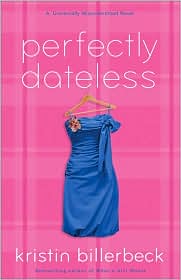
Book Review: Perfectly Dateless


Perfectly Dateless: A Universally Misunderstood Novel. Kristin Billerbeck. 2010. July 2010. Revell. 256 pages.

They say the first step to recovery is admitting you have a problem. So I guess I have a problem. I am a bit of a perfectionist, and my life is anything but perfect.

Our heroine Daisy Crispin has so many problems. No, she's not being abused--physically or sexually. No, she's not addicted to drugs or alcohol. No, she doesn't have an eating disorder. No, she doesn't cut. No, she isn't a compulsive liar or thief. No, she's not grief-stricken from the loss of a parent, grandparent, sibling, or best friend. No, she's not being stalked. No, she doesn't have cancer. No, she's not pregnant. But she's suffering none the less. Why? Because her mom makes all her clothes. And though she could buy her own--from an approved list of stores--with the money she makes from her job, she chooses to save her money for college. And wearing handmade clothes (with handmade labels) instead of designer clothes is just one of the ways our heroine, Daisy, is suffering. She has the most embarrassing parents in the universe. She's sure of it. And they're super-strict: she's also not allowed to date.

I found it extremely difficult to like Daisy. That's not to say I sided with Daisy's parents. I may not like Daisy, but even I have to admit that her parents cross a couple of lines. Like when they perform at a school assembly, talk about how lonely and invisible their daughter, Daisy, feels, and then rap about peer pressure. I would cringe right along with Daisy. But does having embarrassing parents really excuse Daisy's flaws?

I didn't like how Daisy treated her parents. I didn't like how she felt justified in bending the rules, sneaking out of the house, keeping secrets, telling lies, etc. I didn't like her attitude. But. At the same time, I didn't like her parents' attitude towards her. Just as Daisy was disrespectful to her parents, I found her parents weren't really being understanding and supportive of their daughter either. Especially when it comes to their daughter's choices in colleges, in majors. Using the "we only want what is best for you" speech to specify one college, one major, no exceptions. If you don't do exactly what we tell you, then you're a selfish brat. I have no problem seeing Daisy as a selfish brat. I really don't. But selfish because she doesn't want to follow her parents' dreams for her when it comes to choosing a college, choosing a major, choosing a career? Selfish because she wants to follow her own dreams, make her own choices? I don't think that Daisy is being selfish by being interested in neuroscience.

So I didn't like Daisy, I didn't like Daisy's parents, how about her friends? Daisy has a few friends. Claire is Daisy's best friend. And she's a sad case. She actually has something worth complaining about her--her dad has left her and her mom, her mom has gone to Hawaii on an extended-extended vacation, and the maid quit. So poor Claire is left all on her own--with neither parent aware of the situation--for most of the book. (We're talking months and months.) Claire who has been ever-desperate for attention continues down an unhealthy path. And Daisy just wants Claire to go shopping with her, wants Claire to take care of her, to help her out with her problems.

There are two other friends mentioned by name. Neither worthy of mention when it comes to plot. Which is part of the problem I have. Why make friends exist in the first place if they're only going to be stereotypical? Angie Chen is the Asian-American teen with less of a social life than Daisy because she's super-good in math and music. Sarika Singh, an Indian, is again a teen with a "less-than" social life--at least when it comes to guys--because her parents are traditional and believe in arranged marriages. How many times are Angie and Sarika mentioned? Maybe two or three times? Do they even have any lines? I'm not so sure. We're just told that Sarika will one day marry the man her parents choose for her--a man from India. And we're told that Angie doesn't have time for parties or boys because she's too busy being smart.

How about love interests? Well, there are a couple of guys Daisy is interested in. Chase being the dream-guy. And Max being the one guy not on Daisy's list of potential prom dates. He's new. He's Argentinian. He can tango. And flirt. And he loves Jesus too. But. She hasn't known him since kindergarten. Max is probably my favorite of the two.

Perfectly Dateless follows the oh-so-dramatic senior year of Daisy Crispin. Chances are you'll like this one better than I did. Maybe you can sympathize with Daisy's problems. Her not having a boyfriend. Her wanting to go to prom more than anything in the whole wide world. Her thinking that having that one perfect prom date for the prom picture will mean that only good things are in store for her in the future.

© Becky Laney of Operation Actually Read Bible

Thursday, April 1, 2010

Book Review: As Young As We Feel


As Young As We Feel. Melody Carlson. 2010. March 2010. David C. Cook (Pub). 352 pages.

Marley had hoped that her former high-school friends might've grown up by their thirty-fifth reunion. Unfortunately she was disappointed. Oh, most of them had matured somewhat, at least externally. She observed more bald heads, wrinkles, and gray hair than she recalled from their last gathering, and she was relieved to see that many had let go of old cliques and social boundaries. But others, like Keith Arnold, were still jerks.

As Young As We Feel is the first book in a new series by Melody Carlson. And I'll gladly admit it has an interesting premise. Four women, all in their fifties, have one thing in common: they're all named Linda. Abby. Janie. Caroline. Marley. These four met in first grade, decided to go by their middle names forever more, and form the 'Four Lindas' club. They didn't necessarily stay friends after grade school, and certainly not after high school graduation. With three of the four moving out of their hometown of Clifden, Oregon. One to L.A. One to New York City. One to Seattle. This thirty-fifth high school reunion brings them all together--but not quite the way they expected. You see, Cathy Gardener, another classmate, drops down dead in the middle of the reunion, right there on the dance floor. Her death acts as a catalyst to these four taking the time to reanalyze their lives and their need for friendship.

By talking with each other, they learn that they have so much in common. They're unhappy, unsure, depressed, restless, emotionally drained. They feel hopeless, lost, lonely. They feel life has let them down. What can they do to reconnect with their lives? How can they turn their lives around? What can possibly inspire them to live life again?

Friendship may just be the first step in their journeys.


© Becky Laney of Operation Actually Read Bible

Sunday, February 7, 2010

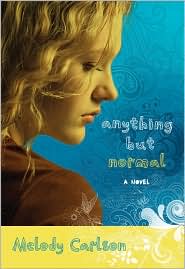
Book Review: Anything But Normal


Anything But Normal. Melody Carlson. 2010. [January 2010] Revell. 254 pages.

I wasn't crazy about the title of this one. I think normal is a loaded word, and it's one I try to avoid when possible. I think it's a word that can be packed with a lot of judgment. And sometimes these are judgments we place on ourselves. And sometimes these are judgments others place on us. But. I guess that's a whole other story.

What is this one about? Well, it's about a Christian teen becoming pregnant. While she's away at a Christian summer camp. It's about the lies she tells herself, and the lies she tells others. It's about guilt and shame. It's about judging and misjudging others. It's about how words can hurt. Just as much as actions. At times.

Sophie, our heroine, is so ashamed of her "condition" that she denies the pregnancy altogether. Keeping one big secret from her family, from her friends, from her church, from her classmates. Sophie has some judgmental friends. No question about that. And some of these judgmental friends have judgmental parents. They've been raised that being right is more important than being loving. Her friends are callous, in my opinion, and so is Sophie in a way. Especially in the beginning. There were times when I thought that every single person was missing the big picture, being so fundamentally clueless. But. Sophie does begin to change. Mostly.

I thought this novel was a bit clumsy in places. And I don't know how quite to explain what I mean by clumsy. I think it was definitely an issue novel. Sometimes it was a quiet issue novel; sometimes it was a loud and demanding ISSUE NOVEL. There were a few elements in the plot that I found a little unbelievable. (I'm thinking of the sudden uproar of protest against the school's pregnancy center; the angry parents demanding this and that and calling for town meetings, etc. And then with one little speech from Sophie, all is made well again. Not only has the uproar blown over, there is now so much love and support that many now want to volunteer at the pregnancy center.)

Do I think the subject matter important? Yes. Of course I do. I think teen pregnancy is an important issue. I think more needs to be said than "it's bad" and "don't do it." I think it's important to show unconditional love. That becoming pregnant as a teen, out of wedlock is not the unforgivable sin. It's not something outside of grace. Grace and love extend to both mother and child.

Available January 2010 at your favorite bookseller from Revell, a division of Baker Publishing Group

© Becky Laney of Operation Actually Read Bible

Wednesday, August 12, 2009

Book Review: June Bug


Fabry, Chris. 2009. June Bug. Tyndale. 326 pages.

Some people know every little thing about themselves, like how much they weighed when they were born and how long they were from head to toe and which hospital their mama gave birth to them in and stuff like that. I've heard that some people even have a black footprint on a pink sheet of paper they keep in a baby box. The only box I have is a small suitcase that snaps shut where I keep my underwear in so only I can see it.

June Bug, our nine-year-old heroine, lives with her dad in an RV. They travel the country together year-round. Never settling down into any one place. When the novel first opens, the pair happens to be stuck in a Walmart parking lot in Colorado. He's been waiting for a part to come in for several weeks at least. Sheila, one of the Walmart employees, notices June Bug wandering the aisles of the store day after day. Notices how she looks at the other children--the other girls--as they shop. Having a big heart, she offers them both a place to stay. The RV is towed to her land, her home. And while the dad, Johnson, stays in the RV, this is the first time--at least the first time that she can remember--where June Bug sleeps in a real bed with a good mattress. During these few weeks, she learns to ride a bike, gets a nice doll of her own, and is just thrilled that Sheila's neighbor has horses and is willing to let her ride. Sheila's convinced that June Bug would be happier if her father would settle down, would give her a "normal" home, a chance to go to school, a chance to make friends, etc.

Natalie Anne Edwards has been missing since she was two. Her grandmother is convinced the little girl is still alive. She still prays for her safe return. Her grandfather and her mother are less convinced. Especially the mother. When a new clue comes to light, the police begin to refocus their attention to the case--as does the news.

How do these two stories connect...read for yourself in this modern retelling of Les Miserables.

What did I think of this one? I liked it for the most part. In a way, I wish more of the story could have been told through June Bug's perspective. We have a little bit of her story as seen through her own eyes. But the narrative shifts throughout the book to many different characters. What I did like was that most--if not all--of the characters we get to meet have some substance.

© Becky Laney of Operation Actually Read Bible

Friday, March 6, 2009

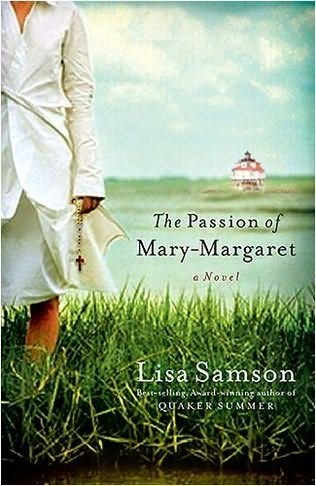
Book Review: The Passion of Mary-Margaret


Samson, Lisa. 2009. The Passion of Mary-Margaret. Thomas Nelson Publishers. 313 pages.

"My sisters, if I began this tale at the end, you would know my heart is full of love even though nothing went as planned. I could tell you God's ways are not ours, but you probably know that already. And I could tell you that his mercy takes shape in forms we cannot begin to imagine, but unless you walked in my shoes for the past seventy years, you could not feel the mercy I have been given."


I'll be honest, I was skeptical about this book right from the start. While it hooked me--intrigued me enough to keep reading--I wasn't sure I was liking what I was reading. It had this other-ness to it. This off-putting (to me) flavor where I wasn't quite sure what to think of it, what to make of it. It is a roughly told story that is all-a-scramble. Within a chapter, the narrator might have touched upon four different years with little or no transition. She might be seven, fifteen, forty-two, and seventy-three all in the same chapter. Which, as a reader, I just found confusing. But the story, while its framework may have left me desiring something more straightforward, was without a doubt compelling the majority of the time. The story of Mary-Margaret from birth to death was an interesting one, a compelling one. Raised by her grandmother, she knows that her mother was raped and died giving birth to her. She's known from childhood that she wants to be a religious--a sister. She grew up believing that Jesus was her husband. That she was his bride. Her faith in Jesus is one thing that's undeniable. How she goes about it, well, that's up to you to decide. (You see, Mary-Margaret sees Jesus, hears Jesus, talks to Jesus, has tea with Jesus.) But despite all that otherness about it, part of me liked The Passion of Mary-Margaret. Mary-Margaret was told by Jesus to marry Jude, a drug addict, a prostitute (sleeping with men and women, whoever will pay), a diseased man. A man she more-than-liked as a kid, but a man whom she doesn't trust or respect much since he's taken a different path as an adult. But Jesus tells her he has a plan. She needs to marry this man one way or another. And so she goes about wooing a man who's seen and done it all. What is God's plan in all this? Mary-Margaret finds out one day at a time. What I loved about this one--probably the thing that surprised me most--was how this woman stepped out in faith and chose to see a man as God sees him. Not as all the mistakes he has made, not all the ugliness of his sins, not all the brutality and rawness of his attitude and character. But as a man whom God had chosen to redeem. She saw him through Jesus' eyes. And through Jesus' eyes, he was beautiful. Not that God was done with him, not that God was content to let him stay addicted to drugs, walking the streets, selling his body and soul for a cheap or not-so-cheap fix. But Jesus saw what the man would be. And that is something. So for that alone, I recommend this book. This book looks at hard issues in life--drugs, sex, sexual abuse and molestation, shame, pain, suffering--and it does so as honestly as it can be done.

© Becky Laney of Operation Actually Read Bible

Saturday, December 20, 2008

Book Review: One Perfect Day

Snelling, Lauraine. 2008. One Perfect Day.

Two families. One will receive a Christmas miracle; the other will experience a Christmas tragedy. Nora Peterson has two seniors getting ready to graduate from high school--twins, one boy, one girl. Jenna Montgomery has a daughter, Heather, who is dying and needs a heart transplant. (She's just twenty and has been sick most of her life.) One child will live, one will die. Both families want this Christmas to be perfect. Nora because she somewhat naively believes this will her family's last Christmas together since they will be off for college the next year. Jenna because she knows that unless a transplant comes through this will be--no question about it--the very last Christmas with her daughter. Each day Heather struggles just to breathe.

One Perfect Day chronicles the lives of two families--though the two never meet--as they celebrate and mourn. It's a story of hope and despair, love and loss, and redemption.

I don't know about other readers--so I could be alone here--but I never felt a connection with the Peterson family. Nora and Gordon. Christi and Charlie. It didn't matter if it was before, during or after...I just never felt this family was real or genuine. I felt Nora to be a bit plastic, a bit going through the motions, even before the tragedy strikes. Gordon, again, felt disconnected from his family. Like he wasn't really present in his home, in his relationships. I generally felt that the family was broken on the inside before they became broken on the outside.

The Montgomery family, on the other hand, was vital from the very beginning. I felt that Jenna and Heather and Uncle Randy were alive, authentic, genuine, sincere. Their family, their story resonated. I cared for them from the start.

© Becky Laney of Becky's Book Reviews