Showing posts with label memoir. Show all posts

Thursday, July 3, 2025

53. I Still Believe


53. I Still Believe. Jeremy Camp. 2013/2020. 160 pages. [Source: Library] [4 stars, memoir, biography]

First sentence: Pick up your guitar. I didn't want to. I didn't want anything to do with music. It had been two weeks since Melissa had gone to heaven. My wife was only twenty-one, and we had been married just three and a half months when she passed away from ovarian cancer.

I Still Believe is Jeremy Camp's memoir. The edition I read was newly updated in timing with the 2020 movie release for I Still Believe. Both book and movie tell the love story of Jeremy and Melissa. 

The book provides so much more context to Jeremy's life--both before and after. The movie focuses almost exclusively on their love story and nothing but their love story. The book gives a much fuller picture in regards to Jeremy's spiritual journey AND his actual biography. Learning of his family, his childhood, his teen years, and the decade(s) following Melissa's life certainly gives you a more complete picture of who he is. 

The book and movie are both sad. Sad in a bittersweet way. Melissa's life was short--yet every day of her life's story was written by God [before one of them came to be] and written to bring him glory.

I Still Believe isn't necessarily a book [or movie] that you "enjoy." But I think there are spiritual lessons within both. 

© Becky Laney of Operation Actually Read Bible

Wednesday, June 12, 2024

34. The Hiding Place A Graphic Novel


The Hiding Place A Graphic Novel. Corrie ten Boom. With Elizabeth and John Sherrill. Adapted by Mario DeMatteo. Illustrated by Ismael Castro. 2024. 240 pages. [Source: Library]

First sentence: It was 1937, just three years before Hitler and his Nazis invaded Holland. It was the 100th birthday party of ten Boom Watches--our little watch shop in Old Haarlem. Although the party was for the shop, the affection of a city was for father. Casper Ten Boom. They called him Haarlem's Grand Old Man.

This book adapts Corrie ten Boom's autobiography The Hiding Place into a graphic novel of the same name. 

Is The Hiding Place memoir worth reading? Yes. Yes. Yes. A thousand times yes.
Is The Hiding Place movie adaptation worth watching? YES. Definitely.
Is The Hiding Place graphic novel memoir worth reading? Definitely. Especially, especially if it helps readers envision the times and events. Some readers respond more to graphic novels, find them easier to read, to digest. It may be "easier" to "hand-sell" (think Reading Rainbow) a graphic novel than a traditional book, a nonfiction memoir at that. 
Does the graphic novel do a good job adapting the original? While I haven't read them close together in time to compare perfectly, as I was reading the graphic novel, I was reminded of scenes from the memoir. I don't recall any memorable, significant scenes from the memoir being left out OR being changed or altered. All the highlights, if you will, of the original can be found in the graphic novel adaptation. Memories not being perfect, however, I haven't examined the two close enough to say with absolute certainty that the two are essentially telling the exact same story. 

I do recommend reading the original OR reading the graphic novel--or both. I do recommend watching the movie. 


© Becky Laney of Operation Actually Read Bible

Tuesday, February 6, 2024

15. My Jesus


My Jesus: From Heartache to Hope. Anne Wilson. 2022. 196 pages. [Source: Library] [Memoir, Biography, Music Industry]

First sentence: I sat on the front step with my backpack loaded for adventure, tapping my tennis shoe on the concrete. My older brother, Jacob, was supposed to pick me up at 3:00 that autumn afternoon, but he was late as usual.

This memoir is essentially the story behind the song, "My Jesus." It is a memoir capturing a very specific time in Anne Wilson's life. The book focuses on a) her coming to faith as a teen, b) the death of her older brother, Jacob, c) her being led by the Spirit to sing a song at her brother's funeral, d) everyone encouraging her to record a video of her singing the same [funeral] song, e) her singing video being 'discovered' on YouTube, f) how she got a manager, g) how she had songwriting sessions with others h) how she got a record deal i) the release of her single, "My Jesus." The overall main theme being how grief transformed her faith and her family. 

This felt more like it could have been or should have been a feature length article in a magazine, a blog post (or two), or a vlog series on YouTube. Don't get me wrong, I really do appreciate and love the song, "My Jesus." I do like the country sound of Anne Wilson. 

For better or worse, it seems like Anne Wilson's faith is more than a little on the charismatic side. She talks of prophets and prophecies, dreams, visions, etc. Some of the theology feels a little questionable, a little strange, perhaps. There were a handful of scenes that just weren't my cup of tea. It's fine as a memoir, but I wouldn't classify it as "christian living." Her life story shouldn't necessarily serve as advice for others. 

© Becky Laney of Operation Actually Read Bible

Monday, September 25, 2023

66. God, Greed, and the (Prosperity) Gospel


God, Greed, and the (Prosperity) Gospel. Costi W. Hinn. 2019. 224 pages. [Source: Library] [Christian nonfiction; theology; memoir]

First sentence: Just a short while ago, I had the chance to sit with one of my living heroes. Dr. Steven J. Lawson probably wouldn't like my choice of words because he doesn't view himself as heroic. But his advice rings in my ears every time I share the story of how I left the prosperity gospel. "Telling your testimony is fine," he explained. "Paul the apostle did it. Many others have told their testimonies too. It can be helpful. But don't be one of those people who make sin look so good that people want to go out and do it!" His voice elevated with passion. "And it needs to point to Christ and glorify God! Storytelling for the sake of storytelling doesn't do much good. The gospel must be the focus."

God, Greed, and the (Prosperity) Gospel is a fantastic read. The first half is mostly memoir. Costi Hinn sharing his testimony--his story. This involves sharing his family's background, their rise to fame, AND it also includes a history lesson on how the prosperity gospel came about and prospered so to speak. He shares his doubts and questions. He writes of how he and his wife came to leave that theology--that false teaching--behind. The second half is mainly theological. Both sections are fantastic. The second half goes above and beyond: it is practical, informative, thought-provoking. It seeks to explain, to expose, to teach. 
Hinn's goal was for the book to "glorify God and communicate the gospel," and in my opinion he succeeded in this. He differentiates between the true gospel and the false gospel of the prosperity preachers. His zeal comes through, but it's zeal tempered with much love and compassion. 

I would definitely recommend this one. 


© Becky Laney of Operation Actually Read Bible

Thursday, September 14, 2023

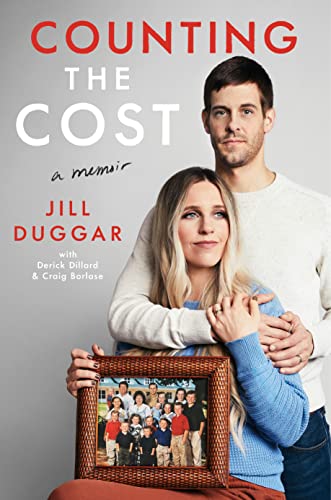
64. Counting the Cost


Counting the Cost: A Memoir. Jill Duggar, Derick Dillard, Craig Borlase. 2023. [September] 287 pages. [Source: Library] [biography, memoir, nonfiction]

First sentence (from the prologue): Technically, there was no problem with Derick and I being outside together that way. We weren't on a date or anything, so we didn't need a formal chaperone. Plus, there were easily a half dozen little Duggars running around out there with us, playing in the snow. We were safe. We were following all the courtship rules that my parents had encouraged us to write down--no holding hands, no in-person, one-on-one conversations without another adult or mature chaperone present, no putting ourselves in a position where we could fall into temptation. All the same, I knew that people would be watching us. It was to be expected.

First sentence (from chapter one): Click. My parents didn't believe in magic. They didn't believe in dancing, either. But they understood the power of music. And like all magicians, they knew exactly when to wield it. Just the sound of Mom loading a cassette into the tape player was enough to call us all to order. 

Jill Duggar Dillard has written a memoir. (Squeal!) She writes truthfully, respectfully about her upbringing. She praises where praise is due. She's grateful for any and all benefits and blessings. She criticizes where criticism is due. Or if not out and out criticism, she calls for questioning. 

Unfortunately, she grew up in a household that was 110% committed to the Institute in Basic Life Principles. And merely questioning or doubting is enough to be viewed as a degenerate rebel. Jill didn't spend much time questioning anything--blindly, willingly, openly following her parents--particularly her father. But as an adult, a married woman, a woman with children of her own, she did begin to question. Not without nerves, anxiety, hesitation. Jill was clueless about confrontation and boundaries. But slowly and surely, with the full and total support of her husband, she did begin to have those difficult conversations. She began to ask honest questions. 

If Jill is to be taken at face value, then she did so in a way that was not inherently hateful or mean-spirited. Perception is tricky. Certainly her father took even the slightest hesitation to 'yes, sir' as out-and-out rebellion and a great sin. That is one problem with the IBLP. Calling things sin that the Bible doesn't necessarily call sin. Adding to Scripture. Misinterpreting Scripture. 

Unlike her sister's book--also published this year, I believe--this one doesn't so much go through her journey of disentangling her faith. It is a more traditional memoir. This is an actual biography that chronicles her life. She has questions, thousands of questions. Like WHY did her father not protect her and her sisters? WHY is Joshua--a convicted criminal--seen as a such a wonderful son, an angel, and she is seen as dangerous, rebellious, sinful? Why didn't she--as a person--matter more than the television show? I won't list every single question Jill poses. 

This is not a book written primarily for gossiping or shock value. I was amazed by Jill's respectful restraint. The way she's been treated, you might think she'd be justified in expressing out and out outrage. If she wanted to rant, rave, rage against those that have hurt her, who could blame her??? But, she is grateful, kind, and HONEST. She cannot be a doormat. But she doesn't have to add fuel to the fire. She goes above and beyond to see the good, to praise the good, to be thankful for the good. She does not come across--at all--as vindictive or a drama queen. She doesn't come across as toxic. Wanting healthy boundaries is not toxic. Wanting to be respected as an adult is not toxic. 

Did I find out new things? YES. Was everything 'shocking' or 'appalling'? No, not really. Again, I don't think the book--despite some people wanting ALL the tea, every ounce of tea, every single little detail (not a one to which they are entitled to)--was written to be scandalous or gossipy. 

One thing the book does bring to light is that the Megyn Kelly interview was conducted with JOSHUA in the room. Which puts yet another spin on it. It would have been 'tainted' enough perhaps by the presence of her parents. (No doubt, the parents were pressuring them to stick to a certain story, to play their roles in the PR campaign). 

© Becky Laney of Operation Actually Read Bible

Wednesday, April 5, 2023

34. All My Knotted Up Life


All My Knotted Up Life. Beth Moore. 2023. 304 pages. [Source: Library]

First sentence: We were river people.

All My Knotted Up Life is a memoir by Beth Moore. I thought I'd start with where I'm coming from as a reader and what bias I might be bringing to my reading. Chances are when you hear the name Beth Moore you have a strong reaction one way or the other. I've read so little that I don't have a strong, solid reason for my meh-ness to her work. I've definitely been exposed--a bit out of context at times--to paragraphs of her works [either from her books, her studies, her video teachings, her tweets] with commentary critiquing her theology. I didn't pick up this book as a hater or a lover. 

The first third of the memoir covers her childhood and teen years. The middle third covers her marriage, becoming a mother, and very early years in the ministry. [DID YOU KNOW SHE TAUGHT CHRISTIAN AEROBICS???? DID YOU EVEN KNOW CHRISTIAN AEROBICS WAS AN ACTUAL ACTUAL THING THAT CHURCHES OFFERED????] The last third covers her rise to fame, if you will, her partnering up with publishers, her Living Proof conferences, her living in the public eye, her disagreements with the Southern Baptist Convention, her eventual parting of ways with the SBC. 

I thought it was a rough start. The first few chapters were especially rough. I've thought about why that might be. It couldn't be easy to start a memoir. To throw readers into your life story. Where do you start? Do you start with your strongest memory? the one you feel will be most compelling? the one that perhaps has shaped you? Do you start like a more traditional biography? When you're covering your earliest family memories...how do you orient strangers [us readers] with YOUR family? Every family is unique and has its own inside language, its own way of being. Memories have a way of being disjointed, random.

The writing was odd to me. Strange metaphors and use of imagery. It didn't stay that way. It just started that way. The more I read, the easier it became to read.

I am glad I read it. As a memoir, it focused more [and rightly so] on personal stories, memories, impressions. It didn't do deep dives into theology. It stayed in 'shallow waters' in terms of politics, theology, culture. I think that's mainly a good thing. Obviously, the last third goes into the very 'muddy waters' of her falling out with the SBC. And readers--lovers or haters--will already have thoughts and opinions on that.  

© Becky Laney of Operation Actually Read Bible

Wednesday, February 8, 2023

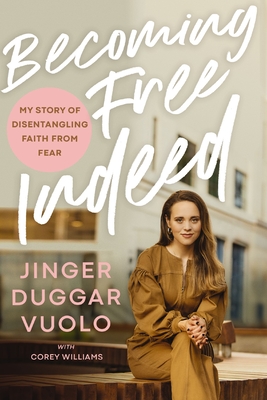
15. Becoming Free Indeed


Becoming Free Indeed. Jinger Duggar Vuolo. 2023. 240 pages. [Source: Library]

First sentence: I first had the idea to write this book in the summer of 2017. My husband, Jeremy, and I had just attended an Advanced Training Institute conference in Big Sandy, Texas (later in the book, I'll talk more about what the conference is and why we went). While there, I saw dozens of people I'd grown up with--friends who, like me, had come to Big Sandy every year. But for every old friend I saw that week, there was one or two I expected to see who didn't show up. In the coming months and years, I'd start to hear stories of those friends. I'd find out that some of them no longer loved Jesus and wanted nothing to do with Christianity. As they reached young adulthood, they had rejected everything they'd been taught about God, the Bible, and the Christian faith. While that is not my story--I am a Christian who loves Jesus and wants to follow HIm--I have, like those friends, rejected much of the teaching I heard each year at the conference in Big Sandy. My faith is still intact, but it has changed. Instead of leaving the faith entirely, I have unthreaded, or disentangled, the truth of Christianity from the unhealthy version I heard growing up.

Premise/plot: Becoming Free Indeed is the memoir of Jinger Duggar Vuolo. In this memoir, she writes of her disentangling journey from Bill Gothard's teaching [Institute of Basic Life Principles.] It is a journey of her examining Gothard's teachings in light of Scripture. She'd hold up Gothard's teachings to what the Bible actually says. She learned that what Gothard taught didn't match a common sense reading of Scripture [or stand up to spiritual scrutiny]. She unpacks her childhood faith--the faith that she grew up believing, the faith that she was consistently instructed and raised in--and slowly, deliberately re-examines everything. All of her unpacking is done with the mind to be true to Scripture, to line up her beliefs, her views, her values with Scripture. She writes that this process was scary. Scary because she knew that it might create distance, division, discord with her immediate family members who were still diehard Gothard supporters, to those who are heart-soul-body still believers in the IBLP. But scary also because she was replacing the known, the certain, with the unknown, the uncertain. Letting herself question EVERYTHING she was taught for the first twenty to twenty-two years of her life was--and I think we can all agree--scary. It was "safe" to not ask questions, to push down doubts, to just go with the flow, to just submit to what her parents wanted/needed/preferred. 

Ultimately, I believe we'd both agree that it was the Holy Spirit who led her to the truth, to freedom, to the true, fully-fleshed out gospel. But the catalysts for this change comes down [in some ways] to two things: her relationship with her brother-in-law, Ben. As she spent time with Ben and Jessa as they were courting, as they were married, Ben's influence began to effect her own view of Scripture, of the faith. She began searching and seeking out more and more in Scripture. Her theology got meatier--here and there. She wasn't all-in committed to "disentangling" if you will. But she became hungry for the Word of God, interested in God's character, etc. She later met Jeremy. Her friendship/courtship/marriage with Jeremy led her to re-examine EVERYTHING. He wanted to know more about the IBLP. He was seeking to understand how his wife had been raised, what "made her tick" if you will. They watched over sixty-hours of teachings by Bill Gothard. Together they watched, discussed, studied....all in light of Scripture. Her view of Scripture had shifted considerably. She began to agree with her husband that Gothard's teachings weren't biblical. Some of his messages were scary-dangerous. [She shares several examples of this throughout the book.] Lies were being replaced with truth. Recognizing that Jesus is the ULTIMATE truth. That the Word of God IS truth. One thing she noticed is that Gothard's view of Scripture was lacking. 

My thoughts: Legalism is not restricted to the IBLP. It's not. That's why I think there is plenty within the memoir that would make it relevant to many/most readers. This memoir celebrates the gospel. I found it an interesting read. 

© Becky Laney of Operation Actually Read Bible

Thursday, January 12, 2023

3. From Pearl Harbor to Calvary


From Pearl Harbor to Calvary. Mitsuo Fuchida. 1953/2011. eChristian. 96 pages. [Source: Bought]


This is a short autobiography. Mitsuo Fuchida concisely relates for readers his experiences during World War II; his restlessness after the war, and his quest for answers; and ultimately his  conversion to Christ, and his subsequent evangelical work for the Lord. It may be short, but, it is nevertheless compelling.

In chapter one, the author recalls bombing Pearl Harbor.

In chapter two, the author relates his further experiences during the war itself.

In chapter three, the author writes of his experiences after the war, his longing for peace, and his quest for answers.

In chapter four, the author writes of his conversion and shares his testimony.

The final chapters (chapter five through chapter seven), readers learn of his evangelical work, his work for the Lord, how he shared his testimony with others, and how his focus changed so completely.

It was originally published under the title From Pearl Harbor to Golgotha in 1953. 

© Becky Laney of Operation Actually Read Bible

Monday, August 23, 2021

50. Ordinary Hazards


Ordinary Hazards. Nikki Grimes. 2019. 325 pages. [Source: Library] 

First sentence: I read somewhere that names penetrate the core of our being, and I suppose, this is as good a time as any to confess my name is not the only lie I’ve ever lived with, but Nikki is the first invention for which I accept full responsibility. 

Premise/plot: Nikki Grimes’ newest book is a memoir written in verse. Ordinary Hazards tells her story—the darkness and the light in her growing up years. 

My thoughts: I have loved, loved, loved Nikki Grimes’ work in the past. I have always found her work to bring on the feels. Her characters are more often than not, oh-so-humanly drawn. Her writing realistic, but often with a strong foundation of hope. No matter how dark, how tough, how painful, there is still reason to hope; where there is life, there is hope. 

This memoir is an amazing read. I think perhaps most enjoyed by those that have read her previously. But perhaps not. Maybe this would encourage readers to pick up her other books and seek out everything she’s written? 

Recently a school district in Texas (Leander Independent School District) removed Ordinary Hazards from its "secondary school book club reading lists." You can read about it here. I have not read ALL the books on the "removed" and "paused" lists. I do not know for certain what "removed" means. If it is simply removing from a recommended book club list, or if it is removal from classroom libraries, or if it is removal from the school library. If it means removal from the school library, that is truly sad and a bit terrifying. 

I can only guess that Ordinary Hazards was removed because of so-called inappropriate content. But truly if that is the case, then people have lost the ability to read critically and in context. That wouldn't surprise me. But it does sadden me.

I say so-called inappropriate content because IN CONTEXT one wouldn't judge it that way. Or have to judge it that way. 

First things first, it is a MEMOIR. It is Nikki Grimes' autobiography. This is HER story. She's sharing real events and real emotions with readers. There is depth and substance to her HONESTY. This book is *real* and leads to *feels*.

Sure, there's alcohol and drunkenness in Ordinary Hazards. But it is her mother. There is no way, no how anyone could read those scenes and think hey, drinking alcohol is the best thing ever. Or wow, now I have life goals. There is PAIN and CONFUSION and HEARTBREAK. Because her mother can't overcome this addiction. And perhaps doesn't even see the addiction as addiction. Nikki Grimes isn't the first and won't be the last child to have an alcoholic parent. What message are we sending to teens when we say, you can't talk about that? 

Sure, there's drug abuse. But it is a cousin. And it terrifies her. At the time this occurs in the memoir, she hasn't even started school yet. She's helpless to control her situation. She's completely reliant on a mother who has some major blind spots. It's HEARTBREAKING to read about.

Sure, there's mental illness. Nikki's mother suffered from paranoid schizophrenia. What we get is Nikki's childhood perspective reconstructed and imagined. It is honest and reflects the pain and confusion and terror she felt as a result of her mom being unstable and unable to really be there, be there. But mental illness exists whether we acknowledge it or not. Whether it's kept buried in shame--deeply buried and barricaded--or whether it's brought out into the light. Keeping quiet about it doesn't make it go away. Again, I have to ask, what message are we sending to teens when we say, you can't talk about that?

Sure, there's child abuse and abandonment. Her father is absent. Her mother is, well, a mess. Her mom is so desperate financially that she's leaving her daughters with strangers as babysitters. Too checked out to check up on them....as she should. Nikki and her sister end up in foster care. She wasn't the first and won't be the last to experience childhood trauma. What message are we sending to teens when we say, you can't talk about that? 

Sure, there's sexual abuse. When Nikki leaves the foster care system to return to live with her mother, she is placed in the house with a child molester--her mom's boyfriend/partner. It is TRAUMATIC and painful. It leads to confusion, anger, bitterness, shame. But Nikki didn't ask for this--no child would. She is not to blame for someone else's action. To silence her story is a crime. Again, Nikki wasn't the first and will not be the last child to be molested, abused, traumatized. What message are we sending to teens when we say, you can't talk about that?

This is a MEMOIR. There are those that would SILENCE her story just because it contains "unpleasant" and "uncomfortable" details that like it or not happen in the real world every single day. It takes bravery and strength to step up and speak up. Do we really want to reinforce the notions of shame and dirtiness? To send the message, if this happens to you--it is too dirty, too shameful, too inappropriate, too immoral to talk about. Keep silent. Keep it to yourself. 


© Becky Laney of Operation Actually Read Bible

Thursday, August 12, 2021

45. Fault Lines


Fault Lines: The Social Justice Movement and Evangelicalism's Looming Catastrophe. Voddie T. Baucham Jr. 2021. [April] 270 pages. [Source: Library]

First sentence: 1989 was a banner year. Not because the World Wide Web was invented, the Berlin Wall came down, Nintendo came out with the Gameboy, and I met and married the woman of my dreams. Those were all big, but four other things happened in 1989 that were at least as big—things that shaped the current war being waged in our midst. Harvard Law professor Derrick Bell and some colleagues held a conference in Wisconsin, where Critical Race Theory was officially born.

Chances are you already have an opinion about this book before you've even picked it up. The book certainly can be seen as controversial by some. The topic is as current, relevant, and hot-topic as you can possibly get. The book is about Critical Race Theory, Intersectionality, Social Justice, and Black Lives Matter (the organization).  

The book goes above and beyond when it comes to presenting and explaining terms, unpacking definitions and philosophies, following through with the logical outflow of those ideas and views, asking (and answering) hard questions, and providing a history of the ideas that form this 'new' worldview. Perhaps readers may disagree with his conclusions here and there, but it's hard to disagree with his presentation when he is quoting generously from the opposition. He is using their terms, their vocabulary, their definitions, their own words to present the key ideas that form the worldview being discussed, dissected, analyzed, unpacked, critiqued. 

Baucham specifically focuses on how CRT is effecting and impacting the evangelical church. It isn't just society and culture and the world at large being effected by this worldview. It is effecting the church--the local church, the body of churches within denominations, official doctrines within specific denominations,  Christian organizations that carry a lot of weight and influence (aka Big Eva). He is essentially--to sum it up quite briefly--saying you can't hold onto the gospel as presented in the Word of God while also holding onto CRT (or Social Justice or BLM). You can't have your cake and eat it too. Because the two are at odds. The two being "at odds" is an understatement. The two are at war. 

What is being attacked are some of the essential doctrines of the church--doctrines clung to since the Reformation. Like the doctrine that the BIBLE IS SUFFICIENT. The Bible does not need help from social sciences, from philosophy, from science, from ethnic experience to be interpreted, rightly divided, understood, comprehended. One does not need to read the Bible with the lens of Critical Race Theory in order to be properly read, understood, interpreted, taught, proclaimed. One does not need to read the Bible with the lens of feminism. Whatever lens the modern world--the modern culture--is throwing at the church saying ASSIMILATE TO OUR WORLDVIEW OR ELSE BE DEEMED BACKWARD, ON THE WRONG SIDE OF HISTORY, SMALL-MINDED, BIGOTED, HATEFUL--the church should reject. The church does not need to watch the news to make sense of Scripture. The church should be grounded and rooted in the Word of God. No matter the currents of the world philosophies or world views, the church should be built on a strong, solid, unchanging foundation.

The book is part memoir--he shares his experiences--part sociology--he does have a degree in sociology and has experience teaching sociology--and part theology--he has pastored churches for decades.  

  • Thought Line
  • Introduction
  • Chapter One: A Black Man
  • Chapter Two: A Black Christian
  • Chapter Three: Seeking True Justice
  • Chapter Four: A New Religion
  • Chapter Five: A New Priesthood
  • Chapter Six: A New Canon
  • Chapter Seven: The Ground Is Moving
  • Chapter Eight: The Damage
  • Chapter Nine: Aftershock
  • Chapter Ten: Restoration and Mitigation
  • Chapter Eleven: Solid Ground
  • Appendix A: The Dallas Statement on Social Justice and the Gospel 
  • Appendix B: Original Resolution on Critical Race Theory and Intersectionality
  • Appendix C: SBC Resolution 9 on Critical Race Theory and Intersectionality
Quotes: 

  • It is not a stretch to say we are seeing seismic shifts in the evangelical landscape.
  • Growing ethnic tension is a problem—but it is not the main problem. While troubling, it is no match for the truth of the Gospel and the unity it creates among those who embrace it. In fact, such tensions represent an opportunity for Christ’s followers to demonstrate the truth of Paul’s words:
  • For he himself is our peace, who has made us both one and has broken down in his flesh the dividing wall of hostility by abolishing the law of commandments expressed in ordinances, that he might create in himself one new man in place of the two, so making peace, and might reconcile us both to God in one body through the cross, thereby killing the hostility. (Ephesians 2:13–16)
  • Ethnic tensions are only a problem for Christians who forget this truth or subordinate it to a competing ideology (whether that be on the left or the right). When that happens, a fault line appears: those on one side “press the text” of the Bible, while those on the other see that approach as short-sighted and insensitive. The problem is not ethnic tension, but the fundamental assumptions that drive our assessment of and subsequent approaches to it.
  • Perhaps the most troubling aspect of the current struggle is that it mischaracterizes Christians that way too. On one side are “compassionate” Christians who are “concerned about justice.” On the other are “insensitive” Christians who are “not concerned about justice.” This is wrong.
  • I have pursued justice my entire Christian life. Yet I am about as “anti–social justice” as they come—not because I have abandoned my obligation to “strive for peace with everyone, and for the holiness without which no one will see the Lord” (Hebrews 12:14), but because I believe the current concept of social justice is incompatible with biblical Christianity.
  • This is the main fault line at the root of the current debate—the epicenter of the Big One that, when it finally shifts with all its force, threatens to split evangelicalism right down the middle. Our problem is a lack of clarity and charity in our debate over the place, priority, practice, and definition of justice.
  • God clearly condemns injustice. He is also clear in His condemnation of falsehood and lies. The most succinct statement of this is found in the Decalogue.
  • Falsehood and lies are reprehensible because they not only harm those to and/or about whom they are told, but they also blaspheme the very character and nature of the God Who is truth (John 14:6), whose very Word is truth (Psalm 119:43, 160; John 17:17), and whose very essence is that of “the Father of lights, with whom there is no variation or shadow due to change” (James 1:17). Moreover, God is clear about His attitude toward falsehood and its implications:
  • There are six things that the LORD hates, seven that are an abomination to him: haughty eyes, a lying tongue, and hands that shed innocent blood, a heart that devises wicked plans, feet that make haste to run to evil, a false witness who breathes out lies, and one who sows discord among brothers. (Proverbs 6:16–19)
  • There are falsehoods in the current cultural moment that tick every one of these boxes. As such, these falsehoods must be confronted.
  • Beyond confronting falsehoods in general, our pursuit of justice must also be characterized by a pursuit of truth. Much has been said recently about seeking justice, and I could not agree more. However, we must be certain that we pursue justice on God’s terms. For instance, we must bear in mind that “A single witness shall not suffice against a person for any crime or for any wrong in connection with any offense that he has committed. Only on the evidence of two witnesses or of three witnesses shall a charge be established” (Deuteronomy 19:15, cf. Matthew 18:16; 2 Corinthians 13:1; 1 Timothy 5:19; Hebrews 10:28). This is critical in our quest to adhere to the Lord’s admonition that “You shall do no injustice in court. You shall not be partial to the poor or defer to the great, but in righteousness shall you judge your neighbor” (Leviticus 19:15). How much of our current debate about justice is rooted in these principles?
  • At the epicenter of the coming evangelical catastrophe is a new religion—or, more specifically, a new cult. While some may consider the term “cult” unnecessarily offensive, it happens to be the most accurate term available to describe the current state of affairs. 
  • In no area does God require me to walk in a level of righteousness for which the Scriptures do not equip me—including any and all aspects of justice.
  • “His divine power has granted to us all things that pertain to life and godliness, through the knowledge of him who called us to his own glory and excellence, by which he has granted to us his precious and very great promises, so that through them you may become partakers of the divine nature, having escaped from the corruption that is in the world because of sinful desire” (2 Peter 1:3–4). What could possibly be beyond the scope of “all things that pertain to life and godliness”?
  • The general theme of the current CSJ movement within evangelicalism is a covert attack on the sufficiency of Scripture. People are not coming right out and saying that the Bible is not enough. Instead, high-profile pastors get up and speak about the ways in which modern sociology texts have done for them what the revelation of Scripture has been unable to do.
  • At least three realities should give us pause when men who have been studying and teaching the Bible for many decades proclaim that they have come to some life-altering revelation that has not been derived from Scripture.
  • First, the Bible is the Word of God. Paul says, “All Scripture is breathed out by God.” In other words, the Bible is not merely the words and speculations of men. Nor is it dependent upon the words or ideas of men for its authority. Unlike the texts in the new antiracist canon, the Bible carries the authority of God Himself.
  • Second, the Bible is “profitable for teaching, for reproof, for correction, for training in righteousness” (2 Timothy 3:17). In other words, since race is undoubtably a “righteousness” issue, the Bible is profitable for teaching those who are ignorant about race, rebuking those who are in sin concerning race, correcting those who are in error about race, and training everyone who is pursuing righteousness in regard to race. To put a finer point on it, there is not a book in the world that is better suited to address men on the issue of race than the Bible. That is not to say that there is no help to be found in other books. It is, however, to say that they are not essential.
  • Third, the Bible is sufficient. The Bible is the only canon through and by which “the man of God may be complete, equipped for every good work” (2 Timothy 3:17). This includes the work of race relations of any and every kind. It is the Bible—not sociology, psychology, or political science—that offers sufficient answers not only on race, but on every ethical issue man has faced, or will ever face.
  • As we saw earlier, the term “antiracist” is loaded. It has a very specific meaning—part of which includes the idea of works-based righteousness. White people are not called to look to God for forgiveness. They are not told that Christ’s blood is sufficient. No, they are told that they must do the unending work of antiracism. And this work must be done regardless of their own actions since the issue at hand is a matter of communal, generational guilt based on ethnicity.
  • We are right to pursue justice, peace, and unity (Micah 6:8; Romans 12:18; John 17:20–21). That is not the fault line. 
  • If we are to survive this catastrophe, we must understand it. We must understand what the fault lines are. We must also know where they lie.
  • Racism is real. Injustice is real. No matter how many times I say those things, I still will be accused of turning a blind eye to them—not because I deny them, but because I deny the CRT/I view that they are “normal” and at the basis of everything.
  • I wrote this book because I love God more than life, the truth more than others’ opinion of me, and the Bride of Christ more than my platform. My heart is broken as I watch movements and ideologies against which I have fought and warned for decades become entrenched at the highest and most respected levels of evangelicalism. I want this book to be a clarion call. I want to unmask the ideology of Critical Theory, Critical Race Theory, and Intersectionality in hopes that those who have imbibed it can have the blinders removed from their eyes, and those who have bowed in the face of it can stand up, take courage, and “contend for the faith that was once for all delivered to the saints” (Jude 3).
  • I am not a social justice warrior, but I believe God meant it when He said, “Learn to do good; seek justice, correct oppression; bring justice to the fatherless, plead the widow’s cause” (Isaiah 1:17). But I don’t believe He called me to use the government as a proxy. God calls His people to be His hands and feet in this regard. Believing this transformed my life and that of my family to the tune of adopting seven newborns in nine years as an expression of our pro-life commitment.

© Becky Laney of Operation Actually Read Bible

Sunday, August 1, 2021

40. The Way of the Father


The Way of the Father. Michael W. Smith 2021 [May] 208 pages. [Source: Review copy]

First sentence: My father was my hero. The kindest, gentlest man I have ever known. The person in my life who was always the most like Jesus to me and consistently reflected the qualities of my Abba Father.

The Way of the Father is a son's tribute to his father (Paul Smith). Readers should expect no more than that. Readers will find plenty of stories about Michael W. Smith--past and present--in his role as son, husband, musician, friend. Mainly son and musician if I'm being honest. 

If reading about Michael W. Smith's experiences and relationships gives you a thrill, this book is for you. He does provide some background and context for the writing of several of his songs--newer songs mostly, I believe. 

What you should not expect is the book to be more than that. For better or worse. Maybe for most readers what they are looking for is 90% of Michael W. Smith and 10% devotional with glimpses of God the Father, Son, and Spirit. But if you're looking for more balance--say 50/50--with ample space given to God, then you might be disappointed.

It's not that Michael W. Smith isn't giving due glory to God in his life.  I wouldn't say the book is 100% self-promotion. It's just that he's writing what he knows--and what he knows is his experiences writing, recording, performing, touring, meeting famous people, hanging out with famous people, etc. 

If you're looking for something that points you to Jesus Christ and keeps pointing you to Christ over and over and over again, then this isn't quite that. It throws in inspiration/motivation every now and then. But it's not a super-deep book. 

But I will say this. I think this is a book he NEEDED to write as a son. I think writing this book helped him in the grieving process. And I think it would be a truly amazing gift for those in the family--Paul Smith's grandchildren, great-grandchilden. As a testament to a person, I think it's good. 


© Becky Laney of Operation Actually Read Bible

Wednesday, June 23, 2021

35. Where the Light Fell


Where the Light Fell. Philip Yancey. 2021. [October] 320 pages. [Source: Review copy]

First sentence: Not until college do I discover the secret of my father’s death. My girlfriend, who will later become my wife, is making her first visit to my home city of Atlanta, in early 1968. The two of us stop by my grandparents’ house with my mother, have a snack, and retire to the living room.

Where The Light Fell is Philip Yancey's memoir. After reading it, it clarifies why his books are almost always touching on two subjects: PAIN and GRACE. For the record, I don't think I've read any of his solo books. Yes, I know he's been around forever and ever--five decades. (His books include: What's So Amazing About Grace?, The Jesus I Never Knew, Where Is God When It Hurts?, Disappointment with God, Soul Survivor, Prayer: Does It Make a Difference?, What Good is God?, The Bible Jesus Read, etc.)

What should you know? 

It is a memoir. That sounds obvious. Yet, in skimming the reviews of it so far, I've stumbled across some comments like all this guy talks about is his life. Yes, it's a memoir. He's going to talk about his life. 

Yancey is a Christian. But. His faith didn't come easy. He may have been raised in a Christian home, but that complicated matters whether than eased them. That's not me making assumptions. That is his reflection. The book doesn't sugarcoat his long, difficult, uncomfortable, uneasy journey from Christian-in-name-only to actual-Christian. He knew how to put on a show, put on a Christian face, talk Christian-ese, pass as a believer, etc. But he felt it was fake, knew it to be fake. This book spends a great deal of time in his squirming struggles to come to terms with who he is and who God is.

Yancey is human. Again obvious, I know. But his memoir is in many ways ABOUT dysfunctional families. As Tolstoy says, "Happy families are all alike; every unhappy family is unhappy in its own way." The book is about the strained relationships certainly. Readers learn a lot about his mother and his brother.
I'll also add this one shines a light on issues like MENTAL HEALTH and RACISM. 

Some might accuse Yancey of being "woke" or going "woke." But if he is, he made that journey decades ago. He was raised racist--and some of that racism was explicitly taught in his Independent Fundamental Baptist church. But also most of his schooling occurred BEFORE integration. He was coming of age during the Civil Rights Movement. And there was tension and conflict. He had to wrestle with ideas and beliefs. He determined for himself that it was wrong, wrong, super-wrong. And that he had to break away from what he'd been taught. 

He was raised in an extreme. He grew up Independent Fundamental Baptist. And again he had to wrestle with himself--with ideas, beliefs, etc--to determine what he actually believed. Sometimes that meant departing from the super-strict sometimes arbitrary nature of the IFB. He did attend a Bible college. Rejecting the toxic elements of his past did not--for him--mean tossing God too. But it was a process of separating out what does the Bible actually say AND what do they say the Bible says. 

This one might need a couple of trigger warnings. Especially in regards to verbal, mental, emotional, spiritual abuse. It is a heavy read in some places. And it clearly shows the long-term dangers of childhood trauma. Another additional trigger warning about suicidal thoughts and attempts. 

It is blurring the lines--a bit--when it comes to comfort zones. At least for me. This book really GOES all the way when it comes to his troubled brother. These are real-life issues. I don't doubt it for a minute. But it's a LOT to take in. And I'm not sure I need to know all the sexual transgressions of his brother in the free love years. 

Quotes: 
  • My father isn’t even a memory, only a scar.
  • Certainly, no one could accuse our mother of “unspiritual” behavior. Unlike some women in our church, she has never worn a pair of slacks, nor does she wear nail polish or makeup, not even lipstick. She never fails to have lengthy personal devotions every morning, and she teaches the Bible for a living. What chance do two adolescent kids stand against such an authority? Mother claims she hasn’t sinned in twelve years—longer than I’ve been alive. She follows a branch of the holiness tradition that suggests Christians can reach a higher spiritual plane, a state of moral perfection. The pastor of her Philadelphia church uses a glove to illustrate the point. “The Holy Spirit lives inside you like my fingers in this glove,” he says. “It’s not you living now; it’s the Spirit of God in you.”
  • Our three-person family isn’t working anymore. I have no way to put into words the changes going on, but something is tearing me inside. I want to run up to someone I recognize in church and say: “Please, please can you help us. I need someone to know what’s happening at home.” Then I remember my mother’s reputation and realize that no one will believe me. She’s a saint, the holiest woman in Atlanta.
  • The church has clearly lied to me about race. And about what else? Jesus? The Bible?
  • Slowly it sinks in that nothing that Marshall or I do will please Mother, that our lives are a stabbing reminder of her own failed dreams and especially the dream—the vow—she had for us. It dawns on me, that’s why she’s so insistent about the Bible college. She can feel us slipping away.
  • Perhaps, the thought crosses my mind, I am resisting not God but people who speak for God. I’ve already learned to distrust my childhood churches’ views on race and politics. What else should I reject? A much harder question: What should I keep?
  • Lenin once said that he refused to listen to Beethoven because the music made him want to pat children on the head. There are no small children on the college campus, but now I understand what he means.
  • Those who appear the least lovable usually need the most love.

© Becky Laney of Operation Actually Read Bible

Tuesday, January 1, 2019

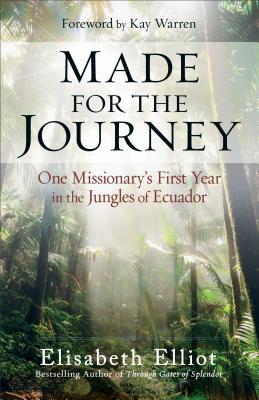
Book Review: Made for the Journey

Made for the Journey: One Missionary's First Year in the Jungles of Ecuador. 1998. Revell. 176 pages. [Source: Review copy]

First sentence: It is unsettling to me now to know that people who are making a tour of South America can take a short, easy side trip and see the Colorados.

This one was originally published as THESE STRANGE ASHES.

Made For the Journey is a memoir written by Elisabeth Elliot. In the book she recounts her first year as a missionary. This was before her marriage to Jim Elliot. Elisabeth worked with several other single women--some trained to be doctors/nurses--in a small jungle in Ecuador. Elisabeth's mission was to learn the language of the Colorados and translate the New Testament.

In the jungle, you might say, Elisabeth Elliot learned to wait. Things certainly weren't working according to her own time table.

In the book she shares the many lessons she learned--often the hard way--in the jungle during her first year.

The book brought to mind one section of Scripture.

As the rain and the snow
    come down from heaven,
and do not return to it
    without watering the earth
and making it bud and flourish,
    so that it yields seed for the sower and bread for the eater,
so is my word that goes out from my mouth:
    It will not return to me empty,
but will accomplish what I desire
    and achieve the purpose for which I sent it. Isaiah 55:10,11

I wish I'd read this book before reading her fiction novel, No Graven Image. If you do read Made for the Journey, it would be worth your time to seek out the other as well. The books complement one another well.

© Becky Laney of Operation Actually Read Bible

Friday, November 3, 2017

Book Review: Pizza with Jesus

Pizza with Jesus (No Black Olives). P.J. Frick. 2017. CreateSpace. 158 pages. [Source: Review copy]

First sentence: God sends his angels and love in many forms. One of my favorites is the dog. Always I learn from dogs--my own and every single stray.

Premise/plot: P.J. Frick shares her story, her testimony, with readers in Pizza With Jesus (No Black Olives). The book is about her many losses, the grieving process, and walking with Jesus through it all. She writes, "Loss is as varied as a fingerprint--as are the many responses to it."

My thoughts: Throughout the book of Psalms, believers are called to TELL.

Psalm 107:2a reads, "Let the redeemed of the LORD tell their story--"

Psalm 66:16 reads, "Come and hear, all you who fear God; let me tell you what he has done for me."

Psalm 71:15 reads, "My mouth will tell of your righteous deeds, of your saving acts all day long--though I know not how to relate them all."

Telling is just what Pizza with Jesus is all about. She writes, "This book is an attempt to answer His call to share my journey of faith through the most difficult times of my life."

It's a personal story. The book begins with a preview of all the losses coming her way. She then goes back, addresses each loss one by one.

This isn't a how-to-grieve book. I'm not sure it's even a how-I-grieved book. I don't think there is a tidy "the end" to the grieving process. If it isn't a how-to-grieve book, what is it? It's a how-Jesus-was-there-through-every-single-moment book. I would also say it's a memorial of sorts to her husband. Within the book she shares memories of her husband and even asks others to participate in sharing memories of David. The book reads as a love letter to her husband.

I would categorize this as a memoir of a Christian woman not a theological book on grief. The distinction isn't just that it is incredibly personal, though that's part of it. Frick's story includes some elements that I would categorize as not quite biblically sound. For example, the pre-existence of souls in heaven. She talks of her dogs, cats, and even her husband as returning to heaven. This notion of "returning" is problematic--theologically. If she'd written going to heaven, going to be with the Lord, going HOME, I wouldn't have thought twice. When writing about death, it can be a slippery slope to try to poetically talk about death and dying and the deceased. Lots of metaphors abound--each person has their own preferred way of saying it. What one person likes, another doesn't.

I will note that more dogs die in this book than in any other book I've EVER read in my thirty-plus years of reading.

© Becky Laney of Operation Actually Read Bible

Monday, January 23, 2017

Book Review: My Heart

My Heart. Julie Manning. 2017. B&H. 224 pages. [Source: Review Copy]

Julie Manning's My Heart is a mother's memoir. (Though one doesn't have to be a mother--or a nurse--to appreciate it.) Manning shares her story--her testimony. During the birth of her second child--a son--her heart stops working. Further tests reveal that her heart is in failure, and, that it could stop beating at any time, without much warning. Her life will never be the same. She's a wife, a mother--a mother of two young boys--and a Christian. This is her testimony of how she found Christ in the midst of her suffering. Of how she's able to hold onto joy and hope and peace despite all of her health issues.

Throughout the book she shares her story. But she also shares some of her journal entries and some letters she's written to her sons. These letters to her sons are by necessity emotional masterpieces. How could you read them and not be touched?!

This book may not be theology proper, but, I'd argue that it is theology lived out. Readers need both.

Favorite quotes:
  • "We do not need to die in order to experience Jesus; we just need to stop, pause, and cease striving long enough to need Him, love Him, and rest in Him." 
  • "Our sufferings do not produce belief or unbelief of the Lord in our lives; rather our sufferings will reveal our belief or unbelief in Jesus."
  • "What would our lives look like if we really did live with our life’s brevity at the forefront of our mind? Would we pursue the temporary, or would we pursue the eternal?"
  • "When you fail to take all of the emotions and heartaches and fears of your present circumstances to the Lord, just for the sake of numbing yourself, you are telling God that you believe He messed up and that He did not know what He was doing."
  • "Yes, the risk of vulnerability can be scary. It is true that the Holy Spirit often leads us into areas where we feel vulnerable. But we can go there because in God we have eternal security. Though it feels “dangerous” to walk in this direction, we are already safe in the embrace of God’s powerful love—so no place is truly dangerous for us. And, when the Holy Spirit leads us to be vulnerable, God shows up and blesses us through it with His peace and freedom."
  • " In the midst of suffering, we will look one of two places. We will either look at the suffering, and we will doubt God; or we will look at God and read the promises of His Word, and it will cause us to cry out to Him in utter desperation, leaning on Him as the One who is able to see us through our circumstances."
  • "I absolutely believe it is not only possible for us to experience hope and joy in the midst of suffering but that God desires to show us that He alone is our only hope and our only source of fulfilling joy."
  • "Do I believe that God being in control is better than me being in control? Do I believe that following God’s leading is better than my own comfort?"
  • "Our sufferings do not negate God’s call on our life to love Him and love others." 
  • "We share our stories to remember God’s faithfulness. We share our stories to direct our hearts back to what is important in this life as we feel the tug to drift away from a surrendered posture unto the Lord to a life of selfsufficiency. This life is not about us. Rather, this life is about Jesus. This life is not about our individual lives but about the day when the entire big “C” Church body is in the same place at the same time for eternity surrounding the throne of God, proclaiming “Holy, holy, holy, Lord God, the Almighty” (Rev. 4:8). We are not yet home, but rest assured, we WILL be home one day. Until then we must battle against complacency and against comfort and against taking things into our own hands of control. Even when we seek Jesus fervently. Even when we rely on the Lord for every ounce of energy and sustaining breath. "
  • "We can only view this life through the lens of the gospel of Jesus to the extent in which we know and believe the gospel itself."
  • "The more time we spend putting God’s Word into our minds, the more His Word will become our thoughts. The more Scriptures we study, the more we will learn about our God’s character. The more times we read through God’s redemption story for His people, which is you and me, the more our hearts will humbly rejoice in the grace poured out upon our souls. The Lord has much work to do in our lives. He accomplishes this work through His Word, the working of His Holy Spirit, and the presence of other believers in our lives. The more time we spend reading about Jesus, the more we will view this life and all of this life’s circumstances with the perspective that this place is not our forever home."

© Becky Laney of Operation Actually Read Bible
Wednesday, October 8, 2014

Book Review: The Hiding Place

The Hiding Place. Corrie Ten Boom. With John and Elizabeth Sherrill. 1971/1984/1995. Chosen. 228 pages. [Source: Bought]

I love, love, love, love, LOVE The Hiding Place. This is an amazing read that I'd recommend to believers and unbelievers. It is a powerful testimony. It is an incredible memoir.

Corrie ten Boom and her family (her father, her sister) hid Jews in their home during World War II. They were betrayed and then imprisoned. Her father died soon after their arrest. Corrie and her sister, Betsie, spent time in a concentration camp. That is a simple enough summary, I suppose. It doesn't really do justice to their story, however. This one that deserves to be read and reread.

The book is set in Holland, primarily in the 1930s and 1940s. It is a memoir. She does take a chapter or two to recall her life, her past. (What her family life was like. Memories of her parents, aunts, siblings, nieces and nephews. Memories of going to school. Her first (and only) love. Her work in the family's watch shop. What life was like in her community or neighborhood. It's detailed enough that it gives you a real sense of time and place.) But most of the book focuses on the Nazis and the ever-increasing dangers to Jewish people and those who helped them.

One of my biggest interests is World War II. I love to read fiction and nonfiction set during this time period. I've read plenty of memoirs and biographies. Each has a story to tell, a story worth reading. But The Hiding Place goes even beyond this. It is more than one woman's narrative about the war, about injustice and violence, about terror and uncertainty. It is a powerful testimony of God, of one family's faith in God, of the POWER of God and the astonishing effect of hope and forgiveness.

Quotes:
It was a day for memories. A day for calling up the past. How could we have guessed as we sat there--two middle-aged spinsters and an old man--that in place of memories we were about to be given adventure such as we had never dreamed of? Adventure and anguish, horror and heaven were just around the corner, and we did not know. (6)
"Corrie," he began instead, "do you know what hurts so very much? It's love. Love is the strongest force in the world, and when it is blocked that means pain. There are two things we can do when this happens. We can kill the love so that it stops hurting. But then of course part of us dies, too. Or, Corrie, we can ask God to open up another route for that love to travel." (42)
It was astonishing, really, the quality of life she was able to lead in that crippled body, and watching her during the three years of her paralysis, I made another discovery about love. Mama's love had always been the kind that acted itself out with soup pot and sewing basket. But now that these things were taken away, the love seemed as whole as before. She sat in her chair at the window and loved us. She loved the people she saw in the street--and beyond: her love took in the city, the land of Holland, the world. And so I learned that love is larger than the walls which shut it in. (45)
"It is wrong to give people hope when there is no hope," he said. "It is wrong to base faith upon wishes. There will be war. The Germans will attack and we will fall." He stamped out his cigar stub in the ashtray beside the radio and with it, it seemed, the anger too, for his voice grew gentle again. "Oh, my dears, I am sorry for all Dutchmen now who do not know the power of God. For we will be beaten. But He will not." (58)
But Betsie put a finger on my mouth. "Don't say it, Corrie! There are no 'if's' in God's world. And no places that are safer than other places. The center of His will is our only safety--O Corrie, let us pray that we may always know it!" (64)
Love. How did one show it? How could God Himself show truth and love at the same time in a world like this? By dying. The answer stood out for me sharper and chiller than it ever had before that night: the shape of a Cross etched on the history of the world. (87)
Was it possible that this--all of this that seemed so wasteful and so needless--this war, Scheveningen prison, this very cell, none of it was unforeseen or accidental? Could it be part of the pattern first revealed in the Gospels? Hadn't Jesus--and here my reading became intent indeed--hadn't Jesus been defeated as utterly and unarguably as our little group and our small plans had been? But… if the gospels were truly the pattern of God's activity, then defeat was only the beginning. I would look around at the bare little cell and wonder what conceivable victory could come from a place like this. (141)
"Betsie!" I wailed, "how long will it take?" "Perhaps a long, long time. Perhaps many years. But what better way could there be to spend our lives?" I turned to stare at her. "Whatever are you talking about?" "These young women. That girl back at the bunkers. Corrie, if people can be taught to hate, they can be taught to love! We must find the way, you and I, no matter how long it takes…" (165)
More than conquerors…It was not a wish. It was a fact. We knew it, we experienced it minute by minute--poor, hated, hungry. We are more than conquerors. Not "we shall be." We are! Life in Ravensbruck took place on two separate levels, mutually impossible. One, the observable, external life, grew every day more horrible. The other, the life we lived with God, grew daily better, truth upon truth, glory upon glory. Sometimes I would slip the Bible from its little sack with hands that shook, so mysterious had it become to me. It was new; it had just been written. I marveled sometimes that the ink was dry. I had believed the Bible always, but reading it now had nothing to do with belief. It was simply a description of the way things were--of hell and heaven, of how men act and how God acts. I had read a thousand times the story of Jesus' arrest--how soldiers had slapped Him, laughed at Him, flogged Him. Now such happenings had faces and voices. (183-4)
And so I discovered that it is not on our forgiveness any more than on our goodness that the world's healing hinges, but on His. When He tells us to love our enemies, He gives, along with the command, the love itself. (224)

© Becky Laney of Operation Actually Read Bible

Saturday, March 23, 2013

Book Review: Secret Thoughts of an Unlikely Convert

The Secret Thoughts of an Unlikely Convert: An English Professor's Journey Into Christian Faith. Rosaria Champagne Butterfield. 2012. (September 2012). Crown and Covenant. 150 pages.

First sentence: How do I tell you about my conversion to Christianity without making it sound like an alien abduction or a train wreck? Truth be told, it felt like a little of both. 

I'd heard wonderful things about the memoir The Secret Thoughts of an Unlikely Convert, and I was not disappointed. In many ways, it is just a gush-worthy read. Honest, emotional, intense, thought-provoking, and challenging. I appreciated the author's narrative voice: always honest, always bold.

How many non-believers read the Bible? How many non-believers read the Bible obsessively, for five or so hours a day? How many non-believers read the Bible in different translations and try to teach themselves Greek? How many non-believers become friends with pastors and seek to understand what the Bible says. One could even ask HOW MANY BELIEVERS read the Bible? How many believers have read the Bible that voraciously, cover to cover, again and again? Rosaria Champagne Butterfield came to the Bible with a need, a mission. She was out to "understand" her enemy, the Christian Right. She sought an intellectual understanding of her greatest opponents so she could do battle with them--in print at least. To understand the opposing position, to make sense of their arguments and worldview, she needed to know what the Bible said, she needed to know who the Bible said God was, who this Jesus Christ was.

At the time, she was hostile to the Christian faith. She was a liberal, lesbian, post-modern, feminist professor specializing in women's studies and queer theory. She knew or thought she knew plenty about Christians--all the stereotypical things about Christianity: the hateful signs and slogans, the protests, the rhetoric of hate and prejudice. But she didn't exactly know any Christians personally. But. All that changed with a letter, a phone call, and a dinner conversation. To her own surprise, she found herself on friendly terms with a Christian pastor! She found herself in a trusting, thoughtful relationship with a Christian built over several years.
Before I ever stepped foot in a church, I spent two years meeting with Ken and Floy and on and off "studying" scripture and my heart. If Ken and Floy had invited me to church at that first meal I would have careened like a skateboard on a cliff, and would have never come back. Ken, of course, knows the power of the word preached but it seemed to me he also knew at that time that I couldn't come to church--it would have been too threatening, too weird, too much. So, Ken was willing to bring the church to me. This gave me the room and the safety that I needed to match Ken and Floy's vulnerability and transparency. And so I opened up to them. I let them know who I was and what I valued. I invited them into my home and into my world. They met my friends, came to my dinner parties, saw me function in my real life. They made themselves safe enough for me to do this. At the beginning of any project, I read and re-read the book that I am trying to understand. At this point, I read and re-read the Bible. I read it voraciously and compulsively--as I do all books. I spent about five hours each day reading the Bible. I read every translation I could acquire...I still thought I was doing research for a book on the religious Right. Ken and Floy, during those two years asked me questions about my reading and my observations, but didn't pressure me or push me or interfere in my life. They were just there. 
Though she didn't accept his invitation to talk to her students (undergraduate students, I believe) about The Bible as literature, she told him she'd love to hear his prepared lecture.
I was both intrigued and infuriated. The more he talked, the more infuriated I became. If what this guy said was true, then everything that I believed--every jot and tittle--was false!
Though she wasn't ready--overnight--to accept the authority of the Bible as being THE WORD OF GOD. She began spending more of her time contemplating big questions, hard questions--questions that demanded answers.
Walking in the cold dark I thought about how peaceful life would be if I really believed that there was a knowable, dependable, sturdy and comprehensive idea of truth and a man-God who so loved his people that he endured the wrath of God the Father for the sins that I had committed and those I would go on to commit. But even this train of thought was not comforting to me. After all, what would I do with my past?...
I wondered about these Christians. Surely some of them had pasts. What did they do? How did they let go of their past without losing their identity?...
Still, I wondered about this God who died for the sins of his people. It sounded too good to be true. I allowed myself to wonder if it could possibly be true. This self-question gave me a frightening pause. Was I losing myself? Was I losing my mind?
This ongoing struggle or journey wasn't quick and simple. Here is her powerful testimony:
That night, I prayed, and asked God if the gospel message was for someone like me, too. I viscerally felt the living presence of God as I prayed. Jesus seemed present and alive. I knew that I was not alone in my room. I prayed that if Jesus was truly a real and risen God, that he would change my heart. And if he was real and if I was his, I prayed that he would give me the strength of mind to follow him and the character to become a godly woman. I prayed for the strength of character to repent for a sin that at that time didn't feel like sin at all--it felt like life, plain and simple. I prayed that if my life was actually his life, that he would take it back and make it what he wanted it to be. I asked him to take it all...
Secret Thoughts of An Unlikely Convert is a powerful, compelling memoir of a woman's journey to faith, to the Reformed faith. The book goes beyond her initial conversion. Readers learn how her life was transformed by God, how her life was turned upside down by her new faith, how she came to be a pastor's wife, lead her own Bible studies, came to adopt four biracial children in addition to taking in foster children, how she came to homeschool her children. In addition to her deep thoughts on conversion (also philosophy and/or worldview), readers learn the author's thoughts on worship and worship style, and marriage. She spends most of a chapter discussing what marriage is and what it means--and how hard this was to figure out coming from her feminist background. Adoption is a subject that means a great deal to her as well, and her thoughts on her experiences were fascinating!

Favorite quotes:
Answers come after questions, not before. Answers answer questions in specific and pointed ways, not in sweeping generalizations. 
A life outside of Christ is both hard and frightening; a life in Christ has hard edges and dark valleys, but it is purposeful even when painful.
There is a core difference between sharing the gospel with the lost and imposing a specific moral standard on the unconverted. 
Good teachers make it possible for people to change their positions without shame.
I learned the first rule of repentance: that repentance requires greater intimacy with God than with our sin. How much greater? About the size of a mustard seed. Repentance requires that we draw near to Jesus, no matter what. And sometimes we all have to crawl there on our hands and knees. Repentance is an intimate affair. And for many of us, intimacy with anything is a terrifying prospect.
Wanting to understand is a theoretical statement; willing to do his will takes action.
I learned that we must obey in faith before we feel better or different. At this time, though, obeying in faith, to me, felt like throwing myself off a cliff. Faith that endures is heroic, not sentimental.
If the Lord calls us to be a bridge, we have to learn to bear in his strength the weight. And it hurts. And it's good. And the Lord equips.
Biblical orthodoxy can offer real compassion, because in our struggle against sin, we cannot undermine God's power to change lives. 
I think that churches would be places of greater intimacy and growth in Christ if people stopped lying about what we need, what we fear, where we fail, and how we sin.
The world's eyes register what a life in Christ takes away, but how do I communicate all that it gives?
I wondered: If my life was the only evidence that Christ was alive, would anyone be convinced?
Living according to God's standards is an acquired taste.
God calls for us to be merciful to others for our own good as well as for the good of our community. 
There is a pit of false hope in placing our faith in our words rather than in God's compassion to receive sinners to himself. 
The saving grace of salvation is located in a holy and electing God, and a sacrificing, suffering, and obedient Savior. Stakes this high can never rest on my sincerity. 
The integrity of our relationships matters more than the boldness of our words.
The more God-centered our worship practice, the more mercy-centered our life. Worship is our rehearsal for how to live today and how to glorify God in heaven.
Jesus is an equal opportunity Prophet, Priest and King: He equips, strengthens, forgives, comforts, and brings into fruition the reality of sanctification. Jesus can equip anyone--no matter how lost or broken--for godly living.
Mercy ministry always comes down to this: you can help, but only Jesus can heal. 
© Becky Laney of Operation Actually Read Bible
Friday, August 3, 2012

Book Review: The Story of the Trapp Family Singers

The Story of the Trapp Family Singers. Maria Augusta Trapp. 1949/2001. HarperCollins. 320 pages.

Somebody tapped me on the shoulder. I looked up from the workbooks of my fifth graders, which I was just correcting, into the lined, old face of a little lay sister, every wrinkle radiating kindness. "Reverend Mother Abbess expects you in her private parlor," she whispered. Before I could close my mouth, which had opened in astonishment, the door shut behind the small figure. Lay sisters were not supposed to converse with candidates for the novitiate.

This is the true story that "inspired" my favorite musical The Sound of Music. For the most part, the book is fascinating--especially the first half of the book. Readers meet the young woman sent to be governess to a retired sea captain with many children. In the book, she's to be governess only to one of his daughters, the rest either have nursemaids, attend schools, or have their own tutors. There are definitely some big differences between the book and the movie--between truth and fiction. (For example, the names of the children are different, as is the chronology of the story. The couple married years before Hitler came to power; they married in 1927!) They began singing together as a family out of love for music, yes, but also out of financial necessity.

The book chronicles:

  • Maria's first eight or nine months as a governess, particular attention is paid to their first Christmas
  • Maria's new role as wife and mother
  • Austria's changing economy and politics in the 1930s
  • The family's flight from Austria and immigration to the United States
  • The family's first experiences in America as they go on tour and learn English
  • The family's (forced) return to Europe--fortunately, only for a few months.
  • The family's return to the United States, their continuing tours
  • The family's settling down in America (a bit more about their tours, building of their house, building of their music camp)
  • The private life of the family (recollections of holidays, feast days, birthdays, Christmases, vacations, etc.) 

The book is great on capturing the family's dependence on God, their reliance on God to deliver them and provide for them no matter the circumstance. The book is also great at capturing a specific time, place, and culture. For anyone curious about what it was like to be living in Austria in the 1920s and 1930s, this is a must read. For those interested in the immigrant experience during this time period, it is just a fascinating account! To see American culture--and language--from this outside perspective. The book was published in 1949, but it was up to date--so readers do get perspective on World War II from their perspective, also what the family tried to do to help Austria after the war was over.

I really LOVED this one!!!

Favorite quotes:
One of the greatest things in human life is the ability to make plans. Even if they never come true--the joy of anticipation is irrevocably yours. That way one can live many more than just one life. (214)
One night I tenderly consulted by private calendar, "time eaters" we had called them at school, and it showed only thirteen more days in exile. The next morning I started spring cleaning. Under my direction the maids were taking down the curtains and proceeding to brush the walls, when I saw the three youngest children knock on the door of the study. It didn't take long and out they came again. Running over to me as I stood on a ladder washing a big crystal chandelier, they yelled from afar: "Father says he doesn't know whether you like him at all!" "Why, of course, I like him," I answered, somewhat absentmindedly, because I had never washed a chandelier before. I noticed only vaguely that the children disappeared behind the study door again. That same night I was arranging flowers in several big, beautiful oriental vases. This was the last touch, and then the spring cleaning was over, and it had been really successful. When I had arrived at the last vase, the Captain came in. Stepping over to me, he stood and silently watched what I was doing with the peonies. Suddenly he said, "That was really awfully nice of you." An altogether new tone in his voice, like the deep, rich quality of a low bell, made me look up, and I met his eyes, looking at me with such warmth that I lowered mine immediately again, bewildered. Automatically I asked what was so nice of me, as I only remembered that awful letter. "Why," he said, astonished, "didn't you send word to me through the children that you accepted the offer, I mean, that you want to marry me?" Scissors and peonies fell to the floor. "That I want to--marry you?" "Well, yes. The children came to me this morning and said they had had a council among themselves, and the only way to keep you with us would be that I marry you. I said to them that I would love to, but I didn't think you liked me. They ran over to you and came back in a flash, crying that you had said, 'yes I do.' Aren't we engaged now?" Now I was out of gear. I absolutely did not know what to say or what to do; not at all. The air was full of an expectant silence, and all I knew was that in a few days I would be received into my convent, and there stood a real, live man who wanted to marry me. (57-58)

© Becky Laney of Operation Actually Read Bible