Showing posts with label biblical fiction. Show all posts

Friday, November 22, 2019

Book Review: Crossroads in Jerusalem

Crossroads in Jerusalem. Elizabeth Raum. 2019. JourneyForth/BJU Press. 112 pages. [Source: Review copy]

I love choose your own adventure books. I do. Elizabeth Raum has written several biblical choose your own adventure for young elementary-aged readers. Others in the series include Crossroads Among the Gentiles, Christmas Crossroads, and Crossroads in Galilee. Each book offers a series of journeys. In the newest Choose Your Journey, the three journeys are: Journey with a Boy of Jerusalem (and witness Jesus overturning the money-changing tables at the temple), Journey with a Servant Girl (and witness Jesus healing the man at the Bethesda Pool), and Journey with the Lawyer's Assistant (and witness Jesus telling the parable of the Good Samaritan). Of course those are just a tiny selection of the events you may witness in this one. Each story has multiple endings, of course--as all choose your own adventure books do--and readers can reread the book until he/she has read them all.

First sentence from Journey 1: It’s spring in Jerusalem, time for Passover. Passover is the greatest of the Jewish feasts. It occurs every spring and lasts for a week. Jews from all over the world come to the temple in Jerusalem to celebrate the Exodus from Egypt and the barley harvest.
First sentence from Journey 2: Now that you are eleven years old, you can be a great help. You are a member of Chuza’s household. Chuza is an important man. He works for Herod Antipas, the ruler of Galilee and Perea.
First sentence from Journey 3: The lawyer calls you his assistant. Servant is a better title. You’re actually a slave. Your mother was a slave, which makes you one too.

I love how the back matter includes references for all the events in the book. Readers can choose to read the biblical accounts for themselves in their original context. The choose your own adventure books do tend to rearrange things quite a bit!

I definitely enjoy the series.

© Becky Laney of Operation Actually Read Bible

Tuesday, October 23, 2018

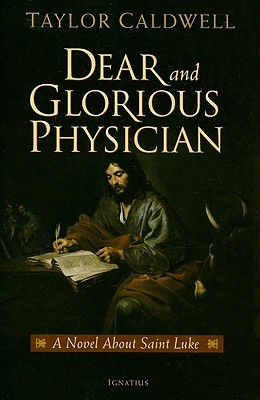
Book Review: Dear and Glorious Physician

Dear and Glorious Physician. Taylor Caldwell. 1958. 560 pages. [Source: Bought]

First sentence: Lucanus was never sure whether he liked or disliked his father. He was only certain he pitied him.

I wanted to love Dear and Glorious Physician. I did. In theory it sounds like it has the potential to be good--really good. It is a fictionalized account of the gospel writer Luke. (Luke wrote Acts as well.) But not all biblical fiction is biblical--this is something I've learned the hard way.

Lucanas, our narrator-hero, is Greek. His father and mother were former slaves. Lucanas became favored and essentially adopted by a Roman nobleman. He was trained as a physician. From an early, early age he was compassionate and empathetic. He never wanted to be a doctor to the wealthy, the elite, the privileged. He always wanted to be a doctor to the poorest of the poor, the socially unacceptable. (Slaves. Lepers. Prisoners.) From a young age his touch was a healing touch. Long before he learned of a Jewish Messiah, long before he learned of Jesus' teachings, his life, his death, his resurrection, long before he started calling on God and placing his trust in him, he was healing people. He continues to heal people after he hears 'the gospel' as well. In these healings Caldwell does not show Lucanas healing in the name of the Lord Jesus Christ. He doesn't bow his head and pray silently. He just heals. He even raises a girl from the dead. In one instance, Lucanas "feels virtue" leaving his body as he heals. This is just bizarre and all kinds of wrong.

The last third of the book shows Lucanas traveling around interviewing eyewitnesses--men and women who has seen the Lord Jesus Christ, heard him, followed him, knew him. One of the longer interviews is with Mary and other family members. There we learn that Mary was eternally innocent and that she was not conceived in sin and had never sinned. Again. All kinds of wrong.

Lucanas has an unfavorable opinion of James and John and some of the other disciples. He mentions how he thinks that they will get Jesus' teachings wrong in the name of evangelism. How they will let their own agendas shift the focus from what Jesus actually taught. Again. All kinds of wrong.

The first two-thirds of the novel weren't WRONG so much as slightly tedious and boring. The last third of the novel was wrong more often than right. Some things subtly off from Scripture, some things out and out OFF. (For example, when she had Lucanas meet John he was YOUNG and yet had already received the visions of Revelation. Saul was still Saul--not Paul. Saul hadn't met the apostles in Jerusalem yet. Saul hadn't begun his ministry yet. But John had received the visions of the last days?! Going back to Saul for a minute....Saul hadn't begun his ministry yet but had already received his calling to minister to the gentiles only????)

I honestly don't know if Taylor Caldwell even read Luke and Acts before she wrote this book. Perhaps this imaginative retelling takes into consideration some bad theological works of Caldwell's time?


© Becky Laney of Operation Actually Read Bible

Monday, February 15, 2016

Book Review: The Prophetess

The Prophetess. Jill Eileen Smith. 2016. Revell. 368 pages. [Source: Review copy]

Do you read much biblical fiction? Most of the biblical fiction I've read and reviewed since starting to blog has been written by Jill Eileen Smith. Though I don't consider it [biblical fiction] one of my favorite sub-genres, I do consider her one of my favorite authors.

The Prophetess is a retelling of Judges 4 and 5.
And the people of Israel again did what was evil in the sight of the Lord after Ehud died. And the Lord sold them into the hand of Jabin king of Canaan, who reigned in Hazor. The commander of his army was Sisera, who lived in Harosheth-hagoyim. Then the people of Israel cried out to the Lord for help, for he had 900 chariots of iron and he oppressed the people of Israel cruelly for twenty years.
Now Deborah, a prophetess, the wife of Lappidoth, was judging Israel at that time. She used to sit under the palm of Deborah between Ramah and Bethel in the hill country of Ephraim, and the people of Israel came up to her for judgment. She sent and summoned Barak the son of Abinoam from Kedesh-naphtali and said to him, “Has not the Lord, the God of Israel, commanded you, ‘Go, gather your men at Mount Tabor, taking 10,000 from the people of Naphtali and the people of Zebulun. And I will draw out Sisera, the general of Jabin's army, to meet you by the river Kishon with his chariots and his troops, and I will give him into your hand’?” Barak said to her, “If you will go with me, I will go, but if you will not go with me, I will not go.” And she said, “I will surely go with you. Nevertheless, the road on which you are going will not lead to your glory, for the Lord will sell Sisera into the hand of a woman.” Then Deborah arose and went with Barak to Kedesh. And Barak called out Zebulun and Naphtali to Kedesh. And 10,000 men went up at his heels, and Deborah went up with him. Judges 4:1-10.
The villagers ceased in Israel;
they ceased to be until I arose;
I, Deborah, arose as a mother in Israel. Judges 5:7
Or perhaps the better description would be The Prophetess is a fictional prologue to Judges 4 and 5! In the Bible's account, readers meet Deborah and Barak RIGHT when the action is about to happen. Not so in this retelling. Pray and wait; pray and wait; pray and wait; pray and wait; pray and wait. Year after year after year as the country is terrorized by their enemies, Deborah prays and waits. She's not pictured as being alone in her prayers either. Those faithful to the Lord are crying out for mercy and deliverance. God do something! Haven't we suffered enough at the hands of our enemies? We've done wrong Lord, but, forgive us.  

One of the strengths of the novels is it brings to life this particular verse: he oppressed the people of Israel cruelly for twenty years. Readers see the effect of this oppression, how all "normal" activities and freedoms had been suppressed by an ever-present fear. Men were killed--slaughtered. Women could be raped, killed, kidnapped and sold into slavery, tortured. Man. Woman. Boy. Girl. All were at risk as perishing at the direct hands of their enemy who would show no mercy. They seemed powerless; the situation seemed hopeless. But some began to pray. Their prayers most likely were not answered immediately. But they did not pray and wait in vain.

In the biblical account, readers learn a little about Deborah, Barak, and Jael. Jill Eileen Smith added dozens of characters to the novel. Readers spend a LOT of time with Deborah's family. Her husband, her two sons, her daughter-in-law(s), her daughter. Readers spend the most time with her daughter, Talya. For better or worse. I have to admit that I really struggled to tolerate Talya! Her "I can do anything" "I can be anything" "I can take care of myself" attitude bothered me because it fueled her outright rebellion and disobedience. When most men and women were timid to leave their homes and fields--at least alone--her I can go where I want, when I want, I'm not afraid of enemy armies attitude seemed not brave but foolish. When most everyone else respected Deborah and followed her decisions and/or advice--she was the prophetess after all--Talya stood apart as disregarding almost everything her mother said.

One of my favorite characters was Jael. I thought the author did a great job in including Jael, her husband Heber, and their children (grown up children) into the story.
But Sisera fled away on foot to the tent of Jael, the wife of Heber the Kenite, for there was peace between Jabin the king of Hazor and the house of Heber the Kenite. And Jael came out to meet Sisera and said to him, “Turn aside, my lord; turn aside to me; do not be afraid.” So he turned aside to her into the tent, and she covered him with a rug. And he said to her, “Please give me a little water to drink, for I am thirsty.” So she opened a skin of milk and gave him a drink and covered him. And he said to her, “Stand at the opening of the tent, and if any man comes and asks you, ‘Is anyone here?’ say, ‘No.’” But Jael the wife of Heber took a tent peg, and took a hammer in her hand. Then she went softly to him and drove the peg into his temple until it went down into the ground while he was lying fast asleep from weariness. So he died. And behold, as Barak was pursuing Sisera, Jael went out to meet him and said to him, “Come, and I will show you the man whom you are seeking.” So he went in to her tent, and there lay Sisera dead, with the tent peg in his temple. Judges 4:17-22. 
The book concludes with a bit of romance and celebration. Deborah has composed her song, taught it to the Israelites, and all seems to be well--for the moment. Things never stay well in the book of Judges however!!!


© Becky Laney of Operation Actually Read Bible

Monday, February 16, 2015

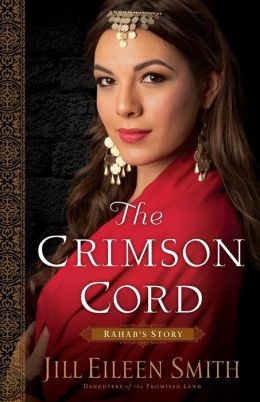
Book Review: The Crimson Cord

The Crimson Cord: Rahab's Story (Daughters of the Promised Land #1) Jill Eileen Smith. 2015. Revell. 368 pages. [Source: Review copy]

I enjoy reading biblical fiction. Some authors I tend to love more than others. I do tend to like Jill Eileen Smith's books. I haven't "loved" every single novel. But for the most part, I eagerly anticipate each new release. How did I like The Crimson Cord? Well...

I loved, loved, LOVED Jill Eileen Smith's The Crimson Cord. It was WONDERFUL. The Crimson Cord is Rahab's story. It is fiction, of course. The author imagines what Rahab's life might have been like. Why was she a prostitute? Was this something she chose for herself? Or was it forced upon her? Is it a lifestyle she enjoyed? Or was it a burden, of sorts, for her? Was she trapped and weighed down by it? Why did she choose to help the two spies? Why did she trust them and their God? Was it easy for her to convince her family to stay with her in her house? How did they view her lifestyle? What happened to them after Jericho's fall?

Jill Eileen Smith excels at storytelling. This story is captivating from start to finish. It is faithful to Scripture--what is clearly revealed in Scripture. Yet at the same time it is creative fiction. Nothing in the  novel contradicts Scripture, but, so much of the novel is imaginative speculation. I loved Smith's Rahab.   I found Rahab an intriguing character, easy to love and sympathize with. And her love story, well, it was wonderful.

© Becky Laney of Operation Actually Read Bible

Wednesday, February 12, 2014

Book Review: Rachel

Rachel. Jill Eileen Smith. 2014. Revell. 320 pages. [Source: Review copy]

Rachel is the third book in the Wives of the Patriarchs series by Jill Eileen Smith. I have loved her novels in the past. I think I prefer her Wives of David series a bit more, but, for the most part I have really enjoyed this second series of biblical fiction.

Jacob, Isaac's son, has more than one wife. He is married to two fiesty sisters: Leah and Rachel. Readers catch glimpses of Leah's perspective in this one. But for better or worse, more sympathy is extended towards the wife Jacob actually loved, Rachel. Many readers may share this sympathy. I don't. Scripture does not reveal Rachel to be an innocent victim, or, even an especially nice person. She's beautiful, true, but she is a bitter complainer. While Jill Eileen Smith offers up an oh-so-innocent excuse for Rachel stealing her father's idols and taking them with her, I'm not convinced. Jacob was not exactly great at keeping his family and his extended household from worshipping idols. (See Genesis 35:2-4)

The novel covers the events of Genesis 28 through Genesis 35. I liked it very much. I liked the multiple perspectives. The novel is very busy--it would have to be! I would definitely recommend this series!

© Becky Laney of Operation Actually Read Bible

Thursday, October 24, 2013

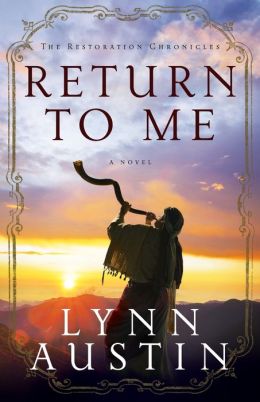
Book Review: Return to Me


Return to Me. Lynn Austin. 2013. Bethany House. 464 pages. [Source: Review copy]


I definitely enjoyed Lynn Austin's Chronicle of the Kings series. I was thrilled to learn that she was writing more biblical fiction. Return To Me is the first in her Restoration Chronicles. The novel spans at least two decades. It opens with the good news: the exiles are being allowed to return to Jerusalem; they are even encouraged to rebuild the temple! The good news is received with joy and thanksgiving by some. But not by all. Many have grown good and comfortable in Babylon. Many would rather stay in Babylon where life is good, really good, and definitely known. This "good news" definitely divides families. Some choosing to stay; some choosing to go; some saying, you go now, we'll come later.

Return to Me has two main narrators: Iddo, a Levite, a priest, and his young grandson, Zechariah. These two are really the only believers in their family--at least for most of the novel. Iddo leaves most of his children and grandchildren behind in Babylon, but, his call to return home, to return to Jerusalem is so strong, that he'll do anything, risk anything, to obey. One of the things he risks is the wrath of his wife. His wife, Dinah, does NOT want to return, does NOT want to leave her children because some God that she only half-heartedly believes in some of the time has spoken this or that promise, does NOT want to leave her good life behind to go to some place she doesn't even care about and build some old temple. She follows her husband out of duty, not love. Zechariah is Iddo's grandson. He's just turned thirteen or so when the novel opens. He is EXCITED about returning. He is even leaving his parents behind. He is following God's call and is completely trusting God to make it all work for good.

The women characters in Return to Me, for the most part, annoyed me. While it is true that both characters--Iddo's wife and Zechariah's future wife (Yael)--have found redemption and grace by the end, and that may be the whole point of the book, God showing grace to otherwise worthless people, I still found them to be incredibly obnoxious.  Yael, for example, worships several Babylonian gods. She is a seer, a sorceress. She hides this idol worship from some, but not all, of her community. She makes easy friends with the Samaritans because she reads the stars and predicts the future and worships a good number of gods. Dinah, Iddo's wife, commits adultery when she's angry at her husband and blaming him for something he had absolutely nothing to do with. "But he promised he'd take me back to Babylon." I think the part that annoyed me most was his response, how he was actually willing to go back to Babylon to pacify his wife and keep her, to give into her whining demands. Of course, she came to her senses and experienced a call of her own, I suppose, before that happened. But still.

I found Return to Me to be an interesting read. I didn't necessarily "love" the characters, but I thought they were all very human. I think the book is challenging and thought provoking. The characters that I found most annoying and obnoxious were the very ones in need of grace, forgiveness, and compassion. It would be easy to say, well, forget about those people, God can't use them, God couldn't possibly love them, just look at them, and, yet, this story illustrates "the impossible." Grace is unmerited. Grace is not given to people who have earned it, who are good and nice and easy to get along with, who are moral and upstanding. Grace is for desperate people covered inside and out with the scars of sins past and present.

© Becky Laney of Operation Actually Read Bible

Friday, October 11, 2013

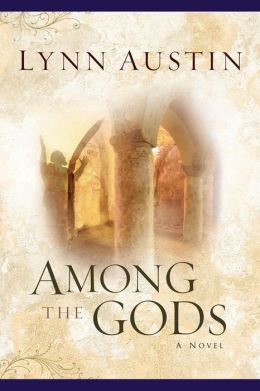
Book Review: Among the Gods

Among the Gods. Lynn Austin. 2006. Bethany House. 352 pages. [Source: Bought]

Among the Gods is closely connected to book four: Faith of My Fathers. The main characters are: Manassah, and his chief advisor, Zerah; Joshua, Prince Amariah (Manassah's younger brother), Dinah (Joshua's sister, Manassah's former concubine), Jerimoth, Mattan, Nathan, and Miriam. This book closely follows the path of two men: Manassah and Joshua. It follows Manassah into truly dark places, but, it allows room for his humanity as well. And it also follows Joshua. Both journeys are difficult because both men are flawed, of course. Manassah's sins are OBVIOUS sins; Joshua's sins are hidden. (I suppose you could say his sins were anger, bitterness, holding onto the past, his pride that he is "the one" that God will use to bring Manassah down to the grave, his need to be in control ALL THE TIME, his thinking that he has all the answers and knows what is best.) Both men have a lot to learn about God, about love and grace and forgiveness. 

I definitely recommend the series. The five books were wonderful. Austin did a great job in bringing biblical history to life. In the fourth and fifth book, the books were a bit more creative in telling the story because not as much is said in detail in the Bible. But the characters were definitely fleshed out. I thought the lessons taught in each book were marvelous. These lessons were often ILLUSTRATED through characters actions. It wasn't merely packing lectures into dialogue. (Some might think that is what Christian fiction is all about, but, in reality it isn't.) The books on Manassah were definitely harder to handle in way; but they were completely necessary as well. 

I think these books are for an adult audience. While I wouldn't think twice about handing When Calls the Heart or Love Comes Softly to a fourth or fifth grader, I wouldn't say the same about this series of books! 

© Becky Laney of Operation Actually Read Bible

Thursday, October 10, 2013

Book Review: Faith of My Fathers

Faith of My Fathers. Lynn Austin. 2006. Bethany House. 320 pages. [Source: Bought]

Faith of My Fathers and Among the Gods are closely connected books; these books finish up Lynn Austin's Chronicle of the Kings series. By the time Faith of My Fathers opens, King Hezekiah has died and his young son, Manassah has become king. He has been brought up alongside Eliakim's son, Joshua. The two have spent years together: learning lessons, training, talking, playing. But something will come between these two. And it starts with a little lie here and there. Suggestions from others that Joshua and Eliakim and the priests and Levites have an agenda, that they love power and are secretly manipulating him with their laws, rules, and wise council. Instead of placing his faith in the Torah, in the men who have spent their lives reading and studying it, he places his faith in an idol worshipper who twists and distorts it. This young man, Zerah, makes wondrous claims making it seem that he has all the answers and that he's been lied to his whole life. That there is so much he could learn if he'd just opened his mind and let go of all these rules and laws. One of the first things he does is convince Manassah that Isaiah and Eliakim are part of a conspiracy to destroy him. He even suggests that Isaiah CURSED Hezekiah and made him die. Manassah, well, Zerah seems to have him completely mesmerized. He's vulnerable and gullible and his decisions from about page twenty on are absolutely horrible. Faith of My Fathers is disturbing and realistic. It definitely portrays sin and idolatry. 

Faith of My Fathers is in some ways a divided story. After Manassah has arrested Isaiah and Eliakim and sentenced them to die for treason, Joshua and his brother, Jerimoth, escape first to Moab. They are helped in their escape, and their family expands to include two young boys and a young woman, Miriam. One boy, Mattan,  is adopted by Jerimoth. The other boy, Nathan, I believe is adopted by Joshua. Miriam has fallen in love with Joshua, but Joshua after learning of the fate of his family is angry, bitter, and has one thing and one thing alone on his mind: getting revenge and killing Manassah. Joshua feels called to return to Jerusalem again; he feels his work is not done yet, that he's been called to save a remnant of true believers, Levites mostly. This story begins in Faith of My Fathers, and is continued on in Among the Gods. 

Faith of My Fathers is incredibly intense and very compelling. It is difficult to read of idolatry, to be an eyewitness to the depravity. But I think it does a great job in showing and depicting how far the nation has fallen, and just why God is so angry. 

© Becky Laney of Operation Actually Read Bible

Friday, October 4, 2013

Book Review: The Strength of His Hand

The Strength of His Hand. Lynn Austin. 2005. Bethany House. 336 pages. [Source: Bought]

The Strength of His Hand is the third book in Lynn Austin's Chronicles of the Kings series. The first novel is Gods and Kings; the second novel is Song of Redemption. Hezekiah and Hephzibah have a strong marriage at the start of The Strength of His Hand, but, what Hezekiah doesn't know about his wife will change EVERYTHING and endanger the kingdom itself. For in this adaptation, Austin has Hezekiah's discovery of his wife's idolatry (he catches her worshipping an idol; he learns of her vow to sacrifice their first child) prove almost fatal. The direct cause being burns from a fire. In much pain--physically and emotionally--Hezekiah is certain that he must divorce Hephzibah immediately, that she lose her position as his queen. Hezekiah's illness is nearly fatal, that is completely biblical. Hezekiah seeks Isaiah and more importantly seeks God. God in his mercy extends his life by fifteen years and gives a sign to Hezekiah and the world of that promise of life. But what will Hezekiah do with those fifteen years? And will he extend mercy to others?

The Strength of His Hand focuses more on war and politics than on romance. (Song of Redemption focuses on the relationship between Eliakim and Jerusha and Hezekiah and Hephzibah). Hezekiah is a flawed king. At his best, he remembers to seek God, to trust in God and God alone, to listen to wise advice from godly men. At his worst, well, he's overly confident that he is in a good place with God and that nothing can shake him or harm his kingdom. He is proud of what good he is doing for God. He starts making decisions first and only later thinking about what God might have wanted him to do.

The Strength of His Hand still focuses on the Assyrians, but it also introduces the Babylonians.

Main characters include: Hezekiah, Shebna, Eliakim, Hephzibah, Jerusha, and Isaiah.

© Becky Laney of Operation Actually Read Bible

Friday, September 27, 2013

Book Review: Song of Redemption

Song of Redemption. Lynn Austin. 2005. Bethany House. 352 pages. [Source: Bought]

Song of Redemption is the sequel to Lynn Austin's Gods & Kings.  Now that Hezekiah is king, he has a unique opportunity. He can lead his nation back to God. He can read and study the law; perhaps, more importantly, he can follow it and require that others follow it as well. Of course, he cannot command his subjects to truly believe and have faith in Yahweh. But, he can forbid idol worship, destroy idols, and encourage rightful worship of the one true God. Not everyone in his kingdom is excited about the reforms. Even within the royal palace there are those that see this transformation as a big, big mistake.

Song of Redemption stars Hezekiah and his wife Hephzibah, Hilkiah and his son Eliakim, and two Israelite refugees: Jerusha and Maacah. Jerusha's story is truly haunting. While attending a wedding celebration with her family, the Assyrians attack killing many and kidnapping others. Jerusha is not killed; instead she becomes a slave. She travels with the invaders. She is repeatedly raped. Her life is a living nightmare.

Song of Redemption is an intense novel. Judah has stopped paying tribute to the Assyrians. War could come at any moment. And when Israel is defeated, their own defeat seems inevitable. Many fear the worst. Hezekiah clings to his faith. He believes that God can and will save them no matter the odds. His faith will surely be tested....

Song of Redemption has two strong relationships. Eliakim and Jerusha. Eliakim believes in God, but does he BELIEVE in God? Does his faith go beyond the surface? Is it a transforming faith? Jerusha comes into his father's house a broken woman. Her faith in God and in humanity being shaken. She doesn't feel worthy of a normal life, of friendship of family of love. Austin clearly illustrates redemption through Jerusha's story and her love story with Eliakim. Another woman readers get to know is Hephzibah. At the start of the novel, she was Hezekiah's only true wife but his least favorite in his harem. He'd had no use for her since completing the obligatory wedding week. She longs for love and a true marriage. She longs for a child or two. Hezekiah's new faith means that he turns away from his concubines and seeks a faithful and loving relationship with his wife. Here is an opportunity for both to grow in faith and love for better or worse. Unfortunately, Hephzibah is one of those in the palace who does not believe in God. She is a secret idol worshipper. Hephzibah is presented sympathetically as a sorrowful woman with a need so deep that only God can fill it.

Austin's biblical fiction is worth reading!
"Has Yahweh revealed to you what's going to happen to our nation--to our people?"
The prophet's expression changed, as if he had glimpsed something wonderful and terrible, awesome and dreadful. "Yes," Isaiah said. "But who has believed our message and to whom has the arm of the Lord been revealed? God has shown me things I'm not sure I fully understand yet. I've seen the promised seed of Abraham, the righteous Servant of Yahweh, a Light for the Gentiles and a stumbling block to our people--the Messiah, who will reign on the throne forever."
"Will God send the Messiah now--to deliver us from Assyria?"
The question seemed to annoy Isaiah. "You don't understand. He will be your offspring, but you and I won't see Him. And when He does come, many will hear Him but not understand."
"Rabbi, what about our present crisis?" (323-4)
© Becky Laney of Operation Actually Read Bible

Thursday, September 19, 2013

Book Review: God & Kings (2005)

God & Kings. Lynn Austin. 1995/2005. Bethany House. 317 pages. [Source: Bought]

I love, love, love Lynn Austin's Gods and Kings. This was, in fact, the very first Austin book I ever read. After reading it, I wanted to read all of her books. (I still haven't managed that!) But I would definitely recommend her books to anyone looking for a great read. She's great at characterization, dialogue, relationships, and pacing. Her novels feel relevant and timely. Her writing just draws you into the story, into the culture.

Quotes:
“His death was honorable, my lady—a glorious sacrifice to be celebrated,” Deborah insisted. Abijah stared at her in disbelief. “What kind of mother could celebrate her child’s death? And what kind of father would kill his own child to save himself? Only a monster could do such a thing.” She could see that her words had shocked the servant, but she didn’t care. She looked down at her sleeping son again. “And only a monster would force his other children to watch.” “You’d better be careful what you say,” Deborah said, her voice a near-whisper. “Your husband is the king.”
THE NIGHTMARE JOLTED HEZEKIAH awake. He had dreamed of Molech again, the image so vivid that he’d felt the heat of the flames. He lay awake in the darkness, breathing hard, his heart pounding until his chest hurt. He listened for soldiers and distant drums, but the palace hallways were quiet. It was just a bad dream, he told himself. But when he gazed at Eliab’s bed, he knew that Molech was real.
“Our Temple worship must change as the world changes or it will eventually die out altogether. We’re so bound to tradition that we no longer listen to the people. I’m not talking about changing Yahweh’s laws, I’m talking about examining our traditions. If the men of Judah are drawn to the religions of the nations around us, then we need to ask ourselves why. It’s time we consider changing our outmoded traditions to fit the times instead of blindly clinging to the old ways.” Azariah could no longer restrain himself. “That’s outrageous!” he shouted. “Don’t listen to him!”
“This Temple has been trying to operate under your narrow-minded, archaic views long enough. Repentance! Where has that gotten us? The whole purpose of this Temple is to serve the spiritual needs of the people. Obviously our traditions aren’t meeting those needs or the people would come back. First we must draw them back to worship. Later we can wean them from their idolatry.”
“What’s wrong?” Hezekiah asked. “What do you want?” “Listen, all you leaders of Judah,” the man said. “You’re supposed to know right from wrong, yet you’re the very ones who hate good and love evil. You skin my people and tear at their flesh. You chop them up like meat meant for the cooking pot—and then you plead and beg with Yahweh for His help. Do you really expect Him to listen to your troubles? He will look the other way!” Uriah leaped to his feet. “Guards!” he shouted. “Take this man out of here!” “Wait,” Hezekiah said, holding up his hand. “Let him finish.” He didn’t need this stranger to tell him how much his people were suffering. And seeing the remains of the feast all around him filled Hezekiah with guilt. Maybe this stranger had answers. The hall gradually grew silent as the guests noticed the confrontation. “Why are you here?” Hezekiah asked. “Yahweh has filled me with the power of his Spirit, with justice and might. I’ve come to announce Yahweh’s punishment on this nation for her sins.” “Yahweh?” Hezekiah repeated. “One of Israel’s gods?” This all seemed like a dream he’d once had, and he had the peculiar feeling that this had happened before. Something about the man seemed familiar to him. He tried to remember but couldn’t. “Listen to me, you leaders who hate justice—you fill Jerusalem with murder, corruption, and sin of every kind. Your leaders take bribes, your priests and prophets only preach or prophesy if they’re paid—” “Your Majesty, tell the guards to take him out of here,” Uriah pleaded. “This man is either drunk or insane.” The banquet hall was dimly lit, and although the man’s face looked bruised and swollen, as if he’d suffered a beating, he didn’t appear drunk or insane to Hezekiah. He turned to Uriah and noticed that all the color had drained from the priest’s face. He was glaring at the stranger with a mixture of hatred and fear. Hezekiah had the eerie feeling that his elusive dream involved Uriah, too. He turned back to Micah. “You’ve made some serious accusations. I think you’d better explain yourself.” “My judgments are not my own. I’m here to plead Yahweh’s case.” “All right,” Hezekiah replied. “Let’s make this a formal hearing. You may present Yahweh’s case.” He sat down to listen, and Uriah sat grudgingly beside him. “Listen, O mountains, to Yahweh’s accusation,” the man shouted. “Hear, O earth, for Yahweh has a case against his people. He will prosecute them to the full: ‘My people, what have I done to you? How have I burdened you? Answer me. I brought you up out of Egypt and redeemed you from the land of slavery. I sent Moses to lead you, also Aaron and Miriam. My people, remember what Balak king of Moab counseled and what Balaam son of Beor answered. Remember your journey from Shittim to Gilgal, that you may know the righteous acts of the LORD.’ ” “I’ve studied our nation’s history,” Hezekiah cut in. He’d hoped to learn something that would help him, but he was growing impatient. “What does Yahweh want?” The stranger’s tone changed suddenly as he switched roles, pleading the case for the people. He dropped to his knees. “How can we make up to God for what we’ve done? Shall we bow down before Yahweh with burnt offerings and yearling calves? Will Yahweh be pleased with thousands of rams, and with ten thousand rivers of olive oil? Would He forgive my sins if I offered Him the fruit of my body? Shall I sacrifice my firstborn?” Sacrifice my firstborn. Suddenly the floodgate burst open, and the memories poured into Hezekiah’s mind. The rumble of voices and trampling feet. “Which one is the firstborn?” The priest’s hand had rested on Eliab’s head. “This one.” He remembered the column of smoke in the Valley of Hinnom and the pounding drums. He remembered the heat and the flames; the monster’s open mouth and outstretched arms. Molech. Hezekiah began to tremble. “Yahweh,” he whispered.
Gods and Kings is biblical fiction at its absolute best. It is the story of the young prince who grew up to be King Hezekiah. Two of the prophets it stars is Micah and Isaiah.


© Becky Laney of Operation Actually Read Bible

Sunday, April 28, 2013

Book Review: When Jesus Wept (2013)

When Jesus Wept. Bodie Thoene and Brock Thoene. 2013. Zondervan. 304 pages.

I really wanted to love this novel. Biblical fiction from the point of view of Lazarus?! I wanted to read it! This story has always fascinated me. I'll borrow a quote from Rick James and add:
What we share in common as believers, we also share with Lazarus: We were all raised from the dead. The resurrection of our own salvation was no less staggering--indeed more so--than the physical raising of Lazarus. (A Million Ways To Die, Rick James, 99)
The biblical account of Lazarus can be found in John 11:1-43 and John 12:1-9. More about Martha and Mary can be found in Luke 10:38-42.

Unfortunately, almost everything I loved about the biblical account is absent from this novel. True, it is narrated from Lazarus' perspective and not either of his sisters. So instead of getting the wonderful ministry of Jesus to the two sisters, we get a glimpse of Lazarus in heaven (but not the way Carman imagined it to be).

The biggest issue I had with this novel was the fact that the authors condensed three different women into one. Mary wasn't just Mary, sister of Martha and Lazarus; she also was forced into the role of Mary of Magdala AND the unidentified adulterous woman in John 8:1-11. Almost half the novel focused on Martha and Lazarus being judgmental and ashamed of their sister, Mary. I felt they slandered Mary needlessly.

If the novel has a strength, it is in showing the politics and dangers of daily life. What was it like to live on a day-to-day or season-to-season basis during this time period. What were the actual expectations--if any--that ordinary people had for the coming Messiah? How did people perceive Jesus? Was it easy or hard to believe in Jesus' message? Personally, I felt Iscariot by Tosca Lee did a better job than When Jesus Wept in showing this.

© Becky Laney of Operation Actually Read Bible

Wednesday, April 17, 2013

Book Review: Iscariot (2013)

Iscariot. Tosca Lee. 2013. Howard Books. 336 pages.

I must admit I had my doubts about the novel Iscariot. I would have doubts about any novel focusing on Judas Iscariot making him a an easy to relate to, sympathetic character. But. The writing really was so beautiful in places, and the author's storytelling, for the most part, worked really well. She made an effort to give fullness to Judas' whole life, not just his few years spent following the Messiah, but for better or worse his life experience. What circumstances and situations impacted Judas' character? What events shaped and molded him into the man he was, the man he would become? While this is a FICTION novel, I thought it did a good job of establishing the fact that he was a real person, that he would have been bringing all of his life experiences with him as he became a disciple. The fictional Judas of this novel was oh-so-human, oh-so-broken; a man who truly desperately NEEDED Jesus to be THE Messiah right then, right there. Judas' faith in God was not questioned in this novel, nor his spirituality. So in many ways I found Iscariot to be a captivating read. If one clearly keeps in mind that this is fiction, the work of an imagination to bring Judas to life for modern readers, then this is well worth reading. What the Bible says about Judas is the inspired Word of God, the work of the Holy Spirit. So it is perhaps important to keep what the Bible actually says about the betrayal in mind as you read.

I am glad I read this one. It was my first introduction to Tosca Lee's writing. And I definitely enjoyed her storytelling and her writing even if at times the story was dark and uncomfortable. (I would rather the passion story remain always uncomfortable than to become hardened to the atrocities and realities of the atonement.)

© Becky Laney of Operation Actually Read Bible

Monday, February 11, 2013

Book Review: Rebekah (2013)


 Rebekah. Jill Eileen Smith. 2013. Revell. 320 pages.

I have enjoyed all of Jill Eileen Smith's novels. Rebekah's story isn't an easy one to tell, perhaps, because we only get a few glimpses of her in the Bible: when she agrees to marry Isaac, when she's pregnant with Jacob and Esau and God tells her that Esau will serve Jacob, when she's urging Jacob to lie to his father so he can get the blessing instead of Esau. But Smith does a great job in bringing this story, this romance, to life. It was imaginative and thought-provoking. For example, Smith has chosen an unhappy ending of sorts for the marriage of Abraham and Sarah, revealing that her fictional Sarah was never able to forgive let alone forget her husband being willing to sacrifice Isaac on the altar just because he'd heard from the Lord. Smith also has Abraham marrying again BEFORE Sarah's death as a direct result, perhaps, of his separation from Sarah. The novel reveals Isaac's heart as well, having him struggle with his father's decision. Isaac being able to FORGIVE but not forget what his father did on the mountain.

I would definitely recommend this author. To learn more about Rebekah, consider reading Genesis 24, specifically Genesis 24:15-67; Genesis 25:19-28; Genesis 26:6-11; Genesis 27:1-46.

Sunday, June 17, 2012

Book Review: Mary Magdalene

Mary Magdalene. Diana Wallis Taylor. 2012. Revell. 304 pages.

The early morning breeze lifted Mary's shawl, exposing her long dark hair, and brought with it the tangy smell of seaweed. 

I have really enjoyed Diana Wallis Taylor's works of biblical fiction: Journey to the Well and Martha. I was pleased to be able to review her newest book, Mary Magdalene.

While this is a work of fiction, the second half of the novel does follow what is revealed in the gospel accounts. Taylor has given Mary Magdalene quite the back story in this novel. The first half is bittersweet, at best. Readers meet a young girl, Mary, who is beautiful, bright, quite promising. Her father is allowing her to learn Scriptures, to learn of God and his commandments and promises. Nathan is part apprentice in her father's boat building enterprise, part tutor to the young girl. But when Mary's kidnapped and held for ransom, well, it's the beginning of a tragic story. Psychologically traumatized, Mary can never quite recover fully even after she's been restored to her family, even after her father's wounds are healed. She's been struck with an illness, a terror, that leaves her mad and not quite in control of herself or her body. Some even say she acts possessed. The truth is, she's not quite well, she never knows when her illness or madness will strike. She could be perfectly fine one minute, and not so fine the next. Her father and mother do worry that no one will want to marry her, but, Nathan has fallen in love with her for better or worse. He loves her even though she's ill, even though there are times she's not herself at all. He loves her truly and deeply and wants to take care of her and protect her. He longs to find a way to heal her mind, body, and spirit. But as the years go by, things don't improve, they only get worse. Mary loses her father and her mother. And Nathan is having a hard time with Mary; he loves her still, but she's not capable of being his wife, of loving him. She can't run a house, she can't even take care of herself. She needs constant tending and supervision, and it's a tiring task. But then one day Nathan hears of a man, a man some are calling a prophet, a healer, a messiah. Could the rumors be true? Could this man called Jesus heal and restore Mary? He'll do anything it takes to make sure Mary meets Jesus....

I did enjoy this one. But it was so sad in a way. I really came to love Nathan, to admire him. And I wanted a happier ending for the two of them. I was happy that Mary met the Savior and was healed. And I was happy to see her come to love him and serve him and follow him closely. I liked seeing these events through her eyes. But. It wasn't as satisfying as I was hoping. It was good though.

© Becky Laney of Operation Actually Read Bible

Saturday, March 3, 2012

Book Review: Sarai

Sarai. Jill Eileen Smith. 2012. Revell. 320 pages.

Ur, 2051 BC
Sarai glanced across the courtyard, catching Abram's gaze. His half smile and the twinkle in his eye warmed her more than the wine she had tasted at the start of the ceremony. Music drifted around them as the bridal couple--their nephew Lot and his new wife, Melah--took their seats on the bench beneath the canopy and accepted rich foods from the hands of the servants.

I really LOVED Jill Eileen Smith's first trilogy (Wives of King David). While I didn't love, love, love Sarai as much as I loved, loved, loved some of her previous books, I definitely enjoyed it! (Bathsheba and Abigail were some of the best, best, best  books in their genre--biblical fiction.)

I don't think it's a horrible thing that I didn't love and adore it. I really don't. Because I am not one of those readers that demand the same thing from each and every book I read. Some books wow, yes, but most are just satisfying and enjoyable.

Sarai spans decades. We first meet the hopeful wife in Ur many, many years (if not a decade) from Abram's first call to leave the land and his family behind him to go to a new land, a promised land. The book concludes with the long-awaited, much-hoped-for, much-prayed-for birth of the couple's son, Isaac. The book covers all the decades in between. All the highs and lows of this couple and their family. Readers are introduced to Lot, his wife, and in a very, very limited way their two daughters. Lot's wife is one of the characters that we spend quite a bit of time with. And her story parallels Sarai's in a way. Her choices--from the start--make her a very, very, very different kind of wife and mother. But both women are presented as all-too-human. Sarai is not presented as a saint, a flawless woman beyond temptation, doubt, despair, and anger.

I definitely liked the characters in this one. I liked the writing too. I think I just have always liked King David more than Abraham. So the novels about King David's wives have more appeal to me perhaps. But Sarai is a good book.

© Becky Laney of Operation Actually Read Bible

Tuesday, June 28, 2011

Book Review: Martha

Martha. Diana Wallis Taylor. 2011. Revell. 256 pages.

Martha watched her father walk slowly up the road as the afternoon shadows appeared, and he was smiling. 

Diana Wallis Taylor's newest novel is about Martha, the sister of Mary and Lazarus. Her story--in the Bible--can be found in Luke 10 and John 11 and 12.

I enjoyed this novel. I enjoyed the fictional framework of it. How we see Martha, Mary, Lazarus, and their father, Ephraim, within their community of Bethany. How we get a glimpse of this culture, the customs of village life, etc. (We see births and deaths and weddings and funerals and feasts and festivals and such.) Martha, as the oldest, has taken charge of this household. We see her hard at work, but we also see her as truly loving her family and watching out to see that all their needs are met. We see her in tender, loving relationships with her father, sister, and brother. We also see her friendship with Esther. Esther's father, Simon, is a leper for many years before being miraculously healed by Jesus. (Presumably the Simon mentioned in Matthew 26:6-13 and Mark 14:3-9).

When the novel first opens, we see her dreaming of more. We see her wanting to get married and have a family of her own. Her father tries his best to arrange a marriage for his daughter, but, that doesn't quite work out as hoped. Taylor gives Martha a bittersweet love affair (and by affair, I don't mean something trashy or impure; I mean she loves him and he loves her, and the two want to get married and live happily ever after...) with a God-fearing Roman soldier, who is killed in the line of duty. If he had lived, Martha would have happily left her family and her community behind. But, of course, he didn't live. So Martha remains year after year. Martha, after several years, comes to accept her singleness and welcomes her role as being the caretaker in her own family.

The strength of this novel is in the imagining of village life during the time of Christ. The scenes taken directly from Scripture, however, feel flatter. Not in a bad way. I'll try to clarify what I mean exactly by that. There is a richness in the Scripture text. There just is something wonderful about the Scripture itself.  There is already drama and emotion and dialogue. It doesn't need any creative touches on the author's part to make it better. It can't be made better. In fact, if these scenes were changed too much, it would be more of a criticism against the author. So reading those scenes in the book made me want to read the Scriptural account of these events. Which is why I said it wasn't a bad thing.

From Luke 10:
Now as they went on their way, Jesus entered a village. And a woman named Martha welcomed him into her house. And she had a sister called Mary, who sat at the Lord's feet and listened to his teaching. But Martha was distracted with much serving. And she went up to him and said, "Lord, do you not care that my sister has left me to serve alone? Tell her then to help me." But the Lord answered her, "Martha, Martha, you are anxious and troubled about many things, but one thing is necessary. Mary has chosen the good portion, which will not be taken away from her." (Luke 10:38-42, ESV)

I do recommend reading John 11 in its entirety. But here are the Martha bits:
Now when Jesus came, he found that Lazarus had already been in the tomb four days. Bethany was near Jerusalem, about two miles off, and many of the Jews had come to Martha and Mary to console them concerning their brother. So when Martha heard that Jesus was coming, she went and met him, but Mary remained seated in the house. Martha said to Jesus, "Lord, if you had been here, my brother would not have died. But even now I know that whatever you ask from God, God will give you. Jesus said to her, "Your brother will rise again." Martha said to him, "I know that he will rise again in the resurrection on the last day." Jesus said to her, "I am the resurrection and the life. Whoever believes in me, though he die, yet shall he live, and everyone who lives and believes in me shall never die. Do you believe this?" She said to him, "Yes, Lord; I believe that you are the Christ, the Son of God, who is coming into the world." When she had said this, she went and called her sister Mary, saying in private, "The Teacher is here and is calling for you."  (John 11:17-28, ESV)
And a brief mention in John 12:
Six days before the Passover, Jesus therefore came to Bethany, where Lazarus was, whom Jesus had raised from the dead. So they gave a dinner for him there. Martha served, and Lazarus was one of those reclining with him at a table. Mary therefore took a pound of expensive ointment made from pure nard, and anointed the feet of Jesus and wiped his feet with her hair. The house was filled with the fragrance of the perfume. But Judas Iscariot, one of his disciples (he who was about to betray him), said, "Why was this ointment not sold for three hundred denarii and given to the poor?" He said this not because he cared about the poor, but because he was a thief, and having charge of the moneybag he used to help himself to what was put into it. Jesus said, "Leave her alone, so that she may keep it for the day of my burial. For the poor you always have with you, but you do not always have me. (John 12:1-8, ESV)
Diana Wallis Taylor has also written Journey to the Well.


© Becky Laney of Operation Actually Read Bible

Saturday, March 19, 2011

Book Review: Love Amid the Ashes

Love Amid the Ashes. Mesu Andrews. 2011. Revell. 411 pages.

Dinah's leaden feet left no print in the sun-baked soil of Grandfather Isaac's Hebron camp. He had fought death's pale rider for many days, but his aging lungs finally lost the battle for breath. He was gone. Her sun and moon and stars, the only man who had seen beyond Dinah's shame and loved her after Shechem. Her heart felt as desolate as the dwindling wadi, where she knelt to rinse the rags with which she'd washed and anointed Grandfather's body


I didn't like this one. But I am going to do my best to be fair and honest. Because reading is completely subjective. Just because I didn't like it doesn't mean that you won't like it.

Love Amid the Ashes is the romance between Job and Dinah. Inspired--to some degree at least--by the latter part of Genesis and Job. It makes Job contemporaries with Jacob, Esau, Isaac, Dinah, and Joseph. (I'd always thought of Job as being after the Tower of Babel (Genesis 11) but slightly before Abraham (Genesis 12-25). Or perhaps overlapping the earlier years of Abram/Abraham and Sarai/Sarah.)

In the book of Job, readers are let in on a little secret in chapter one.
 6Now there was a day when the sons of God came to present themselves before the LORD, and Satan came also among them.
 7And the LORD said unto Satan, Whence comest thou? Then Satan answered the LORD, and said, From going to and fro in the earth, and from walking up and down in it.
 8And the LORD said unto Satan, Hast thou considered my servant Job, that there is none like him in the earth, a perfect and an upright man, one that feareth God, and escheweth evil?
 9Then Satan answered the LORD, and said, Doth Job fear God for nought?
 10Hast not thou made an hedge about him, and about his house, and about all that he hath on every side? thou hast blessed the work of his hands, and his substance is increased in the land.
 11But put forth thine hand now, and touch all that he hath, and he will curse thee to thy face.
 12And the LORD said unto Satan, Behold, all that he hath is in thy power; only upon himself put not forth thine hand. So Satan went forth from the presence of the LORD. (Job 1:6-12, King James Version)
And again in chapter two:
 1Again there was a day when the sons of God came to present themselves before the LORD, and Satan came also among them to present himself before the LORD.
 2And the LORD said unto Satan, From whence comest thou? And Satan answered the LORD, and said, From going to and fro in the earth, and from walking up and down in it.
 3And the LORD said unto Satan, Hast thou considered my servant Job, that there is none like him in the earth, a perfect and an upright man, one that feareth God, and escheweth evil? and still he holdeth fast his integrity, although thou movedst me against him, to destroy him without cause.
 4And Satan answered the LORD, and said, Skin for skin, yea, all that a man hath will he give for his life.
 5But put forth thine hand now, and touch his bone and his flesh, and he will curse thee to thy face.
 6And the LORD said unto Satan, Behold, he is in thine hand; but save his life.
 7So went Satan forth from the presence of the LORD, and smote Job with sore boils from the sole of his foot unto his crown.
 8And he took him a potsherd to scrape himself withal; and he sat down among the ashes.
 9Then said his wife unto him, Dost thou still retain thine integrity? curse God, and die.
 10But he said unto her, Thou speakest as one of the foolish women speaketh. What? shall we receive good at the hand of God, and shall we not receive evil? In all this did not Job sin with his lips. (Job 2:1-10, King James Version)
These chapters provide a crucial framework for understanding--comprehending, appreciating--the book of Job. God is testing Job, and making a point with Satan. Readers know something that Job doesn't. Readers know something that Job's three friends' don't know. (Their names are Bildad, Zophar, Eliphaz.) Readers know something that that windbag Elihu doesn't. Readers know why Job's life is seemingly falling apart.

This framework, from my perspective, is missing in Love Amid the Ashes. Now I am NOT saying that God isn't present in Mesu Andrews' work. Job believes in God. He worships God. God is everything to him. And Job is always, always ready to talk about God with any one in his life. But we don't hear from God until "God's speech" in the last part of the philosophizing or debating (Job 38-41).

One big difference between the biblical narrative and this fictional account is in perspective, in cause and effect. (Though I'm not completely comfortable with those terms.) The novel sees things humanly. Job's downfall, his destruction, his fall from riches to rags comes from human hands. There is an evil, sinister, vicious, cruel man, Sayyid, who is the cause of Job's trials and tribulations. (Sayyid reminded me very much of Jafar.) Likewise, Job's restoration, Job's happily ever after, his rise from rags to riches, is seen as coming from human hands--from Dinah's brother, Joseph, who has come to power and wealth and prestige in Egypt. In the bible, both are seen as coming straight from God. It may seem like a small thing, and maybe it is a small thing to you, but for me it was a big thing.

Let's talk characters. Dinah, when we first meet her, is bitter and angry and grieving. After being cast out by her family (her father and brothers) after her disgrace of being "raped," she took refuge with Grandfather Isaac who was able to look past her shame and forgive her. In this version, Dinah was an all too willing participant. She knew that she should get her father's permission before acting as a wife, but she felt married in that moment. There is a ceremony with Shechem, it's just not recognized as being valid by her father and brothers. There is much BLOOD shed. And Dinah is someone considered repulsive and horrid. She disgusts people. Her very presence angers people. (Of course, all this is fictional speculation. We have no idea how Dinah was treated by her father, by her mother, by her brothers, by her cousins, by her former friends and acquaintances, by the surrounding communities and regions. We have no idea how far widespread this "scandal" really was.) But the bigger the disgrace, the more dramatic the story.

But now that Isaac has died, Dinah's future is uncertain. Her Grandfather was arranging a marriage with an Edomite, Job's oldest son. (Job is doing the arranging on his son's behalf.) Job and Isaac strongly believe in this connection, this alliance. They see it as a way to bring Esau's descendants into "the promise" or "the covenant." (Because Jacob is the chosen one (chosen over Esau), and Dinah is Jacob's daughter.) Think that's confusing? Job's son is part Ishmaelite, and the Ishmaelites are trying to work their way back into the promised line as well.

Job sees Dinah as someone in need of love and kindness and a new beginning. He sees her as someone that God loves. He sees the pain in her life. He knows that there is one to heal, one to forgive, one to restore. He knows that Dinah needs to meet God. That Dinah needs to be in right relationship with God. So Job teaches her about sacrifices, about atonement, about prayer, about fellowship. And Job does his best to show her that forgiveness is the only right way to live life.

So Job takes Dinah with him to be his son's wife. But there is a BIG problem! Before he can even have the servants begin to unpack, Job begins to receive horrible messages announcing one calamity after another. He's lost his sons and daughters. He's lost his animals, his herds and flocks, his "wealth." He's lost almost all of his servants. Dinah's future husband is lost to her before they could ever meet. What is to become of her now? Job, her host, is kind but broken. He's afflicted physically, mentally, emotionally. And Job's wife, Sitis, well she's got BIG, BIG issues of her own. (So big, I'm not even sure I should try to explain!)

Most of Love Amid Ashes occurs in the one week of silence, the gap between Job 2 and 3. And it's filled with drama and action. Mainly centered on Job's wife and the evil, evil man Sayyid. Dinah spends her time caring for Job, for seeing to his wounds, to nursing him the best she can. But it's also a waiting time. They are waiting to see what Job's "friends" will do, waiting for them to arrive, waiting to see if Sayyid can be brought to justice. Once they arrive, once the discussions begin, the plot turns a bit more familiar.

There is much drama and conflict and action. Much more than what is in the actual book of Job. But I could see why it would be hard to turn four or five men sitting around talking into a novel, into a romance at that. After all, Job already has a wife. She may be only someone Job could love. But she's got to be done away with somehow for Dinah to get her happily ever after.

By combining Dinah's story with Job's story, a few complications arise in my opinion. It just felt a bit messy to me. I liked Job's strength, his relationship with God, his perseverance. And I could appreciate Dinah's newfound faith. She's a woman just discovering for the first time perhaps that God is a forgiving God. That there is life free from shame, from guilt. She's a woman discovering hope after years of bitter despair. So there's a raw beauty in that which I could appreciate to a certain degree. But. I would have liked it more, perhaps, if Dinah's story had been Dinah's story and Job's story had been Job's story. I hope that makes sense.

© 2011 Becky Laney of Operation Actually Read Bible

Saturday, March 12, 2011

Book Review: Bathsheba

Bathsheba. (The Wives of King David #3) Jill Eileen Smith. 2011. Revell. 350 pages.

Jerusalem, 994 BC
Darkness curtained the sky, hiding the stars, sheltering Bathsheba in the inner courtyard of her home. She clutched the soft linen towel to her chest, shivering, while Uriah stood with his back to her, a sentry guarding her privacy.

I LOVED, LOVED, LOVED this one. It is one of the best Christian fiction books that I've read this year. And one of the best examples of biblical fiction that I've ever read. That doesn't really surprise me. After all, I loved Abigail and enjoyed Michal--the first two books in the series. All three chronicle the life of King David, though each is written from a different perspective. Michal chronicles David's rise to fame and his struggles with King Saul. Abigail continues that struggle, for the most part, and establishes David on the throne. But it is Bathsheba that shows the king's strengths and weaknesses. For it is when he has the good life that he succumbs to temptation--adultery and ultimately murder. But David's story is ultimately one of grace and redemption. A story of second chances. Of a God that heals and restores. A God that uses people even in their weaknesses, even in their darkest moments, to accomplish his purposes. Yes, David was sinful--he was human--but he knew that God could cleanse him from the deepest, darkest stains of sin.

This novel is told primarily from two perspectives: Bathsheba and David. Readers catch a glimpse of their personal lives. Of Bathsheba's marriage to Uriah. Of her loneliness and frustration. Of being the wife left behind as her husband goes off to fight for the King again and again and again. It seems that he's away more than he's home. And while he's home, she loves him. And she doesn't want to nag about how much she hates wars and fighting and such. But oh how she longs to be understood. How she wishes she could keep her husband with her all the time. It also speaks of her depression. How she longs for a child, wants a houseful of children. But after several years of marriage--interrupted marriage--she fears she may be barren. And there is much shame in that--if it is true. Readers also see a grieving David. After Abigail's death, David is hurting. He wants to find the one wife that will be to him 'the one.' He wants a deeper connection, but that is something you just can't rush. And being king, well, it complicates matters. Then again, he has the power to call any woman to him. Bathsheba, for the most part, lives a separate life from the king. When she sees him--when she hears him--it is from afar, usually in a big crowd. Yet, there are a few moments when they take notice of each other. Which ultimately leads to one night when her husband is far away from home--fighting the king's battles--a night they both regret, a night that results in the conception of a child. A sin that cannot be hidden away. A sin that leads to one of the greatest psalms of repentance, Psalm 51. But though this relationship may not have had the purest of starts, that doesn't mean that their relationship didn't blossom into something greater, something richer. Bathsheba would be the mother of the son that would be king, the son that would build God's temple in Jerusalem. A son that would play a role in fulfilling God's promise.

What did I love about this one? Just about everything! The writing, the pacing, the characterization. Even though I was familiar with the story, I found it incredibly compelling. I didn't want to put this one down. And I couldn't stop talking about it either! It had me hooked. It had me excited.
Psalm 51
 1Have mercy upon me, O God, according to thy lovingkindness: according unto the multitude of thy tender mercies blot out my transgressions.
 2Wash me throughly from mine iniquity, and cleanse me from my sin.
 3For I acknowledge my transgressions: and my sin is ever before me.
 4Against thee, thee only, have I sinned, and done this evil in thy sight: that thou mightest be justified when thou speakest, and be clear when thou judgest.
 5Behold, I was shapen in iniquity; and in sin did my mother conceive me.
 6Behold, thou desirest truth in the inward parts: and in the hidden part thou shalt make me to know wisdom.
 7Purge me with hyssop, and I shall be clean: wash me, and I shall be whiter than snow.
 8Make me to hear joy and gladness; that the bones which thou hast broken may rejoice.
 9Hide thy face from my sins, and blot out all mine iniquities.
 10Create in me a clean heart, O God; and renew a right spirit within me.
 11Cast me not away from thy presence; and take not thy holy spirit from me.
 12Restore unto me the joy of thy salvation; and uphold me with thy free spirit.
 13Then will I teach transgressors thy ways; and sinners shall be converted unto thee.
 14Deliver me from bloodguiltiness, O God, thou God of my salvation: and my tongue shall sing aloud of thy righteousness.
 15O Lord, open thou my lips; and my mouth shall shew forth thy praise.
 16For thou desirest not sacrifice; else would I give it: thou delightest not in burnt offering.
 17The sacrifices of God are a broken spirit: a broken and a contrite heart, O God, thou wilt not despise.
 18Do good in thy good pleasure unto Zion: build thou the walls of Jerusalem.
 19Then shalt thou be pleased with the sacrifices of righteousness, with burnt offering and whole burnt offering: then shall they offer bullocks upon thine altar. (Psalm 51, King James Version)


© 2011 Becky Laney of Operation Actually Read Bible

Sunday, July 4, 2010

Book Review: Magdalene


Magdalene. Angela Hunt. 2006. Tyndale. 448 pages.

Silence, as heavy as doom, wraps itself around me as two guards lead me into the lower-level judgment hall. When I fold my hands, the chink of my chains disturbs the quiet.

My first impression of Magdalene was a good one. I started the book and felt it had great promise. It's biblical fiction. It's a fictional account of Mary Magdalene. (Miryam of Magdala) It's a nice blend of fact and fiction. We don't know that much about her--as a person, her life before, her life after--but we do know she was a follower of Jesus. The middle third of the book focuses on the year(s) she spent following Christ. The teachings. The parables. The miracles. The signs. Witness to it all. Did Miryam understand who Jesus was? Not in this account. Is that her fault? I don't think so. I think many followers--men and women--were confused, were frustrated, by Jesus' real mission. A mission that led all the way to the cross, but didn't end there. Miryam certainly wouldn't have--couldn't have--predicted the true mission, the true purpose.

The book imagines much more than that however. Readers see the before picture. A Miryam so angry, so bitter, so confused, so hurt that she goes to the dark side. What led her to such a place? Well, in this account, Miryam has lost her husband and her children to the brutality of Roman soldiers. Miryam becomes obsessed with revenge, with justice. She'll do anything--even if it means inviting strange new gods into her life--to get what she wants.

Jesus (in Hunt's account Yeshua) heals Miryam, welcomes her, forgives her. But is that the end of this story? Should that be the end of this story?

Magdalene is a novel within a framework. Miryam is sharing her story with an unfriendly audience--a Roman audience. She's been sentenced to death. And she's telling us just why she's about to die. The whole book is working towards this very dramatic conclusion. You may think you know why she's there, but you may just be surprised. I know I was.

I said I had a good first impression, well, my impression had changed by the end. The good news--Miryam is a human character, a fully flawed human character. The bad news is I was disappointed with Miryam. I wanted a different story, a different result. I can't say much more than that really. Not without spoiling some of the book's twists.

Magdalene is a compelling novel. It kept me reading. Even when I wanted to throw the book across the room, I wanted needed to know what happened next.

© Becky Laney of Operation Actually Read Bible