Showing posts with label contemporary. Show all posts

Saturday, October 29, 2022

39. The Extraordinary Deaths of Mrs. Kip


The Extraordinary Deaths of Mrs. Kip. Sara Brunsvold. 2022. 361 pages. [Source: Library]

First sentence: Clara Kip had prayed repeatedly to die in Sao Paulo. It truly seemed the smallest of requests. People died in Brazil every day. What was one more? Especially one who had dreamed of the country most of her life. The Lord, however, gave her Kansas.

Premise/plot: Mrs. Kip (Clara Kip) is dying make no mistake about it. This contemporary Christian read opens with our main character entering hospice care and checking into a nursing facility. But in her few week(s) left, she's going to continue to impact the world. She's still got love left to give until her very final breath.

Aidyn Kelley is a newbie reporter who is looking for her "big break." Having won an award for her writing in college she feels entitled to be a big shot in the newsroom. But. That's not how life works. Still, her boss (not the BIG boss) is giving her an assignment. To the outside world and even to Aidyn herself this assignment feels like punishment. Write an obituary for an old woman????? Really???? That's the big break???? Aidyn is told to go and visit Mrs. Kip, to get to know her...

The two slowly but surely come to an arrangement. Aidyn tells an inventive, creative "extraordinary" death story and Mrs. Kip will in return answer three questions truthfully. After a very bumpy introduction, these two soon become good friends....

Readers learn--even before Aidyn--how EXTRAORDINARY Mrs. Kip's life actually is/was. 

My thoughts: I absolutely LOVED, LOVED, LOVED, LOVED, LOVED, LOVED this one. Without a doubt my most favorite of all time contemporary read in Christian Fiction. I love how UNapologetic it is. Mrs. Kip is a LOVING, kind, WISE woman of God. All of life's hardships and sorrows, all her losses, all her unanswered prayers, etc. have taught her that the JOY OF THE LORD IS HER STRENGTH. I love how her story unfolds. I love the flashbacks. But most of all I love the present-day-scenes. I love her witness. I love her testimony. I loved every moment of this one. It was BEAUTIFUL. It was PRECIOUS. 

Could it perhaps trigger some readers????? Perhaps. Mrs. Kip is dying of CANCER. And it's hard not to have a personal story, a personal connection. Readers may be reminded of their own [painful] losses. But this one is SO beautiful. Even if you have to read through tears, I think the story is a thousand times worth it.  

© Becky Laney of Operation Actually Read Bible

Tuesday, July 26, 2022

28. The London House


The London House. Katherine Reay. 2021. [November] 368 pages. [Source: Library]

First sentence: Caro hugged Martine, whispering close to her ear. 

There are essentially two main stories unfolding in Katherine Reay's The London House. There is a story within a story. Caroline Payne is being compelled to revisit a "dark family secret." A friend--or former friend, possibly still a true forever friend--is about to publish an article revealing her family's dark, scandalous past. She doesn't believe him--at first. Her father--who is dying--is irate. She cannot deny blind facts. But she can question their interpretation and possible biases by the author. His name is Mat Hammond, and they were college friends and classmates. The big "dark" "scandalous" secret is that her great-aunt Caroline Waite ran away with a Nazi lover [allegedly] and betrayed her country. The cover-up through the generations is that Caroline died as a child. 

Caroline promises to comment [or contribute] to the story...but only after she's done her own research into the past. She returns to her family's British home--THE LONDON HOUSE--and finds the diaries, letters, etc. from both her great-aunt and her grandmother. There are certainly "secrets" to be found, but do they fall in line with Mat's story??? Or does what she reads convince her that Mat's theories are all wrong??? Is the "scandalous secret" that simple and straight forward? 

Much of the plot is centered around events in the 1930s and early 1940s. In the years leading up to war and the war itself. Caroline [the aunt] wroked in Paris for a designer named Elsa Schiaparelli. There are some historical details woven into the story. Like discussion of the lobster dress

Quotes:
History reflects humanity. It isn't one dimensional, or even two-dimensional; it's multifaceted and far more complex and nuanced than we allow.
Humans are messy. Their history is going to be messy. 

© Becky Laney of Operation Actually Read Bible

Saturday, January 29, 2022

7. Tacos for Two


Tacos for Two. Betsy St. Amant. 2021. [October] 336 pages. [Source: Review copy]

First sentence: If Rory Perez could find a way to wad all the cilantro in the entire world into a ball and hurl it into outer space, it still wouldn't be far enough removed for her preference.

If You've Got Mail is your all-time favorite, favorite movie AND you live for Taco Tuesday, then Betsy St. Amant's newest book, Tacos for Two, was written just for you. (Probably). 

ColorMeTurquoise and StrongerMan99 are falling hard and fast for one another. These two have been chatting via Direct Messages on a dating app, "Love at First Chat." They've never met, but, they share a few things in common. One of which is they both love the movie You've Got Mail. 

Rory Perez and Jude Strong are thrown together a little too often for her liking. Rory inherited a food truck, a taco truck, from her aunt. It isn't that she doesn't love tacos, she does, but she doesn't love cooking. (She doesn't even like cooking, not even a little bit). Jude Strong HATES his family business--a law firm. His big dream is to own his own food truck--and tacos, well, tacos would be his first choice. To him, owning his own food truck would mean some freedom and independence... These two food trucks are about to be in direct competition with each other. And, well, conflicts are bound to happen. Can this small Texas town be big enough for two thriving taco trucks?

This romance is 1000% predictable. That isn't necessarily problematic. Again, if you love the movie If You've Got Mail (or one of the earlier films from which it derives--In the Good Old Summertime OR Shop Around The Corner), I think that predictability wouldn't be a deal breaker. This book does seem more derivative than many other Christian romances. 

I didn't have trouble suspending my disbelief for most of the book. However, when it came to Rory's party planning/designing, well, she lost me a bit. I had a hard time imagining a sophisticated, elegant, beautiful party where the guests are wearing formal wear when tacos and nachos are on the menu and the decorations include balloons. 

© Becky Laney of Operation Actually Read Bible

Wednesday, October 27, 2021

73. The Secret Keepers of Old Depot Grocery


The Secret Keepers of Old Depot Grocery. Amanda Cox. 2021. 352 pages. [Source: Review copy]

First sentence: Sarah nudged aside last night's puddle of clothes with her bare foot, the exposed designer label sticking out a bit too much.

The Secret Keepers of Old Depot Grocery is a multigenerational saga following three generations of women: Glory Ann (the grandmother), Rosemary (the mother), Sarah (the daughter). If you haven't guessed it from the title, these women each have secrets of varying significance. 

Sarah Ashby, our "present day" heroine, has returned to her hometown after being widowed. She's distraught--but not for the reasons you might think. Hence the secret.

Rosemary Anderson, Sarah's mother and Glory Ann's daughter, has a secret as well. What she isn't keeping secret is her desire for her daughter to NOT come home. I'll rephrase that, Rosemary does NOT want her daughter's life to be limited by her small hometown. Not after she's "escaped" once. No, it would be better for Sarah (so she says) that she returns to the big city (Chicago) and go on living life to the fullest. She's also not keeping secret the fact that it is time to sell the family-owned grocery story, Old Depot.

Glory Ann Clearwater, Sarah's grandmother and Rosemary's mother, has a few secrets as well. She loves, loves, loves the store and cares deeply about her family. She adores Sarah. The two are like peas in a pod. 

The book alternates time periods and narrators. The present day is almost always focused on Sarah. The past alternates between Glory Ann and Rosemary. The past starts in June 1965. 

I really enjoyed so many things about this one. I liked the family. I loved, loved, loved, loved, LOVED Clarence Clearwater. He's a tremendous character. His story arc is HEARTBREAKING. I did enjoy watching these relationships build and rebuild. Plenty of substance.

There was only one major flaw as far as I'm concerned. It's the kind of thing that irritates/frustrates/disappoints me greatly. However, I would imagine most readers couldn't care less. In April 1972, Cox has a young Rosemary (and a younger sister, Jessamine) wear ELMO on their matching outfits. April 1972. 1972. If you guessed that Elmo--the muppet--had not even been constructed let alone voiced by Kevin Clash in April of 1972, you'd be correct. It would have made much more sense if they'd been wearing BIG BIRD sweaters. Elmo "was born" if you will in the 1980s. I believe Kevin Clash gave him his iconic voice and personality circa 1985? 1986? Before he was a background muppet with no distinctive voice or characteristics. Wikipedia lists his first appearance as 1980 in the video We're All Monsters. Again that would have been as a background muppet--a long, long, long stretch from main character. 

I was also slightly skeptical that glass bottles would have still been used for Coca Cola in 1982? But for that I remain uncertain. 

© Becky Laney of Operation Actually Read Bible

Monday, August 16, 2021

48. Let It Be Me


Let It Be Me. Becky Wade. 2021. [May] 378 pages. [Source: Review copy]

First sentence: Mom and Dad are not my biological parents. Leah Joanna Montgomery blinked slowly, then squinted at the DNA test results displayed on her computer screen, straining to digest the information displayed there.

Premise/plot: Leah Montgomery is a math teacher dreaming of earning her Ph.D. She's spent the last ten years raising her younger brother, Dylan. Her dad is long, long gone. Her mom is long gone. She likes thinks regular--logical, precise, predictable. So when she's surprised by the DNA results, she's flustered. Soon flustered becomes a way of life--much to her dismay and displeasure. As she is actively seeking out how she got switched as a newborn baby (not so she can meet her birth parents just so she can reason out how everything played out twenty-eight years ago), she's also possibly maybe feeling attraction for the first time ever. 

Sebastian Grant is a pediatric heart surgeon who has been pining away for the angelic woman who stopped at the scene of his car accident. Though he's never really had time or energy to date or fall in love, he knows that this mystery woman whom he spent a few minutes with before the ambulance arrived is his one and only true love. When not preoccupied with this mystery woman, he listens to his best friend, Ben Coleman, talk endlessly about his coworker--a math teacher--whom he's head over heels in love with. They've known each other two years and he's never actually flirted with her--not even once. 

When Sebastian sees THE ONE again it's to quickly arrive at the conclusion that his dream woman is one and the same with Ben's dream woman. Of course this means that Sebastian can't ask her out on a date even if Ben doesn't have any actual plans on asking her on a date any time soon.

My thoughts: This was my first time reading a full-length novel by Becky Wade. Let It Be Me is the second in a series. It's entirely possible some of the characters also made appearances in the first novel in the series, Stay With Me.

I wanted to enjoy Let It Be Me more than I did. I've only ever heard positive things about Wade's writing. 

I was disappointed. I thought it was over-written and saturated in melodrama. (Yes, I realize using the word saturation to describe the melodrama is in itself a bit over-written and melodramatic.) The book reminded me of the 1991 film Soapdish. (And I don't think it was meant to...at all.) 

I do think Leah is a neurodivergent heroine. I do think she's on the spectrum. I think this accounts for the social awkwardness of the dialogue. (Leah herself would be the first to admit that when it comes to social interactions, she's a bit awkward and unsure. She prefers bluntness and directness.) 

I am willing to explain away some of the writing style as Wade's living inside the character of Leah. But I really don't know how to explain away the rest. I never knew that verbs, adjectives, and adverbs could be so annoying and obnoxious. 

The story is melodramatic and a bit busy. I think there were too many stories trying to be told within one novel. I felt a bit of a disconnect with all the characters. 

Quotes:
  • A metaphorical ghost reached past her skin and squeezed her organs in a cold, tight fist.
  • Scintillating conversation concluded, he slunk toward the kitchen.
  • She gazed out the expanse of windows on the front size of her rectangular box of a home. The large panes of glass overlooked a steep, wooded valley with a creed at its base. On this seventh day of May, the crisp, vivid green of the trees blanketing the north Georgia Blue Ridge contrasted with the cheerful orange azaleas blooming in her front planting bed.
  • The ghostly fist that had a hold of her insides squeezed harder.
  • The story of her conception was well known to her and somewhat south of disappointing.
  • He spun and scanned the people in his field of vision.
  • Dark satisfaction curved his lips.
  • "You're going to be just fine," she said. He was not going to be just fine without her.
  • It was like he'd been walking through time in a space suit that kept out joy.
  • Sebastian jerked off his sunglasses and pushed them into the chest pocket of his lightweight gray-and-white checked button-down.
  • His eyebrows knit.
  • The woman extended a hand and poured change into a customer's palm.
  • His breath left him.
  • Everything was suddenly sharper than it should be--his determination not to let her go again, sounds, the color of her sweater. 
  • He was about as interested in metaphors as he was in farmers markets. But she could talk to him about metaphors for days, and he'd drink every word.
  • Disappointment snarled inside him, prowling for an outlet.
  • Love had vibrated through every cell of her adolescent self. And over the seventeen years since, that love had proven deep and staunch, the most unchanging aspect of her life.
  • A sheen of tears misted her eyes.
  • Lifting her head, she consciously relaxed the muscles tension had seized.
  • She'd been working to metabolize her genetic truth.
  • Silence exploded inside Sebastian's car.
  • Sebastian Grant strode into view, walking purposefully from the parking lot toward the entrance doors, looking for all the world like a man unfettered by anyone else's opinion of him.
  • He entered, his chin swinging the direction of Magnolia Perk. She lifted a hand in greeting. He closed the distance, his charisma imposing.
  • His surgeon's hands were large with short, clean nails, and blunt fingertips. Even though relaxed, his fingers communicated proficiency.
  • What in the world was happening? This felt like a pleasurable menstrual cramp even though the relationship between cramp and pleasurable was a non sequitur. 
  • A blush glided up her cheeks. She neutralized it by drawing in air and common sense.
  • Like a tugboat, his mind pulled him to Leah.
  • Within Sebastian, something fundamental went completely still.
  • Dylan's hair fell around his head more rakishly than usual.
  • She suspected he'd donned his gray T-shirt after picking it up off the floor. Its neckline revealed his thin, pale clavicles.
  • The window behind Dylan framed him with color. On this warm, bright evening in June, wisps of cloud had snagged their hems on the peaks of her valley.
  • Her face radiated pragmatism.
  • She'd thought about Sebastian Grant often over the past few days, because thinking about him caused delight to rumble within her like kernels of corn about to pop.
  • Trees conspired to crowd out most of the starry sky.
  • The papers within had turned beige and brittle with age. A smattering of mold splayed across the top right edge.
  • His body roared in response, and he had to lock his teeth together to keep from saying, Don't fall in love with Ben. Please don't.
  • When Leah arrived home from Atlanta that evening, her house welcomed her with silence and a lingering whiff of pineapple from her unlit candle.
  • The deliciousness of the first bite liquefied her spine.
  • Sebastian laughed, then took an unrepentant sip of his drink.
  • Opulent minutes spun, one into the next.
  • She could feel the hammer of her heart, hear the hitch in his inhalations. 
  • A tornado had formed within Sebastian back when Dylan had told him Leah's location.
  • After a night of shredded sleep, Sebastian woke to gray weather and a black mood.


© Becky Laney of Operation Actually Read Bible

Saturday, July 17, 2021

39. The Lady In Residence


The Lady in Residence. Allison Pittman. 2021. 239 pages. [Source: Review copy]

First sentence: The tour ended where it began--in the courtyard of the Alamo, the fortress bathed in white light, flags snapping in the nigh sky. 

Premise/plot: Dini Blackstone is a tour guide--among other things (like a magician)--obsessed with one particular (local) ghost story. Hedda Krause, the "lady in residence," wrote a memoir before her death chronicling her haunting experiences at the Menger Hotel in San Antonio, Texas. She was haunted by the ghost of Sallie White--and subsequently robbed of all her valuables. Her robbery case was investigated by Irvin Carmichael. Dini has read the memoir hundreds of times. When Quin Carmichael--a descendent of Irvin Carmichael--comes to town with some of his family's things--a notebook, a box, a photograph, etc. The two set off to reinvestigate this cold case. Was Hedda Krause truly haunted by Sallie White (a maid murdered by her husband at the threshold of the hotel)? Or was she the victim of a dark prank? Was the end-game to rob her all along? 

Will Dini and Quin find they have more in common than a ghost story?

My thoughts: Is The Lady in Residence a dual time line novel? Maybe. I can see it being argued both ways. Technically, the past story line is just the reader reading a memoir that the two main characters are reading (or rereading as the case may be). Readers aren't really privy to anything not recorded in her published memoir. This is more a book inside a book. I'll add if my memory is accurate. There might be a couple of pages towards the end of the story where readers do get a more proper flashback of sorts. But I can't recall if this is still part of the memoir OR if it's not. This is part of the whole big reveal section of the book.

Is it a romance? Yes. Somewhat. Dini definitely has her romance. Hedda had hers. But not every romance ends in a happily ever after. Romance isn't the primary focus of the novel. The focus is on this ghost story, on this unsolved mysterious robbery case in the past. The driving of the novel is trying to determine how truthful Hedda Krause was. 

The Lady in Residence doesn't quite fit in with your traditional Christian romance. Nor does it fit in with your typical secular adult romance. It is published by a Christian publishing company. The intimacy of couples are a bit too detailed, too described, definitely hinting at MORE than your typical Christian read. Yet by secular standards it wouldn't be considered smutty or steamy. It's just a bit awkward not fitting in fully with either camp. 

The character of Hedda Krause was intriguing. So much was left UNSAID. And I did question what was said. She's a mysterious character and I can see why Dini found her memoir so compelling. Reading between the lines, I think Hedda's past definitely had some darker #metoo vibes. I think her life was HARD. 

If there was one thing I didn't quite like about this one was the resolution. 

S
P
O
I
L
E
R
S

DEFINITE SPOILERS

I can see why for plot reasons Quin had to be descended from the original detective (so we could get the good loot to explore), but I didn't see why Dini had to discover her own ancestral roots to the case. It seemed a bit too much. This novel relied 99% on coincidence. And that just felt unnecessary. You can solve a mystery without having to be related to one of the suspects. 

© Becky Laney of Operation Actually Read Bible

Monday, April 19, 2021

26. The Gold In These Hills


The Gold In These Hills. Joanne Bischof. 2021. [August] 336 pages. [Source: Review copy]

First sentence: It’s paramount that my daughter and I survive the coming winter, yet ghost towns are not for the living. Still, this desolate place with its remaining miners and abandoned buildings is home.

The Gold In These Hills is two stories in one--for better or worse. One story--narrated by Juniper Cohen--is set in Kenworthy, California, in 1902/1903. The second story--narrated by Johnny Sutherland--is set in the same location just in modern times. The stories alternate. 

Juniper's husband has gone missing--presumed dead by some. Without John by her side, Juniper is struggling to raise their daughter, Bethany. The two live in the outskirts of a ghost town--all but a resilient, stubborn few--have left for greener pastures--so to speak. The promised gold mine with wealth and riches a fabricated lie. She gives it her all, and at night she pours it all out on paper--Dearest John

Johnny Sutherland has struggles of his own. Partly to work through his struggles, partly because it is awesome, he has just bought a major fixer-upper. The only remaining homestead from the town that was Kenworthy. It has been a museum for ages--decades--but now it is his. It comes with a story waiting to be unpacked and discovered. 

I found The Gold In These Hills to be a compelling read. It was an intense read with plenty of feels. I loved, loved, loved, loved Juniper's story. I loved Johnny's story too. (Though I found it a bit more problematic.)

I thought it was beautifully--artistically--written. This was a crafted novel. There was nothing fluffy or insubstantial about it. It was well done. The characters were fleshed out as well; they were oh-so-human. This goes for both story lines. But I personally felt the historical story was the stronger of the two. 

If I could change anything about this novel, it would be the tacked-on-romance for the contemporary story. Some readers may not feel it was tacked on. Some may genuinely think the romance was organic and natural to this particular story. But not me. Nope. I felt the whole character and their inferred upcoming romance was just an add on. One that I didn't need. Not every Christian fiction needs to have a romantic element. 

I liked the contemporary story best when it was focused on Johnny--his struggles, his family, his hopes, his dreams, his frustrations, his disappointments. I liked it least when it was straining to connect the dots between the two stories and force them together. 

That being said, it is one of the most literary books I've read in the Christian fiction genre in quite a while. I have to say the writing was excellent.

Quotes:
  • Now the mine is quiet, and hope is as dusty as everything else. All we hear is come nightfall when all the abandoned dogs that have turned wild howl at the moon. That is Kenworthy now.
  • I married a stranger once. It could be done again.
  • I feel ashamed to love him. I feel more ashamed to hate him. And so it is upon the closing of each day that I settle at the upstairs desk beneath the window and write the two words that somehow keep me from coming apart at the seams.
  • The harsh truth about a ghost town is that you’re not supposed to still live here. The few who remain? We are the forgotten.
  • If she only knew that I would give up a thousand hellos from a thousand men for the chance to see John once more. But she doesn’t know this because I’ve kept the longing pinned deep inside. Like a hidden pocket that I let no one see into. Perhaps it is pride—the burning need for me to be strong. Not fragile or weak. Perhaps it is because I scarcely acknowledge that place myself. Only when I am alone, and can cry freely, do I concede how much my heart still beats for a man who is lost to me.
  • There’s really nothing else to do but stand boot to boot with grief. In most slot canyons, there are spots that are so tight they only get a few minutes of sunlight each day. We call these narrows. Is this what I’m facing now? The narrows? It’s hard to see the sun here. Nearly impossible to feel the light. But one thing I’ve learned in all my years of canyoneering is that you have to keep moving . . . and the scenery will change. It’s the narrows that make you braver. Stronger. It’s the narrows that change you.
  • Her sweetness brings me life. Even though my heart is broken, God is showing me how to bind it up tight in grace and press onward. Hope remains fractured. That which I held onto for John is like ash, and I do not know how to revive it. I do not believe I should try. But for Bethany and me? Hope must bloom and blossom.
  • Walking has been my salvation of late. A way to move forward in body even if all else lingers at a standstill.
  • They’ve pulled off their hats, standing as centennials, a respect that people say doesn’t exist in the West between the white and those who lived here a thousand years before. Yet it exists this day, and I am only sorry it has taken the loss of an infant’s life to spark such unity. I pray it is a legacy that will linger on. They say there is no gold in these hills. But as a father lays dirt over a wooden box, there suddenly is. She’s the most precious thing that this stretch of mountain has ever had the honor to hold.
  • Edie walks in an agony all her own, and yet words of hope are rising from her heart. It is a heart that has been forged in gold. It is the gold that dwells here in Kenworthy. Perhaps the mine has always been empty, but we have a fortune that cannot be dug from the soil. Instead, it is in the lessons we have learned, the people we’ve come to love, and the way our faith grows in the desert and deep in the mountains. That is the gold that dwells in these hills, and it is an honor for Edie and me to have witnessed its glory.

© Becky Laney of Operation Actually Read Bible

Wednesday, January 27, 2021

7. The Stone Wall


The Stone Wall. Beverly Lewis. 2020. Bethany House. 352 pages. [Source: Review copy]

First sentence: ’Tis a waste of time to look back with regret,” Mammi Eliza Slaubaugh once told me. “Though we might fret and stew, the past simply can’t be changed,” she’d added, leaning closer, as if to share a secret. “Besides, if we could change our past, Anna, would we want to?” Mammi’s last question so ferhoodled me, I was unable to grasp her meaning.

Anna Beachy, our heroine, is looking to the Lord for guidance in how (and when) to change her life; she's feeling a bit restless and out of sorts. (Not that she wants to act outside the will of the Lord.) When a distant cousin (an Old Order Amish distant cousin) mentions a job opportunity that may suit, she jumps at the chance. The job is to be a tour guide--to take tourists on tours around the Amish community. What begins as a simple visit--for the job interview--soon becomes a new life. Will Anna remain Beachy Amish or will her attraction to a Mennonite (a fellow tour guide) or a horse rancher (Old Order) change her life's path? 

The novel also contains flashbacks--if that's the right word--of her grandmother's visit to this same community. Her grandmother, Mammi Eliza (who is now suffering with Alzheimer's), visited Old Amish relatives for the summer and fell in love... Their love was forbidden...

I liked this one. Would I have loved it more without the flashback scenes? Maybe. Maybe not. Who can really tell? My job is not to review a book that might have been or even should have been--but to review the book in front of me. I enjoyed both story lines. I did. I almost, almost wish that they'd been separate books--if that makes sense so that the grandmother's story could have been more fleshed out. Or as equally fleshed out as the contemporary story.

I am not the biggest fan of love triangles especially when only two of the three within the triangle are fleshed out and the ending predictable. The heroine is never going to end up with the flat, not-fleshed-out, barely present character. Never. He exists as a shadow in the background. Is he truly necessary?

I did like the hero and heroine. (Yes, I know his name, but I don't want to spoil the novel.) I really enjoyed their journey together.


© Becky Laney of Operation Actually Read Bible

Thursday, December 17, 2020

105. The Kissing Tree


The Kissing Tree: Four Novellas Rooted in Timeless Love. Karen Witemeyer, Regina Jennings, Amanda Dykes, Nicole Deese. 2020. Bethany House. 384 pages. [Source: Review copy]

The Kissing Tree contains FOUR novellas all set in the Texas town of Oak Springs. 

Broken Limbs, Mended Hearts by Regina Jennings opens the collection in 1868. Our heroine, Bella Eden, is DESPERATE for her first kiss. But things don't go according to her plan--God's plan, perhaps, but not her own. The guy she thought was the 'perfect one' to kiss--well, he turned out to be seeing so much of her because he wanted A PUPPY from her farm. But the absolute worst part was that her desperate plea for a kiss was witnessed by another--leading to much pain physical, mental, and emotional. (Long story, but the name of the story is BROKEN LIMBS....) Could the one who "broke" her dreams mend her heart years later????? (No, I'm not talking about PUPPY GUY). Adam Fisher, our hero, has a chance to redeem all...will the Kissing Tree work its magic?

Inn for a Surprise by Karen Witemeyer opens in 1891. Barnabas Ackerby is sent to help his boss's daughter, Phoebe Woodward, open The Kissing Tree Inn. The longer these two work side by side to make her dream happen, the more he realizes that her dream is quickly becoming his as well. Will the tree be getting a NEW set of initials? 

From Roots to Sky by Amanda Dykes opens in 1944/45. Luke Hampstead has been corresponding with his friend's sister, Hannah. Well, corresponding may be a little too strong a word. He--like Danny before him--has been sending his sketches to Hannah. It was his friend's (dying) wish that he keep up the 'friendship' with Hannah. Now that the war is over, Luke has gone to her hometown of Oak Springs to meet her and to share his memories of Danny. The two quickly become friends--but could there be more than friendship that develops? Like Inn for A Surprise, this one features some construction work and designing!

Heartwood by Nicole Deese opens, I suppose, in contemporary times. No year is given--but let's assume pre-Covid 2018 or 2019. If I'm being honest, which I always strive to be, I wish this one didn't exist. Not because I hate the characters--I don't--but because the DIRECTION or TURN this one took. I feel like throwing a temper tantrum like D.W. and going SANTA, HOW COULD YOU???? It was a solid romance between the hero and heroine--two hearts reuniting after a bad break up. 

I really enjoyed three of the four stories. The fourth story wasn't poorly written, just TRAGIC. My absolute favorite story was INN FOR A SURPRISE by Karen Witemeyer. It was probably this story that hooked me to the character of the KISSING TREE. The two middle stories were definitely the heart and soul of this one. 

© Becky Laney of Operation Actually Read Bible

Monday, December 7, 2020

101. An Amish Winter


An Amish Winter (Stranded in the Snow and Caring for the Amish Baby) Vannetta Chapman and Carrie Lighte. 2020. Mills & Boon, Love Inspired. 192 pages. [Source: Review copy]

First sentence of Stranded in the Snow: Snow fell heavily as Elijah King directed his horse toward the center of Shipshewana. The streets were virtually empty of buggies and cars. Most sensible folks were already tucked in for the night.

Premise/plot: Elijah King, our hero, spots a young woman and her baby out in the cold waiting for a bus, I believe. He offers her a buggy ride to the local bishop whom he is sure will offer her hospitality for the night--or for however long she may need. The weather has caused all the roads to close, I think? Faith Yoder, our heroine, is skeptical but determined. Recently widowed, she knows she needs help but fears becoming too dependent. She knows that she needs to stand on her own two feet if she's to raise her baby daughter on her own. She doesn't want to rely on the kindness of strangers--not long term, not when she has the skills she needs to make her own way. But will she convince a reluctant town that she knows what she's doing. She's an accountant with a gift for making long-term business plans. Elijah, for one, needs a little convincing. Will these two come together at last?

My thoughts: I liked this one for the most part. I will admit I don't know all that much about the Amish community. But Elijah's business of installing solar panels for the Amish seemed a bit questionable? I'm not saying that it definitely could not happen--maybe Amish people really want solar panels on their roofs? But it seems a little too modern and contemporary. But again, what do I know??? 

First sentence of Caring for the Amish Baby: Leah Zehr clipped her seat belt buckle into place and waved to her niece, nephew and sister-in-law Catherine as the van pulled down the driveway. Catherine was frowning but Leah could hardly contain her glee. One month. She would be gone for one marvelous month.

Premise/plot: Leah is off to Florida to vacation for one whole month....or is she???? On her way she stops over at her sister and brother-in-law's house. They have a cute little baby, but, both parents are very ill. Leah doesn't really "like" children--one reason why she doesn't ever ever want to marry--but she knows a lot about babies. And it's the sisterly thing to do, right? To stay a week or two or three until they are well enough to care for their baby. Helping her out is the baby's uncle--her brother-in-law's brother, Jonathan. The two of them have an incredible amount of fun in just a few weeks. But she senses that all is not right with him. Can she help him live his best life ever?

My thoughts: Again, I liked this one for the most part. I liked seeing Leah and Jonathan work together. I loved the scenes of him caring for the baby AND doing the housework. More romance novels like this, please! But it definitely had the feel of a "problem novel." And the problem in this one is mental health. Which I suppose is a good topic--always--to address. And perhaps dealing with mental health in the Amish community is something that needs to be encouraged? Perhaps there is still a lot of stigma and shame attached? 


© Becky Laney of Operation Actually Read Bible

Tuesday, December 10, 2019

Book Review: The Wedding Dress Christmas

The Wedding Dress Christmas (The Wedding Collection #3.5) Rachel Hauck. 2019. 150 pages. [Source: Review copy]

First sentence: JoJo In the glow of the town’s newly strung Christmas lights, all her fears seemed to fade. How could anxious thoughts survive in the gold and silver of the most wonderful time of the year?

The Wedding Dress Christmas is a novella set in a popular Christian series by Rachel Hauck. Though I have not read any of the previous books in the series, I was able to enjoy this one. In fact, I found it a bit giddy-making.

The heroine, JoJo, is hiding out in her small hometown of Hearts Bend, Tennessee. Big city life left her feeling ashamed and out of sorts after a sexual assault. She hasn't really been able to trust many men yet (outside her family) but when her high school crush who is now a country super-star, Buck Matthews, returns to town...will this finally be their chance to get it right?

This one does feature the supernaturally magical WEDDING DRESS that somehow manages to fit every single person who tries it on regardless of their height or size. The dress, I'm thinking, is supposed to represent Christ's righteousness which cloaks his bride, the church.

This one packs a LOT of charm and tenderness. It would make a super lovely holiday film. I think it would translate to film well. I would recommend it to anyone--Christian or not--who enjoys watching romantic Christmas movies.

© Becky Laney of Operation Actually Read Bible

Tuesday, November 26, 2019

Book Review: The Inn at Hidden Run

The Inn at Hidden Run (Tree of Life #1) Olivia Newport. 2019. 256 pages. [Source: Review copy]

First sentence: Sad, but true. She would have to procure a new favorite coffee mug.

Jillian Parisi-Duffy, the star of The Inn at Hidden Run, is a professional genealogist. When a new stranger, Meri Davies, comes to town (Canyon Mines is the Colorado town), Jillian finds herself with a new side project. Could Meri's anxiety be calmed by knowing more about her family history? Meri is skeptic. Perhaps all readers are a little bit skeptic. How could knowing one's great-great-great-anything "cure" your anxiety and stress about what you want to do with your life, and solve the problem of how to handle "disappointing" your family by choosing what you want instead of what they want. But Jillian's family and friends seem to be confident that Jillian is just that good at her job. Will she prove Meri (and potential readers) wrong? Can Meri's family history reassure her of her place in this world?

My thoughts: I love, love, love "doing" genealogy. I love "doing" family history. I love storytelling. (Mom is a great family storyteller.) So I wanted to love, love, love this one. And I do really like it. I loved the blend of the present and the past. Half of the novel is set in contemporary times in a small town in Colorado. Half of the novel is set in the past--1878ish--in Memphis, Tennessee. Of course, readers know the stories will have to come together somehow....and it's lovely when they do.


© Becky Laney of Operation Actually Read Bible

Friday, February 22, 2019

Book Review: A Hilltop in Tuscany

A Hilltop in Tuscany. (A Garden in Paris #2) Stephanie Grace Whitson. 2006. Bethany House. 301 pages. [Source: Bought]

First sentence: "You should see her, Jeff."

Premise/plot: A Hilltop in Tuscany is the sequel to Stephanie Grace Whitson's A Garden in Paris. This contemporary Christian romance novel has multiple narrators: Liz Davis, Mary or "Mimi" Davis, and Jeffrey Scott. Liz and Jeff are engaged to be married. Mimi is now living in Paris and settling down. She's not sure if she's in a relationship with her ex...or...perhaps falling madly, deeply in love with her ex's best friend. Liz is in bridezilla mode. Jeffrey is dealing with FAMILY DRAMA and growing more tired each day of Liz's selfishness and stubbornness.

Will there be a wedding?

My thoughts: I really loved, loved, loved the first novel, A Garden in Paris. I liked the sequel. I am glad with how the story turned out overall. But this one seemed much more focused on getting Jeffrey Scott and Liz Davis saved--converted--then on anything else. I don't have a problem with that for the most part. I think because the focus was so much more on Liz and less on Mary that it became wearisome to me at times. Not that Jeff was always 100% right in every single conversation--but more often than not Liz was getting on my nerves and being a drama queen. I hope that a born-again-Liz will be easier to deal with on a day-to-day basis.

I am glad I finished this one. But it wasn't quite as magical for me overall.

© Becky Laney of Operation Actually Read Bible

Tuesday, January 8, 2019

Book Review: A Garden in Paris

A Garden in Paris. Stephanie Grace Whitson. 2005. 285 pages. [Source: Bought]

First sentence: The only problem with her life, Mary thought, was that she didn't have one. 

Premise/plot: Mary Elisabeth McKibbin Davis is a fifty year old widow with a lot of regrets. The novel even opens with her contemplating suicide. (That is so not the typical start for a Christian novel.) But prompted by a cheesy, inspirational quote she dares to be brave, she dares to take the first few baby steps to living again. She writes an old friend--old lover--who lives in France. She tells him she'll be going to Paris in December and that he'll know where to meet her on Christmas Eve if he wants to see her again. She regrets how they ended things--abruptly with the oh-so-public announcement of her engagement.

Another regret Mary Davis has is that she does not have a good relationship with her daughter, Elizabeth. Her daughter (Liz) is barely civil to her--even when the two are in front of others, perhaps particularly when they're in front of others (like the board of the family business, like Liz's fiancé, Jeff.) Mary wants to be close(r) to her daughter but Liz seems unwilling to make the effort. 

Most of all Mary regrets that she let her husband take away all the bits and pieces that made her her. She finds herself asking Who am I? What do I want? Why am I here?

So Mary journeys to Paris to the shock and dismay of her daughter. Liz finds herself questioning many things WHO IS THIS PERSON? WHY IS MOTHER ACTING THIS WAY? Liz perhaps realizes that her mother is oh-so-human and worth noticing for a change.

My thoughts: I read this practically in one sitting. It is contemporary Christian fiction. My comfort zone is historical fiction or historical romance. It's rare for me to pick up contemporary titles. But I've enjoyed Stephanie Grace Whitson's historical novels so I thought I'd take a chance on this one too. It was so GOOD. 

I liked the focus on the relationship between mother and daughter and even the relationship between future son-in-law and mother-in-law. I liked how Jeff was Mary's advocate with Liz. 

I liked the be-true-to-yourself theme. 

I loved the characters. 


© Becky Laney of Operation Actually Read Bible

Wednesday, November 1, 2017

Book Review: The Austen Escape

The Austen Escape. Katherine Reay. 2017. Thomas Nelson. 320 pages. [Source: Review copy]

First sentence: "How can I help?" The world stilled. It wasn't the first time I wondered how one voice, one presence, could quicken the air and simultaneously stop all motion. Nathan.

Premise/plot: Mary Davies is struggling at work. She's not loving her new boss or the new style of doing business. (She's an engineer.) So it doesn't take a lot of persuasion to get Mary to take a trip with her best friend, Isabel Dwyer. The trip is to Bath, to Braithwaite House. Dressing up in Regency-era clothes is part of the trip, and, Mary is nervous but happy to escape from the real world for a week or two. But her friend's escape is a little too literal. A psychological breakdown has Isabel convinced she *is* Emma Woodhouse. (All the guests have assumed roles from Austen's novels.) Nathan, whom she knows from work, whom she's crushed on for almost a year, flies over to help her take care of her friend. The vacation doesn't go as planned; but all the characters gain new perspectives. Mary will come to see herself, her friend, and Nathan from a much-needed new perspective. Mary has spent most of her life as "sidekick" or SK. She's never been a "heroine." But who's holding her back? Is it Isabel and their unhealthy friendship spanning decades? Or is it herself?

My thoughts: Though published by a Christian publisher, The Austen Escape isn't heavy on anything spiritual. Far from it. It is for anyone and everyone who enjoys Jane Austen. Perhaps for those that enjoyed Shannon Hale's Austenland or Midnight in Austenland. It is a clean, contemporary romance. Isabel falls for a guy over vacation, as does Mary. (Though Mary knew Nathan from before.) The characters like to socially drink alcohol and go to bars, etc.

What makes a book "Christian"? Is it a matter of who is publishing it? Is it a matter of the author's faith? Is it a matter of content and themes? Mary does learn a bit about forgiveness and new starts in this one. Mary also begins to deal with her grief. But there is nothing of spiritual substance in this one. For better or worse. Nothing preaching. Nothing moralizing. The great lessons learned have little to do with discussion of God, of faith, of church, of Scripture.

I did enjoy it. I do love Jane Austen. I enjoyed exploring the incredibly complex friendship between Mary and Isabel. The romance was nice--predictable but nice.

Favorite quote:
Austen really had a thing against Mary. I'd met Mary Bennet first. Then came Mary Crawford from Mansfield Park. She initially misled me. She had all the wit and vivacity of a Lizzy Bennet, but it took me time to catch on. She had none of the wisdom--no discretion. And she got no happy ending. And now Mary Elliot...We Mary weren't a kind and gentle lot. We didn't grow. We didn't change. We didn't get redeemed. 

© Becky Laney of Operation Actually Read Bible

Friday, October 21, 2016

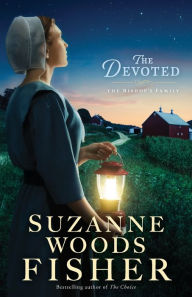
The Devoted

The Devoted. Suzanne Woods Fisher. 2016. Revell. 336 pages. [Source: Review copy]

First sentence: The bad thing about Ruthie Stoltzfus's job was that it barely paid minimum wage and she had no job security. She was only employed when someone from the Shrock family, who owned the Inn of Eagle Hill, was busy or unavailable, like now.

Premise/plot: The Devoted is the third book in The Bishop's Family series by Suzanne Woods Fisher. The focus is not only on one specific family but on a whole community. In the spotlight this time: David's sister, "Dok;" David's daughter, Ruth; David's son, Jesse; and David himself. (Patrick Kelly is the potential love interest of Ruthie; the other potential love interest is Luke Shrock. Dok has two potential love interests as well: Ed Gingerich and Matt Lehman. Jesse has two potential loves as well: Miriam Schrock and Jenny Yoder.)

My thoughts: I love, love, love this series. I do. I have loved getting to know David...and Birdie. I have loved spending some time with David's children. Some time has passed since the first book! Katrina, for example, now has TWO children and is happily married. This third book was satisfying precisely because I already loved the characters and couldn't wait to catch up with them.

This one may come across as somewhat preachy to some readers. I personally loved it. David is a bishop, and his insights into scripture were welcome to me. Though I mentioned this one might come across as preachy, I want to clarify that this one is very realistic. It is Amish fiction set in contemporary times. The characters are flawed, and definitely tempted. I would say that Luke "struggles" with alcohol and drug addiction, but, the truth is that he has ceased the struggle, ceased fighting it. He is an addict, and, his addiction is destroying lives. This book does not make light of the real world in which we live.

Wednesday, May 18, 2016

Book Review: The Quieting

The Quieting. Suzanne Woods Fisher. 2016. Revell. 352 pages. [Source: Review copy]

Last year, I read and loved Suzanne Woods Fisher's The Imposter, the first book in her new series, The Bishop's Family. I really, really, really LOVED this second book in the series. (Though perhaps I think the title says perhaps a little too much about the plot.)

The Stoltfzfus family is "in trouble." Apparently, the news has spread to their family in Ohio. Help--or should I say "help" is on the way. David's MOTHER, Tillie (aka MAMMI), is coming with two of her granddaughters: Laura and Abigail. David will struggle most with his mother who is without a doubt a FORCE. His mother has ideas on how his house should be managed, how his store should be managed, how his church should be managed (well, maybe this one is a stretch), and how his love life should be managed (this one is NOT a stretch). And it's not just David she's looking to transform. Abigail, her granddaughter, is her second priority--behind her son. A husband must be found. The sooner the better. And she has one or two possibilities in mind...

Abigail. I just want to say that as much as I enjoyed all the characters in this one--and I do mean it--I think Abigail may just be my FAVORITE AMISH HEROINE EVER. I adore her. Truly I do. I also enjoyed Dane Glick. (Let's just say that he is not on Mammi's approved list. And that Abigail isn't interested in making a list of her own--of eligible possibilities.) He raises sheep, but, really, truly dreams of working with horses, of healing them. Readers actually meet Dane before meeting Abigail. In the first chapter of the book, I believe, he comes into David's store and pronounces that he's SEEN THE ONE HE WANTS TO MARRY. He doesn't know her name, or, anything about her, just that she's new in town, visiting SOMEONE.

So. There is a LOT OF drama in the community as David tries to figure out what to do with what he knows--information about the personal lives of the current bishop and his family.

I loved this one so much. I loved that it was character-driven. I loved that the focus is on the family and the community. I loved the flawed characters. I loved the drama--when it came. This one is just a compelling read set in a community I've come to love.

© Becky Laney of Operation Actually Read Bible

Monday, November 16, 2015

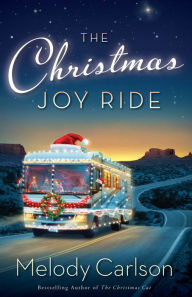
Book Review: The Christmas Joy Ride

The Christmas Joy Ride. Melody Carlson. 2015. Revell. 176 pages. [Source: Review copy]

Did I enjoy reading Melody Carlson's The Christmas Joy Ride? Yes. For the most part. It was a quick and satisfying read. Don't pick it up expecting to find the real 'reason for the season' in it. It's not a wow-worthy read perhaps. But is it fun, in its own way, and uplifting? Yes, it is. Christmas books should be uplifting, in my opinion. I have a low tolerance for depressing, sad, Christmas books.

So Miranda is the heroine of The Christmas Joy Ride. She's in a tough place financially, and that's a bit of an understatement. She decides on the spur of the moment to accompany her neighbor, her good friend, Joy, on a trip across the country. Joy, the other heroine, is eighty-five years old. She's driving her way across the country in an RV. The end of the trip will bring her to her new home, a retirement village, I believe, nearer to her grown-children. Along the way, she'll be spreading Christmas joy--literally--as she gives away her Christmas decorations and helps makes dreams and wishes come true.

The Christmas Joy Ride is one of those magical books that you think would make a GREAT movie that you could--you would--happily watch every Christmas season. Especially if it was cast right. This one has plenty of charm and good will in it. It's just a novel easy to recommend.

Wednesday, November 11, 2015

Book Review: Huckleberry Hearts

Huckleberry Hearts. Jennifer Beckstrand. 2015. Kensington. 352 pages. [Source: Review copy]

Did I enjoy reading Jennifer Beckstrand's Huckleberry Hearts? Yes. And no. I found it a contrary read. At times I loved, loved, loved it. There would be scenes and chapters where I was just grinning and thinking, "this book is SO giddy-making!!!" and "I must go back and read all the other books in the series!!!" But then there would be scenes where I felt the reverse. In other words, I either found myself really loving it or really not. I would say the book's biggest weakness would be predictability. For many, perhaps even for most, that would not be considered a "weakness" but instead a delight. And I agree, to a certain extent!!! When I'm loving a genre or subgenre, loving an author, then the last thing I want is a ton of surprises. Twists can be okay, but, not if the twist ultimately leads to an unsatisfying conclusion. So why didn't the predictability work for me personally in this one? I'm not sure. But there were just little "twists" that I saw coming from miles away. (Like the second we were introduced to Austin, the sick little boy, I knew EXACTLY what would happen to him. (Think of it like seeing a DOG on the cover of a children's novel.) And I guessed that THAT turn of events would lead to the hero of the book making a few BIG mistakes, saying things that he'd regret, coming close to doing things that would be impossible to take back. And sure enough, it all happened exactly as I thought it would.) There was ONE thing that did surprise me, but I won't talk about it in the review because there should be something in the book that surprises you too. It definitely added drama, but not in the way I prefer! It was the perfect kind of example of the surprise I don't like to see in a book.

So does this mean I didn't like the book? No. Not at all. As I said, when I loved it, I really LOVED it. I liked Cassie, the heroine. I liked spending time with her, seeing what she was really thinking. I liked Cassie's grandparents. I LOVED, LOVED, LOVED the premise of the grandma making matches for all her grandchildren, and choosing so wisely for them. It made me want to read all the books in the series so I could spend more time with her and her husband. I liked Zach, the doctor-hero, that was the 'chosen one' for Cassie. I liked that we get his point of view too. I liked that he kept in touch with his mom, and, really opened up to her about how he was falling in love with Cassie! There were many sweet scenes in this one.

Huckleberry Hearts is a contemporary almost-Amish romance. I didn't love it cover to cover, but, it was strongly liked--if not LOVED--throughout. In many ways, it worked for me.

Monday, November 9, 2015

Book Review: Keeping Christmas

Keeping Christmas. Dan Walsh. 2015. Revell. 224 pages. [Source: Review copy]

Did I "enjoy" reading Keeping Christmas by Dan Walsh? Yes and no. Yes, by the end of the novel there was a bit of hope shining brightly through the darkness. But, it took a LOT to get a ray of light into this novel. Most of the novel is dark and bleak. At least emotionally speaking.

There are two sides of this story. The husband's side AND the wife's side. Judith, the wife, is emotionally in a very dark, deeply dark place. She isn't just sad and lonely, she's DEPRESSED and not really functioning well. Her husband tries and fails to reach her in her current mental state. Her best friend tries and mostly fails to reach her as well. Though she's marginally more successful than her husband in doing so, neither her husband or her friend can "fix" her. Stan, the husband, is somewhat clueless as to how to connect with his wife. She's not acting herself at all. And the way she is acting is freaking him out a bit. So much so that he even stops his normal activities--fishing, fishing, more fishing--to try to solve his wife's problems.

What makes this Christmas different from all the other Christmases they've celebrated as a couple? This is the first Christmas where none of her grown children (and their families) will come to their house. They have three children, each child now grown and married and with children of their own. Each live in a different state. In past years, they've always come home for Christmas thereby giving her something to look forward to. The idea of it being just her and Stan for Christmas depresses her considerably.

Some elements of this one are more realistic than others. I think depression, whether holiday-centered depression or depression-depression is realistic. It happens. I think families sometimes are clueless when it comes to helping or "helping" their depressed loved ones. I think some superficial fixing was going on in this novel. (If only you went shopping and spent money, you wouldn't be sad anymore!) I think the ending was more unrealistic perhaps. It was the happy movie-ending we all expected from page one. Part of me thinks it was too predictable and too artificial. Dare I say too coincidental? 

Also, I found myself disliking the main character. Instead of sympathizing with her, I found myself thinking of her more and more as selfish and unrealistic. She's unable to cope with the 'loss' of having her children home for Thanksgiving and Christmas. And perhaps through guilt mixed in mightily with love she gets promises out of all her grown children to never, ever, ever make other plans for Christmas. Forever and ever they are bound to their promise to come home for Christmas. I find this unrealistic and selfish. For never once does she consider the OTHER side of the family. When a couple gets married, there are two sets of parents, their children will have two sets of grandparents. Both sets of  parents--grandparents--will naturally want to spend time with them during the holidays. Both sets of parents--grandparents--will miss them if they don't get home for the holidays. Both sets of parents--grandparents--have decades of traditions that are important and somewhat unique to them. It is all kinds of wrong to presume that only one side of the family matters, and, that some people's feelings have more value. Other readers may see a happy ending, but, I see a selfish one. At least in part. For her children's promises to her--made in the moment--have sentenced all the "other" side of the families to never having the opportunity to celebrate Christmas with their loved ones.

© Becky Laney of Operation Actually Read Bible