Showing posts with label fantasy. Show all posts

Friday, June 16, 2017

Book Review: The Button Girl

The Button Girl. Sally Apokedak. 2017. 394 pages. [Source: Review copy provided by author]

First sentence from the Prologue: REPENTANCE ATWATER STOOD BESIDE HER little sister, Comfort, studying the damp ground where all the mushrooms grew. 

Premise/plot: Repentance has always been taught to reverence Providence; from the time she was a girl she's been taught the will of Providence, taught to submit to the will of Providence no matter the personal cost. But Repentance is sixteen, and, she has a decision to make. Should she accept the status quo and button with Sober? If she does the first two boys they have will belong to the Overlord and become slaves. (For Repentance and Sober both live in a breeder village.) If she does not button with Sober, then she herself--and Sober--will become slaves, will be carted away from their families and SOLD. A happy ending seems impossible, no one that she knows has fought back, resisted, persevered and won against the Overlords. Should she be the first from Hot Springs to do so?

As you might have gathered, The Button Girl is a fantasy novel. I would say it is best for young adults and adults. Repentance herself is sixteen, but, the decisions she makes thrust her into a very adult world. A world where young women, especially attractive young women are sold as sex slaves. The book isn't just about sex slaves, though, but about slavery itself. The world in which Repentance and Sober live, slavery is a harsh reality--the way things are, the way things have been for over two hundred years.

My thoughts: I loved this one. I did. Here are just a few thoughts and opinions on why.

I loved the names. Repentance's full name is Repentance Joyous Forgiveness Abounding Atwater. And there is a story behind it.
It was largely supposed that Providence cursed her for the sin committed by her mother before her birth. And, truly, it must have been a terrible sin. What else would have required that her mother give her such a lengthy name? Repentance Joyous Forgiveness Abounding—it must have been a great sin for her mother to gush so over the forgiveness of it. The villagers didn’t think it forgiven, though. They assumed Providence had demanded payment from the mother by cursing the child. Why else, they wondered, would Repentance have such odd coloring? 
I loved the heroine. Repentance follows her heart. She may or may not always make the best decisions. But she always does what she thinks is right. She has a conscience and follows it no matter the cost. Repentance rarely does what is easy and convenient and comfortable. She chooses the harder, bumpier path; the path with more twists and turns and RISKS. She isn't doing it for the sake of more adventure and thrills however.
“I’m not really your merchandise, you know,” Repentance said, selecting another potato from the basket on the floor. “You can’t tell me what to think. What’s inside is the real me, and that’s between me and Providence. You can’t own that part.” Jadin burst out laughing. “You are welcome to your insides, Repentance. I cannot package and sell them. No man cares to buy the thoughts of a silly girl.”
I loved the hero. The young man who wants to button with Repentance is named Sober Marsh. Though many would conclude that Repentance was his last chance--his only chance--to avoid slavery, Sober insists that he deliberately chose--waited for, sought out--Repentance to his wife. Sober paid the purchase price for her. She was to be his. But she rebels. Though not against Sober personally. Her rejection is not of Sober as a man, as a husband, as a button-mate. Her rebellion is against the system, against the evil overlords who breed them for slaves. Sober Marsh may be one of my favorite heroes that I've met this year.
“Did it ever occur to you that I wasn’t trying to get buttoned the first four years?” Sober asked. “Did you stop to think that I might have been waiting for someone?” She took a swig from the canteen. Milky, frosty liquid ran down her parched throat. “Oh, that’s rich,” she whispered. “That’s rich? That’s all you have to say?” He turned his back to her and pulled the blanket up over his shoulder. Repentance took another drink. What was Sober carrying on about? Her heart gave a little trip and stumbled against her ribs. He’d waited for her?
I loved the romance. The pacing was just right. Sober's love for Repentance was constant, unconditional, sacrificial. His love wasn't dependent on her feelings or her actions. Even when she refused to button with Sober, even when her actions led to him being sold into slavery, he loved her still. He purchased Repentance twice. That's how much he loves her.
Sober turned to Repentance and said gently, “I do owe Mistress Merricc. She saved me when she bought me off the dock. I have to work to repay her the beads she spent on me.” “And now my family? Are you working to pay her for them, too?” His cheeks flushed. “I’m happy to do it, Repentance.” She nodded. “But we’ll be in Montphilo and you won’t be there with us.” He smiled. “Are you saying you’ll miss me?” “Of course she’ll miss you,” Lord Carrull said. “You’re her hero.” Hearing a noise, he turned toward the secret door. “Ah, Compassion, good. I’m guessing our guests would appreciate turns in the bathing rooms before bed.”
Repentance had to be wooed. She didn't comprehend how anyone could love someone else so deeply, so unconditionally, so loyally.
A memory tumbled through her mind unbidden. She did remember him. He dove from the waterfall into the pool below to save Ambivalence Bigrock. Repentance had been—what?—in her tenth year? So Sober had been in his fifteenth. Everyone in the village thought he was the bravest boy. And he was cute even then, with dark curls and dark eyes and that slightly crooked nose. So why hadn’t anyone buttoned him the following year? Or the one after that? She wasn’t sure she believed he’d been waiting for her. She wanted to believe, but no boy ever waited five years for a button mate. It was too dangerous. The girl you chose might die, for one thing. She’d half believed he’d made that story up to cover up whatever flaws the button girls had seen in him when they turned him down four years in a row. But now, with him sitting right next to her, she found it hard to believe anyone would find him flawed. He shifted a bit and his hip snuggled against hers. She scooted back, pressing herself up against the corner of the settee, but she couldn’t get away from him. He was so big and so near. She bit her lip. What had she been thinking about? Oh, yes, his flaws. He hadn’t any.
He looked confused. “Of course I love you. Was that ever in question?’ “So you’re not having a joke on me? You really were waiting for me all those years?” He looked shocked. “How many times must I say it?” “I don’t understand why you would do that. You didn’t even know me. We’d not spoken more than a few words before that trip up the mountain.” “I loved you all the same,” he looked at her, his face flushed and his eyes bright. “I’ve loved you since the day I saw you in the swamp picking persimmons for Comfort, when everyone was saying your mother wasn’t right in the head. I heard you singing to Comfort and telling her you’d never let anyone take her away. I wanted to protect you. That’s why I put the bunches of swamp bananas on the ground every week just at the time you were out with Comfort looking for breakfast. And the berries and nuts. Didn’t you ever wonder why the squirrels loved you so much that they left you mounds of berries in the summer and nuts in the winter?” She laughed. “You? I used to thank Providence for all that food. I thought he knocked those bananas out of the trees for us.” “No, that would have bruised them. He made me crazy in love with you so I climbed the trees and carried the bananas down and gently laid them on the ground for you.” Repentance blushed. He was crazy in love. She was overwhelmed. She never knew. And even after she caused him so much pain, he still loved her. She swiped at the stray tears that slipped down her face. “And here I was afraid you might want to button with Generosity.” 
Even when Repentance was "unworthy" and "undeserving" of his love. Sober loved without reserve.

I loved the writing and the storytelling. I loved the buttoning vows.
With my heart I’ll love you, With my hands I’ll serve you, By your side, I’ll abide, forever and always.
With my heart, I’ll hold you, With my arms, enfold you, Beside you, I’ll guide you, for now and for always.
It is a fantasy novel, and it did involve a lot of world-building. It has biblical themes in it certainly, but, it isn't a true allegory or parable. I loved that one of the themes was forgiveness and love.


© Becky Laney of Operation Actually Read Bible

Sunday, November 1, 2015

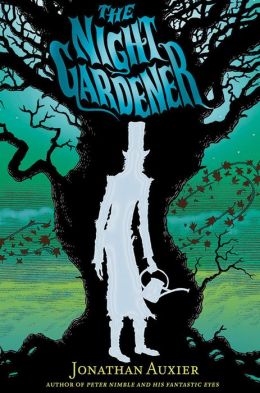
Book Review: The Night Gardener

The Night Gardener. Jonathan Auxier. 2014. Abrams. 350 pages. [Source: Bought]

I've now read The Night Gardener by Jonathan Auxier three times--three times in thirteen months. My second review. My first review. 

It's one of those rare novels where you want to read it again almost as soon as you've turned the last page. That isn't horribly unusual in a good picture book--especially if you're young or young at heart. But not many novels have that again-again impulse. 

The Night Gardener is also a book to be savored. The characters. The descriptions and imagery. The narration and dialogue. The oh-so-suspenseful plot. The atmospheric setting. Every element of this novel is to be savored. Great novels only improve upon rereading. And The Night Gardener is more than great, in my opinion. 

So one thing stood out for me the third time around. And it's one of the reasons why I chose to review the book on this blog instead of on Becky's Book Reviews. What did I notice? Well, there comes a point in the novel where Kip and Molly are safe and secure. They've escaped 'The Night Gardener' and are free from the sourwoods and the estate with its horrible secrets. You might assume that that was enough--that that was 'the end' but it's not. Now that they've come to the truth and broken free, they feel compelled--and at great risk I might add--to go straight back to where they came from and warn others of the danger. As Kip tells Molly, "there's a whole family at that house that needs saving" and "those folks are in trouble…Someone needs to go back to warn 'em before it's too late. And we're all they got." The symbolism of the whole novel is undeniable--in my opinion--but it's  especially compelling here. And it's a message that definitely needs reinforcement today. 

Should Christians be content and complacent knowing that they are safe and secure and delivered from sin and death and let the world around them go on as before unaware of the danger? Shouldn't the very fact that we're delivered lead us to want to spread the good news, the urgent news of the gospel?! Are we taking the good news for granted? Are we assuming that all people everywhere know the gospel and what Christianity is all about already without us having to do anything ever? Now salvation itself is a work of God from start to finish, but, God uses people like you and me to share the gospel, to proclaim the good news, to explain why the good news is, in fact, GOOD news. And that explanation should lead us to some very bad news first. Sin. It's not a popular subject. It's not a people-pleasing subject. People with "itching ears" really don't want to hear about sin. But as John MacArthur said, "There are 1,189 chapters in the Bible. Only four of them don't involve a fallen world: the first two and the last two--before the fall and after the creation of the new heaven and new earth. The rest is a chronicle of the tragedy of sin." 

We live in a fallen world. From birth to death we're surrounded by sinners--fellow sinners--for we too are sinners. There is only one person--Jesus Christ--both human and divine--that was sinless. All the rest of us--no matter who we are--need Jesus, desperately need Jesus if we're to be reconciled to God. Sin is deceptive. There are plenty of times, we don't want to be rescued or delivered from sin. In fact, it's the last thing we want. But sometimes what we want and what we need are very different things. And we're not always best at knowing what's best for us.  

The Night Gardener is a great book because it makes you think--really think--about truth and lies, and life and death and what really matters. 

Here's one more quote I want to share with you. 
The woman gave a cryptic smile. "I'm not sure your sister would appreciate me frightening you.""I ain't afraid," Kip said. "Well, I am afraid…but I'm not afraid of being afraid. If that makes sense. True is still true, even if it's bad. That means I want to hear it.""That's a rare thing, in a boy or a man, she said. "Your sister raised you up right." (105)

© Becky Laney of Operation Actually Read Bible
Wednesday, June 27, 2012

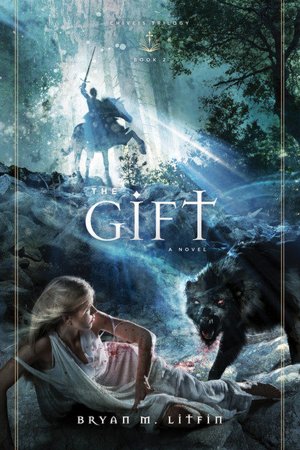
Book Review: The Gift

The Gift. (Chiveis Trilogy #2) Bryan Litfin. 2011. Crossway. 416 pages.

From the prologue: The people of the twenty-first century nearly destroyed the earth in a global nuclear holocaust. This is the story of what God did next.

It has actually been several centuries--at least--since the 'modern world' collapsed due to virus, war, food shortages, etc. And the world has reorganized itself, new civilizations have been formed, several societies put into place. This trilogy is set in a nearly unrecognizable Europe. The Gift is the second book in the trilogy. The Sword is the first novel, The Gift is the second novel, and The Kingdom is the third novel--this final book in the trilogy will be published this summer.

It had been over two years since I first read The Sword, and I think that proved problematic when I picked up this one. The big things--the name of our hero and heroine, the name of their God (Deu), the fact that the last book ended with their exile--I remembered. Everything else I had forgotten, all the little things, details big and small, including the author's very distinct writing style. So it took me over two hundred pages to reconnect with the story, with the characters. For the first two hundred pages, I was definitely a reluctant reader. The last two hundred pages went smoother, it helped that I made up my mind that no matter what I was going to finish the book that day.

What did I struggle with in this second book? I'm not sure if I struggled more with the plot or with the characters. Teo and Ana are exiled from their country, but, are soon welcomed into a new country. Ana is accepted into the social elite (I'm not sure if this was just because she was so beautiful, or, if they assumed she was a fine lady in the other country and deserved the same special treatment there), but, Teo is not. He manages to stay very, very, very loosely connected with Ana by claiming the role of her tutor. But almost everyone assumes that he's merely her love slave. Ana glories in her new lifestyle, she loves her new rich friends, loves all the parties, loves the clothes, loves the attention and flattery. The more materialistic Ana becomes, the less prone she is to listen to Teo who warns her not to forget the most important thing. But does Ana listen? Oh, no, she does not. Does she drink? Does she party? Does she start sunbathing topless in public? Yes, yes, yes. She stops listening to Teo, stops listening to God, and then starts questioning and doubting things she knows to be true. Teo is a man who is torn in his duties. On the one hand, he knows that finding the New Testament is the MOST important, most essential thing he could do. He knows that finding the New Testament, translating it into a language that can be understood, getting the full truth of God's message to men is the MOST IMPORTANT thing he could do. It's worth living and dying for. He knows he must attempt it no matter the risk. But, at the same time, he's torn because he wants to save Ana from herself, and from outside dangers as well. He knows that she's not safe, he knows she's being really stupid, he knows that her faith is endangering her life, he knows that she has enemies--as he knows that he has enemies. So part of him wants to stay in the background just watching and waiting and watching and waiting and watching and waiting...to see what happens next in Ana's life. Does Ana even know that Teo is around? No, not really. She assumes that he's moved on, moved away, accepted their new places in society. Because she has pushed him out of her thoughts--essentially--she doesn't really appreciate the sacrifices he's making for her. So essentially, the first half of the novel could be summed up as: watch Ana be stupid. The second half of the novel is different, however, for Ana realizes that she's walked away from God, and she's made some big mistakes. She turns towards God, finds forgiveness, becomes selfless, humbles herself, etc. Teo does not change in the second half, he remains the hero he's been since page one, book one.

The plot. What can I say? There's a dark side to these books, a dark side that delights in torture, torture, and more torture. Readers are forced to "overhear" evil, evil plots that endanger the characters we care about, or are supposed to care about. In a way, I suppose, the dark side adds tension, contrast, suspense to the novel. But there's only so much torture a person can take without becoming sick of it.

The second half of the novel does become intense, but I'm not sure it's a good enough intense. Part of me got frustrated even with the second half of this one because it was Teo's turn to be stupid, I suppose. In a couple of crucial moments, moments where he had to choose between his mission to serve God, to find the New Testament, to find out the truth, the whole truth of God's message, to restore Christianity, he chose saving the girl.

S
P
O
I
L
E
R

So in this one scene, the scene when they discover the last remaining copy of the New Testament, the only copy supposedly still in existence on the whole planet, and the bad guys show up and he has to choose between saving the girl's life (supposedly, they have her in their grasp) and handing the copy over knowing that it's just a matter of time--perhaps minutes, perhaps hours, perhaps days--before it is destroyed....and he chooses the girl. Never mind that a whole secret community is counting on him, never mind that there is no one left on the planet who knows who Jesus Christ is, why he came to Earth, why he died, the fact that he rose again, the fact that he saves us from our sins, delivers us from our sins, restores and redeems us, adopts us. Etc. This body of believers--men, women who believe in the one true Creator God--who knows nothing at all about the New Testament, any event, any promise, any doctrine, etc. And he chooses the girl. And the New Testament is burned. Part of me was like, how is saving Ana going to bring salvation to the world? Do you even realize what you just threw away? I mean, sure, this proves that he *loves* her in that way, something she was in doubt about for the first half of the novel because he hadn't spent every moment of every hour of every day flattering her, complimenting her, and trying to kiss her, etc. But I was a little frustrated with Teo here.

The novel does have some strengths. For example, it is hard to read this one without reflecting on your faith and your knowledge of the Bible, the Old and New Testaments, your knowledge of doctrines, etc. In this story, we see that "Christianity" has been preserved through the sketchy-fuzzy memory of a five year old boy who grew up to be "Papa" and live in "Roma." He remembers the act of communion, but not what it means, not what it signifies. He remembers that Christians were commanded to love others and serve others, to be compassionate to the needy, to welcome the outcasts, the needy, the sick and dying. But he doesn't really remember why--just that God loves them, so we should too. He remembers vaguely the symbol of the cross--the wounded man on the cross--but he doesn't remember why he died, what his death accomplished, and the fact that "the pierced One" rose again on the third day. So this "Christian" community that essentially is an echo of an echo of an echo of an echo from faded centuries  is desperately in need of the truth--the WHOLE truth. They have no sacred writings, no sacred texts, no religious texts or treatises at all. Nothing to help them spiritually or practically in terms of knowing the God that they risk their lives to worship. And there is a lot to contemplate. One, Christianity was in its dying stages even as the big war came, even as the evil virus threatened humanity's survival. People just didn't care enough to live the faith, to know the Bible, to know God, to pass the gospel, to pass the Word down to their children and grandchildren and great-grandchildren. Doctrines weren't seen as being important and relevant--and neither was the Word of God. Perhaps there were some that were going through the motions. We are told very, very, very little about this time--mainly just through the prologues and we're left to form our own conclusions as to how everything degraded into the mess it was. But. We're also told that in the next twenty, thirty, forty, fifty years after IT happened, that governments came together to make a pact and part of that pact was to make Christianity illegal, to make the sacred texts illegal, to make proselytizing illegal. They formed an army of men dedicated to hunting down Christians killing them, men dedicated to destroying/burning sacred/religious texts. Two, in terms of reconstruction, how well could you do, how well could the average believer do, the average church-goer, the average child. How important is it to you to KNOW the Bible? How important is it to you to know your doctrine? To be firmly rooted and grounded in the faith--in historic faith. How relevant is it to you in your own life? Is it something you've even thought about at all? How much do you take for granted? And should you be taking it for granted? How much do you VALUE the Bible? How thankful are you that God is not silent, that the mystery can be known and explored?


© Becky Laney of Operation Actually Read Bible
Saturday, March 12, 2011

Book Review: Pinocchio

Pinocchio. Carlo Collodi. Translated by Emma Rose. Illustrated by Sara Fanelli. Candlewick Press. 192 pages. (Collodi's Pinocchio was published in 1883.)

Once upon a time there was...
"A king?" did I hear you cry?
But if you did cry "King," children, you were wrong. Because once upon a time there was...
...a piece of wood.
It wasn't a piece of fine mahogany. It was an ordinary log, just like the logs you burn in your fireplace to warm your toes in the winter.
Now, one day this piece of wood ended up--don't ask me how--in the workshop of an old carpenter whose name was Antonio--although, an account of the tip of his nose always being red and shiny, everybody knew him as Mr. Cherry.

Pinocchio may have been a log once owned by Mr. Cherry, but he ends up a wooden puppet carved by Geppetto. After Geppetto's disappearance--in which Pinocchio is partly at fault--Pinocchio receives intermittent attention from the blue fairy. (Though she takes different forms throughout the book.) He listens when it suits him. He tries to be obedient when it suits him. But for the most part, it is HARD work to love Pinocchio. Because he is so resistant to love, to discipline. The book tells his MANY adventures. (The Disney movie only captured a fraction of the story line of this one. The Pinocchio of the book isn't just foolish, isn't just ignorant. He's mean, he's cruel, he's deliberately wicked.) The stories are moralistic, a bit didactic in places. At least I imagine most modern readers would find them so. But I liked some of the stories very much.

What an odd little book this is! How best to describe the character Pinocchio? Well, he's wicked, foolish, selfish. Rebellious from his first breath. Arrogant in thinking that he knows better than his maker. Rejects discipline and authority. Wants to be the boss of his own life. A liar through and through. Easily led astray. Even when he's *trying* to be good, he fails. Sound familiar?! Pinocchio is a deeply moral tale, a fantasy about man's depraved nature perhaps?!

Pinocchio's creation:

Now that he had found a name for his puppet, he set to work on the head, briskly carving out hair, forehead, and eyes. Once the eyes were finished, he stood back, amazed. They were moving. First they looked around a bit, then they stared at him, so intently that he felt quite annoyed.
"Hey! What are you looking at, wooden eyes?" he asked.
There was no reply.
Next he carved the puppet's nose. The moment it was finished, it began to grow. It grew and grew, so that in just a few minutes it was the longest nose he'd ever seen. Poor Geppetto kept trying to whittle it down, but the more he tried, the longer that mischievous nose became.
Next, he carved the puppet's mouth, but it wasn't even finished before it began to laugh and jeer at him.
"Stop laughing," Geppetto snapped. He might as well have been talking to a brick wall. "Stop laughing," he shouted, "or else!"
The mouth fell silent, but stuck its tongue out instead. Geppetto thought it wise to pretend he hadn't noticed. He went on to carve the puppet's chin, neck, shoulders, stomach, arms, and hands.
The moment the hands were finished, Geppetto felt something being whisked off his head. He looked up, and what do you think he saw? His yellow wig in the hand of his half-finished puppet.
"Pinocchio!" he yelled. "Give that back this instant!" The puppet did nothing of the sort. Instead he plonked the wig onto his own head, where it sank down over his eyes.
This was such insulting behavior that Geppetto felt more miserable than he'd ever felt in his life.
"You naughty, naughty boy!" he said. "You're not even finished yet, and already you show your father no respect! I'm disappointed in you, I really am." And as he said this, he wiped away a tear.
Last of all Geppetto carved the puppet's legs and feet. The moment they were finished, he received a sharp kick on the end of his nose.
"It serves me right, I suppose," he sighed. "I should have known that would happen. No use complaining now." (15-16)

© Becky Laney of Operation Actually Read Bible

Wednesday, August 12, 2009

Book Review: North! Or Be Eaten


Peterson, Andrew. 2009. North! Or Be Eaten. Water Brook. 331 pages.

"Toooothy cow!" bellowed Podo as he whacked a stick against the nearest glipwood tree. The old pirate's eyes blazed, and he stood at the base of the tree like a ship's captain at the mast. "Toothy cow! Quick! Into the tree house!"

North! Or Be Eaten is the sequel to On the Edge of the Dark Sea of Darkness, the second in the Wingfeather Saga by Andrew Peterson. It stars the Igiby children: Janner, Tink, and Leeli. And the adults that love them--their grandfather, Podo, their uncle-friend, Artham (a.k.a. Peet the Sock Man), their mother, Nia, and their bookseller-friend, Oskar N. Reteep. Of course, there are enemies to be found as well. The danger has tripled or even quadrupled in this latest installment: there are the Fangs of Dang, the monsters of Glipwood Forest, the thieving Stranders of the East Bend, and the merciless folks at the 'dreaded' Fork Factory.

If you're a reader of fantasy and like action, adventure, mystery, suspense, and some humor...then this one might suit you well. Though I would definitely recommend starting with the first book. It does require you to suspend your disbelief and engage your imagination. Peterson has created a whole new world--filled it with people and various creatures--including dragons and monsters--and tried to give it a culture all its own.

I can understand and appreciate the family dynamics and relationships. The Wingfeathers (aka, the Igibys) are a complex bunch no question. And our hero, Janner, is well-developed. It's hard not to love such a hero. But it's harder for me to believe, to accept, some of the fantasy elements of this world--the wild creatures, etc. I think this comes easier for some readers than for others. So on the one hand, I cared about these characters and I chose to keep reading because I had to know what happened to them, but I didn't necessarily love the fantasy bits. As an adult, it's really hard to judge at times how well a book is going to work for its intended audience.

© Becky Laney of Operation Actually Read Bible

Tuesday, August 12, 2008

Book Review: On The Edge of the Dark Sea of Darkness


On the Edge of the Dark Sea of Darkness by Andrew Peterson is the first book in the Wingfeather Saga*. Andrew Peterson isn't new to writing; he's a creative genius in my opinion, a singer-songwriter.** But this is his first novel. And it releases MARCH 18TH, 2008. The publisher is Water Brook (a division of Random House).

The novel boasts of having "adventure, peril, lost jewels, and fearsome toothy cows." A boast which proves true of course.

There are three "brief" introductions to the novel. (Three mini-prologues.) As is the case in some prologues, they are written in a different manner than the novel itself. I think that's a good thing in this situation because Peterson's prologues are a bit over-the-top***.

First sentence of "A Brief Introduction to the World of Aerwiar": The old stories tell that when the first person woke up on the first morning in the world where this tale takes place, he yawned, stretched, and said to the first thing he saw, "Well, here we are." The man's name was Dwayne and the first thing he saw was a rock. Next to the rock, though, was a woman named Gladys, whom he would learn to get along with very well. In the many ages that followed, that first sentence was taught to children and their children's children and their children's parents' cousins and so on until, quite by accident, all speaking creatures referred to the world around them as Aerwiar.

First sentence of "A Slightly Less Brief Introduction to the Land of Skree": The whole land of Skree was green and flat. Except for the Stony Mountains in the north, which weren't flat at all. Nor were they green. They were rather white from all the snow, though if the snow-melted, something green might eventually grow there. Ah, but farther south, the Plains of Palen Jabh-J covered the rest of Skree with their rolling (and decidedly green) grasslands. Except, of course, for Glipwood Forest. Just south of the plains, the Linnard Woodlands rolled off the edges of all maps, except, one would suppose, those maps made by whatever people lived in those far lands.
First sentence of "An Introduction to the Igiby Cottage Very Brief": Just outside the town of Glipwood, perched near the edge of the cliffs above the Dark Sea, sat a little cottage where lived the Igiby family. The cottage was rather plain, except for how comfortable it was, and how nicely it had been built, and how neatly it was kept in spite of the three children who lived there, and except for the love that glowed from it like firelight from its windows at night. As for the Igiby family? Well, except for the way they always sat late into the night beside the hearth telling stories, and when they sang in the garden while they gathered the harvest, and when the grandfather, Podo Helmer, sat on the porch blowing smoke rings, and except for all the good, warm things that filled their days there like cider in a mug on a winter night, they were quite miserable. Quite miserable indeed in that land where walked the Fangs of Dang.

First sentence of Chapter One: Janner Igiby lay trembling in his bed with his eyes shut tight, listening to the dreadful sound of the Black Carriage rattling along in the moonlight.

The Igiby family are the stars in Andrew Peterson's On the Edge of the Dark Sea of Darkness. There is a grandfather, Podo, a mother, Nia, the oldest son, Janner, the sister, Leeli, the younger brother, Tink, and the dog, Nugget. They live in occupied territory. The Fangs are dangerous that's for sure. And within a few chapters, the Igibys accidentally make themselves the target of the Fangs hatred and abuse. This leads to the promised "adventure, peril, lost jewels, and fearsome toothy cows." The book is full of adventure and mystery. And it is quite enjoyable. It is one of those fantasy novels that creates a new world, new lands, new peoples, new creatures, etc. And like a few fantasy novels these days it does make use of footnotes. Fun little asides meant to entertain. I won't lie and say the footnotes were as enjoyable as those found in the Bartimaeus trilogy, however, I will say that their use is a positive and not a negative attribute of the novel. There are also appendices at the end.

What can I say about the novel? I tended to enjoy it. It could be in part to the fact that I think Andrew Peterson is so wonderful. But it could be something more. I think for kids that can't get enough fantasy it will be thoroughly enjoyable. For those that get impatient with fantasy--the strange names of people and places and maps--then it might not be "thoroughly" enjoyable. (It might just be enjoyable.) For those that are skeptical that a musician can write, let me assure you that it is better than the prologue. That's not to say I dislike the prologue. But the third prologue in particular would be very very very very annoying if that was the style of the book and the best the author had to offer. It was cute for one page, but for 279 pages it would have been overkill. Also, I think kids that love funny books will enjoy this one. I'm not sure the book is 'as funny' for adults as it would be (or might be) for kids. It's REALLY hard to be an adult and judge if the humor is going to work for kids. For one thing, each kid is different. And what is 'funny' to one might not be 'funny' to another. But I think it has potential there.

So I recommend this one.
-------
*I don't know if the publication of the series depends on the success of the first book or not.
**He writes all types of songs. Sometimes they are deep and meaningful. Sometimes they just ring with truth and authenticity. Sometimes they make you cry (songs about grandpa's dying, etc.). Sometimes they make you laugh. Two examples: Andrew Peterson is one of the geniuses responsible for "The Monkey Song" featured on the Veggie Tales video The Wizard of Ha's. He also wrote one of the funniest songs of all time: Alien Conspiracy or The Cheese Song. (Unfortunately the lyrics aren't available online or it would have been a Poetry Friday post long long ago. I'm too lazy to try to transcribe it myself.)
***I'll try to explain through examples.

© Becky Laney of Operation Actually Read Bible