Showing posts with label thriller. Show all posts

Monday, January 27, 2025

8. Left Behind


8. Left Behind (Left Behind #1) Tim LaHaye and Jerry B. Jenkins. 1995. 470 pages. [Source: Library] [christian fiction, 2 stars, contemporary fiction]

First sentence: Rayford Steele's mind was on a woman he had never touched.

When I was in my late teen years, there were two book series that were being talked about--Left Behind and Harry Potter. I was slow to read them both, though I did read the first books in both series around the same time--when I was in college. Both books I considered slow, slow, slow, super slow. I recently read the Harry Potter series and appreciated it for the most part (though it's not for everyone). I decided I'd give this series a go. Or at least attempt to do so.

The premise is simple: The rapture occurs in the first chapter of the book and everyone else has been....drumroll please....left behind. The story follows three or four main characters as they try to piece together what happened and why. Rayford Steele and Buck Williams are the two male leads of the story. (Chloe, Rayford's daughter, and Hattie, Rayford's flight attendant, round out the cast.) Rayford is almost certain right from the get go that it is the rapture, that this was a supernatural occurrence, that Christ has returned for the saints, that these are the last days. Everyone else takes more convincing---for the most part. 

I am a Christian.
I am a Christian who genuinely believes in the Second Coming of Jesus Christ.
I believe the Bible to be the Word of God, inerrant, infallible, God-breathed--the whole works. 

I mention all of the above so that you know where I am coming from in my review. I am not mocking the Bible. I am not mocking the second coming. I am not questioning the existence of God. I am not doubting God's promises. 

But this book suffers from two or three issues.
1) The writing is bad especially in terms of characterization and dialogue. Nails on a chalkboard bad. 
2) The writing comes across as cocky and condescending. I think this has to do with being a little too confident in their particular interpretation of the end times than perhaps anyone should be. 
3) The book has an obvious point and becomes repetitive in trying to reiterate the point. Now the point itself--believe in Jesus Christ, repent of your sins, turn to him, have faith, all of it--none of these are bad points. But they don't make for the absolute best fiction. That is when you are crafting a novel, crafting characters and dialogue, it might be a good idea to go a little deeper and broader. 

I can't say that the book is theologically awesome. Because while I am sure that Jesus Christ *is* returning, the way everything is laid out in the novel makes a lot of assumptions, presumptions, goes way above and beyond what can be clearly supported by Scripture. I am reminded of old cartoons where a character is running and happens to run off a cliff. The character keeps on running--on air itself--until that moment when they look down and there is nothing below. 

I think it is easy to mock the writing--just read some reviews on GoodReads and the like--and somehow turn it into a mockery of the end times itself. Or to turn it into a mockery of those who do believe. But the two shouldn't have to be linked together. You can believe in God and also not enjoy a book. 

I will say this in the book's defense. IF THE PACING OF THE LAST HUNDRED PAGES had been the pacing from the start, then the book might not be so bad. The book is just so incredibly dull until it isn't. 

© Becky Laney of Operation Actually Read Bible

Wednesday, September 22, 2021

61. The Weight of Memory


The Weight of Memory by Shawn Smucker. [July] 304 pages. [Source: Review copy]

First sentence: Her words hover in the air, hummingbirds, and I hold my breath, glance up at the clock above the door, and watch the red second hand twitch its way through a minute. 

Paul Elias, our protagonist, has just received shocking, life-changing news. His life expectancy is "anytime to three months." He is the primary caregiver of his granddaughter, Pearl. His only other family being a drug-addict son, John, whom he hasn't seen--or heard from--in four plus years. So what does he do? Well. He decides to pick up his granddaughter from school and go on a road trip back to his hometown of Nysa. He doesn't have family there. He doesn't even know if he has friends there. He hasn't been back to Nysa in forty years; he left soon after his wife's disappearance with his newborn son. I doubt that Paul has even googled his hometown. (Though he should have, in my humble opinion.) Still the pair head off to Nysa despite an increasing number of foreboding experiences on their journey. Hint: If you're heading into town and every person you meet says GO AWAY, THIS TOWN ISN'T SAFE ANYMORE. BAD THINGS HAPPEN HERE. WHATEVER YOU DO, DON'T GO OUT ANYWHERE NEAR THE LAKE, if you're smart you'd rethink your hasty, reckless, life-changing decision. 

So what is Paul's plan? Paul's plan is to find somebody--anybody to raise Pearl. Yes, you heard me. He has driven across country to find a complete and total stranger to give his granddaughter to. And his criterion seems to be so low-key it's almost non existent. Are you breathing? Well, that makes you a possible caregiver for my one and only granddaughter. 

There being no hotels in his hometown, he finds an emotionless person to go home with. True, forty years ago, these two knew each other way back when. But still. Despite forty plus red flags that are literally screaming out DANGER, DANGER, DANGER, DANGER, he is thinking Tom is the best choice for Pearl's next caregiver. 

What else should you know about The Weight of Memory? It's written in the second person. The "you" being Pearl. The style is...atmospheric, eery, literary. The chapters alternate between the present and flashbacks of the past. Most of the characters, if not all the characters, are SUPER creepy. Despite being published by a Christian publishing company, there is absolutely nothing Christian about the text. In fact, I'd make the case that the book goes out of its way to be non-Christian in its supernatural-ness. I'm not sure if the right word for this one is supernatural OR magical realism OR perhaps a blending of the two. 

I guess what bothers me most is that this book is published by a Christian publisher and yet stands against--or in opposition--to a Christian world view or perspective of death and the afterlife. Like Paul doesn't seem to have any clue whatsoever about what happens when you die, or, more importantly what happens after you die. It's not that he has doubts or questions. He's not even asking the questions. Or thinking about asking the questions. He's not seeking God. He's not seeking peace or assurance. Readers never see him praying, talking to God, thinking about God, nothing, absolutely nothing. And what the book presents instead....is...well disturbing. 

S
P
O
I
L
E
R
S

A
H
E
A
D

Throughout the book, there is a mysterious white-haired/silver-haired lady that only a few people can see. Pearl being one of them. Paul's wife, Mary, being another. Throughout the book, Paul stumbles across a few others that have seen her. She is a spooky/scary/haunting/creepy character that is often encouraging characters to do really super dangerous, not at all safe things. Things that will more often than not cause people to die. Yes, die. Hence all the foreboding, obvious warnings saying DON'T LIVE HERE. DON'T STAY HERE. GET AWAY WHILE YOU STILL CAN.

The fact that Pearl is conversing with her almost every single day and listening to her and doing her bidding....well it's just like someone waving a million red flags. Paul is oblivious. Like totally and completely clueless. Like, well, things aren't that bad. Pearl has always had her imaginary friends. Pearl has always like running away. (Which don't get me started on Paul's nonchalant parenting.)

DEEP DEEP DEEP 
SPOILERS

Pearl goes on a mission for the mysterious lady (whom we learn is Death), and this has her essentially drown...traveling to the after life...which is an ocean/beach. There's a white house with her grandmother in it. The two have a conversation together...and Mary has a message for Paul that she is waiting and will be waiting for him to join her on the other side. Again, no mention of heaven...or hell...or Jesus...or God...or anything remotely Christian. Just this peaceful beach existence. 

But putting ALL OF THAT ASIDE. I still wanted to yell and scream at Paul the entire book. WHY ARE YOU BEING SO STUPID?????? ARE YOU REALLY THINKING OF WHAT IS BEST FOR PEARL???? IF YOU'RE JUST GOING TO LEAVE HER WITH A COMPLETE STRANGER, WHY NOT DO IT IN THE PLACE YOU'RE LIVING NOW?????? DO YOU NOT KNOW ANYONE IN TOWN???? DOES PEARL NOT HAVE FRIENDS????? SURELY AMONG THE TEACHERS, PEARL'S FRIENDS' PARENTS, OTHER RESPONSIBLE HUMAN BEINGS YOU'VE ENCOUNTERED, YOU CAN MAKE A PLAN THAT ACTUALLY MAKES SENSE. WHY DO YOU NOT CARE THAT YOUR GRANDDAUGHTER IS RUNNING WILD???? THAT SHE IS SEEING AND HEARING PEOPLE THAT ARE NOT THERE????? THAT HER ACTIONS ARE HAVING HARMFUL CONSEQUENCES???? IS THE TUMOR EFFECTING ALL OF YOUR LOGIC AND REASONING SKILLS???? 

And don't get me started on the ending of this one. There are a million reasons why the ending is just all kinds of WRONG. 

Quotes:
  • We paddle where we think we want to go, but all along it's the hidden current that takes us.
  • Grief is hard and good. It is the disease and the medicine, all at once.


© Becky Laney of Operation Actually Read Bible

Wednesday, January 15, 2014

Book Review: Every Waking Moment (2013)

Every Waking Moment. Chris Fabry. 2013. Tyndale. 400 pages. [Source: Book I Bought]

I would describe Every Waking Moment as a sentimental thriller. I didn't even realize it was a thriller until the last third of the novel when it became apparent that there was a story hiding and waiting to be discovered. I'm still not sure if this surprise works.

Treha Langsam is a janitor at a senior retirement home. Technically, her job is cleaning. But almost everyone considers her real gift to be with working with the elderly. She has a way of connecting with dementia sufferers, bringing them back. It's not as if she restores their memories, that might be asking too much. But they start talking, sharing, reaching out to others. And that is enough.

But not everyone appreciates Treha. The new director at Desert Gardens does not. She is condescending, rude, hateful. Miriam Howard, the former director, has been rushed into retirement by the board. Her replacement wastes no time in firing Treha. Miriam is shocked by this since the reason for Treha's dismissal is because she helped one of the residents after they had fallen. Treha had been forbidden to talk with any resident, no matter what.

Miriam befriends Treha and encourages her to become involved with two storytellers--filmmakers. These two filmmakers want to create a documentary, in part focused on Treha and her gift. It sounds more complicated than it is actually.

Every Waking Moment was an almost novel for me. I didn't dislike it. I just didn't love it either.

© Becky Laney of Operation Actually Read Bible

Wednesday, September 18, 2013

Book Review: The Prophet


Prophet by Frank Peretti. 1992/2004. Crossway. 416 pages. [Source: Bought]

I first read this one soon after its release. I absolutely LOVED Frank Peretti when I was in junior high and high school. His books were among the very first "adult" books that I read devoured. I thought it would be good fun to revisit one of his books at least. The Prophet was one of my favorites.

My first thought upon rereading is how much has changed and how much has stayed the same! How what is socially acceptable has changed in the last twenty years. Even how we talk about controversial subjects has changed--for better or worse. I'm not only talking about sin or life choices. 1992 can seem so disconnected from now--when looked at solely in terms of technology. 

Prophet is a novel about the media, about reporting news, about politics, about biases, about balancing what do people NEED to know, what do we want people to know, and what do people think they need to know. All three are important, of course. Sometimes people NEED to hear the truth, need to know the facts, even if it isn't something they want to hear. The hero of The Prophet is a anchor man on the news. Through him readers get a behind-the-scenes look--though it is an extremely outdated behind-the-scenes look--at a newsroom in action. Readers get to learn about what stories make it on the air, and which stories get dropped at the last minute. They get to hear WHY stories are chosen over others. 

It is also a novel about abortion. It is admittedly a biased novel on abortion. Fatherless, a novel I reviewed in the summer, presents alternative viewpoints in a reasonable, fair way when all is considered. I can't exactly say the same in Prophet. Every character that is pro-choice in Prophet is illogical at the very least. That is to say that the pro-choice characters are presented as being so fundamentally in love with the idea of abortion--abortion for one and all!--that when the truth comes out that there are unsafe clinics with unsafe doctors killing women through their carelessness, the pro-choice people are all the truth must be suppressed at all costs. We don't need change or reform or guidelines or safety procedures or capably trained and morally responsible doctors and nurses. The idea of stopping unsafe abortions while allowing safe ones doesn't seem to be a justifiable position in Peretti's novel. Peretti seems to be all-extreme when it comes to presenting liberals. One other question I had while reading this is how realistic is it--I honestly don't know--that there would be vans routinely sent to high schools every week to pick up students and deliver them to the clinics for abortions. This is presented as very routine and matter-of-fact. 

Prophet is also about tense relationships between fathers and sons. Our hero, John Jr., has had a terribly rocky relationship with his own father, and he has an extremely bad relationship with his own son. While he misses out on the opportunity of making things right with his father, he does get a good opportunity to restore a relationship with his own son before it is too late.

Prophet has many memorable scenes. I definitely am glad I decided to reread this one! 

Quote:
Well, if he couldn't nail down what Evil was, why fight it? Whatever was evil today could be voted, legislated, or judged good tomorrow. Maybe if we just wait long enough, he thought, we'll get comfortable with the way things are. (146)

© Becky Laney of Operation Actually Read Bible

Friday, July 12, 2013

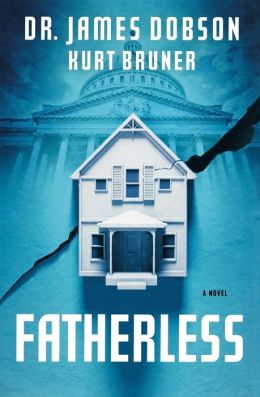
Book Review: Fatherless (2013)

Fatherless. James C. Dobson and Kurt Bruner. 2013. FaithWords. 448 pages. [Source: Bought]
Family affection lies at the root of a well-ordered society. It is one of the few good things which has survived the fall, and prevent men and women from being mere devils. It is the secret oil on the wheels of our social system which keeps the whole machine going, and without which the power of the machine is useless. ~ J.C. Ryle
When I came across that J.C. Ryle quote in my reading this past week, I knew it would be a good way to introduce Fatherless, a new novel by James Dobson and Kurt Bruner.

First sentence: I didn't expect the person killing me to yawn in boredom.

Fatherless paints a disturbing portrait of the future. The novel is set in 2042. The United States is in near-crisis. The majority of the population is old, past the working-and-contributing-age; the burden of medical treatment, of day-to-day care, is stressing the economy. Working adults find it difficult to keep a job and take care of their parents. Their place in the workplace is deemed critical. And hiring someone to parent-sit can be expensive. The burden is especially difficult on the poor, the rich can always afford what's necessary. So in the past decade or so, transitions have become the new norm. For any "debit" in society, for those who cost society more than what they contribute, those who may be older or those who may have physical disabilities or mental limitations. They can truly help their families, help society, help their country by choosing to transition--to transition from life to death. Government is making the idea of transitioning sound so noble, so heroic, so necessary. (Many transitions even include organ donation.) The novel begins and ends with readers getting a glimpse of the transition process. (The first is a paralyzed young man, just turned eighteen. The last is a senior citizen, a mother pressured into it by her son.)

Julia Davidson is a journalist struggling to maintain her place near the top. She has written some incredible stories in the past. Her name has meant something. She has been a somebody. But now other reporters are getting the "big" stories, and Julia finds herself stuck with a weekly column of little significance. But her boss is giving her one last chance.

Kevin Tolbert and his wife, Angie, are "breeders" in a time when it is socially questionable to get married (and stay married) and have children (yes, multiple children). To have a child in wedlock? To have more than one child? Women who are mothers are thought to be extremists, absurd, out of touch with liberated reality. Babies are a burden, always have been, always will be. To have more than one child--at most--is to be oppressed.

Julia Davidson PITIES her old high school friend, Angie. The only reason she's seeking out this old acquaintance is because Angie's husband, Kevin Tolbert, is an up-and-coming politician. Julia has been assigned to write a story about Tolbert's political ideas and policies which are being introduced to a committee. Her paper wants to spin the story so that his conservative ideas are rightly labeled ridiculous, absurd, outrageous, extreme. He has found "bright spots" in the U.S. economy. There are small regions or communities that are doing better than the nation as a whole. The differences between these bright spots and the rest of the nation are higher birth rates (more families having children) and fewer transitions (they're not encouraging their senior citizens to do the right thing and go ahead and die). The idea being that these communities value human life more.

There are multiple stories in Fatherless and many protagonists. Some are Christian; many are not. The book is religious AND political. It goes tough places and asks hard questions. It examines long-term ethics or consequences of some things happening today. For example, hostility towards religion and deeming people of faith, people who hold to the Bible, as being extremists. This book seemed to eerily connect with UnChristian. Another example: the deterioration of the family, of fathers not staying around long enough to parent their children.

Fatherless is heartbreaking and thought-provoking. The Matthew-and-his-mother story line was so disturbing and heartbreaking! Fatherless may not be a flawless novel, weaknesses could be spotted here and there, but it has many strengths as well. (One weakness, perhaps, is the info-dumping.) I enjoyed having multiple points of view. Julia was a broken heroine, troubled with nightmares, struggling in her personal and professional life, clinging to her worldview with fierce determination. But Julia was quite human as well: she has a close relationship with her nephew, and, she is longing for satisfaction of her own. She finds Kevin's friend, Troy, so intriguing though their world-views are so very different from one another. (Troy is a newish Christian). Matthew's brokenness is equally obvious. His searching for spiritual enlightenment and finding it in all the wrong places was so heartbreaking.

Troy to Julia:
Imagine a world of people trying to out-serve, out-love, out-sacrifice, and out-honor one another. Sure beats a world of people trying to outdo and outsmart one another. Don't you think? (238)
Julia's politics:
Didn't one's unalienable rights include controlling one's own body, choosing one's own offspring, and ending one's own existence? (260)
Kevin Tolbert:
We live in a world where the weak and scrawny have little choice but to play by rules set by the big and powerful. By those who rig the game against the dignity of human life. (373)
Julia and Kevin in conversation:
"What kind of choices do you want them to make?" Julia tried to sound sympathetic.
"Natural, commonsense choices," he replied. "Like getting married and raising a family. Like protecting the dignity of aging citizens rather than making them feel guilty every time they take another breath. Like protecting our disabled rather than labeling them worthless debits." (373)
© Becky Laney of Operation Actually Read Bible

Sunday, May 27, 2012

Book Review: The Lord Is My Shepherd


The Lord is My Shepherd. (Psalm 23 Mysteries) Debbie Viguie. 2010. Abingdon Press. 320 pages.

More than anything, Cindy Preston hated Mondays. 

I was skeptical about this book, I'll be honest. I had no idea if it would be something I'd like. But I like to challenge myself to take risks...occasionally. And I am definitely glad I took a chance on Debbie Viguie's The Lord Is My Shepherd. This one is mystery-suspense-thriller. Cindy Preston, the heroine, is a church secretary who discovers--literally stumbles upon--a dead body in the sanctuary of the church one Monday morning. But it isn't just any Monday, no it's Holy Week, it's the Monday of Easter week. Her screams draw the attention of the Rabbi next door, Jeremiah Silverman. Together they meet the police detective...and so it begins.

I really, really, really enjoyed this one!!! It was so hard to put this one down. I definitely liked the heroine, Cindy Preston. I thought she was a good balance. On the one hand, she's terrified and in shock, on the other hand she's strong and strong-willed. She may be afraid--and she may have good reason to be afraid--but she isn't going to be ruled or enslaved by that fear. Not that she's careless. And as for Jeremiah Silverman, well, I loved him!!! I did. I just loved him!!!


© Becky Laney of Operation Actually Read Bible

Monday, May 24, 2010

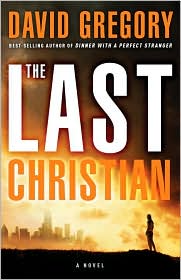
Book Review: The Last Christian


The Last Christian. David Gregory. 2010. Waterbrook Press. 416 pages

I see your neurons firing, Ray.

The Last Christian has an interesting premise. A very thought-provoking premise. It's set in 2088, in the United States, for the most part. In this day and age, Christianity is essentially dead.

Abby Caldwell, our heroine, is the daughter of a missionary couple; she has only known one way of life, the Christian way of life. She's from Papua New Guinea--from the jungle where she was born and raised. But when a mysterious illness kills everyone in her village, well, she sets off on an adventure of her own. She's on her way to America to try to fulfill her grandfather's vision.

Abby received a message--though the message came sixteen years late--from her grandparents. They told her of a dream, a vision. Of how she may be America's greatest hope. Of how she may be the one to bring Christianity back to a country, a nation.

But fulfilling that dream may cost her her life. Because the country is not only unreceptive to the gospel, but openly hostile. She may face jail time for her "hate speech" if she tries to share the gospel with others.

Of course, that is only the beginning of the story David Gregory has written. The Last Christian reads more like an eery Twilight-Zone episode. Artificial intelligence. Silicon Brains. The obsession to combine technology and biology--to take humanity to a whole other level, to be transhuman. The quest of driven men to live forever and ever.

Science. Politics. Religion. Ambition. Greed. Murder. The Last Christian is a compelling read. It is a bit more premise-driven, action-driven, than character-driven, but that isn't necessarily a bad thing.

What I liked best about The Last Christian was it made me think. I'm not sure I liked every little thing about the book. The book makes some strong statements here and there about our church culture, our faith. But. If nothing else it makes you think about faith. What would happen--what could happen--if faith fails. (I think truth is infinitely more important than entertainment value. That the church shouldn't be so open to compromising the truth--changing the gospel--in order to bring more people in the doors.) I liked that Abby didn't have all the answers. That she wasn't perfect. That she was human. That she had her own faith challenges to work out.


© Becky Laney of Operation Actually Read Bible

Friday, July 24, 2009

Book Review: The Enclave

Hancock, Karen. 2009. The Enclave. Bethany House. 492 pages.

Sometimes books arrive that I don't remember requesting. Such is the case with The Enclave by Karen Hancock. The fault, this time at least, is all mine. This is a blog tour book--apparently I signed up in May for it and forgot all about it! As I said I was surprised when it arrived because it's a genre that I don't really read much in. And there's a reason for that. It's a Christian book. (I don't mind those. That's not where I'm nitpicking.) But it's one of those oh-so-modern-thrillers. In The Enclave it is one of those Evil Institution and Mad Scientists type of thriller.

What is The Enclave about? Who are its stars? We've got two Christian scientists: Lacey McHenry and Cameron Reinhardt. Both are employees at Kendall-Jakes, a research institution under the direction of (the tyrannical and so obviously evil) Parker Swain. The list of 'bad guys' is rather long in this one. But essentially there are plenty of scientists more on the mad side of things who are looking for a way to obtain immortality, to conquer death and the like. One of their schemes includes manipulating genes and human cloning. Employees are encouraged to worship their director and give their all for him. He can be very persuasive. Unfortunately, he can also be very dangerous.

Poor Lacey has quite the time of it. There's a weird "anomalous" creature after her, that is stalking her, who turns murderous when she's transferred out of her department. And then there's the sexual harassment from Swain. She's caught the boss' attention, and he'll stop at nothing to make her one of his girls. He has quite the history, you see. Lacey isn't quite open to all this flirting--she's not stupid exactly--but she's not quite closed to it either. She entertains moments where she thinks he might accidentally be sincere. Moments where she considers that he might be good for her. (Granted, Lacey isn't privilege to all the knowledge readers are. But still, there are moments I wanted to slap her!) Lucky for Lacey, there is Cameron to watch out for her and protect her. Cameron seems to be a bit more aware and open to the idea that his boss is pure evil.

Cameron is prone to having flashbacks. It's written into the story that he has Post Traumatic Stress Disorder. He ever so conveniently flashes back a dozen or so times. I suppose these chaotic interruptions in the text--the shifting from now to then without a second's notice--is authentic enough. These flashbacks overwhelm the narrator without warning, so why should readers be spared the chaos of being flung through time, the disorientation and discomfort of it. Still it can be frustrating to the careless reader. (I'll admit that I'm careless at times. If your mind skips out on a sentence or two, you can get lost very quickly.)

Part mystery. Part thriller. Part action.

While I didn't particularly "like" this one--just not my genre--I do think some readers might find it worth their time. There is quite the sub-genre for this in Christian fiction. So it must have a steady audience of folks who love suspense-thrillers with a Christian slant.

© Becky Laney of Operation Actually Read Bible