Sunday, July 15, 2012

Week In Review: July 8-14

What have I read this week? Well, I've read and reviewed two books this week: Finding God When You Need Him Most by Chip Ingram and Then Sings My Soul by Robert J. Morgan. I was able to finish two more books--one yesterday, one this morning. I'll have reviews of The Kingdom by Bryan Litfin and The Last Hunger Season by Roger Thurow in the upcoming week. Perhaps even this afternoon!

And here's what I was able to read in the Bible this week:

NASB

  • Mark
  • John
  • Acts 20-28
  • Romans 
  • Galatians
  • Ephesians
  • Philippians
  • Colossians
  • Jude
  • Titus
  • Philemon


ESV

  • Jonah
  • Obadiah
  • 1 Thessalonians
  • 2 Thessalonians
  • 1 Timothy
  • 2 Timothy
  • James

© Becky Laney of Operation Actually Read Bible

Friday, July 13, 2012

Book Review: Then Sings My Soul

Then Sings My Soul. Robert J. Morgan. 2010. Thomas Nelson. 320 pages.

Chances are that if you are a Christian, you have a favorite hymn or two. But do you know the story behind your favorite hymns? In Then Sings My Soul, Robert J. Morgan shares with readers the stories behind 150 hymns. The first 63 pages of this one are devoted to Christmas hymns and carols. Forty-four pages are dedicated to Easter songs. Seventeen pages are focused on hymns of Thanksgiving. Ten pages highlight patriotic songs. The remaining pages are designated "Other Favorites."

Each hymn has a two-page spread. One page containing the words and music, the second page presenting the story focusing on either the songwriter, the composer, or the song itself. In some cases, a bit of all three! Readers are given the opportunity to learn about Martin Luther, Charles Wesley, Isaac Watts,  Robert Lowry, Fanny Crosby, Philip Bliss, etc. By reading the book as a whole, readers also learn a little about the history of worship music in the church through the centuries. The book is diverse, I feel, it includes hymns written by men and women; hymns written by Protestants and Catholics; hymns written in many different countries at different times.

I Will Sing Of My Redeemer
As a ten-year old boy, when Philip Paul Bliss heard the sounds of a piano for the first time, his imagination was deeply stirred. Later, riding his horse Old Fanny, he became a traveling musician. In 1870, he joined the staff of a Chicago church as music director and Sunday School superintendent. In March 1874, he became the song leader and children's director for the evangelistic campaigns of Major Daniel W. Whittle. All the while, Philip was penning some of America's favorite gospel songs.
By the end of 1876, Philip needed a break. He had just written the music to "It Is Well With My Soul" and finished a whirlwind tour of meetings with Major Whittle. While he and his wife, Lucy, were spending the Christmas holidays with his family in Pennsylvania, a telegram arrived requesting they come to Chicago to sing at Moody's Tabernacle on the last Sunday of the year. On December 29, 1876, leaving their two small children with Philip's mother, they boarded the Pacific Express. The snow was blinding, and the eleven-coach train was running about three hours late. About eight o'clock that night as the train creaked over a chasm near Ashtabula, Ohio, the trestle bridge collapsed. The engine reached solid ground on the other side of the bridge, but the other cars plunged seventy-five feet into the ravine. Philip survived the crash and crawled out through a window. But within moments, fire broke out, and Lucy was still inside, pinned under the twisted metal of the iron seats. The other survivors urged Philip not to crawl back into the flaming wreckage. "If I cannot save her, I will perish with her," he shouted, plunging into the fiery car. Both Philip and Lucy died. He was thirty-eight. Philip's trunk finally arrived in Chicago safely. In it were found the words to the last hymns he had written, one of which was:
I will sing of my Redeemer,
And His wondrous love to me;
On the cruel cross He suffered,
From the curse to set me free.
Sing, oh sing, of my Redeemer,
With His blood, He purchased me.
On the cross, He sealed my pardon,
Paid the debt, and made me free.
I definitely enjoyed reading this one! The entries are great devotionals, in my opinion. And the stories are at times quite fascinating.


© Becky Laney of Operation Actually Read Bible

Thursday, July 12, 2012

Book Review: Finding God When You Need Him Most

Finding God When You Need Him Most. Chip Ingram. 2002/2007. Baker Books. 209 pages.

Some moments in our lives remain forever fresh. Like a scene from a movie embedded in our soul, we can recall with uncanny clarity every nuance of certain events that occurred years, even decades ago. 

I definitely benefited from reading Chip Ingram's Finding God When You Need Him Most. The teachings found in this one are timeless and ever-relevant. The teachings are drawn from Psalms, so  perhaps that isn't a big surprise. The specific Psalms taught in Finding God When You Need Him Most are Psalm 73, Psalm 23, Psalm 139, Psalm 77, Psalm 46, Psalm 51, and Psalm 90. Each chapter is straight-forward and reader-friendly. I love how each chapter is organized. Some are organized by life lessons, others by steps, etc. These lessons are built around Scripture. I also found it helpful that each chapter concludes with study questions.

The chapters:

  • When You Get a Raw Deal
  • In Times of Crisis
  • When You Feel Like a Nobody Going Nowhere
  • When You are Troubled and Depressed
  • When You are Gripped by Fear
  • When You've Blown It Big Time
  • In Times of Confusion
  • God Is With You Always

Favorite quotes:
One key to enjoying the life God wants you to have is to choose to believe what God says about you instead of what the world implies. I cannot overemphasize how important and pivotal it is that you learn to see yourself as God does. (82)
The biggest problem in our lives is not that God is mean or that he doesn't really care about us; the biggest problem comes from the fact that down deep in our hearts we are proud and self-sufficient. Most people want to be both the sheep and the shepherd. (56)
Knowing that God wants us to pour out our hearts to him frees us. (26)
There is nothing you can ever do to get God to love you any more than he does right now. There is nothing you can ever do to get God to love you less. Your performance is irrelevant when it comes to God's loving and accepting you. In light of that grace, what kind of person does God want you to be?
Whatever you aspire to be, you must make that a priority in your life. Then organize your time and activities to work toward those priorities. (185)
God is great. Life is short. Sin is serious. Wisdom is essential. Mercy is available. (191)
I would definitely recommend this one!!! It is rich in God's truth. I love its dependence on Scripture. And the insights are the good kind of challenging.

© Becky Laney of Operation Actually Read Bible

Sunday, July 8, 2012

Week in Review: July 1-7

Well, my goal for July is to read ten to fifteen chapters a day in the Bible! My second goal is to read fifty pages of theology every day. While, I was able to meet my Bible-reading goal this past week, I'm not sure I managed fifty pages each and every day. I was able to finish two books this week, however. One I would say was definitely theology, the other I'm not sure what to call it.

NASB

  • 1 Thessalonians
  • 2 Thessalonians
  • 1 Timothy
  • 2 Timothy
  • Titus
  • Philemon
  • 1 Corinthians
  • 2 Corinthians
  • Galatians
  • Ephesians
  • Philippians
  • Matthew
  • Acts 1-19

ESV

  • Hebrews
  • James
  • 1 Peter
  • 2 Peter
  • 1 John
  • 2 John
  • 3 John
  • Jude

HCSB

  • 2 Samuel 16-24
  • Ecclesiastes


© Becky Laney of Operation Actually Read Bible

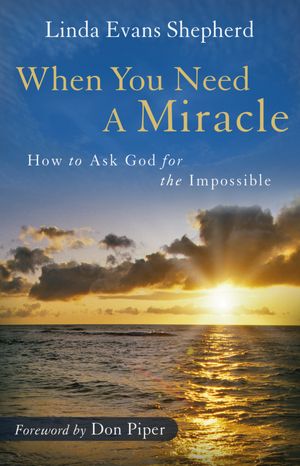
Book Review: When You Need a Miracle

When You Need A Miracle: How To Ask God for The Impossible. Linda Evans Shepherd. 2012. Revell. 207 pages.

I'm guessing you picked up this book because you need a miracle. 

Linda Evans Shepherd is a new-to-me author. When offered the opportunity to review this one, I accepted knowing that it would be a risk. I could potentially find a new author to read, or, I could find her theology not to be a match with my own. As it turns out, Linda Evans Shepherd is not for me. Sometimes it is just a matter of style or preference. For example, I'm not a fan of Max Lucado. (Too many stories, not enough substance.) Sometimes it's a more of an issue with content and subject matter. I'm really, really not a fan of Elizabeth George. (The Elizabeth George in question being the Christian author of "women's books" not the mystery writer whose works I've never tried.) And sometimes it is more a matter of doctrine and theological differences. It's a little bit of all three in the case of Linda Evans Shepherd's When You Need A Miracle. I definitely had some theological concerns about it.

Table of contents:

  • Need a miracle?
  • The Trust Factor
  • The Love Factor
  • The Truth Factor
  • The Forgiveness Factor
  • What Hinders Our Prayers
  • Fighting the Enemy
  • More Strategies for Fighting the Enemy
  • The Praise Factor
  • The Sold Out Factor
  • The Next Step Principle
  • The Intercession Factor
  • The Miracles of It All 

This is a book about prayer. Yes, it's a book about miracles too. But it is a book about prayer, about learning to live with an awareness of God's presence, about learning to trust that God is who He says He is, about learning to accept that God wants to answer your prayers, that God wants to do miracles in your life, that God welcomes your dependence on Him. In the first chapter, she writes, "Miracles are not about praying the perfect prayer; miracles are about what happens when we welcome God's presence and power into our situations and our lives" (16).

For readers who enjoy books with printed prayers to pray for specific situations, for certain circumstances, etc., this one has plenty to offer. Each chapter has at least one prayer for you to pray. Just fill in the blanks and make it yours. Some chapters offer more than one prayer. For example, the chapter, "What Hinders Our Prayers" offers for each of the reasons:

  • wrong perspective of God
  • not knowing who we are in Christ
  • lack of faith and trust
  • disappointments
  • not asking in the name of Jesus
  • grumbling and complaining
  • grudges or unforgiveness
  • self-will and disobedience
  • timidity or fear
  • prayerlessness
  • unconfessed sin
  • not reading the Word
  • not standing against the schemes of the enemy
  • thanklessness
  • not fasting
  • not giving

The book is comprehensive when it comes to the topic of prayer, of answered prayer (miracles), of unanswered prayers, etc.

Why isn't this book a good match for me? Well, I found it had too many stories. A few stories--particularly her own personal stories about her own life, her own experiences--would be fine with me. But there were dozens and dozens of stories, some were stories of her friends, some were stories about people she met or heard about. Some of these stories were about near death experiences. Some were about men, women, children, who died went to heaven, came back to life and had some great spiritual truth to impart. I don't know about you, but these stories take me way out of my comfort zone. The truth is they could be perfectly true, but, it's also true that there is no way that they can be tested. These testimonies or stories are not as rock-solid as the Bible. I personally prefer to learn about God, about heaven, from the Bible. Of course, not all of these stories were about heaven, some were just miracles in the here and now. I suppose stories are what one should expect in a book about miracles. Real-life examples of men, women, teens, children who have prayed to God and received answers. For example, one woman who needs socks but can't afford to buy them, prays to God about her need for socks, and the next day a woman shows up at her door with three bags of socks. Or, a church that had faith that God would provide toys for a toy drive at Christmas, even though they didn't have the money to buy the toys, one woman donated more than enough at the last moment. Of course, some seem--to me--less impressive. Stories about students who "miraculously" managed to finish semesters of school with passing grades. (Don't get me wrong, I prayed when I was in school too, but, I do think it's a matter of applying yourself, of reading what is required, of studying, of taking notes, of attending class, etc.)

Another issue that I had with this one is about spiritual warfare, about Satan and demons and such. There were several chapters about this, and, they were definitely outside my comfort zone. These were prayers to pray specifically to free yourself, your family, your house, your church, etc. from demonic control and/or influence. These are prayers that the author encourages readers to pray daily. These are prayers about how to break curses, how to break family curses, generational curses, curses "placed" on you by your family, your friends, your coworkers, your enemies, etc. The author mentions in several chapters her belief in curses. That there are words we speak that give Satan and his forces power over us, control over us, authority over us. That words spoken in anger, bitterness, frustration, depression, pride, arrogance selfishness, jealousy, disappointment; words spoken casually, playfully; words spoken in complaint, the gossip we speak, the gossip we have spoken about us, etc. act as curses--that they give power and authority to Satan. She definitely writes about praying blessings and praying to lift curses. Here's an example:
Have you ever walked through your house or dwelling and asked God to bless each room with the power of the blood of Jesus? It's a nice thing to do, but let me caution you. The first time I ever blessed my home, my beautiful and healthy dog, a snow-white Samoyed, walked into the one room I had not prayed over and fell over dead. I don't know exactly why this happened, but nevertheless, I count it as a warning. If you decide to bless your home (and you should), please remember to pray over every room, bathroom, and hallway, including the garage, porch, closets, attic, breezeway, and basement. (129)
I got the idea that the author definitely places a lot of power in words, in spoken words, perhaps believing that our words create our reality? or that our words have power over our lives? I'm not sure. So I definitely have some hesitations about this one as a whole.


© Becky Laney of Operation Actually Read Bible

Saturday, July 7, 2012

Book Review: Charity and Its Fruits

Charity and Its Fruits: Living In the Light of God's Love. Jonathan Edwards. Edited by Kyle Strobel. 2012. Crossway. 350 pages.

I have been meaning to read Jonathan Edwards for close to a decade. But he isn't as reader-friendly as say Charles Spurgeon or A.W. Tozer or A.W. Pink or R.A. Torrey. Edwards was a scholar, a theologian. He was a deep thinker; his ideas and concepts are complex, very complex. This publication seeks to bring Edwards to a new audience. The text is Edwards, this is not an abridgment or adaptation. But some additional helps have been added. Strobel has added footnotes defining tricky words that Edwards was so fond of using. Words like concatenation, for example. There are also side-boxes where he highlights key concepts, usually in reader-friendly terms. Sometimes he brings in other quotes to help clarify. And, as you might expect, it adds an introduction and conclusion written specifically to help guide and influence modern readers. Both are very straight-forward. Both ask HARD questions of readers. The questions challenge you to truly reflect on the text and your relationship with God.

So what is this one about? Well, it's a collection of sermons on 1 Corinthians 13. It is an in-depth study of 1 Corinthians 13, Edwards doesn't quite go word by word by word, but, he certainly goes line by line by line. A few of the sermons are broader in scope and focus on several verses. The middle sermons, however, which happen to be my favorite, are narrower in focus. They focus on envy, jealousy, patience, anger, selfishness, etc.

The good news: while each sermon builds upon the others, they are meant to be read and studied as a whole, some sermons are less intimidating. Dare I say it? Some are even relatively easy to grasp and understand? True, some of the sermons are very dense, very complex, very intricate. I do think that a reader CAN benefit from the book as a whole, especially if one is willing to focus on the big picture and go for understanding the basic big picture, the key points. I think a second or third or fourth reading of individual sermons may prove beneficial for getting the finer, more intricate points. One could always keep reading, keep studying, keep digging to get all the richness from the text. But I don't think you'd have to make it your life's mission to comprehend Edwards in order to benefit from reading this one.

So what is the most important thing? Well, that's a trick question isn't it! Why read Edwards at all? Why seek to honor America's greatest theologian? Why read a text that is hundreds of years old? I think Strobel would agree with me that the SOLE reason to read Edwards would be to learn MORE of God, to come to a better understanding of who God is, and have a clearer perception of ourselves in relationship with God. That is, by studying God, who He is, what He has done, what He requires of us, etc., we can better KNOW OURSELVES. Some might think it odd that we would need to know God in order to know ourselves, or to know ourselves truly, but I think it's essential to have a right understanding of who we are, we need God, we need to see ourselves as God sees us.

The subject of this one is love: God's love to us, our love to God, and our love for others--both our brothers and sisters in Christ, and, unbelievers. If you really think about it, this is a book about how to live the Christian life...since the TWO commandments are to love the Lord your God with all your heart, with all your soul, and with all your mind, and Love your neighbor as yourself. (Matthew 22:37; Luke 10:27) Matthew 5:44 goes on to say that we should love our enemies and pray for them.

Section One: Love, The Most Essential Thing

  • Sermon 1: Love The Sum of All Virtue
  • Sermon 2: Love More Excellent than Extraordinary Gifts of the Spirit
  • Sermon 3: Nothing Can Make Up For Want of Sincerity in the Heart

Section Two: Love, The Fountain of All Good

  • Sermon 4: Long-Suffering and Kindness
  • Sermon 5: Charity Contrary to an Envious Spirit
  • Sermon 6: A Christian Spirit is a Humble Spirit
  • Sermon 7: Charity Contrary to a Selfish Spirit
  • Sermon 8: Charity Contrary to an Angry Spirit
  • Sermon 9: Charity Contrary to a Censorious Spirit
  • Sermon 10: Grace Tends to Holy Practice
  • Sermon 11: Undergoing Sufferings A Duty to Christ
  • Sermon 12: Christian Graces Concatenated Together

Section Three: Love, The Divine Gift That Perseveres

  • Sermon 13: Grace Never Overthrown
  • Sermon 14: Divine Love Alone Lasts Eternally
  • Sermon 15: Heaven Is a World of Love

I'd by lying if I said that I understood each point, each and every concept, term, and idea in each and every chapter. But, I do think I was able to grasp the big ones, and hold in mind a big picture of what Edwards was trying to accomplish.

I don't think you can walk away from a study of 1 Corinthians 13 with pride, with your head held high. I think this chapter is VERY humbling, very challenging. It can make you extremely uncomfortable, if you let the meaning of each phrase resonate within you. When you really, truly grasp how we are called to love, how we are called to live...well...it's humbling. What you are left with is your inadequacy, your need, your DESPERATE need for a merciful, gracious Savior. For there is only ONE who has lived and loved like this. That one is Christ Jesus. This chapter points you to the Savior, reminds you of how far you are from being perfect, from loving and living perfectly. Edwards' study of 1 Corinthians 13 is challenging and thought-provoking.

Favorite quotes:

For Edwards, it is the Spirit of love that unites the Father to the Son, Jesus's human nature to his divine nature, his church to himself, and his people to one another. Furthermore, the Spirit is not simply love, as if that were the only attribute of the Spirit, but also peace, beauty, holiness, and grace. As will become clear below, the Spirit is the fountain of virtue because love is the ultimate virtue and is, in fact, the reality of God's own life. (22)

Love is the tune that orients the believer's heart to heaven, whereas hate is the deformity that leads to hell. (24)

Modern evangelicals do well to note this point, because we often err on the side of seeing salvation simply in terms of forgiveness. By grounding salvation in union with God, we are seeking not forgiveness but God himself. Faith does not lead primarily to forgiveness, but to Christ. In him forgiveness and justification are known. Therefore, one's Christianity cannot boil down to a specific moment in conversion, however important that moment is, Christianity, or, as Edwards would say, "true religion," is communion with God. The Christian life is an ever-increasing love of God such that one's soul comes to take on the life of God itself as God's own Spirit of love works in the heart. With Christ at the center of salvation, the whole of one's life is lived before the face of God. To live this life, we are not forgiven and then left alone to work hard to act like Christians. Rather, if we are in Christ, forgiveness and holiness are now ours. Furthermore, by being united to Christ by the Spirit, we have the Spirit indwelling and acting as a fountain of holiness, love, and grace itself. (27)

Primarily, the solution to sin is God himself. The recognition of vice in our hearts can lead us to the cross and cast us, just as in salvation, upon the overflowing mercy and grace of God. Likewise, as noted above, Edwards wants his readers to grasp the idea that knowledge of God and knowledge of self are mutually informing; therefore, it is important to trace out the roots of our sins and expose them to the light of God's revelation. Misunderstanding who we are is almost as problematic as misunderstanding who God is; it is the root of all sorts of sin. (29)

We are aware that we are incredibly sinful. Unfortunately, our way of dealing with this is not to deal with it at all. We hide our sin as best we can, even from ourselves, and seek to project to the world and church a person who doesn't sin and who has everything figured out. Too many people get lost in the false self they create, and they come to be filled with pride as they judge others (309). 

Searching our hearts is a mode of prayer--it is something done not in isolation, but before God. (312)

Edwards' thoughts should warn us against two errors: first, thinking that we are insightful enough to judge other people's hearts; and, second, thinking that even our own hearts are easily discerned. (312)

We should never underestimate how easy it can be to repackage our vices as virtues. (312)

© Becky Laney of Operation Actually Read Bible

Friday, July 6, 2012

Consider Jesus

I was reading Hebrews earlier this week, and I was struck by Hebrews 3:1. (To read the full context, look at Hebrews 3:1-6).

Therefore, holy brothers, you who share in a heavenly calling, consider Jesus, the apostle and high priest of our confession,
(Hebrews 3:1 ESV)

The phrase "consider Jesus" resonated with me in a way it really hasn't in the past. What does it mean to consider Jesus? What does that look like in the Christian life? Surely it means more than just knowing facts about Jesus. Surely it has something to do with being in right-relationship with Christ--a saving union with Christ. It led me to asking some questions. (I'm using the pronoun you--simply because it's easier for me to write in--but I include myself in the questioning. I'm not interrogating my readers!!!) Do you consider Jesus in your day to day life? Do you consider Jesus when you're making decisions on how to spend your time and money? Do you consider Jesus when you're making your priorities? Do you consider Jesus as being present with you in your day-to-day-week-to-week existence? Do you think of Jesus as a person? Or do you think of Jesus merely in the abstract? How would your life change if you took time to consider Jesus? To live as if he was always with you. Would you welcome His presence? Or run from it?

I'd like to share a few things with you. First, I'd like to share with you what the word consider means. The Greek word is: katanoeō. It means "to observe fully, behold, consider, discover, perceive." Of course, we can't observe Jesus Christ fully on earth--we can only read of Him in the gospels. We will not behold him as he really is--in his full majesty and splendor--until Heaven. But we can keep on discovering and beholding him here and now. We can seek a relationship, we can seek to know him now, we can come to love him more and more. The more we behold him, the more satisfied we become in Him. The more we value Him over the world.

Second, I'd like to share this J.C. Ryle quote with you. Yes, I know it's a couple of paragraphs. But, trust me. It is WORTH attention.
 Keep before your mind, as an ever-present truth, that the Lord Jesus is an actual living Person, and deal with Him as such. I am afraid that many who profess Christ in our day have lost sight of our Lord's person. They talk more about salvation — than about their only Savior, and more about redemption — than the one true Redeemer, and more about Christ's work — than Christ Himself. This is a great fault — one that accounts for the dry and shriveled spirit that infuses the religious lives of many who profess faith.As ever you would grow in grace, and have joy and peace in believing — beware of falling into this error. Cease to regard the Gospel as a mere collection of dry doctrines. Look at it rather as the revelation of a mighty living Being in whose sight you are daily to live. Cease to regard it as a mere set of abstract propositions and abstruse principles and rules. Look at it as the introduction to a glorious personal Friend. This is the kind of Gospel that the apostles preached. They did not go about the world telling men of love and mercy and pardon in the abstract. The leading subject of all their sermons, was the loving heart of an actual living Christ. This is the kind of Gospel which is most calculated to promote sanctification and fitness for glory. Nothing, surely, is so likely to prepare us for that Heaven where Christ's personal presence will be all, and that glory where we shall meet Christ face to face, as to realize communion with Christ, as an actual living Person here on earth. There is all the difference in the world, between an idea and a person.
Did you catch that? Many who profess Christ in our day have lost sight of our Lord's person. They talk more about salvation--than about their only Savior, and more about redemption--than the one true Redeemer, and more about Christ's work--than Christ himself. That's a sobering thought, isn't it? Do you find yourself numbered in that many? I have been pondering these paragraphs for days now--and I'm still haunted by these words. Do I live and act as if the Lord Jesus is an actual living Person? And do I treat him that way?  Do I consider Jesus enough? Do any of us?

© Becky Laney of Operation Actually Read Bible