Showing posts with label 2007. Show all posts

Tuesday, June 4, 2019

Book Review: Taking Back the Good Book

Taking Back the Good Book: How America Forgot the Bible and Why It Matters To You. Woodrow Kroll. 2007. Crossway Books. 222 pages. [Source: Review copy]

First sentence from the preface: Do you remember your first Bible? I remember mine. It was red--the color; it was also read--the verb.

First sentence from chapter one: There's no book like the Bible.

I have been meaning to reread Woodrow Kroll's Taking Back the Good Book for more than a few years now. What is it about?
This book is about you, your family, and your Bible. It's about the dust on your Bible. It's about taking a reality check with regard to how deeply the plague of Bible illiteracy has wormed its way into the churches and homes of America. (13)
His premise is that the American church is in a state of crisis. His call is that American Christians should wake up from their slumber and get serious about spiritual warfare. The problem--as he sees it--is that Christians are NOT reading their Bibles, that Christians have little to no knowledge of what is actually in the Bible, that because Christians have little knowledge of the genuine that they are falling in masses for counterfeits. In other words their minds are OPEN--too open--and they are completely vulnerable to the lies of the world, the lies of Satan. They are spiritually vulnerable because they are unprepared and inexperienced.

If the book was updated today would Kroll push things even further? I think he would. His main argument is that the Bible is dusty because it's primarily neglected. Christians are not in the habit and not likely in the habit of reading the Bible for themselves. Christians may or may not feel guilty about finding the Bible boring or finding the Bible irrelevant. But this lack of knowledge is by accident and not by intent. Kroll argues that no Christian intentionally declares that the Bible is unimportant or a waste of time. They may give absolutely no priority to actually reading the Bible. But they still feel tied to the book--the link between the Christian faith and the Bible has not been broken altogether.
Is this still the case? I'm not sure it is.

Kroll doesn't miss the point of Bible reading. Though one could possibly misread his intent. On the surface Kroll may appear to be focusing on numbers--polls, surveys, questionnaires, quizzes. If people had more head-knowledge, then they'd be better at being Christian. But it doesn't take much digging to see that Kroll's point is not that at all. Yes, the Bible was foundational to the men and women who founded the United States of America. Yes, the Bible was key to the nation's leaders and lawmakers. Yes, the Bible was decidedly a part of the American education system. Yes, if you want to better appreciate our nation's history and literature, it would help to have a knowledge of the Bible.
But Christians should not read the Bible because they want to be better citizens, because they want to be better humans, because they want answers to the questions the news is asking, because they want to win this or that argument.

Christians should read the Bible because GOD WROTE IT. It is GOD'S REVELATION. One reads the Bible because one wants to KNOW GOD. One reads the Bible because it is God SPEAKING. It records God's Words and God's Actions. It is all about the one we claim to love and worship. Things are desperate indeed if Christians have no interest in coming to know the God they claim to profess.

One can have head-knowledge and not worship. Head knowledge can fail to penetrate our hearts. Head knowledge can leave us cold and stony-hearted. But can one really and truly WORSHIP an unknown God? Knowledge is not optional, not if you truly want to worship the one, true God. The God that IS.


  • The sum of thy word is truth. Psalm 119:160
  • The LORD is near to all who call upon him, to all who call upon him in truth. Psalm 145:18
  • Teach me thy way, O LORD, that I may walk in thy truth. Psalm 86:11
  • Oh send out thy light and thy truth; let them lead me. Psalm 43:3
  • Lead me in thy truth, and teach me, for thou art the God of my salvation; for thee I wait all the day long. Psalm 25:5
  • God is spirit, and those who worship him must worship in spirit and truth. John 4:24
  • Sanctify them in the truth; thy word is truth. John 17:17
  • No greater joy can I have than this, to hear that my children follow the truth. 3 John 1:4
  • Thy word is a lamp to my feet and a light to my path. Psalm 119:105
  • How sweet are thy words to my taste, sweeter than honey to my mouth! Psalm 119:103
  • O taste and see that the LORD is good! Happy is the man who takes refuge in him! Psalm 34:8
  • Whom have I in heaven but thee? And there is nothing upon earth that I desire besides thee. Psalm 73:25

I believe it was John Calvin who wrote that the human heart was an idol-maker. This is as true today as it ever was. The idols we create today in our hearts often go by the name of "God" or "Jesus Christ." Idol-makers love the personal pronoun MY. My God...My God....My God. My God is a God of Love. My God would never condemn a person to hell. My God would never hate sin or hate a sinner. My God would never be offended by this or that. My God made me like this. My God loves me just as I am. My God would never ask me to change. My God would never ask me to make self-sacrifices.

One crisis, I believe, facing the church is a DISMISSAL of the Bible as the Word of God. This isn't every church in every denomination in every city in every state. But I think the move--the downward slide--is more and more trending this way. THE GOD OF THE BIBLE MAY SAY THIS OR THAT....BUT...don't you worry your little old head. We've got answers, excuses for why it "clearly" and "obviously" doesn't mean what it says there in black and white.


  • The Bible is a human book. The human authors got it wrong. The human authors thought God was saying this and meant this...but it was really the human authors being influenced and impacted by their own cultures. 
  • God's revelation is always ongoing and in process. What God said thousands of years ago is NOT what he is saying today. God is a God of the here and now. It doesn't matter what God said then to this or that people, this or that culture. The important thing is what is the Spirit saying to us today in the here and now. 
  • God's Spirit is doing a new thing. We are not to be led by a dusty old book! Don't be ridiculous. We are to be LED BY THE SPIRIT OF GOD. The Spirit indwells each person, and the Spirit leads each person. Listen to what the Spirit is leading you to do and don't worry about a book of stuffy old commands.
  • God DID NOT LEAVE US A BOOK. HE LEFT US THE SPIRIT. Trust the Spirit and not the Book.
  • People who read the Bible, who love the Bible, are WORSHIPPING THE BOOK AND NOT THE SAVIOR. We are not called to worship a book, we are called to LOVE THE LORD GOD AND SERVE HIM ONLY. Don't risk worshiping a book and falling into idolatry. NO, the Bible is too dangerous. 


This is not a subject really addressed in this one at all, though other books have gone there. But I think it is perhaps interconnected. If one is not familiar with the true, the genuine, the pure, then one falls for any and every message no matter how false or counterfeit. Sermons must be held up to the Word of God. Sermons must be filtered through a reading and studying of the Word of God. Any book, any article, any podcast, any sermon, any teaching must be tested.

Quotes from the book:

What is Bible Illiteracy? 
Bible illiteracy has more to do with inattention than inability. For our purposes here when I talk about Bible illiteracy in America, the definition relates to a lack of familiarity with the Bible, not to a lack of ability to read it. Bible illiteracy is not the unfortunate, unintentional inability to read and understand Scripture; it is the unfortunate, intentional neglect of Scripture.(58)


So how does Kroll define Bible literacy? 
Reading [the Bible] is fundamental, but it isn't enough. You have to read the Bible and then interpret it and apply it to your life. Those are the initial steps in Bible literacy. They are also the first steps toward spiritual maturity. (58)

Biblical illiteracy is causing many problems within and without the church and evangelical community, but it isn't too late. Kroll outlines some important steps that everyone can take to reverse the situation. It all starts with you. It involves your time and your discipline. But it can be done. It should be done.


A huge disconnect exists between owning a Bible and reading it. Simply put, the number of people who claim to read the Bible isn't supported by their knowledge of the Bible (66).

Some people choose not to read the Bible because they're afraid it will contradict what they've already made up their mind to do. But the Bible isn't a dialogue between God and us. It's a revelation from him to us. The Bible should be our guide to life, not a sometimes-support for our pre-existing belief system. (71)

The Bible is read by people who choose to read it. Bible reading is neglected by people who choose to neglect it. It's just that simple. No excuses. Just honesty. (77)

When you win the battle for Bible literacy in your own life, you not only discover the joy of God, you are the joy of God. He delights in our getting to know him, and the most direct way to make that happen is by reading what he has revealed about himself in his Word (145).

If you don't take the Book in your life and read it consistently, you are saying to its Author, "I don't care enough about you or your Book to read it." That's what Bible literacy means to God. It means you love him, and you show it. It means you worship him, and you show it. It means you thirst for him, and you show it. Isn't it time we did some serious thinking about just how Bible-literate we are? Isn't it time for you to do some thinking?(151)

The most common excuse for not reading the Bible is our busy lives. We don't seem to have time to do the things we need to do. There's work and school, running to the store, soccer practice, dinner--life is just a bit harried. Who has time to sit and read?
You do. Here's why: time is a set quantity. It's not elastic. We all have sixty seconds in every minute, sixty minutes in every hour, twenty-four hours in every day. Time may fly, but it doesn't change. You have 1,440 golden minutes in every day and so do I.
The issue is never about time; it's always about what we choose to do get done in the time we have. Is reading God's Word, meditating and benefiting from it, something you wish to take the time to do or not? If not, the convenient but pathetic excuse is to say, "I don't have time."
A couple of years ago, I took a stopwatch with me everywhere I flew. I would read my Bible while in flight and time how long it took to read each book of the Bible. Once when I was returning from Frankfurt on a flight to Chicago, a flight attendant saw the stopwatch and asked, "Are you timing our service?" I chuckled and said, "No, I'm timing how long it takes me to read my Bible." Puzzled, she asked why someone would want to do that. I said, "Because everybody tells me they would read their Bible but they don't have time. I want to know how much time they don't have."
Did you know that you can read half the books of the Bible in less than thirty minutes each? You can read twenty-six of them in less than fifteen minutes. The whole Bible, cover to cover, can be read by an average reader in less than seventy-two hours.
Maybe it's time we rethink our reasons for not reading the Bible and just call them what they are--excuses. Take another look at these "Top Ten." How many of them have you used with God as an excuse for not reading his Word? If you can see through the excuses so quickly, imagine how easily he can see through them.
The Bible is read by people who choose to read it. Bible reading is neglected by people who choose to neglect it. It's just that simple. No excuses. Just honesty. (76-77)
We typically think of tithing in monetary terms, but have you ever thought about tithing your time? Suppose you spent 10 percent of your day with God? What would that mean? Mathematically, there are twenty-four hours in a day, which equals 1440 minutes. If you gave the Lord 10 percent of that time, he would receive 144 minutes every day. That's over two hours. Is that how much time you spend in reading the Word and in prayer now? Probably not. But let's be fair. You have to work and sleep each for eight hours. You can't really tithe that time. So we're really talking about tithing in terms of your third eight-hour period in the day. That's 480 minutes, and a tithe of 480 minutes is forty-eight minutes daily. If you gave God forty-eight minutes daily, you'd be giving him one-tenth of one-third of your day. Does that sound reasonable? But how are you going to find forty-eight minutes in a day? You start here: instead of tacking God onto your schedule where you can, instead of watching your third reality show of the night, turn off the television, shut out everything else, and spend forty-eight quality minutes with God. If you do that, you could actually read the Bible through four times in one year--pretty amazing! (160)
Who's to say what's theologically correct? You? Me? Our peers? None of the above? How about God? He is. If the Bible is what it claims to be--a revelation of the mind of God to the minds of men--then God alone is in a position to determine what is truthful with regard to his character, his plans, and his purposes. (115)

Perhaps the greatest hindrance to knowledge is a failure to know what you don't know. I fear this is true in the evangelical church. We don't have a clue how little we known about the Bible. (187)


© Becky Laney of Operation Actually Read Bible

Wednesday, March 2, 2016

Book Review: Walking As He Walked

Walking As He Walked. Joel R. Beeke. 2002/2007. 133 pages. [Source: Bought]

Walking As He Walked is a collection of four sermons preached by Joel R. Beeke all inspired by 1 John 2:6. In the book he argues that walking like Christ walked is not an optional "extra" for Christians; being a Christian by definition means walking like Christ walked. His point is not to expect perfection and instant victory. No, his point is that believers should want--should desire--to grow in Christlikeness, to aspire to a closer walk, a holier walk. We should strive to run the race, in other words. So what does it mean to walk like Christ? Here is how Beeke describes it:
Walking as Christ walked means making Jesus’ priorities my own by faith (John 6:38). It means delighting in and keeping God’s law as Jesus did (Ps. 40:8). It means having compassion for others, repaying evil with good, and acting in love (John 13:15; 1 Pet. 2:23; Luke 23:34). It means despising the same pleasures and vanities of this world that He despised, speaking and living the same truths that He spoke and lived, and being led by the same Spirit that led Him (Rom. 8:14).
The first chapter is on cross-bearing (Mark 15:21, Luke 23:26). The second is on office-bearing (prophet, priest, king). The third is on tears (John 11:35, Luke 19:41, Hebrews 5:7). The fourth is on endurance. Each chapter focuses first on Jesus: how he lived, how he "walked" before moving onto what it means for us, how it applies to how we live our lives, how we walk in this world.

I would have to say that I found his sermons thought-provoking. For example,
When we have an encounter with Jesus Christ, our lives are changed once and for all. Every time we hear the gospel, our path crosses the path of a crucified Jesus, who is now exalted and walks among us in the garments of the gospel. Each encounter will be either for our salvation or our damnation. It will soften or harden us—never leaving us exactly the same.
and
Too often we Christians expect too little of Jesus and too much of each other.
and
If you think that God does not care about your sorrows and that Jesus is insensitive to your suffering, your concept of God needs correction. Perhaps dullness, blindness, or unbelief makes you feel this way. We are told that “Jesus wept.” The message of those two words is that God cares for us.
and
If you will not think of Him or of yourself, then consider the tears of Jesus. He wept for those who would not weep for themselves, who did not think that they had anything to weep about. He mourned for those who were going down the broad road that leads to destruction; He wept for the perishing! Jesus wept because God has no pleasure in the death of the wicked. He wept for hell-worthy, perishing sinners. The fault for your unbelief is yours; there is no one else in the entire world you can blame it on. But note this: though Jesus wept because of your willful unbelief, He did not excuse you from punishment.
and
What do we weep over? If we each had two bottles, and into one we put all the tears we shed for ourselves in the past ten years and, into the other, all the tears we have shed over lost souls, which bottle would be fuller? Do most of our tears spring from selfish, earthly concerns, or do they spring from concerns for the eternal souls of those around us? Have we shed any tears we could claim before the Lord, as David did: “Put thou my tears into thy bottle: are they not in thy book?” (Ps. 56:8).
And I loved how full of quotes this one was!
Samuel Rutherford; he learned so much in the school of Christ that when he saw another affliction coming, he’d say, “Here comes my Jesus!”
And as Martin Luther used to say, “Letting God be God is half of all true religion.”
Dear friends, as we listen to the claims of the devil, we must say with Luther, “We tremble, for so much of what the devil says is true. The devil has enough strength in his tail to knock my conversion out of me.”
Daniel Smart, a nineteenth century Baptist preacher, once remarked, “The sweetest tears a believer sheds are always in relation to the precious blood of Jesus Christ.”
“Sin,” as John Owen put it, “is always at our elbow.”
Bunyan once said that if sin knocks on your door and you open the door, you have not sinned as long as you shut the door as soon as you recognize sin for what it is. We fall into sin when we welcome sin into the home of our minds and dwell upon it.
Luther was so encouraged by the Psalms when he was going through his own trials that he said, “I can scarcely see how you can be a Christian without David being one of your best friends.”
Luther quipped: “Some of my best friends are dead ones.”
I loved this one. I just loved, loved, loved it. This would be a great introduction to Joel Beeke. It is perhaps a tiny bit more reader-friendly than R.C. Sproul's Pleasing God which I reviewed earlier this year. Both books are on sanctification. Both have some great insights.

© Becky Laney of Operation Actually Read Bible

Friday, February 12, 2016

Book Review: Best of A.W. Tozer

Best of A.W. Tozer (#1) A.W. Tozer. Compiled by Warren Wiersbe. 1978/2007. 251 pages. [Source: Bought]

I would definitely consider myself a fan of A.W. Tozer. I've read dozens of his books at this point. But there are still so many books I haven't read yet. The Best of A.W. Tozer is a compilation of his 'best' work by Warren Wiersbe. It begins with an introduction by Wiersbe that shares with readers WHY they should read Tozer, and, what makes him special. He says it well, I must admit.

The book is composed of excerpts, chapters, from Tozer's books. It includes three chapters from The Pursuit of God. It includes seven chapters from Born After Midnight. It includes nine chapters from God Tells the Man Who Cares. It includes six chapters from That Incredible Christian. It includes six chapters from The Root of the Righteous. It includes seven chapters from Of God and Men. It includes nine chapters from Man: The Dwelling Place of God. It includes one chapter from How To Be Filled With the Holy Spirit. It includes one chapter from Worship: The Missing Jewel of the Evangelical Church. It includes one chapter from Who Put Jesus on the Cross. It includes one chapter from Paths to Power. It includes one chapter from Let My People Go.

If you're looking for a broad introduction to Tozer, two resources come to mind. One is the Pursuit of God, NIV Tozer Bible. This Bible features TONS of Tozer quotes. Some long. Some short. The other is this book which features entire chapters from a handful of Tozer books. The chapters were chosen with a mind to give variety: cover a WIDE range of topics on the Christian life.

If you're looking for a narrower introduction to Tozer, the best resources would probably be either THE KNOWLEDGE OF THE HOLY or THE ROOT OF THE RIGHTEOUS. Those two books are probably my favorites. I've read each book multiple times.

From the introduction:
He was not afraid to tell us what was wrong. Nor was he hesitant to tell us how God could make it right. ~ Warren Wiersbe speaking of A.W. Tozer
He begs us to please God and forget the crowd. He implores us to worship God that we might become more like Him. How desperately we need that message today! ~ Warren Wiersbe
He so excites you about truth that you forget Tozer and reach for your Bible. ~ Warren Wiersbe
I would quote from the book. But. I think I would end up WANTING to quote something from each and every chapter. That's not realistic. Just know that this book is GOOD.

© Becky Laney of Operation Actually Read Bible

Wednesday, August 5, 2015

Book Review: Respectable Sins

Respectable Sins. Jerry Bridges. 2007. NavPress. 192 pages. [Source: Bought]

Respectable Sins: Confronting the Sins We Tolerate was a great read. This Jerry Bridges' book addresses SIN. He argues that Christians tend to tolerate "respectable sins" (their own "little" sins) while harshly judging BIG sins. Bridges points out that in God's eyes--sin is sin is sin. And that Christians have no business tolerating sin in their lives--big or little. In other words, no sin is "respectable" from God's perspective. He does make a good case!

I loved how Bridges' chapters flow. I do. You can really see some connections between sins or sin patterns. He might surprise you--like he surprised me--when he argues that the greatest sin of all--the root of all other sin--is ungodliness. Furthermore, Christians are far from immune from this particular sin. "Ungodliness may be defined as living one's everyday life with little or no thought of God, or of God's will, or of God's glory, or of one's dependence on God." (54)

Other sins he addresses are: anxiety, frustration, discontentment, unthankfulness, pride, self-righteousness, selfishness, lack of self-control, impatience, irritability, anger, resentment, bitterness, judgmentalism, envy, jealousy, gossip, slander, lying, worldliness, etc.

I love that the book is relevant. Every reader will be confronted--or challenged--by Bridges at least a couple of times while reading Respectable Sins. (If not every chapter!) Sin is a reality. Whether Christians want to be upfront with their struggle or battle with SIN or not, the Christian life is a struggle from start to finish.

I love that the book is practical. Bridges not only points out common sins that believers struggle with, he, tells readers how to address these sins--all sins. He walks you step by step through the process. And these tips are well worth reading again and again.

I love that the book is encouraging. Bridges doesn't point out negative truths and leave readers without hope. He reminds readers again and again that JESUS PAID IT ALL, and that YOUR SINS HAVE BEEN FORGIVEN. By all means, fight your war with sin. Strive to be holy. Take your life seriously--not only your words and actions, but your thoughts as well. But never, ever forget that JESUS PAID IT ALL…for you. That IT IS FINISHED. Take comfort in Christ's victory.

I love that it is Christ-centered and gospel-focused. Bridges urges readers to preach the gospel to themselves each and every day. He reminds them that it is impossible for them to grow beyond the gospel. The gospel isn't only for unbelievers. The gospel isn't something that you only "need" to hear the one time. The gospel is EVERYTHING. And God is the gospel. The more you live in the gospel--the more you cling to it--the more precious it becomes.

© Becky Laney of Operation Actually Read Bible

Monday, May 26, 2014

Book Review: The Great Exchange

The Great Exchange: My Sin for His Righteousness. Jerry Bridges and Bob Bevington. 2007. Crossway. 304 pages. [Source: Review copy]

The Great Exchange is a wonderful, wonderful book. It is a book that celebrates the atonement in each and every chapter. I loved this one cover to cover--from introduction to conclusion. Yes, I could see how some readers might feel it is a bit repetitive: the glorious, amazing truth is shared many times per chapter. But why would that ever be a bad thing--to hear "the old, old story" again and again? This book savors the truth--celebrates and glories in Christ: what he has done, what he is doing, what he will do. Here is the stated goal of the book:
This book, then, is about Christ's glorious work of atonement culminating at the cross. There are no stories inserted to illustrate points. There are no anecdotes added to entertain the reader. None of this is needed, because a rightly understood view of the cross as the treasure of all time can never be boring, trivial, or lacking in excitement. Our goal is to assist the reader in exulting in the unfathomable riches of Christ's atonement as contained in God's Word. (26)
So you may have heard the word atonement in the past, but might be a little fuzzy on what it is exactly, so, what is the atonement?
Simply stated, atonement is the price paid to reconcile enemies.
In the biblical context, we have the following:
  • The offended party is God--the holy and omnipotent sovereign
  • The offense is sin of any kind, as defined by the Bible
  • The offending party consists of sinners, that is, all humanity
  • The penalty is the full force of God's inconceivable eternal wrath
  • The price paid on behalf of sinners is the atoning death of Christ.
Because Christ made atonement for our sins by suffering in our place as our substitute, we speak of the substitutionary atonement of Christ. A similar expression used to sum up the work of Christ is penal substitution, meaning that as our substitute, Christ paid the penalty for our sins. (23)
The book is appropriately titled The Great Exchange. So what is this great exchange?!
The Great Exchange that results from the death of the perfect sacrifice is a twofold substitution: the charging of the believer's sin to Christ results in God's forgiveness, and the crediting of Christ's righteousness to the believer results in his justification. More than being declared not guilty, in Christ believers are actually declared righteous. (41)
I'm going to share the table of contents to give you an idea of what to expect. I would say that just by looking at it you can conclude that the authors are very thorough!
Part One: Christ's Atonement: Overview and Context
1. The Unique Qualifications of the Apostles
2. Christ's Atonement: The Apostles' Summary
3. Atonement Foreshadowed: The Old Testament Sacrifices
4. Atonement Expected: The Old Testament Prophecies
Part Two: The Apostle-Authored Scripture on Christ's Atonement
5. The Acts of the Apostles
6. The Epistles of Paul on "the Righteousness of God"
7. Romans
8. 1 Corinthians
9. 2 Corinthians
10. Galatians
11. Ephesians
12. Philippians
13. Colossians
14. 1 and 2 Thessalonians
15. 1 and 2 Timothy
16. Titus
17. Hebrews
18. 1 Peter
19. 1 John
20. Revelation
Conclusion
Appendix: An Outline of the Doctrine of the Atonement
The more a nonfiction book relies on the Word of God, the more I love it. I expect my theology books to be grounded--well grounded--in the Bible, rich in Scripture, and focused on unpacking the meaning of Scripture. The Great Exchange is rich in Scripture. Verse after verse, passage after passage is explored in great detail. Did you notice that there are whole chapters of this one dedicated to exploring what New Testament books of the Bible have to say about Jesus? about the atonement? about the great exchange--that is imputation?

Chapter 7 (Romans) -- Main Verses Explored In Detail

  • Romans 3:23-26
  • Romans 4:22-25
  • Romans 5:6-11
  • Romans 5:12-19
  • Romans 6:1-12
  • Romans 8:3-4
  • Romans 8:31-34

The gospel is something that believers never outgrow. Never. The gospel is something we need to be refreshed in every single day of our lives. Christ can not be treasured too much. This book does a marvelous job in keeping Christ at the center of our hearts and minds. It is an amazing book. It does explore big ideas and amazing doctrines, but, it does so clearly. By the end of the book, you will have learned something.

Quotes:
Christ died for our sins. The gospel is the solution to our sin problem. So, before we can understand and appreciate the gospel, we need to understand the doctrine of sin. (19)
Sin is a rebellion against God's sovereign authority, a despising of his Word and his person, and even a defiance of God himself…We would like to think that, as believers, such descriptions of sin no longer apply to us. We look at the gross and obvious sins of society around us, and we tend to define sin in terms of those actions. We fail to see that our anxiety, our discontentment, our ingratitude toward God, our pride and selfishness, our critical and judgmental attitudes toward others, our gossip, our unkind words to or about others, our preoccupation with the things o this life, and a whole host of other subtle sins are an expression of rebellion against God and a despising of his Word and person. The truth is that even the most mature believers continue to sin in thought, word, deed, and especially in motive. (20)
All of our efforts toward spiritual growth should flow out of the realization of what he has already done to secure for us our perfect standing before God. (25)
At the cross, forgiveness was achieved by canceling the record of debt that stood against us with its legal demands. What are these demands? They are the demands that the lawful penalty be actually and fully executed. What is the penalty? The penalty is the punishment that sinners rightly deserve--death. This penalty must be executed by a holy God. Yet, "God shows his love for us in that while we were still sinners, Christ died for us." (Romans 5:8) While we were still sinners, God nailed the record of our legal debt to the cross of Christ's death. Man's sin was not a mere paper debt. It was not hypothetical debt. It was an actual legal debt. It was Christ's own flesh that was nailed to the cross, as he was made sin on our behalf. (2 Cor. 5:21). (37)
All our blessings were blood bought. (43)
Everything we need for life and eternity is provided by virtue of Christ's great atonement. (45)
The Bible makes it clear that God requires a personal and moral obedience and righteousness from all, yet no human has ever met the righteous requirements of the law (Rom. 3:10). Only Christ, as the holy and righteous law keeper, could offer a perfect sacrifice for sins, because he perfectly obeyed God's law. By his sinless life (his active obedience) and his substitutionary death (his passive obedience), God's requirement--that is, his will--was fulfilled on behalf of those whom Christ represents in the new covenant. (63)
The Bible uses the expression the righteousness of God in two distinct ways: the first as it applies to God, and the second as it applies to man. As an attribute of God, the righteousness of God refers to who God is in his holiness and perfect justice, and it ultimately means God's unswerving commitment to display his glory and uphold his name. As it applies to man, the expression refers to the righteousness that God requires from man, a righteousness no sinner can provide on his or her own. Thus, this phrase ultimately refers to the righteousness that is transferred from the sinless Christ to sinners as a result of his finished work on the cross. (82)
We will never exhaust this joy. Throughout the endless age of eternity, we will continually discover and experience more and more of God. And since our joy is directly proportional to our experience of God, our joy will never plateau; our delight and pleasure and satisfaction and happiness will increase forever and ever. If that does not take our breath away, what will? (107) (Romans 5:11)
The personally sinless Christ perfectly obeyed all of God's moral will, and, as our representative, Christ fulfilled the law in our place. He loved for us when we hated God and man, he gave for us when we were selfish, and he was pure for us when we were polluted with sin. So, as we've noticed, Jesus not only died for us, he also lived for us. All that Christ did in both his life and his death, he did in our place as our substitute. (111)
God's gift of the crucified Christ becomes all the righteousness we will ever need, for in the Great Exchange, we are seen by God to be as sinless as Christ himself. This would be impossible for us sinners were it not for two essentials. First, a qualified sacrifice must be made on behalf of our sin, and second, a perfect and alien righteousness must be credited to us. Both of these requirements were met in Christ on the cross. In a mind-boggling twist of grace, God credits Christ's death as payment in full for our sin, and he credits us with the real, lived-out righteousness of Christ as if we had personally, perfectly fulfilled the law. The value of this transferred righteousness is also incalculable. (131-2)
Jesus offers no prosperity gospel. Christ is not a means to an end for the Christian--he is the end. (154)
Our sin killed him, and no amount of fixing or patching ourselves up can change that fact. (157)
Our redemption is as real as his blood. It is a real deliverance from a real captivity by a real ransom paid in blood. We really were captive to the dominion of sin and its resulting condemnation. Our sin nature dominated us, and the law condemned us to death. But Christ the beloved, as our representative, intervened on our behalf by dying a real and cursed death in our place. The ransom price was paid to God to satisfy his justice, and we were redeemed from our old owner to our new One with a perfect blood sacrifice acceptable to the Father. (173)
© Becky Laney of Operation Actually Read Bible

Thursday, May 15, 2014

Book Review: In Christ Alone

In Christ Alone: Living the Gospel Centered Life. Sinclair Ferguson. 2007. 243 pages. [Source: Bought]

I loved reading In Christ Alone by Sinclair Ferguson. Each chapter was originally an article in a previous publication. The chapters are short, very reader-friendly, and rich in truth. I loved all the Scripture references, loved the attention paid to the gospel of John, the book of Romans, and the book of Hebrews. The book focuses on Jesus: his birth, his life, his death, his resurrection, his ascension, his intercession. It's a thorough book on what Christ has done, what Christ is doing, and what Christ will do.

I would definitely recommend this one! Perhaps this one would be a good choice for those who are looking for something more than a devotional but who are not quite ready for heavy theology.

Favorite quotes:
We need to learn to preach the gospel to ourselves because it is the A to Z of Christianity.
Read and re-read John's Gospel until you discover that it is bigger on the inside than it appeared to be from the outside. That is true of the Gospel of John because it is first true of the gospel of Jesus Christ!
Jesus did not come to add to our comforts. He did not come to help those who were already helping themselves or to fill life with more pleasant experiences. He came on a deliverance mission, to save sinners, and to do so He had to destroy the works of the Devil (Matt. 1:21; 1 John 3:8b).
Only a sinless Savior is able to die for our sins. He cannot die for our sins if He must die for His own.
Underline this thought: assurance, peace, access to God, knowledge that He is our Father, and strength to overcome temptation all depend on this-the Son of God took our flesh and bore our sins in such a way that further sacrifice for sin is both unnecessary and unintelligible.
God's promises are not fortune cookies. We do not use them in order to get a spiritual "fix" for the day. Serious progress in the Christian life requires the thoughtful understanding of the biblical message as a whole, each part of Scripture understood in its context and applied appropriately to our context.
Often today Christians go to Paul to tell them what to do and then to the local Christian bookstore to discover how to do it!

© Becky Laney of Operation Actually Read Bible

Monday, March 17, 2014

Book Review: The Attributes of God 2

The Attributes of God, volume 2: Deeper Into the Father's Heart. A.W. Tozer. 2001/2007. Wingspread. 203 pages. [Source: Bought]

Earlier this month, I reviewed A.W. Tozer's The Attributes of God. Ten "attributes" were discussed including God's goodness, God's justice, God's mercy, God's grace, God's infinitude, and God's omnipresence. What is an attribute? "An attribute of God is something we can know about God. It is knowing what kind of God  God is" (17).

But that was just the beginning. Tozer's sermons were collected into a second volume. In this volume, Tozer explores:

  • God's Self-Existence
  • God's Transcendence
  • God's Eternalness
  • God's Omnipotence
  • God's Immutability
  • God's Omniscience
  • God's Wisdom
  • God's Sovereignty
  • God's Faithfulness
  • God's Love

Each chapter begins with Scripture. Each chapter closes with prayer. These are contemplative, devotional readings. Tozer never lets readers forget that it is KNOWING GOD and not KNOWING ABOUT God that truly matters. His enthusiasm is contagious. His approach is passionate and demanding. He invites readers into theology. He encourages them to take God seriously, to take God at his word, to earnestly and passionately seek GOD for themselves.

Tozer died in 1963. Yet Tozer's messages remain relevant. In fact, they might be even more timely today than when they were first preached. For example, "I don't suppose there is ever a time in the history of the world when we needed a restored knowledge of God more than we need it now" (5) If you haven't read Tozer yet, you don't know what your missing. 

Favorite quotes:
We wonder why we don't have faith; the answer is, faith is confidence in the character of God and if we don't know what kind of God God is, we can't have faith. (5)
God is always nearer than you may imagine Him to be. God is so near that your thoughts are not as near as God; your breath is not as near as God; your very soul is not as near to you as God is. And yet because He is God, His uncreated Being is so far above us that no thought can conceive it nor words express it. (34)
When you meet God, you get over the dangers and fears of this world. But the fear, the dread that is God, is not a sense of danger. It's a sense of being in the presence of someone very awful, very wonderful, transcendent and highly lifted up. It's a creature consciousness. (44)
Whatever God felt about anything, He still feels. Whatever He thought about anyone, He still thinks. Whatever He approved, He still approves. Whatever He condemned, He still condemns. Today we have what they call the relativity of morals. But remember this God never changes. Holiness and righteousness are conformity to the will of God. And the will of God never changes for moral creatures. (99, 100)
I recommend to you Jesus Christ, the unchanging One. I recommend to you God's answer to your questions, God's solution to your problems, God's life for your dying soul, God's cleansing for your sin-cursed spirit, God's rest for your restless mind, and God's resurrection for your dying body. For advocate above, I recommend Him to you. You will find Him to be all He ever was--the very same Jesus. (104)
Wisdom is the ability to see the end from the beginning, to see everything in proper relation and in full focus. It is to judge in view of final and ultimate ends and to work toward those ends with flawless precision. (130)
Why don't you start reading your Bible with the thought that God meant exactly what He said there? (172)
We talk about love, but God proved His love. The save love that created us is the love that redeemed us and now keeps us. (194)
Heaven will not be heaven to the man who does not have the love of God in his heart. (196)
© Becky Laney of Operation Actually Read Bible

Thursday, October 3, 2013

Book Review: Amazing Grace

Amazing Grace: William Wilberforce and the Heroic Campaign to End Slavery. Eric Metaxas. 2007. HarperCollins. 304 pages. [Source: Bought]

I have been wanting to read this one for years; I've even owned it for years. It is so satisfying to finally get to a book one has been wanting to read for so long.
We often hear about people who "need no introduction," but if ever someone did need one, at least in our day and age, it's William Wilberforce. The strange irony is that we are talking about a man who changed the world, so if ever someone should not need an introduction--whose name and accomplishments should be on the lips of all humanity--it's Wilberforce. What happened is surprisingly simple: William Wilberforce was the happy victim of his own success. He was like someone who against all odds finds the cure for a horrible disease that's ravaging the world, and the cure is so overwhelmingly successful that it vanquishes the disease completely. No one suffers from it again--and within a generation or two no one remembers it ever existed. 
and
What Wilberforce vanquished was something even worse than slavery, something that was much more fundamental and can hardly be seen from where we stand today: he vanquished the very mindset that made slavery acceptable and allowed it to survive and thrive for a millennia. He destroyed an entire way of seeing the world, one that had held sway from the beginning of history, and he replaced it with another way of seeing the world. Included in the old way of seeing things was the idea that the evil of slavery was good. 
Amazing Grace is a great biography of William Wilberforce. It is "Christian" to the extent that Wilberforce was a man of faith, and his faith informs or even transforms his life. But at the same time, it would be horrible if only Christians were to read this biography. This isn't a preachy book. It is a biography. It is just as much about politics and history as it is "the faith." What readers get is a glimpse into life in Britain in the late 1700s to mid-1800s (1780s - 1820s). Readers get a glimpse into the monarchy (George III and George IV) and into parliament. Any reader who loves history or biography could find something to appreciate in this one.

© Becky Laney of Operation Actually Read Bible

Saturday, July 6, 2013

Book Review: UnChristian (2007)

UnChristian: What a New Generation Really Thinks About Christianity...and Why It Matters. David Kinnaman and Gabe Lyons. 2007. Baker Books. 256 pages. [Source: Bought]

UnChristian is a thought-provoking examination of research revealing people's perceptions of Christianity today. Researchers sought out the opinions of those aged 16-40. The studies included in the results or calculations were conducted from 1995 to January 2007. These perceptions may or may not be absolutely true or grounded completely in reality. But to the person who holds these perceptions, they feel true, they are held as true. These perceptions contribute to general stereotypes. (Perhaps stereotypes help shape perceptions as well?) The book focuses on negative perceptions of Christians, of the Christian faith, of God, of the church as a whole.
The generic Christian does not have a good reputation.

The chapter titles: "The Backstory," "Discovering unChristian Faith," "Hypocritical," "Get Saved!," "Antihomosexual," "Sheltered," "Too Political," "Judgmental," "From unChristian to Christian," "Afterword: New Perceptions." Each chapter shares a perception and a "new perception." For example, the perception of hypocrisy from chapter three: "Christians say one thing but live something entirely different." The "new perception" also from chapter three: "Christians are transparent about their flaws and act first, talk second." The new perception being the proposed goal for Christians who want to improve their reputation. Or from chapter four: "Christians are insincere and concerned only with converting others" and "Christians cultivate relationships and environments where others can be deeply transformed by God."

For being based on research, on scholarship, this book is surprisingly reader-friendly. I did not agree with every single sentence, paragraph, or conclusion. Neither did I disagree with every single sentence, paragraph, or conclusion. There are a few things I can conclude.

First, the church is not doing a good job of being the people of the Book; therefore Christians may not actually know that much about what they are supposed to believe, their lives are not a reflecting a biblical worldview. It is NOT a matter of simply obeying a strict list of rules or disobeying the rules and being a rebel. It is a MATTER of the heart and soul. Of living a spirit-filled life, of having the mind of Christ, of being transformed into his likeness, of abiding and growing in Christ. They do not see the world through Christ's eyes; their hands and feet are their own. They see themselves on the throne. Before a person can be Christ-like, they have to personally KNOW Christ, LOVE Christ, be SEEKING to put Him first. Christians own perceptions of their faith might see it as DO and not DONE.

Second, this book reveals the need for people to consider how they do relationships. One of the big conclusions seen in MULTIPLE chapters, is that Christians are perceived as being absolutely terrible when it comes to listening to others. They are perceived as not actually caring about what anyone has to say. I think this problem of not listening or not caring is not just a problem for Christians--I think it is a widespread problem. But just because this book picks on Christians doesn't mean that it's not a valid opinion. Some people like to talk to hear themselves talk. Some people talk first, think second. But if relationships are to matter, they take time and effort. It is an investment of self. Listening is crucial if both people are to feel valued. People can talk and share plenty, but sometimes one can still walk away feeling unheard and unappreciated. I think each of us has a need to feel heard, to feel loved, to feel wanted, to feel accepted, to feel KNOWN. In some ways only God can meet all our needs all of the time. But God places us in communities, in relationships, in families to do just this.

Third, no matter the research, no matter the results, only one book is necessary for informing Christians on how they should live in this world: the Bible. This conclusion is my own. The authors never state it quite like this. The authors do value the Bible, I'm not saying they don't. But what matters most is what JESUS has to say to the church. The New Testament is full of words to the church, to Christian communities, to believers. Be humble. Put others first. Be considerate. Be kind. Be sensitive. Be forgiving. Show mercy. Be generous. Show hospitality. Don't show favoritism. Love others. Love even your enemies. Don't complain. Don't fight. Don't gossip. Don't be judgmental. Be thankful. Be united with other believers. Pray More. Pray without ceasing! Be discerning! Be wise! Be prepared! Here are just a few places where Christians are told directly how to live the Christian life:
Romans 12:2 Do not be conformed to this world, but be transformed by the renewal of your mind, that by testing you may discern what is the will of God, what is good and acceptable and perfect.
Romans 12:9 Let love be genuine. Abhor what is evil; hold fast what is good.
Romans 12:10 Love one another with brotherly affection. Outdo one another in showing honor.
Romans 12:12 Rejoice in hope, be patient in tribulation, be constant in prayer.
Romans 12:13-14 Contribute to the needs of the saints and seek to show hospitality. Bless those who persecute you; bless and do not curse them.
Romans 12:15-18 Rejoice with those who rejoice, weep with those who weep. Live in harmony with one another. Do not be haughty, but associate with the lowly. Never be wise in your own sight. Repay no one evil for evil, but give thought to do what is honorable in the sight of all. If possible, so far as it depends on you, live peaceably with all.
Philippians 2:3-4 Do nothing from selfish ambition or conceit, but in humility count others more significant that yourselves. Let each of you look not only to his own interests, but also to the interests of others.
Philippians 2:14 Do all things without grumbling or disputing
Philippians 4:4 Rejoice in the Lord always; again I will say, rejoice.
Ephesians 4:29 Let no corrupting talk come out of your mouths, but only such as is good for building up, as fits the occasion, that it may give grace to those who hear.
Ephesians 4:31-32 Let all bitterness and wrath and anger and clamor and slander be put away from you, along with all malice. Be kind to one another, tenderhearted, forgiving one another, as God in Christ forgave you.
Ephesians 5:10-11 and try to discern what is pleasing to the Lord. Take no part in the unfruitful works of darkness, but instead expose them.
Ephesians 5:15-16 Look carefully then how you walk, not as unwise but as wise, making the best use of the time, because the days are evil.
Colossians 3:2 Set your minds on things that are above, not on things that are on earth.
Colossians 3:8 But now you must put them all away: anger, wrath, malice, slander, and obscene talk from your mouth.
Colossians 3:12-17 Put on then, as God's chosen ones, holy and beloved, compassionate hearts, kindness, humility, meekness and patience, bearing with one another and, if one has a complaint against another, forgiving each other; as the Lord has forgiven you, so you also must forgive. And above all these put on love, which binds everything together in perfect harmony. And let the peace of Christ rule in your hearts, to which indeed you were called in one body. And be thankful. Let the words of Christ dwell in you richly, teaching and admonishing one another in all wisdom, singing psalms and hymns and spiritual songs, with thankfulness in your hearts to God. And whatever you do, in word or deed, do everything in the name of the Lord Jesus, giving thanks to God the Father through him.
Does the church need reviving? reforming? transforming? Does the church need to be renewed by the Spirit? Do Christians today need awakening? I think the answer is obvious. The Christian faith can be vital, full of life and love. The church doesn't need self-effort; churches struggling and trying on their own to improve perceptions. (I probably would have appreciated the book more if it had been less salvage our image, change our brand, etc.) The change has to come from the inside--from the Spirit of God. All fruit comes from ABIDING not trying. We need more zeal, not less. We need men and women in love with God, in love with His glory, more men and women delighting in God, more men and women hungering and thirsting for God's Word. We need to be people of THE BOOK. Superficiality of the faith comes from people taking the Word of God superficially.

Favorite quotes:
To engage nonChristians and point them to Jesus, we have to understand and approach them based on what they really think, not what we assume about them. We can't overcome their hostility by ignoring it. We need to understand their unvarnished views of us. (16)
We are known for having an us-versus-them mentality. Outsiders believe Christians do not like them because of what they do, how they look, or what they believe. They feel minimized--or worse, demonized--by those who love Jesus. (27)
When it comes to matters of faith, young outsiders feel they know what Christians want before any words are uttered. (68)
Only one-third of young outsiders believe that Christians genuinely care about them (34 percent). And most Christians are oblivious to those perceptions--64 percent of Christians said they believe that outsiders would perceive their efforts as genuine. This is especially significant because Christians were very accurate in anticipating many of the negative perceptions of outsiders, but being perceived as insincere surprised believers. Showing genuine interest in someone is hard to fake. (69) 
Intentionally or not, we promote the idea to outsiders that being a Christ follower is primarily about the mere choice to convert. We do not portray it as an all-out, into-the-kingdom enlistment that dramatically influences all aspects of life. (79)
A Playlist for the Church:

Carry Your Love by Caedmon's Call
Mystery of Mercy, Caedmon's Call


If We Are The Body, Casting Crowns
What If His People Prayed, Casting Crowns
Jesus Friend of Sinners, Casting Crowns
Wedding Day, Casting Crowns


Just as I Am by Andrew Peterson
We Are Not As Strong As We Think We Are, Rich Mullins
My Jesus by Todd Agnew
Hands and Feet by Audio Adrenaline

© Becky Laney of Operation Actually Read Bible

Thursday, April 25, 2013

Book Review: The Truth of the Cross (2007)

The Truth of the Cross. R.C. Sproul. 2007. Reformation Trust. 168 pages.

R.C. Sproul has written some great books. The Truth Of the Cross is perhaps a good place to start if you're new to R.C. Sproul. It is, for the most part, an accessible examination or discussion of the atonement, or Christ's work on the cross. (Also justification, imputation, propitiation, expiation, etc. To a small degree, Sproul also introduces Calvinism through TULIP.) The chapter titles include: "The Necessity of an Atonement," "The Just God," "Debtors, Enemies, and Criminals," "Ransomed from Above," "The Saving Substitute," "Made Like His Brethren," "The Suffering Servant," "The Blessing and the Curse," "A Secure Faith," and "Questions and Answers." If you're looking to answer the why of the cross, this is a great resource!

I definitely loved this one! I'm not sure it is my all-time favorite R.C. Sproul book, but it is very good.

Favorite quotes:
If anything has been lost from our culture, it is the idea that human beings are privately, personally, individually, ultimately, inexorably accountable to God for their lives. If everybody in the world woke up and said, "Someday I have to stand before my Maker and give an account for every word I've ever spoken, every deed I've ever done, every thought I've ever thought, and every task I've failed to do," several things could happen. They could say, "I'm accountable, but isn't it great that the One to Whom and before Whom I am accountable isn't concerned about the kind of life I lead, because He understands that boys will be boys and that girls will be girls." In that case, nothing would change. But if people understood that there is a holy God and that sin is an offense against that holy God, they would break down the doors of our churches and ask, "What must I do to be saved?" 
The prevailing doctrine of justification today is not justification by faith alone. It's not even justification by good works or by a combination of faith and works. The prevailing notion of justification in Western culture today is justification by death. It's assumed that all one has to do to be received into the everlasting arms of God is to die. 
If you take away the cross as an atoning act, you take away Christianity. 
Anselm saw that the chief reason a God-man was necessary was the justice of God. That may seem to be a strange answer. Thinking of the cross and of Christ's atonement, we assume that the thing that most strenuously motivated God to send Christ into the world was His love or His mercy. As a result, we tend to overlook the characteristic of God's nature that makes the atonement absolutely necessary--His justice. God is loving, but a major part of what He loves is His own perfect character, with a major aspect being the importance of maintaining justice and righteousness. Though God pardons sinners and makes great provision for expressing His mercy. He will never negotiate His justice. If we fail to understand that, the cross of Christ will be utterly meaningless to us. 
A simple definition of God's justice is "His eternal, immutable commitment always to do what is right." 
God is not a frustrated schoolteacher. God is omniscient; He doesn't have to play games to ferret out the guilty party.
In the smallest sin we defy God's right to rule and to reign over His creation. Instead, we week to usurp for ourselves the authority and the power that belong properly to God. Even the slightest sin does violence to His holiness, to His glory, and to His righteousness. Every sin, no matter how seemingly insignificant, is truly an act of treason against the cosmic King. 
How righteous are we required to be? How moral are we called to be? God demands perfect obedience, sinless perfection. This is the crux of the problem. If I am responsible to be perfect, and I sin once, what must I do to be perfect?... What do I have to do to become perfect after I have once been imperfect? Simply put, it is impossible.
Nothing could ever happen to me in this world that would give me a just reason to assault the integrity of God in terms of our relationship. He is the injured party, not we. 
We may think the Son is more loving than the Father, but Whose idea was it for us to have a Mediator? Who then sent the Mediator? As the Scriptures declare, "God so loved the world that He gave His only begotten Son..." (John 3:16a). God the Father, the One we violated by our sin, sent the Son to be the Mediator Who would reconcile us to Himself. 
Ultimately, Jesus died to save us from the wrath of God. We simply cannot understand the teaching and the preaching of Jesus of Nazareth apart from this, for He constantly warned people that the whole world someday would come under divine judgment. 
The point of the gospel is that the minute a person embraces Jesus Christ, all that Christ has done is applied to that person. All that He is becomes ours, including His righteousness. 
The hard reality is this: if Jesus was not forsaken on the cross, we are still in our sins. We have no redemption, no salvation. The whole point of the cross was for Jesus to bear our sins and bear the sanctions of the covenant. In order to do that, He had to be forsaken. Jesus submitted Himself to His Father's will and endured the curse, that we, His people, might experience the ultimate blessedness. 
I think that a four-point Calvinist is an Arminian. I say that for this reason: When I have talked to people who call themselves four-point Calvinists and have had the opportunity to discuss it with them, I have discovered that they were no-point Calvinists. They thought they believed in total depravity, in unconditional election, in irresistible grace, and in the perseverance of the saints, but they didn't understand these points. 
We need to realize that those who are in hell desire nothing more than the absence of God. They didn't want to be in God's presence during their earthly lives, and they certainly don't want Him near when they're in hell. The worst thing about hell is the presence of God there. Hell reflects the presence of God in His mode of Judgment, in His exercise of wrath, and that's what everyone would like to escape.
© Becky Laney of Operation Actually Read Bible

Thursday, July 12, 2012

Book Review: Finding God When You Need Him Most

Finding God When You Need Him Most. Chip Ingram. 2002/2007. Baker Books. 209 pages.

Some moments in our lives remain forever fresh. Like a scene from a movie embedded in our soul, we can recall with uncanny clarity every nuance of certain events that occurred years, even decades ago. 

I definitely benefited from reading Chip Ingram's Finding God When You Need Him Most. The teachings found in this one are timeless and ever-relevant. The teachings are drawn from Psalms, so  perhaps that isn't a big surprise. The specific Psalms taught in Finding God When You Need Him Most are Psalm 73, Psalm 23, Psalm 139, Psalm 77, Psalm 46, Psalm 51, and Psalm 90. Each chapter is straight-forward and reader-friendly. I love how each chapter is organized. Some are organized by life lessons, others by steps, etc. These lessons are built around Scripture. I also found it helpful that each chapter concludes with study questions.

The chapters:

  • When You Get a Raw Deal
  • In Times of Crisis
  • When You Feel Like a Nobody Going Nowhere
  • When You are Troubled and Depressed
  • When You are Gripped by Fear
  • When You've Blown It Big Time
  • In Times of Confusion
  • God Is With You Always

Favorite quotes:
One key to enjoying the life God wants you to have is to choose to believe what God says about you instead of what the world implies. I cannot overemphasize how important and pivotal it is that you learn to see yourself as God does. (82)
The biggest problem in our lives is not that God is mean or that he doesn't really care about us; the biggest problem comes from the fact that down deep in our hearts we are proud and self-sufficient. Most people want to be both the sheep and the shepherd. (56)
Knowing that God wants us to pour out our hearts to him frees us. (26)
There is nothing you can ever do to get God to love you any more than he does right now. There is nothing you can ever do to get God to love you less. Your performance is irrelevant when it comes to God's loving and accepting you. In light of that grace, what kind of person does God want you to be?
Whatever you aspire to be, you must make that a priority in your life. Then organize your time and activities to work toward those priorities. (185)
God is great. Life is short. Sin is serious. Wisdom is essential. Mercy is available. (191)
I would definitely recommend this one!!! It is rich in God's truth. I love its dependence on Scripture. And the insights are the good kind of challenging.

© Becky Laney of Operation Actually Read Bible

Saturday, May 19, 2012

Book Review: God's Pursuit of Man

God's Pursuit of Man. A.W. Tozer. 1950/2007. Wingspread. 140 pages.

The unconditioned priority of God in His universe is a truth celebrated both in the Old Testament and in the New. 

This is the first A.W. Tozer book that I've hesitated to say I love. I think my expectations were a bit off which influenced my reading of it.  I expected this to be a book either about election or predestination OR a book about God's sovereignty, a book highlighting how God chooses, calls, draws, elects, predestines, whatever you want to call it. But that really wasn't what this book was about, not really. Some of you may be relieved to learn that! What is this one about? Well, I think this book is truly about the person and work of the Holy Spirit. Which does relate to regeneration, being born again, being justified, being sanctified, being saved, whatever you want to call the all-encompassing act that brings us into a forever-relationship with God. But even this description doesn't truly describe what this one is about. Yes, it's about the Holy Spirit. Yes, it's about how the Spirit is necessary for the Christian life. Yes, it's about how the Holy Spirit is God, has the nature/substance of God. Yes, it's about how Christians can be intimidated, scared, or neglectful of the Holy Spirit. Yes, it's about how the church is weakened because people calling themselves believers lack the power of the Spirit. Yes, it's about the necessity of being filled with the Spirit, of dwelling in the Spirit, of how the Spirit of God dwells and abides in believers securing and empowering them. But this book doesn't flow as well as some of Tozer's other books. It reads more like a collection of essays or sermons about the Holy Spirit. Which is not a bad thing at all. There are some GREAT, GREAT gems to be found in Tozer's book.

Favorite quotes:

We cannot think rightly of God until we begin to think of Him as always being there, and there first. (3)

The man who would know God must give time to Him. He must count no time wasted which is spent in the cultivation of His acquaintance. (5)

We who experience God in this day may rejoice that we have in Him all that Abraham or David or Paul could have; indeed the very angels before the throne can have no more than we, for they can have no more God and can want nothing apart from Him. And all that He is and all that He has done is for us and for all who share the common salvation. With full consciousness of our own demerit we may yet take our place in the love of God, and the poorest and weakest of us may without offense claim for ourselves all the riches of the Godhead in mercy given. I have every right to claim all for myself, knowing that an infinite God can give all of Himself to each of His children. He does not distribute Himself that each may have a part, but to each one He gives all of Himself as fully as if there were no others. (13)

The true Christian ideal is not to be happy but to be holy. The holy heart alone can be the habitation of the Holy Ghost. (103)

The difficulty we modern Christians face is not misunderstanding the Bible, but persuading our untamed hearts to accept its plain instructions. Our problem is to get the consent of our world-loving minds to make Jesus Lord in fact as well as in word. (120)

© Becky Laney of Operation Actually Read Bible

Friday, March 2, 2012

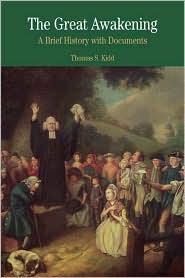
Book Review: The Great Awakening

The Great Awakening. A Brief History With Documents. Thomas S. Kidd. 2007. Bedford. (Bedford Series in History and Culture). 160 pages.

From the introduction: On March 7, 1743, James Davenport, one of the most influential leaders of the Great Awakening, removed his pants and cast them into a bonfire. 

I have been looking for a book on The Great Awakening for a few years now. I've been wanting to know more about it, to learn more about the key figures. Jonathan Edwards and George Whitefield, of course, come to mind. And I've read a little about both men. (I've even read a rather thick and fascinating biography of George Whitefield...a book that left me wanting more, more, more). But I still felt there was more to learn. I still do, in a way, after reading this lovely little book.

What I enjoyed about this little book was how concise and how informative it was. It is short; it is straightforward. It gets to the point, and stays on the point. For twenty-five to thirty pages it has quite a narrative to share with readers. I was pleased with the presentation. Since this was not published by a Christian publisher, since it is one of many books in a series on history and culture in America, I worried that it might be secular and condescending. (You may or may not be surprised at how Christianity is "presented" in history and/or literature textbooks these days.) So I was pleasantly surprised at how well-rounded everything was. Meaning, there were conflicting ways of viewing the revivals from the very moment they started--on both sides of the Atlantic. There were men who definitely were "opposed" to the radical nature of the revivals, men who were skeptical that these conversions were genuine, men who were unhappy with the changes going on in the church--how tradition was being questioned, how ministers were being questioned and challenged. And there were men who saw things more realistically--the good and the bad; the strengths and weaknesses of the revivals, of the key preachers of the revival, etc. And, of course, there were people in complete support of the new way God was working. Kidd presents all possible sides to this story, to this exciting time in history. He doesn't just summarize either. Though, of course, he does summarize in the first part. No, he shares primary documents with his readers--these documents again cover all sides, all angles.

While I would love to still know more, while I would still like to take a longer fact-finding journey at some point, this simple book covers the basics. And I am glad I read it.

© Becky Laney of Operation Actually Read Bible
Wednesday, October 19, 2011

Book Review: Who Stole My Church?

Who Stole My Church? Gordon MacDonald. 2007. Thomas Nelson. 250 pages.

I began our meeting with words I'd rehearsed several times during my drive through the rain to the church: "I feel as if I've failed you."

I honestly don't know what to think about this one. It is fiction. But if it's to be considered truly fiction, then it's didactic fiction. Fiction meant to teach, to illustrate, to amuse, to persuade. Because this "fiction" book is all about trying to persuade the reader to share the author's view point: that the church NEEDS to change--and change drastically--if it's to survive or thrive in the 21st Century. His points are many. The main point being is that the church has ALWAYS changed and adapted throughout the centuries. That the "traditions" of today--or even the traditions of yesterday--were new and controversial when first introduced. Another main point, perhaps it should be THE main point, is that the church does not belong to you and me. It doesn't belong to one generation over another. The church belongs to Jesus, the church is his bride. And he paid a price for his bride, and the church MATTERS to Christ. The church is not something that one individual can "own" or "possess" or "control" or "manipulate." Well, not if it's a healthy church. Not if it's a gospel-driven, Bible-preaching, church.

So essentially the author has made himself and his wife into characters in this fictional church, fictional community. He has created a dozen or so characters and put words in their mouths. He frames the novel into a dialogue between people with different--sometimes very different--points of view. His character then tries to reason and persuade this committee to see things his way.

I could see some of the author's points. But not necessarily every point. For example, he stresses over and over again how today's generation is not familiar with hymns and that singing hymns in church is a turn off. That these 'new' believers will go somewhere else. That if the church is to stay relevant, then it needs to set aside hymns and embrace the songs these 'young' people want to hear, want to sing, etc. The way he phrased it--and I'm not sure he quite intended it to be like this--was that today's generation just can't be bothered with hymns. That hymns weren't worth introducing to new believers, a new generation. It almost sounded like an excuse, today's generation doesn't want to work at learning them or today's generation can't appreciate them, doesn't want to even try to appreciate them. I'm not sure that's fair or true. But it sounded like he was making big assumptions. I *do* think there is value in knowing hymns, in singing hymns. I do think there is great value in some of the lyrics. The lyrics MEAN SOMETHING. And they can be a great foundation in the faith.

I just don't think you can "outgrow" songs like Amazing Grace, Tis So Sweet To Trust In Jesus, The Old Rugged Cross, What A Friend We Have In Jesus, etc.

I think the book has some value. But it also could be slightly annoying in places.

© Becky Laney of Operation Actually Read Bible

Tuesday, October 18, 2011

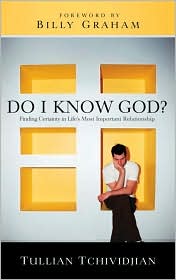
Book Review: Do I Know God?

Do I Know God? Finding Certainty in Life's Most Important Relationship. Tullian Tchividjian. 2007. 215 pages.

It was the week after Christmas, and the office was quiet.

The good news is that I remember really liking this one when I read it. The bad news? Well, I read it three weeks ago and I've forgotten everything I wanted to say about it. Almost everything that is.

I do remember that it is conversational and relevant. That it was a practical book that was easy to read. A book that was meant to be read--and understood--by everyone. Not just scholars. Not just theologians. It's a book that ADDRESSES important questions.

Because I read a library copy of this one, I didn't get a chance to mark this one up. So I don't have passages to share with you. (It isn't always convenient to carry around post-it-notes.) I do remember finding many passages that I wanted to remember to mention, to quote. I wouldn't say that there was one for every single chapter, but there were enough that I considered it a rich read.

I'd definitely recommend this one!

© Becky Laney of Operation Actually Read Bible
Tuesday, July 5, 2011

Book Review: My First Read and Learn: Book of Prayer

My First Read and Learn: Book of Prayer. Dr. Mary Manz Simon. 2007. Scholastic. 40 pages.

Introduction: "Fold your hands, bow your head, and close your eyes." With these simple actions, a young child can begin a lifelong conversation with God. Prayer comes from the heart. Because of this, a four-year-old might thank God for ice cream or ask for a puppy. We know God hears our prayers, so even a toddler learns that the all-powerful Creator of the Universe cares about the little things in life. In My First Read and Learn Book of Prayers, you'll find ideas and suggestions for special days and specific situations. These prayers may be repeated so often that your child will actually memorize the words. That's fine, for a child receives comfort from what's familiar. Years from now, you or your child may open this book and use the same prayers. God is faithful, so He will respond again to your needs and concerns. As your child grows up, look for opportunities to talk with God anytime, anywhere. When your son hears a siren whir down the street, he might ask God to be with those first responders. When your daughter delights in splashing through a puddle, she might thank God for rain and you might thank Him for boots! As your conversations with God become more frequent, you will discover that prayer is not only talking to God, but prayer is listening for His voice. May you and your child experience God in new ways through My First Read and Learn Book of Prayers.

I honestly don't know how I feel about this one. It includes prayers for morning time, evening time, meal time, and anytime. It includes "holiday prayers" for Valentine's Day, Easter, Thanksgiving, and Christmas. It includes seasonal prayers for spring, summer, autumn,  and winter. And then it includes a section for "special situations." Now what does the author consider a special situation? Naptime!!!! Maybe the author NEEDED LOTS AND LOTS AND LOTS of prayer if her kids considered naptime to be such an infrequent occurrence. For consider what OTHER events are included in this section: moving, birthday, sick, new baby. Granted, we all have birthdays once a year. And granted, most children get sick at least a couple of times a year. But as far as moving and welcoming new babies in the house? That's not even an every-year event. So let's hope that your little ones nap more than that!!!

Naptime
The sun still shines but I'm in bed
Because I need to rest my head.
So, God, please bless this quiet time
And when I wake, I'll feel just fine.
Easter
Dear God,
Thank you for Easter,
Which comes around each year
So that we all remember
Your Son, who is so dear.
Also worth mentioning--though the fault could be with the illustrator and NOT the author--the Easter page in the "holiday prayer" section features an Easter bunny with an Easter present. Granted, some Christians might do the Easter Bunny/egg hunt thing in addition to church celebrations celebrating the RESURRECTION. But I wouldn't say that every Christian welcomes the Easter bunny that openly.

The prayers didn't wow me. I wasn't impressed by the quality of each and every prayer included in the book. I guess my issue is that *most* adults don't pray to God in rhyme. Most adults don't talk in rhyme all that naturally. Rhyming can feel forced, or out of place. So if adults don't go around praying to God in rhyme, why do we try to make children pray in rhymes? Is it so that they "remember" a certain prayer. Do we think rhymes are the only way children learn anything? I don't think that's the case. I think repetition helps more than rhyming when it comes to that. So I think it is more important that the prayers sound natural and genuine and in-the-moment. So the rhyming--for me--was more of a distraction. The forced "cuteness" of it was unappealing.

Least favorite poem prayer:
Hello, God, I'm out of bed,
For I am not a sleepyhead.
Hello, toys, I'll play with you
Long before this day is through.
Hello, doggy, come right here.
Let me scratch behind your ear.
Hello, kitty, say "meow."
I'll reach down to pet you now.
But before I even eat
Or put my shoes upon my feet,
I will kneel beside my bed,
Close my eyes, and bow my head.
"Thank You, God" is what I'll say.
"Thank You, God, for this new day." 
Most favorite poem-prayer:
New Baby
Dear God, You sent a baby
Who makes a lot of noise.
The baby cannot play yet
Like other girls and boys.
I want to love this baby,
As You already do.
Help me to love this baby,
Dear God, I ask of You.

I don't know that any of the prayers are "bad" in a theological sense. I'm not saying that at all. It's just that there was something about this one that kept me from loving it.


© Becky Laney of Operation Actually Read Bible

Monday, October 11, 2010

Book Review: Mortimer's Christmas Manger

Mortimer's Christmas Manger. Karma Wilson. Illustrated by Jane Chapman. Simon & Schuster. 40 pages.

In a big house lived a wee mouse named Mortimer. He dwelled in a dark hole under the stairs. Nobody ever noticed little Mortimer. And Mortimer liked it that way. But he didn't like his hole. "Too cold. Too cramped. Too creepy," squeaked Mortimer.
I liked Mortimer, for the most part. Have you ever noticed how mice make great bookish characters--especially in picture books?! Yet these "oh how cute" feelings don't translate to real life! Mortimer has a good life. Mostly. He gathers his crumbs and tidbits without notice. (Which is a good thing if you're a mouse!) But Mortimer does wish he had a better home, a better place to call his own.

One day Mortimer discovers the perfect new home. Unfortunately, it's occupied. By statues. There's even a baby statue in what would be a perfect bed for a mouse. So Mortimer claims his new home. But day after day he has to move the statues out of the way. Until he overhears the Christmas story. Then Mortimer realizes that there are more important things in life than a nice cozy bed, a nice cozy home. Maybe the manger scene isn't the best place for a mouse to be.

So does this mean Mortimer's forced back into his hole where it's too cold, cramped, and creepy? Read for yourself!

While I didn't love this one, I did enjoy it!

© Becky Laney of Operation Actually Read Bible

Saturday, October 9, 2010

Book Review: I Will Rejoice

I Will Rejoice. Karma Wilson. Illustrated by Amy June Bates. 2007. Zondervan. 32 pages.

This is the day the LORD has made; let us rejoice and be glad in it.
Psalm 118: 24

I Will Rejoice celebrates Psalm 118:24. Wilson imagines how children might rejoice in the LORD morning to night.

I will rejoice in the early light
with a good morning kiss
and a hug so tight.
I'll dress myself up,
sit down in my seat,
and give thanks to the LORD
for the food that I eat.

and

I will rejoice as I run and I play.
Thank you, dear God,
for this beautiful day!
I'll sit at the table and eat up my lunch.
(I'll save a few bites for my teddy to munch.)
Every simple activity--from meal time to play time to nap time and bed time is an opportunity for little ones to be thankful, to rejoice in God. To praise Him, to love Him, to think of Him.

I enjoyed this one very much. I liked how she includes the Scriptural refrain throughout her text. But I also like how she makes it her own. How she expands this theme of rejoicing. How she adapts it for a young audience. How she shows that rejoicing in God is more than just attending a worship service on Sunday. How you can delight in God wherever you are. You're never too small to have a heart for God.

© Becky Laney of Operation Actually Read Bible

Thursday, August 5, 2010

Book Review: The Discipline of Spiritual Discernment


The Discipline of Spiritual Discernment. Tim Challies. 2007. Crossway Publishers. 208 pages.

It must be terrifying to be the son of a king and to be heir to a throne.

Discernment is important to me. I think it should be important to every believer. This book is a good introduction to the subject. It helps define it and tries to illustrate why it is so very important to the faith. Why every believer, every church should practice it. And it is something to be practiced.

One of the things the book stresses is that it takes time in the Word. That and prayer. Both are essential if you want to stay grounded.

We live in an age where too many who profess to be Christians rarely consider their spiritual maturity--an age when many consider spiritual immaturity a mark of authenticity, and when people associate doubt with humility and assurance with pride. (23)

An absolute lack of discernment and a lack of concern for discernment is sure proof of spiritual death. (27)

To lack discernment is to sin against God. (27)

To fail to discern is to walk in darkness (27)

The first enemy we must overcome in our discipline of discernment is ourselves. (40)

But Christianity is not a faith that can be taken a la carte. It is not a faith that allows its adherents to pick and choose which elements they would like to accept and which they would prefer to reject. (49)

Because God is truth, knowing God and knowing truth are inseparable. (54)

Discernment is the skill of understanding and applying God's Word with the purpose of separating truth from error and right from wrong. (61)

Only when we have separated truth from error are we able to rightly worship God. (65)

© Becky Laney of Operation Actually Read Bible