Showing posts with label IVP. Show all posts

Thursday, September 18, 2014

Book Review: The Bible Study Handbook

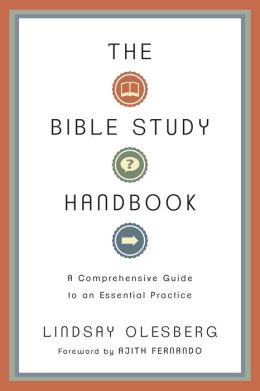
The Bible Study Handbook. Lindsay Olesberg. 2012. IVP. 240 pages. [Source: Bought]

Interested in learning more about inductive bible study? Lindsay Olesberg's Bible Study Handbook may just be the perfect book for you. If you're interested in learning more about bible study, but, not necessarily inductive bible study, then, you may find it intriguing and informative but also slightly disappointing.
The purpose of this handbook is to train God’s people to study the Bible for themselves rather than relying on “professional Christians” to explain it. The method I use is called manuscript Bible study and uses an inductive approach.
Christian faith and spiritual formation are too important to leave the work of understanding the Bible to experts. Sermons and books by skilled teachers and thinkers are valuable, but they can’t replace the life-giving words of the Bible itself. To become mature and vibrant followers of Jesus, we must engage with the Bible directly.
She does not really discuss the various ways to study the Bible, the various ways one could choose legitimately to study the Bible. The goal seems to be to convince readers that inductive bible study is the way to study the Bible.
Inductive Bible study follows three primary phases: observation, interpretation and application. This means that the question “What?” comes before the questions “So what?” and “Now what?”
Discovering the riches of the Scripture for ourselves deepens our motivation to learn and increases our level of comprehension.
Inductive Bible study is a way of slowing down and concentrating on the Word. Manuscript study can’t be accomplished in a quick ten minutes before running out the door. It requires an investment of time, a lingering in the presence of God. Whether we are aware of it or not, our souls are being watered and nourished as we do the work of observing, interpreting and applying the text.
One of the reasons people are so excited about inductive Bible study when they first encounter it is the discovery of “undreamed treasure” in familiar passages. Once they learn how to observe well, they find that the Bible is incredibly rich. They might even be baffled that they have read it for so many years and yet missed so much.
The good news? She explains what inductive bible study is and how to do it step by step by step. Each chapter has homework.

The book has some great information. It does. And Olesberg uses the same passage of Scripture throughout all the chapters so that readers can make sense of the process of inductive bible study.  For the most part, I thought the book was written clearly. It wasn't intimidating to read her examples and descriptions.

Reading this book did not un-intimidate me to the inductive process. Though it didn't WOW me to such an extent that I'm eager to try inductive bible study myself in the near future, I did appreciate many things about the book. I enjoyed getting to know the author. And there were many things I did agree with. I loved, for example, what she had to say about reading the book of Revelation.
Set aside a few hours to curl up with a cup of coffee and the book of Revelation. If you read it straight through (as the original audience would have listened to it), the depth of struggle of the God’s faithful witnesses and grandeur of Christ’s ultimate triumph over evil will engulf you and you will be moved to worship with the angels. In a “big read” of Revelation, all the confusion over signs, seals and beasts fades away; Jesus, the Lamb who was slain, is magnified.
© Becky Laney of Operation Actually Read Bible

Saturday, March 26, 2011

Book Review: Knowing Scripture

Knowing Scripture. R.C. Sproul. 1977/2009. IVP. 152 pages. 


Why study the Bible? It may seem odd and foolish to raise this question since you probably would not be reading this book unless you were already convinced that Bible study is necessary. Our best intentions, however, are often weakened by our moods and caprice. Bible study often falls by the way. 


R.C. Sproul makes a good argument for bible reading and bible study in Knowing Scripture. It is divided into six sections: Why Study the Bible, Personal Bible Study & Private Interpretation, Hermeneutics: The Science of Interpretation, Practical Rules for Biblical Interpretation, Culture & The Bible, and Practical Tools for Bible Study. I found the book interesting and informative, for the most part. I especially loved the first chapter:


If you have read the whole Bible, you are in a small minority of Christian people. If you have studied the Bible, you are in an even smaller minority. (18)

The issues for Christians is not whether we are going to be theologians but whether we are going to be good theologians or bad ones. A good theologian is one who is instructed by God. (22)

We fail in our duty to study God's Word not so much because it is difficult to understand, not so much because it is dull and boring, but because it is work. Our problem is not a lack of intelligence or a lack of passion. Our problem is that we are lazy. (17)

But what happens when there is a conflict between what God says and what I feel? We must do what God says, like it or not. That is what Christianity is all about. (29)

To be sure knowledge of God's Word does not guarantee that we will do what it says, but at least we will know what we are supposed to be doing in our quest for human fulfillment. The issue of faith is not so much whether we believe in God, but whether we believe the God we believe in. (30)
More food for thought:

Why have Christians been so derelict when it comes to biblical study? Is it merely a lack of discipline or devotion? That may be part of the problem and consequently produces much guilt among Christians for leaving undone those things that should have been done. I think, however, that more than a problem of discipline, it is a problem of method. 
We begin our Bible reading in a spirit of grim determination and diligently read the book of Genesis. Genesis provides important information about the foundations of biblical history and moves smoothly through the narrative history of the patriarchs. So far so good. Exodus is full of drama with the exploits of Moses and the liberation of Israel from the tyranny of the Egyptians. Cecil B. DeMille and Charlton Heston have given millions of us a sense of familiarity with these events. Then comes Leviticus. Here the attrition rate of interested readers begins to accelerate. Many of us who wade through Leviticus are finished off by Numbers. A few die-hards make it through Deuteronomy, and even a persevering few make it through the whole New Testament. 
Actually I have discovered that the majority of people who read the first five books of the Old Testament will make it through the whole Bible. Most people fail to read the Old Testament by getting bogged down in Leviticus and Numbers. The reasons are obvious. These books deal with detailed matters of the organization of Israel including lengthy lists of case law. So much of the material is foreign to us and makes difficult reading.
Yet, the information contained in these books is of crucial importance for understanding the scope of redemptive history. An accurate understanding of the New Testament depends on an understanding of these books. In fact, once a person acquires a general understanding of the whole scope of Scripture, he usually discovers that Leviticus and Numbers are fascinating and delightfully interesting. But without the general understanding the details seem somewhat unrelated. 
To overcome the problems so many people have with reading the Bible I suggest an alternate route to our goal. Read the biblical books in the following order:
  • Genesis
  • Exodus
  • Joshua
  • Judges
  • 1 Samuel
  • 2 Samuel
  • 1 Kings
  • 2 Kings
  • Ezra
  • Nehemiah
  • Amos
  • Hosea
  • Jeremiah
  • Ecclesiastes and Song of Solomon
  • Psalms and Proverbs.
This list of readings gives an overview of the Old Testament and provides the framework for understanding it. (121-22)

Do I agree with Sproul's skeleton? I wouldn't go that far. I mean I can't imagine not including Deuteronomy and Isaiah. I mean I think Deuteronomy is essential for understanding ALL the history books. Moses essentially predicted everything that would happen from Joshua to the Exile. It's all in the blessings and curses. It's all in the commandments and laws. And Isaiah, well, Isaiah is just about the most important Old Testament book there is with the possible exception of Genesis and Psalms. Read Isaiah 6. Read Isaiah 25. Read Isaiah 40-66. How could anyone not think it's the best of the best? I'm not so sure that I'd ever include Song of Solomon on my skeleton list. It's short, true, perhaps that's why he chose it. But critical to understanding anything else? Not so much. 


I do think the Old Testament is VERY important. And I couldn't imagine not including it in my reading life. 


You don't want my opinion on Sproul's skeleton New Testament list--found in the 1977 edition on page 123. Not include John????? Really?????? And 1 John????? I'm not convinced the New Testament 'needs' a skeleton. But that's a whole other matter! 


Would I recommend this one? Yes. I'm not sure it is the absolute best book on the Bible ever written. I've got a few more on this subject that I haven't read yet. But I found it informative and practical. Perhaps not as practical as Dig Deeper: Tools for Understanding God's Word by Nigel Beynon and Andrew Sach. But still, a good book that I'm happy to recommend.


I read the 1977 edition of this R.C. Sproul book. I would have loved to have read the newer edition--to read his thoughts on ALL the bible translations that have been published since 1977, which would include the New King James, the New International Version, the New Living Translation, New American Standard Update, English Standard Version, the Holman Christian Standard Bible, etc.--but not enough to buy a new copy! 

© Becky Laney of Operation Actually Read Bible