Showing posts with label books reviewed on Operation Actually in 2014. Show all posts

Saturday, December 27, 2014

Book Review: The Presence of God (2014)

The Presence of God: Its Place In the Storyline of Scripture and the Story of Our Lives. J. Ryan Lister. 2014. Crossway. 368 pages. [Source: Review copy]
It is everywhere. We hear about it all the time. It is alluded to in the sermon. We call for it in our prayers. We sing about it in our hymns and choruses. For Christians, it is hard to escape. As I write this paragraph, I have just returned from a Christian college’s chapel service where I counted seventeen references to it in a fifty-minute service while, of course, paying full attention to the sermon, prayers, and songs. In fact, I think you would be hard pressed to leave your own sanctuary this Sunday without at least one reference to it as well. What is this refrain we hear over and over again in our churches, small groups, and devotionals? It is the presence of God.
I loved the focus of J. Ryan Lister's The Presence of God. The book promises to trace God's presence through Scripture, to reveal how our God is a God who draws near to His people, and draws near in order to redeem. 
Once we step out beyond the initial overgrowth of confusion and obscurities surrounding this theme, we actually find that the biblical path ahead is well worn. Yahweh is the present God, and the biblical Canon is a beautiful and creative story of how he fulfills his promise to be in the midst of his people. Scripture’s narrative suggests that the past, present, and future realities of redemption are inextricably tied to God’s drawing near to a people.
I love, love, love the book of Revelation. I do. And Revelation 21:3 is one of my FAVORITE verses. It reads, "And I heard a loud voice from the throne saying, “Behold, the dwelling place of God is with man. He will dwell with them, and they will be his people, and God himself will be with them as their God." Isn't it glorious to think about?! That's a verse that just resonates with meaning and emotion. 
This objective, though, is not only prevalent at the story’s end, but also woven throughout Scripture’s plot line.
God redeems us in order to have fellowship with us. How did he redeem us? By becoming one of us--the incarnation. 

The Presence of God is a book designed to help readers understand the Bible, to help readers see the big picture of the Bible. The presence of God is the unifying theme of Scripture, Lister argues. And it's hard to deny for the case he presents is a strong one! Lister covers books from the Old Testament and the New Testament. Does he cover each and every book of the Bible? I'm not sure that he covers all 66 books of the Bible--at least not equally. But. He covers the whole story--each major section of Scripture. (Law, prophets, wisdom books, etc.) Readers spend time with Adam, Abraham, Moses, David, etc. By the end of the book, readers will have something to grasp--a way to understand the Bible and the gospel story. In great detail, he traces his theme. God longs to be near to the people He has chosen. God hates sin, for not only is sin offensive and repulsive, it keeps us apart from Him.  God draws near in order to redeem us, to restore us. He wants to be with us! He wants us to be with him for eternity! 

Read The Presence of God
  • If you are longing for God's presence
  • If you are wanting a deeper understanding of Scripture
  • If you want to grasp the 'big picture' of Scripture
  • If you're looking for a simple but comprehensive way to make sense of the gospel
© Becky Laney of Operation Actually Read Bible

Wednesday, December 24, 2014

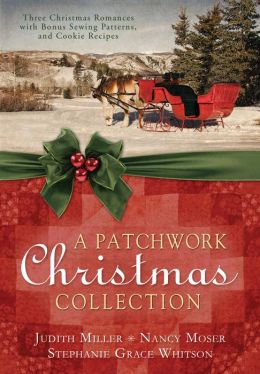
Book Review: A Patchwork Christmas

A Patchwork Christmas. Judith Miller, Nancy Moser, Stephanie Grace Whitson. 2012. Barbour. 403 pages. [Source: Bought]

A Patchwork Christmas is a novella collection. All three novellas are set in America in the late nineteenth century. Judith Miller's Seams Like Love is set in 1890 in the Amana Colonies. A Patchwork Love by Stephanie Grace Whitson is set in 1875 in the midwest--somewhere between Nebraska and Colorado. Nancy Moser's Bridal Quilt is set in 1889 and 1890 in New York.

I'll start with my favorite. I LOVED, LOVED, LOVED Stephanie Grace Whitson's A Patchwork Love. Jane McClure is a widow struggling to raise her daughter on her own. When the novel opens, she and her daughter are traveling to meet the man she's been corresponding with. He lives in Colorado. He has invited them both to spend the holidays with him. If the visit goes well, Jane knows that a proposal and marriage will be forthcoming. True she knows very little--if anything--about him, and true, her daughter, has her doubts. But she feels she must take a chance. She needs this to work, doesn't she. There are two things she didn't take into consideration. 1) The weather!!! The train is supposed to arrive in time for them to spend Christmas together. Mrs. McClure certainly didn't plan on the weather stopping the train and leaving her stranded! 2) Molly's health. (She's the daughter). When the train becomes snowbound, a kind woman offers up her home and her skills. She may not be a 'real' doctor, but, she knows her remedies. This woman has a son, Peter. I loved, loved, loved, LOVED him. This novella is just about perfect.

My least favorite novella was Nancy Moser's Bridal Quilt. (It didn't help that it follows A Patchwork Love.) For the record, I liked this one well enough. I just didn't LOVE it so completely like I did A Patchwork Love. Ada loves Samuel. Samuel loves Ada. But when Samuel decides that he *must* help the less fortunate (orphans) even if it means losing his inheritance, he loses Ada. Was it Ada's fault? Not really. It wasn't like she dismissed him when he lost his inheritance. It wasn't like she made him choose between marrying her and volunteering at the orphanage. In fact, if it was anyone's fault, it was his. He decided that he couldn't possibly marry her if he lost his money and inheritance. He didn't give her the choice to accept him or reject him as he was. So what will happen when these two meet again a year later?! Will she let him know that she still loves him? Will he speak up and admit he still loves her? Will either one ever communicate honestly and openly with the other?! I found myself frustrated by some of the characters in this one. But, I did like that it features his grandfather and her grandmother.

Did I enjoy Judith Miller's Seams Like Love? Yes, for the most part. My least favorite part of it may just be the title itself! Karla Stuke is the heroine. She is being given a second opportunity to love. If she's brave enough to go for it. Karla had been jilted previously. Since that supposed heartbreak, she's not the most confident. She's content to let her sister be the beautiful one. And her sister is indeed engaged. Karla is keeping busy helping her sister. But an old friend--a very, very, very good old friend--has recently returned and is staying at their hotel. These two may find themselves falling in love with each other over the holidays. I liked this one. I did. It was sweet and charming and lovely. I liked Frank. I liked Karla. I thought the romance was nicely developed.

I would definitely recommend A Patchwork Christmas.

© Becky Laney of Operation Actually Read Bible

Monday, December 22, 2014

Book Review: For Such A Time As This (2014)

For Such A Time As This. Angie Smith. Illustrated by Breezy Brookshire. 2014. B&H. 256 pages. [Source: Review copy]

I loved, loved, LOVED Angie Smith's For Such A Time As This. I really did. What did I love about it? I loved the balance of text and illustration. The stories felt full, or, I suppose a better word might be rich. Some story books are so concise that all stories are made to fit on a two-page spread. The stories feel complete, whole. Each one just the right length. And the illustrations, well, I think I loved them!!! Breezy Brookshire's illustrations may be my favorite out of the story book bibles I've read the past few years. At first, I wasn't sure if I "liked" how some of the illustrations are done in black and white and some are in color. But. After reading and rereading, I think I like it just how it is.

What else did I love about For Such A Time As This? Well, I loved the format itself.

  • Story and illustrations. 
  • He (The "He" section focuses on God and highlights a facet of His character)
  • Me (The "Me" section focuses on the reader)
  • She (The "She" section offers parents a Scripture-based prayer to pray over their child/daughter)
  • Hebrew/Greek Word to share with family
  • Memory Verse to share with family

I loved, loved, loved the "He" sections. By reading the book in its entirety, readers learn:

  • God is sovereign
  • God is judge, and his judgment is righteous
  • God has established a covenant; he is a God who keeps his promises
  • God is omnipresent
  • God is always just
  • the providence of God
  • God is love
  • God is majestic
  • God loves redemption
  • God is dependable
  • God is truth
  • The Lord is our Provider
  • God is the only true source of peace
  • The Lord is wise
  • God is self-sufficient
  • God is knowledge
  • The Lord is slow to anger
  • God is unchanging
  • God is omnipotent
  • God is faithful
  • God is perfect
  • God is gracious
  • God has never made a promise that He won't keep
  • The Lord is near
  • The Lord is a healer
  • God is a miracle-maker
  • God is our great Defender
  • God is incomprehensible
  • God is merciful
  • God is worthy
  • God is transcendent
  • God is jealous
  • God is good
  • God is holy, holy, holy
  • God is our Comforter
  • God is omniscient
  • God is righteous
  • There is only one God
  • God is eternal
  • God is made up of three persons: Father, Son, and Spirit

I loved, loved, loved the prayers!!! I love how Scriptural they are. I love how practical they are.
Lord, help ________________ to sense Your presence in the times that she feels alone. Remind her in those moments that Your watchful eye is upon her and that she can call out to You from whatever desert she feels lost in. Speak courage and hope to her when she worries that she has been forgotten. Your Word declares this, "Be strong and courageous; don't be terrified or afraid of them. For it is the LORD your God who goes with you; He will not leave you or forsake you" (Deuteronomy 31:6). May I walk in the light of this promise and teach her to as well. (27)
Lord, help ___________ to be obedient in all things. When she is tempted to disobey, remind her that there is a better way that will lead to righteousness (Romans 6:16) and the purification of her soul (1 Peter 1:22). Give her the strength to stand firm when she sees others being disobedient and the courage to make the right decisions based on what she knows of You. Father, I come to You because  I know how fickle my own heart is and how easily my thoughts wander from You. Remind me to set my mind on Your Spirit instead of my own flesh so that I will have peace and will please You by submitting to Your law (Romans 8:5-8). And help me to delight in Your law in my inner being (Romans 7:22) so that I may lead her in a way that models obedience. (9)
And did I mention I love, love, love the storytelling? Angie Smith is a gifted writer. She has a way with words. She pulls out the importance and significance from the passages, always helping readers see the big picture. It was just a joy and a delight to read her stories.

From "The Garden"
Can you imagine? One moment. One decision. It changed everything. And there was no going back now.
God sent Adam and Eve out of the place that had always been home. As they wandered far from the garden, I wonder if they could hear the anguish in God's voice: This wasn't what I wanted for you…
Her mistake was too big to be fixed by human hands, but many years later, another Man would be wounded for her and for all of those who believe in Him. If God had wanted to, He could have separated Himself from them (and us) forever, but He didn't.
Even as He sent Adam and Eve away, God knew that one day He would make a way to bring them back to Him. (8)
From "Window of Heaven"
She had heard Noah warning the people for years that a great flood was coming to tear their homes apart and destroy them, but they wouldn't listen. They chose death instead of life over and over again, and it grieved God terribly.
She could still hear the echo in her mind.
Thud. Thud. Thud.
Every day she had listened to the sound of hammers pounding, shaping the boat that would rescue them from death. And now they were actually inside the boat, the "ark" Noah had built, trusting that the Lord would keep them safe. God told them that He would send the rain in seven days, and in seven days He did exactly that.
Drop, drop, drop…
The fountains of the great deep burst forth, the window of heaven opened, and the rain poured down. (13)
Many, many years later, the sound of a hammer pounding would pierce the silence again, driving nails into the wood of a cross.
Thud. Thud. Thud.
While the crowds mocked Him, there would be women who knew what He was doing for God--what He was doing for them. Standing high above the ground, the cross would bring life instead of death. The window of heaven would open again, and scarlet-colored droplets would rain from high above. Jesus Himself would be hung to cleanse us, and the flood of mercy would make us right with Him forever.
Drop, drop, drop… (14)
Which stories are included? Twenty from the Old Testament. Twenty from the New Testament.

  • The Garden (Eve)
  • Window of Heaven (Noah's wife)
  • Stars and Sons (Sarai)
  • The Well (Hagar)
  • Pillar (Lot's wife)
  • Steadfast Love (Rebekah)
  • The Veil (Rebekah, Rachel, Leah)
  • The Women and the Water (women in the life of Moses)
  • The Scarlet Cord (Rahab)
  • Covering (Deborah and Jael)
  • Pieces of Silver (Delilah)
  • Redeemer (Naomi and Ruth)
  • The Needle (Hannah)
  • Swords and Stones (Abigail)
  • Clean (Bathsheba)
  • Anything (Queen of Sheba)
  • Painting Her Face (Jezebel)
  • Flour and Faith (widow of Zarephath)
  • For Such A Time (Esther)
  • A Love Like This (Gomer)
  • Just A Girl (Mary and Elizabeth, both with child)
  • The Sacred Ordinary (Mary and the birth of Christ)
  • The Lamb (Anna)
  • An Empty Pitcher (woman at the well)
  • The Hem (woman with an illness)
  • Arise (Jairus's daughter)
  • Platter (Salome and Herodias)
  • Crumbs (Gentile mother)
  • The First Stone (adulterous woman)
  • Two Mites (widow with two mites)
  • The One Thing (Mary and Martha and the dinner)
  • Four Days (Mary and Martha and the death of Lazarus)
  • Beautiful (Mary of Bethany)
  • Cross (Salome at the cross)
  • Alive (Mary the Magdalene and the Resurrection)
  • The Price (Sapphira)
  • Another Breath (Tabitha)
  • Purple Cloth (Lydia)
  • Speak (Priscilla)

For Such A Time As This is perfect for mothers and daughters to read together. (Though dads and daughters could read as well!!!) The book is subtitled "Stories of Women from the Bible, Retold for Girls." But honestly, I think parents could read it/share it with sons and daughters.

© Becky Laney of Operation Actually Read Bible

Book Review: From Pearl Harbor to Calvary

From Pearl Harbor to Calvary. Mitsuo Fuchida. 1953/2011. eChristian. 96 pages. [Source: Bought]

After reading Wounded Tiger earlier this year, I've wanted to read this book. (I've also wanted to read more about Jake DeShazer. But I happened to find From Pearl Harbor To Calvary for $1.) This is a short autobiography. Mitsuo Fuchida concisely relates for readers his experiences during World War II; his restlessness after the war, and his quest for answers; and ultimately his conversation to Christ, and his subsequent evangelical work for the Lord. It may be short, but, it is nevertheless compelling.

In chapter one, the author recalls bombing Pearl Harbor.

In chapter two, the author relates his further experiences during the war itself.

In chapter three, the author writes of his experiences after the war, his longing for peace, and his quest for answers.

In chapter four, the author writes of his conversion and shares his testimony.

The final chapters (chapter five through chapter seven), readers learn of his evangelical work, his work for the Lord, how he shared his testimony with others, and how his focus changed so completely, his work to spread the gospel.

I would definitely recommend From Pearl Harbor to Calvary.

© Becky Laney of Operation Actually Read Bible

Wednesday, December 17, 2014

Book Review: The Christmas Bus

The Christmas Bus. Melody Carlson. 2006. Revell. 176 pages. [Source: Bought]

I enjoyed reading Melody Carlson's The Christmas Bus. I found it to be a quick and mostly satisfying read.

The Christmas Bus is set in Christmas Valley. The main characters are the pastor and his wife, Edith. They run a bed and breakfast called Shepherds Inn. After listening to her husband's sermon, the wife decides to open up the inn for the month of December, even offering some discounts. She wants to be hospitable and gracious. She was initially disappointed that her children and grandchildren won't be coming for Christmas this year. She has five rooms available…

Readers get a chance to know her and her husband better through this experiment of sorts in hospitality. One of the guests is SOMETHING. Her name is Myrtle. And she shakes up the entire town! Wherever she goes, she makes her presence felt. So she might  look like a small, delicate old lady, but, she's fierce. Though a guest, she ends up "helping" the woman in charge of the nativity play. That is funny in itself because she is bossy herself. So Myrtle gives her a taste of her own medicine.

Myrtle, of course, isn't the only guest. By the end of the novella, all five rooms are full…and that doesn't include the bus parked outside. A man (Collin) and his oh-so-pregnant wife (Amy). They are on their way to California. But their bus breaks down. They don't have money or a place to stay. They have so little. Will the town come together to show them grace and love?!

There were plenty of comical moments in The Christmas Bus. There were also plenty of sweet moments.

© Becky Laney of Operation Actually Read Bible

Monday, December 15, 2014

Book Review: Revolutionary (2014)

Revolutionary (Anomaly #3) Krista McGee. 336 pages. [Source: Review copy]

The first book in the series is Anomaly. The second book in the series is Luminary. The third book in the series, the one I'll be reviewing today, is Revolutionary.

I thought I would start by sharing my thoughts on the series as a whole. I really enjoyed the series. I enjoyed the premise of it and the world-building. Dystopias seem to be ever-trendy in the field of YA fiction. But there just aren't many YA dystopias being published in the Christian market. So I was very excited to see this trilogy published by Thomas Nelson. It follows the crowd in some ways: heroine who doesn't know her own strength and/or worth, strong romantic elements including a love triangle, a corrupt government or power-system that needs to be opposed/overthrown. But it's also distinct in that it includes spiritual themes. Thalli and most of her friends come through the series to know--in part due to the strong witness and testimony of John Turner--the Designer.

What did I think of the last book in the series? Well, I enjoyed it very much! I think I enjoyed it more than the second book. That could be because it's the last in the series and it brings the series to a good, solid conclusion. (Cliff-hanger endings, while understandable, can be frustrating!) Though it had been a few months since I read the second book, I soon found myself hooked and connected right back into the story.

The third book, as you might expect, is the book where readers finally get answers and then some! The book is very intense and there really isn't a calm moment where all the characters are safe and happy and out of danger. The threat is felt on nearly every page. And just when the threat seems manageable, something happens to change all that. (I wouldn't say it is as bloody as say Hamlet or MacBeth, but, do expect loss.)

I wanted to keep reading because I had to know how it all ended.

But. I must admit that love triangles don't really thrill me. There are exceptions to the rule, I suppose, but I never "like" or "love" a book more because of the presence of a love triangle. If anything, I like or love a book in spite of the fact that it includes a pesky love triangle. The love triangle in Revolutionary seems more dramatic, more life-and-death, than in other series I've read. I thought the characterization was nicely done. I came to care for many if not all of the characters--though not the villain: boo, hiss--I just wish they'd been less romance and more friendship.

© Becky Laney of Operation Actually Read Bible

Thursday, December 11, 2014

Book Review: Keeping Holiday

Keeping Holiday. Starr Meade. Illustrated by Justin Gerard. 2008. Crossway. 192 pages. [Source: Review copy]

If there's a resounding theme (or echo) to this Christmas-themed allegory it's this: You can't find the Founder; he finds you. He's not just the Founder, he's the Finder too.

Readers first meet Dylan as he is on a trip with his parents to Holiday. (Everyone seems to vacation in Holiday and have a wonderful time there!) He's a curious child, and, he wants to know what makes Holiday so wonderful and special. Back home, he can get together with friends and family, eat a meal, sing songs, and, it's never as magical as it is when it's done in Holiday. His parents aren't the best at answering Dylan's questions. And Dylan is probably right to be slightly irritated that his questions aren't answered satisfactorily. On the other hand, it does keep him curious or seeking. One year, he finds a flyer with a bit of an invitation to go to the real Holiday and learn how to keep Holiday with him all through the year. He wants answers, and he wants them now, but answers are very slow in coming. In fact, it will be YEARS before he begins to get answers to his questions, years before he makes his way to the gate/door that leads to the path that leads to Holiday. (It turns out that the Holiday he knows and loves is ONLY THE VISITOR CENTER.)

Dylan has a cousin, Clare, and together these two will go down the path that leads to Holiday. (As I mentioned, at least several years have passed since readers first met Dylan.) Together these two will have adventures and misadventures on their journey. Each chapter often introduces them to a new character or two. Each chapter has a lesson to learn, an insight for readers. To add some tension, I suppose, the two have a time limit. They have four days and only four days to reach Holiday and get authorized tickets/passes from the Founder. They have visitors passes at the moment, and, I think they can only get visitor's passes the one time. So it's extremely urgent that they stay on task and focus. 

The big-picture of this one makes complete sense. It's in the little details of the allegory that I begin to back away a bit. I suppose many allegories are like that though. For example, I'm glad that God gives us a whole lifetime to seek Him and find Him, and opportunities to turn to Him. Not just four days!!! I'm also glad that God doesn't make us wait. It bothers me that Dylan was curious for years about the Founder and that his parents were so passive and dismissed all his questions with, well, one day you'll probably learn for yourself. It bothers me that Dylan wanted to find the gate/door for years and couldn't.  One thing I did like, however, was the character of Mr. Smith. And the role he played throughout this one. How he kept showing up again and again and again, doing anything, saying anything, trying his hardest and his best to keep the children off the right path and away from Holiday. I think that was effectively done. I think some of the challenges--like the dark alley--worked well. But there were just a few little things here and there that didn't work for me. 

This is the third time I've read Keeping Holiday. I also read it in 2008 and 2012. I think I enjoy it more each time I read it. That being said, I'm not convinced it is the best, best Christmas book ever. (I love The Best Christmas Pageant Ever). 

Wednesday, December 10, 2014

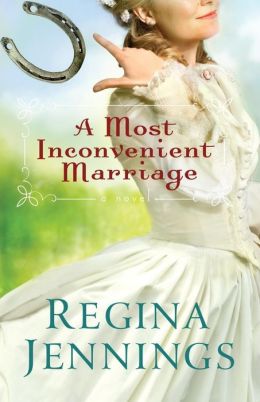
Book Review: A Most Inconvenient Marriage

A Most Inconvenient Marriage. Regina Jennings. 2014. Bethany House. 336 pages. [Source: Review copy]

I really enjoyed reading Regina Jennings' A Most Inconvenient Marriage. This one isn't so much a marriage of convenience or inconvenience. As it is a case of mistaken identities and misunderstandings.

Abigail Stuart is the heroine of A Most Inconvenient Marriage. The novel opens in February 1865. She's a nurse at a prison camp--prisoner of war camp--in Missouri. She has been taking care of a patient, his name is Jeremiah Calhoun. The two are friendly, but, not romantic particularly. He is always talking of home, of family, of friends. When he knows that he is dying, that there is no hope for recovery, he asks her to marry him. He wants her to have his horse farm, to live with his mom and his sister. His sister is sick--weak--and she needs a nurse. He also knows that she knows horses, that her family had a horse farm of its own. She reluctantly agrees. The two marry. In March, she goes to her new home and meets the family. Obviously, there will be some surprises when she arrives.

The surprises keep coming. And Abigail herself receives the biggest surprise of all: Jeremiah Calhoun shows up very much alive months after she's all settled in. He's never seen her. She's never seen him. So obviously, the mystery patient was up to something…but what?!?! And what will everyone do now? His mom loves Abigail. His sister, well, not so much, then again, does she show her love for anyone?! Even his fiancee--former fiancee, I suppose--loves Abigail. The two have become surprisingly close. The whole community believes the two are married. She's known as Mrs. Calhoun!!! So what is he to do with this woman claiming to be his wife?

So far, I haven't mentioned anything that the publisher didn't mention on the jacket description. I want to keep it that way!

I liked this one. It's premise is a bit silly and dramatic perhaps. But it works.

© Becky Laney of Operation Actually Read Bible

Monday, December 8, 2014

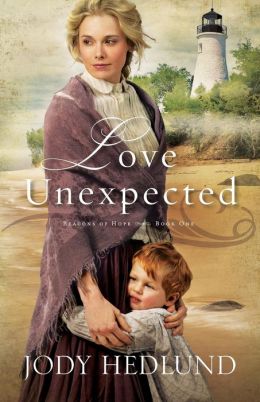
Book Review: Love Unexpected (2014)

Love Unexpected. Jody Hedlund. 2014. Bethany House. 348 pages. [Source: Review copy]

I loved, loved, loved Jody Hedlund's Love Unexpected. It is the first in a new series, Beacons of Hope, a series about lighthouses. The book is set in Maine in the nineteenth century.

In some ways, it reminded me of Love Comes Softly. (Two strangers marry for convenience. The marriage occurs soon after a funeral. The groom has a child already. The bride has no idea how to cook. Appreciation of coffee, check. Burnt biscuits, check. Toddler with temper tantrums, check.) But there are also plenty of things that set it apart and make it unique.

Emma Chambers and her brother, Ryan, are shipwrecked, in a way, stranded due to the work of pirates. Her brother is able to find work and a place to stay. But there really isn't any work for Emma to do, and, while she might find a family kind enough to let her stay for a day or two. She doesn't feel like she'd be welcomed and at ease.

Patrick Garraty has just buried his wife. He has no idea how he's going to tend the lighthouse and take care of a toddler at the same time. His lighthouse duties keep him on duty all night long. And during the day, he needs to go fishing and do general work around the house. (Not to mention getting a couple of hours of sleep at least.) Josiah needs plenty of supervision when he's awake, and, he can be intense at times. He IS a full-time job.

So when the traveling preacher--who knows and loves Patrick--suggests that he marry Emma, the stranger he rescued the night before, he sees that it might just work.

Emma has always wanted to marry, to have a home of her own. Josiah needs a mother.

So. I loved almost everything about Love Unexpected. I loved Emma. I loved Patrick. I loved watching Emma learn how to do everything. I loved seeing the relationships develop between Emma and Josiah and Emma and Patrick. The romance was nice. It was perhaps a bit more mature in nature than Love Comes Softly. But it wasn't horribly inappropriate either--for adults. I also loved the author's note!

I received a review copy from Bethany House.

© Becky Laney of Operation Actually Read Bible

Thursday, December 4, 2014

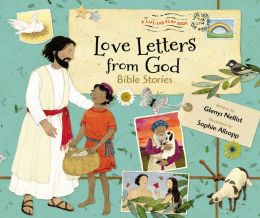
Book Review: Love Letters From God

Love Letters From God. Glenys Nellist. Illustrated by Sophie Allsopp. 2014. Zondervan. 40 pages. [Source: Review copy]

I enjoyed the concept of this children's bible story book. It retells bible stories, but, it adds a little something extra. Each bible story spread includes a letter and an envelope. Or perhaps I should say "envelope." It is more of a lifting of the flap to reveal the letters. The letters are written directly to the reader, in the second person, which gives it a personal touch.

The stories:

  • In the Very Beginning (Genesis 1) (Jeremiah 29:11)
  • The Sneaky Snake (Genesis 3) (Isaiah 43:25)
  • Noah Needs His Nails (Genesis 6-8) (Isaiah 46:4)
  • The Brave Little Brother (Genesis 37-42) (Joshua 1:5)
  • The Little Boy Who Listened (1 Samuel 3:1-10) (Isaiah 43:1)
  • David's Day (1 Samuel 16:1-13) (Isaiah 41:9)
  • The Stone That Struck the Giant (1 Samuel 17) (Isaiah 43:5)
  • The Lions Who Lost Their Lunch (Daniel 6) (Genesis 28:15)
  • The Very Smelly Belly (Jonah 1, 2) (Jeremiah 29:12)
  • Bethlehem's Baby Boy (Luke 1) (Jeremiah 31:3)
  • The Team of Twelve (Mark 1:16-20, 2:13-15) (Exodus 19:5)
  • The Super-Duper Picnic (John 6) (Exodus 33:17)
  • Wind and Waves (Mark 4:35-41) (Isaiah 42:6)
  • The Little Lost Lamb (Luke 15) (Ezekiel 34:31)
  • The Tiny Tax Collector (Luke 19:1-10) (John 15:15)
  • Remember Me (Luke 22:14-20) (Isaiah 49:15)
  • The Saddest Story (Luke 23:23-49) (John 16:22)
  • The Happy Ending (John 20:1-18) (John 14:19)

From The Sneaky Snake
The story itself:
In the beautiful Garden of Eden lived a very sneaky snake. He did not like God, and he did like Adam and Eve. He wanted them out of the garden. So one night, that sneaky snake thought up a very sneaky plan. The next morning, that slimy, sneaky snake slithered up to Eve and quietly whispered in her ear.
The letter to readers:
Dear ____________,
Do you ever do things you shouldn't like Adam and Eve did? It makes me sad when my children do something wrong. But I want you to know that if you say you're sorry and trust me, the most wonderful thing will happen--I will not remember your sins! I will only remember how much I love you…because you are my precious child, and nothing you can do will ever stop me from loving you.
With a heart full of love, GOD
From The Team of Twelve
The story itself:
Have you ever been hunting for treasure? When Jesus was all grown up, he went hunting for treasure. But he wasn't looking for treasure that sparkles. He wasn't looking for treasure that glitters. He was looking for people. Jesus needed people who would follow him and help tell the world about God. Now if he could find those people, that would be like finding treasure.
The letter to readers:
Dear _______________,
Did you know Jesus want you to be part of his team? His team is the best team you could ever join…because Jesus is in charge! And you would be so good at following him and helping him tell the world about me. Will you say "yes" to Jesus? If you will be part of his team, that will make Jesus and me so happy! And more than that, you will be like treasure to him. In fact, you will be one of the very best treasures Jesus has ever found!
With lots of love, GOD
Did I love Love Letters from God? Well, I wanted to love it. I did enjoy most of the stories and letters. But there were some stories/letters that I am slightly concerned about. Little things mostly. A phrase here and there that just strikes me as being a bit off. One recurring element is this "Jesus' team" stuff. I'm not a fan of the imagery. Perhaps I've seen The Biggest Question a few too many times.


© Becky Laney of Operation Actually Read Bible

Wednesday, December 3, 2014

Book Review: God Has Spoken

God Has Spoken: A History of Christian Theology. Gerald Bray. Crossway. 1264 pages. [Source: Review copy]

Has reading God Has Spoken cured me of my curiosity when it comes to church history? Perhaps. If I said yes, it would be in a teasing way. That being said, I think it will be the rare reader indeed that finds the whole book--every part, chapter, heading--interesting or of interest.

If I had to sum up the book in just a few words, I'd say it was about the history of arguments. That isn't exactly fair, mind you. But that's keeping it short. Is arguments the absolute best word? Maybe, maybe not. Debates. Discussions. Either one could work in certain places. But arguments genuinely is the best word in some cases.

This one is "a history of Christian theology." The first priority of the book is not in communicating sound doctrine clearly and concisely. I would be hesitant to say that was a priority at all. You could easily walk away from the book more confused than when you started. That is if you're looking for this book to tell you what is sound and good and right to believe. It isn't so much a matter of right and wrong, good and bad, sound and heretical. It isn't so much categorizing men as belonging or not belonging to a group of sound and biblical theologians. (If you're looking for simple and clear recommendations like "read these theologians" and "avoid these theologians" for your private study and personal growth, you won't find it here.)

No, the priority of this one, the whole point of it really is to trace "Christian theology" from the first century to the past decade. You could say it opens with "where did we start?" and concludes with "where might we be heading?"

Words. Definitions. Associations. Ideas. Concepts. Choosing words carefully, precisely, emphatically. Understanding what men mean by the words they use. Misunderstanding what men mean by the words they use. Reacting and responding. Contemplating. Pondering. Studying. Considering. Sometimes compromising.

World views. Philosophies and philosophers. For Christians with a genuine interest in philosophy--all philosophy, not just so-called Christian philosophy--this book is probably written with you in mind. It is very much a history of philosophy. Men making much of their grand and sometimes not so grand thoughts of God. Thoughts that may be drawn from Scripture, but, just as easily drawn from their own imaginations. Or from other schools of thought--other sources, other influences.

It is thorough. It is packed with information. Plenty of names. Plenty of dates. Plenty of places. Plenty of ideas. Plenty of councils, creeds, catechisms, and confessions. Plenty of footnotes. Most chapters have hundreds--yes, hundreds--of footnotes. To keep it relatively simple, it traces the development of three groups: Roman Catholics, Eastern Orthodox, and Protestants. (It traces several Protestant denominations as well.)  It traces threats, dangers, weaknesses. It focuses on essentials and nonessentials. Expect plenty of detailed discussion on the Lord's Supper and baptism. Also election.

One of the greatest strengths of the book, perhaps, is its organization.

Part One: The Israelite Legacy
1 Christianity and Judaism

  • The Parting of Ways
  • Christianity and the Hebrew Canon of Scripture
  • Christianity and Jewish Biblical Interpretation
  • Christianity and the Prehistory of Israel
  • The Christian Interpretation of Israel's History

2 A Shared Inheritance

  • God Is One
  • The Divine Act of Creation
  • The Image of God in Man
  • The Nature of Sin and Evil
  • Election and Redemption

Part Two: The Person of the Father
3 God as Father

  • Judaism and the Fatherhood of God
  • Non-Jewish Conceptions of Divine Fatherhood
  • Jesus and His Father
  • The Father as the Principle of Divinity
  • The Unbegotten and Almighty God-in-Himself

The Father and the Creator
4. The Father and His Children

  • A New Relationship with God
  • A New Understanding of Scripture

Part Three: The Work of the Father
5. The Reconciliation of the World

  • The Work of the Father From a Jewish Perspective
  • The Work of the Father From a Gentile Perspective
  • The Christian Doctrine of Creation

6. Providence and Predestination

  • The Image and Likeness of God
  • The Call to Holiness

7. The Work of the Father and the Trinity

  • The Father and His Creation
  • The Divine Hierarchy
  • The Eclipse of the Father

Part Four: The Person of the Son
8. The Challenge of the Incarnation

  • The Church Confronts the Roman World
  • Jesus and His Contemporaries
  • Jesus in Early Christian Teaching
  • Adoptianism

9. The Son of God

  • Arianism
  • The Way to Nicea
  • The Aftermath of Nicea
  • A New Departure in Christology
  • The Triumph of Athanasius
  • The Trinitarian Synthesis

10. The Christian Theological Vocabulary

  • Hebrew, Greek, and Latin
  • What is God?
  • What is God Like?
  • Who is God?

11. The Son of Man

  • The Divine Word in Human Flesh
  • Nestorianism
  • The Chalcedonian Definition
  • The Will of Christ
  • The Portrait of Christ
  • Retrospect and Prospect

Part Five: The Work of the Son
12. The Body of Christ

  • The Man from Heaven
  • The Water and the Blood
  • The Likeness of Sinful Flesh
  • The Second Adam

13. The Death of Christ

  • The Only Sacrifice for Sin
  • The Cost of Reconciliation
  • The Centrality of the Lord's Supper
  • The Memorial of Christ's Sacrifice
  • The Sacramental System
  • The Invention of Purgatory
  • The Justification of Sinners
  • The Glory of the Cross
  • Prophet, Priest, and King

14. The Coming of Christ's Kingdom

  • The Eternal Reign of Christ
  • The Crisis of Authority
  • The Heavenly Kingdom
  • The New Covenant

Part Six: The Person of the Holy Spirit
15. The Forgotten Person of the Trinity

  • The Road Less Traveled
  • The Spirit of God in the Bible
  • The Paraclete and Personhood
  • The Holy Spirit in the Ancient Creeds

16. Spirit of the Father, Spirit of the son
  • Double Procession?
  • Augustine and the Holy Spirit
  • The Origins of Controversy
  • Anselm and the Holy Spirit
  • The Course of the Controversy
  • The Parting of East and West
  • The Filoque Question Today
Part Seven: The Work of the Holy Spirit
17. The Presence of God

  • From Glory to Glory
  • The Indwelling Power of God

18. The Inspiration of Holy Scripture

  • The Prophetic Word of God
  • The Rule of Faith
  • The Handbook of the Christian Life
19. The Preservation of the Church

  • The Mind of Christ
  • The Wisdom of the Ages
  • The Source of Truth

20. The Pathway to Heaven

  • Angels and Archangels
  • The Peace that Passes Understanding
  • The Imitation of Christ

21. The Mystical Body of Christ

  • The Gift of Righteousness
  • The True Church
  • Life in the Spirit
  • The Scope of the Covenant
  • The Extent of Christ's Atonement
  • The Assurance of Salvation
  • The Fellowship of the Spirit
  • The Devoted Life
  • The Pentecostal Mission

Part Eight: One God in Three Persons
22. The Classical Doctrine of God

  • The Patristic Synthesis
  • The God of the Philosophers
  • The Reformation Breakthrough
  • The Emergence of Unitarianism

23. The Eclipse of Theology

  • The Cult of Reason
  • The Reconstruction of Theology
  • The Crisis of Authority: Roman Catholicism
  • The Crisis of Authority: Protestantism
  • The Crisis of Authority: Eastern Orthodoxy

24. The Trinitarian Revival

  • The Protestant World
  • The Roman Catholic Church
  • The Eastern Orthodox Tradition

25. The Challenge of God Today

  • A Suffering God?
  • The Credibility of Theology
  • Where Are We Now?

The organization alone cannot make it comprehensible and readable. But without it being so well-organized, readers wouldn't stand a chance. So in a way, the approach is topical instead of chronological. But at the same time, the chronology tends to come in waves. So that as one progresses through the book, one gets closer and closer to the present day.

Another strength of the book--intentional or not--is that it emphasizes the humanity of believers, of theologians, of scholars, of philosophers. It is too simplistic to categorize a theologian in terms of his being "good" or "bad" or "right" or "wrong" or "worth reading" or "best skipping." Yes, Bray presents readers with some theologians that clearly, obviously get it wrong. But even in his presentation of the ones who "got it right," one gets the idea that they were fallible, capable of big and small mistakes in their thinking. That they got a couple of points or positions right, but, they got a couple of points or positions wrong. That just because they get one or two things right, doesn't mean that believers should accept every single thing they wrote as true and right and good.

This isn't a book that you should read if you're looking for what to believe about God, Jesus, and the Holy Spirit. It is instead what men have believed--for better or worse--throughout twenty centuries of history. What men have argued about and in some cases fought for.

It isn't a book that says, "The Bible says this, this, this, and that is true. Believe it. Live it. Trust it. Proclaim it." In all the discussion of doctrine, at least in most of the discussion to my recollection, it is never the Bible says this or that. It is instead, this person taught this, this person wrote that. It is not arguing for certain doctrines with a foundational support or framework of the Bible itself. It is this is what men believed in this century, in that century. It is a book about what men at various times have believed of God and about God. It isn't "this is the God as revealed by the Bible" instead it is "this is what men have said about God."

I have always thought--for better or worse--that theology is the study of God. From reading this book, I get the idea that theology could instead be defined as being the study of what men have said about God.

Is God Has Spoken a good match for you? It all depends on what you expect, what you want, and what you need. It depends on why you're seeking it out and what you hope to gain from reading it.

From the preface:
Until the nineteenth century, there was no such thing as the “history of Christian doctrine.” The doctrines themselves were contained in the creeds and confessions of the church, but how they had come into being was seldom examined in any detail.
Theological developments did not occur arbitrarily but appeared in a logical sequence over time. The resolution of one problem led naturally to the next one, a process that we can observe from the beginning of the church up to the present time. Whether we have now arrived at the “end” of Christian theological development is impossible to say. Our perspective can only be governed by where we are, because each generation has a complete theology of its own. Future ages may well have to recast the tradition in order to explain developments that are as yet hidden from our eyes, but this we cannot tell. It may also be that we have reached the end of the present age and that Christ will come again before that can happen. This we do not know either. All we can do now is look at where we have come from, try to understand where we are, and suggest where we might go from here.
© Becky Laney of Operation Actually Read Bible

Monday, December 1, 2014

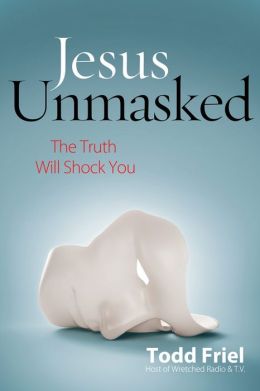
Book Review: Jesus Unmasked

Jesus Unmasked: The Truth Will Shock You. Todd Friel. 2014. New Leaf Press. 238 pages. [Source: Library]

From the introduction:
If you take the time to read this book, you will learn:
  • What Jesus believed about Himself
  • Why Jesus' contemporaries wanted to murder this "good teacher"
  • What the Bible is actually about. It will make sense, whether you believe it or not. 
If you take the time to read this book, you can draw your own conclusions about the most influential man in history. (14)
From chapter two:
Prepare to see Jesus revealed in the Old Testament. Prepare to take a whirlwind tour through the Bible and see the perfect, brilliant harmony that proves, beyond the shadow of a doubt, that Jesus is indeed, the Truth. (25)
I loved many things about Jesus Unmasked. I loved the clear presentation. Readers will learn who Jesus is, why he came, and why it matters--why it will always matter. This book centers on Jesus Christ as revealed in both the Old Testament and the New Testament. It is a book ABOUT how the Bible is ALL ABOUT Jesus from cover to cover. Chapter by chapter, Friel illustrates how the Bible reveals Jesus to be the way, the truth, and the life.

The table of contents:

  • Introduction: Truth is Like a Baseball Game
  • Who Is This Man?
  • The Big Question
  • Big, Fancy Words
  • The Scarlet Thread in the Old Testament
  • The Scarlet Thread in the New Testament
  • Jesus is the Ark
  • Jesus is the Rock
  • Jesus is the Living Water
  • Jesus is the Bread
  • Jesus is the Bronze Serpent
  • Jesus is the Tabernacle
  • Read This!
  • Jesus Is the Sabbath
  • Jesus Is Seven Festivals
  • The Offices of Jesus
  • Jesus is People
  • Jesus is Places and Things
  • Jesus is the New Covenant, Part One
  • Jesus is the New Covenant, Part Two
  • Jesus is the I AM
  • Jesus is the Bridegroom
  • Jesus Is...

I loved how rich it was in Scripture. I loved how it celebrated the Bible. I loved how informative it was too.

From "Jesus is the Ark"
God commanded Noah to "cover the ark inside and out with pitch" (Gen. 6:14). The ark was made watertight by covering it internally and externally with this waterproof substance. It is the word "pitch" that leads us again to Jesus. According to Strong's Concordance, the Hebrew word for pitch is kaphar and it means "to cover, purge, make an atonement, make reconciliation." Kaphar is used 70 times in the Bible to mean "atonement" as it relates to blood sacrifice. Yom Kippur (Day of Atonement) comes from the word kaphar. There is only one exception to the use of kaphar, and it is here in Genesis that Kaphar is the word used to describe the pitch used on the ark to keep the waters of judgement out. In the New Testament, the word for "pitch" is translated propitiation. The New Testament makes it clear that Jesus is our pitch, He is our propitiation. (1 John 2:1-2) (1 John 4:10) Jesus is the pitch that saves us from God's judgment. (61)
The people in the day of Noah were evil continually and yet, God provided a means of salvation for those who hate Him. That is amazing grace. God's forbearance is beyond our comprehension. Day after day, minute by minute we ignore Him. Years of non-stop blessings are delivered to us from His gracious hand and we refuse to thank Him. Decades of free air, free food, free shelter, free everything. How do we repay Him? We hate Him. And yet God sends us an ark. Instead of pouring out His wrath, He provides a vehicle of rescue. Instead of destroying us for our sins, He crushed His own Son on our behalf. Instead of obliterating us, He preaches to us, "Run to the ark. Run through the Door. Run to Jesus and be saved from the wrath that is to come." (63)
I also loved how every chapter ends with an appeal, a clear call to repent and believe the gospel.


© Becky Laney of Operation Actually Read Bible
Friday, November 28, 2014

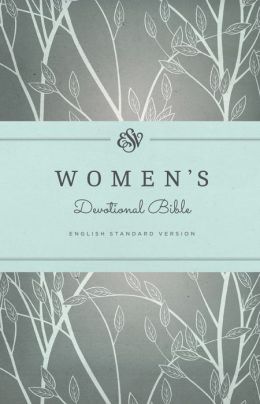
Bible Review: ESV Women's Devotional Bible

ESV Women's Devotional Bible. 2014. Crossway. 1664 pages. [Source: Bought]

In September, I bought a copy of the ESV Women's Devotional Bible. My goal was to use this bible to read the Bible in 90 days. For the record, I'm not sure a devotional bible was the best choice for this goal of mine. It is one thing to read one devotional or two devotionals per day. It's quite another to read six to eight! But most readers, I'm guessing, will not be buying the Women's Devotional Bible with that goal in mind.

Devotionals. Devotional Bibles. Some people are "devotional" people. Others are not. Meaning that some people seem to really benefit from a daily devotional reading, and, it is just part of their daily routine--how they connect spirituality to their daily lives. To those who don't see much benefit to typical devotional readings, it can be really easy to dismiss them all as fluff, lacking substance and depth. IF I read a devotional, it has to have substance, depth, weight. I'm looking for more than a story to relate to. I'm looking for insight and knowledge and TRUTH. For the most part, I was pleased with the offerings in the Women's Devotional Bible. Some devotionals are written by women; some devotionals are written by men.

How Does God Show His Love? by Heather House
John 3:16, perhaps the most famous summary of the gospel in the Bible, seems simple enough. After all, this is one of the first verses children memorize. People paint the reference on signs and hold them up at sporting events, implying someone could understand the gospel from reading the verse.
And yet, like much in John’s Gospel, this verse is straightforward in concept but incredibly deep in application. It plainly describes both God’s love and humanity’s need to accept that love as the solution to their separation from him. For all people in all times, our eternal destiny rests in either believing or rejecting these unadorned words.
This verse is part of Jesus’ conversation with Nicodemus, a Jewish religious leader. In John 3:1–15, Jesus offers a changed life through a new spiritual birth, but Nicodemus is unsure how this could be true. Verses 16–21, then, show how it is that one can be born again and have eternal life.
By providing a way for us to have eternal life, God demonstrates his devotion to the people he created (John 3:16–18). This eternal life manifests itself through abundant joy and blessing on this earth, but it also goes beyond this material world by guaranteeing believers a place in God’s presence forever. Living with a holy God is not possible for those who have sinned, and all humans have (Rom. 3:23). Therefore God sent his own Son to provide the means by which anyone can be justified (Rom. 5:15–21). Jesus accomplished this through his own death when he took on the guilt of his people (1 Cor. 15:3). Through the sacrifice of his only, innocent Son, God has given everything needed for us to be saved from the punishment we deserve (Isa. 52:13–53:12).
Sadly, people can and do reject Jesus’ work. Those who refuse to recognize him for who he is remain separated from God and will face judgment (John 3:19–20). Knowledge of God (“light”) arrives in Jesus, but many prefer the darkness because they want their evil actions to remain hidden. They would rather continue on the path they have chosen than admit that God created them and therefore has a rightful claim on the way they live. Others are appalled by the notion that they cannot make themselves right with God through their own effort. Whoever recognizes what God offers through Jesus comes to the light because God gives him or her faith to believe (v. 21).
God loves us so much that he offered a solution, at great cost to himself and his Son, to the problem of sin that humanity had created. How will you respond to this truth? How will you share it with others? 
He Loved Us Then; He'll Love Us Now by Dane C. Ortlund
It is not hard for many of us to believe God has put away all our failures that occurred before our conversion. Sure, maybe we lived a particularly rebellious life before new birth—but that was, after all, before we had heard the gospel. We did not know of God’s love. Of course we screwed up a lot then.
What is hard is to believe that God continues to put away all my present failures, now that I am supposedly “better.” We so easily view the Father looking down with raised eyebrows. “How are they still such failures after all I have done for them?” we see him wondering. After all, a Christian conscience is a re-sensitized conscience. New birth makes us feel more deeply than ever the ugliness of sin. Failure makes the soul cringe like never before.
That’s why Romans 5:1–11 is in the Bible.
After exulting in the peace we now enjoy because of the gospel (vv. 1–5), Paul says roughly the same thing three times over. “While we were still weak, at the right time Christ died for the ungodly” (v. 6). “While we were still sinners, Christ died for us” (v. 8). “If while we were enemies we were reconciled to God by the death of his Son, much more, now that we are reconciled, shall we be saved by his life” (v. 10). Three times Paul says that God did something to save us when we hated him. Weak. Sinners. Enemies. We didn’t have to clean ourselves up first. He didn’t meet us halfway. He himself pulled us up into peace.
That’s great news. But that’s not even Paul’s main point in these verses. He’s after something else.
What’s the ultimate point Paul is driving at in Romans 5:6–11? Not God’s past work, mainly. Paul’s burden is our present security, given that past work. He raises Christ’s past work to drive home this point: If God did that back then, when you had zero interest in him, then what are you worried about now? The whole point of Romans 5:6–11 is captured in the “since” of verse 9: “Since, therefore, we have now been justified by his blood, . . .”
This really calms us down. He drew near to us when we hated him. Will he remain distant now that we want to please him? He suffered for us when we were failing, as orphans. Will he sternly cross his arms over our failures now that we are his adopted children? His heart was gentle and lowly toward us when we were lost. Will his heart be anything different toward us now that we are found?
“While we were still. . .” He loved us in our mess then. He’ll love us in our mess now. Our very agony in sinning is the fruit of our adoption. A cold heart would not be bothered. We are not who we were.
I think you'll agree that the devotionals in this Bible do have substance.

So. If you're a woman looking for a devotional bible, I'd recommend the ESV Women's Devotional Bible. Even if you are not a "devotional person." I would say browse it at the store or sample it online. (The kindle sample includes Genesis and Exodus). Read three or four devotionals yourself and just try it. (Link to pdf sampler from Crossway, it also has two videos about the Bible).

In addition to the devotionals, the Bible features many articles:

  • The Bible & The Grace of God by Bryan Chapell
  • Why Is Doctrine Important by Kathleen Nielson
  • How To Make the Most of Your Bible Study by Jen Wilkin
  • Learning to Pray the Psalms by Paul E. Miller
  • Missional Living by Gloria Furman
  • Evangelism by Leeann Stiles
  • A Woman's Identity in Christ by Luma Simms
  • Singleness: A Privileged Calling by Lydia Brownback
  • The Godly Wife by Jani Ortlund
  • Nurturing Children to Love and Follow God by Ebeth Dennis
  • Adoption: God's Gift and Our Responsibility by Donna Thoennes
  • Caring for Children with Disabilities by Joni Eareckson Tada
  • Emotional Healthy by Brian Borgman
  • Eating Disorders & Other Self-Destructive Behaviors by Kimm Crandall
  • Forgiveness, Healing, and Shame by John Ensor
  • The Church and Women at Risk by Lindsey Holcomb


© Becky Laney of Operation Actually Read Bible

Thursday, November 27, 2014

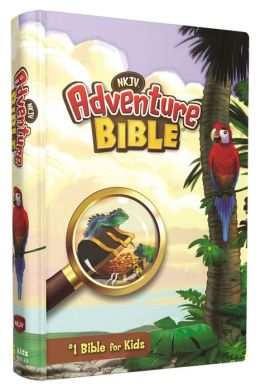
Bible Review: NKJV Adventure Bible

NKJV Adventure Bible. Lawrence O. Richards, ed. 2014. 1568 pages. [Source: Review copy]

The Adventure Bible is available in at least three translations: the New International Version (NIV), the New International Reader's Version (NIrV), and the New King James Version (NKJV). The NKJV is the latest in the series to release.

Earlier this year, I reviewed the NIRV Adventure Bible for Early Readers. It was my first time reading the NIRV translation, and, my review focused just as much on the translation as the special features of this children's Bible.

I will not be spending much time--if any--commenting on the translation. I've spent almost two decades reading this translation off and on.

Some of the special features of this children's Bible:
Articles, Charts, How-Tos, etc.:

  • How To Use this Bible
  • How To Know You Are a Christian
  • Ten Commandments for Kids
  • Bible Verses To Read When You Feel…
  • Famous Old Testament Prophets
  • Love Passage for Kids
  • Two Week Reading Plan on Jesus' Life
  • What Jesus Taught About…
  • Famous Children of the Bible
  • How to Pray
  • Getting to Know Jesus
  • The Life of Jesus Christ
  • The Lord's Prayer
  • Famous People of the Bible
  • The 12 Disciples
  • Subject Index
  • Concordance
  • Maps

Recurring Features

  • Book Introductions
  • "Words to Treasure"
  • "Did You Know?"
  • "Life in Bible Times"
  • "People in Bible Times"
  • "Live It!"

From Ten Commandments for Kids (Based on Exodus 20:1-17 and Deuteronomy 5:7-21)
1. You may not love anyone or anything more than you love God.
2. You may not worship, or put more importance on any person or thing, other than God. You must worship only the Lord, not a friend, not a movie star or sports hero, not a car or skateboard. Nothing.
3. You may not swear. Use God's holy name in a loving way, never to express anger or frustration.
4. One day of your week should be set aside for resting and worshipping God.
5. Respect your parents. Love them, and the Lord will reward you in your life.
From Love Passage for Kids (Based on 1 Corinthians 13)
Love will stand in line and wait its turn.
Love looks for the good in others.
Love doesn't always want what others have, and it doesn't brag about what it does have.
Love is polite, even when the other person is rude.
Love doesn't have to be first.
Love doesn't get angry over small things, and it doesn't remember one reason after another to be hurt.
Like all the new editions of the Adventure Bible, this one is in full color. It is brightly illustrated throughout.

Example of book introduction:
The Gospel According to Matthew
Who wrote this book? Matthew, one of Jesus' 12 disciples, wrote this book.
Why was this book written? Matthew shows the Jews that Jesus is the Messiah promised in the Old Testament
For whom was this book written? Matthew was written for the Jewish people.
What happens in this book? This book tells about Jesus' birth, His life as an adult, His teaching, death, and resurrection.
Who is the key person in this book? Jesus is the most important person in this book
When did this happen? These events took place between 6 B.C. and A.D. 30.
Where did this happen? Most events took place in towns in Gailillee.
What are some of the stories in this book?
Wise men visit Jesus (Matthew 2:1-23), How to be blessed (Matthew 5:1-12), The Lord's Prayer (Matthew 6:9-13), Jesus feeds 5,000 people (Matthew 14:13-21), Jesus walks on water (Matthew 14:22-33), Lost sheep (Matthew 18:10-14), Jesus enters Jerusalem (Matthew 21:1-11), Jesus is crucified (Matthew 27:32-56), Jesus returns to life (Matthew 28:1-10), Jesus' Great Commission (Matthew 28:16-20).
Is it heavy or light on notes and features? I'd say it offers a good amount for the age group. Here is a sampling from Matthew:

  • Did You Know? Why is this genealogy in Matthew?
  • Live It! A Jesus Baby Book
  • Did You Know? What does "repent" mean?
  • Live It! Fighting Temptation
  • Did You Know? What are the beatitudes?
  • Words to Treasure: Matthew 5:44
  • Life in Bible Times: Giving to the Needy
  • Live It! Look in the Mirror
  • People in Bible Times: The Centurion
  • People in Bible Times: Tax Collectors
  • Did You Know? What did Jesus' disciples do?
  • Live It! A Family Fun Night
  • Life in Bible Times: Yokes
  • Did You Know? Who was Beelzebub?
  • Did You Know? What is the parable of the tares about?
  • Live It! Appreciation Night
  • Life in Bible Times: Baskets
  • Did You Know? On what rock will Jesus build His church?
  • Live It! God's Not Mad at Me!
  • Live It! Jesus Loves the Children
  • Life in Bible Times: The Denarius
  • Did You Know? What is "authority"?
  • Words to Treasure: Matthew 22:37, 39
  • Life in Bible Times: Phylacteries
  • Did you know? What are "woes"?
  • Live It! Be Ready When Jesus Comes
  • People in Bible Times: Judas
  • Did You Know? What was the Sanhedrin?
  • Live It! Sorry After Doing Wrong
  • People In Bible Times: Pontius Pilate
  • Life in Bible Times: Jesus' Tomb
  • Words to Treasure: Matthew 28:19-20

It would be easy to recommend this one to parents and grandparents looking for a Bible to give their children or grandchildren.

© Becky Laney of Operation Actually Read Bible
Wednesday, November 26, 2014

Book Review: Tolkien (2014)

Tolkien: How An Obscure Oxford Professor Wrote the Hobbit and Became the Most Beloved Author of the Century. Devin Brown. Abingdon Press. [Source: Review copy]

Devin Brown's biography of J.R.R. Tolkien may be relatively short, but, it is packed with information. It's lively too. I loved the tone and the approach. Brown writes with much passion for the subject!

Readers learn about his life. (Tolkien as a son, student, husband, soldier, professor, writer, father, friend, etc.)  Readers learn about his works (The Silmarillion, The Hobbit, Lord of the Rings). Brown's presentation is anything but dry and boring. It is lively, fact-filled, fascinating. I had read an edition of The Annotated Hobbit, so, I was familiar with a few things. But I learned so much by reading this short biography!

I love that the focus is both on him as a person (his family life, his faith, his teaching career, etc.) and as a writer, on specific works. I love learning about his writing process, his rough drafts, his editing, his determination, his frustrations, his dealings with publishers, etc. I loved the journey: seeing the books evolve over decades. These books weren't quickly written!

One of the things I love most of all is the inclusion of direct quotes and primary sources. It seems like a little thing, perhaps, but these glimpses where we get to know Tolkien in his own words, do make the book worth reading. Earlier in the fall, I reviewed a children's biography on Tolkien by Anne E. Neimark. It was okay. But it didn't really do Tolkien justice in my opinion. This one does.

It's an accessible biography. It isn't intimidating. I would definitely recommend this one. It was wonderful. I LOVED it.

© Becky Laney of Operation Actually Read Bible

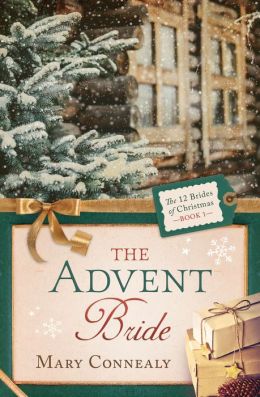
Book Review: The Advent Bride

The Advent Bride. Mary Connealy. 2014. Barbour. 88 pages. [Source: Review copy]

I enjoyed reading the Advent Bride. Melanie Douglas, the heroine, is a teacher at a one-room school in Nebraska. The student that gives her the MOST trouble is a boy named Simon. When he's in her classroom, she has trouble managing all her students. For better or worse, she sees the potential in Simon. He is smart, very bright. If he behaved, he might even be her best student academically. She tries to talk to his father, Henry O'Keeffe, with mixed results. She worries about the boy's home life. She decides she'd rather have him with her after school, than to send him home alone. So she has a clever idea or two on how to keep him engaged after school. And that is where the advent box enters into the story!

I enjoyed this one. This one is short. It is a novella. It is a very light, Christmas-themed historical romance. It was satisfying enough for what it is.

© Becky Laney of Operation Actually Read Bible

Monday, November 24, 2014

Book Review: Beside Bethesda

Beside Bethesda: 31 Days Toward Deeper Healing. Joni Eareckson Tada. 2014. NavPress. 176 pages. [Source: Review copy]

Beside Bethesda is a 31 day devotional written by Joni Eareckson Tada. It is concerned with pain and suffering and "deeper healing." Within the devotional, she shares personal stories and insights. Several times she's mentions within the text that she has been in her wheelchair for 47 years. She reflects a bit on what she's learned in those decades. It's honest reflecting. Her desire for physical healing, but, her ever-increasing joy in the spiritual healing that God has blessed her with instead. In addition to telling her personal story, which, some readers might already be familiar with, she shares more about her recent battle with cancer.

There were a few things that stood out to me as I was reading. One thing is her memorization of Scripture. She tells of how memory work has helped her tremendously through the years. How foundational it was to her clinging to hope and joy and peace. She shares several verses that have been a big help to her. Romans 15:4, in part, reads "whatever was written in former days was written for our instruction, that through endurance and through the encouragement of the Scriptures we might have hope." It's something to keep in mind always. The Bible is a Christian's treasure. God speaks to us through his Word. His promises to us are within the Word. And it is our privilege, our joy to find those promises, to cling to them, to treasure them. Scriptures should be influencing our prayers and our lives. The other thing that stood out to me was the struggle--the fight--against depression and for contentment. She writes about how discouraging thoughts, depression, and boredom can weigh you down, can strip you of joy and peace. Go to God with how you feel, but, don't hold onto those negative feelings, don't meditate on them, dwell on them. Feed instead on the word of God. Let his promises have a place in your heart and mind.

I would definitely recommend this little devotional to believers that enjoy reading devotions.


© Becky Laney of Operation Actually Read Bible

Book Review: Look and Live

Look and Live. Matt Papa. 2014. Bethany House. 256 pages. [Source: Review copy]

Matt Papa's Look and Live is a book about the glory of God. It is a book about worship. About what we may falsely be worshipping--perhaps without even realizing it. About what we should be worshipping instead. It is about about the greatness and goodness of God. It is a book that challenges readers to seek to know God more and more, and in response to that seeking and knowing and growing and loving to worship him more fully. It isn't just a book about worship. It's a book about how to live for the glory of God; how seeing God's glory changes you and changes how you want to live.

Table of contents:

  • Glory and Worship
  • The Glory of God
  • Bad Aim (Glory and Sin)
  • The Blazing Center
  • Let My Eyes Adjust
  • Scattered Beams
  • Glory and Mission
  • Glory and Suffering
  • Show Me Your Glory

It is a book that is easy to recommend. There were two chapters that were just my favorite and best. I loved, loved, loved "The Blazing Center" and "Let My Eyes Adjust." The whole book is good, mind you, but those two chapters were GREAT.

Quotes:
Why does Jesus, after rising from the dead, still bear His scars? It can't be for no reason. It has to be because God wanted every eternal sight of Him to be filled with the memory of His love. In Revelation 5 we are told that this is exactly where all of history is heading. Time will culminate and all eternity will commemorate a Lamb that has been slaughtered, "who purchased…men for God from every tribe and tongue" (Rev. 5:9). In Revelation 13 we are told that this was God's design--that before the dawn of time there was a book, and the book was called "the book of life of the Lamb who has been slain" (Rev 13:8). God designed the slaughter of His Son before the world so that His goodness might be eternally adored. Throughout eternity, we will still be peering at the cross. With awe, wonder, and surprise. (89)
Worship is war. The call is to behold the Son of God, not merely look at Him. It is to gaze deep into the gospel, not merely pray some prayer and then move on. We must linger. Christianity is the hard, joyful journey of beholding Jesus by faith until the day you behold Him by sight. (119)
This word meditate is the Hebrew word for a cow chewing its cud. The cow chews the grass, it goes down into the cow's stomach, and then comes back up again. It chews some more, swallows, then it comes back up again. Sounds gross, right? But this is how we grow in Christ and how we see His glory. We wrestle with the Bible. We chew and swallow and chew and swallow and think and apply. We let our eyes adjust. (127)
We read the Bible to see Glory. We read the Bible to gaze deeper into the story of the gospel. We read the Bible to behold Jesus. (127)
Legalism is when I feel that I am more loved by God when I obey Him. It is not legalism to obey God even when it's hard because I want to see Him. It's not legalism when you spend time in the Word even when it feels temporarily fruitless when you're doing it with a heart that cries out, "God, I want more of You" instead of "All right, I've done my time for the day. Check." (132)

© Becky Laney of Operation Actually Read Bible

Saturday, November 22, 2014

Book Review: The Secret of Pembrooke Park

The Secret of Pembrooke Park. Julie Klassen. 2014. Bethany House. 460 pages. [Source: Review copy]

Abigail Foster is the heroine of Julie Klassen's The Secret of Pembrooke Park. She is one of two sisters. Her younger sister seems to be the favorite of both her parents. Rivalry with her sister comes up often in the novel. For not only do her own parents seem to favor Louisa, but, Abigail's first love--the boy next door--seems to as well. As soon as Louisa is old enough for her first season, well, his attention seems to shift dramatically to her sister.

The Foster family is having a difficult time. Soon after the novel opens, readers learn of their financial woes. The father's investments have been unwise, it seems. And for some reason or other, Abigail seems ready to take the blame. (Why is the father going to her for business/financial advice? And why is he ready to blame her for bad advice? Why can't he be responsible for his own decisions and actions?!) She feels guilty enough to give up her dowry so that her younger sister can have a season. The family home is sold as well. But there is some hope. A strange offer is made by a distant relative or a representative of a distant relative. The family is given the opportunity to live one year at Pembrooke Park, a country estate of sorts. It has not been lived in for almost twenty years. Locally it has a reputation. Bad things happen there. Strange stories are told about the house and about the people who've lived there in the past. Abigail convinces her father that this is a good idea.

It is a good thing that Abigail is ready for the change, because it seems she will be the one doing almost everything. She will be the one to go and live there--for the most part alone--while it is being renovated and cleaned and restored. Her father will come and go, but mostly go. (I was so annoyed by the father, even when he was there, he wasn't actually there. He had the flimsiest substance or development in terms of characterization.) Her mother and her sister will stay in London. While Abigail is on her own, she is on her own, and she takes some social liberties. Like visiting the local minister in the middle of the night in her nightgown and a shawl. It's not that she's immoral exactly. She's not. But she's not guarding her own reputation--or HIS reputation. She is disregarding the propriety of the times, the social norms or morals. Not just in one instance or even two, but in dozens of cases.

One of the things I enjoyed about The Secret of Pembrooke Park was the complexity of the plot. I loved that there were several stories, several mysteries, several romances. I loved that the stories were layered, that there was always something happening. The suspenseful plot definitely worked for me. This was a book I did not want to put down. As I was reading it, I NEEDED to find out what happened next. I didn't have the answers, and I wanted them!

I have mixed feelings about Julie Klassen's newest Regency romance. On the one hand, I found it an incredibly suspenseful read. It's a very good gothic read. If you have read and enjoyed Rebecca or My Cousin Rachel, there's a good chance you'd enjoy this one as well. The mystery kept me in suspense, kept me guessing. On the other hand, I found it disappointing in characterization and romance. It wasn't that I disliked the hero and heroine. It was that I was disappointed with the way the romance developed. Time and time again, rules were broken. I kept waiting for a scene where the two would be "forced" to marry one another to protect her honor and reputation, or, even his reputation since he was a minister. But it never came. For better or worse.

There were plenty of things I loved about this one. There were a few things I didn't exactly love. While I was reading it, I was very caught up in the story. It was only after I stopped reading it and started thinking it through that my feelings started to change about it. The book might not be a perfect fit for me, but, it was certainly worth reading.

© Becky Laney of Operation Actually Read Bible

Friday, November 21, 2014

Book Review: The Christmas Cat

The Christmas Cat. Melody Carlson. 2014. Revell. 169 pages. [Source: Review copy]

I found The Christmas Cat to be cute and charming. Exactly what I expected it to be for the most part. Garrison Brown is the hero. When his grandmother dies, he returns to Vancouver, Washington to handle her estate. His grandmother's lawyer has very specific instructions for him to follow. She had six cats. Six cats too many for the very-extremely-allergic-to-even-just-one-cat Garrison Brown. He's to find homes for all six before he receives his inheritance. But the cats can't go to just any home. Among the rules, 1) must be adopted by someone in her own neighborhood, 2) that neighbor must have lived in the neighborhood over a year, 3) that neighbor must be a homeowner and not a renter...and that's just three of the many rules!!! Will Garrison Brown find homes for the cats? What will he do in the meantime?

I enjoyed this one. I enjoyed getting to know Garrison. I enjoyed hearing about his experiences and his dreams. I enjoyed meeting his neighbors. I liked spending time with all the characters. I liked this one. It was just a satisfying read.