Sunday, August 5, 2012

Book Review: Putting Amazing Back Into Grace

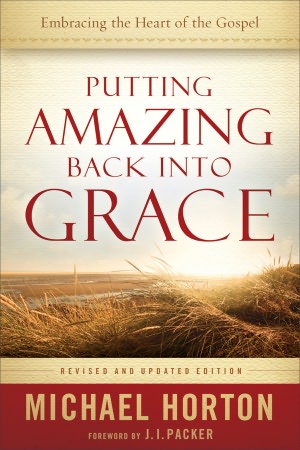
Putting the Amazing Back Into Grace. Michael Horton. 1994/2011. Baker Books. 272 pages.


I was so happy to read the revised and updated edition of Michael Horton's Putting Amazing Back Into Grace. The original was one of my first theological reads a little over a decade ago, and I remembered it as being an amazing book, a true must read!  What I remember most about Putting the Amazing Back Into Grace was the clear presentation of the gospel, of imputation, of what salvation truly means. I had never understood before, and so it was life-changing to discover it. 


Who should read it? Anyone and everyone who is interested in the gospel, in grace, in the doctrines of grace, in salvation, who wants to understand more about sin, justification, and sanctification. It is also great at presenting the big picture of the Bible. Horton is one who realizes that the proper starting place for the gospel is in God's creation. That one has to understand or comprehend the beginnings to grasp the gospel. One has to understand the perfection of creation AND the fall. One has to grasp just how horrible sin is before one can appreciate grace. 


The chapters include:

  • Jumping Through Hoops Is for Circus Animals
  • Created with Class
  • Rebels Without a Cause
  • Grace Before Time
  • So What?
  • Climbing Jacob's Ladder
  • Mission Accomplished
  • Intoxicating Grace
  • Righteous Sinners
  • No Lost Causes
  • Two Keys to Spiritual Growth
  • A Kingdom of Priests

Each chapter concludes with study questions. Putting Amazing Back Into Grace is a book I'd recommend to everybody. It is an amazing, amazing read. 


Favorite quotes:
The focus of the Bible is not on the question, "What would Jesus do?" but on, "What has Jesus done?" From Genesis to Revelation, the Bible is an unfolding story of God's eternal purpose to glorify himself in the salvation that comes through Jesus Christ. (14)
It is not that Jesus Christ makes up for whatever we lack in the righteousness department but that his righteousness alone is sufficient to stand in God's judgment. (15)
God does not give us the grace to save ourselves with his aid. He declares us righteous the moment we give up our own claims to righteousness and our own struggles for divine approval and recognize the sufficiency of Christ's righteousness as our own. (16)
Grace is the gospel. The extent to which we are unclear about who does what in salvation is the degree to which we will obscure the gospel. At a time when moralism, self-righteousness, and self-help religion dominate in much of evangelical preaching, publishing, and broadcasting, we desperately need a return to this message of grace. (26)
Error always piggybacks on truth. Sin cannot create; it can only distort, corrupt, and deform. (52)
I have often thought that one good defense for the inspiration of Scripture is the doctrine of election, for no mortal man or woman could have invented an idea that so glorifies God and so humbles the human ego... You see, we can talk about grace, sing about grace, preach about grace, just so long as we do not get too close to it. Election is too close. When we give in to election, we finally give up on ourselves in the matter of salvation. (63)
When we choose God, it costs us nothing compared to the cost of his choosing us. His choice of us signed his Son's death warrant. (65)
Though planted in a specific time and place in our history, the cross was in God's heart before the world began. His love has always been sacrificial, liberal, and costly. (69)
Knowing that God has chosen us reminds us that we are loved, though not lovely; chosen, even though we're not necessarily choice in the eyes of the boss, the spouse, the parents, or the folks at church. We are accepted--not because we are acceptable ourselves, but because "he hath made us accepted in the beloved." (Ephesians 1:6) (79)
One of the church's greatest problems today is that it has come to the place where it takes God's grace for granted. Dietrich Bonhoeffer called it "cheap grace" and said, "Cheap grace is the grace we bestow on ourselves." (80)
Ultimately, salvation must be understood vertically--in terms of being reconciled to an offended God. Election brings the focus back to God, for whom we exist, rather than the other way around. It is often suggested that a doctrine like this one will drive sinners to despair; that they will simply give up. But this is what is required in gospel evangelism! We must despair of our own efforts; we must give up on ourselves before we can place all of our hope and confidence in someone outside of us. If we don't drive sinners to despair, we have not properly preached the law: they are not yet at the end of their rope. (87)
Today we are trying to reconcile God to humanity instead of reconciling humanity to God. Our converts are weak because they depend on their own will and their own ability to trust and keep the thing going. Their faith is weak because they are constantly looking at themselves. God is pleased with the chosen because he is pleased with the Beloved in whom they are chosen, but this emphasis is missing today. With election as the backdrop, the Lord Jesus Christ becomes the focus of attention. (88)
Outside of Christ, there is only wrath; in Christ, there is only forgiveness, life, and joy. If you believe, you can be certain that your sins were covered at the cross and that you are saved from God's everlasting judgment. (117)
No one would choose God unless he had chosen them, no one would be redeemed if its effectiveness depended on them, and no one would believe unless God had given them faith. (128)
Everything we lost in the fall, Jesus Christ purchased back for us by his death. (132)
Grace does not free us to live to ourselves; it frees us to trust God and serve our neighbors sincerely for the first time. (171)


© Becky Laney of Operation Actually Read Bible

Week in Review: July 29 - August 4

This week I read

TMB

  • Matthew
  • Mark
  • Romans
  • Galatians
  • Ephesians
  • Philippians
  • Colossians (2)
  • 1 Thessalonians
  • 2 Thessalonians
  • Titus
  • Philemon


© Becky Laney of Operation Actually Read Bible

Saturday, August 4, 2012

Book Review: God Is Good...All the Time

God is Good...All the Time. Dr. Margi McCombs. Illustrated by Olga and Aleksey Ivanov. 2012. Scholastic. 20 pages.

God makes flowers in pink and blue to show his love from me to you.
God is good...all the time!
God sees the kitten way up high and sends some friends who hear her cry.
God is good...all the time!
God gives us friends to have some fun--to show his love to everyone.
God is good...all the time!

I am always, always looking for Christian books to recommend to families, and I'm happy to have found God Is Good All The Time. The book is simple, sweet, and lovely. I just love the refrain! The rhyming text improves, I feel, as the book goes on. (I admit that the first sentence isn't amazing and wonderful.) By the end, it was definitely working for me!

This one is also available in Spanish.


© Becky Laney of Operation Actually Read Bible

Friday, August 3, 2012

Book Review: Disability and the Gospel

Disability and the Gospel: How God Uses Our Brokenness to Display His Grace. Michael S. Beates. 2012. Crossway. 192 pages.


I've read many books on the gospel, but this is my first book that I've read that addresses disability and "brokenness." In part one, Beates addresses what the Bible has to say about the image of God, what it means to be made in the image of God, what the fall did to that image, how some reflect brokenness more visibly than others--but all are are in fact broken. In the first chapter, he looks for God's voice in the Old Testament; in the second chapter, he looks for God's voice in the four gospels; in the third chapter, he looks for God's voice in the rest of the New Testament; in the fourth chapter, he makes his conclusions about what the Bible as a whole has to say to disabled people, to the church, to believers everywhere. In part two, he has pulled together voices from the past. These writers aren't addressing physical (or mental) disabilities so much as they are addressing "the image of God" and what being created in God's image means to humanity. What does being made in God's image mean. Was that image broken completely by the fall? Do men and women still reflect God's image? Is God's Image just about morality OR just about intellectual reasoning OR just about emotion? In the fifth chapter, he looks at ancient sources; in the sixth chapter, he looks at more modern sources. In part three, Beates examines voices of today. In chapter seven, he looks at secular sources. In chapter eight, he examines "Christian" sources--conservative and liberal. These two chapters examine the definition of human life, or, what it means to be considered as being both human and alive. Are there "degrees" of worth and value? Are there "degrees" of being alive? Some are seen as having more value, obviously, and others are seen as being expendable. In the secular chapter, there are (disturbing) examples of people whose "humanity" has been taken away, or, argued away. Frightening judgments being made about who has a right to live, and who should "mercifully" be killed. In part four, Beates addresses the church and looks ahead to the future. Chapter nine being titled, "What the Church Must Say to the World In the Twenty-First Century" and chapter ten being titled, "Sovereignty and the Whispering Voice of Hope." He definitely argues that the church needs to be doing more to reach out to those with disabilities, to families with disabled members. For example, he shares stories he's heard from different people about how they have visited churches--in some cases church after church after church after church--and been turned away because of disruptions and differences. He argues that the Christian church is NOT complete until it includes those with disabilities. He definitely asks some hard questions.


Why do we in the evangelical church in the West demand that everyone be "normal" and look the same? Why do we as a culture try so hard (and succeed so well!) at hiding people with disabilities from our everyday view? Why do people with visible and invisible brokenness often feel as though they have to hide the problem in order to join God's people for worship? And finally, and perhaps most importantly, what answers does the good news of the gospel give us for these questions, and how does the gospel give us hope in these situations? (16-7)
How can the church embrace people with disabilities more biblically and more effectively and thus live the gospel more fully before the watching world? We must set out to destroy some dangerously outmoded concepts about people with disabilities and how they must be treated. We must revisit our deeply ensconced cultural assumptions about what it means to be 'normal' as opposed to what it might mean to live for years in a state that must be considered 'brokenness.' (19)
Disability & The Gospel is a thought-provoking book. It might at first appear only to be about disabilities--mental, physical, emotional, etc. But it is about so much more. It is about what it means to be human, about the value of human life, the value placed in human life by the Creator, about what it means to be created by God and for God--in God's image. It is about how people should treat each other IN LIGHT OF THE FACT that humans have been created in God's Image. No life is worthless, no life is expendable. Some people are more obviously "broken" than others--but ALL are broken on the inside and in need of God's mercy and grace IF they are to be saved. Christians should recognize not only their own brokenness but others as well. They should be welcoming and accepting--recognizing the fact that they have much to learn. 


© Becky Laney of Operation Actually Read Bible

Book Review: The Story of the Trapp Family Singers

The Story of the Trapp Family Singers. Maria Augusta Trapp. 1949/2001. HarperCollins. 320 pages.

Somebody tapped me on the shoulder. I looked up from the workbooks of my fifth graders, which I was just correcting, into the lined, old face of a little lay sister, every wrinkle radiating kindness. "Reverend Mother Abbess expects you in her private parlor," she whispered. Before I could close my mouth, which had opened in astonishment, the door shut behind the small figure. Lay sisters were not supposed to converse with candidates for the novitiate.

This is the true story that "inspired" my favorite musical The Sound of Music. For the most part, the book is fascinating--especially the first half of the book. Readers meet the young woman sent to be governess to a retired sea captain with many children. In the book, she's to be governess only to one of his daughters, the rest either have nursemaids, attend schools, or have their own tutors. There are definitely some big differences between the book and the movie--between truth and fiction. (For example, the names of the children are different, as is the chronology of the story. The couple married years before Hitler came to power; they married in 1927!) They began singing together as a family out of love for music, yes, but also out of financial necessity.

The book chronicles:

  • Maria's first eight or nine months as a governess, particular attention is paid to their first Christmas
  • Maria's new role as wife and mother
  • Austria's changing economy and politics in the 1930s
  • The family's flight from Austria and immigration to the United States
  • The family's first experiences in America as they go on tour and learn English
  • The family's (forced) return to Europe--fortunately, only for a few months.
  • The family's return to the United States, their continuing tours
  • The family's settling down in America (a bit more about their tours, building of their house, building of their music camp)
  • The private life of the family (recollections of holidays, feast days, birthdays, Christmases, vacations, etc.) 

The book is great on capturing the family's dependence on God, their reliance on God to deliver them and provide for them no matter the circumstance. The book is also great at capturing a specific time, place, and culture. For anyone curious about what it was like to be living in Austria in the 1920s and 1930s, this is a must read. For those interested in the immigrant experience during this time period, it is just a fascinating account! To see American culture--and language--from this outside perspective. The book was published in 1949, but it was up to date--so readers do get perspective on World War II from their perspective, also what the family tried to do to help Austria after the war was over.

I really LOVED this one!!!

Favorite quotes:
One of the greatest things in human life is the ability to make plans. Even if they never come true--the joy of anticipation is irrevocably yours. That way one can live many more than just one life. (214)
One night I tenderly consulted by private calendar, "time eaters" we had called them at school, and it showed only thirteen more days in exile. The next morning I started spring cleaning. Under my direction the maids were taking down the curtains and proceeding to brush the walls, when I saw the three youngest children knock on the door of the study. It didn't take long and out they came again. Running over to me as I stood on a ladder washing a big crystal chandelier, they yelled from afar: "Father says he doesn't know whether you like him at all!" "Why, of course, I like him," I answered, somewhat absentmindedly, because I had never washed a chandelier before. I noticed only vaguely that the children disappeared behind the study door again. That same night I was arranging flowers in several big, beautiful oriental vases. This was the last touch, and then the spring cleaning was over, and it had been really successful. When I had arrived at the last vase, the Captain came in. Stepping over to me, he stood and silently watched what I was doing with the peonies. Suddenly he said, "That was really awfully nice of you." An altogether new tone in his voice, like the deep, rich quality of a low bell, made me look up, and I met his eyes, looking at me with such warmth that I lowered mine immediately again, bewildered. Automatically I asked what was so nice of me, as I only remembered that awful letter. "Why," he said, astonished, "didn't you send word to me through the children that you accepted the offer, I mean, that you want to marry me?" Scissors and peonies fell to the floor. "That I want to--marry you?" "Well, yes. The children came to me this morning and said they had had a council among themselves, and the only way to keep you with us would be that I marry you. I said to them that I would love to, but I didn't think you liked me. They ran over to you and came back in a flash, crying that you had said, 'yes I do.' Aren't we engaged now?" Now I was out of gear. I absolutely did not know what to say or what to do; not at all. The air was full of an expectant silence, and all I knew was that in a few days I would be received into my convent, and there stood a real, live man who wanted to marry me. (57-58)

© Becky Laney of Operation Actually Read Bible

Wednesday, August 1, 2012

August 2012 Goals

July was a great month for Bible reading. I really enjoyed spending so much time in the New Testament--especially the epistles. I thought my August goals should focus on the four gospels and the book of Acts. Not that I'm committing to reading just the gospels, I still hope to read other books too. I hope to even read some of the Old Testament this month. But I'd like my focus to be on the gospels.
I did not meet my goal of reading fifty pages of theology a day--it was a HIGH goal. But. I was able to read eight books--seven of them nonfiction.

The nonfiction books I'd LOVE to read this August include:


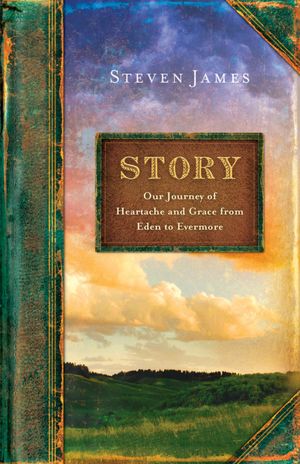
Story: Our Journey of Heartache and Grace fro Eden to Evermore by Steven James. 2006/2012. Revell. 208 pages.


Disability and the Gospel: How God Uses Our Brokenness to Display His Grace. Michael S. Beates. 2012. Crossway. 192 pages.


Putting the Amazing Back Into Grace. Michael Horton. 1994/2011. Baker Books. 272 pages.


Story of the Trapp Family Singers. Maria August Trapp. 1949/2001. HarperCollins. 320 pages.

And some fiction:


To Die For. Sandra Byrd. 2011. Simon & Schuster. 352 pages.


The Secret Keeper. Sandra Byrd. 2012. Simon & Schuster. 352 pages.


For Such a Time As This. Ginny Aiken. 2012. FaithWords. 384 pages.

© Becky Laney of Operation Actually Read Bible
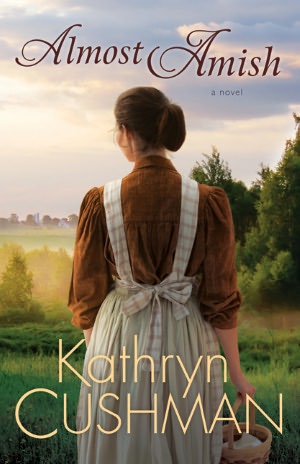
Book Review: Almost Amish

Almost Amish. Kathryn Cushman. 2012. Bethany House. 336 pages.

"We're going live in five, four, three, two, one." As the countdown culminated, the audience did as they were instructed and began to clap wildly, as if this moment was the greatest in their lives. 

Almost Amish chronicles the lives of two families trying to simplify their lives over the summer. Two families sharing a house in front of cameras and a camera crew. Susan, the perfectionist, is supposed to be the star of a new show. And if all goes well, she could end up with a book deal and more TV opportunities. A dream come true...for Susan. She has brought her teen daughter, Angie, her sister-in-law, Julie, her teen niece, Whitney, and her nephew, Brian. They will be living in a house that has definitely seen better days. And they'll be trying to mimic the Amish lifestyle--to a certain degree. All under the direction and guidance of Kendra, a woman with a cruel streak perhaps! Each week this family will face a particular "challenge" for the show.

Julie believes that it is all about simplifying, prioritizing, making time for family, cherishing family, making each moment count. Susan, on the other hand, thinks it is about being perfect 24/7 forever and ever without stopping to relax. Cleaning, cooking, cleaning, cooking, cleaning, cooking, and let us not forget pressuring others to meet our standards! It's not enough for Susan to be Susan. She wants to remake everyone regardless of how they feel about it. Poor Angie! Poor Julie! Poor Whitney! Susan is never satisfied.

Surrounded by Susan's negativity and perhaps her own husband's negativity as well since he shares some of the views of his sister, Julie always, always feels inadequate. She doesn't think she's good at anything. She doesn't think she has any gifts or talents. Sure people always tell her she's nice, but, she doesn't think that should count.

Readers get to know Susan, Julie, Angie, and to a lesser degree Whitney and Brian. And then there's the "handy man" Gary who is also part of the show. It will definitely be an unforgettable experience. But who will learn the most? And who will be a hit with viewers?

I really liked this one! I definitely preferred Julie to Susan! And I loved the chapters with quilting lessons! This one was definitely more focused on family relationships than romance. I thought it was a great story with a great message.

© Becky Laney of Operation Actually Read Bible