Showing posts with label autobiography. Show all posts

Thursday, July 3, 2025

53. I Still Believe


53. I Still Believe. Jeremy Camp. 2013/2020. 160 pages. [Source: Library] [4 stars, memoir, biography]

First sentence: Pick up your guitar. I didn't want to. I didn't want anything to do with music. It had been two weeks since Melissa had gone to heaven. My wife was only twenty-one, and we had been married just three and a half months when she passed away from ovarian cancer.

I Still Believe is Jeremy Camp's memoir. The edition I read was newly updated in timing with the 2020 movie release for I Still Believe. Both book and movie tell the love story of Jeremy and Melissa. 

The book provides so much more context to Jeremy's life--both before and after. The movie focuses almost exclusively on their love story and nothing but their love story. The book gives a much fuller picture in regards to Jeremy's spiritual journey AND his actual biography. Learning of his family, his childhood, his teen years, and the decade(s) following Melissa's life certainly gives you a more complete picture of who he is. 

The book and movie are both sad. Sad in a bittersweet way. Melissa's life was short--yet every day of her life's story was written by God [before one of them came to be] and written to bring him glory.

I Still Believe isn't necessarily a book [or movie] that you "enjoy." But I think there are spiritual lessons within both. 

© Becky Laney of Operation Actually Read Bible

Wednesday, June 12, 2024

34. The Hiding Place A Graphic Novel


The Hiding Place A Graphic Novel. Corrie ten Boom. With Elizabeth and John Sherrill. Adapted by Mario DeMatteo. Illustrated by Ismael Castro. 2024. 240 pages. [Source: Library]

First sentence: It was 1937, just three years before Hitler and his Nazis invaded Holland. It was the 100th birthday party of ten Boom Watches--our little watch shop in Old Haarlem. Although the party was for the shop, the affection of a city was for father. Casper Ten Boom. They called him Haarlem's Grand Old Man.

This book adapts Corrie ten Boom's autobiography The Hiding Place into a graphic novel of the same name. 

Is The Hiding Place memoir worth reading? Yes. Yes. Yes. A thousand times yes.
Is The Hiding Place movie adaptation worth watching? YES. Definitely.
Is The Hiding Place graphic novel memoir worth reading? Definitely. Especially, especially if it helps readers envision the times and events. Some readers respond more to graphic novels, find them easier to read, to digest. It may be "easier" to "hand-sell" (think Reading Rainbow) a graphic novel than a traditional book, a nonfiction memoir at that. 
Does the graphic novel do a good job adapting the original? While I haven't read them close together in time to compare perfectly, as I was reading the graphic novel, I was reminded of scenes from the memoir. I don't recall any memorable, significant scenes from the memoir being left out OR being changed or altered. All the highlights, if you will, of the original can be found in the graphic novel adaptation. Memories not being perfect, however, I haven't examined the two close enough to say with absolute certainty that the two are essentially telling the exact same story. 

I do recommend reading the original OR reading the graphic novel--or both. I do recommend watching the movie. 


© Becky Laney of Operation Actually Read Bible

Wednesday, April 5, 2023

34. All My Knotted Up Life


All My Knotted Up Life. Beth Moore. 2023. 304 pages. [Source: Library]

First sentence: We were river people.

All My Knotted Up Life is a memoir by Beth Moore. I thought I'd start with where I'm coming from as a reader and what bias I might be bringing to my reading. Chances are when you hear the name Beth Moore you have a strong reaction one way or the other. I've read so little that I don't have a strong, solid reason for my meh-ness to her work. I've definitely been exposed--a bit out of context at times--to paragraphs of her works [either from her books, her studies, her video teachings, her tweets] with commentary critiquing her theology. I didn't pick up this book as a hater or a lover. 

The first third of the memoir covers her childhood and teen years. The middle third covers her marriage, becoming a mother, and very early years in the ministry. [DID YOU KNOW SHE TAUGHT CHRISTIAN AEROBICS???? DID YOU EVEN KNOW CHRISTIAN AEROBICS WAS AN ACTUAL ACTUAL THING THAT CHURCHES OFFERED????] The last third covers her rise to fame, if you will, her partnering up with publishers, her Living Proof conferences, her living in the public eye, her disagreements with the Southern Baptist Convention, her eventual parting of ways with the SBC. 

I thought it was a rough start. The first few chapters were especially rough. I've thought about why that might be. It couldn't be easy to start a memoir. To throw readers into your life story. Where do you start? Do you start with your strongest memory? the one you feel will be most compelling? the one that perhaps has shaped you? Do you start like a more traditional biography? When you're covering your earliest family memories...how do you orient strangers [us readers] with YOUR family? Every family is unique and has its own inside language, its own way of being. Memories have a way of being disjointed, random.

The writing was odd to me. Strange metaphors and use of imagery. It didn't stay that way. It just started that way. The more I read, the easier it became to read.

I am glad I read it. As a memoir, it focused more [and rightly so] on personal stories, memories, impressions. It didn't do deep dives into theology. It stayed in 'shallow waters' in terms of politics, theology, culture. I think that's mainly a good thing. Obviously, the last third goes into the very 'muddy waters' of her falling out with the SBC. And readers--lovers or haters--will already have thoughts and opinions on that.  

© Becky Laney of Operation Actually Read Bible

Thursday, January 12, 2023

3. From Pearl Harbor to Calvary


From Pearl Harbor to Calvary. Mitsuo Fuchida. 1953/2011. eChristian. 96 pages. [Source: Bought]


This is a short autobiography. Mitsuo Fuchida concisely relates for readers his experiences during World War II; his restlessness after the war, and his quest for answers; and ultimately his  conversion to Christ, and his subsequent evangelical work for the Lord. It may be short, but, it is nevertheless compelling.

In chapter one, the author recalls bombing Pearl Harbor.

In chapter two, the author relates his further experiences during the war itself.

In chapter three, the author writes of his experiences after the war, his longing for peace, and his quest for answers.

In chapter four, the author writes of his conversion and shares his testimony.

The final chapters (chapter five through chapter seven), readers learn of his evangelical work, his work for the Lord, how he shared his testimony with others, and how his focus changed so completely.

It was originally published under the title From Pearl Harbor to Golgotha in 1953. 

© Becky Laney of Operation Actually Read Bible

Monday, August 23, 2021

50. Ordinary Hazards


Ordinary Hazards. Nikki Grimes. 2019. 325 pages. [Source: Library] 

First sentence: I read somewhere that names penetrate the core of our being, and I suppose, this is as good a time as any to confess my name is not the only lie I’ve ever lived with, but Nikki is the first invention for which I accept full responsibility. 

Premise/plot: Nikki Grimes’ newest book is a memoir written in verse. Ordinary Hazards tells her story—the darkness and the light in her growing up years. 

My thoughts: I have loved, loved, loved Nikki Grimes’ work in the past. I have always found her work to bring on the feels. Her characters are more often than not, oh-so-humanly drawn. Her writing realistic, but often with a strong foundation of hope. No matter how dark, how tough, how painful, there is still reason to hope; where there is life, there is hope. 

This memoir is an amazing read. I think perhaps most enjoyed by those that have read her previously. But perhaps not. Maybe this would encourage readers to pick up her other books and seek out everything she’s written? 

Recently a school district in Texas (Leander Independent School District) removed Ordinary Hazards from its "secondary school book club reading lists." You can read about it here. I have not read ALL the books on the "removed" and "paused" lists. I do not know for certain what "removed" means. If it is simply removing from a recommended book club list, or if it is removal from classroom libraries, or if it is removal from the school library. If it means removal from the school library, that is truly sad and a bit terrifying. 

I can only guess that Ordinary Hazards was removed because of so-called inappropriate content. But truly if that is the case, then people have lost the ability to read critically and in context. That wouldn't surprise me. But it does sadden me.

I say so-called inappropriate content because IN CONTEXT one wouldn't judge it that way. Or have to judge it that way. 

First things first, it is a MEMOIR. It is Nikki Grimes' autobiography. This is HER story. She's sharing real events and real emotions with readers. There is depth and substance to her HONESTY. This book is *real* and leads to *feels*.

Sure, there's alcohol and drunkenness in Ordinary Hazards. But it is her mother. There is no way, no how anyone could read those scenes and think hey, drinking alcohol is the best thing ever. Or wow, now I have life goals. There is PAIN and CONFUSION and HEARTBREAK. Because her mother can't overcome this addiction. And perhaps doesn't even see the addiction as addiction. Nikki Grimes isn't the first and won't be the last child to have an alcoholic parent. What message are we sending to teens when we say, you can't talk about that? 

Sure, there's drug abuse. But it is a cousin. And it terrifies her. At the time this occurs in the memoir, she hasn't even started school yet. She's helpless to control her situation. She's completely reliant on a mother who has some major blind spots. It's HEARTBREAKING to read about.

Sure, there's mental illness. Nikki's mother suffered from paranoid schizophrenia. What we get is Nikki's childhood perspective reconstructed and imagined. It is honest and reflects the pain and confusion and terror she felt as a result of her mom being unstable and unable to really be there, be there. But mental illness exists whether we acknowledge it or not. Whether it's kept buried in shame--deeply buried and barricaded--or whether it's brought out into the light. Keeping quiet about it doesn't make it go away. Again, I have to ask, what message are we sending to teens when we say, you can't talk about that?

Sure, there's child abuse and abandonment. Her father is absent. Her mother is, well, a mess. Her mom is so desperate financially that she's leaving her daughters with strangers as babysitters. Too checked out to check up on them....as she should. Nikki and her sister end up in foster care. She wasn't the first and won't be the last to experience childhood trauma. What message are we sending to teens when we say, you can't talk about that? 

Sure, there's sexual abuse. When Nikki leaves the foster care system to return to live with her mother, she is placed in the house with a child molester--her mom's boyfriend/partner. It is TRAUMATIC and painful. It leads to confusion, anger, bitterness, shame. But Nikki didn't ask for this--no child would. She is not to blame for someone else's action. To silence her story is a crime. Again, Nikki wasn't the first and will not be the last child to be molested, abused, traumatized. What message are we sending to teens when we say, you can't talk about that?

This is a MEMOIR. There are those that would SILENCE her story just because it contains "unpleasant" and "uncomfortable" details that like it or not happen in the real world every single day. It takes bravery and strength to step up and speak up. Do we really want to reinforce the notions of shame and dirtiness? To send the message, if this happens to you--it is too dirty, too shameful, too inappropriate, too immoral to talk about. Keep silent. Keep it to yourself. 


© Becky Laney of Operation Actually Read Bible

Sunday, August 1, 2021

40. The Way of the Father


The Way of the Father. Michael W. Smith 2021 [May] 208 pages. [Source: Review copy]

First sentence: My father was my hero. The kindest, gentlest man I have ever known. The person in my life who was always the most like Jesus to me and consistently reflected the qualities of my Abba Father.

The Way of the Father is a son's tribute to his father (Paul Smith). Readers should expect no more than that. Readers will find plenty of stories about Michael W. Smith--past and present--in his role as son, husband, musician, friend. Mainly son and musician if I'm being honest. 

If reading about Michael W. Smith's experiences and relationships gives you a thrill, this book is for you. He does provide some background and context for the writing of several of his songs--newer songs mostly, I believe. 

What you should not expect is the book to be more than that. For better or worse. Maybe for most readers what they are looking for is 90% of Michael W. Smith and 10% devotional with glimpses of God the Father, Son, and Spirit. But if you're looking for more balance--say 50/50--with ample space given to God, then you might be disappointed.

It's not that Michael W. Smith isn't giving due glory to God in his life.  I wouldn't say the book is 100% self-promotion. It's just that he's writing what he knows--and what he knows is his experiences writing, recording, performing, touring, meeting famous people, hanging out with famous people, etc. 

If you're looking for something that points you to Jesus Christ and keeps pointing you to Christ over and over and over again, then this isn't quite that. It throws in inspiration/motivation every now and then. But it's not a super-deep book. 

But I will say this. I think this is a book he NEEDED to write as a son. I think writing this book helped him in the grieving process. And I think it would be a truly amazing gift for those in the family--Paul Smith's grandchildren, great-grandchilden. As a testament to a person, I think it's good. 


© Becky Laney of Operation Actually Read Bible

Wednesday, June 23, 2021

35. Where the Light Fell


Where the Light Fell. Philip Yancey. 2021. [October] 320 pages. [Source: Review copy]

First sentence: Not until college do I discover the secret of my father’s death. My girlfriend, who will later become my wife, is making her first visit to my home city of Atlanta, in early 1968. The two of us stop by my grandparents’ house with my mother, have a snack, and retire to the living room.

Where The Light Fell is Philip Yancey's memoir. After reading it, it clarifies why his books are almost always touching on two subjects: PAIN and GRACE. For the record, I don't think I've read any of his solo books. Yes, I know he's been around forever and ever--five decades. (His books include: What's So Amazing About Grace?, The Jesus I Never Knew, Where Is God When It Hurts?, Disappointment with God, Soul Survivor, Prayer: Does It Make a Difference?, What Good is God?, The Bible Jesus Read, etc.)

What should you know? 

It is a memoir. That sounds obvious. Yet, in skimming the reviews of it so far, I've stumbled across some comments like all this guy talks about is his life. Yes, it's a memoir. He's going to talk about his life. 

Yancey is a Christian. But. His faith didn't come easy. He may have been raised in a Christian home, but that complicated matters whether than eased them. That's not me making assumptions. That is his reflection. The book doesn't sugarcoat his long, difficult, uncomfortable, uneasy journey from Christian-in-name-only to actual-Christian. He knew how to put on a show, put on a Christian face, talk Christian-ese, pass as a believer, etc. But he felt it was fake, knew it to be fake. This book spends a great deal of time in his squirming struggles to come to terms with who he is and who God is.

Yancey is human. Again obvious, I know. But his memoir is in many ways ABOUT dysfunctional families. As Tolstoy says, "Happy families are all alike; every unhappy family is unhappy in its own way." The book is about the strained relationships certainly. Readers learn a lot about his mother and his brother.
I'll also add this one shines a light on issues like MENTAL HEALTH and RACISM. 

Some might accuse Yancey of being "woke" or going "woke." But if he is, he made that journey decades ago. He was raised racist--and some of that racism was explicitly taught in his Independent Fundamental Baptist church. But also most of his schooling occurred BEFORE integration. He was coming of age during the Civil Rights Movement. And there was tension and conflict. He had to wrestle with ideas and beliefs. He determined for himself that it was wrong, wrong, super-wrong. And that he had to break away from what he'd been taught. 

He was raised in an extreme. He grew up Independent Fundamental Baptist. And again he had to wrestle with himself--with ideas, beliefs, etc--to determine what he actually believed. Sometimes that meant departing from the super-strict sometimes arbitrary nature of the IFB. He did attend a Bible college. Rejecting the toxic elements of his past did not--for him--mean tossing God too. But it was a process of separating out what does the Bible actually say AND what do they say the Bible says. 

This one might need a couple of trigger warnings. Especially in regards to verbal, mental, emotional, spiritual abuse. It is a heavy read in some places. And it clearly shows the long-term dangers of childhood trauma. Another additional trigger warning about suicidal thoughts and attempts. 

It is blurring the lines--a bit--when it comes to comfort zones. At least for me. This book really GOES all the way when it comes to his troubled brother. These are real-life issues. I don't doubt it for a minute. But it's a LOT to take in. And I'm not sure I need to know all the sexual transgressions of his brother in the free love years. 

Quotes: 
  • My father isn’t even a memory, only a scar.
  • Certainly, no one could accuse our mother of “unspiritual” behavior. Unlike some women in our church, she has never worn a pair of slacks, nor does she wear nail polish or makeup, not even lipstick. She never fails to have lengthy personal devotions every morning, and she teaches the Bible for a living. What chance do two adolescent kids stand against such an authority? Mother claims she hasn’t sinned in twelve years—longer than I’ve been alive. She follows a branch of the holiness tradition that suggests Christians can reach a higher spiritual plane, a state of moral perfection. The pastor of her Philadelphia church uses a glove to illustrate the point. “The Holy Spirit lives inside you like my fingers in this glove,” he says. “It’s not you living now; it’s the Spirit of God in you.”
  • Our three-person family isn’t working anymore. I have no way to put into words the changes going on, but something is tearing me inside. I want to run up to someone I recognize in church and say: “Please, please can you help us. I need someone to know what’s happening at home.” Then I remember my mother’s reputation and realize that no one will believe me. She’s a saint, the holiest woman in Atlanta.
  • The church has clearly lied to me about race. And about what else? Jesus? The Bible?
  • Slowly it sinks in that nothing that Marshall or I do will please Mother, that our lives are a stabbing reminder of her own failed dreams and especially the dream—the vow—she had for us. It dawns on me, that’s why she’s so insistent about the Bible college. She can feel us slipping away.
  • Perhaps, the thought crosses my mind, I am resisting not God but people who speak for God. I’ve already learned to distrust my childhood churches’ views on race and politics. What else should I reject? A much harder question: What should I keep?
  • Lenin once said that he refused to listen to Beethoven because the music made him want to pat children on the head. There are no small children on the college campus, but now I understand what he means.
  • Those who appear the least lovable usually need the most love.

© Becky Laney of Operation Actually Read Bible

Tuesday, February 11, 2020

17. That Way and No Other

That Way and No Other: Following God Through Storm and Drought. Amy Carmichael. 2020. 144 pages. [Source: Review copy] [biography, autobiography, christian nonfiction]

The book opens with two different biographical sketches of missionary Amy Carmichael (1867-1951). One sketch is by Carolyn Kurtz; the second sketch is by Katelyn Beaty. The remaining chapters of this one are written by Amy Carmichael herself--taken from previously published works. (I believe she did most of her writing in the 1930s).

The chapters address different topics. Some chapters include a great deal of stories about her life, her children, her work; other chapters stay focused on one topic/aspect/subject of the Christian life. Both can prove beneficial to readers.

This was my first time reading Carmichael. I found myself agreeing with some of what she wrote; I also found myself disagreeing here and there, in bits and pieces, with a few things. Like always, use discernment and judge all things by the Word of God.

Here are some of my favorite quotes:

"Our Lord did not say, “Go ye into all the world if you feel an ardent flame of love to all the people in it.” He just said, “Go ye,” and as we obey, he gives us all we need to lead them to him. And of course as we most of all need love, he gives it to us. I think often we accept the cross in theory, but when it comes to practice, we either do not recognize it for what it is, or we recognize it and try to avoid it. This we can always do, for the cross is something that can be taken up or left, just as we choose."

"Life is a journey; it is a climb; it is also and always a war. The soldier of the Lord of Hosts is always a soldier. He dare not drivel down to any other kind of life. We can’t be entangled in the affairs of this life if we are to be real soldiers. By its affairs I mean its chatter and its ways of thinking and deciding questions, its whole aspect and trend. God forgive us our love of ease. God forgive us that so often we turn our faces from a life that is even remotely like his. Forgive us that we all but worship comfort, the delight of the presence of loved ones, possessions, treasure on earth."

"All the great staining temptations–to selfishness, ambition, and other strong sins that violently affront the soul–appear first in the region of the mind, and can be fought and conquered there. We have been given the power to close the door of the mind. We can lose this power through disuse or increase it by use, by the daily discipline of the inner man in things which seem small, and by reliance upon the word of the spirit of truth."

"It is the eternal in books that makes them our friends and teachers–the paragraphs, the verses, that grip memory and ring down the years like bells, or call like bugles, or sound like trumpets; words of vision that open to us undying things and fix our eyes on them. We are not here, they tell us, for trivial purposes. . . . We are not here to be overcome, but to rise unvanquished after every knock-out blow, and laugh the laugh of faith, not fear."

"More and more as we go on, and learn our utter inability to move a single pebble by ourselves, and the mighty power of God to upturn mountains with a touch, we realize how infinitely important it is to know how to pray. There is the restful prayer of committal to which the immediate answer is peace. We could not live without this sort of prayer; we should be crushed and overborne, and give up brokenhearted if it were not for that peace. But the Apostle speaks of another prayer that is wrestle, conflict, “agony.” And if these little children are to be delivered and protected . . . then some of us must be strong to meet the powers that will combat every inch of the field with us, and some of us must learn deeper things than we know yet about the solemn secret of prevailing prayer."

"Our loving Lord is not just present, but nearer than thought can imagine, so near that a whisper can reach him. You know the story of the man who had a quick temper and had not time to go away and pray for help. His habit was to send up a little telegraph prayer, “Thy sweetness, Lord!” and sweetness came. Do you need courage? “Thy courage, Lord!” Patience? “Thy patience, Lord!” Love? “Thy love, Lord!” A quiet mind? “Thy quietness, Lord!” Shall we all practice this swift and simple way of prayer more and more? If we do, our Very Present Help will not disappoint us. For thou, Lord, hast never failed them that seek thee (Ps. 9:10). Prayer in the name of his beloved Son cannot lose its way in the void. It must find the ear of God."

"For prayer is not emotion, it is a traffic between earth and heaven, “a commerce of love.” Our ships set sail for heavenly shores; they do not return empty; it is impossible that they should; but we are not told what tide will bring them back. We think in terms of time; God thinks in terms of eternity. We see the near end of the thread on which are strung our moments, minutes, hours, days, like pearls on a string; the other end is out of view, and yet the thread is one, indivisible. We call the near end time, and the far end eternity, as though somewhere the thread broke (at death perhaps). But it is not so. We are living in eternity now."

"If monotony tries me, and I cannot stand drudgery; if stupid people fret me and little ruffles set me on edge; if I make much of the trifles of life, then I know nothing of Calvary love. If I am inconsiderate about the comfort of others, or their feelings, or even of their little weaknesses; if I am careless about their little hurts and miss opportunities to smooth their way; if I make the sweet running of household wheels more difficult to accomplish, then I know nothing of Calvary love. If interruptions annoy me and private cares make me impatient; if I shadow the souls about me because I myself am shadowed, then I know nothing of Calvary love. If souls can suffer alongside, and I hardly know it, because the spirit of discernment is not in me, then I know nothing of Calvary love." 

"Often our flash of haste means little. To read a book in an hour (if the book has taken half a lifetime to write) means nothing at all. To pray in a hurry of spirit means nothing. To live in a hurry means to do much but effect little. We build more quickly in wood, hay, and stubble than in gold, silver, and precious stones; but the one abides, the other does not."

"Thank God, courage is as infectious as discouragement. Have you not often felt the cheer and strength that seem to flow from one whose mind is stayed on God? I have."

"It matters a good deal that your book-food should be strong meat. We are what we think about."

"Can you find a promise that if we follow the Lord Jesus Christ, life is going to be fairly easy? I do not think we shall find even one. But we shall find ever so many promises assuring us that however things are, we may count on strength to make us brave and peace to keep our hearts at rest. I want you to welcome the little difficult things, the tiny pricks and ruffles that are sure to come almost every day. For they give you a chance to say “No” to yourself, and by doing so you will become strong not only to do but also to endure."

© Becky Laney of Operation Actually Read Bible

Tuesday, January 1, 2019

Book Review: Made for the Journey

Made for the Journey: One Missionary's First Year in the Jungles of Ecuador. 1998. Revell. 176 pages. [Source: Review copy]

First sentence: It is unsettling to me now to know that people who are making a tour of South America can take a short, easy side trip and see the Colorados.

This one was originally published as THESE STRANGE ASHES.

Made For the Journey is a memoir written by Elisabeth Elliot. In the book she recounts her first year as a missionary. This was before her marriage to Jim Elliot. Elisabeth worked with several other single women--some trained to be doctors/nurses--in a small jungle in Ecuador. Elisabeth's mission was to learn the language of the Colorados and translate the New Testament.

In the jungle, you might say, Elisabeth Elliot learned to wait. Things certainly weren't working according to her own time table.

In the book she shares the many lessons she learned--often the hard way--in the jungle during her first year.

The book brought to mind one section of Scripture.

As the rain and the snow
    come down from heaven,
and do not return to it
    without watering the earth
and making it bud and flourish,
    so that it yields seed for the sower and bread for the eater,
so is my word that goes out from my mouth:
    It will not return to me empty,
but will accomplish what I desire
    and achieve the purpose for which I sent it. Isaiah 55:10,11

I wish I'd read this book before reading her fiction novel, No Graven Image. If you do read Made for the Journey, it would be worth your time to seek out the other as well. The books complement one another well.

© Becky Laney of Operation Actually Read Bible

Wednesday, May 24, 2017

Book Review: Taking My Life Back

Taking My Life Back. Rebekah Gregory and Anthony Flacco. 2017. Revell. 272 pages. [Source: Library]

First sentence: On April 15, 2013, the world came to know me as "Rebekah Gregory--Boston Marathon bombing victim."

Premise/plot: Rebekah Gregory shares her story with readers in this memoir. She provides some background story throughout, but, the main focus is on her life since the bombing. This includes her time in the hospital, her time at home trying to get back to normal, what her new normal looks like, her new career as a public speaker, her private joys of being a wife and mom. Faith is also central in this one.

My thoughts: I am glad I read this one. I read Joni earlier this year, and, I think the two would pair together nicely as examples of how you can suffer and "endure" really difficult things and still find your peace and joy in Jesus.

I found it to be a quick, compelling read. I would recommend it if you enjoy autobiographies and memoirs.

© Becky Laney of Operation Actually Read Bible

Monday, April 24, 2017

Book Review: The God I Love

The God I Love. Joni Eareckson Tada. 2003. 368 pages. [Source: Bought]

I dug my toes into the sand of the Delaware beach, hugged my knees, and drew as close to the campfire as I could. The flames warmed our faces while behind us the night air chilled our backs. Huddled with my sisters and cousin, I smelled the burning logs and breathed in the fire’s heat. We all sat in awe of my father. He stood across the campfire from us, a figure a-swirl in rising heat and smoke, his face underlit by flame as if he were a prophet on Mount Sinai. We clutched each other as he wove his story.

This isn't Joni Eareckson Tada's first autobiography. It differs from Joni in that it explores more of her life before and after the diving accident and paralysis. One gets a better picture of her childhood, her family, her hobbies and interests, the times in which she lived, her faith and culture. One also gets a better picture of her faith and ministry after the accident. (Though her accident was no accident, but a work of God's providence.) Joni was published in 1976. So much has happened SINCE the publication of that book. Her marriage, her ministry, her mission trips, her public fight for the rights of the disabled, just to name a few! So even if you've read Joni, you don't know the whole story.

The God I Love, I noticed is almost a love letter to her father and mother--a big thank you. But above all, the focus is on God himself.

Quotes:
My earliest recollections of being stirred by the Spirit happened through hymns. Five-year-olds are able to tuck words into cubbyholes in their hearts, like secret notes stored for a rainy day. All that mattered to me now was that these hymns bound me to the melody of my parents and sisters. The songs had something to do with God, my father, my family, and a small seed of faith safely stored in a heart-closet.
God was only a little bigger than my father. The Lord may have filled the universe, but my dad filled mine. Whereas God kept the planets orbiting, my father was the center of our orbit. And whatever he commanded us was spoken not so much with words but through the sheer force of his own good character. In the spring of 1961, it was God’s responsibility to show young President Kennedy how to run a country, to keep the Russians on their side of the earth, to bring Adolf Eichmann to trial, to keep the Bomb from falling on Woodlawn Elementary, and The Creature from the Black Lagoon in his swamp and out of our neighborhood. Everything else was Daddy’s responsibility.
To not believe God was up there was, well, impossible. For one thing, there were the Ten Commandments posted at the front of our classroom, right underneath the American flag. No day at Woodlawn Elementary — at least back in the fifties and early sixties — dared start without a series of rituals: a U.S. Saving Stamps pitch to keep our country strong; the Pledge of Allegiance, to assure liberty and justice for all; the collection of lunch money (thirty-five cents for grilled cheese sandwich, tomato soup, carton of milk, and a Nutty Buddy); all capped off by a daily reading from the Bible.
I wanted to be on God’s side. So I became one of a mass of young people who searched, as one poet put it, for God and truth and right. Some of my passion was fostered by class discussions on segregation. We were assigned to read a book called Black Like Me by John Howard Griffin, the true story of a white man who colored his skin black and journeyed south to experience firsthand the stigma of segregation. The hate and horror this man faced left a deep impression on me. My search for truth and right began heating up. I memorized the protest songs of Peter, Paul, and Mary, as well as Joan Baez. I paid attention as the pastor of the little United Methodist Church we attended up by the farm pounded his pulpit about racism and social inequalities. I hung on every word of Mr. Lee as he urged us to examine the issues that were ripping society apart. We discussed injustices in the classroom and brought to light things that needed changing. “Let justice roll down like the mighty waters!” went the Bible verse, quoted from pulpits and coffeehouse stages alike. Yes, God was in. And if I was going to be on God’s side, I had to get better connected with him.
My hair. It became one of two miracles everyone whispered about those first few days at the University of Maryland Hospital. My shocking blonde hair had floated on the surface as I lay half submerged in the water. The other miracle was the blue crab that bit Kathy’s toe just before she stepped out of the shallows and onto the beach. Any other time, Kathy would have bolted to escape what she was convinced were zillions of hungry crabs. But this time, she didn’t race to the safety of her towel. Instead, she turned to warn her little sister. Her sister, whose bright-yellow hair, ebbing and flowing, told her something was wrong.
Something was happening, something for the first time since Jacque lay next to me in the night, singing “Man of Sorrows”: I was caught up in God’s thoughts about me, not my thoughts about him. I was lying in a stream of sunshine, consumed by his compassion for me, not by my anger and doubt about him. My thoughts didn’t even matter now — only his did. Only his mind, his heart. And his mind and heart were communicating clearly, as clearly as all those visionary moments I rode the horse trail, brushing past tree limbs, as clearly as all those nights by the ocean, under the stars. And he was saying, “Come unto me. Let me give you rest.” Yes, yes, I whimpered in my thoughts, I need rest, I just want rest. Rest and peace. God was oh-so clever. During all the chaos in my life, he remained silent for a long, long time. And then — voilà! — he broke through with a quick-witted surprise, a keen twist, an unexpected but brilliant turn of events — like this statue. I would bang-bang-bang on heaven’s door, firing daggers and darts, trying to manipulate him. I would blacken a white page with ink. I’d wail and sulk and thrash my head on a pillow to break my neck higher for spite. And then, this. God would answer, quietly and dramatically. Lying there, I didn’t try to analyze it much more than that. I simply looked into Jesus’ face and basked in his blessing. I hadn’t expected anything like this when I was wheeled into Johns Hopkins. I was here to get my nails cut out. But now I was thinking about other nails, staring at the scars they’d left in the hands of God’s Son. His nails for mine. Here was a God who understood my suffering.
“I like your wheelchair, Aunt Joni,” Kelly told me softly one evening. The two of us were sitting alone at the dinner table, waiting for the others to join us. “You do?” “Yeah,” she said, giving me her endearing grin. “I want one like yours when I grow up.” She caught me up short. All I could do was smile and shake my head at those impish eyes and thick eyelashes, the mop of brown hair cropped from the surgery, the freckles that flattened over her nose and cheeks when she laughed. Kelly scrunched her shoulders and leaned forward in her wheelchair, repeating, “Can I have one like yours?” I gulped hard. In her eyes, my wheelchair was more to be desired than a new collection of My Little Pony dolls or a spiffy new tea set for her and Kay. My chair was a joyride, a passport to adventure. Kelly assumed that my wheels had initiated me into a very special club, a club in which she wanted membership. Yet she didn’t seem to have a clue about the price one actually pays to join such a club. She seemed to discount the pain and the paralysis, the disappointment and the broken dreams. She utterly disregarded the dark side — it wasn’t even worth considering. All she longed for was a chance to be like me, to identify with me, to know Aunt Joni better. But something else was going on too. Those wise eyes of hers gave it away. Kelly wanted me to desire my wheelchair as much as she did. My niece wasn’t just admiring it — she wanted me to do the same. All along I had been trying to cheer her up, to tell her stories and play games with her, even be an example to her. But I had it all wrong. She was leading me. Out of the mouth of this babe, God was showing me how to embrace his will. “Your wheelchair’s neater than mine. I like yours best,” she said again. And you should too, she was saying. Kelly knew — at least, she sure seemed to know — that I was still bogged down by broken dreams. She sensed I still struggled with the dark side, that I didn’t quite know how to accept where I sat. For her, though, it was a cinch. Life had been hard on the farm, her parents argued a lot, and up until the diagnosis of cancer, you couldn’t get her near a tea set. But her suffering had pushed her into the arms of Jesus, and her gracious, openhearted way of accepting — no, embracing — his will had cracked open heaven’s floodgates of blessing. All my niece wanted to do now was talk about Jesus and his heaven, where she would pet giraffes and eat all the ice cream she wanted. Where she would ride bigger ponies, douse ketchup on everything, converse with Papa and Mama Bear, play with Baby Bear, and become an instant grownup.
“Think of a greater affliction — his affliction,” he added. “As you do, you can’t help but embrace him. And as you embrace him, you can’t help but love his will.” That meant something. It was being sure of something I hoped for — being certain of something I couldn’t see. It was, I realized, what having greater faith meant. Not faith in my ability to accept a wheelchair, but faith to embrace Christ, to trust him in spite of — no, because of — my problems. Again, I recalled the first time I tasted the power of the gospel that night in the hills of Virginia. How could I doubt the one who gave his life up for me? I remembered my friend Jacque singing to me in the hospital, the statue at Johns Hopkins, my pleasant life with Jay on the farm, Kelly — and, as always, the stars above the campfires. They were all part of the path Jesus had led me on thus far. How could I not believe him?
“Just make sure you keep pointing people to the Bible,” he finally offered. “Your life story can’t change anyone, but God’s Word can.”
The weaker we are, the harder we must lean on God — and the harder we lean on him, the stronger we discover him to be.
The truly handicapped among us are those who start their mornings on automatic cruise control, without needing God. But he gives strength to all who cry to him for help. So, who are the weak and needy? Who are those who need his help?” A brief pause in the dark shadow of recent events always allowed the point to come home. “It’s you. It’s me.”

© Becky Laney of Operation Actually Read Bible

Wednesday, April 12, 2017

Book Review: Joni

Joni: An Unforgettable Story. Joni Eareckson Tada. 1976. 205 pages. [Source: Bought]

First sentence: The hot July sun was setting low in the west and gave the waters of Chesapeake Bay a warm red glow. The water was murky, and as my body broke the surface in a dive, its cold cleanness doused my skin. In a jumble of actions and feelings, many things happened simultaneously. I felt my head strike something hard and unyielding. At the same time, clumsily and crazily, my body sprawled out of control. I heard or felt a loud electric buzzing, an unexplainable inner sensation. It was something like an electrical shock, combined with a vibration—like a heavy metal spring being suddenly and sharply uncoiled, its “sprong” perhaps muffled by the water. Yet it wasn’t really a sound or even a feeling—just a sensation. I felt no pain. I heard the underwater sound of crunching, grinding sand. I was lying face down on the bottom. Where? How did I get here? Why are my arms tied to my chest? My thoughts screamed. Hey! I’m caught! I felt a small tidal undercurrent lift me slightly and let me settle once more on the bottom. Out of the corner of my eye, I saw light above me. Some of the confusion left. I remembered diving into the bay. Then what? Am I caught in a fishnet or something? I need to get out! I tried to kick. My feet must be tied or caught too! Panic seized me. With all my willpower and strength, I tried to break free. Nothing happened.

Premise/plot: In 1967, Joni Eareckson had a diving accident that left her paralyzed from the shoulders down. Her body may have been broken, but, her faith was not. But it was to be severely tempted, tested, and tried. This autobiography is honest and bold. It is an emotional roller coaster of a book. It is a spiritual autobiography just as much as it is a physical one. Readers learn not just about Joni, but, about God. There is also an opportunity to learn about yourself as well. Fear, depression, disappointment, anger. We've all dealt with these difficult emotions. So in some ways
we can all relate to Joni. Her story is authentic and inspiring. But above all else it makes you think.

My thoughts: I have been wanting to read this one for years. I am so glad I finally did. I have LOVED, LOVED, LOVED reading the Beyond Suffering Bible which is edited by Tada, which features devotions from her. This book is a must read, in my opinion.

Favorite quotes:
It seemed the further I opened my mind to these philosophies that denied God, the further I went away from Him. Finally, I became convinced there was little to be learned or understood from these confusing writings. My search had led me back to the Bible. I began to sense that God was real and that He was dealing with me. “My thoughts are not your thoughts. My ways are not your ways,” He reminded me from His Word. I needed to understand this—that I could not comprehend my own purpose or meaning without taking God’s deity into consideration. “What do you mean?” asked Diana when we were discussing this subject one day. “Well, I’ve been trying to have the world make sense by having things to relate to me. I want to see my life have meaning and purpose. But the Bible says our purpose is to glorify God. My life has meaning when I glorify God,” I explained. “Yes, I understand,” said Diana. “But how do you get that concept to work?” “I’m not sure. But I know until now I’ve been looking for a way to make the world revolve around me. Now I’m convinced that I need to plug in some other way.”
I told Diana of my thoughts. “Nothing is really making any sense yet, Diana. I don’t know what God is doing—but I believe He is real and that somehow He knows—and understands. There’s a positive aspect to my thoughts now. I’m still confused, but before, my confusion leaned toward doubt. Now it leans toward trust.” “Maybe it has something to do with your prayer before the accident,” Diana suggested. “What prayer?” “Remember? You told me that shortly before your accident, you prayed, ‘Lord, do something in my life to change me and turn me around.’ Maybe this is God’s way of answering that prayer.” “I’ve wondered about that myself. It could be. But it’s sure not what I expected. And He certainly has His own timetable!” I said, adding, “I don’t know His purpose in this. I probably won’t ever walk again. And I don’t see how I can ever be happy again. I guess that’s what really bothers me.” “Not being happy?” “Yeah. I mean, if there’s one thing I learned from those existentialist writers, it’s ‘man cannot live with despair.’ Do you think I can ever be happy, Diana?” “I don’t know, Joni—I don’t know.” My studies in the Scriptures began in earnest now, along with other Christian literature. Writings by Francis Schaeffer and C. S. Lewis seemed like a breath of fresh air compared with Marx, Hesse, and the non-Christian books I’d read. I began to sense a direct application of and appreciation for the Word of God in my life. For the first time, I saw meaning for me in the Bible. My own “fiery trials” were now a little easier to cope with as I saw how I fit in with God’s scheme of things, especially through reading the Psalms. “The Lord will sustain him (me) upon his (my) sickbed” (Ps. 41:3 NAS).
Before my accident, I didn’t “need” Christ. Now I needed Him desperately. When I had been on my feet, it never seemed important that He be part of my decision-making—what party to go to, whether to go to a friend’s house or a football game, etc. It didn’t seem that He would even be interested in such insignificant things. But, now that my life was reduced to the basic life routines, He was a part of it because He cared for me. He was, in fact, my only dependable reality. These new and reassuring concepts had a quieting effect on my spirit, and I think they were even helpful as I shared them with Jay during her personal troubles.
True spirituality is putting God’s Word into practice—making His truth valid by actually doing what He says and not just pointing to it as a nice standard.
What was God’s will for my life? To find out, I had to believe that all that had happened to me was an important part of that plan. I read, “In everything, give thanks, for this is the will of God concerning you.” God’s will was for me to be thankful in everything? Okay. I blindly trusted that this was truth. I thanked God for what He did and what He was going to do. As I concentrated on His positive instruction from the Bible, it was no longer necessary to retreat from reality.
It is important to remember that the promise “God causes all things to work together for good” only applies to those who love God, those who have been born into His family. However, due to our sin and rebellion we are alienated from God and subject to His judgment. Praise God, though, that He sent His Son, Jesus, to be judged on the cross—paying the death penalty for my sin and your sin! If we truly trust that our punishment was borne by Christ and obey Him as our Lord, we can be assured of eternal life and the promise of Romans 8:28. It is my hope that in the course of reading this book, the Holy Spirit has enlightened your heart and mind to these truths. Jesus is alive and His power is available to you…He proves Himself daily in my life, and what more couldn’t He do in your life! Are you a part of God’s heavenly family? For indeed, I hope one day we shall meet in glory.
We aren’t always responsible for the circumstances in which we find ourselves. However, we are responsible for the way we respond to them. We can give up in depression and suicidal despair. Or, we can look to a sovereign God who has everything under control, who can use the experiences for our ultimate good by transforming us to the image of Christ (2 Cor. 3:18).
“We always lose when we evaluate ourselves according to someone else’s ideas or standards. And there are as many standards as there are people. A jock measures you by your athletic ability; a student by your brains; a steady by your looks. It’s a losing battle,” he said, striking a sour piano chord for added emphasis. “We have to forget about what people say or think, and recognize that God’s values are the only important ones.”
I believed that if God took something away from me, He would always replace it with something better. My experience had taught me this as I relied on the sovereignty of God. “Delight thyself in God,” the psalmist said, “trust in His way.” As I did so, it became easier to express true gratitude for what He brought into my life—good as well as suffering.
Only God is capable of telling us what our rights and needs are. You have to surrender that right to Him. 
The only thing we can take to heaven with us is our character. Our character is all we have to determine what kind of a being we will be for all eternity. It’s what we are that will be tested by fire. Only the qualities of Christ in our character will remain.”

© Becky Laney of Operation Actually Read Bible

Monday, January 23, 2017

Book Review: My Heart

My Heart. Julie Manning. 2017. B&H. 224 pages. [Source: Review Copy]

Julie Manning's My Heart is a mother's memoir. (Though one doesn't have to be a mother--or a nurse--to appreciate it.) Manning shares her story--her testimony. During the birth of her second child--a son--her heart stops working. Further tests reveal that her heart is in failure, and, that it could stop beating at any time, without much warning. Her life will never be the same. She's a wife, a mother--a mother of two young boys--and a Christian. This is her testimony of how she found Christ in the midst of her suffering. Of how she's able to hold onto joy and hope and peace despite all of her health issues.

Throughout the book she shares her story. But she also shares some of her journal entries and some letters she's written to her sons. These letters to her sons are by necessity emotional masterpieces. How could you read them and not be touched?!

This book may not be theology proper, but, I'd argue that it is theology lived out. Readers need both.

Favorite quotes:
  • "We do not need to die in order to experience Jesus; we just need to stop, pause, and cease striving long enough to need Him, love Him, and rest in Him." 
  • "Our sufferings do not produce belief or unbelief of the Lord in our lives; rather our sufferings will reveal our belief or unbelief in Jesus."
  • "What would our lives look like if we really did live with our life’s brevity at the forefront of our mind? Would we pursue the temporary, or would we pursue the eternal?"
  • "When you fail to take all of the emotions and heartaches and fears of your present circumstances to the Lord, just for the sake of numbing yourself, you are telling God that you believe He messed up and that He did not know what He was doing."
  • "Yes, the risk of vulnerability can be scary. It is true that the Holy Spirit often leads us into areas where we feel vulnerable. But we can go there because in God we have eternal security. Though it feels “dangerous” to walk in this direction, we are already safe in the embrace of God’s powerful love—so no place is truly dangerous for us. And, when the Holy Spirit leads us to be vulnerable, God shows up and blesses us through it with His peace and freedom."
  • " In the midst of suffering, we will look one of two places. We will either look at the suffering, and we will doubt God; or we will look at God and read the promises of His Word, and it will cause us to cry out to Him in utter desperation, leaning on Him as the One who is able to see us through our circumstances."
  • "I absolutely believe it is not only possible for us to experience hope and joy in the midst of suffering but that God desires to show us that He alone is our only hope and our only source of fulfilling joy."
  • "Do I believe that God being in control is better than me being in control? Do I believe that following God’s leading is better than my own comfort?"
  • "Our sufferings do not negate God’s call on our life to love Him and love others." 
  • "We share our stories to remember God’s faithfulness. We share our stories to direct our hearts back to what is important in this life as we feel the tug to drift away from a surrendered posture unto the Lord to a life of selfsufficiency. This life is not about us. Rather, this life is about Jesus. This life is not about our individual lives but about the day when the entire big “C” Church body is in the same place at the same time for eternity surrounding the throne of God, proclaiming “Holy, holy, holy, Lord God, the Almighty” (Rev. 4:8). We are not yet home, but rest assured, we WILL be home one day. Until then we must battle against complacency and against comfort and against taking things into our own hands of control. Even when we seek Jesus fervently. Even when we rely on the Lord for every ounce of energy and sustaining breath. "
  • "We can only view this life through the lens of the gospel of Jesus to the extent in which we know and believe the gospel itself."
  • "The more time we spend putting God’s Word into our minds, the more His Word will become our thoughts. The more Scriptures we study, the more we will learn about our God’s character. The more times we read through God’s redemption story for His people, which is you and me, the more our hearts will humbly rejoice in the grace poured out upon our souls. The Lord has much work to do in our lives. He accomplishes this work through His Word, the working of His Holy Spirit, and the presence of other believers in our lives. The more time we spend reading about Jesus, the more we will view this life and all of this life’s circumstances with the perspective that this place is not our forever home."

© Becky Laney of Operation Actually Read Bible

Monday, September 26, 2016

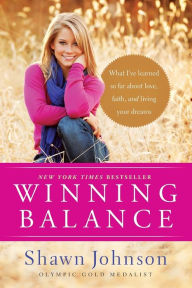
Book Review: Winning Balance

Winning Balance. Shawn Johnson and Nancy French. 2012. Tyndale. 256 pages. [Source: Library]

First sentence: The first score I ever received was given on January 19, 1992, at Iowa Lutheran Hospital in Des Moines.

Premise/plot: Winning Balance is an autobiography of gymnast Shawn Johnson. Most of the chapters conclude with a 'lessons learned' feature. Partially this is a spiritual autobiography as well. Johnson includes in her life story her spiritual testimony. How much is 'spiritual' and how much is plain and simple biography? I'd say the spiritual aspects of it are like the toppings on a sundae. I would say it's definitely for gymnastics fans. (She's not John Owen.)

My thoughts: I love, love, love gymnastics. I do. I've watched it since the late 80s and it's a sport I'm passionate about. So I was definitely engaged with this one. It was quite a change from the biographies I read on Mary Lou Retton and Shannon Miller. Of the three coaches, I think Shawn Johnson's comes across best.


© Becky Laney of Operation Actually Read Bible

Wednesday, July 20, 2016

Book Review: One of the Few

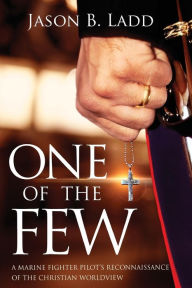
One of the Few. Jason B. Ladd. 2015. 297 pages. [Source: Review copy]

What's your worldview? Have you given it much thought? Is your worldview perhaps pieced together, here and there? How much importance do you place on it? You may be thinking, well, I don't even have a worldview. But the truth is, every single person has a way of viewing the world, of making sense of the world around them, of piecing together the way they fit into the world, of what it all means, or if life means anything at all. Whether you've given it just a little time or a LOT of your time, Jason B. Ladd's One of The Few could prove quite a beneficial read.

I think it could also prove a timely read as well. Perhaps your own worldview has been challenged, tested, or brought closer to the surface as the events of this past summer have unfolded. It is hard to watch the news and not react--physically, emotionally, and spiritually. Perhaps recent events have you asking questions, or, perhaps you're too angry or frustrated to form your questions into words and order them logically.

One of the Few is several books in one. It is, in part, a record of one man's journey from careless agnostic (agnostic by default, careless in that he didn't spend any time whatsoever thinking out these kinds of things) to Christian believer. It is, in part, an actual biography of a Marine. It is also a passionate pleading to readers. A passionate plea to parents to be involved in their children's spiritual lives, to teach and to train their children in the Christian faith. A plea to NOT be passive and dismissive when it comes to their child forming a world view. You do not want the sole influencers of your child's worldview to be the school system, the news, social media, movies, television shows, music, etc. Also, it is a passionate plea for believers to lead pure, holy lives. He tackles two issues in this one: sexual purity--the dangers of pornography--and alcohol usage--the dangers of drunkenness. He has one more plea for readers: WHETHER YOU LIKE IT OR NOT, THERE IS A SPIRITUAL WAR GOING ON, AND YOU NEED TO BE PREPARED FOR IT.

My favorite chapter is "Never Surrender." In this chapter, he discusses the Code of Conduct for the military, and, how it is relevant to spiritual warfare as well.
III. If I am captured I will continue to resist by all means available. I will make every effort to escape and aid others to escape. I will accept neither parole nor special favors from the enemy.
For the soldier, the preface is "if I am captured." For the Christian, it could read, "when I am captured," for we become prisoners when we sin…. When we are captured by sin, we must continue to resist, lest our stumble become a headlong plunge into spiritual relapse. The soldier must use all means available, but the Christian must use the only man capable: Jesus Christ. In order to escape, we must repent. In order to aid others to escape, we must fulfill the Great Commission by sharing the Gospel with everyone. We must not accept parole. Wartime captors say, "Favors and freedom I will give thee if you swear allegiance to our state, our cause, our Great Leader." (p. 250)
Other quotes:
"It is your responsibility to teach your children what is true. Would you let your child decide for themselves whether or not it is true that failing to look both ways before crossing the street can get you killed? The undeniable nature of that truth and the gravity of the consequences ensure you teach it to your children. You would never risk their safety by failing to give them that instruction." (35)
"Every Christian will have to ask a similar question: "How truly do I believe this?" The path is narrow and the journey is difficult. Your patience will be rubbed raw and your boots will be bloodied by spiritual warfare. Your feet will ache from walking up hills of conflict. Your brain will throb from worldly derision and doubt. You will wonder if you have what it takes to stay on the path and finish the hump. You will be tempted to quit." (46)


© Becky Laney of Operation Actually Read Bible
Friday, July 15, 2016

Book Review: Blessed My Whole Life Through

Blessed My Whole Life Through. Eldon Hatch. 2009. 88 pages. [Source: Gift]

Do you believe in prayer? That God listens to our prayers and does in fact answer prayer? That he answers prayers according to His Will? In this short biographical book, Eldon Hatch shares his testimony with readers. The subtitle in fact reads something like this, "a businessman thankfully recounts seven decades of answered prayer." So you can imagine that his testimony is packed with story and emotion!

Growing up, one of my favorite books was a little book called THE HAND THAT STILL INTERVENES by W.A. Spicer and Helen Spicer Menkel. I liked the stories of answered prayers; I liked seeing God in action, working in the lives of His children. I get the same sort of feeling from reading Blessed My Whole Life Through.

I think probably my favorite story is called "The Bachelor." He writes of one of his 'confirmed bachelors' who happens to meet a woman--at a sporting event, at the booth for the Fellowship of Christian Athletes. They smile. They chat a few minutes. (He's sixty; her age is not given.) And then as he's walking away, she prays: LORD, if this is the right man for me, please bring him back. God answered that prayer! He returns minutes later to ask her to dinner that night. They marry after a brief courtship.

One of the more emotional stories is "Goodbye, Mother" about his mother's dying in the hospital despite prayers for healing. At the same time he's praying for his mother to be healed, he is also praying for someone else--a stranger's loved one--he just met. The stranger was healed; his mother was not. But he saw God's will being done in both situations.

The stories are short and straight-forward. Nothing fancy or concocted. I really enjoyed reading this one.

© Becky Laney of Operation Actually Read Bible
Wednesday, July 13, 2016

Book Review: Night

Night. Elie Wiesel. Translated by Stella Rodway. Foreword by Francois Mauriac. 1958/1960. 109 pages. [Source: Bought]

I first read Night about fifteen years ago. I've been meaning to reread it ever since. It's definitely a book that is worth reading more than once. And the author's recent death made me want to read it now.

I am choosing to review it at Operation Actually Read Bible not because Night is a Christian book that affirms the Christian worldview, but because it is important, significant engaging book that Christians should read.
My edition of Night has a foreword by Francois Mauriac. I highly recommend reading it. Yes, I know it can be tempting to skip over introductions and forewords. But in this case, it is a must read. It contains gems:
It is not always the events we have been directly involved in that affect us the most. (vii)
Have we ever thought about the consequence of a horror that, though less apparent, less striking than other outrages, is yet the worst of all to those of us who have faith: the death of God in the soul of a child who suddenly discovers absolute evil? (ix)
And I, who believe that God is love, what answer could I give my young questioner, whose dark eyes still held the reflection of that angelic sadness which had appeared one day upon the face of the hanged child? What did I say to him? Did I speak of that other Jew, his brother, who may have resembled him--the Crucified, whose Cross has conquered the world? Did I affirm that the stumbling block to his faith was the cornerstone of mine, and that the conformity between the Cross and the suffering of men was in my eyes the key to that impenetrable mystery whereon the faith of his childhood had perished? Zion, however, has risen up again from the crematories and the charnel houses. The Jewish nation has been resurrected from among its thousands of dead. It is through them that it lives again. We do not know the worth of a single drop of blood, one single tear. All is grace. If the Eternal is the Eternal, the last word for each one of us belongs to Him. This is what I should have told this Jewish child. But I could only embrace him, weeping. (xi)
First sentence: They called him Moshe the Beadle, as though he had never had a surname in his life. He was a man of all work at a Hasidic synagogue. The Jews of Sighet--that little town in Transylvania where I spent my childhood--were very fond of him.

Night is nonfiction, an autobiography written by Elie Wiesel. Night covers his experiences from 1941 to 1945; it covers his loss of faith, loss of family, loss of innocence, and, perhaps even hope. Though written in prose, I venture to say that in its potency it more closely resembles poetry. There is beauty in its language, its turn of phrase. Though also a raw, vital, often ugly portrait is presented. One cannot help but be engaged with this book.

Primarily, it is the story of Elie Wiesel (a boy) and his Father. But two other characters are brought to life for readers. And I wouldn't dare review the book without mentioning them both.

The first is Moshe the Beadle. Young Elie is tutored by Moshe before the war comes and interrupts (and ends) lives.
He had noticed me one day at dusk, when I was praying.
"Why do you weep when you pray?" he asked me, as though he had known me for a long time.
"I don't know why," I answered, greatly disturbed.
The question had never entered my head. I wept because--because of something inside me that felt the need for tears. That was all I knew.
"Why do you pray?" he asked me, after a moment.
Why did I pray? A strange question. Why did I live? Why did I breathe?
"I don't know why," I said, even more disturbed and ill at ease. "I don't know why."
After that day I saw him often. He explained to me with great insistence that every question possessed a power that did not lie in the answer.
"Man raises himself toward God by the questions he asks Him," he was fond of repeating. "That is the true dialogue. Man questions God and God answers. But we don't understand His answers. We can't understand them. Because they come from the depths of the soul, and they stay there until death. You will find the true answers, Eliezer, only within yourself!"
"And why do you pray, Moshe?" I asked him.
"I pray to the God within me that He will give me the strength to ask Him the right questions."
We talked like this nearly every evening. We used to stay in the synagogue after all the faithful had left, sitting in the gloom, where a few half-burned candles still gave a flickering light.
One evening I told him how unhappy I was because I could not find a master in Sighet to instruct me in the Zohar, the cabbalistic books, the secrets of the Jewish mysticism. He smiled indulgently. After a long silence, he said:
"There are a thousand and one gates leading into the orchard of mystical truth. Every human being has his own gate. We must never make the mistake of wanting to enter the orchard by any gate but our own. To do this is dangerous for the one who enters and also for those who are already there." (2-3)
Their studies together were interrupted when Moshe, as a foreigner, was expelled from the city by Hungarian policemen. He returns, however, with a story to tell.
He told his story and that of his companions. The train full of deportees had crossed the Hungarian frontier and on Polish territory had been taken in charge by the Gestapo. There it had stopped. The Jews had to get out and climb into lorries. The lorries drove toward a forest. The Jews were made to get out. They were made to dig huge graves. And when they had finished their work, the Gestapo began theirs. Without passion, without haste, they slaughtered their prisoners. Each one had to go up to the hole and present his neck. Babies were thrown into the air and the machine gunners used them as targets. This was in the forest of Galicia, near Kolomaye. How had Moshe the Beadle escaped? Miraculously. He was wounded in the leg and taken for the dead…
Through long days and nights, he went from one Jewish house to another, telling the story of Malka, the young girl who had taken three days to die, and of Tobias, the tailor, who had begged to be killed before his sons…
…People refused not only to believe his stories, but even to listen to them.
"He's just trying to make us pity him. What an imagination he has!" they said. Or even, "Poor fellow. He's gone mad."
As for Moshe, he wept.
"Jews, listen to me. It's all I ask of you. I don't want money or pity. Only listen to me," he would cry between prayers at dusk and the evening prayers.
I did not believe him myself. I would often sit with him in the evening after the service, listening to his stories and trying my hardest to understand his grief. I felt only pity for him.
"They take me for a madman," he would whisper, and tears, like drops of wax, flowed from his eyes.
Once, I asked him this question:
"Why are you so anxious that people should believe what you say? In your place, I shouldn't care whether they believed me or not…"
He closed his eyes, as though to escape time.
"You don't understand," he said in despair. "You can't understand. I have been saved miraculously. I managed to get back here. Where did I get the strength from? I wanted to come back to Sighet to tell you the story of my death. So that you could prepare yourselves while there was still time. To live? I don't attach any importance to my life any more. I'm alone. No, I wanted to come back, and to warn you. And see how it is, no one will listen to me…" (4-5)
The second is Madame Schachter, a woman in the same train car (cattle car, I believe?) as Elie and his Father.
Madame Schachter had gone out of her mind. On the first day of the journey she had already begun to moan and to keep asking why she had been separated from her family. As time went on, her cries grew hysterical.
On the third night, while we slept, some of us sitting one against the other and some standing, a piercing cry split the silence:
"Fire! I can see a fire! I can see a fire!"
there was a moment's panic. Who was it who had cried out? It was Madame Schachter. Standing in the middle of the wagon, in the pale light from the windows, she looked like a withered tree in a cornfield. She pointed her arm toward the window, screaming:
"Look! Look at it! Fire! A terrible fire! Mercy! Oh, that fire!"
Some of the men pressed up against the bars. There was nothing there; only the darkness.
The shock of this terrible awakening stayed with us for a long time. we still trembled from it. With every groan of the wheels on the rail, we felt that an abyss was about to open beneath our bodies. Powerless to still our own anguish, we tried to console ourselves:
"She's mad, poor soul…"
Someone had put a damp cloth on her brow, to calm her, but still her screams went on:
"Fire! Fire!"
Her little boy was crying, hanging onto her skirt, trying to take hold of her hands. "It's all right, Mummy! There's nothing there…Sit down…" This shook me even more than his mother's screams had done.
Some women tried to calm her. "You'll find your husband and your sons again…in a few days…"
She continued to scream, breathless, her voice broken by sobs. "Jews, listen to me! I can see a fire! There are huge flames! It is a furnace!" (22-23)
I will share just one more quote with you. It is a powerful one, one quoted in the foreword as well.
Never shall I forget that night, the first night in camp, which has turned my life into one long night, seven times cursed and seven times sealed. Never shall I forget that smoke. Never shall I forget the little faces of the children, whose bodies I saw turned into wreaths of smoke beneath a silent blue sky. Never shall I forget those flames which consumed my faith forever. Never shall I forget that nocturnal silence which deprived me, for all eternity, of the desire to live. Never shall I forget those moments which murdered my God and my soul and turned my dreams to dust. Never shall I forget these things, even if I am condemned to live as long as God Himself. Never. (32)
The book is short, powerful, compelling, unforgettable. It captures the horror of the Holocaust. I do think it's a subject that Christians should know about and care about. Yes, one could respond to this book with theological arguments and debates. A need to set the record straight. A need to defend God and prove Wiesel was tragically wrong. Or, one could perhaps respond with tears and weeping.

What do you do with the world's sorrow? What do you do when words are hard to come by--if not impossible to come by? Prepackaged words don't seem to fit well, do they? There is a time and place for theological debate, but, in the rawness of the moment when the tears are still fresh and today and tomorrow seem impossible to face--to live through, perhaps tears are best. Even if you think you have the answers.


© Becky Laney of Operation Actually Read Bible

Friday, February 5, 2016

Book Review: I Am N

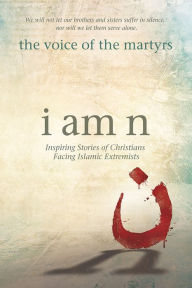
I am N: Inspiring Stories of Christians Facing Islamic Extremists. Voice of the Martyrs. 2016. David C. Cook. 304 pages. [Source: Review Copy]

I found I Am N to be a compelling read that I could easily recommend to all Jesus followers. The book shares first-hand experiences--stories--of being a Jesus follower (a Christian, "N") in predominantly Muslim countries. (Think Middle East, Africa, Asia).

Lest you think the goal of the book was to strike fear or terror into American readers about Muslims, you should know that the overall tone of the book is one of hope, love, joy, peace--not fear, not worry, not regret. Time and time and time again, Christians who have been persecuted have chosen to FORGIVE, pray for, in some cases even witness to those that have attacked/abused/persecuted them. Even in cases where someone was killed, the response has generally been one of forgiveness. Surviving members of the family saying we forgive those that did this, we forgive them, we are praying that God will forgive them, we are praying that they will be saved, we know they need Jesus, we were once like they are.

Most of the stories are of Muslims converting to Christianity and becoming Jesus followers. They 'convert' knowing that it could very well cost them everything: relationships with parents, relationships with siblings, relationships with a spouse and in-laws, relationships with their children, their jobs, their homes or apartments, their money and property, their freedom, their very lives. There are accounts of people being beaten, tortured, imprisoned, shot and left for dead, killed. And sometimes the abusers are family members or former neighbors.

Yet through these circumstances, the stories reveal the joy of being a Jesus follower. How they REJOICE to share in the sufferings of their Savior, how God is with them through everything, the comfort they get from feeling his presence. They passionately, zealously love the Lord. And they love Muslims. Just as Paul zealously desired to see all Jews come to faith in Christ, these believers long to share the good news with other Muslims. They know the risks, that the risks are HUGE. But they believe that heaven and hell are real, and, that they could never stand by and do nothing with so many lost souls in need of saving.

Perhaps that is what will be so striking to American readers--to see the great contrast between those willing to live and die for Christ and those that profess the faith and live how they want and blend completely into the culture.

The book is divided into sections: "Sacrifice," "Courage," "Joy," "Perseverance," "Forgiveness," and "Faithfulness." Between each section, readers are introduced to a handful of martyrs throughout history. The book concludes with a commitment prayer. The prayer is inspiring to say the least. And it follows the various sections of the book: sacrifice, courage, joy, perseverance, forgiveness, and faithfulness.

© Becky Laney of Operation Actually Read Bible

Wednesday, October 7, 2015

Book Review: Searching for Sunday

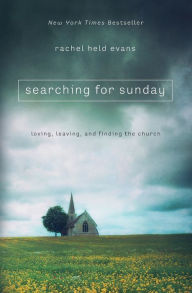
Searching for Sunday. Rachel Held Evans. 2015. Thomas Nelson. 240 pages. [Source: Review copy]

Would I recommend Rachel Held Evans' Searching for Sunday? Probably not. At least not to anyone who comes to my mind. (All the while acknowledging that reading is subjective and that what 'ministers' to one reader might offend others.)

Who isn't a good fit for Searching for Sunday? Those who hold the Bible to be the only authority, the final authority, for how one lives and what one believes. Those who believe it is the very Word of God, God's revelation of himself to us that is ever-relevant no matter the century, no matter the culture. Who is a good fit for Searching for Sunday? Those who always redefining their faith: who they are, who God is, what God says, what church is all about. Those who are perhaps looking for answers outside of the Bible.

Searching for Sunday is an angst-driven confession of almost-faith, or, faith-outgrown-and-then-redefined-according-to-her-preferences. It is one woman's story of her love-hate relationship with church. Not just with the church, but, with faith in general, with evangelical faith to be specific. It felt to me like a celebration of doubt and unbelief. Not that doubt needs to be shamed, mind you, or ignored. Plenty of the psalms, for example, reveal varying degrees of doubt. But most, if not all, then lead you past doubt to rock-solid praise. One may temporarily doubt God's goodness or his justice or his love, but, to stay doubting, to stay in a place where one holds onto doubt and celebrates it doesn't quite seem biblical. Though I'm all for being honest with God, and being honest with yourself and with others. It's the celebrating of doubt that seems out of place, if that makes sense.

It is from start to finish a personal story: her experiences, her opinions, her conclusions. One can't really "disagree" with another's experiences. One can relate or not relate, that is all. But with opinions and conclusions, one can disagree. And I did. Plenty of times. More times than I could count. I found it a frustrating and saddening read. The Bible is God's Word to us, it is his revelation of himself, his sharing who He is, and who we are, and what life is all about. The Bible is the sum of all truth, eternal, revealing a God who is the same yesterday, today, and forever. Who God is does not change according to our whims of who we want him to be, who we need him to be, our own definitions of right and wrong, fair and unfair. We are never to add or subtract from God's revelation of himself. When we disagree with the Bible, it isn't the Bible that needs to be changed to accommodate us!

Is the church perfect? Is any one church perfect? No, of course, not. The church is composed of sinners: sinners saved by grace and grace alone, who remain in varying degrees, for better or worse, sinners still. At the very least, capable of sin and capable of hurting others. Perhaps, at times, blind mainly to their own sins and quite open to "seeing" everyone else's sins. I think pride will always, always, always be a big issue. And pride doesn't have to be an out-in-the-open obvious issue. It can hide behind those embracing honesty and humility. It can hide behind great talent. It doesn't have to be smug and arrogant and in-your-face. I think pride is one sin that all Christians have in common with one another. So the church isn't perfect. I think if one judges the church--any church, all churches--by the Bible, that is one thing. It's another to judge the church by your own standards drawn more from culture than the Word of God. So, yes, there is room for improvement certainly, the church has "fallen short" in some ways. But I felt the book was more insulting the church than embracing it.

© Becky Laney of Operation Actually Read Bible