Sunday, February 10, 2013

Book Review: Comforts from Romans

Comforts From Romans: Celebrating the Gospel One Day at A Time by Elyse M. Fitzpatrick. 2013. Crossway. 160 pages.

I love the concept behind Elyse Fitzpatrick's newest book, Comforts from Romans. As Christians, we need the gospel every day. It is wise to preach the gospel to ourselves every single day. This devotional book helps reminds believers of the gospel as it focuses on the first eight chapters of the book of Romans. There is such richness--profoundness--in Romans; there is plenty of goodness to cover all thirty-two days in this devotional. It does just focus on the first eight chapters, it doesn't cover the entire book--for better or worse. (I wouldn't mind devotional coverage of chapter twelve. It is SO rich. One could ponder on its layers for a good long while.) 

I would definitely recommend this one. And I would definitely hope that it inspires you to preach the gospel to yourself every day! My February project is reading Romans thirty times, and it is AMAZING. I definitely agree with the Luther quote below!!! 

From the introduction: 
Martin Luther called the book of Romans, "the chief part of the New Testament and the very purest Gospel, and is worthy not only that every Christian should know it word for word, by heart, but occupy himself with it every day, as the daily bread of the soul. It can never be read or pondered too much, and the more it is dealt with the more precious it becomes, and the better it tastes."
From Day 4
On any given day, what thoughts float through your mind about who you are and what God thinks of you? Do you ever think, "I hope that I obey today so that God will love me"? Perhaps you don't say those exact words; maybe what you feel is something more akin to an uneasy sense that the Lord is just a tad irritated with you and waiting for an opportunity to set you straight. Yes? You're not alone. As I've spoken to Christians around the country--and observed the workings of my own heart--it seems that rest in God's absolute love and welcome doesn't come naturally to us. It's interesting that Paul introduces his masterpiece on the gospel with this thought: "You belong to Jesus Christ. You are loved by God. You are saints." (27)
From Day 6
You see, salvation is by works after all, just not our works. Salvation is by the works of Jesus Christ, who was patient in well-doing and earned "glory and honor and immortality," "eternal life," and "peace" for us. For thirty-three years he was perfectly patient in well-doing, earning a perfect record for us. Then, on Calvary he received the "wrath and fury" and "tribulation and distress" we deserve. He died in our place, as one who was "self-seeking" and did not "obey the truth" but was rather "unrighteous" and "evil." He received in his person all God's wrath and fury for all our sin and wickedness. He died the death we deserve at the hands of the Father, who loves him and would have delighted in bestowing upon him the glory, honory, and immortality he had earned. (37)
From Day 7
He approves of you because you are covered with the righteousness of the beloved Son with whom he is well pleased. You please him. His commendation, welcome, acceptance--yes, even his praise--are yours! Is that enough? Pray that it will be as true for you today as it already is for him. (42)
From Day 29
Jesus Christ is our propitiation. What propitiation means is to make an atoning sacrifice for another. Jesus is our wrath bearer. In his person he received the entire weight of all God's wrath for all our sin. In three hours he received all the wrath we would have knwon had we spent an eternity in hell. All of God's wrath for all of our sin--not just the sin that we committed before we came to Christ, not just the sin that we have committed since our conversion, or not even just the sins we've committed today. He received God's wrath for the sins we will commit tomorrow and through all our tomorrows until we finally die. He paid for all our sin. We will never be recepients of God's wrath and condemnation because he's already borne it all. If Jesus bore all of God's wrath for all of your sin, how much wrath does God have left for you? The answer is none. Go ahead and believe that. Say it out loud: "God has no wrath left for me!" Believe it. Jesus Christ has fully, irrevocably, unequivocally, and freely granted you freedom from all the wrath you deserve. (131)

© Becky Laney of Operation Actually Read Bible

Saturday, February 9, 2013

Week in Review: February 3-9

This week I read:

ESV

  • Romans (6)

NKJV

  • Romans

NASB

  • Romans 

NLT

  • Romans

TMB

  • Exodus 5-8
  • 1 Samuel 1-7
  • Psalms 42-89
  • Jeremiah 7-52
  • Lamentations
  • Nahum
  • Matthew 21-28
  • Mark
  • Luke 1-10
  • 2 Corinthians
  • Galatians
  • Ephesians


© Becky Laney of Operation Actually Read Bible

Recommendations for Lent

Some Christians observe Lent, perhaps observing it very traditionally. I choose to celebrate "observe" Lent not by giving up anything, not by keeping strict rules, but by seeking greater intimacy with Jesus Christ. I choose to listen to music that will direct and redirect me to Christ, songs that sing of Christ's life, Christ's death, Christ's resurrection, Christ's sacrificial, substitutionary, atoning work, songs that highlight God's great kindness and mercy in showing grace to sinners. I choose to read books that focus on Christ, on the gospel, on who God is and what God has done. Above all, I choose to dedicate myself to reading more in His Word. Reading the Bible is always, always important, always essential. But to dedicate these weeks to an intense reading of His Word, well, it's something. Trust me.

I recommend The Biggest Question DVD (Kirk Cameron, RW Glenn, Todd Friel). It's a great evangelism tool focusing on the WHY of the cross. One can know that Christ died, know vaguely the anguish and suffering involved, but still fail to see the WHY of it and how that why applies to them, can apply to them personally. Why did Jesus have to die on the cross? God HATES sin. God is just and holy. Sin is offensive, repulsive, ugly. It has to be dealt with. God can't allow sin to go unpunished. It's a BIG deal to God no matter how little we consider it to be, no matter how we treat it dismissively. But. God LOVES sinners. He loves really bad sinners. He didn't die for those who consider themselves good and righteous. He died for wretched, wicked sinners, those who have broken the law, those who are weighed down with guilt and shame. This is a video that deals with salvation issues, and defines key terms like sin, righteousness, gospel, justification, sanctification, repentance, imputation, etc.

Another DVD recommendation is The Gospel of John. I LOVE, LOVE, LOVE this film adaptation of the Gospel of John. Readers are treated to the gospel in its entirety: word by word. And it is beautifully and wonderfully done. I can't recommend this one enough.

Here are a few praise and worship CDs I'd recommend:


Here's a new book I'm excited about:

One Perfect Life: The Complete Story of the Lord Jesus by John MacArthur, New King James translation. Here's the publisher's description:
In One Perfect Life, Dr. John MacArthur shares with us the complete story of the Eternal Christ from Genesis to Revelation. Using Matthew as the base text, Dr. MacArthur blends the gospels and other biblical material about Jesus into one continuous story that will help you better understand Scripture and grow stronger in your faith. No other harmony of the Gospels includes such extensive study notes to help you unpack the meaning of each verse. 
And now for the book (and Bible) recommendations that I am familiar with:


© Becky Laney of Operation Actually Read Bible

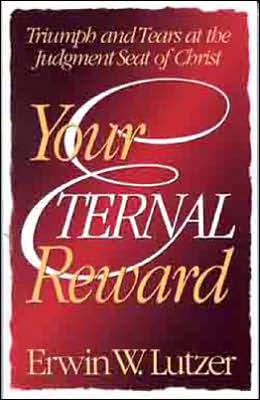
Book Review: Your Eternal Reward


Your Eternal Reward. Erwin Lutzer. 1998. Moody Publishers. 171 pages.


I am so thankful that this was not my first introduction to Erwin Lutzer, or I would have been scared away from some great books. I found myself questioning--struggling to accept--Lutzer's interpretations and arguments. For Your Eternal Reward is about as opposite from Jesus + Nothing = Everything as a book can possibly get. Though Lutzer does point out in several places that he is NOT talking about salvation itself OR even entry into heaven, what he seems to be advocating seems to conflict with the doctrine of grace. This little book is all about how Christians will be judged for every single act, every single word, every single thought since their regeneration. He points out that we won't be held responsible for our sins before coming to faith, since those sins are forgiven and forgotten by God. That while Christ's work on the cross covered our sins BEFORE conversion, that our sins after conversion will have eternal consequences, consequences that won't necessarily keep us completely out of heaven, but will keep us from being heirs in the kingdom, keep us from inheriting any riches, keep us from reigning with Christ, keep us from the glories of heaven. Part of Lutzer's argument for this doctrine is taken from one of Christ's parables: the parable of the talents (Matthew 25:14-30, Luke 19:12-27). But his main scripture text is 2 Corinthians 5:10. 

If grace has a role in this book--outside of his few comments about how this book is not talking about salvation in general--I didn't find it. Nor was there mention of Christ's righteousness being sufficient. No mention of imputation--how believers sins are imputed to Christ and were paid for IN FULL on the cross, after all Jesus said IT IS FINISHED, and how Christ's righteousness is imputed to believers. How Christ's perfect, completely satisfying life of obedience is reckoned to believers. That justification means two things: just as if I've never sinned AND just as if I've always obeyed. I also did not find Lutzer discussing the doctrine of sanctification. What the book is all about is works, works, works,  we'll be judged for our works good and evil. That some Christians will have an abundance of rewards that they've earned, while others won't. Lutzer stressing of course that we will be praising God for being so just in his judgment of our lives. We'll agree with his just judgment even while we are crushed by his disappointment in us.  
In order to attend the marriage supper of the Lamb, we need two different suits of clothes. The first is the righteousness of Christ, the gift which admits us into heaven. This is a free set of clothes, the garments by which we are ushered into heaven's courts. (2 Corinthians 5:21). But the second suit of clothes is a wedding garment for the marriage supper. This suit is not the righteousness of Christ, but rather the deeds we have done for Christ on earth. Christ has made us ready for heaven; we must make ourselves ready for the wedding feast. We must distinguish between what only God can do and that which we can have a part in doing.  (56)
I find this interpretation deeply troubling to say the least. 

Here's another example:
If we think of heaven as a theme park, we must emphasize that the entrance ticket is free. Christ must be received by faith; we are saved "not of works, lest any many should boast" (Ephesians 2:9). But if we want to go on some of the rides, if we want to be rewarded and not embarrassed at the sadness we cause Christ, we must be faithful on earth. The entrance is free, but some additional benefits are based on merit. (60)
And again,
To possess eternal life you simply need faith in Christ; to truly inherit it, you need faith and obedience. If we keep in mind that to "inherit eternal life," or to "inherit" the kingdom, is an extra reward for faithful service, we will read many passages of Scripture differently. (69)
I agree that you might read many passages of Scripture differently if you interpret them through this lens of works-righteousness, but, that doesn't mean necessarily that you reading them that way is the right way. 

I think this book could prove dangerous IF it leads a person to focus on themselves, to focus on mistakes past and present, to daily tally up their works good and bad, to become discouraged and overwhelmed with the impossibility of the task ahead, to focus on riches, rewards, gifts, blessings--what can I get from God--instead of focusing on God, to question their own motives. So many passages in this book could cause one to either doubt OR fear. So many passages strip away the promises to believers as revealed in the Word of God. 

I can't help thinking of what Tullian Tchividjian writes in Jesus + Nothing = Everything:
I used to think that growing as a Christian meant I had to somehow go out and obtain the qualities and attitudes I was lacking. To really mature, I needed to find a way to get more joy, more patience, more faithfulness, and so on. Then I came to the shattering realization that this isn't what the Bible teaches, and it isn't the gospel. What the Bible teaches is that we mature as we come to a greater realization of what we already have in Christ. The gospel, in fact, transforms us precisely because it's not itself a message about our internal transformation but about Christ's external substitution. We desperately need an advocate, mediator, and friend. But what we need most is a substitute--someone who has done for us and secured for us what we could never do and secure for ourselves. The hard work of Christian growth, therefore, is to think less of ourselves and our performance and more of Jesus and his performance for us. Ironically, when we focus mostly on our need to get better, we actually get worse. We become neurotic and self-absorbed. Preoccupation with our effort instead of with God's effort for us makes us increasingly self-centered and morbidly introspective. (94-95)
NOTE: The hard work of Christian growth, therefore, is to think less of ourselves and our performance and more of Jesus and his performance for us. Ironically, when we focus mostly on our need to get better, we actually get worse. We become neurotic and self-absorbed. Preoccupation with our effort instead of with God's effort for us makes us increasingly self-centered and morbidly introspective.

I think that exactly sums up the dangers of a book like Your Eternal Reward. As J.C. Ryle wrote, "Expect little from self--but much from Christ. Look more to Jesus--and less to self."

More quotes from Jesus + Nothing = Everything: 
Our natural tendency is to focus on ourselves--on our obedience (or lack thereof), on our performance (good or bad), on our holiness--instead of on Christ and his obedience, his performance, and his holiness for us. We all possess a natural proclivity to turn God's good news announcement that we've been set free into a narcissistic program of self-improvement. When we do this, we fail to see the needs of our neighbors and serve them. After all, as Martin Luther said, "God doesn't need our good works, but our neighbor does." My greatest need and yours is to look at Christ more than we look at ourselves. (123)
Real slavery is living your life trying to gain favor; real freedom is knowing you already have favor--the difference is huge. The gospel frees us to work and live from the secure basis of faith, not fear. (141)
The hard work is not what you think it is--your personal improvement and moral progress. The hard work is washing your hands of you and resting in Christ's finished work for you, which will inevitably produce personal improvement and moral progress. Progress in obedience happens when our hearts realize that God's love for us does not depend on our progress in obedience. Martin Luther had a point when he said, "It is not imitation that makes sons; it is sonship that makes imitators." (175)

© Becky Laney of Operation Actually Read Bible

Friday, February 8, 2013

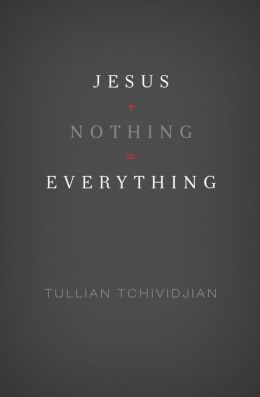
Book Review: Jesus +Nothing = Everything (2011)


 Jesus + Nothing = Everything. Tullian Tchividjian. 2011. Crossway. 220 pages.

Jesus + Nothing = Everything is an amazing book by Tullian Tchividjian. This is my second time to read this one, and I still love it and would recommend it to ANYONE. It's an essential book about the gospel, the gospel of grace. It's a message-driven book with an important--an essential--message for every believer.

In the first chapter, Tchividjian hints at how embracing the grace of the gospel has freed him and changed his life dramatically:
Rediscovering the gospel enabled me to see that:
because Jesus was strong for me, I was free to be weak;
because Jesus won for me, I was free to lose;
because Jesus was someone, I was free to be no one;
because Jesus was extraordinary, I was free to be ordinary;
because Jesus succeeded for me, I was free to fail. (24)
(His struggle was with wanting--needing--approval from others in order to feel happy, successful, loved.) Your struggle might be in another area, of course, but there's something magnificent about the message itself that could change your life.

Favorite quotes:
Jesus plus X. The formula looks so innocent and harmless, even commendable (we're helping Jesus out!) But no such equation can ever lead anywhere good. Ultimately there can be only one equation--Jesus plus nothing. Anything we try to add to Christ ultimately results in what Michael Horton calls "Christless Christianity." John Calvin famously said that all our hearts are idol-making factories. He understood how all of us are drawn down this idolatry track every day. Christian people and non-Christian people, in-church people and out-of-church people. We habitually look to something or someone smaller than Jesus for the things we crave and need. And none of it is ever large enough to fill the void. Idolatry is simply trying to build our identity on something besides God. (40)
The biggest lie about grace that Satan wants the church to buy is the idea that it's dangerous and therefore needs to be kept in check. By believing that lie, we not only prove we don't understand grace, but we violate gospel advancement in our lives and in the church by perpetuating our own slavery. The truth is, disobedience happens not when we think too much of grace, but when we think too little of it. (51)
To reach people in our day, the gospel will have to be distinguished from moralism, because moralism is what most people outside the church think Christianity is all about--rules and standards and behavior and cleaning yourself up. Millions of people, both inside and outside the church, believe that the essential message of Christianity is, "If you behave, then you belong." (53)
I used to think that growing as a Christian meant I had to somehow go out and obtain the qualities and attitudes I was lacking. To really mature, I needed to find a way to get more joy, more patience, more faithfulness, and so on. Then I came to the shattering realization that this isn't what the Bible teaches, and it isn't the gospel. What the Bible teaches is that we mature as we come to a greater realization of what we already have in Christ. The gospel, in fact, transforms us precisely because it's not itself a message about our internal transformation but about Christ's external substitution. We desperately need an advocate, mediator, and friend. But what we need most is a substitute--someone who has done for us and secured for us what we could never do and secure for ourselves. The hard work of Christian growth, therefore, is to think less of ourselves and our performance and more of Jesus and his performance for us. Ironically, when we focus mostly on our need to get better, we actually get worse. We become neurotic and self-absorbed. Preoccupation with our effort instead of with God's effort for us makes us increasingly self-centered and morbidly introspective. (94-95)
Think of what Paul tells us in Philippians 2:12: "Work out your own salvation with fear and trembling." We've got work to do--but what exactly is it? Get better? Try harder? Pray more? Get more involved in church? Read the Bible longer? What precisely is Paul exhorting us to do? He goes on to explain, "For it is God who works in you, both to will and to work for his good pleasure." (Philippians 2:13). God works his work in you, which is the work already accomplished by Christ. Our hard work, therefore, means coming to a greater understanding of his work. And so it is that we move further into the gospel, into a deeper, bigger, brighter understanding of all that God has already achieved for us in Christ. By continuing to place your trust in Christ's finished work, and by learning to do this more and more, all that he's secured for sinners--all that is your possession already in fact--now becomes increasingly yours in experience. You keep savoring the riches of God's pardon and power as your heritage forever in Christ. (96)
By daily preaching this gospel to ourselves, we can more readily see and confront all the idols in our lives--including those we may not be quite as aware of. We will be able to recognize that every temptation to sin is a temptation to not believe the gospel... when we succumb to temptation, we are failing to believe in that moment that everything we need, in Christ we already have. (96)
Expanding on a famous line from William Temple in the nineteenth century, I like to remind myself and others that the only thing you contribute to your salvation and to your sanctification is the sin that makes them necessary. (103)
Sanctification consists of the daily realization that in Christ we have died and in Christ we have been raised. Life change happens as the heart daily grasps death and life. Daily reformation is the fruit of daily resurrection. (117)
Martin Luther noted that "the sin underneath all our sins is the lie of the serpent that we cannot trust the love and grace of Christ and that we must take matters into our own hands." (118)
Perhaps the biggest difference between the practical effect of sin and the practical effect of the gospel is that sin turns us inward and the gospel turns us outward. The gospel causes us to look up and out, away from ourselves. It turns our gaze upward to God and outward to others, both to those inside the church and to those outside of it. The gospel causes us to love God and to love others, which of course is how Jesus summed up the entirety of the law. (122)
Our natural tendency is to focus on ourselves--on our obedience (or lack thereof), on our performance (good or bad), on our holiness--instead of on Christ and his obedience, his performance, and his holiness for us. We all possess a natural proclivity to turn God's good news announcement that we've been set free into a narcissistic program of self-improvement. When we do this, we fail to see the needs of our neighbors and serve them. After all, as Martin Luther said, "God doesn't need our good works, but our neighbor does." My greatest need and yours is to look at Christ more than we look at ourselves. (123)
The only antidote to sin is the gospel--always has been, always will be. And since Christians remain sinners even after they've converted, the gospel must be the medicine a Christian takes every day. We can think of it this way: since we never leave off sinning, we can never leave off the gospel. (129)
The gospel doesn't just free you from what other people think about you; it frees you from what you think about yourself. (133)
The determining factor in my relationship to God is not my past or my present, but Christ's past and his present. (139)
Real slavery is living your life trying to gain favor; real freedom is knowing you already have favor--the difference is huge. The gospel frees us to work and live from the secure basis of faith, not fear. (141)
Jesus fulfilled all of God's conditions on our behalf so that our relationship with God could be unconditional. Christianity is the only faith system where God both makes the demands and meets them. (143)
It's much more theologically accurate to say that Christ himself is the center of the gospel. He lived the life we couldn't live and died the death we should have died. And this happens all of grace. (144)
We fail in our doing because we fail to grasp first what Christ has already done. (156)
The hard work is not what you think it is--your personal improvement and moral progress. The hard work is washing your hands of you and resting in Christ's finished work for you, which will inevitably produce personal improvement and moral progress. Progress in obedience happens when our hearts realize that God's love for us does not depend on our progress in obedience. Martin Luther had a point when he said, "It is not imitation that makes sons; it is sonship that makes imitators." (175)
© Becky Laney of Operation Actually Read Bible
Book Review: Bride in the Bargain

Bride in the Bargain. Deeanne Gist. 2009. Bethany House. 365 pages.

I really LOVED, LOVED, LOVED this Deanne Gist novel. Joe Denton, our hero, needs a wife to keep all of his land. He'll lose half of his land, if he can't produce either a living wife or a death certificate from his first wife. Although skeptic, he agrees to buy an Eastern mail-order bride from Asa Mercer. He pays his money and signs a contract. A year later and he's still waiting, but hopeful. When "his" bride does arrive, he's shocked to learn that she signed a very different contract. She was not told by Mercer that she would be getting a husband! No, she was promised an employer. She's expecting to cook for a lumber camp, certainly, but as an employee. Her name is Anna Ivey, and her past has been less than ideal. She blames herself--been taught to blame herself--for the death of everyone close to her: her brother, her mother, her father. Since she's unwilling to marry him but has no choice really about working for him, he has several months to woo her. The more time he spends with her, the more he realizes how much he loves her...loves her for herself...not because she's a great cook, not because their marriage would save his lumber business, but because he LOVES her and wants to spend his life with her. Can he convince her?

Set in Washington Territory, 1860s

© Becky Laney of Operation Actually Read Bible
Thursday, February 7, 2013

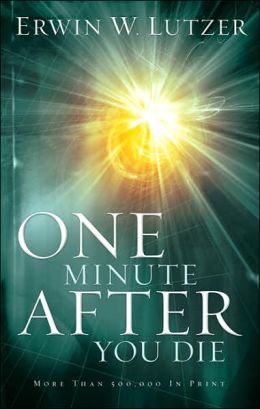
Book Review: One Minute After You Die

One Minute After You Die. Erwin Lutzer. 1997. Moody Publishers. 192 pages.

One Minute After You Die is a companion book to Erwin Lutzer's How You Can Be Sure You Will Spend Eternity with God. It is a great little book on the realities of heaven and hell. The chapter titles should give you a hint of what to expect from this one: "Attempting to Peek Behind the Curtain," "The Descent Into Gloom," "The Ascent Into Glory," "Welcome! You Have Arrived," "Living in the New Jerusalem," "When Hades Is Thrown Into Hell," "When God Opens the Curtain for You," and "Knowing Today Where You Will Be Tomorrow." And the stated purpose is "to study what the Bible has to say about the life beyond. Many who read it will be comforted; others will be disturbed; and everyone, I hope, will be instructed" (12). 

Favorite quotes:
The fact that we don't view death with optimism just might be because we think of death as taking us from our home rather than bringing us to our home. (56)
To die is to go home to heaven; to live is to exist in a foreign country on earth. Someday we'll understand this distinction much better; for now the future is ours by faith. (56)
If we want to prepare for our final destination, we should begin to worship God here on earth. Our arrival in heaven will only be a continuation of what we have already begun. Praise is the language of heaven and the language of the faithful on earth. (88)
Entering hell is easy enough. All that one has to do is neglect Christ, the only one who can save us. (115)

© Becky Laney of Operation Actually Read Bible