A Home for My Heart. Anne Mateer. 2013. Bethany House. 352 pages. [Source: Review copy]
A Home For My Heart by Anne Mateer reminded me--purely in a good way--of some of my favorite episodes of Little House on The Prairie--"He Loves Me, He Loves Me Not." (It is not that these episodes are perfectly perfect. Almanzo's decision making at the start is problematic at best. But his sacrificial love, his working extra hard to make money to help Laura and Mary out so they can open the school for the blind more than makes up for it. Not to mention all the lovely Nellie and Percival bits.) Sadie and Blaine were made for each other. They are perfectly in love and the future only looks bright. The two are waiting to marry until he has enough that he can provide for her. He would like to own his own land, for example. She's content to wait for him and work as an assistant at the orphanage. But. When she has the opportunity to become the matron of the orphanage, she accepts eagerly. A bigger paycheck! She'll even be able to help Blaine out financially if he'll let her contribute money to buy land. The problem? At the exact time she's signing a contract for the new (better) job, he's buying land and taking on more responsibility (a mortgage, I believe???). He wants her to be his wife now. She only thinks its fair that she honors her contract for a year. After all, the children are already losing one matron (who's getting married), for her to go now too will leave the orphanage in a mess. They'd have to hire two new people. So when he gives her a now or never ultimatum, well, she chooses the children. She loves him still. She couldn't help but love him still. He's her everything. But. If he's going to be stubborn about it and stop being charitable with his produce--choosing to sell it instead of donate it--well, she'll just have to find a way to live without him.
The orphanage is in big, big trouble. Financially the orphanage is overwhelmed. There are not enough contributions coming in to meet all the bills and do everything they need to do. So Sadie faces another challenge. The board has given her a specific deadline, she must raise an entire year's worth of funds before a certain date if she wants to stay open. Oh. And one more thing. She is forbidden to tell anyone that the orphanage is in danger of closing. If she could speak honestly in the community about how desperate the situation is, perhaps, she could raise funds. But. Without freedom to speak her mind, her powers to persuade seem to fall a bit short. It doesn't help that she's new and a bit inexperienced, a bit awkward.
Sadie is struggling with a lot in A Home For My Heart. Her story was definitely an entertaining read.
© Becky Laney of Operation Actually Read Bible
Showing posts with label books reviewed at Operation Actually in 2013. Show all posts
Monday, December 23, 2013
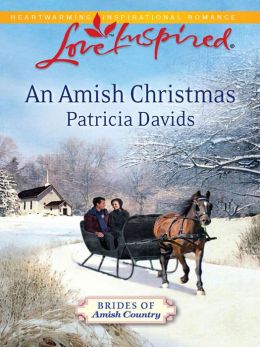
Book Review: An Amish Christmas
An Amish Christmas. (Brides of Amish Country). Patricia Davids. 2010. Steeple Hill Love Inspired. 224 pages. [Source: Book I Bought]
Amish fiction isn't exactly a genre I seek out, but, I'd heard such wonderful things about Patricia Davids, that I decided to risk it. I really found An Amish Christmas to be a delightful read!
Karen Imhoff is taking her younger siblings to school one morning when they see an unconscious man on the side of the road. He'd been beaten and robbed. She stops and helps him. He doesn't remember a thing, well, he remember Karen helping him, he remembers her face. But he is destined to remain "John Doe" for the duration.
Anxious for clues and a bit restless, John Doe comes to the Amish community. He boards with the Imhoff family. He listens; he observes; he reflects. Who is he? Why was he here in Amish country? Does he have a wife? a girlfriend? Why hasn't anyone reported him missing? Was he from around here? Was he just traveling through? Was he beaten for a reason, or, was the crime random? He wants answers and peace of mind. Peace of mind comes easier than answers!
This Englisher slowly but surely comes to embrace the Amish community. And he finds himself falling madly in love with Karen, his rescuer. But can this romance have a happily ever after?
© Becky Laney of Operation Actually Read Bible
Amish fiction isn't exactly a genre I seek out, but, I'd heard such wonderful things about Patricia Davids, that I decided to risk it. I really found An Amish Christmas to be a delightful read!
Karen Imhoff is taking her younger siblings to school one morning when they see an unconscious man on the side of the road. He'd been beaten and robbed. She stops and helps him. He doesn't remember a thing, well, he remember Karen helping him, he remembers her face. But he is destined to remain "John Doe" for the duration.
Anxious for clues and a bit restless, John Doe comes to the Amish community. He boards with the Imhoff family. He listens; he observes; he reflects. Who is he? Why was he here in Amish country? Does he have a wife? a girlfriend? Why hasn't anyone reported him missing? Was he from around here? Was he just traveling through? Was he beaten for a reason, or, was the crime random? He wants answers and peace of mind. Peace of mind comes easier than answers!
This Englisher slowly but surely comes to embrace the Amish community. And he finds himself falling madly in love with Karen, his rescuer. But can this romance have a happily ever after?
© Becky Laney of Operation Actually Read Bible
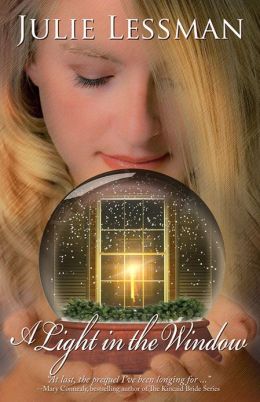
Book Review: A Light in the Window
A Light in the Window. Julie Lessman. 2013. Ten Talents Press. [Source: Book I Bought]
A Light in the Window is a prequel to Julie Lessman's A Passion Most Pure; it is the parents love story, Patrick and Marcy. Pride and prejudice both abound in this historical romance novel.
Patrick and Sam are two best friends "in love" with the same girl. Marcy knows that both men have a horrid reputation; they are 'bad boys' that may attend church once a week, but, live however they please the rest of the time. Patrick she thinks is especially good for nothing because of a scandal involving his father. Sam, however, receives a bit more grace because on the surface his family life is absolutely perfect. And Marcy should know, she's spent enough time with them. Sam's sister is her best, best friend.
Marcy treats Patrick horribly. She's rude and outspoken. Oh, she apologizes now and then for speaking her mind and being honest with her perceptions. And, in time, her perceptions change and she's just as honest with her new opinions as she was with her old. But Marcy is definitely prejudiced against a certain Patrick.
Sam. Can I think of anything good to say about Sam?! It would be tough. I definitely heard LIGHTNING STRIKING AGAIN AND AGAIN AND AGAIN.
© Becky Laney of Operation Actually Read Bible
A Light in the Window is a prequel to Julie Lessman's A Passion Most Pure; it is the parents love story, Patrick and Marcy. Pride and prejudice both abound in this historical romance novel.
Patrick and Sam are two best friends "in love" with the same girl. Marcy knows that both men have a horrid reputation; they are 'bad boys' that may attend church once a week, but, live however they please the rest of the time. Patrick she thinks is especially good for nothing because of a scandal involving his father. Sam, however, receives a bit more grace because on the surface his family life is absolutely perfect. And Marcy should know, she's spent enough time with them. Sam's sister is her best, best friend.
Marcy treats Patrick horribly. She's rude and outspoken. Oh, she apologizes now and then for speaking her mind and being honest with her perceptions. And, in time, her perceptions change and she's just as honest with her new opinions as she was with her old. But Marcy is definitely prejudiced against a certain Patrick.
Sam. Can I think of anything good to say about Sam?! It would be tough. I definitely heard LIGHTNING STRIKING AGAIN AND AGAIN AND AGAIN.
“Of … l-like m-mind?” He reached to fondle a loose strand of her hair, the flick of his gaze to her mouth stealing her air. “A woman I can love who’s willing to wait until I’m ready to say, ‘I do.’” Her heart beat faster than a thousand hummingbirds splashing in the sugar water of her mother’s feeder in the garden. Until he’s ready to say I do? “Are you, Marcy?” he whispered, thumb tracing her jaw. “Am I what?” Her voice cracked. “The kind of woman who’s willing to wait?” Her lips trembled as a lump dipped in her throat. “I don’t understand, Sam—what do you mean?” “I mean you’re the kind of girl I hope to marry …” he said softly, drawing her close with the firm press of his hand at the small of her back. “Someday. But I need to know—if you and I are meant for each other, are you willing to give me time? Will the babies of St. Mary’s be enough until I can put a ring on your hand?”
She jerked away, so stunned by his declaration, she could barely breathe. “Are you … proposing, Sam? Is that what you’re saying? Because this is no laughing matter.” “I’m not laughing,” he whispered, caressing the side of her face with the palm of his hand, not a trace of humor to be found in his eyes. “You are the type of woman I want, Marceline—eventually. Both as my wife …” His gaze dropped to her lips while his fingers slowly twined in the loose hairs at the back of her neck, “… and in my bed.” Heat braised her cheeks, both at the boldness of his remark and the idea that marriage was even on the mind of a man like Sam O’Rourke. “Are you … serious?” “I am,” he said softly. “If we’re right for each other and you’re willing to wait, that is. So, I’m asking you again—are you? Willing to commit to me without a ring or engagement? A courtship of sorts, that may be years in the making?”
“I want you, Marcy, and I’m asking you again—are you willing to wait, to allow me to court you until we’re both ready to marry?” She stood paralyzed—afraid to say yes, afraid to say no … “Say, yes, Marceline ...” Cupping her face, his eyes sheathed close while he nuzzled her lips. The soft moan that left her throat was pure surrender. “Yes …”Marcy is the last person to see the truth that is so evident to everyone else in the community. Sam and Patrick. Only one of them is worthy of her. One is a big pretender.
© Becky Laney of Operation Actually Read Bible
Sunday, December 15, 2013
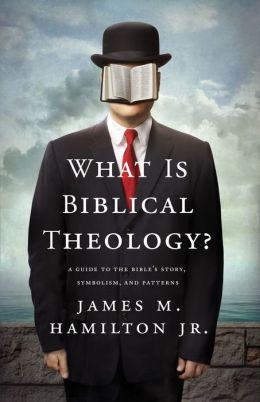
Book Review: What Is Biblical Theology
What is Biblical Theology: A Guide to the Bible's Story, Symbolism, and Patterns. James M. Hamilton Jr. 2013. Crossway. 128 pages. [Source: Review Copy]
When I hear the term, "biblical theology," I think of it in terms of meaning "theology that is biblical." That is doctrines which make up a person's theology being biblical, biblically sound, finding their source in the Bible, clearly for the most part with perhaps a little wiggle room here and there, or, a bit more wiggle room on the non-essentials. But. That is not how the phrase is used in this one. In fact, he seems a bit annoyed with those who interpret the phrase differently*. He interprets the phrase to mean the theology held by the authors of the Bible. That is he means the theology of Peter, Paul, John, Luke, James, Isaiah, Moses, etc.
To be precise,
The author has arranged the book in three sections: "The Bible's Big Story," which sums up the narrative, the plot, and the mystery; "The Bible's Symbolic Universe," which may be too technical for some readers, but delightful for others--the focus is on explaining the concept of symbols, imagery, typology, and patterns; and "The Bible's Love Story," which focuses on the church. A background in literature might come in useful when reading this one. He does try to bridge the gap however for his readers. But he likes using words that might bring a bad association to some readers. I definitely didn't appreciate the discussion of A Separate Peace a book that only brings back horrid memories.
I think hidden beneath all the scholarly-talk, all the fancy phrases, the message is good and sound. Essentially the message of this one is: read your Bible; read it often, read it well. As I was reading this one, I couldn't help thinking about the Gospel Transformation Bible. I finished this one days ago, and it is such a wonderful Bible. The goals seem to be similar. The Gospel Transformation Bible has commentary pointing readers to see the big picture in passages and verses. The big picture, of course, being Jesus Christ.
Here is the purpose of the ESV Gospel Transformation Bible:
------
© Becky Laney of Operation Actually Read Bible
When I hear the term, "biblical theology," I think of it in terms of meaning "theology that is biblical." That is doctrines which make up a person's theology being biblical, biblically sound, finding their source in the Bible, clearly for the most part with perhaps a little wiggle room here and there, or, a bit more wiggle room on the non-essentials. But. That is not how the phrase is used in this one. In fact, he seems a bit annoyed with those who interpret the phrase differently*. He interprets the phrase to mean the theology held by the authors of the Bible. That is he means the theology of Peter, Paul, John, Luke, James, Isaiah, Moses, etc.
To be precise,
The phrase biblical theology is used here to refer to the interpretive perspective of the biblical authors. What is an "interpretative perspective"? It's the framework of assumptions and presuppositions, associations and identifications, truths and symbols that are taken for granted as an author or speaker describes the world and the events that take place in it. What do the biblical authors use this perspective to interpret? First, the biblical authors have interpreted earlier Scripture, or in the case of the very first author on record (Moses), accounts of God's words and deeds that were passed down to him. Second, they interpreted world history from creation to consummation. And third, they interpreted the events and statements that they describe….
To summarize, by the phrase biblical theology I mean the interpretive perspective reflected in the way the biblical authors have presented their understanding of earlier Scripture, redemptive history, and the events they are describing, recounting, celebrating, or addressing in narratives, poems, proverbs, letters, and apocalypses. (15-16)
If we can see what the biblical authors assumed about story, symbol, and church, we will glimpse the world as they saw it. To catch a glimpse of the world as they saw it is to see the real world. (19)I don't have a problem exactly with his definition. It's just that I think it's a bit more complicated (and by complicated I might mean merely scholarly) than absolutely necessary. I think it could simply be stated as seeking to know and understand what the text meant to the writer(s) and the original audience(s) and letting that inform and instruct your own theology. Drawing your doctrines, your "theology" from the doctrines held by the writers of the Bible. In other words: read the Bible, believe the Bible means what it says, live what you believe.
The author has arranged the book in three sections: "The Bible's Big Story," which sums up the narrative, the plot, and the mystery; "The Bible's Symbolic Universe," which may be too technical for some readers, but delightful for others--the focus is on explaining the concept of symbols, imagery, typology, and patterns; and "The Bible's Love Story," which focuses on the church. A background in literature might come in useful when reading this one. He does try to bridge the gap however for his readers. But he likes using words that might bring a bad association to some readers. I definitely didn't appreciate the discussion of A Separate Peace a book that only brings back horrid memories.
What's a narrative made of? Narratives have a setting, characterization, and plot. Plots are built out of episodes and conflict, and if successful they communicate themes. (27)My favorite chapter was probably the first chapter, "A Better World Breaks Through."
What we think and how we live is largely determined by the larger story in which we interpret our lives. Does your story enable you to look death in the face? Does your story give you a hope that goes beyond the grave? (12)
The world does have a true story. The Bible tells it. This book is about the Bible's big story, and it's about how we become people who live in that story. To do biblical theology is to think about the whole story of the Bible. We want to understand the organic development of the Bible's teaching so that we are interpreting particular parts of the story in light of the whole. As an acorn grows into an oak tree, Genesis 3:15 grows into the good news of Jesus Christ. One of the primary aims of biblical theology is to understand and embrace the worldview of the biblical authors. In order to do this, we have to know the story they take for granted, the connections they see between the events in the story, and the ways they read later parts of the story by the light that emanates from its earlier parts. (12)The book is certainly informative and attempts to clearly present "the big picture" of the Bible to readers. But I'm not sure the text was as clear and concise as it could have been. Has reading the Big Picture Story Bible by David Helm spoiled me for reading more messy presentations for adults? Perhaps! Maybe authors are so concerned about not coming across as condescending or childish that they don't realize that simple and basic can be good and refreshing no matter one's age. I did like that the book could be thought-provoking in places.
I think hidden beneath all the scholarly-talk, all the fancy phrases, the message is good and sound. Essentially the message of this one is: read your Bible; read it often, read it well. As I was reading this one, I couldn't help thinking about the Gospel Transformation Bible. I finished this one days ago, and it is such a wonderful Bible. The goals seem to be similar. The Gospel Transformation Bible has commentary pointing readers to see the big picture in passages and verses. The big picture, of course, being Jesus Christ.
Here is the purpose of the ESV Gospel Transformation Bible:
The goal of the Gospel Transformation Bible is twofold: 1) to enable readers to understand that the whole Bible is a unified message of the gospel of God's grace culminating in Christ Jesus 2) to help believers apply this good news to their everyday lives in a heart-transforming way. (vii)
------
*Here at the outset, let me say what biblical theology is not--in my opinion, anyway. Some use the phrase biblical theology to mean something other than what I have hinted at above. Though we're using the same phrase, we are coming at the subject very differently. By biblical theology I do not mean "my theology is more biblical than yours." Nor do I refer to that stick some biblicists keep at hand for whopping the unsuspecting systematic theologian who happens along. (17)
© Becky Laney of Operation Actually Read Bible
Saturday, December 14, 2013
Book Review: Isaiah 1-35
Isaiah Chapters 1-35 (Thru the Bible). J. Vernon McGee. 1991. Nelson. 225 pages.
I have enjoyed reading several J. Vernon McGee books this past year. I was happy to pick this one up at a bargain price (less than $2!) this past month. Isaiah has always been one of my favorite Old Testament books, so I was excited to spend time with this one.
From the introduction:
Quotes:
I have enjoyed reading several J. Vernon McGee books this past year. I was happy to pick this one up at a bargain price (less than $2!) this past month. Isaiah has always been one of my favorite Old Testament books, so I was excited to spend time with this one.
From the introduction:
Today we make an artificial division of the prophets by designating them as the major prophets and the minor prophets. All of the prophets are in the major league as far as I am concerned--I don't think you can put any of them back in the minors. This artificial division was determined by the length of the book, not by content. Some of the minor prophets are like atom bombs--they may be small, but their content is potent indeed.The book examines chapter by chapter (almost verse by verse to a certain degree, in a very conversational manner) the contents of Isaiah. It is certainly informative, for example, he pinpoints which prophecies were local and immediate, which prophecies were about the first coming of the Messiah, which prophecies were about the second coming of the Messiah. If you've read Isaiah, you know some fall into at least two categories at the same time. What surprised me was how much of Isaiah focuses on the second advent, the second coming, the millennial reign of Christ. I, of course, knew that some chapters did. I could recognize those on my own. But McGee showed me that there were even more than I thought.
Quotes:
Why did God give so many prophecies concerning the first coming of Christ to earth? There is a logical and obvious answer. The coming of the Lord Jesus Christ to earth was an important event. God did not want the children of Israel to miss Him. God marked Him out so clearly that Israel had no excuse for not recognizing Him when He was here on earth.
Let me use a homey illustration. Suppose I am invited to your hometown. You ask me, "When you arrive at the airport, how will I know you?" I would write back and say, "I am arriving at the airport at a certain time on a certain flight. I will be wearing a pair of green-checked trousers and a blue-striped coat. I will have on a big yellow polka dot necktie and a pink shirt with a large purple flower on it. I will be wearing one brown shoe and one black shoe and white socks. On my head you will see a derby hat, and I will be holding a parrot in a cage in one hand, and with the other hand I will be leading a jaguar on a chain." When you arrive at the airport, do you think you would be able to pick me out of the crowd? (ix)
Let me illustrate how ridiculous the double or triple Isaiah hypothesis really is. Suppose a thousand years from today some archaeologists are digging in different parts of the world. One group digs in Kansas, another in Washington D.C., and another group digs in Europe. They come up with the conclusion that there must have been three Dwight Eisenhowers. There was General Eisenhower, the military leader of the victorious Allied forces of World War II in the European theater. There was another Eisenhower who was elected president of the United States in 1952 and 1956. There was still another Eisenhower, an invalid and victim of a heart attack and of a serious operation for ileitis. This illustration may seem ridiculous to some people, but that is exactly how I feel when I hear the critics talk about three Isaiahs. (xii)
There are sixty-six direct quotations from Isaiah in the New Testament. (Some have found eighty-five quotations and allusions to Isaiah in the New Testament). Twenty of the twenty-seven books of the New Testament have direct quotations. Isaiah is woven into the New Testament as a brightly colored thread is woven into a beautiful pattern. Isaiah is discernible and conspicuous in the New Testament. Isaiah is chiseled into the rock of the New Testament with the power tool of the Holy Spirit. (xiii)
Isaiah has been called the fifth evangelist, and the book of Isaiah has been called the fifth gospel. Christ's virgin birth, His character, His life, His death, His resurrection, and His second coming are all presented in Isaiah clearly and definitively. (xiv)
In the thinking of the world, God has been removed from the throne of judgment. He has been divested of His authority, robbed of His regal prerogative, shorn of His locks as the moral ruler of His universe. He has been towed to the edge of the world and pushed over as excess baggage. This is a blasphemous picture of God! He is still the moral ruler of His universe. He is still upon the throne of justice; He has not abdicated. He punishes sin. (18)
When Isaiah speaks of Israel, Judah, and Jerusalem, he means exactly these people and places. Judah means Judah, Israel means Israel, and Jerusalem means Jerusalem. If Isaiah uses figures of speech, he will make it perfectly clear that they are figures of speech. (33)
Sin is out in the open. What used to be done in the backyard has been moved to the front yard. What was done under cover is now done in the open. The boast is that we are more honest now. No, we're not more honest; we are the same hypocrites that our fathers were. They were hypocrites because they hid their sin, and we are hypocrites because we are sinning out in the open and trying to say that the sin is good! (44)
Each year as we stand on the threshold of a new year, we say we are going to do better. We have been saying the same thing for years. My question is, "Are you fit today for heaven?" Suppose God took you to heaven as you are right now. Would you be fit for heaven? I cannot answer this question for you, but God is going to have to do a great deal of repair work on Vernon McGee to make him ready for heaven. That is what life is all about: it is a school to prepare us for eternity. Many people make a sad mistake to think that this life is all there is. Preparation is made on earth for eternity. Suppose God took you to heaven as you are, would you be a square peg in a round hole? I am afraid I would be. Beloved, it does not yet appear what we shall be. He is going to have to make some changes. (51)
God will not compromise with evil. I thank Him for that. He will not compromise with evil in your life nor in my life, because evil and sin have brought all of the sorrows in this world. Sin is that which puts gray in the hair, creates the tottering step and the stooped shoulder. It is the thing that breaks up homes and lives and fills the grave. I am glad that God does not compromise with it. God says that He hates sin and He intends to destroy it and remove it from this universe. Today our God is moving forth uncompromisingly, unhesitatingly, and undeviatingly against sin. He intends to drive sin from His universe. That is what God says. Oh, how desperately the church needs another vision of God, not just of His love, but of His holiness and righteousness! Because God is holy, He moves in judgment against sin--and He has never asked me to apologize for Him. So I won't. God is angry against sin, and He will punish those who engage in it. He says He will. (68-9)
My friend, you cannot rush into the presence of God. He doesn't permit it. you come to the Father through Christ. This is the only way He can be approached. You can never come into the presence of the Father because of who you are. You come into His presence of the Father because you are in Christ. (69)© Becky Laney of Operation Actually Read Bible
Thursday, December 5, 2013
Book Review: Adventure Bible Storybook
Adventure Bible Storybook: Deluxe Edition. Catherine DeVries. Illustrated by Jim Madsen. 2009. Zonderkidz. 288 pages. [Source: Review Copy]
Twenty-three Old Testament stories. Twenty-eight New Testament stories. A good blend, I think. I definitely like that each story takes several pages which allows for more illustrations. So many Bible story books seem to limit stories to just two pages. The average story in this collection is SIX pages. The deluxe edition features the audio book with all the stories.
From Noah's Voyage:
© Becky Laney of Operation Actually Read Bible
Twenty-three Old Testament stories. Twenty-eight New Testament stories. A good blend, I think. I definitely like that each story takes several pages which allows for more illustrations. So many Bible story books seem to limit stories to just two pages. The average story in this collection is SIX pages. The deluxe edition features the audio book with all the stories.
From Noah's Voyage:
Noah swayed in his hammock, drifting in and out of sleep. The rain was coming down hard now. And the thunder sounded close. Noah could hear the squawks, oinks, woofs, moos, baa-as, and roars of all the animals in his noisy neighborhood. It wasn't easy living here. Suddenly the ark lurched, and Noah fell out of his hammock. It was time to milk the cows anyway. (18-19)From Esther and the King:
Esther twirled her dress in a perfect circle and smiled at the king. Of all the women in the beauty contest, the king liked Esther the best. So Esther became the queen. (118)From Earth Bound:
A woman rode a donkey into Bethlehem. Her tummy was huge. Very soon she would give birth to her baby. Joseph and Mary went to every inn to see if there was any room for them to stay. But at all the doors, the people just shook their heads no. Then a door opened. A man peered out and noticed Mary. "Looks like she needs a place to rest," he said. "You can stay in my stable out back. It's not much, but at least it's warm and dry." (136-37)From Stormy Night:
The calm night of sailing across the Sea of Galilee had turned into a stormy disaster. The disciples controlled the boat as best they could, but water was pouring in and they were afraid. (192)I enjoy reading and reviewing Bible story books. Some bible story books are written for younger readers (toddlers, preschoolers, etc), others are written for older younger readers (K-2). Some are meant to be read aloud, others are meant to be read by children themselves. The Adventure story book could easily fall into both categories: it could be read aloud to serve younger children OR read by older children on their own.
© Becky Laney of Operation Actually Read Bible
Monday, December 2, 2013
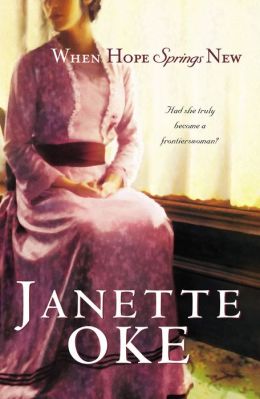
Book Review: When Hope Springs New
When Hope Springs New. Janette Oke. 1986. Bethany House. 216 pages. [Source: Book I Own]
I have enjoyed revisiting the first four books in the Canadian West series. These four books star Elizabeth and Wynn. One thing I've been doing is imagining Elizabeth and Wynn on an episode of House Hunters. I've been thinking about what Elizabeth's wishlist for a house would look like before and after. What would it have been like before marriage, before traveling with her husband to Beaver Creek and serving several years, and, what it would have looked like AFTER they left Beaver Creek. I have an idea that Elizabeth would NOT have had "open concept" on her wishlist. She'd have wanted ROOMS, for ROOMS meant privacy and a greater sense of home. I think her wishlist would have included FLOORS however. In this last novel, she's in a one-room structure with dirt floors. There is not an outhouse. There isn't even a community outhouse--which would have taken getting used to. She simply learns that there are paths from the village leading to the woods. Certain paths for women and children. Certain paths for men. (In Beaver Creek, Elizabeth had it good. Wynn hired men to build her a private outhouse in their yard within the first week or two of moving!) World War I is taking place, and here Elizabeth and Wynn are living in a one room house, dirt floors, stove with two burners, two whole shelves, two chairs and a table, a bed in the corner, and nail pegs in the wall for hanging stuff. And this has to serve as their home and his office.
If there has been one thing I've not loved from this series, something that may date the series a bit, is its treatment of "Indians." The language is not politically correct or not politically correct enough. Readers are reminded again and again how primitive and savage and uncivilized and superstitious these Indians are. Mostly in the fourth book where readers learn that "these Indians" aren't like the other Indians from Beaver Creek that have lived among white people and become civilized and somewhat respectable. Wynn and Elizabeth are facing more of a "first contact" type of experience. Elizabeth never forgets that she's the first white woman and what a special opportunity this is. Great emphasis is placed on these strange chants and dances.
Anyway, in this fourth novel, Elizabeth and Wynn travel to their new assignment. Life is hard; really hard. Elizabeth finds it absolutely impossible to make friends. She tries every single day. She keeps approaching the Indian women and speaking to them in the language she learned at Beaver Creek. She even seems to stalk paths where she hears children laughing and playing. She walks with picture books and holds up the bright and colorful pictures, turning the pages, hoping to wow children into approaching her instead of running away. But Elizabeth is at her best, perhaps, in this one. When a fire threatens the entire village while the men are away, Elizabeth takes command and saves the day...
I like the series as a whole. But the first book is probably the best.
© Becky Laney of Operation Actually Read Bible
I have enjoyed revisiting the first four books in the Canadian West series. These four books star Elizabeth and Wynn. One thing I've been doing is imagining Elizabeth and Wynn on an episode of House Hunters. I've been thinking about what Elizabeth's wishlist for a house would look like before and after. What would it have been like before marriage, before traveling with her husband to Beaver Creek and serving several years, and, what it would have looked like AFTER they left Beaver Creek. I have an idea that Elizabeth would NOT have had "open concept" on her wishlist. She'd have wanted ROOMS, for ROOMS meant privacy and a greater sense of home. I think her wishlist would have included FLOORS however. In this last novel, she's in a one-room structure with dirt floors. There is not an outhouse. There isn't even a community outhouse--which would have taken getting used to. She simply learns that there are paths from the village leading to the woods. Certain paths for women and children. Certain paths for men. (In Beaver Creek, Elizabeth had it good. Wynn hired men to build her a private outhouse in their yard within the first week or two of moving!) World War I is taking place, and here Elizabeth and Wynn are living in a one room house, dirt floors, stove with two burners, two whole shelves, two chairs and a table, a bed in the corner, and nail pegs in the wall for hanging stuff. And this has to serve as their home and his office.
If there has been one thing I've not loved from this series, something that may date the series a bit, is its treatment of "Indians." The language is not politically correct or not politically correct enough. Readers are reminded again and again how primitive and savage and uncivilized and superstitious these Indians are. Mostly in the fourth book where readers learn that "these Indians" aren't like the other Indians from Beaver Creek that have lived among white people and become civilized and somewhat respectable. Wynn and Elizabeth are facing more of a "first contact" type of experience. Elizabeth never forgets that she's the first white woman and what a special opportunity this is. Great emphasis is placed on these strange chants and dances.
Anyway, in this fourth novel, Elizabeth and Wynn travel to their new assignment. Life is hard; really hard. Elizabeth finds it absolutely impossible to make friends. She tries every single day. She keeps approaching the Indian women and speaking to them in the language she learned at Beaver Creek. She even seems to stalk paths where she hears children laughing and playing. She walks with picture books and holds up the bright and colorful pictures, turning the pages, hoping to wow children into approaching her instead of running away. But Elizabeth is at her best, perhaps, in this one. When a fire threatens the entire village while the men are away, Elizabeth takes command and saves the day...
I like the series as a whole. But the first book is probably the best.
© Becky Laney of Operation Actually Read Bible
Friday, November 29, 2013
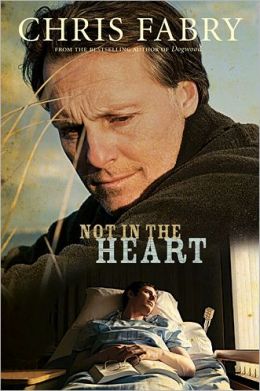
Book Review: Not In the Heart
Not In The Heart. Chris Fabry. 2012. Tyndale. 432 pages. [Source: Book I Bought]
I did not love Not In The Heart. Not in the same way I loved, loved, loved Almost Heaven. But comparing the two perhaps is unfair.
Truman, the narrator of Not In The Heart, is down on his luck. He's let his addiction to gambling destroy his life. He's consistently made the wrong decisions in his life for years now. He isn't only hurting himself, however. He has a wife who loves him despite his problems, despite their current separation. He also has two children: a nearly-grown-up daughter, Abby, and her younger brother, Aidan, who is dying. Does Truman see his family often? Does he help support his family? The answer, as you might have guessed, is no. Truman is selfish. For example, he knows that his son wants to see him; he knows that his son would love for him to come by the hospital and spend some time together. And Aidan's the type of kid who doesn't ask for much. But Truman knows that going to the hospital would make him feel uncomfortable, would make him feel bad. So he stays away.
So. Truman is offered an opportunity. There is a convicted murderer who is willing--even anxious--to donate his heart to Aidan. He is willing to stop his appeals, to accept his death sentence, IF he (Truman) will agree to write a book, to tell his story. The wife (supposedly) will even pay to help sweeten the deal. He agrees. But within hours of agreeing, he's lost all the money gambling. Now guilt and guilt alone will urge him forward, compel him to write the story with diligence and care. He even involves his daughter on this case. He becomes a crime-solving journalist on a tight deadline. If he uncovers the innocence of the man, if he finds enough to prove it, will he do the right thing even if it means his son dies?
Not In the Heart is very much focused on solving a crime, on uncovering clues, of following dangerous leads, of taking big risks, of following instincts and putting all the little details together in just the right way. It is an intense thriller. And plenty of broken things need to be pieced together in this novel. I like the humanity of the characters. I like the messiness, the brokenness just fine. I like the struggle, the efforts. It's not like Truman's second chance is going to automatically cure him of selfishness and stubbornness. It's not like he's going to suddenly become a great father now that there is a small chance his son will survive. That being said, I feel the novel is a bit too manipulative. The ending is extremely predictable. One could almost guess the outcome just from reading the title alone. Or at least I thought so.
I think for readers looking for an intense, contemporary thriller with plenty of action and danger, this one would be a good fit. For readers who are looking for a quirky, feel-good novel, this one isn't a good match.
© Becky Laney of Operation Actually Read Bible
I did not love Not In The Heart. Not in the same way I loved, loved, loved Almost Heaven. But comparing the two perhaps is unfair.
Truman, the narrator of Not In The Heart, is down on his luck. He's let his addiction to gambling destroy his life. He's consistently made the wrong decisions in his life for years now. He isn't only hurting himself, however. He has a wife who loves him despite his problems, despite their current separation. He also has two children: a nearly-grown-up daughter, Abby, and her younger brother, Aidan, who is dying. Does Truman see his family often? Does he help support his family? The answer, as you might have guessed, is no. Truman is selfish. For example, he knows that his son wants to see him; he knows that his son would love for him to come by the hospital and spend some time together. And Aidan's the type of kid who doesn't ask for much. But Truman knows that going to the hospital would make him feel uncomfortable, would make him feel bad. So he stays away.
So. Truman is offered an opportunity. There is a convicted murderer who is willing--even anxious--to donate his heart to Aidan. He is willing to stop his appeals, to accept his death sentence, IF he (Truman) will agree to write a book, to tell his story. The wife (supposedly) will even pay to help sweeten the deal. He agrees. But within hours of agreeing, he's lost all the money gambling. Now guilt and guilt alone will urge him forward, compel him to write the story with diligence and care. He even involves his daughter on this case. He becomes a crime-solving journalist on a tight deadline. If he uncovers the innocence of the man, if he finds enough to prove it, will he do the right thing even if it means his son dies?
Not In the Heart is very much focused on solving a crime, on uncovering clues, of following dangerous leads, of taking big risks, of following instincts and putting all the little details together in just the right way. It is an intense thriller. And plenty of broken things need to be pieced together in this novel. I like the humanity of the characters. I like the messiness, the brokenness just fine. I like the struggle, the efforts. It's not like Truman's second chance is going to automatically cure him of selfishness and stubbornness. It's not like he's going to suddenly become a great father now that there is a small chance his son will survive. That being said, I feel the novel is a bit too manipulative. The ending is extremely predictable. One could almost guess the outcome just from reading the title alone. Or at least I thought so.
I think for readers looking for an intense, contemporary thriller with plenty of action and danger, this one would be a good fit. For readers who are looking for a quirky, feel-good novel, this one isn't a good match.
© Becky Laney of Operation Actually Read Bible
Wednesday, November 27, 2013
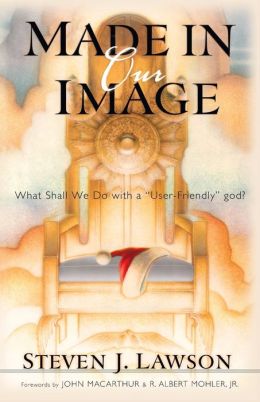
Book Review: Made In Our Image
Made In Our Image. Steven J. Lawson. 2000. Doubleday. 224 pages. [Source: Borrowed From Friend]
I am so thankful to have discovered Steven J. Lawson this year. He has turned out to be an author who does not disappoint! The first section of Made In Our Image focuses on a society that likes--even loves--to remake God into their own image. What we think about God is so essential, so important. What is shaping our image of God? Think about it. Consider. Is "our God" the God of the Bible, or, are we reshaping God and fixing him to our own liking, perhaps trying to sell him to more people? The second section of Made In Our Image examines who God is, what he is like, his attributes, his character. The third section focuses on the individual, the personal experience of knowing, fearing, loving God. All of it was good--really good. I think the book is very relevant. In many ways, it is similar to A.W. Tozer's Knowledge of the Holy. The books share the same focus and goal. Both books are excellent by the way!
From the introduction: This is a book about God. Not God as we might loosely imagine Him to be, but as He truly is--holy, awesome, sovereign, righteous, and full of love and goodness. I believe that there is one area of our theology that is most lacking in the church today, it is our understanding of who He really is. Our most rudimentary problem is that we do not fully comprehend who He is. Our thoughts about Him have become very unclear, fuzzy, and oblique. The result of this distorted view of deity is that it leaves everything else out of focus as well. Whenever we lose a right view of God, everything else gets out of perspective. (15)
Favorite quotes:
© Becky Laney of Operation Actually Read Bible
I am so thankful to have discovered Steven J. Lawson this year. He has turned out to be an author who does not disappoint! The first section of Made In Our Image focuses on a society that likes--even loves--to remake God into their own image. What we think about God is so essential, so important. What is shaping our image of God? Think about it. Consider. Is "our God" the God of the Bible, or, are we reshaping God and fixing him to our own liking, perhaps trying to sell him to more people? The second section of Made In Our Image examines who God is, what he is like, his attributes, his character. The third section focuses on the individual, the personal experience of knowing, fearing, loving God. All of it was good--really good. I think the book is very relevant. In many ways, it is similar to A.W. Tozer's Knowledge of the Holy. The books share the same focus and goal. Both books are excellent by the way!
From the introduction: This is a book about God. Not God as we might loosely imagine Him to be, but as He truly is--holy, awesome, sovereign, righteous, and full of love and goodness. I believe that there is one area of our theology that is most lacking in the church today, it is our understanding of who He really is. Our most rudimentary problem is that we do not fully comprehend who He is. Our thoughts about Him have become very unclear, fuzzy, and oblique. The result of this distorted view of deity is that it leaves everything else out of focus as well. Whenever we lose a right view of God, everything else gets out of perspective. (15)
Favorite quotes:
The most important thing about you is who you believe God is. (25)
Who we believe God is impacts every area of our lives--our attitudes, priorities, choices, and even our destiny. The true knowledge of God is so vast and overreaching that it is the only subject large enough, and powerful enough, to define and determine every aspect of our lives. (25)
The greatest sin anyone can commit is to distort the true knowledge of God. Vandalizing God's image--not with spray cans or permanent markers, but with loose thinking, partial truths, and bad theology--is at the center of every sin. (32)
A demeaned view of the one true God is the result of a pattern of compromise--from watered-down sermons presenting a low view of God to the trendy music of Christian performers who crossover to secular markets but forget to carry the Cross with them. (32)
Too often, we allow our surroundings and imagination, instead of Scripture, to govern our thoughts about who God is. We often project our self-limitations on to our picture of Him, resulting in a god made in our own image. This is the curse of the user-friendly god--namely, low views of Him who is high and lifted up, finite views of Him who is infinite and beyond our comprehension. (62)
Our definition of God should not be left up to our own imaginations; it must be determined from the pages of the Bible. When it comes to defining who God is, individual speculation is no more valid than a roll of the dice. The God we are talking about is the Creator of the universe, the original being, the sovereign ruler of all that is. He is the sole judge of all that is true and false, right and wrong, good and bad. He is the One who communicates to humankind generally in nature and specifically through the words of the Bible. (63)
What is the primary truth about God that we must grasp if we are to have a high view of Him? More than any other of His divine attributes, God has revealed Himself to has as being absolutely holy. Arguably, God's holiness is the most important of all His attributes. It constitutes the core of His nature, the essence of His attributes. It constitutes the core of His nature, the essence of His being, and the crown of His character. If our thoughts of God are to be worthy, the primary truth that should govern how we perceive Him is that He alone is perfectly holy. If we are to properly understand who He is, we must grasp the true meaning of this central aspect of His divine being. (77)
In the minds of so many people today, even some in the body of Christ, the user-friendly god has voluntarily limited his control and given free reign to the actions of people in order to give them unconditional liberty. This restricted ruler is slightly sovereign--enthroned, but not empowered; presiding, but not prevailing; trying, but not triumphing…This is the user-friendly god. But is this God? Has He really chosen to limit the free reign of His sovereignty? Is He limited by the choices of man? Or is God really the supreme ruler of the universe, exercising total control over all the works of His hand? Rest assured, God is in complete control! (93)
Only when we understand that He judges sin--all sin, even our own sin--can we appreciate His glorious grace for what it is. The darkness of God's wrath showcases the flawless gem of His unmerited mercy toward us. But remove the dark background of His wrath, and our appreciation of the brilliance of His amazing love fades. The gospel is not good news until we first know the bad news. The good news of His love does not truly become good news until we know the bad news of His wrath. (109)
From Genesis to Revelation, the Bible presents a consistent picture of a holy God who reserves wrath for sinners, who is angry with the wicked every day, and yet, who, at the same time, loves sinners with the strongest, most tender love. (110)
Despite this biblical account of God's wrath, I frequently hear people talk about God as though He never punishes sin. Many today have adopted the user-friendly god who never judges sinners. Choosing not to entertain frightening thoughts about God's wrath, they favor a feel-good approach to the Almighty. But this approach indicts God. In a court of law, if a judge knowingly acquits the guilty, he himself becomes corrupt, guilty of the same crime. Along this same line, if God is to be the righteous Judge of heaven and earth, he must punish sin, or He Himself would become guilty of it and from moral necessity, topple from His throne of holiness…There are others who believe in God's wrath, but choose never to talk about it or warn lost men and women about it. Their silence is deafening. (113)
Far worse than the physical torment He endured at the hands of the Roman soldiers was the spiritual suffering He endured at the hands of God… Only those who have died without Christ and now endure God's eternal wrath in hell can even begin to comprehend what Christ endured on our behalf… Jesus suffered a wrath equal to the eternal wrath we would suffer forever in hell if we were to die without Him. He who is infinite, the Lord Jesus Christ, suffered in a finite period of time--a few hours upon the cross--what you and I, begin finite, would suffer in an infinite period of time in hell… If God were ever to withhold His wrath against sin, it would have been in the case of His own Son. But He did not--because all sin must be punished! God, who did not spare His Son, will not spare us from being the object of His eternal wrath if we die in our sins. But because God's Lamb bore heaven's wrath for our sins, we need not suffer His vengeance. This is the good news of the gospel. The redemptive wrath of God, unleashed at the cross, means we need not face eternal wrath in hell. When we put our faith in Christ alone, we escape the wrath to come. God will in one way or the other pour out His wrath on every sin ever committed. Every sin will either be pardoned in Christ or punished in hell. God is that holy. (120-1)
Whenever we elevate God's love to a preeminent place in our thinking without first considering His holiness, sovereignty, and wrath, we distort the true picture of God. We reduce His love to syrupy, sentimental mush and turn Him into a user-friendly god who pats us on the head instead of delivering us from condemnation. (125)
Our view of God has everything to do with how, or whether, we glorify Him with our lives. A diminished view of God demeans the worship we give to Him. The higher our view of God is, the greater our adoration for Him will be. Conversely, the lower our view of God is, the lower our worship of Him will be. Our worship will rise no higher than our thoughts of Him. (162)
No one giggles his way into the kingdom of God. All who enter through the narrow gate that leads to life come with godly fear, brokenness, and mourning over their sin. (Matthew 5:3-4, Matthew 7:13-14) As we walk by faith on the narrow path of the Christian life, we grow in our proper reverence for God. (196)
Fearing God is a heart attitude of worshipful submission to Him. It is a reverential awe for God in which we recognize Him for who He is--the holy, sovereign, righteous God who loves us and desires to have fellowship with us. In coming face-to-face with His holiness, we are overwhelmed and struck with the sheer glory of His being. Fearing God means to live a God-centered life in which our entire beings revolve around Him, not ourselves. It means we take Him very seriously, not superficially. (197)
Reverencing God comes from receiving His Word into our hearts. To know Him is to fear Him. (200)
Whenever we weaken our understanding of who God is, we weaken our resolve to resist temptation and we fall into sin. The most loving thing I can do for you is to lead you to fear God. The wisest thing pastors can do for their congregations is to teach them to fear God. If parents want their children to live pure and godly lives, they must teach them to fear God! (203)
© Becky Laney of Operation Actually Read Bible
Wednesday, November 20, 2013
Book Review: A Cote of Many Colors
A Cote of Many Colors. Janette Oke. 1987. Bethany House. 144 pages. [Source: Childhood Copy]
I haven't read a great many books narrated by birds in my life, but, A Cote of Many Colors is enjoyable. It isn't solely told through a pigeon's point of view--for better or worse. The pigeons on the farm are upset. Mr. Faraday has completely gone missing. He has not remembered to feed them. He has not come out from the house though it is hours past time. The birds are restless, and so are the next-door neighbors who watch the birds as their favorite hobby. They have a feeling that something is wrong, that the birds are upset for a good reason, that Mr. Faraday's actions aren't typical...and they are brave enough to trespass and look through his windows to see if he is okay. They see him passed out on the floor; they get him help. Mark and Timmie give him continued help over the next years as everyone's life changes dramatically.
A Cote of Many Colors is a pleasant read though I don't quite understand the racing aspect of it.
© Becky Laney of Operation Actually Read Bible
I haven't read a great many books narrated by birds in my life, but, A Cote of Many Colors is enjoyable. It isn't solely told through a pigeon's point of view--for better or worse. The pigeons on the farm are upset. Mr. Faraday has completely gone missing. He has not remembered to feed them. He has not come out from the house though it is hours past time. The birds are restless, and so are the next-door neighbors who watch the birds as their favorite hobby. They have a feeling that something is wrong, that the birds are upset for a good reason, that Mr. Faraday's actions aren't typical...and they are brave enough to trespass and look through his windows to see if he is okay. They see him passed out on the floor; they get him help. Mark and Timmie give him continued help over the next years as everyone's life changes dramatically.
A Cote of Many Colors is a pleasant read though I don't quite understand the racing aspect of it.
© Becky Laney of Operation Actually Read Bible
Monday, November 18, 2013
Book Review: The Impatient Turtle
The Impatient Turtle. Janette Oke. 1986. Bethany House. 112 pages. [Source: Childhood Copy]
I was pleasantly surprised by The Impatient Turtle by Janette Oke. I don't remember reading this one when I was younger. In this parable-of-sorts, readers meet an impatient turtle who struggles with contentment. He sees boys having so much fun at the pond: running, jumping, diving, swinging, sliding, playing, etc. But as a turtle, well, he's limited by his shell. He can't run. He can't jump. He can't slide. He wants to pack every single day with fun no matter if it's "safe" or not. (Like when he thinks it's GREAT fun to tease the men with fishing poles. It's great fun for him, not so much fun for his friend who got hooked). Friendship plays a big role in this one. I definitely enjoyed it, yes, it had a very strong, very obvious message, but I didn't seem to mind it this time.
© Becky Laney of Operation Actually Read Bible
I was pleasantly surprised by The Impatient Turtle by Janette Oke. I don't remember reading this one when I was younger. In this parable-of-sorts, readers meet an impatient turtle who struggles with contentment. He sees boys having so much fun at the pond: running, jumping, diving, swinging, sliding, playing, etc. But as a turtle, well, he's limited by his shell. He can't run. He can't jump. He can't slide. He wants to pack every single day with fun no matter if it's "safe" or not. (Like when he thinks it's GREAT fun to tease the men with fishing poles. It's great fun for him, not so much fun for his friend who got hooked). Friendship plays a big role in this one. I definitely enjoyed it, yes, it had a very strong, very obvious message, but I didn't seem to mind it this time.
© Becky Laney of Operation Actually Read Bible
Saturday, November 16, 2013
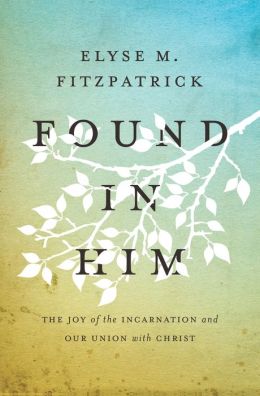
Book Review: Found In Him
Found In Him. Elyse M. Fitzpatrick. 2013. Crossway. 240 pages. [Source: Review Copy]
A few months ago I struggled through One With Christ, a book on a significant subject (our union with Christ). Found In Him is a much better fit for me, and perhaps for you as well. Found In Him is about Christ's incarnation and our union with Christ. The book is divided into two sections. The first section focuses on the life, death, resurrection, and ascension of Jesus Christ. The second section focuses on believers, how our union to Christ blesses us here and now and assures us of a heavenly home. This section explores among other things doctrines such as justification, sanctification, and the atonement. Both sections are well written and grounded in Scripture. I love how the book focuses on specific Scriptures and provides insight. While readers may have spent some time at least thinking about the incarnation, the secondary subject--our union with Christ-may be even more thought-provoking.
I would definitely recommend this one!
A few months ago I struggled through One With Christ, a book on a significant subject (our union with Christ). Found In Him is a much better fit for me, and perhaps for you as well. Found In Him is about Christ's incarnation and our union with Christ. The book is divided into two sections. The first section focuses on the life, death, resurrection, and ascension of Jesus Christ. The second section focuses on believers, how our union to Christ blesses us here and now and assures us of a heavenly home. This section explores among other things doctrines such as justification, sanctification, and the atonement. Both sections are well written and grounded in Scripture. I love how the book focuses on specific Scriptures and provides insight. While readers may have spent some time at least thinking about the incarnation, the secondary subject--our union with Christ-may be even more thought-provoking.
I would definitely recommend this one!
We will never know how found, loved, welcomed, and reconciled we are until we see how he has forever taken our nature to himself and has bound us to himself in enduring oneness. God is one with man in Jesus Christ, and we are one with him. (18)
The story of Jesus, the long-awaited Christ, is what the entire Bible is about. Perhaps I should say that again. The beginning and end of everything in the universe and most particularly everything recorded in the Scriptures is Jesus Christ. (27)
But while many of us would agree that Jesus is key, the all-encompassing message of his preeminence, although assumed, is not usually the message we hear. No, the message we usually hear is something about us and what we're supposed to do to make God happy, or, at least, about how we can avoid making him unhappy and live satisfying lives. But as we'll see in the chapters to come, the Bible isn't primarily a rulebook, nor is it a self-help manual; it's not about how we become better people so that we can earn blessings by working hard… The message of the Bible is Jesus Christ, the one truly good human person: who he is and the work he's done for our salvation and his Father's glory. Of course, what he has done does intersect with our lives and change us, but we're not the subject of this story--he is. He is the subject, and all the verbs are about his work. (28)
Every law, every prophetic utterance, every narrative, every psalm is meant to remind us of him, to force us to look away from ourselves and to look to him for salvation. (28)
Like Nicodemus's contemporaries and ours, the easiest way to interpret the Bible is to make it about us and what we need to do. We take the stories of Abraham, Moses, David, Jonah, and Job and turn them in toward us and make them about how we're supposed to earn God's blessings. But Jesus had a completely different take on them. He taught that all of the Old Testament was meant to point forward to the Christ, to the one who would live a perfect life and die a substitutionary death in our place. If the Old Testament and the history of the nation of Israel has taught us anything, it is that having God's law and knowing that you are special to him won't automatically make you obedient. (39)
If you know who he is, it's because he wants you to know him. (40)
He came to serve you and win you with his love. He became one of our own so that we could be his own. (45)
From the very moment of his naming, even from the earliest days of his humanity, Jesus was traversing a road that would unavoidably lead to Calvary's bloody hill. His people needed salvation, and he was born for one reason only: to provide it. But in order to save us, he had to be one of us. Only a man could pay the penalty for our sin; but only God would be free from sin and be able to bear up under the unmitigated wrath of God. He had to be God and yet man, one of us, and he was. (49)
Every single moment of every single day of his private life, even before his public ministry began, Jesus worked to fulfill the law for us. Why? Because throughout our lives we have failed to obey, we have left the law unfulfilled. Every day he was earning a righteousness for us, a righteousness that is summed up by perfect compliance to this law: "You shall love the Lord your God with all your heart and with all your soul and with all your mind and with all your strength and your neighbor as yourself. (Luke 10:27) (60)
He loved God and those around him for your sake, in your place. Everything that you've left undone, he did for you. Every sin you've committed, he joyfully shunned out of love for you. (61)
Today, if you're a Christian you live in the light of God's gracious benediction: The LORD bless you and keep you;The LORD make his face to shine upon you and be gracious to you;The LORD lift up his countenance upon you and give you peace. (Numbers 6:24-26)Those are God's words over us because they were not the words Jesus heard proclaimed over him. The Lord did not bless or keep him. His face did not shine upon him; in fact, the Lord's face was turned away from him. Jesus didn't experience the grace we know every day, even when we're in a time of suffering. And the Father didn't lift up his smile upon him or give him peace. All of this was sacrificed on the mount for you. All of it. For you. (107)
Our union with Christ may be summed up in these words: because the Father has immeasurable love for the Son, he has immeasurable love for us. (144)© Becky Laney of Operation Actually Read Bible
Friday, November 15, 2013
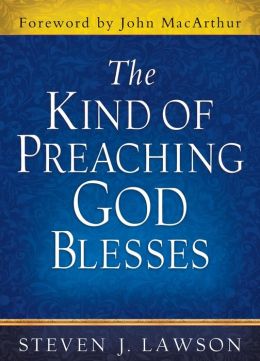
Book Review: The Kind of Preaching God Blesses
The Kind of Preaching God Blesses. Steven J. Lawson. 2013. Harvest House. 128 pages. [Source: Book I Bought]
The Kind of Preaching God Blesses is easily one of the best books I've read all year. The book contains FIVE messages Lawson delivered using 1 Corinthians 2:1-9 as his main text. These are wonderful sermons that are especially relevant to those in ministry. I don't think this book is exclusively for preachers, however.
The chapters: "Everything Except the Main Thing: The Poverty of Modern Preaching;" "Slick Schtick: The Prohibition of Worldly Preaching;" "One Master Theme: The Preeminence of Christ in Preaching;" "Strength in Weakness: The Power of the Spirit in Preaching;" "A Sovereign Wisdom: The Predestination of the Father in Preaching;" "Marching Orders: The Parade of Faithful Preachers."
Lawson argues in his book that the only kind of preaching God blesses is preaching that is Christ-centered and God-exalting. In other words, "To preach the Bible rightly necessitates proclaiming Christ faithfully. To faithfully proclaim the written Word demands that we preach the living Word. All biblical preaching must declare Christ as its dominant theme. Because the Bible is so Christ-centered, true preaching must likewise be Christ-centered."
Quotes:
From the preface:
The spiritual life of any congregation and its growth in grace will never exceed the high-water mark set by its pulpit.From "Everything Except the Main Thing"
In this present hour, preaching that is devoid of the person and work of Christ is all too often commonplace. Such lifeless words are a snare into which many pulpits have fallen, the deadly trap in which the Lord Jesus is minimized, if not altogether absent. Rather than giving Him the central place of preeminence, Jesus is demoted to the periphery. Instead of being in the spotlight, Christ is left standing in the shadows. In many pulpits, there is compelling communication that captivates the attention of the listener. There is logical thought with a coherent flow. There is a well-structured outline, an attention-grabbing introduction, and excellent exegesis. There are spellbinding illustrations and relevant applications. There are insightful observations and perfect cross-references. There is even a dramatic conclusion. But if the sermon fails to exalt and elevate Christ, it has missed the mark. Such preaching has everything except the one thing necessary—the person of Jesus Christ, presented by the power of the Spirit. Sure, the name of Christ may be mentioned. But only in a polite manner. Such speech may even be energetic, exciting, and enthusiastic. But if it is devoid of Christ, it is a mere noisy gong and a clanging cymbal. The sad reality is that these barren pulpits are impotent to save and unable to sanctify.
All pulpits must passionately declare Christ to be the eternal Son of the living God, the only Savior of sinners. All preaching must boldly announce Him as the reigning Lord of heaven and earth. He must be fearlessly announced as the One before whom every knee will bow and every tongue will confess. All preaching must assert that this Jesus is the final Judge of every human life. To fulfill this sacred duty, every preacher must proclaim the full counsel of God. Every doctrine in Scripture must be delivered. Every truth must be taught. Every sin must be exposed. Every warning must be issued. And every promise must be offered. If God is to bless our preaching, the supreme majesty of Jesus Christ Himself must be expounded in our sermons. All the lines of our preaching must intersect at this highest pinnacle—Jesus Christ and Him crucified.
The central theme of the entire Bible is Jesus Christ, the Redeemer of all who call upon Him. The entire Old Testament announces the coming of Christ to earth in order to redeem and reign. Then the four Gospel accounts detail and describe His first arrival. Next, the book of Acts records the proclamation of His death, resurrection, and exaltation. Moreover, the epistles define who Jesus is and defend what He accomplished in His life and death. Finally, the book of Revelation declares that this One is coming again in grandeur and glory. Succinctly stated, Jesus Christ crucified is the unifying theme of all of Scripture. This high ground must be claimed in our preaching. Any other footing is a slippery slope that inevitably descends downward into vain rhetoric and mere words. To the contrary, every pulpit must present a towering vision of the unique person and saving work of Jesus Christ. All preaching must point to His sin-bearing, substitutionary death for sinners. All exposition must lift up this Sacrificial Lamb who became a sin-bearing Substitute for all who believe. Every message must exalt this Christ, who was raised from the dead, exalted to the right hand of God the Father, and entrusted with all authority in heaven and earth. This must be the heartbeat that throbs in every pulpit. This must be the strong pulse that marks every ministry. If preachers are to be known for anything, they must be known for preaching the Lord Jesus Christ and Him crucified.
No preacher, regardless of where he serves, is free to reinvent preaching.From "Slick Schtick"
The modern sermon has tragically been described as a mile wide and an inch deep. Others have said today’s preacher is a mild-mannered man who urges his mild-mannered listeners to keep being mild-mannered.
Martyn Lloyd-Jones, a longtime minister in London, resisted all pressures to adapt his preaching to the whim of the times. In reflecting upon his approach to the pulpit, the Doctor used an analogy drawn from his previous profession as a physician. When challenged to be more compatible with modern thinking, Lloyd-Jones asserted, “I never let the patient write the prescription.” By this he meant that he never allowed his listeners to dictate what or how he preached.
Let me be clear: It matters to God what is preached. And it matters to Him how it is preached. No man is free to preach whatever and however he so chooses.From "One Master Theme"
The essence of Christianity is centered upon the Lord Jesus Christ. The sum and substance of being a Christian is trusting Christ with the entirety of one’s being. The height of the Christian life is adoring Christ, the depth of it loving Him, the breadth of it obeying Him, and the length of it following Him. Everything in the Christian life revolves around Jesus Christ. Simply put, Christianity is Christ.
The entire Bible is focused on the Lord Jesus Christ, who came into the world to save sinners. From cover to cover, all of Scripture speaks with one voice about the primacy of His saving death. This is the strong heartbeat of both the Old and New Testament, pumping divine life into people’s souls. To preach the Bible means, chiefly, to preach Christ and Him crucified.
By His vicarious death, Jesus did not merely make salvation hypothetically possible based upon man’s response. He actually saved a definite number of sinners. True preaching declares the cross as the only way of salvation. Those in bondage to sin have been redeemed by the blood of Christ. Such preaching constantly unveils the attributes of God in the death of Christ. Such preaching exalts the sovereignty of God in the death of His Son. All preaching must boldly proclaim that holy God is reconciled to sinful men through the blood of the Lamb.
Many people commonly associate Luther’s preaching with the book of Romans and justification by faith. However, this powerful figure preached only 30 sermons on this epistle. What many people don’t know is that this champion of the faith preached more than 1000 sermons on the Synoptic Gospels—sermons which focused directly upon Christ. In addition, he delivered hundreds more from the Gospel of John. The fact is, Luther preached more on John’s Gospel in one year than he did on Romans in the entirety of his ministry.
If you please God, it does not matter whom you displease. And if you displease Him, it does not matter whom you please.From "Strength in Weakness"
No man is too weak for God to use, only too strong. The more one recognizes his own weakness, the more he will rely upon God for strength. By His sovereign design, God chooses to use weak vessels whom He makes strong.From "A Sovereign Wisdom"
There is a foundational truth in preaching that must undergird every message—namely, that God is sovereign over all things.
Nowhere is this kind of preaching more essential than in matters pertaining to salvation. Before man ever fell into sin, God had already foreordained the way by which He would restore their broken relationship. Before sin corrupted the entire human race, God had already predestined the plan of salvation. Before the world became polluted by man’s depravity, He had already predetermined the redemption by which He would restore ruined sinners to Himself. More importantly, God even chose His elect upon whom He would freely bestow His unmerited grace. By sovereign grace, God is the Initiator, never the responder. God is the Seeker, never the one who is sought. God is the Savior, man is the one rescued. God is the Provider, man is the debtor. God is the subject and active verb, man is the object who is acted upon. From start to finish, every aspect of man’s salvation is divinely designed and determined by this foreordination; all glory goes to God alone.
Before the foundation of the world, God designed His plan of salvation by which He would rescue His elect. Before time began, He chose His Son to come into this world in order to save these elect who are unable to save themselves. And pulpits everywhere must be faithful in declaring this bedrock truth. Yet man, left to his own thinking, is constantly seeking to take credit—at least, in part—for that which God alone has accomplished in salvation. Man flatters himself in perceiving that by his own initiative and choice, he chooses to seek after God. He vainly imagines that his pursuit of salvation is other than God first seeking him. But, in truth, it is God alone who seeks and saves.
Charles Spurgeon certainly understood this mandate. He firmly believed that he had received marching orders from his Master to stand at the foot of the cross and remain there until He returned. As long as he lived, he was to tell this simple story of Christ crucified to a perishing world. Spurgeon declared: I received some years ago orders from my Master to stand at the foot of the cross until He came. He has not come yet, but I mean to stand there till He does. If I should disobey His orders and leave those simple truths which have been the means of the conversion of souls, I know not how I could expect His blessing. Here, then, I stand at the foot of cross and tell out the old, old story, stale though it sound to itching ears, and worn threadbare as critics may deem it. It is of Christ I love to speak—of Christ who loved, and lived, and died, the substitute for sinners, the just for the unjust, that He might bring us to God.From "Marching Orders"
The Scripture teaches what we are to preach and how we are to preach it. The Bible establishes both the message and the manner in which God’s truth is to be proclaimed.© Becky Laney of Operation Actually Read Bible
Thursday, November 14, 2013
Book Review: Reliable Truth
Reliable Truth: The Validity of the Bible in an Age of Skepticism. Richard E. Simmons III. 2012. Union Hill. 192 pages. [Source: Review Copy]
Reliable Truth was a good book. I found it to be well organized and nicely written. The book is divided into eight chapters, almost each chapter focuses on a different argument as to why the Bible is reliant and true and trustworthy. Chapters two through seven focus on these arguments: "The Historical Record," "The Archeological Record," "The Ancient Writings," "The Reach of Science," "The Moral Imperative," and "The Life of Jesus." Each chapter is informative and packed with research, quotes, and real-life illustrations. He'll highlight various men and women who were atheists or agnostics or nonbelievers and share their faith-story, their conversion experiences. He is very fond of quoting C.S. Lewis, I noticed! I didn't love all the examples he used. Anne Rice "announcing" her conversion (which I believe she later retracted?) does not really "help" anyone make an informed decision on the worth or validity of the Bible. Other stories were more compelling, however. For example, I liked Emile Cailliet's story. Quoting Calliet, he writes:
I literally grabbed the book [the Bible] and rushed to my study with it. I opened it and "chanced" upon the Beatitudes. I read, and read, and read--now aloud with indescribable warmth surging within.... I could not find words to express my awe and wonder. And suddenly the realization dawned upon me. This was the book that would understand me! I needed it so much, yet, unaware, I had attempted to write my own--in vain. I continued to read deeply into the night, mostly from the Gospels. And, lo and behold, as I looked through them, the One of whom they spoke, the one who spoke and acted in them, became alive in me. (23)© Becky Laney of Operation Actually Read Bible
Wednesday, November 13, 2013
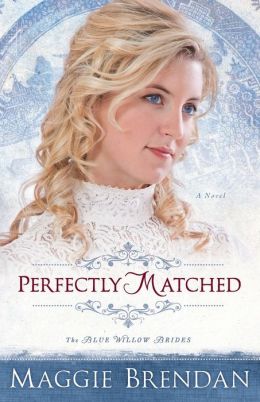
Book Review: Perfectly Matched
Perfectly Matched. Maggie Brendan. 2013. Revell. 352 pages. [Source: Library]
I have enjoyed previous books in the series, but, I didn't quite enjoy this one. There were a few main threads of the story: the heroine's interest in animals, the hero's obsessive-compulsive disorder, and the couples enjoyment of being intimate. While I would say that many Christian historical romances are "safe" enough to give young(er) readers (middle grade on up), that isn't the case with this one. Not that it was as bad as mainstream smut, but, it was way too much in my opinion. It didn't feel like a clean read at all...
For readers who like historical romances set in Colorado in the 1880s, OR, for readers who enjoy mail-order bride stories, OR,
for readers who love, love, love animals...this one has potential.
Anna Olsen, I believe, is the last remaining sister to offer herself as a mail-order-bride in Maggie Brendan's series. She marries Edward Parker. They return home from the ceremony and he hands her a list telling her of his expectations. It's an informative list, a bit opinionated. He is "helping" her know how to spend her time each day of the week. How thoughtful, right?! She's not thrilled, and, she only "keeps" to the list part of the time, not that she's out of her way to be inconsiderate, but, she's not easily managed in that way. Her husband does not know yet how to speak her love language.
One of the many things this couple argues about is animals. He wants no pets, she wants hundreds of pets. Well, it seems that way to him. She wants to take into their home ANY animal (dog, cat, horse) that "needs" her for whatever reason. He thinks that's too much, that she is a bit out of control. They do, of course, reach a compromise.
There were elements of the story that felt extremely predictable. For example, when her husband is hired by the bank to be in charge of the bank's new safe which operates by a timer. I saw this as foreshadow, which, of course, it was. You can't introduce a bank vault (or safe) without a bank robbery coming into it somewhere... I thought this "extra" bit of plot was ridiculous and unnecessary. Nothing is gained by this misadventure, in my opinion.
© Becky Laney of Operation Actually Read Bible
I have enjoyed previous books in the series, but, I didn't quite enjoy this one. There were a few main threads of the story: the heroine's interest in animals, the hero's obsessive-compulsive disorder, and the couples enjoyment of being intimate. While I would say that many Christian historical romances are "safe" enough to give young(er) readers (middle grade on up), that isn't the case with this one. Not that it was as bad as mainstream smut, but, it was way too much in my opinion. It didn't feel like a clean read at all...
For readers who like historical romances set in Colorado in the 1880s, OR, for readers who enjoy mail-order bride stories, OR,
for readers who love, love, love animals...this one has potential.
Anna Olsen, I believe, is the last remaining sister to offer herself as a mail-order-bride in Maggie Brendan's series. She marries Edward Parker. They return home from the ceremony and he hands her a list telling her of his expectations. It's an informative list, a bit opinionated. He is "helping" her know how to spend her time each day of the week. How thoughtful, right?! She's not thrilled, and, she only "keeps" to the list part of the time, not that she's out of her way to be inconsiderate, but, she's not easily managed in that way. Her husband does not know yet how to speak her love language.
One of the many things this couple argues about is animals. He wants no pets, she wants hundreds of pets. Well, it seems that way to him. She wants to take into their home ANY animal (dog, cat, horse) that "needs" her for whatever reason. He thinks that's too much, that she is a bit out of control. They do, of course, reach a compromise.
There were elements of the story that felt extremely predictable. For example, when her husband is hired by the bank to be in charge of the bank's new safe which operates by a timer. I saw this as foreshadow, which, of course, it was. You can't introduce a bank vault (or safe) without a bank robbery coming into it somewhere... I thought this "extra" bit of plot was ridiculous and unnecessary. Nothing is gained by this misadventure, in my opinion.
© Becky Laney of Operation Actually Read Bible
Monday, November 11, 2013
Book Review: Living For God's Glory
Living for God's Glory. Joel R. Beeke. 2008. Reformation Trust. 414 pages. [Source: Borrowed From Friend]
Living for God's Glory is a great read. It was very informative and well organized. It also seemed very comprehensive. There was so much examined and explored within it. Much more than an exploration of TULIP and the five solas. For example, it includes centuries worth of church history.
Some chapters I really loved, loved, loved. Some chapters I learned from. When it was good, it was excellent. However, I must admit that some of the chapters were skim-worthy. The interest level just wasn't there for me. And some chapters I felt lacked a bit of relevancy--containing information that was good to know but not quite *essential* to know.
What I loved best was the writing. The BEST section of the entire book was "Calvinism in the Mind." The chapters include: "The Marrow of Calvinism," "Total Depravity," "Unconditional Election, "The Extent of the Atonement," "Definite Atonement," Irresistible Grace and Effectual Calling," "Perseverance and Assurance," "Scripture, Grace, Faith, Christ, and Glory" and "Philosophical Calvinism." These chapters--perhaps with the exception of Philosophical Calvinism--were absolutely AMAZING.
Other chapters I enjoyed include "Calvin's God-Exalting Piety," "Sanctification in Puritan Thought," "Sanctification in Puritan Practice," "The Origins of Calvinism," "Calvin's Evangelism," "Puritan Evangelism," and "Confessing The Faith."
This book would be a great textbook perhaps!
Quotes:
"There is nothing upon which men need to be more instructed than upon the question of what Calvinism REALLY is," Charles H. Spurgeon once said. (38)
God's sovereignty is the marrow of doctrinal Calvinism. (40)
"It is a holy will that rules the universe--a will in which loving-kindness is locked up, to be in due time displayed. It is a solemn thing that we and all creatures are at the disposal of pure will; but it is not merely free will, it is the free will of the sovereign Lord Jehovah, and therein it is distinguished from the abstractness and apparent arbitrariness of mere will." ~ John Duncan (40)
The sovereign grace and love that went to Calvary has the whole world in its hands. God's fatherly sovereignty in Christ is the essence of who God is. (40)
Calvinists are people whose theology is dominated by the idea of God. (40)
To be Reformed is to stress the comprehensive, sovereign, fatherly lordship of God over everything: every area of creation, every creature's endeavors, and every aspect of the believer's life. (41)
So Calvinists define all doctrine in a God-centered way. Sin is horrible because it is an affront to God. Salvation is wonderful because it brings glory to God. Heaven is glorious because it is the place where God is all in all... As Calvinists we are enamored with God. We are overwhelmed by His majesty, His beauty, His holiness, and His grace. We seek His glory, desire His presence, and model our lives after Him. (42)
"A Christian has been selected to live; to live essentially in Christ, to live effectively for Christ, and to live eternally with Christ." ~ John Blanchard (69)
© Becky Laney of Operation Actually Read Bible
Friday, November 8, 2013
Book Review: Almost Heaven
Almost Heaven by Chris Fabry. 2010. Tyndale. 400 pages. [Source: Book I Bought]
Almost Heaven is an amazing novel. It is beautifully written: raw and emotional with a very true feel to it. The characterization was great. Fabry has created characters that readers can connect to. Billy Allman, the hero, is someone almost impossible not to love. He's more humble and behind-the-scenes than most heroes you find. He has endured a lot; persevered might be an even better word choice. What I loved most about Allman was his hope and his joy. Here is a man who has endured so much, witnessed and experienced too much, yet, no one can rob him of his faith and his HOPE in Christ. He's inspiring, I won't lie. But it's the very fact that he's not perfect, that he's flawed, that makes his story mean so much more. There are great themes in this one. And the writing, at times, is just amazing. I think it's one of those great "big-picture" novels where readers get to see God working all things together for good.
Favorite quotes:
I believe every life has hidden songs that hang by twin threads of music and memory. I believe in the songs that have never been played for another soul. I believe they run between the rocks and along the creekbeds of our lives. These are songs that cannot be heard by anything but the soul. They sometimes run dry or spill over the banks until we find ourselves wading through them. My life has been filled with my share of dirges and plainsongs. I would sing jaunty melodies of cotton candy and ice cream if I could, a top-40 three-minute-and-twenty-second tune, but the songs that have been given to me are played in A minor and are plagued with pauses and riffs that have no clear resolution. I ache for some major chord, a tonal shift that brings musical contentment. I do not know if I will find that.
He put his hand on my neck and held it there. “You see all the beauty out there?” When I nodded, he said, “That’s nothing compared to the beauty of a heart that wants to know God and follow him. And you have that kind of heart, Billy. I know you do. So don’t you let anything or anyone take that from you. You understand?” I nodded, but I didn’t understand.
There was a man of God I listened to every day on the radio, and after I lost my job, I got to hear him twice each day. His voice was like a bullhorn to my soul because even when he just read the Bible, it felt like my heart stirred. And when he told stories and sprinkled in his understanding and wisdom, it was like he had a pipeline right into heaven. I named my dog Rogers because of him.
You want people to have a relationship with God, but something’s holding you back from connecting with people. You know, in the real world. What are you afraid of?” “I don’t know,” I said.
I took her hands in both of mine. “Darlin’, what happened in those woods does not define the rest of your life. People might look at you and say, ‘There’s that woman that was taken to the cabin in Kentucky.’ But God doesn’t look at you that way. He says, ‘There’s my daughter. There’s my spotless bride that my Son died for.’ What happened out there does not have to follow you.© Becky Laney of Operation Actually Read Bible

Thursday, November 7, 2013
Book Review: Prodigal Cat
Prodigal Cat. Janette Oke. 1984. Bethany House. 160 pages. [Source: Childhood Copy]
The Prodigal Cat is a pleasant little children's novel told from the perspective of a cat. This cat will end up with three names to match the three owners of her life: Mittens, Calico, and Ginger. Mittens, her kitten name, shows her mischievous side best perhaps. For it is the fact that Mittens and her brothers and sisters are a little too rough in their playing that leads all the kittens to being packed away to the animal shelter. There are some uncertain days in this book first when she's at the animal shelter and again when she's homeless (in between "Calico" and "Ginger." Mittens is adopted and renamed Calico. She loves almost everything about her new home--except the dog! But a family picnic with all the pets proves to be a TERRIBLE idea. For Calico runs a little too far away while the dog chases her, and, she never does get to go back to that home. These homeless days are rough. But eventually Calico is adopted again...and renamed again. Ginger is a cat with a calling. Her owner is a nurse, I believe, and Ginger is a nurse as well. She accompanies her owner and keeps company with sick people. She is the bright spot in the midst of their pain and suffering. She is beloved by many...
It's a good, somewhat sweet story. Cat lovers may enjoy this one.
© Becky Laney of Operation Actually Read Bible
The Prodigal Cat is a pleasant little children's novel told from the perspective of a cat. This cat will end up with three names to match the three owners of her life: Mittens, Calico, and Ginger. Mittens, her kitten name, shows her mischievous side best perhaps. For it is the fact that Mittens and her brothers and sisters are a little too rough in their playing that leads all the kittens to being packed away to the animal shelter. There are some uncertain days in this book first when she's at the animal shelter and again when she's homeless (in between "Calico" and "Ginger." Mittens is adopted and renamed Calico. She loves almost everything about her new home--except the dog! But a family picnic with all the pets proves to be a TERRIBLE idea. For Calico runs a little too far away while the dog chases her, and, she never does get to go back to that home. These homeless days are rough. But eventually Calico is adopted again...and renamed again. Ginger is a cat with a calling. Her owner is a nurse, I believe, and Ginger is a nurse as well. She accompanies her owner and keeps company with sick people. She is the bright spot in the midst of their pain and suffering. She is beloved by many...
It's a good, somewhat sweet story. Cat lovers may enjoy this one.
© Becky Laney of Operation Actually Read Bible
Wednesday, November 6, 2013
Book Review: Spunky's Diary
Spunky's Diary. Janette Oke. 1982/1998. Bethany House. 112 pages. [Source: Childhood Copy]
Spunky's Diary is the diary of a dog. Most of the novel is told from the puppy's perspective. Later entries in the diary reveal a dog that is becoming a bit wiser and less impulsive. The book contains his perspective on leaving his mom and his home behind as he's adopted by an eager family. The family has four kids, and there is much love in his life, and a lot of playing ahead of him. But Spunky's Diary is definitely an odd read in some ways. It's a children's book featuring the death of a young child (one of Spunky's owners). The book captures the uncertainty of those days (as she gets sick and weak) and the sadness of the family as seen through the family pet. I am not sure how popular sad-dying books are with the intended age group. I do know that I AVOIDED any books with any hints of sadness as a kid. It is, I suppose, an interesting twist in a dog book. A book with a dog on the cover, where, it's NOT the dog who dies but the human. But still.
© Becky Laney of Operation Actually Read Bible
Spunky's Diary is the diary of a dog. Most of the novel is told from the puppy's perspective. Later entries in the diary reveal a dog that is becoming a bit wiser and less impulsive. The book contains his perspective on leaving his mom and his home behind as he's adopted by an eager family. The family has four kids, and there is much love in his life, and a lot of playing ahead of him. But Spunky's Diary is definitely an odd read in some ways. It's a children's book featuring the death of a young child (one of Spunky's owners). The book captures the uncertainty of those days (as she gets sick and weak) and the sadness of the family as seen through the family pet. I am not sure how popular sad-dying books are with the intended age group. I do know that I AVOIDED any books with any hints of sadness as a kid. It is, I suppose, an interesting twist in a dog book. A book with a dog on the cover, where, it's NOT the dog who dies but the human. But still.
© Becky Laney of Operation Actually Read Bible
Monday, November 4, 2013
Book Review: When Breaks the Dawn
When Breaks the Dawn. Janette Oke. 1985. Bethany House. 215 pages. [Source: Library]
When Breaks the Dawn continues right where When Comes The Spring leaves off. In When Comes The Spring, the community is desperate but resourceful after a horrible fire destroys the village's supply store. Without these resources to see them through, the whole community is at risk. Alone these families and individuals have little chance, but, working together, well, they might just survive: not that it will be easy, but still, there's hope. When Breaks the Dawn begins with the arrival of the supply wagons and with the return of Ian and Nimmie McLain.
When Breaks the Dawn is about Elizabeth's struggle for peace and contentment, in a way. She loves, loves, loves her husband, but, how can she stop WORRYING about him and where his work takes him?! She has embraced the community and made a handful of good friends, including a BEST friend, Nimmie, but she can't help feeling envious of her friend at times. For Elizabeth's BIG BIG BIG struggle is infertility. She is disappointed and frustrated and angry and bitter and broken up over the fact that she has not been able to conceive. She sees Nimmie have child after child, she watches little ones in the community grow up; she can't understand why something she wants so very very badly doesn't happen for her. Why hasn't God answered that prayer, that very specific prayer, that prayer that she prays so faithfully?! Elizabeth is incredibly vulnerable in this one. She opens her heart and her home TWICE to native children in need of an adoptive home. One, a little girl, Susie, I believe. She lives with Elizabeth and Wynn for months before her mother is able to take her back. And a second child, a newborn baby boy, Samuel, whom they take in for about a year. Elizabeth is emotionally crushed in this book; in many ways, it is a sad book. But I like the fact that this book deals with a hard subject in a very honest way. The happy but shallow Elizabeth from chapter one in When Calls The Heart has been erased by the all-too-human Elizabeth whose dreams of a perfect-perfect-perfect life has failed her. In When Breaks The Dawn, Elizabeth has to choose to be thankful and learn that God is GOOD.
© Becky Laney of Operation Actually Read Bible
When Breaks the Dawn continues right where When Comes The Spring leaves off. In When Comes The Spring, the community is desperate but resourceful after a horrible fire destroys the village's supply store. Without these resources to see them through, the whole community is at risk. Alone these families and individuals have little chance, but, working together, well, they might just survive: not that it will be easy, but still, there's hope. When Breaks the Dawn begins with the arrival of the supply wagons and with the return of Ian and Nimmie McLain.
When Breaks the Dawn is about Elizabeth's struggle for peace and contentment, in a way. She loves, loves, loves her husband, but, how can she stop WORRYING about him and where his work takes him?! She has embraced the community and made a handful of good friends, including a BEST friend, Nimmie, but she can't help feeling envious of her friend at times. For Elizabeth's BIG BIG BIG struggle is infertility. She is disappointed and frustrated and angry and bitter and broken up over the fact that she has not been able to conceive. She sees Nimmie have child after child, she watches little ones in the community grow up; she can't understand why something she wants so very very badly doesn't happen for her. Why hasn't God answered that prayer, that very specific prayer, that prayer that she prays so faithfully?! Elizabeth is incredibly vulnerable in this one. She opens her heart and her home TWICE to native children in need of an adoptive home. One, a little girl, Susie, I believe. She lives with Elizabeth and Wynn for months before her mother is able to take her back. And a second child, a newborn baby boy, Samuel, whom they take in for about a year. Elizabeth is emotionally crushed in this book; in many ways, it is a sad book. But I like the fact that this book deals with a hard subject in a very honest way. The happy but shallow Elizabeth from chapter one in When Calls The Heart has been erased by the all-too-human Elizabeth whose dreams of a perfect-perfect-perfect life has failed her. In When Breaks The Dawn, Elizabeth has to choose to be thankful and learn that God is GOOD.
© Becky Laney of Operation Actually Read Bible
Subscribe to:
Posts (Atom)


