Showing posts with label top ten. Show all posts

Thursday, January 18, 2018

Ten Bookish/Bloggish Goals for 2018

This week's topic is bookish resolutions for 2018. The host is That Artsy Reader Girl.

1. It is a good rule, after reading a new book, never to allow yourself another new one till you have read an old one in between. If that is too much for you, you should at least read one old one to every three new ones. C.S. Lewis This quote was the inspiration for my new reading challenge. It is my approach for reading in 2018. So far, so good. I am LOVING keeping track on GoodReads. New books; old books. I am also using a calendar which I'm color-coding to keep track of my old and new books.

2. To read both fiction and nonfiction. It is super-easy for me to focus on Christian nonfiction and practically ignore Christian fiction. I keep up with what I read on this post.

3. To improve my feedback ratio on Netgalley. Or at the very least steadily increase my number of feedback sent titles. I would love to keep my "current titles" to under 16--though realistically that might need to be around twenty. I would love to work on my "older than three months" shelf as well. By the end of the year, I'd love my feedback sent to be OVER three-hundred or around three-hundred.

4. To read more books from my Christian TBR shelf. Right now, it's sitting at 845. And that number will just keep growing. Every time I receive a review copy or buy a book, it gets added. The ones added before January 1, 2018 will get to count towards my Mount TBR challenge.

5. To read R.C. Sproul. (Author Love Challenge)

6. To read J.C. Ryle. (Victorian Reading Challenge)

7. To keep up with my TBR Pile challenge so that I'm not overwhelmed the second half of the year.

8. To read books by/about Reformers and Puritans. (Reformation Reading Challenge; Cloud of Witnesses)

9. To read the Bible daily.

10. To keep up with Morning and Evening by Charles Spurgeon.

© Becky Laney of Operation Actually Read Bible

Friday, May 6, 2016

Resources for Parents

This resource guide is for any Christian parent who wants to actively, deliberately share their faith with their child. It assumes that parents want to have an active, living, growing, becoming faith, and to pass this faith on to the next generation. Emphasis on want. It isn't about thinking that you've become, that you've arrived, that you know all the answers, and are content to just slide the rest of the way home.

Books for Parents To Read Themselves


Why Christ Came: 31 Meditations on the Incarnation. Joel R. Beeke & William Boekestein. 2013. Reformation Heritage. 108 pages. [Source: Bought]
Each chapter states one reason why Christ came. That one reason may be drawn from one text of Scripture--or several verses. Each chapter directs readers back to the heart of the gospel. I think that believers should preach the gospel to themselves daily. Believers need to dine daily--find refreshment--from the gospel. The gospel may seem basic and simple at first, but, there is depth, substance, a certain RICHNESS to it that leaves one speechless.


Experiencing the Trinity: The Grace of God for the People of God. Joe Thorn. 2015. Crossway. 144 pages. [Source: Library]
The book is fifty devotionals celebrating the Trinity. The first part focuses on God the Father. The second part focuses on God the Son. The Third part focuses on God the Holy Spirit.


Family Worship. Donald S. Whitney. 2016. Crossway. 64 pages. [Source: Review copy]
The book is NOT a guilt trip. He stresses the simplicity of it. You don't have to prepare a lesson--either formal or informal. You don't have to do study and research before you begin. You don't have to have all the answers to the questions your family might ask. You just have to be present in the situation with a Bible in hand. Open up the Bible, read a chapter or two to your family aloud, talk about what you've read, share prayer requests and pray, and sing one or possibly two songs together--with or without accompaniment. The hardest part may just be establishing the routine in the first place--creating a new habit and making it a priority. But family worship itself--it isn't that hard.

Give Them Truth: Teaching Eternal Truths to Young Minds. Starr Meade. 2015. P&R Publishing. 208 pages. [Source: Review copy]
What is the message? Parents need to actively, deliberately teach their children the Christian faith. Fill their minds with knowledge about God and about the Bible. Give Them Truth is divided into three sections. The first section focuses on WHY our children need to know. The second section focuses on WHAT children need to know. What truths do children need to be taught? The third section focuses on HOW to help our children know. This last section is perhaps the most practical. How can parents begin to instruct their children? What practical steps or guidelines should be followed to begin the journey?

The Whole Story of the Bible in 16 Verses. Chris Bruno. 2015. Crossway. 144 pages. [Source: Library]
The book is a good choice for believers of all ages who haven't "mastered" the contents of the Bible, and, who want to know what it's all about it. That is most people, I imagine. For few, I imagine, would reckon themselves masters of the Word of God. If you've never read the Bible, or, if you've read the Bible two or three times, there's a good chance that this book will help you out either by teaching or refreshing.

Books for Parents to Read and Share With Children


The Big Picture Story Bible. David R. Helm. 2004/2010. Crossway Publishers. 456 pages.
The text is simple and direct--without much fuss and nonsense--yet it is profound too. (I liked how the narrator speaks directly to readers. Asking them to participate in the story. I thought that was a great touch.) I liked the stories Helm included. I liked how the stories were presented. How they all tied together. I also liked the balance between text and illustration.
There is a definite theme to this bible storybook collection. Dare I say it? It's evangelical! I remember Mike Abendroth of Bethlehem Bible Church preaching a sermon called The Gospel in Twelve Words.These are twelve key words--organized under four questions--that can "help" you spread the gospel.
Reading The Big Picture Story Bible, I was reminded of this sermon, of this outline. For in this book, we see a clear presentation of man and God. Of man's need for a Savior. Of God's loving care and provision. Of the BIG PICTURE of the Bible. So the stories are presented as being part of one BIG story. Everything is connected. Yet it isn't forced.
Who is God? Creator. Judge. Savior.
Who is Man? Fallen. Sinful. Foolish.
What Did Jesus Do? Redeemed. Reconciled. Resurrected.
What Did Jesus Command? Believe. Repent. Follow. 

The Jesus Storybook Bible: Deluxe Edition. Sally Lloyd-Jones. 2009. Zonderkidz. 352 pages.
I think what makes this one work--really work--is how Sally Lloyd-Jones has every story whisper His name. Her ability to connect each story with the Big Story, keeps everything in perspective, keeps everything connected and relevant. It also helps that she's a good storyteller! She has a definite way with words! She keeps the stories on a child's level, but yet, the stories are beautifully and compellingly told. 

The Child's Story Bible. Catherine F. Vos. (1938, 1949, 1958,) 1969. Eerdman's Publishing Company. 733 pages.
The Child's Story Bible is one of the most complete story collections I've read. It features 110 stories from the Old Testament; The Child's Story Bible features 92 stories from the New Testament; these stories are taken from Matthew, Mark, Luke, John, Acts, and Revelation. This story collection is so thorough that it almost feels more like a paraphrase. It includes so much more detail than most other children's story book collections I've read. The Child's Story Bible could never be a substitute for the Bible, but it could be a good way to introduce the narrative content of the Bible to readers of all ages. The book summarizes and instructs. It adds details, makes conclusions, and seeks to create teachable moments. The book can be creative, descriptive, unique. In an old-fashioned, comfortable way. I love how evangelistic (gospel-oriented) it is. I would definitely recommend this one! 

 For Such A Time As This. Angie Smith. Illustrated by Breezy Brookshire. 2014. B&H. 256 pages. [Source: Review copy]
What did I love about it? I loved the balance of text and illustration. The stories felt full, or, I suppose a better word might be rich. Some story books are so concise that all stories are made to fit on a two-page spread. The stories feel complete, whole. Each one just the right length. For Such A Time As This is perfect for mothers and daughters to read together. (Though dads and daughters could read as well!!!) The book is subtitled "Stories of Women from the Bible, Retold for Girls." But honestly, I think parents could read it/share it with sons and daughters. 


The Biggest Story. Kevin DeYoung. Illustrated by Don Clark. 2015. Crossway. 132 pages. [Source: Review copy]
I think this is a book for readers of all ages. One reason is that everyone needs to know the Bible, that the Bible tells one BIG story, and the Bible really fits together well. It is not a mishmash of random stories and lists. The Biggest Story is a clear presentation of the bible's gospel message. How we were created in God's image. How humans sinned and became separated from God. Why the law was given, and, yet, how we could never keep all of the law. Why we needed a Savior who was both God and man. Just to get started by mentioning a few basics! (I do get excited when I start thinking about the gospel.) I think readers--believers and unbelievers--could use a little clarity as to what it is Christians believe.

© Becky Laney of Operation Actually Read Bible

Monday, March 21, 2016

Ten Reasons To Saturate Your April With The Gospel


In April, I'll be focusing on the gospel--preaching the gospel to myself--each and every day. I'd love for you to join me. I'm calling it the Live Like You're Loved challenge/event. (Perhaps I should call it an experiment! For that is what it is.) I would love your help spreading the word about this 'experiment' and your prayers as well! It is all about embracing and experiencing the gospel.

10) You may have gospel amnesia.

 Stephen Um writes,
How do you overcome a gospel identity crisis? How do you get over gospel amnesia? When we lapse in our identity, the answer is not to learn a new one, but to relearn who we already are. Our identity is not ours to form; it has already been formed for us and given to us as a gift. In what is our identity grounded? 
Our identity is grounded in being found IN CHRIST.

Joe Thorn writes,
To preach to yourself is to challenge yourself, push yourself, and point yourself to the truth. It is not so much uncovering new truth as much as it is reminding yourself of the truth you tend to forget. 
9) You may need to be more deliberate. After all, you are not likely to be accidentally nourished each day with gospel truths. 

C.S. Lewis writes,
Make sure that some of its [Christianity's] main doctrines shall be deliberately held before your mind for some time every day…We have to be continually reminded of what we believe. Neither this belief nor any other will automatically remain alive in the mind. It must be fed. 
J.C. Ryle writes,
How blessed are the hopes which the Bible holds out to the believer in Christ Jesus! Peace in the hour of death, rest and happiness on the other side of the grave, a glorious body in the morning of the resurrection, a full and triumphant acquittal in the day of judgment, an everlasting reward in the kingdom of Christ, a joyful meeting with the Lord's people in the day of gathering together. These, these are the future prospects of every true Christian. They are all written in the book--in the book which is all true! 
A.W. Tozer writes,
The Christian is strong or weak depending upon how closely he has cultivated the knowledge of God.
8) You may be listening to the wrong voice.

J.D. Greear writes,
Each day Jesus says to us, "You are my beloved child. I am well pleased in you. Now live that way." Satan, on the other hand, says, "Look at you. Look at the condition of your circumstances. Look at how poorly you're living. There is no way you are God's beloved child." Which voice are you going to believe? There's an eternity of difference between them. 
D.L. Moody writes,
Man lost spiritual life and communion with his Maker by listening to the voice of the tempter, instead of the voice of God. We get life again by listening to the voice of God. The Word of God gives life.
7) You may be so focused on what other people think of you--what other people expect of you--that you miss what is important.

Matt Chandler writes,
Your approval before God is woven into the life and sacrifice of Jesus Christ on the cross, not what other men and women think about you. 
Martin Luther writes,
We who confess Christ should always walk in fear and grow in faith. We should realize that we all carry in our hearts a horrible religious fanatic, who will destroy our faith with foolish delusions of good works. The Holy Spirit provides us with a way to counter this godless delusion. We need to hold tightly to what we have received through the grace of God. God’s approval doesn’t come to us by what we do. Rather, it comes through the holiness of Christ, who suffered for us and rose again from the dead.
Charles Spurgeon writes,
Let us believe all that God has revealed, for every truth is precious and practically useful.
6) Your desires may be misplaced. Your heart may be divided.

John Piper writes,
The gospel is not a way to get people to heaven; it is a way to get people to God It's a way of overcoming every obstacle to everlasting joy in God. If we don't want God above all things, we have not been converted by the gospel. 
Matthew Jacoby writes,
The more we seek God, the more our desire for God will grow. And if we keep on seeking God, if we refuse to give up until we have found God and even then keep seeking a deeper knowledge of God, if we stubbornly persist in seeking God in the face of all doubt and discouragement, then our desire for God will gradually outgrow our other desires. By seeking God, we exercise our desire for God, and as we exercise our desire for God, it grows. And when our desire for God grows to a place of supremacy in our hearts, then God is truly the God of our hearts. Seeking, therefore, creates within us the capacity to know God as God. It is by seeking that we are able to find God because seeking enables our hearts to receive God. If we don’t desire God above all things, then we are still blind to God. God cannot be known and depreciated. To know God is to know his supreme worthiness. To know God is to desire him above all. The more we cultivate a desire for God, the more our hearts are able to know him for who he is.
J.D. Greear writes,
I want you to see the gospel not only as the means by which you get into heaven, but as the driving force behind every single moment of your life. 
5) You may be in need of transformation, or more of a transformation. 

Sam Storms writes,
Crave the word of God. Be desperate for it! Seek it. Yearn for it. Long for it. Desire it. Tolerate nothing in your life that might diminish your hunger for God's Word. And apply it with vigor and spiritual energy! The Word of God, whether it is preached and heard or read and memorized is more than simply true. It is effectual. The Word of God does more than merely announce: it accomplishes! It doesn't just impart information: it creates life!
J.D. Greear writes,
Always "begin again" with the gospel. Abide in it; swim in it; make your home in it. See more and more of your life through it. Be absolutely convinced at every moment of every day of the goodness of God in your life. That's the only way you'll ever really grow. 
J.C. Ryle writes,
Let us often ask ourselves whether we are doing good or harm in the world. We cannot live to ourselves, if we are Christians. The eyes of many will always be upon us. Men will judge by what they see, far more than by what they hear. If they see the Christian contradicting by his practice what he professes to believe, they are justly stumbled and offended. For the world's sake, as well as for our own, let us labor to be eminently holy.
4) Ask yourself if you are functional or dsyfunctional in your spiritual life…

J.D. Greear writes,
Whatever spiritual dysfunction you have in your life, the cure is the gospel. Do we want to be filled with passion for God? We should drink from the gospel. Do we want to get control of our bodies? We must be captivated by the gospel. Do we want to be content with what we have? We need to feast on the gospel.  
Tullian Tchividjian writes,
Once God rescues sinners, his plan isn't to steer them beyond the gospel but to move them more deeply into it. After all, the only antidote to sin is the gospel--and since Christians remain sinners even after they're converted, the gospel must be the medicine a Christian takes every day. Since we never leave off sinning, we can never leave the gospel. 
3) You may be living with guilt and shame, when God wants you live like you're LOVED, live like you're FORGIVEN, live like you're FREE.

J.D. Greear writes,
Right now, if you are in Christ, when God looks at you--regardless of your situation--He sees the righteousness of Christ. If we really believe that--not only with our heads but also with our hearts--it would change everything in our lives. 
Tony Merida writes,
When you open the Bible, there is grace coming to you--through personal devotion, hearing the Word read and preached, and singing it. Meditate on the gospel daily because you never outgrow your need for it.
Joe Thorn writes,
Until a person knows his guilt, he cannot know pardon. Until you feel the bondage of your guilt, you cannot find the freedom of forgiveness. In this sense, guilt is not your enemy. Yes, guilt before God is the greatest problem a human being must face. That guilt will destroy you. But the sense of that guilt is itself a gift that should lead you to the only one who can deal with it. Do you see? Your guilt can ruin you, but your sense of guilt can guide you. Your guilt before God is your own. You have no defense for your actions. There is no self-justification for your thoughts and choices. But your sense of all this should lead you not to an empty despair that ends in death, but to a hungry despair that seeks and feasts on grace! It’s good that your sins bother you. They should. They are an offense and affront to God. But your tendency to lose hope in light of them is not of faith, because faith believes and receives the pardon of God. He forgives his people. Read that again: God forgives his people. He sees your guilt, takes it from you, and gives it to his Son, who willingly received it and its punishment on your behalf. This is what it means to be saved. You have been pardoned for crimes you have committed, rescued from the justice of God to rest in the mercy of God. Despite what so many are saying these days, you do not need to forgive yourself. You need to be forgiven.

2) Your faith might be weak, prone to doubting; you may be struggling with if you're really saved, with if God loves you. 

Timothy Keller writes,
You are not saved because of the quality of your faith. You are saved because of the object of your faith: the Redeemer, the God who is fighting for you.
Horatius Bonar writes,
The quality or quantity of faith is not the main question for the sinner. That which he needs to know is that Jesus died and was buried, and rose again, according to the Scriptures. This knowledge is life everlasting.
Martin Luther writes,
When I feel anxious about sin and hell, I remind myself that when I have Christ, I have all that is necessary. Neither death, sin, nor the devil can hurt me. If I believe in Christ, I have fulfilled the law; it cannot accuse me. I have conquered hell; it cannot hold me. Everything that Christ has is mine. Through him, we obtain all his possessions and eternal life. Even if I am weak in faith, I still have the same treasure and the same Christ that others have. There’s no difference: we are all made perfect through faith in him, not by what we do.

1) You might be be thinking too much of yourself and too little of Jesus.

Tullian Tchividjian writes,
The hard work of Christian growth, therefore, is to think less of ourselves and our performance and more of Jesus and his performance for us. Ironically, when we focus mostly on our need to get better, we actually get worse. We become neurotic and self-absorbed. Preoccupation with our effort instead of with God's effort for us makes us increasingly self-centered and morbidly introspective.
and
Our natural tendency is to focus on ourselves--on our obedience (or lack thereof), on our performance (good or bad), on our holiness--instead of on Christ and his obedience, his performance, and his holiness for us. We all possess a natural proclivity to turn God's good news announcement that we've been set free into a narcissistic program of self-improvement. When we do this, we fail to see the needs of our neighbors and serve them. After all, as Martin Luther said, "God doesn't need our good works, but our neighbor does." My greatest need and yours is to look at Christ more than we look at ourselves.


© Becky Laney of Operation Actually Read Bible

Sunday, February 14, 2016

(Ten) Activities I'd Recommend for Lent

I do not believe that believers *have* to "GIVE UP" something for the Lent season. I don't. But I do think that believers would greatly benefit by ADDING something for the Lent season. Lent would be a GREAT time of year to add the spiritual discipline of daily Bible reading, for example. Or perhaps you read your Bible daily, but, you don't read much else. Now would be a great time to start, and, it isn't too late for this Lent season.

Bible-Based Activities

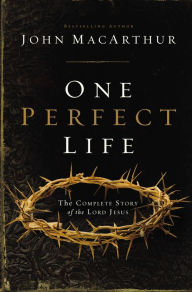
1. Read All Four Gospels. Crossway has published a lovely edition, ESV Reader's Gospels. Thomas Nelson offers One Perfect Life. Either book would get you through the text of Matthew, Mark, Luke, and John.

2. Read A Gospel. Perhaps four gospels sounds overwhelming. Choose one gospel: Matthew or Mark or Luke or John and read it slowly, carefully, deliberately. Consider reading a commentary or devotional book about that gospel in addition. For example, Beth Moore's The Beloved Disciple: Following John to the Heart of Jesus, Exalting Jesus in Matthew by David Platt, Michael Card's Mark: The Gospel of Passion, Warren Wiersbe's Be Compassionate (Luke 1-13) and Be Courageous (Luke 14-24).

3. Read the Psalms--all 150! No special book required, of course, but they do make several editions if you're looking just for the book of Psalms. Here is one in KJV. Here is another in the ESV.

Prayer and Meditation

4. Read a book about prayer and commit to implementing/incorporating it into your life. I'd recommend Praying the Bible by Donald S. Whitney or Prayer by Timothy Keller.

5. You don't have to read a book about prayer in order to start praying! Set a goal, make a commitment. It might be "I will pray ten minutes every day" for Lent. Or. "I will pray for my unsaved friends and family" throughout Lent. Or. "I will pray with my spouse" throughout Lent.

6. Keep a journal. You might want to think of it as a 'prayer' journal, or, a 'meditation' journal. Or even--a journal-journal! One of the meditation tips in Donald Whitney's Spiritual Disciplines For the Christian Life recommends meditating on Scripture by writing down observations, insights, questions, etc. He recommends setting a 'goal' for your notes. You could meditate on one verse, a handful of verses or passage, a whole chapter. I'd recommend John 17:17, John 3:1-21, Proverbs 3:5-7, Psalm 23, Exodus 3, Deuteronomy 6:4-9, Psalm 103:1-5, Psalm 103:8-13, Isaiah 53, Galatians 1, Romans 8, etc. I think you'll find that once you start this practice, this discipline, you'll find it life-changing, and want to keep it up.

Praise and Worship

7. Listen to your favorite album(s). Sing aloud. Make time every day to focus all your attention on praising God. You might want to create your own playlist of worship songs for Lent. It could be traditional hymns or contemporary worship songs. Whatever lifts your heart up to God in song.

Reading

8. Read 'from the cloud' -- the cloud of witnesses! I'd recommend:

The Valley of Vision by Arthur Bennet
The Root of the Righteous by A.W. Tozer
Holiness by J.C. Ryle
Pleasure and Profit in Bible Study by D.L. Moody

9. Read Christian nonfiction. I'd especially recommend:

Gospel: Recovering the Power That Made Christianity Revolutionary by J.D. Greear
Give Them Truth by Starr Meade
Newton on the Christian Life by Tony Reinke
A Tale of Two Sons by John MacArthur
Taking God At His Word by Kevin DeYoung

10. Read A Bible Story Book. A good story book Bible can be a refresher course on what the gospel is all about. It can also help you 'make sense' of how the Bible fits all together which might help you in your own Bible reading.

The Big Picture Story Bible by David Helm
The Biggest Story by Kevin DeYoung
The Jesus Storybook Bible by Sally Lloyd-Jones


© Becky Laney of Operation Actually Read Bible