Thursday, February 16, 2023

19. Five Puritan Women: Portraits of Faith and Love


5 Puritan Women: Portraits of Faith and Love. Jenny-Lyn de Klerk. 2023. [February] 161 pages. [Source: Review copy]

First sentence: Have you ever had an emotional or intellectual epiphany so significant that it changed your way of being for years to come? When I first pulled a book by a puritan woman off some library stacks, I was not ready for what I would find. 

The Five Puritan Women being introduced to contemporary readers are Agnes Beaumont, Lucy Hutchinson, Mary Rich (Countess of Warwick), Anne Bradstreet, and Lady Brilliana Harley. Jenny-Lyn de Klerk has chosen to focus on these five women, but not just to give mini-history lessons. She's using these women's stories to focus in on five spiritual disciplines that she feels are beneficial. For example, with Agnes Beaumont's story, she's telling Agnes' story AND emphasizing how Agnes' use of memorization as a spiritual discipline or aide proved most beneficial in her life. 

These stories are--for the most part--unexpected and fascinating. These stories are sometimes--though not always--packed with adventures and misadventures. 

Before reading this one, I had only ever heard of Anne Bradstreet. Her story might be the most 'normal' or 'typical.' of the bunch. Though her story is no less touching. 

I found this an interesting read. I loved learning more about all these women. As I just mentioned, most were unfamiliar to me. Yet even though they were strangers, I soon found myself absorbed in their stories. Absorbed is a good word. There was nothing 'technical' or 'boring' or 'dull' about their lives or the presentation of their lives. 

I would recommend this one to those that enjoy biography but also those that like the role modeling of doctrine in practice. 

© Becky Laney of Operation Actually Read Bible

Monday, February 13, 2023

18. Chosen by God


Chosen by God. R.C. Sproul. 1986. 192 pages. [Source: Bought]

First sentence: Baseball. Hot dogs. Apple pie. Chevrolet. These are all things American. To complete the mix we must add the great American motto: "We will not discuss religion or politics." Mottoes are made to be broken. Perhaps no American rule is broken more frequently than the one about not discussing religion or politics. We embark on such discussions repeatedly. And when the topic turns to religion it often gravitates to the issue of predestination. Sadly, that often means the end of discussion and the beginning of argument, yielding more heat than light. Arguing about predestination is virtually irresistible. 

I've read and reread this one so many times. It was such a pivotal book in my life.  It was full of "aha" moments, light bulb moments. 

The book is divided into nine chapters: "The Struggle," "Predestination and the Sovereignty of God," "Predestination and Free Will," "Adam's Fall and Mine," "Spiritual Death and Spiritual Life: Rebirth and Faith," "Foreknowledge and Predestination," "Double, Double, Toil and Trouble: Is Predestination Double?", "Can We Know That We Are Saved?" and "Questions and Objections Concerning Predestination."

Is the book reader friendly? Yes and no. The theological subject is complex. Being complex doesn't make it more biblical OR less biblical. Because it can sound so absolutely foreign to our natural nature, our natural mind, to everything that we think we know, it can be tough to grasp. R.C. Sproul makes a point that this is the kind of knowledge that you almost fight against accepting. Depending on your background, depending on your church experience, depending on your theological leanings, of course. I absolutely love R.C. Sproul's approach to this:
Why do we speak of it? Because we enjoy unpleasantness? Not at all. We discuss it because we cannot avoid it. It is a doctrine plainly set forth in the Bible. We talk about predestination because the Bible talks about predestination. If we desire to build our theology on the Bible, we run head on into the concept. We soon discover that John Calvin did not invent it... (10)
If we are to be biblical, then, the issue is not whether we should have a doctrine of predestination or not, but what kind we should embrace. If the Bible is the Word of God, not mere human speculation, and if God himself declares that there is such a thing as predestination, then it follows irresistibly that we must embrace some doctrine of predestination. If we are to follow this line of thinking, then, of course, we must go one step further. It is not enough to have just any view of predestination. It is our duty to seek the correct view of predestination, lest we be guilty of distorting or ignoring the Word of God. (11)
I wrote a note to myself that I kept on my desk in a place where I could always see it: YOU ARE REQUIRED TO BELIEVE, TO PREACH, AND TO TEACH WHAT THE BIBLE SAYS IS TRUE, NOT WHAT YOU WANT THE BIBLE TO SAY IS TRUE. (12)
They say there is nothing more obnoxious than a converted drunk. Try a converted Arminian. Converted Arminians tend to become flaming Calvinists, zealots for the cause of predestination. You are reading the work of such a convert. (13)
To a Calvinist, to someone of the "Reformed" faith, the book is easier going. Once you connect the dots, once you have grasped the doctrines of grace, then it is hard to see what kept you blind to these "obvious" biblical truths. 

Chosen by God is a book to read or perhaps reread slowly and thoughtfully. It is not necessarily a book to be rushed. It's a book to read side by side with the Bible, a book to be studied and pondered.

Favorite quotes:
The freedom of the sovereign is always greater than the freedom of his subjects. (24)
The very essence of grace is that it is undeserved. God always reserves the right to have mercy upon whom he will have mercy. God may owe people justice, but never mercy. (33)
Let us assume that all men are guilty of sin in the sight of God. From that mass of guilty humanity, God sovereignly decides to give mercy to some of them. What do the rest get? They get justice. The saved get mercy and the unsaved get justice. Nobody gets injustice. Mercy is not justice. But neither is it injustice. (37)
God is free. I am free. God is more free than I am. If my freedom runs up against God's freedom, I lose. His freedom restricts mine; my freedom does not restrict his. (43)
To have free will is to be able to choose according to our desires. Here desire plays the vital role of providing a motivation or a reason for making a choice... According to Edwards a human being is not only free to choose what he desires but he must choose what he desires to be able to choose at all. (54) 
Our choices are determined by our desires. They remain our choices because they are motivated by our own desires. (54)
The will is a natural ability given to us by God. We have all the natural faculties necessary to make choices. We have a mind and we have a will. We have the natural ability to choose what we desire. What, then, is our problem? According to the Bible the location of our problem is clear. It is with the nature of our desires. This is the focal point of our fallenness. Scripture declares that the heart of fallen man continually harbors desires that are only wicked... Before a person can make a choice which is pleasing to God, he must first have a desire to please God. Before we can find God, we must first desire to seek him. Before we can choose the good, we must first have a desire for the good. Before we can choose Christ, we must first have a desire for Christ. The sum and and substance of the whole debate on predestination rests squarely on this point: Does fallen man, in and of himself, have a natural desire for Christ? (60-1)
Edwards insists that, in the Fall, man lost his original desire for God. When he lost that desire, something happened to his freedom. He lost the moral ability to choose Christ. In order to choose Christ, the sinner must first have a desire to choose Christ. Either he has that desire already within him or he must receive that desire from God. (61)
Original sin refers to the result of the sin of Adam and Eve. (63)
Before the Fall Adam was endowed with two possibilities: He had the ability to sin and the ability not to sin. After the Fall Adam had the ability to sin and the inability not to sin. The idea of "inability to not" is a bit confusing to us because in English it's a double negative. Augustine's Latin formula was non posse non peccare. Stated another way, it means that after the Fall man was morally incapable of living without sin. The ability to live without sin was lost in the Fall. This moral inability is the essence of what we call original sin. (65)
No human being can possibly come to Christ unless something happens that makes it possible for him to come. That necessary condition that Jesus declares is that "it has been granted to him by the Father." Jesus is saying here that the ability to come to him is a gift from God. Man does not have the ability in and of himself to come to Christ. God must do something first. (68) (John 6:65)
A cardinal point of Reformed theology is the maxim: "Regeneration precedes faith." Our nature is so corrupt the power of sin is so great, that unless God does a supernatural work in our souls we will never choose Christ. We do not believe in order to be born again; we are born again in order that we may believe. (72-3)
We see people searching desperately for peace of mind, relief from guilt, meaning and purpose to their lives, and loving acceptance. We know that ultimately these things can only be found in God. Therefore we conclude that since people are seeking these things they must be seeking after God. People do not seek God. They seek after the benefits that only God can give them. (110)
Seeking is the business of believers... The Christian life begins at conversion; it does not end where it begins. It grows; it moves from faith to faith, from grace to grace, from life to life. The movement of growth is prodded by a continual seeking after God. (111)
When God regenerates a human soul, when he makes us spiritually alive, we make choices. We believe. We have faith. We cling to Christ. God does not believe for us. (118)
Jesus is irresistible to those who have been made alive to the things of God. Every soul whose heart beats with the life of God within it longs for the living Christ. (123)
I learned one thing clearly in my experience in evangelism: The message of justification by faith alone has not penetrated our culture. Multitudes of people are resting their hopes for heaven on their own good works. They are quite willing to admit they are not perfect, but they assume they are good enough. They have done "their best" and that, they tragically assume, is good enough for God. (165)

© Becky Laney of Operation Actually Read Bible

Sunday, February 12, 2023

Sunday Salon #7


Current Bible plans and projects:

NRSV XL -- Proverbs 5-11; Psalms 24-61. 2 Samuel. 1 Kings. 2 Kings. Hosea. Joel. Tobit. 

ESV Church History -- 2 Kings 3-25. 1 Chronicles 1-29. 2 Chronicles 1-12. Ecclesiastes. Song of Solomon. 2 Thessalonians. 1 Timothy. 2 Timothy. Titus. Philemon. Hebrews 1-6. 

BSB M'Cheyne-- Genesis 38-44; Mark 8-14; Job 4-10; Romans 8-14.

Growing 4 Life. February is Mark 5-8. I read it in these versions:
1599 Geneva; 1537 Matthews; CSB, NIV 84, KJV, ASV, LSB, and RSV.  

Current plans for other books:

Still reading:  Laura Frantz' The Rose and the Thistle. 
Began reading Chosen by God by R.C. Sproul

© Becky Laney of Operation Actually Read Bible

Saturday, February 11, 2023

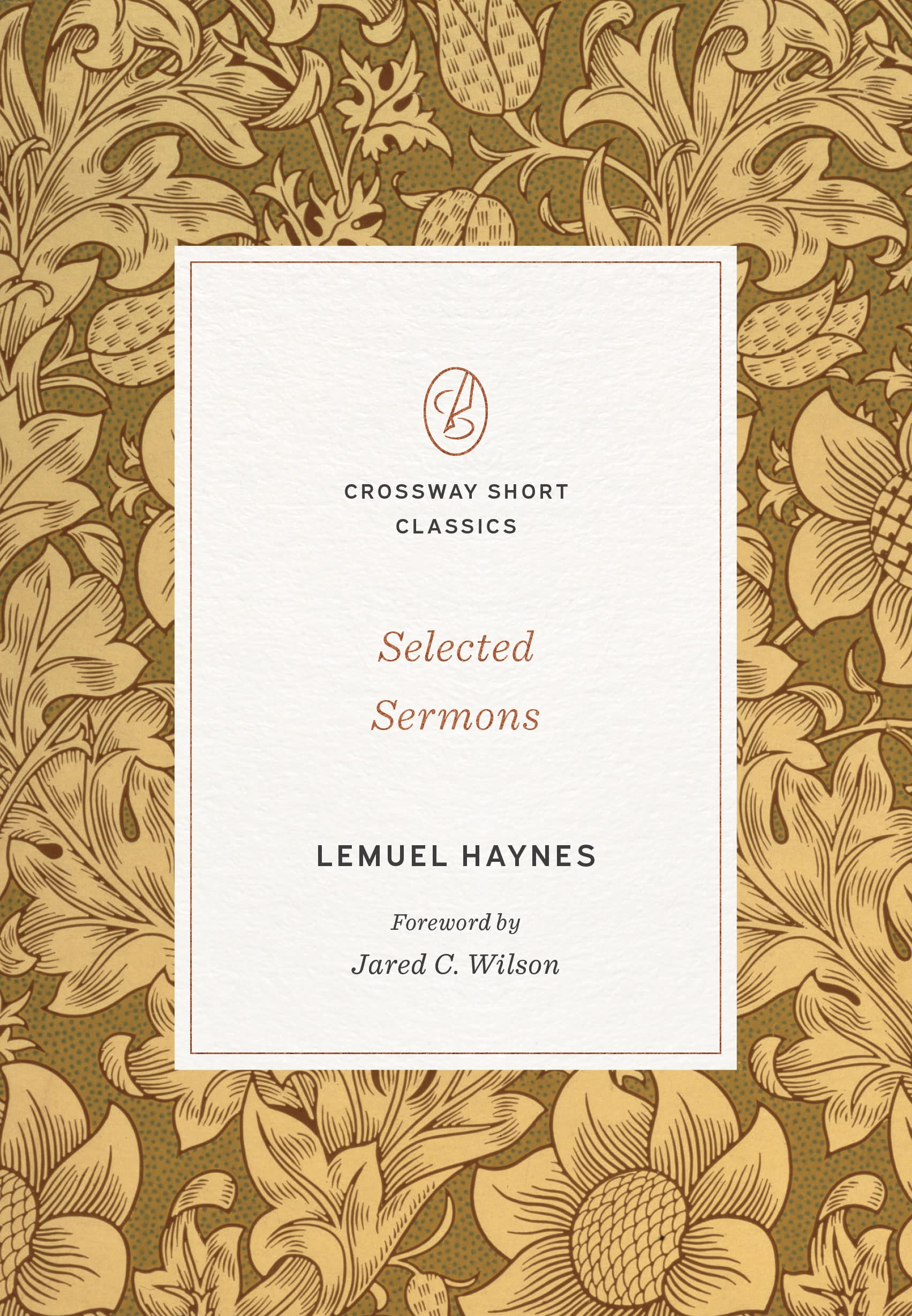
17. Selected Sermons


Selected Sermons. Lemuel Haynes. Edited by Jared C. Wilson. 2023. 71 pages. [Review copy]

First sentence: You hold in your hands a rare gem recovered from one of the darker mines of church history, as Lemuel Haynes is perhaps the single most important American figure most Christians have never heard of. Born July 18th in 1753 to a Black man and a White woman, Haynes was abandoned by his parens in the home of a family friend who sold the infant Haynes into indentured servitude. By the providential hand of God, however, young Lemuel was place into a Christian home, where by all accounts including his own, he was treated as a member of the family and raised to love the things of God.

Selected Sermons by Lemuel Haynes contains four sermons: "Universal Salvation," "A Sermon on John 3:3," "The Character and Work of a Spiritual Watchman Described," "Liberty Further Extended." 

Is the book a rare gem? Yes. Because reprints of his sermons are rare--at least according to the introduction/preface. I certainly have never heard of him as a theologian/preacher/teacher/author. I've not come across his work before. Yes. Because it is a 'gem.' I know, I know, I know that there are just four sermons. But a book doesn't have to be LONG to be worthwhile. Would I have read this book if there'd been sixteen sermons? YES. Sadly, there just aren't that many copies of his sermons to have survived. So we have four that have survived. Must be thankful for that at least.

The sermons that stick out most from my reading are the first and last. In "Universal Salvation," Haynes is preaching against the heresy of universal salvation. He argues that Satan/the Devil was the first preacher and that the first 'sermon' ever 'preached' to mankind was that of universal salvation. His sermon on the fall of man [Genesis 3] is SOMETHING. It got me thinking. It engaged me. I'd honestly never thought of the devil as a preacher. But after reading this sermon it began to make all kinds of sense. He masquerades as an angel of light and he's the father of lies. He knows just what to say to 'tickle' the ears of his audience. He can twist the truth just enough to deceive and mislead. He has always used Scripture to his so-called advantage. Adding here, subtracting there, twisting, turning, pulling, distracting. In "Liberty Further Extended." this American Patriot preaches against slavery. This is a mighty sermon--point after point after point, it's on target and just rings TRUE. He argues against all the so-called 'reasons' in support of slavery that are supposedly from the Bible are faulty. 

All the sermons are worth reading. 

© Becky Laney of Operation Actually Read Bible

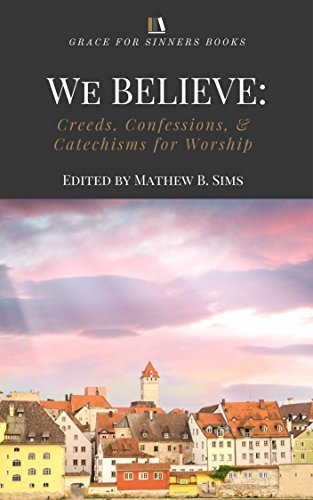
16. We Believe


We Believe: Creeds, Confessions, and Catechisms for Worship. Mathew B. Sims. 2015. 360 pages. [Source: Bought]

First sentence (from the introduction): My parents prioritized family worship--but we never used creeds, catechism, and confessions. My parents were former Roman Catholics who were suspicious of these tools because of religious baggage.

We Believe is a collection of confessions, catechisms, and creeds. The book is edited by Mathew B. Sims. The book includes a few pieces that are neither confessions, catechisms, or creeds. There are a handful of 'commentary' pieces or prefaces and the like. 

The book is organized into faith traditions. It opens with the 'Catholic' creeds (Apostle's Creed, Nicene Creed, Athanasian Creed), before moving on to other traditions. The other traditions are: The Dutch Reformed Tradition (Belgic Confession, Heidelberg Catechism, Canons of Dordts); The Scottish-English Tradition (The Westminster Confession of Faith, Westminster Shorter Catechism); The Particular Baptist Tradition (1689 London Baptist Confession of Faith); German-Lutheran Tradition (The Augsburg Confession; Luther's Small Catechism); and finally the Anglican Tradition (The Thirty-Nine Articles; An Outline of the Faith, Commonly Called the Catechism). While the book may not be absolutely complete and thorough, I think it provides more than enough of a 'sample' of what creeds, confessions, and catechisms contain, what they are all about. Readers can see--if they read it cover to cover--what subjects are covered, how they agree with one another, or, perhaps at times how they differ from one another. Some are definitely more practical for daily/weekly practical use. Others seem more of a reference.

I bought this one because I wanted my creeds, confessions, and catechisms all in one place. There are a handful that I absolutely LOVE, LOVE, LOVE. In particular, the Heidelberg Catechism, the Westminster Shorter Catechism, and the Belgic Confession. (I also love The Apostle's Creed and the Nicene Creed.) 

This book was just what I wanted--expected--needed. 

© Becky Laney of Operation Actually Read Bible

Wednesday, February 8, 2023

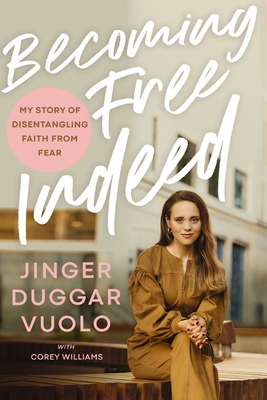
15. Becoming Free Indeed


Becoming Free Indeed. Jinger Duggar Vuolo. 2023. 240 pages. [Source: Library]

First sentence: I first had the idea to write this book in the summer of 2017. My husband, Jeremy, and I had just attended an Advanced Training Institute conference in Big Sandy, Texas (later in the book, I'll talk more about what the conference is and why we went). While there, I saw dozens of people I'd grown up with--friends who, like me, had come to Big Sandy every year. But for every old friend I saw that week, there was one or two I expected to see who didn't show up. In the coming months and years, I'd start to hear stories of those friends. I'd find out that some of them no longer loved Jesus and wanted nothing to do with Christianity. As they reached young adulthood, they had rejected everything they'd been taught about God, the Bible, and the Christian faith. While that is not my story--I am a Christian who loves Jesus and wants to follow HIm--I have, like those friends, rejected much of the teaching I heard each year at the conference in Big Sandy. My faith is still intact, but it has changed. Instead of leaving the faith entirely, I have unthreaded, or disentangled, the truth of Christianity from the unhealthy version I heard growing up.

Premise/plot: Becoming Free Indeed is the memoir of Jinger Duggar Vuolo. In this memoir, she writes of her disentangling journey from Bill Gothard's teaching [Institute of Basic Life Principles.] It is a journey of her examining Gothard's teachings in light of Scripture. She'd hold up Gothard's teachings to what the Bible actually says. She learned that what Gothard taught didn't match a common sense reading of Scripture [or stand up to spiritual scrutiny]. She unpacks her childhood faith--the faith that she grew up believing, the faith that she was consistently instructed and raised in--and slowly, deliberately re-examines everything. All of her unpacking is done with the mind to be true to Scripture, to line up her beliefs, her views, her values with Scripture. She writes that this process was scary. Scary because she knew that it might create distance, division, discord with her immediate family members who were still diehard Gothard supporters, to those who are heart-soul-body still believers in the IBLP. But scary also because she was replacing the known, the certain, with the unknown, the uncertain. Letting herself question EVERYTHING she was taught for the first twenty to twenty-two years of her life was--and I think we can all agree--scary. It was "safe" to not ask questions, to push down doubts, to just go with the flow, to just submit to what her parents wanted/needed/preferred. 

Ultimately, I believe we'd both agree that it was the Holy Spirit who led her to the truth, to freedom, to the true, fully-fleshed out gospel. But the catalysts for this change comes down [in some ways] to two things: her relationship with her brother-in-law, Ben. As she spent time with Ben and Jessa as they were courting, as they were married, Ben's influence began to effect her own view of Scripture, of the faith. She began searching and seeking out more and more in Scripture. Her theology got meatier--here and there. She wasn't all-in committed to "disentangling" if you will. But she became hungry for the Word of God, interested in God's character, etc. She later met Jeremy. Her friendship/courtship/marriage with Jeremy led her to re-examine EVERYTHING. He wanted to know more about the IBLP. He was seeking to understand how his wife had been raised, what "made her tick" if you will. They watched over sixty-hours of teachings by Bill Gothard. Together they watched, discussed, studied....all in light of Scripture. Her view of Scripture had shifted considerably. She began to agree with her husband that Gothard's teachings weren't biblical. Some of his messages were scary-dangerous. [She shares several examples of this throughout the book.] Lies were being replaced with truth. Recognizing that Jesus is the ULTIMATE truth. That the Word of God IS truth. One thing she noticed is that Gothard's view of Scripture was lacking. 

My thoughts: Legalism is not restricted to the IBLP. It's not. That's why I think there is plenty within the memoir that would make it relevant to many/most readers. This memoir celebrates the gospel. I found it an interesting read. 

© Becky Laney of Operation Actually Read Bible

Sunday, February 5, 2023

Sunday Salon #6


Current Bible plans and projects:

ESV Church History Bible: Proverbs 29-31. Psalms 139-150. 1 Samuel 21-31. 2 Samuel. 1 Kings. 2 Kings 1-2. Philippians. Colossians. Matthew 1-28. 1 Thessalonians. I finished up Psalms and Proverbs this week. I'll now be doing my Book of Common Prayer readings from those two books in the NRSV. I am still loving the ESV Church History Bible. 
This was Jesus' reason for speaking to them in parables: they could not understand spiritual things, and therefore he gave them no naked doctrine, for then they would not have listened at all. They did not really see what they saw, nor hear what they heard. The plainer the teaching, the more they were puzzled by it. They had become so morally and spiritually diseased, that the only thing they would notice was the attractive dress of a truth; for the truth itself they had no liking and no perception. ~ Charles Spurgeon 

NRSV XL. Psalms 1-23. Proverbs 1-4. Exodus 16-40. Leviticus. Numbers. Deuteronomy. Joshua. Judges. Ruth. 1 Samuel. 

M'Cheyne BSB. Genesis 30-37. Mark 1-7. Esther 6-10. Job 1-3. Romans 1-7. 

Growing 4 Life January (Mark 1-4) and February (Mark 5-8). I read some from each this week since we didn't switch months until mid-week.

Mark 1-4 -- Living, NRSV, 1560 Geneva, NIV 84.
Mark 5-8 -- LSB, Living, NRSV, ESV, 1560 Geneva, NIV 84, NASB 95. 

Current plans for other books:

I finished a handful of books this week! And I've reviewed them already! I am currently reading Laura Frantz' The Rose and the Thistle. 

Questions:

Do you write down quotes? share quotes? mark quotes? I started sharing a tiny selection of quotes from the ESV Church History bible this week. 

© Becky Laney of Operation Actually Read Bible