Showing posts with label books read in 2023. Show all posts

Wednesday, December 20, 2023

90. How To Memorize Scripture for Life


How To Memorize Scripture for Life: From One Verse to Entire Books. Andrew M. Davis. 2024. [January] 72 pages. [Source: Review copy]

First sentence: Welcome to the rich and challenging journey of Scripture memorization! You are about to embark on a searching and rewarding exercise of spiritual and mental labor: the memorizing of whole chapters and books of the Bible. This effort will challenge you greatly—not simply because memorizing is hard work (it is) but also because the verses themselves will search your soul with the light of God’s perfect truth.

I thought it would be a great idea to read another [a second] book on Scripture memorization. [Plus this one is a review copy.] I ended up comparing this one to Memorizing Scripture: The Basics, Blessings, and Benefits of Meditating on God's Word by Glenna Marshall. Was it intentional? unintentional? A bit of both if I'm honest.

I will start with the pros. Davis is nothing if not practical. Also emphatic. He says while it is okay to memorize [random, topical] verses, it is absolutely the best to memorize whole chapters, whole books of the Bible. His reasoning is that this affords the greatest benefit. It helps you a) meditate on the Word, b) apply and obey the Word, c) encourage and support other believers with the Word of God, d) evangelize to unbelievers. Back to his practical nature, his approach doesn't seem to vary all that much. Pick a book (with the Spirit). Pick a deadline (with the Spirit). Tackle one new verse a day using his very specific method. Review previous verses. [Lather. Rinse.] Repeat. [I jest.] His method is to a) read aloud a new verse, say Ephesians 1:1, ten times. Then repeat the verse [Ephesians 1:1 in our example] ten times without looking. The next day repeat [without looking, I believe] Ephesians 1:1 ten times. Then read aloud Ephesians 1:2 ten times. Then repeat Ephesians 1:2 ten times without looking. The next day, recite Ephesians 1:1 and Ephesians 1:2 ten times apiece without looking. Read aloud Ephesians 1:3 ten times. Then repeat Ephesians 1:3 ten times without looking. 

More pros are that he a) admits that it is hard, difficult, challenging, time-consuming. He's honest about the effort and level of commitment. He also does not back down [nor should he????] that Scripture itself commands believers to memorize it. 

Are there cons? Yes, in my opinion [for what it's worth.] He doesn't really allow for diverse learning differences, styles, techniques. It's like this is the way I've done it, copy me exactly. The practicality ends rather quickly if his method doesn't work well for you. Other authors offer MORE tips and tricks. Like writing the verse you are memorizing, like listening to the verse you are memorizing, like writing out first letters for each word, putting up cards around the house, recommending various apps, etc. He also doesn't have great "bedside manner" in my opinion. He is more a brisk, just do it as opposed to someone who is a natural at encouragement and inspiration. 

I also found that the title was slightly misleading. His goal is not to memorize "for life" in the interpretation that these are verses/chapters/books that you will retain for life. Instead, I believe, his "life" means for the spiritual benefit and improvement of life. He actively talks about how each book you memorize should be "forgotten" or "wiped clean" so that you can start a new project. 

He does try to impress upon readers the benefits of Scripture memorization. However, Glenna Marshall's book was more encouraging and even more practical. 

© Becky Laney of Operation Actually Read Bible

Monday, December 18, 2023

21. KJV New Chronological Bible


The New Chronological Bible (Large Print) (King James Version) God. Edited by R. Jerome Boone. 1980. 1551 pages. World Bible Publishers. [Source: Bought]

First sentence: Thy throne is established of old: thou art from everlasting. Before the mountains were brought forth, or ever thou hadst formed the earth and the world, even from everlasting to everlasting, thou art God. And he is before all things, and by him all things consist. In the beginning was the Word, and the Word was with God, and the Word was God. The same was in the beginning with God. 

There have been other Bibles in the King James Version that have been arranged chronologically. This one is from 1980. I am guessing--pure speculation--that it was not a huge success from a publishing standpoint and did not stay in print. Then again, I had never heard of World Bible Publishers until I started thrifting. 

This one is double column, words of Christ in BLACK. The font size is nice. 

What makes this one unique? Or mostly unique? It is arranged chronologically. Any verse from any chapter any book could be spliced--rearranged--according to one man's editing desires. Some are obvious editorial choices; perhaps others less so. I would love a behind the scenes peek into WHY he put certain verses/chapters where he did. 

The Bible is arranged in an outline with twelve major headings.
  1. Development of the Early World
  2. Development of Israel as a Tribe
  3. Development of Israel as a Nation
  4. Development of Israel as a Kingdom
  5. Division of Israel into a Dual Kingdom
  6. Survival of Israel in the Southern Kingdom
  7. Captivity of Israel in Babylonia
  8. Restoration of Israel as a Nation
  9. Preservation of Israel During the Intertestamental Period
  10. Inauguration of the Kingdom of God on Earth
  11. Continuation of the Kingdom of God on Earth
  12. Consummation of the Kingdom of God on Earth 
The earliest section, so far, is the most choppy. I don't envy anyone the task of trying to mix and blend the whole Bible into a grand opening. (I personally would not mess with Genesis 1:1, but that is just me)

Here is how Boone worked it:

Any arrangement is going to obviously reveal the theological belief system of the arranger, the editor. For example, in this instance the interpretation that Isaiah 14 and Ezekiel 28 refer to Satan's fall. He also places the book of Ruth and the last five chapters of Judges BEFORE the rest of the book. (Perhaps with the exception of Judges 1). He also has SAMUEL contemporaries with SAMPSON. 

He arranges some sections with parallel passages. (Though thankfully not in the New Testament). I found this more annoying than not. I found myself unable to read both in any meaningful way. I was more having to pick and choose which column to focus on and which to skim. And the passages may have dealt with the same king, etc., but the phrasing wasn't the same. So in my personal opinion not all that "parallel." 

Though I didn't particularly know this at the start, I ended up not really being a fan of chronological arrangement. (This isn't to say that I regret my time in God's Word). I much prefer to read whole books to reading spliced books. To each his/her own however. I have no issue with readers--believers--who greatly appreciate/love this method of Bible reading. 

This will almost definitely be my final Bible to complete in 2023. 

© Becky Laney of Operation Actually Read Bible

Wednesday, December 13, 2023

20. Nelson NASB 1977 Royal Reference Bible

Nelson NASB 1977 776B Royal Reference Bible. God. 1977 (1989) 1460 pages. [Source: Bought]


First sentence: In the beginning God created the heavens and the earth.

I have lost track of how many times I've read the NASB 1977 in 2023. I have. It's become one of my all-time favorite, favorite, favorite translations. Honestly I couldn't imagine not having this one as one of my go-to translations. Always handy. 

This one was a great find thrifted. It is double column with center column reference. Words of Christ in red. The words are almost brown. They could have faded from a dark red to brown. The font size is small. But the book is VERY light weight. It is truly like a feather compared to something like the Thompson Chain Reference. It is definitely compact. Could be easily read just about anywhere including in bed. There is a concordance and color maps.


I read this one using the "Super Glutton" Bible Reading Plan that I created a few months ago. This is my second time to use that plan. It works GREAT. I used it differently this time around. The original plan has four columns. The first time through (with another Bible, another translation) I went across all four columns. Two in the morning. Two in the evening. This second time, I decided to read just two columns. One row from two columns in the morning. One row from two columns in the evening. I spent about fifteen days (give or take two or three) reading the Torah and New Testament. I spent about ten days (give or take two or three) reading the Prophets and the Writings. I did pick up speed the last few days because the minor prophets (and Chronicles) went VERY quickly. Momentum builds. 

My start date: November 21, 2023. My end date: December 13, 2023. 

© Becky Laney of Operation Actually Read Bible

Tuesday, December 12, 2023

88. 365 talks with Jesus


365 Talks with Jesus: Prayers to Share with Little Ones. Amy Parker. Illustrated by Sally Garland. 2024. [February 2024] 416 pages. [Source: Review copy]

First sentence: Dear Parent, This little book is a collection of 365 simple, Bible-based prayers to spark conversations between your little ones and Jesus. We believe prayer—seeking Jesus every day, in every way—is the most transformational tool with which we can empower our children. And the earlier we start, the better. We have carefully written these prayers to be relatable to preschoolers, in language they can understand. Each short prayer can be read aloud by the parent and includes a quick, bold line for your child to repeat before saying, “Amen.”

This prayer book for young children [toddlers through lower elementary] contains 365 prayers. These prayers are arranged in thematically into sections: "When I Am Happy," "When I Am Sad," "When I Am Afraid," "When I Am Thankful," "When I Worry," "When I Am Angry," When I Feel Alone," "When Someone is Mean," "When I Need to Share," "When I Need Help," "When I Need to Forgive," When I Need Peace," "When I've Done Something Wrong," "When I Don't Know What To Do," "When I Have to Do Hard Things," "When I Don't Understand," "When I Wonder About God," "When I Wonder About Jesus," "When I Wonder About the Bible," "When I Wonder About Heaven."

The prayers are straight-forward, kid-friendly, relatable, concise, not overly flowery, not unnaturally rhyming. In other words, everything I personally think a kid's prayer book should be. 

My first impression is that I would have absolutely LOVED this book as a kid. I think I would have worn out a copy of it. Not because it being poorly made, but because I could imagine my younger self praying some of these sections through OFTEN. I appreciate the child's point of view that has been kept front and center. Will every reader find it authentic? I can only say that I found it authentic. 

As an adult I appreciate the doctrinal skeleton upon which these prayers are built. There is a strong biblical foundation. I feel--for whatever it's worth--that the author of these prayers is familiar with the Word of God, values the Word of God, upholds the Word of God as being the VERY (actual) Word of God. 

This book certainly could be read cover to cover, one prayer a day. BUT I think the value is in the fact that you can use it as a resource. As many times a day as you want, for example, and matching the prayer with the day's experiences and emotions. This book isn't necessarily something to "check off" a list, a "duty" to be done. It is a practical, in-the-moment guide to ease parents and young children into prayer. Again, I think the emphasis is not pray these exact prayers forever and ever. I think it is a way to train hearts and minds to talk naturally with God. I wouldn't be surprised if the ultimate goal was for little ones to begin praying their own words to God. 

Sample prayers [aka Quotes]

Dear Jesus, Just knowing that You are with me makes me happy. I love singing songs about You. I love reading about You. I love talking to You. Thank You for bringing so much joy! Amen.

Dear Jesus, The Bible reminds us that we are happy when we trust in You (Proverbs 16:20). It helps me feel safe and loved to know that You are always there. Thank You for being someone I can count on. Help me always to know that I can trust in You. Amen.

Dear Jesus, I know that You are powerful. I know that You made me, and You have known me from the very beginning. I know that You made me to have all kinds of feelings—feelings like sadness and happiness and excitement and anger. Thank You for caring about how I feel, Jesus. Amen.

Jesus, Sometimes when my mind and body are tired, they can make me cry. I know that my mind and body need rest. Thank You for giving us feelings to remind us of what we need. Help me to get the rest I need, Jesus. Amen.

When I’m sad or grumpy, I’m not always very nice. Instead of spreading joy, I make others feel bad. Jesus, help me to love others like You do. Help me to be nice to everyone around me, even when I don’t feel like being nice. Amen.

Dear Jesus, Being sad can sometimes feel like too much. Sometimes it can seem like no one understands. Sometimes it can seem like no one can fix it. But You can, Jesus. Help me remember to talk to You when I’m sad. Amen.

Dear Jesus, Sometimes I’m afraid of something that ends up being silly, like trying a new food. Sometimes I let my fear grow too big. And other times my fears are important. They keep me safe. Help me to know the difference. Jesus, please calm my fears. Amen.

Jesus, Thank You for the people I can go to when I’m afraid. Thank You for the people who listen to my fears. Thank You for the people who hold me close and tell me that I’m safe. Thank You, Jesus, for the people who help calm my fears. Amen.

Jesus, In the Bible, You say not to worry (Matthew 6:31). But I do. I worry about big things. I worry about little things. I worry about things I can’t control. So help me, Jesus. Help me not to worry. Amen.

Jesus, Sometimes when I’m angry, I do mean things that I shouldn’t. I use my hands and feet and body to show my anger and hurt other people. Please forgive me. Help me, Jesus, to use my words to tell why I am angry. Amen.

Oh, Jesus, You’ve given us the best gift! You give us Your peace. Your peace calms the storms. It cleans up the messes. It makes our hearts feel better when they are sad. Thank You, Jesus, for giving me Your peace. Amen.

Dear Jesus, The Bible tells us that when we have Your words in our heart, they help us choose right over wrong (Psalm 119:11). Jesus, help me to listen to and know the words You’ve given us. Jesus, help me to keep Your words in my heart so that I do the right thing. Amen.

Even when we think we do understand something, the Bible tells us not to depend on ourselves (Proverbs 3:5–6). It’s not that we shouldn’t learn and understand things, but that we should trust God more. Jesus, help me trust God more than the things I learn and understand. Amen.

I know that You are perfect. And I’m not. I can be mean and selfish and grumpy and stubborn. But the Bible tells us that You didn’t come to the world to tell us how bad we are. You came so that we could be saved (John 3:17). Thank You, Jesus, for saving me. Amen.

Jesus, Your Word tells us that the Bible was breathed out by God (2 Timothy 3:16). I imagine someone’s foggy breath on a cold day—maybe that’s like God’s holy breath creating the Bible. When I don’t know what to do, when I feel like God is far away, help me to remember to pick up my Bible. Jesus, help me to remember that the Bible is the breath of God. Amen.

Oh, Jesus, Help me to remember that the words You have given me aren’t just words. You said that they are spirit and life (John 6:63). They help me grow closer to You, and, when I obey them, they help me have the best life. Jesus, help me always to learn from the Bible so that I will have Your spirit and life. Amen.

Monday, December 11, 2023

87. The Pine Tree Parable


The Pine Tree Parable. Liz Curtis Higgs. 1997. 36 pages. [Source: Library] [picture book]

First sentence: The farmer and his family grew all kinds of things all year 'round, like flowers, vegetables, and pumpkins. Their favorite things to grow were Christmas trees. "He plants a pine tree, and the rain makes it grow." Isaiah 44:14

Premise/plot: A family learns more about the true meaning of Christmas in this children's book. The farmer's wife--all the characters are nameless, not surprising since this one is aiming to be a parable--has reserved the absolute best pine tree for herself. Year after year the tree remains her pride and joy. It is not for sale. Others are for sale, I believe, and some are even free. When a poor family comes to the tree farm, the little girl falls in love with the gorgeous, amazing, not-for-sale tree, will the farmer's wife have a change of heart? 

My thoughts: This was definitely my first time reading The Pine Tree Parable. I think it's a solid story about the meaning of Christmas. I think there are many positive elements to the story. I don't know exactly that using this many verses out of context is to be praised offhand. But the story does flow nicely--out of context verses and all. 

The verses woven into the story: Isaiah 44:14, Ezekiel 31:7, Job 28:19, Proverbs 22:2, Ezekiel 31:5, Proverbs 13:12, Matthew 18:5, Proverbs 19:17, Galatians 5:14, 2 Corinthians 9:7, 2 Corinthians 8:9, 

© Becky Laney of Operation Actually Read Bible

Sunday, December 10, 2023

86. The Legend of the Candy Cane


The Legend of the Candy Cane. Lori Walburg. Illustrated by James Bernardin. 1997. 32 pages. [Source: Library]

First sentence: One dreary evening in the depths of November a stranger rode into town. He stopped his horse in front of a lonely storefront. The windows were boarded shut and the door was locked fast. But the man looked at it, smiled, and said, "It will do."

Premise/plot: This is a picture book "origin" story for the popular Christmas treat, the candy cane. Children learn from a candy maker (candy shop owner) the spiritual significance and symbolism used in the candy cane.

My thoughts: I liked this one well enough. I do love candy canes (though it is an extremely rare treat these days). I have heard most of these before though that might just be because I read this twenty-five years ago. 

© Becky Laney of Operation Actually Read Bible

Monday, December 4, 2023

85. The Book of Common Prayer: A Biography


The Book of Common Prayer: A Biography. Alan Jacobs. 2013. 256 pages. [Source: Library] 

First sentence: The Book of Common Prayer came into being as an instrument of social and political control. There will be much else to say about its origins, but here we must begin: the prayer book was a key means by which the great lords who ruled on behalf of the young King Edward VI consolidated English rule of the English church. In making one book according to which the whole country would worship, Cranmer and his allies were quite consciously dismantling an immense and intricate edifice of devotional practice. They had both theological and political reasons for doing this, but the immediate effect was political and was widely seen as such.

This book is a biography not of a person but of a book--a religious book, The Book of Common Prayer. The chapters are as follows:

One Book for One Country
Revision, Banishment, Restoration
Becoming Venerable
The Book in the Social World
Objects, Bodies, and Controversies
The Pressures of the Modern
Many Books for Many Countries
The Prayer Book and Its Printers

Many chapters are chronological--focusing on the history of the book--religious/theological, political, social, and actual history. But the later chapters focus less on history and are more thematically arranged. I really found the first half engaging and fascinating. It was packed with so much I didn't know but wanted to know. The later chapters were more on changing times and the falling apart of the church. Well, that is an exaggeration I'm sure. It isn't so much falling apart of "the church" as it is the falling apart of the "British Empire" and the "Church of England." The book does not particularly "hold" like-minded individuals together as "one" worshipping body. There is no "one" book of Common Prayer, each country, each denominational break off can publish their own revision of the prayer book. If it sounds like I have a problem with that, I don't. [My personal favorite is the 1928 American revision of the Book of Common Prayer.]

I enjoyed this one for the most part. It probably can come across as a bit dry if you do not bring an interest in the subject. 


© Becky Laney of Operation Actually Read Bible

Wednesday, November 29, 2023

19. Holy Bible (Giant Print Reference Bible) (KJV)


King James Version, Giant Print, End of Verse Reference, Special Helps. 1976. Nelson 882BR. 1962 pages. [Source: Bought]

First sentence: In the beginning God created the heaven and the earth.

I absolutely loved, loved, loved this one. It was love at first sight. Yes, I love the King James Version. But there was something special about this one that made me love it even more than you might expect.

This one has a padded cover. It is surprisingly light weight despite being giant print. Now "light weight" might be a relative term, obviously. But I have read and carried other "Super Giant" or "Giant Print" bibles that were bulky and just HEAVY. I don't know how this one is so "giant" and yet not bulky. But it was. It is. 

Is there ghosting? Yes. Some. Some pages are more obvious than others. But for the most part it was never a distraction. Perhaps because the font color was so dark. The black is genuinely BLACK. The red [Words of Christ] are a very DARK red. Very easy on the eyes all things considered. The text colors were not faded or faint. 

This one is two columns. Words of Christ in red--as I mentioned before. It is verse by verse. 

This one has some bells and whistles. More than you might expect for being "text only." This one features end of verse references. Not a TON of references. There are plenty of verses without any references at all. But when references do appear they are at the end of the verse--a handful. This one also defines some archaic words. Again not a great amount. Perhaps not as many as one would want if one was struggling with readability. Sometimes the words they choose to define are easy to understand without any helps. While other words that are more difficult they chose not to define. 

This one features a substantial family section--pages to fill out with personal information. 

The back matter is surprisingly MORE than what I was expecting. 
  • What is the Bible? (one page article)
  • Prophecies of the Messiah Fulfilled in Jesus Christ (nine page table/chart)
  • Bible in a year reading plan (four pages)
  • Summary of the books of the Bible (eight pages)
  • How to Study the Bible (thirteen page article)
  • first mentioned things in the Bible (two page index)
  • concordance (eighty-six pages)
  • eight color maps
As for the translation, it is the King James Version (which I personally adore). 

© Becky Laney of Operation Actually Read Bible

Monday, November 27, 2023

18. Holy Bible, Revised Standard Version, 2nd Catholic Edition


Holy Bible, RSV CE 2 (Revised Standard Version, Second Catholic Edition). God. 2006. 1096 pages. [Source: Bought]

First sentence: In the beginning God created the heavens and the earth. 

I am not a Catholic. I mention this first and foremost so that everyone knows I am not an expert by any means on what makes this one unique, special, distinct, different, etc. Apparently the first Catholic edition of the RSV was done in 1966. This is the second edition done in 2006. I'm not sure how these two editions differ or even if they do differ. (Though I imagine they must in some way). It is by Ignatius Press. 

This one does include extra books not found in [most] Protestant Bibles (for several centuries). Tobit, Judith, extra bits of Esther and Daniel, Wisdom of Solomon, Sirach, Baruch, 1 and 2 Maccabees. It does not include the whole of the Apocrypha. There are RSV Bibles published that do have more of the Apocrypha than this edition does. 

The paper is CREAM or off-white. There is very little ghosting. The pages are super glossy. Though this may not help some readers of this review, the paper reminds me of World Book paper. It is slick and smooth. 

It is double column. It is black letter. The font size of the text is on the smaller side. If I had to guess I'd say maybe around 8 pt font. Though I am NOT an expert in determining font size. 

I have not read this edition side by side with either the 1952 or 1971 (both non-Catholic) or the 1966 (Catholic). I have no idea what revisions were made or how many were made. I think one of the revisions made was to update the "thous." 


© Becky Laney of Operation Actually Read Bible

84. Memorizing Scripture


Memorizing Scripture: The Basics, Blessings, and Benefits of Meditating on God's Word. Glenna Marshall. 2023. 160 pages. [Source: Bought]

First sentence: When I was a child growing up in the '80s, my church participated in a Scripture memorization program designed to teach children to quickly memorize verses and the books of the Bible from Genesis to Revelation. 

Who is this book for? It is for Christians first and foremost. It is for hungry, seeking Christians. It is for Christians who are experiencing burn-outs and frustrations. It is for anyone and everyone who is curious and honestly wanting to know more about how to memorize Scripture. One of the biggest points is that memorization is NOT for the sake of memorization. It is not for the sake of bragging/boasting rights. It isn't to check something off a list, something that you "must" do to be a "good" Christian. Memorization has one point and one point only. Memorization for the sole sake of meditation. The sole purpose of meditation is to KNOW the Lord better and better and better. To grow close to Jesus Christ, to love the Lord more and more. How can one come to know the Lord better? to grow in one's love, one's faith? By meditating on the Word of God. And one of the primary ways to "chew the cud" if you will, to meditate, is by memorizing Scripture. 

I did not find the book condescending. In other words, the point of the book is not to make you the reader feel embarrassed, ashamed, less than. 

The book focuses some on the HOW but just as much if not more on the WHY. And it is the why that might just make all the difference in the world. Perhaps. 

The author seemed completely upfront and honest that this will be work and require effort. The results may be very slow in coming. One does not simply memorize verses--dozens, hundreds, thousands--overnight. One can't just sleep with a Bible under your pillow and you wake up ready to go. She encourages readers that just because it may take time--longer than you want--doesn't mean it's not worth doing. There is no one-size-fit-all time schedule for memorization. 

She does encourage memorizing whole chapters of the Bible instead of an isolated verse here and there. But she doesn't discourage memorizing single verses. I think start where you're able. Each chapter ends with suggested memory verses, most of these are individual verses.

Understanding the meaning of the verse is more important than being able to recite whole verses--even chapters--without any meaning, comprehension, understanding. 

Quotes: 
Psalm 119:11 says, “I have stored up your word in my heart, that I might not sin against you.” The missing element in my fight against daily sin crystallized in that moment: hiding God’s Word in my heart will help me not to sin.


Scripture memorization became a daily spiritual discipline that has changed my thought life, encouraged me in despair, helped me stand firm against temptation, flowed into many gospel conversations, and given me what I need to say when seeking to comfort and exhort my church family.


While Scripture reading and study are daily disciplines I will hold on to for life, memorization has been a bridge between reading and living. It has moved me from study of God to affection for God. My only regret? That I didn’t take the leap into the long-lost spiritual discipline of memorization sooner.


With the help of the Holy Spirit, Scripture memorization can shape the way you think and act and live. It can deepen your love for the Lord and provide the words you need in conversations with others. Hiding God’s Word in your heart can help you walk a little more closely with the Lord who gave you His Word to equip you for everything you might need in this life.

Scripture memory is not a race. It’s a journey. It’s not about recitation—it’s about saturation. It can be done in tiny bits over long periods of time, yet yielding an immeasurable harvest of fruitfulness in your life.

Memorization moves us from study to application, from knowledge to affection. Rather than viewing Scripture memorization as one more thing on your spiritual discipline to-do list, you can view it as the continuation of what you’re already doing.

Whatever you pour into your mind will affect your thought life and influence your response to temptation.

What sanctifies us—makes us more and more like Jesus—is God’s Word. Scripture. All the words in the Bible.

It is never a loss to think about God’s Word.

Christians know the Word because they know the One who spoke it. They know the Word Himself, and His voice comforts them in the valley of the shadow of death. And because they know His voice, they know that everything He has promised about eternity with Him will be true.


The Bible is God’s voice, written down for us. Through His chosen means of revelation, we learn who He is, who we are, how we needed rescue from slavery to sin and the domain of darkness. We’re given the story of Jesus’ birth, life, death, and resurrection—how He offers light and life to all who believe in Him for the forgiveness of sins. We understand what it means to follow Him, to persevere in the faith, to take the gospel into the world, and to live as the body of Christ as we wait for His return. We have the full story of redemption, and though we are still living it, we know that God has written a very good ending. He has given us what we need in Scripture to keep listening to His voice until we see Him face-to-face. One day, we’ll hear it with all the glorious pitch, tenor, and tone that He intended—but until then, we hold fast to the written word that was once a mystery “but now revealed to his saints” (Col. 1:26). We’ll read it, study it, meditate on it, treasure it. We’ll memorize it because it is no empty word for us but our very life (see Deut. 32:47).

What protects the man in Psalm 1 from worldliness and sinful behavior? Meditating on God’s Word day and night. What produces fruit in every season of life? Being rooted in God’s Word, drawing nourishment from it at all times. This is more than daily Bible reading, though it is not less than that. It is an extension of Bible reading, really. Meditation plunges you deeper into the verses and passages you’re reading, saturating your heart with their meaning, one repeated word or phrase at a time.

The more we dwell on His words, the more apparent the disease, and the more decisive its removal. What’s left is a healthier Christian who can continue to grow and flourish in godliness as the Word of God dwells in him or her richly. When the words of the Lord live in your heart, they change your heart. How do we let them dwell in our hearts richly? By feasting on them regularly, thinking on them, reciting them—mumbling them over and over to ourselves.

I want to know how to endure suffering, remain steadfast, and avoid sin. I want to know God better than I do so that I can love Him more and better grasp His love for me. I want to find deep satisfaction in the Lord and to have untarnished joy in Him when life is hard. I want to be vindicated from those who do not love what I believe, and I want the courage to share the gospel with them anyway. I want to know how to obey and be led by the Spirit to do so. Psalm 119 promises those benefits when we fix our minds on Scripture day and night.

If you are a believer in Jesus, you already recognize His voice because you know Him. But now you can dwell on the sound and strength of His voice day and night through memorization.
To love God with all your heart, you must also love Him with your mind. Knowledge of God can grow your love for Him, and Scripture memorization is a beneficial tool for bridging the gap between knowledge and affection.


We never study God simply to acquire knowledge, and we don’t memorize Scripture simply to be able to recite it. No, the bedrock of both study and meditation is relationship. We study and meditate on God’s Word in order to know and love God better. Everything in our Christian life flows from what we believe and love about God. Meditation on God’s chosen means of revelation helps us get there.
Jesus’ command to love the Lord your God with all your heart, soul, mind, and strength isn’t an arbitrary demand from a love-hungry God whose strength ebbs and flows with our waxing and waning affections. God doesn’t need our love because He is self-sufficient in and of Himself. He’s no Tinker Bell whose existence depends on our belief. Yet, we are commanded to love Him anyway. Why? Because loving Him with all our heart, soul, mind, and strength is unequivocally for our good. Orienting our hearts toward what glorifies God will, in turn, keep our hearts happy in Him. The more we think about Him and grow in affection for Him, the fuller our joy.


Joy isn’t found in loving ourselves. Joy lives in deepened affection for our God. Jesus explained that His purpose in speaking these things about obedience and love was so that His joy may be in us and that our joy may be full (see John 15:11). Fixing the gaze of your heart, soul, mind, and strength on your Maker will cultivate more affection for Him, even when you don’t feel anything.


We interpret pain through the lens of God’s character and his ultimate mercy. By “calling to mind” important truths, we are able to stop listening to the circumstances around us and even the noise inside our heads. Lament dares us to hope again, and again, and again.


What I’ve learned in the years I’ve been memorizing Scripture is that every sentence can preach a sermon to your heart.


If all you can do is breathe out one verse over and over again, by all means do it.


And that is our goal here, isn’t it? For God’s Word to flourish in our hearts and shape our thoughts. We will be comforted more readily in suffering when our hearts have been planted with God’s words to us in suffering. Hope will grow from the truths hidden in your heart.


The manner in which we deliver God’s Word to a troubled heart matters. Season your speech with God’s Word but do so with care. Your discouraged friend doesn’t need you to shout Romans 8:28 in her face when she is in the valley of the shadow of death. She needs you to pray it with confidence when you’re in her living room, holding her hand, sitting with her in her suffering.


One of the things I love about memorizing Scripture is how slow the process is. It is not a quick path. Memorization takes a lot of time and regular work. But that is kind of the point. The plodding work of wrapping our minds around phrases, sentences, and lists forces us to slowly think through verses we might otherwise have skipped over.


© Becky Laney of Operation Actually Read Bible

Sunday, November 26, 2023

83. O Come, O Come Emmanuel


O Come, O Come Emmanuel: A Liturgy for Daily Worship from Advent to Ephiphany. Jonathan Gibson. 2023. 380 pages. [Source: Borrowed]

First sentence: Christmas is my favorite time of year.

Premise/plot: O Come, O Come Emmanuel is a companion book to Jonathan Gibson's Be Thou My Vision (2021). The original provides readers with thirty days of liturgical daily worship. It weaves traditional liturgical elements with Scripture and church history. O Come, O Come Emmanuel has devotions for November 28th through January 6th. Is it absolutely necessary? Perhaps not. After all, one could simply use the original Be Thou My Vision in December and January like you have been doing the rest of the year. What has changed between the two books? The Scripture readings are specifically chosen for the season--about a chapter sometimes not even a full chapter. The catechism portion is reduced to those questions that specifically deal with the incarnation. The meditations are about the incarnation as well. But I would say the basic structure and most of the elements are exactly the same as the original. (I forgot to mention that each day has a 'song' to read or sing.) 

Is this one more substantive than your average advent devotional? Probably. Is it more substantive than the original Be Thou My Vision? No. It's about the same. If you have the first book, this one is a luxury addition. 

Scripture readings include:
Genesis 3:1-15
Genesis 22:1-19
Genesis 49:1-12
Numbers 24:1-19
Deuteronomy 18:1-22
2 Samuel 7:1-16
Psalm 2
Psalm 16
Psalm 45
Psalm 68
Psalm 89
Psalm 110
Psalm 118
Job 19
Isaiah 7:10-17; and Isaiah 9:1-7
Isaiah 11
Isaiah 40
Isaiah 42
Isaiah 49
Isaiah 50
Isaiah 52:13-53:12
Jeremiah 23:1-6; 33:14-26
Micah 5
Zechariah 9:9-17; 13:1-9; Malachi 3:1-4
Luke 1:26-56
Luke 1:57-80
Luke 2:1-21
Luke 2:22-40
Matthew 1:1-25
John 1:1-18
Colossians 1:1-20
Ephesians 3:1-12
Romans 1:1-17
Philippians 2:1-11
Isaiah 60
Hebrews 1
Hebrews 2
John 5
Psalm 72
Matthew 2

© Becky Laney of Operation Actually Read Bible

Tuesday, November 21, 2023

82. The Book of Common Courage


The Book of Common Courage. K.J. Ramsey. 2023. [January] 224 pages. [Source: Library]

First sentence: Lord Jesus,
who stepped down
onto the muddy banks
of the Jordan where
your cousin John
pulled you under
to be drenched in the baptism
of a repentance God surely didn't need
so that every waterlogged ear
could be freed to rise to the sound
of the Voice of Love coming down:
we want to hear
what you heard
that strange day.

The Book of Common Courage is a devotional written in verse. Are these verses poems? Maybe. Maybe not. Probably. Think of the 'verse' in a verse novel, this is similar. There are verses and verses. (Pun intended. Each bit of poetry is introduced with Scripture verses.) Some seem to be intended to be prayers. Though not all of them have that prayer vibe going. (Though to be fair there's always more than one style of prayer.) What keeps some of them from being prayer--in my own subjective opinion--is that they have more of a vibe of being an uplifting message from Jesus to you. Christ does speak to us in his Word. I think Genesis to Revelation, you can certainly hear God speaking--plainly, clearly. With the indwelling Holy Spirit as both your guide and the author, without a doubt the Word of God is speaking. 

This is definitely a devotional more than a prayer book. Though devotional books can contain plenty of prayers. Is this one meaty enough? That's a subjective question. It isn't as meaty theologically as I personally want in a devotional book. However, I think the goal is emotional and spiritual health. 

Quotes:

I shall not want
except that I do.
I want a Shepherd
who comes through.
I want my stress
to be wrapped
in God's arms.
I want my life
to be healed
from all harm.
Perhaps it would
be better to say
I lack nothing
because Love
will stay.

Jesus,
You say the words
we hate hearing,
but you never
demanded anything
you were not willing
to live first.
Tune our ears
to recognize the syllables of love
thrumming through the sentences
that make us shudder
For your resurrection
reminds us
that suffering
can shift us
into a better story.
Amen.

Jesus, the Promised Shepherd,
you who are always making a way
for your people to rest
when other shepherds demand
performances and success:
reveal the green pastures
where we can heal
that we, the plundered,
may become those
who thunder
kindness as the sound
of a Shepherd's kingdom
where mercy 
abounds.
Amen.

Blessed are the broken,
those shattered in spirit by those
who should have made them strong.
Blessed are the grieved
in a world that pretends
positivity will take away pain.
For while the kingdoms 
of the able and affluent
corral and crush,
the kingdom of God
is a seed 
split open.
May you know 
your breaking
is a broadening.
May you trust
your ache
is an awakening>
The kingdom of God
is a seed split open
and the kingdom 
belongs to you.

If God keeps track of your tears
and holds them safe in a bottle,
then perhaps
your pain is precious.
Perhaps
your tears
tell truth.
Perhaps 
you don't have to stop
the flow of what God
wants to hold as a treasure.
---crying is holy. 

Prayer 
is not
constant 
positivity.
It is honesty
held in our hands
and hurled at the sky.
When David dared
to curse at the air
and Christ cried
from the cross
that the Father
was not there,
they both pierced a hole
in the 
universe's clouds,
and now Love's ears
are tuned to the sound
of candor and cries
as much as praise
rings out.
The world has forever
been widened
for worship.
Our worst words
of self-pity and 
loudest wails
now have become
welcomed prayers.
Christ's prayer
pierced
the veil. 

© Becky Laney of Operation Actually Read Bible

17. NKJV Sovereign, Personal Size Reference


NKJV (New King James Version). Personal Size Reference. Sovereign Collection. God. 2022. 1696 pages. [Source: Bought] 

First sentence: In the beginning God created the heavens and the earth. The earth was without form, and void; and darkness was on the face of the deep. And the Spirit of God was hovering over the face of the waters. Then God said, “Let there be light”; and there was light. 

After falling in love with the King James Sovereign Personal Size Reference Bible this summer, I decided to get the New King James Version edition of the same Bible. It is double column. The cross references are on the bottom of each page. It is red letter. The size is perfectly perfect. 

The New King James Version hasn't been my go-to. It hasn't been my favorite or best. But I started reading it more this fall and I appreciate it more than I ever have. I really feel at home in this translation now. I was eager to read it all the way through--it's a great little Bible. But I'm also a little sad that I finished this one. I definitely see myself picking this NKJV back up when I want to read from that translation.

I used the Super Glutton Reading plan for my read through. I read two columns in the morning and two columns in the evening. 


© Becky Laney of Operation Actually Read Bible

Tuesday, November 14, 2023

81. God's Promises For Your Every Need


God's Promises For Your Every Need. King James Version. Word Publishing. 1995. 340 pages. [Source: Bought]

First sentence: Jesus is your Savior. 

Are Bible Promise books still a thing? Maybe. Maybe not. At one point Bible Promise books where everywhere. I picked up this bonded leather edition for a quarter. 

The premise is simple enough. These are selected verses chosen by someone [or a team of someones] to provide insight, guidance, comfort, support for a large variety of potential situations or circumstances. I would say the first two sections, "Jesus Is Your...." and "The Bible is Your...." would be good for "preaching the gospel to yourself daily." I can't remember which christian nonfiction book I read that mentioned the importance of spending time in the gospel ABC's daily, of preaching to yourself daily, but I think these two sections provide a solid foundation. Not in place of Scripture. Repeat after me, not in place of Scripture. These are verses, specifically specially chosen verses that are presented out of context [without context.] The final section, "God's Plan of Salvation," would also fit right into a daily routine. [Though I'm not suggesting to do so in a superstitious way].

The remaining sections are more geared to providing situational guidance or support. Yes, some of these could be part of a daily 'preaching' but not all of them--probably. There might be sections that aren't quite for you--at least not yet, perhaps never. 

The book can be read cover to cover. That's how I read it, but it wouldn't need to be. In fact, it probably was not designed to be. 

Who is it for? Well, this one is in the King James Version. So I would say someone who is well-versed in the Bible. But putting aside the whole readability issue (or nonissue). I would say it is still for someone who has a grasp of the big picture of the Bible. I would say it probably wouldn't be best for someone who is completely new to Scripture and doesn't see how everything fits together. I think reading verses out of context when you have never had context would be problematic perhaps. It would be a good fit for those who long for Scripture but for whatever reason--perhaps many reasons out of their control--they don't have the ability to sit down and read the Bible itself. At least not in that moment. Its small size makes it great for being "on the go." Its small size also makes it great for reading in bed. The font size is large enough for reading to be easy. 

It doesn't have a foreword or an introduction. There's no helps to indicate how to use or not use this one. There are sections about health and prosperity. But no narrator pushing an agenda. These are just verses without context. So you can't read them and argue that the book is pushing the health and prosperity [false] gospel. You also don't have a narrator warning against certain interpretations. The Bible verses [yes, without context] are left to speak on their own. How you in the moment interpret those verses or any verses may depend on your past experiences and past exposures to teaching and preaching. 

One could make the argument that taking verses out of context is never a good idea. I'm not sure I'm willing to take that hard a stance. I'm just not. Could this book be misused? Yes. Could the Bible be misused? Yes. People can take ANY Bible and lift verses out of context. 

I did like most of the topics/subjects covered. I also liked the repetition. There are verses that pop up dozens of times--under dozens of subjects. I didn't mind the repetition. In fact, I think it helps. 

© Becky Laney of Operation Actually Read Bible

Wednesday, November 8, 2023

80. The Girl From the Papers

The Girl From the Papers. Jennifer L. Wright. 2023. [August] 384 pages. [Source: Review copy] 

First sentence: My mama always told me I would live and die as a nobody. Here at the end....I couldn't help but wish she'd been right. 

Premise/plot: The Girl From the Papers is inspired by the infamous criminals Bonnie and Clyde. It is--for better or worse--published by a Christian publisher as Christian fiction. Beatrice Carraway, our heroine, falls head over heels with bad-boy, Jack Turner. These two have big, expensive dreams and want to live above and beyond the law. Both are reckless dreamers. 

While Jack Turner is in prison for his crimes, Beatrice hears the gospel and contemplates the Christian faith. But Jack has no use for God. She'll have to choose between being with Jack and loving him as is--with a dark heart and low values--or choosing the God who loves and forgives.

The plot mostly follows--though it seems to be condensed and perhaps slightly rearranged--the real life misadventures of Bonnie and Clyde. Mostly.

The author has given new names to all the major and minor players. But it's a loose disguise, in my opinion. Anyone who has read a book about the criminal duo will recognize not just Bonnie and Clyde but their gang and family members. 

My thoughts: I've read a handful of books about Bonnie and Clyde. I was conflicted by this one. On the one hand, without a doubt this does make for a fascinating historical read. On the other hand, no matter how you twist and turn it, finding sympathy and love for these two is difficult. 

It seems this one is mostly fan fiction with gospel sermons/presentations thrown in throughout the book. For better or worse. The ENDING for Bea is world's away from Bonnie's end. There are almost three hundred and fifty pages of reckless, ungodly living before you get to the redemption. I suppose Bea's disillusionment with the "Christian faith" and the "Christian church" and "established religion" may relate to some contemporary readers who have also been deeply hurt/bruised by Christians. 

I think some readers will absolutely love it. A few others may be turned off either by a) all the reckless sinning and immorality OR b) all the preaching. You can't please everybody. 

© Becky Laney of Operation Actually Read Bible

Friday, November 3, 2023

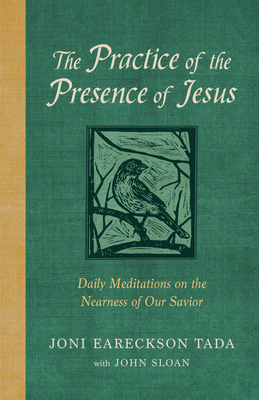
79. The Practice of the Presence of Jesus


The Practice of the Presence of Jesus: Daily Meditations on the Nearness of Our Savior. Joni Eareckson Tada. 2023. [October] 255 pages. [Source: Review copy]

First sentence: I love practicing the presence of my Savior in the dark of night when I cannot sleep. Rather than contend with anxiety, I empty out my heart and pour the beauties of Jesus into it. I fill it with love words for him, each borrowed from the Bible. 

This is not the same book as the Practice of the Presence of God. Don't be fooled! Instead delight at this inspirational 'spin-off' of sorts. There are quotes from Brother Lawrence sprinkled throughout, but this is a new devotional book by Joni Eareckson Tada. There are over a hundred devotions. 

I am not usually a fan of devotional books, key word being usually. But I am a BIG fan of Joni Eareckson Tada. I do love a good devotional book that is substantive spiritually. I don't like light, fluffy, superficial. This one was absolutely wonderful. It was an amazing read. One that I would highly recommend.

Quotes:
True, God remedied our “mischief,” but, oh, at such a cost! So I practice the presence of Jesus every time I take sin seriously and refuse to sweep small sins under the carpet of my conscience. God forbid that I should ever call an offense against God “tiny” when it has caused my Savior unimaginable pain. May I never minimize the sin that made him suffer.


Expect to meet Jesus in your pain, and you most certainly will. For he has already entered that awful place ahead of you. He transformed it by his power and presence and came out the other side. He uprooted its dread and left it a place of resurrection and hope. So take a deep breath and step into your agony, anticipating that you’ll see Jesus.


It is a fight to trust Jesus. I must trust that everything my heart could ever long for is wrapped up in him and that he is far superior to anything the world offers. To not believe this is to demonstrate an utter lack of trust in my Savior.


God allows only those things that are designed to strengthen my soul, stretch its capacity for himself, and increase its hunger and thirst for the grace of Jesus.


If you are perplexed by the secret ways of God in your troubles, always filter them through Jesus, the Way that can be trusted … no matter what.


But Jesus wants to be bothered. It pleases him when we bring him our shame. Pain may insist that prayer will not “make it go away,” but prayer always engages me with the power and presence of Jesus Christ, who gladly pours out a deluge of courage, a reservoir of perseverance, a wellspring of endurance and patience, and a marvelous peace that goes far beyond my understanding. When I remember this, it brings Jesus pleasure. He smiles when I listen to his voice rather than the voice of my agonies.


Jesus doesn’t have what my soul needs; he is what I need.


The best thing you can do for yourself, as well as for the people around you, is to trust God. The harder things are, the better you make God look when you put your faith in him.
If my faith meant only what I believe about Christ in my mind, it would not be faith at all. Faith in Christ will always stay in the world of theory and shadows, ambiguous and hazy, until it is called forth and put to the grind. Faith needs exercise so that when someone asks me, “Who is this Jesus, and what do you believe about him, Joni?” I can confidently respond, “He is my fountain of joy in all my sufferings, and let me prove that by the way I trust him.”


The incomparably great power of Christ is within your grasp. So draw close enough to Jesus to reach out and touch the hem of his garment. He will give you power. Power to endure, hold on to hope, and find courage.


Jesus did not die to make us healthy but to make us holy. He came not to make us comfortable but to heal us of our propensity to sin. The best cures have to do with eschewing sin and drawing closer to Jesus Christ. It’s better than any amount of walking.


I grab my thoughts by the scruff of the neck; I push them into the pages of Scripture to give them a good dose of gospel truth. I show my idle thoughts who is the real boss of my soul, for I must not allow shiftless thinking to rule over me. I am like the psalmist who commanded his foolish musings, telling his soul, “Put your hope in God, for I will yet praise him, my Savior and my God” (Psalm 42: 5).

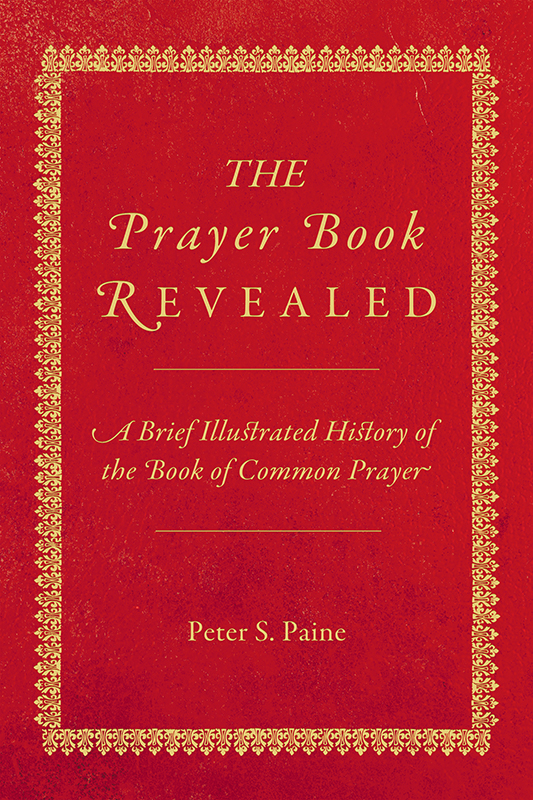
78. The Prayer Book Revealed


The Prayer Book Revealed: A Brief Illustrated History of the Book of Common Prayer. Peter S. Paine. 142 pages. [Source: Library] 

First sentence from the foreword: Liturgical handbook, literary masterpiece, manual of devotion, historical source book, deposit of doctrine, common denominator of a disparate and divergent Christian tradition--the Book of Common Prayer may be characterized in many different ways. 

First sentence from the introduction: My father, the Reverend Humphrey John Paine, was brought up in a clerical family and was the grandson of the Reverend Jesse Paine. 

First sentence from chapter one: One of Archbishop Cranmer's achievements was to reduce the number of daily services or Offices from eight to two: Matins and Evensong. The eight Offices of Matins, Lauds, Prime, Terce, Sext, None, Vespers, and Compline were the pattern of Benedictine monastic prayer, though the monks often combined the first two Offices. Secular or parish clergy carried the process further. For the clergy, these eight Offices were in the Breviary. The Book of Hours and Primer were used by lay people.

Peter Paine's father was a life-long collector of the Book of Common Prayer. His love for the book--and collecting the book--began at a very young age. He apparently loved, loved, loved to talk about the Book of Common Prayer and show off his collection. His son is using his father's collection as a catalyst to talk about the history and development of the Book of Common Prayer. I'm supposing that the two are linked closely in his mind. I do appreciate that the illustrations of this one--photographs, I believe--are showing off his father's collection. 

This one is packed with information that I just didn't know. (Granted I am new to the subject. But still, I found it fascinating and informative.) The chapters are as follows:
  • Lay Worship Prior to the Reformation
  • Appendix 1
  • The First Prayer Book of Edward VI, 1549
  • The 1552 Revision and the Elizabethan Settlement
  • Appendix 2
  • The Early Stuarts
  • The 1662 Revision and Seventeenth Century Additions
  • Appendix 3
  • The Non-Jurors and the Prayer Book in the Eighteenth Century
  • Scotland, America, and Ireland
  • Appendix 4
  • Printers, Publications and Illustrations
  • Prayer Book Revision in the Nineteenth and Twentieth Centuries
  • The Spirituality of the Book of Common Prayer
  • Epilogue
  • Appendix 5
I learned so much. I loved the inclusion of the illustrations. I loved the history. I didn't necessarily love, love, love the author's tone in the last chapter which read almost like an apology for the theology of the Prayer Book. (Like the author was apologizing that the Prayer Book focuses in so much on sin and repentance and our desperate need for a Savior.) But overall, I really appreciated this one and found it a great read. 

Chart lovers should appreciate each appendix which meticulously compares the contents of the editions of the Prayer Book.

I did find it thought provoking. I'd not realized that there were centuries were the book was very controversial. That there was a time when it was even banned. I also learned that Cranmer combined elements [of liturgy] from the eight monastic Offices. 


© Becky Laney of Operation Actually Read Bible

Thursday, November 2, 2023

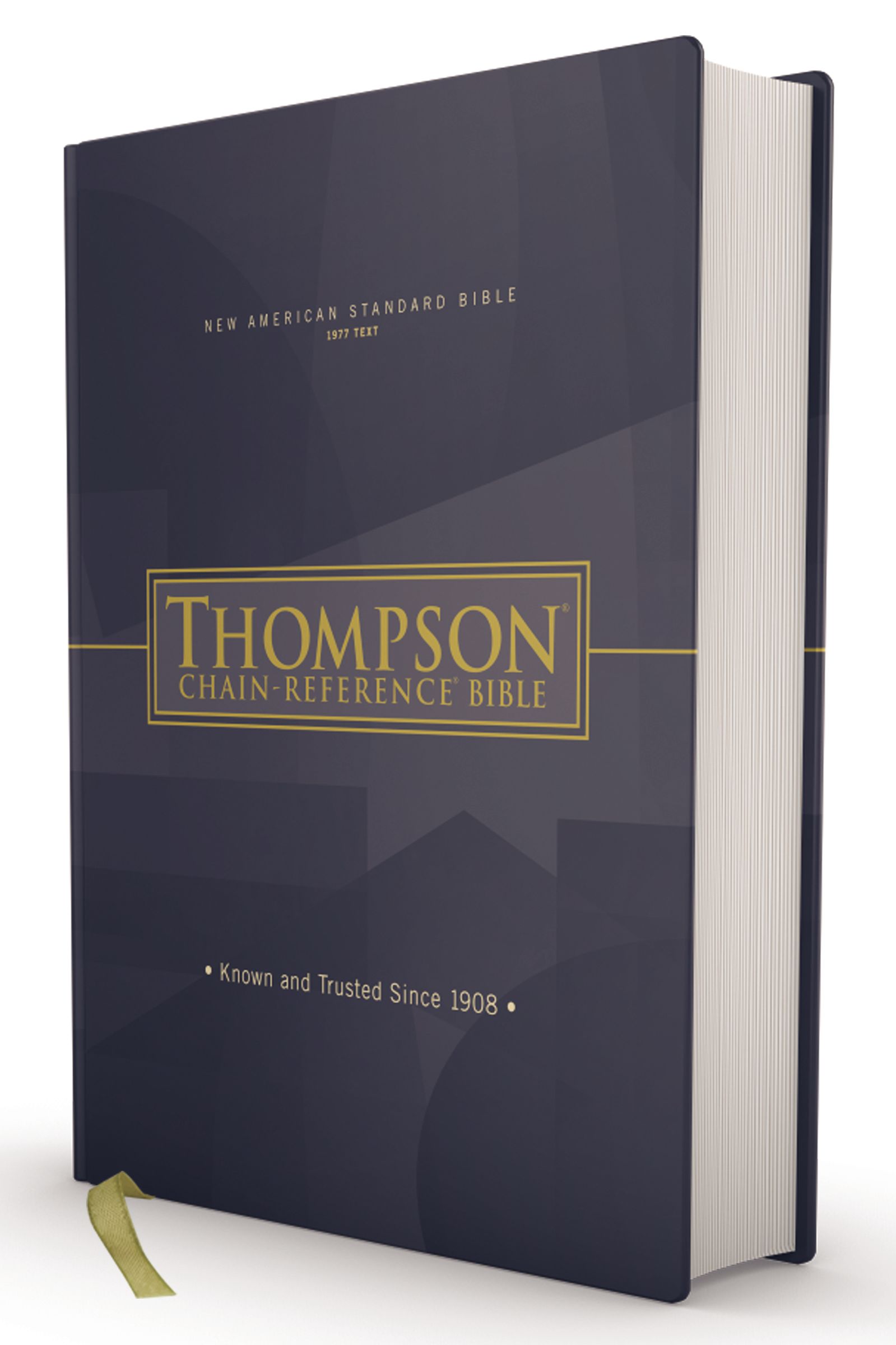
16. NASB 1977 Thompson Chain Reference Bible


NASB, 1977 Edition. Thompson Chain Reference Bible. (Leathersoft) God. 2021. 2240 pages. [Source: Bought]

First sentence: In the beginning God created the heavens and the earth.

Start date: September 24, 2023
Finish date: November 2, 2023

Was this my first time reading the NASB 1977? NO. I absolutely love, love, love, love this translation. This isn't even my first time reading the NASB 1977 in 2023. It is a true favorite.

Was this my first time reading the Thompson Chain Reference Bible? No. Though it was my first time to do so with the New American Standard text instead of the King James text. 

This is a double column, red letter reference bible. It utilizes the chain references [and the chain reference system] of Frank Charles Thompson. This is one of the older "legacy" "study" Bibles available. It is available in many different translations--KJV, NKJV, ESV, NASB 1977, NASB 1995, NIV 1984, probably NIV 2011. 

Traditionally, the Thompson Chain Reference Bibles have small font. This one does as well, though it might be slightly larger than the original. Maybe. My copies from the 1960s don't list a font size. This font size is 8.3. The newer ones have a larger font size. [The NASB 95 Thompson Chain Reference, for example, is supposed to have larger font.] 

This is a LARGE Bible. It is heavy. 


© Becky Laney of Operation Actually Read Bible

15. Holy Bible: 21st Century King James Version


KJ21: Holy Bible. God. 1994. 1888 pages. [Source: Bought] 

First sentence: In the beginning God created the heaven and the earth. And the earth was without form and void, and darkness was upon the face of the deep. And the Spirit of God moved upon the face of the waters. And God said, “Let there be light”; and there was light.

Start date: October 2, 2023
Finished date: November 2, 2023

This is my second time to read the KJ21. I liked it more the first time around. I have lost my appreciation for single column Bibles. And the different font sizes really bothered me this time around. I enjoyed the New Testament so much. But the Old Testament was just a bother--not because of the content (obviously) but because of the layout. I have no idea why the publishers would go so out of their way to make the layout annoying. 

This translation is a light update to the King James Version.
As he saith also in Osee, I will call them my people, which were not my people; and her beloved, which was not beloved.And it shall come to pass, that in the place where it was said unto them, Ye are not my people; there shall they be called the children of the living God.Esaias also crieth concerning Israel, Though the number of the children of Israel be as the sand of the sea, a remnant shall be saved:For he will finish the work, and cut it short in righteousness: because a short work will the Lord make upon the earth.And as Esaias said before, Except the Lord of Sabaoth had left us a seed, we had been as Sodoma, and been made like unto Gomorrha.What shall we say then? That the Gentiles, which followed not after righteousness, have attained to righteousness, even the righteousness which is of faith.But Israel, which followed after the law of righteousness, hath not attained to the law of righteousness.Wherefore? Because they sought it not by faith, but as it were by the works of the law. For they stumbled at that stumblingstone;As it is written, Behold, I lay in Sion a stumblingstone and rock of offence: and whosoever believeth on him shall not be ashamed. Romans 9:25-33 KING JAMES
As He saith also in Hosea: “I will call them ‘My people,’ who were not My people, and ‘her beloved’ who was not beloved.”And, “It shall come to pass that in the place where it was said unto them, ‘Ye are not My people,’ there shall they be called the children of the living God.”Isaiah also crieth concerning Israel: “Though the number of the children of Israel be as the sand of the sea, a remnant shall be saved.For He will finish the work and cut it short in righteousness, because a short work will the Lord make upon the earth.”And as Isaiah said before: “Except the Lord of Sabaoth had left us a seed, we would have been as Sodom and been made like unto Gomorrah.”What shall we say then? That the Gentiles, who followed not after righteousness, have attained to righteousness, even the righteousness which is by faith;but Israel, who followed after the law of righteousness, hath not attained to the law of righteousness.Why so? Because they sought it not by faith but, as it were, by the works of the law. For they stumbled at that stumbling stone.As it is written: “Behold, I lay in Zion a stumbling stone and rock of offense, and whosoever believeth in Him shall not be ashamed.” Romans 9:25-33 KJ21
The KJV has a 'unique' way of spelling OT names at times. The KJ21 updates the names--the spellings--to what we're accustomed to seeing. It never made sense to me that Hosea was Hosea in the Old Testament, and suddenly became "Osee" whenever mentioned in the New!!!! Elijah is another example.

It's very, very, very true to the spirit of the KJV.
The Lord is my shepherd; I shall not want.
He maketh me to lie down in green pastures; He leadeth me beside the still waters.
He restoreth my soul; He leadeth me in the paths of righteousness for His name’s sake.
Yea, though I walk through the valley of the shadow of death, I will fear no evil; for Thou art with me; Thy rod and Thy staff, they comfort me.
Thou preparest a table before me in the presence of mine enemies; Thou anointest my head with oil; my cup runneth over.
Surely goodness and mercy shall follow me all the days of my life; and I will dwell in the house of the Lord for ever.
In the beginning was the Word, and the Word was with God, and the Word was God.The same was in the beginning with God.All things were made by Him, and without Him was not anything made that was made.In Him was life, and that life was the Light of men.And the Light shineth in darkness, and the darkness comprehended it not.There was a man sent from God, whose name was John.The same came as a witness to bear witness of the Light, that all men through him might believe.He was not that Light, but was sent to bear witness of that Light.That was the true Light which lighteth every man that cometh into the world.He was in the world, and the world was made by Him, and the world knew Him not.He came unto His own, and His own received Him not.But as many as received Him, to them gave He power to become the sons of God, even to those who believe in His name,who were born not of blood, nor of the will of the flesh, nor of the will of man, but of God.And the Word was made flesh, and dwelt among us (and we beheld His glory, the glory as of the only Begotten of the Father), full of grace and truth.

If you love the KJV, chances are you'd enjoy this one as well.

This edition of the text, has some oddities. There are two font sizes in the Old Testament. A font for text that you probably want to read and not skim, and, a font for text that you are probably okay skimming. I don't know why they made this decision. 

The layout is one column in this KJ21. In the New Testament, the words of Christ are in a different font. They are definitely set apart visually from the rest of the text. This was nice on the eyes, I must admit. I don't like red letter bibles because they are hard on my eyes. This technique set apart Christ's words in a way that was unique. Is it absolutely necessary to distinguish Christ's word's from the other text? Not really. But it worked for me in this case.

I love the KJV. I do. I really do. But there are times I get frustrated with the names. (Elias instead of Elijah; Esaias instead of Isaiah) This does just enough updating to suit me.

© Becky Laney of Operation Actually Read Bible