Showing posts with label books reread in 2023. Show all posts

Tuesday, December 19, 2023

89. The Sisters of Sea View


The Sisters of Sea View (On Devonshire Shores #1) Julie Klassen. 2022. 448 pages. [Source: Library]

First sentence: Sarah Summers carefully lifted the family heirloom, a warm mantle of nostlagia settling over her.

Historical romance--Regency Romance--Christian fiction. 

After the death of their father and the decline of their mother's health, four sisters--Sarah, Emily, Viola, Georgiana--decide (somewhat reluctantly) to open up their seaside home to (paying) guests. 

Long story short: I absolutely loved, loved, loved, loved this one. It was just giddy-making. I loved the family. I loved the neighborhood and community. I loved meeting the guests. I loved the stories. I loved the relationships. I loved the layers.

Three of the four sisters are well-developed and get a lot of time and attention. [Georgiana, well, maybe in future books she will be developed and have a story.] 

There are multiple narrators. The narrators do not switch over at chapter breaks. Within a chapter, the point of view might change several times. The only negative thing I can say about this one is that--at least in the advanced reader's copy--there's no visual clues that the narration has changed. 

It was so funny to have Mr. and Mrs. Elton from Emma show up as guests in this one!!! They added much comic relief.

ETA: Yes, I read this one twice in one year. The sequel just released. I checked both books out of the library. 


© Becky Laney of Operation Actually Read Bible

Monday, August 28, 2023

9. NASB 1977


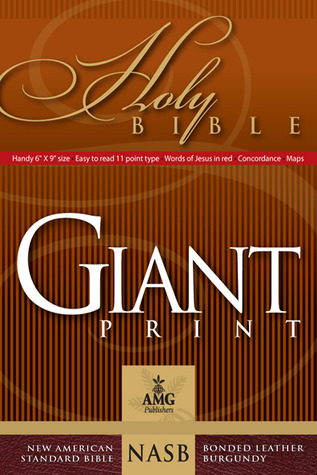
9. Giant Print Handy Size Reprint NASB 1977 Edition. 2011. AMG Publishers. 2304 pages.

In the beginning God created the heavens and the earth.

This is my second third time to read through the NASB 77. I started July 4, 2023 and completed on August 28, 2023.

I still absolutely love, love, love, love, crazy love this translation. I could easily see this being 'the one' if I believed in such. I don't believe that there is 'the one' as in 'the one and only' when it comes to Bible translations. At least not for me personally. I have about five or six translations that are all my favorites. (For those that are curious, they are the BSB, NASB 77, NASB 95, ESV, KJV, NIV 84. In no particular order, I don't play favorites. The Bible in my hand is usually "my favorite." Usually. Not always). 

I loved, loved, loved so much about this bible. I loved the size of the font. Giant print isn't as GIANT as you might imagine. It's slightly bigger than a regular size font you'd find in just about any Bible from the 80s or 90s. But it was super-comfortable on my eyes. Not too big. Not too small.

It is double-column. I don't mind double column, especially with a nice size font.

It is red-letter. But red-letter in a "giant" size font isn't all that bad. I'd still prefer black letter, but it's not bad at all.

I loved the size of this one. It isn't too heavy. I don't know that I'd go so far as to say you could hold it comfortably up in bed to read it, but it isn't too heavy for normal use. It is the perfect weight for daily reading and for taking to church as well.

I loved the translation itself.

Quotes:

Psalm 23

The LORD is my shepherd, 
            I shall not want.

He makes me lie down in green pastures; 
            He leads me beside quiet waters.

He restores my soul; 
            He guides me in the paths of righteousness 
            For His name’s sake.

Even though I walk through the valley of the shadow of death, 
            I fear no evil; for Thou art with me; 
            Thy rod and Thy staff, they comfort me.

Thou dost prepare a table before me in the presence of my enemies; 
            Thou hast anointed my head with oil; 
            My cup overflows.

Surely goodness and lovingkindness will follow me all the days of my life, 
            And I will dwell in the house of the LORD forever.


“Let not your heart be troubled; believe in God, believe also in Me. “In My Father’s house are many dwelling places; if it were not so, I would have told you; for I go to prepare a place for you “And if I go and prepare a place for you, I will come again, and receive you to Myself; that where I am, thereyou may be also. “And you know the way where I am going.” Thomas said to Him, “Lord, we do not know where You are going, how do we know the way?” Jesus said to him, “I am the way, and the truth, and the life; no one comes to the Father, but through Me.

© Becky Laney of Operation Actually Read Bible

Tuesday, August 1, 2023

55. Your God Is Too Small


Your God Is Too Small. By J.B. Phillips. (1952) 2004. Simon & Schuster. 128 pages. [Source: Bought]

First sentence: No one is ever really at ease in facing what we call "life" and "death" without a religious faith. The trouble with many people today is that they have not found a God big enough for modern needs.

I first read Your God Is Too Small in 2010. I didn't love it then. I gave it the rare two stars (as I found out on GoodReads). I had forgotten how I felt about the book--apparently. I decided to reread this one namely because it was short and still on the shelf. (Horrible reason, I know).

This one has TWO sections. It first deconstructs the small "gods" from society. (Or at least society circa 1950s). Each "small" god or "false" god is given a few pages. It is deconstructed or proved false. That is Phillips argues that that version of god, that concept of god is NOT the actual God. The second constructs (briefly--oh so briefly) the "bigger" God. Namely, Phillips is saying if you want to meet the actual God, you need to meet him in JESUS CHRIST. 

The premise of this one is solid enough. Phillips makes some good points in his sections. There's nothing in them that feels particularly off or wrong. I think my biggest complaint is that while it makes a few initial good statements as to who God isn't and who God is, it doesn't go far enough, deep enough. I wanted MORE, not barely enough. 

Yes, there are hundreds if not thousands of books about who God is, about his attributes, about his works, about all the essential doctrines of the faith. But I wanted this one to go there at least a little bit. He says more about who God is not then who God is. The second half covers the bare basics of Jesus. But it doesn't seem enough. I'm not saying that it couldn't be enough. The Holy Spirit doesn't only work through long-winded sorts. (After all, there is something to being concise and straightforward). But I wanted the section on Jesus to be more engaging, more soaked/saturated in the Word. 

This one I believe was written for a certain audience (at a certain time in history). I think the intellectual (dryer) tactic might have appealed to agnostics, in-name-only-"Christians", skeptics, theists, deists, etc. I definitely think that was Phillips intended reader. I don't necessarily see this one as being written FOR those already in the faith that have a relationship with Jesus. And that's okay. Again, I think the Holy Spirit can use this one to reach the lost or the deconstructed. 

Would I still rate it two stars? Probably two-and-half or three stars. 


© Becky Laney of Operation Actually Read Bible

Friday, April 28, 2023

43. Thru the Bible: Mark


Mark. (Thru the Bible #36) J. Vernon McGee. 1975. 204 pages. [Source: Bought]

First sentence: The Gospel of Mark is chronologically the first gospel that was written. It was actually one of the first books written in the New Testament—not the first, but one of the first. It was probably written from Rome prior to A.D. 63.

I am reading the Bible in 2020 using the daily M'Cheyne (Robert Murray M'Cheyne) plan. I thought it would add a layer of substance to in addition to the four chapters a day, to also read commentaries for those chapters. For that I am using Matthew Henry's Commentary on the Whole Bible. But the plan goes through the New Testament (and Psalms, I believe) twice. So now that I've finished Henry's commentary for the New Testament, I am tackling the New Testament commentary section of J. Vernon McGee's series.

This is not my first time reading J. Vernon McGee. I've read twelve or so of his commentaries. (Most recently his volume on Matthew 1-13). Overall, I like his laidback, casual, straightforward, tell it like it is approach to teaching Scripture. There is something so grounded and down to earth about him. Each reader is "his" friend. It's hard not to feel like he is a friend too.

One of the things that I love about McGee's commentaries is that he just speaks timeless truths. 

Mark isn't necessarily one of my favorite gospels. But reading McGee helped me appreciate it more. 
There probably is more content in this first chapter of Mark than any other chapter in the Bible (with the exception of Gen. 1). It covers the ministry of John the Baptist, after going back to the prophecies of Isaiah and Malachi.
There are three beginnings recorded in Scripture. Let us put them down in chronological order: 1. “In the beginning was the Word” (John 1:1). This goes back to a dateless beginning, a beginning before all time. Here the human mind can only grope. It is logical rather than chronological because in my thinking, I must put my peg somewhere in the past in order to take off. If I see an airplane in the air, I assume there is an airport somewhere. I may not know where it is, but I know the plane took off from some place. So when I look around at the universe, I know that it took off from somewhere and that somewhere there is a God. But I don’t know anything about that beginning. God comes out of eternity to meet us. I just have to put down the peg at the point where He does meet us, back as far as I can thinkJ and realize He was there before that. 2. “In the beginning God created the heaven and the earth” (Gen. 1:1). This is where we move out of eternity into time. However, although many people have been attempting to date this universe, no man so far knows. Man’s guesses have ranged from six thousand to three billions of years. We know so little but, when we come into His presence and begin to know even as we are known, then we will realize how we saw through a glass darkly. I’m sure we will marvel at our stupidity and our ignorance. Our God is a great God. He has plenty of time. 3. “The beginning of the gospel …” (v. 1) is the same as “That which was from the beginning …” (1 John 1:1). This is dated. It goes back to Jesus Christ at the precise moment He took upon Himself human flesh. Jesus Christ is the gospel! 
What we need in the church today is stretcher-bearers—men and women with that kind of faith to go out and bring in the unsaved so they can hear the gospel. There are many people today who are paralyzed with a palsy of sin, a palsy of indifference, or a palsy of prejudice. A great many people are not going to come into church where the gospel is preached unless you take a corner of the stretcher and bring them in. That’s what these men did. They had the faith to bring this poor man to hear the Lord Jesus deal with him personally and say, “Son, thy sins be forgiven thee.”
Whether we like it or not, He does the choosing. “Ye have not chosen me, but I have chosen you, and ordained you, that ye should go and bring forth fruit, and that your fruit should remain: that whatsoever ye shall ask of the Father in my name, he may give it you” (John 15:16). It is not irreverent to say that since He chose them and they did not choose Him, He’s responsible for them. That’s a real comfort to know. God has saved you, begun a good work in you, and He’s going to stick right with you, friend. He’s going to see you through. That is what this means. And when the Lord Jesus calls, they respond.
It is impossible to commit an unpardonable sin today—if by that you mean one can commit a sin today, come under conviction because of it tomorrow, come to God in repentance, and He would not forgive you. You see, Christ died for all sin, not just some sin. He didn’t die for all sin but one, the unpardonable sin. There is no such thing as being able to commit a sin today that He will not forgive. The attitude and state of the unbeliever is unpardonable—not the act. When a man blasphemes with his mouth, that is not the thing that condemns him; it is the attitude of his heart, which is a permanent condition—unless he stops resisting.
And he said unto them, He that hath ears to hear, let him hear [Mark 4:9]. He puts up a danger signal. It’s like the “Stop—Look—Listen” sign at a railroad crossing.
We sometimes use the expression—I know I say it rather carelessly—that you’ll be lost if you do not accept Christ as your Savior. That is not really the truth, friend. The truth is that you are already lost. The point that should be accurately stated is that you will continue to be lost if you do not receive Christ as your Savior.
Every chapter is the most important chapter when you are studying it! But this one is important because the Gospel of Mark is a gospel of action. There are more of the miracles given in this gospel than in any other, and in this chapter there are three outstanding miracles related. They could be performed only by the hand of Omnipotence. That is why I think this is a remarkable chapter.
The Word of God is the Bread of Life because the Word of God reveals Him. We are to feed on the Bible and to beware of false teaching. I think that ought to be clear to us here in the teaching that He gives.
By the way, that “Jesus Only” is a marvelous headline, is it not? “Jesus Only” is not only a headline in Mark’s gospel, but it ought to be a headline in the lives of believers today. In a brief way he states such great and weighty words—Jesus Only!
And the tragic thing about this hour is that the church is helpless in the presence of the world’s need. Right now, the organized church in desperation is reaching out, protesting and marching and getting involved in all kinds of things, and the world is actually criticizing the church because they feel it should get even more involved. But social matters are not our business! We ought to be able to help a poor demon-possessed boy today by presenting a Savior to him who will make him rational and who will bring him into a right relationship with God. Unfortunately, the same thing has to be said of the church, “They could not.” The disciples could not and we cannot.
Bring him unto Me! We are attempting to do everything except bring lost men to Jesus Christ.
Do you realize who it is here that is talking about hell? There are those today who say that He is the gentle Jesus. Friend, He is the only One who talked about hell. Paul never talked about it, but Jesus did. And since He did, it would be well for us to listen to Him.
And thou shalt love the Lord thy God with all thy heart, and with all thy soul, and with all thy mind, and with all thy strength: this is the first commandment [Mark 12:30]. By the way, do you keep this commandment, my friend? If you say that you don’t need Christ as a Savior, that you obey God, then I ask you this question, “Do you love God with all your heart and mind and soul?” If you don’t, then you are breaking His commandment and you need a Savior. I know I need a Savior. I don’t measure up here. I wish I did. I love Him but not as I should.
We find this is a constant warning—a warning against false Christs. Some may think that this is not a danger today. I think it is very pertinent right now. For example, the Christ of liberalism is an antichrist—he is not the real Christ! Some of you may think that they preach the Christ of the Bible. They do not.
My friend, may I say to you, none of us knows the depths of the human heart. Only the Word of God can let us see what sinners we are.
If we take the emphasis away from the Word of God, we can find that people get one problem solved with the help of the psychologist and come away with two more problems. Then the last estate of the man is worse than the first. Let’s be very clear. The only solution to a problem is the Lord. You don’t solve the problem so that you are enabled to go to the Lord. No, you go to the Lord and He is the chief and the great Physician. By the way, He is the great Psychologist and He alone knows us. In the final analysis, He is the only One.


© Becky Laney of Operation Actually Read Bible

Wednesday, April 26, 2023

40. Found: God's Will


Found: God's Will. John F. MacArthur Jr. 1972/1998. 64 pages. [Source: Bought]

First sentence: As I travel around, one of the questions I am asked most often is "How can a Christian know the will of God for his or her life?" Most of us acknowledge that God has a plan for the life of every believer, but often we have trouble in finding just which way this play goes at a particular juncture.

Found: God's Will may be a short book, but it's a relevant book with substance. The premise is a simple one,
"Let's begin with a simple assumption. Since God has a will for us, He must want us to know it. If so, then we could expect Him to communicate it to us in the most obvious way. And how would that be? Through the Bible, His revelation. Therefore, I believe that what anyone needs to know about the will of God is clearly revealed in the pages of His Word. God's will is, in fact, very explicit in Scripture."
The chapter titles: "Is God a Cosmic Killjoy?", "The Crucial First Step," "The Fizzies Principle," "The Priority of Purity," "Silencing the Critics," "Facing the Flak," and "You're It."

MacArthur argues that God's will is simple and easy to understand. There are five things that are God's will for every one. First, God wills everyone to be saved. If you are saved, if you are trusting in Jesus Christ for salvation, you are in God's will. Second, God wills everyone to be filled with the Spirit and to live in the Spirit. Third, God wills everyone to be sanctified. It isn't enough to profess your belief, one must live by it. Fourth, God wills everyone to be submissive. Every one has to submit to someone--authority is God-given authority unless submitting means violating God's direct commandments. Fifth, God wills everyone to suffer. To suffer?! Is suffering really God's will for believers?! Surely we're misreading this last one, right?! Nope. Read the Bible. It's there in black and white. (And perhaps red.) If you're saved, spirit-filled, sanctified, submissive, and suffering...then you are living in accordance with God's will and the rest is up to you.

Quotes:
  • The doctrine of salvation is unpopular because it includes the recognition of sin. Nobody likes to admit sin. And many people resist the idea that they need to be saved.
  • There is a world out there that needs Jesus Christ. God wants them to be saved, and you and I are the vehicles for the transportation of the gospel. That is God’s will.
  • When you were saved, the moment you received Jesus Christ, the Holy Spirit came to live within you. There is no Christian who does not possess the Holy Spirit.
  • So many times we ask for what we already have! We pray for the Holy Spirit, and He is already here.
  • Let me share how I study the Bible and how the Bible has come alive to me. I began in 1 John. One day I sat down and read all five chapters straight through. It took me twenty minutes. Reading one book straight through was terrific. (The books of the Bible weren’t written as an assortment of good little individual verses. They were written with flow and context.) The next day, I sat down and read 1 John straight through again. The third day, I sat down and read 1 John straight through. The fourth day, straight through again. The fifth day, I sat down and read it again. I did this for thirty days. Do you know what happened at the end of the thirty days? I knew what was in 1 John. You might say, “My, are you smart!” No, I am not smart. I read it thirty times. Even I can get it then!
  • The more you study the Word of God, the more it saturates your mind and life. Someone is reported to have asked a concert violinist in New York’s Carnegie Hall how she became so skilled. She said that it was by “planned neglect.” She planned to neglect everything that was not related to her goal.
  • Some less important things in your life could stand some planned neglect so that you might give yourself to studying the Word of God.
  • The more you would study the Word of God, the more your mind would be saturated with it. It will be no problem then for you to think of Christ. You won’t be able to stop thinking of Him.
  • The only way you can be saturated with the thoughts of Christ is to saturate yourself with the Book that is all about Him.
  • Evangelism involves living a godly life in the face of an ungodly world.
  • And that will bring persecution, because the world does not like Jesus.
  • The Bible never sees a Christian at any time who doesn’t suffer—because anybody who lives a godly life in the world will get the flak that the world throws back.
  • One of the problems of evangelism today is that Christians are not willing to stand nose to nose with the world and tell it like it is concerning Jesus Christ.


© Becky Laney of Operation Actually Read Bible

Monday, April 24, 2023

39. Go and Do Likewise


Go and Do Likewise: The Parables and Wisdom of Jesus. John Hendrix. 2021. [February] 40 pages. [Source: Review copy]

First sentence: Jesus's sandals were always dusty. Jesus didn't call any one place home. But he was not alone. Alongside Jesus were his students, the twelve disciples.

In 2016, John Hendrix gave us Miracle Man: The Story of Jesus. I definitely enjoyed it. I wasn't expecting a follow up book, but was pleasantly surprised to see that he has a new book out called Go and Do Likewise: The Parable and Wisdom of Jesus. 

The 'wisdom' shared here mainly comes from the Sermon on the Mount. (I would say with a few bits perhaps from the gospel of John.) The parables come mainly (though not exclusively) from the gospel of Luke. Expect The Good Samaritan, the Lost Sheep, the Prodigal Son, etc. 

What is shared, in my opinion, for better or worse, focuses on ethics: how to be a good, decent, kind human being. 

Hendrix definitely puts his own spin on the stories. What do I mean by spin? Adding his own interpretation and commentary. This isn't all that unusual for bible story books. I think every author is 'guilty' of it to a certain degree or another. But adding details--opinions, observations, making conclusions--to the text that simply aren't in the original (in any translation) can be theologically tricky. I think he adds what he adds for storytelling purposes. He wants to tell an engaging story to a young audience. He's not out to quote the Bible verse by verse by verse. 

The story of the Good Samaritan can be found in Luke 10:30-37. 

The original verse: And by chance a priest was going down on that road, and when he saw him, he passed by on the other side.

That's it. That's all the Bible says about the priest in the parable. Hendrix, however, spins a different tale:
But a priest of God, the ones you see in the temple, was also traveling this lonely road. As he looked upon the dying man, the priest feared for his own life--or perhaps didn't want to get his fine clothes dirty--and passed by him on the other side of the road without stopping to help.

The original verse: Likewise a Levite also, when he came to the place and saw him, passed by on the other side. 

Again, Hendrix spins a tale with motives: A short time later, a Levite, a person who also worked in the temple, came along the road. He, too, saw the wounded man, and blaming the man for his own carelessness, left him in a puddle of dirt and blood. 

Hendrix definitely spins the Beatitudes as well. The Beatitudes can be read in Matthew 5:3-12.

Original: Blessed are the poor in spirit, for theirs is the kingdom of heaven.
Hendrix: Blessed are those who feel like an empty jar. God will fill that emptiness with abundance.
Original: Blessed are those who mourn, for they shall be comforted.
Hendrix: Blessed are those who cry, for the Lord sees every tear. Each one, He will wipe away.
Original: Blessed are the merciful, for they shall receive mercy.
Hendrix: Blessed are those full of mercy, for they, too, will be shown grace.
Original: Blessed are the peacemakers, for they shall be called sons of God.
Hendrix: Blessed are those who work for peace. They understand what it means to be God's child.

He definitely doesn't include every single Beatitude. He leaves some off--not a criticism, just an observation. (He leaves off gentle, hunger and thirst, pure in heart, the persecuted). 

The narrative style is unique as are the visuals. The layout very much stresses the visual arts. The text is almost secondary in importance. This makes it slightly difficult to read in places. It also shifts it, in my opinion, to a slightly older audience. (As opposed to a beginning reader.)

ETA: It's been almost two years since I first read this picture book (for older readers). I definitely enjoyed rereading it. I enjoyed seeing the variety between the parables and the teachings. I wish that there were more books published like this one and Miracle Man. There just aren't that many.


© Becky Laney of Operation Actually Read Bible

Wednesday, April 5, 2023

2.5 Wycliffe New Testament 1388


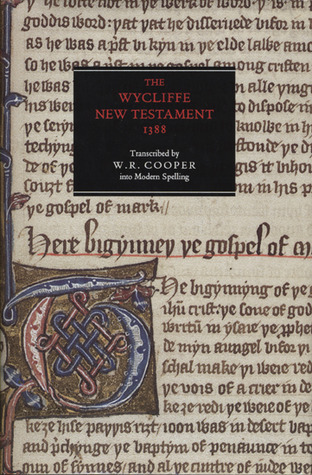
Wycliffe New Testament 1388: An edition in modern spelling, with an introduction, the original prologues, and the Epistle to the Laodicieans. William R. Cooper, ed. 2002. British Library. 528 pages. [Source: Bought]

ETA: I believe this is the third time I've read (and reviewed) the Wycliffe New Testament. I do love it. It isn't one that I read for understanding/comprehension. It is more of a burst of flavor. I like some of the phrasing, some of the archaic peculiarities. It was a delight to spend time with this one again.

Can you imagine NOT having a Bible in your own language? Today we're used to dozens and dozens of translations to choose from--all in English, of course. But this wasn't always the case.

This New Testament is a translation from the Latin into English--the first of its kind. It was translated not by John Wycliffe himself, but, by his followers, the Lollards. The 1388 edition was published after Wycliffe's death in 1384. Essentially, the Lollards placed great value in the authority of the Scripture, and wanted the Bible to be translated into English so everyone could read it for themselves. The Bible was not for the religious or academic elite, but, for everyone.
After the initial translation was finished, talented scribes set to work copying out the Lollard text. With the dangerous associations of Lollardy, both Church and State sought its elimination, and in 1401 a statute was issued banning the Later Version upon pain of death. Lollards were prosecuted for their beliefs and their ownership of forbidden texts. The efforts, however, failed to stop the reproduction of the texts, and scribes continued to copy faithfully the Lollard texts, risking great danger to themselves. (vii)
Is this a translation for each and every believer? Probably not. But it is a joy and treat for some I imagine!

Is it reader-friendly and accessible? Yes and no. Your knowledge of the New Testament + the glossary + the context of the verse/passage = readability and accessibility.
For God loved so the world that He gave His one begotten Son, that each man that believes in Him perish not, but have everlasting life. For God sent not His Son into the world that He judge the world, but that the world be saved by Him. He that believes in Him is not deemed. But he that believes not, is now deemed, for he believes not in the name of the one begotten Son of God. And this is the doom, for light came into the world, and men loved more darkness than light, for their works were evil. (John 3:16-19)
Therefore Jews grouched of Him, for He had said, I am bread that came down from heaven. And they said, Whether this is not Jesus, the son of Joseph, whose father and mother we have known? How then says this that, I came down from heaven? Therefore Jesus answered and said to them, Nil ye grouch together. No man may come to Me but if the Father that sent Me draw him, and I shall again-raise him in the last day. (John 6:41-44)
Nil ye deem, that ye be not deemed. For in what doom ye deem, ye shall be deemed, and in what measure ye mete, it shall be meted again to you. But what see thou a little mote in the eye of thy brother, and see not a beam in thine own eye? Or how say thou to thy brother? Brother, suffer I shall do out a mote from thine eye, and lo, a beam is in thine own eye? Hypocrite! Do thou out first the beam of thine eye, and then thou shall see to do out the mote of the eye of thy brother. (Matthew 7:1-5)
Therefore, brethren, I beseech you by the mercy of God, that ye give your bodies a living sacrifice, holy, pleasing to God, and your service reasonable. And nil ye be conformed to this world, but be ye reformed in newness of your wit, that ye prove which is the will of God, good and well-pleasing, and perfect. (Romans 12:1-2)
For by grace ye are saved by faith, and this not of you, for it is the gift of God, not of works, that no man have glory. (Ephesians 2:8-9)
And do ye all things without grouchings and doubtings, that ye be without plaint and simple as the sons of God, without reproof in the middle of a shrewd nation and a wayward, among which ye shine as givers of light in the world. (Philippians 2:14-15)
Joy ye in the Lord evermore, eft I say, joy ye. (Philippians 4:4)
Savour ye those things that are above, not those that are on the earth. For ye are dead, and your life is hidden with Christ in God. (Colossians 3:2-3) 
Did I love it? Yes, I loved, loved, LOVED it. This is actually the second time I've read this one. I read it the first time in 2009, I believe? It's been a while. But it was a great way to start off the new year!!!

© Becky Laney of Operation Actually Read Bible

Friday, March 10, 2023

25. The Sovereignty of God


The Sovereignty of God. Arthur W. Pink. 1917. 272 pages. [Source: Bought]

First sentence: Who is regulating affairs on this earth today--God, or the Devil? That God reigns supreme in Heaven, is generally conceded; that He does so over this world, is almost universally denied--if not directly, then indirectly.

If the average, modern-day Christian would dare to read Pink's The Sovereignty of God, then chances are they'd be shocked--shaken--by the contents. The stuff of which he writes--this "hard teaching" of the Bible is rarely the subject of preachers in the pulpit. Not in this day and age when Free Willy sermons are more prolific than Tribbles.

Does truth matter to God? If truth matters to God, shouldn't it matter equally to us? If the sovereignty of God is clearly, plainly, obviously, matter-of-factly found in Scripture, shouldn't we take note and study this doctrine? Shouldn't we allow it to have an impact on our lives? Of course this implies something fundamental: that Christians hold the Word of God--Scripture, Old and New Testaments--to be true.

I fear that the sovereignty of God has become one of those "attributes" that Christians are embarrassed about and want to apologize for much like the wrath of God.

But. Rightly understood and studied the sovereignty of God is one of the most comforting, reassuring, AMAZING doctrines. The sovereignty of God should have us singing, rejoicing, praising God. It's a THRILLING doctrine.

I loved this one.

ETA: I reread this one in February/March 2023. I absolutely LOVE, LOVE, LOVE, LOVE this doctrine. I think it is under-taught, under-appreciated. I think when it is 'preached' it is a surface-level, shallow presentation. This book by Pink is SO deep. I do think I rushed through it this time more than I should. My mind would get distracted at times and wander. No fault of Pink. I think this is a doctrine that Screwtape and company would like to keep believers from reading, believing, teaching, etc. It is so fundamental. 

Quotes:
From every pulpit in the land it needs to be thundered forth that God still lives, that God still observes, that God still reigns. (14)
It is true that man has a will, but so also has God. It is true that man is endowed with power, but God is all-powerful. It is true that, speaking generally, the material world is regulated by law, but behind that law is the law-Giver and law-Administrator. Man is but the creature. God is the Creator, and endless ages before man first saw the light, "the mighty God (Isa 9:6) existed, and ere the world was founded, made His plans; and being infinite in power and man only finite, His purpose and plan cannot be withstood or thwarted by the creatures of His own hands. (15)
Here is the fundamental difference between the man of faith and the man of unbelief. The unbeliever is "of the world," judges everything by worldly standards, views life from the standpoint of time and sense, and weighs everything in the balances of his own carnal making. But the man of faith brings in God, looks at everything from His standpoint, estimates values by spiritual standards, and views life in the light of eternity. Doing this, he receives whatever comes as from the hand of God. Doing this, his heart is calm in the midst of the storm. Doing this, he rejoices in hope of the glory of God. (17)
To say that God is sovereign is to declare that God is God. To say that God is sovereign is to declare that He is the Most High, doing according to His will in the army of heaven, and among the inhabitants of the earth, so that none can stay His hand or say unto Him what doest Thou? (Dan 4:35). To say that God is sovereign is to declare that He is the Almighty, the Possessor of all power in heaven and earth, so that none can defeat his counsels, thwart His purpose, or resist His will (Ps. 115:3). (19)
How different is the God of the Bible from the God of modern Christendom. (20).
To argue that God is "trying His best" to save all mankind, but that the majority of men will not let Him save them, is to insist that the will of the Creator is impotent, and that the will of the creature is omnipotent. To throw the blame, as many do, upon the Devil, does not remove the difficulty, for if Satan is defeating the purpose of God, then, Satan is Almighty and God is no longer the Supreme Being. (20)
To declare that the Creator's original plan has been frustrated by sin is to dethrone God. To suggest that God was taken by surprise in Eden and that He is now attempting to remedy an unforeseen calamity is to degrade the Most High to the level of a finite, erring mortal. To argue that man is a free moral agent and the determiner of his own destiny, and that therefore he has the power to checkmate his Maker, is to strip God of the attribute of Omnipotence. To say that the creature has burst the bounds assigned by his Creator, and that God is now practically a helpless Spectator before the sin and suffering entailed by Adam's fall, is to repudiate the express declaration of Holy Writ. In a word, to deny the sovereignty of God is to enter upon a path which, if followed to its logical terminus, is to arrive at blank atheism. (20-21)
Sovereignty characterizes the whole Being of God. He is sovereign in all of His attributes. (21)
Is it wrong for God to give grace? If it be right for Him to give it, is it wrong for Him to purpose to give it? Would you have Him give it by accident? If it is right for Him to purpose to give grace today, it was right for Him to purpose it before today--and since He changes not--from eternity. (53)
The salvation of any sinner is a matter of Divine power. By nature the sinner is at enmity with God, and naught but Divine power operating within him, can overcome this enmity; hence it is written, "No man can come unto Me, except the Father which hath sent me draw him" (John 6:44). It is the Divine power overcoming the sinner's innate enmity which make him willing to come to Christ that he might have life. But this "enmity" is not overcome in all--why? (64)
Willingness to come to Christ is is the finished product of Divine power operating in the human heart and will in overcoming man's inherent and chronic "enmity." (65)
"The Lord hath made all things for Himself: yea, even the wicked for the day of evil." (Proverbs 16:4). That the Lord made all, perhaps every reader of this book will allow: that He made all for Himself is not so widely believed. That God made us, not for our own sakes, but for Himself; not for our own happiness, but for His glory; is nevertheless repeatedly affirmed in Scripture. (85)
Has God foreordained everything that comes to pass? Has He decreed that what is, was to have been? In the final analysis this is only another way of asking, Is God now governing the world and everyone and everything in it? If God is governing the world, then is He governing it according to a definite purpose, or aimlessly and at random? If He is governing it according to some purpose, then when was that purpose made? Is God continually changing His purpose and making a new one every day, or was His purpose formed from the beginning? Are God's actions, like ours, regulated by the change of circumstances, or are they the outcome of His eternal purpose? If God formed a purpose before man was created, then is that purpose going to be executed according to His original designs and is He now working toward that end? What saith the Scriptures? They declare God is One "who worketh all things after the counsel of His own will. (Ephesians. 1:11) (109)
In the new birth God brings us from death unto life (John 5:24). He imparts to us His own nature (2 Peter 1:4). He delivers us from the power of darkness and translates us into the kingdom of His dear Son (Col. 1:13). Now, manifestly, we could not do this ourselves, for we were "without strength" (Rom. 5:6), hence it is written, "we are His workmanship created in Christ Jesus. (Ephesians 2:10). (113)
To deny the "free will" of man, i.e. his power to choose that which is good, his native ability to accept Christ, is to bring on into disfavor at once, even before most of those who profess to be orthodox. And yet Scripture emphatically says, "It is not of him that willeth, nor of him that runneth, but of God that showery mercy" (Rom. 9:16). Which shall we believe: God, or the preachers? (127)
To will is to choose, and to choose is to decide between two or more alternatives. But there is something which influences the choice; something that determines the decision. Hence the will cannot be sovereign because it is the servant of that something. The will cannot be both sovereign and servant. It cannot be both cause and effect. (130)
Human philosophy insists that it is the will which governs the man, but the Word of God teaches that it is the heart which is the dominating center of our being. (133)
In order for any sinner to be saved three things were indispensable: God the Father had to purpose his salvation, God the Son had to purchase it, God the Spirit has to apply it. (139)
True liberty is not the power to live as we please, but to live as we ought. (149)
Upon the distinction between the sinner's natural Ability, and his moral and spiritual Inability, rests his Responsibility. (152)
God has decreed the means as well as the end, and among the means is prayer. Even the prayers of His people are included in his eternal decrees. Therefore instead of prayers being in vain, they are among the means through which God exercises His decrees. (172)
No prayer is pleasing to God unless the Spirit actuating it is, "not my will, but thine be done." (173)
Prayer is not so much an act as it is an attitude--an attitude of dependency, dependency upon God. Prayer is a confession of creature weakness, yea, of helplessness. Prayer is the acknowledgement of our need and the spreading of it before God. We do not say that this is all there is in prayer, it is not: but is the essential, the primary element element in prayer. (176)
It has been customary to say God loves the sinner, though He hates the sin. But that is a meaningless distinction. What is there in a sinner but sin? (200)
The fact is, that the love of God, is a truth for the saints only, and to present it to the enemies of God is to take the children's bread and cast it to the dogs. With the exception of John 3:16, not once in the four gospels do we read of the Lord Jesus--the perfect Teacher--telling sinners that God loved them! In the book of Acts, which records the evangelistic labors and messages of the apostles, God's love is never referred to at all! But when we come to the Epistles, which are addressed to the saints we have a full presentation of this precious truth--God's love for Him own. Let us seek to rightly divide the Word of God and then we shall not be found taking truths which are addressed to believers and misapplying them to unbelievers. That which sinners need to have brought before them is, the ineffable holiness, the exacting righteousness, the inflexible justice and the terrible wrath of God. Risking the danger of being misunderstood, let us say--and we wish we could say it to every evangelist and preacher in the country--there is far too much presenting of Christ to sinners today (by those sound in the faith), and far too little showing sinners their need of Christ, i.e., their absolutely ruined and lost condition, their imminent and awful danger of suffering the wrath to come, the fearful guilt resting upon them in the sight of God--to present Christ to those who have never been shown their need of Him, seems to us to be guilty of casting pearls before swine. (201)
The gospel is no mere invitation, but a proclamation, a proclamation concerning Christ; true, whether men believe it or no. No man is asked to believe that Christ died for him in particular. The gospel, in brief, is this: Christ died for sinners, you are a sinner, believe in Christ, and you shall be saved. In the Gospel, God simply announces the terms upon which men may be saved (namely, repentance and faith) and, indiscriminately, all are commanded fulfill them. (209)
One of the most flagrant sins of our age is that of irreverence--the failure to ascribe the glory which is due the august majesty of God. Men limit the power and activities of the Lord in their degrading concepts of His being and character. Originally, man was made in the image and likeness of God, but today we are asked to believe in a god made in the image and likeness of man. The Creator is reduced to the level of the creature: His omnipotence is called into question, His omnipotency is no longer believed in, His absolute sovereignty is flatly denied. (232)

© Becky Laney of Operation Actually Read Bible

Saturday, February 25, 2023

22. One Perfect Life


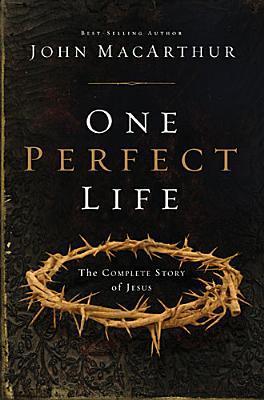
One Perfect Life: The Complete Story of the Lord Jesus. John F. MacArthur Jr. 2013. 528 pages. [Source: Bought]

First sentence: In the beginning God created the heavens and the earth. In the beginning was the Word, and the Word was with God, and the Word was God. He was in the beginning with God. All things were made through Him, and without Him nothing was made that was made. 

ETA: This was my third time to read One Perfect Life. I read it in February 2013 and March 2013. Yes, two times in one year. I'd meant to reread this one for years. On Ash Wednesday I decided that I'd try to read this one for Lent. Oops. I read it in four days instead of forty. That happens sometimes. I don't really know how to take things slow.

The subtitle of One Perfect Life is, "The Complete Story of the Lord Jesus." And complete it is, compiling Scriptures from Genesis through Revelation in the New King James translation. There are eleven parts of the story divided into 215 readings. Each reading has a handful of MacArthur's study notes. So for those wanting to learn more, to understand more of the text, it's there.

  • Part 1: "Anticipating the Lord Jesus Christ"
  • Part 2: "The Beginning of the Gospel of Jesus Christ"
  • Part 3: "The Beginning of Jesus' Ministry"
  • Part 4: "From Passover AD 27 to Passover AD 28"
  • Part 5: "From Passover AD 28 to Passover AD 29"
  • Part 6: "From Passover AD to Passover AD 30"
  • Part 7: "The Final Journey to Jerusalem for Passover AD 30"
  • Part 8: "The Passion Week of the Messiah AD 30"
  • Part 9: "The Upper Room on the Night Before His Death"
  • Part 10: "The Crucifixion, Resurrection, and Ascension"
  • Part 11: "New Testament Reflections on the Gospel of Jesus Christ"

The first and last parts are quite interesting to me as they attempt to create one narrative from many sources of Scripture. For example, in the first reading, "Jesus Christ--the Preexistent Creator and Savior," the narrative is pieced together from these verses: Genesis 1:1, John 1:1-5a, 1 Corinthians 8:6, Ephesians 1:3-5, Colossians 1:15-18, Colossians 2:9, 2 Timothy 1:9, Titus 1:2, Hebrews 1:1b-3a. It reads--in part--like this,
In the beginning God created the heavens and the earth. In the beginning was the Word, and the Word was with God, and the Word was God. He was in the beginning with God. All things were made through Him, and without Him nothing was made that was made. There is one God, the Father, of whom are all things, and we for Him; and one Lord Jesus Christ, through whom are all things, and through whom we live, whom He has appointed heir of all things, through whom also He made the worlds; who being the brightness of His glory and the express image of His person, and upholding all things by the word of His power, is the image of the invisible God, the firstborn over all creation... (17)
From the eleventh section, we have a reading entitled "Salvation is by Grace Alone Through Faith Alone in Christ Alone." Its narrative is drawn from these texts: Acts 4:12, Acts 15:11a, Romans 3:23-26, Romans 4:2-5, Romans 4:24-25, Romans 5:1-2, Romans 8:1, Romans 8:29-39, Romans 11:6, Galatians 2:16, Galatians 3:11-14, Ephesians 1:13-14, Ephesians 2:8-9, Philippians 3:8-10a, 1 Timothy 2:5-6a, 2 Timothy 1:8b-11, Titus 3:4-7, Hebrews 7:25, and 1 John 2:1b-2. Here is how it reads--in part:
Therefore He is also able to save to the uttermost those who come to God through Him, since He always lives to make intercession for them. And if anyone sins, we have an Advocate with the Father, Jesus Christ the righteous. And He Himself is the propitiation for our sins, and not for ours only but also for the whole world. For there is one God and one Mediator between God and men, the man Christ Jesus, who gave Himself a ransom for all. Nor is there salvation in any other, for there is no other name under heaven given among men by which we must be saved. (509-510)
The focus of the entire book is, of course, on Jesus Christ as Savior and Lord, and on the gospel. The book not only reveals who Christ is, it reveals who we are--with or without Christ. The very last reading is a great invitation to come to Christ and be saved.

One Perfect Life is a powerful, compelling read. I was reminded of the hymn, "I Love To Tell The Story."

I love to tell the story
of unseen things above,
of Jesus and his glory,
of Jesus and his love.
I love to tell the story,
because I know 'tis true;
it satisfies my longings 
as nothing else can do.
and
I love to tell the story,
for those who know it best
seem hungering and thirsting
to hear it like the rest.
And when, in scenes of glory,
I sing the new, new song,
'twill be the old, old story
that I have loved so long. 

One Perfect Life is a book that is easy to love. The story may, at first, be familiar, but allow yourself to be fascinated by the drama and you might just be amazed.

Here is a very appropriate Dorothy Sayers' quote that I'd like to share (again):
Let us, in Heaven's name, drag out the Divine Drama from under the dreadful accumulation of slipshod thinking and trashy sentiment heaped upon it, and set it on an open stage to startle the world into some sort of vigorous reaction. If the pious are the first to be shocked, so much the worse for the pious--others will pass into the Kingdom of Heaven before them. If all men are offended because of Christ, let them be offended; but where is the sense of their being offended at something that is not Christ and is nothing like Him? We do Him singularly little honour by watering down His Personality till it could not offend a fly. Surely it is not the business of the Church to adapt Christ to men, but to adapt men to Christ. It is the dogma that is the drama--not beautiful phrases, nor comforting sentiments, nor vague aspirations to loving-kindness and moral uplift, nor the promise of something nice after death--but the terrifying assertion that the same God who made the world lived in the world and passed through the grave and gate of death. Show that to the heathen, and they may not believe it; but at least they may realize that here is something that one might be glad to believe.
I would definitely recommend this one.

© Becky Laney of Operation Actually Read Bible

Wednesday, February 22, 2023

21. PROOF


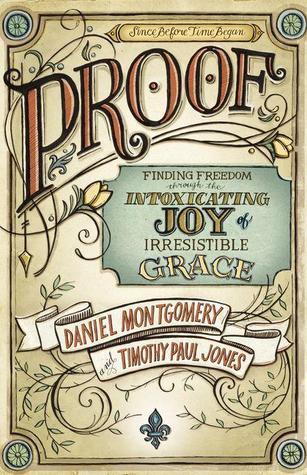
PROOF: Finding Freedom Through the Intoxicating Joy of Irresistable Grace. Daniel Montgomery and Timothy Paul Jones. 2014. Zondervan. 224 pages. [Source: Bought]

First sentence: Performance — work and reward — is one of the basic structures of our lives. As a result, we grow up thinking, “I am what I am because of what I do . . . or because of what I’ve failed to do.” But what if we told you that it’s all a lie? What if we proved to you that, when you stake your identity on your performance, you’re delusional. Better yet, what if we told you a truth that can get you free from this lifelong delusion?

ETA: This is the third time I've read PROOF. I read it in 2014, 2016, and 2023. Is it as magical as Chosen by God by R.C. Sproul? Perhaps not. That one is super-super-super special to me and always will be. But I really loved this one. It was great. It was saturated in scripture.  

I loved, loved, loved, LOVED, LOVED this one. I first reviewed it in 2014. I decided to reread it again this year. I'm so glad I did.

What is it about? The gospel--the amazing, beautiful, glorious gospel.
The gospel is the good news that God’s kingdom power has entered human history through the life, death, and resurrection of Jesus Christ. When we repent and rely on his righteousness instead of our own, his kingdom power transforms us, and we become participants in the restoration of God’s world.
The three aspects of the gospel are the kingdom, the cross, and God’s grace. 1. The gospel of the kingdom is life with God under God’s rule. 2. The gospel of the cross is the life, death, and resurrection of Jesus by which God accomplishes our salvation, rescues us from his wrath, incorporates us into his people, and inaugurates his reign in the world. 3. The gospel of grace is the wonderful news that God accepts us, shares his life with us, and adopts us as heirs of his kingdom not because we have earned it or deserve it but because God chooses to give all of this freely at Christ’s expense.
It is about the doctrines of grace. Perhaps you're unfamiliar with the "doctrines of grace." Or perhaps you're too familiarwith the doctrines of grace. This is a good book in both instances. Whether this is your very first book about the "doctrines of grace" or your fiftieth.

The authors write,
Whenever we talk about PROOF, we’re referring to an acronym that summarizes five key facets of God’s amazing grace. PROOF reminds us of five different ways in which we experience the grace of God at work in our lives
P -- planned grace
Before time began, God mapped out the plan of salvation from first to last. God planned to adopt particular people as his own children; Christ offered himself as a sacrifice for these people’s sins and as a substitute who satisfied God’s righteous requirements in their place (John 10:11-18; Ephesians 1:4-12). 
R -- resurrecting grace
Everyone is born spiritually dead. Left to ourselves, we will never choose God’s way. God enables people to respond freely to his grace by giving them spiritual life through the power of Christ’s resurrection (John 5:21; Ephesians 2:1-7). 
O -- outrageous grace
God chose people to be saved on the basis of his own sovereign will. He didn’t base his choice to give us grace on anything that we did or might do (John 15:16; Ephesians 2:8-9). 
O -- overcoming grace
God chose people to be saved on the basis of his own sovereign will. He didn’t base his choice to give us grace on anything that we did or might do (John 15:16; Ephesians 2:8-9). 
F -- forever grace
God seals his people with his Holy Spirit so that they are preserved and persevere in faith until the final restoration of God’s kingdom on the earth (John 10:27-29; Ephesians 1:13-14; 4:30).
To anyone who has questions about salvation, this is the book for you. What is salvation? How can I be saved? What is God's part in my salvation? What is my part in my salvation? Is salvation forever and ever? Can I lose my salvation? Is my salvation dependent on my sanctification, on my striving to follow God's rules and commands? What exactly is grace? Is grace too good to be true? What are the conditions of receiving God's grace? Am I really supposed to share the gospel? share the gospel with everyone?!

Some of my favorite quotes:
The empty wisdom of human religion proclaims, “What goes around comes around. God helps those who help themselves. You get what you pay for” — but these are lies that lead only to bondage and despair. The gospel of grace speaks an entirely different word, a word that’s filled with paradox and mystery. By God’s grace, we get what someone else paid for. By grace, God helps those who not only can’t help themselves, they don’t even want to. By grace, what goes around stops at the foot of the cross, never to come around again.
The message of planned grace begins with the truth that God is a loving Father who chose us personally and specifically before time began. It continues with the truth that God is a loving Bridegroom who has accomplished everything necessary to win the heart of his beloved bride. God didn’t plan for Christ’s work on the cross to extend a certain distance only to discover later that his creatures have somehow thwarted his good intentions. God’s grace always goes precisely as far as God planned.
    When did God choose to love and save his people? God planned to love and save his people before the creation of the world. This is planned grace. God maps out our rescue from start to finish (Ephesians 1:4–5). The Son didn’t just make the world savable — he secured salvation for every individual who repents and believes. The value of his suffering was more than sufficient to atone for every person in the world, but God planned for his death to purchase particular people from every nation.
    Spiritual zombies don’t choose the gift of God’s grace for the same reason that prison escapees don’t show up voluntarily at police stations. It isn’t because convicted felons are incapable of locating their local law-enforcement agency. It’s because the police represent everything the convict wants to avoid. Ever since our expulsion from Eden, every human being has been a convicted corpse on the run from God’s reign. Apart from God’s single-handed gift of resurrecting grace, no human being will ever seek God because a death-defeating King who demands that we find our greatest joy in his Father’s fame is repulsive to the spiritually dead (John 3:19 – 20; Romans 3:11).
    The sovereign king of the cosmos isn’t waiting on a permission slip from humanity before he resurrects spiritual zombies — and he certainly isn’t pacing the portals of heaven, wringing his hands, hoping someone responds positively to his invitation to the celestial prom. God powerfully sends his church to proclaim the gospel in every nation. As the gospel is shared, God’s Spirit pierces the lives of particular people who are spiritually dead and exchanges their death for his life (Acts 2:37; 13:48; Colossians 2:13).
    God’s choice to save you had nothing to do with anything that you have done or will do. You did nothing to gain God’s favor, and there’s nothing you can do to keep God’s favor. All that you can do — which is really no “doing” at all — is to receive what God in Christ has already done. It’s only when we realize that nothing we did or might do formed the basis of God’s choice to save us that we truly taste the intoxicating joy of God’s irresistible grace.
    Outrageous grace isn’t a favor you can achieve by being good; it’s the gift you receive by being God’s. Outrageous grace is God’s goodness that comes looking for you when you have nothing but a middle finger flipped in the face of God to offer in return.
    The God of the Scriptures is no debonair gentleman who waves to us from the opposite side of a chasm, hoping we will find it in our hearts to respond. In Jesus Christ, God himself crossed the chasm between himself and humanity (John 1:14; 12:27). He came as a righteous shepherd who sacrifices his life to snatch his sheep from the jaws of the beast (Ezekiel 34:10; Matthew 18:12 – 14; John 10:11 – 15). He entered space and time as a sovereign lord in humble disguise, seeking to transform a broken woman into his pure and perfect bride (Ezekiel 16:1 – 14; Hosea 3:1; Ephesians 5:25 – 27). He came as a medic on an emergency mission to breathe life into sin-infected souls (Mark 2:17). Now, through the power of his Spirit and the proclamation of his gospel, this same Jesus is shattering every resistance to his reign in the lives of those he has chosen. He is planting outposts of his kingdom where love and justice grow, and he is beginning the healing of his people’s sin-infected souls. Jesus Christ came to seek and to save his people who were lost, and he isn’t asking anyone’s permission to finish this mission (Matthew 1:21; Luke 19:10). That’s the power and the beauty of overcoming grace.
    Christ’s commitment to his people does not depend on our capacity to remember, but on God’s capacity to sustain us and preserve us. It depends on a covenant that has been engraved in flesh and confirmed in blood.

    © Becky Laney of Operation Actually Read Bible

    Saturday, February 18, 2023

    20. The Holiness of God


    The Holiness of God. R.C. Sproul. 1985/2012. 226 pages. [Source: Bought]


    First sentence: I was compelled to leave the room. A deep, undeniable summons disturbed my sleep; something holy called me.

    ETA: I reread The Holiness of God. I wasn't planning to exactly. But after reading Chosen by God, I just *had* to. These books complement each other so well. These two are so essential. Both hold a special place in my heart. 

    Holiness of God is a classic by R.C. Sproul that every Christian should read at least once. Emphasis on at least once. I think it happens to be one of those books where you might even want to reread it every other year or so.

    So what is it about? It's about God, about who HE is, about his HOLINESS and righteousness. But it is also about who we are. It's about sin--what it is, how it divides us, how it damns us--about grace, about justice. It is about our holiness as well. Why are believers called saints? Why are we called to be holy and to live holy lives? Ultimately, the book is a refresher course on the gospel itself.

    In the first chapter, Sproul writes: "Today I am still absorbed with the question of the holiness of God. I am convinced that it is one of the most important ideas that a Christian can ever grapple with...How we understand the person and character of God the Father affects every aspect of our lives. It affects far more than what we normally call the “religious” aspects of our lives." If you agree, then this book is a must read. And if you don't agree, well, then perhaps reading the book will change your mind.

    I have read this one three times now. I think I love it more each time.

    Quotes:
    Here is the promise of God: We shall see Him as He is. Theologians call this future expectation the beatific vision. We will see God as He is.
    Right now it is impossible for us to see God in His pure essence. Before that can ever happen, we must be purified. When Jesus taught the Beatitudes, He promised only a distinct group the vision of God: “Blessed are the pure in heart, for they will see God” (Matt. 5:8).
    None of us in this world is pure in heart. It is our impurity that prevents us from seeing God. The problem is not with our eyes; it is with our hearts.
    Only once in sacred Scripture is an attribute of God elevated to the third degree. Only once is a characteristic of God mentioned three times in succession. The Bible says that God is holy, holy, holy.  Not that He is merely holy, or even holy, holy. He is holy, holy, holy. The Bible never says that God is love, love, love; or mercy, mercy, mercy; or wrath, wrath, wrath; or justice, justice, justice. It does say that He is holy, holy, holy, that the whole earth is full of His glory.
    In a very real sense, the word holy is a foreign word. The problem we face, however, is that the word holy is foreign to all languages. No dictionary is adequate to the task. 
    Sinful people are not comfortable in the presence of the holy. The cliché is that misery loves company. Another is that there is fellowship among thieves. But thieves do not seek the consoling presence of the fellowship of police officers. Sinful misery does not love the company of purity.
    If we fix our minds on the holiness of God, the result might be disturbing.
    “Love God? Sometimes I hate Him.” This is a strange quote to hear from the lips of a man as respected for his religious zeal as Luther.
     Two things separated Luther from the rest of men: First, he knew who God was. Second, he understood the demands of God’s law. He had mastered the law. Unless he came to understand the gospel, he would die in torment.
    “The just shall live by faith.” This was the battle cry of the Protestant Reformation. The idea that justification is by faith alone, by the merits of Christ alone, was so central to the gospel that Luther called it “the article upon which the church stands or falls.” Luther knew that it was the article by which he would stand or fall.
    There is no such thing as evil justice in God. The justice of God is always and ever an expression of His holy character.
    What God does is always consistent with who God is. He always acts according to His holy character. God’s internal righteousness is the moral excellence of His character.
    God does not always act with justice. Sometimes He acts with mercy. Mercy is not justice, but it also is not injustice. Injustice violates righteousness. Mercy manifests kindness and grace and does no violence to righteousness. We may see nonjustice in God, which is mercy, but we never see injustice in God.
    The false conflict between the two testaments may be seen in the most brutal act of divine vengeance ever recorded in Scripture. It is not found in the Old Testament but in the New Testament. The most violent expression of God’s wrath and justice is seen in the Cross. If ever a person had room to complain of injustice, it was Jesus. He was the only innocent man ever to be punished by God. If we stagger at the wrath of God, let us stagger at the Cross. Here is where our astonishment should be focused.
    It is impossible for anyone, anywhere, anytime to deserve grace. Grace by definition is undeserved. As soon as we talk about deserving something, we are no longer talking about grace; we are talking about justice. Only justice can be deserved. God is never obligated to be merciful. Mercy and grace must be voluntary or they are no longer mercy and grace.
    God never “owes” grace. He reminds us more than once: “I will have mercy on whom I will have mercy” (Exod. 33:19). This is the divine prerogative. God reserves for Himself the supreme right of executive clemency.
    The moment awareness of His divine presence begins, the deepest personal struggle a person can experience begins as well.
    We may wrestle with the Holy One. Indeed, for the transforming power of God to change our lives, we must wrestle with Him. We must know what it means to fight with God all night if we are also to know what it means to experience the sweetness of the soul’s surrender.
    One of the names by which God is revealed in the Old Testament is the name El Shaddai. The name means “the thunderer” or “the overpowerer.” It was by the name El Shaddai that God appeared to Job. What Job experienced was the awesome power of a sovereign God who overpowers all people and is Himself overpowered by no one.
    How much time elapses before the sinner begins to become pure? The answer is none. There is no time lapse between our justification and the beginning of our sanctification. But there is a great time lapse between our justification and the completion of our sanctification.
    Semi-Pelagianism is the majority report among evangelical Christians and probably represents the theology of the vast majority of people who read this book. But I am convinced that with all of its virtues, Semi-Pelagianism still represents a theology of compromise with our natural inclinations. Evangelicals today have unconverted sinners who are dead in trespasses and sin bringing themselves to life by choosing to be born again. Christ made it clear that dead people cannot choose anything, that the flesh counts for nothing, and that we must be born of the Spirit before we can even see the kingdom of God, let alone enter it. The failure of modern evangelicalism is the failure to understand the holiness of God. If that one point were grasped, there would be no more talk of mortal enemies of Christ coming to Jesus by their own power. The only kind of God we can love by our sinful nature is an unholy god, an idol made by our own hands. Unless we are born of the Spirit of God, unless God sheds His holy love in our hearts, unless He stoops in His grace to change our hearts, we will not love Him.
    God is not at the edge of Christians’ lives but at the very center. God defines our entire life and worldview.


    © Becky Laney of Operation Actually Read Bible