Friday, November 18, 2016

Book Review: Christmas Is Coming!

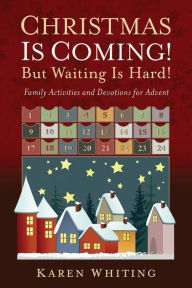
Christmas is Coming! But Waiting is Hard! Karen Whiting. 2016. Abingdon Press. 112 pages. [Source: Review copy]

First sentence: God's love is an ADVENTure, and one of the best ADVENTures happens at Christmas time.

Premise/plot: The book is written with parents--busy parents in mind. The goal is to make the Christmas season less commercial and more spiritual. The author encourages parents to have an advent wreath in addition to a tree. Supplementing both are daily family devotions that are themed around common Christmas symbols.

My thoughts: It was okay. I did like that each day had an activity to do. Yet at the same time it wasn't all arts and crafts. Snippets of scripture were included and each day had a suggested hymn or carol to sing.

That being said, I think that instead of starting with Jesus and making everything be about him--who he is, why he came, what he did, how he is still interceding for us--it seems to start with a symbol (stocking, snow flake, bow, etc.) and search for a way--any way that could make it be about Jesus. The book didn't use hot cocoa as an example, but I will. The world will leave you cold and shivering. Jesus warms you up from the inside out and helps comfort you when you need it the most. If that kind of devotion makes your day, then this one is for you. Deep theology it is not.

I don't think the book is flawed. I just think some readers won't find it nourishing enough. Perhaps some are looking for more about HIM and want to share a feast with their families. For other families, perhaps this is more nourishment than what they usually get and perhaps the Spirit will use this book to whet their appetites for more. I'd suggest the Jesus Storybook Bible or the Big Picture Story Bible. Both are available on audio as well. So maybe car trips could have this on instead of Rudolph!

© Becky Laney of Operation Actually Read Bible

Thursday, November 17, 2016

Quotes from the Cloud #38


This year, I hope share weekly posts of quotes. These quotes are from authors I'm reading and enjoying from the Clouds of Witnesses Reading Challenge.

Had I been Joseph's mother
I'd have prayed
protection from his brothers:
"God keep him safe;
he is so young,
so different from
the others."
Mercifully
she never knew
there would be slavery
and prison, too.
Had I been Moses' mother
I'd have wept
to keep my little son;
praying she might forget
the babe drawn from the water
of the Nile,
had I not kept
him for her
nursing him the while?
Was he not mine
and she
but Pharaoh's daughter?
Had I been Daniel's mother
I should have pled
"Give victory!
This Babylonian horde--
godless and cruel--
don't let them take him captive
--better dead,
Almighty Lord!"
Had I been Mary--
Oh, had I been she,
I would have cried
as never mother cried,
"…Anything, O God,
anything…
but crucified!"
With such prayers
importunate
my finite wisdom
would assail
Infinite Wisdom;
God how fortunate
Infinite Wisdom
should prevail~ Ruth Bell Graham


© Becky Laney of Operation Actually Read Bible

Wednesday, November 16, 2016

Book Review: Pursuing Health In An Anxious Age

Pursuing Health in an Anxious Age. Bob Cutillo, M.D. 2016. Crossway. 208 pages. [Source: Review copy]

From the foreword: What are we to do with our bodies, fearfully and wonderfully made as they are, in times of illness, vulnerability, and death?

From chapter one: Nursery rhymes are useful for a number of reasons. First, they rhyme, which makes them easy to remember. But they can also carry a great deal of meaning… Though we prefer not to think about it, we are very much like Humpty Dumpty. In spite of our own fragile shells, we believe we can sit safely on the precarious wall of life. Although our world is full of disease, accidents, and random misfortunes, many of us never plan on being sick or dying and are quite shocked when we are.
Pursuing Health in an Anxious Age is a thought-provoking read on life, death, health, and healthcare. Written from a Christian doctor's point of view, it addresses what is wrong--and in some cases what is right--about our society, about our society's view of health, and perhaps most importantly about the health care system.

Whether you have insurance or don't have insurance, whether you find your insurance lacking or satisfactory, I think this book is timely and relevant.

The book is not to be rushed through. In fact, I think there are plenty of sections of this one that deserve--almost demand--to be read through two or three times so that they can be fully absorbed or contemplated. Cutillo, I believe, asks questions that I've never encountered elsewhere. His solutions, again, are new and challenging. This book isn't the familiar same-old, same-old. His arguments are compelling, and, if not absolutely persuasive, at least provide much food for thought.

Some of the questions asked:

  • Why do we fragment a patient into pieces to give good medical care?
  • And why do we segregate the rich and insured from the poor and uninsured to deliver good health care? 
  • What if wasteful spending and too much health care for some means too little for others? 
  • Is health a possession or a gift? 
  • But why do greater certainty and more control only heighten our fear for what remains outside our control—especially if the possibilities are so improbable? 
  • How did statistical evidence grow to become such an unquestioned authority in our current world? 

Quotes:
Modern medicine looks increasingly more like the pursuit of happiness and control of the future than the cure of sickness and the care of health.
Most modern political and economic thought and action prioritize private and personal goals over communal care and the common good. Our current health care spending, predicated on individual fear and worry, creates more and more services with less and less value.
The individual pursuit of health contorts the role of medicine, asking it to deliver us from our finitude, our mortality, and our human vulnerability to suffering. But instead of good health care and better health, the end result is too much health care for some, too little health care for others, and less health for all. We have multiplied the means of health care without a good understanding of the proper end of health, resulting in increased waste and greater injustice.
If meaning and purpose are deeply tied to the very form and fit of our body, then our task and the task of medicine must advance beyond the blunt power to free ourselves from the limitations of our body to learning to live in and through the bodies we have been given.
If the person before us is both made in God’s image and uniquely loved by God, then whatever the good, the bad, the beautiful, or the ugly that we first see when we look, we are biased toward love. Many fellow human beings can be quite lovely, but many others are not; and everyone is unlovely at one time or another. But if our vision is rooted in the gaze of the gospel, then our love has life beyond any feeling, circumstance, or assessment of value, except in knowing that the person is valued by God.
The way God comes to us in the incarnation was, is, and always will be a surprise, a pure gift beyond expectation or understanding.
It will never be easy to choose for the protection of the poorest and weakest in health care. The truth that their health matters to our health is indeed a strange one. Not only for us but for every generation, it has been difficult to take notice of Lazarus at the gate.

© Becky Laney of Operation Actually Read Bible

Tuesday, November 15, 2016

My Year with Newton #12

Today I am continuing to share my reading experience with John Newton. I have completed John Newton's sermon series on Handel's Messiah. I am moving on to his LETTERS. 

Today I'm sharing from "Man in His Fallen State." This one might as well be used as a cheer by Calvinists: Gimme a "T"
Fallen as man is from his original state of happiness and holiness, his natural faculties and abilities afford sufficient evidence that the hand which made him is Divine. He is capable of great things. His understanding, will, affections, imagination, and memory—are noble and amazing powers. But view him in a moral light, as an intelligent being, incessantly dependent upon God, accountable to him, and appointed by him to a state of existence in an unchangeable world: considered in this relation—man is a monster, a vile, base, stupid, obstinate, and mischievous creature; no words can fully describe him. Man, with all his boasted understanding and attainments, is a fool: so long as he is destitute of the saving grace of God, his conduct, as to his most important concerns, is more absurd and inconsistent than that of the most contemptible idiot; with respect to his affections and pursuits, he is degraded far below the beasts; and for the malignity and wickedness of his will, can be compared to nothing so properly as to the devil.
There is indeed a difference among men, but it is owing to the restraints of Divine Providence, without which earth would be the very image of hell.
Then there is no fool like the sinner, who prefers the toys of earth to the happiness of heaven; who is held in bondage by the foolish customs of the world; and is more afraid of the breath of man, than of the wrath of God.
Man in his natural state is a BEAST, yes, below the beasts which perish. In two things he strongly resembles them; in looking no higher than to sensual gratifications, and in that selfishness of spirit which prompts him to propose himself and his own interest as his proper and highest end.
Man resembles Satan in pride: this stupid, wicked creature values himself upon his wisdom, power, and virtue, and will talk of being saved by his good works; though if be can, Satan himself need not despair. He resembles him in malice; and this diabolical disposition often proceeds to murder, and would daily, if the Lord did not restrain it. He derives from Satan the hateful spirit of envy: he is often tormented beyond expression, by beholding the prosperity of his neighbors; and proportionably pleased with their calamities, though he gains no other advantage from them than the gratification of this rancorous principle. He bears the image likewise of Satan in his cruelty. Further, if deceit and treachery belong to Satan's character, then surely man resembles him. Like Satan, men are eager in TEMPTING others to sin; not content to damn themselves, they employ all their arts and influence to draw as many as they can with them into the same destruction.
In direct opposition to God and goodness, in contemptuous enmity to the Gospel of his grace, and a bitter persecuting spirit against those who profess it, Satan himself can hardly exceed them. Herein, indeed, they are his agents and willing servants; and because the blessed God is himself out of their reach, they labor to show their despite to him in the people of his people.
How wonderful is the love of God in giving his Son to die for such wretches! And how strong and absolute is the necessity of a new birth, if we would be happy!
The propensities of fallen nature are not eradicated in the children of God, though by grace they are made partakers of a new principle, which enables them, in the Lord's strength, to resist and mortify the body of sin, so that it cannot reign in them. Yet they are liable to sad surprisals; and the histories of Aaron, David, Solomon, and Peter, are left on record, to teach us what evil is latent in the hearts of the best men, and what they are capable of doing if left but a little to themselves. "Lord, what is man!"
Though these several branches of the will of God respecting sinners, and other truths in connection with them, are plainly revealed and repeatedly inculcated in the Bible; and though the Bible is to be found in almost every house; yet we see, in fact, it is a sealed book; little read, little understood, and therefore but little regarded, except in those places which the Lord is pleased to favor with ministers who can confirm them from their own experience; and who, by a sense of his constraining love, and the worth of souls, are animated to make the faithful discharge of their ministry the one great business of their lives: who aim not to possess the wealth, but to promote the welfare of their hearers; are equally regardless of the frowns or smiles of the world; and count not their lives dear, so that they may be wise and successful in winning souls to Christ.
The Gospel you have hitherto slighted, resisted, or opposed, is still the power of God unto salvation. The blood of Jesus, upon which you have hitherto trampled, speaks better things than the blood of Abel, and is of virtue to cleanse those whose sins are scarlet and crimson, and to make them white as snow. As yet you are spared; but it is high time to stop, to throw down your arms of rebellion, and humble yourselves at his feet. If you do, you may yet escape; but if not, know assuredly that wrath is coming upon you to the uttermost; and you will shortly find, to your unspeakable dismay, that it is a fearful thing to fall into the hands of the living God.

© Becky Laney of Operation Actually Read Bible

Monday, November 14, 2016

Book Review: John Bunyan and the Grace of Fearing God

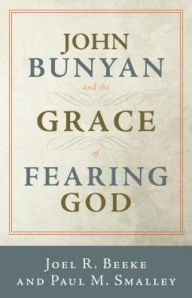
John Bunyan and the Grace of Fearing God. Joel R. Beeke and Paul M. Smalley. 2016. 160 pages. [Source: Review copy]

Do you want to read John Bunyan, but find him intimidating? (Or perhaps you think you'll find him intimidating, but, honestly you've never really tried reading him?!) I would recommend reading John Bunyan and The Grace of Fearing God as an introduction to his life and work.

The book gives a good, solid overview of his life. But it isn't just a reader-friendly biography. (The book also gives a good, basic introduction to PURITANS in general.) It also serves as a GREAT overview of his theology--his doctrinal positions, his written works, his dedication to preaching and teaching. The emphasis of this one is on the fear of God, and how the fear of God is intimately connected to God's GRACE.

I'm going to guess that many Christians don't really think about the fear of God all that often. Many may have been taught that fear of God is unnecessary. After all, GOD IS LOVE. And who would fear a God that is all love, all the time?! But the Bible teaches--and Bunyan preaches--that God is a God to be feared. Why? Was Bunyan opposed to grace? Was he a legalist? Did he teach that fear of God could be overcome--should be overcome--by our ongoing obedience? These questions and more are answered within the book.

One of the things I enjoyed most about the book was how thought-provoking it was. You do not have to convince me that the Bible is relevant. I believe that heart-and-soul. But I am convinced that Bunyan remains relevant as well. I think Bunyan could teach us modern-day Christians a LOT.

But what I really LOVED, LOVED, LOVED about this one was all the Bible-talk. Bunyan apparently LOVED, LOVED, LOVED the Bible too.

Quotes:
John Bunyan was one of the most Bible-saturated Puritans of this period. The Prince of Preachers, Charles Spurgeon, aptly called Bunyan “a living Bible,” describing him as one who bled out of every pore of his being “Bibline.”
Few themes are as neglected today as the fear of God. Such fear is often viewed as psychologically harmful instead of as a delightful and energizing force for obedience. Bunyan stands as a preeminent example of the Puritan quest to find release from the guilty fear of God’s wrath through the saving righteousness of Jesus Christ and to bow joyfully before God with a childlike fear. In their exposition of fear in Bunyan’s life and doctrine, Beeke and Smalley open a window into the soul of true godliness—that reverent love for God’s glory that is fed by the doctrines of God’s sovereign grace.
We need lions for the Lord today—not men and women who bite and devour each other in self-righteous hatred, but people humbled by God’s law and made strong by Christ’s righteousness.
Before you can serve the Lord, you must be saved by the Lord.
The fear of the Lord cannot leave us indifferent to the Word of God; when we fear Him, we sense the infinite weightiness of His Word.
Bunyan’s life is an amazing paradox. On the one hand, his sermons and writings were powerful and widely disseminated. On the other hand, he was weak and long confined in the darkness of his prison. At times, that darkness seemed to overwhelm his soul. Yet his reverence and faith toward the Lord sustained him because he knew his God. Isaiah 50:10 says, “Who is among you that feareth the Lord, that obeyeth the voice of his servant, that walketh in darkness, and hath no light? Let him trust in the name of the Lord, and stay upon his God.” Those who fear the Lord may pass through valleys of deep darkness, even through the shadow of death, but the Lord sustains them with such power that their very struggles to believe become mighty victories over the powers of darkness, and they become shining beacons to guide others toward heaven.
To know the Lord is to fear Him. God’s name—that is, the revelation of His nature—is inherently awe inspiring.
Do you believe that you deserve to be condemned to hell? If you do not, then you can hardly look to Jesus Christ to save you from sin and damnation. Do not rest in a mere belief in Christ without a hunger and thirst for righteousness. Pray that God would show you who He is and what you are, and expose yourself to the heartsearching preaching of the Word.
Godly fear produces tenderhearted compassion to saints who are in need and distress.
The Holy Scriptures should always be before our eyes, always sounding in our ears, and always stirring thoughts and affections in our hearts.
The world mocks at the fear of God, thinking it a weakness, a symptom of an unhealthy mind. Christians, however, should not be ashamed of the fear of the Lord. Bunyan called the believer to “devote” himself to the fear of the Lord, even to “addict yourself to it” with habitual dedication. Find your peace and joy in meditating on God and showing reverence to His name and Word and worship. “Then,” Bunyan said, “will you fear, and grow in this grace of fear.”
A person’s attitude toward the Bible says much about his attitude toward God.
Bunyan believed that a lack of reverence for the Word of God is the cause of “all disorders” of heart, life, conduct, and church. All sin begins with “wandering from the Word of God.” He quoted Proverbs 13:13: “Whoso despiseth the word shall be destroyed: but he that feareth the commandment shall be rewarded.” The Word is our life and safety (see Ps. 17:4; Prov. 4:20–22). In every age, the wicked reject the Word and follow their lusts and pride, but they will perish and be counted as fools (see Jer. 8:9; 44:16).42 They do not believe that the Bible is the Word of God, in part because they do not see themselves as such bad sinners that they by nature deserve God’s wrath and vengeance as the Bible says, and in part because worldly religious teachers tickle their ears with empty philosophy and deception (see Col. 2:8). By their rejection of God’s Word, they provoke Him to anger (see Zech. 7:11–12).

© Becky Laney of Operation Actually Read Bible

Sunday, November 13, 2016

On Feasting In Church, part 2

I recently read Asheritah Ciuciu's FULL: Food, Jesus, and the Battle For Satisfaction. It was a thought-provoking read. I'll be honest. I read it carefully. I read it critically. (Critical to myself, critical to the ideas and arguments.) I had a few issues with the book now and then. I did. But at the same time, I must admit that it got me asking questions.

The book is about FOOD FIXATION. It's main argument is that food fixation has its roots in a spiritual problem. That healing is completely possible, that change is possible--but what people need is a MIGHTY, MIGHTY SAVIOR. What people need is to love Jesus Christ more than they love donuts or fried chicken. People don't need to turn to comfort food, they need to be turning pages of Scripture. People's first resort needs to be prayer, not biscuits and gravy.

The book's secondary argument is that the church is not doing enough.  She argues that food fixation, food addiction, gluttony is a church-approved sin. Wherever two or more are gathered in Christ's name--there is food, generally a lot of food. (And not healthy, good-for-you food.) Gluttony seems to be a forbidden subject in and out of the church. Perhaps this is accidental. Perhaps this is intentional. Perhaps people are so terrified of offending people, of coming across as judgmental, that they avoid anything that hints of it.

The church should first and foremost be concerned with the spiritual health of individual church members.

But. Does that mean the church should not be concerned with the physical health of individual church members?

Does stressing the first--spiritual health--mean dismissing the second--physical health--completely? And if Ciuciu is correct, that the ROOT of food fixation and addiction is spiritual, shouldn't the church take notice and reevaluate things?

How many church members struggle with health problems? For example, how many church members have diabetes? In a decade, how many church members are buried because of diabetes-related causes?
In the days before the funeral, and perhaps after the funeral, how does the church respond? With food. Comfort food.

I think there has to be a way for the church to be more supportive of its members physical and spiritual needs. I am NOT asking for the food police, or for the creation of FOOD PHARISEES. I don't think it would work; I don't think it would be helpful. I think it would create situations of shame, guilt, and fear. But there has to be something in between doing "absolutely nothing" and the free-for-all of FEAST, FEAST, FEAST.

We should--privately and publicly--be FEASTING on the Word of God, on Christ himself. More love of Christ, more trust in Christ is the answer not just to the addiction to food--but to all other sin as well. The church should actively encourage church members to fight against sin and avoid entering into temptation at every opportunity. But we live in an age where sin is just as forbidden a subject. Could this be part of the problem?

Should pastors be more willing to talk openly and honestly about gluttony? about food addiction? Perhaps. I think pastors should definitely be preaching openly and honestly about every subject--every topic--found in the Word of God. The church needs the WHOLE book.

Perhaps small changes could be made within the church to help those who struggle. Are donuts really necessary for Sunday School? Are cakes and cookies really necessary for Bible study? I am not saying never eat together as a church family. But perhaps more effort could be made to make eating together more balanced. (Perhaps sign-up sheets to make sure that a few people bring meat (protein), that perhaps a few more bring vegetables (not side dishes, but vegetables), that a few bring fruit, that a few bring dessert, that a few bring carbs (biscuits, rolls, macaroni and cheese).

Perhaps small groups could be formed to support one another's efforts. To perhaps attend work shops and seminars about healthy cooking, to work out together,  to pray together, to read select books. The message needs to be: you are not alone, and, I will fight by your side. I struggle too. Don't be ashamed. Don't hide. We're stronger together.

Physical health should never take the priority OVER spiritual health. And one should never become so focused on being healthy and fit that one becomes complacent or disinterested in spiritual growth and discipline. Christ should always, always, always, always be what we seek most. Not a number on a scale, not a number on a hanger or tag.

I do think the church is afraid to have hard, tough conversations. I do think most people are terrified of saying the wrong thing. It is easier to say nothing, do nothing. It will always be easier to say nothing, do nothing. Will saying nothing make the problem go away? Truth can be loving and freeing. Admitting that the church has an obesity problem won't be easy. I know that. But the church has a MIGHTY, MIGHTY SAVIOR in her midst. Someone who has promised to FREE us from our SINS and transform--renew--our minds.

An individual can fight, struggle, give in, give up, and go around and around on the merry go round of hate, self-loathing, shame, guilt, fear. Shame can keep you silent, alone, vulnerable. But we are meant to share one another's burdens. How can we encourage each other to love Christ more? To cling to him more tightly?

© Becky Laney of Operation Actually Read Bible

On 'Feasting' in Church

A few weeks ago, I read the article "Feasting and Fellowship in an Age of Food Allergies." It was a good, for the most part. I agree that there is an increase of food allergies. I agree that the church needs to be willing to make changes--big or small--in the name of fellowship. I agree that the church should take steps to be more welcoming and supportive to those with special eating needs.

One section on 'Food Pharisees' caught my attention. No doubt it caught my attention for a reason. It was about judgment and shame. About how personal food preferences can lead to judging others with different diets.

I think this section is true--in some ways--no question. There is nothing more annoying than listening to someone on a new diet, someone following a new fad, to tell you what you should be eating or what you should not be eating. There is nothing more annoying than having someone else calculating how many carbs or how many calories are on your plate. It can be hurtful--in the extreme--to be told NO WONDER YOU'RE NOT LOSING WEIGHT.

But at the same time, I think it's not completely true. I think the article is a bit harsh in judging those who *have* food preferences. OR those who bring their food preferences to the church fellowship hall. At one point writing that those with 'food preferences' marginalize those with legitimate issues and concerns.
"While our neighbors are legitimately suffering the isolating effects of food allergies, many of us actively embrace the isolation that they would gladly escape if they could, removing ourselves from the blessing of shared consumption."
When we project our own food preferences and convictions on our brothers and sisters, we unintentionally marginalize those with legitimate allergies, and we unintentionally stigmatize those who don’t eat like we do.
I don't think those with 'food preferences' are the villains seeking to steal the spotlight. I don't.

I have a few food allergies, and, I have a few food preferences. I avoid eggs, gluten, and dairy because I want to avoid 'relatively minor' reactions. I avoid foods with added sugar or artificial sweeteners because I'm watching my weight. (I had given up desserts almost a full year before I discovered my food allergies.)

Is there a way for the church to be supportive and not judgmental when it comes to feasting? Does it really matter--at the end of the day--why a person says no to the macaroni and cheese? Let's say one person has celiac disease, one person has a dairy allergy, one person has diabetes, one person is struggling to lose weight. Which reason are you really going to call out as invalid?

To end on a more positive note. Here are my suggestions for how church members bringing food to potluck feasts can be more supportive.

1) LABEL potential allergens. It's that simple. Even if you do nothing else, do this, please. I don't know how others with food allergies are--but--I hesitate to ask or probe too many questions. Plus, to have to ask questions about every single thing in front of you--well--that makes me feel too different. (Dairy, eggs, peanuts, tree nuts, soy, wheat, fish, shellfish, etc.)

2) If you bring vegetable side dishes, it might prove helpful if you leave the 'butter' or 'cheese' to be added on after-the-fact. It might slow down the line, possibly. But for those with dairy allergies, perfectly good vegetables become 'ruined' by the presence of butter, cheese, etc. Or consider cooking with olive oil instead. I love green beans, mushrooms, celery, onions sautéed in olive oil. And I don't think you have to be "avoiding dairy" to love that one!

3) Consider bringing fresh fruit instead of a more traditional dessert. Or in addition to your traditional dessert.


© Becky Laney of Operation Actually Read Bible