Showing posts with label Abingdon Press. Show all posts

Wednesday, September 20, 2017

Book Review: Godspeed

Godspeed: Voices of the Reformation. David Teems. 2017. Abingdon Press. 384 pages. [Source: Review copy]

First sentence: It was William Tyndale, with his 1526 English New Testament, who introduced the word godspeed into the English language. Tyndale lived in the shadows of death. Hounded by a very large, widespread, and oppressive religious body, he lived with the understanding that each day could be his last. Yet far from crippling his efforts or restraining his spirit, it gave him clarity and deepened his resolve. It sharpened his natural gifts as well as his aim, proving, as it did with most of the reformers, that Christianity is always at its best when under fire.

Premise/plot: Godspeed is a new year-long devotional by David Teems. The focus is on the Reformers and the Reformation: William Tyndale, Martin Luther, John Calvin, John Knox, John Wycliffe, Jan Has, Ulrich Zwingli, Anne Askew, Anne Boleyn, Katherine Parr, Thomas Cranmer,  Girolamo Savonarola, etc. Teems writes, "This little book doesn’t pretend to be a history, and it doesn’t always behave like a devotional."

Each entry features a quote by a Reformer, a short devotional message, a prayer, and a scripture verse.

My thoughts: I really enjoyed reading this devotional book. Some entries I loved more than others. But overall, I'd say it is a thought-provoking, substantive choice for a devotional book. Perhaps this is of more interest to history-lovers and church-history lovers. But the Reformers can teach us all a little something. So don't be intimidated by the idea of reading "ancient" theologians.

I loved reading the quotes. I liked Teems' devotions and prayers. Some of the prayers were really compelling.

David Teems:

  • Being saturated with the gospel makes you vulnerable to an intimate fellowship not only with God but with life around you, the two not easily separated. It is love for love’s sake, not for reward or gain but simply because it is asked of me.
  • There is no divide, Tyndale writes, between the Christian and any living soul. Love has no division in it, and therefore no politics. It has a cross instead. The believer sees Christ in all of humanity, and serves accordingly. It refines perception. Clears the eye, so to speak.
  • “Let God worry” is an entire theology. Luther once told Philip Melanchthon, “Whether we live or die, we are the Lord’s. Even if you should fall down the stairs or should suddenly expire while you are writing, it wouldn’t matter. Let it be!”
  • May the Word sustain you when the world has lost its mind, when truth cannot be determined from lies. May it be the earth beneath your feet. May you neither slip nor fall out of rhythm.
  •  I often use present tense when writing about Tyndale. His writing seems too alive, too present not to.
  • Lord, give me the courage to examine the way I love, how I invest myself in others, at what depths, how much of myself am I willing to give away for nothing in return. Leave your print in me. 
  • Did William Tyndale translate the Bible or did the Bible translate William Tyndale? When you read Tyndale, it takes very little work to detect the consistencies in him, the themes he gravitates to, that repeat themselves again and again. Everything he does, everything he thinks, is, like his very soul, tethered to the Word of God. Before he translated a single word from one language to the next, the Word was at work translating him. Feeding on the Word, saturating himself with the Word daily altered him. Improvement led to improvement, compounding along the way, even as the scripture says, “to everyone who has, more will be given.” 
  • Hypocrisy is little more than scorn disguised and polished. Truth is, who would shut up the kingdom of heaven before men has never truly tasted of the kingdom, has never been humble enough, or desperate enough, or in love enough to understand it. 
  • If William Tyndale or Martin Luther or any of the reformers, including those martyred, could somehow visit us presently, what would their reaction be? What would they see? A fat church? A heady, bloat and overfed, overindulged church, where the gospel is something to draw a fiery sermon from, point a few fingers, raise the voice a few decibels, take up a collection, then go on their way? Would they see the faithful exercising their faith, following the simple words of Christ? Would they think their work was not yet complete? Or worse, that reform had failed? 
  • “If I were addicted to God’s Word at all times alike,” Luther said, “and always had such love and desire thereunto as sometimes I have, I should account myself the most blessed man on earth. But the loving apostle, St. Paul, failed also, as he complains, with sighs, saying: ‘I see another law in my members warring against the law in my mind.’” Not to step too lightly around his moderately self-deprecating confession, but it is the Word in Luther that gives him (and Paul) a clear and intimate look at his own soul. Here it plays the mirror. Scripture, with its deep inward gaze. We will not achieve God or have his mind simply by the exercise of our wit. It is not something that can be taught, that submits to reason, or that we can do for ourselves. 
  • Tyndale inspired a new taste for scripture, a new taste for the English language itself. With this new school of thought, instruction was necessary. For Tyndale, behind the pursuit of scripture is the desire for God, unless it be of little effect. The scripture both inspires and nurtures this desire. The Word acts as medication to the ills of man, both psychological and spiritual. The closer one gets to the center, that is, from the superficial, the more powerful that medicine becomes, the closer one gets to the warm middle, or the pith, as the translator calls it, where the light is on and remains on.
  • May the Word of God be your shield, your strong and high tower, your refuge in a time of flight, your peace in a time of calamity. May it have access to your thought life, to the secrets you keep there. May it be the answer when you have none, when you are mute. May it embolden. May it give you courage in a desperate time, wisdom in a time of doubt and uncertainty. May everything you do, everything you set your hand to have the seal of God upon it. And may you rest peaceful at day’s end, content with your labor. Where you fail or fall short, may the Word comfort even as it corrects. May it be your confidence in this world, your backbone, your clear eye, the depository of all you do and hope. Amen.  
  • May worship be the strong motive in all you do, in all you consider, all you debate in the heart. May it help construct your sentences, adding tone, color, and something weightless. May it teach you how to choose. May it be attractive on you. And conspicuous. May it change you by day’s end, and in pleasant unexpected ways.
  • May your mind be overwhelmed with the goodness of God. May he sanctify your imagination, and inform your dreams. May he give you a clear eye, a mop and broom to refine your thought life. 
  • May reform never sleep in you or grow dull. May you find the courage to keep the engine running smoothly and consistently, even when the mirror says unflattering things. What reform seeks is you, the authentic, very you, nothing less. Let it work a lifetime.  


Martin Luther quotes:

  • No man understands the Scriptures unless he be acquainted with the cross. —Table Talk
  • Only spiritual trial teaches what Christ is. —Martin Luther 
  • A Christian lives not to himself, but in Christ and his neighbor. Otherwise he is not a Christian. He lives in Christ through faith, in his neighbor through love. By faith he is caught up beyond himself into God. By love he descends beneath himself into his neighbor. Yet he always remains in God and in his love, as Christ says in John 1:51, “Truly, truly, I say to you, you will see heaven opened and the angels of God ascending and descending upon the Son of Man.” —The Freedom of a Christian Man
  • Mother love is stronger than the filth and scabbiness on a child, and so the love of God toward us is stronger than the dirt that clings to us. —Table Talk 
  • But you will know the gospel when you hear the voice which tells you that Christ Himself is yours, together with His life, teaching, work, death, resurrection, and everything he has, does, or can do. —The Freedom of a Christian Man
  • No greater mischief can happen to a Christian people, than to have God’s Word taken from them, or falsified, so that they no longer have it pure and clear. God grant we and our descendants be not witnesses of such a calamity. —Table Talk
  • There is no other way in which man can meet or deal with God but by faith. It is not man by any works of his, but God, who by His own promise is the author of salvation; so that everything depends, is contained, and preserved in the word of His power, by which He begot us, that we might be a kind of first-fruits of His creation. —On the Babylonian Captivity of the Church 
  • God styles himself, in all the Holy Scriptures, a God of life, of peace, of comfort, and joy, for the sake of Christ. I hate myself, that I cannot believe it so constantly and surely as I should; but no human creature can rightly know how mercifully God is inclined toward those that steadfastly believe in Christ. —Table Talk
  • Pray and let God worry. —Last letter to his wife, Katy von Bora, before his death
  • If I am to have no other God, then I must surely possess the only true God with my heart, that is, I must in my heart be affectionate to him, evermore cleave to him, depend upon him, trust him, have my desire, love and joy in him, and always think of him. Just as we say at other times when we delight in something, that it tastes good in our very heart. —The Two Greatest Commandments
  • He heard naked me, who am nothing, when I called, and this not because of my righteousness, which is His and which I received from His hand. But if he is the ‘God of my righteousness,’ He is, then, also the God of all my good things. —Lectures on the Psalms
  • My counsel is, that we draw water from the true source and fountain, that is, that we diligently search the Scriptures. He who wholly possesses the text of the Bible, is a consummate divine. One single verse, one sentence of the text, is of far more instruction than a whole host of glosses and commentaries, which are neither strongly penetrating nor armor of proof. —Table Talk 
  •  It is a great lesson, how mighty divine truth is, which presses through, though she be hemmed in ever so closely; the more she is read, the more she moves and takes possession of the heart. —Table Talk
  •  Oh! how great and glorious a thing it is to have before one the Word of God! With that we may at all times feel joyous and secure; we need never be in want of consolation, for we see before us, in all its brightness, the pure and right way. He who loses sight of the Word of God, falls into despair; the voice of heaven no longer sustains him; he follows only the disorderly tendency of his heart, and of world vanity, which lead him on to his destruction. —Table Talk
  • For to those who meditate on the Law the very rock of Scripture gushes forth abundant streams and flowing waters of knowledge and wisdom, and grace and sweetness besides. —Lectures on the Psalms
  • In my heart reigns this one article, faith in my dear Lord Christ, the beginning, middle and end of whatever spiritual and divine thoughts I may have, whether by day or by night. —Commentary on the Epistle to the Galatians 
  • So a Christian who lives in this confidence toward God knows all things, can do all things, undertakes all things that are to be done, and does everything cheerfully and freely; not that he may gather many merits and good works, but because it is a pleasure for him to please God thereby, and he serves God purely for nothing, content that his service pleases God. —A Treatise on Good Works
  • Prayer is a powerful thing, if only one believes in it, for God has attached and bound himself to it [by his promises]. —A Simple Way to Pray, 1535
  • But where there is such an idle and grudging heart there can be no singing, or at least no singing of anything good. Cheerful and merry must we be in heart and mind, when we would sing. —4th Preface to Valentine Bapst’s Hymn-Book, 1545
  • He who loses sight of the Word of God, falls into despair; the voice of heaven no longer sustains him; he follows only the disorderly tendency of his heart, and of world vanity, which lead him on to his destruction. —Table Talk 
  • Think of the Scriptures as the loftiest and noblest of holy things, as the richest of mines which can never be sufficiently explored, in order that you might find divine wisdom which God here lays before you in such simple guise as to quench all pride. Here you will find the swaddling cloths and the manger in which Christ lies, and to which the angel points the shepherds. Simple and lowly are these swaddling cloths, but dear is the treasure, Christ, who lies in them. —Watchwords for the Warfare of Life 
  • When Jesus Christ utters a word, he opens his mouth so wide that it embraces all heaven and earth, even though that word be but in a whisper. The word of the emperor is powerful, but that of Jesus Christ governs the whole universe. —Table Talk
  • For some years now I have read through the Bible twice every year. If you picture the Bible to be a mighty tree and every word a little branch, I have shaken every one of these branches because I wanted to know what it was and what it meant. —Table Talk
  • A simple layman armed with Scripture is to be believed above a pope or a council without it. —Debate at Leipzig 
  • Christians pray without ceasing; though they pray not always with their mouths, yet their hearts pray continually, sleeping and waking; for the sigh of a true Christian is a prayer. In like manner, a true Christian always carries the cross, though he feel it not always. —Table Talk  
  • For the greatest and only consolation of Christians in their adversities, is the knowing that God lies not, but does all things immutably, and that His will cannot be resisted, changed, or hindered. —Bondage of the Will
  • The Holy Scripture is the highest and best of books, abounding in comfort under all afflictions and trials. It teaches us to see, to feel, to grasp, and to comprehend faith, hope, and charity, far otherwise than mere human reason can; and when evil oppresses us, it teaches how these virtues throw light upon the darkness, and how, after this poor miserable existence of ours on earth, there is another and an eternal life. —Table Talk 
  • This is real strength, to trust in God when to all our senses and reason he appears to be angry; and to have greater confidence in him than we feel. —A Treatise on Good Works 
  • Our Lord God must be a devout man to be able to love knaves. I can’t do it, although I am myself a knave. —Table Talk
  • Faith is not a quiet and idle, but a living, restless thing, that either retrogrades or advances, lives and moves; and where this does not occur, faith does not exist, but only a lifeless notion of the heart concerning God. For true, living faith, which the Holy Spirit pours into the heart, cannot be inactive. —What Is Faith, Sermon no. 107 (21st Sunday after Trinity)
  • The search after the Word has been, from the beginning of the world, the source of great danger; few people can hit it, unless God, through his Holy Spirit, teach it them in their hearts. —Table Talk 
  • To worship means to stoop and bow down the body with external gestures; to serve in the work. But to worship God in spirit is the service and honor of the heart; it comprehends faith and fear in God. The worshipping of God is two-fold, outward and inward—that is, to acknowledge God’s benefits, and to be thankful unto him. —Table Talk
  • A religion that gives nothing, costs nothing, and suffers nothing, is worth nothing. —Table Talk
  • A fiery shield is God’s Word; of more substance and purer than gold, which, tried in the fire, loses naught of its substance, but resists and overcomes all the fury of the fiery heat; even so, he that believes God’s Word overcomes all, and remains secure everlastingly, against all misfortunes; for this shield fears nothing, neither hell nor the devil. —Table Talk 
  • When God’s word is not preached, one had better neither sing nor read, or even come together. . . . We can spare everything except the Word. —Concerning the Order of Public Worship


William Tyndale quotes:

  • If we be in Christ we work for no worldly purpose, but of love. —The Obedience of a Christian Man
  • But you, reader, think of the law of God how that it is altogether spiritual, and so spiritual that it is never fulfilled with deeds or works until they flow out of your heart with as great love toward your neighbor, for no deserving of his, though he be your enemy, as Christ loved you and died for you, for no deserving of yours, but even when you were his enemy. —Prologue to The Story of the Prophet Jonas 
  • If any man ask me, seeing that faith justifies me why I work? I answer love compels me. —“Prologue Showing the Use of the Scripture”
  • The scriptures spring out of God and flow unto Christ, and were given to lead us to Christ. Thou must therefore go along by the scripture as by a line, until thou come at Christ, which is the way’s end and resting place. —The Obedience of a Christian Man 
  • We should leave searching God’s secrets and give diligence to walk according to that he has opened unto us. —“Prologue into the Fifth Book of Moses Called Deuteronomy” 
  • Where love is not, there is nothing that pleaseth God. For that one should love another, is all that God requireth of us. —“Prologue to the Epistle of Paul to the Romans” 
  • He that loveth not my dog loveth not me. Not that a man should love my dog first, but if a man loved me, the love wherewith he loved me would compel him to love my dog, though the dog deserved it not. —Parable of the Wicked Mammon 
  • We are in eternal life already and feel already in our hearts the sweetness thereof, and are overcome with the kindness of God and Christ. —Parable of the Wicked Mammon
  • As thou readest therefore think that every syllable pertaineth to thine own self, and suck out the pith of the scripture, and arm thyself against all assaults. —“Prologue Showing the Use of the Scripture” 
  • God giveth no man his grace that he should let it lay still and do no good withal, but that he should increase it and multiply it with lending it to others, and with open declaring of it with the outward works, provoke and draw others to God. —Parable of the Wicked Mammon  
  • Love God, cleave to God, dread, serve, bow, pray, and call on God, believe and trust in God, and such like. . . . God is honored in his own person when we receive all things, both good and bad, at his hand; and love his law with all our hearts; and believe, hope, and long for all that he promiseth. —Tyndale’s Answer to Sir Thomas More’s Dialogue
  • Among Christian men, love makes all things common; every man is the other’s debtor, and every man is bound to minister to his neighbor, and to supply his neighbor’s lack of that wherewith God has endowed him. —The Parable of the Wicked Mammon 
  • Prayer is a mourning, a longing, and a desire of the man mourns and sorrows in his heart, longing for health. Faith ever prays. —Parable of the Wicked Mammon
  • God worketh with his word, and in his word. And as his word is preached, faith rooteth herself in the hearts of the elect, and as faith entereth, and the word of God is believed, the power of God looseth the heart from the captivity and bondage under sin, and knitteth and coupleth him to God, and to the will of God. —Parable of the Wicked Mammon 
  • First, he is our Redeemer, Deliverer, Solicitor, our Hope, Comfort, Shield, Protection, Defender, Strength, Health, Satisfaction and Salvation. His blood, his death, all that he ever did, is ours. And Christ himself, with all that he is or can do, is ours. —A Pathway Into the Holy Scripture
  • Cleave fast unto the naked and pure word of God. The promise of God is the anchor that saveth us in all temptations. If all the world be against us, God’s word is stronger than the world. If the world kill us, that shall make us alive again. —The Obedience of a Christian Man 
  • Neighbor is a word of love, and signifieth that a man should be ever nigh and at hand, and ready to help in time of need. —Parable of the Wicked Mammon
  • So now the Scripture is a light and shows us the true way, both what to do and what to hope. —Parable of the Wicked Mammon
  • No man verily can read it [scripture] too oft or study it too well: for the more it is studied the easier it is, the more it is chewed the pleasanter it is, and the more groundly it is searched the preciouser things are found in it, so great treasure of spiritual things lieth hid therein. —Prologue to the Epistle of Paul to the Romans 
  • It is not enough therefore to read and talk of it only, but we must also desire God day and night instantly to open our eyes, and to make us understand and feel wherefore [why] the scripture was given, that we may apply the medicine of the scripture, every man to his own sores, unless that we intend to be idle disputers, and brawlers about vain words, ever gnawing upon the bitter bark without and never attaining unto the sweet pith within, and persecuting one another for defending of lewd imaginations and fanstasies of our own invention. —“Prologue Showing the Use of the Scripture”
  • Except a man cast away his own imagination and reason, he cannot perceive God, and understand the virtue and power of the blood of Christ. —A Pathway into the Holy Scripture
  • Christ is with us until the world’s end. Let his little flock be bold therefore. For if God be on our side, what does it matter who is against us, be they bishops, cardinals, popes, or whatsoever names they will? Mark this also, if God sends you to the sea, and promises to go with you, and to bring you safe to land, he will raise up a tempest against you, to prove whether you will abide by his word, and that you may feel your faith, and perceive his goodness. For if it were always fair weather, and you were never brought into such jeopardy, when his mercy only delivered you, your faith should be but a presumption, and you should be ever unthankful to God and merciless unto your neighbor. . . . We are called to a kingdom that must be won with suffering only, as a sick man wins his health. . . . To cleave, therefore, fast unto Christ, and unto those promises which God has made us for his sake, is our wisdom. —The Obedience of a Christian Man
  • Now am I God’s only, and ought to serve nothing but God and his word. My body must serve the rulers of this world, and my neighbor, as God has appointed it, and so must all my goods; but my soul must serve God only, to love his law and to trust in his promises of mercy, in all my deeds. —Tyndale’s Answer to Sir Thomas More’s Dialogue
  • Faith is then a living and steadfast trust in the favor of God, wherewith we commit ourselves altogether unto God, and that trust is so surely grounded and sticks so fast in our hearts, that a man would not once doubt of it, though he should die a thousand times therefore. —“The Prologue to the Epistle of Paul to the Romans” 


John Calvin quotes:

  • He must be of a high and great spirit that undertakes to serve the people in body and soul, for he must suffer the utmost danger and unthankfulness. —Golden Booklet on the True Christian Life 
  • It is evident that man never attains to a true self-knowledge until he has previously contemplated the face of God, and come down after such contemplation to look into himself. —Institutes of the Christian Religion 
  • For, until men feel that they owe everything to God, that they are cherished by his paternal care, and that he is the author of all their blessings, so that nought is to be looked for away from him, they will never submit to him in voluntary obedience; nay, unless they place their entire happiness in him, they will never yield up their whole selves to him in truth and sincerity. —Institutes of the Christian Religion 
  • Doctrine is not an affair of the tongue, but of the life; is not apprehended by the intellect and memory merely, like other branches of learning; but is received only when it possesses the whole soul, and finds its seat and habitation in the inmost recesses of the heart. Let them, therefore, either cease to insult God, by boasting that they are what they are not, or let them show themselves not unworthy disciples of their divine Master. To doctrine in which our religion is contained we have given the first place, since by it our salvation commences; but it must be transfused into the breast, and pass into the conduct, and so transform us into itself, as not to prove unfruitful. —Golden Booklet on the True Christian Life 
  • A Christian ought to be disposed and prepared to keep in mind that he has to reckon with God every moment of his life. —Golden Booklet of the True Christian Life 
  • But it is foolish to attempt to prove to infidels that the Scripture is the Word of God. This it cannot be known to be, except by faith. Justly, therefore, does Augustine remind us, that every man who would have any understanding in such high matters must previously possess piety and mental peace. —Institutes of the Christian Religion
  • There is not one little blade of grass, there is no color in this world that is not intended to make men rejoice. —Sermon 10, 1 Corinthians  


Miscellaneous:

  • When God demands confession, he wills that our whole life be a confession. —Good Works, Philip Melanchthon
  • Let us reverently hear and read Holy Scripture, which is the food of the soul. Let us diligently search for the well of life in the books of the New and Old Testament, and not run to the stinking puddles of men’s traditions, devised by men’s imaginations, for our justification and salvation. —Homily on Scripture, Thomas Cranmer
  • Feed ye tenderly, with all diligence, the flock of Christ. Preach truly the word of God. Love the light, walk in the light, and so be ye the children of light while ye are in this world, that ye may shine in the world that is to come bright as the sun, with the Father, the Son, and the Holy Ghost; to whom be all honour, praise, and glory. Amen. —Sermon before parliament began, 9 June 1537, Hugh Latimer
  • It is better to die well, than to live wrongly . . . who is afraid of death loses the joy of life. —Letter to Christian of Prachaticz, Jan Has 
  • The human heart cannot be satisfied with partial knowledge, but always desires knowledge that is more complete. So the more the heart knows God, the more it desires to know Him completely. —Triumph of the Cross, Girolamo Savonarola 
  • Above all else, truth conquers. He conquers who is put to death because no adversity harms him if no iniquity has rule over him. —Letter to Christian of Prachaticz, 1413, Jan Has


© Becky Laney of Operation Actually Read Bible

Friday, November 18, 2016

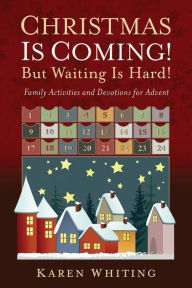
Book Review: Christmas Is Coming!

Christmas is Coming! But Waiting is Hard! Karen Whiting. 2016. Abingdon Press. 112 pages. [Source: Review copy]

First sentence: God's love is an ADVENTure, and one of the best ADVENTures happens at Christmas time.

Premise/plot: The book is written with parents--busy parents in mind. The goal is to make the Christmas season less commercial and more spiritual. The author encourages parents to have an advent wreath in addition to a tree. Supplementing both are daily family devotions that are themed around common Christmas symbols.

My thoughts: It was okay. I did like that each day had an activity to do. Yet at the same time it wasn't all arts and crafts. Snippets of scripture were included and each day had a suggested hymn or carol to sing.

That being said, I think that instead of starting with Jesus and making everything be about him--who he is, why he came, what he did, how he is still interceding for us--it seems to start with a symbol (stocking, snow flake, bow, etc.) and search for a way--any way that could make it be about Jesus. The book didn't use hot cocoa as an example, but I will. The world will leave you cold and shivering. Jesus warms you up from the inside out and helps comfort you when you need it the most. If that kind of devotion makes your day, then this one is for you. Deep theology it is not.

I don't think the book is flawed. I just think some readers won't find it nourishing enough. Perhaps some are looking for more about HIM and want to share a feast with their families. For other families, perhaps this is more nourishment than what they usually get and perhaps the Spirit will use this book to whet their appetites for more. I'd suggest the Jesus Storybook Bible or the Big Picture Story Bible. Both are available on audio as well. So maybe car trips could have this on instead of Rudolph!

© Becky Laney of Operation Actually Read Bible
Wednesday, May 4, 2016

Book Review: I Wonder

I Wonder: Engaging a Child's Curiosity about the Bible. Elizabeth Caldwell. 2016. Abingdon. 160 pages. [Source: Review copy]

Before I review this particular title, I want to quote John Piper:
One of the main lessons from all the Bible is that God does not exist for the sake of our enjoying biblical stories; biblical stories exist for the sake of our enjoying God. In our time there is great fascination with tracing out the storyline of the Bible. I simply want to wave a flag over all this fascination with story and narrative to say: there is a point to the story; there is a point to the narrative— and the point is a person. Biblical stories are no more ends in themselves than history is an end in itself or the universe is an end in itself. The universe is telling the glory of God (Ps. 19: 1). And the history of the world is what it is to show that God is who he is. God writes the story of history to reveal who he is— what he is like, his character, his name. ~ John Piper, God's Word Our Story
And also Starr Meade:
 To the degree that our children do not know the fullness of God's Word, to that degree they will not know God as fully as he wills to be known. ~ Starr Meade, Give Them Truth
There are set and specific truths that comprise the Christian faith, and for something to be Christian, it must embrace those truths. Conversely, there are limits and parameters… Christianity is, first of all, a body of truth--to be known, understood, embraced, applied, and passed on. "Spiritual" ideas and feelings, divorced from that body of truth, are not Christian, no matter what those who have them say. Our children must know, first of all, the body of truth taught by Jesus, built upon and communicated by the apostles, and passed down in the church through centuries. Without that body of truth, they do not have Christianity.  ~ Starr Meade, Give Them Truth
I love the Bible. I do. I've loved the Bible since I was a child. I heard Bible stories in the home. I heard Bible stories at church. I heard Bible stories at school. But Bible stories were never quite enough for me. I always wanted more, more, more. I hungered and thirsted for the Bible itself. It never occurred to me to think the Bible was boring, dry, dull, lacking relevance, lacking in anything in any way. The Bible is the very Word of God. So when I saw the subtitle to this book: "Engaging a Child's Curiosity About the Bible," I wanted to read this book. Never have I felt so disappointed, so misled by a book. I felt many things while reading this one, at times: angry, disappointed, frustrated, irritated, argumentative, confused, pity, sadness.

The premise of this one is simple: the book seeks to encourage parents to read the Bible or to read Bible story books with children. It sounds perfectly harmless as a premise, doesn't it? The purpose also sounds good and safe: the book wants to help readers know what to look for in a Bible story book and how to establish Bible reading--or Bible story book reading--into family life. Neither the premise or the purpose reveals red flags that bad theology may be ahead.

One assumption this book makes is that parents will need to be convinced that they even should read the Bible with their children, and, that there are (heavy) obstacles to overturn in convincing parents to read the Bible with their children. Some of these obstacles reveal other assumptions or biases held by the author.

The book gives two reasons why parents should read the Bible with their children. First, that the past two generations have not stayed in the church, have not stayed 'in the faith.' Second, the increasing inability of professing (those who see themselves as Christian) believers to articulate their faith and use a faith vocabulary. The book never really goes beyond those two reasons. That is in itself disappointing.

The way I see it, there is only one reason to read the Bible: to come to know the God that the Bible reveals. It doesn't matter if you're nine or ninety, you read the Bible to meet a person: GOD.

The book seeks to be practical, informative, persuasive. It is well-organized. It is packed with examples of what the author considers "good" Bible story adaptations and "bad" Bible story adaptations. It is how the author sees and understands 'good' and 'bad' approaches to retelling that reveal that something is a bit off.

Many, many sentences when taken on their own seem good, seem true, seem trust-worthy. A few seem incomplete or almost right. A few sound iffy or questionable. These quotes come from early chapters in the book:

How about a round of True or False?!
The chance to wonder about the Bible as they wander through their life is essential for a child's spiritual formation, for developing a language of faith.
The children in our spiritual care need a way to engage the Bible that will grow with them. They need to have a spiritual foundation with the Bible that is grounded at home as well as in the church
Reading the Bible is one of the most important ways for children to learn a vocabulary of faith.
When parents tell or read a Bible story with a child they are making a commitment of time and space to share in their child's spiritual growth. In the telling and reading of stories, in the pauses for questions and comments that always arise, parents are making their spiritual life open and near to their child. And in this intimacy of sharing and wondering together, both child and parent grow together spiritually.
Children need a language of faith and it begins with story.
One of the ways that children become adults who are theologically articulate is to have experiences with the Bible.
Hearing the Bible stories in relationship with loving parents or family members forms children in faith and helps them develop a language of faith that will grow with them.
One of the book's strengths is that it asks thought-provoking questions. It may assume rightly-or-wrongly how you'll answer and proceed from there. But a good question is a good question. One such question is, "Do we practice the kind of faith we want our children to have?"

An exercise in one of the opening chapters has readers finishing these open-ended sentences:

*The bible is...
*The bible is not...
*My own experience with reading the bible is...
*When I read the bible, I struggle with...
*A question I have about the bible is...

The author seems to have fixed ideas into how readers will finish these open-ended sentences. And perhaps that is truly unavoidable. The author assumes (for better or worse) that her readers struggle with the content of the Bible, with the idea that the Bible is a revelation of God, that the Bible is true and authoritative, etc., that readers can argue with the Bible and win, that no doctrines or concepts are fixed or absolute, that readers derive their own meaning from bible stories and the only 'true' meaning is the one you derive yourself. This perspective is revealed by the end.

The book wants parents to read bible story books with a critical lens, and, to choose the best ones to share with their children. I agree with this initial statement of what a good story book is like: "Children's bibles need to draw readers into the biblical world and leave them wanting to visit there again." The book also warns against texts that are too tamed, incomplete, or not broad enough in their selection. Which stories are always included? Which stories are rarely included? Why is one story chosen and another overlooked? For example, Jonah is often included in bible story books, but, how many retellings tell the whole story of Jonah? Another example, how many story bibles include the story of God commanding Abraham to sacrifice his son Isaac? How do they explain this tough text? How many skip it altogether avoiding a potentially awkward scenario? (I must say that this book has a typo--at least in the ARC--it says WOULD ISAAC REALLY HAVE SACRIFICED HIS SON IF THE ANGEL OF THE LORD HAD NOT INTERVENED?)

The book points out that there are four things that can drive a story: values, dogma, education, or engagement. The only 'good' way according to the author is engagement driven storytelling. The distinctions they made in the "types" of storytelling were odd to me. Engaging is defined in the dictionary as "very attractive or pleasing in a way that holds your attention."

What does engagement-driven storytelling look like? I'm not quite sure. Oh, the author gives examples. But nothing distinctive enough that I can with confidence define it in my own words. My clumsy attempt: it embraces doubt and mystery, seeks to be accessible to children at many levels, in many ways, be written for all ages. It encourages children to find their own meaning and their own truths in the text. Setting aside any "true" or "false" or "right" and "wrong" notions that may be traditionally seen as being embedded in the text itself. One's faith isn't really formed by knowing or learning or accepting certain facts and truths and beliefs and doctrines, instead, faith is formed by adventures one has in their own imagination as they engage biblical stories time and time again. 

One bible-story book that consistently gets slammed and held up as a bad example is Sally Lloyd-Jones' Jesus Storybook Bible. The author seems--emphasis on SEEMS--disgusted by the fact that Lloyd-Jones clearly tells readers that each story in the Bible reveals something about Jesus, that Lloyd-Jones doesn't let readers find their own meanings and interpretations, that her focus is too narrow and even unnatural.

After this section, I saw 'red flags' everywhere. By the last two chapters, I was quite upset. More questions for readers:

*What assumptions and past experiences with the bible need to be discarded?
*What beliefs about the bible do you hold on to and why are they important?
*What space and time can be made for engaging the biblical story?

Again, the author assumes how readers will respond. Notably, the assumption is that regardless of what one believed as a child, by this point, adulthood, the book's readers will have reached the conclusion that the Bible is not true and authoritative, that the concept of "God" is not as fixed and absolute as one might have naively believed at age 6, etc. The book encourages readers to teach the Bible in a way that their children will not have to "unlearn" things later like they did. There are paragraphs focused on the obstacle of parents who "don't believe" anymore. Each obstacle or objection gets attention. Another small example, "I don't want my child to hear God to referred to as "He."

Oddly enough, the author mentions the Jefferson Bible, and, how it is a terrible, horrible bad idea to have a "cut and paste" Bible that accommodates what one believes. But I have to ask, is it really all that different if your bible remains whole, if you either a) change the meaning of the text b) ignore the original, traditional meaning of the text c) live as if it [the text you're struggling with] wasn't there in the text.

© Becky Laney of Operation Actually Read Bible

Monday, June 1, 2015

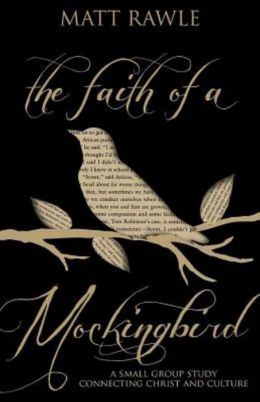
Book Review: The Faith of a Mockingbird

The Faith of a Mockingbird. Matt Rawle. 2015. Abingdon Press. 96 pages. [Source: Review copy]

Love Harper Lee's To Kill A Mockingbird? Looking for a book to use with a small group study? The Faith of a Mockingbird might just catch your eye.

Rawle writes, "To Kill A Mockingbird serves as a lens through which we can understand our place in the world, how we play a role in God's story, and what it means to live out a hopeful faith in a broken world."

After briefly refreshing his readers on the plot and significance of To Kill A Mockingbird, Rawle devotes four chapters to examining the main characters of the book: Scout, Atticus Finch, Tom Robinson, and Boo Radley. Each chapter has daily readings.

Rawle's goal is not only to discuss the book, but, to bring to light spiritual truths from the story and the characters. What can you learn about yourself? about others? about faith and redemption? about God?

I appreciate the premise of The Faith of a Mockingbird. To Kill A Mockingbird is one of my favorite books, and one of my favorite movies. When Rawle is discussing the characters and the story of To Kill A Mockingbird, I agreed with him much of the time.

For example,
Ultimately Atticus models the Christian ethics of strength through sacrifice and victory as defeat, a way of life rooted in Christ's suffering, death, and resurrection. His example prompts us to reflect on our own commitment--it may be easy to follow Christ when things go well, but are we willing to follow Christ's footsteps even when they lead to the cross?
or
Brokenness frames the entire story of Mockingbird in much the same way that brokenness is central to the Christian faith--Jesus' body was broken on the cross for our sin, and it is through his life, suffering, death, and resurrection that we have access to God's grace. 
However, I do have to mention that theologically, I do have some big, BIG issues with Rawle's writing.  Issues that I can't comfortably ignore.

For example,
God looked at the formless void and said, "Let there be," and "Let there be" is quite different from "There shall be." God creates through permission. God allows the waters to bring forth swarming creatures. God allows the earth to produce vegetation and creeping things. God's words are powerful not because of forced limitation. God's Words are powerful because of their unbound potential and invitation. God invites creation to participate in its own formation. 
and
If even Jesus claims he isn't good, then I'm off the hook, right? Jesus is pointing us to the truth that striving for personal perfection isn't required; rather, what we need is the perfecting grace of God.
Both examples are troubling, both interpretations read things into the biblical passages that just aren't there. (Luke 18:18-19; Genesis 1) And those are just two, there were plenty of other "iffy" statements throughout.

The Faith of a Mockingbird is one of the titles in the Pop in Culture series by Abingdon Press. Other titles include Hollywood Jesus and The Salvation of Doctor Who; both by Matthew Rawle. About the series, he writes, "I truly believe we are called not to reject the culture we live in, but to re-narrate its meaning--to tell God's story in the midst of it."

© Becky Laney of Operation Actually Read Bible
Wednesday, April 15, 2015

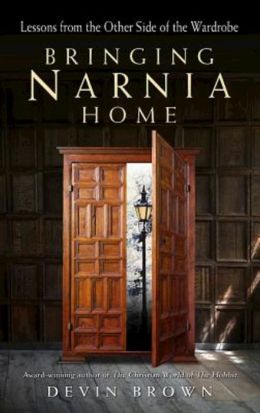
Book Review: Bringing Narnia Home

Bringing Narnia Home: Lessons from the Other Side of the Wardrobe. Devin Brown. 2015. Abingdon Press. 144 pages. [Source: Review copy]

Devin Brown has also written a biography of C.S. Lewis, A Life Observed A Spiritual Biography. I hope to read this soon. (I've got it checked out from the library. I hope to like it a little more than Bringing Narnia Home.)

Did I like Bringing Narnia Home? Yes and no. I liked the premise of it very much. Each chapter is a moral lesson lifted from the world of Narnia. All the chapters have unique, meant-to-be-memorable titles.

  1. Of Mice and Minotaurs: Actions We See As Small and Insignificant Can Be Far More Important Than We Realize
  2. Despite What White Witches, Tisrocs, and Other Petty Tyrants Think Being A Leader Means More Than Simply Being the Boss
  3. Bad Can Be Beautiful (At Least On the Surface)
  4. I Thought We Were Getting Real Soldiers: Sometimes Help Does Not Look Like Help Until Much Later
  5. Live Like It's Always Christmas and Never Winter: Merriment and Celebration Are Not Just For Holidays and Birthdays
  6. It Takes A Village to Make A Community (With Giants, Dwarfs, and Everything In-Between)
  7. There Is A Way Back From Every Offense--Large and Small (And It Has Nothing To Do With Having a Good Defense)
  8. Bury the Hatchet and Don't Put a Marker on the Site (Forgiveness Means Forgiving and Forgetting)
  9. Only the Good Have Fun (The Self-Centered Life Turns Out to be Not Cool)
  10. The Virtuous Life is a Real Adventure (Yes, One That Includes Real Hardship, but One You Don't Want To Miss)
  11. Adventures Begin in the Most Unlikely Places (Something to Keep in Mind the Next Time You're in an Unlikely Place)
  12. Of Course He's Not Safe (But He's Good)

I thought some of the chapters were very good. I loved the chapter "Bad Can Be Beautiful" and "There Is A Way Back From Every Offense." I loved, loved, LOVED the chapter "Of Course He's Not Safe (But He's Good)." Three or four chapters make this book worth reading, in my opinion. But not every chapter is equally great. Not all chapters are gush-worthy or have that much worth contemplating. (Every chapter has reflection questions, by the way.) What the book is rich in is quotes from the Narnia books. So if you absolutely love C.S. Lewis and Narnia and can't get enough, then this one is probably worth your time. (It would be a good gift for Narnia lovers.) If you're not obsessed with Narnia, however, the book isn't as much of a must-read. It can still be a fun treat though.

© Becky Laney of Operation Actually Read Bible
Wednesday, February 11, 2015

Book Review: What Every Christian Needs To Know About Passover

What Every Christian Needs to Know About Passover: What It Means and Why It Matters. Rabbi Evan Moffic. 2015. Abingdon Press. 224 pages. [Source: Review copy]

I found What Every Christian Needs to Know About Passover informative and interesting. It is written primarily for a Christian audience, a Christian audience with an interest in Judaism. The author assumes that his readers are curious and seeking. (I imagine he's right about that for the most part!)

Not every Christian will find the subject fascinating. I believe that there is one book and only one book that EVERY Christian needs to read: the Bible. There are few books, in my opinion, that "every" Christian "needs" to read.

That being said, most of my life I've been curious about Judaism: Jewish culture and traditions and beliefs. So this book definitely filled a need for me. It is a reader-friendly book on the subject of Passover.

The first three chapters serve as an introduction. The first chapter focuses on the first Passover. The second chapter focuses on how/why Passover was celebrated throughout the centuries up until the destruction of the Temple in A.D. 70. The third chapter focuses on the celebration of Passover since the destruction of the Temple. In other words, how Passover has changed throughout the centuries, and more on how it is currently being celebrated, and why it still matters.

The next five chapters focus on the preparation for Passover and the meal itself. These chapters are rich in detail. In some ways, I feel these chapters are the most substantive.

The next two chapters focus on contemporary meanings of the Passover story. It's all about the freedom themes of Passover, and the universal quest for freedom.

The final chapter is a script of sorts. A Passover seder that strives to be authentically Jewish yet be primarily (exclusively) for Christian participants.

Christians interested in the subject should find it worth their time. It is informative, and rich in detail. But don't expect it to be gospel-focused. Expect facts and details about Passover, some reflection on what it has meant, and continues to mean to various Jewish communities.

The book is not about how Christ is the fulfillment of the prophecies, the ultimate sacrifice, the Lamb of God. I can't help but feel that Charles Spurgeon would be disappointed with this one! The focus is on the Passover meal itself, and, not on Jesus Christ.


Quotes:
This meal can draw you closer to God, and can help you find God's liberation from the places of scarcity, of imprisonment, that lurk in your life. 
The Passover story can speak to us wherever we are on the journey of our lives. My goal in this book is to help you discover what message this sacred story holds for you.

© Becky Laney of Operation Actually Read Bible

Wednesday, November 26, 2014

Book Review: Tolkien (2014)

Tolkien: How An Obscure Oxford Professor Wrote the Hobbit and Became the Most Beloved Author of the Century. Devin Brown. Abingdon Press. [Source: Review copy]

Devin Brown's biography of J.R.R. Tolkien may be relatively short, but, it is packed with information. It's lively too. I loved the tone and the approach. Brown writes with much passion for the subject!

Readers learn about his life. (Tolkien as a son, student, husband, soldier, professor, writer, father, friend, etc.)  Readers learn about his works (The Silmarillion, The Hobbit, Lord of the Rings). Brown's presentation is anything but dry and boring. It is lively, fact-filled, fascinating. I had read an edition of The Annotated Hobbit, so, I was familiar with a few things. But I learned so much by reading this short biography!

I love that the focus is both on him as a person (his family life, his faith, his teaching career, etc.) and as a writer, on specific works. I love learning about his writing process, his rough drafts, his editing, his determination, his frustrations, his dealings with publishers, etc. I loved the journey: seeing the books evolve over decades. These books weren't quickly written!

One of the things I love most of all is the inclusion of direct quotes and primary sources. It seems like a little thing, perhaps, but these glimpses where we get to know Tolkien in his own words, do make the book worth reading. Earlier in the fall, I reviewed a children's biography on Tolkien by Anne E. Neimark. It was okay. But it didn't really do Tolkien justice in my opinion. This one does.

It's an accessible biography. It isn't intimidating. I would definitely recommend this one. It was wonderful. I LOVED it.

© Becky Laney of Operation Actually Read Bible

Sunday, May 27, 2012

Book Review: The Lord Is My Shepherd


The Lord is My Shepherd. (Psalm 23 Mysteries) Debbie Viguie. 2010. Abingdon Press. 320 pages.

More than anything, Cindy Preston hated Mondays. 

I was skeptical about this book, I'll be honest. I had no idea if it would be something I'd like. But I like to challenge myself to take risks...occasionally. And I am definitely glad I took a chance on Debbie Viguie's The Lord Is My Shepherd. This one is mystery-suspense-thriller. Cindy Preston, the heroine, is a church secretary who discovers--literally stumbles upon--a dead body in the sanctuary of the church one Monday morning. But it isn't just any Monday, no it's Holy Week, it's the Monday of Easter week. Her screams draw the attention of the Rabbi next door, Jeremiah Silverman. Together they meet the police detective...and so it begins.

I really, really, really enjoyed this one!!! It was so hard to put this one down. I definitely liked the heroine, Cindy Preston. I thought she was a good balance. On the one hand, she's terrified and in shock, on the other hand she's strong and strong-willed. She may be afraid--and she may have good reason to be afraid--but she isn't going to be ruled or enslaved by that fear. Not that she's careless. And as for Jeremiah Silverman, well, I loved him!!! I did. I just loved him!!!


© Becky Laney of Operation Actually Read Bible

Friday, September 3, 2010

Book Review: Wildflowers of Terezin


Wildflowers of Terezin. Robert Elmer. Abingdon Press. 352 pages.

Hanne Abrahamsen awoke with a start in the middle of a bad dream, something about being in nursing school once again and a man who looked like Adolf Hitler (but with the face of a codfish) announcing at her graduation that she was a Jew, and didn't everyone already know that?

Historical fiction. Set--for the most part--in Denmark during World War II. It stars a Jewish nurse, Hanne, and a Lutheran minister, Steffan Arne Petersen; the war brings these two together in unexpected ways. Steffan NEVER thought he'd be part of the Danish Underground. Never thought he'd be part of the Resistance. But. When he meets Hanne, when he learns what the Nazis have planned for all the Danish Jews, well, he has to do something. Still. It didn't have to be so personal. But Hanne is a remarkable woman. Brave and compassionate. Always thinking of others.

This was a great book! True, I am always seeking out new (and new-to-me) books set during this time period. So it was an easy choice for me. I loved how the story is told through dual narrators. I loved both Steffan and Hanne. It was an interesting novel--very intense but not over the top. Both characters surprised me!

I would definitely recommend this one!

© Becky Laney of Operation Actually Read Bible