Showing posts with label quotes. Show all posts

Monday, April 22, 2019

Book Review: The Cross

The Cross: God's Way of Salvation. Martyn Lloyd-Jones. 1986. Crossway. 224 pages. [Source: Bought]

First sentence: First sentence from the introduction: Can you remember what you were doing when you heard the news that President Kennedy had been assassinated?

Premise/plot: In the fall of 1963, Martyn Lloyd-Jones was preaching a sermon series on Galatians 6:14 which reads, ‘God forbid that I should glory, save in the cross of our Lord Jesus Christ, by whom the world is crucified unto me and I unto the world.’ These sermons have been published in book form as The Cross. Lloyd-Jones did not interrupt his sermon series to address the assassination of President Kennedy, but, it did trouble him and he incorporated it into his next sermon.

The Cross features nine sermons: "The Wondrous Cross," "The Acid Test," "The Wisdom of God," "Love Not the World," "The Triumph of the Cross," "He Is Our Peace," "The Cross of Christ Speaks," "A New Nature," and "Bought Out and Set Free." All nine sermons share a single Scripture verse as their basis. All nine sermons are Christ-centered. All nine sermons include an invitation to unbelievers.

My thoughts: I loved, loved, loved, LOVED rereading Martyn Lloyd-Jones The Cross. I read it during Passion Week and finished up on Good Friday. It is one of those books that you should reread every other year or so. It's just that good. Christians should never tire of the gospel, of the cross. Christians should never be bored or dismissive of the good news. It should humble us and excite us. It should lead to worship and praise. It should lead to repentance and obedience. It should make us want more, more, more of Christ in our lives. 

Quotes:
  • The whole of the New Testament is proclaiming the blood of Christ, the death of Christ upon the cross, on Calvary. It is the heart and centre of the Christian evangel, the good news of salvation.
  • If he had not died upon the cross, nobody would ever have been saved. There would be no gospel to preach. It is the saving event.
  • It does not ask us to save ourselves, it does not tell us to do something that will save us, it says it is done, it has happened, it was happening there. That is the gospel.
  • Any man who is saved, is saved by the cross, and to be saved means that your sins are forgiven, that you are reconciled to God.
  • You will never understand the significance of what happened there until you are clear about who it was that was dying there. Who is this person in the middle nailed to a tree?
  • My friends, the Son of God is there dying on that cross because he came from heaven into this world in order to die.
  • He came because you and I and all mankind are guilty and under the condemnation of a Holy God.
  • Man is a guilty sinner, God is a holy God. How can the two be brought together? The answer is the cross of Christ.
  • The cross of our Lord Jesus Christ is either an offence to us or else it is the thing above everything else in which we glory.
  • The test of whether someone is teaching the cross rightly or wrongly is whether it is an offence to the natural man or not. If my preaching of this cross is not an offence to the natural man, I am misrepresenting it. If it is something that makes him say how beautiful, how wonderful, what a tragedy, what a shame, I have not been preaching the cross truly.
  • There is nobody born a Christian into this world. We have to be born again to become Christians, and while we are natural men and women, the cross is an offence.
  • If you want to know God, if you want to know the everlasting and eternal God, this is the way, the only way. Look there, gaze, meditate, survey, the wondrous cross. And then you will see something of him.
  • Grace is a great word in the Bible, the grace of God. It is most simply defined in these words—it is favour shown to people who do not deserve any favour at all. And the message of the gospel is that any one of us is saved and put right for eternity, solely and entirely by the grace of God, not by ourselves.
  • If you think you deserve heaven, take it from me you are not a Christian. Now, that is a very good definition of a Christian. Any man who thinks that he deserves heaven is not a Christian. But for any man who knows that he deserves hell, there is hope.
  • Sin is a matter of attitude. And what makes sin sin, is that it is rebellion against God. It is to disobey God; it is to trample upon the sanctities of God. It is unrighteousness; it is transgression of God’s law.  Indeed, it is worse. It is a hatred of God.
  • We are all naturally God-haters, and if you have not realized that, you have not known these things very deeply. And if you think you have always believed in God, it is because you have had a God of your own creation, not the God of the Bible.
  • Why did he die? He died for the souls of men, not for our material welfare, not to reform this world, but to save our souls.
  • From beginning to end the message of the Bible, this revelation of God, is that there is to be an end to the world, and that the end is judgement. The Christ of God will come back into this world and he will return to judge it.
  • Now you see why Paul glories in the cross. It is the cross alone that saves any one of us from the destruction which is coming to the world. 
  • I am not called to preach against, I am called to hold a Saviour forth.

Friday, April 19, 2019

Book Review: Christ's Call to Reform the Church

Christ's Call to Reform the Church. John F. MacArthur. 2018. Moody Publishers. 208 pages. [Source: Review copy]

First sentence (from the introduction): In the book of Revelation, Jesus wrote seven letters to cities in Asia Minor. He didn't write them to city hall; He wrote them to the church. Let that sink in moment.

First sentence from chapter one: Have you ever heard of a church that repented? Not individuals, but an entire church that collectively recognized its congregational transgressions and openly, genuinely repented, with biblical sorrow and brokenness? Sadly, you probably have not. For that matter, have you ever heard of a pastor who called his church to repent and threatened his congregation with divine judgment if they failed to do so? It's not likely. Pastors today seem to have a hard enough time calling individuals to repent, let alone calling the whole church to account for their corporate sins.

MacArthur's sermon text--if you will--is Revelation 2 and 3. In these seven letters to seven different churches, Jesus is calling for--in fact demanding--that the churches repent. Repentance hasn't grown in popularity through the centuries, but its need has not lessened either. What can believers--what can churches--learn from studying these letters? How are our churches like the ancient ones? Do we face the same struggles? the same temptations? the same judgement if we do not repent? Have we forgotten that the Bible was written with authority and should be read as such?

In the introduction, MacArthur points out that the church has never been commanded to go to war with the culture, or to legislate morality. He writes, "The will of God is not that we become so politicized that we turn our mission field into our enemy...It's futile to think the solution to our culture's moral bankruptcy is a legislative remedy. There is no law that can make fallen sinners righteous" (12).

In the first chapter, MacArthur introduces key topics that will be discussed throughout the book: worldliness, sin, compromise, tolerance, repentance, judgment. He examines what happens when churches compromise with the truth--with the revealed Word of God--and choose tolerance, peace, and unity instead. He briefly mentions the Reformation and Puritan movements before addressing contemporary issues facing the church. Did the ancient church have it easier? Or did they face the same temptations and struggles? Has Satan used the same tactics against the church since day one? Are our "new problems" really ancient ones?

In the second chapter, MacArthur takes a closer look at Revelation 1. Since the majority of the book is focusing on Revelation 2 and 3, this chapter is providing orientation and context for understanding and appreciating the book as a whole.

In chapters three through nine, MacArthur discusses the seven churches--Ephesus, Smyrna, Pergamum, Thyatira, Sardis, Philadelphia, and Laodicea--and closely examines the Lord's messages to them. This is the heart of the book. Readers will learn more about these ancient churches and their problems. Readers will be reminded of the relevance of these urgent, passionate messages. Jesus is still calling his church to repent.

In the tenth and final chapter, MacArthur revisits the five solas of the Reformation and discusses the church's need to reform or return to reform. The Reformation should not be thought of "as over."

This was a great read.

Quotes:

  • There have never been any Christian nations--just Christians. (9)
  • Cultural change can't accelerate the kingdom's growth; nor can it hinder it. (10)
  • Morality on its own is no solution; it damns just like immorality. (10)
  • Churches that start down a path of worldliness, disobedience, and apostasy typically move even further from orthodoxy over time. They almost never recover their original soundness. Rarely are they broken over their collective sins against the Lord. Rarely do they turn aside from corruption, immorality, and false doctrine. Rarely do they cry out from the depths of their hearts for forgiveness, cleansing, and restoration. Most never even consider it, because they have become comfortable with their condition. (16)
  • Filling the pews with comfortable, unaffected unbelievers is the fastest way to confuse and corrupt the work of the church. (25)
  • Most people who go to church believe it is a safe place--perhaps the safest place--when it comes to threats of judgment from the Lord. It's almost like climbing aboard the ark; once you're safely inside, you're untouchable. But that's not true. Frankly, it's a foolish and dangerous notion. (35)
  • Sinners--even redeemed sinners--are right to be terrified in the presence of a Holy God. There is always fear in a true vision of Christ, because we see His glory and He sees our sin. (51)
  • Put simply, loving Christ is the defining characteristic of a Christian. And while the genuine believer will always love the Lord, the intensity of his love can fluctuate over time. The redeemed person's love for Christ must be carefully guarded and nurtured, or it will diminish with time. (56)
  • Consider the chain reaction of forsaking your first love. Fading love for Christ is the forerunner of spiritual apathy. Apathy is the forerunner to loving something else. And love for something else means competing priorities with Christ, which in turn leads to compromise with the world and corruption, resulting ultimately in judgment. (67)
  • In themselves, believers don't have the capacity to maintain or protect their faith. If we could lose our salvation, we certainly would. Instead, it's the Lord who holds us steadfast in faith. (83)
  • Incredibly, many churches today proudly ignore the sin in their midst in the name of tolerance, unity, and love--proving only that they have no true understanding of what the Bible means when it talks about unity and love. Amazingly, ignoring sin and practicing tolerance has became a staple strategy for church growth. This directly defies the Lord's commands. (104)
  • I don't understand how pastors and churches can be indifferent to sin when they see this unequivocal statement from the Head of the church: that He will put on a public display of His holy wrath if a church falls into corruption. He will make a spectacle of His judgment, such that other congregations see it and cringe. He will use the failure and the destruction of one church to purify others, and to display His holiness to His people. There is no excuse for tolerating sin or welcoming it as an evangelistic strategy. Doing so invites the wrath of heaven. (116)
  • Error kills the church. False teaching and false doctrine confuse and corrupt the church, draining the life out of it. Sin kills the church. Little by little, sin tears away at the life of the church. It twists your character and warps your mind. Sins of omission and commission slowly suffocate the will of the church to maintain holiness and purity. Sinful leadership can quickly deal death blows to a church. Compromise with the world kills the church, too. Contrary to the current trend, there's no better way to introduce the killing power of sin into a church than with an influx of unbelievers. Accepting and putting those unbelievers into positions of leadership grips the church by the neck and strangles it. Ultimately, churches die for one reason: they tolerate sin, which includes the seminal sin of not taking Scripture seriously. (127)
  • Despite its frequent misapplication, Revelation 3:20 is not a general statement about Christ's knocking on the hearts door of sinners, nor is it an accurate picture of His call to repent. The fact is, the door Christ refers to here was a specific door, not the metaphorical door of every human heart. This is a specific invitation to the church at Laodicea and others like it. Christ was not in that church, further proof that, unlike the church at Sardis, there were no believers in the Laodicean congregation at all. (173)
  • The fact is the church isn't facing unique problems that demand clever new solutions. Satan's strategies have not changed, and "we are not ignorant of his schemes" (2 Cor 2:11). He assaults the church in the same ways he did in the first century. If anything, what has changed is the church's willingness to compromise with the world and accommodate false teaching. Rather than engaging a spiritual warfare against satanic lies and anti-Christian ideologies (2 Cor 10:4), too many churches have declared an unbiblical truce with the world and stopped fighting for God's truth altogether. (178)


© Becky Laney of Operation Actually Read Bible

Friday, March 29, 2019

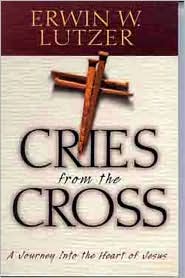
Book Review: Cries from the Cross

Cries From the Cross: A Journey Into the Heart of Jesus. Erwin Lutzer. 2002. Moody. 170 pages. [Source: Bought]

First sentence: Were you there when they crucified my Lord? As a child I wondered what those words could possibly mean. Obviously, the author of the hymn intended that we answer yes to the question. And yet, what could be clearer than the fact that I was not there when they crucified my Lord? 

Cries from the Cross is a wonderful book--whether you are reading it for the first time or treating yourself to a reread. In this one, Lutzer is examining Jesus' words spoken from the cross. There is a chapter for each of Jesus' seven statements or 'cries.' There's also a preface, introduction, and epilogue that help set the book into context. 

Do you know what Jesus' seven cries from the cross were? Have you considered how they can speak into your life--how they relate to you personally? If you haven't--or even if you have--it's worth pondering (again). I know that 'pondering' or 'meditating' or 'reflecting' takes time and that the average person prioritizes just about everything else over silence or quiet--but at what costs to our souls? 

Here they are in the order in which he writes about them:
  • A Cry for Pardon: "Father, forgive them, for they do not know what they are doing." (Luke 23:34)
  • A Cry of Assurance: "Today you will be with me in paradise." (Luke 23:43)
  • A Cry of Compassion: "Dear woman, here is your son...Here is your mother." (John 19:26-27)
  • A Cry of Anguish: "My God, my God, why have you forsaken me?" (Matthew 27:46)
  • A Cry of Suffering: "I am thirsty." (John 19:28)
  • A Cry of Victory: "It is finished." (John 19:30)
  • A Cry of Submission: "Father, into your hands I commit my spirit." (Luke 23:46)

Lutzer clearly and passionately shares the gospel message--that old, old story--that gospel message that when empowered by the Spirit--through the Spirit--can transform lives and take people out of darkness and into the light.

I love, love, love, love, LOVE this one. It is a thrilling read. This was my second or perhaps third time to read it.

Quotes:

To stand at the foot fo the cross is to witness the purpose for which God created the world. Here we see the attributes of God on display; and if we look carefully, we will see ourselves, with all of our needs, sins, and self-deceptions. Thankfully, it is at the cross that God chose to remove His wrath from those who would humbly trust Christ as their sin-bearer. (11)
The cross properly understood exalts no one whom it first does not humble; it gives life only to those whom it first "puts to death." The cross exposes the futility of our self-righteousness; it reminds us that we are sinners, incapable of bringing about our own reconciliation with God. Before the cross we can only stand with bowed heads and a broken spirit. (16)
Unless we see ourselves as deserving of the verdict that Pilate gave to Jesus, unless we see ourselves as worthy of hell, we will never understand the Cross. Someone has said that it is difficult for us to embrace the cross in a day when personal enjoyment is king. Contrary to popular belief, the central message of Christianity is not the Sermon on the Mount or Jesus' parables about love toward one's neighbor. The message that changed the first-century world was that human beings are guilty, helplessly guilty of sins for which they cannot atone. The cross shatters all pride and undercuts the ultimate value of self-effort. The cross stands as proof of God's great love but also reveals our own ugliness. (17)
The church can only live and breathe at the cross; without it, there is no life and no reason to exist. Properly proclaimed, it is "the power of God unto salvation." (19)
Jesus' suffering was terrible for the simple reason that our sin is terrible. (20)
No one can experience the eternal favor of God if they bypass the cross. (25)
Christ was forsaken that we might not be; He experienced hell that we might experience heaven. (28)
Forgiveness sounds like a marvelous idea until you are the one who has to do it. (33)
Words of forgiveness came from His lips when the nails were being driven into His body, when the pain was fiercest, when the jolts of anguish were the sharpest; He prayed as the cross was lowered into the hole with a thud. It was then, when His nerves were yet the most tender, when the pain was the most unfathomable, He who was the victim of history's greatest crime prayed for the criminals. He could forgive because He was about His Father's business. (36-7)
God never lowers His standard of justice to the level of our ignorance. Sins committed in ignorance are still sins. The guilt of those who crucified Jesus was real and objective regardless of how much they understood or did not understand. (41)
We have no idea of the greatness of our sin because we do not understand the greatness of our God. But we have fewer excuses today than ever; we have no reason to turn away from the savior who left us powerful witnesses to His authenticity. (42)
The prayer was not for those who did not want to be forgiven, but for those who would seek it. (45)
Are some sins "unpardonable"? The answer is no, for if the murder of the Son of God was "forgivable" for those who sought forgiveness, then all sins can be forgiven. (46)
There is no unpardonable sin for those who come to Christ for forgiveness. For those who refuse Him, all sins are unpardonable. (46)
He who needed no forgiveness died for those of us who are condemned without it. (47)
Although God forgives us because of Christ, it is neither His job nor His obligation to do so. He forgives us because of undeserved mercy toward us whose just punishment is hell. The cross is the bridge of redeeming love; on it, we walk across the chasm to God, who graciously provided forgiveness for those who believe. If we do not understand this, we do not understand the gospel. (47)
At His birth He was surrounded by beasts, and, now in His death, with criminals. Let no one say God has stayed aloof from the brokenness of our fallen world. He descended that we might ascend with Him to newness of life. (54)
Helplessness is not a curse if it draws us to the only One who can help us. Indeed, if we are not helpless, we cannot be saved. (56)
Jesus was numbered with the transgressors so that you and I could be numbered with the redeemed. Though personally sinless, He was counted as a transgressor by both God and man. He got what He didn't deserve, namely, our sin; and we got what we didn't deserve, namely, His righteousness. (66)
Warren Wiersbe points out that this man was not saved at his last opportunity, but at his first opportunity. (68)
The thief's forgiveness reminds us that there is more grace in God's heart than sin in our past. (69)
If we had been there, how close would we have stood to the cross? Nearby or at a comfortable distance? Would we have been intimidated by the mob, or would we have gladly let the angry rabble-rousers know that we were followers of the Man hanging on the middle cross? Would we stand nearby even if the cross cost us as much as it cost Christ? (82)
Christ did not die to make the Father loving, for He loved us from the foundation of the world. (89)
The first purpose of the cross was not for us, but for God. Yes, Jesus shed His blood for us, but it is even more true to say that He shed His blood for the Father. When the blood was sprinkled on the doorposts of the houses in Egypt, it was put there for the benefit of the families, but it was also put there for God. Jehovah said, "When I see the blood, I will pass over you" (Exodus 12:13). (100)
Let us remember that He was forsaken by God that we might be accepted by Him... Jesus went through darkness that we might have light. He was cursed that we might be blessed. He was condemned that we might be able to say, "Therefore there is now no condemnation for those who are in Christ Jesus" (Romans 8:1). He suffered hell for us so that we can enjoy heaven with Him. (103)
Either Jesus bears our sin, or we do. If the Father turned His face away from His beloved Son when He was regarded as a sinner, we can be sure that the Father will turn away from every sinner who stands before the Judgement Bar on his own merits. We are either saved by His rejection, or we must bear our own rejection for all of eternity. If those who are in hell should cry, "Why have You forsaken me?" heaven shall remain silent, for they receive the just recompense for their deeds. (103-4)
As Matthew Henry put it, "The torments of hell are represented by a violent thirst, in the complaint of the rich man who begged for a drop of water to cool his tongue. To that everlasting thirst we had all been condemned, if Christ had not suffered on the cross." Hell is heightened desires with decreased satisfaction. Hell is the inflamed desires of the body, with no possibility of a drink. Hell is remembering the Living Water we could have enjoyed on earth that would have taken us to heaven. Hell is a lake of fire, a place of endless, unquenchable thirst. Thankfully, Jesus suffered parched lips that we might be able to drink from the wells of salvation. He endured the thirst of hell, so that its fires might be quenched for us. Of those in heaven we read, "Never again will they hunger; never again will they thirst. The sun will not beat upon them, nor any scorching heat. For the Lamb at the center of the throne will be their Shepherd; he will lead them to springs of living water. And God will wipe away every tear from their eyes" (Revelation 7:16-17). (115)
Jesus drank from the cup of death that we might be able to drink from the cup of life. (116)
If your spirit does not go into the hands of God for sakekeeping, it will go into the hands of God for judgment. (146)

© Becky Laney of Operation Actually Read Bible

Thursday, March 21, 2019

True or False with John Calvin

From book one, "The Knowledge of God the Creator"

True or false. We can never really seek him in earnest until we begin to despair of ourselves. 

True or false. Man never arrives at true self-knowledge before he has looked into the face of God and then come away to look at himself. Men are never really convinced of their own insignificance until they contrast themselves with God's majesty.True or false.

True or false. Until people feel that they owe everything to God, that they are protected by his fatherly care and that he is the Author of all their blessings, so that nothing should be sought apart from him, they will never submit to him voluntarily. Unless they put their complete happiness in his hands, they will never truly have their lives under his control. 
True or false. The pious mind does not create its own god, but looks only to the one true God. Nor does it imagine any trait it likes for him, but is happy to have him as the character which he reveals, always on guard against disobeying his Law and wandering arrogantly from the right way. 
True or false. The pious mind holds on to God as the avenger of sin as much as the rewarder of good, because he realizes that both are part of his glory: he reserves punishment for one and eternal life for the other. 
True or false. This is pure and true religion: it is confidence in God coupled with genuine fear. This fear comprises willing reverence and true worship as God has commanded. 
True or false. Vanity and pride are always present when men seek for God...so they do not think of God in his true character, but imagine him to be like their own random ideas. 
True or false. No religion is genuine that is not in accordance with truth.
True or false. Those whose inclinations oppose God's justice, fervently wish that his tribunal for the punishment of sin could be overthrown. In feeling like this, they are fighting God, because justice is one of his essential attributes. 
True or false. Hypocrites try, in various twisted ways, to make a show of being near God when they are in fact running away from him. 
True or false. Scripture crystallizes ideas about God which had been very confused, scatters the darkness and shows us the true God clearly. 
True or false. It is impossible for anyone to gain an atom of sound doctrine without being a disciple of Scripture. We take the first step towards true knowledge when we reverently take hold of the testimony God has graciously given about himself. 
True or false. If we sincerely long for true awareness of God we must look in God's Word where his character is described accurately and vividly. If we turn away from this, however fast we move, we shall never reach our goal because we are off course. 
True or false. These words will not be given acknowledgment in the hearts of men, until they are sealed by the inner witness of the Spirit. 
True or false. The Lord has intertwined the truth of his Word and his Spirit in such a way that we respect the Word when the Spirit illuminates it, enabling us to see God's face, and we welcome the Spirit with no risk of error, when we recognize him in his Word. These are the facts. God did not put his Word in front of men to make a sudden splash, intending to get rid of it the moment the Spirit arrived. He employed the same Spirit by whom He had given the Word, to complete his work by effectively confirming the Word. 
True or false. The work of the intellect is to make distinction between good and bad, and the function of the will is to choose and follow what the intellect says is good, rejecting what is bad.
True or false. Without reference to God's Providence we cannot understand the full force of what is meant by his being the Creator, however much we may seem to understand it with our minds and confess it with our mouths. 
True or false. The believers' comfort in trouble is that everything they endure is ordained and commanded by God and that they are in his hands. 
True or false. Everything is controlled by God's secret purpose, and nothing can happen except by his knowledge and will. 
True or false. When our lives are in turmoil so that we cannot think straight, we should still believe that God, in the pure light of his justice and wisdom, keeps our problems under his control and finds the right solution. 


© Becky Laney of Operation Actually Read Bible

Wednesday, March 6, 2019

True and False with Tozer


  1. True or false. We can admire without worshiping but we cannot worship without admiring, because worship is admiration carried to infinitude. In the same way, we can honor what we do not worship, but we cannot worship the one we do not honor. 
  2. True or false. We can love without worshiping but we cannot worship without loving. 
  3. True or false. We use divine language in such a common way that when we try to rise to the exalted and divine level we find ourselves using words that do not express anything. 
  4. True or false. We are saved to worship God. All that Christ has done for us in the past and all that He is doing now leads to this one end. That is why we were born and that is why we are born again from above. That is why we were created and that is why we have been recreated. 
  5. True or false. True worship of God must be a constant and consistent attitude or state of mind within the believer. 
  6. True or false. We can't worship these days because we do not have a high enough opinion of God. God has been reduced, modified, edited, changed, and amended until He is not the God Isaiah saw high and lifted up but something else. 
  7. True or false. Worship originates with God and comes back to us and is reflected from us, as a mirror. 
  8. True or false. A heretic is not a man who denies all of the truth, he's just a very persnickety man who picks out what he likes and rejects the rest. Heresy means I take what I like and I reject what I don't like. 
  9. True or false. Whatever keeps me from the Bible is my enemy, however harmless it may appear to be. Whatever engages my attention when I should be meditating on God and things eternal does injury to my soul. Let the cares of life crowd out the Scriptures from my mind and I have suffered loss where I can least afford it. Let me accept anything else instead of Scriptures and I have been cheated and robbed to my eternal confusion. 
  10. True or false. A true fear of God is a beautiful thing, for it is worship, it is love, it is veneration. It is a high moral happiness because God is. 
  11. True or false. The man who has met God is not looking for something--he has found it; he is not searching for light--upon him the Light has already shined. 
  12. True or false. There are millions who cannot live without amusement; life without some form of entertainment for them is simply intolerable. 
  13. True or false. We have simplified until Christianity amounts to this: God is love; Jesus died for you; believe, accept, be jolly, have fun and tell others. And away we go--that is the Christianity of our day. 
  14. True or false. The cross stands high above the opinions of men and to that cross all opinions must come at last for judgment. 
  15. True or false. The church that can't worship must be entertained.
  16. True or false. The devil is busy brainwashing us and conditioning us little by little and feeding his ideas into the church. The counsel of the ungodly comes and as the ideas of the ungodly enter the Church the ideas of God go out. As the the counsel of the ungodly comes in, the counsel of God goes out. 
  17. True or false. In our day, the churches are trying to offer such a blend and such a compromise between heaven and hell. Some pastors feel that this is the way to get along with people and to improve the church's public relations. 
  18. True or false.  Christ calls men to carry a cross; we call them to have fun in His name. He calls them to forsake the world; we assure them that if they but accept Jesus the world is their oyster. He calls them to suffer; we call them to enjoy all the bourgeois comforts modern civilization affords...He calls them to holiness; we call them to a cheap and tawdry happiness that would have been rejected with scorn by the least of the Stoic philosophers. 


© Becky Laney of Operation Actually Read Bible

Tuesday, March 5, 2019

Book Review: Tozer on Worship and Entertainment

Tozer on Worship and Entertainment. A.W. Tozer. 1997/2006. 224 pages. [Source: Bought]

First sentence: The impulse to worship is universal. If there is a race or tribe anywhere in the world that does not worship it has not been discovered. And yet the act of worship is, for the most part, so imperfect, so impure and so far astray that any teaching that might help us worship God more acceptably would indeed be a word well spoken.

Tozer on Worship and Entertainment is a collection of themed excerpts compiled by James L. Snyder. What did Tozer have to say on worship? on true worship? on false worship? on entertainment? on the state of the church? on the state of society? on human nature? on sin? on the Word of God?

The first chapter is a full sermon by A.W. Tozer entitled, "The Act and Object of Worship." The last chapter is another full piece by A.W. Tozer. That one is, "The Menace of the Religious Movie." The other chapters are all excerpts from various sermons and articles. The chapter titles are: "Worship," "Unacceptable Worship," "Spiritual Concentration," "The Presence of God," "Personal Communion," "The Power of God in Worship," "Adoration," "Thoughts of God," "Hymn," "Entertainment: An Evangelical Heresy," "Propaganda, Popular Religion and Programs," "An Outward Shift," "Modern Evangelism," "Religious Activity," and "Worldliness."

I love Tozer. If you've read this blog for any amount of time you know that I love, love, love A.W. Tozer. Even though he's not Reformed. Even though I don't always agree with him 100% of the time. I love his passion, his zeal, his no-nonsense approach to proclaiming the WHOLE word of God. Diluting the truth was not an option for Tozer. He was uncompromising when it comes to teaching and preaching.

In chapter one, Tozer writes:
Worship must be all--entire. By that I mean that the total life must worship God. The whole personality has to worship God or our worship is not perfect. Faith, love, obedience, loyalty, high conduct and life all must be taken as burnt offerings and offered to God. If there is anything in me that does not worship God, then there is nothing in me that worships God perfectly. I would not go so far as to say that God will not accept anything less than perfect worship; if I did, I would rule myself out... But the ideal God sets before us is that we should worship as near to perfectly as we can. And if there are areas in my being which are not harmonious and do not worship God then there is no area in my being that worships God perfectly. (4-5)
Do you see what I mean?! Even within the Christian community, Tozer's conclusions may seem extreme. But when taken in light of the word of God--it is the truth, the whole truth, and nothing but the truth. We are to have undivided hearts that love God wholly and completely. Sin must go. No ifs about it. And that message doesn't sit well with the world OR with worldly churches.

Just in case you missed what Tozer was saying,
I repeat that no worship is wholly pleasing to God till there is nothing in us displeasing God. (7)
Do we ever really truly stop and consider if our lives are pleasing to God? Or are we all about pleasing ourselves OR pleasing others? Do we look to God for standards? Or do we set our own? Or perhaps even worse do we let society set the standards we live by?
How can we worship God acceptably when there is within our nature something that, when it catches on fire, gives off not a fragrance but a smell? How can we hope to worship God acceptably when there is something in our nature which is undisciplined, uncorrected, unpurged, unpurified--which is evil and which will not and cannot worship God acceptably? Even granted that a man with evil ingredients in his nature might with some part of him worship God half acceptably, what kind of way is that to live? (9)
How we live does matter. Tozer writes,
We can go to church and worship. But if we go to church and worship one day it's not true worship unless it is followed by worship six days after that till the next Sabbath comes. We must never rest until everything inside us worships God. (10)

Not only do our actions matter, but our thoughts matter too.
God won't dwell in spiteful thoughts, polluted thoughts, lustful thoughts, covetous thoughts or prideful thoughts. He will only dwell in meek, pure, charitable, clean and loving thoughts. He will dwell in positive thoughts--even aggressive, fighting thoughts if need be--but they must be pure thoughts, thoughts that are like God's. God will dwell in them as a sanctuary. Your theology is your foundation...Make your thoughts a sanctuary God can inhabit, and don't let any of the rest of your life dishonor God. See to it that not a foot of ground is unholy. See to it that every hour and every place is given over to God, and you will worship Him and He will accept it. (11)
This first chapter is a MUST read in my opinion. It challenges readers--invites them to reorient their lives.

Tozer is emphatic.

  • I want to tell you that if your life doesn't worship God, your lips don't worship God either. (39)
  • If you departmentalize your life and let certain parts of you worship God but other parts of you do not worship God, you are not worshipping God as you should. (39)
  • A heretic is not a man who denies all of the truth, he's just a very persnickety man who picks out what he likes and rejects the rest. Heresy means I take what I like and I reject what I don't like. (39)
  • Whatever keeps me from the Bible is my enemy, however harmless it may appear to be. Whatever engages my attention when I should be meditating on God and things eternal does injury to my soul. Let the cares of life crowd out the Scriptures from my mind and I have suffered loss where I can least afford it. Let me accept anything else instead of Scriptures and I have been cheated and robbed to my eternal confusion. (42)
  • Let us open our Bibles, spread them out on a chair and meditate on the Word of God. It will open itself to us, and the Spirit of God will come and brood over it. Get on your knees and in faith, say, "Father, here I am. Begin to teach me!" (46)
  • If we would progress spiritually, we must separate ourselves unto the things of God and concentrate upon them to the exclusion of a thousand things the worldly man considers important. (47)
  • We should never forget that God created us to be joyful worshipers, but sin drew us into everything else but worship. (67)
  • Oh, go back into the Word of God and consider how thirsty the friends of God were for God Himself! The great difference between us and Abraham, David and Paul is that they sought Him and found Him and seeking Him still, found Him and sought Him continually! We accept Him and seek Him no more, and that is the difference. (69)
  • We can get a right start only by accepting God as He is and learning to love Him for what He is. As we go on to know Him better, we shall find it a source of unspeakable joy that God is just what He is. (77)
  • I do not think death is going to transform our attitudes and disposition. If in this life we are not really comfortable talking or singing about heaven, I doubt that death will transform us into enthusiasts. If the worship and adoration of God are tedious now they will be tedious after the hour of death. (85-6)
  • Hymns do not create truth, nor even reveal it; they celebrate it. (94)
  • I hope that we will remove from our hearts every ugly thing and every unbeautiful thing and every dead thing and every unholy thing that might prevent us from worshiping the Lord Jesus Christ in the beauty of holiness. (108)
  • Why should believing Christians want everything pre-cooked, pre-digested, sliced and salted, and expect that God must come and help us eat and hold the food to our baby lips while we pound the table and splash--and we think that is Christianity. (116)
  • Never imagine that the cross of Christ will become socially acceptable. That which is of Adam will always persecute that which is of Christ. (126)
  • We cannot afford to let down our Christian standards just to hold the interest of people who want to go to hell and still belong to a church. (137)
  • Any evangelism which by appeal to common interests and chatter about current events seeks to establish a common ground where the sinner can feel at home is as false as the altars of Baal ever were. Every effort to smooth out the road for men and to take away the guilt and the embarrassment is worse than wasted; it is evil and dangerous to the souls of men. (165)
  • I am positive that much that passes for the gospel in our day is very little more than a very mild case of orthodox religion grafted on to a heart that is sold out to the world in its pleasures and tastes and ambitions. (168)
  • In many churches Christianity has been watered down until the solution is so weak that if it were poison it would not hurt anyone, and if it were medicine it would not cure anyone. (170)
  • I'm against the devil, I'm against sin, I'm against worldliness, I'm against the flesh and I'm against Christianity that pretends to be Christianity and isn't. I'm against spiritual ignorance that tries to harmonize Christianity with the world. It's absolutely futile to try to do it. (179)


© Becky Laney of Operation Actually Read Bible

Thursday, February 28, 2019

Book Review: Knowing Christianity

Knowing Christianity. J.I. Packer. 1995. 191 pages. [Source: Bought] 

First sentence: Knowing God. Is there any greater theme to study? Is there any nobler goal to aim at? Is there any greater good to enjoy? Is there any deeper longer in the human heart than the desire to know God? Surely not. And Christianity's good news is that it can happen!

J.I. Packer is the author of Knowing God. If you haven't read Knowing God yet, then you should. That book is absolutely a must read. It focuses on the attributes of God.

Knowing Christianity has a different focus or slant. While in some ways it's still about knowing God, it's main focus is on answering a few basic questions: what is christianity? what do christians believe? which doctrines are key to the christian faith? how should christians live? In other words...Christianity has CONTENT. (It isn't a label that you can just slap on a person or slap on yourself.) That content should be learned/taught. It should be known. Doctrines should be informing how we live.

So essentially it spends a few chapters on HOW we know what we know and why we should live accordingly. OR to put it in its simplest terms: Christians should be people of THE BOOK. The Bible is true and authoritative. It is the Word of God for the people of God. Culture. Society. Polls. Traditions. Or own selfishness and self-centeredness. Or own love of pet sins. Or fears. NOTHING should have more authority than the Word of God in our lives. The Bible is trustworthy and true and Christians should hold it close and dear--live by it, be empowered by it, transformed by it. You cannot know God apart from knowing the Word of God. You just can't. You can't claim to want to know God and dismiss the Bible. You can't claim to want to live "in" God's will and never open the Word of God. You can't claim to be in right relationship with God but pick and choose which verses are true.

The book is also about God the Father, God the Son, God the Spirit, the cross, regeneration, prayer, worship, church fellowship, heaven, hell, etc.

Quotes:
  • Faith is the outgoing of our heart to God and Christ, who are there inviting us to themselves, saying to us, "Come and put your trust for eternal life in the Father and the Son." Faith focuses not on feelings but on facts, not on reactions inside us but on realities outside us, on the words and works of God who is there, searching us, knowing us, and personally addressing us, whether we like it or not. (15)
  • Knowing God is in fact more than knowing God. It involves knowing ourselves as needy creatures and lost sinners, for it is precisely a matter of knowing God in his saving relationship to us, that relationship in which he takes pity on us in our sinfulness and lovingly gives himself and his gifts to us for our renewal and enrichment. In other words, knowledge of God occurs only where there is knowledge of ourselves and our need and thankful reception of God's gifts to meet our need. (16)
  • God made the human race in order that he might communicate himself to us and draw us into loving fellowship with himself. This was always his purpose. But we have turned away from God; sin has come in; human nature has become twisted. The human race is now radically anti-God in all its basic attitudes. The human race is not interested in fellowship with God. It is no longer in our nature to love God or to respond to God in any kind of worship. We have our back to God, we might say. In consequence of the Fall it is now human nature to do over and over what Adam and Eve are found doing in Genesis 3, that is, hiding from God so as to avoid having to face our guilt and so establish independence of him in the way we live. We treat ourselves as though we were God. We live for ourselves; we are self-servers; we seek to bend everything to our own interests. In doing this, we fight God--the real God. We say no to him. We push him away from the center of our life to its circumference. We keep him at bay because it is our nature to do that. So God's communication to us in our sin has to do more than simply present truth to our mind; it has to work in the human heart and alter fallen human nature. (18)
  • If, therefore, God is ever to be acknowledged, worshiped and trusted as he should be, he not only must set his truth before us but must also give us eyes to see it, ears to hear it and hearts to receive it. And that, in fact, is precisely his agenda. (19)
  • What is called for now is the humility that bows before the Scriptures and accepts them as instructions from God. They are God preaching, God talking, God telling, God instructing, God setting before us the right way to think and speak about him. (22)
  • The privilege of knowing God's truth with certainty and precision carries with it the responsibility of obeying that truth with equal precision. Christianity is no armchair faith but a call to action. (27)
  • Bowing to the living Lord, then, entails submitting mind and heart to the written Word. Disciples individually and churches corporately stand under the authority of Scripture because they stand under the lordship of Christ, who rules by Scripture. This is not bibliolatry but Christianity in its most authentic form. (35)
  • Consciences not governed by God's Word are to that extent not Christian. (38)
  • Where basic beliefs about Jesus are denied and Christian behavior as he taught it is not practiced, Christianity does not exist, whatever may be claimed to the contrary. (53)
  • Luther gazed at Christ's cross with steady joy and gloried in the fact that whoever trusts Christ can be assured of his love. He once wrote a troubled friend, "Learn to know Christ and him crucified. Learn to sing to him, and say, 'Lord Jesus, you are my righteousness, I am your sin. You have taken upon yourself what is mine and given me what is yours. You have become what you were not so that I might become what I was not.'" (79)
  • Meditation, which as I use the word means thinking about God in God's presence, is a helpful preparation for speaking to God directly, and one that we seem regularly to need. (103)
  • Never are Christians so fully themselves or so happy as when their hearts are drawn out in the worship of God. (110)
  • It is not a good sign when a person sees no difference between sucking sweets and eating a square meal. (119)


© Becky Laney of Operation Actually Read Bible

Friday, February 8, 2019

Book Review: Ashamed of the Gospel

Ashamed of the Gospel: When the Church Becomes Like the World. John F. MacArthur Jr. 1993/2001. Crossway. 266 pages. [Source: Bought]

First sentence: If you're familiar with the life of Charles Haddon Spurgeon, you have probably heard of "the Down-Grade Controversy." Spurgeon spent the final four years of his life at war against the trends of early modernism, which he rightly saw as a threat to biblical Christianity.

Ashamed of the Gospel was first published in 1993. Is it still a relevant read for Christians today?! My answer is yes--a thousand times yes. Though the key players may have changed and shifted throughout the decades since this was first published, the church is still threatened by the ideas, philosophies, worldviews, or tactics of the enemy.

In the preface, MacArthur defines a few key terms for readers giving a hint at what the book is about.
Pragmatism is the notion that meaning or worth is determined by practical consequences. It is closely akin to utilitarianism, the belief that usefulness is the standard of what is good. [Pragmatism] is inherently relativistic, rejecting the notion of absolute right and wrong, good and evil, truth and error. (xii)
Pragmatism as a guiding philosophy of ministry is inherently flawed. Pragmatism as a test of truth is nothing short of satanic. Spiritual and biblical truth is not determined by testing what "works" and what doesn't. (xiii)
Worldliness is the sin of allowing one's appetites, ambitions, or conduct to be fashioned according to earthly values. (xvii)
Why is the book titled ASHAMED OF THE GOSPEL? Because, MacArthur writes, "Unfortunately, 'ashamed of the gospel' seems more and more apt as a description of some of the most visible and influential churches of our age." (xix) He later writes, "Why do you suppose Paul wrote, 'I am not ashamed of the gospel' (Rom 1:16)? Surely it is because so many Christians are ashamed of the very message we are commanded to proclaim." (31)

MacArthur sees a parallel between the current threats facing the church today and the Down-Grade Controversy of the nineteenth century. (Though he does point out that each and every generation or age of the church has faced challenges and threats. The enemy has never lost sight of his goal though his specific tactics may alter here and there and get a new makeover now and then.)
Biblical truth is like the pinnacle of a steep, slippery mountain, Spurgeon suggested. One step away, and you find yourself on the down-grade. (21). 
"False doctrine and worldliness"--the same two influences Spurgeon attacked--always go hand in hand, with worldliness leading the way. (23)
What should guide a church ministry? MacArthur argues that THE WORD OF GOD is the only solid foundation for guiding or establishing a ministry. The Word of God is authoritative. Its authority isn't one of many but the one and only. MacArthur sees this principle--this doctrine--being attacked in modern days. He sees this threat not only on the fringes but in the mainstream.
No human message comes with the stamp of divine authority--only the Word of God. (32)
MacArthur shows us the right and wrong way of doing ministry, of doing church. Each chapter is saturated with the Word of God. He teaches readers what the Bible has to say about preachers and preaching, about the church, about the gospel, about sinners and sin. Each chapter also discusses the current threats facing the church. The specifics may change--who's teaching what where--but the threats are constant.

Why does this matter? MacArthur writes, "When the church is on the down-grade, it means that multitudes of individuals are carried along on the spiritual decline. False doctrine and worldliness in the church infect every member of the body." (27)

I loved, loved, LOVED this one. DOCTRINE MATTERS.

Let's play a game of true or false...


  1. TRUE OR FALSE. People's deepest need is to confess and overcome their sin. (34)
  2. TRUE OR FALSE. Preaching that fails to confront and correct sin through the Word of God does not meet people's need. (34)
  3. TRUE OR FALSE. Paul suggests that the way to reach society is to soften the message so that everyone will be comfortable with it. (35)
  4. TRUE OR FALSE. Salvation comes from wanting to join the fun and end the emotional pain. (63)
  5. TRUE OR FALSE. Salvation comes when the heart cries out for deliverance from sin. (63)
  6. TRUE OR FALSE. An honest belief in the sovereignty of God would bring an end to a lot of the nonsense that is going on in the church. (85)
  7. TRUE OR FALSE. We are called to fight a spiritual battle, and we cannot win by appeasing the enemy.
  8. TRUE OR FALSE. Paul's message was always non-negotiable. (91)
  9. TRUE OR FALSE. There has never been a time when biblical Christianity was not threatened with worldliness and false doctrine. (105)
  10. TRUE OR FALSE. The gospel's significance does not end the moment the new birth occurs; it applies to the entire Christian experience. (122)
  11. TRUE OR FALSE. The gospel itself is disagreeable, unattractive, repulsive, and alarming to the world. (128)
  12. TRUE OR FALSE. The gospel is first of all a message about God's righteousness. Divine righteousness is the starting point and the theme of the gospel message. (130)
  13. TRUE OR FALSE. God's wrath is almost entirely missing from modern presentations of the gospel. It is not fashionable to speak of God's wrath against sin or to tell people they should fear God. (131)
  14. TRUE OR FALSE. God planned our salvation. Christ purchased our salvation. The Holy Spirit effects our salvation. (167)
  15. TRUE OR FALSE. Churches cannot abandon biblical standards to accommodate their leaders' sin. (183)
  16. TRUE OR FALSE. We must be willing to grow and adapt and try new things--but never at the expense of biblical truth, and never to the detriment of the gospel message. (188)
  17. TRUE OR FALSE. If a church is not willing to take a firm stand against abortion, how will that church deal with erosion of crucial doctrine? If a church lacks discernment enough to condemn such overt errors as homosexuality or feminism, how will that church handle a subtle attack on doctrinal integrity? (193)


© Becky Laney of Operation Actually Read Bible

Wednesday, February 6, 2019

Book Review: Joy of Fearing God

The Joy of Fearing God. Jerry Bridges. 1998/2004. 352 pages. [Source: Bought]

First sentence: The joy of fearing God? It sounds like a contradiction in terms. One of the first times I used the expression, my listener (a Christian leader) gave a puzzled look and responded, "That's an interesting combination of words." I suspect he was being polite as he really thought, "How can anyone enjoy fear? And more to the point, how can you enjoy fearing God? Christianity means a relationship with God--but how can you have a relationship with someone you fear?"

The Joy of Fearing God by Jerry Bridges is one of my all-time favorite books. I read it years before I started blogging or reviewing. I've been meaning to reread it for years now. It did not disappoint. I still love, love, love it.

The book is divided into three parts: "What Is This Fear?" "The God We Fear," and "Responding To Our Awesome God."

The first section tackles some big questions: what does it mean to fear God? how is the fear of the Lord different from other types of fear? is there a right way and a wrong way to fear God? should Christians fear God?

The second section focuses on some of God's attributes. It is important to KNOW God. How can you worship a God you don't know?!

The third and final section focuses on WORSHIP and glorifying God. Bridges looks at the connection--the link--between fearing God and enjoying God.

Quotes:

  • It is the fear of the Lord that should determine our fundamental outlook on life. Our main goal in life should be to glorify God. The is the ultimate goal to which all knowledge should be directed. Regardless of how helpful an item or body of knowledge may be to society, if it does not have as its final purpose the glory of God, it remains defective. It is at best partial and to a degree distorted. It is like a structure without a foundation, a plant without a root. (3)
  • People who fear God can use their knowledge both to glorify God and enjoy Him. (4)
  • Taking refuge in God is one expression or outworking of fearing Him. (9)
  • A profound sense of awe toward God is undoubtedly the dominant element in the attitude or set of emotions that the Bible calls the fear of God. (18)
  • The Bible often links a lack of the fear of God with sinful conduct (21)
  • The fear of God is the soul of godliness. ~ John Murray (25)
  • Filial fear is that indefinable mixture of reverence, fear, pleasure, joy, and awe which fills our hearts when we realize who God is and what He has done for us. ~ Sinclair Ferguson (27)
  • We cannot separate trust in God from the fear of God. We will trust Him only to the extent that we genuinely stand in awe of Him. (48)
  • Everything about God is fitted to fill our minds with awe and supreme veneration. (59)
  • Had sin never entered the world it still would be fitting for us to fear God--to bow in reverential awe before HIm. We would gladly join in the seraphs in calling out, "holy, holy, holy is the LORD Almighty; the whole earth is full of his glory." But sin did enter the world--and because of His holiness, God now reveals Himself as the hater of sin and the just punisher of sinners. But He also reveals Himself in the person of His Son as a merciful and gracious Savior. Our awe of His holiness can be joined with amazement at His love. (75)
  • There should be a healthy tension between the confidence with which we come before God as HIs children and the reverential awe with which we behold Him as our sovereign Lord. (99)
  • Grace is God's favor through Christ to people who deserve His wrath... God's grace addresses not only our lack of merit, but our positive demerit. It is blessing bestowed in the presence of demerit. (107)
  • To live under Christ's authority necessarily means to live under the authority of His Word. I read a sermon in which the speaker said we're to live in obedience to Jesus Christ, not to Scripture. This, however, is drawing a false and unwarranted distinction between Christ and His Word. How can I obey anyone in authority over. me if I do not have that person's instructions or commands? In the matter of authority we cannot separate a person from his or her words. Christ has spoken to us through the Bible. The only way I can live in obedience to Him is to live in obedience to His Word as given to us in Scripture. It is not "bibliolatry" to place the authority of Scripture on par with the authority of Christ. (138)
  • A major characteristic of one who fears God is obedience to Him. (155)
  • Obedience is the fruit of the tree of which the fear of God is the root. We cannot rightly obey God if we do not fear Him--if we do not honor, reverence, and love Him. (157)
  • To fear God by obeying Him means that we seek to follow all of His commands for us. We must not pick and choose or seek to reinterpret some of the them. (161)
  • To love your neighbor as yourself means to treat your neighbor as you would like to be treated. Love may sometimes mean more than that, but it certainly never means less. (165)
  • We never obey God with all our heart and soul and mind, and we never perfectly love our neighbor as ourselves...This is why we must learn to live under the gospel every day. The gospel is not just for unbelievers; it is for believers also, because we are still sinners. (169)
  • We must always be accepted for Christ's sake, or we cannot ever be accepted at all. This is not true of us only "when we believe." It is just as true after we have believed. It will continue to be true as long as we live. Our need of Christ does not cease with our believing; nor does the nature of our relation to Him or to God through Him ever alter, no matter what our attainments in Christian graces or our achievements in Christian behavior may be. It is always on His "blood and righteousness" alone that we can rest. There is never anything that we are or have or do that can take His place, or that can take a place along with Him. We are always unworthy, and all that we have or do of good is always of pure grace. ~ B.B. Warfield (169)
  • A God-fearing person should be the same at all times, knowing we live every moment of our lives in His presence. We need to establish the habit, though, of constantly being aware of this fact. (178)
  • The person who fears God seeks to live all of life to the glory of God. (213)
  • Glorifying God will often cost us something...We don't lose our lives all at once, however. We lose them over a lifetime, in individual decisions as we choose whether to glorify God or to satisfy our own desires. (221)
  • To attempt to worship God in only the narrow sense of praising Him without seeking to worship Him in our whole way of life is hypocrisy. (233)
  • The fear of God and the worship of Him feed each other. The more we fear God--bowing before Him in reverential awe--the more we'll be compelled to worship Him. But it's also true that spending time worshiping Him will stimulate and increase our fear of God. (239)
  • Music and liturgy can assist or express a worshiping heart, but they cannot make a non-worshiping heart into a worshiping one. The danger is that they can give a non-worshiping heart the sense of having worshiped. So the crucial factor in worship in the church is not the form of worship, but the state of the hearts of the saints. If our corporate worship isn't the expression of our individual worshiping lives, it is unacceptable. If you think you can live anyway you want and then go to church on Sunday morning and turn on worship with the saints, you're wrong. ~ John MacArthur (240)
  • You grow in the fear of the Lord by gazing upon the beauty of His attributes and by seeking an ever-deepening relationship with HIm....To enjoy God is to enjoy the fear of God. (255)


© Becky Laney of Operation Actually Read Bible

Monday, February 4, 2019

McGee and Me #12: 1 and 2 Samuel

Thru the Bible #12: 1 and 2 Samuel. J. Vernon McGee. 308 pages. [Source: Bought]

I recently bought a complete set of J. Vernon McGee's Thru the Bible commentary series. These books are loosely based on his popular radio program. I plan on reading or in some cases rereading his commentaries. 

First sentence: The two Books of Samuel are classified as one book in the Jewish canon and should be considered as such.

This is one of the McGee commentaries that I reread. I am still enjoying McGee's style and approach. Though in places I do wish there was more actual commentary on the Scripture itself. There is plenty of commentary on society. I do like his tell-it-like-it-is or no-compromise-approach. But there are a few times where I think a little more knowledge of the background would make a difference. For example, I am now curious to see how other commentators deal with David and Bathsheba. McGee's approach is that David should not have been lusting or giving into temptation but that there is no excuse for Bathsheba bathing in public and flaunting her body. He suggests that she was bathing in a place where she knew that David could likely see her. She wanted to catch the king's eye--that's McGee's take on the situation.

Overall, I am enjoying McGee. It's just sometimes I'm left shaking my head in bewilderment. I do know that I disagree with him strongly on a few issues.

Quotes from 1 Samuel:

  • This first Book of Samuel opens with the cry of a godly woman. While the people cry for a king, Hannah cries for a child. 
  • Eli thought she was drunk. Do you know why? Others who were drunk had come to the house of the Lord.
  • Here is Hannah who wants a child, and some women today do not want their children.
  • However, the issue today is that people want to sin, but they do not want to pay the consequences for their sin. My position is that when people sin they should bear the fruit of their sin.
  • Salvation comes in three tenses. We have been saved. That is justification, and it is past tense. God has also delivered us from what the old theologians called “the pollution of sin,” which is present deliverance. We are being saved. It is sanctification and is in the present tense. Finally there is the deliverance from death in the future—not physical, but spiritual death. This is a future deliverance. We shall be saved. That will be glorification, which is future tense.
  • The word freely means “without a cause.” God found nothing in us to merit salvation. He found the explanation in Himself—He loves us.
  • How did God reveal Himself? By the Word. God today is also revealing Himself through His Word.
  • The merit was not in that box because God was not in that box. You cannot get God into a box! The merit was in the presence and person of God.
  • The name Eben-ezer means “stone of help.” “Hitherto hath the Lord helped us.” It was also a stone of remembrance, looking back to the past. It was a stone of recognition, a stone for the present. It was a stone of revelation, a stone for the future.
  • God has given us memories so that we can have roses in December.
  • Yesterday is a canceled check; tomorrow is a promissory note, but today is cash. Spend it wisely.
  • Dr. R. A. Torrey always said that Romans 8:28 was a soft pillow for a tired heart. We all need an Eben-ezer stone. I trust that you have one in your life.
  • Saul is out looking for the asses of his father, and the asses of Israel are looking for a king. They are bound to get together, friend, and they do.
  • I don’t think the Bible needs defending. It needs explaining; it needs to be proclaimed.
  • We need the exclamation point and the declaration mark more than we need a question mark.
  • Saul believed in the motto: “He who tooteth not his own horn, said horn will go untooted.”
  • The ruler must obey the Lord. And what the world needs today is a ruler who is being ruled by the Lord.
  • When we begin to talk about Jesus as “a friend of mine,” we are not being Scriptural.
  • The Lord said, “Ye are my friends, if ye do whatsoever I command you” (John 15:14). Are you obedient unto Him? How dare any of us call Him friend if we are not obeying Him?
  • When you meet a person who is totally disobedient to the Lord, you almost have to conclude that he does not belong to the Lord at all.
  • I am saying that if you are a child of God, if you come to the place where you know Him, you will obey him. To be a child of God is to know Him personally. That is what makes Christianity different from any religion in the world.
  • My friend, God’s love will not deter Him from judging sinners. He can love them and still execute judgment. Our God is holy and righteous and just, as well as loving.
  • The Christian life is one of reality. It is not a life of “put-on” and pretense.
  • David had a heart for God. He didn’t volunteer to fight the giant because his people were being shamed, but because Goliath was defying the armies of the living God! 
  • If God has called you to use a slingshot, friend, don’t try to use a sword. If God has called you to speak, then speak. If God has called you to do something else, well, do that. If God has called you to sing, sing. But if He has not called you to sing, for goodness sake, don’t do it.
  • Goliath had four sons, and David was sure they would come out when he killed their father. This is why David picked up five stones.
  • What a difference there is between David and Samson. Samson treated the Philistines as friends—he even married one of them. David treated Goliath as an enemy.
  • God has had to teach patience to every man He has ever used. God moves and works slowly.
  • Imagine what would happen when Saul awakened, stood up, and found out he was wearing a mini-skirt!
  • Christian friend, we do not realize how many times God intervenes in our lives.


Quotes from 2 Samuel:


  • But as you well know (and certainly we in this country ought to know by now), when you have folk on one side who are determined on one course and people on the other side who are determined on another course, negotiation is practically valueless. It is generally an exercise in futility, and that is what happens here.
  • I am opposed to all hot-headed protesters—regardless of what side they are on.
  • God is going to judge. I do not know about you, but I am a little weary of hearing all this love, love, lovey-dovey stuff.
  • Sure, God is love. Certainly God loves you, but you can go on in sin, you can turn your back on Him, and you are lost.
  • There is no way out of it. There is no other alternative. John 14:6 says, “… I am the way, the truth, and the life: no man cometh unto the Father, but by me.”
  • A sheep may fall in the mud, but he will struggle out of it as soon as he can. A pig will stay in the mud and enjoy it.
  • You see, God did something about man’s sin. He gave Jesus Christ to die on the cross and pay the penalty—sin is that heinous.
  • It is God who says that sin is so black that it required the death of His Son. If you turn your back on God, you are lost.
  • The Word of God is a mirror that reveals us as we really are.
  • I have no confidence in men. I do not believe that any politician today is going to champion the poor. This never has been done, and it never will be done.
  • It is interesting how easily you can see the sin in somebody else, but you cannot see it in your own life. That was David’s problem.
  • May I say, Christian friend, that when the question arises, “Can a Christian sin?” the answer is yes. But when you sin, you despise God.
  • As far as I can tell from the Word of God, that is the way that the Anti-christ will come to power. He is going to be the greatest little backslapper that the world has ever seen.
  • There is little effort being made to please God in our government.


© Becky Laney of Operation Actually Read Bible

Saturday, January 19, 2019

Devotional Journaling #3

I have stopped reading Oswald Chambers' My Utmost for His Highest. I discovered that theologically speaking we're in two different camps. While I could continue to read the devotional and argue with him every Saturday, I could also stop and choose another devotional to read for the year. The devotional I selected was Diamonds in the Dust by Joni Eareckson Tada. I am still planning on reading Living Hope for the End of Days.

Living Hope for the End of Days. This week's theme was Signs That the End of Days is Near. Most of the entries had to do with "seeing" signs on the news each day that "proved" the end of days is near. I do believe that one can always say that the times are growing nearer--each day passed is another day closer--but I don't know that one can watch the news or read the paper and be able to predict that the days are near. I don't think airplane travel or television are signs in themselves that the time is near. I don't read verses in the Bible and go, HEY THEY *MUST* BE TALKING ABOUT TELEVISION HERE. WOW, ANOTHER PROPHECY COME TRUE.

I did find one or two things worth sharing:

  • Whenever you give significant, regular, sacrificial time to God, you are making a choice to live in hope.
  • Whenever you share Christ with loved ones, friends, neighbors, and others whom God brings into your path, you are giving them an opportunity to live in hope as well.

Diamonds in the Dust

January 4th: "Father, I present to You today the disappointing things in my life that hold sad or tragic meaning. Turn my darkness into light. Exchange the sadness for hope. Let me see the things as symbols of Your loving and sovereign touch. I will praise You, for You are the God who turns weeping into joy."

January 6th: "Magnifying and exalting God are functions of our vision and humility, not of His revelation or His promotion. He already is who He is."

January 8th: "You are a partner with Jesus Christ in spiritual warfare. Because Christ lives to intercede, you live to intercede as well."

January 12th: "Jesus has no tenderness toward anything that is ultimately going to ruin a man in service to Him. If God brings to your mind a verse which hurts you, you may be sure that there is something He wants to hurt." ~ Andrew Murray

January 13th: "There are some people who need no help at all when it comes to being miserable. For them, it comes naturally. But in case you're looking for a few suggestions on how to be more miserable, take this advice:
Worry every single day about something. It won't add a cubit to your stature, but it will give you plenty to think about. Count your troubles. Do it at the breakfast table, preferably so that you can make everyone else miserable too. Pity yourself. Do this especially if no one else is pitying you.
Don't be compassionate. Don't dare get involved in the lives of people who spill their troubles all over you. If you do, you may end up neglecting your own troubles, and that would be a waste. Don't let Bible reading and prayer get in the way of what's really relevant. After all, focusing your sights on things unseen is too eternal; rather, be relevant and get caught up in the here and now. Finally, devise skillful ways to serve both God and the world. Show everyone that Christians can be in the world and of the world."

January 14th: "He causes us to hunger so that we might learn to feed on the Bread of Heaven, to live on every word that comes from the mouth of the Lord." and "To hunger is to be human, but to hunger for God is to feed on Him. Hunger and thirst after His righteousness and feed on Him in your heart. Taste and see that the Lord is good; it is He who will fill you to satisfaction."

January 17th: "This body is a pain...I hate it!" The Enemy has a deep hatred of my flesh and blood and all I was doing was agreeing with him. He gets a charge when I bad-mouth my body. And he would like to get you to do the same....Your heart, mind, hands and feet are stamped with the imprint of the Creator. Little wonder that the Devil wants you to be ashamed of your body.


© Becky Laney of Operation Actually Read Bible

Wednesday, January 16, 2019

Book Review: A Cloud by Day, A Fire by Night

A Cloud by Day, a Fire by Night: Finding and Following God's Will for You. A.W. Tozer. Edited by James L. Snyder. 2019. [March] Bethany House. 208 pages. [Source: Review copy]

First sentence (from the introduction): A very important theme in Dr. A.W. Tozer’s ministry was the subject of God’s will for each of our lives.

I would recommend using A Cloud by Day, a Fire by Night by A.W. Tozer as a devotional book. I'm not sure if that's what the publishers intended. It's certainly not marketed as being such. The book has twenty-three chapters. Each chapter begins with a prayer and ends with a hymn. It could easily be used as a devotional for a month allowing for grace days and busy schedules.

The subject of this book is GOD'S WILL. Snyder has edited together some of Tozer's writings/sermons on this subject. (Tozer died in the early 1960s--1963, I believe.) Snyder writes, "This book is about more than finding God’s will for your next step or decision in life—it about is following His will to the end." I love that. This one is just as much about obedience and sanctification and worship as it is "God's Will."

Tozer is one of my favorite, favorite authors. Not because we always agree with one another on every little issue but because we're kindred spirits when it comes to the Word of God. Tozer is ZEALOUS and PASSIONATE and IN LOVE with the Lord. Tozer is not afraid to speak the truth--proclaim the truth--to the world.

Quotes:
  • God is directing His people in the way He wants them to go. Often it is not the way we want to go, but as we yield ourselves to God, He opens doors and leads us forward.
  • When we allow God’s Word to go beyond our ears and into our hearts, it stimulates us to do that which God is calling us to do.
  • When we start our journey with God, He knows the beginning and the end and everything in between. His preparation in us is in complete harmony with His knowledge of everything that is going to happen to us. Nothing can ever happen to you or me but what God has prepared us to handle.
  • As a believer, my job is to seek God in His Word and strip from my life everything hindering my relationship with God. If we are going to accomplish God’s goals, we need to get back to the basic laws of the kingdom of God laid out for us.
  • If I’m not believing God, I’m not being led by God. My unbelief will cloud what God wants to do in my life. That is the thing most important to many Christians who have been wandering aimlessly for too long and have become discouraged.
  • Unbelief believes all of the promises conditionally for someone else, somewhere else, and at some other time. They believe what God says is true, but it isn’t relevant to them at this time in their life.
  • My biggest enemy is not Satan. My worst enemy is myself. If I could let go of the past that God has led me out of and latch on to what God has for me now—the provisions and the access to heaven He has for me—I would begin to experience the kind of Christian life that is full of joy, praise, and honor to God.
  • Much needs to be said about the presence of God. Many Christians, I am sure, have never really experienced this. We talk about it and read about it, but have we really experienced that overwhelming sense of the presence of God?
  • I need to cultivate the presence of God in my own life. Regardless of what it takes, I need to make sure I am living in the awe-inspiring mystery of God.
  • The problem with many Christians today is that they want to tell God how they are going to serve, as well as the conditions of their serving. This is not acceptable as far as God is concerned. God is my owner, and serving Him means I recognize His ownership and I am completely in allegiance to Him, nobody else.
  • There are no tragedies. Everything that comes into my life comes in such a way that God can mold me and prepare me for the next step.
  • We need to have men and women so committed to Jesus Christ that no obstacle can obscure the presence of God from them. It is the cloud by day and the fire by night that give direction and encourage us to go forward.
  • It is interesting that God puts before us situations that we cannot handle in our own strength so that we can experience and understand the mighty grace and power of our God. 

© Becky Laney of Operation Actually Read Bible