Showing posts with label Worth Quoting. Show all posts

Friday, March 29, 2019

Book Review: Cries from the Cross

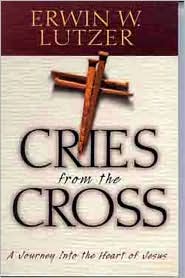
Cries From the Cross: A Journey Into the Heart of Jesus. Erwin Lutzer. 2002. Moody. 170 pages. [Source: Bought]

First sentence: Were you there when they crucified my Lord? As a child I wondered what those words could possibly mean. Obviously, the author of the hymn intended that we answer yes to the question. And yet, what could be clearer than the fact that I was not there when they crucified my Lord? 

Cries from the Cross is a wonderful book--whether you are reading it for the first time or treating yourself to a reread. In this one, Lutzer is examining Jesus' words spoken from the cross. There is a chapter for each of Jesus' seven statements or 'cries.' There's also a preface, introduction, and epilogue that help set the book into context. 

Do you know what Jesus' seven cries from the cross were? Have you considered how they can speak into your life--how they relate to you personally? If you haven't--or even if you have--it's worth pondering (again). I know that 'pondering' or 'meditating' or 'reflecting' takes time and that the average person prioritizes just about everything else over silence or quiet--but at what costs to our souls? 

Here they are in the order in which he writes about them:
  • A Cry for Pardon: "Father, forgive them, for they do not know what they are doing." (Luke 23:34)
  • A Cry of Assurance: "Today you will be with me in paradise." (Luke 23:43)
  • A Cry of Compassion: "Dear woman, here is your son...Here is your mother." (John 19:26-27)
  • A Cry of Anguish: "My God, my God, why have you forsaken me?" (Matthew 27:46)
  • A Cry of Suffering: "I am thirsty." (John 19:28)
  • A Cry of Victory: "It is finished." (John 19:30)
  • A Cry of Submission: "Father, into your hands I commit my spirit." (Luke 23:46)

Lutzer clearly and passionately shares the gospel message--that old, old story--that gospel message that when empowered by the Spirit--through the Spirit--can transform lives and take people out of darkness and into the light.

I love, love, love, love, LOVE this one. It is a thrilling read. This was my second or perhaps third time to read it.

Quotes:

To stand at the foot fo the cross is to witness the purpose for which God created the world. Here we see the attributes of God on display; and if we look carefully, we will see ourselves, with all of our needs, sins, and self-deceptions. Thankfully, it is at the cross that God chose to remove His wrath from those who would humbly trust Christ as their sin-bearer. (11)
The cross properly understood exalts no one whom it first does not humble; it gives life only to those whom it first "puts to death." The cross exposes the futility of our self-righteousness; it reminds us that we are sinners, incapable of bringing about our own reconciliation with God. Before the cross we can only stand with bowed heads and a broken spirit. (16)
Unless we see ourselves as deserving of the verdict that Pilate gave to Jesus, unless we see ourselves as worthy of hell, we will never understand the Cross. Someone has said that it is difficult for us to embrace the cross in a day when personal enjoyment is king. Contrary to popular belief, the central message of Christianity is not the Sermon on the Mount or Jesus' parables about love toward one's neighbor. The message that changed the first-century world was that human beings are guilty, helplessly guilty of sins for which they cannot atone. The cross shatters all pride and undercuts the ultimate value of self-effort. The cross stands as proof of God's great love but also reveals our own ugliness. (17)
The church can only live and breathe at the cross; without it, there is no life and no reason to exist. Properly proclaimed, it is "the power of God unto salvation." (19)
Jesus' suffering was terrible for the simple reason that our sin is terrible. (20)
No one can experience the eternal favor of God if they bypass the cross. (25)
Christ was forsaken that we might not be; He experienced hell that we might experience heaven. (28)
Forgiveness sounds like a marvelous idea until you are the one who has to do it. (33)
Words of forgiveness came from His lips when the nails were being driven into His body, when the pain was fiercest, when the jolts of anguish were the sharpest; He prayed as the cross was lowered into the hole with a thud. It was then, when His nerves were yet the most tender, when the pain was the most unfathomable, He who was the victim of history's greatest crime prayed for the criminals. He could forgive because He was about His Father's business. (36-7)
God never lowers His standard of justice to the level of our ignorance. Sins committed in ignorance are still sins. The guilt of those who crucified Jesus was real and objective regardless of how much they understood or did not understand. (41)
We have no idea of the greatness of our sin because we do not understand the greatness of our God. But we have fewer excuses today than ever; we have no reason to turn away from the savior who left us powerful witnesses to His authenticity. (42)
The prayer was not for those who did not want to be forgiven, but for those who would seek it. (45)
Are some sins "unpardonable"? The answer is no, for if the murder of the Son of God was "forgivable" for those who sought forgiveness, then all sins can be forgiven. (46)
There is no unpardonable sin for those who come to Christ for forgiveness. For those who refuse Him, all sins are unpardonable. (46)
He who needed no forgiveness died for those of us who are condemned without it. (47)
Although God forgives us because of Christ, it is neither His job nor His obligation to do so. He forgives us because of undeserved mercy toward us whose just punishment is hell. The cross is the bridge of redeeming love; on it, we walk across the chasm to God, who graciously provided forgiveness for those who believe. If we do not understand this, we do not understand the gospel. (47)
At His birth He was surrounded by beasts, and, now in His death, with criminals. Let no one say God has stayed aloof from the brokenness of our fallen world. He descended that we might ascend with Him to newness of life. (54)
Helplessness is not a curse if it draws us to the only One who can help us. Indeed, if we are not helpless, we cannot be saved. (56)
Jesus was numbered with the transgressors so that you and I could be numbered with the redeemed. Though personally sinless, He was counted as a transgressor by both God and man. He got what He didn't deserve, namely, our sin; and we got what we didn't deserve, namely, His righteousness. (66)
Warren Wiersbe points out that this man was not saved at his last opportunity, but at his first opportunity. (68)
The thief's forgiveness reminds us that there is more grace in God's heart than sin in our past. (69)
If we had been there, how close would we have stood to the cross? Nearby or at a comfortable distance? Would we have been intimidated by the mob, or would we have gladly let the angry rabble-rousers know that we were followers of the Man hanging on the middle cross? Would we stand nearby even if the cross cost us as much as it cost Christ? (82)
Christ did not die to make the Father loving, for He loved us from the foundation of the world. (89)
The first purpose of the cross was not for us, but for God. Yes, Jesus shed His blood for us, but it is even more true to say that He shed His blood for the Father. When the blood was sprinkled on the doorposts of the houses in Egypt, it was put there for the benefit of the families, but it was also put there for God. Jehovah said, "When I see the blood, I will pass over you" (Exodus 12:13). (100)
Let us remember that He was forsaken by God that we might be accepted by Him... Jesus went through darkness that we might have light. He was cursed that we might be blessed. He was condemned that we might be able to say, "Therefore there is now no condemnation for those who are in Christ Jesus" (Romans 8:1). He suffered hell for us so that we can enjoy heaven with Him. (103)
Either Jesus bears our sin, or we do. If the Father turned His face away from His beloved Son when He was regarded as a sinner, we can be sure that the Father will turn away from every sinner who stands before the Judgement Bar on his own merits. We are either saved by His rejection, or we must bear our own rejection for all of eternity. If those who are in hell should cry, "Why have You forsaken me?" heaven shall remain silent, for they receive the just recompense for their deeds. (103-4)
As Matthew Henry put it, "The torments of hell are represented by a violent thirst, in the complaint of the rich man who begged for a drop of water to cool his tongue. To that everlasting thirst we had all been condemned, if Christ had not suffered on the cross." Hell is heightened desires with decreased satisfaction. Hell is the inflamed desires of the body, with no possibility of a drink. Hell is remembering the Living Water we could have enjoyed on earth that would have taken us to heaven. Hell is a lake of fire, a place of endless, unquenchable thirst. Thankfully, Jesus suffered parched lips that we might be able to drink from the wells of salvation. He endured the thirst of hell, so that its fires might be quenched for us. Of those in heaven we read, "Never again will they hunger; never again will they thirst. The sun will not beat upon them, nor any scorching heat. For the Lamb at the center of the throne will be their Shepherd; he will lead them to springs of living water. And God will wipe away every tear from their eyes" (Revelation 7:16-17). (115)
Jesus drank from the cup of death that we might be able to drink from the cup of life. (116)
If your spirit does not go into the hands of God for sakekeeping, it will go into the hands of God for judgment. (146)

© Becky Laney of Operation Actually Read Bible

Thursday, March 21, 2019

True or False with John Calvin

From book one, "The Knowledge of God the Creator"

True or false. We can never really seek him in earnest until we begin to despair of ourselves. 

True or false. Man never arrives at true self-knowledge before he has looked into the face of God and then come away to look at himself. Men are never really convinced of their own insignificance until they contrast themselves with God's majesty.True or false.

True or false. Until people feel that they owe everything to God, that they are protected by his fatherly care and that he is the Author of all their blessings, so that nothing should be sought apart from him, they will never submit to him voluntarily. Unless they put their complete happiness in his hands, they will never truly have their lives under his control. 
True or false. The pious mind does not create its own god, but looks only to the one true God. Nor does it imagine any trait it likes for him, but is happy to have him as the character which he reveals, always on guard against disobeying his Law and wandering arrogantly from the right way. 
True or false. The pious mind holds on to God as the avenger of sin as much as the rewarder of good, because he realizes that both are part of his glory: he reserves punishment for one and eternal life for the other. 
True or false. This is pure and true religion: it is confidence in God coupled with genuine fear. This fear comprises willing reverence and true worship as God has commanded. 
True or false. Vanity and pride are always present when men seek for God...so they do not think of God in his true character, but imagine him to be like their own random ideas. 
True or false. No religion is genuine that is not in accordance with truth.
True or false. Those whose inclinations oppose God's justice, fervently wish that his tribunal for the punishment of sin could be overthrown. In feeling like this, they are fighting God, because justice is one of his essential attributes. 
True or false. Hypocrites try, in various twisted ways, to make a show of being near God when they are in fact running away from him. 
True or false. Scripture crystallizes ideas about God which had been very confused, scatters the darkness and shows us the true God clearly. 
True or false. It is impossible for anyone to gain an atom of sound doctrine without being a disciple of Scripture. We take the first step towards true knowledge when we reverently take hold of the testimony God has graciously given about himself. 
True or false. If we sincerely long for true awareness of God we must look in God's Word where his character is described accurately and vividly. If we turn away from this, however fast we move, we shall never reach our goal because we are off course. 
True or false. These words will not be given acknowledgment in the hearts of men, until they are sealed by the inner witness of the Spirit. 
True or false. The Lord has intertwined the truth of his Word and his Spirit in such a way that we respect the Word when the Spirit illuminates it, enabling us to see God's face, and we welcome the Spirit with no risk of error, when we recognize him in his Word. These are the facts. God did not put his Word in front of men to make a sudden splash, intending to get rid of it the moment the Spirit arrived. He employed the same Spirit by whom He had given the Word, to complete his work by effectively confirming the Word. 
True or false. The work of the intellect is to make distinction between good and bad, and the function of the will is to choose and follow what the intellect says is good, rejecting what is bad.
True or false. Without reference to God's Providence we cannot understand the full force of what is meant by his being the Creator, however much we may seem to understand it with our minds and confess it with our mouths. 
True or false. The believers' comfort in trouble is that everything they endure is ordained and commanded by God and that they are in his hands. 
True or false. Everything is controlled by God's secret purpose, and nothing can happen except by his knowledge and will. 
True or false. When our lives are in turmoil so that we cannot think straight, we should still believe that God, in the pure light of his justice and wisdom, keeps our problems under his control and finds the right solution. 


© Becky Laney of Operation Actually Read Bible

Wednesday, January 16, 2019

Book Review: A Cloud by Day, A Fire by Night

A Cloud by Day, a Fire by Night: Finding and Following God's Will for You. A.W. Tozer. Edited by James L. Snyder. 2019. [March] Bethany House. 208 pages. [Source: Review copy]

First sentence (from the introduction): A very important theme in Dr. A.W. Tozer’s ministry was the subject of God’s will for each of our lives.

I would recommend using A Cloud by Day, a Fire by Night by A.W. Tozer as a devotional book. I'm not sure if that's what the publishers intended. It's certainly not marketed as being such. The book has twenty-three chapters. Each chapter begins with a prayer and ends with a hymn. It could easily be used as a devotional for a month allowing for grace days and busy schedules.

The subject of this book is GOD'S WILL. Snyder has edited together some of Tozer's writings/sermons on this subject. (Tozer died in the early 1960s--1963, I believe.) Snyder writes, "This book is about more than finding God’s will for your next step or decision in life—it about is following His will to the end." I love that. This one is just as much about obedience and sanctification and worship as it is "God's Will."

Tozer is one of my favorite, favorite authors. Not because we always agree with one another on every little issue but because we're kindred spirits when it comes to the Word of God. Tozer is ZEALOUS and PASSIONATE and IN LOVE with the Lord. Tozer is not afraid to speak the truth--proclaim the truth--to the world.

Quotes:
  • God is directing His people in the way He wants them to go. Often it is not the way we want to go, but as we yield ourselves to God, He opens doors and leads us forward.
  • When we allow God’s Word to go beyond our ears and into our hearts, it stimulates us to do that which God is calling us to do.
  • When we start our journey with God, He knows the beginning and the end and everything in between. His preparation in us is in complete harmony with His knowledge of everything that is going to happen to us. Nothing can ever happen to you or me but what God has prepared us to handle.
  • As a believer, my job is to seek God in His Word and strip from my life everything hindering my relationship with God. If we are going to accomplish God’s goals, we need to get back to the basic laws of the kingdom of God laid out for us.
  • If I’m not believing God, I’m not being led by God. My unbelief will cloud what God wants to do in my life. That is the thing most important to many Christians who have been wandering aimlessly for too long and have become discouraged.
  • Unbelief believes all of the promises conditionally for someone else, somewhere else, and at some other time. They believe what God says is true, but it isn’t relevant to them at this time in their life.
  • My biggest enemy is not Satan. My worst enemy is myself. If I could let go of the past that God has led me out of and latch on to what God has for me now—the provisions and the access to heaven He has for me—I would begin to experience the kind of Christian life that is full of joy, praise, and honor to God.
  • Much needs to be said about the presence of God. Many Christians, I am sure, have never really experienced this. We talk about it and read about it, but have we really experienced that overwhelming sense of the presence of God?
  • I need to cultivate the presence of God in my own life. Regardless of what it takes, I need to make sure I am living in the awe-inspiring mystery of God.
  • The problem with many Christians today is that they want to tell God how they are going to serve, as well as the conditions of their serving. This is not acceptable as far as God is concerned. God is my owner, and serving Him means I recognize His ownership and I am completely in allegiance to Him, nobody else.
  • There are no tragedies. Everything that comes into my life comes in such a way that God can mold me and prepare me for the next step.
  • We need to have men and women so committed to Jesus Christ that no obstacle can obscure the presence of God from them. It is the cloud by day and the fire by night that give direction and encourage us to go forward.
  • It is interesting that God puts before us situations that we cannot handle in our own strength so that we can experience and understand the mighty grace and power of our God. 

© Becky Laney of Operation Actually Read Bible

Saturday, January 12, 2019

Devotional Journaling #2

I am reading two devotional books this year. One is Living Hope for the End of Days by John Samuel Barnett. One is My Utmost for His Highest by Oswald Chambers.

Living Hope for the End of Days

I thought week one was great. I was a bit disappointed with week two. The theme was knowing Christ's presence today. Which sounds like a great theme. But the big climax was all leading toward getting readers to pray the Sinner's Prayer. I guess this one had a few elementary basics that might be brand new for some readers--though I'm not sure non-Christians are going to be seeking out a devotional oriented around the book of Revelation. But for me, it just felt odd. 


My Utmost for His Highest 

I really enjoyed all the readings this week.

January 6 -- This one is about spiritual service tied into worship. "God will never allow you to keep a spiritual blessing completely for yourself. It must be given back to Him so that He can make it a blessing to others." He defines worship as "giving God the best that He has given you." I'm not sure I've fully absorbed what he's getting at. 

January 7 -- This one is about intimacy with Jesus Christ. "Once we get intimate with Jesus we are never lonely and we never lack for understanding and compassion." He hasn't yet explained the how, I believe another entry this week touches on this topic as well. 

January 8 -- This one is about how God wants us to be LIVING sacrifices. He writes, "God never tells us to give up things just for the sake of giving them up, but He tells us to give them up for the sake of the only thing worth having, namely, life with Himself." I think this is why Lent makes little sense to me--at least the way most people "do" Lent. 

January 9 -- This one is about the importance of meditation and the cleansing presence or filling of the Holy Spirit. "The same Spirit that fed the life of Jesus Christ will feed the life of our spirit."

January 10 -- Chambers argues that there is a distinction between conversion and regeneration. A distinction I'm not sure that I agree with actually. This one has another deeply troubling statement: "Our job as workers for God is to open people's eyes so that they may turn themselves from darkness to light." The other statement was, "Conversion is not regeneration. This is a neglected fact in our preaching today."  

I strongly disagree with the first statement. It is not our job to open people's eyes. It is our job to faithfully, steadfastly proclaim the TRUTH as revealed in the Word of God. Our job is to sow the word, to be faithful to the message and proclaim it in and out of season. No matter what people want to hear--it is our job to give them what they actually need to hear. God the Spirit opens eyes, ears, hearts, minds. We are not the spirit; we can be used by the Spirit. But there is a big distinction. Clever words, persuasive logic don't win souls. 

Not only is it impossible for God's workers to open people's eyes....by their preaching...but it is impossible for the listeners, the people, to turn themselves from darkness to light... That's just NONSENSE. 

Conversion or regeneration is a matter of RESURRECTION. Only God can bring the dead to life. Only God can put flesh on dry bones. Only God can breathe life where once there was death, decay, rot. Only God. God alone. 

January 11 -- This entry quite honestly confused me. It's about how our obedience to God costs us nothing because of the joy it brings to us but it costs the ones we love dearly at times.

January 12 -- This entry was much better than the past two days. In fact, it might be my favorite of the week. "It is astounding how ignorant we are about ourselves! We have to get rid of the idea that we understand ourselves. That is always the last bit of pride to go. The only One who understands us is God. The greatest curse in our spiritual life is pride." It is only when we see ourselves as God sees us that we can be taught by God. Chambers calls this being alone with God. 

© Becky Laney of Operation Actually Read Bible

Wednesday, January 9, 2019

McGee and Me #11 Ruth

Ruth. (Thru the Bible #11) J. Vernon McGee. 1976. 96 pages. [Source: Bought]

I recently bought a complete set of J. Vernon McGee's Thru the Bible commentary series. These books are loosely based on his popular radio program. I plan on reading or in some cases rereading his commentaries. 


First sentence: Ruth is the story of a little foreign girl who came out of paganism and idolatry in the land of Moab.

Of all the commentaries I've read so far this one on Ruth may just be my favorite. McGee and I might disagree now and then on various things--some little, some big--but we both agree that the book of Ruth is "...a mighty midget with a mighty message."

Ruth has just four chapters--hence the midget--but those chapters reveal a great deal about redemption and our Redeemer. McGee writes, "Redemption is possible only through a Kinsman-Redeemer. God could not redeem apart from a Mediator. Since only God could redeem, it was necessary for Him to become that person." That is a mighty message indeed.

I loved his insights throughout the book. It's almost as if McGee loved playing connect the dots. For example, "Jesus Christ would never have been born in Bethlehem if the incidents recorded in the Book of Ruth hadn’t first taken place in Bethlehem."

But my favorite section--I think--is on Ruth 3. So many people today glory in making Ruth's going to Boaz at night a sinful, immoral, lusty thing when it wasn't.

I would recommend this commentary. If you're Reformed you should know there are a few places this goes free will-y. But. It's still worth reading in my opinion.

Quotes:

  • She [Ruth] made an important decision there [Ruth 1:16]. It’s a sevenfold decision, and it’s a decision for God. And this is what I believe is genuine repentance, friend. This is the kind of repentance that means something. 
  • What we need today are folk who make real decisions for God. The decision of Ruth was that kind of decision.
  • Boaz is a picture and a type of the Lord Jesus Christ. And it can be said of you and of me that we have a Kinsman also, one who was made like we are, yet sinless—“holy, harmless, undefiled, separate from sinners” (Heb. 7:26).
  • We owe a great deal to the Word of God, because it is only the Word of God that has ever given the poor man a square deal.
  • Some folks talk about God’s will as if they’d just had a Western Union telegram from Him or a Special Delivery air mail letter from heaven. My friend, God doesn’t lead that way today, and I don’t think He has ever led very many that way.
  • One of the glorious things, as we go through this world today, is to know that our times are in His hands; to know that He is ordering the events of this universe; and to know that God has said that nothing can come to a child of His without His permission.
  • The kinsman-redeemer is a picture of the Lord Jesus Christ. He is our Kinsman-Redeemer. And that’s the reason the word redemption is used in the New Testament rather than atonement.
  • Atonement covered up sins, that’s all. But redemption, friend, means to pay a price so that the one who is redeemed may go scot-free.
  • Now Christ not only died to redeem our persons, He died also to redeem this earth.
  • Now God didn’t have to redeem us. We were lost sinners. If He did not redeem us, He could still be a just and holy God. But He loved us. You see, salvation by redemption is a love story.
  • She tells Ruth to wait until the religious feast is over, Naomi says, “Now, Ruth, it’s up to you to claim this man as your kinsman-redeemer.”
  • Ruth has been doing nothing in the way of claiming him, so Naomi is going to give her some very definite instructions.
  • These are four steps that are essential for the sinner. The first one is this: Wash thyself.
  • Now the second thing that Naomi tells Ruth to do is to anoint herself. 
  • You and I have an anointing of the Holy Spirit.
  • The Spirit of God must teach us. And that’s one of the neglected facts today. Right now in theological circles they are fighting like mad over the doctrine of inspiration. Now knowing that the Bible is inspired of God is very important. But you can believe in the plenary, verbal inspiration of the Scripture and still be ignorant of the Word of God.
  • This is the third step for the believer. When you and I come to Christ and accept Him as Savior, we are told that He becomes our righteousness. He not only subtracts our sin, He not only regenerates us and makes us a child of God, but He makes over to us His own righteousness.
  • Now the fourth thing Naomi tells Ruth to do is to get down to the threshing floor and let Boaz know that she wants to claim him as her kinsman-redeemer.
  • Have you really claimed Jesus Christ as your Savior? My friend, you do have to claim Him. The language of Scripture says to believe upon or believe into the Lord Jesus Christ.
  • Under the Mosaic Law, Ruth is not only entitled to and has a right to claim Boaz as her kinsman-redeemer, but she must claim him.
  • Now let me say that there is nothing questionable about the thing that Naomi is asking her to do. To begin with, Naomi would never have asked her to do it had it been improper.
  • He’ll put his head toward the grain and his feet out. Now you go and put your feet toward his feet and pull his cloak up over your feet, and then he’ll let you know what to do.”
  • She could have taken him into court. According to the Mosaic Law, you see, she could have called the elders of the city together and told Boaz outright, “I claim you as my kinsman-redeemer,”
  • Thank God we have a Savior, and our relationship to Him is a love story. He loved us and He gave Himself for us in order that He might redeem us.
  • Friend, it’s wonderful to have a Savior in whom you can rest, and know that He’s your Redeemer.
  • The work of redemption is His work, and you and I are to enter into that perfect work of redemption which He accomplished for us.
  • Frankly, God doesn’t need your little effort and my little effort. God is not receiving anything from us toward our salvation.
  • This is the great message of this book: redemption is a romance; because God loves us He redeemed us.
  • As a man chooses a woman for his bride, and as Boaz claimed Ruth, so Christ came to this earth for His bride. He is the one who demonstrated His love by dying for us.
  • In one sense this genealogy that concludes the Book of Ruth is just about as important as any portion of the Old Testament.
  • Do you know why? Because this little book and this genealogy are what connect the family of David with the tribe of Judah.
  • Without it we would have no written record of the connection. This makes the little Book of Ruth very important.
  • First of all, let’s consider that the kinsman-redeemer must be a near kinsman. That seems to be obvious and needs no proof.
  • And the Lord Jesus Christ is our Kinsman-Redeemer. He is a near kinsman. He is the one who took upon Himself our humanity.
  • Not only must a kinsman-redeemer be a near kinsman, but he must also be willing to redeem.
  • And you and I today have a Kinsman who loves us. Why? There’s no explanation in us. Paul said in Romans 3:24: “Being justified freely by his grace through the redemption that is in Christ Jesus,” “Freely” means without a cause.
  • Third, a kinsman-redeemer must be able to redeem. 
  • One of the things that is said about Him is that He is able to redeem. Have you ever noticed the many times in the New Testament that it says the Lord Jesus is able? He is able.
  • He is our great Kinsman-Redeemer with the ability to save.


© Becky Laney of Operation Actually Read Bible

Saturday, January 5, 2019

Devotional Journaling #1

I am reading two devotional books this year. One is Living Hope for the End of Days by John Samuel Barnett. One is My Utmost for His Highest by Oswald Chambers.

Living Hope for the End of Days: 365 Days of Devotions from the Book of the Revelation. I chose this one because I am going to be reading Revelation fifty-two times, or, once a week throughout all of 2019. I love, love, LOVE this book of the Bible. I've owned Living Hope for the End of Days for a few years now but never read it--at least not all the way through. There are presumably fifty-two themed weeks covering the book and pulling in other scriptures.

Week One: Worship the Christ of Revelation.
“To worship is to quicken the conscience by the holiness of God, to feed the mind with the truth of God, to purge the imagination by the beauty of God, to open the heart to the love of God, to devote the will to the purpose of God.” ~ William Temple
One clear way God invites our worship is by revealing Himself through His divine names. The greatest insight into adoring the Lord comes by way of His names and titles in His Word. 
Barnett then goes through all twenty-two chapters of Revelation. I won't share all of what he writes. But I will give you an example or two. 
Chapter 1: He is the Faithful Witness, the Firstborn from the Dead, Ruler over the Kings of the Earth, the Alpha and the Omega, the Beginning and the End, the Almighty, the First and the Last, the Son of Man, the Living One!
Chapter 4: He is the One who sits on the throne in heaven!
Chapter 5: He is the Lion of the tribe of Judah, the Root of David, and the Lamb who was slain—who lives forever and ever!
Barnett points out that worship is something we can/should cultivate. He makes a good point. We often want to worship without the work--the work of confessing sin and 'mortifying' the flesh.
Cultivating worship also involves dealing with all the weeds that grow and choke the growth of your crop, as well as the pests that try to steal the harvest.
He has this to say about church.
When we are gathered for genuine worship, we are like a heap of burning coals encouraging one another to warmth of love and devotion. Go to church—even if you do not feel like it. Go to church—even if worship has been discouraging and dry before. Go to church—praying. Go to church—expecting. Go to church—looking for God to do a new and living work among you as His family. 
This statement gave me food for thought: Worship is the most vital and life-changing topic of the whole Bible. It makes sense if you think about it carefully. What is the chief end of man? Man's chief end is to glorify God, and to enjoy him forever. But if you don't give it too much thought, you'd almost be tempted to say that something is wrong with the statement. That it should be salvation or redemption or resurrection. But we were created to worship. We were saved to worship. We will spend eternity worshiping God.

I have one more quote to share from this first week of devotion.
We can still serve God regardless of where we are, what is taken away from us, or how hard the times might be.
My Utmost for His Highest by Oswald Chambers. I've been meaning to read this one for a few years now. There are no themed weeks so far as I know. Each entry is dated.

January 1. Chambers summarizes Paul as saying, "My determined purpose is to be my utmost for His highest--my best for His glory." Chambers argues that this requires surrendering all to God.
I am determined to be absolutely and entirely for Him and Him alone.
January 2. This entry is all about trust. Chambers writes, "Have you been asking God what He is going to do? He will never tell you. God does not tell you what He is going to do--He reveals to you who He is."

January 3. Chambers points out that it is only through the Spirit that Jesus and his teachings can be understood. He writes, "The people who are flippant and disrespectful in their approach to God are those who have never been introduced to Jesus Christ."

January 4. This entry is all about waiting. Our natural impulses may mislead us. We hate to wait. HATE. But God has things to teach us in the waiting. And God's timing is best.

January 5. This entry seems to carry over from the day before--again we're looking at Peter and the idea of discipleship. The idea of spiritual man and natural man. What I loved about this one was his concluding insight, "All our promises and resolutions end in denial because we have no power to accomplish them....There is now only ONE who directs the course of your life, the Lord Jesus Christ."


© Becky Laney of Operation Actually Read Bible

Friday, December 28, 2018

Book Review: Morning and Evening

Morning and Evening. Charles H. Spurgeon. 1866. 470 pages. [Source: Bought]

Morning and Evening is a classic devotional by Charles H. Spurgeon that was originally published in 1866.

There is a devotional for every morning and every evening.

Each devotional begins with a bite-sized portion of Scripture.

Spurgeon "feeds" his flock from both the Old Testament and the New Testament.

He speaks directly to readers and addresses matters of great importance. His works are ever-relevant.

I've been sharing quotes from Morning and Evening since the first week of January when I began reading the devotional.

I'll share my top twenty or so with you now.

From December:

  • The night of affliction is as much under the arrangement and control of the Lord of Love—as the bright summer days when all is bliss. Jesus is in the tempest! His love wraps the night as a cloak—but to the eye of faith the sable robe is scarcely a disguise.
  • His presence will be most realized—by those who are most like Him. If you desire to see Christ, you must grow in conformity to Him.
  • Christian, God has not left you in your earthly pilgrimage to an angel’s guidance—He Himself leads the van. You may not see the cloudy, fiery pillar—but Jehovah will never forsake you.
  • Christ is the great Peacemaker; but before peace, He brings war. Where the light comes, the darkness must retire. Where truth is, the lie must flee; or, if it abides, there must be a stern conflict, for the truth cannot and will not lower its standard, and the lie must be trodden under foot.

From November:
  • The past is gone; the future has not arrived; we never shall have any time but time present. Then do not fritter away your life in thinking of what you intend to do tomorrow, as if that could recompense for the idleness of today. No man ever served God by doing things tomorrow.
  • Truth must enter into the soul, penetrate and saturate it—or else it is of no value. Doctrines held as a matter of mere creed—are like bread in the hand, which ministers no nourishment to the body.
  • Be content with such things as you have, since the Lord has ordered all things for your good. Take up your own daily cross; it is the burden best suited for your shoulder, and will prove most effective to make you perfect in every good word and work to the glory of God.
  • To have one foot on the land of truth, and another on the sea of falsehood, will end in a terrible fall and a total ruin. Christ will be all—or nothing.
From October:
  • “I will love them freely.” Hosea 14:4 This sentence is a body of divinity in miniature. He who understands its meaning, is a theologian; and he who can dive into its fullness, is a true spiritual master. It is a summary of the glorious message of salvation, which was delivered to us in Christ Jesus our Redeemer. The meaning hinges upon the word “freely.” This is the glorious, the suitable, the divine way by which love streams from heaven to earth—a spontaneous love flowing forth to those who neither deserved it, purchased it, nor sought after it. It is, indeed, the only way in which God can love such as we are. The text is a death-blow to all sorts of fitness, “I will love them freely.”
  • We ought to muse upon the things of God, because we thus get the real nutriment out of them. Hearing, reading, and learning—all require inward digesting to complete their usefulness, and the inward digesting of the truth lies for the most part in meditating upon it.
  • When we repent of sin, we must have one eye upon SIN—and another upon the CROSS! It will be better still—if we fix both our eyes upon Christ—and see our transgressions only in the light of His love.
  • Each believer must, when filled with a sense of Jesus’ love—be also overwhelmed with astonishment, that such divine love should be lavished on an object so utterly unworthy of it. Jesus must have found the cause of His love—in His own heart. He could not have found it in us—for it is not there! 
From September:
  • Wherever Jesus may lead us—He goes before us. If we know not where we go, we know with whom we go. With such a companion, who will dread the perils of the road? The journey may be long—but His everlasting arms will carry us to the end.
  • Scripture is a never-failing treasury filled with boundless stores of grace. It is the bank of heaven; you may draw from it as much as you please, without price or hindrance. Come in faith and you are welcome to all covenant blessings. There is not a promise in the Word which shall be withheld.
  • A Christian man should so shine in his life, that a person could not live with him a week, without knowing the gospel. His conversation should be such that all who are about him should clearly perceive whose he is, and whom he serves; and should see the image of Jesus reflected in his daily actions.
From August:
  • My Lord is more ready to pardon—than you to sin; more able to forgive—than you to transgress. My Master is more willing to supply your needs—than you are to ask for them!
  • Do you dread sin? He has nailed it to His cross! Do you fear death? He has been the death of death! Are you afraid of hell? He has barred it against the entrance of any of His children; they shall never see the gulf of perdition!
  • Let a Christian begin to boast, “I can do all things,” without adding “through Christ who strengthens me,” and before long he will have to groan, “I can do nothing,” and bemoan himself in the dust. When we do anything for the Lord, and He is pleased to accept of our doings, let us lay our crown at His feet, and exclaim, “Not I—but the grace of God which was with me!”
From July:
  • It is impossible for any human speech to express the full meaning of this delightful phrase, “God is for me.” He was “for us” before the worlds were made. He was “for us,” or He would not have given His well-beloved son. He was “for us” when He smote the Only-begotten, and laid the full weight of His wrath upon Him—He was “for us,” though He was against Him. He was “for us,” when we were ruined in the fall—He loved us notwithstanding all. He was “for us,” when we were rebels against Him, and with a high hand were bidding Him defiance. He was “for us,” or He would not have brought us humbly to seek His face. He has been “for us” in many struggles; we have been summoned to encounter hosts of dangers; we have been assailed by temptations from without and within—how could we have remained unharmed to this hour—if He had not been “for us”? He is “for us,” with all the infinity of His being; with all the omnipotence of His love; with all the infallibility of His wisdom; arrayed in all His divine attributes, He is “for us,” eternally and immutably “for us”; “for us” when yon blue skies shall be rolled up like a worn out vesture; “for us” throughout eternity!
  • Blessed is the fact that Christians can rejoice even in the deepest distress; although trouble may surround them, they still sing; and, like many birds, they sing best in their cages. Trouble does not necessarily bring consolation with it to the believer—but the presence of the Son of God in the fiery furnace with him fills his heart with joy. He is sick and suffering—but Jesus visits him and makes his bed for him. He is dying, and the cold chilly waters of Jordan are gathering about him up to the neck—but Jesus puts His arms around him, and cries, “Fear not, beloved!
From June:
  • “Help, Lord!” will suit us living and dying, suffering or laboring, rejoicing or sorrowing.
  • After conversion our God is our joy, comfort, guide, teacher, and in every sense our light—He is light within, light around, light reflected from us, and light to be revealed to us.
  • If you are not humbled in the presence of Jesus—you do not know Him. You were so lost that nothing could save you—but the sacrifice of God’s only begotten Son. Think of that, and as Jesus stooped for you—bow yourself in lowliness at His feet.
  • The Scriptures reveal Jesus, “The Scriptures point to Me!” No more powerful motive can be urged upon Bible readers than this—he who finds Jesus finds life, heaven, all things. Happy he who, searching his Bible, discovers his Savior!
From May:
  • There is no need for God to create a new thing upon the earth in order to restore believers to joy; if they would prayerfully rake the ashes of the past, they would find light for the present; and if they would turn to the book of truth and the throne of grace, their candle would soon shine as aforetime.
  • Christian, what have you to do with sin? Has it not cost you enough already? Burnt child—will you play with the fire? What! when you have already been between the jaws of the lion—will you step a second time into his den? Have you not had enough of the old serpent? Did he not poison all your veins once—and will you play upon the hole of the viper, and put your hand upon the cockatrice’s den a second time? Did sin ever yield you real pleasure? Did you find solid satisfaction in it? If so, go back to your old drudgery, and wear the chain again—if it delights you. But inasmuch as sin did never give you what it promised to bestow—but deluded you with lies—do not be snared a second time by the old fowler!
  • What a comfort to know that we have a great Physician who is both able and willing to heal us! Let us think of Him for a while tonight. His cures are very speedy—there is life in a look at Him. His cures are radical—He strikes at the center of the disease. And hence, His cures are sure and certain. He never fails, and the disease never returns. There is no relapse where Christ heals—there is no fear that His patients should be merely patched up for a season. He is well skilled in all diseases. Jesus Christ is thoroughly acquainted with the whole of human nature. He is as much at home with one sinner as with another, and never yet did He meet with an unusual case which was difficult to Him.
  • Oh, do not think, believer, that your sorrows are out of God’s plan; they are necessary parts of it.
  • The gospel is a very bold gospel, it fearlessly proclaims the truth, whether men like it or not. We must be equally faithful and unflinching.
From April:
  • Banquet your faith upon God’s own Word, and whatever your fears or needs, repair to the Bank of Faith with your Father’s hand-written note, saying, “Remember the Word unto Your servant—upon which You have caused me to hope.”

  • Let us fight as if it all depended upon us—but let us look up and know that all depends upon Him!
  • We are not far from home—a moment will bring us there.
  • Remember that the same Christ who tells us to say, “Give us this day our daily bread,” had first given us this petition, “Hallowed be Your name; Your kingdom come; Your will be done in earth as it is in heaven.” Let not your prayers be all concerning your own sins, your own needs, your own imperfections, your own trials—but let them climb the starry ladder, and get up to Christ Himself, and then, as you draw near to the blood-sprinkled mercy-seat, offer this prayer continually, “Lord, extend the kingdom of Your dear Son!” Such a petition, fervently presented, will elevate the spirit of all your devotions. Mind that you prove the sincerity of your prayer by laboring to promote the Lord’s glory.

From March:
  • Great thoughts of your sin alone—will drive you to despair; but great thoughts of Christ—will pilot you into the haven of peace. “My sins are many—but oh! it is nothing to Jesus to take them all away. The weight of my guilt presses me down as a giant’s foot would crush a worm—but it is no more than a grain of dust to Him, because He has already borne its curse on the cruel tree. It will be but a small thing for Him to give me full remission, although it will be an infinite blessing for me to receive.
  • There is no road between my soul and heaven—but faith.
  • Look upon all sin as that which crucified your Savior—and you will see it to be “exceeding sinful.”
From February:
  • “He has said” must be our daily resort.
  • We would be abler teachers of others, and less liable to be carried about by every wind of doctrine—if we sought to have a more intelligent understanding of the Word of God. As the Holy Spirit, the Author of the Scriptures is He who alone can enlighten us rightly to understand them, we should constantly ask His teaching, and His guidance into all truth.
  • A daily portion is all that a man really needs. We do not need tomorrow’s supplies; for that day has not yet dawned, and its needs are as yet unborn. The thirst which we may suffer in the month of June—does not need to be quenched in February, for we do not feel it yet.
  • Christian, meditate much on heaven—it will help you to press on, and to forget the toil of the way. This valley of tears is but the pathway to the better country! This present world of woe is but the stepping-stone to a world of bliss.
From January:
  • We must not cease to wonder at the great marvels of our God. It would be very difficult to draw a line between holy wonder—and real worship; for when the soul is overwhelmed with the majesty of God’s glory, though it may not express itself in song, or even utter its voice with bowed head in humble prayer—yet it silently adores.
  • Christ is not only “mighty to save” those who repent—but He is able to make men repent. He will carry those who believe those to heaven; but He is, moreover, mighty to give men new hearts and to work faith in them. He is mighty to make the man who hates holiness—love it; and to constrain the despiser of His name—to bend the knee before Him.
  • How different will be the state of the believer in heaven—from what it is here! Here he is born to toil and suffer weariness—but in the land of the immortal, fatigue is never known.
  • He who does not grow in the knowledge of Jesus, refuses to be blessed. To know Him is “life eternal,” and to advance in the knowledge of Him is to increase in happiness. He who does not long to know more of Christ—knows nothing of Him yet.


© Becky Laney of Operation Actually Read Bible

Wednesday, December 26, 2018

McGee and Me #10 Joshua and Judges

Thru the Bible #10 Joshua and Judges. J. Vernon McGee. 228 pages. [Source: Bought]

I recently bought a complete set of J. Vernon McGee's Thru the Bible commentary series. These books are loosely based on his popular radio program. I plan on reading or in some cases rereading his commentaries. 

Joshua and Judges are covered in one commentary by J. Vernon McGee. This one reads much faster than you might expect. There are important insights to be shared on some of the chapters in these two books. He includes every word of Scripture. But some portions he does seem to be skimming over in terms of teaching and commentating. (I didn't mind this. He seems to skim the same chapters I do.) 

Joshua has some very exciting, action-packed sections. But it also has some tedious portions that aren't all that interesting. Same with Judges. I do think believers can pull some general principles from both books. All of God's Word is INSPIRED.

Quotes from his commentary on Joshua:

  • In the Book of Genesis Israel was born. In the Book of Exodus Israel was chosen. In the Book of Numbers the nation was proven. In the Book of Leviticus it was brought nigh by the blood. In Deuteronomy it was instructed. Now in the Book of Joshua it faces conflict and conquest. 
  • Exodus is the book of redemption out of Egypt; Joshua is the book of redemption into the Promised Land.
  • The Book of Joshua corresponds to the Epistle to the Ephesians in the New Testament where we see that the believer is blessed with all spiritual blessings.
  • The practical possession and experience of them depends upon conflict and conquest. These are never attained through the energy of the flesh, but through the power of the Holy Spirit in the yielded life of the believer.
  • Moses was not essential to lead the children of Israel into the land. In fact, he could not bring them into the Land of Promise. Moses represented the Law and the Law cannot save us.
  • The Law was never a savior. Moses could not lead Israel into the land because of his failure. The problem was not with the Law but with Moses just as the problem is with us. The Law reveals that we have fallen short of the glory of God.
  • My friend, if you are going to walk with Him and live for Him, you will need a daily filling of the Holy Spirit of God.
  • In fact, since you fill up the physical man three times a day, it would not be a bad idea to fill up the spiritual man three times a day.
  • We are identified with Christ in His death; and when He died, my friend, He died for us. His death was our death. When He arose from the dead, then we arose from the dead.
  • The worst enemy that you have is yourself.
  • He occupies the same skin that you occupy. He uses the same brain that you use in thinking his destructive thoughts. He uses the same hands that you use to perform his own deeds.
  • There are two factors that make dealing with this enemy doubly difficult. In the first place, we are reluctant to recognize and identify him. We are loath to label him as an enemy.
  • The fact of the matter is most of us rather like him. The second problem is that he is on the inside of us. If he would only come out and fight like a man, it would be different, but he will not.
  • As you recall, Jericho represents the world. How do you overcome the world? By faith. Ai represents the flesh. How do you overcome the flesh? Not by fighting it, but by recognizing your weakness, confessing to God, and letting the Spirit of God get the victory.
  • The more I know about Joshua, the better I like him. Through the years he has stood in the shadow of Moses so that we think he is a sort of miniature Moses.
  • But Joshua is a man of great stature. God made no mistake in choosing this man. Although Joshua is an average man, this book reveals that an average man dedicated to God can be mightily used.

Quotes from his commentary on Judges:

  • Backsliding and the amazing grace of God in recovering and restoring is the theme of Judges.
  • This is the Promised Land—God had given it to them! Yet not one tribe, apparently, was able to possess the land that God had given to it. How tragic!
  • All of the judges were “little men.” There was not a big one in the lot. These men were used of God because they were—and I have to say it—odd characters. Their very oddness caused God to use them.
  • God has a wonderful sense of humor. The Bible is a serious book, of course. It deals with a race that is in sin, and it concerns God’s salvation for that race. It reveals God as high and holy and lifted up. But God has a sense of humor and, if you miss that in the Bible, you will not find it nearly as interesting.
  • Today many of us are just rolling a hoop through this world. One day we are up, and the next day we are down. God never intended our spiritual lives to be that way.
  • [Jud. 12:11–12]. These two verses tell us all that we know about Elon. He did nothing—he didn’t even have a large family. Apparently all that he did was twiddle his thumbs.


© Becky Laney of Operation Actually Read Bible

Saturday, December 22, 2018

My Victorian Year #47

I missed last week--I've had a cold and I gave myself a mini-holiday--but I've got two weeks worth of Spurgeon quotes.

From Morning and Evening by Charles Spurgeon

  • The God of Peace gives perfect peace to those whose hearts are stayed upon Him.
  • At this hour, we rest in the promises of our faithful God, knowing that His words are full of truth and power.
  • We rest in the doctrines of His Word, which are consolation itself. We rest in the covenant of His grace, which is a haven of delight.
  • Peace and rest do not belong to the unregenerate, they are the peculiar possession of the Lord’s people, and of them only.
  • If to die is but to enter into uninterrupted communion with Jesus, then death is indeed gain, and the black drop is swallowed up in a sea of victory!
  • Lydia did not open her own heart. Her prayers did not do it. Paul did not do it. The Lord Himself must open the heart, to receive the things which make for our eternal peace.
  • He alone can put the key into the hole of the door, and open it, and get admittance for Himself. He is the heart’s master—as He is the heart’s maker.
  • Man’s ways are variable—but God’s ways are everlasting.
  • Believer, here is a sorrowful truth! You are the beloved of the Lord, redeemed by blood, called by grace, preserved in Christ Jesus, accepted in the Beloved, on your way to heaven. Yet, “you have dealt treacherously” with God, your best friend; treacherously with Jesus, whose you are; treacherously with the Holy Spirit, by whom you have been quickened unto eternal life!
  • Prayer has oftentimes been slurred—it has been short—but not sweet; brief—but not fervent. Communion with Christ has been forgotten.
  • The LAW was a dispensation of terror, which drove men before it as with a scourge; the GOSPEL draws with bands of love. The LAW repels—the GOSPEL attracts. The law shows the distance which there is between God and man; the gospel bridges that awful chasm, and brings the sinner across it.
  • We may often forget to meditate upon the perfections of our Lord—but He never ceases to remember us.
  • Jesus, the great I AM, is the entrance into the true church, and the way of access to God Himself. He gives to the man who comes to God by Him, four choice privileges:
  • 1. He shall be saved. 2. He shall go in. 3. He shall go out. 4. He shall find pasture.
  • Justification has engrossed learned pens in all ages of the church, and will be the theme of admiration in eternity. God has indeed “skillfully wrought it.”

From Holiness by J.C. Ryle, "Lot--A Beacon"

  • His character [Lot's character] is put before us in one little word: “He lingered.”
  • Let us examine . . . the state of Lot himself, what the text says of him, why he lingered, what sort of fruit he brought forth, the whole while paying special attention as an instruction for holiness.
  • We must not follow the example of Lot — we must not linger.
  • Lot was a true believer, a converted person, a real child of God, a justified soul, a righteous man. We must not undervalue grace because it is accompanied by much corruption. Read on, and you will find that Lot paid dearly for his “lingering.”
  • He was . . . slow — when he should have been quick, backward — when he should have been forward, trifling — when he should have been hastening, loitering — when he should have been hurrying, cold — when he should have been hot.
  • They believe in Heaven — and yet seem faintly to long for it. They believe in Hell — and yet seem little to fear it. They love the Lord Jesus — but the work they do for Him is small. They hate the devil — but they often appear to tempt him to come to them. They know the time is short — but they live as if it were long. They know they have a battle to fight — yet one might think they were at peace. They know they have a race to run — yet they often look like people sitting still. They know the Judge is at the door, and there is wrath to come — and yet they appear half asleep!
  • Lingering is the sure destruction of a happy Christianity. A lingerer’s conscience forbids him to enjoy inward peace.
  • A true believer will certainly not be cast away, although he may linger. But if he does linger, it is vain to suppose that his religion will thrive.
  • call upon you and beseech you . . . to be a whole-hearted Christian, to follow after eminent holiness, to aim at a high degree of sanctification, to live a consecrated life, to present your body a “living sacrifice” unto God, to “walk in the Spirit” (Romans 12:1; Galatians 5:25). I charge you and exhort you, by all your hopes of Heaven and desires of glory — if you would be happy, if you would be useful, do not be a lingering soul.
  • Oh, let not one of us linger! Time does not, death does not, judgment does not, the devil does not, the world does not. Neither let the children of God linger.

From Holiness by J.C. Ryle, "A Woman To Be Remembered! Lot's Wife"

  • He [Jesus] singles out one whose soul was lost forever. He cries to us, “Remember Lot’s wife!” It is a solemn warning, when we consider the subject Jesus is upon.
  • The last days are on His mind when He says, “Remember Lot’s wife!”
  • The Lord Jesus is full of love, mercy and compassion; He is one who will not break the bruised reed, nor quench the smoking flax.
  • He says, “Remember.” He speaks as if we were all in danger of forgetting the subject; He stirs up our lazy memories; He bids us keep the case before our minds. He cries, “Remember Lot’s wife!”
  • Let us consider now . . . the religious privileges Lot’s wife enjoyed, the particular sin she committed, and the judgment which God inflicted upon her.
  • The sum and substance of her transgression lies in these three words: “She looked back.”
  • Does the fault of Lot’s wife appear a trifling one — to be visited with such a punishment? This is the feeling, I dare say, that rises in some hearts.
  • Little things will often show the state of a man’s mind, even better than great ones; and little symptoms are often the signs of deadly and incurable diseases.
  • When God speaks plainly by His Word, or by His messengers, man’s duty is clear.
  • The moment a man begins to think he knows better than God, and that God does not mean anything when He threatens — his soul is in great danger.
  • Every age is said to have its own peculiar epidemic disease; the epidemic disease to which the souls of Christians are liable just now — is the love of the world. 
  • Be thorough, be real, be honest, be sound, be whole-hearted. If you have any religion at all — let your religion be real. See that you do not sin the sin of Lot’s wife!
  • I believe that the time has come, when it is a positive duty to speak plainly about the reality and eternity of Hell.
  • A flood of false doctrine has lately broken in upon us. Men are beginning to tell us that God is too loving and merciful to punish souls forever; and that all mankind, however wicked and ungodly some of them may be — will sooner or later be saved. We are invited to leave the old paths of apostolic Christianity.
  • We are to embrace what is called a “kinder theology” — and treat Hell as a pagan fable or a bugbear to frighten children and fools.
  • Once let the old doctrine about Hell be overthrown, and the whole system of Christianity is unsettled, unscrewed, unpinned and thrown into disorder!
  • If words mean anything, there is such a place as Hell. If texts are to be interpreted fairly — there are those who will be cast into Hell. If language has any sense belonging to it — Hell is forever.
  • Settle it firmly in your mind, that the same Bible which teaches that God in mercy and compassion sent Christ to die for sinners, does also teach that God hates sin and must, from His very nature, punish all who cleave to sin, or refuse the salvation He has provided.
  • The very same chapter which declares, “God so loved the world,” declares also, that “the wrath of God abides” on the unbeliever (John 3:16, 36). 
  • Settle it firmly in your mind, that God has given us proof upon proof in the Bible that He will punish the hardened and unbelieving, and that He will take vengeance on His enemies — as well as show mercy on the penitent.
  • Settle it firmly in your mind, that the Lord Jesus Christ Himself has spoken most plainly about the reality and eternity of Hell.
  • Settle it, lastly, in your mind that the comforting ideas which the Scripture gives us of Heaven are at an end — if we once deny the reality or eternity of Hell.
  • Once allow that Hell is not eternal, and you may as well say that God and Heaven are not eternal.
  • The only question we have to settle is this: “Is Hell Scriptural?” Is it true? I maintain firmly that it is so; and I maintain that professing Christians ought to be often reminded that they may be lost and go to Hell.
  • God forbid that I should ever keep back from mortal man that Scripture reveals a Hell as well as Heaven, and that the gospel teaches that men may be lost as well as saved.
  • Where is the charity of keeping back any portion of God’s truth? He is the kindest friend — who tells me the whole extent of my danger!


© Becky Laney of Operation Actually Read Bible