Thursday, December 22, 2016

Book Review: Song of the Stars

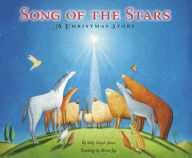
Song of the Stars. Sally Lloyd-Jones. Illustrated by Alison Jay. 2011. Zondervan. 32 pages. [Source: Bought]

First sentence: The world was about to change forever. And it almost went by unnoticed…

Premise/plot: Song of the Stars is a Christmas story, a nativity story. The first twenty pages creatively display God's creation 'praising' God and 'preparing' for the advent of the Creator. The theme of their praise being: "It's time! It's time! Be glad! Be glad!" The second half takes a more traditional approach perhaps. At last we get a glimpse of Bethlehem and Mary and Joseph.

My thoughts: I liked it. Some spreads I more than liked: I loved. The focus was almost exclusively on various animals--and not even animals in Bethlehem--or creation itself. The illustrations almost reveal an almost Noah's Ark type procession of animals coming to worship baby Jesus.

The writing is lyrical.
"The One who made us has come to live with us!" 
Lying on a bed of straw
wrapped in rags--
a tiny little baby.
Heaven's Son
sleeping under the stars
that he made.
Text: 4 out of 5
Illustrations: 4 out of 5
Total: 8 out of 10

© Becky Laney of Operation Actually Read Bible

Quotes from the Cloud #43

This year, I hope share weekly posts of quotes. These quotes are from authors I'm reading and enjoying from the Clouds of Witnesses Reading Challenge

Hark! The herald angels sing,
“Glory to the newborn King;
Peace on earth, and mercy mild,
God and sinners reconciled!”
Joyful, all ye nations rise,
Join the triumph of the skies;
With th’angelic host proclaim,
“Christ is born in Bethlehem!”

Refrain
Hark! the herald angels sing,
“Glory to the newborn King!”
Christ, by highest Heav’n adored;
Christ the everlasting Lord;
Late in time, behold Him come,
Offspring of a virgin’s womb.
Veiled in flesh the Godhead see;
Hail th’incarnate Deity,
Pleased with us in flesh to dwell,
Jesus our Emmanuel.
Refrain
Hail the heav’nly Prince of Peace!
Hail the Sun of Righteousness!
Light and life to all He brings,
Ris’n with healing in His wings.
Mild He lays His glory by,
Born that man no more may die.
Born to raise the sons of earth,
Born to give them second birth.
Refrain
Come, Desire of nations, come,
Fix in us Thy humble home;
Rise, the woman’s conqu’ring Seed,
Bruise in us the serpent’s head.
Now display Thy saving power,
Ruined nature now restore;
Now in mystic union join
Thine to ours, and ours to Thine.
Refrain
Adam’s likeness, Lord, efface,
Stamp Thine image in its place:
Second Adam from above,
Reinstate us in Thy love.
Let us Thee, though lost, regain,
Thee, the Life, the inner man:
O, to all Thyself impart,
Formed in each believing heart. ~ Charles Wesley


© Becky Laney of Operation Actually Read Bible

Wednesday, December 21, 2016

2017 Goals: Read 12 Bible Commentaries

In 2017, I am making it a goal to read twelve Bible commentaries.

I want to read three books in the "Exalting Jesus…" commentary series

1)
2)
3)

I want to read three books in the "Preaching the Word…" commentary series

1) Matthew: All Authority in Heaven and On Earth. Douglas Sean O'Donnell. 2013. Crossway. 1090 pages. [Source: Bought]
2)
3)

I want to read three books in the "Thru the Bible…" commentary series by J. Vernon McGee

1) Thru the Bible: 1 and 2 Samuel. J. Vernon McGee. 1976/1997. Thomas Nelson. 308 pages. [Source: Bought]
2) 1 and 2 Kings. J. Vernon McGee. 1976/1996. Thomas Nelson. 320 pages. [Source: Bought] 
3)

I want to read three books in the "Be…" series Warren Wiersbe

1)
2)
3)

-------- Other commentaries

  1. Unveiled Hope: Eternal Encouragement from the Book of Revelation. 1997. 244 pages. [Source: Borrowed]

© Becky Laney of Operation Actually Read Bible

Book Review: Beyond the 95 Theses

Beyond the 95 Theses. Stephen J. Nichols. 2016. P&R. 288 pages. [Source: Review copy]

Beyond the Ninety-Five Theses contains two previously published Stephen J. Nichols titles; both published in 2002. I had not read Martin Luther: A Guided Tour of His Life and Thought or Martin Luther's Ninety-Five Theses so this one was a very welcome addition for me!

The book has four parts. Part one focuses on the life of Martin Luther. Part two and three focus on Luther's theology and his legacy. In this section, Nichols walks readers through all of Luther's major works including the Three Treatises, Bondage of the Will, the Smaller Catechism, etc. Part four focuses on the 95 Theses. Nichols annotates these.

I definitely enjoyed reading this one. I am slowly but surely familiarizing myself with Luther and his work. (Earlier this month I finished The Three Treatises.) So I was definitely interested in the subject beforehand. I think this one serves as a good introduction overall.

From the preface:
This book offers a guided tour of Martin Luther’s life, writings, and thought. It is offered not in the hope that we merely enshrine Luther and his legacy but that in the hope that we too might find the same confidence in God, the Mighty Fortress; in God’s sure and certain Word; and in Christ and his finished work on the cross—alone. May we look back and be filled with gratitude for Luther’s life and legacy.
From the introduction:
This current lack of familiarity with Luther’s work is precisely the reason for this book. These ideas, however, are not mere relics of the past. To be sure, his thought inspired a whole generation in his own day. But, it also has the power to impact the church today and to ignite our own generation to a passionate quest for God and his truth.
From part one:
One thing on which scholars agree is that the world “Martin Luder” was born into on November 10, 1483, was quite different from the one he left on February 18, 1546. The decades of his life contained unprecedented change and upheaval, and Martin Luther was at the center of it all.
From part two:
Luther never wrote a systematic theology. His theology developed in the trenches, as it were, as he was thrust into conflicts and engaged in the controversies of his day.
“If you picture the Bible to be a mighty tree and every word a little branch, I have shaken every one of those branches because I wanted to know what it was and what it meant.” ~ Martin Luther
“There is nothing easier than sinning.” Martin Luther
From part three:
The Small Catechism is a masterpiece in being both comprehensive and concise. Timeless in its presentation, style, and content, the work ranks among classics of both devotional and theological literature. It consists of a brief exposition of the essential elements in understanding God, his Word, and his work in the world, as it contains brief teachings on the Ten Commandments, the Apostle’s Creed, the Lord’s Prayer, and the sacraments. Luther expanded the catechism in later editions to include instructions on prayer and what he referred to as “the table of duties.”
A definite pattern emerges from this catechism section that continues through the entire text. He cites the commandment, then asks simply, “What does this mean?” (“Was ist das?”). Admittedly, the repeating question lacks originality and variety. Whatever qualities may be lacking in the question, however, he supplies in the answer. Concerning the first commandment, “You shall have no other gods,” Luther asks his trademark question, “What does this mean?” and then follows by answering, “We should fear, love, and trust God above all things.” This tendency to pull a positive teaching from the negative command reverberates throughout his discussion of the Ten Commandments. In fact, he uses the first part of the answer to the question concerning the first commandment, “We should fear and love God,” to begin the rest of the answers. Luther is guarding those children (and us) from simply viewing the Ten Commandments as an external law code. He also keeps us from moralism by grounding the basis and motive for adhering to the Ten Commandments in nothing other than an expression of grateful obedience to God. According to Luther, one’s relationship to God grounds an obedient Christian life.
Consider his answer to the fifth commandment, “You shall not kill,” as representative of his treatment of the other commandments. Here Luther informs us that “we should love and fear God, and we should not endanger our neighbor’s life, nor cause him any harm, but help and befriend him in every necessity of life.”

© Becky Laney of Operation Actually Read Bible

Tuesday, December 20, 2016

My Year with Newton #17

Today I am continuing to share my reading experience with John Newton. I have completed John Newton's sermon series on Handel's Messiah. I am moving on to his LETTERS. 

Today I'm sharing snippets from "Desires Unrealized" which dates from 1772.
"You cannot do the things that you would." (Gal. 5:17) This is an humbling, but a just account of a Christian’s attainments in the present life, and is equally applicable to the strongest and to the weakest. The weakest need not say less, the strongest will hardly venture to say more.
It would be easy to make out a long list of particulars which a believer would do if he could, but in which, from first to last, he finds a mortifying inability.
1. He would willingly enjoy God in prayer. He knows that prayer is his duty; but, in his judgment, he considers it likewise as his greatest honor and privilege.
But, alas! how seldom can he do as he would. How often does he find this privilege a mere task, which he would be glad of a just excuse to omit! And the chief pleasure he derives from the performance is to think that his task is finished: he has been drawing near to God with his lips, while his heart was far from Him.
2. The like may be said of reading the Scriptures. He believes them to be the Word of God; he admires the wisdom and grace of the doctrines, the beauty of the precepts, the richness and suitableness of the promises; and therefore, with David, he accounts it preferable to thousands of gold and silver, and sweeter than honey or the honeycomb. Yet while he thus thinks of it, and desires that it may dwell in him richly, and be his meditation night and day, he cannot do as he would. It will require some resolution to persist in reading a portion of it every day; and even then his heart is often less engaged than when reading a pamphlet.
Here again his privilege frequently dwindles into a task. His appetite is vitiated, so that he has but little relish for the food of his soul.
3. He would willingly have abiding, admiring thoughts of the Person and love of the Lord Jesus Christ. Glad is he, indeed, of those occasions which recall the Savior to his mind; and with this view notwithstanding all discouragements, he perseveres in attempting to pray and read, and waits upon ordinances. Yet he cannot do as he would.
Ah! what trifles are capable of shutting out of our thoughts, of whom we say, He is the Beloved of our souls, who loved us, and gave Himself for us, and whom we have deliberately chosen as our chief good and portion.
4. He would willingly acquiesce in all the dispensations of Divine providence. He believes that all events are under the direction of infinite wisdom and goodness, and shall surely issue in the glory of God and the good of those who fear Him. He doubts not but the hairs of his head are all numbered—that the blessings of every kind which he possesses were bestowed upon him, and are preserved to him by the bounty and special favor of the Lord whom he serves; that afflictions spring not out of the ground, but are fruits and tokens of Divine love, no less than his comforts—that there is a needs-be, whenever for a season he is in heaviness.
Alas! How vain is man in his best estate! How much weakness and inconsistency, even in those whose hearts are right with the Lord! And what reason have we to confess that we are unworthy, unprofitable servants!
The more vile we are in our own eyes--the more precious will Jesus be to us. A deep repeated sense of the evil of our hearts is necessary to preclude all boasting, and to make us willing to give the whole glory of our salvation where it is due.

© Becky Laney of Operation Actually Read Bible
Monday, December 19, 2016

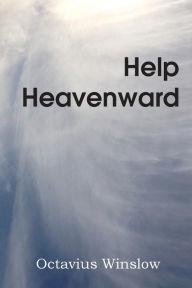
Book Review: Help Heavenward

Help Heavenward: Guidance and Strength for the Christian's Life Journey. Octavius Winslow. Foreword by Joel R. Beeke. Banner of Truth. 195 pages. [Source: Bought]

First sentence: The children of God are on their way to the Father's house.

I really loved reading Octavius Winslow's Help Heavenward. How best to describe it? It was about the sanctification of believers, on how believers are supposed to live on earth while awaiting future glory. It wasn't so much about the destination (what heaven will be like) as the journey. Each chapter is supposed to guide or encourage Christian pilgrims on that journey. It is a practical book--instructional--and devotional.

Quotes from chapter 1:
  • Grace is the germ of glory; glory is the highest perfection of grace. Grace is glory militant; glory is grace triumphant. Thus the believer has two heavens to enjoy, a present heaven experienced in the love of God in his heart, and a future heaven in the fulness of joy that is at Christ's right hand, and the pleasures that are for evermore. (2)
  • Do not fail, beloved reader, to trace up your gracious springs to their infinite fountain, God's everlasting love. To stop at Calvary is to trace the river but halfway to its source. (5)
  • The cross is the only stand-point, and Christ is the only mirror, where God can be rightly studied and seen. (6)
Quotes from chapter 2
  • Sanctification, or heavenly meetness, is an initial work in the great process by which God prepares the soul for glory. Justification, that instantaneous act of his free grace by which the soul is brought into a state of divine acceptance, is a present and a complete work. (15)
  • There is no vision of God either present or future, save through the medium of holiness. (16)
  • The moment a poor believing soul is brought to Jesus, he is brought to rest. (18)
  • The believer has to fight his way to heaven. (19)
  • We must resolve the circumstance of God's permissive will touching the indwelling of sin in the believer into the same view of his character. His wisdom appoints it; his will permits it; his love controls it. (25)
Quotes from chapter 3
  • Spiritual sensibility is a sign of spiritual life. (31)
  • Each one has his cross, each his load, each his pressure. Oh, how this truth ought to unite the people of God in holy affection, forbearance, and sympathy towards one another! (31)
  • The curse, though removed, has left its lingering shadow upon the soul, and this, to a saint of God, is no little burden. (33)
  • A mind diseased involves more real suffering and demands more divine grace than a body diseased. (35)
  • What numbers are there of the Lord's people whose spiritual hope is obscured by mental disease, and whose mental disease is, in its turn, produced by some physical irritant--so close is the relation and so sympathetic the emotions of the body and mind. What a mystery is our being! (35)
  • You will advance more in divine instruction in one day at the feet of Jesus than in a lifetime at the feet of Gamaliel. (41)
Quotes from chapter 4:
  • Deem not your Christianity as true, nor your religion as sound, nor your hope as valid, unless you have seen by faith's spiritual, far-discerning eye Jesus in his divinity, the King riding in majesty and beauty in this cloud-chariot of his essential dignity and glory. (52)
  • The gospel is the vehicle in which Christ makes his constant advent to our souls. (54)
  • Let your great study be the mystery of Christ's love to sinners--the mystery of Christ's love to you. (55)
  • It is our wisdom and our happiness to know that there is not an event or circumstance, a cloud or a sunbeam, in our personal history and experience that is not a vehicle of Christ. (61)
Quotes from chapter 5:
  • A great cloud of witnesses all testify to sorrow as the ordained path to heaven. (67)
  • We know more of the Lord Jesus through one sanctified affliction than by all the treatises the human pen ever wrote. (69)
  • Our sins must bring us to his blood, our condemnation must bring us to his righteousness, our corruptions must bring us to his grace, our wants must bring us to his fulness, our weakness must bring us to his strength, our sorrow must bring us to his sympathy, and his own loveliness and love must attract us to himself. (69)
Quotes from chapter 6:
  • How few look fully into God's face as their Father? How few pray in the spirit of adoption? How few rejoice in the sense of pardoned sin and possess the peace which flows from the justified state procured by the blood and righteousness of our Emmanuel? (83)
  • Oh, come and rest where God rests, in the Crucified One! If he is pleased to accept you in his Son, are you not satisfied so to be accepted? If the blood and righteousness of Emmanuel are enough for God, are they not enough also for you? (87)
  • It is in submitting to his yoke and in bearing his burden that true freedom is found. (90)
Quotes from chapter 7:
  • We look at the want, and not at him who supplies it; at the storm, and not at him who controls it; at the care, and not at him who assumes it. (99)
  • Is not the Care-taker greater than the care itself? Yet how we limit the Holy One and magnify and multiply our cares, anxieties, and sorrows! (99)
  • To him there is nothing little, nothing insignificant, nothing beneath his notice and regard. (103)
  • You must believe that God's power is able, and that his love is willing, and that his grace is sufficient to assume the transfer; that Christ, who has borne the heavier pressure of your curse, and your sins, and your very hell, is prepared to sustain, succour, and comfort you, removing your burden of care by absorbing it in himself. (107)
  • Remember that this casting of our care on God is a present and a constant duty. (111)
  • A present care will find a present Receiver, a present Helper, and a present relief. (111)
Quotes from chapter 8:
  • There is no statement clearer in God's Word than this, that to enjoy heaven we must become heavenly. (117)
  • Your love to Christ will never increase by feeding upon itself. You must light your torch of affection at the altar of Calvary. You must go there, and learn and believe what the love of Jesus is to you: the vastness of that love, the self-sacrifice of that love, how that love of Christ laboured and wept, bleed, suffered, and died for you. (119)
  • It is not for your worth that you are saved, but for Christ's worth. It is not on the ground of your personal merits that you are justified, but on the ground of Christ's merits alone. (121)
  • The blood of Christ pardons, the righteousness of Christ justifies you, and this is all that you require, or that God demands. (121)
  • Your sins, countless as the stars, are no barrier to your salvation if you but believe in Jesus. (122)
  • Ah, how little we deal with the heart of our Lord! We find finite depths of iniquity in our own, but we forget the infinite depths of grace that are in his. (134)
Quotes from chapter 9:
  • The heart is ever swerving from God. (142)
  • The past is gone, the future all to us unknown, it is with the present we have to deal. (145)
  • All that we can do is to make burdens, forge chains, carve crosses, inflict wounds--in a word, destroy our own selves. (146)
  • Seek to bring souls to Jesus. Let this be an object of life. Be especially tender, gentle, and kind to Christians who have fallen into sin and are thereby wounded, distressed, and despairing. Extend a helping hand to lead them back to Christ. Your deep abhorrence of the sin must not be allowed to lessen your compassion and sympathy for the sinning one. Jesus did not do so. (149)
Quotes from Chapter 10:
  • Weak as may be your faith, small your grace, limited your experience, you shall not perish, for it is not your hold upon Christ, but Christ's hold upon you, that insures your safe and certain passage over. (163)
Quotes from chapter 11:
  • The fatherhood of God is the first truth our Lord propounds in connection with this picture of heaven. (172)
  • In claiming God as his Father, he claimed him as ours too. (173)
  • We go to no uncertain home. It is the family mansion, eternally ordained and prepared for the dwelling of the saints. The everlasting love which chose us to salvation, the predestination which appointed us to be sons, provided the home we were eternally to occupy. (177)
  • How full and rich is the gospel of Christ! How divine the provision, how ample the supply, how free the invitation! The forgiveness of all and every sin, your reconciliation with the offended Majesty of heaven, peace so divine, so great in your soul that it 'passeth all understanding', life and immortality, the consummation and crown of its blessings! Oh, pray for and cherish a spiritual zest for this banquet! Bring to it your soul's cravings, your spirit's weariness, your heart's sadness, your sin-woundings, your worst and lowest frames; there is enough in the unfoldings of Jesus to satiate every weary soul and to replenish every sorrowful soul. (180)
  • Oh, come away from your doings and your failings, from your merit and demerit, from the things you have done and the things you have not done, from the keeping of religious days and fasts and festivals, from all the fond conceits of goodness, holiness, and righteousness in yourself, from all self-approval, self-justification, self-trusting, and as a sinner betake yourself to the righteousness of Christ, accept it as a free gift, put it on in faith; and from that moment you shall be found complete in Christ, and robed for the banquet of heaven. (182)
  • I do not think that in the archives of heaven, the sacred scroll of God's revealed truth will be missing. (189)


© Becky Laney of Operation Actually Read Bible

Sunday, December 18, 2016

Week in Review: December 11-17

NKJV

  • Hebrews
  • James
  • 1 Peter
  • 2 Peter
  • 1 John
  • 2 John
  • 3 John
  • Jude
  • Revelation

NLT

  • Joshua
  • Judges
  • 1 Chronicles
  • 2 Chronicles 1-21


© Becky Laney of Operation Actually Read Bible