Showing posts with label Zondervan. Show all posts

Friday, March 21, 2025

26. Adventure Bible: Read through the Bible: 8 Bible Stories for Early Readers


26. 8 Bible Stories for Early Readers (Adventure Bible) Illustrations by David Miles. 2025. Zondervan. 248 pages. [Source: Library] [3 stars]

First sentence: God spent six days creating his world. That first day, God made light. He said, "Let there be light," and there it was. He made sure the light was separate from the dark. He called the light "day" and the dark he called "night."

This collection of early reader Bible stories (from The Adventure Bible, I believe) is a level 2 'I Can Read' reader. It features eight--presumably previously published and available as individual titles--stories. 

The featured stories are: 
God's Great Creation
Noah's Voyage
Moses Leads the People
Joseph the Dreamer
Ruth and Naomi
Brave Queen Esther
Miracles of Jesus
Paul Meets Jesus

What I like: Bible story books are good. It's good to have big, thick collections to read aloud with children of varying ages. It is good to have individual stories. (I grew up on the ARCH Bible story books.) There's a need for board books and early readers as well. 

What I am meh about: The stories are extremely simplified. Presumably again 'for the audience' or because it is an early reader? But some times vital details that make the story make sense are left out. It almost feels like we're getting the George of the Jungle "they just get really big boo-boos" treatment. This may not annoy a young child. Probably wouldn't. For example, out of all the healing stories in the Bible, they chose the one with the woman who had bled for twelve years--and spent all she had on doctors. She sought Jesus out and touched him. They, of course, did not include any details of her story. Just a woman who touched Jesus and was healed. Is the story fine? Sure. It's fine. But there are other stories that could have been included perhaps that they wouldn't have felt the need to edit so much? Or did they include it just because she is a woman???? Who knows. 

The stories selected felt slightly odd to me. Just slightly. It was like they felt the need to push Esther and Ruth just because they were women. Was that their intent? Maybe. Maybe not. I do *love, love, love* the book of Ruth. Don't get me wrong. I LOVE Ruth. But if you are just going to share eight stories--six from the Old Testament and two from the New Testament, then I am not sure they picked the absolute best six. (They could have picked four from the Old Testament and four from the New Testament and included stories about the cross or the resurrection.) 

What I definitely did not like: I thought it was horrible oversight to put MOSES before Joseph. Such a thing just should not be. Will this bother anyone but me? Maybe. Surely I'm not alone in wanting the stories to actually come together as a big picture and make sense. But probably not. 


© Becky Laney of Operation Actually Read Bible

Monday, December 23, 2024

26. King James Version (Zondervan)

26. King James Version. Center Column Reference. (Compact) Zondervan from circa 1977. God. 1494 pages. [Source: Bought] 

First sentence: In the beginning God created the heaven and the earth.

Start date: October 20, 2024
End date: December 22, 2024

I thrifted this lovely compact Bible earlier this year. I love, love, love thrifting because you never know what you might find. 

What you should know? It is out of print. It doesn't even have an ISBN number so there's no way to clearly communicate which *exact* printing this is. The book introductions are copyrighted 1977. And it certainly has that 70s vibe to it. (In particular with the maps and map colors). This one reminds me of a Cambridge Cameo. It is compact in size, double column, red letter, center column references. This would have been a nice Bible for the times--it is edge-lined.  I'm assuming it is Smythe-sewn. (I would be surprised if it wasn't). 

The font size is on the smaller side (like a Cameo). The ink is not as dark as one would like. It is on the lighter side. This really is only problematic with the words of Christ being in red. It isn't a comfy-cozy color red. It is a faint (light) pink color. There is minimal ghosting either because the paper quality is great and/or the ink is lighter and not as black. I'm guessing a blend of both perhaps. I do think this was on the nicer side of Bibles when it was first published. 

The book introductions which were copyrighted 1977 are GREAT introductions. In fact, the compact/concise nature is just about perfect. What is shared is GOOD, SOLID and informative, but it isn't overdone. It isn't overwhelming. It's not burdensome but a help. I tend to get overwhelmed when book introductions are four to six pages long. And I also don't like it when book introductions are unnecessarily fluffy and trying to be something they don't need to be: a devotional. 

© Becky Laney of Operation Actually Read Bible

Friday, April 5, 2024

6. NASB, Thompson Chain-Reference


NASB 1995, Thompson Chain-Reference Bible, Red Letter, Comfort Print, 2023. Zondervan. 2144 pages. [Source: Bought]

First sentence: In the beginning God created the heavens and the earth. The earth was formless and void, and darkness was over the surface of the deep, and the Spirit of God was moving over the surface of the waters. Then God said, “Let there be light”; and there was light.

Start date: February 14, 2024
End date: April 5, 2024

Was this my first time reading the New American Standard (1995)? NO. It is one of my all time favorite, favorite, favorite, favorite translations. I love and adore this translation. 

Was this my first time reading the Thompson Chain Reference Bible? No. I've read it in the NASB 1977 and the King James Version. I do LOVE the Thompson Chain Reference. 

This is a double column, red letter reference bible. It utilizes the chain references [and the chain reference system] of Frank Charles Thompson. This is one of the older "legacy" "study" Bibles available. It is available in many different translations--KJV, NKJV, ESV, NASB 1977, NASB 1995, NIV 1984, probably NIV 2011. This is an UPDATED edition of the Thompson Chain Reference. The changes are mostly superficial yet beneficial. 

One of the upgrades of the update is a larger font size in the "regular" edition. The font size is 9.5 instead of 8.3. It is also comfort print which can definitely be easier on the eyes. There are also options to buy this in large print--the large print is 10.5 font size. 

This is a LARGE Bible. It is heavy. IT is over three pounds. (The large print edition is over four pounds.)


© Becky Laney of Operation Actually Read Bible

Thursday, April 4, 2024

5. NIV (2011) Value Thinline


NIV Value Thinline Large Print (2011 edition). 2017. Zondervan. 1110 pages. [Source: Bought]

ISBN: 0310448557
ISBN-13: 9780310448556

First sentence: In the beginning God created the heavens and the earth. Now the earth was formless and empty, darkness was over the surface of the deep, and the Spirit of God was hovering over the waters. And God said, “Let there be light,” and there was light.

This review is for the NIV Value Thinline Bible, Large Print Blue, Imitation Leather. 

This one has 11.5 font size, double columns, and is black letter. 

I have read the 2011 edition of the New International Version several times. I still--by far--prefer the 1984 edition of the New International Version. But spilled milk is spilled milk is spilled milk. It is not coming back in print and that's that. Perhaps I will one day become familiar enough with the "new" update that I will stop missing the old. Perhaps. I do find both editions of the New International Version readable and easily so. Nothing archaic or clunky about it. 

This time around I read using the Mini/Many Horner Bookmark system which is one of my adaptations of the Professor Horner Bible reading system. Essentially I read from five bookmarks each day. 

My first four bookmarks were:

The Torah (Genesis, Exodus, Leviticus, Numbers, Deuteronomy)
Nevi'im Former Prophets (Joshua, Judges, 1 and 2 Samuel, 1 and 2 Kings)
Nevi'im Latter Prophets (Isaiah, Jeremiah, Ezekiel, Hosea, Joel, Amos, Obadiah, Jonah, Micah, Nahum, Habakkuk, Zephaniah, Haggai, Zechariah, Malachi)
Ketuvim "The Writings" (Psalms, Proverbs, Job, Song of Songs, Ruth, Lamentations, Ecclesiastes, Esther, Daniel, Ezra, Nehemiah, 1 Chronicles, 2 Chronicles)

My fifth bookmark was the New Testament.

I do love the Bible. I may not love, love, love, love this exact translation of the Bible. But I do recognize that it is still very much the Word of God and to be treasured and appreciated. The best Bible is the one that you will actually read and take to heart. The best Bible is the one you will feast on and grow in. 

© Becky Laney of Operation Actually Read Bible

Thursday, October 26, 2023

14. NASB XL (Leathersoft)


NASB 1995 XL. God. Zondervan. 2021. 1664 pages. [Source: Bought] 

First sentence: In the beginning God created the heavens and the earth. The earth was formless and void, and darkness was over the surface of the deep, and the Spirit of God was moving over the surface of the waters. Then God said, “Let there be light”; and there was light.

I do love the New American Standard Bible. I love the 1977 and the 1995 most. Though there are others with that name. 1971 and 1973 are long out of print. 2020 is 'new'. I don't actively dislike the 2020. I don't, I'm not one of those extremists that must avoid it at all costs or a rant will be forthcoming. I am perfectly fine with the 2020. 

The format of this one IS unique. It's a square essentially. The columns are VERY wide as the pages themselves are very wide. This Bible takes up all of your lap. (For better or worse). The font size is generously large. It is purposefully bulky and awkward. 

I did enjoy this one MORE than the NRSV XL which I also reviewed this year. The paper was not extra wrinkly. You could look at the NRSV XL and the pages would start to wrinkle, fold, crumple. It was a MESS. 

I liked this one mostly. I love, love, love the translation. But it wasn't easy to read in lap. Maybe it wasn't meant to be. 

It is verse by verse. It is black letter. It is double column. The font size, as I mentioned, is large. It is comfort print. It has many things that are positive. I just didn't exactly love the square awkwardness. 

© Becky Laney of Operation Actually Read Bible

Thursday, May 28, 2020

43. Epic An Around the World Journey through Christian History

Epic. Tim Challies. 2020. Zondervan. 176 pages. [Source: Review copy]


First sentence: It began with a breakfast.

Epic: An Around the World Journey Through Christian History chronicles the Tim Challies' global travels as he seeks to tell the history of the Christian faith through objects. It is a journey that would see him travel in 24 countries, six continents, and eighty museums. Each object gets its own chapter. Chapters cover his travels, his experiences, his reasons for selection, and why he believes it contributes significantly to the epic story that is Christianity.

He writes, " My focus for this journey was on historical objects, not buildings or locations. I also wanted to avoid statues, markers, and memorials that had been constructed after the fact. I wanted to focus on original, historical artifacts. I also wanted to focus on objects that are available to the public, not locked away in archives and available only to scholars or researchers."

Other objects are included almost as asides that don't quite meet all the above perimeters.

I would recommend this one to those that love to travel, to do research, to study history. 

Tuesday, January 15, 2019

Book Review: Not God Enough

Not God Enough: Why Your Small God Leads to Big Problems. J.D. Greear. 2018. Zondervan. 237 pages. [Source: Review copy]

First sentence: For much of my life, I have struggled with my faith. I always wanted to believe, knew that I was supposed to believe, and hoped deep down inside that I really did believe...I’ve come to see that the problem—my lack of faith, my passionless heart, and my struggle to surrender—came from a fundamental deficiency in how I saw God.

In Not God Enough, J.D. Greear argues that if you're struggling with God--whether you're angry, disappointed, doubting--chances are that your God isn't BIG enough. Or, to rephrase that, YOUR God may be a God of your own making and not the God revealed by Scripture. It is of the utmost importance that the God you worship be the one true God.

Has Western culture made God small? Has Western culture made God domesticated? Sadly, I think the answer tends to be yes to both questions. J.D. Greear writes,
"We present God as the best way to a happy and prosperous life. We show how God is the best explanation for unanswered questions and the best means to the life we desire. Our worship services seem more like pep rallies accompanied by practical tips for living than encounters with the God who stands beyond time and whose presence is indescribably glorious. Ironically, our “diminished” God feels, for a while, easier to believe in. He acts in ways we can understand, explain, predict, and even control. He rarely offends us, so we are not embarrassed to talk about him with our friends. He helps us find our meaning and purpose. We think everyone should try him."
A small God can't be worshipped and adored. A small God can't be feared. The God of THE WORD is to be feared and worshiped. 

Of the book's purpose he writes, "In this book, I want to give you a vision, as best I can, of God as he really is. Not the domesticated, practical, fix-it-and-make-you-feel-good god of Western Christianity, but the real one." He continues, "In order to discover this awesome god, we are going to delve into the faith encounters of several biblical heroes, but there’s one in particular we will keep coming back to: Moses...he wanted Moses’s experience to be both a comfort to us when we doubt and an example of how to follow God in the midst of doubt."

I really liked this one. I love that Greear quotes some of my favorite authors. I love his honesty and his passion for the gospel. I didn't agree with every single sentence in this one. There were one or two sentences in this one that felt a tiny bit off--in terms of not being quite Reformed enough. But overall I'd recommend this one. 

Quotes:
  • Without a trembling awe before God’s majesty, we’ll never develop the ability to know him, much less love him.
  • Until we have a sense of his magnitude, we won’t even be able to ask the right questions of him, much less receive his answers.
  • True worship is intimacy grounded in awe.  Only then can worship move to intimacy, which grows out of embracing how close this infinite God has brought himself to us in the cross. Only the two together, in the right order, lead to biblical faith. Only the two together will yield the emotion that fulfills the Great Commandment and promote the passion that engages the Great Commission.
  • The real God is not a god who simply completes us and makes us feel sentimental during worship; he is a God who humbles us and transforms us from the inside out. When you really see him, you’ll either love him or hate him.
  • When we truly behold his glory, we won’t need to be compelled to trust or love God; we just will.
  • Ironically, many today seem turned off by the concept of an awesome, terrifyingly great God. We assume that any God you need to fear must be guilty of something, or that a terrified reaction to an infinitely great and wise God is a relic leftover from an oppressive, archaic view of religion. We prefer a God who is small and domesticated, who thinks like we think, likes what we like, and whom we can manage, predict, and control.
  • When you ask your questions of God, do you tremble? Do you approach him with a sense of how large, glorious, and wise he is?
  • When John saw Jesus in glory, John didn’t burst into a peppy chorus of “Friend of God.” He fell at Jesus’s feet as though he were dead. That’s not a figure of speech. He literally thought he was going to die.
  • Beholding God from the safety of the cross is like watching a tornado pass in front of you from the safety of a cave where it can no longer touch you. You may be safe, but you still stand trembling before the awesome power of the tornado, a power you know could sweep you away if you stepped out of that cave for even a second.
  • Worship, faith, passion, and obedience can flourish only in the soil of awestruck wonder. No fear, no faith.
  • We need to behold the living God, whose greatness is so great that it makes our minds explode when we try to comprehend him, and whose goodness is so good we can’t tell if we want to draw closer or run away. Our diminished view of God has severely hampered our witness to an unbelieving world.
  • If we confess our weakness, he will fill us with his strength. If we admit our foolishness, he will bestow his wisdom on us. If we allow ourselves to be undone in his presence, he will piece us back together in love. 
  • Can we imagine how offensive it must be to God when we attempt to reshape him according to our preferences? How would you like it if someone did that to you?
  • If our “God” never contradicts us, always likes what we like and hates what we hate, he’s not the real God. All we’ve done is deified our preferences and called the personification of those things “God.”
  • If we can’t escape the powers of sin, it’s not because our wills are too weak but because the presence of God feels so distant.
  • If you want to overcome sin, don’t focus on shrinking your temptations; focus on enlarging your view of God.
  • When you’re weighed down by insecurity and doubt, don’t drum up feelings of self-empowerment. Don’t look inward to find your spark. Don’t tell yourself that you’re unique, a snowflake, a skittle, an unmatched gift to the world. Look to the “I am” and lay your insecurities down at his feet.
  • It doesn’t matter what your insecurity is. The I am is all that you need.
  • In the Christian life, dependence, not self-sufficiency, is the objective. God wants people who are weak in themselves and strong in him.


© Becky Laney of Operation Actually Read Bible

Friday, December 8, 2017

Book Review: When Is It Right To Die

When Is It Right To Die? A Comforting and Surprising Look at Death and Dying. Joni Eareckson Tada. 1992/2018. Zondervan. 208 pages. [Source: Review copy]

From the preface: The last twenty-five years have brought a lot of change. When I first penned the words to When Is It Right to Die? much of what I discussed was theoretical. We had begun to see the first signs of the soul-chilling societal acceptance of physician-assisted suicide, but we had to travel abroad to find places where such acceptance of murder had become commonplace. Twenty-five years ago, my hope had been to provide a primer of sorts to readers whose only exposure to euthanasia was the occasional headline. But in the last twenty-five years, I’ve ached as I’ve seen more and more people stand behind the idea that a person has the “right to die.” And it gets worse. It is no longer a matter of merely “supporting” a person who has decided that his or her own life is not worth living. No, we are witnesses to more instances where the “right to die” has been given to a person with no say in the matter.

Joni Eareckson Tada's When Is It Right To Die is a must read in my opinion. Why? This book is literally a book about life and death, living and dying, right and wrong. It asks questions--tough questions--and provides some answers. But perhaps more importantly than providing all the answers, it shows readers how to go about finding the answers yourself--by digging deep into the word of God.  

The book is divided into three parts: "A Time to Live?", "A Time To Choose," and "A Time To Die."

One of the questions asked is: Do we have the right to die? Does a person have the right to choose how he/she dies? when he/she dies?
Is it right to die when a person sees no hope? Is it right to die when the pain becomes excessive, the medical costs prohibitive, the personal dignity shattered? Is it right to die when life becomes too burdensome? Where should the line be drawn? And who has the right to draw it? When is it right to say, “This much I can take, and no more!” Of this much I am certain: There is for each of us a time to die, and when that time comes, we should be prepared to go. But the problem remains: Exactly when is it time?  
Another question asked is: Does having a "low quality" of life mean that life is no longer worth living?
Some say a society that measures people in terms of quality of life will preserve those who have a potential to function . . . and will neglect those who don’t. Oddly enough, society will ascribe to physically fit and intellectually capable people a very high quality of life, despite the fact that they are sometimes the most miserable, and a very low quality of life to people who are poor and disabled, despite the fact they are sometimes the most content. “Quality of life” is generally used as a counterbalance to the term sanctity of life. 
The first part focuses mainly on current issues and culture. It is good. It is important. It is foundational. But the second and third parts are where the book enters greatness. The second part has some great spiritual gems. The third part is very practical.

Some of my favorite quotes from the second part:

  • "Your actions, your decisions, matter. What you do or don’t do has a ripple effect on everyone around you."
  • "Your gutsy choice to face suffering head-on forces others around you to sit up and take notice. It’s called strengthening the character of a helping society. When people observe perseverance, endurance, and courage, their moral fiber is reinforced. Conversely, your choice to bow out of life can and does weaken the moral resolve of that same society."
  • "No thinking person chooses suffering. But we can choose our attitude in the midst of suffering."
  • "It’s called resisting temptation. A provoking thought. A strong inclination. An inducement, an enticement to give in and give up. A crazy idea that settles in and begins to sound pleasing and plausible. Thoughts leading to death begin that way. I’ve had enough experience with temptation to know that such provocations aren’t furtive ideas that dart out of nowhere, disjointed and having no connection. There exists an intelligence behind those ideas. Such thoughts are part of a deadly scheme, the end of which is always death."
  • "Your Creator never intended for you to shoulder a load of suffering by yourself. That’s the whole purpose of spiritual community. God deliberately designed people to need each other. We must rub shoulders with people of hope and faith if our innermost needs are to be met."
  • "“Nothing Awaits Me after Death” This could be the biggest lie of all. And this is exactly why the devil enjoys helping you scheme your own murder. Does that sound harsh? You may call it selfdeliverance or aid-in-dying if you wish. It matters little to the devil; it’s all murder to him. Moreover, it matters little whether or not you believe in hell. The devil doesn’t care whether you label it “a white light at the end of a tunnel” or “nirvana” or “never-never land.” It’s all hell to him."
  • "Whether you are approaching the final throes of a terminal illness or you’re deep in depression, the devil delights in hearing us bad-mouth our bodies. Why? Because your body, even underneath wrinkles or fat, and in spite of the ravages of illness or old age, is made in the image of God."
  • "Your heart, mind, hands, and feet are stamped with the imprint of the Creator. Little wonder the devil wants you to do your body in!"
  • "Each day God gives us the precious gift of hours to invest in the lives of others—investments that will have eternal repercussions for us and them."
  • "We are always called to think of others, no matter how difficult our circumstances."
  • "Jesus chose not to sidestep suffering—not to take a shortcut—but instead to meet painhead-on. In short? The Bible teaches that any means to produce or hasten death in order to alleviate suffering is never justified. Or in the language of the Bible, it is never right to do evil."
  • "However, letting someone die is another matter entirely. Allowing a person to die when he or she is, in fact, dying is justified. The Bible is full of examples of people doing all they can to help a person live, but when it came time for a person to die, Scripture doesn’t do much more than record the death."
  • "You were made for one purpose: to make God real to those around you. Don’t think He has left you without any means whatsoever for fulfilling that end just because you are confined to bed or struggling with pain."
  • "In a mysterious way, each day you live; each hopeful thought you think, however fleeting; each smile you muster—all of it brings God incredible joy. That’s because your positive attitude and actions, however small and faint, are fingers pointing others to a God who is larger and finer and grander than they thought. That’s what it means to glorify Him as you lie in that bed, sit in that wheelchair, or persevere through that depression."
  • "God works in your life up until the final moment. It may appear that nothing is taking place in the life of a dying loved one, an individual in a coma, or someone with a severe disability, but God is not hindered from accomplishing His work in a life just because nothing seems to be happening. The work of God is spiritual activity, often separated a long way from one’s cerebral, neurological, or muscular activity. Only eternity will reveal the work that was accomplished."
  • "God points to the peaceful attitude of suffering people to teach others about Himself. Not only is He teaching those we rub shoulders with every day, but He is also instructing the countless millions of angels and demons. The hosts in heaven stand amazed when they watch God sustain hurting people with His peace. It matters to God not only that you live, but how you live."
  • “God doesn’t give strength to face next year’s headaches or even next month’s heartaches. He won’t even loan you enough strength to face tomorrow. He only gives you and me strength to face today. To live one day at a time.” 

 Favorite quotes from the third part:

  • "Dying begins when a person rapidly and irreversibly deteriorates. This is a person for whom death is imminent, a person who is beyond reasonable hope of recovery. Such people have a right to not have death postponed. The line of distinction is not so much between life and death as it is between life and dying."
  • "What is extraordinary care for some people is plain ordinary care for others. Every person is different, each circumstance unique."
  • "We would communicate a far more compassionate message to those who are terminally ill and dying—and to be honest, even to those for whom dying is a long way off—if we focused our energies on helping people die right. To die right. That’s what it’s all about. Unfortunately, euthanasia has become a popular topic because people are led to believe that death by suicide or homicide is more dignified than dying naturally."

The book cover-to-cover is compelling and relevant. I highly recommend it.

© Becky Laney of Operation Actually Read Bible

Thursday, December 22, 2016

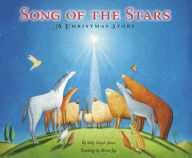
Book Review: Song of the Stars

Song of the Stars. Sally Lloyd-Jones. Illustrated by Alison Jay. 2011. Zondervan. 32 pages. [Source: Bought]

First sentence: The world was about to change forever. And it almost went by unnoticed…

Premise/plot: Song of the Stars is a Christmas story, a nativity story. The first twenty pages creatively display God's creation 'praising' God and 'preparing' for the advent of the Creator. The theme of their praise being: "It's time! It's time! Be glad! Be glad!" The second half takes a more traditional approach perhaps. At last we get a glimpse of Bethlehem and Mary and Joseph.

My thoughts: I liked it. Some spreads I more than liked: I loved. The focus was almost exclusively on various animals--and not even animals in Bethlehem--or creation itself. The illustrations almost reveal an almost Noah's Ark type procession of animals coming to worship baby Jesus.

The writing is lyrical.
"The One who made us has come to live with us!" 
Lying on a bed of straw
wrapped in rags--
a tiny little baby.
Heaven's Son
sleeping under the stars
that he made.
Text: 4 out of 5
Illustrations: 4 out of 5
Total: 8 out of 10

© Becky Laney of Operation Actually Read Bible

Sunday, September 25, 2016

First Impressions of the NIV Journal the Word Bible

I have had the NIV Journal the Word Bible for almost a full week now. (It is a review copy, by the way). I definitely like it. And there is potential for love to grow, I'd say.

It is a text-only Bible. There are no book introductions, no study notes, no cross references, no concordances, no maps, no reading plans. This isn't that kind of Bible. Do I miss the extras when they are not there? Not really. Sure, I wish for short one or two page book introductions now and then. (Some books I "need" a little extra help placing in context.) But for the most part, text-only suits me just fine. In fact, I read text-only Bibles more often than not. By choice. Sometimes less is more. Sometimes that stuff is just a distraction.

It is single column. Each page has wide margins--lined margins--creating a square of Bible text. It is an oddly comforting shape. One I didn't expect to be drawn to. But I am.

The font size of the text is on the small side, I won't lie. The good news? I seem to be in the minority in preferred font size. My eyes enjoy a good 9 to 10 point font. The rest of the world? Well, they seem to be moving more and more towards a 7 to 8 point font. (This year alone, I've specialized in ordering large-to-giant-to-super-giant editions of the Bible in my favorite translations. The largest font size I've got is 18 point.)

The weight of the book is great. Because it is on the light side, one can easily read it in bed or sitting in a chair. One can easily carry it back and forth. There's a delicate balance between weight and font-size that must be achieved if a Bible is to be 'for me.' Too heavy, and it's not practical. Font impossibly small, it's not practical. (That's why study Bibles are becoming increasingly impossible for me to use--no matter how much I wish it was otherwise.) Because it is light enough to hold as close as I need to see, I can still manage this one.

Laying flat. It is ESSENTIAL in my opinion for a Bible to actually lay flat. So many Bibles have impossible margins where you lose the last word or two of text on each line. The NIV Journal the Word Bible is excellent at laying flat.

Black letter. I really love that this edition of the NIV Bible is black letter. The words of Christ are not in red in this particular Bible. I much prefer black letter Bibles to red letter Bibles. I do like that readers have choices. It is possible to get black letter or red letter in most translations. (With a few exceptions. I've spent YEARS of my life searching for NASB bibles that were both black letter and in paragraph format.)

Paragraph format. Poetry is still poetry, of course. But the prose sections are in paragraph format instead of verse, verse, verse.

Thickness of the paper. It is not as perfectly thick as it would be in my dream Bible. That being said, the pages are slightly thicker than what is being used in most Bibles. I think with each passing year, Bible pages are getting thinner and thinner. And it's becoming more and more difficult to read one page at a time. There is some bleed-through on this one. Not horrible or awful. But some. (One Bible I received recently--I won't name names--you could see about five or six pages of Bible text bleeding through. It makes me think: do publishers not understand that the Bible is for reading, and reading comfortably?)

Conclusion: I do think this Bible was put together with care and with readers in mind. I have not tried journaling in it--at least not yet--because I'm not sure what pens or pencils would be safe to use. If you have recommendations, I'd love to hear them!

© Becky Laney of Operation Actually Read Bible

Monday, April 25, 2016

Book Review: Jesus Without Borders

Jesus Without Borders. Chad Gibbs. 2015. Zondervan. 240 pages. [Source: Library]

Jesus Without Borders is a travel narrative written from the perspective of a football-and-soccer loving Southerner (Alabaman) who grew up as an evangelical in the Bible Belt. It is light on the theology, heavy on superficial jesting. A lot of the humor, unfortunately for me, didn't work. I wouldn't say that I always rolled my eyes every time he tried to be funny or witty. But I never laughed either.

It was also very predictable. After the first chapter or two, readers know exactly what to expect: complaining about the plane ride there, complaining about transportation while there, complaining about traffic and road conditions, complaining about bad driving, mentioning the stereotypes he has grown up with about the country he's in, going to a church or bible study that he "discovered" online in his research, complaining about food, mentioning his lack of note-taking, mentioning sports, reporting his conversations with two to three people he met while there, drawing conclusions about a whole country based on the conversations he had with two to three people. Each chapter was supposed to include his insights about faith and God and what he learned--how he expanded his mind and his heart--by traveling. I would say these are light and it's not that they're completely absent from the text it's just that they're not very substantive and memorable.

The premise of the book was great. He is a writer who has had Christian books published. He loves to travel. He decides that it would be great fun to combine the two. To go on twelve to thirteen working vacations. His work would have him going to church in thirteen countries and talking to at least thirteen people about their faith and what it means to "be a Christian" in their various countries. The narrative style is casual, bordering on embarrassingly full of jokes that don't quite work. (I guess readers would have had to been there to 'get' the joke.) At least for me. His half-jesting style may prove quite delightful for other readers. (For example, Lenin's statue is reading The Hunger Games.)

With travel books, sometimes it's more who's doing the narrating...unless the travel writing is really good, really focused, really descriptive. Which his travel writing isn't.

© Becky Laney of Operation Actually Read Bible

Monday, April 4, 2016

Book Review: Know the Creeds and Councils

Know the Creeds and Councils. Justin S. Holcomb. 2014. Zondervan. 183 pages. [Source: Bought]

I would definitely recommend Justin Holcomb's Know the Creeds and Councils. This isn't the first book I've read on the subject of church history, though I wish it had been! The book I read was thick, scholarly, and in my opinion, poorly organized. This one, on the other hand, was reader-friendly, well-organized, and written primarily to be UNDERSTOOD. In the introduction, he defines the four key terms used throughout the book: creeds, confessions, catechisms, and councils. He shares his purpose for writing the book: "to provide an accessible overview of the main creeds, confessions, catechisms, and councils of Christian history. It is an introduction to some of the most important theological declarations in the Christian tradition." He shares his method: "For each creed, confession, catechism, or council, I present historical background, a short summary of the content, and thoughts on contemporary relevance. At the end of each chapter are discussion questions and recommended reading for further study." The chapters are arranged chronologically, of course.

The definitions he gives are straight forward. For example, this is how he defines the term catechism: "A catechism is a book or document giving a brief summary of the basic principles of Christianity in Q&A form. Catechisms represent the practical, “on-the-ground” application of the main teaching agreed upon at church councils and expressed through creeds and confessions."

Chapter 1: The Apostles' Creed ca. 140
Chapter 2: Council of Nicaea and the Nicene Creed 325
Chapter 3: Councils of Ephesus 431, 449, 475
Chapter 4: Council of Chalcedon 451
Chapter 5: Athanasian Creed Late 400s to Early 500s
Chapter 6: Councils of Constantinople 381, 553, 681
Chapter 7: Councils of Carthage and Orage 419 and 529
Chapter 8: Council of Trent 1545-63
Chapter 9: Heidelberg Catechism 1563
Chapter 10: Thirty-Nine Articles of Religion 1563
Chapter 11: Westminster Confession of Faith 1646
Chapter 12: Second Vatican Council 1962-65
Chapter 13: Modern Confessions: Lausanne Covenant (1974) and Chicago Statement on Biblical Inerrancy (1978)

What I appreciate is Holcomb's assessment of each. He is fair, kind, respectful, of course, and the goal is never to persuade readers to believe exactly what he believes. But he provides a solid grounding for understanding Christian doctrines. One feels that he is a true (tour) guide: he knows the path and can point out the sights along the way. He can tell you where to watch your step, where to be careful. And along the way, he can share interesting facts.

Let's play Did You Know!

Did you know...."the Apostles’ Creed has expressed the essentials of Christianity in a way that Christians of all stripes can rally around."

Did you know...."the Nicene Creed was the first creed to obtain universal authority in the church, and it improved the language of the Apostles’ Creed by including more specific statements about the divinity of Christ and the Holy Spirit."

Did you know that...."Without the truths that were expressed in the Definition of Chalcedon, it is difficult to see how our salvation was accomplished. If Christ were not fully human, or if he were not fully divine, he would not be able to serve as our mediator — as the God-man. He would be either just another man or God himself."

Did you know that...."According to Martin Luther, the Athanasian Creed was “the most important and glorious composition since the days of the apostles.”

Did you know that...."The Council of Trent aimed to remedy the problems within the Catholic Church that had contributed to the Reformers’ cries of protest. The reforms included correcting abuses of power by the clergy, clarifying the balance of authority between Scripture and church tradition, and issuing official statements on justification, the sacraments, and purgatory. All in all, the Council of Trent did not repair the fractures between the Catholics and Protestants, but it did succeed in clarifying the Catholic Church’s position on significant areas of doctrine and bringing moderate reform to the abuses of power against which the Reformers had revolted."

Did you know that..."Even 450 years after it was written, the Heidelberg Catechism remains an official statement of theology for most of the branches of the Reformed church worldwide today."

Did you know that...."the Thirty-nine Articles created a fertile ground for theological exploration while simultaneously identifying the potential pitfalls of heresy."

Did you know that..."The Westminster Confession of Faith (WCF) is a Reformed confession produced by that Westminster Assembly in London. Intended to set the doctrinal standards for the Church of England, it became a powerful force in the Church of Scotland and has influenced Presbyterian churches all over the world. Centuries later, numerous churches and denominations worldwide look to the Westminster Confession as their standard of doctrine, subordinate, of course, to Scripture"

While I would not want to be quizzed on what I remember from the book several weeks later, I do feel it was a helpful read overall.
© Becky Laney of Operation Actually Read Bible

Saturday, March 19, 2016

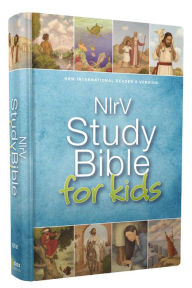
Bible Review: NIrV Study Bible for Kids

NIrV Study Bible for Kids. 2015. Zondervan/Zonderkidz. 1824 pages. [Source: Review copy]

Is it a study Bible? Is it for kids?

It is definitely for kids. The translation is the New International Reader's Version. The text is essentially as simple as it can get while being an actual translation of the Bible. (As opposed to say a paraphrase OR a children's bible story book.)

Here are a few verses so that you can see for yourself what the translation is like.
God so loved the world that he gave his one and only Son. Anyone who believes in him will not die but will have eternal life. John 3:16
The Lord is my shepherd. He gives me everything I need. He lets me lie down in fields of green grass. He leads me beside quiet waters. He gives me new strength. He guides me in the right paths for the honor of his name. Even though I walk through the darkest valley, I will not be afraid. You are with me. Your shepherd’s rod and staff comfort me. You prepare a feast for me right in front of my enemies. You pour oil on my head. My cup runs over. I am sure that your goodness and love will follow me all the days of my life. And I will live in the house of the Lord forever. Psalm 23:1-6
I believe it is perhaps designed to be a child's first Bible. There is a special two-page spread right after the presentation page that explains in very simple terms about the Bible. 

The Bible is…
  • called the Word of God because it is the book of God.
  • Inspired by God--he directed 40 people to write down his words.
  • organized into 66 books which were written over 1,000 years.
  • divided into headings, chapters, and verses within each book.
What is in the Bible?
The Bible tells us about…

  • Who God is and how he loves people.
  • Boys, girls, kings, queens, miracles, trials, friends, enemies, angels, demons, wars, victories, heaven, and hell.
  • Sin (turning away from God) and how sin hurts us and the world.
  • The way God wants us to live--with love for him and others.

The Bible can be divided into sections like books are organized in a library.

The Old Testament

  • Law
  • History
  • Poetry
  • Major Prophets
  • Minor Prophets

The New Testament

  • Gospels
  • Church History
  • Letters
  • Prophecy

A chart on the next page shows which books of the Bible go into each section. I could see this being very useful for a young child. You do have to start somewhere after all. You have to be taught these Bible basics. And this Bible's introductory matter does that in a bright and colorful way.

A few pages further on, readers find a "How to Use This Bible" spread. This tells readers--of all ages--what makes this edition of the NIrV so special, so unique. For example, it has book introductions; it has special features like "brain game," "check it out," and "soak it up." "Soak it up" are suggested memory verses. "Brain Game" are questions to ask yourself about the text. "Check it out" add a little background and context to understanding the text. (But mainly just illustrations and summaries of what's going on in the text.)

If that was it, if that was all there was to this study Bible, it would be a bit disappointing to me. I'm not sure I'd feel comfortable calling it a study Bible. But fortunately there is more.

Not all the features are to be found within the text of the Bible. "Life in New Testament Times" is a five page article to help children contextualize what they're reading. There are paragraphs about places of worship, the laws of God, the Sabbath Day, different religious groups, the Roman Empire, tax collectors, everyday life, houses, food, clothing, work, schools, etc. There is also a dictionary that is about eight pages long.

One of my favorite features is called "Reading the Bible." This shows young readers THREE ways to read the Bible. I'll show you option A down below. But option B focuses on top Bible stories. And Option C is choose your own. But the recommendation is still just a chapter a day.

Option A

  1. Get three bookmarks and put one at Genesis 1, one at Psalm 1, and one at Matthew 1.
  2. Each day, read one chapter starting at Genesis 1 or Matthew 1 and move your bookmark to where you finished. When you finish one book of the Bible, continue to the next one, or jump over to one of your other bookmarks and start reading there.
  3. Starting at Psalm 1, each day read one or two verses in Psalms and continue through Proverbs. When you read the end of Proverbs, start again at Psalm 1.

Readers can also learn about:

  • Worship
  • Prayer
  • Love
  • Attributes of God
  • Attributes of Jesus
  • Attributes of the Holy Spirit
  • The Ten Commandments
  • The Lord's Prayer
  • The ABC's of Becoming a Christian (Admit, Believe, Confess)
  • Quick definitions of key words like sin, repentance, grace, forgiveness, hell, and heaven

So there is some substance to this children's study Bible. The substance is more in clusters than spread throughout within chapters and verses. But it is there to be found if you look! There are also quite a few illustrations keeping it reader-friendly. It might be intimidating perhaps to go straight from a Bible story book to an actual Bible. And the illustrations are very nice, very colorful.

I do like that this is a KIDS Bible. It isn't a "Boy's" Bible or a "Girl's" Bible. While gender-specific Bibles can be attractive and appealing on the outside, I'm not sure it's truly necessary to have separate Bibles for boys and girls--or men and women for that matter. I've reviewed both in the past. And I believe I noted it before, but, the boy's Bible I found had more substantive notes in it than the girl's bible.

So is it a study Bible? For adults who own the MacArthur Study Bible or the ESV Study Bible might have to search a great deal until they find something "study-ish" about it, I think it is a study Bible. If you knew nothing, and this was your first "real" Bible, I think there would be plenty of information to get you started. Now I would say it's for a younger age group. By the time you're in fourth or fifth grade--depending on your reading level, or, reading ability--I think there would be better Bibles to help you get started studying God's Word.

© Becky Laney of Operation Actually Read Bible

Friday, February 26, 2016

Book Review: Proof

PROOF: Finding Freedom Through the Intoxicating Joy of Irresistable Grace. Daniel Montgomery and Timothy Paul Jones. 2014. Zondervan. 224 pages. [Source: Bought]
Performance — work and reward — is one of the basic structures of our lives. As a result, we grow up thinking, “I am what I am because of what I do . . . or because of what I’ve failed to do.” But what if we told you that it’s all a lie? What if we proved to you that, when you stake your identity on your performance, you’re delusional. Better yet, what if we told you a truth that can get you free from this lifelong delusion?
I loved, loved, loved, LOVED, LOVED this one. I first reviewed it in 2014. I decided to reread it again this year. I'm so glad I did.

What is it about? The gospel--the amazing, beautiful, glorious gospel.
The gospel is the good news that God’s kingdom power has entered human history through the life, death, and resurrection of Jesus Christ. When we repent and rely on his righteousness instead of our own, his kingdom power transforms us, and we become participants in the restoration of God’s world.
The three aspects of the gospel are the kingdom, the cross, and God’s grace. 1. The gospel of the kingdom is life with God under God’s rule. 2. The gospel of the cross is the life, death, and resurrection of Jesus by which God accomplishes our salvation, rescues us from his wrath, incorporates us into his people, and inaugurates his reign in the world. 3. The gospel of grace is the wonderful news that God accepts us, shares his life with us, and adopts us as heirs of his kingdom not because we have earned it or deserve it but because God chooses to give all of this freely at Christ’s expense.
It is about the doctrines of grace. Perhaps you're unfamiliar with the "doctrines of grace." Or perhaps you're too familiar with the doctrines of grace. This is a good book in both instances. Whether this is your very first book about the "doctrines of grace" or your fiftieth.

The authors write,
Whenever we talk about PROOF, we’re referring to an acronym that summarizes five key facets of God’s amazing grace. PROOF reminds us of five different ways in which we experience the grace of God at work in our lives
P -- planned grace
Before time began, God mapped out the plan of salvation from first to last. God planned to adopt particular people as his own children; Christ offered himself as a sacrifice for these people’s sins and as a substitute who satisfied God’s righteous requirements in their place (John 10:11-18; Ephesians 1:4-12). 
R -- resurrecting grace
Everyone is born spiritually dead. Left to ourselves, we will never choose God’s way. God enables people to respond freely to his grace by giving them spiritual life through the power of Christ’s resurrection (John 5:21; Ephesians 2:1-7). 
O -- outrageous grace
God chose people to be saved on the basis of his own sovereign will. He didn’t base his choice to give us grace on anything that we did or might do (John 15:16; Ephesians 2:8-9). 
O -- overcoming grace
God chose people to be saved on the basis of his own sovereign will. He didn’t base his choice to give us grace on anything that we did or might do (John 15:16; Ephesians 2:8-9). 
F -- forever grace
God seals his people with his Holy Spirit so that they are preserved and persevere in faith until the final restoration of God’s kingdom on the earth (John 10:27-29; Ephesians 1:13-14; 4:30).
To anyone who has questions about salvation, this is the book for you. What is salvation? How can I be saved? What is God's part in my salvation? What is my part in my salvation? Is salvation forever and ever? Can I lose my salvation? Is my salvation dependent on my sanctification, on my striving to follow God's rules and commands? What exactly is grace? Is grace too good to be true? What are the conditions of receiving God's grace? Am I really supposed to share the gospel? share the gospel with everyone?!

Some of my favorite quotes:
The empty wisdom of human religion proclaims, “What goes around comes around. God helps those who help themselves. You get what you pay for” — but these are lies that lead only to bondage and despair. The gospel of grace speaks an entirely different word, a word that’s filled with paradox and mystery. By God’s grace, we get what someone else paid for. By grace, God helps those who not only can’t help themselves, they don’t even want to. By grace, what goes around stops at the foot of the cross, never to come around again.
The message of planned grace begins with the truth that God is a loving Father who chose us personally and specifically before time began. It continues with the truth that God is a loving Bridegroom who has accomplished everything necessary to win the heart of his beloved bride. God didn’t plan for Christ’s work on the cross to extend a certain distance only to discover later that his creatures have somehow thwarted his good intentions. God’s grace always goes precisely as far as God planned.
When did God choose to love and save his people? God planned to love and save his people before the creation of the world. This is planned grace. God maps out our rescue from start to finish (Ephesians 1:4–5). The Son didn’t just make the world savable — he secured salvation for every individual who repents and believes. The value of his suffering was more than sufficient to atone for every person in the world, but God planned for his death to purchase particular people from every nation.
Spiritual zombies don’t choose the gift of God’s grace for the same reason that prison escapees don’t show up voluntarily at police stations. It isn’t because convicted felons are incapable of locating their local law-enforcement agency. It’s because the police represent everything the convict wants to avoid. Ever since our expulsion from Eden, every human being has been a convicted corpse on the run from God’s reign. Apart from God’s single-handed gift of resurrecting grace, no human being will ever seek God because a death-defeating King who demands that we find our greatest joy in his Father’s fame is repulsive to the spiritually dead (John 3:19 – 20; Romans 3:11).
The sovereign king of the cosmos isn’t waiting on a permission slip from humanity before he resurrects spiritual zombies — and he certainly isn’t pacing the portals of heaven, wringing his hands, hoping someone responds positively to his invitation to the celestial prom. God powerfully sends his church to proclaim the gospel in every nation. As the gospel is shared, God’s Spirit pierces the lives of particular people who are spiritually dead and exchanges their death for his life (Acts 2:37; 13:48; Colossians 2:13).
God’s choice to save you had nothing to do with anything that you have done or will do. You did nothing to gain God’s favor, and there’s nothing you can do to keep God’s favor. All that you can do — which is really no “doing” at all — is to receive what God in Christ has already done. It’s only when we realize that nothing we did or might do formed the basis of God’s choice to save us that we truly taste the intoxicating joy of God’s irresistible grace.
Outrageous grace isn’t a favor you can achieve by being good; it’s the gift you receive by being God’s. Outrageous grace is God’s goodness that comes looking for you when you have nothing but a middle finger flipped in the face of God to offer in return.
The God of the Scriptures is no debonair gentleman who waves to us from the opposite side of a chasm, hoping we will find it in our hearts to respond. In Jesus Christ, God himself crossed the chasm between himself and humanity (John 1:14; 12:27). He came as a righteous shepherd who sacrifices his life to snatch his sheep from the jaws of the beast (Ezekiel 34:10; Matthew 18:12 – 14; John 10:11 – 15). He entered space and time as a sovereign lord in humble disguise, seeking to transform a broken woman into his pure and perfect bride (Ezekiel 16:1 – 14; Hosea 3:1; Ephesians 5:25 – 27). He came as a medic on an emergency mission to breathe life into sin-infected souls (Mark 2:17). Now, through the power of his Spirit and the proclamation of his gospel, this same Jesus is shattering every resistance to his reign in the lives of those he has chosen. He is planting outposts of his kingdom where love and justice grow, and he is beginning the healing of his people’s sin-infected souls. Jesus Christ came to seek and to save his people who were lost, and he isn’t asking anyone’s permission to finish this mission (Matthew 1:21; Luke 19:10). That’s the power and the beauty of overcoming grace.
Christ’s commitment to his people does not depend on our capacity to remember, but on God’s capacity to sustain us and preserve us. It depends on a covenant that has been engraved in flesh and confirmed in blood.

© Becky Laney of Operation Actually Read Bible

Wednesday, December 2, 2015

Book Review: Faith Alone

Faith Alone: A Daily Devotional. Martin Luther. Edited by James C. Galvin. 2005. Zondervan. 400 pages. [Source: Bought]

Looking for a devotional for next year? Now is the time to start looking. One tip I have for anyone looking to buy a new devotional, is to take advantage of kindle samples and look inside features. For this particular book, you have a little over two weeks worth of devotional entries. More than enough to help you decide if it is likely to be right for you!

Faith Alone is the devotional I picked out for myself last year. Did I like it? Did I love it? YES! Very, very much!

About the book:
These selections, originally written by Martin Luther between 1513 and 1546, have all been freshly translated into English for this devotional. The goal was to make this edition both accurate and easy to understand. I selected the readings primarily from Luther’s sermons, commentaries, and other devotional writings. These selections cover topics both theological and practical. Some of the theological themes you’ll find include the centrality of Christ, justification by faith alone, the authority of Scripture, and the importance of putting faith in God above human reason. Practical themes include the struggle against sin and temptation, prayer, humility, the handling of wealth and possessions, the value of everyday work, the importance of marriage and family, and love for neighbor. You may read one selection a day according to the date or explore themes using the subject index located in the back of the book. The verse at the beginning of each reading is usually the one that Luther was writing about or preaching on. At times I’ve attached a different verse that better fits the theme of the devotional thought. 
I read Faith Alone like I read most devotional books. Instead of reading one entry per day, I often read multiple entries several times a month. If I read it twice a month, I'd read about fifteen entries each time. If three or four times a month, about seven to ten entries at a time. I don't say that this is the absolute best way to read a devotional. But it seems to be a practical solution for me personally.

I thought I would share *one* quote from each month of the year in this review.

January
I understand what Jesus is saying here [John 14:6] in the simplest manner, so that it all applies to this one person, Christ. Jesus is called “the way” because he is the beginning, “the truth” because he is the one who helps us continue, and also “the life” because he is the end. For he must be everything—the beginning, the middle, and the end of our salvation. That is why we place him as the foundation stone on which the other stones are set and on which the entire roof is built. He is the first, middle, and last rung on the ladder to heaven (Genesis 28:12). For through him we must begin, continue, and finally reach the life beyond. So there is only one Christ, but he assumes different roles in our salvation experience. In the beginning it’s hard to find the way. Then life becomes more difficult as we continue to walk along the way. It becomes extremely tough when we have traveled on the way for a long time and are about to reach our final shelter—heaven. So if you hold on to Christ in faith, then you have started in the right place. If you remain with him, then you will be walking on the right path. If you persevere until the end, then you will be saved. Christ wants to pry our hearts away from trusting anything else. There is no other way, highway, bridge, or path for us than Christ alone. ~ January 19
February
When I feel anxious about sin and hell, I remind myself that when I have Christ, I have all that is necessary. Neither death, sin, nor the devil can hurt me. If I believe in Christ, I have fulfilled the law; it cannot accuse me. I have conquered hell; it cannot hold me. Everything that Christ has is mine. Through him, we obtain all his possessions and eternal life. Even if I am weak in faith, I still have the same treasure and the same Christ that others have. There’s no difference: we are all made perfect through faith in him, not by what we do. ~ February 4
March
We must do what God wants and stop thinking and worrying about what God hasn’t told us to do. Nothing is safer for us or more pleasing to God than when we trust in God’s Word instead of our own ideas. In his Word, we will find enough guidance about what we are to do. God requires us to have faith, to love, and to endure suffering. These three should be enough to keep us delightfully busy. We should deal with everything else as it comes along and let God worry about how it all turns out. ~ March 12
April
In summary, we must crucify the sinful nature for as long as we live on the earth. This means we are aware of its desires, but we don’t obey these desires. With the armor of God and with the spiritual weapons of faith, hope, and the sword of the Spirit, we fight against the sinful nature. With these nails, we fasten it to the cross so it is forced against its will to be subject to the Spirit. When we die, we put off the sinful nature completely. When we are resurrected, we will have a pure nature with no sinful passions or cravings. ~ April 9
May
You shouldn’t dare to reinterpret the Word of God your own way. It’s better to think, “I don’t understand these words. But before I change them, take something away from them, or add to them, I would rather leave them alone. I’ll give them to God.” The Scriptures should always be handled with reverence and respect. ~ May 22
June
We pray in response to God’s command and promise. We offer our prayers to God in the name of Christ, and we know that what we ask for will be given to us. We experience God’s help in all kinds of needy situations. And if relief doesn’t come soon, we still know that our prayers are pleasing to God. We know that God has answered us because he gives us the strength to endure. ~ June 11
July
The devil knows what prayer can accomplish. That’s why he creates so many obstacles and makes it so inconvenient for us that we never get around to prayer. ~ July 16
August
All the stories in Holy Scripture, if they are interpreted correctly, point toward Christ. ~ August 12
September
I have learned from my own experience that praying is often the most difficult thing to do. I don’t hold myself up as a master of prayer. In fact, I admit that I have often said these words coldly: “God, have mercy on me.” I prayed that way because I was worried about my own unworthiness. Yet ultimately the Holy Spirit convinced me, “No matter how you feel, you must pray!” God wants us to pray, and he wants to hear our prayers—not because we are worthy, but because he is merciful. ~ September 2
October
But those who have any kind of love and desire for the Word should gratefully acknowledge that these attitudes are poured into them by the Holy Spirit. For we are not born with these attitudes and cannot acquire them through the law. This transformation rests completely and absolutely in the hand of the Almighty. So when we eagerly listen to preaching about Jesus Christ, the Son of God—who for our sakes became a human being and subjected himself to the law to save us—then God sends the Holy Spirit into our hearts through this preaching. Therefore, it’s very useful for us to remember that we have the Holy Spirit. ~ October 13
November
We should learn to remind ourselves of Christ’s victory. In Christ, we already have everything that we need. We live only to spread this message of victory to other people. With our words and example, we tell them about the victory that Christ secured for us and gave to us. Christ, our victor, accomplished everything. We don’t need to add anything to it. We don’t need to wipe away our own sins or try to conquer death and the devil. Everything has already been done for us. We’re not fighting the real battle. We’re only suffering now in order to share in Christ’s victory. Christ says, “I have already won. Accept my victory. Sing about it and glorify it. Take comfort in it.” We know from the past that when believers were severely tested, the Holy Spirit reminded them of Christ’s victory and strengthened them so that they could endure everything. They could even face martyrdom, relying on Christ’s victory. May God help us also to hold on to Christ’s victory during our troubles and when we’re dying. ~ November 14
December
So the gospel is a joyful message about Christ our Savior. Whoever preaches correctly preaches the gospel and nothing but joy. How can our hearts have a greater joy than knowing that Christ has been given to us to be our own? So the nature of the gospel is revealed, not just by teaching the story and life of Christ, but also by personalizing it and offering it to all who believe. What would it help me if Christ were born a thousand times, and the news of his birth was sung to me every day with wonderful music, if I didn’t understand that his death was for me and that I should make it my own? ~ December 23

© Becky Laney of Operation Actually Read Bible

Saturday, October 17, 2015

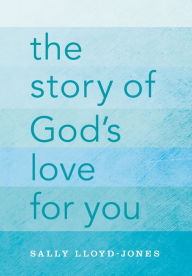
Book Review: The Story of God's Love For You

The Story of God's Love for You. Sally Lloyd-Jones. 2015. Zondervan. 208 pages. [Source: Review copy]

First sentence: God wrote, "I love you"--he wrote it in the sky, and on the earth, and under the sea. He wrote his message everywhere! Because God created everything in his world to reflect him like a mirror--to show us what he is like, to help us know him, to make our hearts sing. The way a kitten chases her tail. The way red poppies grow wild. The way a dolphin swims. And God put it into words, too, and wrote it in a book called "the Bible." 

The Story of God's Love for You is a great choice for any reader who wants to know what the Bible is all about, but, doesn't have the time or perhaps even the desire to sit down and read the Bible for themselves. Which is understandable. 208 pages versus 1700+ pages. It can seem overwhelming or intimidating or even impossible. (Emphasis on seem. I believe wholeheartedly that anyone can learn to read the Bible and can grow in that desire to read the Bible. Taste and see that the Lord is good; blessed is the one who takes refuge in him. Psalm 34:8.)

The Story of God's Love for You provides readers--of all ages--with an overview of the Bible. They can see "the big picture" of the Bible. Maybe for the first time, seeing how the Bible is ONE book, ONE story.
The Bible is most of all a Story. It's an adventure story about a young Hero who comes from a far country to win back his lost treasure. It's a love story about a brave Prince who leaves his palace, his throne--everything--to rescue the one he loves. It's like the most wonderful of fairy tales that has come true in real life! You see, the best thing about this Story is--it's true. There are lots of stories in the Bible, but all the stories are telling One Big Story. The Story of how God loves his children and comes to rescue them. It takes the whole Bible to tell this Story. And at the center of the Story, there is a baby. Every Story in the Bible whispers his name. He is like the missing piece in a puzzle--the piece that makes all the other pieces fit together, and suddenly you can see a beautiful picture. 
Lloyd-Jones makes a point to weave Jesus into each and every story within the book. You might, at least at first, be skeptical. How can Jesus be connected to every story in the Bible? How can every story really "whisper" his name? Isn't that forcing things a bit? But I hope you'll see differently soon enough. For this is how Christ taught us to read the Bible. (Luke 24:27; John 5:39-40; John 5:46)

Lloyd-Jones excels at storytelling: at crafting words together in a creative, descriptive way. She doesn't stay strictly with the facts as revealed in the Bible. She uses her imagination and crafts a story. I think this is a strength, for the most part, so long as readers are aware.

From "Operation No More Tears"
Dear Little Flock,
You're all wandering away from me, like sheep in an open field. You have always been running away from me. And now you're lost. You can't find your way back. But I can't stop loving you. I will come to find you. So I am sending you a Shepherd to look after you and love you. To carry you home to me. You've been stumbling around, like people in a dark room. But into the darkness, a bright Light will shine! It will chase away all the shadows, like sunshine. A little baby will be born. A Royal Son. His mommy will be a young girl who doesn't have a husband. His name will be Emmanuel, which means "God has come to live with us." He is one of King David's children's children. The Prince of Peace. Yes, Someone is going to come and rescue you! But he won't be who anyone expects. He will be a King! But he won't live in a palace. And he won't have lots of money. He will be poor. And he will be a Servant. But this King will heal the whole world. He will be a Hero! He will fight for his people and rescue them from their enemies. But he won't have big armies, and he won't fight with swords. He will make the blind see; he will make the lame leap like a deer! He will make everything the way it was always meant to be. But people will hate him, and they won't listen to him. He will be like a lamb -- he will suffer and die. It's the Secret Rescue Plan we made--from before the beginning of the world! It's the only way to get you back. But he won't stay dead--I will make him alive again. And, one day, when he comes back to rule forever, the mountains and trees will dance and sing for joy! The earth will shout out loud! His fame will fill the whole earth--as the waters cover the sea! Everything sad will come untrue. Even death is going to die! And he will wipe away every tear from every eye. Yes, the Rescuer will come. Look for him. Watch for him. Wait for him. He will come! I promise. Love God.
Does not that sum up the book of Isaiah?! I think she did a wonderful job!

So what do I think of The Story of God's Love For You? I really love Sally Lloyd Jones' work. I do. I loved it when it was originally published as The Jesus Storybook Bible, and I love it as The Story of God's Love For You. (The lack of illustrations is the difference between the two).

Resources for readers who want MORE after reading The Story of God's Love For You:

For upper elementary through middle schoolers, I'd recommend either the NIV Jesus Bible published by Zondervan OR the ESV Following Jesus Bible published by Crossway.

For middle schoolers through high schoolers, I'd recommend either the NIV Student Bible published by Zondervan OR the ESV Student Study Bible published by Crossway.

For high schoolers through adults (of all ages), I'd recommend the following:


© Becky Laney of Operation Actually Read Bible

Monday, August 3, 2015

Book Review: The Unbelievable Gospel

The Unbelievable Gospel: Say Something Worth Believing. Jonathan Dodson. 2015. Zondervan. 240 pages. [Source: Review copy]

I definitely found Jonathan K. Dodson's The Unbelievable Gospel to be a worthwhile read. Dodson writes of a culture and society that doesn't believe the gospel, a culture where the gospel is so strange and foreign that it is unbelievable.

He encourages readers to rethink how they evangelize. And he does so in a way that does not compromise the truth and the exclusivity of the faith. He is honest in his assessment that people struggle with how to communicate the gospel and face challenges that seem impossible.

He writes of culture and society, of pluralism, of the new tolerance, of the challenges Christians face living and evangelizing in such a culture. He writes of reasons why Christians are so hesitant to share the gospel with others: fear of being thought preachy or self-righteous, fear of rejection, fear of embarrassment and humiliation, fear that they'll do it wrong or mess it up. Dodson writes with clarity of what the gospel is, and, how the gospel is dimensional. (I believe four dimensions?) He speaks of justification, redemption, adoption, new creation (regeneration), and our union with Christ. One can highlight the gospel through the lens of justification, or the lens of redemption, or the lens of adoption, or the lens of new creation--all of which rely on our union with Christ. He reminds readers that you don't have to share the whole gospel each and every time you have a conversation with a nonbeliever. It's not important that you share everything you know all at once. Nor is it advisable that you steer the conversation so that you can share everything that you know. Dodson concludes by sharing examples with readers. These are accounts of his conversations and experiences with unbelievers. He urges readers above all to listen and observe, to pray for discernment in how to make the gospel "believable" to the person they're speaking with. There is not a one-size-fits-all gospel presentation that is right for every unbeliever they meet. Yet, at the same time, he is not asking readers to compromise any aspect of the gospel, to "hide" any aspect of the gospel, so that you can get someone to pray a quick prayer.

Table of Contents

  • Why People Find the Gospel Unbelievable

DEFEATERS: REASONS NOT TO SHARE THE GOSPEL

  • Impersonal Witness: Relationships, Work, and Faith
  • Preachy Witness: Self-Righteous Proselytizing
  • Intolerant Witness: Navigating Pluralism
  • Uninformed Witness: Thinking Securely

RE-EVANGELIZATION: RECOVERING THE GOSPEL

  • Clarity: Gaining a Fresh Vision of the Gospel
  • Diversity: Handling the Gospel in Its Different Forms
  • Fluency: Speaking the Gospel in Cultural Key

METAPHORS

  • Seeking Acceptance
  • Seeking Hope
  • Seeking Intimacy
  • Seeking Tolerance
  • Seeking Approval
  • Evangelism in Community
  • Conclusion: Spirit-Led Witness

Quotes:
Christians are often proficient at rehearsing the information of the gospel, but we often lack the ability to relate the gospel to the lives of others. For some reason we find it difficult to bridge the gospel into everyday life and everyday unbelief. If we are to overcome our obstacles to evangelism, we must be able to answer this question: "What does the death and resurrection of a first-century Jewish messiah have to do with twenty-first century people?"
The goal in evangelism isn't merely to get a gospel presentation out in one breath! The goal is to get to the heart, and that might not happen the first time you meet someone.
For many people today, hearing that Jesus died on the cross for their sins is entirely irrelevant. It is an abstract concept that doesn't connect with the heart. It's our job to show them how it does. When we speak to people's deepest desires, dreams, hopes, fears, or longings, we make the gospel believable. We get to show them more than a proposition; we get to show them the person of Jesus and the difference he makes. When we get in this deep with people, our evangelism will be far from impersonal.
It may be helpful to consider Francis Schaeffer's advice on this matter. When asked what he would do if he had an hour with a nonChristian, he replied by saying he would listen for fifty-five minutes. Then in those last five minutes, he would have something to say.
Good evangelists have to slow down long enough to understand what people hear and how they speak in order to communicate the gospel in intelligible ways. This involves listening to what people think in order to communicate meaningfully what God thinks. It involves listening to the questions people ask in order to ask them good questions, the questions God asks each of us.

© Becky Laney of Operation Actually Read Bible

Friday, May 29, 2015

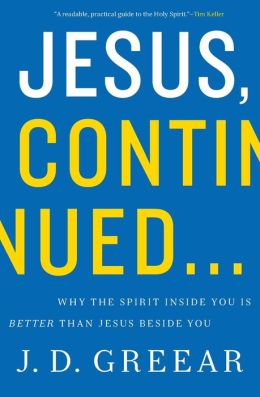
Book Review: Jesus Continued

Jesus, Continued: Why The Spirit Inside You Is Better Than Jesus Beside You. J.D. Greear. 2014. Zondervan. 240 pages. [Source: Bought]

Jesus, Continued is a great book on the Holy Spirit. The book is divided into three parts: "The Missing Spirit," "Experiencing the Holy Spirit," and "Seeking the Holy Spirit." Throughout the book, readers have an opportunity to grow in their understanding of who the Holy Spirit is and what he does. Perhaps by the end, they will conclude along with the author that indeed the Holy Spirit inside you really is better than Jesus beside you.

Do believers take the Holy Spirit for granted? Do believers have a tendency to dismiss this person of the trinity? Or even misunderstand him? Perhaps. But Greear's book brings his person and his work to the reader's attention. His book is wonderful and compelling. Fully engaged readers could benefit greatly from reading this one! I thought it was quite substantive and thought-provoking. Let the book challenge you! Take time to consider what he's saying and reflect on it.

I loved reading Jesus, Continued. I did. I loved the focus on the Holy Spirit. I loved the focus on the Word of God. Greear emphasizes throughout that the Spirit cannot be separated from the Word; that is the Spirit always, always uses the Word of God when he speaks to us. The Spirit would never--could never--contradict the Word of God. The Spirit would never--could never--do anything but bring glory to Jesus Christ.

My favorite section is probably the second one. Chapter titles include:

  • Experiencing the Holy Spirit in the Gospel
  • Experiencing the Holy Spirit in the Word of God
  • Experiencing the Holy Spirit in Our Giftings
  • Experiencing the Holy Spirit in the Church
  • Experiencing the Holy Spirit in Our Spirit
  • Experiencing the Holy Spirit in Our Circumstances
Favorite quotes:
Do you interact, personally, with God? Think about this question very carefully: Is Christianity more of a set of beliefs to which you adhere and a lifestyle to which you conform, or is it a dynamic relationship in which you walk with the Spirit and move in his power?
The fullness of the Spirit comes as we plumb the depths, heights, widths, and lengths of God’s love as revealed in the gospel. The more he comes into us, the more we know his love; and the more of his love we know, the more of his fullness grows within us (Eph. 3:17 – 19). The Spirit moves us in the Word. The Spirit moves us to go deeper into that Word.
Where the gospel is not cherished, the Spirit will not be experienced. And, on the flip side, where the Spirit is not sought, there will be no deep, experiential knowledge of the gospel. The two always go hand in hand. Jesus said, “The words I have spoken to you — they are full of the Spirit and life” (John 6:63, emphasis mine). Spirit and Word, inseparably united.
You won’t know the Spirit any more than you know the Word of God. So if you want to walk with the Spirit of God, get on your knees and open your Bible.
Trying to share the gospel without using words is like watching a newscast with the sound turned off. I may realize that the newscaster looks excited, but I don’t know why. And if he’s telling me about danger headed my direction, I’d like to know specifically what he is saying.
He makes the gospel come alive, allowing you to truly see it. Doctrines become multi-dimensional. God’s words in the Bible become his voice to you. This illustrates why the Holy Spirit is a better teacher than even Jesus and confirms why Jesus said having the Holy Spirit in us would be better than having Christ beside us. The Spirit teaches us from the inside out.
The only thing stronger than the captivity of sin over our souls is the power of the Holy Spirit released by faith in the cross of Jesus Christ. As we dwell on it, embrace it, and drive it deeper into our lives, the power of new life comes into us.
The more Scripture you know, the more illumination the Holy Spirit can give regarding his will for various situations. God has never brought to my mind a Scripture I did not already know. Memorizing Scripture is like stocking myself with ammunition for the Spirit to fire as I pray — promises I can claim or warnings I can heed. The Bible contains more than three thousand promises, and I want to know all of them, so the Holy Spirit can flood my mind with them whenever he wants! God did not give us the Bible simply to read through, you see, but to pray through as well.
God has more invested in your life than even you do. He purchased you with his blood, the universe’s most precious commodity, worth infinitely more than anything you or I have ever spent on ourselves. I love that thought. He’s saved me for his purposes, which are far more important than my own; at the cost of his blood, which is far more than anything I have invested in myself.
Dependence, not strength, is God’s objective for you. And if dependence is the objective, then weakness is an advantage.


Readers might also be interested in reading R.C. Sproul's The Mystery of the Holy Spirit, John MacArthur's Strange Fire, R.A. Torrey's The Holy Spirit: Who He Is and What He Does, Charles Spurgeon's Holy Spirit Power, and Joe Thorn's Experiencing the Trinity.

© Becky Laney of Operation Actually Read Bible