Sunday, October 20, 2013

Week in Review: October 13-19

This week I read:

NASB

  • Psalm 107-150
  • Proverbs
  • Ecclesiastes
  • Song of Solomon
  • Isaiah 
  • Jeremiah 1-31

ESV Gospel Transformation

  • Exodus 11-27
  • 1 Samuel 9-23
  • Job 1-31
  • Isaiah 14-34
  • Haggai
  • Zechariah
  • Malachi
  • Matthew 1-25
  • Romans 4-16
  • Titus
  • Philemon
  • Hebrews 1-3
  • James
  • 1 Peter
  • 2 Peter

KJV

  • Psalms 1-41
  • Matthew
  • Mark
  • Luke
  • John

NIV

  • John 11-21


© Becky Laney of Operation Actually Read Bible

Saturday, October 19, 2013

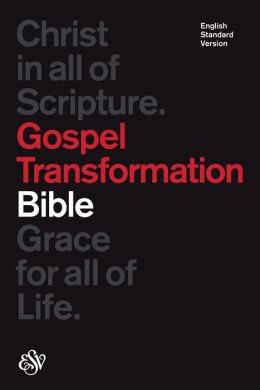
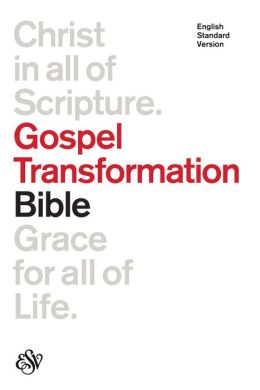
Bible Review: The Gospel Transformation Bible

Gospel Transformation Bible (ESV). 2013. Crossway. 1904 pages. [Source: Review Copy]

THE CHRISTIAN IS ALWAYS pleased and delighted when he can see Christ in the Scriptures. If he can but detect the footstep of his lord, and discover that the sacred writers are making some reference to him, however indistinct or dark he will rejoice there at: for all the Scriptures are nothing except as we find Christ in them. ~ Charles Spurgeon, "A Wise Desire"

How is the Gospel Transformation Bible different from other Bibles? Is it a necessary or beneficial publication? Who is the best match for the Gospel Transformation Bible?

I hope to answer these questions in this review of the Gospel Transformation Bible.

New Bibles are being published every year. Every translation, it seems, has something new to offer each year. Some of these are truly new, such as the case with the Gospel Transformation Bible, and others not quite as much. For example, bibles being released in personal size; bibles being released as e-books; bibles being released in different translations. (2013 sees the release of the NIV MacArthur Study Bible. It is now available in NKJV, NASB, ESV, and NIV). Some seem a bit superficial. (Text-only bibles with the focus on the cover image: puppies, kittens, cupcakes, oh my!)

Is the Gospel Transformation Bible different from other Bibles? Yes. Is it different from other study Bibles? Yes. Is it REALLY different from other study Bibles? Yes! Despite what you may think, not all study notes are the same, are created equal. The Gospel Transformation study notes are different from the notes you'll find in the MacArthur Study Bible, are different from the notes you'd find in the ESV Study Bible, are different from the notes you'd find in the ESV Student Study Bible. Every Bible has a purpose. Here is the purpose of the ESV Gospel Transformation Bible:
The goal of the Gospel Transformation Bible is twofold: 1) to enable readers to understand that the whole Bible is a unified message of the gospel of God's grace culminating in Christ Jesus 2) to help believers apply this good news to their everyday lives in a heart-transforming way. (vii)
The focus is on the gospel, on grace, on Jesus Christ. God gets all the glory with this one. It is all about helping readers connect-the-dots so that they see the big picture of the Bible. The focus of the study notes is not overly scholarly. It isn't Hebrew this, Greek that. It isn't about historical background or archaeology or geography. The focus is on what Christ has done and how that translates into your life--if you're a believer.

I love the book introductions; I love the study notes. Here are examples from both:

From the introduction to John
Setting out to find a gospel-focus in John's Gospel might seem like the "challenge" of finding a mountain in a photo montage of the Swiss Alps--an exercise in the obvious. Yet there is a great difference between holding a travel brochure in your hand and actually standing at the base of the Alps. It is the difference between pleasant thoughts and soul-gripping wonder; a curious imagination and awe-fueled adoration; being well studied, and being knee-buckling stunned. John's Gospel is written not just to inform our minds but to inflame our hearts. Think of John's Gospel not so much as a book but as a destination. John is a tour guide of the Alps of the gospel. 
From the commentary on John 5:18-47
Our adoption is secured by Jesus' propitiating (turning away, satisfying) God's wrath. According to Jesus, the only way we can derive life from the Scriptures is to see Jesus in the Scriptures, for all the Scriptures bear witness to him (John 5:30-47; cf. Luke 24:27, 44-47). The entire Bible, Genesis to Revelation, is ultimately about Jesus. Throughout Scripture God is unfolding the grace that culminates in Christ (John 5:39-40). The Bible is therefore not fundamentally about what we do for God but what God does for us.
From the commentary on Micah 6:8
This text is frequently quoted summary of godly living, and rightly so. This is the godly life, the beautiful life. To it we are called. Let us strive to embody Micah 6:8 in our lives. And let us do so in a way that gladly acknowledges that we will never "do justice" and "love kindness" and "walk humbly" with God as we should. Only Jesus lived this way perfectly. But the wonder of the gospel is that he did it in our place and transfers his record of perfect righteousness to all those joined to him by faith.

From the commentary on Ruth 1:6-13
But death of loved ones is ultimately the result of living in a fallen world; it comes to all. Far from being against her, the Lord is working through Naomi's grievous circumstances to bring into the world One who ultimately will redeem her and all his people from death forever. (Col. 2:13-15, 2 Tim. 1:10;Rev. 21:4)

Audience. Who is the best match for the ESV Gospel Transformation Bible?

New believers of all ages. It could easily be read if you're 11 or if you're 81. The notes are clear, relevant, and are not condescending. I thought the notes and introductions were quite accessible, very reader-friendly. Some "study" Bibles are way too intimidating to recommend to new believers. The goal should be to encourage them to read and grow, to fall in love with the gospel, to fall more and more in love with God. The goal should not be to overwhelm them with technical details that have little impact on their lives.

Old believers who are new to the Word. For better or worse, it is TRUE that most Christians do not read the Bible on a regular basis. It is true that most Christians are anorexic--spiritually starving. If you believe, as I do, that

Scripture reading is our spiritual meal time. Sound the gong and call in every faculty to the Lord's own table to feast upon the precious meat which is now to be partaken of; or, rather, ring the church-bell as for worship, for the studying of the Holy Scripture ought to be as solemn a deed as when we lift the psalm upon the Sabbath day in the courts of the Lord's house. If these things be so, you will see at once, dear friends, that, if you are to understand what you read, you will need to meditate upon it. ~ Charles Spurgeon, How to Read the Bible
We shall be the people that get the profit out of it if we make it to be our food, our medicine, our treasury, our armour, our rest, our delight. May the Holy Ghost lead us to do this and make the Word thus precious to our souls. ~ Charles Spurgeon, How To Read the Bible

Believers may have been saved ten, twenty, thirty years ago, but it is NEVER too late to start reading the Bible and growing in the faith.

Believers who LOVE the Bible, and KNOW the Bible, but, feel that the gospel cannot be outgrown. That the gospel is something we need to preach to ourselves daily.

In Note to Self, for example, we read:
Preaching to ourselves is the personal act of applying the law and the gospel to our own lives with the aim of experiencing the transforming grace of God leading to ongoing faith, repentance, and greater godliness. (Joe Thorn, Note to Self, 24)
and
To preach to yourself is to challenge yourself, push yourself, and point yourself to the truth. It is not so much uncovering new truth as much as it is reminding yourself of the truth you tend to forget. (Joe Thorn, Note To Self, 32)
And from Don't Call It A Comeback:
Once God rescues sinners, his plan isn't to steer them beyond the gospel but to move them more deeply into it. After all, the only antidote to sin is the gospel--and since Christians remain sinners even after they're converted, the gospel must be the medicine a Christian takes every day. Since we never leave off sinning, we can never leave the gospel. (Tullian Tchividjian, "Worship It's A Big Deal", 221)
And from Jesus + Nothing = Everything:
By daily preaching this gospel to ourselves, we can more readily see and confront all the idols in our lives--including those we may not be quite as aware of. We will be able to recognize that every temptation to sin is a temptation to not believe the gospel... when we succumb to temptation, we are failing to believe in that moment that everything we need, in Christ we already have. (Tullian Tchividjian, Jesus + Nothing = Everything, 96)


The Gospel Transformation Bible will not take the place of other study Bibles. The MacArthur study notes, for example, are outstanding in their depth, their quality. For those that want to dig, dig, dig into the Bible and study it, make a lifelong study of it, then substantive resources like the MacArthur Study Bible or the ESV Study Bible are well worth buying. The notes are expansive, informative, thorough. The notes in the Gospel Transformation Bible, on the other hand, are focused, are narrow. The notes don't tell you anything and everything you might need to know or want to know about a particular verse.

© Becky Laney of Operation Actually Read Bible

Charles Spurgeon On The Gospel Transformation Bible

Would Charles Spurgeon endorse Crossway's Gospel Transformation Bible? And if he did, what might he say about it? These quotes are taken from a handful of his sermons. I think Spurgeon's philosophy matches those of the creators of the Gospel Transformation Bible perfectly.
THE CHRISTIAN IS ALWAYS pleased and delighted when he can see Christ in the Scriptures. If he can but detect the footstep of his lord, and discover that the sacred writers are making some reference to him, however indistinct or dark he will rejoice there at: for all the Scriptures are nothing except as we find Christ in them. ~ Charles Spurgeon, "A Wise Desire"
Oh, how clearly the Word of God sets Christ before us! It is a sort of mirror in which he is revealed. ~ Charles Spurgeon, Revelation and Conversion
The living Christ is in the book; you behold His face almost in every page; and, consequently, it is a book that can talk. ~ Charles Spurgeon, The Talking Book
You will get at the soul of Scripture when you can keep Jesus with you while you are reading. ~ Charles Spurgeon, How to Read the Bible
No man can know Jesus Christ unless he is taught of God. There is no doctrine of the Bible which can be safely, thoroughly, and truly learned, except by the agency of the one authoritative teacher. ~ Charles Spurgeon, The Comforter
There is scarcely one chapter in which Christ is not, more or less clearly, set forth as the Savior of sinners. So the Word of God, you see, shows the man that he is in the wrong, takes him away from wrong ways of trying to get right, and then puts him in the way to get right, namely, by believing in Jesus. ~ Charles Spurgeon, Revelation and Conversion
The Book was written to be understood. It is a book which speaks to us about our lives (for the soul is the true life), and about the bliss eternal, and the way to win it. It must be so written as to be understood, since it were a mockery for God to give us a revelation which we could not comprehend. The Bible was meant to be understood, and it benefits us in proportion as we get at the meaning of it. The mere words of Scripture passing over the ear or before the eye, can do us little good. ~ Charles Spurgeon, Understandest Thou What Thou Readest?
You understand the Scripture if you make everything of the Lord Jesus Christ; if you believe on him with all your heart, and then yield yourselves up to him in his own way. ~ Charles Spurgeon, Understandest Thou What Thou Readest?
O for grace to study the Bible with Jesus as both our teacher and our lesson! ~ Charles Spurgeon, Evening, January 18
Now, from every text in the Bible there is a road to Jesus Christ, and the way to preach is just to say, 'How can I get from this text to Jesus Christ?' and then go preaching all the way along it." "Well, but," said the young man, "suppose I find a text that has not got a road to Jesus Christ." "I have preached for forty years," said the old man, "and I have never found such a Scripture, but if I ever do find one I will go over hedge and ditch but what I will get to him, for I will never finish without bringing in my Master." ~ Charles Spurgeon, How to Read the Bible
St. Austin says, “The Scriptures are the swaddling bands of the man-child—Christ Jesus, and were all intended to be hallowed garments in which to wrap him “So they are; and it is our pleasant duty to lift the veil, or remove the garment of Jesus and so behold him in his person, in his nature, or his offices. ~ Charles Spurgeon, "A Wise Desire" 
Remember, dear Friends, that Christ Himself is the Word of God, and also remember that the Scriptures are the word of the Word. They are "the word of Christ." I think that they will be all the sweeter to you if you realize that they speak to you of Christ, that He is the sum and substance of them, that they direct you to Christ, in fact, as John says of His Gospel, that they were "written that you might believe that Jesus is the Christ, the Son of God; and that believing you might have life through His name." Remember, also, that the Scriptures do, in effect, come to us from Christ. Every promise of this blessed Book is a promise of Christ, "for all the promises of God in Him are yes, and in Him, Amen, unto the glory of God by us." They all come to us through Christ, God speaks them to us through Him as the Mediator. Indeed, we may regard the whole of the Sacred Scriptures, from the beginning of Genesis to the end of Revelation, as being "the word of Christ." ~ Charles Spurgeon, Christ's Indwelling Word
God called us in Christ. He justified us in Christ. He sanctified us in Christ. He will perfect us in Christ. He will glorify us in Christ. We have everything in Christ, and we have nothing apart from Christ. Let us praise and bless the name of the Lord that this sacred channel of his grace is as glorious as the grace itself. There is as much grace in the gift of Christ to save us as there is in the salvation which Christ has wrought out for us. ~ Charles Spurgeon, "Blessing for Blessing"
Some think it matters not what a man believes. Excuse me: truth is alway precious, and the least atom of truth is worth searching out. ~ Charles Spurgeon, "The Peculiar Sleep of the Beloved"
If we do not know God, how can we delight in Him? What delight can there be in an unknown God? Brothers and Sisters, you are not half as happy as you might be because you do not study this Book, where, as in a glass, you may see the face of Jehovah your God! Oh, that you knew more of His dear Son, for he that has seen Him has seen the Father! Take God for your daily company. "Acquaint now yourself with Him." Great as He is, dare to be free with Him. Though you are but dust and ashes, yet, like Abraham, speak with Him as a man speaks with his friend, for as you know your God so shall you delight in Him and lift up your face unto Him. ~ Charles Spurgeon, "Delight in the Almighty"
Your neglected Bibles hide your God! When dust falls on the Scriptures, dust falls on the eyes of those who have neglected them—and then they cannot behold the Glory of the Lord God. The more of Scripture is understood, fed upon and received into the inward parts, the more will be your delight in God! You can have no pleasure in the Speaker if you despise the Word spoken—let it be to you as marrow and fatness. ~ Charles Spurgeon, "Delight in the Almighty"
How much I desire that each one of you may be a personal student of the Holy Scriptures! We need to know them for ourselves! Personally grasping them as a Revelation of God to himself, the godly man loves them, studies them, feels them, lives upon them and so knows them! ~ Charles Spurgeon, "The Sunday School and the Scriptures"
You must believe it, live upon it, drink it in—you must let it soak into your innermost being as the dew saturated the fleece of Gideon. It is not enough to have a Bible on the shelf—it is infinitely better to have its Truths stored up within your soul. It is a good thing to carry your Testament in your pocket—it is far better to carry its message in your heart. But mind that you let it get right into you! ~ Charles Spurgeon, Christ's Indwelling Word
We must not think that, in order to have conversions, it is necessary to leave out any part of the gospel. I am afraid that some people think: that, if you stand and shout, "Believe, believe, believe, believe, believe, believe, believe you will convert any number of people; but it is not so. You must tell your hearers what they have to believe; you must give them the Word of God, the doctrines of the gospel; for the people, who are said to be converted without being taught from the Scriptures, will very soon need to be "converted" again. ~ Charles Spurgeon, Revelation and Conversion
The Bible reader is always the Bible lover, and the Bible searcher is the man who searches it more and more. Various pursuits have a measure of fascination about them, but the study of God's Word is fascinating to the highest degree. ~ Charles Spurgeon, Christ's Indwelling Word
As heaven is desirable, as hell is terrible, as time is short, as eternity is infinite, as the soul is precious, as pain is to be shunned, as heaven is to be sought, as God is eternal, and as his words are sure, these are great things, things ye ought to listen to. ~ Charles Spurgeon, The Bible
Mercy pardons sin, grace bestows favour: in both the Lord abounds. ~ Charles Spurgeon, Treasury of David, Psalm 103
Love to God is obedience, love to God is holiness. To love God and to love man is to be conformed to the image of Christ; and this is salvation. ~ Charles Spurgeon, "All of Grace"
If we grow in grace, or if we backslide, in either case Scripture still talks with us. Whatever our position before the eternal God, the book seems to be written on purpose to meet that position. It talks to you as you are, not only as you should be, or as others have been, but with you, with you personally, about your present condition. ~ Charles Spurgeon, The Talking Book
Nobody ever outgrows Scripture; the book widens and deepens with our years. It is true, it cannot really grow, for it is perfect; but it does so to our apprehension. The deeper you dig into Scripture, the more you find that it is a great abyss of truth. The beginner learns four or five points of orthodoxy, and says, "I understand the gospel, I have grasped all the Bible." Wait a bit, and when his soul grows and knows more of Christ, he will confess, "Thy commandment is exceeding broad, I have only begun to understand it." ~ Charles Spurgeon, The Talking Book
Consider this, believer. You have no right to heaven in yourself: your right lies in Christ. If you are pardoned, it is through His blood; if you are justified, it is through His righteousness; if you are sanctified, it is because He is made of God unto you sanctification; if you shall be kept from falling, it will be because you are preserved in Christ Jesus; and if you are perfected at the last, it will be because you are complete in Him. Thus Jesus is magnified--for all is in Him and by Him; thus the inheritance is made certain to us--for it is obtained in Him; thus each blessing is the sweeter, and even heaven itself the brighter, because it is Jesus our Beloved "in whom" we have obtained all. Where is the man who shall estimate our divine portion? Weigh the riches of Christ in scales, and His treasure in balances, and then think to count the treasures which belong to the saints. Reach the bottom of Christ's sea of joy, and then hope to understand the bliss which God hath prepared for them that love Him. Overleap the boundaries of Christ's possessions, and then dream of a limit to the fair inheritance of the elect. "All things are yours, for ye are Christ's and Christ is God's." ~ Charles Spurgeon, Evening, January 30
Give earnest heed to every single word of what God has sent as his own epistle to your hearts. Value the Scriptures. Luther said that "he would not be in paradise, if he might, without the Word of the Lord; but with the Word he could live in hell itself." He said at another time that "he would not take all the world for one leaf of the Bible." The Scriptures are everything to the Christian—his meat and his drink. The saint can say, "O how I love thy law!" If we cannot say so, something is wrong with us. If we have lost our relish for Holy Scripture, we are out of condition, and need to pray for spiritual health. ~ Charles Spurgeon, The Blessing of Full Assurance

© Becky Laney of Operation Actually Read Bible

Friday, October 18, 2013

Book Review: A Wreath of Snow

A Wreath of Snow. Liz Curtis Higgs. 2012. Waterbrook. 224 pages. [Source: Library]

A Wreath of Snow is a Christmas novella set in Scotland in the 1890s. The novel opens on Christmas Eve. The heroine is a young woman named Margaret Campbell (Meg). Instead of rushing home to be with family, Meg is running away from hers. She had returned home for Christmas, but, family strife leads her to cut her visit short.  Gordon Shaw, our hero, has no family to spend Christmas with. He's on a business trip. These two happen to be on the same train when it meets an accident. The two return to the last town, the town they both happened to grow up in. (She did not recognize him; however, he recognized her.) Both characters have personal stresses.

A Wreath of Snow is about difficult choices and new beginnings. I definitely liked it for what it was--a simple, short romance set during the holidays. The character development for minor characters isn't as strong as in some of her longer novels in series.

© Becky Laney of Operation Actually Read Bible
Thursday, October 17, 2013

Book Review: When Comes The Spring

When Comes The Spring. Janette Oke. 1985. Bethany House. 252 pages. [Source: Library]

I really do love the first book in the series. And this second book is almost as good. It focuses on the married life of Elizabeth and Wynn, and their first year of marriage. The novel opens with Elizabeth planning her wedding. Oh, the plans she has; oh the plans her sister-in-law has! But Wynn's announcement changes things! He's received a post, in the north, he has to be there on August 1. Elizabeth's September wedding is off. But her quieter, calmer, just-family wedding is on...in just a few days! The book dwells on Elizabeth's life in the North. I liked the focus on Elizabeth having to find her own life within her husband's, of course. She will always be "his wife." But she can't spend each and every moment of the day in the two-room cabin sitting and worrying or working and cleaning. His work is unpredictable. He could be gone most of the day or most of the night. He might be gone for days at a time. He might be going into situations that are extremely dangerous. And she has to learn to be okay with that, okay with her husband's profession, okay with her loneliness too. She needs to embrace this community, this village, as her own. She needs to open her heart and her home to others, and, this means letting go of certain prejudices. This struggle to be content, to accept life just as God has willed it, is not easy. And this is something that only begins in this one. It is continued in When Breaks The Dawn, the third book in the series. These two books are so closely linked I almost wish they were just one big book!

Wednesday, October 16, 2013

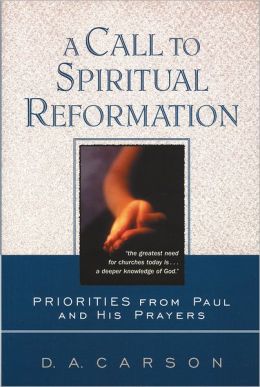
Book Review: A Call To Spiritual Reformation

A Call To Spiritual Reformation. Priorities from Paul and His Prayers. D.A. Carson. 1992. Baker. 232 pages. [Source: Bought]
A Call to Spiritual Reformation is a deep thought-provoking, practical-but-theological study of some of Paul's prayers. In its zeal, it reminded me of Tozer at his best. Carson is urging the church to wake up and PRAY. He's not alone in his appeal, by the way. There are men of every generation with the same urgent appeal to the church. (Charles Spurgeon and J.C. Ryle come to mind, for example). His introduction is excellent: convicting and encouraging at the same time. 

His goal: "to work through several of Paul’s prayers in such a way that we hear God speak to us today, and to find strength and direction to improve our praying, both for God’s glory and for our good."

Chapter titles:
Introduction: The Urgent Need of the Church
1. Lessons from the School of Prayer
2. The Framework of Prayer (2 Thessalonians 1:3-12)
3. Worthy Petitions (2 Thessalonians 1:1-12
4. Praying for Others
5. A Passion for People (1 Thessalonians 3:9-13)
6. The Content of a Challenging Prayer (Colossians 1:9-14)
7. Excuses for Not Praying
8. Overcoming the Hurdles (Philippians 1:9-11)
9. A Sovereign and Personal God
10. Praying to the Sovereign God (Ephesians 1:15-23)
11. Praying for Power (Ephesians 3:14-21)
12. Prayer for Ministry (Romans 15:14-33)
Afterword: A Prayer for Spiritual Reformation

I absolutely loved this one. It was substantive. It was deep. It challenges you to think and reflect. Perhaps, ultimately challenging you to act. It is a book that almost demands to be reread and studied, perhaps at a slower pace. It is quite practical. 

Quotes:
The one thing we most urgently need in Western Christendom is a deeper knowledge of God. We need to know God better. When it comes to knowing God, we are a culture of the spiritually stunted. So much of our religion is packaged to address our felt needs—and these are almost uniformly anchored in our pursuit of our own happiness and fulfillment.
One of the foundational steps in knowing God, and one of the basic demonstrations that we do know God, is prayer—spiritual, persistent, biblically minded prayer. Writing a century and a half ago, Robert Murray M’Cheyne declared, “What a man is alone on his knees before God, that he is, and no more.” But we have ignored this truism. We have learned to organize, build institutions, publish books, insert ourselves into the media, develop evangelistic strategies, and administer discipleship programs, but we have forgotten how to pray.
Much praying is not done because we do not plan to pray. We do not drift into spiritual life; we do not drift into disciplined prayer. We will not grow in prayer unless we plan to pray. That means we must self-consciously set aside time to do nothing but pray.
If we are grateful for the most important things, and determined to live with our eternal destiny uppermost in mind, what kinds of things will we pray for? From eternity’s perspective, what should be the primary things for which we should pray for our children, for ourselves, for our fellow believers?
We need to know who we are, as God sees us. Paul wants us to appreciate the value that God places on us, not because we are intrinsically worthy but because we have been identified with Christ. We have been chosen in Christ; his righteousness has been reckoned ours; our destiny is to be joint-heirs with him. If we maintain this vision before our eyes of who we are—nothing less than God’s inheritance!—we will be concerned to live in line with this unimaginably high calling. This does not mean that we focus on ourselves, as if we were to strut around and commend ourselves for being part of God’s inheritance. Rather, Paul wants us to grasp “the riches of the glory” of God’s inheritance, that is, the ineffably great privileges that belong to God’s inheritance, simply because we are God’s inheritance. Can there be any greater and higher incentive to live in the light of the glory of God and of heaven?

© Becky Laney of Operation Actually Read Bible
Tuesday, October 15, 2013

My Year with Spurgeon: Week 41

THERE ARE SOME passages of sacred writ [Isaiah 43:25] which have been more abundantly blessed to the conversion of souls than others. They may be called salvation texts. We may not be able to discover how it is, or why it is, but certainly it is the fact, that some chosen verses have been more used of God to bring men to the cross of Christ than any others in his Word. Certainly they are not more inspired, but I suppose they are more noticeable from their position, from their peculiar phraseology more adapted to catch the eye of the reader, and more suitable to a prevailing spiritual condition. ~ Charles Spurgeon, "Forgiveness"
If you will turn to your Bibles, you will find who are the persons here spoken of. Look for example at the 22nd verse of the chapter from which our text is taken, and you will see, first, that they were prayerless people...And are there not some prayerless ones sitting or standing here this morning? Prayerless souls are Christless souls; for you can have no real fellowship with Christ, no communion with the Father, unless you approach his mercy-seat, and be often there; and yet if you are condemning yourselves, and lamenting that this has been your condition, you need not despair, for this mercy is for you: “Thou hast not called upon me, O Jacob;” yet, “I, even I, am he that blotteth out thy transgressions for mine own sake.” ~ Charles Spurgeon, "Forgiveness"
Next, these persons were despisers of religion, for observe the language of the same verse:—“Thou hast been weary of me, O Israel.” And may I not say to some here—thou despisest religion, thou hatest God; thou art weary of him, and lovest not his services. As for the Sabbath-day, do not too many of you find it the most tiresome day in the week, and do you not, in fact, look over your ledger on the Sabbath afternoon? If you were compelled to attend a place of worship twice on the Sabbath-day, would you not think it the greatest and most terrible hardship that could be inflicted upon you? You have to find some worldly amusement to make the hours of the Sabbath-day pass away with any comfort at all. So far from wishing that “congregations might ne’er break up.” and the Sabbath last for eternity, is it not to some of you the most tedious day of the week? You feel it to be a weariness, and are glad when it is gone. ~ Charles Spurgeon, "Forgiveness"
It is well said, the chief end of man is to glorify God. For that purpose God made the sun, moon, and stars, and all his works, that they might honor him. And yet how many are there, even, perhaps among my hearers this morning, who have never honored God in their lives. ~ Charles Spurgeon, "Forgiveness"
These, then, are the characters who receive mercy. Some of you may say, “You seem to think us a bad lot”—and so I do. Others exclaim, “How can you talk to us in this way? We are a honest, moral, and upright people.” If so, then I have no gospel to preach to you. You may go elsewhere if you will, for you may get moral sermons in scores of chapels if you want them; but I am come in my Master’s name to preach to sinners, and so I will not say a word to you Pharisees except this—By so much as you think yourself righteous and holy, by so much shall ye be cast out of God’s presence at last. ~ Charles Spurgeon, "Forgiveness"
We have found out the persons to whom God will give mercy; now what is mercy’s deed? It is a deed of forgiveness, and in speaking of it, I shall speak first of its being a divine forgiveness—“I, even I, am he.” Divine pardon is the only forgiveness possible; for no one can remit sin but God only, and it matters not whether a Roman Catholic Priest, or any other priest shall say in the name of God, “I absolve thee from thy transgressions,” it is abominable blasphemy. If a man has offended me I can forgive him, but if he has offended God I cannot forgive him. The only discharge possible is pardon by God; but then it is the only pardon necessary. It is only God that can forgive satisfactorily; because no human pardon can ease the troubled conscience. ~ Charles Spurgeon, "Forgiveness"
It is said that Alexander, whenever he attacked a city, put a light before the gate of it; and if the inhabitants surrendered before the light was burnt out, he spared them; but if the light went out first, he put them all to death. But our Master is more merciful than this; for if he had manifested grace only while a small light would burn, where should we have been? There be some here seventy or eighty years of age, and God has mercy on you still; but there is a light you know which when once quenched, extinguishes all hope of pardon—the light of life. ~ Charles Spurgeon, "Forgiveness"
It is no more possible for a pardoned man to be lost than for Christ to be lost, because Christ is the sinner’s surety. ~ Charles Spurgeon, "Forgiveness"
If you have been the chief of sinners, you may have the chief of sinner’s forgiveness, and God can bestow it now. ~ Charles Spurgeon, "Forgiveness"

© Becky Laney of Operation Actually Read Bible