Friday, May 16, 2025
43. 1-3 John: Fellowship in God's Family
Monday, December 4, 2023
85. The Book of Common Prayer: A Biography
Saturday, February 25, 2023
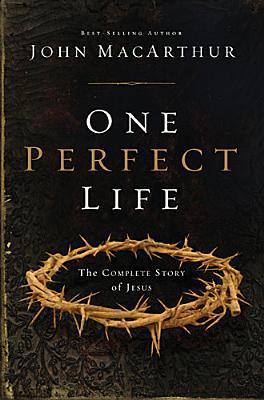
22. One Perfect Life
One Perfect Life: The Complete Story of the Lord Jesus. John F. MacArthur Jr. 2013. 528 pages. [Source: Bought]
- Part 1: "Anticipating the Lord Jesus Christ"
- Part 2: "The Beginning of the Gospel of Jesus Christ"
- Part 3: "The Beginning of Jesus' Ministry"
- Part 4: "From Passover AD 27 to Passover AD 28"
- Part 5: "From Passover AD 28 to Passover AD 29"
- Part 6: "From Passover AD to Passover AD 30"
- Part 7: "The Final Journey to Jerusalem for Passover AD 30"
- Part 8: "The Passion Week of the Messiah AD 30"
- Part 9: "The Upper Room on the Night Before His Death"
- Part 10: "The Crucifixion, Resurrection, and Ascension"
- Part 11: "New Testament Reflections on the Gospel of Jesus Christ"
The first and last parts are quite interesting to me as they attempt to create one narrative from many sources of Scripture. For example, in the first reading, "Jesus Christ--the Preexistent Creator and Savior," the narrative is pieced together from these verses: Genesis 1:1, John 1:1-5a, 1 Corinthians 8:6, Ephesians 1:3-5, Colossians 1:15-18, Colossians 2:9, 2 Timothy 1:9, Titus 1:2, Hebrews 1:1b-3a. It reads--in part--like this,
In the beginning God created the heavens and the earth. In the beginning was the Word, and the Word was with God, and the Word was God. He was in the beginning with God. All things were made through Him, and without Him nothing was made that was made. There is one God, the Father, of whom are all things, and we for Him; and one Lord Jesus Christ, through whom are all things, and through whom we live, whom He has appointed heir of all things, through whom also He made the worlds; who being the brightness of His glory and the express image of His person, and upholding all things by the word of His power, is the image of the invisible God, the firstborn over all creation... (17)From the eleventh section, we have a reading entitled "Salvation is by Grace Alone Through Faith Alone in Christ Alone." Its narrative is drawn from these texts: Acts 4:12, Acts 15:11a, Romans 3:23-26, Romans 4:2-5, Romans 4:24-25, Romans 5:1-2, Romans 8:1, Romans 8:29-39, Romans 11:6, Galatians 2:16, Galatians 3:11-14, Ephesians 1:13-14, Ephesians 2:8-9, Philippians 3:8-10a, 1 Timothy 2:5-6a, 2 Timothy 1:8b-11, Titus 3:4-7, Hebrews 7:25, and 1 John 2:1b-2. Here is how it reads--in part:
Therefore He is also able to save to the uttermost those who come to God through Him, since He always lives to make intercession for them. And if anyone sins, we have an Advocate with the Father, Jesus Christ the righteous. And He Himself is the propitiation for our sins, and not for ours only but also for the whole world. For there is one God and one Mediator between God and men, the man Christ Jesus, who gave Himself a ransom for all. Nor is there salvation in any other, for there is no other name under heaven given among men by which we must be saved. (509-510)The focus of the entire book is, of course, on Jesus Christ as Savior and Lord, and on the gospel. The book not only reveals who Christ is, it reveals who we are--with or without Christ. The very last reading is a great invitation to come to Christ and be saved.
One Perfect Life is a powerful, compelling read. I was reminded of the hymn, "I Love To Tell The Story."
Here is a very appropriate Dorothy Sayers' quote that I'd like to share (again):
Let us, in Heaven's name, drag out the Divine Drama from under the dreadful accumulation of slipshod thinking and trashy sentiment heaped upon it, and set it on an open stage to startle the world into some sort of vigorous reaction. If the pious are the first to be shocked, so much the worse for the pious--others will pass into the Kingdom of Heaven before them. If all men are offended because of Christ, let them be offended; but where is the sense of their being offended at something that is not Christ and is nothing like Him? We do Him singularly little honour by watering down His Personality till it could not offend a fly. Surely it is not the business of the Church to adapt Christ to men, but to adapt men to Christ. It is the dogma that is the drama--not beautiful phrases, nor comforting sentiments, nor vague aspirations to loving-kindness and moral uplift, nor the promise of something nice after death--but the terrifying assertion that the same God who made the world lived in the world and passed through the grave and gate of death. Show that to the heathen, and they may not believe it; but at least they may realize that here is something that one might be glad to believe.I would definitely recommend this one.
Tuesday, September 6, 2022
33. Galatians: Gospel Rooted Living
Galatians: Gospel-Rooted Living. Todd Wilson (Preaching the Word series). 2013. 288 pages. [Source: Bought]
From Genesis to Revelation the Word of God is a treasure trove of grace. Golden coins of comfort, costly pearls of assurance, precious jewels of promise are all found in the pages of Scripture. In fact, everything that was written in the Bible was written for us, that “through the encouragement of the Scriptures we might have hope” (Romans 15:4). Therefore, every time we make a mess of things, we must go back to grace by going back to the Word of God.
Deliverance from sin and from “the present evil age” comes only one way; indeed, grace itself comes only one way: through the death of the Lord Jesus Christ. “Grace to you and peace from God our Father and the Lord Jesus Christ, who gave himself for our sins to deliver us from the present evil age” (vv. 3, 4). Thus Paul drives the Galatians back to this fundamental fact: Christ gave himself for our sins. For the death of Christ alone explains the presence of grace in our lives; and the death of Christ alone opens the wellspring of salvation: justification, sanctification, glorification.
“Amen” is something we say with our heart. When we say, “Amen,” we’re more than observers; we’ve moved from being spectators to being participants. “Amen” is our way of entering into this divine drama, taking up our part, assuming our role in the story of grace called the death and resurrection of Jesus Christ. Until we do that, we’re simply sitting in the audience, out of the action, away from the benefits of grace. “Amen” is, then, the only entry point into the world of grace. There’s no other way in. We can’t find grace in any other way because grace is only given to those who have faith; and the voice of faith is expressed in the word “Amen.”
I challenge us all to make the following not only a New Year’s resolution but a perpetual resolution that we are determined to keep: Every time I blow it, I’ll go back to grace. I won’t ignore it, play dumb, hide, or try to pass the buck to my spouse or my boss or my mom or my dad or my neighbor or my genes or my personality or my upbringing or my financial situation! Instead I’ll look my misstep in the face and then go back to grace—to the cross, that place where Jesus Christ has already taken the blame and condemnation and guilt upon himself.
Death isn’t the goal of the cross. Life is. God’s designs go beyond crucifixion: they move inexorably toward resurrection, new life, and new creation. By sending his Son into the world, God dealt a blow to the world, so much so that he blew open a hole large enough for the new creation. The cross thus clears the way for the new creation.
Tuesday, June 14, 2022
9. King James Version
Holman Rainbow Study Bible KJV Edition (New, Improved User-Friendly Design) 2013. B&H Publishing Group. 1632 pages. [Source: Review copy]
"The Holman Rainbow Study Bible is a simple yet thorough Bible based upon the premise that every verse of every Bible falls under one of twelve thematic headings. Each of the twelve headings is assigned a different color; then each verse of the Bible is color-coded to the heading to which it is most closely related…The Holman Rainbow Study Bible allows the serious Bible student the opportunity to study and teach the great Bible themes while avoiding a time-consuming or complicated system."How is the Rainbow Study Bible different from other Bibles? Is it a necessary or beneficial publication? Who is the best match for the Rainbow Study Bible? I hope to answer these questions in this review of the Rainbow Study Bible.
2) This Bible also uses underlining to emphasize the word of God. When God--Father, Son, Spirit--is speaking, his words are underlined in both testaments. Yes, some Bibles offer readers "Words of Christ in Red." But this Bible goes beyond that.
Genesis 1:26-31:
And God said, Let us make man in our image, after our likeness: and let them have dominion over the fish of the sea, and over the fowl of the air, and over the cattle, and over all the earth, and over every creeping thing that creepeth upon the earth.
So God created man in his own image, in the image of God created he him; male and female created he them.
And God blessed them, and God said unto them, Be fruitful, and multiply, and replenish the earth, and subdue it: and have dominion over the fish of the sea, and over the fowl of the air, and over every living thing that moveth upon the earth.
And God said, Behold, I have given you every herb bearing seed, which is upon the face of all the earth, and every tree, in the which is the fruit of a tree yielding seed; to you it shall be for meat.And to every beast of the earth, and to every fowl of the air, and to every thing that creepeth upon the earth, wherein there is life, I have given every green herb for meat: and it was so.
And God saw every thing that he had made, and, behold, it was very good. And the evening and the morning were the sixth day.
Acts 13:13
Now there were in the church that was at Antioch certain prophets and teachers; as Barnabas, and Simeon that was called Niger, and Lucius of Cyrene, and Manaen, which had been brought up with Herod the tetrarch, and Saul.
As they ministered to the Lord, and fasted, the Holy Ghost said, Separate me Barnabas and Saul for the work whereunto I have called them.
And when they had fasted and prayed, and laid their hands on them, they sent them away.
- I loved the size of the font.
- I loved the weight of the Bible.
- I loved how it opens and holds. The pages lay very flat. The margins are wide. No text is hard to read.
- I loved that it was easy on the eyes. Some might find the colors distracting. I found them soothing on the eyes.
- I liked the book introductions. They were concise, but on task.
- I liked the visual drama. For example, there are a few places in the Bible, where the drama of the story itself is communicated by the colors. Like in Job. Like in Revelation.
- I liked some of the supplemental study aids. One is called "365 Popular Bible Quotations for Memorization and Meditation." I liked this idea very much. I think it is a good resource. As is the "Harmony of the Gospels."
Love: joy; kindness; mercy; mourning; lament; comfort; compassion; peace; sympathy; humility; charity
Faith: prayer; miracles; courage; confession; repentance; fasting; healing; hope; confidence; conviction; belief
Discipleship: obedience; praise; service; worship; spiritual formation; commitment; fellowship; spiritual gifts; fruit
Salvation: blessings; deliverance; holiness; Heaven; the tabernacle; angels; eternity; resurrection; second coming; judgement of the godly; grace
Outreach: teaching; counseling; questioning; instruction; testimony; ministry; preaching; evangelism; gospel; doctrine; sayings
Wednesday, November 24, 2021
13. Jubilee Bible
Jubilee Bible: From the Scriptures of the Reformation. Edited by Russell M. Stendal. 2013. 1152 pages. [Source: Bought]
Monday, December 21, 2020
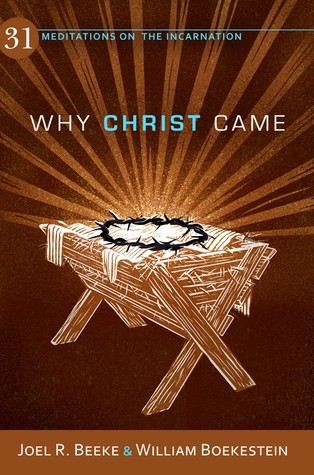
106. Why Christ Came
Why Christ Came: 31 Meditations on the Incarnation. Joel R. Beeke and William Boekestein. 2013. Reformation Heritage. 108 pages. [Source: Bought]
Why Christ Came is a wonderful, little book that I would strongly encourage every believer to read and perhaps even read often. It is a gem of a book that from start to finish focuses on the WHY. It isn't the only Christian living book that focuses on the why, of course. But it is concise and so Christ-centered that it may just be the BEST book you'll ever read about the why. (I'll amend that to read the best book outside the Bible itself.)
Why Christ Came could easily be considered a devotional book. There are 31 readings on WHY Christ came. One could easily read one a day in any month with 31 days and benefit from it using it as a traditional devotional. But it isn't only a devotional book. One could easily read it over a period of a day or two and benefit just as much.
You might be tempted that this is a seasonal book. That it is a devotional book for the month of December, perhaps, or maybe March or April--whatever month Easter happens to be. But, in my personal opinion, that would be silly--foolish--to think that the incarnation was relevant only once or twice a year. Every single day is a day to CELEBRATE the fact that Jesus came to dwell among us.
I think that believers should preach the gospel to themselves daily. Believers need to dine daily--find refreshment--from the gospel. The gospel may seem basic and simple at first, but, there is depth, substance, a certain RICHNESS to it that leaves one speechless.
Each chapter states one reason why Christ came. That one reason may be drawn from one text of Scripture--or several verses. Each chapter directs readers back to the heart of the gospel.
Friday, July 10, 2020
54. The Story Behind the Bible: The Torah (NOT Recommended)
About the star rating: It doesn't even deserve a tenth of one star.
First sentence from the introduction: This book is a product of more than twenty-five years of private, biblical, philosophical, historical, and archeological study. The intended purpose of the book is to offer a quick, condensed read that can provide a rich, well-developed background, perspective, and understanding of the biblical scriptures. The hope is that the information herein will help biblical scholars of all levels read the Bible with a greater sense of reality, historicity, and relevance that will, in essence, make the biblical experience a bit more like really being there.
I have a couple of analogies I'd like to bring up right at the start. (Maybe imagery is the better word?)
The first involves clocks. A stopped clock is right twice a day. It is unintentional on the clock's part, for sure, but there you have it, right twice a day regardless of its brokenness. A clock that is running, however, that is set to the wrong time, is always wrong all the time. Sometimes there's a reason behind it. (For example, a clock that is difficult to set or hard to reach might not get switched when the time changes. It might be right half the year but off an hour the rest of the year.) At first I was hopeful that this might be a case of the stopped clock variety. A theology book that was off but still managed to get a few things right at least. That way it could at least earn one star fairly and accurately and not by default. But the more I read the more it seemed to go the clock that is only reliable in the fact that it's always wrong.
The second involves cartoon characters and a cliff. You know how a cartoon character runs--sometimes walks--off a cliff and is the absolute last to know?! The viewer sees it happening on the screen, but, the fall inevitably comes. I don't think the author-as-cartoon-character knows he's walked off the cliff and is due to plummet and crash.
The third involves the Twilight Zone. Theology books should not make readers feel like they're entering the Twilight Zone. Mystery novels, dystopias, horror--yes, the Twilight Zone feels aren't out of place and inappropriate. Often when I say a book reads like an episode of the Twilight Zone I mean it in a complementary, positive way. Not so this time.
So when I saw the book listed on Netgalley, my first impulse was yes, please. I didn't read a description. I didn't read previous reviews. I didn't do research on the author or the publisher. I thought Story. Bible. It will either be a) a summary of the big picture story of the Bible to help believers fit the books of the Bible into a picture so they can understand how things fit together or b) it will be a book about how the Bible came to be the Bible, how the canon was formed, how it was translated, how it was preserved. It was neither. Sadly. I am sincere when I say sadly. I don't take joy in finding bad theology.
This is the first book in the trilogy. At the time I'm writing this review, I've completely finished the first book on the Torah and I'm about a third of the way through the second book.
The book claims to be a "primer" or "introduction" to reading and studying the Bible, in the case of the first book, the first five books, The Torah: Genesis, Exodus, Leviticus, Numbers, and Deuteronomy. There are chapters titled for each of these books of the Bible. One would guess that the chapters would seek to summarize or provide commentary on the actual Bible. And to be fair, he picks a handful of verses from a handful of chapters to dissect. But it's more commentary via The Twilight Zone than actual actual commentary.
His stated goal is, "to put the readers back into the story as if they are reading their own family history with memories, clear mental images, and a sense of historical authenticity to draw upon as they read and study."
There are no red alerts going off in the introduction. There are some faint and distant yellow alerts going off perhaps. He hints that the content will be controversial and that some might disagree with his opinions, interpretations, and perspectives.
The first hint of slight trouble is his embracing of the gap theory. Now he is not the first to suggest such a gap between Genesis 1:1 and Genesis 1:2. I have read some commentaries of Genesis that support such a gap theory though they leave the what happened and how long it was completely mysterious and off limits. It's like, there may be a gap of a million years or so, but we don't know what happened and why it happened and there's nothing more that can really be said. It's a theory. We just don't know and it's not that important. It's easy to say okay, let's move on. So long as the commentator goes on to present a biblical view of the creation of man, the fall of mankind, the rest of the book, then it's okay to say, I may not agree 100% with his interpretation of every single little verse, but for the most part it's sound enough and not dangerous. Alexander seems to make this time of the gap much more significant and relevant and everything than it has any right to be. It's almost like come get initiated into this secret gnostic group and be in the know about what happened. You will know something that 99% of all Christians throughout the millennium have missed out on.
It doesn't get less weird. It's like falling down a rabbit hole into wonderland and the author is coaxing readers to eat and drink.
- Apparently, Jeremiah wrote of this gap. His vision (which I won't link chapter and verse) wasn't about the future but about the past.)
- Apparently, Adam and Eve weren't the first and only humans created, the parents of us all; just the priest and priestess; the others toiled the ground and kept the garden.
- Apparently, the fall of mankind didn't happen for a hundred years after creation. (Like how does he know this and support it?)
- Apparently, Cain wasn't the son of Adam. Jesus was in the know and gave a veiled hint in his teachings. (He promises a chapter about this in book three.)
- Apparently Leviticus is the most important book in the Torah because of the hidden acrostics within.
At the end of his summary of Genesis, he writes, "I don't expect anyone to agree with all my science, theology, imagery, or historical perspective. The real goal is to get people to read and study the Scriptures themselves with an ability to stay on track, not lose the forest for the trees, and rightly divide what is written."
So there are a couple of long passages later in the book that seem all red alert all the time...or should.
I would hope that all actual, genuine Bible-believing, Bible-reading, God-affirming believers would see the ideas and recognize them for what they are. RUN FAR, RUN FAST.
All you hear these days it sometimes seems is doom and gloom and how far we've strayed. The informed Judeo-Christian or Messianic Jew really can't be bothered too much by this because he or she knows that on some level God is having a great time and enjoying everything, more or less. How do we know this? Because the God of the Bible created all things for His pleasure, and God, Yah, the Almighty, is not one who does not get what he wants. A little setback here, a minor disappointment there doesn't worry or bother Him at all. He fully expects these and considers it equitable trade for the surprises, delights, victories, accomplishment, and, yes, the genuine love, faith, and reverence that sharing these things with us and the gift of free will engenders. God is having a great time, Scripture assures us, because that is what He does, so don't be downtrodden. Things aren't nearly as bad as the princes of this world would make them out. In fact, things are not bad at all. We are moving steadily and ever closer to exactly where Yah wants us to be. That should be an encouraging thought.
I would like to say here that the sections on God's nature are in no way meant to imply that I am closer to, have a better relationship with, or even a better understanding of God. I can only impart to you what the Scriptures say about Him if you know how to look....Is God Unchanging? The short answer to this question is is yes; however, though God can make even the most profound knowledge and concepts seem simple, nothing about God is simplistic. Yes, he is the same essence yesterday, today, and forever. What most people overlook is that possibly the most clearly defined aspect of God's eternal unchanging nature is that He loves perpetual change. This is abundantly clear in Scripture and throughout creation. And by the way, if you are reading Scripture but not reading nature, His creation, you're only reading half the book. You're going to miss key elements and possibly the entire alchemy...It is very frustrating to me when people, especially people of "faith," use God's unchanging essence as an excuse for rigidity, dogma, legalism, and other forms of stagnation and oppression. Scripture declares that God created all things for His pleasure and things that grow and change and are full of surprises that are infinitely more pleasing than things that are predictable, changeless, motionless, unyielding, and stagnant. So please don't ever even consider the erroneous notion that God is some eternally grim force trying to restrict all things to a predetermined definition of righteousness. Nothing could be more wrong. My friends, look around you. Read the other half of the book. God is the free Spirit of all free spirits. I assure you He can and does think a thousand times farther out of the box than the most secular Warhol-worshiping weirdo walking the planet.
The dominant and obvious thrust of the whole book is that all things being equal, He is totally flexible and much prefers that we make our own decisions and do our own thing. Yes, that the is preeminent lesson of the Torah.
Long, long ago, it seems God decided that far more important than righteousness is freedom. Freedom is everything to God, because without it there can be no genuine love, faith, joy, courage, or righteousness, all things that He wants around Him in abundance. And again, from God's point of view, every intervention and every controlled outcome chisels away at that most awesome of all His gifts, freedom. This is why it rains and shines on the just and the unjust alike. It is why some good men fall while the wicked prosper and innocent children have fatal accidents. There is a fine line between guidance and coercion, and God has established that line well on the side of freedom and non-interference so there can be no mistake that when a man chooses for good or ill, it is of his own free will. Naturally, God controls the broad stream of history and will bring our collective destiny to a successful fulfillment according to His will, but the Bible indicates that He will accomplish this by dealing with a few key players on the stage of history and a few miraculous interventions for all to see. But life will go on, and we will still have our homes, families, friends, and other responsibilities while God takes care of His. Keeping track of the minutia of our lives is just not His job.
According to the Bible, God has it covered but is not in direct control of our individual destiny. We are. That is His great gift to us. All this being said, the Scriptures do affirm that the Holy Spirit is sensitive to and able to touch us all in times of great need or times of great joy. And for those who are true men and women of faith, the Spirit is permanently attached and dwells within.Have you been reading the quotes?!?! Prepare yourself.
What I am suggesting here is that we should stay to the God of Scripture and not make God up as we go along to suit our perceived needs and desires. Of one thing I am totally convinced. God is not a fictional character who only lives in the pages of the Bible.If he hasn't been making up God to suit his own need and desire, what has he been doing?!?!?!?!
I haven't quoted much Scripture in this book, because this book is not about the text itself but the underlying themes.So the themes of the Bible--the underlying themes aren't found in the Scripture itself. Interesting.
Overall, I would say that this book isn't helpful as a primer for learning the contents of the Bible, learning the themes, understanding how God and man relate to one another. In fact, I would say it is distinctly UNhelpful in that it will give readers all the wrong ideas about God's relationship with man and man's relationship with God. One of the big themes of the Torah, if you know actually actually read the text of the Sacred Scripture, is SIN and man's need for atonement and reconciliation. Most of the books, especially Exodus through Deuteronomy focus on a sacrificial mediation, man is NOT right with God, man is a sinning sinner that needs the blood of a sacrifice to be cleansed. From Genesis 3 on what readers find in the Bible is the undeniable fact of sin and God's displeasure with sin.
I would also say this book is illogical. What I mean is that you could take a paragraph of what he says in one place, skip ahead or turn back and find another paragraph that contradicts. Some of the ideas he holds if truly held to be equally true would cause one's head to explode. It's just not possible to believe every single thing he's said in this one to be true truth.
I also notice that he'll take a few grains of truth and then adulterate it mightily so that it's so jumbled and twisted and just all out wrong.
© Becky Laney of Operation Actually Read Bible
Monday, April 15, 2019
Book Review: Why Christ Came
From the introduction: “Why” is a marvelous teacher because it helps us identify the meaning of the events we observe. Rudyard Kipling called the interrogative “why” one of the “six honest serving men” who taught him all he knew.
In this devotional, Joel Beeke shares thirty-one answers to the question WHY DID CHRIST COME?! If you are stumped to come up with an answer to this all-important, ever-relevant question then I encourage you to read this bible-saturated devotional for yourself.
There are, of course, more than thirty-one answers or reasons to the question. In the introduction, he notes: "The number of reasons for which Christ came into the world may ultimately surpass the number of people He came to save." Now that's food for thought.
At the center of every devotional, every reason, there is Scripture. Each devotional ultimately points readers to Jesus Christ and directs them to praise and worship.
My first review of Why Christ Came shared a small handful of reasons. I won't repeat any of those quotes here. Instead, I'll share different reasons:
To Bring Light to a Dark World (#3)
- In Christ’s suffering, particularly in the crucifixion, the darkest blot was painted on the brightest canvas. Christ came as the brightness of God’s glory, in true and complete innocence, to reveal the abominable character of sin (Heb. 1:3; cf. Ezek. 8:3–4).
- We can’t make sense of our lives until “God, who commanded the light to shine out of darkness, hath shined in our hearts, to give the light of the knowledge of the glory of God in the face of Jesus Christ” (2 Cor. 4:6). As the pillar of fire who led His people through the wilderness (Ex. 13:21; 14:20), the Lord Jesus Christ has called out of darkness and into His marvelous light a “chosen generation, a royal priesthood, an holy nation, a peculiar people,” to show forth His praises (1 Peter 2:9). Calvin says, “If the whole wisdom of the world were collected into one mass, not a single ray of the true light would be found in that vast heap; but, on the contrary, it will be found a confused chaos; for it belongs to Christ alone to deliver us from darkness.”
To Be Made Like His People (#4)
- In Christ’s incarnation, God teaches us that we cannot solve our problems on our own. We cannot attain perfection and peace by our own strength. But in Christ, God has done it for us. In the words of church father Irenaeus of Lyon, “When He became incarnate, and was made man, He commenced afresh the long line of human beings, and furnished us, in a brief, comprehensive manner, with salvation; so that what we had lost in Adam—namely, to be according to the image and likeness of God—that we might recover in Christ Jesus.” Christ came to be like us so that His death would accomplish healing for us. Apart from a true incarnation, there is no true atonement.
- Our salvation does not depend on our performance but on Christ’s. In His human obedience, we have a grand demonstration that Christ will never fail us. Christ did not come to earth simply to be our moral teacher. If that were His only mission, He could have come as He did in former times, as the Angel of the LORD, without our flesh and blood to encumber Him. Instead, He had to become like us so that He could raise us up to be like Him.
- By faith, when we think of Christ, we should see ourselves in Him. As we glimpse at the manger of His birth we can say, “This is my brother, my flesh and blood.” As He grows and matures and continues to do the will of God, we can say, “This is my brother, my flesh and blood.” As He goes to the cross and bleeds and dies, we can say, “This is my brother, my flesh and blood.” When we see Christ seated at the right hand of God the Father Almighty, we can say, “This is my brother, my flesh and blood.” And when we see Christ return on clouds of glory to take us home to be with Him we will say, “This is my brother, my flesh and blood.” Because of the incarnation, believers can say of Christ what Adam said of Eve—“This is now bone of my bones, and flesh of my flesh”—and what the apostle Paul says to the Ephesians: “We are members of his body, of his flesh, and of his bones” (5:30).
To Give Eternal Life (#7)
- Believers must not just think or talk about Jesus; they must feast on Him. How do we feast on Him?
- First, we develop an appetite for Christ by committing our hearts to Him, knowing that only He can satisfy our deepest longings. We learn to say of Christ, “Thou art my God; early will I seek thee: my soul thirsteth for thee, my flesh longeth for thee in a dry and thirsty land, where no water is…. My soul shall be satisfied as with marrow and fatness; and my mouth shall praise thee with joyful lips” (Ps. 63:1, 5).
- Second, we meditate upon Him. We must recollect and reflect on all that we learn of Christ. We reflect on His names, His states, His works, and His words. Then we apply every “bite” of His person and work to our lives.
- Third, we delight in Him. God gave us food not only to strengthen us physically but also to cheer us. Christ is not just the food we need; He is also the food that we desire and our portion forever (Ps. 73:25–26). We cry out with the psalmist, “O taste and see that the LORD is good: blessed is the man that trusteth in him” (Ps. 34:8).
- Finally, we feed upon Him regularly. Our bodies must be fed daily to maintain our health and strength. When God rained down manna in the wilderness, His people had to gather it daily (Ex. 16:4–5). Some of us have little spiritual vitality because we fail to feed on Christ day by day. Over time, we become spiritually anorexic. We should realize that every part of Scripture speaks of Christ (John 5:39). Thus, every time we read a passage of God’s Word, we should ask how it bears witness to Him. We make Christ our favorite daily food.
To Die (#17)
- Jesus was born to die. It is hard for us to grasp that truth, for we were created to live, not to die. Death is an intruder and a great enemy to life. Yet we may also find it comforting that Jesus came to die. Hebrews 9:27 says, “It is appointed unto men once to die, but after this the judgment.” We each have an appointed time to die. So did Jesus. He came to earth to die so that He, “for the suffering of death, crowned with glory and honour…by the grace of God should taste death for every man” (Heb. 2:9). As the familiar Christmas hymn points out: “Mild He lays His glory by / Born that man no more may die.”
- Jesus knows that His death will bring glory to God by satisfying justice, repelling the curse against sin, defeating the devil, and securing a people zealous to praise His Father. So Jesus presses on. Christ was born with a death sentence already hanging over him at the manger. That thought should bring us some gravity as we reflect on our Lord’s advent. But it should also help us see the utter resolve of Christ to redeem His people.
This little book is a treasure. I love, love, love it!
© Becky Laney of Operation Actually Read Bible
Thursday, April 11, 2019
Book Review: A Surprise for Lily
First sentence: All morning, Lily hurried to pull weeds in the garden.
A Surprise for Lily is the fourth and final book in the series by Mary Ann Kinsinger and Suzanne Woods Fisher. I knew going into it that it was the last--but it was still sad to come to the end.
Lily Lapp has matured so much since the first book. Now she's in fifth grade and experiencing the highs and lows of growing up. She's still struggling with a few of her classmates; but she's doing it with a certain amount of grace and dignity. Most of the time.
It is just a treat to spend time with the whole Lapp-Miller family. I love them all. I even love to "hate" a few of the characters. (Think Nellie Oleson.)
I think it would be awesome if the authors decided to write a young adult or even adult series starring an older Lily. Just enough time has passed--in the real world--for Lily to mature into a young woman who might just be interested in boys and courting and marriage and settling down. Would Aaron Yoder still be a PEST and NUISANCE? Part of me really wants these two to get together.
© Becky Laney of Operation Actually Read Bible
Friday, April 5, 2019
Book Review: A Big Year for Lily
First sentence: Lily's toes felt tingly.
This is the third book in this contemporary Amish middle grade series. When the series first started Lily was oh-so-precious and just six years old. In this one she turns ten years old. She's matured so much since that first book. Which is both good and bad. Good because maturity is to be expected and appreciated. One can't stay frozen in time. It's impossible. Bad because I miss the Lily-that-was. The little-Lily made me laugh time and time again.
Lily at home. Lily at school. Lily at church. That's what we get to see in this newest book. Lily continues to struggle to "get along" with her two archenemies--Effie and Aaron. Lily has a VERY HARD time understanding why her cousin Hannah thinks Aaron is oh-so-dreamy.
I am still loving the series. I am. I am a little sad that there's just one more book in the series.
© Becky Laney of Operation Actually Read Bible
Thursday, March 28, 2019
Book Review: A New Home for Lily
First sentence: There was only one thing Lily Lapp liked about her new house in Pennsylvania. One thing.
Premise/plot: If the first book in the series reminded me of Little House on the Prairie (the books), the second book reminds me of the Ramona Quimby series by Beverly Cleary. The Lapp family has moved from New York to Pennsylvania. They have just been in their new home a day or two when Lily and her brother, Joseph, start school. The novel focuses on their lives and relationships.
My thoughts: I loved, loved, loved this one! Lily is such a dear of a character. Don't take that to mean that she's super-wholesome and sweet. She's very relatable. We're kindred spirits. I think my favorite scene in this one involves Lily's mishap with Jello. She's starting to take an interest in cooking, in learning to cook. Her mother has her make jello for a family get together. Lily either doesn't read the instructions or ignores the instructions. She adds A CUP of dry jello for every person coming. As you can imagine that would require mixing different flavors to get enough. By the time her mother realizes Lily's mistake, it's too late!
I also love the writing in this one. It's great.
© Becky Laney of Operation Actually Read Bible
Wednesday, July 19, 2017
Book Review: Matthew
First sentence: WHEN VAN HALEN’S album 1984 hit the record stores, many a young lad, myself included, signed up for piano lessons.
I definitely enjoyed reading Douglas Sean O'Donnell's commentary on the gospel of Matthew. Yes, it is over a thousand pages. Yes, it's at least twice the length of the whole New Testament. But it's worth reading.
In eighty-nine chapters, O'Donnell covers all twenty-eight chapters of Matthew. The commentary isn't written with a verse-by-verse approach, but, a section by section approach. Each chapter is a sermon essentially that unpacks that section of Scripture.
There are eleven chapters on the Sermon on the Mount, Matthew 5-7.
- A Sermon on THE Sermon, Matthew 5-7
- A Broken Blessedness, Matthew 5:3-10
- Unworldly for the World, Matthew 5:11-16
- "I Say to You," Part 1, Matthew 5:17-48
- "I Say to You," Part 2, Matthew 5:21-48
- God-Rewarded Righteousness, Matthew 6:1-18
- How Not to Pray, Matthew 6:5-8
- How to Pray, Matthew 6:9-15
- Treasure and Trust, Matthew 6:19-34
- The Loving Art of Speck Removal, Matthew 7:1-12
- The Narrow Gate to Life, Matthew 7:13-29
There are fourteen chapters on the crucifixion and resurrection of Jesus Christ which covers Matthew 26 through 28.
Every verse gets covered some way, some how. But not every verse gets equal amount of attention.
O'Donnell begins by talking about all four gospels. He points out that, "They have the same bass line. Yet each Gospel has a distinct melody of its own." So what is Matthew's melody line?
"Jesus is King. Jesus is the King of Jews and Gentiles. Therefore, this King Jesus is to be worshipped. Like a fine symphony, Matthew’s melodic line resurfaces time and again through each chapter, oftentimes like a cello quietly playing in the background, until finally we come to the finale, where the whole orchestra, chorus, and even the audience stand up, play, and sing in one voice! This happens in the last three verses—the Great Commission. Listen for yourself. Listen for the culmination of all the subtle and strong sounds."
"If you understand the Great Commission in its context, you will very well understand the Gospel of Matthew."
"Nobody talks the way Jesus talked. Those today who have great authority, even if they overestimate their power and over-esteem themselves, do not talk like Jesus talked. They do not claim to be the king of Heaven and earth. They do not claim, as they sit on their glorious throne no less(!), that every person from every time and everywhere will one day come before them to be judged. They do not claim to have authority to forgive sins. They do not claim to be greater than the temple and the Torah or to be the fulfillment and embodiment of the Hebrew Scriptures. They do not claim that their rule will spread to every corner of the world. They do not claim to establish an unconquerable church and institute new sacraments that have themselves as the foundation and focus. They do not claim that all their commandments are to be obeyed. Matthew has a certain logic about him. He gives us various reasonable proofs for Jesus’ crazy claims. But such proofs are not like a mathematical equation. Rather, they are like the burning bush that Moses encountered, a bush that burns but never burns out. You have to come close enough to feel its heat to know it’s true. Logic on fire! Think of Matthew’s case for Christ and his absolute authority like one of those metal fire pits. In the fire pit itself are these burning but not burning-out claims of Christ—“I have authority over all things,” etc. Then there are those four sturdy, cast-iron legs that hold the pit up and in place. Each leg by itself would not necessarily hold up the claims, but together they make a pretty solid base. Let’s briefly examine the legs that hold up his claims. The first leg is fulfillment. Matthew will repeatedly use the word “fulfilled” and phrases like “This was to fulfill what was spoken by the prophet” to show that what was promised in the Old Testament is now being fulfilled in Jesus. He highlights general characteristics of what to expect in the Messiah as well as specific prophecies—e.g., “Behold, the virgin shall conceive and bear a son” (1:23) or “Behold, your king is coming to you, humble, and mounted on a donkey” (21:5). Near the beginning of the Sermon on the Mount, Jesus will say of himself, “Do not think that I have come to abolish the Law or the Prophets; I have not come to abolish them but to fulfill them” (5:17). The idea is this: check what the Old Testament says. Check what Jesus does and says. Then you might very well say, “By golly, the shoe fits!” The second leg is teaching. If you have one of those Bibles that has all the words of Jesus in red, in Matthew you will see a lot of red. But the point is not simply that Jesus taught a lot. It is that he taught with authority. That is what the crowds noticed. He taught them “as one who had authority” (7:29). This will be the constant criticism of his critics, who will ask, “By what authority” he does this or says that (cf. 21:23–27). Jesus taught with authority, but an authority unlike any other. The third leg is character. A wise person can say some wise things, and some of those wise things can be remembered, even many years later. We still quote Socrates. But nobody worships Socrates. Why? Well, because he never claimed to be God, and because his character never had to fit his claims. The fourth leg is his miracles. By themselves, the miracles are not what is unique about him. But as the last and final leg, his miracles hold everything in place perfectly. The healing of the blind men, the lepers, the multiplication of the fishes and loaves, and the resurrection itself all point beyond themselves to Jesus’ identity. They point to his authority—his authority to forgive sins, his authority over disease, and his authority to conquer even death, of which there is nothing so powerful and prevalent in this world. If you can conquer death, you have a lot of power! All authority is the first and key note in Matthew’s Gospel. Tragically it is the most disregarded thought in the world today."
"Christianity is not a pick-n-save religion: you pick whatever teachings you like and you still get saved. Oh no! If that’s how you think, you have it all wrong. Just listen to Jesus if you won’t listen to me. He stated it straightforwardly: “Not everyone who says to me, ‘Lord, Lord,’ will enter the kingdom of heaven, but the one who does the will of my Father who is in heaven” (7:21)."
God has given us creation—what Calvin called the theatre of his glory—and Scripture, what I’ll call the evidence of his faithfulness, and yet how many humans want a DNA test before they will call him, “Abba, Father.”
Who is the King of the Jews? Who is your king? Whose voice are you going to heed? Will you be indifferent to Jesus? Will you be hostile? Or will you bow low, with whatever gifts you have in hand, adoringly worshipping him?
This is the message the world needs, but it is also the message the church needs. This is why we find this theme of repentance in all the letters of the New Testament. Christians who have repented must continue to live lives of repentance (e.g., 2 Corinthians 7:9, 10; 12:21; 2 Peter 3:9).
Is Jesus Lord? If so, is he Lord over your life so much that in his presence you recognize the spiritual difference that exists between you and him—he is holy, you are not? In light of this difference, do you repent of your sins? And more than understanding and embracing repentance in this first sense—repenting of sin—do you also repent from following anyone or anything more than Jesus? That is the real point pressed on us here, and it will be pressed on us again and again in Matthew, especially at the end of chapter 10.
We serve a Lord who does not ask his followers to follow any road he himself has not traveled, a Lord who selflessly entered into the brokenness of this world to give all who would believe in him a future, the blessings of the kingdom of heaven.
Let’s be perfectly honest. We live in a prayerless world and in a prayerless church. I can say with confidence that the good majority of us are not disciplined when it comes to prayer. We can blame our negligence on the recent advances in science and technology, which seek to unveil all mysteries and free us from dependence on supernatural forces beyond our control. Or we can blame the great influence of entertainment, which takes our attention from the sublime and the divine and focuses it on the trite and the trivial. But the real blame must fall on us. We don’t pray because we don’t understand God. Or worse, we don’t pray because we don’t love, trust, or need God. Since God doesn’t matter to us as much as we think or say, prayer doesn’t matter much either.
The narrow gate is more of a who than a what. The narrow gate is Jesus. I say this because of what Jesus himself teaches in John 10:9, where he calls himself “the door” (cf. v. 3 “gatekeeper”) or “the gate” (NIV). In a context similar to what we have here in Matthew (as Jesus is talking about false teachers who try to steal and harm the sheep), he says in John 10:9, “I am the door [i.e., the gate through which the sheep enter safely]. If anyone enters by me, he will be saved.” This same sort of imagery and language in John 10:9 is used in 7:21, where Jesus says, “Not everyone who says to me, ‘Lord, Lord,’ will enter the kingdom of heaven.” Enter what? The kingdom of heaven. How? Through the narrow gate (i.e., Jesus). Jesus teaches, “Not everyone who says to me . . .” He is the gate into Heaven, the way into life, the way into eternal fellowship with God (cf. John 14:6).
Our felt needs or physical needs may be great, but they will never be as great as our need for forgiveness.
Our ultimate hope is not to escape death. Who escapes death? This twelve-year-old girl would one day die again, just as Lazarus, who was also raised from the dead, also eventually died again. This miracle story is not about how we should trust that Jesus will save us from an early death or from death itself. Jesus is not some mystical, magical, mythical Fountain of Youth. No. He is our resurrected Savior! This story before us is really just a miniature version of the great story of our salvation: in the death of Christ is the death of death. He takes on the curse of death that Adam brought into the world. Specifically, in the death of Christ is the death of our spiritual death (we will be forgiven our sin), and in the resurrection of Christ is the death of our physical death (we will rise again bodily). Since Christ died and rose again, we who are united to him, though we may die, will also rise again to a better life. In the words of Horatio Spafford, the hymn-writer who lost his four daughters at sea, we will rise to a life where Satan does not buffet, where trials do not come, where sea billows do not roll, and where all is finally well with our souls. That is our hope. It is a hope based on the reality of the resurrection and a hope that I hope brings encouragement to you today. Hammer away! Hammer away . . . for on the last day we shall rise again.
Disbelief? Is that the worst sin in the world? Everyone ranks sins differently—murder, adultery, stealing, parking in a handicap space without a sticker, eating trans fats. But disbelief—failure to trust in Jesus? That’s not even on some people’s lists. Well, it’s on Jesus’ list, at the very top!
If you want God as your Father, pride cannot be your mother. Pride cannot be the ruling principle in your life. Pride cannot be the authority over all your actions. Pride cannot be the voice telling you what to do.
Don’t call yourself a Christian if you don’t believe Jesus ever existed. Don’t call yourself a Christian if you believe only half of the red letters in your Bible have any connection to the historical Jesus. Don’t call yourself a Christian if you think Jesus didn’t die for your sins and rise for your justification. Don’t call yourself a Christian if you think obeying Christ’s commands are optional. And don’t call yourself a Christian if you think there are many ways to God. To be a Christian is, at the very least, to take Jesus at his word. “Whoever is not with me is against me, and whoever does not gather with me scatters” (v. 30). Thus saith the Lord. The claims of Jesus are the claims of Jesus. We either believe them or we don’t. What he said in verse 30 is either true or false.
Gospel growth, gospel judgment, and gospel gain are the three themes of these seven parables. Gospel growth says to us, “Don’t be discouraged. The gospel has grown, it is growing, and it will continue to growth until harvesttime.” Gospel judgment says to us, “Don’t be less gracious than God. God will eradicate evil, but first he wants people to repent, find the kingdom, and embrace the King.” Gospel gain says to us, “The kingdom of heaven is worth infinitely more than the cost of discipleship.”13 Such sacrifice is worth it, for it will bring eternal blessedness (shining-like-the-sun blessedness!) when the King of the kingdom comes again to gather the good fish, the fruitful wheat, and all those beautiful birds nesting on the branches of that once tiny mustard seed.
To come to Christ is to deny self—to admit that we’re sinful, that we need a Savior. And to live for Christ is to deny self—to abide in him, pray to him, walk in his power. God’s plan of salvation and sanctification has one summary command: deny yourself!
My brothers and sisters in Christ, God is to be first in our lives. That’s what this first great commandment teaches us. He can’t be second or third or fourth of fifth or fiftieth. The sum of the whole Old Testament (and New Testament) is the command to love God and to love him before all others, more than anything and anyone else. And in a world that lacks a God-consciousness (let alone a God-centeredness), and in churches where preachers refuse to preach straightly and forthrightly the need for Christians to love God, we need to pray doubly hard to set the Lord God before our eyes and to see him (as Jesus did) towering “in sovereignty above the state (22:15–22), above death (vv. 23–33), and . . . above all other human responsibilities (vv. 34–40).”
The Christian life is not a ten-yard dash—such a short sprint that we can get the prize after the first five steps. Rather it is a grueling marathon that we must run all the way to the finish line. The gospel demands distance runners, those who run toward Heaven with hardship burning on our heels, those who patiently pace themselves, knowing that “momentary affliction is preparing for us an eternal weight of glory beyond all comparison” (2 Corinthians 4:17).
The most neglected theme in the modern church is the theme of judgment. The second most neglected theme is the theme that the church shall be judged: “judgment [will] . . begin [with] the household of God” (1 Peter 4:17). The third most neglected theme is the theme that the individual Christian shall stand before the Judgment Seat of Christ to give an account for what he has done (16:27; cf. Romans 14:12).
Without Jesus there is no gospel. Without the Old Testament there is no gospel. Without Jesus fulfilling the Old Testament there is no gospel. What good news do we herald? What light do we bring to the dark world? That Jesus died for our sins, rose again from the dead to grant us eternal life, and will come again in power to make everything right . . . just like the Hebrew Bible said. Our gospel is “the saving Story of Israel . . . lived out by [true Israel,] Jesus, who lived, died, was buried, and was exalted to God’s right hand” and who will soon come in glory to establish his forever kingdom.
For the sins of abortion, adultery, anxiety, arrogance, backbiting, bearing false witness, bitterness, blasphemy, boasting, bribery, complaining, coveting, contention, coarse joking, deceit, defrauding others, despising the poor, dishonoring the government, disregarding the Lord’s people on the Lord’s Day, disrespecting your parents and elders, envy, evil thoughts, fornication, fortune-telling, fraud, gambling, giving grudgingly (or not giving at all), gluttony, gossip, greed, harsh words, hating your brother, holding a grudge, idleness, idolatry, immodesty, losing your temper, lust, lying, malice, murder, prayerlessness, racism, rage, rape, resisting the Holy Spirit, returning insult for insult, rioting, scoffing, selfish ambition, showing favoritism, slander, sloth, speaking idle words, stealing, unlawful divorce, violence, witchcraft, and loving the world, loving yourself, not loving your neighbor or enemy or fellow Christian or God . . . to name a few sins. For all those and more, Behold your crucified king! Give thanks to him. Give thanks. Give thanks. Give thanks. Just imagine what the weight of the sins of the world felt like. Just imagine the one man “who knew no sin” being “made . . . to be sin . . . so that in him we might become the righteousness of God” (2 Corinthians 5:21). It is one thing to have a thorn pushing into your skull when a Roman soldier hits you in the head;16 it is quite another thing—an unfathomable thing—for God the Father to charge/impute/bestow upon his only Son all of our sins. You see, nothing reveals the weight of our sins like the sufferings of Jesus. Nothing reveals the mercy of God like the sufferings of Jesus. Nothing reveals our absolute inability to save ourselves like the sufferings of Jesus. And thus something of our heartfelt thanks offered up to him is more than appropriate, don’t you think?
However, let’s be careful to hold high and hold out the Great Commission’s “go.” There must be some movement to our mission. And the movement in our text is not the movement from sitting in our pews to standing to sing. Neither is the movement from the sanctuary to the fellowship hall. Rather, it is the movement out the front door to take the gospel to lost people.
Jesus’ teaching ministry is to be our teaching ministry. Christian churches are only Christian if they center on Christ’s commands. Our mission is not to make Buddhists better Buddhists or Muslims better Muslims or atheists better atheists or witches better witches, but rather to invite all people from all other “faiths” into the one true faith under the commandments of the one true Lord. The Great Commission is exclusively inclusive—it is one Lord for all nations! So I ask you, do you know all that the Lord has commanded?
© Becky Laney of Operation Actually Read Bible