Thursday, June 18, 2015

Quotes from the Cloud #24

This year, I hope share weekly posts of quotes. These quotes are from authors I'm reading and enjoying from the Clouds of Witnesses Reading Challenge

For fellow participants, what I would LOVE, LOVE, LOVE to see is for people to share quotes from what they're reading. I'd love for you to share quotes occasionally with your readers and let me know about it. If you don't have a blog, you could always leave quotes in the comments here.
Prayer is a sincere, sensible, affectionate pouring out of the heart or soul to God, through Christ, in the strength and assistance of the Holy Spirit, for such things as God has promised, or according to His Word, for the good of the church, with submission in faith to the will of God. ~ John Bunyan
Prayer is the chief exercise of our faith. ~ John Calvin
To Be Near Unto God” means such nearness to God as to see him with the eyes, to be aware of his presence in the heart, to hear him with the ear, and to have every barrier removed that thus far kept him aloof. “To Be Near Unto God” means to be near him in one of two ways: either to feel as though we were caught up into heaven, or as though God had come down to us in our loneliness, sorrow or joy. The very word “near” implies that there is much that separates us from God, and makes us solitary. When God is far away from us and we from him, it makes us desolate. It also implies that we are not contented; that we can not endure it; that our whole heart goes out after him, and will not rest until the last barrier is removed. For only when God is near unto us and we are near unto him is there blessedness again, which nothing can exceed, since it is unspeakably good “To Be Near Unto God.” This exceeding blessedness can only be enjoyed at rare moments here, but in the life to come it shall endure. For in the Father’s house above, we shall be near unto God forever and forever. ~ Abraham Kuyper, "It Is Good For Me To Be Near Unto God" 

© Becky Laney of Operation Actually Read Bible

Wednesday, June 17, 2015

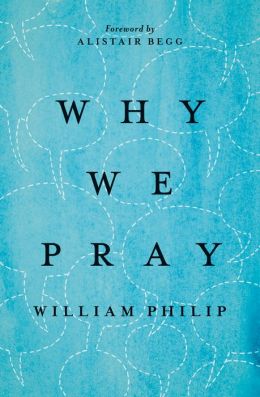
Book Review: Why We Pray (2015)

Why We Pray. William Philip. 2015. Crossway. 112 pages. [Source: Review copy]

I absolutely LOVED, LOVED, LOVED William Philip's Why We Pray. The book may be short--just a little over a hundred pages--but it is PACKED with rich truths from Scripture. Philip was able to pack a lot of insight and wisdom into the four chapters of this book, he kept it concise and reader-friendly.

Early on in the book, Philip mentions what he didn't want his book on prayer to be: another depressing book on prayer. He'd heard enough depressing sermons "exhorting" listeners to pray more, to pray better, to pray harder. Instead, he wanted his book to place the emphasis on God--on the relationship between God and believers, that prayer is merely the expression of that relationship. Philip shares with his readers FOUR reasons why we pray, he devotes one reason per chapter. He ends each chapter with discussion questions. These are good questions.

  • We Pray Because God Is A Speaking God
  • We Pray Because We Are Sons of God
  • We Pray Because God is a Sovereign God
  • We Pray Because We Have the Spirit of God

Why We Pray is an excellent book on prayer, and a great reminder of what the gospel is all about.

Favorite questions:
We learn most about prayer simply by learning about God. What truths have you learned about God that have impacted your prayer life? What spiritual disciplines do you practice that help your prayer life?
Philip writes, “Don’t think about yourself when you’re thinking about prayer; think about the Lord Jesus Christ. Think about how faithful he is— always, always, always— for you.” What starts to happen to your prayer life when you think about yourself too much? What happens to your prayer life when you think only about Jesus?

Favorite quotes:
Prayer is responding to Jesus. We can pray because God is a speaking God, because we have been created to respond to him, and because through Jesus Christ we have been redeemed that we might again respond to him.
Jesus is not only God’s ultimate word to man but also man’s ultimate word of response to God.
Your prayers and mine will not be heard by God because of our sincerity but because of our status. We are sons of God, which means that God cannot not hear us. We are his sons. That’s gospel truth. He can’t not hear your prayers if you are in Christ. If we don’t feel that at times, if it doesn’t feel like it’s true, it’s simply because we are disbelieving the gospel that teaches it plainly to us. We are disbelieving our status as justified before God. We are disbelieving the reality of the legal status of adoption that is ours through faith in Jesus Christ. It really is ours; it has changed everything.
Thinking about what God does and who God is, is always far more encouraging than thinking about ourselves, about what we aren’t, about what we don’t do and what we should do more of.
Real gospel prayer always thinks God’s thoughts after him. It has God’s goal in view. That means we have to ask ourselves practical questions about where our prayer focus is. Whose thoughts are we thinking when we pray?
To speak about prayer is to speak about the ministry of the Holy Spirit of Jesus within people. It is all about his ministry for us, his ministry in us, and his ministry to us.

© Becky Laney of Operation Actually Read Bible

Tuesday, June 16, 2015

My Year with Spurgeon #24

Christ Lifted Up
Charles Spurgeon
1857
John 12:32

We have three things to notice. Christ crucified, Christ’'s glory. He calls it a lifting him up. Christ crucified, the minister'’s theme. It is the minister’'s business to lift Christ up in the gospel. Christ crucified, the heart'’s attraction. “I, if I be lifted up, will draw all men unto me.” His own glory; —the minister’'s theme; the heart'’s attraction.
Now, the cross of Christ is Christ’'s glory. We will show you how. Man seeks to win his glory by the slaughter of others--—Christ by the slaughter of himself; men seek to get crowns of gold--he sought a crown of thorns; men think that glory lieth in being exalted over others--Christ thought that his glory did lie in becoming “a worm and no man,” a scoff and reproach amongst all that beheld him. He stooped when he conquered; and he counted that the glory lay as much in the stooping as in the conquest.
Now, Christ won more love by the cross than he did ever win elsewhere.
Christ won glory by his cross. He was never so lifted up as when he was cast down; and the Christian will bear witness, that though he loves his Master anywhere, yet nothing moves his heart to rapture and vehemence of love, like the story of the crucifixion and the agonies of Calvary.
The laurels of his crown were sown in a soil that was saturated with his own blood.
Again: Christ looked upon his crucifixion as the completion of all his work, and therefore he looked upon it as an exaltation.
And, my hearers, Christ longed for the cross, because he looked for it as the goal of all his exertions. It was to be the place upon which he could say, “It is finished.” He could never say “It is finished” on his throne: but on his cross he did cry it. He preferred the sufferings of Calvary to the honors of the multitude who crowded round about him; for, preach as he might, and bless them as he might, and heal them as he might, still was his work undone.
And, once again, Christ looked upon his crucifixion with the eye of firm faith as the hour of triumph.
But, now, secondly, CHRIST HAS ANOTHER LIFTING UP, not ignominious, but truly honorable; there is a lifting of him upon the pole of the gospel, in the preaching of the Word.
Christ Jesus is to be lifted up every day; for that purpose he came into the world: “That like as Moses lifted up the serpent in the wilderness,” even so he might by the preaching of the truth be lifted up, “that whosoever believeth in him should not perish, but have everlasting life.”
Christ is THE MINISTER'’S GREAT THEME, in opposition to a thousand other things which most men choose. I would prefer that the most prominent feature in my ministry should be the preaching of Christ Jesus.
Christ should be most prominent, not hell and damnation.
God’'s ministers must preach God'’s terrors as well as God'’s mercies; we are to preach the thunder of God'’s law. If men will sin, we are to tell them that they must be punished for it. If they will transgress, woe unto the watchman who is ashamed to say, “The Lord cometh that taketh vengeance.” We should be unfaithful to the solemn charge which God has given us if we were wickedly to stifle all the threatenings of God’'s word.
Did the loving Savior talk of the pit that burneth, of the worm that never dieth, and of the fire that can never be extinguished? It is ours to speak as he spake, and not to mince the matter. It is no mercy to men to hide their doom. But, my brethren terrors never ought to be the prominent feature of a minister'’s preaching.
There are more souls won by wooing than by threatening. It is not hell, but Christ, we desire to preach.
Again, the theme of a minister should be Christ Jesus in opposition to mere doctrine. Some of my good brethren are always preaching doctrine. Well, they are right in so doing, but I would not care myself to have as the characteristic of my preaching, doctrine only. I would rather have it said, “He dwelt much upon the person of Christ, and seemed best pleased when he began to tell about the atonement and the sacrifice. He was not ashamed of the doctrines, he was not afraid of threatening, but he seemed as if he preached the threatening with tears in his eyes, and the doctrine solemnly as God’'s own word; but when he preached of Jesus his tongue was loosed, and his heart was at liberty.”
Brethren, we would rather preach Christ than election. We love election, we love predestination, we love the great doctrines of God'’s word, but we had rather preach Christ than preach these. We desire to put Christ over the head of the doctrine, we make the doctrine the throne for Christ to sit on, but we dare not put Christ at the bottom, and then press him down, and overload him with the doctrines of his own word.
And again, the minister ought to preach Christ in opposition to mere morality.
Christ wants us not to preach learning, but to preach the good word of life in the simplest manner possible.
AND NOW WE GO TO THE THIRD POINT, WHICH IS, INDEED, THE ESSENCE OF THE TEXT, THE ATTRACTIVE POWER OF THE CROSS OF CHRIST. If Christ be thus preached, thus fully held forth, thus simply proclaimed to the people, the effect will be, he will draw all men unto him.
Christ draws like a trumpet attracting men to hear the proclamation. Christ draws like a net bringing men out of the sea of sin. Christ draws, also, with bonds of love. In the next place, Christ attracts like a standard, bringing all the soldiers round him, and, in the last place, Christ draws like a chariot.
You cannot expect people to be blessed by the preaching of the gospel if they do not hear it. One part of the battle is to get them to listen to its sound. Now, the question is asked in these times, “How are we to get the working-classes to listen to the word?” The answer is, Christ is his own attraction, Christ is the only trumpet that you want to trumpet Christ.
My good ministering brother, have you got an empty church? Do you want to fill it? I will give you a good receipt, and if you will follow it, you will, in all probability, have your chapel full to the doors. Burn all your manuscripts, that is No. 1. Give up your notes, that is No. 2. Read your Bible and preach it as you find it in the simplicity of its language. And give up all your Latinized English. Begin to tell the people what you have felt in your own heart, and beseech the Holy Spirit to make your heart as hot as a furnace for zeal. Then go out and talk to the people. Speak to them like their brother. Be a man amongst men. Tell them what you have felt and what you know, and tell it heartily with a good, bold face; and, my dear friend, I do not care who you are, you will get a congregation.

© Becky Laney of Operation Actually Read Bible

Monday, June 15, 2015

Book Review: A Worthy Pursuit

A Worthy Pursuit. Karen Witemeyer. 2015. Bethany House. 352 pages. [Source: Review copy]

I loved reading Karen Witemeyer's A Worthy Pursuit. This historical romance is set in Texas in the early 1890s. The heroine is a school teacher--a head mistress to be precise-- named Miss Charlotte Atherton. The novel opens with some disturbing news: Sullivan's Academy for Exceptional Youths is closing mid-term. One might think Miss Atherton is rightfully worried about finding another job, but, soon one realizes differently! Miss Atherton isn't too concerned about finding another teaching job. No, she is extremely concerned about the fate of two or three of her students. Namely, a little girl named Lily, and, a young boy named John Chang. Lily's mother made Miss Atherton Lily's guardian, but, she knows that it wouldn't really go that smoothly. Lily's grandfather wants to be the one to raise her. And Lily's grandfather means business. Fearing the worst, Miss Atherton takes Lily, John, and one other student, Stephen, in the middle of the night. (Stephen's parents are traveling in Europe.) She suspects that it will just be a matter of time before someone appears threatening to take Lily…so she's always on her guard.

Stone Hammond is the hero of A Worthy Pursuit. He has been hired to find a kidnapper, and to return the little girl, Lily, to her grandfather. What he finds surprises him, Miss Atherton isn't exactly the monster she was made out to be in the grandfather's description! The children look wonderfully happy, like a loving family. When Miss Atherton shows him the paperwork proving that Lily's mother made her legal guardian of Lily, he doesn't know what to think! So he agrees to wait and see…

I loved everything about A Worthy Pursuit. I loved the characters. I loved the story. I loved the romance. I definitely recommend this one!

© Becky Laney of Operation Actually Read Bible
Sunday, June 14, 2015

Week in Review: June 7-13

Sarah Hale wrote the famous poem “Mary Had a Little Lamb.” It is a nice little nursery rhyme, but I like to think of it theologically, completely out of its context. The Virgin Mary really did have a little Lamb—the Agnus Dei, the Lamb of God. And on the cross the Lamb took our sins upon himself as our sacrifice. “Worthy is the Lamb!” will be our eternal refrain. May we never move away from the centrality of his sacrificial death! If you do not know the joy of having been soaked with the Holy Spirit and thus of knowing Christ personally, perhaps you have not personally experienced, first, the reality and greatness of Christ’s sacrificial death and, second, the necessity of repentance. Possibly you give only lip service to the idea of his sacrificial atonement without fully depending on his shed blood. Just as the Jews needed John’s baptism of repentance, perhaps you too need to repent. Many people miss Christ because they never have truly repented. Grace without repentance is cheap grace—not the real thing. A realization of what Christ has done must be coupled with a repentant spirit if we are truly to believe and be saved. We must say, “I am nothing, but he is everything, everything, everything!” ~ R. Kent Hughes, John: That You May Believe
NIV 1984

  • Psalm 1-37

NIV-UK Audio Bible

  • 1 Samuel
  • 2 Samuel

NKJV

  • John

ESV Following Jesus Bible

  • John

NRSV

  • John
  • 1 John 
  • 2 John
  • 3 John
New English Bible

  • 1 Samuel 15-31

NLT

  • John 1-7


© Becky Laney of Operation Actually Read Bible

Friday, June 12, 2015

Book Review: Julie

Julie. Catherine Marshall. 1984/1985. Avon. 428 pages. [Source: Bought]

I've read Catherine Marshall's Christy many times, but, this was my first time reading her last novel, Julie.

What did I think about Julie? Well, on the surface, Julie reminded me very much of North and South by Elizabeth Gaskell. (North and South is one of my favorite books.) Julie's family is on-the-move because the father has left the ministry. The family has mixed feelings on the move, and there is a certain amount of uncertainty about the future. The town where they move is a mill town. The lower-class workers are most upset about working conditions and are contemplating striking. Julie becomes interested in their cause, and enjoys talking with workers now and then. She's not unafraid to speak up for the lower-class and make a few enemies. Julie is in some ways a novel about social class. These were just a few similarities that came to mind. But there are plenty of things that make Julie unique.

So what is it about? Julie is the oldest of three children. She has a younger brother, Tim, and a younger sister, Anne-Marie. Their father has just bought a newspaper. Buying the paper has taken all their resources--if the paper doesn't make it, then the family loses everything. Oh, and I should mention the book is set in Pennsylvania during the Great Depression. So there are no guarantees that the newspaper can survive the hard times. They've got barely enough to run the paper and manage their living expenses. They didn't budget in emergencies. Fortunately, the family seems to have a guardian angel who looks out for them and the paper. The guardian angel is named Dean. Julie will volunteer at the paper when she's not busy in school. She wants to be a journalist, so, she doesn't really mind all that much.

Julie's in high school. She makes a few good friends. Her best friend is Margo. There are several guys interested in Julie, but, Julie seems much more interested in an older man, an English man, named Rand. These two don't always get along. Julie likes to ask too many questions, and, some of the questions make him uncomfortable. For one, she becomes fascinated with the dam. Is it safe? Is it dangerous? Does it need repairs? How many? Are any major repairs? When will they be done? Why is talk about the dam discouraged? Julie's questions are catching. Soon her father is asking questions as well, which, in addition with their views on unions, makes the family some enemies…

I definitely found it a compelling and dramatic read. I'm glad I finally read it!

© Becky Laney of Operation Actually Read Bible

Thursday, June 11, 2015

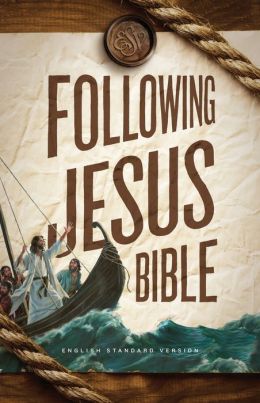
Bible Review: Following Jesus Bible (2015)

ESV Following Jesus Bible. March 2015. Crossway. 1424 pages. [Source: Review copy]

Following Jesus is one of three new children's Bibles published by Crossway in 2015*. The other two Bibles are the ESV Children's Bible and the ESV Big Picture Bible.

What you need to know:

1) The Following Jesus Bible is available in the ESV Translation. This is a translation that will grow-with-your child. It is not a just-for-kids translation. The vocabulary is tougher, I admit. But there is a glossary at the back of the Bible.

I personally LOVE, LOVE, LOVE the ESV translation. I believe it is a translation families could read together. An adult Bible that seeks to show how the Bible is all about Jesus is the ESV Gospel Transformation Bible.

Romans 3:21:26 in the ESV
But now the righteousness of God has been manifested apart from the law, although the Law and the Prophets bear witness to it— the righteousness of God through faith in Jesus Christ for all who believe. For there is no distinction: for all have sinned and fall short of the glory of God, and are justified by his grace as a gift, through the redemption that is in Christ Jesus, whom God put forward as a propitiation by his blood, to be received by faith. This was to show God's righteousness, because in his divine forbearance he had passed over former sins. It was to show his righteousness at the present time, so that he might be just and the justifier of the one who has faith in Jesus. 
Romans 3:21-26 in the NIrV (New International Reader's Version)
But now God has shown us his saving power without the help of the law. But the Law and the Prophets tell us about this. We are made right with God by putting our faith in Jesus Christ. This happens to all who believe. It is no different for the Jews than for the Gentiles. Everyone has sinned. No one measures up to God’s glory. The free gift of God’s grace makes us right with him. Christ Jesus paid the price to set us free. God gave Christ as a sacrifice to pay for sins through the spilling of his blood. So God forgives the sins of those who have faith. God did all this to prove that he does what is right. He is a God of mercy. So he did not punish for their sins the people who lived before Jesus lived. God did all this to prove in our own time that he does what is right. He also makes right with himself those who believe in Jesus.
Romans 3:21-26 in the ICB (International Children's Bible)
But God has a way to make people right with him without the law. And God has now shown us that way which the law and the prophets told us about. God makes people right with himself through their faith in Jesus Christ. This is true for all who believe in Christ, because all are the same. All people have sinned and are not good enough for God’s glory. People are made right with God by his grace, which is a free gift. They are made right with God by being made free from sin through Jesus Christ. God sent him to die in our place to take away our sins. We receive forgiveness through faith. And all of this is because of the blood of Jesus’ death. This showed that God always does what is right and fair. God was right in the past when he was patient and did not punish people for their sins. And God gave Jesus to show today that God does what is right. God did this so that he could judge rightly and also make right any person who has faith in Jesus.
Glossary Terms:

  • propitiation: the turning away of wrath. Christ's death was the propitiation of God's wrath because of sin (1 John 2:2)
  • justification: a declaration of right standing before God, received through faith in Christ's death and resurrection on our behalf (Romans 3:24; Romans 5:18)
  • the law: God's instructions concerning proper behavior (Psalm 19:7-9). Because of human sin, no one is able to keep God's law perfectly (Romans 3:19-20). But Jesus did that for us, and we can find salvation through faith in him (Galatians 4:4-7)
  • witness: to proclaim the truth abut Jesus and the gospel (Acts 1:8)
  • redemption: the act of buying someone back from captivity (Exodus 21:30). God redeemed us from sin and death by offering his Son, Jesus, as a ransom or payment for us (Ephesians 1:7-10)
  • sin: any thought or action that violates God's moral law (Romans 3:23-24)
  • faith: belief in Jesus Christ, resulting in salvation from sin and eternal life (John 3:16)
  • grace: The unmerited favor of God (2 Corinthians 12:9) it is only by God's grace through Jesus Christ that we can be saved from our sins and can have eternal life. (Ephesians 2:7-9)
2) The Following Jesus Bible has special features throughout designed to help children ages 8 through 12 understand the Bible.

Articles such as "About the Bible," "About the Old Testament", "The Books of Moses," "The Books of History," "The Books of Wisdom and Poetry," "The Books of the Prophets," "The Time Between the Testaments," "About the New Testament Books," "The Gospels and Acts," "The Epistles," "Seeing Jesus," "The Ten Commandments," "What is the Law?" "What is the Gospel?" "God's Word in the Lord's Prayer," etc.

Book Introductions. These book introductions may be just one page, but, they are informative.

Charts such as "Days of Creation," "Categories of Psalms," "Who are the Fools in Proverbs," "Words of the Prophets," "The Miracles of Jesus," "The Parables of Jesus," "Our Savior's Last Words," "Where Did We Get the Apostle's Creed?" "Timeline of the Old Testament," "Timeline of the New Testament," etc.

Maps such as "Jerusalem in the Time of Jesus," "The Land of the Patriarchs," "The Exodus from Egypt," "The Lands Assigned to the Tribes of Israel," "The Kingdom of Saul, David, and Solomon," "The Divided Kingdom of Israel and Judah," "The City of Jerusalem," "The Land of Israel During the New Testament," and "Places Paul Visited."

450+ "W Questions" found throughout the Bible answering the who, what, where, when, or why of a text.
70+ "Following Jesus" sections found throughout the Bible explaining a text and how to apply it
30 + "Seeing Jesus" sections found throughout the Bible helping readers see how the whole Bible is all about Jesus.

Example of SEEING JESUS
Zephaniah 3:14-17, Singing with God
Ever sung in a choir? It's fun! Singing is fun anyway, but singing in a choir is even better, because you get to do it with other people. You put your voices together, and it comes out sounding great!
Read Zephaniah 3:14-17. Who does it say is singing in verse 14? God's people--Israel, Jerusalem. What are they singing about? They're singing about how God has taken away their sins ("the judgments against you") and all their enemies. That's what Jesus did for them when he died on the cross. But Jesus' death on the cross has taken away our sins and saved us from our enemies too. So we can sing with Israel and Jerusalem as well. Quite a choir!
Wait! There's more! Look who's singing in verse 17. The Lord God himself is singing (loudly!) about how he's loving and blessing us! This is what Jesus' death on the cross does! By taking away our sins, it brings us into perfect harmony with God. (990)
Example of FOLLOWING JESUS
Galatians 2:11-16, A Reminder for Everyone
Nobody gets to heaven by doing good things or by not doing bad things. The one and only way to heaven is to trust that Jesus has done everything for us already.
That's still the most important thing for us to hear every day, because everyone gets confused now and then. Read Galatians 2:11-16. Even Peter needed a reminder. Great to hear it again, isn't it? (1261)
Examples of "W Questions"
WHAT is "propitiation"? Propitiation means the turning away of wrath. In the Old Testament, the place of propitiation was the cover of the ark of the covenant, where the high priest sprinkled the blood of the sacrifice. Just as the blood covered the ark of the covenant, Christ's blood covers the sinner. He is the sacrifice for our sins. Hebrews 2:17 (1315)
WHAT does it mean to be "justified by faith?" To justify is a legal term meaning "to declare not guilty" or "to declare righteous." Jesus kept the law perfectly for us and paid the penalty for our sin through his death and resurrection. Because of Christ, God declares us righteous. that means that we are now in a positive relationship with God. We have access to the Father and his blessings through faith in Christ. Romans 3:27-31. (1215)
WHY is the church called the body of the Christ? Like the human body with its many parts, the body of Christ has many members. Each believer is a member of Christ's body and has his or her own functions. The Lord equips each Christian with different gifts and abilities. Together, believers accomplish the Lord's mission of spreading the gospel throughout the world. Romans 12:5. (1221)
3) Other details about the text and design:
  • 9 point type
  • double column
  • paragraph format
  • black letter (words of Christ appear in black, not red)
  • chapter numbers are in blue, headings are in orange

The Following Jesus Bible is a redesign of the ESV Grow Bible.

My thoughts:

I definitely recommend the ESV Following Jesus Bible. Especially to families who do not already own the ESV Grow Bible. (If you have the ESV Grow Bible, and it's in good condition, then you should know that the ESV Following Jesus Bible has many of the same notes and book introductions. So you may already have most of what it contains.)

I think it is an excellent children's Bible. The design is appealing and very readable.

For parents, I'd recommend Starr Meade's excellent book GIVE THEM TRUTH. I think this book and this Bible would pair quite well together!!!

*Also newly available are various compact and thinline Bibles.

© Becky Laney of Operation Actually Read Bible