Showing posts with label books reviewed at Operation Actually in 2015. Show all posts

Monday, January 11, 2016

Bible Review: 1599 Geneva Bible, New Testament

1599 Geneva Bible. Tolle Lege Press. 1366 pages. [Source: Bought]

In 2015, I was able to read the New Testament in three early translations: the Wycliffe New Testament, the Tyndale New Testament, and finally the 1599 Geneva Bible. The 1599 Geneva Bible contains the Old and New Testaments, but, my focus was on completing only the New Testament.

I enjoyed reading this translation. Perhaps I don't love, love, love it like I do other translations. But I have come to appreciate it.

Here are some verses to give you a taste of the translation:
  • Rejoice in the Lord always, again I say, rejoice. Philippians 4:4
  • I am able to do all things through the help of Christ, which strengtheneth me. Philippians 4:13
  • Do all things without murmuring and reasonings, That ye may be blameless, and pure, and the sons of God without rebuke in the midst of a naughty and crooked nation, among whom ye shine as lights in the world, holding forth the word of life, that I may rejoice in the day of Christ, that I have not run in vain, neither have labored in vain. Philippians 2:14-16
  • For God so loveth the world, that he hath given his only begotten Son, that whosoever believeth in him, should not perish, but have everlasting life. John 3:16
  • Let not your heart be troubled: ye believe in God, believe also in me. In my Father’s house are many dwelling places: if it were not so, I would have told you: I go to prepare a place for you. And if I go to prepare a place for you, I will come again, and receive you unto myself, that where I am, there may ye be also. John 14:1-3

Friday, December 18, 2015

Book Review: Voyage of the Dawn Treader

The Voyage of the Dawn Treader. C.S. Lewis. 1952. HarperCollins. 248 pages. [Source: Bought]

Is Voyage of the Dawn Treader by C.S. Lewis my absolute favorite, favorite of the Chronicles of Narnia series? Almost, yes. It is at the very, very least my second favorite. The only other book that even comes close is the FIRST book in the series, The Lion, The Witch, and The Wardrobe.

Returning to Narnia in The Voyage of the Dawn Treader is Lucy and Edmund. The two siblings are joined by a cousin, I believe, Eustace. Lucy and Edmund are quite happy to be reunited with Prince Caspian--now King. Eustace is shocked and angry and irritable. The last place he wants to be is in Narnia. Or should I say on a Narnian ship, sailing with a Narnian crew, led by a Narnian king. Eustace himself doesn't actually step foot into Narnia--the country--at least not in this book. Readers will remember quite a few characters from Prince Caspian.

Caspian is on a mission to find out the fates of seven lords who were loyal to his father, lords that have been missing for over a decade if not two. Caspian is sailing from island to island making inquiries, and exploring new lands and countries. This can be risky and dangerous...

Does Aslan make an appearance? Yes!!! And it's probably one of my favorite, favorite scenes. Eustace and Aslan have some business between them! If Eustace hadn't been turned into a literal dragon, would he have been beastly forever? Probably. Turning into a dragon, changed, him for the better!

The book is a lovely adventure, and, a joy to read.

Wednesday, December 16, 2015

Book Review: 52 Little Lessons from It's A Wonderful Life

52 Little Lessons from It's A Wonderful Life. Bob Welch. 2012. Thomas Nelson. 224 pages. [Source: Bought]

Did I enjoy reading 52 Little Lessons from It's A Wonderful Life? Yes. After starting the book, I realized I needed to re-watch the film. It honestly felt like watching the film for the first time. Perhaps because I watched it with subtitles and was able to "catch" stuff I'd never noticed before. (Like how the film begins with so many people in the town earnestly praying for George.) Perhaps because I never take the time to give it my attention, my full attention, I mean. It is so familiar that I almost dismiss it into the background at times. When I think of It's A Wonderful Life I tend to think of four or five particular scenes. Reading the book and re-watching the film helped me appreciate the movie as a whole, and pay attention to details big and small.

If you're looking to see "It's A Wonderful Life" through new eyes, I'd also recommend listening to Steven Curtis Chapman's "Meant to Be."
You were meant to be touching
The lives that you touch
And meant to be here
Making this world so much more
Than it would be without you in it
You were meant to be bringing
The gifts that you bring
And singing the songs
You've been given to sing
You are perfectly, wonderfully,
Beautifully meant to be
You were meant to be
So. Back to the book. There are 52 entries or readings. Each one focuses on a lesson to be learned from watching the movie. Each entry generally highlights a particular quote or a particular scene. A few just focus on a particular (usually minor) character.

Lesson 7: You Can't Run Away From Your Problems
Lesson 10: There's No Impact Without Contact
Lesson 15: Prayer Changes Things
Lesson 17: Don't Wait To Tell Someone You Care
Lesson 25: The Greatest Gift You Can Give Is Grace
Lesson 29: Look for the Best in People
Lesson 33: What Triggers True Change is True Humility


© Becky Laney of Operation Actually Read Bible

Monday, December 14, 2015

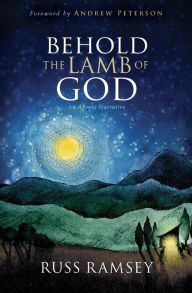
Book Review: Behold the Lamb of God

Behold the Lamb of God. Russ Ramsey. 2011. Rabbit Room Press. 160 pages. [Source: Bought]

I would definitely recommend Russ Ramsey's Behold the Lamb of God. Is it an advent devotional? Yes and no. Yes, it's perfectly fine to use the book as an advent devotional. It would make a lovely early Christmas present. But is it only an advent devotional? I say that this is one "advent" devotional that is worth reading all twelve months of the year.

One reason why I think this is so is that it is all about engaging the reader with the Bible story. One could perhaps think of it as a bible story book for grownups. (Though I will add that this one would be fine to share aloud with the whole family.) Perhaps you're a new Christian, and, you're curious about what's in the Bible but the idea of reading the Bible through intimidates you more than excites you. Perhaps you've tried in the past to get the "big picture" of the Bible but for whatever reason, you gave up or lost interest. Perhaps you've been a Christian for many, many years, but, you're still not all that clear what the Bible is all about and how the testaments fit together.

Biblical literacy is important to Ramsey, and he's adapted the 'big picture' of the Bible into twenty-five readings. These readings point the way to Jesus Christ, and help emphasis the reason WHY we celebrate Christmas. About seventy-five percent of the book focuses on the Old Testament, but, don't think this means that Jesus is excluded--far from it! Christ is to be found in both Old and New Testaments, and, if you've never realized how or why, then, perhaps this devotional will help you see the Bible in a new way. That is perhaps the Holy Spirit will use Ramsey's book to minister to you.

I enjoyed this one. But I didn't enjoy all twenty-five readings equally. But by the time we get to the end of the book, it was absolutely giddy-making, and a true delight. The excitement built throughout the book as the plot advances towards Jesus: his birth, his life, his ministry, his death and resurrection. There was just something JOYOUS about it.

My hope is that reading this devotional will encourage you--inspire you--to pick up the Word of God and read it with new passion, new devotion, new longing to TASTE AND SEE spiritual things.

Woven throughout the story are all of humanity’s wrath and greed and lust and gluttony and sloth and envy and pride—together in force with all of their consequences. But through that darkness shine the bright rays of love, joy, peace, patience, kindness, goodness, gentleness, faithfulness, and self-control. (Gal 5:22) It is the story of evil against good, of darkness locked in an epic struggle to snuff out the light forever. Will the darkness prevail in the end, or will the light overcome the darkness? (Jn 1:5) This, ultimately, is what the story is about. It is a tale filled with people in trouble, all living somewhere between wandering and homecoming, between devastation and restoration, between transgression and grace. Every mortal character in the story needs rescue, but they have all turned aside, and together they have become corrupt. There is no one who does good, not even one. (Psalm 14:3)
It’s the story of the one true God calling a people his beloved, though they’ve lived in perpetual rebellion against him. Since the beginning, this story has had an end—a glorious end. God’s call on the lives of his people, ultimately, is to himself—though it would come at a greater cost than anyone could imagine. The story ends with the maker and lover of the souls of men drawing his people to himself—purchasing their redemption through the lifeblood of his own Son. God did not spare his Son but gave him for us all. And if this is true, how will he not also, through his son, graciously give us all things? (Rom 8:32) The tale is a tall one, but it’s true.
To worship God is to dwell on who he is, to consider his handiwork. (Job 37:14) Often worship requires stillness. Stillness allows a mind to hold complicated thoughts without losing them. Silence was a gift God gave to Zechariah, and the old man put it to work.
There was no one around to coach them, no one to tell them everything would be all right. He held her and he prayed. They thought of the angels who visited their dreams. They thought of Adam and Eve taking the forbidden fruit and how one of the consequences of that act of rebellion was shooting through Mary from head to toe, every three minutes now. It was not a silent night. She strained and groaned and fought for every breath. She pushed as sweat beaded on her forehead. Joseph wiped her brow and told her a hundred times that he loved her, he loved her, he loved her. Swept up in waves of pain and contractions, Mary continued to push and breathe and strain while time passed. Eventually, as if cresting a ridge, her labor gave way to delivery, and her groaning gave way to the sound of the cries and the coos of little lungs drawing in the breath of earth for the first time. Joseph laid the baby on Mary’s chest, and to the wonder of the helpless man and the relief of the weary woman, they beheld him who, though he was the Son of God, was every bit a fragile, tiny baby.

© Becky Laney of Operation Actually Read Bible

Friday, December 11, 2015

Book Review: Keeping Holiday

Keeping Holiday. Starr Meade. Illustrated by Justin Gerard. 2008. Crossway. 192 pages. [Source: Review copy]

If there's a resounding theme (or echo) to this Christmas-themed allegory it's this: You can't find the Founder; he finds you. He's not just the Founder, he's the Finder too.

Dylan and Clare star in Starr Meade's Keeping Holiday. The two are cousins who are visiting Holiday with their family. The book actually is about two visits to Holiday.

The opening visit to Holiday is the first chapter--perhaps two. Dylan discovers that the "Holiday" he's been going to every year is just the Visitor's Center for Holiday. That there is actually much, much more to Holiday. He discovers this through a flyer, I believe, in the church yard.

Three or four years later is when readers next see Dylan. In this visit to Holiday, Dylan is joined by his cousin, Clare. The two are determined to find out more about the 'real' Holiday and do their best to get there. But it is a mystery, a challenge, an effort. The clues are not there one minute, and, then suddenly right there before them. The two eventually receive visitors passes to Holiday, these passes are good only for four days. These passes must be authorized by the Founder in order to become permanent passes to visit Holiday. If they are not authorized during this visit, they'll never receive another opportunity. The passes will expire forever. No second chances.

Mr. Smith is their nemesis who keeps showing up in every chapter--or every other chapter. He's determined to keep Clare and Dylan OUT of Holiday. He teases, taunts, accuses, discourages, etc.

Dylan and Clare meet a lot of "people" along the way. I'm not sure "people" is the right word. They encounter talking trees, talking mistletoe, talking poinsettias, talking bells, talking stars, etc. In addition, they meet an occasional human willing to help them "find" the Founder.

The book is strange. I won't lie. Allegories are just by nature strange and odd and require some effort by readers. You have to accept the strangeness, almost welcome and celebrate the strangeness, the foreignness. It requires you to completely suspend your disbelief and accept the way things work in a fictional world. Yes, this is required in speculative fiction too, but, even more so in allegory.

Keeping Holiday is an allegory about salvation. Dylan and Clare are "seeking" salvation and discovering that they wouldn't even be seeking if God wasn't the Seeker. The two discover that God is the author of salvation from start to finish. Of course, this being an allegory, readers never hear talk of God or Christ or Jesus or Christmas or Easter or the cross or the resurrection. One learns about an Emperor and a Founder and a King.

I do like the fact that the book acknowledges there is a difference between celebrating Christmas and celebrating the CHRIST of Christmas. That one can only really genuinely celebrate Christmas when you know the Savior. Knowing Jesus, loving Jesus, trusting Jesus, worshipping Jesus enhance Christmas celebrations. There is a very specific reason for the season--and it isn't an excuse to eat cookies or buy yourself stuff. So I liked aspects of this one very much. But other elements just didn't quite work for me--as allegories.

For example, in real life, the gospel should be presented clearly, openly, unashamedly, all year long. No games, no waiting games, no teasing, no follow the clues and hints, and maybe just maybe I'll tell you more. The gospel should not be presented in a scavenger-hunt way. The gospel should not be presented  vaguely or smugly or 'you'll see for yourself later after you follow this long and hard trail.' That's not to say that the gospel isn't personal. It is. You cannot have faith for another person. You cannot have trust for another person. You can't pass out faith like you pass out tracts. It doesn't work like that. So, yes, it is something that a believer has to experience on their own. And they do have a 'faith journey' in a way.   But the gospel is something simple and clear and factual.

This was my fourth time to read Starr Meade's Keeping Holiday.

© Becky Laney of Operation Actually Read Bible

Wednesday, December 9, 2015

Book Review: The Photograph

The Photograph. Beverly Lewis. 2015. 320 pages. [Source: Review copy]

Did I enjoy reading Beverly Lewis' The Photograph? I think my favorite part was the fact that it was a stand-alone novel, that it actually had an ending and resolution to it. I have found Lewis to be a frustrating author in the past because she can take up to three books to resolve a story, a romance--which is two books too long, in my opinion! So one of the first things I did before reading it was to check and see if this one would have an ending! Some people might call that cheating, I don't. Not really. Better to know at the start if a book is going to have a non-ending.

So the heroine of The Photograph is Eva Esch. One of her sister runs away from home early in the novel. She's very worried about her, about what will happen to her in the outside world, about the trouble she may find herself in since she's so innocent and trusting. But that isn't her only concern. Other family troubles are going on as well. One of her brothers will be kicking all the unmarried sisters--including Eva--out of the family home. They will either have to all find husbands during this courting season, or, be split apart and go to various relations or friends of relations. That might be upsetting and stressful under normal circumstances, but, her sister's disappearance puts it in perspective to a certain degree.

Someone does start pursuing a courtship with Eva. And he's a stranger from out of town. His name is Jed. And he makes buggies. Can she take a break from worrying long enough to find out if this is true love? Will Jed help her find her sister even though there are so few clues available?

As I said, I liked this one. It is probably one of the best I've read by Beverly Lewis. I really, really liked that both Eva and Jed like to read.

The Photograph isn't contemporary Amish fiction or historical Amish fiction, it is that fuzzy in-between of the 1980s.

Monday, December 7, 2015

Book Review: The Painter's Daughter

The Painter's Daughter. Julie Klassen. 2015. Bethany House. 464 pages. [Source: Review copy]

The good news is that I enjoyed The Painter's Daughter much, much more than Lady Maybe which I reviewed earlier this year! Is The Painter's Daughter my absolute favorite Regency romance by Julie Klassen??? It's probably somewhere safely in the middle, a good, solid like.

Sophie, the heroine, is "the painter's daughter." Before the novel opens, she had been acting as her father's apprentice, helping him with his work, and meeting fellow artists, including visiting artists to the area. One visiting artist was Wesley Overtree. She catches his eye; his flattery leads to her becoming his muse, his model. That soon leads to trouble--to pregnancy. Before she can tell him the news, however, he's ready for a new muse and a trip to Italy. I do think it's worth noting for readers that this relationship, this pregnancy, occurs before page one. There were several flashback scenes, but, unlike Lady Maybe, it was not overly detailed and in-your-face with graphic descriptions.

Captain Stephen Overtree, the hero, comes looking for his brother. What he finds is that his brother is gone again--he's missed him by a day or two--and that his brother has left behind a mess. Stephen meets Sophie, realizes what his brother had done--or failed to do, the right thing--and makes her a generous offer. He will do what his brother failed to do: make an honest woman of her, give her unborn child a home, a name, a right and legal standing in the world's eyes. Will she consent to such a marriage? Should she consent to such a marriage?

She does. For better or worse. And the two set off to elope. For he only has two weeks before he's due back with his regiment. He doesn't have enough time for banns to be read properly. The two then visit her parents and then his parents. She will remain with his family while he's serving his country…

Will Sophie continue to long for what might have been? Will she hold onto her feelings for Wesley? Or will she open her heart again and fall in love with her husband?

I enjoyed the characterization in this one! Sophie, Stephen, Wesley, Kate--the sister, his grandfather, his parents, a few of their neighbors and family friends. So much was happening, and it was a quick, enjoyable read for the most part.

It was decidedly Christian as well. It explored what grace and forgiveness are all about. And there was at least one or two presentations of the gospel.

© Becky Laney of Operation Actually Read Bible

Sunday, December 6, 2015

Book Review: Best Christmas Pageant Ever

The Best Christmas Pageant Ever. Barbara Robinson. 1972. HarperCollins. 128 pages. [Source: Bought]

The Herdmans were absolutely the worst kids in the history of the world. They lied and stole and smoked cigars (even the girls) and talked dirty and hit little kids and cussed their teachers and took the name of the Lord in vain and set fire to Fred Shoemaker's old broken-down toolhouse.

Let me ask you a question. Who is the gospel for? Think about it if you want. I'll wait.

Is the gospel for people who have it all together, the people who are good and are always striving to do better, to do more?  Or is the gospel for people who don't have it all together, who don't have the answers, who don't even know that they need to be asking questions? Is the gospel for broken, messed-up, difficult-to-get-along-with people? Or is the gospel for people who aren't-all-that-bad-all-things-considered?

On one hand, The Best Christmas Pageant is a comedy through-and-through. It's narrated by a child who's been tormented by the Herdmans for years. And it captures all the reactions of a town to all the bad stuff the Herdmans do (and say). The narrative voice, for most of the book, is just hysterical.

On the other hand, The Best Christmas Pageant is a much-needed reminder of what Christmas is all about, of what the gospel is all about.
The saying is trustworthy and deserving of full acceptance, that Christ Jesus came into the world to save sinners, of whom I am the foremost. 1 Timothy 1:15
And when the Pharisees saw this, they said to his disciples, “Why does your teacher eat with tax collectors and sinners?” But when he heard it, he said, “Those who are well have no need of a physician, but those who are sick. Go and learn what this means, ‘I desire mercy, and not sacrifice.’ For I came not to call the righteous, but sinners.” Matthew 9:11-13 
For the Son of Man came to seek and to save the lost. Luke 19:10 
The Best Christmas Pageant Ever provides an inside-out look at the nativity story, and captures best why Christ came in the first place.

It is told from the "inside" Christian perspective, a Christian perspective with varying degrees of self-righteousness. That is some characters are presented as more self-righteous than others. But many characters are a bit blind. They have never thought of the gospel as being for the Herdmans. They see themselves as better--significantly better--than those Herdmans!

As if God's grace wouldn't dare include the Herdmans. Jesus die for the Herdmans????? You've got to be kidding, right???? Not them, Lord! Why, that's ridiculous. But the truth is, it's ridiculous for God to save any one of us. None of us--not one of us--merits God's salvation: his mercy and grace.

I liked seeing the Christmas story from a new angle.
They knew that Christmas was Jesus' birthday, but everything else was news to them--the shepherds, the Wise Men, the star, the stable, the crowded inn. It was hard to believe. At least, it was hard for me to believe--Alice Wendleken said she didn't have any trouble believing it. "How would they find out about the Christmas story?" she said. "They don't even know what a Bible is." (55)
I couldn't believe it. Among other things, the Herdmans were famous for never sitting still and never paying attention to anyone--teachers, parents (their own or anybody else's), the truant officer, the police--yet here they were, eyes glued on my mother and taking in every word. (59) 
When we got home my father wanted to hear all about it. "Well," Mother said, "just suppose you had never heard the Christmas story, and didn't know anything about it, and then somebody told it to you. What would you think?" (68)

© Becky Laney of Operation Actually Read Bible

Saturday, December 5, 2015

Book Review: The Coming of the King

The Coming of the King. Norman Vincent Peale. Illustrated by William Moyers. 1956. Prentice-Hall. 32 pages. [Source: Bought]

First sentence: Joseph was a carpenter. Far across the seas, in a small country at the eastern end of the Mediterranean, there is a little hill town, set among all the little hill towns of Galilee, called Nazareth. There, some two thousand years ago, Joseph had his carpenter shop in a room of his house.

Premise/plot: The Coming of The King is Norman Vincent Peale's retelling of the nativity--the birth of Jesus Christ. The book isn't only an adaptation of the nativity. It includes--in pink boxes--text taken directly from the Scriptures, from the King James Version, I believe.

My thoughts: I liked it. I definitely liked it. The text was nice. I'm glad it offered readers both an adaptation and the beloved Scriptures as well. I liked how these two fit together so well. It felt reverent and respectful. Did I love the illustrations? Not really! I'll be honest. Having black, white, and pink illustrations felt a bit odd to me! There is a LOT of pink in this book. (Starting with the end papers!) But the book has a very vintage feel.

Text: 5 out of 5
Illustrations: 2 out of 5
Total: 7 out of 10
© Becky Laney of Operation Actually Read Bible

Friday, December 4, 2015

Book Review: Then Sings My Soul

Then Sings My Soul. Robert J. Morgan. 2010. Thomas Nelson. 310 pages. [Source: Bought]

I enjoyed rereading this one. Did I know I was rereading it? No, not really. Not until GoodReads told me I read it in 2012! Apparently I not only read it, but reviewed it too.

Then Sings My Soul is a collection of hymn stories by Robert J. Morgan. There are hymns for all occasions--including Easter and Christmas. Chances are it contains some of your favorites. But chances are also good that there will be a few new-to-you songs as well.

I really enjoyed the story aspect of it. Learning more about who wrote it, when it was written, why it was written, etc.

My top ten hymns (chosen from the hymns within this collection)

1. Because He Lives
2. Amazing Grace
3. How Great Thou Art
4. Leaning on the Everlasting Arms
5. When We All Get To Heaven
6. Oh How I Love Jesus
7. What A Friend We Have in Jesus
8. Tis So Sweet To Trust In Jesus
9. Softly and Tenderly
10. Come, Thou Fount of Every Blessing

© Becky Laney of Operation Actually Read Bible

Wednesday, December 2, 2015

Book Review: Faith Alone

Faith Alone: A Daily Devotional. Martin Luther. Edited by James C. Galvin. 2005. Zondervan. 400 pages. [Source: Bought]

Looking for a devotional for next year? Now is the time to start looking. One tip I have for anyone looking to buy a new devotional, is to take advantage of kindle samples and look inside features. For this particular book, you have a little over two weeks worth of devotional entries. More than enough to help you decide if it is likely to be right for you!

Faith Alone is the devotional I picked out for myself last year. Did I like it? Did I love it? YES! Very, very much!

About the book:
These selections, originally written by Martin Luther between 1513 and 1546, have all been freshly translated into English for this devotional. The goal was to make this edition both accurate and easy to understand. I selected the readings primarily from Luther’s sermons, commentaries, and other devotional writings. These selections cover topics both theological and practical. Some of the theological themes you’ll find include the centrality of Christ, justification by faith alone, the authority of Scripture, and the importance of putting faith in God above human reason. Practical themes include the struggle against sin and temptation, prayer, humility, the handling of wealth and possessions, the value of everyday work, the importance of marriage and family, and love for neighbor. You may read one selection a day according to the date or explore themes using the subject index located in the back of the book. The verse at the beginning of each reading is usually the one that Luther was writing about or preaching on. At times I’ve attached a different verse that better fits the theme of the devotional thought. 
I read Faith Alone like I read most devotional books. Instead of reading one entry per day, I often read multiple entries several times a month. If I read it twice a month, I'd read about fifteen entries each time. If three or four times a month, about seven to ten entries at a time. I don't say that this is the absolute best way to read a devotional. But it seems to be a practical solution for me personally.

I thought I would share *one* quote from each month of the year in this review.

January
I understand what Jesus is saying here [John 14:6] in the simplest manner, so that it all applies to this one person, Christ. Jesus is called “the way” because he is the beginning, “the truth” because he is the one who helps us continue, and also “the life” because he is the end. For he must be everything—the beginning, the middle, and the end of our salvation. That is why we place him as the foundation stone on which the other stones are set and on which the entire roof is built. He is the first, middle, and last rung on the ladder to heaven (Genesis 28:12). For through him we must begin, continue, and finally reach the life beyond. So there is only one Christ, but he assumes different roles in our salvation experience. In the beginning it’s hard to find the way. Then life becomes more difficult as we continue to walk along the way. It becomes extremely tough when we have traveled on the way for a long time and are about to reach our final shelter—heaven. So if you hold on to Christ in faith, then you have started in the right place. If you remain with him, then you will be walking on the right path. If you persevere until the end, then you will be saved. Christ wants to pry our hearts away from trusting anything else. There is no other way, highway, bridge, or path for us than Christ alone. ~ January 19
February
When I feel anxious about sin and hell, I remind myself that when I have Christ, I have all that is necessary. Neither death, sin, nor the devil can hurt me. If I believe in Christ, I have fulfilled the law; it cannot accuse me. I have conquered hell; it cannot hold me. Everything that Christ has is mine. Through him, we obtain all his possessions and eternal life. Even if I am weak in faith, I still have the same treasure and the same Christ that others have. There’s no difference: we are all made perfect through faith in him, not by what we do. ~ February 4
March
We must do what God wants and stop thinking and worrying about what God hasn’t told us to do. Nothing is safer for us or more pleasing to God than when we trust in God’s Word instead of our own ideas. In his Word, we will find enough guidance about what we are to do. God requires us to have faith, to love, and to endure suffering. These three should be enough to keep us delightfully busy. We should deal with everything else as it comes along and let God worry about how it all turns out. ~ March 12
April
In summary, we must crucify the sinful nature for as long as we live on the earth. This means we are aware of its desires, but we don’t obey these desires. With the armor of God and with the spiritual weapons of faith, hope, and the sword of the Spirit, we fight against the sinful nature. With these nails, we fasten it to the cross so it is forced against its will to be subject to the Spirit. When we die, we put off the sinful nature completely. When we are resurrected, we will have a pure nature with no sinful passions or cravings. ~ April 9
May
You shouldn’t dare to reinterpret the Word of God your own way. It’s better to think, “I don’t understand these words. But before I change them, take something away from them, or add to them, I would rather leave them alone. I’ll give them to God.” The Scriptures should always be handled with reverence and respect. ~ May 22
June
We pray in response to God’s command and promise. We offer our prayers to God in the name of Christ, and we know that what we ask for will be given to us. We experience God’s help in all kinds of needy situations. And if relief doesn’t come soon, we still know that our prayers are pleasing to God. We know that God has answered us because he gives us the strength to endure. ~ June 11
July
The devil knows what prayer can accomplish. That’s why he creates so many obstacles and makes it so inconvenient for us that we never get around to prayer. ~ July 16
August
All the stories in Holy Scripture, if they are interpreted correctly, point toward Christ. ~ August 12
September
I have learned from my own experience that praying is often the most difficult thing to do. I don’t hold myself up as a master of prayer. In fact, I admit that I have often said these words coldly: “God, have mercy on me.” I prayed that way because I was worried about my own unworthiness. Yet ultimately the Holy Spirit convinced me, “No matter how you feel, you must pray!” God wants us to pray, and he wants to hear our prayers—not because we are worthy, but because he is merciful. ~ September 2
October
But those who have any kind of love and desire for the Word should gratefully acknowledge that these attitudes are poured into them by the Holy Spirit. For we are not born with these attitudes and cannot acquire them through the law. This transformation rests completely and absolutely in the hand of the Almighty. So when we eagerly listen to preaching about Jesus Christ, the Son of God—who for our sakes became a human being and subjected himself to the law to save us—then God sends the Holy Spirit into our hearts through this preaching. Therefore, it’s very useful for us to remember that we have the Holy Spirit. ~ October 13
November
We should learn to remind ourselves of Christ’s victory. In Christ, we already have everything that we need. We live only to spread this message of victory to other people. With our words and example, we tell them about the victory that Christ secured for us and gave to us. Christ, our victor, accomplished everything. We don’t need to add anything to it. We don’t need to wipe away our own sins or try to conquer death and the devil. Everything has already been done for us. We’re not fighting the real battle. We’re only suffering now in order to share in Christ’s victory. Christ says, “I have already won. Accept my victory. Sing about it and glorify it. Take comfort in it.” We know from the past that when believers were severely tested, the Holy Spirit reminded them of Christ’s victory and strengthened them so that they could endure everything. They could even face martyrdom, relying on Christ’s victory. May God help us also to hold on to Christ’s victory during our troubles and when we’re dying. ~ November 14
December
So the gospel is a joyful message about Christ our Savior. Whoever preaches correctly preaches the gospel and nothing but joy. How can our hearts have a greater joy than knowing that Christ has been given to us to be our own? So the nature of the gospel is revealed, not just by teaching the story and life of Christ, but also by personalizing it and offering it to all who believe. What would it help me if Christ were born a thousand times, and the news of his birth was sung to me every day with wonderful music, if I didn’t understand that his death was for me and that I should make it my own? ~ December 23

© Becky Laney of Operation Actually Read Bible

Monday, November 30, 2015

Book Review: Verses, 1847

Verses, 1847. Christina Rossetti. [Source: Bought]

Earlier in the year, I reviewed a chunkster-collection of Poems by Christina Rossetti. I loved it so much, I decided to get the complete poems collection. (Though I didn't buy the one pictured.) But I'm not going to wait until I've read two thousand pages of poems before I review it. I'm just not! So today I have for you the first section from the book, a series of poems privately published in 1847. This section is "Verses."

The poems:

  • The Love of Christ Which Passeth Knowledge
  • A Bruised Reed Shall He Not Break
  • A Better Resurrection
  • Advent: This Advent Moon Shines Cold and Clear
  • The Three Enemies
  • One Certainty
  • Christian and Jew: A Dialogue
  • Sweet Death
  • Symbols
  • Consider the Lilies of the Field
  • The World
  • A Testimony
  • Sleep at Sea
  • From House to Home
  • Old and New Year Ditties
  • Amen
  • Despised and Rejected
  • Long Barren
  • If Only
  • Dost Thou Not Care?
  • Weary in Well-Doing
  • Martyrs' Song
  • After This the Judgment
  • Good Friday
  • The Lowest Place

Many of these poems were ones that I'd already read earlier this year. But. I didn't mind revisiting them. I really didn't.

I really enjoyed the poem "Advent."

This Advent moon shines cold and clear,
These Advent nights are long;
Our lamps have burned year after year
And still their flame is strong.
'Watchman, what of the night?' we cry,
Heart-sick with hope deferred:
'No speaking signs are in the sky,'
Is still the watchman's word.

The Porter watches at the gate,
The servants watch within;
The watch is long betimes and late,
The prize is slow to win.
'Watchman, what of the night?' But still
His answer sounds the same:
'No daybreak tops the utmost hill,
Nor pale our lamps of flame.'

One to another hear them speak
The patient virgins wise:
'Surely He is not far to seek' –
'All night we watch and rise.'
'The days are evil looking back,
The coming days are dim;
Yet count we not His promise slack,
But watch and wait for Him.'

One with another, soul with soul,
They kindle fire from fire:
'Friends watch us who have touched the goal.'
'They urge us, come up higher.'
'With them shall rest our waysore feet,
With them is built our home,
With Christ.' – 'They sweet, but He most sweet,
Sweeter than honeycomb.'

There no more parting, no more pain,
The distant ones brought near,
The lost so long are found again,
Long lost but longer dear:
Eye hath not seen, ear hath not heard,
Nor heart conceived that rest,
With them our good things long deferred,
With Jesus Christ our Best.

We weep because the night is long,
We laugh for day shall rise,
We sing a slow contented song
And knock at Paradise.
Weeping we hold Him fast Who wept
For us, we hold Him fast;
And will not let Him go except
He bless us first or last.

Weeping we hold Him fast to-night;
We will not let Him go
Till daybreak smite our wearied sight
And summer smite the snow:
Then figs shall bud, and dove with dove
Shall coo the livelong day;
Then He shall say, 'Arise, My love,
My fair one, come away.'

Other favorites include, "Long Barren," "Dost Thou Not Care," "Good Friday" and "Old and New Year Ditties."

© Becky Laney of Operation Actually Read Bible

Sunday, November 29, 2015

Book Review: Silent Night

Silent Night. Joseph Mohr. Illustrated by Susan Jeffers. 1984/2003. Penguin. 32 pages. [Source: Bought]
Silent night, holy night.
All is calm, all is bright
Round yon virgin mother and child.
Holy infant, so tender and mild,
sleep in heavenly peace,
sleep in heavenly peace.
This one is a picture book adaptation of the Christmas carol--or hymn--"Silent Night." Included are the traditional first and second verses. Also included is the less familiar verse about the wise men. The verse about the wise men is not traditionally included in lyrics for the song. So it isn't even a traditional fourth verse! And versions of the song with more than three verses, don't have this verse either. I saw one adaptation with six verses--none of them about wise men!

I like this one. I love the song, of course. And it's nice to have a picture book adaptation of it with lovely illustrations. I just wish Jeffers had gone the traditional route and included the third verse of the song. I think the third verse of the song is the BEST AND MOST IMPORTANT.
Silent Night! Holy night!
Son of God, love's pure light,
Radiant beams from thy holy face
With the dawn of redeeming grace,
Jesus, Lord, at thy birth!
I haven't decided if the lack of the third verse is enough of an annoyance to keep me from liking this one. The edition I have is from 1984. It was reprinted in 2003, but, I'm not sure if any changes were made to the book.

Hymnsite.com 
Hymns and Carols of Christmas
Hymnary.org
Various English Translations of Silent Night--most from nineteenth century
Cyber Hymnal
Silent Night Lost Verses

© Becky Laney of Operation Actually Read Bible

Saturday, November 28, 2015

Book Review: Martyn Lloyd-Jones

Martyn Lloyd-Jones: His Life and Relevance for the 21st Century. Christopher Catherwood. 2015. Crossway. 160 pages. [Source: Review copy]

This biography of Martyn Lloyd-Jones was written by his grandson, Christopher Catherwood. Why should Christians still read Martyn Lloyd-Jones today? That is the question Catherwood sets out to answer in his biography. He hopes to prove that Lloyd-Jones legacy is solid and strong. He is worth reading today. He has not lost relevance. His message is still very much needed by the church.

First, the book presents a brief biographical sketch of Martyn Lloyd-Jones' life. Then the  book mainly focuses on his ministry--his preaching, his writing, his friendships--and his books. I appreciate that the book not only provides quick summaries of his books, of his beliefs, but also provides context for understanding and appreciating them.

The book is not as in-depth as titles in Crossway's Theologians on the Christian Life series. (I would love to see him included in this series in the future!) The book is definitely more casual and less organized. (Not that it is un-organized, mind you, just that the Theologians on the Christian Life series seems to be super-organized and very purposefully laid out.) The book also seems to be more argumentative and a ready-defense. That is, the author anticipates arguments and seeks to clarify and reconcile when possible. One strength the book has is the personal nature of it. The focus isn't exclusively on his sermons, on his church, on his ministry. The book shares to a certain extent what he was like in private with the family.

It was an enjoyable read that held my interest. I have read at least four or five books by Martyn Lloyd-Jones, so I was curious to learn more about his life. I am glad I got the opportunity to review this one.

Have you read any Martyn Lloyd-Jones? Do you have a favorite?

If you haven't read him yet, I'd definitely recommend starting with Walking With God Day by Day: A 365 Day Devotional. What I love about that devotional book is that each month of the year has a theme. And most entries from any given month come from one book. So that by the end of the year, you've had a good overview of some of his best works. AND also you've covered some essential doctrines of the Christian faith.

© Becky Laney of Operation Actually Read Bible

Friday, November 27, 2015

Book Review: Delighting in God

Delighting in God. A.W. Tozer. 2015. Bethany House. 208 pages. [Source: Review copy]

Ever since reading A.W. Tozer's Knowledge of the Holy, I've been a big fan of A.W. Tozer. "Big fan" might be an understatement. I've read and reviewed a little over twenty of his books since 2012!*

It isn't that I always, always agree with him theologically or doctrinally. In fact, I like to play a little game called True or False with Tozer. I play it not because I dislike Tozer and want to be mean. Far from it. Tozer was an engaging writer/speaker, and, it's because I find his works so fascinating, so compelling that I keep reading! When I agree with him, I agree wholeheartedly and enthusiastically. But when I disagree with him, well, it's just as emphatic!

Delighting in God is a NEW Tozer book. The sermons within were preached by Tozer soon after the publication of Knowledge of the Holy (1961). In many ways, these sermons do act as a sequel--or follow up--to Knowledge of the Holy.

The book is about God, about the church's perception of God, about society's perception of God, and, even more importantly perhaps, OUR personal perception of God. Tozer challenges readers to stop and consider how they perceive God. Do their daily actions--what they say, what they do, what they think--line up with the creeds that they claim to believe?

From the introduction,
I believe what Tozer wants to get across in this book is simply that your passion for God will determine your lifestyle. You cannot say you believe in God and then exhibit behaviors that are in conflict with the holy character and nature of God. Those two do not go together. If there is anything unholy in you, then there is nothing truly holy about you. Christianity is not a religion where you adhere to certain rules, regulations, and rituals. Christianity is a passion for God that can only be satisfied as we come to Jesus Christ. ~ James Snyder
If the messages were preached in the early 1960s, are the messages still relevant--relevant to readers, relevant to pastors and song leaders? I would say mostly so. But times have changed. And it's important to keep that in mind when you find a passage that you react to strongly. For example, Tozer spends a LOT of time talking about worship music in churches and Christian entertainment. Tozer never heard "Awesome God" or "10,000 Reasons." Tozer doesn't have an opinion on Chris Tomlin and Michael W. Smith.

If Tozer is intense and strong in his opinions, if he is offensive and off-putting, it is because, in my opinion, his love and zeal and passion for the Lord was so vibrant, so undeniable. Sin isn't something easily dismissed in his opinion. And Tozer felt some within the church and definitely those within society were too relaxed and casual and dismissive of God. Tozer wanted to wake up the lazy, relaxed church. And so reading Tozer is sometimes like getting slapped or punched. But Tozer often makes really good points. What Tozer wants you to think about, to reflect on, IS worth thinking about, talking about. He IS worth reading.

I personally LOVE reading Tozer. Yes, I admit Tozer uses "the church" in a very general way. Because it is often both critical and general, it can sometimes not match up with readers' own experiences, and, it may come across as very harsh and not always all that true. But sometimes the message he has for 'the general' church is very true and necessary to say in order to correct or chasten. What we actually believe matters just as much if not MORE than what we say we believe. Sometimes what you want to hear isn't what you need to hear.

Cover to cover, Delighting in God gives readers something to THINK about.

The chapter titles:

  • The Reality of Our Perception of God
  • The Basis of Our Perception of God
  • Our Perception of God and The Church
  • A Defective Perception of God
  • Restoring Our Perception of God
  • Reasons for a Faulty Perception of God
  • The Perception of Our Relationship with God
  • Our Perception of God Determines Everything
  • Our Perception of God Determines Our Fellowship with God
  • Our Perception of God's Perfection
  • Our Perception of God's Grace
  • Our Perception of God's Mercy
  • Our Perception of God's Goodness
  • A High and Lofty Perception of God
  • The Effect of Our Perception of God
  • Our Perception of God Navigates Our Prayer Life
  • Our Perception of God in Creation
  • The Perception of Our Fullness in Jesus Christ

Some of my favorite quotes:
To truly know God as He desires and deserves to be known is not a casual thing, but a lifelong pursuit that ends only when we see Him face-to-face. 
The important thing to keep in mind is that whatever keeps me away from God is my enemy, and only the power of God can overcome it. The trouble today is that we do not recognize the enemy, and in some cases, have even drawn him out to be a friend. 
God created us with a passion for himself, and it was the fall of man in the garden of Eden that hijacked that passion and brought man down to the level we find him today. Only through redemption--accomplished by Christ dying on the cross and rising the third day--can we be brought back to that place of fellowship with God, which is the passion of every human being. 
It is my contention that everything we do in some way reflects our perception of God… I believe that it is crucial that our perception of God be worthy of God and that it reflect the truth revealed to us about the God of the Word. 
I do not believe we can ever regain our lost perception of God until we are brought to consider once again the perfection of God. 
You cannot reach the world by becoming like the world. The only way to reach the world is to become something altogether other than the world. That is what we have in Christianity. 
Each day as I walk with God and allow the Holy Spirit to reveal to me who God really is, the more my capacity grows in worshiping and adoring this God. What this means is that my worship grows and grows as my perception of God grows. God cannot grow. My perception of God grows as I experience Him day after day. I should be more capable of worshiping God today than I was ten or twenty years ago. As I move toward God, my capacity to understand God grows deeper and deeper. Of course, the opposite is also true. As I move away from God, my capacity begins to shrink. How many Christians are experiencing a shrinking capacity to worship God? Perhaps that is the reason why our music today is so superficial.
We must warn people today that if they have an imaginary Christ and are satisfied with an imaginary Christ, then they must be satisfied with an imaginary salvation.
I do not believe that any man is able to love until he is able to hate. I do not think any can love God unless he hates the devil. I do not think he can love righteousness unless he hates sin.
If after reading and meditating on the Bible, I have not encountered the Living Word, I have truly read in vain. In my reading of God's Word, I need to persist until I pierce the darkness and come into the light of His presence.
© Becky Laney of Operation Actually Read Bible

Wednesday, November 25, 2015

Book Review: Jesus on Every Page

Jesus On Every Page: 10 Simple Ways to Seek and Find Christ in the Old Testament. David. P. Murray. 2013. Thomas Nelson. 246 pages. [Source: Library]

I am glad I got the opportunity to read David Murray's Jesus on Every Page. This book stresses the importance of seeing Jesus as being central in both testaments of the Bible. Jesus is present--is central--to the Old Testament. Christians can benefit by reading and studying the Old Testament. It isn't, he writes, just that readers can read the Old Testament and grasp a big picture of how it relates to Jesus somewhere down the road, if you will. It's more than that. Murray's book explains the various ways--10 to be exact--that Christians can find Christ in the Old Testament.

The first part of the book is titled "My Road to Emmaus." Within this section, Murray does at least two things: shares how he once felt about the Old Testament and how he came to view the Old Testament differently. In part by asking the question WHAT is the Old Testament all about and seeking answers from Jesus, Peter, Paul, and John. Murray became convinced--persuaded--that Jesus can be found in the Old Testament. Not just in a dozen or so passages about his first or second coming. But in the books of the law, in the history books, in the poetry books, in the prophets. Within all genres and styles, Jesus can be found in some way.

The second part of the book is titled "Spiritual Heartburn." Within this section, Murray shows readers how they can best benefit from reading the Old Testament. How can they go on a journey of their own to discover Jesus in the pages of the Old Testament?

  • Christ's Planet: Discovering Jesus in the Creation
  • Christ's People: Discovering Jesus in the Old Testament Characters
  • Christ's Presence: Discovering Jesus in His Old Testament Appearances
  • Christ's Precepts: Discovering Jesus in the Old Testament Law
  • Christ's Past: Discovering Jesus in Old Testament History
  • Christ's Prophets: Discovering Jesus in the Old Testament Prophets
  • Christ's Pictures: Discovering Jesus in the Old Testament Types
  • Christ's Promises: Discovering Jesus in the Old Testament Covenants
  • Christ's Proverbs: Discovering Jesus in the Old Testament Proverbs
  • Christ's Poets: Discovering Jesus in the Old Testament Poems

One thing that I think is important to realize--or to keep in mind--and it's something he mentions several times. There is only one way to be saved: by grace, by the gift of faith, through God's great mercy and the giving of the Holy Spirit. There wasn't an "Old Testament" way to be saved and a "New Testament" way to be saved. Those saved before Christ's coming were not saved through works--their obedience to the commands of the law and their faithful following of all the yearly sacrifices.

He writes,
No Old Testament believer enjoyed the extraordinary light that New Testament believers have since Jesus died and was resurrected, and the Holy Spirit was poured out at pentecost. Every Old Testament believer had sufficient light to trust to a future Messiah who would suffer, die, and be glorified. Every Old Testament writer knew that his messages of salvation by grace through faith in the Messiah would be much clearer to future generations. (180)
More quotes:
Let's look at some ways we find Jesus in the Psalms: We sing to Jesus with the Psalms; We sing of Jesus in the Psalms; We sing with Jesus in the Psalms. (187)
We use the psalms of lament to confess our sins to Jesus. We sing the psalms of praise to celebrate Jesus' person and work. We sing the psalms of remembrance to look back on Jesus' act throughout redemptive history. We sing the psalms of confidence to express our faith in Jesus' salvation. We sing the wisdom psalms to acknowledge that Jesus is our only source of wisdom. We sing the psalms of thanksgiving to express our gratitude for Jesus' daily grace in our times of need. (188)
Let me suggest several truths that saturate the book of Psalms: God saves by grace, not works; God will send a Deliverer; The Deliverer will reveal God in an unprecedented way; The Deliverer will suffer as a sacrifice for sin; the Deliverer will reign everywhere and forever. (191)
As we have seen, the book of Psalms covers every Christian experience. But the Psalms also cover every experience of Jesus. The book of Psalms was his hymnbook during His earthly life. And how suitable they were for His many spiritual needs… The gospels focus largely on His outward public life, but the Psalms give us His secret inner life. (195)

© Becky Laney of Operation Actually Read Bible

Friday, November 20, 2015

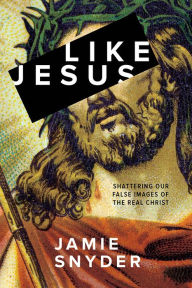
Book Review: Like Jesus

Like Jesus: Shattering Our False Images of the Real Christ. Jamie Snyder. 2016. [February 2016] 192 pages. [Source: Review copy]

Jamie Snyder's Like Jesus was an incredible read. Is it a must-read? Is any book a must-read for Christians other than the Word of God? Well, I can only say that I hope it finds a LOT of readers, because I think it is a relevant, timely, necessary read. He challenges readers to reflect on their lives, to ask tough, uncomfortable questions. I love that he challenges assumptions and even some terminology. (For example, that we "accept" Jesus into our hearts.*)

Is the Jesus you worship, the real Jesus? That is one of the questions Snyder asks readers. This book is all about shedding ourselves of the false Jesuses we've created in our own image, and, discovering the real Jesus, the true Jesus.** He writes,
Discovering Jesus is not a once in a lifetime event---it is an endeavor that lasts a lifetime. So use this book as an opportunity to continue that journey of discovery. Perhaps it has been some time since you have intentionally thought about who Jesus is, what He is like, what He has called you to, and last but not least, which Jesus you have been following.
and
Jesus is not content for you to like Him; he wants you to become like Him.
This is really what the book is all about. But before you can become like HIM, before you can want to become like HIM. You have to know him, not just know about HIM, though knowing about him is perhaps the first step. You have to be able to discern between the real Jesus as revealed in the Word of God--the Bible--and the Jesus that you may have been reshaping and molding in your own heart and mind. Jesus doesn't need us to "perfect" him or "refine" him. He doesn't want us to "make him acceptable or presentable" to today's society. We need to shape our thinking of who God is, who Jesus is, by the Word of God. Not by what we would have him to be, want him to be, but by who he actually reveals himself to be.

I like the fact that the book focuses on the BECOMING. Snyder acknowledges that this side of heaven, it is impossible for anyone to actually come close to achieving "being like Jesus." But we can all be a work in progress. We can all be on the path to becoming like Jesus. He writes,
Everyone, everywhere is becoming more like someone or something. The question is, what or whom? 
I don't know about you, but, that makes me stop and THINK. And that's one reason why I loved the book so much. It isn't an instant warm-and-fuzzy book. I love that Snyder speaks truth. You don't accidentally become like Jesus. You don't accidentally stumble into a deep, meaningful relationship. It takes commitment and discipline and effort. Note: I'm not saying that Snyder is in any way saying that we earn our salvation or that we're clothed in our own righteousness or that God's approval of us is dependent on our strivings and efforts. It's obvious that Snyder embraces the amazingness of GRACE.

Another passage that made me stop and think was this one:
Our Jesus is built within our hearts and minds according to our preferences and desires. So when we study Scripture and read Jesus' teaching, we usually nod our heads in agreement, because we assume He is always talking to someone else….If you find that you can read through pages of red letters without your heart racing, your palms sweating, and your mind spinning, there is a distinct possibility you don't understand whom Jesus is talking to. He's talking to you. And me.
And also:
Many people would claim to have a relationship with Jesus, and yet the role they envision Him playing in their lives is not a role He offers to play.
The book is divided into three sections: Imitation, Identification, and Intimacy.

I loved this book. I did. I just loved it. I thought it was packed with insight and truth.

*Snyder writes, "No one accepts Jesus. We have not been invited to do so. We don't have that power, and we don't play that role. I know some could say this is just semantics, but the words we use communicate the thoughts we think. "Accepting Jesus" communicates clearly that at some point in time, He was allowed to enter into your world. He was added to your schedule. He was put on your calendar… Jesus has never asked anyone to accept Him, nor will He ever do so… Jesus is not in need of being accepted. But you are. And so am I. Thank God, literally, that the acceptance we need is available, and it begins and ends with an invitation."

**I love how Snyder asks readers FIVE questions to determine if they could be worshipping a counterfeit Jesus. This section was GREAT. One of the five questions is "Is your Jesus content to leave you the way you are?"

© Becky Laney of Operation Actually Read Bible
Wednesday, November 18, 2015

Book Review: Advent in Narnia

Advent in Narnia: Reflections for the Season. Heidi Haverkamp. 2015. Westminster John Knox Press. 96 pages. [Source: Review copy]

Advent in Narnia is a great read for any Narnia lover looking for a book to read during Advent. Not that the book is only for Narnia-lovers. It isn't. Anyone genuinely seeking a book to read and savor during Advent will find this one worth the time it takes. The book does center around C.S. Lewis' The Lion, The Witch, and The Wardrobe. But it does so not at the cost of Scripture. Haverkamp quotes Scripture just as liberally as she quotes Lewis. Which is how it should be.

The first week's readings focus on "the wardrobe." The second week's readings focus on "the witch." The third week's readings focus on "Father Christmas." And finally, the fourth week's readings focus on "The Lion." Each day's reading includes a bit of Scripture, a bit of Lewis, and discussion/reflection questions.

The book also includes four sessions for small groups. Everything is practically organized in case readers want to lead a small group through the book.

If the book does become the interest of a whole church--or congregation--the book includes tips on hosting a Narnia Night for Families at your local church. Again the book gives very thorough advice on implementing this.

Overall, I liked this one very much. I've read The Lion, The Witch, and the Wardrobe many times. I do sometimes forget, however, that it is a Christmas-y book. I do think it's a great choice for families to read together. That is The Lion, The Witch, and The Wardrobe is a great choice for families to read together! I do believe this book is a good follow-up.

© Becky Laney of Operation Actually Read Bible

Monday, November 16, 2015

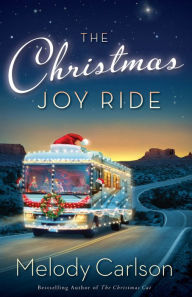
Book Review: The Christmas Joy Ride

The Christmas Joy Ride. Melody Carlson. 2015. Revell. 176 pages. [Source: Review copy]

Did I enjoy reading Melody Carlson's The Christmas Joy Ride? Yes. For the most part. It was a quick and satisfying read. Don't pick it up expecting to find the real 'reason for the season' in it. It's not a wow-worthy read perhaps. But is it fun, in its own way, and uplifting? Yes, it is. Christmas books should be uplifting, in my opinion. I have a low tolerance for depressing, sad, Christmas books.

So Miranda is the heroine of The Christmas Joy Ride. She's in a tough place financially, and that's a bit of an understatement. She decides on the spur of the moment to accompany her neighbor, her good friend, Joy, on a trip across the country. Joy, the other heroine, is eighty-five years old. She's driving her way across the country in an RV. The end of the trip will bring her to her new home, a retirement village, I believe, nearer to her grown-children. Along the way, she'll be spreading Christmas joy--literally--as she gives away her Christmas decorations and helps makes dreams and wishes come true.

The Christmas Joy Ride is one of those magical books that you think would make a GREAT movie that you could--you would--happily watch every Christmas season. Especially if it was cast right. This one has plenty of charm and good will in it. It's just a novel easy to recommend.

Friday, November 13, 2015

Book Review: Exalting Jesus in 1 & 2 Timothy and Titus

Exalting Jesus in 1 & 2 Timothy and Titus. David Platt, Dr. Daniel L. Akin, and Tony Merida. 2013. B&H. 336 pages. [Source: Bought]

In October, I read 1 and 2 Timothy thirty times. If you haven't given John MacArthur's New Testament reading method a go, you don't know what you're missing. I'm serious. There is nothing like saturating yourself in a book, and, really getting to KNOW its contents. Since I was reading 1 and 2 Timothy, I thought it would be great to also read a Bible commentary for those two books. This book, the one I selected, also includes Titus. (For the record, I didn't read Titus thirty times, though I probably read it a dozen times.)

Exalting Jesus in 1 and 2 Timothy and Titus is one book in a much-longer commentary series. I've reviewed Exalting Jesus in Matthew and Exalting Jesus in Galatians. This series is quickly becoming a favorite of mine.

David Platt wrote the commentary for 1 Timothy. Tony Merida wrote the commentary for 2 Timothy. Daniel L. Akin wrote the commentary for Titus.

Each chapter focuses on a section of text and begins with a main idea and an outline. Each chapter concludes with discussion/reflection questions. Each chapter is structured, which I definitely appreciate. I may not have liked writing outlines back in the days when I was writing for school, but, as a reader I find them super-helpful at times.

1 Timothy's Table of Contents
  • Authority and Hope for A Pastor and His Church 1 Timothy 1:1-2
  • The Centrality of the Gospel in the Local Church 1 Timothy 1:3-20
  • Global Prayer for the Local Church 1 Timothy 2:1-7
  • What About Women, Paul 1 Timothy 2:8-15
  • The Gospel and Church Leadership 1 Timothy 3:1-13
  • The Family of Faith: Who We Are and What We Do 1 Timothy 3:14 - 4:16
  • The Family of God 1 Timothy 5:1-16
  • Caring for Elders, Caring for the Church 1 Timothy 5:17-25
  • What About Slavery, Paul? 1 Timothy 6:1-2
  • The Gospel and Materialism 1 Timothy 6:3-10
  • The Church at War 1 Timothy 6:11-21
2 Timothy's Table of Contents
  • The Making of a Gospel-Centered Leader 2 Timothy 1:1-7
  • Gospel-Centered Bravery 2 Timothy 1:8-18
  • Images of Endurance 2 Timothy 2:1-13
  • Images of a Faithful Teacher 2 Timothy 2:14-26
  • Godly Examples 2 Timothy 3:1-13
  • Faithful to the Word 2 Timothy 3:14-4:4
  • Faithful to the End 2 Timothy 4:5-22
What did I appreciate most about the commentary? I appreciated many things actually. I liked how it covered each verse in an accessible, reader-friendly way. The text is written to teach and to instruct, certainly, but not in an I-know-more-than-you-and-I'll-now-prove-it-way. It isn't intimidating or off-putting. The style, I mean! Now Paul himself may make a few enemies with contemporary readers. (I'm not one to hate Paul for having written 1 Timothy.) But the thing I liked MOST and appreciated MOST is how the author(s) clearly, easily show how very relevant the Word of God still is. It's relevant not only to pastors and elders and the like, but, to you and me and to everyone.

Favorite quotes from 1 Timothy section:
The fact that God’s Word is inspired and inerrant is not only a doctrine to be affirmed; it’s a firm foundation to stand on in a culture and a world that suppress and oppose the truth of God. When everything around us seems to be caving in, we need to hear God’s Word and submit to it, knowing that what God has said is true and good and right.
In this letter Paul told Timothy that the one thing he must hold on to in the church at all costs is the gospel of Jesus Christ. The summons is clear: Address anything and everything that pulls people away from the gospel. If we lose the gospel, we lose everything. We may think other things are more urgent or more in need of addressing in the church—things like prayer, leadership, mission, materialism, or caring for one another. Paul would get to all of these things eventually, but he began by telling Timothy to guard the gospel.
How is it that you guard the gospel, celebrate the gospel, and fight for the gospel? You start, Paul says, by praying. The church is on a life-saving mission surrounded by people who don’t know the salvation of Jesus Christ. These people are destined for an eternal hell if nothing changes. So, as a follower of Christ, what do you do? You pray. It’s the easiest thing you can do.
The progress of the gospel in the world is dependent on the prayers of God’s people in the church. While salvation ultimately belongs to God, and even our prayers are His work in us, God has chosen to use the prayers of His people to accomplish His will. We desperately need to hear this truth. We are surrounded by people—from our own city to the ends of the earth—who are lost, perishing, and on their way to everlasting suffering. But we want them to know eternal satisfaction in Christ. We’re on a life-saving mission, and the Bible is literally urging us here to pray.
Because God desires the salvation of all people, we should pray for the salvation of all people. When you pray for lost family members, friends, neighbors, enemies, and people groups who are hostile to the gospel, pray knowing that God loves them and that He desires their salvation.
Worship is the goal of world praying. We are praying night and day, week after week, for all kinds of people in the world to come to a saving knowledge of God so they might bow down and worship Him. That’s what we’re after in our praying—worldwide worship.
An elder must know the Word and spread the Word throughout the church and from the church throughout the world. He must be able to persuade people with the Word, plead with people from the Word, comfort people with the Word, encourage people from the Word, instruct people in the Word, and lead the church according to the Word. This is nonnegotiable.
Like the columns of the temple, we lift high the truth of the Word. We want this Word to shine so that the world will see and hear and know the only true God. This truth also means that, as the church, there are some things we don’t hold high—man’s opinions, man’s innovations, man’s creativity, man’s wisdom, and man’s possessions. Instead, we lift up one thing: the Word of God. Let us magnify it, amplify it, spotlight it, and spread it—in the church and all over the world.
A materialistic world will not be won by a materialistic church for two reasons. First, we will not show the world that Christ is all satisfying as long as we are on the path of materialism. How will we lead people to abandon the things of this world if we in the church are attached to the same things?
There is a God over this world who wants all people to be saved, and there is a god in this world who wants all people to burn in hell. There is a battle raging for your friends, coworkers, neighbors, and for all the peoples of the world. How we fight this battle has eternal implications. Satan does not want us to believe, live out, or spread this gospel. Is he succeeding in your life? Are you even aware that you’re at war?
Favorite quotes from 2 Timothy section:
Our strength is not in how long we have been Christians, in how much we know about the Bible, or in how long we have been in ministry. Our strength, this very moment, is in the grace that is in Christ Jesus. Our strength is derived from our union with Jesus and is supercharged by our daily communion with Jesus.
God’s presence in us supplies what we need to endure.
When you open the Bible, there is grace coming to you—through personal devotion, hearing the Word read and preached, and singing it. Meditate on the gospel daily because you never outgrow your need for it.
It is hard work to rightly understand the teaching of Scripture and then present it in a way that is clear and understandable to the hearers. Teaching is also difficult because oftentimes your product is invisible. You cannot always see results from your teaching. It is also work because you are handling material that is by its nature controversial. A teacher is not handling ideas that are mere topics for small talk but rather the Word of God that is death to some and life to others (2 Cor 2:15-17). This reality will cause the teacher to feel the burden of sermon/lesson preparation weekly, and critics will arise because of the bold truth claims that have to be made by the faithful teacher.
The Bible is a “Him Book.” The Old Testament anticipates Christ, and the New Testament explains Christ. He is promised in the beginning, He is there in the middle, and He is held up at the end as our object of worship for all eternity.
We must preach truth because there is an absence of it in every generation.

© Becky Laney of Operation Actually Read Bible