Monday, October 14, 2013

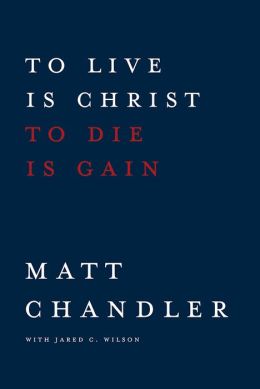
Book Review: To Live Is Christ To Die Is Gain

To Live Is Christ To Die Is Gain. Matt Chandler. 2013. David C. Cook. 224 pages. [Source: Bought]

Stated purpose of the book: God wants us to grow from being infants in Christ to being mature in Christ. That's what this book is about. How are we to mature, and how can we spot any "developmental delays"? My prayer is that as you read this book, prayerfully applying its challenges to your heart, God would use Paul's letter to the Philippians to show you what maturity looks like and to call you to pursue it all the more with all your might under His grace. (11)

I enjoyed reading Matt Chandler's latest book, To Live Is Christ To Die Is Gain. It is a casual exploration of the book of Philippians. It does contain insights, as you'd expect, but the narrative is informal and lighthearted. In twelve chapters, he covers all four chapters of the book of Philippians. He discusses themes and applications. He doesn't do as good a job in providing true historical context for understanding and appreciating Paul's letter. He seems to be all about translating the themes of the book into modern settings, supposedly, to help contemporary readers "get" what the book is all about. I don't mind the personal stories or the humor. (And what he said about Texas weather was completely true!) But I thought The Explicit Gospel was a better book, a more thought-provoking book.

The book's greatest strength is how basic it is, also how accessible it is. It is not an intimidating read. In the right hands, this book could prove quite beneficial and be a perfect match.

Quotes:
In the logic of the gospel, there are no alternatives to Christ. Every other option is no option at all. When everything considered valuable in life is seen to be nothing in comparison to the glory of Christ, you learn rather well that Christ alone is worth living for. Christ alone is worthy of an entire life's affections and devotions. (36)
Gospel courage comes from gospel preciousness. (45)
You will find, if you seriously study Scripture, that outside of the idea of hell, there is no more terrifying idea in the Bible than God setting you free to run in the imagination of your heart. (70) 
Always remember the gospel, so you won't forget that God will not expect something of you that He won't both empower you to obey and forgive you for not obeying. Always, always, always seek the cross. (78)
In your world, do people have souls? I know that sounds like a simple question. Let me put it into context. When you sit down at a restaurant, as a believer in Christ, and a young man or young woman waits on you, do you think of him or her as having a soul? As being a spiritual creature? Or are you thinking, Just give me my drinks and take my order and hurry up? Or do you recognize the image of God in that person? Are you able to encourage, love, and serve your servers, even in a situation as simple as that? (81)
I think we often misunderstand our faith and put all the weight on our conversion, with very little expectation for what comes afterward. (97)
In Christ's grace, there is freedom to be honest and transparent. (107)
Never be satisfied with where you are in the area of spiritual growth. Cultivate an insatiability for more of God by examining your weaknesses, beholding the perfection of Christ, and finding good examples of strengths you want to develop. (119)
© Becky Laney of Operation Actually Read Bible

Sunday, October 13, 2013

Week in Review: October 6-12

This week I read:

NASB

  • 1 Chronicles 13-29
  • 2 Chronicles
  • Ezra
  • Nehemiah
  • Esther
  • Job
  • Psalms 1-106

ESV Gospel Transformation Bible

  • Exodus 5-10
  • 1 Samuel 3-8
  • Ecclesiastes
  • Song of Solomon
  • Isaiah 1-13
  • Lamentations
  • Micah 
  • Nahum
  • Habakkuk
  • Zephaniah
  • John
  • Romans 1-3
  • 1 John
  • 2 John
  • 3 John
  • Revelation

KJV

  • Psalms 50-150
  • Proverbs 17-31
  • Hosea
  • Joel
  • Haggai
  • Luke 5-24
  • John
  • Acts 10-28
  • Revelation

NIV

  • Revelation 5-22
  • John 1-10

© Becky Laney of Operation Actually Read Bible
Saturday, October 12, 2013

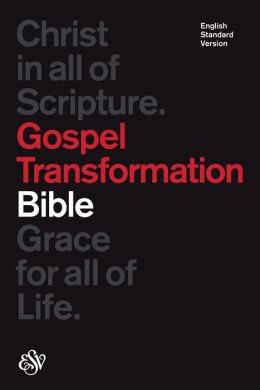
Gospel Transformation Bible, First Week Thoughts

I've had the Gospel Transformation Bible a little over one full week now. I have been able to spend almost an hour a day in it. I've read from Exodus, 1 Samuel, Isaiah, and Romans. I've also completed a handful of books from the Old Testament and the New Testament. Among those I've completed: John, 1, 2, 3 John, and Revelation. While opening a new Bible can be quite thrilling and full of promise, I've found breaking in a new Bible to be even more satisfying. It is one thing to think about the hours you'll spend reading it...in the future. And quite another to get started, to make that new Bible a part of your daily routine. This is when the Bible truly becomes yours.

I encourage you to read last week's post on the Gospel Transformation Bible. I know how difficult it can be to know--in the store--if a Bible is right for you, if a particular Bible is going to work for you, if it is going to meet all your needs. Browsing random study notes in the store may prove more frustrating than beneficial. I thought I would share a few notes from this week's readings. These notes should give you a good idea of the kind of notes to expect. Most of the notes are just brief quotes from longer notes...with the exception of Lamentations 3:21-39.

From the commentary on Lamentations 3:21-39
In verse 18 the author seems to have simply given up both in endurance and in hope. But then hope revives (v. 21). His lamenting has had a cathartic effect. Grief is important even for Christians, but with this proviso: we should not grieve as those without hope (1 Thess. 4:13). And here hope is reborn out of grief; the basis of this hope is the steadfast covenant love of God (Lam. 3:22-24). God is indeed rich in mercy (Eph. 2:4), and his mercies are ever new. Hope is a much devalued word in our time, often expressing our desire for an uncertain outcome. In the Bible it is a strong word to express certainty in God's future provision based on his truth and faithfulness. (Rom 5:3-5, Eph. 1:18-23; 1 Thess. 5:8-11; Titus 2:13-14; 3:4-7). Though God has cast his people off, he will not do so forever (Lam. 3:31-39). "Steadfast love" (vv. 22, 32) translates the Hebrew word hesed, which links God's love to his covenant faithfulness. This covenant was never conditioned on human faithfulness, and it leads straight to the new covenant established solely by the sovereign mercy of God and ultimately sealed in Jesus' blood (Luke 22:20; 1 Cor. 11:25). God will never cast his people off, because he did cast off his own Son in their place (Rom. 8:32).
From the introduction to John
Setting out to find a gospel-focus in John's Gospel might seem like the "challenge" of finding a mountain in a photo montage of the Swiss Alps--an exercise in the obvious. Yet there is a great difference between holding a travel brochure in your hand and actually standing at the base of the Alps. It is the difference between pleasant thoughts and soul-gripping wonder; a curious imagination and awe-fueled adoration; being well studied, and being knee-buckling stunned. John's Gospel is written not just to inform our minds but to inflame our hearts. Think of John's Gospel not so much as a book but as a destination. John is a tour guide of the Alps of the gospel. 
From the commentary on John 2:23-25
Ultimately, the gospel is not about us establishing a relationship with Jesus; it is about Jesus establishing a relationship with us--not simply as a consequence of our believing information about him, but more by Jesus "entrusting" himself to us in his revelation of himself.
From the commentary on John 5:18-47
Our adoption is secured by Jesus' propitiating (turning away, satisfying) God's wrath. According to Jesus, the only way we can derive life from the Scriptures is to see Jesus in the Scriptures, for all the Scriptures bear witness to him (John 5:30-47; cf. Luke 24:27, 44-47). The entire Bible, Genesis to Revelation, is ultimately about Jesus. Throughout Scripture God is unfolding the grace that culminates in Christ (John 5:39-40). The Bible is therefore not fundamentally about what we do for God but what God does for us. 
From the commentary on Exodus 5:21-23
Our discouragement in the face of difficulty and affliction often comes from forgetting what God has already said in his Word. Remembering that God's purposes are being worked out in our lives gives us courage when evil happens to us. Supremely, the gospel itself--what God has done in Jesus Christ for our sake--must be held before our eyes each day in remembrance (1 Cor. 15:1-2)
From the commentary on Micah 6:8
This text is frequently quoted summary of godly living, and rightly so. This is the godly life, the beautiful life. To it we are called. Let us strive to embody Micah 6:8 in our lives. And let us do so in a way that gladly acknowledges that we will never "do justice" and "love kindness" and "walk humbly" with God as we should. Only Jesus lived this way perfectly. But the wonder of the gospel is that he did it in our place and transfers his record of perfect righteousness to all those joined to him by faith. 
From the commentary on John 9:8-12
Miracles are not primarily for our comfort but for God's glory--for declaring the power present in and the praise due to the person and work of Jesus.

© Becky Laney of Operation Actually Read Bible
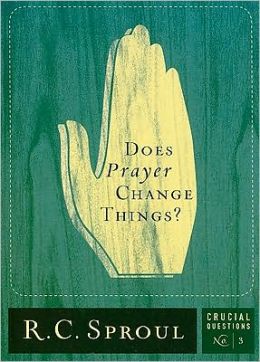
Book Review: Does Prayer Change Things?

Does Prayer Change Things? (Crucial Questions) R.C. Sproul. 1998. Reformation Trust. 88 pages. [Source: Bought]

What is the goal of the Christian life? It is godliness born of obedience to Christ. Obedience unlocks the riches of the Christian experience. Prayer prompts and nurtures obedience, putting the heart into the proper "frame of mind" to desire obedience. Of course, knowledge is also important because without it we cannot know what God requires. However, knowledge and truth remain abstract unless we commune with God in prayer. 

This is the first book I've read from R.C. Sproul's "Crucial Questions" series on the basics of Christianity. I found it to be a WONDERFUL read. I loved how accessible it was. I loved how practical and general it was too. It does not answer just one or two questions about prayers--it covers many! Yes, one of those questions leads to the title of this one. The book covers what prayer is AND what prayer isn't. The book consists of six chapters: The place of prayer, the purpose of prayer, the pattern of prayer, the practice of prayer, the prohibitions of prayer, and power of prayer.  Some time is spent on The Lord's Prayer, examining what it means exactly and showing how it can be used as a model of sorts for our own (original) prayers. I would definitely recommend this one!

Quotes:
Prayer, like any means of growth for the Christian, requires work. In a sense, prayer is unnatural to us. Though we were created for fellowship and communion with God, the effects of the fall have left most of us lazy and indifferent toward something as important as prayer. Rebirth quickens a new desire for communion with God, but sin resists the Spirit.
Prayer is the secret of holiness-if holiness, indeed, has anything secretive about it.
Luther said that he prayed regularly for an hour every day except when he experienced a particularly busy day. Then he prayed for two hours.
John Calvin, in the Institutes of the Christian Religion, makes some profound observations regarding prayer: But, someone will say, does God not know, even without being reminded, both in what respect we are troubled and what is expedient for us, so that it may seem in a sense superfluous that he should be stirred up by our prayers-as if he were drowsily blinking or even sleeping until he is aroused by our voice? But they who thus reason do not observe to what end the Lord instructed his people to pray, for he ordained it not so much for his own sake as for ours. Now he wills-as is right-that his due be rendered to him, in the recognition that everything men desire and account conducive to their own profit comes from him, and in the attestation of this by prayers. But the profit of this sacrifice also, by which he is worshiped, returns to us. Accordingly, the holy fathers, the more confidently they extolled God's benefits among themselves and others, were the more keenly aroused to pray ... Still it is very important for us to call upon him: First, that our hearts may be fired with a zealous and burning desire ever to seek, love, and serve him, while we become accustomed in every need to flee to him as to a sacred anchor. Secondly, that there may enter our hearts no desire and no wish at all of which we should be ashamed to make him a witness, while we learn to set all our wishes before his eyes, and even to pour out our whole hearts. Thirdly, that we be prepared to receive his benefits with true gratitude of heart and thanksgiving, benefits that our prayer reminds us come from his hand. (Calvin, Institutes of the Christian Religion, trans. Ford Lewis Battles, ed. John T. McNeill [Louisville: Westminster John Knox, 1960], Book 3, chapter 20, section 3.)
Prayer, like everything else in the Christian life, is for God's glory and for our benefit, in that order.
Spoken prayer is obviously a form of speech, a way for us to commune and communicate with God. There is a certain sense in which God's sovereignty should influence our attitude toward prayer, at least with respect to adoration. If anything, our understanding of God's sovereignty should provoke us to an intense prayer life of thanksgiving. Because of such knowledge, we should see that every benefit, every good and perfect gift, is an expression of the abundance of His grace. The more we understand God's sovereignty, the more our prayers will be filled with thanksgiving.
In a sermon titled "The Most High, a Prayer-Hearing God," Jonathan Edwards gave two reasons why God requires prayer: With respect to God, prayer is but a sensible acknowledgement of our dependence on him to his glory. As he hath made all things for his own glory, so he will be glorified and acknowledged by his creatures; and it is fit that he should require this of those who would be subjects of his mercy ... [it] is a suitable acknowledgement of our dependence on the power and mercy of God for that which we need, and but a suitable honor paid to the great Author and Fountain of all good. With respect to ourselves, God requires prayer of us ... Fervent prayer many ways tends to prepare the heart. Hereby is excited a sense of our need ... whereby the mind is more prepared to prize [his mercy] ... Our prayer to God may excite in us a suitable sense and consideration of our dependence on God for the mercy we ask, and a suitable exercise of faith in God's sufficiency, so that we may be prepared to glorify his name when the mercy is received. (The Works of Jonathan Edwards [Carlisle, Pa.: Banner of Truth Trust, 1974], 2:116)
Nowhere does Scripture say that all men are our brothers. It does say, however, that all men are our neighbors.
It is only because we are in Christ and Christ is in us that we have the privilege of addressing God as our Father and of approaching Him in a filial relationship. Martin Luther once said that if he could just understand the first two words of the Lord's Prayer, he would never be the same again.
The unbeliever rationalizes his sinfulness, but the Christian is sensitive to his unworthiness.
Another great barrier to articulate praise is ignorance. We suffer not so much from a limited vocabulary as from a limited understanding of the One whom we are adoring. Our worship also suffers from a lack of knowledge of God...How does one pen love letters to an unknown God? How do the lips form words of praise to a nebulous, unnamed Supreme Being? God is a person, with an unending personal history. He has revealed Himself to us not only in the glorious theater of nature, but also in the pages of sacred Scripture. If we fill our minds with His Word, our inarticulate stammers will change to accomplished patterns of meaningful praise. By immersing ourselves in the Psalms, we will not only gain insight into the how of praise, but also enlarge our understanding of the One whom we are praising. 
God is never required to be merciful. As soon as we think God is obligated to be merciful, a red light should flash in our brains, indicating that we are no longer thinking about mercy but about justice. We need to do more than sing "Amazing Grace"-we need to be repeatedly amazed by grace.
One of the marks of a true Christian is that he never quits fighting [sin]. He doesn't always win, though he will win the ultimate battle because of Christ. If a person ever does give up the fight, then he has truly embraced the evil, legitimizing it. In short, he condones it, even allows it.
© Becky Laney of Operation Actually Read Bible
Friday, October 11, 2013

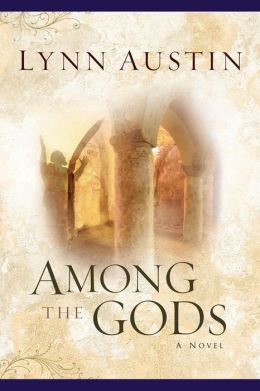
Book Review: Among the Gods

Among the Gods. Lynn Austin. 2006. Bethany House. 352 pages. [Source: Bought]

Among the Gods is closely connected to book four: Faith of My Fathers. The main characters are: Manassah, and his chief advisor, Zerah; Joshua, Prince Amariah (Manassah's younger brother), Dinah (Joshua's sister, Manassah's former concubine), Jerimoth, Mattan, Nathan, and Miriam. This book closely follows the path of two men: Manassah and Joshua. It follows Manassah into truly dark places, but, it allows room for his humanity as well. And it also follows Joshua. Both journeys are difficult because both men are flawed, of course. Manassah's sins are OBVIOUS sins; Joshua's sins are hidden. (I suppose you could say his sins were anger, bitterness, holding onto the past, his pride that he is "the one" that God will use to bring Manassah down to the grave, his need to be in control ALL THE TIME, his thinking that he has all the answers and knows what is best.) Both men have a lot to learn about God, about love and grace and forgiveness. 

I definitely recommend the series. The five books were wonderful. Austin did a great job in bringing biblical history to life. In the fourth and fifth book, the books were a bit more creative in telling the story because not as much is said in detail in the Bible. But the characters were definitely fleshed out. I thought the lessons taught in each book were marvelous. These lessons were often ILLUSTRATED through characters actions. It wasn't merely packing lectures into dialogue. (Some might think that is what Christian fiction is all about, but, in reality it isn't.) The books on Manassah were definitely harder to handle in way; but they were completely necessary as well. 

I think these books are for an adult audience. While I wouldn't think twice about handing When Calls the Heart or Love Comes Softly to a fourth or fifth grader, I wouldn't say the same about this series of books! 

© Becky Laney of Operation Actually Read Bible
Thursday, October 10, 2013

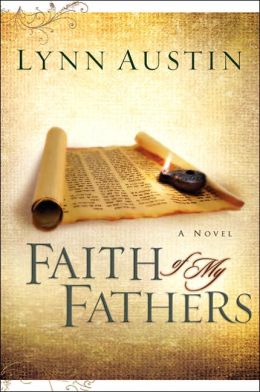
Book Review: Faith of My Fathers

Faith of My Fathers. Lynn Austin. 2006. Bethany House. 320 pages. [Source: Bought]

Faith of My Fathers and Among the Gods are closely connected books; these books finish up Lynn Austin's Chronicle of the Kings series. By the time Faith of My Fathers opens, King Hezekiah has died and his young son, Manassah has become king. He has been brought up alongside Eliakim's son, Joshua. The two have spent years together: learning lessons, training, talking, playing. But something will come between these two. And it starts with a little lie here and there. Suggestions from others that Joshua and Eliakim and the priests and Levites have an agenda, that they love power and are secretly manipulating him with their laws, rules, and wise council. Instead of placing his faith in the Torah, in the men who have spent their lives reading and studying it, he places his faith in an idol worshipper who twists and distorts it. This young man, Zerah, makes wondrous claims making it seem that he has all the answers and that he's been lied to his whole life. That there is so much he could learn if he'd just opened his mind and let go of all these rules and laws. One of the first things he does is convince Manassah that Isaiah and Eliakim are part of a conspiracy to destroy him. He even suggests that Isaiah CURSED Hezekiah and made him die. Manassah, well, Zerah seems to have him completely mesmerized. He's vulnerable and gullible and his decisions from about page twenty on are absolutely horrible. Faith of My Fathers is disturbing and realistic. It definitely portrays sin and idolatry. 

Faith of My Fathers is in some ways a divided story. After Manassah has arrested Isaiah and Eliakim and sentenced them to die for treason, Joshua and his brother, Jerimoth, escape first to Moab. They are helped in their escape, and their family expands to include two young boys and a young woman, Miriam. One boy, Mattan,  is adopted by Jerimoth. The other boy, Nathan, I believe is adopted by Joshua. Miriam has fallen in love with Joshua, but Joshua after learning of the fate of his family is angry, bitter, and has one thing and one thing alone on his mind: getting revenge and killing Manassah. Joshua feels called to return to Jerusalem again; he feels his work is not done yet, that he's been called to save a remnant of true believers, Levites mostly. This story begins in Faith of My Fathers, and is continued on in Among the Gods. 

Faith of My Fathers is incredibly intense and very compelling. It is difficult to read of idolatry, to be an eyewitness to the depravity. But I think it does a great job in showing and depicting how far the nation has fallen, and just why God is so angry. 

© Becky Laney of Operation Actually Read Bible
Wednesday, October 9, 2013

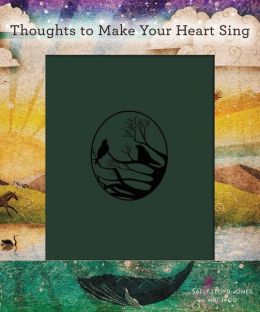
Book Review: Thoughts To Make Your Heart Sing

Thoughts to Make Your Heart Sing. Sally Lloyd Jones. 2013 (Leather). Zonderkidz. 224 pages. [Source: Review copy]

I love, love, love Sally Lloyd Jones' The Jesus Storybook Bible. It's not that I think it is the best bible storybook ever published. Or that I think it is the only bible storybook children should use. I believe in variety and in having lots of bible storybooks to choose from. I was so excited to finally get a chance to review her devotional for young readers. I love Sally Lloyd Jones' writing, but, I'm not always the biggest fan of devotionals--for any age. So would it work for me?!

Yes!!! Thoughts To Make Your Heart Sing works beautifully! I loved the language and the imagery. Each devotional entry is complimented by an illustration by Jago.  There are around 100 devotional entries for parents and children to read together...or for older children to read on their own.

Quotes:
Resting and Relying
When you were little, did someone big ever carry you? Did you rest your head on his shoulder, lean your whole weight on him? Faith is leaning your whole weight on God. Resting your head on his shoulder. Faith means resting--relying--not on who we are, or what we can do, or how we feel, or what we know. Faith is resting in who God is and what he has done. And he has done EVERYTHING. (77)
Helpless
What animals does the Bible say--four hundred times!--that people are most like? Oh dear. It's sheep. Sheep aren't clever at all. They're foolish. For instance, sometimes they just topple over and can't get themselves back up again. They just lie there! And they're constantly falling off cliffs. Or going to unsafe places and getting stuck. Or eating poisonous things. Or getting hurt. Or running off and getting lost. Or not finding their way home again--even if their fold is in plain sight! So you see, sheep are completely helpless on their own and desperately need a shepherd. And God says we are helpless on our own too. And we desperately need a Shepherd. Which is why he gave us Jesus. (93)
© Becky Laney of Operation Actually Read Bible