Showing posts with label David C. Cook. Show all posts

Wednesday, May 17, 2017

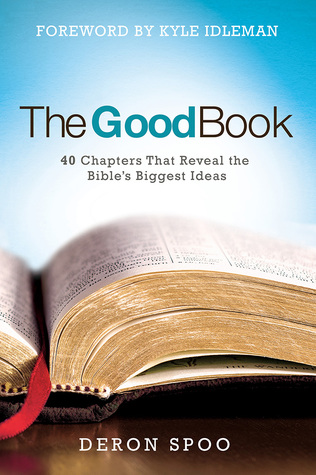
Book Review: The Good Book

The Good Book: 40 Chapters That Reveal the Bible's Biggest Ideas. Deron Spoo. 2017. David Cook. 397 pages.

From chapter one: You’re more like God than anything else he created. At times you might feel worthless. Perhaps this is why the first chapter of the Bible sends the unmistakable message that you are priceless. Even on days when you feel barely human, you are, in fact, more like your Creator than anything else in existence.

Premise/plot: This book is meant as a guidebook to the Bible for spiritual ignostics; the term describes those "with no God history and no Christian memory." In other words, those new believers or near believers that have not grown up in the church or in Christian culture. Spoo has selected forty chapters of the Bible to serve as the "basis of the faith we know as Christianity…" and which are "absolutely essential for understanding the big ideas of the Bible."

The book is divided into eight sections with five chapters apiece. Each chapter is prefaced with one of the forty chapters of Scripture. So at the very, very least--if readers don't skim the reprints--one will have read forty whole chapters out of the Bible. Spoo encourages his readers to read these scriptures before and after his "brief exploration" of each passage.

The forty chapters: Genesis 1, 3, 6, 12, 22; Exodus 3, 14, 20; Judges 16; 1 Samuel 17; Job 1; Psalm 23, 51, 139; Proverbs 1; Isaiah 53; Jeremiah 1; Daniel 3, 6; Jonah 1; John 1, 3; Luke 2, 8, 15; Matthew 5, 6, 7, 28; Mark 15; Acts 1, 2, 9, 10; Revelation 22; Romans 8; 1 Corinthians 13; Galatians 5; James 1; 1 John 3.

My thoughts: I have very mixed feelings on The Good Book.

Spoo seems to be suggesting that new believers need to read books about the Bible more than they need to read the Bible itself--that handing a new believer, a new disciple, a copy of this book, for example, would be more beneficial than handing them the very Word of God. He assumes that they simply are not ready for the Bible.

Spoo promises much in the introduction. "After understanding these chapters, you’ll be able to recognize the rhythm of the Scriptures and tap your toes to the cadence." Also, "Finally, I encourage you to reread the Bible chapter with the benefit of knowing more about the context and content." I was led to believe that Spoo's exploration of these passages would be MEATY, providing actual content and context. I didn't find that to be the case.

Though the introduction seems to be God-centered, gospel-centered, Spoo has a tendency to wander into it's-all-about-you land. In some of his discussions, the focus doesn't seem to be on God but on YOU and what YOU can get from the passage to make you feel warm and fuzzy.

But. My main issue with this book, however, is the dominance of stories, more stories, even more stories which overbalance any focus on the text of Scripture itself. There may be the barest of backbones of context--capable of being detected within each chapter--but, the focus isn't on the Word of God, isn't on the divine or human author of the book, isn't on what it meant to the original audience or even what it means today to you and me. If you're clueless--truly clueless--about the Bible, about the faith, hearing anecdotes and personal stories that have just the smallest link to the Scripture passage itself will not strengthen your faith and shine light on your path.

For example, what in the world does his growing of jalapeños in his garden have to do with Galatians 5?!?! There were times I wanted to shout STOP TALKING ABOUT YOURSELF AND GET TO THE GOOD STUFF ALREADY.
I grow jalapeños. My love for cultivating peppers is a product of my Texas upbringing. I enjoy every aspect of the pepper-growing experience. The starter plants must be pruned and planted deep. The backyard must be guarded against rabbits—protection is provided courtesy of my schnauzer. The first white buds that appear on the plants inform me that the hot pain of peppers is but a few weeks away. And because I plant a dozen or so plants, it isn’t long before the production of peppers outpaces my capacity to eat them. That’s when the pickling begins. I don’t grow jalapeños because I enjoy the plants themselves. Nor do I grow jalapeños for the beauty of the blossoms. I grow them because I want the produce; I want the fruit. 
Some of his 'extra' stuff is slightly more on-topic--this example is also from Galatians 5.
Have you ever penned an angry letter? Abraham Lincoln had a practice worth imitating. After writing an angry note, he would set it aside for several days. After his emotions had cooled, he would rewrite the letter, revising any rough tones in his correspondence. In many cases, Lincoln never sent the letter at all. In a day when we’re tempted to fire off an angry electronic message, we need to develop this kind of restraint. However, there are occasions when we need to let others know exactly how we feel. Galatians is the angry letter of the New Testament. The apostle Paul, its author, was a passionate follower of Jesus and a bold leader in the early Christian community. Paul’s teaching about the love of God was simple and direct. Paul used the word grace to describe God’s act of initiating a relationship with humanity. And the term faith was used to describe our best reaction to the love of God. God reaches. We respond. The result is relationship. Simple, right?
One passage got me flustered and thinking. I didn't agree with his choice, by the way, but it did get me thinking about MY choice.
If someone told me I could choose only one tiny piece of the Bible to read for the rest of my life, I would unhesitatingly choose Matthew 5, 6, and 7. Commonly called the Sermon on the Mount, these three chapters offer nitty-gritty guidance on the daily experiment of following Jesus. Stranded here on the island of earth, our call is to pursue a life pleasing to God. Jesus said many things in these chapters that challenged the conventional religion of his day. After two thousand years, his wisdom still surprises. 
I'll swing over to the positive side for a minute. He said two things in the introduction that I wholeheartedly agree with.

1) Reject the tendency to be satisfied with your current understanding of the Bible. Refuse the temptation to think that what you grasp of the Scriptures today is somehow enough.

2) Remember that the ultimate benefit of reading the Scriptures isn’t greater familiarity with the Bible but deeper intimacy with God.

And there were plenty of solidly true statements for new believers to digest within the book itself.

For example,

  • Our greatest challenge with God’s commands isn’t understanding them but obeying them.
  • The wishful thinking that following Christ automatically makes the rest of life convenient is a cultural concept, not a biblical one.
  • Challenge, not comfort, is the lifestyle of those who wish to follow God.
  • The truth may be summed up like this: thinking we’re strong is a weakness, but acknowledging our weakness makes us stronger.

In conclusion, IF I bought the premise that new believers need books for new believers and not the Word of God itself, would I hand them Spoo's The Good Book, OR, would I choose another book instead? That's a question I think is worth asking--and answering. I don't think it would be my top choice--or even in my top five.

© Becky Laney of Operation Actually Read Bible

Friday, February 5, 2016

Book Review: I Am N

I am N: Inspiring Stories of Christians Facing Islamic Extremists. Voice of the Martyrs. 2016. David C. Cook. 304 pages. [Source: Review Copy]

I found I Am N to be a compelling read that I could easily recommend to all Jesus followers. The book shares first-hand experiences--stories--of being a Jesus follower (a Christian, "N") in predominantly Muslim countries. (Think Middle East, Africa, Asia).

Lest you think the goal of the book was to strike fear or terror into American readers about Muslims, you should know that the overall tone of the book is one of hope, love, joy, peace--not fear, not worry, not regret. Time and time and time again, Christians who have been persecuted have chosen to FORGIVE, pray for, in some cases even witness to those that have attacked/abused/persecuted them. Even in cases where someone was killed, the response has generally been one of forgiveness. Surviving members of the family saying we forgive those that did this, we forgive them, we are praying that God will forgive them, we are praying that they will be saved, we know they need Jesus, we were once like they are.

Most of the stories are of Muslims converting to Christianity and becoming Jesus followers. They 'convert' knowing that it could very well cost them everything: relationships with parents, relationships with siblings, relationships with a spouse and in-laws, relationships with their children, their jobs, their homes or apartments, their money and property, their freedom, their very lives. There are accounts of people being beaten, tortured, imprisoned, shot and left for dead, killed. And sometimes the abusers are family members or former neighbors.

Yet through these circumstances, the stories reveal the joy of being a Jesus follower. How they REJOICE to share in the sufferings of their Savior, how God is with them through everything, the comfort they get from feeling his presence. They passionately, zealously love the Lord. And they love Muslims. Just as Paul zealously desired to see all Jews come to faith in Christ, these believers long to share the good news with other Muslims. They know the risks, that the risks are HUGE. But they believe that heaven and hell are real, and, that they could never stand by and do nothing with so many lost souls in need of saving.

Perhaps that is what will be so striking to American readers--to see the great contrast between those willing to live and die for Christ and those that profess the faith and live how they want and blend completely into the culture.

The book is divided into sections: "Sacrifice," "Courage," "Joy," "Perseverance," "Forgiveness," and "Faithfulness." Between each section, readers are introduced to a handful of martyrs throughout history. The book concludes with a commitment prayer. The prayer is inspiring to say the least. And it follows the various sections of the book: sacrifice, courage, joy, perseverance, forgiveness, and faithfulness.

© Becky Laney of Operation Actually Read Bible
Monday, January 25, 2016

Book Review: Grace Untamed

Grace Untamed: A 60 Day Devotional. Edited by Elyse Fitzpatrick. 2016. [March] David C. Cook. 224 pages. [Source: Review copy]

Grace Untamed is a 60 day devotional published by David Cook. There are quite a handful of contributors to this collection of grace-focused devotions. Contributors include: Elyse Fitzpatrick, Scotty Smith, Paul David Tripp, Steve Brown, Bryan Chappell, David Zahl, Ray Ortlund, Matt Chandler, and J.D. Greear. The devotional entries seemed to be grouped by alternating authors. Three or four days by the same author, then switch it up.

I had never thought about grace being so varied a subject until I spent time reading this devotional. Grace is more than what God shows us in salvation. So much more. This book highlights salvation by grace alone, but, it also focuses on daily grace, every day grace, in-every-relationship grace. Because God has shown grace to us as believers, we should show grace to others--our family, our friends, our neighbors, our coworkers and bosses.

Devotional books can be a commitment. Especially if you're mainly familiar with year-long devotional books. That is one reason I like to see lesser-commitment options: 30 days, 40 days, 60 days, 90 days, etc. I would recommend this devotional book. I found it to be theologically sound--at least so far as I can recall! The contributors were great, I thought. I was familiar with about half of them, and a few were new-to-me.

Favorite quotes:
Please don't insult the perfect work of Jesus by thinking that everything He did was merely some sort of example. His behavior was a great example, we could find no better role model than Jesus. But Jesus did not come to simply be our role model. He came to be our Savior. And to be our Savior, He became our righteousness. He became our merit. ~ Elyse Fitzpatrick
Sin is self-obsessed, self-focused. Sin inserts me in the center of my world--the one place I must never be. Sin makes me full of myself. Sin makes it all about me. Sin makes me a vat of selfish thoughts and desires and wants. ~ Paul David Tripp
Jesus welcome into His kingdom only the people who have defied Him and offended Him and sinned so badly that their own righteousness is gone for good. They've lost their innocence, and now they've come to Him with nothing but need. They don't admire themselves anymore. They mourn over themselves. But Jesus is happy with them, and He wants them to know He's happy with them. He's happy with you, to the praise of the glory of His grace. ~ Ray Ortlund
© Becky Laney of Operation Actually Read Bible
Friday, November 20, 2015

Book Review: Like Jesus

Like Jesus: Shattering Our False Images of the Real Christ. Jamie Snyder. 2016. [February 2016] 192 pages. [Source: Review copy]

Jamie Snyder's Like Jesus was an incredible read. Is it a must-read? Is any book a must-read for Christians other than the Word of God? Well, I can only say that I hope it finds a LOT of readers, because I think it is a relevant, timely, necessary read. He challenges readers to reflect on their lives, to ask tough, uncomfortable questions. I love that he challenges assumptions and even some terminology. (For example, that we "accept" Jesus into our hearts.*)

Is the Jesus you worship, the real Jesus? That is one of the questions Snyder asks readers. This book is all about shedding ourselves of the false Jesuses we've created in our own image, and, discovering the real Jesus, the true Jesus.** He writes,
Discovering Jesus is not a once in a lifetime event---it is an endeavor that lasts a lifetime. So use this book as an opportunity to continue that journey of discovery. Perhaps it has been some time since you have intentionally thought about who Jesus is, what He is like, what He has called you to, and last but not least, which Jesus you have been following.
and
Jesus is not content for you to like Him; he wants you to become like Him.
This is really what the book is all about. But before you can become like HIM, before you can want to become like HIM. You have to know him, not just know about HIM, though knowing about him is perhaps the first step. You have to be able to discern between the real Jesus as revealed in the Word of God--the Bible--and the Jesus that you may have been reshaping and molding in your own heart and mind. Jesus doesn't need us to "perfect" him or "refine" him. He doesn't want us to "make him acceptable or presentable" to today's society. We need to shape our thinking of who God is, who Jesus is, by the Word of God. Not by what we would have him to be, want him to be, but by who he actually reveals himself to be.

I like the fact that the book focuses on the BECOMING. Snyder acknowledges that this side of heaven, it is impossible for anyone to actually come close to achieving "being like Jesus." But we can all be a work in progress. We can all be on the path to becoming like Jesus. He writes,
Everyone, everywhere is becoming more like someone or something. The question is, what or whom? 
I don't know about you, but, that makes me stop and THINK. And that's one reason why I loved the book so much. It isn't an instant warm-and-fuzzy book. I love that Snyder speaks truth. You don't accidentally become like Jesus. You don't accidentally stumble into a deep, meaningful relationship. It takes commitment and discipline and effort. Note: I'm not saying that Snyder is in any way saying that we earn our salvation or that we're clothed in our own righteousness or that God's approval of us is dependent on our strivings and efforts. It's obvious that Snyder embraces the amazingness of GRACE.

Another passage that made me stop and think was this one:
Our Jesus is built within our hearts and minds according to our preferences and desires. So when we study Scripture and read Jesus' teaching, we usually nod our heads in agreement, because we assume He is always talking to someone else….If you find that you can read through pages of red letters without your heart racing, your palms sweating, and your mind spinning, there is a distinct possibility you don't understand whom Jesus is talking to. He's talking to you. And me.
And also:
Many people would claim to have a relationship with Jesus, and yet the role they envision Him playing in their lives is not a role He offers to play.
The book is divided into three sections: Imitation, Identification, and Intimacy.

I loved this book. I did. I just loved it. I thought it was packed with insight and truth.

*Snyder writes, "No one accepts Jesus. We have not been invited to do so. We don't have that power, and we don't play that role. I know some could say this is just semantics, but the words we use communicate the thoughts we think. "Accepting Jesus" communicates clearly that at some point in time, He was allowed to enter into your world. He was added to your schedule. He was put on your calendar… Jesus has never asked anyone to accept Him, nor will He ever do so… Jesus is not in need of being accepted. But you are. And so am I. Thank God, literally, that the acceptance we need is available, and it begins and ends with an invitation."

**I love how Snyder asks readers FIVE questions to determine if they could be worshipping a counterfeit Jesus. This section was GREAT. One of the five questions is "Is your Jesus content to leave you the way you are?"

© Becky Laney of Operation Actually Read Bible
Friday, November 6, 2015

Book Review: 30-day Praise Challenge for Parents

The 30 Day Praise Challenge For Parents. Becky Harling. 2014. David Cook. 240 pages. [Source: Bought]

Last year I reviewed the 30 Day Praise Challenge. There is a second book available specifically for parents. The concept is the same, but, the focus is shifted slightly. The aim of the book is on parenting and spiritual growth. How changing your perceptions of God and trusting Him more and more can help you to parent better. The prayers included in the book reinforce this concept in many ways, and may help you know how to pray for your children.

 What you need: praise music, a Bible, a journal, and the desire or the commitment to spend some time each day with God, about twenty minutes.

Part one introduces readers to the challenge, outlines the program, and talks about the goals.

Part two IS the challenge. Thirty days of daily entries. Each entry is broken down into sections. The first section, "Invitation," reads like a devotion. The second section, "Listen," recommends specific praise songs to listen to that day. The third section, "Pray," includes a prayer to pray. The final section, "Journal," asks a reflection question.

Part three is going above and beyond the challenge. Consider it a bonus, if you will! It includes the following:

  • praising God for His qualities
  • praising God using His names
  • using Scriptures to praise God for His work in your child's life
  • praising God when you are grieving the death of a child
  • praising God when you and your spouse disagree over parenting issues
  • lifting a mantle of praise over kids whose parents are in ministry
  • lifting a mantle of praise over your adopted child
  • lifting a mantle of praise over children of divorce

The back matter also includes a topical index and a list of praise songs recommended throughout the book.

© Becky Laney of Operation Actually Read Bible

Saturday, July 4, 2015

Book Review: End of Me (2015)

The End of Me. Kyle Idleman. 2015. David C. Cook. 240 pages. [Source: Review copy]

I definitely enjoyed reading Kyle Idleman's The End of Me. The book is about how important it is to recognize our brokenness and weakness; the book stresses that it is only when we reach the end of ourselves that we reach out to God who is able to make us whole and strong--in Him.

The book challenges believers to closely examine the teachings of Christ, and also to examine his life. Christ taught some revolutionary ideas that we--if we're honest--are reluctant to follow and embrace. Chapter by chapter, he encourages believers to choose to turn their thinking upside down and inside out. To go against their natural instincts and live as Christ lived and taught. Not to do this in their own strength, of course, that would be impossible. But to turn to the Savior, to surrender to God daily and let God use them where they are--in their weakness, at their weakest.

Kyle Idleman stresses several points throughout the book. But one of the most important is this daily need. Every day needs to be surrendered to the Lord. Every day you need to make the choice to live to God and to die to self. Every day has opportunities--opportunities perhaps so small that most people ignore them or discount them. Opportunities at home, in the car, at work, at the store, etc. Often it's in the small moments when we realize how much we've failed to do the right thing, how far we are from where we want to be--need to be.

Also by Kyle Idleman: Gods At War (my review).

Quotes:
Reaching the end of me is a daily journey I must make because it's where Jesus shows up and my real life in him begins.
Getting to the end of me is not an easy journey because me doesn't want to go there. Me doesn't like confrontation, and me is most interested in the promotion and success of me. Me would much prefer to read a book about advancing me, not ending me.
A great part of the upside-down, inside-out message of Jesus is that God doesn't look so much upon the outside, which is so easy to fake. He looks more on the inside, where we are what we are. 
Emptying is never painless, and not everyone is willing to go there. Jesus is eager and willing to fill.

© Becky Laney of Operation Actually Read Bible

Thursday, July 2, 2015

Book Review: Uncensored

Uncensored: Daring to Embrace the Entire Bible. Brian Cosby. 2015. David C. Cook. 208 pages. [Source: Review copy]

Are you unintentionally censoring the Bible? Perhaps even intentionally censoring the Bible?

Brian Cosby has written a great book on the Bible, on how it is important for Christians to read the whole Bible. In other words, it isn't quite enough to just read and "embrace" the parts you really, really love. You have to consider the Bible as a whole, and try to grasp what the message of the whole Bible is.

He examines why different people "censor" the Bible--possible motivations--and how they "censor" it.

Does this matter to you and me? Or, why should this matter to you and me?! Because when we censor the Bible--intentionally or not--we just aren't censoring a book. We're censoring the God that inspired book reveals. And when we recreate God in our own image, that's idolatry. We're to worship God in spirit and truth. When we worship a god we've made ourselves, that's not true worship. We need the truth--and the whole truth--to worship truly and glorify God.
When we censor the full character of God, we soften His justice, elevate man, and devalue our need for the cross. But when we embrace the entire Bible, we are freed from making God "fit" our politically correct, tame caricatures of a god who seems no more omnipotent than a divine grandpa. But like Aslan, God isn't safe.. The Lion from the tribe of Judah has conquered. Eternally self-sufficient, He's dependent on no one. And His Word reveals His majesty and glory from Genesis to Revelation.
Part One is "Embarrassed by the Bible." And part two is "The Art of Censorship." Part one focuses on the realities facing the Christian church: The need for the whole Bible, and, a need to trust that the Bible is the very Word of God, and that the God of the Bible is worth trusting and believing. This section also includes a summary of the big picture of the Bible, and an overview on how to read the Bible and interpret it correctly.

Part Two highlights seven areas of the Bible that people tend to censor including creation, sin, hell, suffering, parenting, etc.

Who should read this one? First, I recommend it to all Christians. But. Knowing that not everyone is a reader, I'll just add that it would be of special interest to any believer who preaches, teaches, or leads devotions, publicly or privately. (Pastors, teachers, parents) I do think all believers would benefit. Especially those who aren't regularly reading the whole Word of God. (I'm not one that says you have to have a structured plan in place to read the whole Bible in one year. But I am one who encourages you to have some plan in place to read from the (whole) Bible regularly.)
If the Bible is truly inspired by God--as His self-revelation--and profitable for His people, then I should embrace the whole counsel of God for a healthy, balanced, and fruit-filled faith. When I censor the Scriptures and selectively choose which parts to meditate on, day and night, I fail to become the tree planted by streams of water, bearing fruit in its season (Psalm 1:1-3). I miss out on the life-altering and joy-infusing revelation of God which is living and active (Hebrews 4:12).
If you listen closely to our Christianese, you will notice a large amount of extra biblical thought squeezed in. Try to find "God helps those who help themselves," "Invite Jesus into your heart," or "Accept Jesus as your personal Lord and Savior" in the Bible. They're not there. Not only are we cherry-picking the Scriptures, but we're also inserting our own feel-good notions.
An incomplete Word leads to incomplete joy. Why would we settle for an incomplete text when every jot and tittle is inspired by our great God? This is a journey to embrace the Bible--the entire Bible--every book, every verse, and every word. It's both daring and exciting.
When I question, or decide, which passages in the Bible to follow, I miss out on the truth that sets me free. When we avoid the biblical practice of church discipline, for example, we miss out on the joy of seeing wayward sinners reclaimed or seeing Christ establishing greater peace and purity in His bride. When we avoid the doctrine of hell in our preaching and teaching, we miss the experience of gratitude of what we are saved from and the hope of what we are saved for.
To put it bluntly, we don't want sin, wrath, or God's judgment in our Bibles. Richard Niebuhr, the early twentieth century theologian, once remarked that we want a "God without wrath [who] brought men without sin into a kingdom without judgment through the ministrations of a Christ without a cross."
It's tough to convince the world that the Bible is true when we don't communicate our own belief in it. When we are embarrassed by what it says or censor those "difficult" passages in sermons or in conversations on the elevator, we communicate as much. When we cherry-pick those feel-good verses and leave the convicting fruit behind, we rob God of His glory by making ourselves the arbiters of truth. 

© Becky Laney of Operation Actually Read Bible

Wednesday, June 3, 2015

Book Review: The Truth About Lies

The Truth About Lies. Tim Chaddick. 2015. David C. Cook. 176 pages. [Source: Review copy]

I loved reading Tim Chaddick's The Truth About Lies. I was intrigued by the premise, that our character is shaped by how we respond to temptation day by day. He writes, "Every choice matters. Moments of temptation force us to make them. We must move beyond viewing temptation as a series of isolated events to a person-shaping process." Have you thought about temptation in that way before?

The book examines how Christ faced his wilderness temptations, and, how our own temptations--or testings--are opportunities for our faith to grow stronger, our understanding deeper.

Chaddick writes, "Temptation is a battle but its not just about winning or losing, its about discovering who you really are. And what you love most. This book is about how the gospel so transforms us that even moments of temptation become the training ground for a life of abundance as our hearts are radically reshaped and reordered by the love of Jesus for us. Because ultimately, the key to facing temptation is not a principle, it's a person."

Like Theological Fitness, Chaddick believes that Christians need to be trained, need to be made "fit" to live the Christian life. In other words, how we live matters, the choices we make matters even in a world that oh-so-thankfully has forgiveness and grace. (It isn't a world where you can say "God loves you" now go and do whatever you want.) He writes, "But Scripture is very clear, there is right and there is wrong, there are things that glorify God and things that grieve Him. There is truth and there are lies. Just because we have an appetite for something doesn't automatically mean you should indulge in it… Paul says we must be trained to renounce ungodliness and worldly passions."

I love the focus on the gospel. I love the focus on Jesus--who he is, what he's done, what he's doing. I love, love, love the focus on grace. This book is just full of rich truth, truth that should be celebrated and clung to every single day. This is a great book on an important subject: how to live the Christian life with hope and love, on how to say no to sin, and yes to God. I highly recommend this one!!!

Here's one of my favorite passages from the book:
So often when dealing with the what of sin we don't deal with the why of sin, the motive and drive behind the other behavior. Add to that, we quickly forget the real power for change. The lies of sin blind us to the beauty of Christ. It's when we see both our sin for what it is and our Savior for who He is that we begin to experience radical change in the present. 
Table of contents:

  • The Trouble with Temptation
  • An Education in Grace
  • Who You Will Become
  • When Independence Lies
  • A Habitat for Divinity
  • When Religion Lies
  • The Art of Killing Sin
  • When Success Lies
  • The Hope In Our Trial
  • This Is Your Legacy

Favorite quotes:
Through Him we receive complete forgiveness. If you're a Christian, you know this, but do we always live like it?
Grace isn't just about the sin you've already committed. You are forgiven right now in the present moment. 
Our resistance to sin and temptation must be rooted in our love for God. And our love for God is rooted in His love for us shown in Jesus. 
The greatest defense against temptation is intimacy with God.
There is a violence to the Christian life, but it's not with other people, or other nations. It's a war with sinful desires within our own selves. 

© Becky Laney of Operation Actually Read Bible
Monday, April 27, 2015

Book Review: A Travelogue of the Interior

A Travelogue of the Interior: Finding Your Voice and God's Heart in the Psalms. Karen Dabaghian. 2015. David C. Cook. 274 pages. [Source: Review copy]

I enjoyed the premise of A Travelogue of the Interior, the idea that believers should open up their hearts and minds and be willing to write bad poetry as they journey slowly but surely through the book of Psalms. I liked the concept of reflection and connection as you are reading the Word of God. It would require you to slow down and engage more. The book does encourage readers to commit to journeying through Psalms: to take one psalm at a time and really connect with it and write their own poem in response. For readers who follow through, I think there is some benefit. The benefit comes not so much from reading someone else's journey through the book of Psalms and not even so much from taking someone else's idea about how to read the Bible, but, through the reading of the Word itself. Journaling, I believe, can also be a good thing. (I won't deny the spiritual benefit for those that practice it.)

The book is both about understanding the psalms and laboring to sing them back to God--that is relating our own lives and experiences to the Word, making a personal connection in other words. It's a personal book in many ways. The author is sharing her stories, her beliefs, her methods, her journey, her poems. Yes, she's inviting you to go on your own journey, to experience it all for yourself, to create your own poems, etc. But the focus is always on her. The book doesn't so much examine the psalms or the life of David as it examines one particular journey through part of the book of Psalms.

If the book has a message beyond 'read the Psalms' it would be: BE VULNERABLE, LEARN TO SHARE, DON'T BE AFRAID TO FEEL WHAT YOU FEEL.

The book isn't without a couple of strengths. But overall, it wasn't quite for me. Her beliefs didn't always mesh well with mine. I found some to agree with to be sure, but, it wasn't quite enough for me.  I have read more beneficial books on the psalms.


© Becky Laney of Operation Actually Read Bible

Wednesday, March 25, 2015

Book Review: Help My Unbelief

Help My Unbelief: Why Doubt Is Not the Enemy of Faith. Barnabas Piper. Foreword by N.D. Wilson. 2015. [July 2015] David C. Cook. 176 pages. [Source: Review copy]

Help My Unbelief is one of the best books I've read this year. It is one of the best books I've read in a long time. It's an honest look at doubt: believing doubt and unbelieving doubt. It is about coming to terms with the tension of the Christian life. In part, it is inspired by an encounter found in Mark 9:17-29. I'll share the most relevant verse: I do believe; help my unbelief.

Barnabas Piper shares a bit of his testimony and what he's learned since his big "aha" moment when he realized the vast difference between knowing about God and knowing God.

His story was incredibly easy to relate to. I think many people who have grown up in the church can relate to it as well. The book is honest and straightforward. It isn't a book that promises to have all the answers to all the questions you might have today and in the future. It isn't a book that promises an easy fix to your current faith dilemma.

I should mention that one thing this book is not: it's not an apologetic book seeking to prove anything about God: his existence, his goodness, his perfection.

It is a book that explores questions like: what is faith? what is belief? what is doubt? is there more than one kind of doubt? can doubting ever be a good thing? where do I go with my doubts and questions? what can I know--what can anyone know--about God? Can I have peace even if I don't have all the answers? will I always struggle with sin?

I loved, loved, LOVED this one. I loved it because it was thought-provoking and engaging. I loved it because it was so very honest. I thought Piper made some great points as well. I thought the appendix READING THE BIBLE TO MEET GOD was absolutely wonderful. It should be must-read for every believer.

I want to share a few quotes from the foreword by N.D. Wilson along with a few quotes from the text itself.

From the foreword:
Thank God that our salvation is not dependent on an absence of our own fears. Our failures. Our doubts. In fact, our salvation is not dependent on us at all. It doesn't depend on how we feel. It doesn't depend on how well we answer challenges and questions, and it doesn't depend on how deeply and authentically we really, really feel our answers deep down in our hearts. Our salvation is on the cross. No matter how broken we may be, no matter how much we might struggle and fail to see and to know the truth (every truth) clearly, we can rest in the One who sees all and knows all. When we cannot see, we are still seen. ~ N.D. Wilson
From the introduction:
No amount of belief moves us beyond "help my unbelief." Rather the stronger our belief, the more urgent our plea.
What the Bible reveals of God is precisely what God wanted revealed of Himself, no more and no less. But it isn't everything about Him. Scripture raises as many questions as it answers. It asks the impossible and describes the miraculous. The Bible tells stories that are grotesque and stories that are heartwarming. Parts of it are horrifying and others are befuddling. It is written in multiple genres and has thousands of characters. In short, it is representative of the real world and God's relationship with it, not a book to simplify the world so we can understand it all. And it is just the way God wanted it. 
Questions indicate belief only if you actually want an answer.
God is infinite. While the finite human mind can understand aspects of His character, even those cannot be understood in full. His bigness is too big, His goodness too good, His wrath too terrible, His grace too profound, His knowledge too deep. Because of this, God is inherently mysterious to us. We simply cannot fathom the fullness, or even a portion of the fullness, of who He is or what He does.
The Bible gives everything we need but not every answer; all the necessary truth but plenty of room to wonder.
When we are in relationship with God, His Word becomes more than a book; it becomes alive…It is a window into who God is; one that He gave us to share exactly what we need to know of Him.
Scripture doesn't offer the answers to most mysteries that we want. It offers the ones God wants us to have. And if He wants us to have them, then they are the ones we need.
True belief is that which perpetually, magnetically pulls us toward the "not yet" of Revelation 21. 
Table of Contents

  • Foreword by N.D.Wilson
  • Introduction
  • Chapter 1: Tension
  • Chapter 2: What is Belief?
  • Chapter 3: What Can We Know About God?
  • Chapter 4: A Prayer from Where?
  • Chapter 5: Unbelief and Doubt
  • Chapter 6: Belief in Action
  • Chapter 7: How Do We Believe?
  • Chapter 8: So What and What Now?
  • Appendix 1: Reading the Bible to Meet God
  • Appendix 2: Suggested Reading
© Becky Laney of Operation Actually Read Bible

Thursday, September 11, 2014

Book Review: The 30 Day Praise Challenge

The 30 Day Praise Challenge. Becky Harling. 2013. David Cook. 208 pages. [Source: Bought]

Becky Harling challenges her readers to commit to praising God for twenty minutes each day for 30 days. She promises that following through on this commitment will change believers' lives. The first section of the book works like a devotional in a way.
Each day begins with an invitation to praise God for some characteristic of His deity. Written as if they are from God Himself, these Scripture-based invitations are designed to help you hear God’s voice. Each day also includes guidance for how to praise God, suggestions for music to listen to in order to prompt your praise, and a journal idea to help you process your praise journey.
The second section of the book is an extension of sorts. Assuming that readers have now finished their 30 consecutive days of praise and benefited in it by growing closer to God, by coming to know Him more and more, she knows that they'll be hungry for more. So she then offers tips on how to praise God through His names, how to praise God through the Psalms, how to praise God through Revelation, how to praise God through the Apostles' Creed, and finally how to praise God when you are grieving or feeling depressed.

The book includes a comprehensive list of recommended praise songs at the end.

Sample:
Day 13: Therefore, there is now no condemnation for those who are in Christ Jesus. Romans 8:1
My child, you are often weighed down by guilt and shame. I don’t condemn you and neither should you condemn yourself. Through My abundant grace, you are forgiven because of the work of My Son on Calvary. All your sins—past, present, and future—have been forgiven. You are totally okay with Me. Shame no longer has to haunt you. You are already clean. I have clothed you in My righteous robe and crowned you with blessing and beauty. When you are tempted to return to your old clothes of shame, put on garments of praise instead. As you worship Me, I will enable you to wear your righteous robe with confidence. Others will try to manipulate you and make you feel guilty; don’t let them. Listen to My voice alone, and lift your voice in praise. If you exalt Me and look up, your face will no longer be clouded with shame; instead, it will glisten with radiant joy. (Rom. 8:1; Rom. 5:17; John 15:3; Rom. 3:21; Isa. 61:1–3; Ps. 34:5) If you’re physically able, get down on your knees for your praise time today. If you are not physically able to get down on your knees, bow your head and imagine someday bowing down in heaven. When you listen to the praise music, use headphones so you won’t be easily distracted. Focus your praise on God’s grace and forgiveness. Lay down every burden of guilt, shame, regret, and self-punishment. Imagine yourself clothed in Christ’s righteous robe. You look as good to God the Father as His Son, Jesus Christ, does. Celebrate the forgiveness that is yours in Jesus Christ. God made him who had no sin to be sin for us, so that in him we might become the righteousness of God. (2 Cor. 5:21)
You might also be interested in knowing that there is a 30 Day Praise Challenge For Parents. (I would love to read this at some point to see how the books are the same, and how they are different.)

© Becky Laney of Operation Actually Read Bible
Monday, October 14, 2013

Book Review: To Live Is Christ To Die Is Gain

To Live Is Christ To Die Is Gain. Matt Chandler. 2013. David C. Cook. 224 pages. [Source: Bought]

Stated purpose of the book: God wants us to grow from being infants in Christ to being mature in Christ. That's what this book is about. How are we to mature, and how can we spot any "developmental delays"? My prayer is that as you read this book, prayerfully applying its challenges to your heart, God would use Paul's letter to the Philippians to show you what maturity looks like and to call you to pursue it all the more with all your might under His grace. (11)

I enjoyed reading Matt Chandler's latest book, To Live Is Christ To Die Is Gain. It is a casual exploration of the book of Philippians. It does contain insights, as you'd expect, but the narrative is informal and lighthearted. In twelve chapters, he covers all four chapters of the book of Philippians. He discusses themes and applications. He doesn't do as good a job in providing true historical context for understanding and appreciating Paul's letter. He seems to be all about translating the themes of the book into modern settings, supposedly, to help contemporary readers "get" what the book is all about. I don't mind the personal stories or the humor. (And what he said about Texas weather was completely true!) But I thought The Explicit Gospel was a better book, a more thought-provoking book.

The book's greatest strength is how basic it is, also how accessible it is. It is not an intimidating read. In the right hands, this book could prove quite beneficial and be a perfect match.

Quotes:
In the logic of the gospel, there are no alternatives to Christ. Every other option is no option at all. When everything considered valuable in life is seen to be nothing in comparison to the glory of Christ, you learn rather well that Christ alone is worth living for. Christ alone is worthy of an entire life's affections and devotions. (36)
Gospel courage comes from gospel preciousness. (45)
You will find, if you seriously study Scripture, that outside of the idea of hell, there is no more terrifying idea in the Bible than God setting you free to run in the imagination of your heart. (70) 
Always remember the gospel, so you won't forget that God will not expect something of you that He won't both empower you to obey and forgive you for not obeying. Always, always, always seek the cross. (78)
In your world, do people have souls? I know that sounds like a simple question. Let me put it into context. When you sit down at a restaurant, as a believer in Christ, and a young man or young woman waits on you, do you think of him or her as having a soul? As being a spiritual creature? Or are you thinking, Just give me my drinks and take my order and hurry up? Or do you recognize the image of God in that person? Are you able to encourage, love, and serve your servers, even in a situation as simple as that? (81)
I think we often misunderstand our faith and put all the weight on our conversion, with very little expectation for what comes afterward. (97)
In Christ's grace, there is freedom to be honest and transparent. (107)
Never be satisfied with where you are in the area of spiritual growth. Cultivate an insatiability for more of God by examining your weaknesses, beholding the perfection of Christ, and finding good examples of strengths you want to develop. (119)
© Becky Laney of Operation Actually Read Bible
Monday, August 5, 2013

Book Review: God Knows My Name

God Knows My Name: Never Forgotten, Forever Loved. Beth Redman. 2010. David C. Cook. 192 pages. [Source: Bought]

Beth Redman shares her personal story in God Knows My Name. The contents: "God Knows My Name," "God Knows My Past," "God Shapes My Character," "God Sees My Choices," "God Has Not Forgotten Me," "God is My Helper," "God Is My Defender," and  "God Is My Restorer." She shares life-lessons with readers, messages that are well-connected to various scripture passages.

I liked this one. It isn't a genre I usually read, I tend to read more theology. But I think it is an encouraging read that many readers will be able to enjoy.

Favorite quotes:
I simply want to shout out that God heals, restores, has plans for you, and utterly adores you! If we can truly breathe in that truth, we become free to live, free to give, and free to love and accept both others and ourselves.
In direct contrast, God says that He has a name for us. Where we feel worthless and insignificant He bestows worth and significance upon us when He calls us by name and chooses us for His glory.
Yet God didn’t just make you, then say, “What a great job,” and leave you on a shelf. No, He pursues a relationship with you, He gives His life for you, that He may know you daily, deeply, and eternally.
Listen closely: Isaiah 61:3 says that He bestows on us “a crown of beauty instead of ashes,” and Psalm 103:4 says that God “redeems your life from the pit and crowns you with love and compassion.” Anyone wearing a crown holds her head up high. She does not have an identity problem. She has been given honor and dignity.
God speaks worth over you. He declares His love for you. You are precious in His sight.
A heart open to hearing God’s voice is a heart close to breakthrough. The Word is truth, and the truth brings freedom.

© Becky Laney of Operation Actually Read Bible
Saturday, January 26, 2013

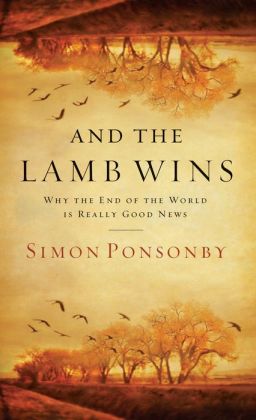
Book Review: And the Lamb Wins (2008)

And the Lamb Wins: Why The End of the World Is Really Good News. Simon Ponsonby. 2008. David C. Cook. 322 pages.

A few weeks ago, I reviewed A.W. Tozer's Preparing for Jesus' Return. In the introduction to Preparing for Jesus' Return, James Snyder, the editor, writes:
 "Right up front, Tozer points out the difference between the evangelical mystic and the evangelical rationalist when it comes to the book of Revelation. Here is where some will probably find occasion to pause and wonder which side they are going to be on. Tozer explains, "The evangelical mystic, like John, stands in the presence of the awesome God and cries 'holy, holy, holy' and falls down at His feet as dead. But the evangelical rationalist figures it all out and says, 'We can understand it, we know how it is,' then writes a long book about it, telling exactly what it is like." As you might well know, Tozer aligned himself with the evangelical mystic. This is how he approached Bible prophecy--not to fit in every little piece and person, but rather to focus on the Lord Jesus Christ as coming again." (6)
While Ponsonby isn't exactly an "evangelical rationalist", his book on Revelation reads the exact opposite of Tozer's worshipful, inspirational, zeal-driven work.

The chapter titles:

  • Christianity is Hope
  • The Kingdom Rule of God
  • Death and Life
  • The Millennium Maze
  • Signs of the End Times
  • Antichrists, Beasts, and the Man of Lawlessness
  • Israel--Past, Present, or Future?
  • Tribulation and Rapture
  • Armageddon
  • The Return of the King
  • Resurrection and Last Judgment
  • Heaven or Hell
  • A Bride Prepared

Ponsonby's focus is on the details of the end times, the detailed portions of prophecy we find in Scripture particularly in the book of Revelation (but not exclusive to just that one book). He might discuss the portion of Scripture and then organize his argument or discussion around it. Often he focuses on how that verse or chapter has been interpreted by different theological schools through the centuries since it was first written. He'll quote a handful of theologians to illustrate. But he isn't only interested in how it's been interpreted in the past, he examines how various theologians treat the text today, the past hundred years. If there is more than one way to interpret a passage, to "understand" and comprehend it, he attempts to present multiple view points. However, he does NOT present multiple view points without bias. He is very opinionated. VERY. And the way he talks about differing views and their interpretations of the end can be extremely subjective. So subjective that it's a weakness. There are some paragraphs where he's so determined that his view is the only right view that when he talks about opposing view points, it is in a negative, belittling way.

The book is well-organized; it is arranged topically. The presentation within each chapter is organized. Some of his chapters conclude with a summary, a list of conclusions. These were very helpful. Ponsonby did a good job of showing what we can know, what we can be certain about. Even if interpretations differ, there are certain beliefs and statements that every Christian can hold in common.

I did not always agree with the author. Sometimes I strongly disagreed with his opinions. Some chapters I liked more than others.

Quotes:
Scripture is the story of the victory of the Lord who loves. (12)
Hope cannot be contained, it must be communicated. (37)
It is no mean feat to try to make sense of two thousand years of church reflection on the vast New Testament material and the often opposing interpretations that have been put forward. But it is essential we attempt to systemize and summarize what we have learned. (55)
For every prophecy in the Bible concerning Christ's first advent, there are eight that look forward to his second! Its importance is second only to the saving work of Christ. (214)
© Becky Laney of Operation Actually Read Bible
Saturday, February 11, 2012

Book Review: The Toddler's Bible

The Toddler's Bible. V. Gilbert Beers. 1992/2012. The 2012 edition is illustrated by Claudine Gevry. The 1992 edition is illustrated by Carole Boerke. David C. Cook. 432 pages.

I bought the 1992 edition of The Toddler's Bible. (I didn't even know a new edition was releasing within a few days! I believe the only difference between the two books is the cover art and the illustrations within. I believe the text by V. Gilbert Beers remains the same.)

The Toddler's Bible features 101 Bible stories retold for the very youngest audience. The stories are incredibly simplified and not exactly sophisticated--in terms of theology and doctrine. There are other books for preschoolers and early elementary readers that do a better job of that--such as The Big Picture Story Bible by David Helm; it is published by Crossway. I'd recommend that one even to adults. Read it cover to cover, and within a VERY short period of time, you'll know the story of the Bible, the gospel.

But what The Toddler's Bible lacks in complexity, it perhaps makes up for by diversity. It has a handful of Elijah stories, an Elisha story, a Job story, a story about Nehemiah, a story about Joash. These are stories that don't often get included! This one covers Bible stories other books just don't. Then again, some important events are skipped over completely. And some of what gets presented is incomplete. So how well is the Bible represented?

  • 52 stories come from the Old Testament.
  • 16 stories come from Genesis.
  • 18 stories cover Exodus to Ruth (Israel's Deliverance from Egypt, the Desert Years, the Settling in the Promised Land)
  • 18 stories cover 1 Samuel to Malachi (Israel's Establishment as A Kingdom, the Divided Kingdoms of Judah and Israel, the Exile Period, the Restoration of a Remnant)
  • 49 stories come from the New Testament
  • 39 stories come from the four gospels (Matthew, Mark, Luke, John)
  • 10 stories come from other New Testament books (Acts, letters or epistles, etc.)


I thought it would be best to give you an example of the writing. After all, it is the text itself that will prove most important in deciding if this is a book you want to share with your children or grandchildren.

Noah Builds a Big Boat
"Build a big boat," God said. Noah loved God. He would obey God. Look at that boat that Noah built! It is bigger than three houses.
"Put animals on the boat," God said. So Noah put many animals on it. Noah and his family went on the boat. That's what God told them to do.  (24-27)
Jacob Meets Rachel
Look! Do you see that beautiful lady? Rachel helps her father with his sheep. Jacob sees Rachel too. He wants to meet her. How do you think he will do it? Now you know. Jacob gives some water to Rachel's sheep. Some day Jacob and Rachel will get married. (60-63)
Baby Moses
Shhhh. Baby Moses is sleeping. His mother hid him here. Please don't wake him. Some bad men want to hurt him. If he cries, they may find him. Look! A princess has found Baby Moses. She will take care of him. Thank You, God. (80-83)
God Promises a New Home
"Go into that land," God said. "I will give it to you."
"We can't," said some men. "The people are too big."
"We can," said other men. "God will help us. He promised!"
But the people would not go in. So they lived in the desert for a long time. They were very sad. (128-131)
David Fights a Giant
Look at that giant! His name is Goliath. He wants to fight David. How can David win? He has only a slingshot. Goliath has a big spear. But David asked God to help him. Goliath did not ask God to help. That's why David won. (156-159)
Baby Jesus
Shhhh. Do you see the baby? This is Baby Jesus. Shhhh. Do you see the animals? Baby Jesus is sleeping in a manger. Shhhh. The people of Bethlehem are asleep now. They do not know that this is God's Son. Shhhh. Whisper a prayer to God now. "Thank you, God, for sending Baby Jesus." (224-227)
Nicodemus Visits Jesus
Do you see that man with Jesus? That's Nicodemus. He is an important teacher. Nicodemus knew many things about God. But he knew that Jesus knew more than he did. "Let God give you a new life!" Jesus said. "It's like being born a second time." Nicodemus listened carefully. Do you think he learned something important that night? (260-263)
Jesus' Wonderful Stories
Everyone wants to hear Jesus. He has wonderful stories to tell. Be careful, people! You don't want to push Jesus into the lake, do you? That's better. Jesus knew what to do. He can preach from that boat now. Now Jesus will tell wonderful stories. The stories will tell us how to live for God. (296-299)
Jesus Dies on the Cross
Some men are nailing Jesus to a big wooden cross. He has not hurt them. But look what they are doing. Jesus died that day on the cross. He came to earth to do this. That's because He loves us so much. Jesus wants to help us live with God in heaven. When we sin, we can't go there. But Jesus died to take away our sin. He wants to be our Saviour. He will if we ask. Will you ask Him? (368-371)
There were some stories in The Toddlers Bible that I just liked, really liked. There were others that just left me unimpressed. Some of the wording just didn't work for me, and there were places it just felt a bit awkward. But there were plenty of stories that did work for me. So it isn't a book that I can easily dismiss. I think there are some stories that do make it worth your time.

© Becky Laney of Operation Actually Read Bible

Saturday, December 24, 2011

Two Fresh Life Bible Study Books

Live Reflectively: Lessons from the Watershed Moments of Moses. Lenya Heitzig. 2011. David C. Cook. 285 pages.

Live Abundantly: A Study in the Book of Ephesians. Lenya Heitzig and Penny Rose. 2011. David C. Cook. 302 pages.

I was recently given the opportunity to review two Bible studies published by David C. Cook. Live Reflectively: Lessons from the Watershed Moments of Moses by Lenya Heitzig and Live Abundantly A Study in the Book of Ephesians by Lenya Heitzig & Penny Rose. Other titles in the series include: Live Relationally: Lessons from the Women of Genesis by Lenya Heitzig and Penny Rose, Live Intimately: Lessons from the Upper Room by Lenya Heitzig and Penny Rose, Live Deeply: A Study in the Parables of Jesus by Lenya Heitzig and Penny Rose, Live Fearlessly: A Study in the Book of Joshua by Lenya Heitzig and Penny Rose, Live Tastefully: Savoring Encounters with Jesus by Lenya Heitzig, Live Beautifully: A Study in the Books of Ruth and Esther by Lenya Heitzig and Penny Rose. (Live Tastefully and Live Beautifully are spring 2012 releases.) These series of Bible studies could be used for personal study at home OR for group study. 

Live Abundantly: A Study in the Book of Ephesians:

  • There are twelve lessons.
  • Each lesson is divided into five days of personal study.
  • Each lesson is designed to take twenty minutes...

Lesson one, for example, is "Are You In the Will?"
In week one--lesson one--participants would study the first fourteen verses of Ephesians 1.

  • Day 1: Ephesians 1:1 (The Messenger)
  • Day 2: Ephesians 1:1-2 (The Beneficiaries)
  • Day 3: Ephesians 1:3-6 (The Benefactor)
  • Day 4: Ephesians 1:7-12 (The Redeemer)
  • Day 5: Ephesians 1:13-14 (The Guarantor)
Each day's study consists of five elements:
  • Lift Up
  • Look At
  • Learn About
  • Live Out
  • Listen To
Live Reflectively Lessons From the Watershed Moments of Moses

  • There are ten lessons.
  • Each lesson is divided into five days of personal study.
  • Each lesson is designed to take twenty-minutes a day.
  • Each day's study consists of five elements: lift up, look at, learn about, live out, listen to.


© Becky Laney of Operation Actually Read Bible

Monday, September 26, 2011

Book Review: Treasures from Grandma's Attic

Treasures from Grandma's Attic. Arleta Richardson. 1984/2011. David C. Cook. 160 pages.

Treasures from Grandma's Attic is the fourth book in the series by Arleta Richardson. The first three are: In Grandma's Attic, More Stories from Grandma's Attic, and Still More Stories from Grandma's Attic. The first three books are shorts story collections, essentially. They are told within a storytelling framework, the stories are being told--passed on--between a grandmother and granddaughter. The fourth book, however, appears to be different. The framework is gone. Readers definitely learn more about Mabel's childhood years, but without the adult-reflection added in. The book reads more like a novel, a traditional historical novel for young readers.

The chapters:

Cousin Agatha
A New Friend
Christmas Spirit
The Perfect Paper
Wesley's Lesson
The Seamstress
The Autograph
The Farewell Party
Really Responsible
The Tangled Web
Gypsies!
The Expensive Bookcase
Monday's Child
The Fortune-Teller
Revenge

I enjoyed this one quite a bit! I didn't remember it being in a different format from the other three. But it has been *many, many* years since I last read them. I can't honestly say that I remember any of the stories from this one. But again, that isn't a bad thing at all! It is this reading that matters most. And I can tell you that I very much enjoyed the time I spent reading this one! It was such a quick read, a satisfying one too!


© Becky Laney of Operation Actually Read Bible

Book Review: Still More Stories from Grandma's Attic

Still More Stories from Grandma's Attic. Arleta Richardson. 1980/2011. David C. Cook. 160 pages.

In June, I reviewed the first two books in the Grandma's Attic series: In Grandma's Attic and More Stories from Grandma's Attic. This fall, two more books in the series have been released: Still More Stories from Grandma's Attic. And Treasures from Grandma's Attic.

I have really enjoyed revisiting these books from my childhood years. As I mentioned before, Mabel and her family were just as dear to me as the Ingalls family.

The stories included in this one:

  • Face Cream from Godey's Lady Book
  • It Rhymes with Mop
  • High Society
  • The Dog Who Could Spell
  • The Wrinkled Stockings
  • Whenever I'm Afraid
  • Grandpa Hobbs
  • The Spelling Bee
  • The Prettiest House in the County
  • My Own Boss
  • The Harvest Home Festival
  • The Surprise Birthday Present
  • The Perfect Party
  • Windfalls

While the first two books felt very, very familiar to me--like old friends--I admit that the third one almost felt unfamiliar. I remembered a few of the stories, but not most of them! Which isn't good or bad, I suppose! I am a bit puzzled at my memory though. For there are stories that I remember--somewhat clearly--that I haven't found in any of the four books. I kept thinking, it'll be in the next one, it has to be in the next one. I seem to remember more stories about a quilt--with the granddaughter asking about each fabric. And the fabrics used weren't just the grandmother's but almost each member of the family was connected in some way. And I remember one story having to do with an apron with TONS of pockets. And I haven't found that one.

I do recommend this series.

© Becky Laney of Operation Actually Read Bible

Monday, August 8, 2011

Book Review: Let God Change Your Life

Let God Change Your Life: How To Know and Follow Jesus. Greg Laurie. 2011. David C. Cook. 288 pages.

It has been said there are two things that are true of every person: We all want to be happy, and we are all going to die. 

I really enjoyed reading Greg Laurie's Let God Change Your Life. I thought it was a compelling read. I found it relevant and challenging. If you're looking for a book that says all you have to do is pray a little scripted prayer once in your life and you're good to go--come what may--then this won't sit well with you. It may make some uncomfortable to realize that being a Christian means being a follower of Christ. And that it is essential for new believers to follow Christ, to grow in grace and truth. The book never says that salvation comes through anything other than grace. The book never says that works are more important than grace. But readers are challenged to think about HOW they live their lives. To examine themselves to see if they are in the faith, in Christ.

The book is divided into three sections: how to know God, discipleship, and making Him known. The first section, as you might expect, focuses on the gospel, on what it means to be a Christian; it covers the essentials of the faith. The second section focuses on the christian life, on how we are to follow Christ each and every day of our lives, how we're called to serve God in everything we do, on how we are not our own, but His. The third section focuses on evangelism. Laurie challenges believers to share the gospel with others. He challenges readers to CARE about others, to care so much that they take Christ into the world. Not every reader wants to hear about the responsibilities we're given as followers of Christ. But I think it's important--necessary even--to get this message.

I would definitely recommend this one.

© Becky Laney of Operation Actually Read Bible

Wednesday, June 22, 2011

Book Review: Tombstones and Banana Trees

Tombstones and Banana Trees: A True Story of Revolutionary Forgiveness. Medad Birungi with Craig Borlase. 2011. David C. Cook. 208 pages.

Life is good and I laugh a lot. You need to know that about me before we make a start. You need to know that I think of myself as being blessed with so much of God's grace--far more than I deserve. You need to know that as I look at my life I see there is much that is beautiful and much that is good. You need to know all this because what comes next will probably remove the smile from your eyes.
This is a book about revolutionary forgiveness. And in order to write about forgiveness, you must have something to forgive. For there to be change, you must have something to leave behind. In order to know healing, you must first have received a wound.

Medad Birungi had much to forgive, but when he gave his life to Christ, he knew that meant he had to forgive the people who had hurt him the most. He had to forgive his abusive father who abandoned him; he had to forgive the people who murdered his sister. His list was long because he'd had a hard life, but one by one he decided he had to face them all, to share with them the truth. That God had forgiven him, and that he was forgiving them. God transformed his life completely, he can do the same for others.

In this memoir, Medad Birgungi traces his life from his darkest moments to his brightest. He tells his story. And it is powerful and compelling. Personal and straight forward. For the most part, Tombstones and Banana Trees is set in Uganda.

From chapter three, "Jesus Has Left the Village,"
In my nightmares I can still feel the fear. My heart beats at night just as it did when, as a boy, I would run away from them. They would hunt me like an animal, using their dogs to track and find me. They would be silent as they stalked me, and then they would release their anger and excitement with cries and shouts once I was held at their feet. Whenever they caught me I knew that the physical agony I was about to experience would last for days. The emotional scars from the humiliation would take longer to heal. They were the jigger hunters, and I was one of their favorite prey.

If you are poor, shoes are a luxury. If you are poor, soap is also a luxury. If you are poor and have to collect water by hand each day, the practice of bathing and maintaining good personal hygiene slips further down your list of priorities than is good for you.

We were suddenly poor. My father had left us with nothing. Absolutely nothing. No clothes other than those that were stuck, like flags on a coffin, to our tear and mud-stained bodies. No mattresses. No pots for cooking or collecting water. No tools for preparing food or harvesting crops. But since we had no land on which to farm and no house in which to live, these missing items were of little consequence. All we had was our breath and surely that would soon run out?

In one simple yet dramatic act our father had sent our status plummeting. In the morning we had been a family of wealth. We had possessions so numerous they required three pickup trucks to transport. We were part of a family who could look at others and say, "It is good that we are not poor like they are."

All that had not been packed onto the trucks had been sold. Our land, our cows and goats, our homes--all had been sold to others in the neighboring villages. For three hours my mother, my sisters and brothers, and I crouched at the foot of the tree by the roadside, fresh waves of tears coming with each realization of how bleak and difficult our lives now looked. We had nothing. If only death would settle upon us at that very moment, then our pain might be relieved.

Yet God had other plans. Slowly at first, like the way you take care when first stirring in the millet as you add water for morning porridge, God brought help to us. He did not restore our fortunes overnight, nor did He transform us at the drop of a hat. That is not generally the way God works. Instead, He brought us on a journey. A long journey made up of many steps. Some were painful, many were small. But today I can see that each one has brought me closer to God. (41-42)

I almost don't know what to say about the book because I don't think I could do it justice. I would definitely recommend it.

Favorite quotes:

When elephants fight, it is the grass that suffers. (49)

It is one thing to try to forgive someone on the occasion when they have hurt you, but it is quite another thing to adopt a lifestyle of forgiveness. This takes effort, determination, and sacrifice. To live a lifestyle of forgiveness means choosing to pursue a life of holiness and avoiding the things that could defile you. You have to repent, daily. You have to pray, daily. You have to read the Bible, daily. And you have to forgive others far more frequently than that. (155)

"The truth is good," Bishop Festo told me once, "but it is even better when presented in an envelope." (161)

To forgive is to grow, to live, to love. To forgive is to follow Jesus. To forgive is to leave behind the tomb and to walk out, surrounded by fresh air and new life, toward the open arms of a waiting, loving God (189)

© Becky Laney of Operation Actually Read Bible