Showing posts with label 1961. Show all posts

Wednesday, August 3, 2022

30. The Knowledge of the Holy


The Knowledge of the Holy. A.W. Tozer. 1961/1978. HarperCollins. 128 pages. [Source: Book I Bought]

First sentence from chapter one: What comes into our minds when we think about God is the most important thing about us. The history of mankind will probably show that no people has ever risen above its religion, and man’s spiritual history will positively demonstrate that no religion has ever been greater than its idea of God. Worship is pure or base as the worshiper entertains high or low thoughts of God. For this reason the gravest question before the Church is always God Himself, and the most portentous fact about any man is not what he at a given time may say or do, but what he in his deep heart conceives God to be like. We tend by a secret law of the soul to move toward our mental image of God. This is true not only of the individual Christian, but of the company of Christians that composes the Church. Always the most revealing thing about the Church is her idea of God, justas her most significant message is what she says about Him or leaves unsaid, for her silence is often more eloquent than her speech. She can never escape the self-disclosure of her witness concerning God.

I have read A.W. Tozer's Knowledge of the Holy five times now, I believe. I reviewed it in 2012201420172021 and 2022. It is one of my all-time favorite books to read and reread. Every time I reread this one different passages leap out at me being super relevant. 

Can a book be both theological and devotional? It's a tricky combination to pull off, I think. But A.W. Tozer's classic Knowledge of the Holy is one of the best examples I've ever read. It is both theological--of substance and depth--and devotional--written with the pure intent to make your heart love and love greatly your Lord and Savior. Why learn more about God? So you can love him more, so you can worship him in spirit and truth. Tozer is urging readers to meditate on God, to meditate on God's glory--his majesty. He's saying DELIGHT IN GOD.  

It is a short book that I'd recommend to just about anyone. It is a book EVERY Christian needs to consider picking up. Even if you're not typically a reader of theology.

Knowledge of the Holy is very reader-friendly. Each chapter is short--just three or four pages, which is why I think it would be a great choice for a devotional. The content has weight to it--it is a book ABOUT God how could it be anything else? Yet. At the same time, it is written in a style that is simple and straight-forward.  
 
Why read A.W. Tozer's The Knowledge of the Holy?

Because…"It is impossible to keep our moral practices sound and our inward attitudes right while our idea of God is erroneous or inadequate. If we would bring back spiritual power to our lives, we must begin to think of God more nearly as He is."

Because…"What comes into our minds when we think about God is the most important thing about us."

Because…"Wrong ideas about God are not only the fountain from which the polluted waters of idolatry flow; they are themselves idolatrous. The idolater simply imagines things about God and acts as if they were true."

Because... "If we insist upon trying to imagine Him, we end with an idol, made not with hands but with thoughts; and an idol of the mind is as offensive to God as an idol of the hand."

Because…"We can never know who or what we are till we know at least something of what God is."

Because…"It is not a cheerful thought that millions of us who live in a land of Bibles, who belong to churches and labor to promote the Christian religion, may yet pass our whole life on this earth without once having thought or tried to think seriously about the being of God."

Technically, all those reasons are reasons to read the Good Book, the Word of God, Holy Scriptures. But I think the Holy Spirit can and will use Tozer's words--long after he's dead--to inspire new generations to seek God.

Favorite quotes:
It is impossible to keep our moral practices sound and our inward attitudes right while our idea of God is erroneous or inadequate. If we would bring back spiritual power to our lives, we must begin to think of God more nearly as He is.
Always the most revealing thing about the Church is her idea of God, just as her most significant message is what she says about Him or leaves unsaid, for her silence is often more eloquent than her speech. She can never escape the self-disclosure of her witness concerning God.
That our idea of God correspond as nearly as possible to the true being of God is of immense importance to us. Compared with our actual thoughts about Him, our creedal statements are of little consequence. Our real idea of God may lie buried under the rubbish of conventional religious notions and may require an intelligent and vigorous search before it is finally unearthed and exposed for what it is. Only after an ordeal of painful self-probing are we likely to discover what we actually believe about God.
Low views of God destroy the gospel for all who hold them.
The idolatrous heart assumes that God is other than He is - in itself a monstrous sin - and substitutes for the true God one made after its own likeness. Always this God will conform to the image of the one who created it and will be base or pure, cruel or kind, according to the moral state of the mind from which it emerges.
A god begotten in the shadows of a fallen heart will quite naturally be no true likeness of the true God.
The essence of idolatry is the entertainment of thoughts about God that are unworthy of Him. It begins in the mind and may be present where no overt act of worship has taken place.
The idolater simply imagines things about God and acts as if they were true.
If we insist upon trying to imagine Him, we end with an idol, made not with hands but with thoughts; and an idol of the mind is as offensive to God as an idol of the hand.
The study of the attributes of God, far from being dull and heavy, may for the enlightened Christian be a sweet and absorbing spiritual exercise. To the soul that is athirst for God, nothing could be more delightful.
An attribute of God is whatever God has in any way revealed as being true of Himself.
An attribute, as we can know it, is a mental concept, an intellectual response to God's self-revelation. It is an answer to a question, the reply God makes to our interrogation concerning himself.
The doctrine of the divine unity means not only that there is but one God; it means also that God is simple, uncomplex, one with Himself. He need not suspend one to exercise another, for in Him all His attributes are one. All of God does all that God does; He does not divide himself to perform a work, but works in the total unity of His being.
The divine attributes are what we know to be true of God. He does not possess them as qualities; they are how God is as He reveals Himself to His creatures. Love, for instance, is not something God has and which may grow or diminish or cease to be. His love is the way God is, and when He loves He is simply being Himself.
To meditate on the three Persons of the Godhead is to walk in thought through the garden eastward in Eden and to tread on holy ground.
Because we are the handiwork of God, it follows that all our problems and their solutions are theological.
The fact of God is necessary to the fact of man. Think God away and man has no ground of existence.
Sin has many manifestations but its essence is one. A moral being, created to worship before the throne of God, sits on the throne of his own selfhood and from that elevated position declares, "I AM." That is sin in its concentrated essence; yet because it is natural it appears to be good. It is only when in the gospel the soul is brought before the face of the Most Holy One without the protective shield of ignorance that the frightful moral incongruity is brought home to the conscience. In the language of evangelism the man who is thus confronted by the fiery presence of Almighty God is said to be under conviction.
The Christian religion has to do with God and man, but its focal point is God, not man. Man's only claim to importance is that he was created in the divine image; in himself he is nothing.
Unbelief is actually perverted faith, for it puts its trust not in the living God but in dying men.
For every man it must be Christ or eternal tragedy. 
Abounding sin is the terror of the world, but abounding grace is the hope of mankind.
The Christian witness through the centuries has been that "God so loved the world . . ."; it remains for us to see that love in the light of God's infinitude. His love is measureless. It is more: it is boundless. It has no bounds because it is not a thing but a facet of the essential nature of God. His love is something He is, and because He is infinite that love can enfold the whole created world in itself and have room for ten thousand times ten thousand worlds beside.
God cannot change for the better. Since He is perfectly holy, He has never been less holy than He is now and can never be holier than He is and has always been. Neither can God change for the worse. Any deterioration within the unspeakably holy nature of God is impossible. Indeed I believe it impossible even to think of such a thing, for the moment we attempt to do so, the object about which we are thinking is no longer God but something else and someone less than He.
In God no change is possible; in men change is impossible to escape. 
God never changes moods or cools off in His affections or loses enthusiasm. His attitude toward sin is now the same as it was when He drove out the sinful man from the eastward garden, and His attitude toward the sinner the same as when He stretched forth His hands and cried, "Come unto me, all ye that labour and are heavy laden, and I will give you rest."
God will not compromise and He need not be coaxed. He cannot be persuaded to alter His Word nor talked into answering selfish prayer. In all our efforts to find God, to please Him, to commune with Him, we should remember that all change must be on our part. "I am the Lord, I change not."
We can hold a correct view of truth only by daring to believe everything God has said about Himself.
We do God more honor by believing what He has said about Himself and having the courage to come boldly to the throne of grace than by hiding in self-conscious humility among the trees of the garden.
Hell is a place of no pleasure because there is no love there. Heaven is full of music because it is the place where the pleasures of holy love abound. Earth is the place where the pleasures of love are mixed with pain, for sin is here, and hate and ill will. In such a world as ours love must sometimes suffer, as Christ suffered in giving Himself for His own.

© Becky Laney of Operation Actually Read Bible

Tuesday, March 30, 2021

20. Knowledge of the Holy


Knowledge of the Holy. A.W. Tozer. 1961/1978. HarperCollins. 128 pages. [Source: Book I Bought]

First sentence from chapter one: What comes into our minds when we think about God is the most important thing about us. The history of mankind will probably show that no people has ever risen above its religion, and man’s spiritual history will positively demonstrate that no religion has ever been greater than its idea of God. Worship is pure or base as the worshiper entertains high or low thoughts of God. For this reason the gravest question before the Church is always God Himself, and the most portentous fact about any man is not what he at a given time may say or do, but what he in his deep heart conceives God to be like. We tend by a secret law of the soul to move toward our mental image of God. This is true not only of the individual Christian, but of the company of Christians that composes the Church. Always the most revealing thing about the Church is her idea of God, justas her most significant message is what she says about Him or leaves unsaid, for her silence is often more eloquent than her speech. She can never escape the self-disclosure of her witness concerning God.

I have read A.W. Tozer's Knowledge of the Holy four times now, I believe. I reviewed it in 2012, 2014, 2017, and 2021. It is one of my all-time favorite books to read and reread. 

Can a book be both theological and devotional? It's a tricky combination to pull off, I think. But A.W. Tozer's classic Knowledge of the Holy is one of the best examples I've ever read. It is both theological--of substance and depth--and devotional--written with the pure intent to make your heart love and love greatly your Lord and Savior. Why learn more about God? So you can love him more, so you can worship him in spirit and truth. Tozer is urging readers to meditate on God, to meditate on God's glory--his majesty. He's saying DELIGHT IN GOD.  

It is a short book that I'd recommend to just about anyone. It is a book EVERY Christian needs to consider picking up. Even if you're not typically a reader of theology.

Knowledge of the Holy is very reader-friendly. Each chapter is short--just three or four pages, which is why I think it would be a great choice for a devotional. The content has weight to it--it is a book ABOUT God how could it be anything else? Yet. At the same time, it is written in a style that is simple and straight-forward.  
 
Why read A.W. Tozer's The Knowledge of the Holy?

Because…"It is impossible to keep our moral practices sound and our inward attitudes right while our idea of God is erroneous or inadequate. If we would bring back spiritual power to our lives, we must begin to think of God more nearly as He is."

Because…"What comes into our minds when we think about God is the most important thing about us."

Because…"Wrong ideas about God are not only the fountain from which the polluted waters of idolatry flow; they are themselves idolatrous. The idolater simply imagines things about God and acts as if they were true."

Because... "If we insist upon trying to imagine Him, we end with an idol, made not with hands but with thoughts; and an idol of the mind is as offensive to God as an idol of the hand."

Because…"We can never know who or what we are till we know at least something of what God is."

Because…"It is not a cheerful thought that millions of us who live in a land of Bibles, who belong to churches and labor to promote the Christian religion, may yet pass our whole life on this earth without once having thought or tried to think seriously about the being of God."

Technically, all those reasons are reasons to read the Good Book, the Word of God, Holy Scriptures. But I think the Holy Spirit can and will use Tozer's words--long after he's dead--to inspire new generations to seek God.

Favorite quotes:
It is impossible to keep our moral practices sound and our inward attitudes right while our idea of God is erroneous or inadequate. If we would bring back spiritual power to our lives, we must begin to think of God more nearly as He is.
Always the most revealing thing about the Church is her idea of God, just as her most significant message is what she says about Him or leaves unsaid, for her silence is often more eloquent than her speech. She can never escape the self-disclosure of her witness concerning God.
That our idea of God correspond as nearly as possible to the true being of God is of immense importance to us. Compared with our actual thoughts about Him, our creedal statements are of little consequence. Our real idea of God may lie buried under the rubbish of conventional religious notions and may require an intelligent and vigorous search before it is finally unearthed and exposed for what it is. Only after an ordeal of painful self-probing are we likely to discover what we actually believe about God.
Low views of God destroy the gospel for all who hold them.
The idolatrous heart assumes that God is other than He is - in itself a monstrous sin - and substitutes for the true God one made after its own likeness. Always this God will conform to the image of the one who created it and will be base or pure, cruel or kind, according to the moral state of the mind from which it emerges.
A god begotten in the shadows of a fallen heart will quite naturally be no true likeness of the true God.
The essence of idolatry is the entertainment of thoughts about God that are unworthy of Him. It begins in the mind and may be present where no overt act of worship has taken place.
The idolater simply imagines things about God and acts as if they were true.
If we insist upon trying to imagine Him, we end with an idol, made not with hands but with thoughts; and an idol of the mind is as offensive to God as an idol of the hand.
The study of the attributes of God, far from being dull and heavy, may for the enlightened Christian be a sweet and absorbing spiritual exercise. To the soul that is athirst for God, nothing could be more delightful.
An attribute of God is whatever God has in any way revealed as being true of Himself.
An attribute, as we can know it, is a mental concept, an intellectual response to God's self-revelation. It is an answer to a question, the reply God makes to our interrogation concerning himself.
The doctrine of the divine unity means not only that there is but one God; it means also that God is simple, uncomplex, one with Himself. He need not suspend one to exercise another, for in Him all His attributes are one. All of God does all that God does; He does not divide himself to perform a work, but works in the total unity of His being.
The divine attributes are what we know to be true of God. He does not possess them as qualities; they are how God is as He reveals Himself to His creatures. Love, for instance, is not something God has and which may grow or diminish or cease to be. His love is the way God is, and when He loves He is simply being Himself.
To meditate on the three Persons of the Godhead is to walk in thought through the garden eastward in Eden and to tread on holy ground.
Because we are the handiwork of God, it follows that all our problems and their solutions are theological.
The fact of God is necessary to the fact of man. Think God away and man has no ground of existence.
Sin has many manifestations but its essence is one. A moral being, created to worship before the throne of God, sits on the throne of his own selfhood and from that elevated position declares, "I AM." That is sin in its concentrated essence; yet because it is natural it appears to be good. It is only when in the gospel the soul is brought before the face of the Most Holy One without the protective shield of ignorance that the frightful moral incongruity is brought home to the conscience. In the language of evangelism the man who is thus confronted by the fiery presence of Almighty God is said to be under conviction.
The Christian religion has to do with God and man, but its focal point is God, not man. Man's only claim to importance is that he was created in the divine image; in himself he is nothing.
Unbelief is actually perverted faith, for it puts its trust not in the living God but in dying men.
For every man it must be Christ or eternal tragedy. 
Abounding sin is the terror of the world, but abounding grace is the hope of mankind.
The Christian witness through the centuries has been that "God so loved the world . . ."; it remains for us to see that love in the light of God's infinitude. His love is measureless. It is more: it is boundless. It has no bounds because it is not a thing but a facet of the essential nature of God. His love is something He is, and because He is infinite that love can enfold the whole created world in itself and have room for ten thousand times ten thousand worlds beside.
God cannot change for the better. Since He is perfectly holy, He has never been less holy than He is now and can never be holier than He is and has always been. Neither can God change for the worse. Any deterioration within the unspeakably holy nature of God is impossible. Indeed I believe it impossible even to think of such a thing, for the moment we attempt to do so, the object about which we are thinking is no longer God but something else and someone less than He.
In God no change is possible; in men change is impossible to escape. 
God never changes moods or cools off in His affections or loses enthusiasm. His attitude toward sin is now the same as it was when He drove out the sinful man from the eastward garden, and His attitude toward the sinner the same as when He stretched forth His hands and cried, "Come unto me, all ye that labour and are heavy laden, and I will give you rest."
God will not compromise and He need not be coaxed. He cannot be persuaded to alter His Word nor talked into answering selfish prayer. In all our efforts to find God, to please Him, to commune with Him, we should remember that all change must be on our part. "I am the Lord, I change not."
We can hold a correct view of truth only by daring to believe everything God has said about Himself.
We do God more honor by believing what He has said about Himself and having the courage to come boldly to the throne of grace than by hiding in self-conscious humility among the trees of the garden.
Hell is a place of no pleasure because there is no love there. Heaven is full of music because it is the place where the pleasures of holy love abound. Earth is the place where the pleasures of love are mixed with pain, for sin is here, and hate and ill will. In such a world as ours love must sometimes suffer, as Christ suffered in giving Himself for His own.

© Becky Laney of Operation Actually Read Bible

Tuesday, January 29, 2019

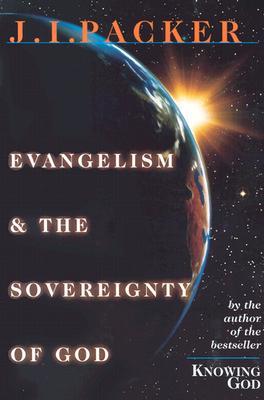
Book Review: Evangelism and the Sovereignty of God

Evangelism and the Sovereignty of God. J.I. Packer. 1961/1991. IVP. 126 pages. [Source: Bought]

From the introduction: Always and everywhere the servants of Christ are under orders to evangelize, and I hope that what I shall say now will act as an incentive to this task.

From chapter one: I do not intend to spend any time at all proving to you the general truth that God is sovereign in His world. There is no need; for I know that, if you are a Christian, you believe this already. How do I know that? Because I know that, if you are a Christian, you pray; and the recognition of God's sovereignty is the basis of your prayers. 

Sadly I don't think an author could get away with saying what Packer says in the opening of chapter one. It may have been safe to say this at one point--that all Christians, or should that be "Christians" believed in the sovereignty of God. But can it still be said? God's sovereignty--not just his sovereignty over election, mind you--is a doctrine that is being attacked more and more. Packer illustrates several "obvious" reasons why/how every Christian believes in God's sovereignty: a) they pray b) they are thankful and grateful to God for their own conversion c) they pray for the conversion of others.
"You do not attribute your repenting and believing to your own wisdom, or prudence, or sound judgment, or good sense...you do not pat yourself on the back for having been at length mastered by the insistent Christ. You would never dream of dividing the credit for your salvation between God and yourself. You have never for one moment supposed that the decisive contribution to your salvation was yours and not God's. You have never told God that, while you are grateful for the means and opportunities of grace that He gave you, you realize that you have to thank, not Him, but yourself for the fact that you responded to His call...and every other Christian in the world does the same." (12, 13)
But I have heard people talk thus and probably so have you. Bad theology makes me sad and mad at the same time. "Free Will Song."

But I am getting distracted. Evangelism and The Sovereignty of God is divided into four chapters. The first chapter is "Divine Sovereignty." The second chapter is "Divine Sovereignty and Human Responsibility." The third chapter is "Evangelism." The fourth and final chapter is "Divine Sovereignty and Evangelism."

I've already mentioned what the first chapter about--every believer believes that God is sovereign. 

The second chapter is important. In this chapter, he presents two views, both straight from Scripture. These beliefs are a) God is King and b) God is Judge.
"Scripture teaches that as King, He orders and controls all things, human actions among them, in accordance with His own eternal purpose." (22)
"Scripture also teaches that, as Judge, He holds every man responsible for the choices he makes and the courses of action he pursues." (22)
After establishing that the Bible clearly says that God is Sovereign and that humans are responsible to God, he focuses on two extreme reactions. One extreme, he notes, is to focus so exclusively on human responsibility that you essentially forget that God is sovereign even in election. When this happens, it is oh-so-easy to focus on methods and techniques and to put all the pressure on the evangelist, or the preacher.
If we forget that only God can give faith, we shall start to think that the making of converts depends, in the last analysis, not on God, but on us, and that the decisive factor is the way in which we evangelize. And this line of thought, consistently followed through, will lead us far astray. (27)
It is not right when we regard ourselves as responsible for securing converts, and look to our own enterprise and techniques to accomplish what only God can accomplish. To do that is to intrude ourselves into the office of the Holy Ghost, and to exalt ourselves as the agents of the new birth. (29)
The second extreme is to focus so exclusively on God's sovereignty that you forget that God calls men and women to evangelize, that we are in fact the instruments God uses. The gospel must be proclaimed and shared. God uses us as his messengers. We give voice to the good news. We're part of God's plan. We have the privilege to be a part of his plan.

The third chapter is perhaps the MOST important chapter of all. It is dedicated to evangelism. It seeks to answer four questions:

  • What is evangelism?
How, then should evangelism be defined? The New Testament answer is very simple. According to the New Testament, evangelism is just preaching the gospel, the evangel. It is a work of communication in which Christians make themselves mouthpieces for God's message of mercy to sinners. Anyone who faithfully delivers that message, under whatever circumstances, in a large meeting, in a small meeting, from a pulpit, or in a private conversation, is evangelizing. (41)
Evangelizing, therefore, is not simply a matter of teaching, and instructing, and imparting information to the mind. There is more to it than that. Evangelizing includes the endeavor to elicit a response to the truth taught. It is communication with a view to conversion. (50)
As love to our neighbor suggests and demands that we evangelize, so the command to evangelize is a specific application of the command to love others for Christ's sake, and must be fulfilled as such. (52)
  • What is the evangelistic message?
The four essential ingredients
1) The gospel is a message about God. (58)
2) The gospel is a message about sin. (59)
3) The gospel is a message about Christ (63)
4) The gospel is a summons to faith and repentance (70)
  • What is the motive for evangelizing?
The two motives of evangelizing:
1) Love for God and desire to be obedient (73)
2) Love for others and desire to see them saved (75)
  • By what means and methods should evangelism be practiced?
Packer discusses the pros and cons of "evangelistic meetings." But I think he has been answering this last question all along. In particular when he discusses personal evangelism and the importance of preaching/teaching.

The fourth chapter focuses on God's sovereignty AND evangelism. How will a person's conviction that God is sovereign affect the way they evangelize?! Does it make a difference? Should it make a difference?

The belief that God is sovereign in grace does not affect
1) the necessity of evangelism (97)
2) the urgency of evangelism (98)
3) the genuineness of the gospel invitations (100)
4) the truth of the gospel promises (100)
5) the responsibility of the the sinner for his reaction to the gospel (105)

The belief that God is sovereign in grace DOES affect
1) our hope, "it gives us our only hope of success in evangelism" (106)
2) our boldness, "it should make us bold" (118)
3) our patience, "this confidence should make us patient" (119)
4) our prayerfulness, "this confidence should make us prayerful" (122)

The third and fourth chapters are the strongest and best, perhaps. But the whole book is well worth reading. One of the highlights, for me, was his making a distinction between personal evangelism and impersonal evangelism (81-82). He also writes of the three true signs of conviction (62-63).

The book is practical, relevant, and enthusiastic.

I think I've read this one three times now--once before I started blogging, once in 2014, and in January 2019.

© Becky Laney of Operation Actually Read Bible

Thursday, October 12, 2017

Book Review: The Sneetches and Other Stories

The Sneetches and Other Stories. Dr. Seuss. 1961. Random House. 65 pages. [Source: Library]

First sentence of The Sneetches:

Now, the Star-Belly Sneetches
Had Bellies with stars.
The Plain-belly Sneetches
Had none upon thars.
Plot/Premise of The Sneetches: Star-Belly Sneetches and Plain-Belly Sneetches have trouble playing and working together. The Plain-Belly Sneetches are envious of the Stars on the Star-Belly Sneetches. And the Star-Belly Sneetches look down on the Plain Belly sort. Sylvester McMonkey McBean takes advantage of the whole situation with his "Star On" and "Star Off" machine. He makes a LOT of money in the process. Will the Sneeches ever learn?

My thoughts: I think the Apostle Paul would have a lot to say to Sylvester McMonkey McBean, the Plain-Belly Sneetches, and the Star-Belly Sneetches. The truth is Christians can act just as stubborn, just as foolish, just as envious, just as greedy as the Sneetches we meet in the story.

Here are a few words Paul might say:
Love in all sincerity, loathing evil and holding fast to the good. Let love of the Christian community show itself in mutual affection. Esteem others more highly than yourself. With unflagging zeal, aglow with the Spirit, serve the Lord. Let hope keep you joyful; in trouble stand firm; persist in prayer, contribute to the needs of God’s people, and practice hospitality. Romans 12:9-13
So no place is left for any human pride in the presence of God. 1 Corinthians 1:29
First sentence of The Zax

One day, making tracks
In the prairie of Prax,
Came a North-Going Zax
And a South-Going Zax.
Plot/Premise of The Zax: A North-Going Zax and a South-Going Zax meet. Neither Zax will budge because, of course, the North-Going Zax will only go North, and the South-Going Zax will only go South. Take a step in the wrong direction?! Never! How long will these two be stubborn?

My thoughts: Have you met a Zax or two in the church? I know I have. Some people just love to argue, to be right, to stand there not budging from their position. I think sometimes its more love of arguing than any one issue. When the Bible speaks of standing firm, I don't think it means like the Zax!

First sentence of Too Many Daves
Did I ever tell you that Mrs. McCave
Had twenty-three sons and she named them all Dave?
Plot/Premise of Too Many Daves: The premise of this one is simple and clearly stated in the first sentence: The McCave family has too many sons named Dave. The joy in this one comes from reading it aloud. All the names she wished she'd chosen. Names like "Hoos-Foos" "Putt-Putt" and "Oliver Boliver Butt."

My thoughts: In this world, it's easy to feel unknown, misunderstood, invisible. But there is a God who knows us. God doesn't have "too many sons" he knows and loves them all. You are known by God. You are loved by God.

First sentence of What Was I Scared Of?

Well...
I was walking in the night
And I saw nothing scary.
For I have never been afraid
Of anything. Not very.
Plot/Premise of What Was I Scared Of? The narrator of this one claims he's not scared of anything. But one night when he sees a pair of pale green pants with nobody inside them...he becomes very frightened indeed. Will he ever overcome his fear? Should he overcome his fear?

My thoughts: The Bible has a lot to say about anxiety and fear. The narrator in this one is very fearful of the unknown. Aren't we all? The unknown in this instance is a pair of pale green pants. We all face our own unknowns. Time and time again we are pushed into facing our unknowns. We can react with fear and anxiety--dragging our feet. We can react with confidence--our confidence being in the God who is always with us.

© Becky Laney of Operation Actually Read Bible

Friday, June 23, 2017

Book Review: The Knowledge of the Holy

Knowledge of the Holy. A.W. Tozer. 1961/1978. HarperCollins. 128 pages. [Source: Book I Bought]

From the preface: True religion confronts earth with heaven and brings eternity to bear upon time.

From chapter one: What comes into our minds when we think about God is the most important thing about us. 

Why read A.W. Tozer's The Knowledge of the Holy?

Because…"It is impossible to keep our moral practices sound and our inward attitudes right while our idea of God is erroneous or inadequate. If we would bring back spiritual power to our lives, we must begin to think of God more nearly as He is."

Because…"What comes into our minds when we think about God is the most important thing about us."

Because…"Wrong ideas about God are not only the fountain from which the polluted waters of idolatry flow; they are themselves idolatrous. The idolater simply imagines things about God and acts as if they were true."

Because... "If we insist upon trying to imagine Him, we end with an idol, made not with hands but with thoughts; and an idol of the mind is as offensive to God as an idol of the hand."

Because…"We can never know who or what we are till we know at least something of what God is."

Because…"It is not a cheerful thought that millions of us who live in a land of Bibles, who belong to churches and labor to promote the Christian religion, may yet pass our whole life on this earth without once having thought or tried to think seriously about the being of God."

Technically, all those reasons are reasons to read the Good Book, the Word of God, Holy Scriptures. But I think the Holy Spirit can and will use Tozer's words--long after he's dead--to inspire new generations to seek God.

The Knowledge of the Holy is a theological-devotional book about the attributes of God. You may not be used to theology crossing over into devotions, but this Tozer quote sums up how this is so.
The study of the attributes of God, far from being dull and heavy, may for the enlightened Christian be a sweet and absorbing spiritual exercise. To the soul that is athirst for God, nothing could be more delightful.
What is an attribute?

  • An attribute of God is whatever God has in any way revealed as being true of Himself.
  • An attribute, as we can know it, is a mental concept, an intellectual response to God's self-revelation. It is an answer to a question, the reply God makes to our interrogation concerning himself.
  • What is God like? What kind of God is He? How may we expect Him to act toward us and toward all created things? Such questions are not merely academic. They touch the far-in reaches of the human spirit, and their answers affect life and character and destiny.
  • Between His attributes no contradiction can exist.
  • The divine attributes are what we know to be true of God. He does not possess them as qualities; they are how God is as He reveals Himself to His creatures. Love, for instance, is not something God has and which may grow or diminish or cease to be. His love is the way God is, and when He loves He is simply being Himself.
I recommend Knowledge of the Holy to every believer--no matter their age, gender, or denomination. You may or may not agree with every single sentence Tozer ever spoke--ever wrote--but what you will find is someone who challenges you to think, to consider, to grow. Tozer rarely leaves readers the same. 


© Becky Laney of Operation Actually Read Bible

Friday, August 19, 2016

Book Review: God Loves Me


God Loves Me. Mary Alice Jones. Illustrated by Elizabeth Webbe. 1961. 30 pages. [Source: Bought]

First sentence: How do I know God loves me? Let me think of the ways. I think of my mother and daddy. They love me and take care of me. God planned for mothers and daddies. That's how I know God loves me.

Premise/plot: A picture book for parents to share with little ones about God's love. The text is simple, straightforward, short, and sweet. The illustrations are by Elizabeth Webbe.

My thoughts: I think I like this one even more than God is Good. (Though I don't really have to have a favorite!)

My favorite quote: "I touch the Bible my teacher holds and listens as she reads to me: "God loves you. He cares about you." God plans for me to have the Bible. That's how I know God loves me.

Text: 4 out of 5
Illustrations: 5 out of 5
Total: 9 out of 10