Showing posts with label J.I. Packer. Show all posts

Sunday, September 26, 2021

62. The Heritage of Anglican Theology


The Heritage of Anglican Theology by J.I. Packer. 2021. 384 pages. [Source: Review copy]

First sentence of the foreword: The origins of this book are to be found in a course on Anglican history and theology that J. I. Packer taught at Regent College in Vancouver over a number of years.

First sentence: Our purpose in this book is to study and appreciate Anglican theology—to take the measure of it, that is, as theology, not as anything else.

I love, love, love J.I. Packer. I do. He was one of my first theologians to read. Going into this I knew relatively little about Anglican theology. Relatively. My knowledge was limited primarily to the Tudor period and later the Puritans. With little bits of shallow-ish knowledge from other time periods in history. This book covers a LOT. I was worried that it would be exceedingly dry, completely uninteresting, without a spark of personality. I was wrong. 

Granted, this book won't appeal to every reader. I know that. You know that. But for those who have an interest either in church history in general OR the history and legacy of the Anglican church (aka Church of England) OR a love for all things Packer, this one does a great job at delivering just what it promises. What you see is exactly what you get. Packer gives us a history and overview of the Anglican church past and present. Packer highlights not only key events but also key people and key ideas. He does a good job of tracing the history through the centuries--linking everything together. 

He does a good job of pointing out that there isn't just "one" stream of Anglicanism. There are three main streams--or branches--of Anglicanism. (And there have been for centuries.) The three are: Protestant Reformed, Anglo-Catholic (or High Church), Broad Church (or Liberal or Radical or Modern). 

I love the blend of theology and doctrine, history, biography, and to some degree church politics. 

Again this one won't appeal to everyone, but to those special few that have an interest, it will be appreciated and loved. 


© Becky Laney of Operation Actually Read Bible

Tuesday, September 14, 2021

57. Rediscovering Holiness


Rediscovering Holiness by J.I. Packer. 2021. 384 pages. [Source: Review copy]

First sentence: Our grandfather clock, which tells us not only the hours, minutes and seconds but also the days of the week, the months of the year, and the phases of the moon, is something of a veteran. Scratched on one of its lead weights is the date 1789—the year of the French Revolution and George Washington’s first term as President. Our clock was going before the great Christian theologian John Wesley stopped going, if I may put it so.

Rediscovering Holiness was first published in 1992. It has gone through several editions; the most recent edition being published in July 2021 by Crossway. According to the preface, the book "grew" out of four conference talks from the year before--1991. You honestly can't tell this book grew out of four separate conference sermons! The book is cohesive and seamless in its treatment of holiness. The book doesn't focus in on one aspect of holiness, it touches on the many, many aspects of holiness. 

The context for the book is a growing concern (and rightly so using hindsight) that the contemporary church is failing to emphasize holiness--either God's holiness OR our need to grow in holiness (sanctification)--and to rightly teach and preach holiness. Packer saw a void--a big one perhaps--and decided to write a book on holiness. The subject was too important, too significant, too fundamental, too essential to ignore. This generation--and every generation--needs to be grounded on the doctrine of holiness. He writes, "To listen to our sermons and to read the books we write for each other and then to watch the zany, worldly, quarrelsome way we behave as Christian people, you would never imagine that once the highway of holiness was clearly marked out for Bible believers, so that ministers and people knew what it was and could speak of it with authority and confidence."

Packer points out that he doesn't need to "discover" new insights on holiness, but rather go back to previous teachings and writings. To go back to that "old time religion" if you will to discover what centuries of believers--theologians--have believed and taught about holiness. 

The book has plenty of Scripture AND plenty of quotes. Packer does love his Puritans. (Yes, I know that Packer is dead. It's just harder--for me--to write a book review and switch verb tenses back and forth.) 

Throughout the book, Packer groups together prayer and holiness. The practical aspects of "learning" and "growing" both are connected. He writes, "Holiness, like prayer (which is indeed part of it), is something that, though Christians have an instinct for it through their new birth, as we shall see, they have to learn in and through experience. As Jesus “learned obedience from what he suffered” (Heb. 5:8)—learned what obedience requires, costs and involves through the experience of actually doing His Father’s will up to and in His passion—so Christians must, and do, learn prayer from their struggles to pray and holiness from their battles for purity of heart and righteousness of life...Prayer and holiness are learned in a similar way as commitments are made, habits are formed and battles are fought against a real opponent (Satan, in this case), who with great cunning plays constantly on our weak spots...The process of learning to be holy, like the process of learning to pray, may properly be thought of as a school—God’s own school, in which the curriculum, the teaching staff, the rules, the discipline, the occasional prizes and the fellow pupils with whom one studies, plays, debates and fraternizes, are all there under God’s sovereign providence."

The book definitely has practical implications, but it is theology first and foremost. The holiness (of God) and the call to be holy (sanctification) is a WEIGHTY subject. Packer is thorough and solid. 

I found myself highlighting PAGES because so much material was worthy of a second look--a dozen looks to be fair. 

What you might not be expecting--and what I treasure most about it perhaps--is the RICHNESS of the chapters on SALVATION. Packer truly and clearly presents the gospel, and the gospel is beautiful, amazing, compelling. Though chapters two and three--the ones on salvation--are especially rich and wonderful, the book as a whole is worthy of your time, energy, and effort. Definitely worth a reread at some point.

Quotes:

We are all invalids in God’s hospital. In moral and spiritual terms we are all sick and damaged, diseased and deformed, scarred and sore, lame and lopsided, to a far, far greater extent than we realize. Under God’s care we are getting better, but we are not yet well. The modern Christian likes to dwell on present blessings rather than future prospects. Modern Christians egg each other on to testify that where once we were blind, deaf, and indeed dead so far as God was concerned, now through Christ we have been brought to life, radically transformed, and blessed with spiritual health. Thank God, there is real truth in that. But spiritual health means being holy and whole. To the extent that we fall short of being holy and whole, we are not fully healthy either. Measured by the absolute standard of spiritual health that we see in Jesus Christ, we are all of us no more, just as we are no less, than invalids in the process of being cured. Our spiritual life is at best a fragile convalescence, easily disrupted. When there are tensions, strains, perversities, and disappointments in the Christian fellowship, it helps to remember that no Christian, and no church, ever has the clean bill of spiritual health that would match the total physical well-being for which today’s fitness seekers labor. To long for total spiritual well-being is right and natural, but to believe that one is anywhere near it is to be utterly self-deceived.

The Bible, heard and read, preached and taught, interpreted and applied, is both the channel and the content of His communication. It is as if Jesus hands us the canonical Scriptures directly, telling us that they are the authoritative and all-sufficient source from which we must learn both what we are to do in order to be His followers and also what He has done, is doing, and will do to save us from the fatal sickness of sin. Think of your Bible, then, as Jesus Christ’s gift to you; think of it as a letter to you from your Lord. Think of your name, written in the front of it, as if Jesus Himself had written it there. Think of Jesus each time you read your Bible. Think of Him asking you, page by page and chapter by chapter, what you have just learned about the need, nature, method, and effect of the grace that He brings, and about the path of loyal discipleship that He calls you to tread. That is the way to profit from the Bible. Only when your reading of the written Word feeds into your relationship with the living Word (Jesus) does the Bible operate as the channel of light and life that God means it to be.

Packer's advice on reading/studying the Bible:

A helpful scheme of applicatory meditation on each passage is to ask ourselves: • What does this passage tell me about God? How does it describe God’s nature and power; His plan and purpose; His likes and dislikes; His works, ways, and will for His human creatures? • What does this passage tell me about living? What does it say about right conduct, wrong conduct, wise conduct, foolish conduct; different situations and relationships in which people find themselves; the way of faith with all its difficulties and delights; various emotional states and temperamental traumas; virtues to cultivate, vices to avoid, and values to hold on to; pressures from the world, the flesh, and the devil, and what to do about them? In short, what does it tell me about all the realities of belonging to a lost humanity in a spoiled world now touched by the powers of redemption, and involved in the ongoing conflict between Christ the conqueror and the defeated powers of darkness that are so desperately fighting back? What does all this say to me about my own life today? What does it tell me about the tasks, problems, opportunities, pitfalls, and temptations to sin that confront me day by day? What warnings and encouragements does it give me, and what wisdom and resources does it show me?


© Becky Laney of Operation Actually Read Bible

Thursday, February 28, 2019

Book Review: Knowing Christianity

Knowing Christianity. J.I. Packer. 1995. 191 pages. [Source: Bought] 

First sentence: Knowing God. Is there any greater theme to study? Is there any nobler goal to aim at? Is there any greater good to enjoy? Is there any deeper longer in the human heart than the desire to know God? Surely not. And Christianity's good news is that it can happen!

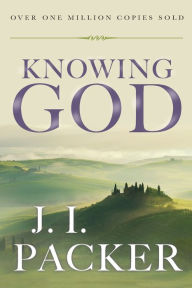
J.I. Packer is the author of Knowing God. If you haven't read Knowing God yet, then you should. That book is absolutely a must read. It focuses on the attributes of God.

Knowing Christianity has a different focus or slant. While in some ways it's still about knowing God, it's main focus is on answering a few basic questions: what is christianity? what do christians believe? which doctrines are key to the christian faith? how should christians live? In other words...Christianity has CONTENT. (It isn't a label that you can just slap on a person or slap on yourself.) That content should be learned/taught. It should be known. Doctrines should be informing how we live.

So essentially it spends a few chapters on HOW we know what we know and why we should live accordingly. OR to put it in its simplest terms: Christians should be people of THE BOOK. The Bible is true and authoritative. It is the Word of God for the people of God. Culture. Society. Polls. Traditions. Or own selfishness and self-centeredness. Or own love of pet sins. Or fears. NOTHING should have more authority than the Word of God in our lives. The Bible is trustworthy and true and Christians should hold it close and dear--live by it, be empowered by it, transformed by it. You cannot know God apart from knowing the Word of God. You just can't. You can't claim to want to know God and dismiss the Bible. You can't claim to want to live "in" God's will and never open the Word of God. You can't claim to be in right relationship with God but pick and choose which verses are true.

The book is also about God the Father, God the Son, God the Spirit, the cross, regeneration, prayer, worship, church fellowship, heaven, hell, etc.

Quotes:
  • Faith is the outgoing of our heart to God and Christ, who are there inviting us to themselves, saying to us, "Come and put your trust for eternal life in the Father and the Son." Faith focuses not on feelings but on facts, not on reactions inside us but on realities outside us, on the words and works of God who is there, searching us, knowing us, and personally addressing us, whether we like it or not. (15)
  • Knowing God is in fact more than knowing God. It involves knowing ourselves as needy creatures and lost sinners, for it is precisely a matter of knowing God in his saving relationship to us, that relationship in which he takes pity on us in our sinfulness and lovingly gives himself and his gifts to us for our renewal and enrichment. In other words, knowledge of God occurs only where there is knowledge of ourselves and our need and thankful reception of God's gifts to meet our need. (16)
  • God made the human race in order that he might communicate himself to us and draw us into loving fellowship with himself. This was always his purpose. But we have turned away from God; sin has come in; human nature has become twisted. The human race is now radically anti-God in all its basic attitudes. The human race is not interested in fellowship with God. It is no longer in our nature to love God or to respond to God in any kind of worship. We have our back to God, we might say. In consequence of the Fall it is now human nature to do over and over what Adam and Eve are found doing in Genesis 3, that is, hiding from God so as to avoid having to face our guilt and so establish independence of him in the way we live. We treat ourselves as though we were God. We live for ourselves; we are self-servers; we seek to bend everything to our own interests. In doing this, we fight God--the real God. We say no to him. We push him away from the center of our life to its circumference. We keep him at bay because it is our nature to do that. So God's communication to us in our sin has to do more than simply present truth to our mind; it has to work in the human heart and alter fallen human nature. (18)
  • If, therefore, God is ever to be acknowledged, worshiped and trusted as he should be, he not only must set his truth before us but must also give us eyes to see it, ears to hear it and hearts to receive it. And that, in fact, is precisely his agenda. (19)
  • What is called for now is the humility that bows before the Scriptures and accepts them as instructions from God. They are God preaching, God talking, God telling, God instructing, God setting before us the right way to think and speak about him. (22)
  • The privilege of knowing God's truth with certainty and precision carries with it the responsibility of obeying that truth with equal precision. Christianity is no armchair faith but a call to action. (27)
  • Bowing to the living Lord, then, entails submitting mind and heart to the written Word. Disciples individually and churches corporately stand under the authority of Scripture because they stand under the lordship of Christ, who rules by Scripture. This is not bibliolatry but Christianity in its most authentic form. (35)
  • Consciences not governed by God's Word are to that extent not Christian. (38)
  • Where basic beliefs about Jesus are denied and Christian behavior as he taught it is not practiced, Christianity does not exist, whatever may be claimed to the contrary. (53)
  • Luther gazed at Christ's cross with steady joy and gloried in the fact that whoever trusts Christ can be assured of his love. He once wrote a troubled friend, "Learn to know Christ and him crucified. Learn to sing to him, and say, 'Lord Jesus, you are my righteousness, I am your sin. You have taken upon yourself what is mine and given me what is yours. You have become what you were not so that I might become what I was not.'" (79)
  • Meditation, which as I use the word means thinking about God in God's presence, is a helpful preparation for speaking to God directly, and one that we seem regularly to need. (103)
  • Never are Christians so fully themselves or so happy as when their hearts are drawn out in the worship of God. (110)
  • It is not a good sign when a person sees no difference between sucking sweets and eating a square meal. (119)


© Becky Laney of Operation Actually Read Bible

Tuesday, January 29, 2019

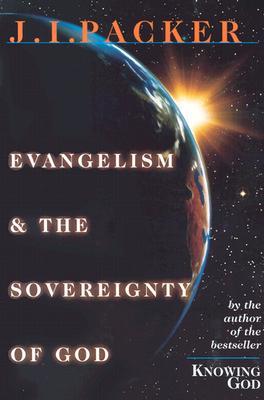
Book Review: Evangelism and the Sovereignty of God

Evangelism and the Sovereignty of God. J.I. Packer. 1961/1991. IVP. 126 pages. [Source: Bought]

From the introduction: Always and everywhere the servants of Christ are under orders to evangelize, and I hope that what I shall say now will act as an incentive to this task.

From chapter one: I do not intend to spend any time at all proving to you the general truth that God is sovereign in His world. There is no need; for I know that, if you are a Christian, you believe this already. How do I know that? Because I know that, if you are a Christian, you pray; and the recognition of God's sovereignty is the basis of your prayers. 

Sadly I don't think an author could get away with saying what Packer says in the opening of chapter one. It may have been safe to say this at one point--that all Christians, or should that be "Christians" believed in the sovereignty of God. But can it still be said? God's sovereignty--not just his sovereignty over election, mind you--is a doctrine that is being attacked more and more. Packer illustrates several "obvious" reasons why/how every Christian believes in God's sovereignty: a) they pray b) they are thankful and grateful to God for their own conversion c) they pray for the conversion of others.
"You do not attribute your repenting and believing to your own wisdom, or prudence, or sound judgment, or good sense...you do not pat yourself on the back for having been at length mastered by the insistent Christ. You would never dream of dividing the credit for your salvation between God and yourself. You have never for one moment supposed that the decisive contribution to your salvation was yours and not God's. You have never told God that, while you are grateful for the means and opportunities of grace that He gave you, you realize that you have to thank, not Him, but yourself for the fact that you responded to His call...and every other Christian in the world does the same." (12, 13)
But I have heard people talk thus and probably so have you. Bad theology makes me sad and mad at the same time. "Free Will Song."

But I am getting distracted. Evangelism and The Sovereignty of God is divided into four chapters. The first chapter is "Divine Sovereignty." The second chapter is "Divine Sovereignty and Human Responsibility." The third chapter is "Evangelism." The fourth and final chapter is "Divine Sovereignty and Evangelism."

I've already mentioned what the first chapter about--every believer believes that God is sovereign. 

The second chapter is important. In this chapter, he presents two views, both straight from Scripture. These beliefs are a) God is King and b) God is Judge.
"Scripture teaches that as King, He orders and controls all things, human actions among them, in accordance with His own eternal purpose." (22)
"Scripture also teaches that, as Judge, He holds every man responsible for the choices he makes and the courses of action he pursues." (22)
After establishing that the Bible clearly says that God is Sovereign and that humans are responsible to God, he focuses on two extreme reactions. One extreme, he notes, is to focus so exclusively on human responsibility that you essentially forget that God is sovereign even in election. When this happens, it is oh-so-easy to focus on methods and techniques and to put all the pressure on the evangelist, or the preacher.
If we forget that only God can give faith, we shall start to think that the making of converts depends, in the last analysis, not on God, but on us, and that the decisive factor is the way in which we evangelize. And this line of thought, consistently followed through, will lead us far astray. (27)
It is not right when we regard ourselves as responsible for securing converts, and look to our own enterprise and techniques to accomplish what only God can accomplish. To do that is to intrude ourselves into the office of the Holy Ghost, and to exalt ourselves as the agents of the new birth. (29)
The second extreme is to focus so exclusively on God's sovereignty that you forget that God calls men and women to evangelize, that we are in fact the instruments God uses. The gospel must be proclaimed and shared. God uses us as his messengers. We give voice to the good news. We're part of God's plan. We have the privilege to be a part of his plan.

The third chapter is perhaps the MOST important chapter of all. It is dedicated to evangelism. It seeks to answer four questions:

  • What is evangelism?
How, then should evangelism be defined? The New Testament answer is very simple. According to the New Testament, evangelism is just preaching the gospel, the evangel. It is a work of communication in which Christians make themselves mouthpieces for God's message of mercy to sinners. Anyone who faithfully delivers that message, under whatever circumstances, in a large meeting, in a small meeting, from a pulpit, or in a private conversation, is evangelizing. (41)
Evangelizing, therefore, is not simply a matter of teaching, and instructing, and imparting information to the mind. There is more to it than that. Evangelizing includes the endeavor to elicit a response to the truth taught. It is communication with a view to conversion. (50)
As love to our neighbor suggests and demands that we evangelize, so the command to evangelize is a specific application of the command to love others for Christ's sake, and must be fulfilled as such. (52)
  • What is the evangelistic message?
The four essential ingredients
1) The gospel is a message about God. (58)
2) The gospel is a message about sin. (59)
3) The gospel is a message about Christ (63)
4) The gospel is a summons to faith and repentance (70)
  • What is the motive for evangelizing?
The two motives of evangelizing:
1) Love for God and desire to be obedient (73)
2) Love for others and desire to see them saved (75)
  • By what means and methods should evangelism be practiced?
Packer discusses the pros and cons of "evangelistic meetings." But I think he has been answering this last question all along. In particular when he discusses personal evangelism and the importance of preaching/teaching.

The fourth chapter focuses on God's sovereignty AND evangelism. How will a person's conviction that God is sovereign affect the way they evangelize?! Does it make a difference? Should it make a difference?

The belief that God is sovereign in grace does not affect
1) the necessity of evangelism (97)
2) the urgency of evangelism (98)
3) the genuineness of the gospel invitations (100)
4) the truth of the gospel promises (100)
5) the responsibility of the the sinner for his reaction to the gospel (105)

The belief that God is sovereign in grace DOES affect
1) our hope, "it gives us our only hope of success in evangelism" (106)
2) our boldness, "it should make us bold" (118)
3) our patience, "this confidence should make us patient" (119)
4) our prayerfulness, "this confidence should make us prayerful" (122)

The third and fourth chapters are the strongest and best, perhaps. But the whole book is well worth reading. One of the highlights, for me, was his making a distinction between personal evangelism and impersonal evangelism (81-82). He also writes of the three true signs of conviction (62-63).

The book is practical, relevant, and enthusiastic.

I think I've read this one three times now--once before I started blogging, once in 2014, and in January 2019.

© Becky Laney of Operation Actually Read Bible

Sunday, July 12, 2015

Top Ten Knowing God Quotes

On Friday, I reviewed J.I. Packer's Knowing God. Today, I'll be sharing my top ten quotes from the book. Some will be short. Some will be long. I hope you'll agree with me, that all will be GOOD!
Five basic truths, five foundation principles of the knowledge about God which Christians have, will determine our course throughout. They are as follows:
1. God has spoken to man, and the Bible is his Word, given to us to make us wise unto salvation.
2. God is Lord and King over his world; he rules all things for his own glory, displaying his perfections in all that he does, in order that men and angels may worship and adore him.
3. God is Savior, active in sovereign love through the Lord Jesus Christ to rescue believers from the guilt and power of sin, to adopt them as his children and to bless them accordingly.
4. God is triune; there are within the Godhead three persons, the Father, the Son and the Holy Spirit; and the work of salvation is one which all three act together, the Father purposing redemption, the Son securing it and the Spirit applying it.
5. Godliness means responding to God's revelation in trust and obedience, faith and worship, prayer and praise, submission and service. Life must be seen and lived in the light of God's Word. This, and nothing else, is true religion.
In the light of these general and basic truths, we are now going to examine in detail what the Bible shows us of the nature and character of the God of whom we have been speaking. (20)
 I chose this quote because it is foundational for understanding and appreciating the context not only of this book, but, oh-so-many books. All good theological books start with these five basic truths in the background.
Our aim in studying the Godhead must be to know God himself better. Our concern must be to enlarge our acquaintance, not simply with the doctrine of God's attributes, but with the living God whose attributes they are. As he is the subject of our study, and our helper in it, so he must himself be the end of it. We must seek, in studying God, to be led to God. It was for this purpose that revelation was given, and it is to this use that we must put it. (23)
I chose this quote--and it's one of my "shorter" quotes--because in it is the mission of the book itself. Packer desires readers to be LED TO GOD. The study of God isn't about being intellectual and learning facts. It's all about knowing God himself and being in relationship.
Meditation is the activity of calling to mind, and thinking over, and dwelling on, and applying to oneself, the various things that one knows about the works and ways and purposes and promises of God. It is an activity of holy thought, consciously performed in the presence of God, under the eye of God, by the help of God, as a means of communion with God. Its purpose is to clear one's mental and spiritual vision of God, and to let his truth make its full and proper impact on one's mind and heart. It is a matter of talking to oneself about God and oneself; it is, indeed, often a matter of arguing with oneself, reasoning oneself out of moods of doubt and unbelief into a clear apprehension of God's power and grace. Its effect is ever to humble us, as we contemplate God's greatness and glory and our own littleness and sinfulness, and to encourage and reassure us--"comfort" us, in the old, strong, Bible sense of the word--as we contemplate the unsearchable riches of divine mercy displayed in the Lord Jesus Christ. (23)
I chose this quote because it is such a good definition of meditation. If you're like me, you hear the word meditation and it's easy to think you know what it means--mostly. But it's hard to put into exact words what it means, or should mean. It's a fuzzy concept in some ways. But Packer writes with clarity that is much appreciated!!!
Do we desire such knowledge of God? Then two things follow.
First, we must recognize how much we lack knowledge of God. We must learn to measure ourselves, not by our knowledge about God, not by our gifts and responsibilities in the church, but by how we pray and and what goes on in our hearts. Many of us, I suspect, have no idea how impoverished we are at this level. Let us ask the Lord to show us.
Second, we must seek the Savior. When he was on earth, he invited ordinary people to company with him; thus they came to know him, and in knowing him to know his Father… The Lord Jesus Christ is now absent from us in body, but spiritually it makes no difference; still we may find and know God through seeking and finding Jesus' company. It is those who have sought the Lord Jesus till they have found him--for the promise is that when we seek him with all our hearts, we shall surely find him--who can stand before the world to testify that they have known God. (32)
I chose this quote because it challenges readers to reflect and consider. I agree with Packer that it is essential that we recognize how much we lack knowledge of God….and that there is a difference between knowing God and knowing about God…
What matters supremely, therefore, is not, in the last analysis, the fact that I know God, but the larger fact which underlies it--the fact that he knows me. I am graven on the palms of his hands. I am never out of his mind. All my knowledge of him depends on his sustained initiative in knowing me. I know him because he first knew me, and continues to know me. He knows me as a friend, one who loves me; and there is no moment when his eye is off me, or his attention distracted from me, and no moment, therefore, when his care falters…There is tremendous relief in knowing that his love to me is utterly realistic, based at every point on prior knowledge of the worst about me, so that no discovery now can disillusion him about me, in the way I am so often disillusioned about myself, and quench his determination to bless me. (41-42)
I chose this quote because it is such a wow quote. Have you grasped what being known by God means to you personally?! 
It needs to be said with the greatest possible emphasis that those who hold themselves free to think of God as they like are breaking the second commandment. (47)
I chose this quote--and it is my shortest quote--because it has impact. Idolatry isn't a relic of the past. You don't have to be worshiping an ancient, pagan god--an actual idol--an actual image--to be committing idolatry. If you create a god in your own image--if you reshape the God of the Bible into one of your own making--that is idolatry. It is very much a modern day problem. 
What is a Christian? Christians can be described from many angles, but from what we have said it is clear that we can cover everything by saying: True Christians are people who acknowledge and live under the word of God. They submit without reserve to the word of God written in "the book of Truth" (Dan 10:21), believing the teaching, trusting the promises, following the commands. Their eyes are upon the God of the Bible as their Father and the Christ of the Bible as their Savior. Christians will tell you, if you ask them, that the Word of God has both convinced them of sin and assured them of forgiveness. Their consciences, like Luther's, are captive to the Word of God, and they aspire, like the Psalmist, to have their whole lives brought into line with it. (116)
I chose this quote because it is another foundational quote. The question WHAT IS A CHRISTIAN? is fundamental to the faith. And how we answer this question says a lot about us. I love Packer's definition. And I love the challenge that comes shortly afterwards, "Why does this description fit so few of us who profess to be Christians in these days?"
To be sure, there have always been some who have found the thought of grace so overwhelmingly wonderful that they could never get over it… But many church people are not like this. They may pay lip service to the idea of grace, but there they stop. Their conception of grace is not so much debased as nonexistent…What is it that hinders so many who profess to believe in grace from really doing so? Why does the theme mean so little even to some who talk about it a great deal? The root of the trouble seems to be misbelief about the basic relationship between a person and God--misbelief rooted not just in the mind but in the heart, at the deeper level of things that we never question because we always take them for granted. (129) 
There are four crucial truths in this realm which the doctrine of grace presupposes, and if they are not acknowledged and felt in one's heart, clear faith in God's grace becomes impossible. Unhappily, the spirit of our age is as directly opposed to them as it well could be. It is not to be wondered at, therefore, that faith in grace is a rarity today. The four truths are these:
1. The moral ill-desert of man. Modern men and women…naturally incline to a high opinion of themselves…in the moral realm they are resolutely kind to themselves, treating small virtues as compensating for great vices and refusing to take seriously the idea that, morally speaking, there is anything much wrong with them…The thought of themselves as creatures fallen from God's image, rebels against God's rule, guilty and unclean in God's sight, fit only for God's condemnation, never enters their heads.
2. The retributive justice of God. The way of modern men and women is to turn a blind eye to all wrongdoing as long as they safely can. They tolerate it in others, feeling that there, but for the accident of circumstances, go they themselves…Willingness to tolerate and indulge evil up to the limit is seen as a virtue, while living by fixed principles of right and wrong is censured by some as doubtfully moral…The idea that retribution might be the moral law of God's world and an expression of his holy character seems to us quite fantastic… God is not true to himself unless he punishes sin. And unless one knows and feels the truth of this fact that wrongdoers have no natural hope of anything from God but retributive judgment, one can never share the biblical faith in divine grace.
3. The spiritual impotence of man…This has confirmed modern men and women in the faith…belief that we can repair our own relationship with God by putting God in a position where he cannot say no anymore…To mend our relationship with God, regaining God's favor after having once lost it, is beyond the power of any one of us. And one must see and bow to this before one can share the biblical faith in God's grace.
4. The sovereign freedom of God. Ancient paganism thought of each god as bound to his worshipers by bonds of self-interest, because he depended on their service and gifts for his welfare. Modern paganism has at the back of its mind a similar feeling that God is somehow obliged to love and help us, little though we deserve it. This was the feeling voiced by the French freethinker who died muttering, "God will forgive--that's his job." But this feeling is not well-founded…We can only claim from him justice--and justice, for us, means certain condemnation. God does not owe it to anyone to stop justice taking its course. He is not obliged to pity and pardon; if he does so it is an act done, as we say, "of his own free will," and nobody forces his hand… Grace is free, in the sense of being self-originated and of proceeding from One who was free not to be gracious. Only when it is seen that what decides each individual's destiny is whether or not God resolves to save him from his sins, and that this is a decision which God need not make in any single case, can one begin to grasp the biblical view of grace. (130-132)
I chose this quote--these quotes--because Packer's chapter on grace was AMAZING. And I think people do tend to misunderstand what grace is and isn't. People tend to go to either extreme--making too much of it--is such a thing possible???--or too little of it. If you want to know WHY grace is amazing, these four truths sum it up. Do you agree with Packer's conclusions?
As judge, he is the law, but as Savior he is the gospel. Run from him now, and you will meet him as judge then--and without hope. Seek him now, and you will find him, and you will then discover that you are looking forward to that future meeting with joy, knowing that there is now "no condemnation for those who are in Christ Jesus." (Rom 8:1) (147)
Packer spends a lot of time on "difficult subjects." With chapters titled "God the Judge," "The Wrath of God," "Goodness and Severity," and "The Jealous God" you know that he's not afraid to go there, to speak of hell and judgment and the life-and-death importance of believing in God and obtaining eternal life. I chose this quote because it is a heartfelt invitation for readers.
You sum up the whole of New Testament teaching in a single phrase, if you speak of it as a revelation of the Fatherhood of the holy Creator. In the same way, you sum up the whole of New Testament religion if you describe it as the knowledge of God as one’s holy Father. If you want to judge how well a person understands Christianity, find out how much he makes of the thought of being God’s child, and having God as his Father. If this is not the thought that prompts and controls his worship and prayers and his whole outlook on life, it means that he does not understand Christianity very well at all. For everything that Christ taught, everything that makes the New Testament new, and better than the Old, everything that is distinctively Christian as opposed to merely Jewish, is summed up I the knowledge of the Fatherhood of God. (201)
Packer has a LOT to say about adoption and the fatherhood of God. But this was my favorite. (It was hard to choose just one).


© Becky Laney of Operation Actually Read Bible

Thursday, May 29, 2014

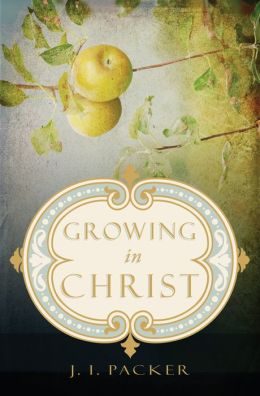
Book Review: Growing in Christ

Growing in Christ. J.I. Packer. 1977/1994/2007. Crossway. 288 pages. [Source: Bought]

Growing in Christ was originally published under the title I Want To Be A Christian. And in some ways that is an equally fitting title for this instructional book. Here readers are treated to the basics of the basics.

Growing in Christ is divided into four sections. The first section explores the Apostles Creed line by line. The second section discusses baptism and conversion. The third section examines the Lord's Prayer line by line. The fourth section focuses on the ten commandments. See basics of the basics.

Growing in Christ is reader-friendly. It is organized. It is concise. It is straight to the point. How short is short? Most chapters are under four pages. I am a reader. I have always been a reader. So longer chapters don't intimidate me usually. But. That isn't true for everyone. Just because you're a Christian doesn't make you automatically a reader. Love for Christ does not equal love for books! Theology books can be intimidating. One might have the desire to learn but be intimidated or overwhelmed by books, by theology. This book is for everyone. The chapters are short and informative and stay on task. The book is not condescending. It seeks to be interactive. Every single chapter asks the reader to do something, to engage with the Bible, to contemplate and reflect. Each chapter concludes with "Further Bible Study" and "Questions for Thought and Discussion."

Sample questions:

  • What does Christ's death have to do with your sins?
  • What difference does it make whether we face death with Christ or without him?
  • In what way is Christ's future coming reason for hope?
  • Who does the work of Christian conversion, and what is that work?
  • Why is a converted life-style more significant than a conversion experience?
  • How does one's view of God affect one's view of prayer?

Growing in Christ could be used for groups: classes, small groups, etc. But it could also be used for personal study.

I would recommend this one.

© Becky Laney of Operation Actually Read Bible

Thursday, April 10, 2014

Worth Quoting #8 J.I. Packer

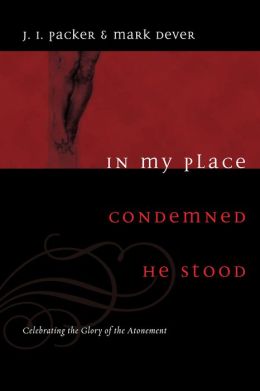
From In My Place Condemned He Stood by J.I. Packer (and Mark Dever). (This quote comes from a Packer chapter).

Packer composed a list of nine insights about the cross that are basic to personal religion:

1. God condones nothing but judges all sin as it deserves: which Scripture affirms, and my conscience confirms, to be right.

2. My sins merit ultimate penal suffering and rejection from God's presence (conscience also confirms this), and nothing I do can blot them out.

3. The penalty due to me for my sins, whatever it was, was paid for me by Jesus Christ, the Son of God, in his death on the cross.

4. Because this is so, I through faith in him am made "the righteousness of God in him," i.e., I am justified; pardon, acceptance, and sonship become mine.

5) Christ's death for me is my sole ground of hope before God.

6) My faith in Christ is God's own gift to me, given in virtue of Christ's death for me; i.e., the cross procured it.

7) Christ's death for me guarantees my preservation to glory.

8) Christ's death for me is the measure and pledge of the love of the Father and the Son to me.

9) Christ's death for me calls and constrains me to trust, to worship, to love, and to serve.

© Becky Laney of Operation Actually Read Bible
Monday, March 10, 2014

Worth Quoting #6 Quotes About the Holy Spirit

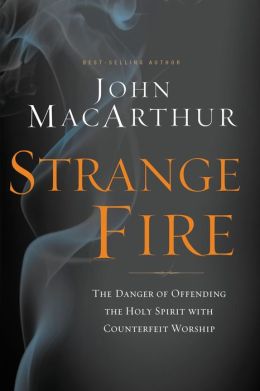
Found this J.I. Packer quote in John MacArthur's newest book, Strange Fire.
The Spirit's message to us is never, "Look at me; listen to me; come to me; get to know me," but always, "Loot at HIM, and see HIS glory; listen to HIM, and hear HIS word; go to HIM, and have life; get to know HIM, and taste his gift of joy and peace." (43)
And this one by Pastor Dan Phillips:
Show me a person focused on the person and work of Jesus Christ--never tiring of learning about Him, thinking about Him, boasting of Him, speaking about and for and to Him, thrilled and entranced with His perfections and beauty, finding ways to serve and exalt Him, tirelessly exploring ways to spend and be spent for Him, growing in character to be more and more like Him--and I will show you a person who is filled with the Holy Spirit. (45)
© Becky Laney of Operation Actually Read Bible