Fearfully and Wonderfully: The Marvel of Bearing God's Image. Paul W. Brand and Philip Yancey. 2019. InterVarsity Press. 264 pages. [Source: Review copy]
First sentence: A curtain screened my group of interns and medical students from the rest of the forty-bed ward at a training hospital in Vellore, India.
Fearfully and Wonderfully Made is an updated and combined edition of two classic books: Fearfully and Wonderfully Made and In His Image. I have not read either book before so I'm not sure exactly how these two are merged together. (I am curious though!)
The book is one doctor's perspective on the human body and its Creator. What can learning about the human body teach us about our Creator? What spiritual lessons can be gleamed from the natural world? One thing is stressed throughout the book: we are God's image-bearers. The church especially has the unique opportunity to do God's work on earth and be a blessing to the world. In the first chapter he writes, "we can take on God’s qualities—compassion, mercy, love, gentleness—and express them to a needy, broken world. As spirit, God remains invisible, relying on us to make that spirit visible. It is a supreme mystery that God has chosen to convey likeness through millions of ordinary people like us. We bear that image collectively, as a Body, because any one of us taken individually would present an incomplete image, one partly false and always distorted, like a single glass chip hacked from a mirror. Yet in all our diversity we can come together as a community to bear something of God’s image in the world." Towards the end of the book, he shares, "When God seems unreal, we can demonstrate that reality to others by expressing Christ’s love and character. Some may see this as God’s failure to respond to our deepest needs: “My God, why have you forsaken me?” I see it as a calling for the rest of the Body to unify and to embody the love of God. I say this carefully: we can show love when God seems not to."
I enjoyed reading this one. I did. I liked hearing his personal stories--stories about his family, his experiences on the mission field, his experiences with patients, his experiences as a student, etc. I liked his insights as well. He offers much food for thought.
© Becky Laney of Operation Actually Read Bible
Showing posts with label InterVarsity Press. Show all posts
Thursday, June 20, 2019
Tuesday, June 18, 2019
Book Review: Choosing Community
Choosing Community: Action, Faith, and Joy in the Works of Dorothy L. Sayers. Christine A. Colon. 2019. [October] InterVarsity Press. 150 pages. [Source: Review copy]
First sentence: IN THE NINE TAILORS, one of her most famous detective novels, Dorothy L. Sayers discusses the “art of change-ringing”—an art where a group of bell ringers gather together in a church’s bell tower “to work out mathematical permutations and combinations” on the bells.
Choosing Community features three essays by Christine Colon and three responses by various scholars. All three essays address the idea or concept of community in the works of Dorothy L. Sayers. In the first and third essays the focus is on Sayers' detective novels. In the second essay the focus is on Sayers' dramas.
In the first essay, "Dorothy L. Sayers’s Vision for Communities of Action" the focus is on Peter Wimsey and HIS community. He does not solve cases alone. Far from it--he's not an egotistical genius in isolation. He relies on others within the community--men and women. It isn't that he allows others to help him. He would find it impossible to solve cases without others helping him. Every person is vital--essential. Sayers also breaks the formula of the traditional detective novel. Her mystery novels became progressively more and more complex. The "worlds" she creates are realistic--oh-so-human. The characters she creates have realistic problems that correlate to the real world. Her mystery novels can be thought-provoking and not mindless escapes. Her novels aren't tied up in neat little bows with the world returned to cozy innocence. The real world doesn't work like that and neither do her novels. Colon concludes, "Sayers, by moving beyond traditional conventions, has deepened the artistry of her works and created a more realistic view of evil and a more complex view of the (limited) power of the detective."
The novels examined closely within this essay are The Nine Tailors, The Unpleasantness at the Bellona Club, Murder Must Advertise, and Strong Poison.
In the third essay, "Dorothy L. Sayers’s Vision for Communities of Joy" the focus is on Harriet Vane's character arc. When the character is first introduced in Strong Poison, she is without a community. She is isolated, alone, distrustful of others. She is without joy or hope. But this isn't the last we see of her. Harriet Vane appears in three additional novels--and her character develops with each additional novel. Colon discusses Strong Poison, Have His Carcase, Gaudy Night, and Busman's Honeymoon. Vane's rejoining the community is gradual perhaps but ultimately healing.
In the second essay, "Dorothy L. Sayer's Vision for Communities of Faith" the focus is not on the local Christian church but on the community of the theatre. Colon spends time discussing or analyzing three of Sayers' dramas: "The Zeal of Thy House," "The Emperor Constantine," and "The Just Vengeance." Colon also briefly discusses a few of Sayers' essays and her new translation of Dante's Divine Comedy.
After each essay, there is a response. I wasn't overly impressed by the first and third responses--particularly the third one. But I really LOVED the response by Andy Mangin about the theatre.
Here are a few of my favorite quotes from his response.
I would definitely recommend this collection of essays. It also references a few of her letters. I had no ideas she was good friends with C.S. Lewis. This book includes photographs of a few of these letters. And there are illustrations. It's a hoot!
Quotes from the essays:
© Becky Laney of Operation Actually Read Bible
First sentence: IN THE NINE TAILORS, one of her most famous detective novels, Dorothy L. Sayers discusses the “art of change-ringing”—an art where a group of bell ringers gather together in a church’s bell tower “to work out mathematical permutations and combinations” on the bells.
Choosing Community features three essays by Christine Colon and three responses by various scholars. All three essays address the idea or concept of community in the works of Dorothy L. Sayers. In the first and third essays the focus is on Sayers' detective novels. In the second essay the focus is on Sayers' dramas.
In the first essay, "Dorothy L. Sayers’s Vision for Communities of Action" the focus is on Peter Wimsey and HIS community. He does not solve cases alone. Far from it--he's not an egotistical genius in isolation. He relies on others within the community--men and women. It isn't that he allows others to help him. He would find it impossible to solve cases without others helping him. Every person is vital--essential. Sayers also breaks the formula of the traditional detective novel. Her mystery novels became progressively more and more complex. The "worlds" she creates are realistic--oh-so-human. The characters she creates have realistic problems that correlate to the real world. Her mystery novels can be thought-provoking and not mindless escapes. Her novels aren't tied up in neat little bows with the world returned to cozy innocence. The real world doesn't work like that and neither do her novels. Colon concludes, "Sayers, by moving beyond traditional conventions, has deepened the artistry of her works and created a more realistic view of evil and a more complex view of the (limited) power of the detective."
The novels examined closely within this essay are The Nine Tailors, The Unpleasantness at the Bellona Club, Murder Must Advertise, and Strong Poison.
In the third essay, "Dorothy L. Sayers’s Vision for Communities of Joy" the focus is on Harriet Vane's character arc. When the character is first introduced in Strong Poison, she is without a community. She is isolated, alone, distrustful of others. She is without joy or hope. But this isn't the last we see of her. Harriet Vane appears in three additional novels--and her character develops with each additional novel. Colon discusses Strong Poison, Have His Carcase, Gaudy Night, and Busman's Honeymoon. Vane's rejoining the community is gradual perhaps but ultimately healing.
In the second essay, "Dorothy L. Sayer's Vision for Communities of Faith" the focus is not on the local Christian church but on the community of the theatre. Colon spends time discussing or analyzing three of Sayers' dramas: "The Zeal of Thy House," "The Emperor Constantine," and "The Just Vengeance." Colon also briefly discusses a few of Sayers' essays and her new translation of Dante's Divine Comedy.
After each essay, there is a response. I wasn't overly impressed by the first and third responses--particularly the third one. But I really LOVED the response by Andy Mangin about the theatre.
Here are a few of my favorite quotes from his response.
- Theater is the only art form in which both the medium and the subject are human. It seeks to explore who we are; it is a laboratory of the human condition. In order to do this work well and with honesty, theater is dependent on a series of collaborations, each requiring belief, commitment, and relationship.
- A play, unlike other written material, is unfinished until this collaboration begins.
- In the theater, the audience is being asked to be more than consumers. They are being asked to engage and participate. They are being asked to be co-creators of the play. Dorothy Sayers knew that the audience was necessary for a play to work.
- This connection in the moment between performer and audience, this shared experience of a glimpse of humanity demands something of us. It asks us to tell the story too. An audience, inclining and cocreating, might be able to experience things they might never experience in their own lives. It gives us a chance to see the embodied stories about the extremes of humanity, times we might never face; yet in it, we might also recognize ourselves.
- The great paradox of theater is this: an audience is being asked to look past themselves, to engage in a story about others with the hope that who they are will be reflected back at them.
- The theater is not for single viewing. It is not for private consumption. You are meant to be sitting with others, laughing when they laugh, crying when they cry, in some cases, moved to do so by those around you. This is what the ancient Greeks would call catharsis.
Quotes from the essays:
Throughout her life, Sayers immersed herself in groups that would not only help to nurture her own individual creativity but also allow her to work with others to achieve more as a group than she could individually. She recognized the potential power of people working well in community and utilized it in her own life and career.
Sayers recognized the potential for detective fiction to be more than escapism. In her essay “Gaudy Night,” Sayers describes the process she went through as she tried to move from the simple formula of a typical detective puzzle to a detective novel of manners: a novel that retained the intrigue of the puzzle but also portrayed a realistic society with complex characters and themes that would compel readers to reflect on the issues of the novel long after they closed the book.
By investigating the trajectory of her novels, we can begin to see how Sayers asks her readers to rethink the simplistic portrayals of the community and the detective that are part of the traditional formula for mystery novels, encouraging them to reflect on the role that each individual might play in the process of maintaining a healthy community.
In a number of her later novels, however, Sayers begins to challenge these simplistic views of community and evil. In these novels, the communities are not essentially peaceful and good nor are the problems easily resolved simply by finding the true villain. Here, evil—whether social or moral—pervades the community, making it much more difficult for the brilliant detective to bring the community to a state of innocence. For example, in The Unpleasantness at the Bellona Club (1928), Sayers initially seems to follow the traditional formula: a greedy villain throws the community into chaos by murdering an elderly man in order to gain access to a substantial inheritance, and Peter restores that inheritance to the appropriate people by solving the case.
Rather than presenting comforting endings in which the detective by solving the case also resolves the problems that threaten the community, Sayers illustrates that there are essential problems in the worlds of these novels that transcend the detective’s power.
And the fact that the worlds of these novels so closely mirror the world of Britain in the late 1920s and early 1930s, when the novels were written, suggests that Sayers is also asking her readers to move beyond these fictional realities to the challenges facing their own world. But if the detective cannot solve all these problems, who can?
In her later novels, Sayers develops this idea even further as she increases the number of friends who help Peter solve his cases, eventually demonstrating that the problems of society might be addressed more effectively by a community of individuals actively pursuing their unique vocations. She does this most fully in her novel Strong Poison (1930).
Sayers did not write her detective fiction intending to present a theological perspective on community. But as an artist trying to do her proper work with integrity, she began to recognize that preserving the complex communities she was beginning to create within her novels required more than simply the brilliance of Lord Peter Wimsey. It required Miss Climpson’s insights into human nature and her ability to fake a séance just as much as it required Inspector Parker’s plodding police work, Freddie Arbuthnot’s knowledge of the stock market, Marjorie Phelps’s insight into the artistic mind, and Miss Murchison’s secretarial skills. By focusing on their unique work and taking action when needed, they all ended up serving the wider community. Their skills came together with everyone else’s, ultimately providing a powerful model of the balance between individuals and community that Sayers hoped would help transform her own society.
As we will soon see, an arch plays an important role in the plot of The Zeal of thy House. But in addition to that, I believe the arch serves as a powerful symbol of Sayers’s developing ideas about the components needed to maintain healthy communities of faith: committed individuals who are willing to participate in the work of bearing one another’s burdens (like the stones in an arch), and a centering doctrine that acts like a keystone to hold those individuals together.
With the outbreak of World War II, Sayers, along with many other Christian intellectuals, began to reflect on the ways that the supposedly Christian society of Great Britain might not be prepared for the challenges of the war. In “Creed or Chaos?,” which was delivered as a lecture in 1940, Sayers characterizes the war as “a life-and-death struggle between Christian and pagan,” and she declares that “at bottom it is a violent and irreconcilable quarrel about the nature of God and the nature of man and the ultimate nature of the universe.” Sayers contends that what is “terrifying and tremendous” about the war is that it is based not on a “failure in Germany to live up to her own standards of right conduct” but rather that “what we believe to be evil, Germany believes to be good.”
For Sayers, the fundamental issue at stake in the war is the truth of Christianity. She is therefore adamant that those who claim to be Christians must be fully grounded in the doctrines they supposedly believe. In fact, Sayers implies that unless the people of Britain truly understand Christian doctrine, they run the risk of winning the battle against Germany but losing the war against paganism: a war they do not even realize they should be fighting.
Throughout her essays, Sayers warns her readers that unless they hold to the truth of doctrine as the keystone of Christianity, the arch of their faith cannot stand. Sayers, however, recognizes that a lack of doctrinal understanding is not the only threat that Christians must address. She also focuses on the difficulties Christians experience when trying to live out their faith together in community.
To return to the image of the arch, the challenge for communities, then, is not simply the lack of a keystone but also the internal divisions that reveal the stones’ flaws that would compromise the arch’s stability even with the keystone in place. Throughout her essays, Sayers repeatedly highlights these dangers that she believes threaten to destroy Christianity; but, as we will see, it is in her religious plays that she fully explores the implications of these ideas about doctrine, evil, and community as she presents the various challenges of individuals attempting (and repeatedly failing) to live well in their communities of faith.
Theater, for Sayers, has all the qualities that she desired to see in the church, so it seems fitting that she uses drama to explore the challenges facing communities of faith. With these plays, Sayers not only reflects on the qualities that communities of faith need in order to thrive, but she also enacts these qualities within each of the communities that came together in making the productions. Sayers may have experienced her ideal community of faith much more fully in the theater than in the church, but she never abandoned the idea that the church could become a more effective community of faith.
© Becky Laney of Operation Actually Read Bible
Wednesday, November 22, 2017
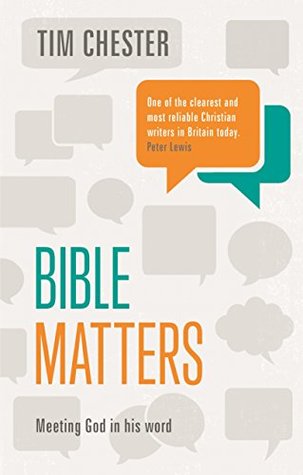
Book Review: Bible Matters
Bible Matters: Meeting God In His Word. Tim Chester. 2017. InterVarsity Press. 176 pages. [Source: Review copy]
First sentence of introduction: Let me tell you about an amazing experience I had just this morning.
First sentence of chapter one: Tell me about the book you’re reading. You’re only a few words in, but you already know a fair bit about it.You know it’s about the Bible—the title is a bit of a giveaway.
In Bible Matters, Tim Chester shares with readers WHY he loves the Bible. He writes, "My number one aim for this book is this: I want you to realize that every time you read the Bible, you’re hearing the voice of God—just as surely, more surely, than if you have some kind of dramatic experience. Reading the Bible is a dramatic Spirit-filled experience. The God who spoke and brought the universe into existence speaks to you. The God whose voice thundered from Mount Sinai speaks to you. The God in Christ whose words healed the sick speaks to you. I’ve read lots of things about the Bible that I’ve agreed with. But very few have captured how I feel about the Bible and why.That’s what I’ve tried to do in this book."
In chapter one, Chester examines HOW God speaks to us. God talks to us in creation, in history, in his Son, and in his Word--the Bible. He writes, "We can know about him because he speaks to us. But God remains in control of the process. We talk about “grasping” an idea. But we don’t “grasp” God—not even when he reveals himself." He reminds us all that, "just because we’re not listening doesn’t mean God’s not talking."
Three chapters address God speaking in the Bible. The first of these chapters addresses how we got the Bible and the authority of the Bible. He concludes, "Other books can have a big impact on your life. And sometimes their impact is more immediate than the Bible. But that impact will fade. One day they’ll be out of date. But the Bible is never out of date. It’s important to have a sense of this. Why do we love Christian books? Why do we sometimes prefer to read them rather than the Bible? Perhaps because they offer a quick fix. They’re like sugary cereals compared to oatmeal. Sugar gives us a quick high but soon leaves us feeling hungry again. If you want to develop as a person or acquire a new skill, then other books might produce more immediate effects. There’s nothing wrong with that. But if you want to develop character that endures, then read the book that endures. If you want to become a person of real substance, then read the book of real substance. Let the enduring word of God shape who you are."
The second of these chapters is about the present-ness of the Bible. God SPEAKS, present tense. He writes, "The Bible—read, preached, chatted about, or summarized—is what God uses to awaken faith in the hearts of unbelievers and strengthen the faith of believers." This chapter includes two sober warnings, "If we try to “make” the Bible relevant, we open ourselves up to two dangers. First, we might misapply it. We make the Bible say something contemporary. But when you “make” the Bible say something, the chances are you’re communicating your thoughts rather than God’s thoughts. The second danger is even more significant. If we think the Bible isn’t a contemporary word, then we’ll be tempted to update it. We’ll select from the Bible or reinterpret it to make it fit our culture."
The third of these chapters focus on how Jesus is the Word of God, how the Bible--cover to cover--is about Jesus the Word made flesh. Chester writes, "Red-letter Bibles print the direct words of Jesus in red so they stand out to give them special status. The irony is that this is self-defeating, for red text is less legible than black text, so the effect is actually to make the direct words of Jesus less significant! More importantly, it assumes that the rest of the Bible is not the words of Jesus. But Jesus is the Word of God. All revelation is in him and through him. All the words in the Bible are the words of Jesus about Jesus." If you've ever found the Old Testament frustrating, this chapter might help. He includes some helpful tips on how to read the Bible and understand it. It also addresses the question WHAT IS THE GOSPEL?
The next five chapters address the PURPOSE of the Bible. Titles include: "The Bible is Relational," "The Bible is Intentional," "The Bible is Enough," "The Bible is Reliable," and "The Bible is Accessible." Here are some of my favorite quotes:
The final chapter is "Dying to Read the Bible." This is one of the most thought-provoking chapters I've read in quite a while. Chester writes, "Every day we experience death as we die to sin and self. And every day we experience new life as we’re renewed by God. The death and resurrection of Jesus have their fingerprints all over the Christian life. And that includes reading the Bible." He challenges us to think about reading the Bible in a whole new way, with newly shaped expectations and approaches.
Chester concludes with a short chapter on "Why I Love the Bible."
I definitely loved reading this book. I found it both practical and thought-provoking. Some of the chapters cover the basics--like many other books about the Bible. But other chapters cover Bible reading from a fresh perspective and challenges readers to approach the Bible in a new, more biblical way.
© Becky Laney of Operation Actually Read Bible
First sentence of introduction: Let me tell you about an amazing experience I had just this morning.
First sentence of chapter one: Tell me about the book you’re reading. You’re only a few words in, but you already know a fair bit about it.You know it’s about the Bible—the title is a bit of a giveaway.
In Bible Matters, Tim Chester shares with readers WHY he loves the Bible. He writes, "My number one aim for this book is this: I want you to realize that every time you read the Bible, you’re hearing the voice of God—just as surely, more surely, than if you have some kind of dramatic experience. Reading the Bible is a dramatic Spirit-filled experience. The God who spoke and brought the universe into existence speaks to you. The God whose voice thundered from Mount Sinai speaks to you. The God in Christ whose words healed the sick speaks to you. I’ve read lots of things about the Bible that I’ve agreed with. But very few have captured how I feel about the Bible and why.That’s what I’ve tried to do in this book."
In chapter one, Chester examines HOW God speaks to us. God talks to us in creation, in history, in his Son, and in his Word--the Bible. He writes, "We can know about him because he speaks to us. But God remains in control of the process. We talk about “grasping” an idea. But we don’t “grasp” God—not even when he reveals himself." He reminds us all that, "just because we’re not listening doesn’t mean God’s not talking."
Three chapters address God speaking in the Bible. The first of these chapters addresses how we got the Bible and the authority of the Bible. He concludes, "Other books can have a big impact on your life. And sometimes their impact is more immediate than the Bible. But that impact will fade. One day they’ll be out of date. But the Bible is never out of date. It’s important to have a sense of this. Why do we love Christian books? Why do we sometimes prefer to read them rather than the Bible? Perhaps because they offer a quick fix. They’re like sugary cereals compared to oatmeal. Sugar gives us a quick high but soon leaves us feeling hungry again. If you want to develop as a person or acquire a new skill, then other books might produce more immediate effects. There’s nothing wrong with that. But if you want to develop character that endures, then read the book that endures. If you want to become a person of real substance, then read the book of real substance. Let the enduring word of God shape who you are."
The second of these chapters is about the present-ness of the Bible. God SPEAKS, present tense. He writes, "The Bible—read, preached, chatted about, or summarized—is what God uses to awaken faith in the hearts of unbelievers and strengthen the faith of believers." This chapter includes two sober warnings, "If we try to “make” the Bible relevant, we open ourselves up to two dangers. First, we might misapply it. We make the Bible say something contemporary. But when you “make” the Bible say something, the chances are you’re communicating your thoughts rather than God’s thoughts. The second danger is even more significant. If we think the Bible isn’t a contemporary word, then we’ll be tempted to update it. We’ll select from the Bible or reinterpret it to make it fit our culture."
The third of these chapters focus on how Jesus is the Word of God, how the Bible--cover to cover--is about Jesus the Word made flesh. Chester writes, "Red-letter Bibles print the direct words of Jesus in red so they stand out to give them special status. The irony is that this is self-defeating, for red text is less legible than black text, so the effect is actually to make the direct words of Jesus less significant! More importantly, it assumes that the rest of the Bible is not the words of Jesus. But Jesus is the Word of God. All revelation is in him and through him. All the words in the Bible are the words of Jesus about Jesus." If you've ever found the Old Testament frustrating, this chapter might help. He includes some helpful tips on how to read the Bible and understand it. It also addresses the question WHAT IS THE GOSPEL?
The next five chapters address the PURPOSE of the Bible. Titles include: "The Bible is Relational," "The Bible is Intentional," "The Bible is Enough," "The Bible is Reliable," and "The Bible is Accessible." Here are some of my favorite quotes:
- To trust God’s word is to trust God. To disobey God’s word is to disobey God. Adam didn’t say to God in Genesis 3, “I know I doubted your word, but I still trust you.” No, he hid from God in shame because he had disobeyed God’s word. Tim Ward says, To put your trust in the words of the covenant promise God makes to you is itself to put your trust in God: the two are the same thing. Communication from God is therefore communion with God, when met with a response of trust from us.
- God himself in the person of the Spirit ensures that we meet God himself in the person of his Son when we read the Bible.
- The Bible means what it says, not what we read into it. So reading it is an intellectual process, not in the sense that it can be done only by intellectuals, but in the sense that we need to use our minds as we read it. Reading the Bible is never less than an intellectual process. But reading the Bible is more than an intellectual process. We are not just reading about God. We hear the voice of God and encounter his presence through his words.
- God’s words are spoken with intent. He has a purpose for them.
- The most appropriate question to ask ourselves when we open Scripture to read it is: What is God wanting to do to me, and in me, through the words I am reading? When we read the Bible we must be ready, in the first instance, for God to act on us and in us. For, as we encounter his words, and as we encounter the actions he performs by means of them, we are encountering God himself.
- God’s covenant changes our identity. If you respond to God’s covenant promises in the Bible with faith, then your identity is changed. You become part of God’s people and God becomes your God. Reading and rereading the Bible with faith reinforces that covenant identity and covenant security. The Bible, then, is intentional in the sense that it’s written with intent. God uses the Bible to achieve his purposes.
- The Spirit opens our blind eyes to see the glory of Christ in the pages of the Bible. Our job is humbly to immerse ourselves in the Bible while praying for the illumination of the Spirit.
The final chapter is "Dying to Read the Bible." This is one of the most thought-provoking chapters I've read in quite a while. Chester writes, "Every day we experience death as we die to sin and self. And every day we experience new life as we’re renewed by God. The death and resurrection of Jesus have their fingerprints all over the Christian life. And that includes reading the Bible." He challenges us to think about reading the Bible in a whole new way, with newly shaped expectations and approaches.
"The Bible brings death and then brings life. The Bible wounds and then heals. The Bible judges and then justifies. The Bible exposes and then clothes. The Bible crushes and then revives. The Bible unmakes and then remakes. The Bible unmasks us and then gives us a new identity."There is a right way and a wrong way to approach the Bible.
Chester concludes with a short chapter on "Why I Love the Bible."
I definitely loved reading this book. I found it both practical and thought-provoking. Some of the chapters cover the basics--like many other books about the Bible. But other chapters cover Bible reading from a fresh perspective and challenges readers to approach the Bible in a new, more biblical way.
© Becky Laney of Operation Actually Read Bible
Friday, September 29, 2017
Book Review: The Gospel of Passion
Mark: The Gospel of Passion. Michael Card. 2012. IVP. 206 pages. [Source: Library]
First sentence: When we listen to the text of Scripture with our heart and mind fully engaged, we should almost hear the tone of the author's voice. When I listen to the opening verse of Mark, I hear an enthusiastic young man who is almost out of breath.
Premise/plot: Mark: The Gospel of Passion is a commentary written by Michael Card. He does not go through the gospel verse by verse, but he does go through it chapter by chapter, essentially paragraph by paragraph. He approaches the gospel through the lens of biblical imagination. What is the biblical imagination? An intellectually informed imagination, a balanced engagement of the heart and mind. He writes, "when the imagination is surrendered along with the heart and mind, it becomes a unifying bridge that opens the Scriptures in new and exciting ways." Mark worked closely with Peter. And Mark is thought to be written based on stories Peter told him.
My thoughts: Michael Card has written a commentary on each of the four gospels. His commentary on Mark is the first that I've read. (I own the other three, and I do plan on reading them at some point.) Mark is the shortest gospel, and I must admit it's well-paced. But it's not my favorite of the four gospels. I thought the commentary was good. His approach definitely was thought-provoking at times. For example, I'd never thought why Mark might exclude the account of Peter walking on the water. Card poses two questions: Was it pride? Was Peter ashamed that he failed to walk on water and needed rescuing? Or was it humility? Did Peter want to avoid any attention to himself and keep the glory focused on Jesus. He doesn't definitively answer because the truth is we just do not know.
© Becky Laney of Operation Actually Read Bible
First sentence: When we listen to the text of Scripture with our heart and mind fully engaged, we should almost hear the tone of the author's voice. When I listen to the opening verse of Mark, I hear an enthusiastic young man who is almost out of breath.
Premise/plot: Mark: The Gospel of Passion is a commentary written by Michael Card. He does not go through the gospel verse by verse, but he does go through it chapter by chapter, essentially paragraph by paragraph. He approaches the gospel through the lens of biblical imagination. What is the biblical imagination? An intellectually informed imagination, a balanced engagement of the heart and mind. He writes, "when the imagination is surrendered along with the heart and mind, it becomes a unifying bridge that opens the Scriptures in new and exciting ways." Mark worked closely with Peter. And Mark is thought to be written based on stories Peter told him.
My thoughts: Michael Card has written a commentary on each of the four gospels. His commentary on Mark is the first that I've read. (I own the other three, and I do plan on reading them at some point.) Mark is the shortest gospel, and I must admit it's well-paced. But it's not my favorite of the four gospels. I thought the commentary was good. His approach definitely was thought-provoking at times. For example, I'd never thought why Mark might exclude the account of Peter walking on the water. Card poses two questions: Was it pride? Was Peter ashamed that he failed to walk on water and needed rescuing? Or was it humility? Did Peter want to avoid any attention to himself and keep the glory focused on Jesus. He doesn't definitively answer because the truth is we just do not know.
© Becky Laney of Operation Actually Read Bible
Wednesday, September 6, 2017
Book Review: The Messiah Comes to Middle Earth
The Messiah Comes to Middle Earth. Philip Ryken. 2017. Intervarsity Press. 150 pages. [Source: Review copy]
Philip Ryken gave a series of lectures on J.R.R. Tolkien's Lord of the Rings. The lectureship series was the Hansen Lectureship at the Wade Center. The Wade Collection at Wheaton College focuses on the works of seven British authors: C.S. Lewis, J.R.R. Tolkien, Dorothy Sayers, George MacDonald, G.K. Chesterton, Charles Williams, and Owen Barfield.
In The Messiah Comes to Middle Earth, Ryken explores how there "are really three main Christ figures in The Lord of the Rings, and each one echoes a different aspect of the work of Christ—what theologians call his “threefold office” as prophet, priest, and king." Symbolizing Christ as a prophet, we have Gandalf. Symbolizing Christ as a priest, we have Frodo (and Sam). Symbolizing Christ as king, we have Aragorn. There is a chapter dedicated to each Christ-figure. Ryken pulls together several things: Tolkien's text, the church fathers' writings on Christ's role as prophet, priest, and kind, and Scripture itself. In addition, Ryken makes a case for relevance and application. How are Christians--leaders, pastors, believers--to live as prophets, priests, and kings? For example, he writes, "According to our various callings, we all have some responsibility to speak prophetic words, offer priestly service, and exercise kingly authority."
Quotes:
© Becky Laney of Operation Actually Read Bible
Philip Ryken gave a series of lectures on J.R.R. Tolkien's Lord of the Rings. The lectureship series was the Hansen Lectureship at the Wade Center. The Wade Collection at Wheaton College focuses on the works of seven British authors: C.S. Lewis, J.R.R. Tolkien, Dorothy Sayers, George MacDonald, G.K. Chesterton, Charles Williams, and Owen Barfield.
In The Messiah Comes to Middle Earth, Ryken explores how there "are really three main Christ figures in The Lord of the Rings, and each one echoes a different aspect of the work of Christ—what theologians call his “threefold office” as prophet, priest, and king." Symbolizing Christ as a prophet, we have Gandalf. Symbolizing Christ as a priest, we have Frodo (and Sam). Symbolizing Christ as king, we have Aragorn. There is a chapter dedicated to each Christ-figure. Ryken pulls together several things: Tolkien's text, the church fathers' writings on Christ's role as prophet, priest, and kind, and Scripture itself. In addition, Ryken makes a case for relevance and application. How are Christians--leaders, pastors, believers--to live as prophets, priests, and kings? For example, he writes, "According to our various callings, we all have some responsibility to speak prophetic words, offer priestly service, and exercise kingly authority."
Quotes:
- Tolkien coined the word eucatastrophe—the good catastrophe—to express the reality of “a sudden and miraculous grace.”
- There are three primary forms of leadership in Old Testament Israel: prophet, priest, and king. To observe how these leaders operate and interact is to understand in many ways God’s purposes for his people.
- “It is I suppose impossible,” Tolkien confided to W. H. Auden, “to write any ‘story’ that is not allegorical in proportion as it ‘comes to life.’ Since each of us is an allegory, embodying in a particular tale and clothed in the garments of time and place, universal truth and everlasting life.”
- Gandalf teaches us not to be afraid to say what needs to be said, even in the face of opposition. A prophet always speaks the truth, according to circumstance. There is a time to encourage but also a time to correct; a time to warn as well as a time to console. Thus a prophet’s words are not always welcome. Indeed, Jesus was mocked in his prophetic office right up to his crucifixion. Some of his tormentors spat in his face, slapped him, and said, “Prophesy to us, you Christ! Who is it that struck you?” (Mt 26:68). Yet in his dying hours he continued to speak the truth, using his very cross as a pulpit. So too when we are called to speak the truth, we should speak it forthrightly, as Jesus did, and as Gandalf did, to both friends and enemies.
- Sam’s steadfast commitment to Frodo helps us understand something vitally important about hobbits and about ourselves. Hobbits were never meant to bear their burdens alone; they only fulfill their purpose when they journey together.
- If Gandalf, Frodo, and Aragorn remind us in various ways of Jesus Christ, it is not because the novelist had this explicitly in mind. It is rather because a biblical worldview so thoroughly penetrated his imagination that inevitably it pervaded his literary art.
- Our lives—and therefore our art—tell a story about eternal truth. So when Tolkien, for example, had one of his characters bear a heavy burden for the sake of a kingdom, it was only natural for the author to portray the burden shared by a fellowship of love that calls to mind the priesthood of all believers.
- The most priest-like character in The Lord of the Rings is Frodo Baggins, but not Frodo alone: in their deep bonds of friendship, Frodo, Sam, and the other hobbits provide us with images of Christian priesthood.
- Apart from Jesus Christ, we are so weak that we can do nothing—literally, nothing ( Jn 15:5). Yet every one of his followers carries his name and his calling. As we offer God our humble service, we are ennobled. The priesthood of all believers thus dignifies the daily life and ministry of ordinary Christians.
© Becky Laney of Operation Actually Read Bible
Friday, July 21, 2017
Book Review: Embodied Hope
Embodied Hope: A Theological Meditation on Pain and Suffering. Kelly M. Kapic. 2017. IVP. 197 pages. [Source: Review copy]
First sentence: This book will make no attempt to defend God. I will not try to justify God or explain away the physical suffering in this world. Instead, I wrestle with nagging questions about our lives, our purpose, and our struggles. How should we live in the midst of this pain-soaked world? How do we relate to the God whose world this is? If you are looking for a book that boasts triumphantly of conquest over a great enemy or gives a detached philosophical analysis that neatly solves an absorbing problem, this isn’t it. Instead, this book aims to invites you into a larger conversation, a conversation greater than my family, and a struggle bigger than your pain and doubt. For while our pain, or the suffering of those we love, may cause us to feel isolated, these challenges remind us that we are actually part of the much larger stream of humanity.
Premise/plot: Embodied Hope is a Christian book about pain--chronic physical pain to be exact. It is divided into three parts: "The Struggle," "The Strangeness of God," and "Life Together."
The premise is simple: "Physical suffering often affects how we relate to God and others….The condition of our bodies does influence how we understand God and his ways….Pain in our body often influences how we relate to others." Kapic writes, "We must not pit the body against the spirit, the mind against the heart, the individual against the community. For our struggle is not ultimately with a single side of suffering but with how it affects us in our totality: from our relationships to our faith, from our bodies to our hope, from our mourning to our love."
Kapic examines the subject of pain in the world in this world. How pain impacts the individual, the family unit, the church community, and to a very small extent society itself. It isn't necessarily a theological book on "the problem of evil" vs. "the goodness of God." I don't think it would be a stretch to say that Kapic seeks to avoid the general and abstract in favor of the intimate and personal. In fact, he writes, "Rightly understood, doing theology is more often like farming than it is like stacking doctrinal bricks. Theology is lived; it is not regimentally constructed….Only when we begin to see that theology is not merely about repeating back answers but instead more like caring for a garden can we care well for others….There is a world of difference between reading a book about caring for people and actually caring for people. To theologize well, we need to love well."
The truth of the matter is that every person is unique. Every person has his or her own way of dealing with the pain, of coping with the pain, of living with the pain. And as much as he tries not to make generalizations, I think a few slip in.
In the first part, he explores "the struggle" of living with pain and the theological implications. He assumes that pain leads most to have "hard thoughts" about God. He assumes that most pain sufferers have false notions of God. For example, they see him as angry, distant, cruel, harsh; someone who enjoys watching people suffer. Pain sufferers might conclude that God isn't good and merciful and kind.
Kapic writes, "How does God look upon us in our weakness, even in our sin? Is God really angry or wrathful with us, his children? His bride? What picture of God is really warranted by the Scriptures? How do these passages like Zephaniah 3:17 and Isaiah 62:5 intersect our own experience? How can we then deal with the “hard thoughts” that tempt us, especially in our suffering? How do we develop a profound and affectionate trust of God rather than a sense of alienation? Our journey is to learn why such hard thoughts don’t reflect the triune God. Our hope is to learn to hear him singing over us, to trust his presence in the middle of the pain. Some will immediately object that this is wishful thinking based on a few obscure verses here and there. However, we will see that we are not talking about a few scattered biblical texts but are diving into the heart of the gospel, the heart of the good news discovered in Messiah. Only here will we unquestionably discover the very heart of God. To understand God and his relationship to our pain, we will need to examine the case of Jesus of Nazareth, a man who walked the dusty roads of Galilee over two thousand years ago. Only by listening to his words and by following the movement of his life, death, resurrection, and ascension might our very human struggle be seen in different light. Because he was and is God’s revelation of himself to us, it only makes sense to start there. In this endeavor it is to be hoped that our view of the God of heaven and earth will deepen beyond our current understanding. But to see Jesus clearly we need to stop defending our preconceived notions of who God is."
In the second part, the focus shifts to the life, death, and resurrection of Jesus Christ our Lord and Savior.
In the third part, the focus shifts to the church, to the community of believers. How can the church of God best care for the people of God? How can the church reach out, include, better understand those living and struggling with physical pain and suffering?
My thoughts: I found the tenth chapter the most thought-provoking. In this chapter, he discusses the importance of confessing our sins to one another. This isn't a subject that is addressed often in contemporary theology. So he gave me a lot to think about!
I wanted to read this book because I suffer from chronic pain. The philosophical statement, "I think therefore I am," has been for me "I hurt, therefore I am." My mom also suffers from chronic pain, and as a result I think I've always felt understood and supported. The book assumes that if you're a pain sufferer that there's a good chance you struggle with loving God and seeing him as GOOD. The book assumes that physical pain leads you to keep God at a distance. I talked this over with my Mom for her perspective, and we both agreed that we could not relate to that reaction or response. (I knew my opinion. I wanted hers too!)
Pain, for me, has always kept the lines of communication with God OPEN. It keeps me dependent, needy, desperate, humble, weak. Pain has me crying out for more of God's presence. Pain has filled me with an undeniable hope and a strong desire for heaven. The Word of God sustains me for it is full of God's promises.
His focus on community was very thought-provoking as I mentioned before. Vulnerability is not easy for me. It is hard for me to believe that others care how I'm feeling, how I'm doing in any real way. So much food for thought is included in this one.
Favorite quotes:
© Becky Laney of Operation Actually Read Bible
First sentence: This book will make no attempt to defend God. I will not try to justify God or explain away the physical suffering in this world. Instead, I wrestle with nagging questions about our lives, our purpose, and our struggles. How should we live in the midst of this pain-soaked world? How do we relate to the God whose world this is? If you are looking for a book that boasts triumphantly of conquest over a great enemy or gives a detached philosophical analysis that neatly solves an absorbing problem, this isn’t it. Instead, this book aims to invites you into a larger conversation, a conversation greater than my family, and a struggle bigger than your pain and doubt. For while our pain, or the suffering of those we love, may cause us to feel isolated, these challenges remind us that we are actually part of the much larger stream of humanity.
Premise/plot: Embodied Hope is a Christian book about pain--chronic physical pain to be exact. It is divided into three parts: "The Struggle," "The Strangeness of God," and "Life Together."
The premise is simple: "Physical suffering often affects how we relate to God and others….The condition of our bodies does influence how we understand God and his ways….Pain in our body often influences how we relate to others." Kapic writes, "We must not pit the body against the spirit, the mind against the heart, the individual against the community. For our struggle is not ultimately with a single side of suffering but with how it affects us in our totality: from our relationships to our faith, from our bodies to our hope, from our mourning to our love."
Kapic examines the subject of pain in the world in this world. How pain impacts the individual, the family unit, the church community, and to a very small extent society itself. It isn't necessarily a theological book on "the problem of evil" vs. "the goodness of God." I don't think it would be a stretch to say that Kapic seeks to avoid the general and abstract in favor of the intimate and personal. In fact, he writes, "Rightly understood, doing theology is more often like farming than it is like stacking doctrinal bricks. Theology is lived; it is not regimentally constructed….Only when we begin to see that theology is not merely about repeating back answers but instead more like caring for a garden can we care well for others….There is a world of difference between reading a book about caring for people and actually caring for people. To theologize well, we need to love well."
The truth of the matter is that every person is unique. Every person has his or her own way of dealing with the pain, of coping with the pain, of living with the pain. And as much as he tries not to make generalizations, I think a few slip in.
In the first part, he explores "the struggle" of living with pain and the theological implications. He assumes that pain leads most to have "hard thoughts" about God. He assumes that most pain sufferers have false notions of God. For example, they see him as angry, distant, cruel, harsh; someone who enjoys watching people suffer. Pain sufferers might conclude that God isn't good and merciful and kind.
Kapic writes, "How does God look upon us in our weakness, even in our sin? Is God really angry or wrathful with us, his children? His bride? What picture of God is really warranted by the Scriptures? How do these passages like Zephaniah 3:17 and Isaiah 62:5 intersect our own experience? How can we then deal with the “hard thoughts” that tempt us, especially in our suffering? How do we develop a profound and affectionate trust of God rather than a sense of alienation? Our journey is to learn why such hard thoughts don’t reflect the triune God. Our hope is to learn to hear him singing over us, to trust his presence in the middle of the pain. Some will immediately object that this is wishful thinking based on a few obscure verses here and there. However, we will see that we are not talking about a few scattered biblical texts but are diving into the heart of the gospel, the heart of the good news discovered in Messiah. Only here will we unquestionably discover the very heart of God. To understand God and his relationship to our pain, we will need to examine the case of Jesus of Nazareth, a man who walked the dusty roads of Galilee over two thousand years ago. Only by listening to his words and by following the movement of his life, death, resurrection, and ascension might our very human struggle be seen in different light. Because he was and is God’s revelation of himself to us, it only makes sense to start there. In this endeavor it is to be hoped that our view of the God of heaven and earth will deepen beyond our current understanding. But to see Jesus clearly we need to stop defending our preconceived notions of who God is."
In the second part, the focus shifts to the life, death, and resurrection of Jesus Christ our Lord and Savior.
In the third part, the focus shifts to the church, to the community of believers. How can the church of God best care for the people of God? How can the church reach out, include, better understand those living and struggling with physical pain and suffering?
My thoughts: I found the tenth chapter the most thought-provoking. In this chapter, he discusses the importance of confessing our sins to one another. This isn't a subject that is addressed often in contemporary theology. So he gave me a lot to think about!
I wanted to read this book because I suffer from chronic pain. The philosophical statement, "I think therefore I am," has been for me "I hurt, therefore I am." My mom also suffers from chronic pain, and as a result I think I've always felt understood and supported. The book assumes that if you're a pain sufferer that there's a good chance you struggle with loving God and seeing him as GOOD. The book assumes that physical pain leads you to keep God at a distance. I talked this over with my Mom for her perspective, and we both agreed that we could not relate to that reaction or response. (I knew my opinion. I wanted hers too!)
Pain, for me, has always kept the lines of communication with God OPEN. It keeps me dependent, needy, desperate, humble, weak. Pain has me crying out for more of God's presence. Pain has filled me with an undeniable hope and a strong desire for heaven. The Word of God sustains me for it is full of God's promises.
His focus on community was very thought-provoking as I mentioned before. Vulnerability is not easy for me. It is hard for me to believe that others care how I'm feeling, how I'm doing in any real way. So much food for thought is included in this one.
Favorite quotes:
- "Laments rise to the heavens as a strange combination of complaint, grief, questions, confusion, desire for rescue, and expectation of divine faithfulness. Our great hope is that lament is not all there is to human experience. Nevertheless, any who have truly lived and loved must come to believe that lament is at least part of our existence. Only the idealistic and unloving belittle tears and sadness. Only the coolly detached never raise a complaint about the condition of things, including our broken bodies. If we never lament, then it is legitimate to wonder if we have ever truly loved."
- "To have a healthy emotional, spiritual, and mental life, we must be honest with ourselves. One truth about our lives is that we are broken; we inevitably encounter our own suffering and that of others, and eventually we die. How does our Lord teach us to respond to this? He teaches us hope, and within that hope we use lament to speak to God of the painful delay of peace. All laments ultimately go to God, with whom we wrestle and rest."
- "If we fully and completely felt the lament of this broken and sinful world, it would crush any and all of us. We know that because it crushed Jesus. But thanks be to God, this Jesus also rose from the depths of despair and from the grave. He rose and lives even now. For now, let us simply appreciate that we are allowed, even invited, to lament. Yet we must take those laments to God since they will not crush him."
- "To be a truly human story—which is the only way we should understand the Christian story—means it must confess both grief and hope, sin and faithfulness, struggle and promise. We must learn to be truly honest with ourselves, with others, and even with God. Our theology requires it. Our stories demand it. Only with this kind of confession and lament are we finally in a position to capture a glimpse of the God who is, rather than the god we imagine him to be. Only then can we discover the scandalous grace of God so often spoken about, but so seldom truly savored."
- "The church has always believed that we do not testify properly to God if we lie about the state of the world. Sin, death, and devilish activity are all around us. Anguish, heartbreak, and troubled relationships are everywhere. This is the world we live in. And it is in this world that we must learn to live. Consequently, Christians are to live before God in this world by honestly facing the reality of pain’s presence and all that it represents. We neither deny nor glorify it, but we must face it nevertheless, for this is the world we inhabit."
- "So how are we to live when our present moment includes a constant guest called pain? How are we to embrace the present moment, not just in light of the possibility of some future death but as we live in the midst of very real suffering? These questions are not easy. But learning to ask questions, to wrestle honestly with God amid our laments, can actually serve as a way to live faithfully before and with God in the present, even amid our struggle with pain."
- "God concerns himself for us in our sin and pain, neither because it was required of him nor because he had personally done anything wrong, but because he loves us and is the only one who could restore what was lost, repay the debt, free the slave, and heal the sick."
- "So if faith and hope are to mean anything to us in our suffering, they must come to us in the context of love, or, to put it another way, faith and hope are only properly applied with love: a love accomplished and given through the person and work of Christ."
- "Love is what we are called to, and love is what we should never try to escape from. But in this fallen world, such love also brings with it real suffering."
- "We experience divine love most concretely when we receive and give it to others. God expresses his love and extends his comfort through his people."
- "When faith and hope grow out of love, they are like food for the hungry and medicine for the sick. Thus we need faith, hope, and love, but without love we lose all three."
- "Simply facing pain everyday does not free us from sin. Nor does it make us more sinful. But what it does tend to do is heighten our awareness of sin and brokenness in the world and in our own life. In a counterintuitive way, those who are hurting can also help those who are relatively free from pain: they remind us that the world—including our body—is not as it should be, and it is this which suffering and the pains of death never let us forget. But with these sisters and brothers we can also see the promise of shalom and hope, a promise not yet full realized. To understand these dynamics we must learn why those who suffer often have a heightened awareness of the reality of sin, not only in themselves but in the world."
- "I believe the act of confession, and in particular confession to a fellow believer, is crucial to sustaining the struggling saint. As we will soon see, for those facing physical suffering—where they have a heightened sense of their own sin—this act of confession becomes one of the keys to life-giving faith amid the voices of condemnation. This is not because they are greater sinners but because they sometimes have a greater sensitivity to the presence of sin in their lives and this world, and they sense their deep need for forgiveness and grace. We all need these gifts of divine compassion and mercy, but our relative health often masks the darker realities of our spiritual neediness."
- "To be forgiven, healed, cleansed, and restored to God requires that our offenses, diseases, dirt, and alienation be obliterated and that we experience the consequent forgiveness, healing, cleansing, and restoration. This requires an honest reckoning. Confession before others, therefore, to be of any use at all, requires that those others are safe and trustworthy, and that we are open with them. Normally, those who receive our confessions must have enough life and spiritual experiences in line with what is confessed to serve us well."
- "We need to hear the gospel from others, from outside ourselves. The power of the gospel preached personally to me from a faithful sister or brother has a power that I cannot conjure for myself."
- "Confession before others can also help us disentangle our pain from the idea of personal punishment. Here we can know forgiveness and grace even in our pain (1 Jn 1:9). Here we can honestly affirm and confess the brokenness of the world and the failures of our own hearts. In confession, we are brought before Jesus, whom we encounter through our brother and sister (Mt 18:20; 2 Cor 2:10). Looking into their eyes, hearing their voice, and feeling their touch, we can receive Jesus’s promise to us: “your sins are forgiven.”"
- "We may not be able to take away the physical pain, but we can point one another to him who promises one day to completely heal us. For now we cling to his promise of restoration, cling to him who has the ability also to restore the body. He will make all things new (Rev 21:5). We will be free from sin, pain, and tears (Is 65:19; Rev 21:4). We will be free from isolation, selfcondemnation, darkness, fear and anger (cf. Is 35:10//51:11; Rev 21:22-27). We will be utterly free to love our Creator and our neighbor. While we may not fully experience that freedom now, we can help one another to experience genuine tastes of shalom even in the present, even in our pain, even as we struggle with our sin."
- "Confession liberates us, not from physical pain but from shame and condemnation. And here, the “healthy” can learn from the hurting, like the blind teaching the Pharisees to see (cf. Jn 9:31–10:41)."
- "Witness holds an important place in the Christian tradition. These days when someone hears about Christian witness, they almost inevitably think about believers testifying of Christ to nonbelievers. That is what we call evangelism. However, what is often forgotten is how important giving witness or testimony can be within the Christian community, especially in times of difficulty. This witness is always twofold: acknowledging that our troubles are real and that God is unflinchingly faithful."
- "We are called to have compassion, to come alongside others in their pain, and to love them. This is risky. Almost inevitably you will—even if only in some small way—suffer with them. However, in this shared pilgrimage you will also discover afresh the grace and tenderness of God."
© Becky Laney of Operation Actually Read Bible
Friday, July 10, 2015
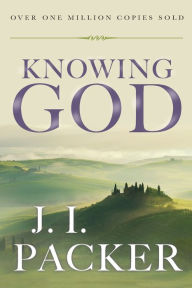
Book Review: Knowing God
Knowing God. J.I. Packer. 1973/1993. Intervarsity Press. 286 pages. [Source: Bought]
Knowing God was the very first theology book I ever read, and I read it back in college days. It has been a while--quite a while--since I last read it. So it was great for me to revisit with a past favorite. If you haven't read J.I. Packer, Knowing God is probably the one that you need to pick up first. It is an excellent book.
The book is divided into three sections: "Know the Lord," "Behold Your God!", and "If God Be For Us…"
The first section includes, "The Study of God," "The People Who Know Their God," "Knowing and Being Known," "The Only True God," "God Incarnate," and "He Shall Testify."
The second section includes, "God Unchanging," "The Majesty of God," "God Only Wise," "God's Wisdom and Ours," "Thy Word Is Truth," "The Love of God," "The Grace of God," "God the Judge," "The Wrath of God," "Goodness and Severity," and "The Jealous God."
The third section includes, "The Heart of the Gospel," "Sons of God," "Thou Our Guide," "These Inward Trials," and "The Adequacy of God."
Knowing God is an engaging, challenging read. Challenging in a good way. The book offers readers plenty to think about in a wide range of subjects touching on how to live the Christian life. It also answers essential questions. Questions like:
Who is God?
How can I know God?
What is sin?
What is the gospel?
What is grace?
How can I be saved?
What am I saved from? and saved for?
What is justification?
What is propitiation?
What does it mean to be a Christian?
And these are just for starters. Knowing God is packed with information that believers of all ages need to know.
I highly recommend this one! I'll be sharing quotes in another post.
© Becky Laney of Operation Actually Read Bible
Knowing God was the very first theology book I ever read, and I read it back in college days. It has been a while--quite a while--since I last read it. So it was great for me to revisit with a past favorite. If you haven't read J.I. Packer, Knowing God is probably the one that you need to pick up first. It is an excellent book.
The book is divided into three sections: "Know the Lord," "Behold Your God!", and "If God Be For Us…"
The first section includes, "The Study of God," "The People Who Know Their God," "Knowing and Being Known," "The Only True God," "God Incarnate," and "He Shall Testify."
The second section includes, "God Unchanging," "The Majesty of God," "God Only Wise," "God's Wisdom and Ours," "Thy Word Is Truth," "The Love of God," "The Grace of God," "God the Judge," "The Wrath of God," "Goodness and Severity," and "The Jealous God."
The third section includes, "The Heart of the Gospel," "Sons of God," "Thou Our Guide," "These Inward Trials," and "The Adequacy of God."
Knowing God is an engaging, challenging read. Challenging in a good way. The book offers readers plenty to think about in a wide range of subjects touching on how to live the Christian life. It also answers essential questions. Questions like:
Who is God?
How can I know God?
What is sin?
What is the gospel?
What is grace?
How can I be saved?
What am I saved from? and saved for?
What is justification?
What is propitiation?
What does it mean to be a Christian?
And these are just for starters. Knowing God is packed with information that believers of all ages need to know.
I highly recommend this one! I'll be sharing quotes in another post.
© Becky Laney of Operation Actually Read Bible
Subscribe to:
Posts (Atom)