Showing posts with label 2017. Show all posts

Monday, March 17, 2025

25. Sing


25. Sing!: How Worship Transforms Your Life, Family, and Church. Keith and Kristyn Getty. 2017. B&H Books. 176 pages. [Source: Review copy]

First sentence: We are a singing people because it is how God has created us. It’s what we do. And when we do, we’re simply joining in with what the rest of creation is doing.

It's September. The year isn't over yet. But I'm thinking Sing! may be my favorite book of the year. We'll see. What is it about? Why should you read it? Why should you read it with others? I hope to do the book justice and answer your questions.

Intended Audience: Any believer. Also: Pastors. Elders. Worship Leaders. Band Musicians. Fathers and mothers. Sunday school teachers. Song writers. Anyone who has ever suffered at any time. Anyone who has ever struggled with depression at any time. Anyone who wants to be happy.

What is it about? It's about singing. It's about congregational singing in local churches. It's about singing at home with our families. It's about individual and corporate singing. Chances are you haven't thought of singing as a spiritual discipline. Yet IT IS. So just as you'd read a book about how to pray or how to read the Bible, the Gettys have given us a book on how to sing.

Why was it written? The Gettys' five point aim in writing Sing!
1. To discover why we sing and the overwhelming joy and holy privilege that comes with singing.
2. To consider how singing impacts our hearts and minds and all of our lives.
3. To cultivate a culture of family singing in our daily home life.
4. To equip our churches for wholeheartedly singing to the Lord and one another as an expression of unity.
5. To inspire us to see congregational singing as a radical witness to the world. 
Why should you read it? God designed us to sing praises. Singing praise to the Lord is one of God's ultimate purposes for our lives. Singing is so intimately connected with joy; we are to delight in the Lord and find our satisfaction, our happiness IN HIM.

What did I love about it? I loved, loved, loved everything about this one. I thought it was packed with truth and insight. I thought it was biblical. I thought the authors were persuasive. I loved the passion and enthusiasm. I loved the organization and layout. I loved how practical it was. Also how concise the book was. And I really LOVED the discussion questions. There's also four additional bonus tracks--chapters.

Some of my favorite discussion questions:
1. How has singing played a role in your spiritual development?
2. Can you recall an example of a memorable occasion where you enjoyed singing in church? What about that event made an impact on you?
3. What is the link between thankfulness and singing?
4. What psalm or other Scripture passage resonates with you as your “Song of Salvation”? Why?
5. What song would you consider to be your personal “testimony” song?
6. Is there a hymn, or hymns, from your past that acts as a “milestone marker” for your walk with Christ? Why is it still significant and how does it speak to your heart today?
7. What modern song (new to you in the past few years) has connected with you in such a way that you believe it may become a “milestone” hymn for you in the future?
8. If you grew up in a Christian home, what songs from your childhood do you most remember? What hymns do you know? What Bible verses and stories do you know because of songs? What hymns do you want to pass down to your children?
9. If I were a visitor to your church and knew nothing of the gospel, what would your church music (selections, presentation, and congregational engagement) convey to me about your faith and understanding of the gospel?
10. Do your favorite songs that you love to sing give a broad and deep picture of the character and nature of God? Can the same be said of how we think about God and how we pray to Him? 
The book wasn't just about singing in church--at church. It was about singing seven days a week and really living out what you're singing. 
Favorite quotes:

  • We are commanded to sing the Word of God—the truth revealed in the Scriptures, the story of redemption. Fundamentally, we’re to sing about God, revealed in Christ and supremely in His suffering and His glory, since that’s what the Word of God is all about (Luke 24:26–27).
  • The songs we sing should not brush along the surface, or pluck phrases out of context, or focus exclusively on ourselves, or describe Jesus in a way His Word does not (or, still worse, to speak in contradiction to His Word). Every part of a lyric should link together to bring a wonderful, thoughtful, deep expression of Scripture to every singer. 
  • Worship comes as a response to revelation. Praise is prompted by—compelled by—the revelation of something glorious. And the gospel is the revelation of the most glorious truth in history. 
  • Singing gives voice to a heart that deeply knows the gospel of grace. It is the overflow of a heart captivated by the gospel. In as many voices that join together to sing there are as many hearts that are called to know Christ as Lord and Savior. From that place there is a genuine and rich overflow of praise.
  • People say you are what you eat. Well, songs are food for the soul. What you sing, and don’t sing, changes you. Your heart and mind require a good, balanced diet of gospel truth that will build you up for your working week, your times of trial, and for each season of life.
  • If we are to be prepared to live for Christ in the whole of life, we need to be singing about the whole of life.
  • If our songs are not giving us a balanced, rich, nutritious diet, we will not be spiritually healthy people. 
  • Our singing can prepare us for every season of life, and sustain us through every season of life. We don’t need a musical escape from our lives; we need to gaze on the Savior of our lives—our refuge and help and comfort. 
  • We need to make singing Bible truths second nature to our children, a “second language” in our homes. Sing about those truths when you sit at home and when you walk along the road, when you lie down, and when you get up. Sing with your kids as you put them to bed at night, or you sit down for dinner, or as you drive in the car with a CD on. Sooner or later, they’ll start singing unprompted. Join in with them.
  • Songs help us train children in the “language” of the Christian faith. What we want to teach our kids travels deeper inside them when we sing it rather than only speak it to them. 
  • While our faith must be taught, it is also “caught” in our homes, through what our kids see and hear from us. And singing is catchy. So sing with your kids. You don’t need to be able to sing well. Our singing always remains more important than the sound it makes.  
  •  There may never be a perfect day to start singing truths with your kids. But there is today. They are not too old. They are not too young—we have been surprised that even our two-year-old knows several songs well.
  • Our singing casts a light after we are gone. We each bear responsibility in the singing legacy we leave behind us. We should sing with a mind toward those younger than us who are listening in and learning from us.
  • Someone took the time to share hymns of faith with us and we are to be faithful in doing the same. 
  • As you stand and sing in your church this Sunday, you do not know who is listening, and you can never imagine what the Lord might be doing. 
  • As you wake each day, and as you walk through your day, we pray that the lyrics and melodies of your faith will ring around the spaces where you live your life.  


Thursday, April 4, 2024

5. NIV (2011) Value Thinline


NIV Value Thinline Large Print (2011 edition). 2017. Zondervan. 1110 pages. [Source: Bought]

ISBN: 0310448557
ISBN-13: 9780310448556

First sentence: In the beginning God created the heavens and the earth. Now the earth was formless and empty, darkness was over the surface of the deep, and the Spirit of God was hovering over the waters. And God said, “Let there be light,” and there was light.

This review is for the NIV Value Thinline Bible, Large Print Blue, Imitation Leather. 

This one has 11.5 font size, double columns, and is black letter. 

I have read the 2011 edition of the New International Version several times. I still--by far--prefer the 1984 edition of the New International Version. But spilled milk is spilled milk is spilled milk. It is not coming back in print and that's that. Perhaps I will one day become familiar enough with the "new" update that I will stop missing the old. Perhaps. I do find both editions of the New International Version readable and easily so. Nothing archaic or clunky about it. 

This time around I read using the Mini/Many Horner Bookmark system which is one of my adaptations of the Professor Horner Bible reading system. Essentially I read from five bookmarks each day. 

My first four bookmarks were:

The Torah (Genesis, Exodus, Leviticus, Numbers, Deuteronomy)
Nevi'im Former Prophets (Joshua, Judges, 1 and 2 Samuel, 1 and 2 Kings)
Nevi'im Latter Prophets (Isaiah, Jeremiah, Ezekiel, Hosea, Joel, Amos, Obadiah, Jonah, Micah, Nahum, Habakkuk, Zephaniah, Haggai, Zechariah, Malachi)
Ketuvim "The Writings" (Psalms, Proverbs, Job, Song of Songs, Ruth, Lamentations, Ecclesiastes, Esther, Daniel, Ezra, Nehemiah, 1 Chronicles, 2 Chronicles)

My fifth bookmark was the New Testament.

I do love the Bible. I may not love, love, love, love this exact translation of the Bible. But I do recognize that it is still very much the Word of God and to be treasured and appreciated. The best Bible is the one that you will actually read and take to heart. The best Bible is the one you will feast on and grow in. 

© Becky Laney of Operation Actually Read Bible

Friday, May 28, 2021

4. NIV Reader's Bible


NIV Reader's Bible (2011 Translation). God. 2017. 1984 pages. [Source: Won a Contest]

First sentence:  In the beginning God created the heavens and the earth.

This was not my first time to read through the "new" NIV (2011) translation. I have read the A.W. Tozer devotional Bible before. 

What I enjoyed about this particular Bible was that it was a Reader's Bible. It has no verse numbers. (It does have chapter numbers.) I also enjoyed the size of the font and that it was single column. Overall, I thought the layout worked great. (It does lay flat!)

It is black letter, not red letter, which is definitely important to me when I'm considering Bibles.

I do recommend that everyone read through the Bible at least once in a reader's Bible. I don't think everyone has to read the NIV translation. Many translations these days have been published in this format. And reading the Bible in an app, you can usually (though not always) make adjustments in the preferences so that you can *make* any translation into a Reader's Bible. 

I did use a modified Professor Horner plan to read this one through. I will say I stuck to it except for the past two days when I essentially read all the books I hadn't already read once. (Proverbs, Ecclesiastes, Song of Songs, Revelation). 


So my modified Horner had these ten groupings:

  1. Genesis, Exodus, Leviticus, Numbers, Deuteronomy
  2. Joshua Judges, Ruth, 1 Samuel, 2 Samuel, 1 Chronicles, 2 Chronicles, Esther
  3. Psalms
  4. Job, Proverbs, Ecclesiastes, Song of Solomon
  5. Isaiah, Jeremiah, Lamentations, Ezekiel, Daniel, REVELATION
  6. Hosea, Joel, Amos, Obadiah, Jonah, Micah, Nahum, Habakkuk, Zephaniah, Ezra, Nehemiah, Haggai, Zechariah, and Malachi
  7. Matthew, Mark, Luke, Acts, John
  8. Romans and Hebrews
  9. 1 and 2 Corinthians, Galatians, Ephesians, Philippians, Colossians
  10. 1 and 2 Thessalonians, 1 and 2 Timothy, Titus, Philemon, James, 1 and 2 Peter, 1, 2, 3 John, and Jude
I think I will change my Horner bookmarks again when I start over next time. It does get a bit uneven. I think this is mainly my fault. Mainly. I tend to read in chunks that make sense--in terms of narrative--instead of a strict one chapter per group. 

In my Horner accounting, I marked all the NIV in red. The NASB 95 is marked in black. My next color will be blue--I'll be reading the NASB 2020. 

© Becky Laney of Operation Actually Read Bible

Wednesday, August 19, 2020

64. The Story Behind The Bible: The New Covenant

The Story Behind the Bible #3: The New Covenant. J. K. Alexander. 2017/2020. 254 pages. [Source: Review copy] [NOT Recommended under any circumstance ever.]

First sentence: This will be the final book in the Story Behind the Bible trilogy and it should be considerably different from the first two as we examine the manuscripts that re-emerged after nearly 450 years of prophetic silence.

I reviewed book one and book two in July. I took a bit of a breather before starting the third and final book in this atrocious trilogy.

Atrocious? Yes, atrocious. It's been a while--we've both had many, many sleeps--so I'll refresh your memory a bit.

Alexander's trilogy is not as innocent as you might expect based on the title. It is neither a) a story of how we got our Bible b) a story of how the Bible came to be written, canonized, etc. c) a summary of the big story of the Bible. Oh, it attempts a bit of summary here and there. But. Here's how I see it:

Either a) you've never read the Bible and his summarizing and speculating and (pulling stuff completely out of nowhere that makes no logical sense in any way) will confuse you more than not. It won't really serve you well if you want to know what the Bible is all about, what is going on, the big picture, how things fit into context, big themes, etc. If you've never read the Bible or sat under good, thorough teaching of the Word, you're likely to conclude that ALL Christians are absolutely illogical nuts without a speck of common sense. OR b) you've read the Bible for yourself; you've sat under good preaching; you know the truth because you know THE TRUTH. And so when you read Alexander's book you'll see that it is horrible, awful, no good, very bad.

Of course it's possible that for those that love crazy, wild, wacky, conspiracy theories, those that will believe just about anything if they're told that by so believing they will prove how clever they are that they are smarter than those that reject such illogical theories will eat this series up like candy.

If you had not read the first two books in the series, there's a chance that you might read a good chunk of this one without realizing the author's poor foundation of biblical truths. For better or worse. In other words, book three could be worse than it actually is. Not that it is good theology--not by a long shot--but it could be worse.

"But God wasn't on His throne at this time. He was being a mortal child in Bethlehem."

Is Alexander saying that God the Father was no longer on His throne, in heaven, or anywhere about because God the Father was now God the Son, Jesus Christ?! I mean God the Father was in heaven and Jesus the Son of God was being born to Mary. What's so confusing about that?

He has a whole essay-ish bit on the myth of Jesus' poverty. He asserts that Mary, Joseph, and Jesus were quite wealthy and were never poor. Mary and Joseph were from wealthy families? Joseph of Arimathea was Mary's uncle? "Uncle" Joseph was the "First Swiss Bank of the Messiah" and the guardian of the family's wealth.

His speculation on John the Baptist was intriguing. He believes that his father, Zachariah, was murdered by someone within the priesthood in the inner court of the temple, and he was 'in hiding.' John rebuked the Pharisees because he knew one of them might very well by his father's murderer? I am not saying I am trusting Alexander's storytelling. But it did make me realize I'd never given any thought whatsoever to John the Baptist's private life and how he came to be who he was.

Alexander believes that the Lord Jesus ministered only one year and not three. The three year ministry of Christ is a myth propagated by the dogmatic old school.

"Satan's influence is still very much with us today. His ill will is carried out and spread abroad by many minions great and small, from the wickedly wise to the mean and clueless."

That I can believe. False teachers fit in there somewhere between wickedly wise and absolutely clueless.

The beatitudes are time-specific. I guess that would be a relief for those who take Alexander at his word.

"If mortal physicians could figure out how to accelerate the vibration of the electrons in a person's body, a very big IF, then their patient's bodies could heal themselves of any mortal ailment almost immediately. Just step into the acceleration chamber and your highly empowered body, now accelerating toward immortality, would purge and heal mortal afflictions effortlessly and instantly. Whether subatomic, just plain spiritual, or both, Jesus was able to heal with a touch or a command and He was able to share this incredible power with his closest disciples."

Alrighty then. Side-step. Side-step.

"The disciples' description of Jesus transfigured is virtually identical to how shaman masters describe the King of Paradise that often appears in the shaman nether world that the shamans refer to as paradise."

Alexander has whole theories on paradise and heaven and the after life in general. Believe none of them.

Alexander asserts that Jesus would never support communism or socialism. Good to know.

"All will be changed, and each person will be a young semi-immortal version of the mortal self. A man and his grandfather may become close friends in the millennium but they will not have the same grandfather/grandson relationship. They will be about the same age with similar memories, some shared, and will each have a new life, new goals, duties, and opportunities...."

He goes on for pages but essentially little worth considering.

He goes on a great deal--this is one of his key rambles in the three books--about how Cain was not Adam's son but the product of Eve and What-Would-Be-the-Serpent (a human gardener working for Adam who became possessed by Satan). And how Cain's descendants are the evil Kenites. Remember in Alexander's wacky theology, Adam and Eve weren't the only humans, just the only human priest and priestess. There were many lowly humans that served them.

He speculates on the first age of the earth and how "the angelic host of this world apparently spent the first thousand or more years of life as earth immortals learning physics and earth knowledge before being transformed into angelic beings suitable for the higher realm of Heaven. There was no devil, and all or most eventually fulfilled the time as earth immortals and were transformed for entry into Heaven. The Bible indicates that it was after most were transformed and adapted for the higher realm that iniquity was found in Lucifer and he began the seduction, deception, and rebellion that ultimately destroyed the first age..."

Again he rambles on and on...but he's not fooling anyone....I hope.

"Cain and Abel were born maternal twins but not paternal twins..."

"Much of the dark history of mankind is not a result of human nature but rather the influence of a congenital wickedness present in one of the primeval families of man."

If that helps you sleep better at night....no, still too unbiblical. It's convenient that you can blame all the "evil" behavior of the world...that person must descend from Cain...but nope, nope, nope.

"A few things we do know about the disposition of souls. God can naturally create original souls, but also God and/or His divine science can relocate an existing individual into a new earth immortal or mortal vessel for a whole new journey through the mortal, physical world. This is, by and large, what is taking place as children are born each day. Scripture gives us clear evidence of this, confirming that God knew most of us before not just this age but several prior ages of this world ever dawned...."

See what I said about his ideas NOT being harmless?

"We are attempting to raise the bar a bit form outdated, less informed visions and ideas from the past."

Is that what all heretics say in general?

He has a long essay-ish bit about how Jesus--after the age of twelve--grew up in Britain. I'm just going to leave that there. But apparently that is why his hometown didn't remember him...again his theory includes good old Joseph of Arimathea.

When Jesus told his disciples to preach the gospel to the Lost Tribes of Israel he was telling them to go to the British Isles.

Paul's letters were just letters not meant to be taken all that seriously by us non-recipients. I guess like the Beatitudes they are time specific?

In his "summary" of Romans, he urges readers not to try to understand Paul's writings on GRACE or the law and the gospel...just go to his section on grace in book two of the trilogy. He writes clearer than Paul. I'm not lying. He really does boast this.

Before Jesus was born to a virgin and named Jesus, he lived as the priest Melchizedek.

Paul also spent a good bit of time in Britain. There is a lost chapter in Acts. It was hidden by God's design because the world wasn't ready to know yet that the British and Scandinavian peoples are the lost tribes of Israel. But now the world is ready.

He apparently hates the book of James! "I will not fault James for misunderstanding Jesus and having problems with doctrine. Many do. I will merely advise readers that, in this writer's opinion, his letter is very thin and it seems for every two paragraphs that are quite well taken, there is one that is off the mark or misleading. I will leave it to the individual to decide which is which if they choose." I guess after his boasting that he was better at "clearly" teaching than Paul that this boast isn't a shock?

He has lots of opinions on Revelation--many do. But I'm tired of revisiting all my notes. This review is long enough, right?

But. Before I go, I've got good news. Revelation is place-specific (according to Alexander). Americans need never fear that they will have to endure any of the contents of Revelation for they will never be influenced by the Antichrist or taken in by the Beast and his prophet. America is the devil's blind spot. The whole book doesn't apply to us because we're super special--probably because we descend from the British folk. I don't even have words at this point.

One other wacky point before I really go. Apparently Jesus will spend eternity getting rebirthed just for the fun of it!!! After all, he is going to want to spend some time in a mortal body enjoying himself without having to suffer.

He leaves us with a hopeful benediction in which he addresses God as the Great and Ancient Falcon.

I hope I've persuaded you by now that this book is truly atrocious.


© Becky Laney of Operation Actually Read Bible

Monday, June 15, 2020

46. Reading Romans with Luther

Reading Romans with Luther. R.J. Grunewald. 2017. 128 pages. [Source: Review copy] [Christian nonfiction; devotional]

First sentence: When I was a kid, I dreamed I could fly like Superman.

I love, love, love, love, love the book of Romans. I am currently working my way through seven different commentaries of it. (Barnes, Calvin, Clarke, Henry, MacLaren, Spurgeon, Wesley) I wanted to love R.J. Grunewald's Reading Romans with Luther. I did. I have read several of Luther's books in the past--including his commentary on Galatians. I ended up slightly disappointed with Reading Romans with Luther. Grunewald's stated intent was to make Luther accessible and good theology within reach. He wants to explain Luther in such a way that all intimidation is removed.

If you're looking for a good, basic book on the themes of Romans you probably won't be disappointed. It is well laid out and quite good.

I was reading an ARC of Reading Romans with Luther provided through Netgalley. At least in the ARC, it was not clear which words were Grunewald's and which words were Luther. I had a hard time distinguishing between Luther quotes--I am assuming there are some--and Grunewald's summaries and "cliff notes" of Luther's commentary. Luther does require translation, I realize that. Unless you read German or possibly possibly Latin--I'm assuming those are the two languages you might find him writing in--you're going to need a translation. I wanted to be able to tell Luther from Grunewald. Now this might not be an issue in the actual actual book.

As a devotional it is mostly excellent. As a commentary, well, it disappoints because it's like you're expecting a meal and are handed a breath mint.

Essentially I am conflicted because it was a nice enough devotional organized around a handful of main themes found in the gospel of Romans. It depends on what you're looking for.

© Becky Laney of Operation Actually Read Bible

Monday, April 8, 2019

Book Review: The New City Catechism

The New City Catechism: 52 Questions and Answers for Our Hearts and Minds. Timothy J. Keller. Introduced by Kathy Keller. 2017. Crossway Books. 128 pages. [Source: Bought]

First sentence: "Catechism--with our kids?" Years ago that was my response when someone suggested that we begin doing a catechism with our very young, very active boys. But, to my amazement, it was a truly wonderful experience.

The New City Catechism is a CATECHISM written for adults with children in mind. Do you have to have children in your life to benefit from The New City Catechism? NO. I wouldn't think that's a must. But if you do have children in your life--your own children, grandchildren, or students in a Sunday School or VBS environment--I highly recommend this as a must-have resource.

Deuteronomy 6:4-9
“Hear, O Israel: The Lord our God, the Lord is one.You shall love the Lord your God with all your heart and with all your soul and with all your might.And these words that I command you today shall be on your heart.You shall teach them diligently to your children, and shall talk of them when you sit in your house, and when you walk by the way, and when you lie down, and when you rise.You shall bind them as a sign on your hand, and they shall be as frontlets between your eyes.You shall write them on the doorposts of your house and on your gates.
Deuteronomy 11:18-21:
“You shall therefore lay up these words of mine in your heart and in your soul, and you shall bind them as a sign on your hand, and they shall be as frontlets between your eyes.You shall teach them to your children, talking of them when you are sitting in your house, and when you are walking by the way, and when you lie down, and when you rise.You shall write them on the doorposts of your house and on your gates, that your days and the days of your children may be multiplied in the land that the Lord swore to your fathers to give them, as long as the heavens are above the earth.
Psalm 145:4
One generation shall commend your works to another, and shall declare your mighty acts. 
Each spread includes a question--there are fifty-two questions in all--an answer, a supporting Scripture passage, and a tiny icon. The icons represent "a response to God that flows from each question." There is a key to the illustrated icons. The icons are awe, forgiveness, gratitude, honesty, hope, humility, joy, love, perseverance, and trust. The book includes a list of memorization tips.

For very young children, there is an abbreviated answer to each question--this abbreviation is highlighted.

I would also recommend that parents download the FOUR FREE musical albums that go with the New City Catechism. There are songs for each question and answer.
Question One
What is our only hope in life and death?
Answer One
That we are not our own but belong, body and soul, both in life and death, to God and to our Savior Jesus Christ.
Scripture Passage: Romans 14:7-8; Icon: Forgiveness 
Question Two:
What is God?
God is the creator and sustainer of everyone and everything. He is eternal, infinite, and unchangeable in his power and perfection, goodness and glory, wisdom, justice, and truth. Nothing happens except through him and by his will.
Scripture Passage: Psalm 86:8-10, 15; Icon: Awe


© Becky Laney of Operation Actually Read Bible

Friday, May 11, 2018

Book Review: The Watcher

The Watcher. Nikki Grimes. Illustrated by Bryan Collier. 2017. 42 pages. [Source: Library]

First sentence: I lift up my eyes to the hills--where does my help come from? My help comes from the LORD, the Maker of heaven and earth.

Premise/plot: The Watcher is a golden-shovel poem told in two voices. What is a golden shovel poem? It may be easier to show you. But essentially 'you take lines from an existing poem and create a new poem using the words from the original.'

Jordan
Some days, even the ant towers over me, and I
cower in a forest of grass, waiting for the fear to lift
like fog, so I can be brave, rise up.
But the class bully growls my name, and I shiver in my
sneakers, feel the wet fill my eyes.
Then I remember how Mom told me to
roll my fear like a ball, toss it high in the
air where you can catch it, and fling it to the hills.

Tanya
Wish I was some other Who, living where
stutterers aren't treated like spit. Does
that place even exist? No. So I switch off my
hearing when Grandma says to ask you for help.
If you care, maybe you can tell me how come
kids tease me into meanness I can't run from.

The narrators are Jordan and Tanya, classmates who appear to be as different as can be. What can these two ever have in common? How could they ever be friends? How could they be anything other than enemies? But the Lord works in mysterious ways. And his guidance leads these two together.

My thoughts: I really loved this one. I love Psalm 121. I love this form of poetry. The book is inspirational.

Text: 4 out of 5
Illustrations: 4 out of 5
Total: 8 out of 10

© Becky Laney of Operation Actually Read Bible

Friday, February 23, 2018

Book Review: When Tides Turn

When Tides Turn. (Waves of Freedom #3) Sarah Sundin. 2017. Revell. 285 pages. [Source: Library]

First sentence: A touch of kindness and enthusiasm could transform a person's spirit, and Quintessa Beaumont delighted in participating in the process.

Premise/plot: When Tides Turn is the third book in the Waves of Freedom trilogy. Tess--Quintessa--is the heroine. The book series is set in Boston during the Second World War. In this one, Tess decides to join the WAVES and do her part for the war effort. After training, she is stationed back in Boston--to her surprise--and her job is to supervise the other WAVES and to be in charge of the war bond drives there in Boston. Her new job has her working closely with her crush, Dan Avery.

Dan Avery has always resisted the idea of love and romance because he wants to stay focused on his career. But being around Tess and getting the chance to know her better is beginning to influence him. Maybe a family life is just as important as a professional career. But will the war allow them to have their happily ever after?

My thoughts: I love, love, love Sarah Sundin. I find her books to be enjoyable and satisfying. I've enjoyed spending time with all the young women and men who have starred in the series. I like the fact that the books are in a series and that you really never have to say goodbye to the characters you've become attached to.

© Becky Laney of Operation Actually Read Bible

Wednesday, January 24, 2018

Book Review: The Chapel Car Bride

The Chapel Car Bride. Judith Miller. 2017. Bethany House. 352 pages. [Source: Review copy]

First sentence: Hope Irvine clutched a handful of leaflets and picked her way toward the rear of the swaying train.

Premise/plot: Hope travels with her father, a preacher, in a chapel car. They travel by rail and stopover at various communities in need of ministry. Her father does the preaching and leads the services; Hope does the teaching of the children. For most of this novel, the two are located in the mining community of Finch.

The community is shy of strangers--usually. But Luke Hughes takes a liking to them. He wants to be a preacher himself, not a miner. And Hope, well, he definitely wants to get to know her better. With Luke's friendship, the two settle down into the community.

They aren't the only "new" people in town. Kirby Finch has also arrived. He's the disgraced son of the mine's owner. The town doesn't know he's in disgrace and that he's been sent to the town as punishment. Kirby also takes a liking to Hope--as much as Kirby is capable of liking anyone. He is looking for a way to get rich quick--a way apart from actual work. Will he find a way in Finch?

My thoughts: I liked this one. It is set in 1913 in Pennsylvania. I enjoyed the characters, particularly Luke and Hope. The other characters aren't as well developed, perhaps. But as a romance that hardly matters when all is said and done.

© Becky Laney of Operation Actually Read Bible

Thursday, January 11, 2018

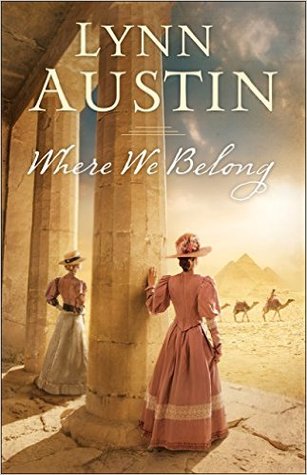
Book Review: Where We Belong

Where We Belong. Lynn Austin. 2017. Bethany House. 480 pages. [Source: Review copy]

First sentence: Rebecca Hawes lay awake in her tent, convinced that the howling wind was about to lift her entire camp into the air and hurl it to the far side of the desert.

Premise/plot: Where We Belong tells the story of two adventuring sisters Rebecca and Flora Hawes. The novel opens in the Sinai Desert in 1890, the sisters are on a quest to find ancient manuscripts. In particular, Becky is looking for ancient copies of the New Testament. She has, by this point, co-written several books on her archaeological discoveries. She's hoping that a new discovery will help skeptics believe that the Bible is reliable and reasonable.

The story line set in 1890 is packed with action and adventure. But the book doesn't stay in 1890, in fact it is dominated by flashbacks--flashbacks for four main characters: Becky, Flora, Soren, and Kate. The earliest flashbacks take us back to the school years of Becky and Flora and how their love of 'adventure' began when they were still teens. (Their first adventure being skipping school and exploring Chicago.)

The two sisters--in particular Becky Hawes--are unconventional in many ways. The two share a love for traveling the world, learning new languages, bargaining with the natives and picking up souvenirs. The two also share concern for others. Flora has a heart for the poor, particularly orphaned and abandoned children. Becky has a heart for the lost. She sees her love of archaeology being in line with that concern. Her work may remove barriers keeping people from believing that the Bible is the true word of God. That's how she sees it anyway. Both sisters have a strong faith in God.

My thoughts: I liked this one. I didn't love, love, love it. I honestly thought it was a bit too long. The story set in 1890 was compelling, but the flashbacks were not equally so. In fact, I found some of the flashbacks to be more tedious than not. (Not all the flashbacks lacked action; one sequence takes readers to the Chicago Fire.)

I found it interesting that this one is based very loosely on real sisters--Agnes and Margaret Smith. But the authors note makes it clear that it is VERY loosely based. Agnes and Margaret Smith were Scottish, not American, and most of the book is complete fiction.

© Becky Laney of Operation Actually Read Bible

Tuesday, January 9, 2018

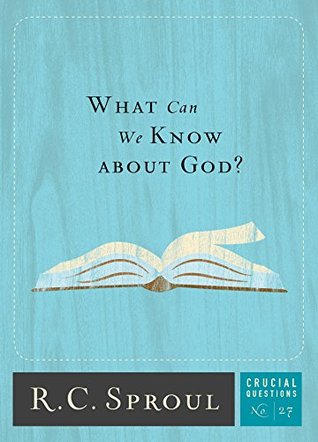
Book Review: What Can We Know About God?

What Can We Know About God? R.C. Sproul. 2017. Reformation Trust. 53 pages. [Source: Review copy]

First sentence: Several years ago, a well-known Christian school invited me to address the faculty and administration on this question: “What is a Christian college or university?” Upon my arrival, the dean gave me a tour of the campus. During the tour, I noticed this inscription on a set of office doors: “Department of Religion.” When it came time to address the faculty that evening, I mentioned the inscription I had seen, and I asked whether the department had always been called by that name. An older faculty member replied that years ago the department had been called the “Department of Theology.” No one could tell me why the department name had been changed.

What Can We Know About God? is the twenty-seventh book in the Crucial Questions series by R.C. Sproul. Many of the books in this series are available as free ebooks for kindle. Most of the books are quite short. This is probably for the best since not every believer is an active reader. What Can We Know about God? is even shorter, in my opinion, than some of the other books in the series. If I'd been writing the book, it would have been even shorter.

The question Sproul asks is: What Can We Know About God?

The answer Sproul gives is essentially: What we can know about God is what God has revealed to us within his Holy Word. Sproul then begins an extremely basic review of a few of the attributes of God which we learn through Scripture.

Sproul has written other books--longer books, more detailed books--that address these same questions. The book feels very familiar, like I've read it before--from Sproul--in nearly the same words. That is possible. I've heard a lot of sermons by Sproul. I've read a handful of books written by Sproul.

I would recommend this one to Christians who are not big readers but who genuinely have questions about the faith.

Favorite quotes:
God does not speak to us in His language; He speaks to us in ours. And because He speaks to us in the only language we can understand, we are able to grasp it.
God is never required to be merciful or gracious. The moment we think that God owes us grace or mercy, we are no longer thinking about grace or mercy. Our minds tend to trip there so that we confuse mercy and grace with justice. Justice may be owed, but mercy and grace are always voluntary.


© Becky Laney of Operation Actually Read Bible

Friday, January 5, 2018

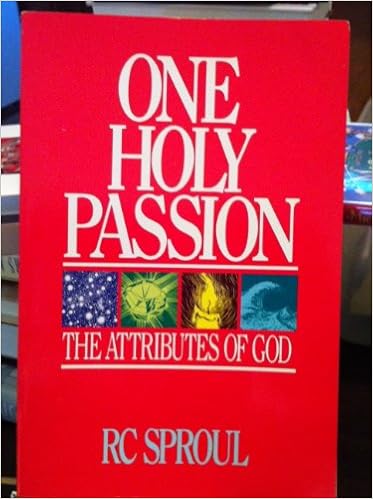
Book Review: Enjoying God

Enjoying God: Finding Hope in the Attributes of God. 2017. 242 pages. [Source: Review copy]

First sentence: I remember Saturday mornings.

Enjoying God: Finding Hope in the Attributes of God by R.C. Sproul is a book that has been previously published under several different titles by several different publishers: The Character of God, Discovering The God Who Is, and One Holy Passion. I believe it was initially published in 1987. It is a book worthy of staying in print. (Though part of me wishes that it would keep the same title!)

In Morning by Morning, Charles Spurgeon writes, "He who grows not in the knowledge of Jesus, refuses to be blessed. To know him is "life eternal," and to advance in the knowledge of him is to increase in happiness. He who does not long to know more of Christ, knows nothing of him yet." Sproul, I believe, would agree wholeheartedly with that sentiment. Enjoying God reflects that sentiment in fact. We are to ENJOY God, and to enjoy God we first have to know God. Sproul encourages readers to KNOW God and to study his attributes.

Enjoying God has twelve chapters. In each chapter, Sproul examines an attribute (or two) of God. The chapter titles are: "Who Are You, God?" "Who Made You, God?" "I Want To Find You, God" "How Much Do You Know, God?" "Where Is Truth, God?" "The Shadow Doesn't Turn" "The Just Judge" "The Invincible Power" "Can I Trust You, God?" "The Love That Will Not Let Us Go" and "The Name Above All Names."

This one is now subtitled "finding hope in the attributes of God." It's not a bad subtitle. Our hope is GROUNDED in WHO God is. Growing in knowledge of who God is--as revealed in the Bible, in the Word of God--can only increase our hope. When our hope is in anything else--in ourselves, in our families, in our friends, in our government, in society--it's doomed to disappoint us. The only one who will never fail us is God himself.

I would recommend reading this one--whether it's a new edition or an old one. It is not perhaps as accessible as other books on God's attributes--I'm thinking of those by A.W. Tozer--but it is biblically sound and thought-provoking. If you make the effort, you will be rewarded for your time.

Favorite quotes:
Life is lived between two hospitals. We need a support system from birth to death to sustain life. As the Scripture states, “all flesh is grass” (Isa. 40:6). We are like flowers that bloom and then wither and fade. This is how we differ from God. God does not wither. God does not fade. God is not fragile. The very word existence is not quite accurate for him.
God promises you and me his presence. I don’t always feel his presence. But God’s promises do not depend upon my feelings; they rest upon his integrity. I may fail in my promises, but he does not break his. My doubts about his presence insult his integrity. Because I cannot see him or feel him, I begin to question his Word. To live by faith, on the other hand, is to live by trust. This means far more than believing in God; it means believing God.
God’s thoughts are pure; my thoughts are impure. God’s actions are perfect; my actions are imperfect. That is why I need a Savior. That is why my spirit rejoices in God my Savior! A personal, spiritual God has provided a personal, spiritual redemption for me. Salvation involves the reconciliation of a relationship. To be saved means to be restored to fellowship with the living God.
To be known by God is an idea that divides the human race. There are those who long to be known by God. For we Christians there is no greater solace than to know we are known by God and still loved. For unbelievers nothing is more dreadful than the thought of being known completely by God. The pagan does not want God to look at him; he wants God to overlook him. 
There is only one adequate cloak for our shame—the righteousness of Christ. Our nakedness and shame are covered by a shield that no guilt can pierce. Our lives are hid in him. He is our refuge. He who knows the fugitive’s crime gives the fugitive a hiding place. 
     The greatest event of human history was at the same time the most diabolical. No greater shame can be tacked to the human race than that a human being delivered up Jesus to be crucified. Judas betrayed Christ because Judas wanted to betray Christ. The Pharisees pressed for his death because the Pharisees wanted Jesus killed. Pilate succumbed to the howling crowd, not because God coerced him, but because Pilate was too weak to withstand the demands of the mob. Yet the Bible declares that the cross was no accident. The outcome of God’s eternal plan of redemption did not hinge finally on the decision of Pontius Pilate. What if Pilate had released Jesus and crucified Barabbas instead? Such a thought is almost unthinkable. It would suggest that God was only a spectator in the plan of redemption, that he hoped for the best but had no control over the events. God did more than hope for the cross. He willed the cross. He sent his Son for that very purpose. Before Jesus was brought before Pilate, he pleaded with the Father for a different verdict. He begged that the cup might pass. Before Pilate ever raised his Roman scepter, the gavel had fallen in Gethsemane. The verdict was in. Jesus was delivered by the determinate forecounsel of God.
 We can change our attitude toward God. But one thing we cannot do: We cannot change God. God is unchangeable. If changes are to be made, they must be made in us.
Justification is at the heart of the Christian faith because (1) God is righteous, and (2) man is not righteous. These two facts make Christianity necessary and stand behind the incarnation, the cross, and the empty tomb. If God were not righteous, unrighteous human beings would have no need of a Savior. But because God is righteous and we are not, we have a desperate need for a Savior. 
The temptation to reduce God to love alone is strong, especially when we fear his wrath or seek to flee from his justice. If we could strip God of all his attributes except for love, we would have nothing to fear from the last judgment. But to separate the love of God from his other attributes is impossible. God will not tolerate it. The love of God is a holy and righteous love. But his love does not compromise his integrity. 
I shudder when I hear professing Christians reject the sovereignty of God or the justice of God. “But my God is a God of love,” some say, as if God’s character could be exhausted by one attribute. Here the attribute of love is so exalted that it swallows up God’s other attributes. The result is a one-dimensional God, a God who is less than God, an idol. The God we love and worship is a God of depth and fullness. He is one and many. He has unity and diversity. He is one being with several attributes. In this life we only begin to understand the depth and the riches of his being. We only skate on the surface of understanding him. 

© Becky Laney of Operation Actually Read Bible
Tuesday, January 2, 2018

Book Review: The Promise of Dawn

The Promise of Dawn. Lauraine Snelling. 2017. Bethany House. 386 pages. [Source: Review copy]

First sentence: Mor, a letter from Amerika!

Premise/plot: Signe and Rune travel with their three sons to America, to Minnesota, to help out their relatives, Uncle Einar and Aunt Gird. It won't be easy: not the journey, not the settling in, not the work. Uncle Einar and Aunt Gird are each difficult and demanding in their own ways. Aunt Gird is bed-ridden and incapable of doing anything for herself or for anyone else. Uncle Einar, well, he's strong and capable--of almost anything but being kind and considerate. It will take all their strength and courage to survive in their new environment. Einar is a logger, and, he wants Rune and at least the oldest boy--if not the two eldest--to give 110% sunup to sundown.

My thoughts: I need to read more Snelling. I do. I haven't read nearly enough. I believe this series will--sooner or later--connect to some of her other books.

It's set in 1909, I believe. And the pioneer way of life is anything but dead. Reading this one reminded me of the Little House books or some of Oke's earlier work. Signe has a house to manage, and it's a 24 hour job, an often thankless job. She's also pregnant. The family is very well-developed, as is the community.

I would definitely recommend this one!

© Becky Laney of Operation Actually Read Bible
Tuesday, December 26, 2017

Book Review: True Feelings

True Feelings: God's Gracious and Glorious Purpose for Our Emotions. Carolyn Mahaney and Nicole  Mahaney Whitacre. 2017. Crossway. 160 pages. [Source: Review copy]

First sentence: Imagine Marilla Cuthbert and Anne Shirley writing a book together, and that’ll give you an idea of what’s ahead. But that’s only half the story. We may be emotional opposites, but we share a common curiosity and enthusiasm to learn what the Bible has to say about a woman’s feelings.

Premise/plot: True Feelings is written by a mother and daughter team. The focus is on emotions and what God has revealed about them in his Word. Chapters include: "Fact, Fiction, and Feelings," "The Gift of Emotions," "Why Do I Feel This Way?" "Feeling Good," "Emotional Emergency Measures," "How Do I Control My Emotions?" "Act to Feel," "God's Purpose in Pain," and "Godly Emotions for Life." The foreword is by one of my favorite authors, Joni Eareckson Tada. The book is definitely geared more towards women, but, I don't think women are the only ones that struggle with emotions and feelings.

The book is titled True Feelings. In chapter four, they define what makes feelings true:
Do we believe what God says is true and do we value what God says we should value? If so, we will have true feelings. In other words, our positive emotions are ungodly if we approve of things that God says are wrong or find pleasure in things that God hates. 
My thoughts: I definitely would recommend this one. At first, I felt a little disconnected from the authors. I remember finding it odd that the authors were referring to themselves in the third person. But it wasn't too long before I forgot about *who* was writing it and focused solely on the content or the message. What does God have to say in His Holy Word about emotions and feelings--positive and negative?

I would say the book is practical and relevant. For example, in chapter five, the authors teach readers three "emergency measures" for resisting emotional temptation. They are: 1) exercise self control, 2) cry out to God, 3) take one action (one obedient action).

And the book is definitely thought-provoking. In chapter six, the authors ask a lot of tough questions for readers to answer: "What are my working beliefs about God? How do I think about myself? What do I think about how things are going for me? How do my beliefs line up with the life-giving truth of the gospel?"

Favorite quotes:

  • Emotions play an integral role in our lives, from our relationships with God and others, to our memories, imaginations, and life experiences. God created our emotions to work in harmony with our other two most fundamental faculties: the mind and the will.
  • The myth that “emotions are bad” puts the blame in the wrong place. Emotions aren’t inherently bad or unruly, but sin has devastated our emotions. 
  • Emotions tell us what we value. They tell us about the people we care about and the things in life that we desire.  
  • Emotions also tell us what we believe. They reveal our take on reality. They tell us how we evaluate what is going on with the people and things that we value.
  • Nowhere in Scripture does God require us to examine and catalog every emotion. A cacophony of emotions tells us one thing above all: we must move to God. There is no feeling or jumble of feelings that we cannot bring to him. In fact, confusing emotions can be marvelous motivators, driving us to the only one who clears up our confusion.
  • When we seek emotions for God and not for ourselves, we will, by the grace of God, find true happiness. Only when we start with God can we handle our emotions; and in his Word, God tells us how we are supposed to feel. 
  • Godly emotions arise from godly beliefs and values. In other words, godly emotions spring from beliefs and values that correspond to the truths and values of God’s Word. By the same token, ungodly emotions flow from ungodly beliefs and values.  
  • If we spend twenty minutes a day reading our Bibles, but the remaining twenty-three hours and forty minutes ruminating on unbiblical thoughts, then it is no wonder that our sinful beliefs and values are so stubborn and our sinful emotions so strong. Sinful ruminating can reverse the good effects of time spent in God’s Word. It slows our growth and keeps us stuck in the same sinful emotions. We can’t expect to grow godly emotions in the soil of our sinful ruminations, so if we struggle to change our beliefs and values, this bad habit is the place to start.
  • We have to be deliberate, and we have to persist. But if we meditate on what is true, lovely, and admirable—all day long—we will cultivate godly beliefs and values from which obedient emotions will flourish (Phil. 4:8).
  • The longer we go without reading our Bibles, the less we want to read them. The more serving opportunities we pass up, the less we feel like serving, and the more times we skip church, the less we feel like going. If we procrastinate in our work, we feel less inclined to finish it. That’s because our faculties work together, and our actions (or inaction) affect how we feel. Waiting to feel before we act in obedience is a bad habit that bolsters our sinful emotions. Sinful beliefs and values only get stronger when we indulge our sinful feelings.  
  • God not only gives us Scripture, prayer, and the refreshing shelter of his church to sustain Christlike emotions, he punctuates our whole lives with gracious gifts that enliven our feelings.
  • Emotions are not dangerous. We are in danger, though, if our emotions are not satisfied in Christ.  


© Becky Laney of Operation Actually Read Bible

Sunday, December 24, 2017

Bible Review: Spurgeon Study Bible

CSB Spurgeon Study Bible, Holman Bible Publishers (B&H). 2017. 1840 pages. [Source: Gift]

I think I have been waiting--actively waiting--for *a* Spurgeon Study Bible to be released, at least eight or ten years. I found out last year that one would actually be released in 2017! It would be in the Christian Standard Bible translation. It would be edited by Alistair Begg. To say I was excited would be an understatement. The year seemed like one long wait until the release date in November. 

I received this one for a birthday present in mid-November. I was THRILLED from the start. The print size is very good. The notes were of the "just right" variety. Not too few, not too many. The content of the notes was great. And it was black letter, not red letter. It seemed like it was designed cover to cover with me in mind. 

The only thing that would make this one even better would be if it was also available in other translations. I'm thinking the King James Version, since that is the translation Spurgeon used. OR the English Revised Version from 1885, again because Spurgeon would have read. 

For the record, I did find one typo in one of the notes in Revelation. They say something about "hating" a new heart--from the context, I'm guessing it's supposed to be HAVING a new heart. Since those in heaven certainly won't be hating their new hearts. 

Here are ten of my favorite quotes:
It is a great truth that you will rise again. It is a sweeter truth that you will "always be with the Lord." Whatever else you draw comfort from, neglect not this deep, clear, and over-flowing well of delight. There are other sources of good cheer in connection with the glory to be revealed, for heaven is a many-sided joy, but still none can excel the glory of communion with Jesus Christ, wherefore comfort one another in the first place and most constantly, with these words, "So we will always be with the Lord." Spurgeon Study Bible, 1 Thessalonians 4:17
"Sharper than any double-edged sword." A sword with two edges has no blunt side; it cuts both this way and that. The Word of God is edge all over. It is alive in every part, and in every part keen to cut the conscience and wound the heart. Depend on it: not a verse in the Bible is superfluous or a chapter that is useless. Spurgeon Study Bible, Hebrews 4:12
If we do not love the Bible, we certainly do not love the God who gave it to us; but if we do love God, then no other book in the entire world will be comparable in our minds. When God speaks, it is the delight of our ears to hear what he says. In other books there is some truth and some error. Apart from the Bible, the best book ever written has mistakes in it. It is not possible for fallible men to write infallible books. Somehow or other we either say more than is true or less than is true. The most skillful writer does not always keep along that hairline of truth that is more difficult to tread than a razor's edge. But Scripture never errs. Spurgeon Study Bible, Psalm 119:97-99
Nothing in the past has shaken the foundation of our faith. Nothing in the present can move it. Nothing in the future will undermine it. Whatever may occur in the ages to come, there will always be good reason for believing in Jehovah and his faithful Word. The great truths he has revealed will never be disproved. The great promises he has made will never be retracted. The great purposes he has devised will never be abandoned. So long as we live, we will always have a refuge, a hope, a confidence, that can never be removed. "I will bear you up when you turn gray" is not just a promise for those in old age. But it is also a promise to the people of God at any and every period between their birth and their death. Spurgeon Study Bible, Isaiah 46:3-4
Let us trace all the mercies we get to our God, for he has worked all our works in us. He has chosen us, he has redeemed us, he has called us, he has quickened us, he has preserved us, he has sanctified us, and he will perfect us in Christ Jesus. The glory is all the Lord's. When we read human history, we should read it to see the finger of God in it--trace through the human story the silver line of covenant working--observe how the Lord casts the horse and his rider into the sea when they come out against him or his people. Spurgeon Study Bible, Exodus 15:1  
It is not sin as we see it that was laid on Christ but sin as God sees it, not sin as our conscience feebly reveals it to us but sin as God beholds it in all its unmitigated malignity and unconcealed loathsomeness. Sin, in its exceeding sinfulness, Jesus has put away. But when we perceive sin, then we are to trust the blood. Leviticus 4:3, Spurgeon Study Bible
We are all sowing; we cannot help it. No one goes forth in the morning without a seed-basket. As we are all sowing, the great question we have to consider is, :What will the harvest be?" Hosea 8:7; Spurgeon Study Bible
Walking with God denotes an active habit, a communion in the common movements of the day. Some bow humbly before God in the hour of prayer. Other sit humbly in his presence at the time of meditation, and others work themselves up to draw near to God in seasons of religious excitement. But all this falls short of walking with God. Walking is a common pace, an ordinary rate of progress, and it does not seem to require great effort; but then it is a practical working pace, a rate at which one can continue on and on and make a day's journey by the time the sun is down. So walking with God means being with God always, being with him in common things, being with him on Monday, Tuesday, Wednesday, Thursday, Friday, Saturday--as well as on the Sabbath. It means being with him in the shop, with him in the kitchen, with him in the field, feeling his presence in buying and selling, in weighing and measuring, in plowing and reaping--doing as for the Lord the most common acts of life. Then comes the in the qualifying word of "humbly". When our walk with God is closest and clearest, we must be overwhelmed with adoring wonder at the condescension that permits us to think of speaking with the eternal one. To this reverence must be added a constant sense of dependence--walking humbly with God in the sense of daily drawing all supplies from him and gratefully admitting that it is so. We are never to indulge a thought of independence from God, as if we were anything or could do anything apart from him. Spurgeon Study Bible, Micah 6:8 
Walking implies the possession of life...Walking is also a position that signifies activity. As genuine Christians we do no merely learn; we practice what we know. We are to be engaged in displaying to others the blessings we have received and are to exhibit in our daily actions the fruits we have gathered from communion with God. "We walk" is more than some can say. They can affirm, "We talk; we think; we experience; we feel:--but true Christians say, "We walk." Walking also implies progress. A person who walks makes some headway. True believers are always making advances; we are to be going from faith in its beginnings to faith in its perfections, waxing stronger and stronger. There is a progress to be made in every Christian grace...
Walking also implies perseverance. When a person only takes a step or two and then stops, we do not call that walking. The true Christian keeps on going. Further, walking is the ordinary manner of the Christian life. Running is not best for progress; it cannot be kept up for long; it fatigues and tires. But walking is that kind of progress in which a person continues hour after hour, and after a night's rest he rises again to walk on as before until reaching the goal...
Walking also implies perseverance. When a person only takes a step or two and then stops, we do not call that walking. The true Christian keeps on going. Further, walking is the ordinary manner of the Christian life. Running is not best for progress; it cannot be kept up for long; it fatigues and tires. But walking is that kind of progress in which a person continues hour after hour, and after a night's rest he rises again to walk on as before until reaching the goal... Walking also implies perseverance. When a person only takes a step or two and then stops, we do not call that walking. The true Christian keeps on going. Further, walking is the ordinary manner of the Christian life. Running is not best for progress; it cannot be kept up for long; it fatigues and tires. But walking is that kind of progress in which a person continues hour after hour, and after a night's rest he rises again to walk on as before until reaching the goal...Walking by sight is just this--"I believe in myself." Whereas walking by faith is this--"I believe in God." Spurgeon Study Bible, 2 Corinthians 5:7 
"Our Father in heaven" -- I am a child away from home."Your name be honored as holy"--I am a worshiper."Your kingdom come"--I am a subject."Your will be done on earth as it is in heaven"--I am a servant."Give us today our daily bread"--I am a beggar."And forgive us our debts as we also have forgiven our debtors"--I am a sinner."And do not bring us into temptation, but deliver us from the evil one"--I am a sinner in danger of being a still greater sinner. ~ Spurgeon Study Bible, Matthew 6:13

© Becky Laney of Operation Actually Read Bible
Thursday, December 14, 2017

Book Review: The Gathering Storm

The Gathering Storm. R. Albert Mohler. Jr., 2017. 127 pages. [Source: Free download]

First sentence: A new and unprecedented right is now the central focus of legal, procedural, and cultural concern in many corridors — a supposed right not to be offended. The cultural momentum behind this purported “right” is growing fast, and the logic of this movement has taken hold in many universities, legal circles, and interest groups.

Premise/plot: The Gathering Storm is a collection of previously published essays by R. Albert Mohler. The subject is religious liberty or freedom; that is the book explores the current attacks on religious freedom in the United States.

My thoughts: I found this collection of essays to be mostly thought-provoking. I thought some essays were better--aka more engaging, more interesting--than others. But all share a common theme. Will Christians within America continue to have protected religious freedom. And what exactly does this freedom of religion include or exclude? Is it merely the freedom to gather together and worship in a building? Or is it the freedom to share the good news of the gospel with others?

Quotes:
Civilization thrives when individuals and groups seek to minimize unnecessary offendedness, while recognizing that some degree of real or perceived offendedness is the cost the society must pay for the right to enjoy the free exchange of ideas and the freedom to speak one’s mind. Given our mandate to share the gospel and to speak openly and publicly about Jesus Christ and the Christian faith, Christians must understand a particular responsibility to protect free speech and to resist this culture of offendedness that threatens to shut down all public discourse. Of course, the right for Christians to speak publicly about Jesus Christ necessarily means that adherents of other belief systems will be equally free to present their truth claims in an equally public manner. This is simply the cost of religious liberty.
Without doubt, many Christians manage to be offensive for reasons other than the offense of the Gospel. This is to our shame and to the injury of our gospel witness. Nevertheless, there is no way for a faithful Christian to avoid offending those who are offended by Jesus Christ and his cross. The truth claims of Christianity, by their very particularity and exclusivity, are inherently offensive to those who would demand some other gospel.
We now face an inevitable conflict of liberties. In this context of acute and radical moral change, the conflict of liberties is excruciating, immense, and eminent. In this case, the conflict of liberties means that the new moral regime, with the backing of the courts and the regulatory state, will prioritize erotic liberty over religious liberty. Over the course of the last several decades, we have seen this revolution coming. Erotic liberty has been elevated as a right more fundamental than religious liberty. Erotic liberty, foreign to the founders of this nation, now marginalizes, subverts, and neutralizes religious liberty — a liberty highly prized by the builders of this nation and its constitutional order.
A liberty that did not even exist when the Constitution was written now supersedes protections that are explicit in the Constitution. This explains the trajectory of court decisions and developments in the law and, at the same time, reveals the trajectory we can expect in the future.
Religious freedom is not limited to what takes place within the confines of a church and its worship. Freedom of worship marginalizes and ghettoizes Christian speech so that its liberties only exist within the confines of the church — but it does not guarantee a right to a public voice. Freedom of worship essentially muzzles the Christian in the public square.
Human rights and human dignity are temporary abstractions if they are severed from their reality as gifts of the creator. The eclipse of Christian truth will lead inevitably to a tragic loss of human dignity. If we lose religious liberty, all other liberties will be lost, one by one.
The affirmation of human rights is claimed to be the great moral achievement of the modern age. But this affirmation was based in the belief that those rights belong to every human being by virtue of divine creation. How can those rights survive when the foundation is destroyed?
We are not only called to defend human rights but to contend for them, and to insist that these rights are non-negotiable only because our creator endowed us with these rights, and allows no negotiation.

© Becky Laney of Operation Actually Read Bible

Tuesday, December 12, 2017

Book Review: Everyone a Child Should Know

Everyone A Child Should Know. Clare Heath-Whyte. 2017. 112 pages. [Source: Gift]

First sentence: Brother Andrew. What do you like most about going to church? Bible stories? Singing? Meeting friends? Did you know there are some countries in the world where Jesus' friends aren't allowed to meet together, or read the Bible, or tell other people about Jesus?

Premise/plot: If you're looking to introduce your child to heroes of the faith, then I'd recommend sharing Everyone A Child Should Know with your family. "There are loads of Christian biographies around for older children and adults, but almost none for younger children--yet it is never too early to introduce the next generation to some of the heroes of the faith. Here we meet fifty-two Christian men and women (one to read every week of the year...) from all walks of life, who wanted to live for their friend Jesus." Each hero is given a two-page spread. One page is an illustration with a bible verse; the other page is a brief biography. There is a lot of variety; the book spans centuries.

My thoughts: I liked this one. I think it would be hard to choose just fifty-two. If I'd been choosing the list, it would be slightly different. I'd definitely want to include Martyn Lloyd-Jones, and maybe James Montgomery Boice. Jerry Bridges. Oh, also A.W. Tozer. And J.C. Ryle. And are there really enough Puritans on the list?! I don't think so!!!  Every one's list would be different. I think there's room for a sequel.

© Becky Laney of Operation Actually Read Bible

Wednesday, November 29, 2017

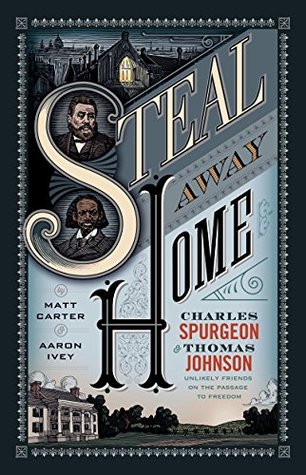
Book Review: Steal Away Home

Steal Away Home: Charles Spurgeon and Thomas Johnson, Unlikely Friends on the Passage to Freedom. Matt Carter and Aaron Ivey. 2017. B&H. 273 pages. [Source: Review copy]

First sentence: There was not a village in the world more pleasant than Stambourne, and although London was only forty miles southward, there was rarely a need to leave.

Premise/plot: Steal Away Home introduces readers to two men: Charles Spurgeon and Thomas Johnson. Chances are, you've heard of Charles Spurgeon. It is less likely that you've heard of Thomas Johnson. The narration switches back and forth between these two. The novel covers five decades.

Charles Spurgeon was a preacher, the celebrity preacher of his day. His sermons were printed, not only in England, but also in America. Thomas Johnson started life as a slave, but, even before the slaves were emancipated, freedom was his through Christ. After the war, he became a preacher as well. His dream--shared by his wife--was to go to Africa as a missionary. Charles Spurgeon helped him realize this goal.

My thoughts: I definitely found this one a fascinating read. I loved both stories. The second half was even better than the first half. By the end, I was EMOTIONAL.

I loved the writing!

Some of my favorite quotes:

  • His grandfather taught him many meaningful things: how to count the stars, how to read the Scriptures at meal times, and the importance of good Puritan books. His reading parlor was littered with books too heavy for little Charles to carry, but the stories in these volumes were a relief to the soul, a healing balm that he would treasure for years to come.
  • “Sometimes, the Lord gives us the opportunity to see things—things that seem wrong—so that we can do something about them. So we can change them. But other times, the Lord lets us see things—things that seem wrong—so those things can change us.” Charles listened and catalogued every word. 
  • The most important thing to understand about our mysterious God is that He is God, and we are not. When we are least expecting it, He will put something so deep inside the caverns of our heart. We won’t see it at first, we won’t even know it’s there. But one day we’ll look back and see He was in control of everything, all along the way. 
  • The cover was green as moss, and possessed a beautiful golden inlay of embossed images and letters. “Other than the Holy Scriptures, this is my favorite book. My grandfather gave it to me when I was just seven years old, and I’ve read it fifty times at least. Each time, I’m charmed all over again.” Charles ran his fingers along the gold-embossed letters that read The Pilgrim’s Progress. He thought of his grandfather, and a familiar peace rushed through his body. “You carry this with you always? Why?” asked Susannah as she leaned towards the table. Charles handed her the wornout book, and she gently put her fingers on the embossed title. “Why, Mr. Spurgeon?” said Susannah, now smiling and incredibly interested. “Because, when you read this book, it makes you feel like the author is a living Bible. You can prick him anywhere, and he bleeds the Bible. He cannot speak without quoting a verse or a section of Scripture. It’s as if his very soul is full of the Word of God.” Charles placed both elbows on the table in front of him, and extended his hands towards the green and gold book in Susannah’s hands. “So this story—which I never seem to tire of—is the best description of the Christian life. And the secret of its freshness is that it’s essentially biblical teaching in the form of a beautiful and striking allegory.”
  • Several nights of the week, Charles and Susannah would meet under the gas lamp in the center of the gardens, reading Puritan writers and discussing the gems of wisdom found within.
  • There are rare moments when one can see, from the outside, what the inside of a person looks like. It was as if Thomas could see the inside of his fellow slaves, clearly. Pain became visible. Sorrow was seen. Hope couldn’t be contained, so it spilled out onto their faces, from their eyes, down their cheeks, to their chins. Joy burst from their hearts, and caused their hands to sway and dance. 
  • “Have you stolen away to Jesus?” Ezekiel paused, letting the question soak. “Have you stolen away from this place—your work, your troubles—have you gotten alone with the Lord? ’Cause that might be the most important question you answer all day long. ’Cause you see, the master . . . he owns our body. The master, he owns our time. The master, he owns everything about us,” Ezekiel continued to whisper, looking only to Thomas. “But. There is something you can’t ever forget. There is one thing that man don’t own. There is one thing that man can’t ever own.” “He don’t own your soul.” 
  • The pain is the measure of grace by which God is choosing to endure me today. 
  • It is a great mercy to be able to toss and turn, changing sides during the night in a bed. It is a great mercy to set one’s head on a pillow for an hour of sleep, interposed between long stretches of pain. It is a great mercy to press eyelids together to catch a glimpse of reprieve, as brief as it may be. We call those things mercies, because like the span of blue between a mass of thunderclouds, so is rest in the midst of suffering.
  •  “Oh, God,” he whispered in the shadows, “the sick bed is soft when You are there. The furnace of affliction grows cool when You are there. Oh, God be there.”
  • “I—I simply do not want to be confined to this bed. I do not want your body to be ravished with pain. I do not want for our lives to be marked with sickness. I do not want it. And yet, if this is what God has for us—I want to want it! Does that make sense?” He lowered his head in frustration and opened his eyes to the tattered leather cover of his Bible, still sitting unopened atop the wooden tray on his bed. “I want to want this hard path we are on.”
  • “Your depressive thoughts aren’t meant to press you down. No! They are meant to fly your soul up. Up to the arms of the Good Master. Charles, you count up your crosses, as bitter as they might seem. You count up your diseases, pains, and sorrows, as many as they might be. Then, you see that Jesus put ’em all there. He put them there so you’d run to Him faster than you’ve ever run. He might not ever take them away. Even if Jesus had never taken slavery away from me, I still think it would have done just what it was supposed to—make me run to Jesus over and over again. That’s when you see how sweet He is. He’s right there. Has been the whole time. Sharin’ in that suffering. Weepin’ with you.
  • Sometimes, during the hardest of seasons, all you can do is whisper songs of hope in the night. But I’ll tell you—God always hears.” 
  • To worry is to bear a burden that is not ours to carry. 
  • When his gout lessened and he was able to preach, Charles preached as he had never before. He gained from illness a wealth of knowledge and sympathy which he could not have gained elsewhere. Undergirding all of his experience in suffering was his conviction that his ill health was God’s gift, and he used that gift every time he opened his mouth, inscribed pages for a book, or preached a sermon from the pulpit of the Tabernacle. 


© Becky Laney of Operation Actually Read Bible