Showing posts with label MG Fiction. Show all posts

Tuesday, August 2, 2022

29. The Prince and the Blight


The Prince and the Blight (The Dream Keeper Saga #2) Kathryn L. Butler. 2022. 274 pages. [Source: Review copy]

First sentence: This stuff is like ogre slobber. Lily screwed up her face at the paper-mache paste dripping from her brush and cast a doubtful glance at the mess of newsprint that slouched on the art bench before her.

The Prince and the Blight is the sequel to The Dragon and Stone. In the first book, readers met Lily McKinley, our protagonist, and were swept up and away to a fantasy world. A blend of characters--both human and fantastical--teamed up to conquer evil and 'save' the realm. At the end of the first book, the human characters returned to the 'real' world and the others were left to rebuild their world... It's been a month of our time, but several decades in the fantasy world, and the [fantasy] world needs saving once again. This time it seems even more pervasive and deadly dangerous. This evil blight is spreading and spreading fast--soon they'll be nothing left to save. But can Lily and friends (a few new characters are introduced including Keisha and Barth) save the world again????

Pax, the Prince of the land, is a unicorn. He made a few appearances in the first book--enough to be the ultimate hero--but it's been decades since he was last seen. Pax isn't completely and totally forgotten, but, he's not really foremost or first in anyone's thoughts--or hearts or minds. Lily is learning that all things are possible with Pax, but, she has to place all her faith in Pax. In other words, she has to live every moment as if Pax were in the room with her. She has to believe that Pax is still very much a present help in ALL situations no matter how dangerous. 

This one is children's fantasy. If it feels super familiar--that's intentional. It is meant to have all the exact same feels as The Chronicles of Narnia and the like. It does read in some ways like fan fiction for Narnia. There's slight differences to be sure. Lions and unicorns are completely different, right? 

I am not sure the same-ness is a bad thing however. Not really. If you think of the target audience and how predictability and familiarity and wanting to know what to expect exactly is just an all too real growing stage. Readers do tend to want a book "like" or "exactly like" one they've just read and loved. 

For Christian parents, this fantasy novel is along the same lines as the Chronicles of Narnia series. Some spiritual truths--mainly in regards to Pax and Lily--blended into fantasy. There is magic--light and dark. 

I liked the first book. I did. I was pleasantly surprised. I was disappointed with the second book. Don't get me wrong there are a few scenes that are definitely the best of the series. (A few scenes with aha significance and grand meaning.) But I couldn't help wishing that there was one book, one story that managed to have it all. 

I also did NOT like the ending at all. I thought the ending was just wrong. 

© Becky Laney of Operation Actually Read Bible

Thursday, December 26, 2019

Book Review: Anthem

Anthem. (Sixties Trilogy #3) Deborah Wiles. 480 pages. [Source: Library]

First sentence: It’s been so long since I’ve felt something.

Premise/plot: Set in June 1969, Anthem is the final book in the Sixties trilogy by Deborah Wiles. Each book has a different setting and a different narrator. But there are connections for the observant reader.

Molly and Norman are the two main narrators in Anthem. They are cousins soon to be embarking on a long road trip across America. The mission? To track down Molly’s brother, Barry, last known residence, San Francisco, California. Their starting destination is Charleston, South Carolina. Barry has received notice that he’s to report for his physical. Can an official draft notice be far behind? Barry ran away from home cutting nearly all ties with his family...at least his immediate family. Is there a happy outcome possible?

Molly is fourteen, this road trip provides quite an amazing and literal coming of age journey.

My thoughts: Did I find this to be a satisfying conclusion to the series as a whole? Yes! I don’t want to spoil any details about this particular book but readers get a small glimpse of how the Chapman family is doing. Molly and Norman meet Mr. Chapman, Jo Ellen, and Drew!!! Franny is mentioned as being in high school. Readers also get a chance to reconnect with Ray, a young black man whom we met in the second book.

Can each book stand alone? I definitely think so. Each one is set in a different city, state, even year. The connections with previous titles are brief, in passing.

Anthem begins each chapter with a song title and a few details about the song’s recording. I like this idea! If I had more energy, I would look up these songs on YouTube and possibly create a playlist.

Anthem like previous books is a documentary novel. It includes tons of photographs, a few quotes, but no biographical sketches. The first book is a coming of age novel focusing on the Cold War. The second book is a coming of age novel focusing on the civil rights movement. The third book is a coming of age novel focusing on the Vietnam War.

The theme or one of the themes at least seems to be the importance of actually listening to one another. Molly struggles with discerning what is right and wrong or perhaps who is right and who is wrong. The two sides are hostile—extremely so. The other side isn’t just wrong, they’re evil, representing everything that is wrong with the world. Sound familiar?!

Molly meets and talks with dozens of people on her journey—each one offers a perspective of the times, the war. Molly has a lot to think about, but ultimately she cannot choose for her brother.

While the other two books in the series have a strong spiritual faith element, God seems, emphasis on seems, to be absent in this one. I will admit that it isn’t easy to find God in the pages of this one. Molly and Norman seem to draw most of their hope from the music they listen to. Songs are challenging, encouraging, inspiring, and in some cases distracting them—and to some degree an entire generation.

I think if you search long and hard one could pull together discussion questions with a spiritual slant or focus. The Bible, for example, has a good deal to say about how children treat parents, parents treat children, about how we treat one another, and even how we live under the authority of government. The ethical questions brought up in Anthem can fuel discussion.

I do think the book is relevant still. For people still hotly disagree about how to respond, how to react, how to act with people, with institutions, with policies, with politics, with agendas that they disagree with. People still demonize those they disagree with. Civility seems to have once again gone with the wind.

© Becky Laney of Operation Actually Read Bible

Monday, December 16, 2019

Book Review: Revolution

Revolution (The Sixties Trilogy #2) Deborah Wiles. 2014. 538 pages. [Source: Library]

First sentence: The first thing we do, me and Gillette, is make sure everybody is asleep.

Premise/plot: Revolution is the second book in the 60s trilogy by Deborah Wiles. It is set in Greenwood, Mississippi in the summer of 1964. Sunny, our heroine, is still enthralled with another invasion—a British one—when rumors of another invasion spread through town. These invaders don’t harmonize but they do seek to spread peace and harmony. Their mission is to help black residents register to vote, to end segregation, to take a stand for equal rights. Sunny is coming of age at an interesting time in America’s history. She finds herself drawn to one of the freedom righters, Jo Ellen (a character first introduced in Countdown as Franny’s older sister). But the book isn’t all about racial tensions and strife. Her family has plenty of strife and tension. Her mother abandoned her as a baby, her father has recently remarried, she now has a stepmother and step siblings. And a new baby is on the way.

My thoughts: I love, love, love this one. I love the integral role faith plays in this one. It isn’t a preachy, flashy kind of religion. No, it’s more like the Christian Faith is the skeleton beneath fully fleshed characters.

I loved Sunny as a narrator. I loved getting to know her family and friends. I loved her obsession with the Beatles. That was a pleasant surprise. I myself love the Beatles (though Paul was never ever my favorite Beatle.)

Like Countdown it’s a documentary novel. It blends pure fiction with photographs, song lyrics, quotes from primary sources, and biographical sketches of real people from the era.

Sometimes you just need a book near you and you can’t explain why. (108)

What can I say to a girl who really believes Paul McCartney is going to show up on her doorstep? What’s wrong with me that I don’t believe it, too? (119)

Believe me, there are only so many times you can sing “I’ve got the joy, joy, joy, joy down in my heart” before you have no joy at all, anywhere. None. Zero. (155)

Every choice matters. Every person is vital, and valuable, and worthy of respect. (361)

”You are one of the bravest people I know.” “I am?” “You are.” “But I’m afraid all the time.” “It’s okay to be afraid,” Annabelle assures me. “I’m afraid too.” “You are?” “Yes. I am. But I know something about being afraid that helps me.” “What is it?” “I know that you don’t have to be afraid by yourself. You don’t have to be alone with what scares you.”(429)

Each of us is small, all by ourselves, but we are big, when we stick together. (495)

© Becky Laney of Operation Actually Read Bible

Wednesday, October 23, 2019

Book Review: Rising Above Shepherdsville

Rising Above Shepherdsville. Ann Schoenbohm. 2019. 320 pages. [Source: Library]

First sentence: There I was, Mama, standing in the tall grass right next to Redeemer Baptist Church, the day after the Fourth of July, when I spied what I would have sworn on a heap of Bibles was an angel rising straight up to heaven.

Premise/plot: Dulcie Louise Dixon stars in Ann Schoenbohm’s coming of age historical novel. (It is set in 1977.) After her mother’s death, Dulcie has lost the ability to speak. Ray, her mother’s steady boyfriend, has tried his best to raise her since her mother’s death. But both are grieving—though in different ways. He’s a trucker. His livelihood depends on him trucking. Someone needs to be there day to day to take care of her. Ray sends her to Aunt Bernie. Dulcie is reluctant for another change. But life in Shepherdsville might just be the absolute best thing for Dulcie...the place where she finds her voice.

My thoughts: I loved this one. I did. Dulcie’s narrative was amazing. I don’t particularly share her interest in swans. But I absolutely loved the sideline with Evangeline and Faith. This one has characters that I loved and championed.

One thing that I absolutely loved was the religious/spiritual aspect of it. The book wasn’t preachy. Christianity is just a major backdrop for the story. While it isn’t at all unusual for middle grade novels to have a strong school setting, a church setting is unique and refreshing. Reverend Love’s patience and empathy is something beautiful. I loved how his relationship with Dulcie developed. (There isn’t a hint of creepiness.)

© Becky Laney of Operation Actually Read Bible

Thursday, March 21, 2019

Book Review: Life With Lily

Life with Lily (The Adventures of Lily Lapp #1) Mary Ann Kissinger and Suzanne Woods Fisher. 2012. Revell. 280 pages. [Source: Review copy]

First sentence: It was still dark outside. Lily tried to keep up with Papa's long strides as he carried little Joseph across the yard to where the horse and buggy were tied to the hitching post.

Life with Lily is a middle grade novel set in the Amish community in modern times. It is not a historical novel, though it may remind readers--particularly adult readers--of historical novels that have achieved classic status.

It covers a year--give or take a month or two--in the life of Lily, our heroine. (I believe she's six.) She is the oldest of three children.  She has two younger brothers: Joseph and Daniel. Daniel is just a wee little thing--in fact when the novel opens he's getting ready to make his entrance into the world.

Readers see Lily at home with her immediate family, visiting her family that lives close (her grandparents, aunts, uncles, cousins), attending church meetings, going to school, visiting neighbors (she delivers milk and eggs).

Lily is a curious child--and observant.

Though Lily may have her moments when she seems more like Mary than Laura, she is not a perfect child by any means. She struggles with temptations and sometimes disobeys her parents.

The book definitely reminds me of Little House in the Big Woods or even All-of-a-Kind Family. There is something wholesome about it. But not in a bad way. That almost seems silly to say--that if you call a book wholesome it carries negative connotations. Like if a book is wholesome then it must not be enjoyable. Or if a book is wholesome then it must be preachy. Or if a book is wholesome then it must not be relatable.

I definitely related to Lily. One of her least favorite things in the whole world is to have her hair brushed. I could also relate to her love of dolls and kittens.

I did not find it preachy. Yes, it is a Christian book. There are teachable moments throughout where Lily observes her parents living out the faith. But it isn't preachy-preachy.

I found it very enjoyable. I loved rereading it. In fact I think I loved it even more the second time around.

© Becky Laney of Operation Actually Read Bible

Friday, December 18, 2015

Book Review: Voyage of the Dawn Treader

The Voyage of the Dawn Treader. C.S. Lewis. 1952. HarperCollins. 248 pages. [Source: Bought]

Is Voyage of the Dawn Treader by C.S. Lewis my absolute favorite, favorite of the Chronicles of Narnia series? Almost, yes. It is at the very, very least my second favorite. The only other book that even comes close is the FIRST book in the series, The Lion, The Witch, and The Wardrobe.

Returning to Narnia in The Voyage of the Dawn Treader is Lucy and Edmund. The two siblings are joined by a cousin, I believe, Eustace. Lucy and Edmund are quite happy to be reunited with Prince Caspian--now King. Eustace is shocked and angry and irritable. The last place he wants to be is in Narnia. Or should I say on a Narnian ship, sailing with a Narnian crew, led by a Narnian king. Eustace himself doesn't actually step foot into Narnia--the country--at least not in this book. Readers will remember quite a few characters from Prince Caspian.

Caspian is on a mission to find out the fates of seven lords who were loyal to his father, lords that have been missing for over a decade if not two. Caspian is sailing from island to island making inquiries, and exploring new lands and countries. This can be risky and dangerous...

Does Aslan make an appearance? Yes!!! And it's probably one of my favorite, favorite scenes. Eustace and Aslan have some business between them! If Eustace hadn't been turned into a literal dragon, would he have been beastly forever? Probably. Turning into a dragon, changed, him for the better!

The book is a lovely adventure, and, a joy to read.

Sunday, December 6, 2015

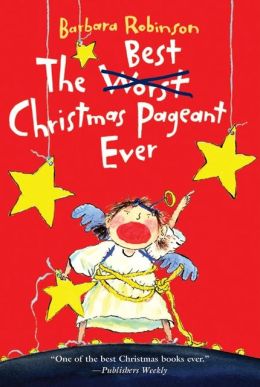
Book Review: Best Christmas Pageant Ever

The Best Christmas Pageant Ever. Barbara Robinson. 1972. HarperCollins. 128 pages. [Source: Bought]

The Herdmans were absolutely the worst kids in the history of the world. They lied and stole and smoked cigars (even the girls) and talked dirty and hit little kids and cussed their teachers and took the name of the Lord in vain and set fire to Fred Shoemaker's old broken-down toolhouse.

Let me ask you a question. Who is the gospel for? Think about it if you want. I'll wait.

Is the gospel for people who have it all together, the people who are good and are always striving to do better, to do more?  Or is the gospel for people who don't have it all together, who don't have the answers, who don't even know that they need to be asking questions? Is the gospel for broken, messed-up, difficult-to-get-along-with people? Or is the gospel for people who aren't-all-that-bad-all-things-considered?

On one hand, The Best Christmas Pageant is a comedy through-and-through. It's narrated by a child who's been tormented by the Herdmans for years. And it captures all the reactions of a town to all the bad stuff the Herdmans do (and say). The narrative voice, for most of the book, is just hysterical.

On the other hand, The Best Christmas Pageant is a much-needed reminder of what Christmas is all about, of what the gospel is all about.
The saying is trustworthy and deserving of full acceptance, that Christ Jesus came into the world to save sinners, of whom I am the foremost. 1 Timothy 1:15
And when the Pharisees saw this, they said to his disciples, “Why does your teacher eat with tax collectors and sinners?” But when he heard it, he said, “Those who are well have no need of a physician, but those who are sick. Go and learn what this means, ‘I desire mercy, and not sacrifice.’ For I came not to call the righteous, but sinners.” Matthew 9:11-13 
For the Son of Man came to seek and to save the lost. Luke 19:10 
The Best Christmas Pageant Ever provides an inside-out look at the nativity story, and captures best why Christ came in the first place.

It is told from the "inside" Christian perspective, a Christian perspective with varying degrees of self-righteousness. That is some characters are presented as more self-righteous than others. But many characters are a bit blind. They have never thought of the gospel as being for the Herdmans. They see themselves as better--significantly better--than those Herdmans!

As if God's grace wouldn't dare include the Herdmans. Jesus die for the Herdmans????? You've got to be kidding, right???? Not them, Lord! Why, that's ridiculous. But the truth is, it's ridiculous for God to save any one of us. None of us--not one of us--merits God's salvation: his mercy and grace.

I liked seeing the Christmas story from a new angle.
They knew that Christmas was Jesus' birthday, but everything else was news to them--the shepherds, the Wise Men, the star, the stable, the crowded inn. It was hard to believe. At least, it was hard for me to believe--Alice Wendleken said she didn't have any trouble believing it. "How would they find out about the Christmas story?" she said. "They don't even know what a Bible is." (55)
I couldn't believe it. Among other things, the Herdmans were famous for never sitting still and never paying attention to anyone--teachers, parents (their own or anybody else's), the truant officer, the police--yet here they were, eyes glued on my mother and taking in every word. (59) 
When we got home my father wanted to hear all about it. "Well," Mother said, "just suppose you had never heard the Christmas story, and didn't know anything about it, and then somebody told it to you. What would you think?" (68)

© Becky Laney of Operation Actually Read Bible

Sunday, November 1, 2015

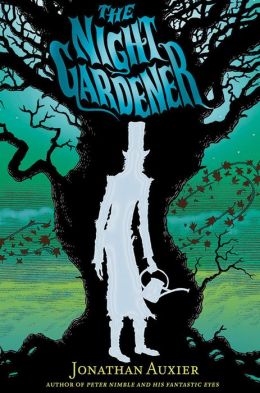
Book Review: The Night Gardener

The Night Gardener. Jonathan Auxier. 2014. Abrams. 350 pages. [Source: Bought]

I've now read The Night Gardener by Jonathan Auxier three times--three times in thirteen months. My second review. My first review. 

It's one of those rare novels where you want to read it again almost as soon as you've turned the last page. That isn't horribly unusual in a good picture book--especially if you're young or young at heart. But not many novels have that again-again impulse. 

The Night Gardener is also a book to be savored. The characters. The descriptions and imagery. The narration and dialogue. The oh-so-suspenseful plot. The atmospheric setting. Every element of this novel is to be savored. Great novels only improve upon rereading. And The Night Gardener is more than great, in my opinion. 

So one thing stood out for me the third time around. And it's one of the reasons why I chose to review the book on this blog instead of on Becky's Book Reviews. What did I notice? Well, there comes a point in the novel where Kip and Molly are safe and secure. They've escaped 'The Night Gardener' and are free from the sourwoods and the estate with its horrible secrets. You might assume that that was enough--that that was 'the end' but it's not. Now that they've come to the truth and broken free, they feel compelled--and at great risk I might add--to go straight back to where they came from and warn others of the danger. As Kip tells Molly, "there's a whole family at that house that needs saving" and "those folks are in trouble…Someone needs to go back to warn 'em before it's too late. And we're all they got." The symbolism of the whole novel is undeniable--in my opinion--but it's  especially compelling here. And it's a message that definitely needs reinforcement today. 

Should Christians be content and complacent knowing that they are safe and secure and delivered from sin and death and let the world around them go on as before unaware of the danger? Shouldn't the very fact that we're delivered lead us to want to spread the good news, the urgent news of the gospel?! Are we taking the good news for granted? Are we assuming that all people everywhere know the gospel and what Christianity is all about already without us having to do anything ever? Now salvation itself is a work of God from start to finish, but, God uses people like you and me to share the gospel, to proclaim the good news, to explain why the good news is, in fact, GOOD news. And that explanation should lead us to some very bad news first. Sin. It's not a popular subject. It's not a people-pleasing subject. People with "itching ears" really don't want to hear about sin. But as John MacArthur said, "There are 1,189 chapters in the Bible. Only four of them don't involve a fallen world: the first two and the last two--before the fall and after the creation of the new heaven and new earth. The rest is a chronicle of the tragedy of sin." 

We live in a fallen world. From birth to death we're surrounded by sinners--fellow sinners--for we too are sinners. There is only one person--Jesus Christ--both human and divine--that was sinless. All the rest of us--no matter who we are--need Jesus, desperately need Jesus if we're to be reconciled to God. Sin is deceptive. There are plenty of times, we don't want to be rescued or delivered from sin. In fact, it's the last thing we want. But sometimes what we want and what we need are very different things. And we're not always best at knowing what's best for us.  

The Night Gardener is a great book because it makes you think--really think--about truth and lies, and life and death and what really matters. 

Here's one more quote I want to share with you. 
The woman gave a cryptic smile. "I'm not sure your sister would appreciate me frightening you.""I ain't afraid," Kip said. "Well, I am afraid…but I'm not afraid of being afraid. If that makes sense. True is still true, even if it's bad. That means I want to hear it.""That's a rare thing, in a boy or a man, she said. "Your sister raised you up right." (105)

© Becky Laney of Operation Actually Read Bible

Monday, October 27, 2014

Book Review: The Night Gardener (2014)

The Night Gardener. Jonathan Auxier. 2014. Abrams. 350 pages. [Source: Library]
Sin always takes you further than you intended to go, keeps you longer than you intended to stay, and costs you more than you intended to pay. (Erwin Lutzer, How You Can Be Sure You Will Spend Eternity with God, 38)
Our sins are often as dear to us as our children! We love them, hug them, cleave to them and delight in them! To part with them, is as hard as cutting off a right hand or plucking out a right eye! But it must be done. The parting must come. J.C. Ryle, Holiness

The Night Gardener is probably my favorite 2014 publication, and, it's the only (new) book that I've read this year and already reread. It's that kind of good.

The book opens with two quotes. One is a quote from John Milton's Paradise Lost. The second is a quote from Aesop. Both give readers a thematic taste.
Of man's first disobedience, and the fruit of that forbidden tree, whose mortal taste brought death into the world, and all our woe.
and
We would often be sorry if our wishes were gratified. 
I love The Night Gardener for many reasons.

I love the symbolism. I love, love, love it. I think this is a book that Christians of all ages should read again and again. Parents may want to read it before handing it to their children to make sure it's age-appropriate, of course.

I love the characters. I love how flawed they are. Both Molly and Kip are very easy to relate to. The first time I read this one, I was focused more on Molly. The second time I read this one, I focused more on Kip. Honestly, I love these two so much. I also was able to pay more attention to each member of the Windsor family. The mom (Constance), the dad (Bertrand), the brother (Alistair), the sister (Penny). I do still enjoy Hester Kettle (the storyteller).

I love the story. This one has it all: atmospheric setting, suspense, mystery, and action. It is a book that is almost impossible to put down. It is intense. It is emotional. It is one that I just connected with from the very start.

I love the writing. I LOVE, LOVE, LOVE the writing. I do. It is one of the best written books I've read all year. The language--the phrasing--is beautiful. It is rich in description. And did, I mention, the symbolism?!

I love what it's about. I love that it is about lies and truth, good and evil, right and wrong.

I love the world-building. I love, love, love the legend within the book. This legend "of the night gardener" is found in chapter thirty-one. (209-213)

I think it's a book that anyone can fall in love with. I think that Christians can take away something from it--find spiritual depth in it, find food for thought. But I think that everyone can take away something. Believer or not. I think the book works on many levels. I think readers can walk away from it thinking it is a deliciously spooky gothic tale.

First sentence: The calendar said early March, but the smell in the air said late October.

Descriptions of 'the tree':
"There's something about this land that draws folks in, even when every bone in their bodies is telling them to run far, far away…" (107)
He had noticed a number of low branches around the base of the trunk, which he thought might provide a boost to reach the higher limbs. He reached for a branch but stopped short of touching it. The branch was dark and smooth and slightly curved. It wasn't a branch at all--it was the handle of an axe. The handle looked very old and had become a part of the tree. Kip could see the swollen knot of bark where the tree had swallowed the axe head. He stared at the other "branches" sticking out from the base: a crude hatchet, the stub of a hunting knife, a rusted bucksaw, even what looked like the hilt of a broadsword. Some of the handles looked centuries old, others looked more recent--but every one of them had failed in its purpose. "It's like a regular battlefield," he said, his voice a whisper. (129)  
"So you think he's tied to the tree, like a leash?" "I think it's deeper than that. I think they're connected…He's a slave to that tree, and the only way for him to on livin' is to keep it alive." "I hardly call that livin'." Kip pulled his coat tight. "But that's how the tree works, ain't it? It gives you what you wish for but not in a way that makes things better. I suppose that's the difference between what you want and what you need." Molly nodded. "Maybe that's what Hester really meant when she said it takes your soul." (273)
Descriptions of the house:
The air smelled stale, like an attic. Dust and dry leaves crowded the corners. Cobwebs dangled lazily from lamps and furniture. But strangest and most alarming by far was the presence of the tree, which seemed to have insinuated itself into the very architecture: crooked limbs grew straight through the plaster walls, thick roots pushed through the floorboards, and a broad, twisted branch hovered just below the high ceiling like a black chandelier. She stepped over some muddy tracks, peering into the unlit hallway. (19)
Molly took a shaky breath. "If this house is makin' you sick, then why do you stay?" Constance creased her lips. "I could ask you the same thing…but I already know the answer." Her dark gaze drifted to Molly's side, "Those letters you keep in your pocket--" Molly started. "You know about the letters?" Constance waved off her alarm. "Not their precise contents, mind you. I've seen you pouring over them when you think you're alone. But, of course, no one's ever alone in this house, not truly." She glanced toward the branches towering over the roof. "I remain here for the same reason you do. I would no sooner leave this place than you would burn those letters." Molly put a protective hand over her apron pocket. "Never…" Constance smiled. "Exactly. Without the tree, without its gifts, we would be completely unmoored." She sat back in her chair. This time, when she took her teacup, she used both hands so it would not shake. "I should think that a touch of fever is a small price to pay for such a bounty." She sipped. "Wouldn't you agree?" (221)
Descriptions of 'the night gardener':
He was real tall, dressed all in black, with a tall black hat. (42)
He walks through the whole house, room to room, and then he's gone. I asked Mummy about him, and she said I just made him up. But I'm sure I didn't, because some mornings I see the footprints he's left behind. They're muddy and shaped wrong and I don't like them." (64)
The man was working at the foot of the big tree. his clothes were tattered and worn, but his skin was as white as soap…the man's gaunt face was half-hidden behind a long, unkempt beard. The wells of his eyes were darker than pitch--like a shadow's shadow. The man carried with him a collection of old gardening tools. (120)
When he comes, you can feel it. Like when a song goes off-key. (179)
On storytelling:
For as long as Molly could remember, she had possessed a gift with words. It was not magic, exactly. Rather, it was a way of talking that made other people believe in magic things, if only for a moment. (22)
"There's nothin' so great about me," she said. "I'm just a servant. And you're just a beggar."
Hester shook her head. "Don't confuse what you do with who you are, dearie. Besides, there is no shame in humble work. Why, Aesop himself, the king of storytellers, was a slave his whole life. Never drew a free breath, yet he shaped the world with just three small words: 'There once was.'" (201)
A story helps folks face the world, even when it frightens 'em. And a lie does the opposite. It helps you hide. (278)
About Kip's crutch:
His father had carved the crutch from the branch of a fallen wych elm on the farm back home. It was strong and thick and had just enough spring to be comfortable when he walked. His father had named it "Courage," saying that all good tools deserved a good title. Kip had always liked the idea that courage was a thing a person could hold on to and use. (15)
Other favorites:
To demand promises to to invite disappointment. (197)
Lizards aren't snakes, but they can still bite. Worse, they're bad luck in a garden. So folks have an old trick for gettin' rid of 'em. What you do is wait till just before sundown, when the air's cool but the lizards ain't yet gone into their holes. You take a red-hot rock from the fire and set it in the middle of the garden. The lizards--why, they hate the cold, and they'll come runnin' straight for that rock and curl up right on top o' it. Come mornin', you'll wake to find 'em still on that rock, their bodies cooked alive." She turned back. "You see: the rock saves 'em from chill only to kill'em in its own way." (231)
© Becky Laney of Operation Actually Read Bible