Showing posts with label 2014. Show all posts

Wednesday, June 4, 2025

46. Exalting Jesus in 1,2,3 John

46. Exalting Jesus in 1, 2, 3 John. (Christ Centered Exposition) Daniel L. Akin. Edited by David Platt and Tony Merida.  2014. 187 pages. [Source: Bought] [5 stars, christian nonfiction, commentary]

First sentence: Christianity stands or falls on the person and work of Jesus Christ. It succeeds or fails on whether or not a true and genuine incarnation actually took place in space and time. The options as to who Jesus is and what Jesus did can basically be reduced to four. He could have been a liar--someone who simply was not who he claimed to be and knew it. He could have been a lunatic--someone who thought he was somebody, but in fact he was not. He could have been a legend--someone who was not who others later imagined him to be. Or He could be the Lord--He is who He said He is, and His birth, life, death, and resurrection prove it to be true.

What you see is what you get. This commentary is part of the Christ-Centered Exposition series by Holman Bible Publishers. It is a commentary of 1 John, 2 John, 3 John.

The book is well-organized. It is clear, easy to understand, easy to follow. It isn't so incredibly scholarly that you feel overwhelmed having to look up words every few sentences. It is not as casual and conversational as say J. Vernon McGee, but it isn't dense or dull. I really LOVED some of the quotes Daniel Akin uses in the book. 

Each chapter features discussion questions. I think this one would be good for Bible study or Sunday School.

Quotes:
  • This is the stumbling block of the incarnation--when God becomes a man, he strips away every pretense of man to be God. 
  • We must receive Jesus--the Word of life, the eternal life, the Son of God--not as we imagine Him to be, or as we like to think of Him, or as someone else believes Him to be. We do not truly receive Jesus if we do not accept Him as He defines Himself. We know that we are Christians and have received God's salvation when we humbly accept the Word of life, which means to believe in Jesus Christ, the Son of God, who appeared in our flesh, was crucified to take our punishment from our sin, was raised from the grave three days later for our justification with God, and is coming again to bring the fullness of God's kingdom. Is that the Jesus you have received? ~ Thabiti Anyabwile


Tuesday, May 28, 2024

30. The Gospel According to Daniel


The Gospel According to Daniel: A Christ-Centered Approach. Bryan Chapell. 2014. 222 pages. [Source: Library]

First sentence: In recent years much of my time has been spent helping different generations of church leaders understand each other. 

What does a Christ-centered approach to Daniel look like? Well. I'm not the best judge even though I read the book. I can tell you what it does not look like. It is not a commentary or at the very least not a traditional commentary. It won't really focus on the context and cultures in which Daniel lived. It won't go into various views of what any of the visions mean. It won't go into anything remotely-remotely related to "end times" prophecy. It won't focus necessarily on how Daniel has been read and interpreted throughout the centuries. It will focus almost exclusively in making Daniel "relevant" with applications for how to better live for Christ in a compromising culture. 

I have always found Daniel a confusing book. I've never really tried to find ways to apply it, to make comparisons between Babylon's culture and our own, to look for ways to correlate our times with his. I remember liking the earlier chapters. It had me thinking about the pressures that Daniel and his three companions [among other captives] faced daily. They had lost literally almost everything--but were clinging to their faith in God. 

I read the book over too many months to keep a big picture. I wish I'd been able to read it within a week or two instead of six weeks. 


© Becky Laney of Operation Actually Read Bible

Wednesday, February 22, 2023

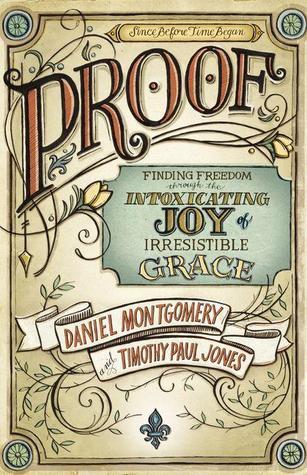
21. PROOF


PROOF: Finding Freedom Through the Intoxicating Joy of Irresistable Grace. Daniel Montgomery and Timothy Paul Jones. 2014. Zondervan. 224 pages. [Source: Bought]

First sentence: Performance — work and reward — is one of the basic structures of our lives. As a result, we grow up thinking, “I am what I am because of what I do . . . or because of what I’ve failed to do.” But what if we told you that it’s all a lie? What if we proved to you that, when you stake your identity on your performance, you’re delusional. Better yet, what if we told you a truth that can get you free from this lifelong delusion?

ETA: This is the third time I've read PROOF. I read it in 2014, 2016, and 2023. Is it as magical as Chosen by God by R.C. Sproul? Perhaps not. That one is super-super-super special to me and always will be. But I really loved this one. It was great. It was saturated in scripture.  

I loved, loved, loved, LOVED, LOVED this one. I first reviewed it in 2014. I decided to reread it again this year. I'm so glad I did.

What is it about? The gospel--the amazing, beautiful, glorious gospel.
The gospel is the good news that God’s kingdom power has entered human history through the life, death, and resurrection of Jesus Christ. When we repent and rely on his righteousness instead of our own, his kingdom power transforms us, and we become participants in the restoration of God’s world.
The three aspects of the gospel are the kingdom, the cross, and God’s grace. 1. The gospel of the kingdom is life with God under God’s rule. 2. The gospel of the cross is the life, death, and resurrection of Jesus by which God accomplishes our salvation, rescues us from his wrath, incorporates us into his people, and inaugurates his reign in the world. 3. The gospel of grace is the wonderful news that God accepts us, shares his life with us, and adopts us as heirs of his kingdom not because we have earned it or deserve it but because God chooses to give all of this freely at Christ’s expense.
It is about the doctrines of grace. Perhaps you're unfamiliar with the "doctrines of grace." Or perhaps you're too familiarwith the doctrines of grace. This is a good book in both instances. Whether this is your very first book about the "doctrines of grace" or your fiftieth.

The authors write,
Whenever we talk about PROOF, we’re referring to an acronym that summarizes five key facets of God’s amazing grace. PROOF reminds us of five different ways in which we experience the grace of God at work in our lives
P -- planned grace
Before time began, God mapped out the plan of salvation from first to last. God planned to adopt particular people as his own children; Christ offered himself as a sacrifice for these people’s sins and as a substitute who satisfied God’s righteous requirements in their place (John 10:11-18; Ephesians 1:4-12). 
R -- resurrecting grace
Everyone is born spiritually dead. Left to ourselves, we will never choose God’s way. God enables people to respond freely to his grace by giving them spiritual life through the power of Christ’s resurrection (John 5:21; Ephesians 2:1-7). 
O -- outrageous grace
God chose people to be saved on the basis of his own sovereign will. He didn’t base his choice to give us grace on anything that we did or might do (John 15:16; Ephesians 2:8-9). 
O -- overcoming grace
God chose people to be saved on the basis of his own sovereign will. He didn’t base his choice to give us grace on anything that we did or might do (John 15:16; Ephesians 2:8-9). 
F -- forever grace
God seals his people with his Holy Spirit so that they are preserved and persevere in faith until the final restoration of God’s kingdom on the earth (John 10:27-29; Ephesians 1:13-14; 4:30).
To anyone who has questions about salvation, this is the book for you. What is salvation? How can I be saved? What is God's part in my salvation? What is my part in my salvation? Is salvation forever and ever? Can I lose my salvation? Is my salvation dependent on my sanctification, on my striving to follow God's rules and commands? What exactly is grace? Is grace too good to be true? What are the conditions of receiving God's grace? Am I really supposed to share the gospel? share the gospel with everyone?!

Some of my favorite quotes:
The empty wisdom of human religion proclaims, “What goes around comes around. God helps those who help themselves. You get what you pay for” — but these are lies that lead only to bondage and despair. The gospel of grace speaks an entirely different word, a word that’s filled with paradox and mystery. By God’s grace, we get what someone else paid for. By grace, God helps those who not only can’t help themselves, they don’t even want to. By grace, what goes around stops at the foot of the cross, never to come around again.
The message of planned grace begins with the truth that God is a loving Father who chose us personally and specifically before time began. It continues with the truth that God is a loving Bridegroom who has accomplished everything necessary to win the heart of his beloved bride. God didn’t plan for Christ’s work on the cross to extend a certain distance only to discover later that his creatures have somehow thwarted his good intentions. God’s grace always goes precisely as far as God planned.
    When did God choose to love and save his people? God planned to love and save his people before the creation of the world. This is planned grace. God maps out our rescue from start to finish (Ephesians 1:4–5). The Son didn’t just make the world savable — he secured salvation for every individual who repents and believes. The value of his suffering was more than sufficient to atone for every person in the world, but God planned for his death to purchase particular people from every nation.
    Spiritual zombies don’t choose the gift of God’s grace for the same reason that prison escapees don’t show up voluntarily at police stations. It isn’t because convicted felons are incapable of locating their local law-enforcement agency. It’s because the police represent everything the convict wants to avoid. Ever since our expulsion from Eden, every human being has been a convicted corpse on the run from God’s reign. Apart from God’s single-handed gift of resurrecting grace, no human being will ever seek God because a death-defeating King who demands that we find our greatest joy in his Father’s fame is repulsive to the spiritually dead (John 3:19 – 20; Romans 3:11).
    The sovereign king of the cosmos isn’t waiting on a permission slip from humanity before he resurrects spiritual zombies — and he certainly isn’t pacing the portals of heaven, wringing his hands, hoping someone responds positively to his invitation to the celestial prom. God powerfully sends his church to proclaim the gospel in every nation. As the gospel is shared, God’s Spirit pierces the lives of particular people who are spiritually dead and exchanges their death for his life (Acts 2:37; 13:48; Colossians 2:13).
    God’s choice to save you had nothing to do with anything that you have done or will do. You did nothing to gain God’s favor, and there’s nothing you can do to keep God’s favor. All that you can do — which is really no “doing” at all — is to receive what God in Christ has already done. It’s only when we realize that nothing we did or might do formed the basis of God’s choice to save us that we truly taste the intoxicating joy of God’s irresistible grace.
    Outrageous grace isn’t a favor you can achieve by being good; it’s the gift you receive by being God’s. Outrageous grace is God’s goodness that comes looking for you when you have nothing but a middle finger flipped in the face of God to offer in return.
    The God of the Scriptures is no debonair gentleman who waves to us from the opposite side of a chasm, hoping we will find it in our hearts to respond. In Jesus Christ, God himself crossed the chasm between himself and humanity (John 1:14; 12:27). He came as a righteous shepherd who sacrifices his life to snatch his sheep from the jaws of the beast (Ezekiel 34:10; Matthew 18:12 – 14; John 10:11 – 15). He entered space and time as a sovereign lord in humble disguise, seeking to transform a broken woman into his pure and perfect bride (Ezekiel 16:1 – 14; Hosea 3:1; Ephesians 5:25 – 27). He came as a medic on an emergency mission to breathe life into sin-infected souls (Mark 2:17). Now, through the power of his Spirit and the proclamation of his gospel, this same Jesus is shattering every resistance to his reign in the lives of those he has chosen. He is planting outposts of his kingdom where love and justice grow, and he is beginning the healing of his people’s sin-infected souls. Jesus Christ came to seek and to save his people who were lost, and he isn’t asking anyone’s permission to finish this mission (Matthew 1:21; Luke 19:10). That’s the power and the beauty of overcoming grace.
    Christ’s commitment to his people does not depend on our capacity to remember, but on God’s capacity to sustain us and preserve us. It depends on a covenant that has been engraved in flesh and confirmed in blood.

    © Becky Laney of Operation Actually Read Bible

    Monday, December 16, 2019

    Book Review: Revolution

    Revolution (The Sixties Trilogy #2) Deborah Wiles. 2014. 538 pages. [Source: Library]

    First sentence: The first thing we do, me and Gillette, is make sure everybody is asleep.

    Premise/plot: Revolution is the second book in the 60s trilogy by Deborah Wiles. It is set in Greenwood, Mississippi in the summer of 1964. Sunny, our heroine, is still enthralled with another invasion—a British one—when rumors of another invasion spread through town. These invaders don’t harmonize but they do seek to spread peace and harmony. Their mission is to help black residents register to vote, to end segregation, to take a stand for equal rights. Sunny is coming of age at an interesting time in America’s history. She finds herself drawn to one of the freedom righters, Jo Ellen (a character first introduced in Countdown as Franny’s older sister). But the book isn’t all about racial tensions and strife. Her family has plenty of strife and tension. Her mother abandoned her as a baby, her father has recently remarried, she now has a stepmother and step siblings. And a new baby is on the way.

    My thoughts: I love, love, love this one. I love the integral role faith plays in this one. It isn’t a preachy, flashy kind of religion. No, it’s more like the Christian Faith is the skeleton beneath fully fleshed characters.

    I loved Sunny as a narrator. I loved getting to know her family and friends. I loved her obsession with the Beatles. That was a pleasant surprise. I myself love the Beatles (though Paul was never ever my favorite Beatle.)

    Like Countdown it’s a documentary novel. It blends pure fiction with photographs, song lyrics, quotes from primary sources, and biographical sketches of real people from the era.

    Sometimes you just need a book near you and you can’t explain why. (108)

    What can I say to a girl who really believes Paul McCartney is going to show up on her doorstep? What’s wrong with me that I don’t believe it, too? (119)

    Believe me, there are only so many times you can sing “I’ve got the joy, joy, joy, joy down in my heart” before you have no joy at all, anywhere. None. Zero. (155)

    Every choice matters. Every person is vital, and valuable, and worthy of respect. (361)

    ”You are one of the bravest people I know.” “I am?” “You are.” “But I’m afraid all the time.” “It’s okay to be afraid,” Annabelle assures me. “I’m afraid too.” “You are?” “Yes. I am. But I know something about being afraid that helps me.” “What is it?” “I know that you don’t have to be afraid by yourself. You don’t have to be alone with what scares you.”(429)

    Each of us is small, all by ourselves, but we are big, when we stick together. (495)

    © Becky Laney of Operation Actually Read Bible
    Tuesday, April 30, 2019

    Book Review: Taking God at His Word

    Taking God at His Word: Why the Bible Is Knowable, Necessary, and Enough, and What That Means for You and Me. Kevin DeYoung. 2014. Crossway. 138 pages. [Source: Review copy]

    First sentence: This book begins in a surprising place: with a love poem.

    I loved, loved, LOVED, LOVED, LOVED rereading Kevin DeYoung's Taking God At His Word. The book is about THE BOOK. (I love reading books about the Bible. I do.) How should a Christian feel about the Bible? How should a Christian treat the Bible? What should be our response, our reaction, to the WORD? What should the Bible mean to us? Yes, those questions are all closely related to one another. But there are shades of difference--in my opinion. A person can believe the Bible should have authority over one's life and yet not love the Word. A person can believe the Bible to be THE WORD OF GOD and yet be starving themselves because they are not delighting or feasting on it. There is head knowledge and heart. This book addresses a bit of both.

    The opening chapter is perhaps the most important. He begins with the SO WHAT? When I was in college, I was taught to write papers with the SO WHAT? in mind. It often comes in the concluding paragraph. A professor once said that the first draft gives you your SO WHAT in the conclusion, and in the second draft you put it where it belongs: the introduction. I love that DeYoung starts in an unexpected place--the "conclusion."

    So his first chapter is an exposition of PSALM 119. He writes,
    Psalm 119 shows us what to believe about the word of God, what to feel about the word of God, and what to do with the word of God... Psalm 119 is the explosion of praise made possible by an orthodox and evangelical doctrine of Scripture... Too often, Christians reflect on only what they should believe about the word of God. But Psalm 119 will not let us stop there. This love poem forces us to consider how we feel about the word of God. We see that the psalmist has three fundamental affections for God’s word. First, he delights in it. Second, he desires it. Third, he depends on it... The goal of this book is to get us believing what we should about the Bible, feeling what we should about the Bible, and to get us doing what we ought to do with the Bible. 
    Each of the following chapters is an exposition of Scriptural passages about the Bible. DeYoung unpacks the following verses: 2 Peter 1:16-21, Hebrews 1:1-4, Deuteronomy 30:11-14, Acts 17:1-15, 1 Corinthians 2:6-13, John 10:35-36, Matthew 5:17-19, Matthew 12:38-42, 2 Timothy 3:14-17.

    DeYoung is not asking readers to take his word for it; DeYoung is asking readers to take GOD at HIS word. There is a difference. Christian teachers can--for better or worse--give an impression that you should AGREE with them and that if you don't agree with THEM then your Christianity is lacking. That is often a misunderstanding. (Though not always.) Do YOU believe what the Bible has to say about itself?

    Quotes:
    What we believe and feel about the word of God are absolutely crucial, if for no other reason than that they should mirror what we believe and feel about Jesus. As we’ll see, Jesus believed unequivocally all that was written in the Scriptures. If we are to be his disciples, we should believe the same. Just as importantly, the New Testament teaches that Jesus is the word made flesh, which means (among other things) that all the attributes of God’s verbal revelation (truth, righteousness, power, veracity, wisdom, omniscience) will be found in the person of Christ. All that the psalmist believed and felt about the words from God is all that we should feel and believe about the Word of God incarnate. Our desire, delight, and dependence on the words of Scripture do not grow inversely to our desire, delight, and dependence on Jesus Christ. The two must always rise together. 
    This is a book unpacking what the Bible says about the Bible. My aim is to be simple, uncluttered, straightforward, and manifestly biblical. I make no pretenses about offering you anything other than a doctrine of Scripture derived from Scripture itself.
    May God give us ears, for we all need to hear the word of God more than God needs any of us to defend it.
    You cannot put more confidence in your Bible than Peter put in his. Notice three truths these verses teach us about the nature of Scripture. First, Scripture is the word of God. Second, the word of God is no less divine because it is given through human instrumentality. Third, the Bible is without error.
    To deny, disregard, edit, alter, reject, or rule out anything in God’s word is to commit the sin of unbelief.
    You can think too highly of your interpretations of Scripture, but you cannot think too highly of Scripture’s interpretation of itself. You can exaggerate your authority in handling the Scriptures, but you cannot exaggerate the Scriptures’ authority to handle you. You can use the word of God to come to wrong conclusions, but you cannot find any wrong conclusions in the word of God.
    God’s word is final; God’s word is understandable; God’s word is necessary; and God’s word is enough.
    Scripture is enough because the work of Christ is enough. They stand or fall together. The Son’s redemption and the Son’s revelation must both be sufficient. And as such, there is nothing more to be done and nothing more to be known for our salvation and for our Christian walk than what we see and know about Christ and through Christ in his Spirit’s book.
    God’s people should be testing everything against God’s word. Whether we are the ones teaching or listening, we need to have our Bibles open like the Bereans. 
    This passage [Acts 17:1-15] perfectly demonstrates what it means to affirm the authority of the Bible. When it says the Bereans were “examining the Scriptures daily to see if these things were so” (Acts 17:11), the implication is that if the Scripture said it, they would believe it. And if they couldn’t find Paul’s teaching confirmed in and consistent with the Scripture, they would reject Paul’s teaching. The written word of God was their authority. It had the last word. It was the final word, after which no other word would be necessary, and contrary to which no other word would be believed.
    If you are a Christian, by definition you ought to believe what Jesus teaches. He is the Son of God. He is our Savior and Lord. We must follow his example, obey his commands, and embrace whatever understanding of Scripture he taught and assumed. Surely this means we are wise to believe about the Scriptures whatever Jesus believed about the Scriptures.
    We are sometimes told that the final authority for us as Christians should be Christ, and not the Scriptures. It is suggested that Christ would have us accept only the portions of Scripture that comport with his life and teaching; that certain aspects of biblical history, chronology, and cosmology need not bother us because Christ would not have us be bothered by them. The idea put forward by many liberal Christians and by not a few self-proclaimed evangelicals is that we are to worship Christ and not the Scriptures; we must let Christ stand apart from Scripture and above it. “But who is this Christ, the Judge of Scripture?” Packer asks. “Not the Christ of the New Testament and of history. That Christ does not judge Scripture; He obeys it and fulfills it. By word and deed He endorses the authority of the whole of it.” Those with a high view of Scripture are often charged with idolatry for so deeply reverencing the word of God. But the accusation is laid at the wrong feet. “A Christ who permits His followers to set Him up as the Judge of Scripture, One by whom its authority must be confirmed before it becomes binding and by whose adverse sentence it is in places annulled, is a Christ of human imagination, made in the theologian’s own image, One whose attitude to Scripture is the opposite of that of the Christ of history. If the construction of such a Christ is not a breach of the second commandment, it is hard to see what is.” Jesus may have seen himself as the focal point of Scripture, but never as a judge of it. The only Jesus who stands above Scripture is the Jesus of our own invention.
    Jesus held Scripture in the highest possible esteem. He knew his Bible intimately and loved it deeply. He often spoke with the language of Scripture. He easily alluded to Scripture. And in his moments of greatest trial and weakness—like being tempted by the Devil or being killed on a cross—he quoted Scripture.
    Jesus believed in the inspiration of Scripture—all of it. He accepted the chronology, the miracles, and the authorial ascriptions as giving the straightforward facts of history. He believed in keeping the spirit of the law without ever minimizing the letter of the law. He affirmed the human authorship of Scripture while at the same time bearing witness to the ultimate divine authorship of the Scriptures. He treated the Bible as a necessary word, a sufficient word, a clear word, and the final word. It was never acceptable in his mind to contradict Scripture or stand above Scripture. He believed the Bible was all true, all edifying, all important, and all about him. He believed absolutely that the Bible was from God and was absolutely free from error. What Scripture says, God says; and what God said was recorded infallibly in Scripture.
    If the view of inspiration taught in 2 Timothy 3:16 were not already assumed, Psalm 119 would be tantamount to idolatry.
    It’s not necessarily a sign of growth to move past the faith of your childhood, and not necessarily a weakness to believe the same thing throughout your whole life. What an inestimable privilege to be acquainted from childhood with the sacred writings.
    Every book, every chapter, every line, every word—all of it is breathed out by God. Not just the obviously theological parts. Not just the memorable stuff. Not just the parts that resonate with us. All of it—history, chronology, philosophy—every truth the Bible affirms ought to be taken as God’s truth. Every word in the Bible is in there because God wanted it there. And therefore, we should listen to the Bible and stick with the Bible and submit ourselves to the teaching of the Bible because it is God’s Bible—both the sacred writings of the Old Testament, which Paul first of all had in mind, and the inspired writings for the new covenant church, which Paul understood himself to be issuing (1 Thess. 2:13) and Peter understood to be in the process of being written down (2 Pet. 3:16).
    The unity of Scripture also means we should be rid, once and for all, of this “red letter” nonsense, as if the words of Jesus are the really important verses in Scripture and carry more authority and are somehow more directly divine than other verses...All Scripture is breathed out by God, not just the parts spoken by Jesus.
    We must not seek to know the Word who is divine apart from the divine words of the Bible, and we ought not read the words of the Bible without an eye to the Word incarnate.
    We can never outgrow the Bible, because it always means to make us grow. The Bible is only impractical for the immature, and only irrelevant for the fools who believe that most everything is new under the sun.

    © Becky Laney of Operation Actually Read Bible

    Monday, April 29, 2019

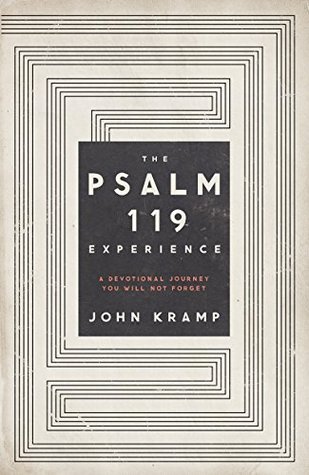
    Book Review: The Psalm 119 Experience

    The Psalm 119 Experience. John Kramp. 2014. B&H Publishing. 217 pages. [Source: Review copy]

    First sentence from the introduction: Watch out. Psalm 119 is about to sneak up and draw you into a life-changing experience.

    First sentence from chapter one: If you seek a happy life, discover the secret to a blameless life. Impossible? Can any of us stand before God innocent of wrongdoing, free of guilt and not subject to blame? No. At least not on our own. But God provided a way to the impossible.

    The Psalm 119 Experience is a twenty-two week devotional by John Kramp. Kramp set out to write twenty-two songs to aid in memorizing or experiencing Psalm 119. The songs are NOT included and must be purchased separately. Oh, the lyrics are included--but not the actual music.

    Psalm 119 has twenty-two sections. Kramp has written five devotions for each section thus making it easy for this book to be a twenty-two week devotional. Each devotion begins with a verse from Psalm 119 as a jumping off place. But the devotion rarely--if ever--stays in Psalms for better or worse. I appreciate that Kramp brings Jesus Christ into each and every devotional. Many--if not all--are open proclamations of the gospel itself. This is a good thing. How could it be anything other than good to exalt Jesus Christ? Yet this one isn't so much an experience of Psalm 119 in and of itself as an experience of the gospel.

    If you love devotional books this one is worth your time.

    Quotes:
    We gain nothing by considering sin inevitable. Why think of ourselves as victims when God has equipped us to battle sin's enticements? God gave us His Word so that we would not sin. That's the good news. God gave us an advocate for when we sin. That is even better news. The more we treasure God's Word in our hearts, the more we can resist sin. We will recognize sin's seduction early and escape quickly. When tripped up by sin, we can confess to Jesus, our advocate, immediately and experience restored fellowship without delay. (21)
    We live in a world of mystery explained by the providence of God and held by His absolute power. As we move through time and eternity, He alone is our fixed point. (115)
    Those who have gained understanding from God's Word do not simply avoid evil ways; they hate them. They recognize the damage evil inflicts on people. They know the destruction and pain. Even more, they live with the knowledge that there is an alternative. (129)

    © Becky Laney of Operation Actually Read Bible

    Monday, July 16, 2018

    Bible Review: Daily Chronological Bible

    Daily Chronological Bible: KJV Edition. Holman Bible Publishers. 2014. 1440 pages. [Source: Free giveaway]

    Today I finished reading the KJV Daily Chronological Bible. This Bible is arranged into acts and scenes. Arranged chronologically according to the judgment of the editors.

    Act I God's Plan for All People

    • Act I, Scene 1, Creation
    • Act I, Scene 2, The Fall
    • Act I, Scene 3, The Flood

    Act II God's Covenant People

    • Act II, Scene 1, The People
    • Act II, Scene 2, Deliverance
    • Act II, Scene 3, The Sinai Covenant and Law
    • Act II, Scene 4, The Land
    • Act II, Scene 5, Kings and Prophets: God Shapes a Kingdom People
    • Act II, Scene 6, God Divides the Kingdom People
    • Act II, Scene 7, Kings and Prophets: The Southern Kingdom as God's People
    • Act II, Scene 8, Exile
    • Act II, Scene 9, Return

    Act III God's New Covenant People

    • Act III, Scene 1,  Christ's Coming
    • Act III, Scene 2,  Christ's Ministry
    • Act III, Scene 3, Christ's Deliverance of His People: God's Work Through the Death, Resurrection, and Enthronement of the King
    • Act III, Scene 4, Christ's Church
    • Act III, Scene 5, Christ's Second Coming and Reign: God's Future for the Kingdom

    The Bible tells a unified story. There is a definite BIG PICTURE to the Bible, a framework for understanding how all the parts of the Bible fit together.

    This Bible encourages readers to go on a journey to understand what the Bible is saying, how it all fits together. This Bible is divided into weekly and daily readings. It is divided into fifty-two weeks. Each week has six daily readings. These are not labeled with dates and months. Just numbered. So you can begin the Bible any day of the year. And if you miss a few weeks, you can pick it back up with no shame.

    The Holman Publishers have this chronological Bible in several translations. The one I read was the King James Version.

    My only complaint is that it breaks words into syllables. Sam-u-el turned again after Saul; and Saul worshipped the LORD.

    It is also verse-by-verse and not paragraph by paragraph.


    © Becky Laney of Operation Actually Read Bible
    Thursday, April 19, 2018

    Book Review: What is the Relationship Between Church and State

    What is the Relationship Between Church and State? Crucial Questions #19. R.C. Sproul. 2014. 47 pages. [Source: Free download]

    First sentence: A few years ago, I was invited to be the keynote speaker at the inaugural prayer breakfast for the governor of Florida.

    R.C. Sproul examines an important, ever-relevant question in this booklet. The question? What is the Relationship Between Church and State? Other questions posed and answered include: what is government? where does government get its authority? what is the church? where does the church get its authority? are the purposes of the government and church the same or different? where did the phrase 'separation of church and state' originate? what did the phrase mean originally? how has the meaning changed through the centuries? what is religious freedom and why is it important? Not all questions receive equal treatment. It is a very short booklet, after all. But it is a thought-provoking one.

    I would recommend this one!

    Quotes:
    In the United States, we often hear the phrase separation of church and state, but it should be noted that this phrase does not occur in the country’s founding documents. It is not found in the Declaration of Independence, the Constitution, or the Bill of Rights. It comes from a remark made by Thomas Jefferson about the principles that he believed were implied in the founding documents of the United States. But it has now become perhaps the only remaining absolute in American culture: the absolute principle of the absolute separation of church and state. 
    Government is a structure that is endowed legally with the right to use force to compel its citizens to do certain things and not do other things.
    Saint Augustine made the observation that government is a necessary evil, for in this world among fallen human creatures, you will never find a morally perfect government.
    All governments, no matter what structure they manifest, are representative of fallen humanity because governments are made up of sinful people.
    Therefore, the first task of government is to protect people from evil and to preserve and maintain human life. Another role that government fulfills is protecting human property. Many people seek to violate other human beings by stealing, abusing, or destroying their property. A final role for government is regulating agreements, upholding contracts, and ensuring just weights and balances. God created government in order to protect humanity—but not just humanity. Government is to protect the world itself as well.
    Every single law that is passed restricts someone’s freedom. Some freedoms are good to restrict—such as the freedom to murder—and others are not. This is why we have to be exceedingly careful every time we pass a law.
    There is a fundamental obligation of the Christian to be a model of civil obedience.
    Every time I sin, I participate in the revolt against God’s perfect rule.
    It is the function of government to enact laws, and those laws are designed to promote justice. God never gives the state the right to do wrong. The state does not exercise its authority autonomously, as a law unto itself, but is subject to the ultimate government of God Himself.
    An important thing to note is that the power of the sword is not given to the church. The mission of the church does not move forward through coercion or military conflict. The emblem of Christianity is the cross.
    The church was called to pray for the state and to be supportive of the state. The state was called to guarantee the liberty of the church and protect the church from those that would seek to destroy it.
    There was to be no favoritism to any particular denomination or group of believers. This is the root of the principle of separation of church and state. 
    As Christians, we need to form our viewpoints from the Word of God, so that we gain a clear understanding of how the church is supposed to function, what its mission is, and how that mission is different from the role of government.
    The church is called to be a critic of the state when the state fails to obey its mandate under God.
    When the church complains about the abortion laws in America, the church is not asking the state to be the church. The church is asking the state to be the state. It is simply asking the state to do its God-ordained job.
    Among the longest words in the English language is antidisestablishmentarianism. However, this word is not merely a bit of trivia; it is key to understanding the relationship between church and state.
    Establishmentarianism is when a church is supported by taxes from the state and has exclusive rights over its competitors. Such a church, called an established church, enjoys the particular favor and protection of the government; historical examples include the Church of England, the Lutheran church in Germany, the Reformed church of Scotland, or the Swedish Lutheran church. Disestablishmentarians believe that establishmentarianism should be repudiated. Antidisestablishmentarianism—the double negative makes it a positive—means that you’re opposed to disestablishing a church. This view looks with favor on an established church.
    One of the unfortunate consequences of this foundational principle is the common assumption that all religions are not just tolerated but are equally true and valid.
    The law does not declare who is right and who is wrong. All it says is that those disputes should not be dealt with in the civil arena. Instead, those are religious and ecclesiastical matters and are to remain outside of the scope and the sphere of civil government.
    In today’s culture, separation of church and state has come to mean that the government rules without taking God into consideration. That is not the way this nation was founded.
    The United States was founded on the principle of both church and state being under God. But today, we hate the concept of being answerable to God. We want to have a government that is free from the moral taint of theism. That’s not the original intent of the First Amendment or of the original articles that established our nation.
    The kingdom of God is not built by an edict from an emperor or the might of an army. It is built through one means alone: the proclamation of the gospel.
    The principle of civil obedience is that we are called to be in submission to authorities ruling over us—and not only when we agree with them. Indeed, Christians are called to be model citizens. Does that mean we must always obey? Absolutely not. There are times when Christians are free to disobey the magistrate, but there are also times when we must disobey the civil magistrate. If my boss told me to cook the books so that he could be protected from the charge of embezzlement, I would have to disobey. If a governmental authority told you that you had to have an abortion, you would have to disobey because you obey a higher authority. If the authorities say we’re not allowed to distribute Bibles or preach the Word of God, we have to do it anyway because we have a mandate from Christ to disciple the nations. This is why the free exercise of religion is so important. It gives the right to act according to conscience, but unfortunately, this right is currently being eroded in the United States.
    God has established two realms on earth: the church and the state. Each one has its own sphere of authority, and neither is to infringe on the rights of the other. And as Christians, we are to show great respect and concern for them both.

    © Becky Laney of Operation Actually Read Bible

    Friday, October 20, 2017

    Book Review: Sing in the Morning, Cry at Night

    Sing in the Morning, Cry at Night. Barbara J. Taylor. 2014. 320 pages. [Source: Library]

    First sentence: Grace lay in bed, listening to Violet mill about the kitchen, but for what? Breakfast, that was it. Something to eat before heading off on the first day of school. "I'm her mother," Grace murmured. "Her mother," she repeated, pushing herself up, swinging one leg onto the floor and then the other.

    Premise/plot: If grief tears a family apart, what can bring a family together? Sing in the Morning, Cry at Night opens in September 1913 in a small mining town in Pennsylvania. Readers meet a family that is broken; it has been two months since the family's last tragedy. Daisy Morgan, just nine, died on the 4th of July--a fireworks accident. Violet, her 8 year old sister, was the only witness, and, for whatever reason the mother--and some of the busybodies--blame Violet for Daisy's death. Owen, the father, has turned to drinking; breaking his temperance pledge. Grace finds companionship in the arms of another--Grief. Grief has been her one constant friend and companion for years. Grief has seen her through many tragedies and losses. But does Grief have an agenda?! Is Grief telling her the truth?

    Readers spend time with Grace, Owen, and especially Violet. The novel covers a little under a year. One of the big "events" of the novel is the preparation and arrival of revivalist, Billy Sunday. But there are plenty of small happenings as well. One really gets a chance to know the community. Much like you do with the musical Music Man.

    Why bring up The Music Man? Perhaps because of the close-knit busybody community of churchgoers. Interspersed throughout the novel, we get a collective snapshot from their point of view--they speak as one. Almost like a chorus in a tragedy on stage.

    My thoughts: I really found this to be a quick and compelling read. I always bring home a large stack of books from the library. Some books never get a proper chance. They sit. In a pile. Until they are due back. I started this book--an impulse pick--the day I got it from the library. I read it in two days. I found it to be incredible in terms of characterization and storytelling.

    If character-driven novels make your day, this is a must read, in my opinion.

    Favorite quote: You can relive a moment again and again and again. But you can't change it. That's the tragedy of time. (78)

    © Becky Laney of Operation Actually Read Bible

    Monday, August 14, 2017

    Book Review: Godless

    Godless. (Fatherless #3) James Dobson and Kurt Bruner. 2014. 416 pages. [Source: Library]

    First sentence: Veronica's eyes flew open as she felt the rising sun warm her face. Panic forced her upright. "Where are we?" No response. Louder. "Mommy?"

    Premise/plot: Godless is the third and final book in the trilogy by James Dobson and Kurt Bruner. (The first two in the series are Fatherless and Childless. The third novel opens in 2044, so two years have passed since the first novel began.)

    What would society be like if it was truly godless? The entire series has shown a terrifying future where nothing is wrong because everything is right. It's a world in economic crisis for one thing.

    The novel asks: What happens to a society, a civilization, when there are more old people than young people? Who gets what? How are resources shared and divided? In this fictional series, the author imagines that the elderly are manipulated and urged to make the best decision for everyone: to end their lives so that their grown children and grandchildren can benefit financially. Be a blessing for your loved ones: die today! Don't weigh down your loved ones lives with your continued existence! Make one last contribution to society! Be patriotic! Do good for your country, do good for your family!

    The result is that medical care is being denied to the elderly. Children are pressuring their parents to transition--to die and leave them everything. Churches are pressuring older members to transition so that the church can have their money and thereby extend their gospel outreach. Politicians are definitely supporting the transition industry and building their campaigns around it.

    Imagine this: You're 60+, at home waiting for results from the doctor, someone shows up at your door with the results. But they just don't give you the news, they're there to sell you a solution. Your health is bad. You're being denied coverage or treatment. But there's good news in all of this: you can take control of your diagnosis. Schedule your day to die! Sign up right here, right now and we'll set up your appointment to "transition." You can transition at home even if you'd prefer.

    Or imagine this: You're 60+ and have a college-aged grandchild who wants to go to college. Your grandchild "needs" this educational opportunity if they are to succeed in life. The only thing standing in the way of their success, their future...is YOU. If you really love your grandchild, don't you want them to have the best in life even if you're not there to see it?

    Godless has many characters. Most of the characters were introduced in the first two books in the series. But this one also focuses in on one pastor and his family as they struggle to do the right thing and stand up against a church board that is pro-transition.

    My thoughts: The series has reminded me of Frank Peretti's novels. The ideas are truly terrifying. It isn't just the lack of respect for human life and dignity in regards to how the elderly are treated. (I imagine that the disabled would also be pressured to transition. If you can't work and contribute to society, go ahead and die.)

    The breakdown of the family is complete. Adults never marry, never enter monogamous relationships, never learn to love others unconditionally and sacrificially, never have children, never have need to be selfless. The novels do show the other side, however. The "breeder" class where values have not disintegrated and human life is still seen as being in the image of God.

    My favorite character was Alex, the pastor of a Colorado church. My least favorite character was Matthew. These two have several conversations throughout the book. Matthew is a tortured soul, chained to his bad decisions past and present. He comes as "Frank" seeking answers to his questions. Not that he's always open to the answers he receives from Alex. But Alex isn't his only counselor.
     
    © Becky Laney of Operation Actually Read Bible

    Monday, June 26, 2017

    Bible Review: KJV Reformation Study Bible

    Reformation Heritage Study Bible--KJV. Edited by  Joel R. Beeke, Gerald Bilkes, and Michael Barrett. 2014. Reformation Heritage Books. 2218 pages. [Source: Birthday Gift in 2014]

    First sentence: In the beginning God created the heaven and the earth.

    Premise/plot: God created the heaven and the earth, and, everything he created was very good. But then the serpent in the Garden of Eden started singing "Trust in Me" (from the Jungle Book) and everything went WRONG because Eve ate the apple. God being a good God and a merciful God provided a way to restore his creation, that way--the only way, the only truth, the only life--was revealed more clearly in the New Testament.
    In the beginning was the Word, and the Word was with God, and the Word was God.The same was in the beginning with God.All things were made by him; and without him was not any thing made that was made.In him was life; and the life was the light of men.And the light shineth in darkness; and the darkness comprehended it not.There was a man sent from God, whose name was John.The same came for a witness, to bear witness of the Light, that all men through him might believe.He was not that Light, but was sent to bear witness of that Light.That was the true Light, which lighteth every man that cometh into the world.He was in the world, and the world was made by him, and the world knew him not.He came unto his own, and his own received him not.But as many as received him, to them gave he power to become the sons of God, even to them that believe on his name:Which were born, not of blood, nor of the will of the flesh, nor of the will of man, but of God.And the Word was made flesh, and dwelt among us, (and we beheld his glory, the glory as of the only begotten of the Father,) full of grace and truth. (John 1:1-14)

    The whole Bible--both Old and New Testament--reveals who God is and who we are. It tells of who we are apart from Christ, and who we are in Christ. It speaks of a just, holy, uncompromising, never-changing God who is kind, compassionate, merciful, faithful and good. The Spirit of God enlightens and teaches us through the Word. Apart from the Spirit, there is no true knowledge of God. 

    My thoughts: I LOVE, LOVE, LOVE this Bible so much.

    Favorite quotes:

    • Truth and love are closely related to each other. What are the consequences of having truth without love? Love without truth? What does it mean to love someone “in the truth” (v. 1)? How can we improve the balance of truth and love in our relationships at home, at church, at school, and in society? KJV Reformation Bible, 2 John 1
    • The Bible is a book like no other, for it is the Word of God. Therefore, every word is faithful and true. To believe and obey the Bible is the path of blessing. It stands unique in its authority, and we must never place any human tradition or philosophy on equal standing with it, or set aside any part of it because it offends our way of thinking. How does a Christian show with his life that he has received the Bible as the Word of God? The great theme of Scripture is the Lord Jesus Christ, fully God and fully man. His grace is the only salvation for sinners. His death like a lamb for the sins of His people is the only righteousness fallen men can have before God. His resurrection and future coming are the only hope of the world. God’s Son will bring His people into happiness beyond their greatest expectations, for He will bring them into the eternal enjoyment of infinite good: the triune God. All three of the primary Christian graces—faith, hope, and love—focus upon Jesus Christ. Do you trust, hope in, and love God’s Son? If not, call out to God even now to save you. If you do know Christ and His salvation, then use each day to seek grace to grow deeper in faith, hope, and love for Christ, as you prepare for the day of the Lord. KJV Reformation Bible, Revelation 22
    • The glory that shines in all the delights of heaven is the glory of God in Christ. The Lord is the sweetness, beauty, pleasure, and treasure of His kingdom. Heaven holds nothing for those who do not love God for His own sake. Those who do not delight in the Lord and holiness would be repulsed by heaven if they could go there. Do you love Jesus Christ and His holiness? What are some signs of a true love for God that can assure believers that God is preparing them for eternity with Him? KJV Reformation Bible, Revelation 21
    • Worship and missions are intimately related. Missions aim to see God create new worshipers, while worship declares God’s worthiness of the praises of all people. Ironically, sometimes people set the two against each other: one group in the church promotes worship and neglects evangelism, while another group does the opposite. Why can we never be faithful worshipers without missions? Why must missions be grounded in worship? KJV Reformation Bible, Revelation 15
    • The Bible is a bittersweet book for believers. On the one hand, its righteous laws and trustworthy promises are sweeter than honey to those who receive them. On the other hand, it calls us into the bitterness of loneliness and persecution in the world. How are you experiencing the sweetness of the Word in your life? Its bitterness? KJV Reformation, Revelation 10
    • The conflict between the church and the world boils down to this: “Who or what will you worship?” This is the great question of Revelation. What does this chapter teach us about what it means to worship God, and what motivates the worship of God? KJV Reformation, Revelation 4
    • The Lord Jesus is stunningly glorious. John knew Jesus and talked with Him after His resurrection, but even a symbolic vision of Christ’s glory put John on the ground. What about Christ fills you with awe? What about Christ comforts you? KJV Reformation Bible, Revelation 1
    • It is not a kindness in our preaching to the unconverted, to keep from them the fearful reality of hell, with its “flaming fire” (v. 8) and its “everlasting destruction” (v. 9). Pray for preachers that they would boldly preach both law and gospel, both hell and heaven. KJV Reformation Bible, 2 Thessalonians 1
    • Let us never assume that it is worthless to speak God’s Word to a group of sinners, no matter what their reputation. They may put us to shame with how they respond. Where are you tempted to think that it is not worth sharing God’s Word? KJV Reformation Bible, 2 Chronicles 28
    • Treasure the Word of God in the fear of God. One man speaking God’s truth is worth more than 400 men telling us what we want to hear. Thank God for faithful ministers who refuse to speak anything except God’s Word. The Word of the Lord proves true because it is backed by the providence of God. When God threatens death on an unrepentant sinner, be sure it will come, even if by a random shot by an archer. How then should we respond when God’s Word says hard things against us and our sin? KJV Reformation Bible, 2 Chronicles 18
    • We have all descended from one man: Adam. The existence of Adam was as much history as the existence of David. In Adam, we were all made in God’s image and likeness. God’s purpose for His people therefore remains to fill the earth with His living image. In Adam, we all sinned and have fallen into spiritual corruption and enduring misery. We all share the same fallen nature as the Canaanites. We all die and face judgment, and human life is so transient that from God’s perspective all the generations from Adam to Israel fit on a single page of history. God’s people consequently must be redeemed by the Lord’s grace if they will ever achieve their high calling and eternal life. Mankind needs a new Adam. How has God met that need in Christ? KJV Reformation Bible, 1 Chronicles 1
    • The opening statement of Nah. 2:13 is fearful: “I am against thee, saith the Lord.” For God to be the enemy spells doom and damnation. But this is the state of every individual outside of Christ. To be outside of Christ is to be under condemnation and subject to God’s severe wrath. To be in Christ changes everything. The believer is united to Christ and enjoys security and peace. The consequence is that God is now for us instead of against us. And the consequence of that is, “If God be for us, who can be against us?” (Rom. 8:31). KJV Reformation Bible, Nahum 2

    The strengths of the KJV Reformation Bible

    • King James Version (I happen to love the KJV)
    • Black Letter, NOT red letter (I think I squealed when I saw it was black letter!!!)
    • Has thorough book introductions for all 66 books of the Bible
    • Has introductions to different sections of Scripture (introduction to the Pentateuch, introduction to the historical books, introduction to the poetic and wisdom books, introduction to the prophetic books, introduction to the gospels and Acts, introduction to the epistles)
    • Has thousands of study notes; some notes are just clarifying the vocabulary of the King James Version; others are genuine study notes. All the notes are from the Reformed theological position. 
    • Includes within the notes, "Thoughts for Personal/Family Worship" for each and every chapter of the Bible. 
    • Has 50+ in-text articles covering seven key doctrines (the doctrine of God, the doctrine of creation, the doctrine of sin, the doctrine of Christ, the doctrine of salvation, the doctrine of the church, and the doctrine of last things). Some of these in-text articles are excerpts from Puritans.
    • Double column
    • Has a daily Bible Reading Plan (M'Cheyne's Reading Plan)
    • Has an extensive study helps section at the back of the Bible (when I say extensive, I mean extensive*)
    • Has a dozen color maps
    • Has a concordance
    *Here's a good idea of what the study helps section offers readers:

    How To Live As A Christian
    • Coming to Christ
    • United with Christ
    • Experiencing Justification and Adoption
    • Growing in Sanctification
    • Assured and Persevering
    • Reading the Scriptures
    • Why and How We Pray
    • Worship and the Means of Grace
    • Fellowship with Believers
    • How We Regard Ourselves
    • Love to God
    • The Fear of God
    • Living by the Ten Commandments
    • Godly Contentment
    • Self-Denial
    • Humility
    • How We Kill Pride
    • Coping with Criticism
    • Enduring Affliction
    • Spiritual Desertion
    • Fleeing Worldliness
    • Fighting Against Backsliding
    • Family Worship
    • Being A Christ-Like Husband
    • Being a Godly Wife
    • Showing Hospitality
    • Raising Children in the Lord
    • Being a Christian Grandparent
    • Honoring Your Parents
    • Serving God at Work
    • Using Leisure Time Well
    • Witnessing for Christ
    • Defending Our Faith
    • Facing Sickness and Death
    • Living Positively
    • Living for God's Glory
    Twenty Centuries of Church History
    • First Century: Apostolic Foundations
    • Second Century: The Church of Martyrs and Confessors
    • Third Century: Persecution and Heresy; Origen and Tertullian
    • Fourth Century: Beginnings of the Christian Empire
    • Fifth Century: City of God and City of Man
    • Sixth Century: Justinian, Benedict, and the Conversion of the Scots
    • Seventh Century: Gregory the Great and the Rise of Islam
    • Eighth Century: The Iconoclastic Controversy
    • Ninth Century: Struggle for Power in the Church; Ratramnus and Gottschalk
    • Tenth Century: "The Dark Ages"
    • Eleventh Century: The Great Schism; Anselm of Canterbury
    • Twelfth Century: The Crusades, Abelard, Lombard, and the Waldenses
    • Thirteenth Century: Francis of Assisi and Thomas Aquinas
    • Fourteenth Century: The Church's Babylonian Captivity and John Wycliffe
    • Fifteenth Century: The Renaissance, Huss, Savonarola, and Groote
    • Sixteenth Century: Luther, Calvin, and the Reformation
    • Seventeenth Century: Reforming the Church in England
    • Eighteenth Century: The Great Awakening
    • Nineteenth Century: Beginnings of Modern Theology and Kingdom Builders
    • Twentieth Century: Age of Paradoxes
    Creeds and Confessions
    • Apostles' Creed
    • Nicene Creed
    • Athanasian Creed
    • Belgic Confession
    • Heidelberg Catechism
    • Canons of Dort
    • Westminster Confession
    • Westminster Shorter Catechism
    • Westminster Larger Catechism

    The weaknesses of the KJV Reformation Study Bible

    • Overall the text size is small. The text of the Bible itself is manageable. But the notes are definitely on the too-small-for-comfort size. But the notes were so good, I deemed it worth the squint.
    • The layout of the Bible is verse, verse, verse. It is not in paragraph format.
    • There are no subject headings in the text of the Bible. There are subject headings in the notes. So if you're looking for something specific, look in the notes of the chapter you think it might be in. Or else check out the book outline in the introduction of the book. 


    © Becky Laney of Operation Actually Read Bible

    Friday, October 14, 2016

    Book Review: Show Them Jesus

    Show Them Jesus: Teaching the Gospel to Kids. 2014. New Growth Press. 224 pages. [Source: Book I Bought]

    If you teach Sunday School, Show Them Jesus: Teaching the Gospel to Kids comes close to being a must-read. It is one of those breathe-the-gospel-in and breathe-the-gospel out kinda books. The premise is that teachers (and parents) should use every opportunity--both formal and informal "lessons"--to point their kids to the gospel message of Jesus Christ. But not just a fuzzy, vague gospel. He wants kids to fall in love with Jesus. He wants Jesus to be their 'one thing.' their one great desire. He wants to teach--wants others to teach--in such a way that kids know that Jesus is really, truly worthy of their worship. In other words, a BIG, BIG, BIG Jesus that will grow with them long past the days of flannel boards and talking vegetables.

    The chapters are very practical and rich in examples. He doesn't just share what he's done right, he shares a lot of what he's done wrong. Being a teacher doesn't make him right, doesn't make him infallible, doesn't make him better. Neither would being a pastor. All of us--one and all, no matter our age or occupation--are sinners saved by grace. There is a realness to this one about using everyday moments to show the gospel--to "show Jesus" to those in our lives.

    He urges us to change the way we approach "teaching" the Bible to others. Perhaps focusing less on what is easy and natural.
    Don’t: Look for a moral lesson about a human character. Instead: Look for the worth and work of the main character, God.
    We’ve been dispensing good advice instead of the good news. Eventually, kids will tire of our advice, no matter how good it might be. Many will leave the church. Others will live decent, churchy lives but without any fire for Christ. We’ll wonder why they’ve rejected the good news, because we assumed they were well grounded in it. In fact, they never were. Although we told stories of Jesus and his free grace, we watered it down with self-effort—and that’s what they heard.
    The gospel goes against our nature. It just does. Even though we know grace, grace, all by grace, always by grace, through grace, with grace, much grace. It doesn't take but a few glances away from Jesus and we've allowed some self-effort (do better, try harder, do more, give it all you got) to creep back in.

    Favorite quotes:
    The good news is the Bible’s drumbeat. To ignore it at any point is to misplay the theme song.
    No how-to-live lesson can wake the spiritually dead.
    Any kid could be the one who needs to be saved. Much of the time, we just don’t know.
    None of us learns to love anyone—including God—by having someone tell us to love them. You love people because you find them beautiful and lovable, and because they love you. The good thing is that God is far, far more beautiful and love-worthy than anything or anyone else, and he loves us far, far more than anyone else ever could.
    The greater error is to teach from the Bible and fail to point out Jesus at all.
    We shouldn’t build self-esteem. We should build Christ-esteem. We must give kids the best kind of encouragement of all—the kind that comes from knowing that Jesus is in you and for you.

    © Becky Laney of Operation Actually Read Bible

    Friday, September 30, 2016

    Book Review: 52 Little Lessons from Les Miserables

    52 Little Lessons from Les Miserables. Bob Welch. 2014. Thomas Nelson. 224 pages. [Source: Bought]

    Les Miserables by Victor Hugo is one of my favorite books. It is one of my favorite books to reread. I had intended to wait until I reread this one before reading Bob Welch's 52 Little Lessons from Les Miserables. But I couldn't wait. I gave into temptation. (For me, I don't think it mattered. I found myself knowing--remembering--all the characters and plot twists.)

    52 Little Lessons from Les Miserables would be a good devotional choice for fans of the novel or even fans of the musical. The entries are a good length--not too long, not too short.

    Each chapter shares one lesson. Lessons include:
    • Religion isn't the answer
    • Political opinions are unworthy idols
    • Love means letting go
    • We need to see people as God sees people
    • Goodness requires no audience
    I would definitely recommend this one. I liked it.

    Favorite quotes:
    Being poor in spirit is the deepest form of repentance because it acknowledges our desperate need for God.
    Nothing lifts Jesus’ message of hope more than those who live it out in the lives of others; nothing disparages it more than those who don’t.
    To believe in one-size-fits-all thinking is to set yourself up to be a victim of the same assumption, should others do likewise about a group of which you’re part.
    TO READ HUGO’S DESCRIPTION OF JEAN VALJEAN CARRYING Marius through the Paris sewer system is to be reminded of love at its grittiest, grimiest, gut level. Can you think of anything more repulsive than carrying what amounts to a corpse through streams of human waste, sometimes up to your chin, while rats scamper about?

    © Becky Laney of Operation Actually Read Bible

    Wednesday, September 14, 2016

    Book Review: Voice of a Prophet

    Voice of a Prophet. A.W. Tozer. 2014. Regal. 208 pages. [Source: Bought]

    I definitely enjoyed reading A.W. Tozer's Voice of a Prophet. Even when I found myself disagreeing at times with Tozer, I was thoroughly engaged. (Chances are good there will be a round of True or False with A.W. Tozer coming soon.)

    So what is this book about? Well, Tozer has words for the church and about the church. Prophets spoke God's message--not their own--to God's people. It was a very rare case indeed when the message was well-received and popular. People do have a tendency--no matter the century--to want to hear what they want, to hear what will flatter them most and challenge them least. Tozer is asking where are the men who speak for God today? Where are the men who will speak the truth boldly to this generation? He claims that instead of prophets, today the church is filled with 'sons of prophets.' He writes, "To them it is important to interpret the message in such a way as to fit present circumstances and culture. They do not want to do anything that would cause any harm or embarrassment to the culture around them." And, "The thing I cannot understand or accept is the entertainment aspect of today’s sons of the prophets. For some reason, they go to Hollywood to get their authority these days. In all of this, the sons of the prophets are careful to leave out any offensive parts. They are very selective about the truth they present. What they present is true, but what they leave out is devastating." He asserts that we have more false prophets than prophets today.

    Tozer examines the lives and messages of biblical prophets: Isaiah, Jacob, Abraham, Elijah, Elisha, etc. He looks closely at the Bible, at how God used 'ordinary' people to do extraordinary things.

    Tozer's tone is bold and zealous. I'm not sure Tozer knew another way to convey his message!!! It is his zeal for the Lord that I appreciate most. It is his love for God, his love for the Word of God, his uncompromising tell-it-like-it-is approach that makes him timeless.

    Favorite quotes:
    When the church turns her back on the past, she has no sense of her future. She is like a ship without a rudder, floundering in a vast sea of uncertainty.
    It is my humble opinion that when a person loses sight of the origins of the Church, it no longer is the Church. Therefore, the question is, what is it? Have we come to a stage in this generation that the so-called church is promoting everything and anything that will add to its numbers?
    Heresy is presenting truth but conveniently leaving out some of the truth.
    When we sensationalize the gospel message, we out of necessity must take it out of context. There was nothing sensational about dying on the cross. To try to sensationalize this is to miss the whole focus of the crucifixion. To turn the crucifixion into entertainment is about as blasphemous as you can get.
    To take the character of God and twist it in such a way as to make God out to be someone He is not must be condemned for what it is. To redefine God in terms that help someone’s personal agenda can only be called blasphemous.
    The false prophet would tell you that if you are a Christian you should not experience any bad times. Everything should go wonderfully for you. You should prosper and be successful in everything you touch your hand to. That sounds fine, but it has no root in the Word of God. What it does do is take the focus off what God has for us.
    A wise prophet gives his message from God and then gets out of the way. No prophet hangs around for the accolades of the people, because they are not coming. A prophet’s job is done when he has delivered God’s message.
    We have tried to make God in our image, and because we have made Him in our image, we think we can explain everything He is supposed to do. If you can explain everything about God, it really isn’t God.
    I charge that in the modern evangelical church we are not consciously aware of a Presence. We are not consciously aware of God. We do not hear God’s voice; we hear only a recording of His voice. We do not see God’s face; we see only a painting of His face. We hear not the sound of His voice; we hear but an echo of that sound. We are always once removed from God.
    When we stop looking at a picture of God and begin looking at God; when we stop hearing the echo and hear God’s voice itself; when instead of having God in history we have Him in experience, we will begin to know what Abram knew when he fell on his face before God.
    We are to become the incarnated Word, walking around giving flesh to the doctrines we believe.
    It is not the presence of others that cures loneliness; it is the presence of God.
    The Bible was given to be a path leading us to God; and when the Bible has led us to God, and we have experienced God in the crisis of encounter, the Bible has done its work. It is not enough that you should memorize Scripture.
    The one essential thing we need to remember is that the glory of God is our chief objective in life, not the winning of souls. The winning of souls always comes second to the glory of God. But God, being who He is and the kind and loving God that He is, has so arranged it that the more He is glorified, the more people are saved. So, it works better to glorify God first.
    © Becky Laney of Operation Actually Read Bible

    Saturday, August 27, 2016

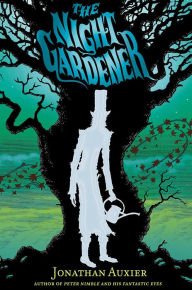
    Book Review: The Night Gardener

    The Night Gardener. Jonathan Auxier. 2014. Abrams. 350 pages. [Source: Bought]

    First sentence: The calendar said early March, but the smell in the air said late October. A crisp sun shone over Cellar Hollow, melting the final bits of ice from the bare trees. Steam rose from the soil like a phantom, carrying with it a whisper of autumn smoke that had been lying dormant in the frosty underground.

    Premise/plot: Molly and Kip are Irish orphans desperate for a new start. (Kip doesn't remember their parents death, and Molly is less than honest about why their parents aren't around.) They've been hired on as servants at a rundown, creepy estate. (The book is set in the Victorian era, by the way). The two soon understand why everyone warned them away from the job. There's something very, very wrong about the house, the family, and THE TREE. (It isn't too long after their arrival that Kip sees a mystery man wearing a top hat entering the house at the dead of night. And Molly, well, she sees his muddy footprints all throughout the house, and, even discovers his blown-away hat.) But desperate for work AND coming to love the little girl, Penny, she's reluctant to leave with no other place to go. And then she pieces together enough clues as to why the family stays…and their reason soon becomes her own…

    My thoughts: I love this one. That would be a big understatement. I love, love, love, LOVE this one. It was published in 2014, I've already read it FOUR TIMES. 

    I love the writing style, the atmospheric setting, the characterization, the symbolism, the layers of meaning. I notice something new every time I read it. It's such a wonderful, amazing book. One that every Christian should read!!!

    Now is it officially a Christian book? No. Not really. Not at all. I'm sure there are plenty of readers who never "see" biblical truth in the pages of this middle grade fantasy. But I'm convinced it is there all the same. 

    © Becky Laney of Operation Actually Read Bible