Tuesday, January 7, 2014

My Year with Spurgeon #1

The Death of The Christian
Charles Spurgeon
1855
Thou shall come to thy grave in a full age, like as a shock of corn cometh in his season
Job 5:26
A Christian has nothing to lose by death. You say he has to lose his friends. I am not so sure of that. Many of you have may more friends in heaven than on earth; some Christians have more dearly beloved ones above than below. ~ Charles Spurgeon, The Death of The Christian
A “full age” is whenever God likes to take his children home. ~ Charles Spurgeon, The Death of The Christian
There are two mercies to a Christian. The first is that he will never die too soon; and the second, that he will never die too late. ~ Charles Spurgeon, The Death of The Christian
I think the most honourable and glorious thing we shall ever behold, next to Christ’s entrance into heaven, and his glory there, is the entrance of one of God’s people into heaven. I can suppose it is made a holiday whenever a saint enters, and that is continually, so that they keep perpetual holiday. ~ Charles Spurgeon, The Death of the Christian
Oh! methinks there is a shout that cometh from heaven whenever a Christian enters it, louder than the noise of many waters. ~ Charles Spurgeon, The Death of the Christian

© Becky Laney of Operation Actually Read Bible

Monday, January 6, 2014

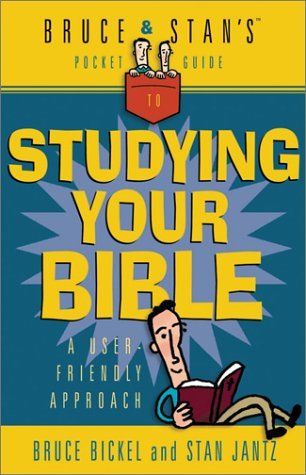
Book Review: Studying Your Bible

Bruce and Stan's Pocket Guide To Studying Your Bible: A User-Friendly Approach. Bruce Bickel and Stan Jantz. 2001. Harvest House. 112 pages. [Source: Book I Bought]

A note from the authors:
Millions of Americans turn to one literary source for guidance. Some do it daily; others read it only once a week (often on Sundays). To the novice reader, this literary work may seem complicated and intimidating--with references that range from historical to contemporary, spiritual to practical, and serious to comedic. But the diligent reader will be rewarded…
Of course, we are talking about the weekly TV Guide. But you knew that. People are much more anxious to read about the plots and schedules of their favorite television shows than to read the Bible. 
It's short. It's basic. It's reader-friendly. The approach is super casual. It was written in 2001, so some of the social references are a bit dated by now, but, it is not in any way intimidating.

The book is divided into four chapters: "Why Read the Bible When You Can Watch A Video Instead?," "So Many Bibles! Which One Is Right for You?," "So Many Verses! Where Do You Begin?," and "How To Make Sense Out of What You Read."

The first chapter talks about the Bible, about why it is important for every single believer to read the Bible for themselves, the benefits of Bible reading, etc. The second chapter focuses on the tricky subject of translation. The third chapter focuses on the story of the Bible, of finding the big picture, of making connections between the Old Testament and the New Testament, of weaving the 66 books into a whole book. The fourth chapter focuses on studying the Bible, methods of interpretation, emphasizing the need to dig deep and reach the objective truth.

It works as an introduction to those that have never acquired the discipline of reading or studying the Bible.

© Becky Laney of Operation Actually Read Bible

Sunday, January 5, 2014

Read With Me: Genesis, Week 2

Do you have reading plans for the month of January? Planning to start the year with Genesis, the first book of the Bible? Hoping the new year is the year that Bible reading will become a habit that sticks around the whole year through? I'd love to have you join me in reading Genesis in January. You may follow whatever plan you like. I have divided the book up into weekly portions, but, that doesn't mean you have to follow those readings exactly.

It's not too late to join me in reading Genesis in January! The first week covered just five chapters, you can easily make those chapters up!

This week's chapters: Genesis 6 - 17

From How To Read The Bible Through the Jesus Lens, A Guide to Christ-Focused Reading of Scripture by Michael Williams
The Bible begins with a book that takes us all the way from the murky recesses of the distant past to a populated world whose future revolves around the fate of one family group. How are we supposed to get our minds around all this information? Why did God bother to communicate these details to us? What are we supposed to take away from all that that has anything to do with our lives today? 
Theme of the Book: God separates out one through whom he would bless all nations.
From the beginning of creation in the opening chapters through the millennia of conflict and struggle after the fall, God's activity in Genesis can be summarized by the word separating. God separates:
  • light from darkness (Genesis 1:4)
  • the waters in the heavens from the waters on the earth (Genesis 1:6)
  • dry ground from seas (Genesis 1:9-10)
  • animate life in the sea and on land from inanimate vegetable life (Genesis 1:11-12, 20-25)
  • human beings from animals (Genesis 1:26-28)
  • the line of Seth from and Adam and Eve's other children (Genesis 5:3-32)
  • the line of Noah from other people (Genesis 6:9-14)
  • the line of Noah's son Shem from Noah's other children (Genesis 9:25-27)
  • the line of Abraham from all other people (Genesis 12:1-3)
Through accounts of human failures, wars, family intrigues, deceptions, international slave trade, famines, and miraculous births, Genesis presents to us God's relentless and gracious separation and preservation of the human line he had chosen to bring his salvation to the world. 
Jesus is the one to whom all God's separating was always meant to lead, and Jesus is separate from all others in his ability to bring the promised divine blessing to the nations (Acts 4:12). The ultimate focus of all God's redemptive activity is Jesus Christ. 
As Christ's ambassadors, we have been "separated out" by God not just to receive the blessing of reconciliation with God and the life that flows from that divine, saving act, but also to pass on that blessing to others by making the good news of God's salvation in Jesus Christ clear to them with every aspect of our lives. 
© Becky Laney of Operation Actually Read Bible

Week in Review: December 29 - January 4


NIV MacArthur Study Bible

  • Exodus
  • Leviticus
  • Hebrews


Chronological Life Application, KJV

  • Genesis 37-50
  • Job 
  • Exodus 1-18


NRSV Daily Bible

  • Genesis 10-20


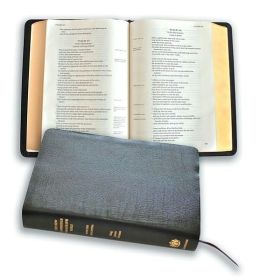
KJV New Cambridge Paragraph, David Norton, ed.

  • 1 Samuel 16-31
  • Nehemiah
  • 1 Thessalonians
  • 2 Thessalonians


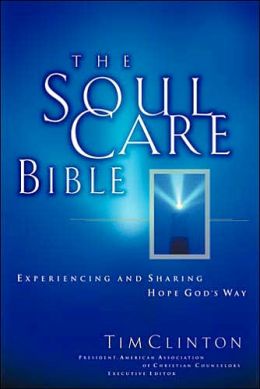
NKJV Soul Care Bible

  • Psalms 1-10
  • John
  • 1 John
  • 2 John
  • 3 John
  • Jude

© Becky Laney of Operation Actually Read Bible

Saturday, January 4, 2014

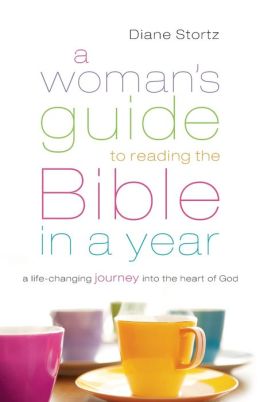
Book Review: A Woman's Guide to Reading the Bible In A Year

Woman's Guide to Reading the Bible In A Year. Diane Stortz. 2013. Bethany House. 144 pages. [Source: Book I Bought]

For women who want to come together and form a group with other similarly-goal-oriented women to read the Bible in a year, this book has something to offer. It offers a few tips and guidelines; it offers a handful of testimonies and I've-been-there stories; it offers a place to record your journey week by week if (and only if) you choose to record your answers to the questions; it also provides a plan: each week has its assigned chapters.
Develop an atmosphere where all questions are safe and no one has to have all the answers. Welcome questions and struggles. Learn from one another. Make it always OK to say “What do you think?” or “I don’t know.” This is especially important if group members come from a variety of backgrounds. Occasionally someone in the group will want to talk about a special concern. Ask, “What does this passage teach us about God’s character?” to refocus the group if the discussion seems to be veering too far from the text.
Sample of the plan:

Week one:
__ Genesis 1-3
__ Genesis 4-6
__ Genesis 7-9
__ Genesis 10-12
__ Genesis 13-15
__ Genesis 16-18
__ Genesis 19-21

Week three:
__ Genesis 43-45
__ Genesis 46-50
__ Matthew 1-3
__ Matthew 4-6
__ Matthew 7-9
__ Matthew 10-12
__ Matthew 13-15

Weekly questions:
How did you experience God’s heart in this week’s reading?
Something you learned or an insight you gained:
A verse or passage you’d like to remember:
For individuals who want to read the Bible on their own, it has less to offer. The inspirational testimonies are fine, I suppose, and the reading plan is a reading plan. But reading plans are easy to come by. Reading plans can be found in many Bibles. Reading plans can be found in many, many places online.

The weekly summaries and weekly discussion questions--which happen to be the same questions week after week after week after week--are not that extraordinary. The study-light questions make sense in a group where you're trying to get anybody and everybody to talk and feel comfortable talking, when you're just trying to stay relatively on task and avoid awkward silence. But when you're on your own, I'm not sure what the point would be. The questions aren't specific enough, or deep enough to be beneficial. And the chapter summaries are fine for an overview, but, if you've actually read the Bible and kept up, they're also superfluous.

I believe the intended focus of the book is on reading the Bible, not studying the Bible. The focus more on devotional reading and what does this mean to me, than perhaps on studying what the Bible means objectively and digging deep. The group atmospheres encourages lively, safe discussion and not teaching and instruction. It embraces the "I don't know" and "what do you think?" more than finding real answers to real questions.

I can't help but think on these passages by John MacArthur:
Authentic Christianity starts with the premise that there is a source of truth outside of us. Specifically, God's Word is truth. (Psalm 119:151; John 17:17). It is objectively true--meaning it is true whether it speaks subjectively to any given individual or not; it is true regardless of how anyone feels about it; it is true for everyone universally and without exception; it is absolutely true. ~ John MacArthur, Why One Way, 19
It's not as if we can make the words mean anything we want them to mean, so that whatever connotation we impose on the words becomes the Word of God. Only the true interpretation of the text is the authentic Word of God, and any other interpretation is simply not what God is saying. ~ John MacArthur, Why One Way, 34
Truth is never determined by looking at God's Word and asking "What does this mean to me?" Whenever I hear someone talk like that, I'm inclined to ask, "What did the Bible mean before you existed? What does God mean by what He says?" Those are the proper questions to be asking. Truth and meaning are not determined by our intuition, experience, or desire. The true meaning of Scripture--or anything else for that matter--has already been determined and fixed by the mind of God. The task of an interpreter is to discern that meaning. And proper interpretation must precede application. The meaning of God's Word is neither as obscure nor as difficult to grasp as people today often pretend. Admittedly, some things in the Bible are hard to understand, but its central, essential truth is plain enough that no one need be confused by it. ~ John MacArthur, The Truth War, xx, xxi
© Becky Laney of Operation Actually Read Bible

Thursday, January 2, 2014

Book Review: The Captive Maiden

The Captive Maiden. Melanie Dickerson. 2013. Zondervan. 304 pages.

The Captive Maiden reminded me of two movies that I have loved in the past: Ever After and A Knight's Tale. It is a Christian retelling of Cinderella. Like Ever After, The Captive Maiden is free from magic. There isn't a fairy godmother, and there are certainly no singing mice! We first meet Gisela, our heroine, at the age of eight. Readers learn that her stepmother is cruel and her stepsisters follow their mother's example. We learn that Gisela loves horses just as her father did. We learn that Gisela sometimes slips into daydreaming about the day she met the Duke's son, Valten. This was all the prologue. The heart of the novel, as you may imagine, is set nine years later. Gisela is still crazy about horses, still doing plenty of manual labor, still putting up with her stepmother. In the opening chapters, Gisela catches a glimpse of Valten who has just returned. (It probably wouldn't surprise you that he's dressed as a commoner and not a noble lord.) They share a brief but meaningful conversation, a conversation centered around horses. There is definitely a spark between the two. Just one reason why Gisela is so determined to defy her stepmother and attend the three-day tournament anyway. (Her stepmother has forbidden her to go. She goes. In her mother's dress. With the help of a friendly neighbor.) She's chosen to sit in the gallery along with other beautiful, young, eligible maidens. She is playing dress up, in a way, since she's not really been in society before. But this taste of a better life is incredible. She gets to see all the action up close.

There is plenty of action and drama. And romance. Let's not forget the romance in this historical novel! I like the fourteenth century setting. I like the world-building. It was interesting, at least in small doses, to read of tournaments and jousting and such. I really like the characterization, particularly of HIS family. Gisela gets the opportunity to meet his family and spend time with his sisters. This was probably one of my favorite bits of the novel. I loved seeing the quiet scenes, the conversations, what happens when lives aren't at risk! (Her family was stereotypical and just what you'd expect in any Cinderella tale.)

The Captive Maiden is a companion novel to others in the series, especially The Fairest Beauty, a retelling of Snow White.

© Becky Laney of Operation Actually Read Bible

Wednesday, January 1, 2014

Quotes for A New Year

 
People are starving for the greatness of God. But most of them would not give this diagnosis of their troubled lives. The majesty of God is an unknown cure. ~ John Piper
It is a sweet thought that Jesus Christ, did not come forth without his Father’s permission, authority, consent, and assistance. He was sent of the Father, that he might be the Saviour of men. We are, alas! too apt to forget, that while there are distinctions as to the persons in the Trinity, there are no distinctions of honor; and we do very frequently ascribe the honor of our salvation, or at least the depths of its mercy and the extremity of its benevolence, more to Jesus Christ than we do to the Father. This is a very great mistake. What if Jesus came? Did not his Father send him? If he was made a child did not the Holy Ghost beget him? If he spake wondrously, did not his Father pour grace into his lips, that he might be an able minister of the new covenant? If his Father did forsake him when he drank the bitter cup of gall, did he not love him still? and did he not, by-and by, after three days, raise him from the dead, and at last receive him up on high, leading captivity captive? Ah! beloved, he who knoweth the Father, and the Son, and the Holy Ghost as he should know them, never setteth one before another; he is not more thankful to one than the other; he sees them at Bethlehem, at Gethsemane, and on Calvary, all equally engaged in the work of salvation. ~ Charles Spurgeon
© Becky Laney of Operation Actually Read Bible