Showing posts with label 2001. Show all posts

Monday, January 18, 2021

3. Foxe's Book of Martyrs


Foxe's Book of Martyrs. John Foxe. 1563/2001. 416 pages. [Source: Bought]

First sentence: The history of the church may almost be said to be a history of the trials and sufferings of its members, as experienced at the hands of wicked men.

I am thankful I read this one. I've owned it for years--if not a decade. It wasn't an easy read. Perhaps I tried to read it like it was any other book? Perhaps I gave up on trying to really absorb its contents halfway through? 

The book opens with the disciples and first generation believers. It closes in the nineteenth century. Obviously the martyrs of the later centuries have been added on or tacked onto this one. 

It has a wide scope--all continents perhaps with the exception of Antarctica. Some martyrs remain just a number--one among however many were murdered on any given day. Some have pages--if not whole chapters--written about them. It includes men and women of all ages and backgrounds. 

Regardless of how much or how little is said within this book, God knows ALL, and their lives mattered then and now.

Some chapters were more absorbing/fascinating than others. In other words, sometimes my attention drifted away, far, far away. And sometimes it didn't. Sometimes I stayed on task. I would like to reread this one at some point to see if it was a mood thing for me. If I'd find it all equally attention-worthy if I gave it another chance. 

© Becky Laney of Operation Actually Read Bible

Friday, February 8, 2019

Book Review: Ashamed of the Gospel

Ashamed of the Gospel: When the Church Becomes Like the World. John F. MacArthur Jr. 1993/2001. Crossway. 266 pages. [Source: Bought]

First sentence: If you're familiar with the life of Charles Haddon Spurgeon, you have probably heard of "the Down-Grade Controversy." Spurgeon spent the final four years of his life at war against the trends of early modernism, which he rightly saw as a threat to biblical Christianity.

Ashamed of the Gospel was first published in 1993. Is it still a relevant read for Christians today?! My answer is yes--a thousand times yes. Though the key players may have changed and shifted throughout the decades since this was first published, the church is still threatened by the ideas, philosophies, worldviews, or tactics of the enemy.

In the preface, MacArthur defines a few key terms for readers giving a hint at what the book is about.
Pragmatism is the notion that meaning or worth is determined by practical consequences. It is closely akin to utilitarianism, the belief that usefulness is the standard of what is good. [Pragmatism] is inherently relativistic, rejecting the notion of absolute right and wrong, good and evil, truth and error. (xii)
Pragmatism as a guiding philosophy of ministry is inherently flawed. Pragmatism as a test of truth is nothing short of satanic. Spiritual and biblical truth is not determined by testing what "works" and what doesn't. (xiii)
Worldliness is the sin of allowing one's appetites, ambitions, or conduct to be fashioned according to earthly values. (xvii)
Why is the book titled ASHAMED OF THE GOSPEL? Because, MacArthur writes, "Unfortunately, 'ashamed of the gospel' seems more and more apt as a description of some of the most visible and influential churches of our age." (xix) He later writes, "Why do you suppose Paul wrote, 'I am not ashamed of the gospel' (Rom 1:16)? Surely it is because so many Christians are ashamed of the very message we are commanded to proclaim." (31)

MacArthur sees a parallel between the current threats facing the church today and the Down-Grade Controversy of the nineteenth century. (Though he does point out that each and every generation or age of the church has faced challenges and threats. The enemy has never lost sight of his goal though his specific tactics may alter here and there and get a new makeover now and then.)
Biblical truth is like the pinnacle of a steep, slippery mountain, Spurgeon suggested. One step away, and you find yourself on the down-grade. (21). 
"False doctrine and worldliness"--the same two influences Spurgeon attacked--always go hand in hand, with worldliness leading the way. (23)
What should guide a church ministry? MacArthur argues that THE WORD OF GOD is the only solid foundation for guiding or establishing a ministry. The Word of God is authoritative. Its authority isn't one of many but the one and only. MacArthur sees this principle--this doctrine--being attacked in modern days. He sees this threat not only on the fringes but in the mainstream.
No human message comes with the stamp of divine authority--only the Word of God. (32)
MacArthur shows us the right and wrong way of doing ministry, of doing church. Each chapter is saturated with the Word of God. He teaches readers what the Bible has to say about preachers and preaching, about the church, about the gospel, about sinners and sin. Each chapter also discusses the current threats facing the church. The specifics may change--who's teaching what where--but the threats are constant.

Why does this matter? MacArthur writes, "When the church is on the down-grade, it means that multitudes of individuals are carried along on the spiritual decline. False doctrine and worldliness in the church infect every member of the body." (27)

I loved, loved, LOVED this one. DOCTRINE MATTERS.

Let's play a game of true or false...


  1. TRUE OR FALSE. People's deepest need is to confess and overcome their sin. (34)
  2. TRUE OR FALSE. Preaching that fails to confront and correct sin through the Word of God does not meet people's need. (34)
  3. TRUE OR FALSE. Paul suggests that the way to reach society is to soften the message so that everyone will be comfortable with it. (35)
  4. TRUE OR FALSE. Salvation comes from wanting to join the fun and end the emotional pain. (63)
  5. TRUE OR FALSE. Salvation comes when the heart cries out for deliverance from sin. (63)
  6. TRUE OR FALSE. An honest belief in the sovereignty of God would bring an end to a lot of the nonsense that is going on in the church. (85)
  7. TRUE OR FALSE. We are called to fight a spiritual battle, and we cannot win by appeasing the enemy.
  8. TRUE OR FALSE. Paul's message was always non-negotiable. (91)
  9. TRUE OR FALSE. There has never been a time when biblical Christianity was not threatened with worldliness and false doctrine. (105)
  10. TRUE OR FALSE. The gospel's significance does not end the moment the new birth occurs; it applies to the entire Christian experience. (122)
  11. TRUE OR FALSE. The gospel itself is disagreeable, unattractive, repulsive, and alarming to the world. (128)
  12. TRUE OR FALSE. The gospel is first of all a message about God's righteousness. Divine righteousness is the starting point and the theme of the gospel message. (130)
  13. TRUE OR FALSE. God's wrath is almost entirely missing from modern presentations of the gospel. It is not fashionable to speak of God's wrath against sin or to tell people they should fear God. (131)
  14. TRUE OR FALSE. God planned our salvation. Christ purchased our salvation. The Holy Spirit effects our salvation. (167)
  15. TRUE OR FALSE. Churches cannot abandon biblical standards to accommodate their leaders' sin. (183)
  16. TRUE OR FALSE. We must be willing to grow and adapt and try new things--but never at the expense of biblical truth, and never to the detriment of the gospel message. (188)
  17. TRUE OR FALSE. If a church is not willing to take a firm stand against abortion, how will that church deal with erosion of crucial doctrine? If a church lacks discernment enough to condemn such overt errors as homosexuality or feminism, how will that church handle a subtle attack on doctrinal integrity? (193)


© Becky Laney of Operation Actually Read Bible

Thursday, August 30, 2018

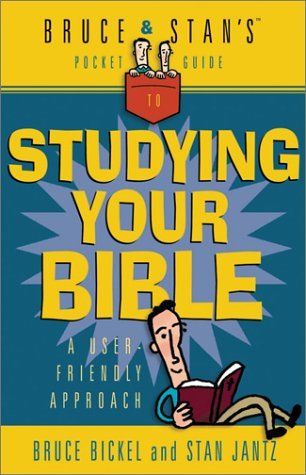
Book Review: Bruce and Stan's Pocket Guide to Studying Your Bible

Bruce and Stan's Pocket Guide To Studying Your Bible: A User-Friendly Approach. Bruce Bickel and Stan Jantz. 2001. Harvest House. 112 pages. [Source: Book I Bought]

First sentence: Millions of Americans turn to one literary source for guidance. Some do it daily; others read it only once a week (often on Sundays). To the novice reader, this literary work may seem complicated and intimidating--with references that range from historical to contemporary, spiritual to practical, and serious to comedic. But the diligent reader will be rewarded…Of course, we are talking about the weekly TV Guide. But you knew that. People are much more anxious to read about the plots and schedules of their favorite television shows than to read the Bible.

If you're looking for an extremely basic guide to studying the Bible, then this one is worth considering. Especially if you can pick it up cheap. It is BASIC. How basic is basic? In this one you will learn that there are TWO testaments in the Bible. The Old Testament and the New Testament. The Old Testament was written in Hebrew. The New Testament was written in Greek. You will learn that there are sixty-six books in the Bible. You will learn that you shouldn't randomly point your finger at a verse in the Bible and call that studying. You will learn the importance of reading the Bible in context and grasping the big picture of the Bible.

It is a very quick read. If you know absolutely nothing about the Bible, then this one wouldn't be a bad starting place. It certainly would not be intimidating. Though you should be warned that for better or worse the authors have a frivolous, light-hearted writing style that is far from timeless. This book is very 2000-2001. The Bible is without a doubt timeless and always, always relevant. This book about how to study your Bible in an attempt to be "with it" and "cool" at the time it was published is a bit dated now.

I remember liking the authors more than I actually do. Perhaps other books in the series are better? Maybe I'm thinking of another book by them that I really enjoyed?


© Becky Laney of Operation Actually Read Bible

Wednesday, June 10, 2015

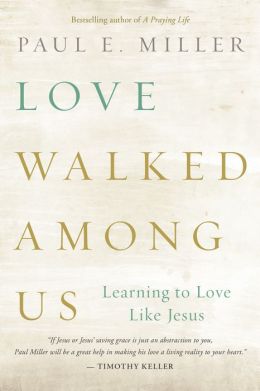
Book Review: Love Walked Among Us

Love Walked Among Us: Learning to Love Like Jesus. Paul E. Miller. 2001/2014. NavPress. 272 pages. [Source: Library]

Want to learn to love like Jesus? Consider reading Paul E. Miller's Love Walked Among Us.

The book is divided into five parts: "Love Shows Compassion," "Love Speaks the Truth," "Love Depends on God," "Love Is Energized By Faith," and "Love Moves Through Death Into Life."

Miller presents the life of Jesus in detail. By studying the life of Jesus, by reading carefully, reflectively, prayerfully, what can we learn about how Jesus loved? But it isn't just a book about what Jesus has done--how Jesus has loved--it's a book challenging readers to love as Jesus loved. It aims to practically teach believers to love like Jesus.

Of course, I appreciated the premise of Love Walked Among Us. And I did enjoy reading it overall. But it almost felt weighed down by personal stories and examples. The focus seemed to be exclusively on learning to love like Jesus loved within specific roles. How learning to love like Jesus can make you a better husband or wife. How learning to love like Jesus can make you a better father or mother. I wish it was less exclusive, that the examples were less so. The principles are solid enough however.

I've also reviewed Paul Miller's A Loving Life.

Favorite quotes:
When we love we cease to be the master and become a servant. (32)
We analyze one another all the time… Analyzing provides the disciples with a safe and tidy world that keeps everything in its place. So they talk about the blind man while they are right in front of him. But Jesus moves toward him, makes mud, and touches his eyes. Jesus lowers himself in order to care, while the disciples elevate themselves in order to judge. The disciples see a blind man; Jesus sees a man who happens to be blind. The disciples see an item for debate; Jesus sees a person, a human being like himself. They see sin, the effect of man's work; Jesus sees need, the potential for God's work. The disciples see a completed tragedy and wonder who the villain was; Jesus sees a story half-told, with the best yet to come. It is one thing to notice a blind man; it is quite another to stop and talk with him--that gets scary. He might ask for money or interrupt our schedule… Compassion affects us. Maybe that's why we judge so quickly--it keeps us from being infected by other people's problems. Passing judgment is just so efficient. (39)
The first step toward God is realizing you are on the wrong path going the wrong way. It's actually quite freeing if you think about it. With your mask off you can get real and relax. When we realize that we don't have it all together, we can care for people because we no longer feel morally superior to them. Consequently, we are quicker to help than to give advice, quicker to listen than to lecture. (55)
Unless you deal with "self"--with human ego--focusing on rules is like rearranging the deck chairs on the Titanic while it is sinking. (59)

© Becky Laney of Operation Actually Read Bible

Monday, March 17, 2014

Book Review: The Attributes of God 2

The Attributes of God, volume 2: Deeper Into the Father's Heart. A.W. Tozer. 2001/2007. Wingspread. 203 pages. [Source: Bought]

Earlier this month, I reviewed A.W. Tozer's The Attributes of God. Ten "attributes" were discussed including God's goodness, God's justice, God's mercy, God's grace, God's infinitude, and God's omnipresence. What is an attribute? "An attribute of God is something we can know about God. It is knowing what kind of God  God is" (17).

But that was just the beginning. Tozer's sermons were collected into a second volume. In this volume, Tozer explores:

  • God's Self-Existence
  • God's Transcendence
  • God's Eternalness
  • God's Omnipotence
  • God's Immutability
  • God's Omniscience
  • God's Wisdom
  • God's Sovereignty
  • God's Faithfulness
  • God's Love

Each chapter begins with Scripture. Each chapter closes with prayer. These are contemplative, devotional readings. Tozer never lets readers forget that it is KNOWING GOD and not KNOWING ABOUT God that truly matters. His enthusiasm is contagious. His approach is passionate and demanding. He invites readers into theology. He encourages them to take God seriously, to take God at his word, to earnestly and passionately seek GOD for themselves.

Tozer died in 1963. Yet Tozer's messages remain relevant. In fact, they might be even more timely today than when they were first preached. For example, "I don't suppose there is ever a time in the history of the world when we needed a restored knowledge of God more than we need it now" (5) If you haven't read Tozer yet, you don't know what your missing. 

Favorite quotes:
We wonder why we don't have faith; the answer is, faith is confidence in the character of God and if we don't know what kind of God God is, we can't have faith. (5)
God is always nearer than you may imagine Him to be. God is so near that your thoughts are not as near as God; your breath is not as near as God; your very soul is not as near to you as God is. And yet because He is God, His uncreated Being is so far above us that no thought can conceive it nor words express it. (34)
When you meet God, you get over the dangers and fears of this world. But the fear, the dread that is God, is not a sense of danger. It's a sense of being in the presence of someone very awful, very wonderful, transcendent and highly lifted up. It's a creature consciousness. (44)
Whatever God felt about anything, He still feels. Whatever He thought about anyone, He still thinks. Whatever He approved, He still approves. Whatever He condemned, He still condemns. Today we have what they call the relativity of morals. But remember this God never changes. Holiness and righteousness are conformity to the will of God. And the will of God never changes for moral creatures. (99, 100)
I recommend to you Jesus Christ, the unchanging One. I recommend to you God's answer to your questions, God's solution to your problems, God's life for your dying soul, God's cleansing for your sin-cursed spirit, God's rest for your restless mind, and God's resurrection for your dying body. For advocate above, I recommend Him to you. You will find Him to be all He ever was--the very same Jesus. (104)
Wisdom is the ability to see the end from the beginning, to see everything in proper relation and in full focus. It is to judge in view of final and ultimate ends and to work toward those ends with flawless precision. (130)
Why don't you start reading your Bible with the thought that God meant exactly what He said there? (172)
We talk about love, but God proved His love. The save love that created us is the love that redeemed us and now keeps us. (194)
Heaven will not be heaven to the man who does not have the love of God in his heart. (196)
© Becky Laney of Operation Actually Read Bible

Monday, January 6, 2014

Book Review: Studying Your Bible

Bruce and Stan's Pocket Guide To Studying Your Bible: A User-Friendly Approach. Bruce Bickel and Stan Jantz. 2001. Harvest House. 112 pages. [Source: Book I Bought]

A note from the authors:
Millions of Americans turn to one literary source for guidance. Some do it daily; others read it only once a week (often on Sundays). To the novice reader, this literary work may seem complicated and intimidating--with references that range from historical to contemporary, spiritual to practical, and serious to comedic. But the diligent reader will be rewarded…
Of course, we are talking about the weekly TV Guide. But you knew that. People are much more anxious to read about the plots and schedules of their favorite television shows than to read the Bible. 
It's short. It's basic. It's reader-friendly. The approach is super casual. It was written in 2001, so some of the social references are a bit dated by now, but, it is not in any way intimidating.

The book is divided into four chapters: "Why Read the Bible When You Can Watch A Video Instead?," "So Many Bibles! Which One Is Right for You?," "So Many Verses! Where Do You Begin?," and "How To Make Sense Out of What You Read."

The first chapter talks about the Bible, about why it is important for every single believer to read the Bible for themselves, the benefits of Bible reading, etc. The second chapter focuses on the tricky subject of translation. The third chapter focuses on the story of the Bible, of finding the big picture, of making connections between the Old Testament and the New Testament, of weaving the 66 books into a whole book. The fourth chapter focuses on studying the Bible, methods of interpretation, emphasizing the need to dig deep and reach the objective truth.

It works as an introduction to those that have never acquired the discipline of reading or studying the Bible.

© Becky Laney of Operation Actually Read Bible

Tuesday, September 4, 2012

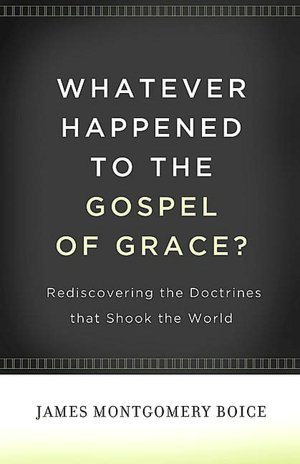
Book Review: Whatever Happened to the Gospel

Whatever Happened to the Gospel of Grace. James Montgomery Boice. 2001/2009. Crossway. 224 pages.

Whatever Happened to the Gospel of Grace is a great introduction to the doctrines of theology of the Reformation, and ultimately of the gospel. The book is in part critical of contemporary evangelicals concluding that some (not all) that call themselves evangelicals have wandered from the (whole) truth of the gospel. In other words, they've forgotten what the Reformation was all about, made a few too many compromises with the culture, focused on the wrong things perhaps. The first two chapters form part one, "Our Dying Culture," it is in the first two chapters that we find criticism of contemporary Christianity and of the culture in general. ("The New Pragmatism" and "The Pattern of This Age.) Chapters three through seven form part two, "Doctrines That Shook the World." This is the heart of the book. This is where each of the five solos receive attention. The chapters are: "Scripture Alone," "Christ Alone," "Grace Alone," "Faith Alone," and "Glory to God Alone." Each chapter is GREAT at exploring the doctrine, showing how important this truth was to the reformers and why it is CRITICAL for all believers to embrace this doctrine. Each chapter shows how relevant the doctrine is and why believing rightly matters. Chapters eight and nine form part three, "The Shape of Renewal." These chapters are "Reforming Our Worship" and "Reforming Our Lives." These are practical chapters highlighting the importance of putting our doctrines into practice and letting these doctrines shape who we are as believers.


© Becky Laney of Operation Actually Read Bible
Sunday, May 29, 2011

Book Review: Our Awesome God

Our Awesome God. John MacArthur. 1993/2001. Crossway Books. 176 pages.

Who is God? In his book, The Future of an Illusion, Sigmund Freud, the father of psychoanalysis, said God is an invention of man. We desperately need security, he wrote, because we have deep-seated fears of living in a threatening world in which we have little control over our circumstances. Freud claimed that we invent God as a protective father, and he suggested three reasons for our doing so.

His first reason is that we fear nature--we fear its unpredictability, impersonality, and ruthlessness. Because we all see the frightful reality of disease, famine, and disasters against which we have only a nominal defense, Freud assumed that we postulate a supernatural being who can deliver us...

Another reason for inventing God, Freud claimed, is our fear of relationships. Because people often feel used by others, Freud assumed it was natural to conjure up a divine umpire--a cosmic God with a super-whistle who ultimately stops play and penalizes people for what they have done. He made the commonsense observation that we all want someone who can right the wrongs of injustice. Freud also attributed this supposed invention of God to the fear of death. He claimed that we want a heavenly Father who will take us to a happy place, which we call heaven. It's hard to face the fact that we might cease to exist forever.

What about Freud's claims? What are we to think of them? To begin with, his view of religion is rather simplistic. It's human nature to prefer that God not exist. The first thing Adam and Eve did after they sinned was to hide from God. To be free from the God who calls sinners into accountability has been a constant goal of humanity throughout history...This knowledge of God is planted within each person, and the fact of God's existence is abundantly evident in creation.

However, even though every man and woman on earth knows of God's existence, they "do not see fit to acknowledge God any longer" (Romans 1:28). They reject God's self-revelation and refuse to acknowledge His glorious attributes. Freud had it wrong: People do not wish to invent the true God; instead they wish to deny His existence...

I enjoyed reading Our Awesome God. I found it well-written and reader-friendly. It is one of those straight-forward, commonsense books. Essentially what you see is what you get. Here are the chapter titles: Our Triune God; Our Faithful, Unchanging God; Our Holy God; Our Omniscient God; Our Omnipresent God; Our Omnipotent God; The Wrath of Our God; The Goodness of Our God; Our Sovereign God; Our Father God; The Glory of Our God; The Worship of Our God. I like the focus on the Bible. I like the focus on truth.

It is easy, perhaps, to create God in our image. To rely on how we ourselves imagine God to be. To rely on our feelings and perhaps even our experiences. We find it easier to believe that God is who we imagine him to be. We put words into his mouth. We rewrite the rules. We "fix" it so that our God does not conflict with our selfishness, or conflict with our culture. Perhaps because we want to make God easy to understand, easy to accept. We want to erase the so-called "hard truths" or "hard sayings" of the Bible. We want to have the freedom to delete at will those things that make us squirm, those things that make us uncomfortable, those things that leave us with questions.

In his introduction, MacArthur writes,
Believing the wrong thing about God is a serious matter because it is idolatry. Does that surprise you? Contrary to popular belief, idolatry is more than bowing down to a small figure or worshiping in a pagan temple. According to the Bible, it is thinking anything about God that isn't true or attempting to transform Him into something He isn't.

God Himself pointed out the fallacy of idolatry, saying of man, "You thought that I was just like you" (Ps. 50:21). We must be careful not to think of God in our terms or entertain thoughts that are unworthy of Him. It is perilously easy to do both. (7)
He further writes,
We tend to let our culture instead of our Creator determine what we value. Those values influence our thoughts about God and shape the way we relate to Him in our daily experience.

The only way to know what God is like is to discover what He has revealed about Himself in Scripture. The revelation of God's nature falls into different categories of attributes, which in their totality define His character. (8)
And then goes on to say,
It involves more than just believing there is a God. It means believing in the only true God as revealed in Scripture.

Having faith is believing that what God says is true. The content of the Christian faith is God's revealed Word. (13)
Because this book relies on the Bible, because its intent is to share the essential truths of who God is as revealed by the Bible and nothing but the Bible, it is a valuable book for readers. It is rich in truth. It is practical. Perhaps readers are skeptical that any theological book could really be practical. But I believe--strongly believe--that without sound doctrine, without sound teaching, without being well-grounded in the Bible, in essential Bible-truths, one's faith is at the very least weaker than it should be. I believe we're called to stand firm in our faith, and we're called to grow in truth. Readers need foundational truths and reading theology--so long as the theology you're reading is Bible-based, Bible-focused--can prove beneficial.

Knowing who God is? Well, it doesn't get more essential, more foundational than that. It is critical for believers to know who God is; it is critical for readers to know how God has revealed Himself to us in His Word. For our worship to mean something--or something more--we need to be worshipping the one, true God. Not the God that we create in our own image. Not the God we have fuzzy feelings about--and by fuzzy I mean vague not warm and fuzzy--no, we're called to worship God in spirit and truth.


© Becky Laney of Operation Actually Read Bible

Saturday, November 13, 2010

Book Review: Silent Night: A Christmas Carol is Born

Silent Night: A Christmas Carol is Born. Maureen Brett Hooper. Illustrated by Kasi Kubiak. 2001. Boyds Mill Press. 32 pages.

Franz Gruber lit the candles on either side of the St. Nicholas Church organ. He slid along the bench until he sat before the keyboard. The organ pipes sparkled like a million jewels above him.

Silent Night: A Christmas Carol is born is a historical picture book retelling of how one of the world's greatest christmas hymns--carols--came to be written. When Gruber's organ breaks, he fears that Christmas will be ruined. Who could imagine a Christmas Eve service without music? But. With a little teamwork, one of the greatest songs ever was introduced to the world. For Father Joseph learning of the difficulty comes to Franz Gruber with a poem he'd written. He asks Gruber if it would be possible to set this poem to music. He asks Gruber to write a song--a melody. This song won't take the place of the organ--obviously--but it will be something. That poem, of course, was Silent Night.

"Ah, Father Joseph," Franz said. He unbuttoned his greatcoat. He reached into his pocket. "Here is your melody." Father Joseph studied the music. A smile spread across his face. "It is as if the words and melody belong together." Franz lowered his eyes. "I don't know where I found the melody," he said. "Nor I the words," replied Father Joseph. (22)
I liked this one.


© Becky Laney of Operation Actually Read Bible