Wednesday, June 8, 2016

Operation Actually Celebrates Eight Years!

I started Operation Actually Read Bible on June 8, 2008. In the first post, I shared how I was "challenging myself to ACTUALLY read the Bible instead of just talking about how I need to start one day soon." Later that year--in December--I shared my goals for the blog, "To be both a bookish blog and a non-bookish blog. On the one hand it's a place for keeping track of my own Bible reading and my reading in Christian fiction and Christian nonfiction. But on the other hand, it's a place for me to journal, to be myself, to share my thoughts, ideas, etc. with others. I'd like to post every day. But if that isn't possible--isn't realistic--then I'm hoping for at least three or four posts a week. I'd like it to be consistent enough that I can build a readership here."

Ten Favorite Posts from June 9, 2015 - June 8, 2016

True or False with A.W. Tozer, June 28, 2015
Top Ten Knowing God Quotes, July 12, 2015
Book Review: Praying the Bible, September 12, 2015
The Happy Christian Playlist, October 25, 2015
DVD Review, Doctrines of Grace in the Gospel of John, November 23, 2015
Music Review: Glory to the Holy One, January 17, 2016
March's Scripture Chain Inspired By "BECAUSE HE LIVES" March 27, 2016
Welcome To Live Like You're Loved, April 1, 2016
Bible Review: Family Devotional Bible, April 18, 2016
On The First Year, OR, God's Providence, May 30, 2016

One thing I didn't realize until I started looking at my labels is this: if I've tagged everything correctly through the years--I've reviewed 905 books in 8 years!

Eight Authors I've Reviewed the Most:

A.W. Tozer (26)
John MacArthur (17)
J. Vernon McGee (10)
John Piper (9)
R.C. Sproul (8)
Erwin Lutzer (8)
Charles Spurgeon (8)
Martyn Lloyd-Jones (7)

Publishers I've Reviewed the Most For*:

Crossway (135)
Bethany House (88)
Revell (82)
Zondervan (37)
David Cook (27)
Tyndale (23)
Thomas Nelson (42)
B&H (20)
P&R Publishing (14)
Moody Publishers (12)

This includes review copies, books I've bought myself, books I've received as gifts, books I've borrowed from the library and friends. It's not just review copies.

© Becky Laney of Operation Actually Read Bible

Tuesday, June 7, 2016

My Summer with John #2

John Newton
Today I am continuing to share my reading experience with John Newton. Newton's inspiration for this sermon series was the popularity of Handel's Messiah

Today's quotes will come from the first two sermons in the series. For your listening pleasure: Comfort Ye and Ev'ry Valley. And the Glory of the Lord.

Isaiah 40:1, 2, 3, 4, 5.

From the first sermon, "Consolation"
The first good work of the Holy Spirit, upon the heart of fallen man, is to convince of sin (John 16:9) He gives some due impressions of the majesty and holiness of the God with whom we have to do, of our dependence upon Him, as our obligations to Him as our Creator, Lawgiver, and Benefactor; then we begin to form our estimate of duty, of sin and its desert, not from the prevalent maxims and judgments of mankind, around us, but from the unerring standard of Scripture. He now feels himself under the law, it condemns him and he cannot reply, it commands him and he cannot obey. He has neither righteousness nor strength, and must sink into despair, were it not that he is now qualified to hearken to the Gospel with other ears, and read the Scriptures with other eyes (if I may so speak) than he once did. He now knows he is sick, and therefore knows his need of a physician. He wounds, and He heals in His own appointed moment. None that continue waiting upon Him, and seeking salvation in the means which He has directed, shall be finally disappointed. Sooner or later He gives them, according to His promise, beauty for ashes, the oil of joy for mourning, and the garment of praise for the spirit of heaviness (Isaiah 61:3)
Afflictions are the fruit of sin, and because our sins have been many, our afflictions may be many. But where sin has abounded, grace has much more abounded (Romans 5:20)
There is no situation in human life so deplorable, but a sense of the pardoning love of God can support and comfort the sufferer under it, compose his spirit, yea make him exceedingly joyful in all his tribulations; for he feels the power of the blood of Jesus cleansing his conscience from guilt, and giving him access by faith to the Throne of Grace, with liberty to say, Abba, Father; he knows that all his trials are under the direction of wisdom and love, are all working together for his good, and that the heaviest of them are light, and the longest momentary, in comparison of that far more exceeding and eternal weight of glory, which is reserved for him in a better world (II Corinthians 4:16, 17)
When the Lord God who knows the human heart would speak comfort to it, He proposes one object, and only one, as the necessary and all-sufficient source of consolation. This is MESSIAH. Jesus in His person and offices, known and received by faith, affords a balm for every wound, a cordial [tonic] for every care.
A free pardon is a comfort to a malefactor, but it implies guilt; and therefore they who have no apprehension that they have broken the laws, would be rather offended, than comforted, by an offer of pardon. This is one principle cause of that neglect, yea contempt, which the Gospel of the grace of God meets with from the world. But it is to be feared, that for want of knowing themselves, and their real state in the sight of Him with whom they have to do, many persons who have received pleasure from the music of the Messiah [Oratorio], have neither found, nor expected, nor desired to find, any comfort from the words.
From the second sermon, "The Harbinger"
A valley is an emblem of a low condition. Such was the condition of most of our Lord's followers; but His notice and favour exalted them highly. He came to preach the Gospel to the poor, to fill the hungry with good things, to save the chief of sinners, to open a door of hope and salvation to persons of the vilest and most despicable characters in human estimation. And by living Himself in a state of poverty, and associating chiefly with poor people, He placed the vanity of the distinctions and affluence which mankind generally admire and envy, in the most striking and humiliating light. Such, likewise, was and will be the effect of the Gospel. When faithfully preached, it is found mighty through God, to the pulling down of strongholds, high thoughts, and every species of self-exaltation.
When the convincing Word touches the heart, it has an effect like the hand-writing which Belshazzar saw upon the wall (Daniel 5:6)
Those of you who have heard the Messiah [Oratorio] will do well to recollect, whether you were affected by such thoughts as these, while this passage was performed; or whether you were only fascinated by the music, and paid no more regard to the words than if they had no meaning. They are, however, the great truths of God. May they engage your serious attention, now they are thus set before you.

© Becky Laney of Operation Actually Read Bible

Monday, June 6, 2016

Book Review: Exalting Jesus in Philippians

 Exalting Jesus in Philippians. Tony Merida and Francis Chan. 2016. B&H. 209 pages. [Source: Review copy]

Favorite quote: "Apart from knowledge of God and His Word, we will not love in a way that glorifies God and blesses others." (p. 41)

Exalting Jesus in Philippians is one of the commentaries in the Christ-Centered Exposition commentary series published by B&H. I have reviewed several of the commentaries in this series now, and I must say that I really am pleased with this series.

Thirteen chapters cover every verse in the book of Philippians. There are six chapters focusing on Philippians 1. (One of those chapters also deals with the first four verses of Philippians 2). There are three chapters focusing on Philippians 2. (Not counting the one that also covers some of Philippians 1.) There are two chapters focusing on Philippians 3. There are two chapters focusing on Philippians 4.

Each chapter contains a main idea, and an outline. I loved both features. The main idea because it summarizes and condenses. It will also be great for future reference. The outline because it provides a logical, organized way of approaching both the Scripture text and the chapter itself.

The main idea for Philippians 2:5-11:
In this amazing passage, Paul magnifies the humility and exaltation of Jesus, which should lead us to emulate Jesus' example and adore Him as Lord of all. (89)
The outline for Philippians 2:5-11
I. The Mind of Christ (Philippians 2:5)
II. The Humility of Christ (Philippians 2:6-8)
A. His humble renunciation (Philippians 2:6)
B. His humble incarnation (Philippians 2:7)
C. His humble crucifixion (Philippians 2:8)
III. The Exaltation of Christ (Philippians 2:9-11)
A. His exalted position (Philippians 2:9)
B. Everyone's adoration and confession (Philippians 2:10-11) 
Each chapter concludes with reflection or discussion questions. Here are three example discussion questions from the chapter on Philippians 2:5-11. (These questions are found on page 104).

  • How is Jesus' model of leadership different from a worldly view of leadership? How can you put this type of life in practice today?
  • What would happen in our relationships if we lived out Philippians 2:5-11? How can you go from being a "grasper" to a "giver"?
  • Why should we be overwhelmed by the fact that we (Christians) know Christ and that He knows us?

Occasionally charts and other visual aids were used as well. Here is one I loved, loved, loved from page 96. I recreated it so I could share it with you in the review.

I also loved how the authors pulled in quotes and ideas from others--both past and present. Here is a D.A. Carson quote I really found incredibly useful.
D.A. Carson points out that the cross can be viewed from five perspectives. From God's perspective, Jesus died as a propitiation for our sins (1 John 2:2). He absorbed God's wrath and turned away God's anger from us. From Christ's perspective, Jesus obeyed His Father perfectly, saying "Not My will, but Yours, be done" (Luke 22:42). He carried out His assignment to "give His life--a ransom for many" (Mark 10:45). This text in Philippians highlights Christ's perfect obedience (also a major theme in John's Gospel). He became "obedient to the point of death--even to death on a cross" (Philippians 2:8). From Satan's perspective, the cross means the accuser's defeat (see Rev. 12:11). From sin's perspective, the cross is the means by which our debt is paid. Finally, from our perspective, while acknowledging all of these truths, treasuring the love and justice of God as well as the substitutionary life and death of Jesus--His victory over Satan and sin--we must also note that the cross serves "as the supreme standard of behavior." It's the primary point that Paul makes here in Philippians 2:5. (90)
I would definitely recommend this one! It is clearly written, well-organized, practical, rich in insights.


© Becky Laney of Operation Actually Read Bible

Saturday, June 4, 2016

Week in Review: May 29-June 4

NASB

  • 1 Chronicles 
  • 2 Chronicles 1-12
  • Ecclesiastes
  • Song of Solomon
  • Nahum
  • Philippians
  • Colossians
  • 1 Thessalonians
  • 2 Thessalonians

English Revised Version (1885)

  • Genesis 1-8

ESV

  • James

© Becky Laney of Operation Actually Read Bible

Friday, June 3, 2016

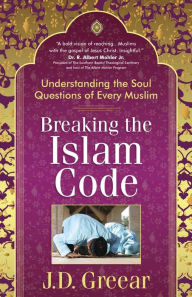
Book Review: Breaking the Islam Code

Breaking the Islam Code. J.D. Greear. 2010. Harvest House. 176 pages. [Source: Bought]

I definitely found this one to be an absorbing read. It is a book geared towards Christian readers primarily about how to share the gospel with Muslims. He has definite opinions on what to do and what not to do.

The introductory basics:
  • You can most effectively share Christ with Muslims when you are genuinely friends with them.
  • You must learn to listen to Muslims. Listening is how you will discover what is going on in their hearts, what is important to them, and where God is already at work in them. We must be people of “double listening.” We must listen to God’s unchanging message on one hand and the hearts of our Muslim friends on the other. Only then will we be able to craft the gospel message in a way that Muslims can understand it.
  • You must look for the Holy Spirit to do in the heart of your Muslim friends what you cannot do. Only the Holy Spirit can make blind eyes see; only he can make the gospel make sense to a Muslim. It is not some new insight you have or new angle I give you on sharing the gospel that will magically unlock your Muslim friend’s heart. The human heart, until God opens it, is hardened against him, darkened in its understanding, and does not even know to ask the right questions about God!
Conversion isn't so much a checklist or a method to follow through beginning to end. This book is not a step by step book on how to find a Muslim, and talk at a Muslim, bullet point by bullet point through a scripted gospel presentation. It is not your words, your arguments, or your defense that will "save" a Muslim.

Conversion--rebirth, or regeneration, or new birth, or being born again--is the sole work of the Holy Spirit. God has appointed the means, however, and those means include you and me in formal and informal situations witnessing with our words and our actions. The act of bringing dead bones to life--putting flesh on dead bones and breathing the breath of life--is something only God can do. But there is plenty that we can do. We can pray. We can believe. We can share ourselves, our lives. We can be willing to bear the cross of Christ and do hard things--out of love for God, out of love for others.
The first four chapters will help you get familiar with who Muslims are, how they think, and what is important to them, so you can know how to talk with them in a way that connects with them. In chapter 1 we’ll discuss how to create the right environment for a conversation about God; in chapter 2 we’ll analyze what moves and motivates Muslims; in chapter 3 I’ll give you a brief overview of what Muslims believe; and in chapter 4, we’ll discuss a lot of the misconceptions we have about Muslims and that Muslims have about us. In chapter 5, “The Muslim Salvation Code,” we’ll get into their theology and culture and identify the “questions” they are asking about God and salvation. In this chapter I’ll help you see how the soil of the Muslim heart has been uniquely prepared for the gospel. Chapter 6, “Re-coding the Gospel,” will help you present the gospel in a way that answers those questions. In chapter 7, “The Gospel Confronts the Ultimate Religion of Works,” I’m going to show you how Islam is, at its core, a religion of “works-righteousness.” I’ll show you how much of Jesus’ teaching in the gospels is directed at religious systems of works-righteousness, like Islam. We’ll look at what Jesus said and how he said it, and think about how to apply it to the works-righteousness of Muslims. In chapters 8 and 9, we’ll take a brief look at the primary objections that Muslims bring up whenever the gospel is presented. My goal in these chapters is not to address every Muslim objection to Christianity. My goal is to explain how you can turn many of the primary Muslim objections into opportunities to share the gospel. My goal is to help you keep the conversation on track and not get sidelined in arguments that lead nowhere profitable. In chapter 10, “The Challenge and the Hope,” I’ll conclude the book by considering what Jesus says is required of us, his witnesses, if we are to see Muslims come to Christ. I hope you’ll see that the fields really are white for harvest, that God is willing and able to save, and that all that is necessary now for the salvation of Muslims is a team of committed, believing laborers in their fields.
Greear shares his firsthand experiences with readers in this one. He provides stories of Muslims who have come to faith in Jesus Christ. He offers tips and suggestions as well. For example, he urges his readers to consider this: the goal of conversations should never be to win arguments or debates, to be the most persuasive, the most polished. The goal, he stresses, should be to encourage your Muslim acquaintance to read the Bible.
God’s Word brings a new birth into a new creation. That is why simply getting Muslims to read God’s Word is the most powerful tool in bringing them to Christ. The Word of God is the channel through which the life-giving power of Jesus flows.
Rather than meeting with a Muslim one-on-one, try reading the Bible together in a small group. If Muslims can come to Christ together, then they are not just leaving something (the ummah), they are coming into something (the church)! Because following Jesus often costs Muslims their families, giving them a community to come into can go a long way in alleviating fear. There’s an old proverb among missionaries to Muslims: “It is easier to ‘group Muslims and then win them’ than it is to ‘win them and then group them.’”
So instead of following a gospel-sharing script or tract or making a semi-polished gospel presentation where you share anything-and-everything all at once, he urges believers to instead invite Muslims to read the Bible with them, to to join a group or community of people who read the Bible. 

So another BIGGIE is prayer. 

Make prayer the foundation of your ministry to Muslims. Since it is power from God alone that enables Muslims to believe, prayer is our most effective weapon. There have been times when I felt like there was nothing else I could do for my Muslim friends, and so I just prayed. Not just for my Muslim friends, but with them. Thus, praying for them and with them and in front of them is powerful. The Christian’s intimate worship of God can have a powerful effect on the Muslim heart.
The book seeks to be practical, useful, and biblical.

© Becky Laney of Operation Actually Read Bible

Thursday, June 2, 2016

My Summer With John #1

John Newton
This summer I am considering some time away from Charles Spurgeon. Don't worry, I still love him, but, perhaps by focusing so exclusively on Spurgeon, I am neglecting other great preachers. I have been reading some sermons by John Newton. In particular, I am reading from his sermon collection Messiah: Fifty Expository Discourses Preached in the Years 1784 and 1785.

Newton's inspiration for his sermon series was the popularity of Handel's Messiah.

From the foreword written in 1786:
Since we do not always so much stand in need of new information, as to have, what we already know, more effectually impressed upon the mind; there are truths which can scarcely be inculcated too often, at least, until the design, for which they were uttered once , be effectually answered. Thus, when the strokes of a hammer are often repeated, not one of them can be deemed superfluous; the last, which drives the nail to the head, being no less necessary, than any of those which preceded it.
THE MESSIAH, the great subject of the oratorio, is the leading and principal subject of every sermon. His person, grace, and glory; His matchless love to sinners; His humiliation, sufferings, and death; His ability and willingness to save to the uttermost; His kingdom, and the present and future happiness of His willing people; are severally considered, according to the order suggested by the series of texts.
Nearly connected with these topics, are the doctrines of the fall and depravity of man, the agency of the Holy Spirit, and the nature and necessity of regeneration, and of that holiness, without which, no man shall see the Lord.
The one principle, which, he [Newton] assumes for granted, and which, he is certain cannot be disproved, is, That the Bible is a revelation from God. By this standard, he is willing, that whatever he has advanced, may be tried. If the Bible be true, we must all give an account, each one of himself, to the great and final Judge. That when we shall appear before His awful tribunal, we may be found at His right hand, accepted in the Beloved, is the Author's fervent prayer, both for his Readers and for himself.
From the first sermon, but, concerning the project.
The Messiah of Handel consists of three parts. The first , contains prophecies of His advent and the happy consequences, together with the angel's message to the shepherds informing them of His birth, as related by St. Luke. The second part describes His passion, death, resurrection and ascension; His taking possession of His Kingdom of glory, the commencement of His Kingdom of grace upon the earth, and the certain disappointment and ruin of all who persist in opposition to His will. The third part expresses the blessed fruits and consummation of His undertaking in the deliverance of His people from sin, sorrow and death, and in making them finally victorious over all their enemies. The triumphant song of the redeemed, to the praise of the Lamb who bought them with His own blood, closes the whole.
The good seed of the word of grace, can only take root and flourish in a soil duly prepared. And this preparation of the heart (Proverbs 16:1) is wholly from the Lord --without which all that is read or heard concerning MESSIAH produces no permanent good effect.
I apprehend, that true Christians, without the assistance of either vocal or instrumental music, may find greater pleasure in humble contemplation on the words of the Messiah , than they can derive from the utmost efforts of musical genius.
There is no melody upon earth to be compared with the voice of the blood of Jesus speaking peace to a guilty conscience, or with the voice of the Holy Spirit applying the promises to the heart, and sweetly inspiring a temper of confidence and adoption. These are joys which the world can neither give nor take away, which never pall upon the mind by continuous repetition; the sense of them is always new ; the recollection of them is always pleasant. Nor do they only satisfy, but sanctify the soul. They strengthen faith, animate hope, add fervency to love, and both dispose and enable the Christian to run in all the paths of holy obedience with an enlarged heart.
Are you familiar with Handel's Messiah? Do you like it? love it? hate it? Do you find it boring? wonderful? Have you ever thought of it as being Christ-centered and for the glory of God? Or is it just another piece of classical music? I'd love to HEAR from you!!!


© Becky Laney of Operation Actually Read Bible

Wednesday, June 1, 2016

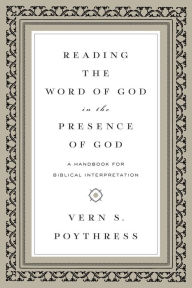
Book Review: Reading the Word of God in the Presence of God

Reading The Word of God In the Presence of God. Vern S. Poythress. 2016. Crossway. 464 pages. [Source: Review copy]
This book is a practical handbook to help people grow in skill in interpreting the Bible. It illustrates the process of interpretation by considering the stages through which a Bible student may travel in the course of studying a passage in the Bible. Even beginners can use the early stages of our approach (up through chapters 4-6), because we have designed the explanations to make sense to beginners and to be usable. In later chapters we add more complexity, so that beginners can continue to advance. As more details are added, pastors and advanced students may also find helpful insights. Our approach should also interest experts, because it differs from what has become standard among many biblical scholars. (opening paragraph from chapter one)
I have many reactions to this paragraph ranging from, "How courteous to write a book designed to make sense and be usable!" to "Well, at least the author is completely honest and transparent about how incomprehensible most of the book is going to be!" The truth is I do appreciate his honesty. It feels good to know that it isn't "just me" and that (probably) 90% of Christians (at least) would be equally at a loss to make sense of this one!

What I liked:

The Title and The Premise. It is a fantastic title. I do think Christians need reminders that when they read the Word of God they are in fact reading it in the very presence of God. Not only is God present with them. God is present IN them. Believers have an indwelling teacher and counselor that can and will illumine the Word of God as they read, study, and meditate. Believers can KNOW the author of the greatest book ever written. Believers can SPEAK to the author at any time, in any place.

The premise of this one is simpler than anything else about it. The premise is as follows:
If we love the Lord our God with all our heart and soul and mind, we will be interested in learning more about him. And the Bible is the primary source for knowledge of God. Thus, loving God motivates serious study of the Bible. When we study the Bible, we should be loving God in the midst of our study. What implications does loving God have for the way we study the Bible? Amid our studying, we will be asking God to enliven our hearts, to enliven and clarify our minds, to sanctify our attitudes, to teach us, and to empower us to receive and obey what we study. We will also be praising him and loving him and enjoying him and marveling over who he is amid every aspect of our study. We will be repenting of sins when the Bible reveals how we have sinned.
I agree wholeheartedly with every word! Who wouldn't want to read such a book?!?!

By page eight, this premise has already become increasingly difficult to grasp in the details. The difficulty begins as soon as the author introduces the concept of PERSPECTIVAL TRIADS.

The Organization and the Outline. I may not have understood--comprehended--90% of the book's content. BUT. I do have to admit that it was well organized, well structured, and logically displayed. Comprehensible? Not really. But one could see how it was structured theoretically to make sense to the reader.

The Consistency in Examples. He uses the same passage of Scripture in nearly every chapter.

The Occasional Comprehensible Insight. Chapter Two entitled "Principles for Interpreting the Bible" is a great example that the book has good intent.
We can love God only if God himself empowers us. This empowerment begins when we are born again through the Holy Spirit. 
Precisely because we do not have a simple, fail-safe “recipe” for interpretation, a recipe that would work independently of our religious commitment and our spiritual health and our moral obedience, it is all the more important that we affirm that Christ is the way. He is the way to eternal life, the way to understanding God. We may add that he is also the way to understanding Scripture, because we need him and the power of his Spirit to arrive. We can never reduce any human person, let alone Christ, to a list of steps. Personal interaction creates rich relationships, including surprises.
The Bible is God’s speech in written form. So we should think about what it means for God to speak. God’s speech has several forms. 1. God speaks eternally in the Word, the second person of the Trinity (John 1: 1). 2. God speaks to create and to govern the world. 3. God spoke orally to human beings, in theophanies (Gen. 17: 1; Ex. 20: 18– 19) and through prophets as his spokesmen (Ex. 20: 19, 21). 4. God wrote his word. He did so directly with the tablets at Mount Sinai, which were “written with the finger of God” (Ex. 31: 18). Later, he committed his word to writing through human spokesmen who did the actual writing (Deut. 31: 24– 26). 5. Finally, at the climax of history, God spoke through the incarnate Son (Heb. 1: 1– 2). 6. God now speaks to us through the Bible, which God has given us as the permanent deposit of his word.
If we are going to appreciate what God says, we must know God and grow in knowing him. What we know about him feeds into our understanding of what he says. 1. God is Lord over all things. So we must take into account his lordship as we study. 2. God is Creator, while we and everything else in the world are creatures. The Bible makes a distinction between the Creator and his creatures. God as Creator is Lord, while his creatures are subjects and ought to submit to his lordship. This distinction implies that we must listen to God when we read the Bible, and not imagine that we can listen merely to our own ideas that arise while reading. 3. God is immanent. He is present in the whole world. He is also especially present, with his offer of redemption in Christ, as we read Scripture. 4. God has planned history and brings about his plan in time (Eph. 1: 11). History has purpose, and God has designed in particular that our study of the Bible should have a purpose. The Bible serves his goals, not whatever goals we may devise out of our own hearts. In particular, we are not supposed to be studying the Bible merely to acquire information, but for our spiritual good— for our salvation.
Now let us consider some basic principles about the Bible. 1. The Bible is God’s own word, so that what the Bible says, God says. 2. God governs the whole world through his divine speech, which specifies and controls what happens (Heb. 1: 3). The Bible, by contrast, is the word of God, designed by God to speak specifically to us as human beings. All divine speech, whether directed toward governing the world in general or directed toward us as human beings, has divine character. 3. God speaks his words to us in covenants (Gen. 9: 9; 15: 18; 17: 7; Ex. 19: 5; etc.). A “covenant” is a solemn, legally binding agreement between two parties. In this case, the two parties are God and human beings. 4. All the Bible is the covenantal word of God. That is, the idea of covenant offers us one perspective on the Bible. 5. The Bible is a single book, with God as its author. It does of course have multiple human authors. But its unity according to the divine author implies that we should see it as a single unified message, and should use each passage and each book to help us in understanding others. 6. The Bible is God-centered. It not only has God as its author, but in a fundamental way it speaks about God as its principal subject. It does so even in historical passages that do not directly mention God, because the history it recounts is history governed by God. 7. The Bible is Christ-centered. 7 Covenants mediate God’s presence to us, and at the heart of the covenants is Christ, who is the one mediator between God and men (1 Tim. 2: 5). 8. The Bible is oriented to the history of redemption. God caused the Bible’s individual books to be written over a period of centuries. God’s later speech builds on earlier speech, and further unfolds the significance of his plan for history. God’s redemption takes place in history. Christianity is not merely a religious philosophy, a set of general truths about God and the world. 9. Christ’s first and second coming are central to history. God’s work of redemption came to a climax in the work of Christ on earth, especially in his crucifixion, death, resurrection, and ascension. Christ now reigns at the right hand of the Father (Eph. 1: 20– 21). We look forward to the future consummation of redemption when Christ returns. 10. God’s work of redemption interweaves word and deed.
When we encounter God, we are never in charge. We never master a passage. All its aspects interlock, and all the questions that we can ask interlock. We never get to the bottom, to a place where we can make perfectly transparent to ourselves how the pieces get sorted out, each into its appropriate bin. The use of a “method,” even as simple a method as three steps of questions, can tempt us to think that we have a guarantee: we tell ourselves that, if we use the method properly, we will achieve our goal. And the goal in this case is to know the meaning of the passage. We think we can master meaning, if we succeed in staying loyal to the method. Over against this reliance on “method,” I propose reliance on God and his mercy. In this, I aim to call us toward a fuller rather than a lesser engagement of our minds— with our hearts and souls.
The basic problem is the human problem of sin. We have deceitful hearts. People inject into the Bible the meanings that they want to hear. They thereby show their pride. In effect, they are telling God what he ought to say, rather than humbly seeking him. How will we ever root out pride unless we come to God himself, through Christ, to receive spiritual healing? The remedy is not the human author! It is communion with God. The typical advice from many modern scholars goes in exactly the opposite direction from what it needs to be. They are saying, go to the human author. God in Scripture says to go to God, through Christ who is “the way, and the truth, and the life” (John 14: 6).
We must love God with all our mind. We must serve and worship him. He is present and comes to us when we read Scripture. To try to forget or suppress his presence is to twist the purpose of Scripture, to express ingratitude, and to turn away from life to death. How can we expect to understand Scripture if, at the beginning, we insist on treating Scripture as something that it is not, namely a merely human document from a merely human author? It is regrettable and dangerous that we live in a time and at a cultural moment when most of Western scholarly study of the Bible follows the route of virtually exclusive focus on human authors. The mainstream of biblical scholarship does not believe in divine authorship at all. Many scholars outside of the mainstream still believe in divine authorship somewhere in the back of their minds, but they may nevertheless partly lay aside what they believe for the sake of a method that takes human authorship in isolation.

What I Didn't Like:

Overly intellectual. I can appreciate complexity. I can. I can appreciate challenges. Pushing one's self further and further to grow and understand new things, new words, new concepts, new ideas. But this is like handing War and Peace to a kindergartner whose reading level might just be Go Dog Go. And some chapters may even be like handing War and Peace--in the Russian language--to a kindergartener. There are books that genuinely encourage in-depth study that are written to be practical and useful. 

Present-Time Approach: "This perspective leads to each person focusing on himself as a conscious receiver of the word of God. God is speaking to each person in the moment when he reads. God is speaking even if the person resists his word and does not profit from it." and "It reminds us that we cannot dispense with God or ignore his presence anywhere in the process of our study. If we follow a “method,” we can make the mistake of treating the method as if it worked “by itself.” We might begin to act as if we did not need to pay attention to our spiritual relationship to God— at least not until after we had finished using the method." and "The present-time approach uses a perspective, namely the existential perspective, that focuses on each reader as a recipient. So we expect that it will perspectivally include the other two approaches. That is to say, if we follow the approach properly, in obedience to God who is present with us, it should lead to and even include the other two approaches."
The totality of these resources within English make up what we might call a subsystem of meanings, or a semological subsystem or a referential subsystem. We call it a subsystem, rather than just a miscellaneous collection, because the resources have to provide a systematic range of resources for all kinds of things that we might want to say. The verb departed, when used to refer to movements in past time, has links with an analogous word depart, used to refer to movements in the present time or a general pattern of customary movement at various times. The word departed also has relationships to other verbs of motion, such as left, exited, went, ran, walked, traveled, rode, and so on. The word departed also has relationships to nouns such as departure, exit, journey, egress, and passage. (Semanticists have labeled a collection of words of related meaning a semantic domain or semantic field.)
All of the dozens of TRIADS and "foci". Also all the "particle, wave, and field" examples
We can further explore what it means to listen to Scripture by using a second triad of perspectives, namely the triad consisting in the normative, situational, and existential perspectives. John Frame has developed this second triad of perspectives for analyzing ethics. The normative perspective focuses on the norms for ethics, which are summarized in God’s commands. Parts of Scripture with explicit commands are further explained and deepened by the surrounding Scriptures that contain other kinds of communication. The situational perspective focuses on our situation, and asks how we may best promote the glory of God in our situation. Loving our neighbor offers one way of glorifying God. So as an aspect of the situational perspective, we may ask how we may best express love for our neighbors and how we may best help and bless them. Finally, the existential perspective focuses on the people in the situation and their motivations. The primary motivation should be love.
These three foci correspond respectively to the particle, field, and wave perspectives. The text is a single writing, which is like a particle. The text exists in a multitude of relationships with its social environment, and the study of relationships constitutes a field-like focus. Finally, the text exists as part of a sequence of events leading from the past history of David and the monarchy to the future, including the future promises of a Messiah. The sequence of events is wave-like in character.
© Becky Laney of Operation Actually Read Bible