With You Always. (Orphan Train #1) Jody Hedlund. 2017. Bethany House. 359 pages. [Source: Review copy]
First sentence: Elise Neumann stared out the cracked third-story window to the muddy street below, watching the omnibuses and carriages slog their way through the muck.
Premise/plot: Elise is the oldest of three sisters--all recently orphaned. They've been taken into a mission home, but, when a financial crisis hits it will be up to Elise to find a way to help support her sisters and the two children they've come to love as their own. Elise had found work in New York City in the mission home as a seamstress. She's one of many women who lose their jobs. Fortunately, there's a call for women workers out west--Elise is one that finds job placement out west in Illinois. Taking the job will mean leaving her sisters behind, but it will mean an income.
Thornton Quincy is a twin. Their dying father has set up a little competition to see which of his two sons--Thornton or Bradford--will inherit his company. Each son will have to build a town--in, you guessed it, Illinois. Thornton names his town, Quincy. He decides to hire women for some of the jobs in an effort to save money--women work cheaper than men. Each son will also have to marry for love--and not convenience--within six months.
Elise and Thornton come to know each other on this train ride west, and he, in fact, requests that she be placed in his town, Quincy. Elise is first charmed and delighted but that is before she realizes that the man so attentive to her is a multimillionaire--or the son of one. She fears that his intentions are less than honorable. After all, she's a nobody--a penniless orphan--and he's a somebody. But Thornton finds ample opportunities to show his true nature or character.
Which brother will win the competition? And will knowing Elise make him.a better man?
My thoughts: I loved, loved, loved this one. I was surprised by how much. Perhaps because this one reminds me of Elizabeth Gaskell's North and South. Part of me is curious, does Jody Hedlund love North and South too? After all, North and South does star a John Thornton. And that Thornton is a business man as well who comes to view his workers/employees as actual people after falling in love with the heroine.
If it was even the tiniest bit influenced by North and South, it's a good thing--a very good thing. It was a delight to see Elise and Thornton come to know each other better.
I do have to mention that this one is pushing it in terms of steaminess for a Christian, clean romance. There is a LOT of descriptive, passionate kissing occurring throughout. Even before declarations of love and intent to marry.
It does still have a good deal of Christian content. I am not saying it is inappropriate. Just that you should be aware that it is a LOT steamier than any Janette Oke novel you might have read.
The novel is set in New York City and Quincy, Illinois in 1857.
© Becky Laney of Operation Actually Read Bible
Monday, January 7, 2019
Saturday, January 5, 2019
Week in Review: December 30 - January 5
Bible Reading
Did I read Revelation this week? Which translation? Yes. 1599 Geneva Bible
Am I keeping up with my 30 Days of Psalms, reading Psalms 1-41? How many times have I read it so far? Which translations? Yes. 1599 Geneva Bible, NASB 1995, American Standard 1901, NASB 1977, NKJV and KJV.
Am I keeping up with the Daily Chronological Bible Reading Plan for the Growing 4 Life reading group? What have I read so far? Yes. Genesis 1-11, John 1:1-3, Psalm 8, Psalm 104, Psalm 12
Am I keeping up with the 90 Day Bible Reading Challenge (Knowable Word)? What have I read so far? Yes. Genesis through Numbers 21.
Have I done any other Bible reading not related to one of those projects? Which books and which translation, if any? In the 1599 Geneva Bible I've read Exodus, Leviticus, Mark, and Romans.
Other Reading
Christian Fiction Read This Week: I'm currently reading Jody Hedlund's With You Always, but I haven't completed any Christian Fiction this year.
Christian Nonfiction Read This Week:
1. Found: God's Will. John F. MacArthur Jr. 1972. 60 pages. [Source: Bought]
2. Made for the Journey: One Missionary's First Year in the Jungles of Ecuador. 1998. Revell. 176 pages. [Source: Review copy]
3. The Faithful Spy: Dietrich Bonhoeffer and the Plot to Kill Hitler. John Hendrix. 2018. Harry N. Abrams. 176 pages. [Source: Review copy]
4. The Practice of the Presence of God. Brother Lawrence. 1691/1982. 96 pages. [Source: Bought]
© Becky Laney of Operation Actually Read Bible
Devotional Journaling #1
I am reading two devotional books this year. One is Living Hope for the End of Days by John Samuel Barnett. One is My Utmost for His Highest by Oswald Chambers.
Living Hope for the End of Days: 365 Days of Devotions from the Book of the Revelation. I chose this one because I am going to be reading Revelation fifty-two times, or, once a week throughout all of 2019. I love, love, LOVE this book of the Bible. I've owned Living Hope for the End of Days for a few years now but never read it--at least not all the way through. There are presumably fifty-two themed weeks covering the book and pulling in other scriptures.
Week One: Worship the Christ of Revelation.
Barnett points out that worship is something we can/should cultivate. He makes a good point. We often want to worship without the work--the work of confessing sin and 'mortifying' the flesh.Living Hope for the End of Days: 365 Days of Devotions from the Book of the Revelation. I chose this one because I am going to be reading Revelation fifty-two times, or, once a week throughout all of 2019. I love, love, LOVE this book of the Bible. I've owned Living Hope for the End of Days for a few years now but never read it--at least not all the way through. There are presumably fifty-two themed weeks covering the book and pulling in other scriptures.
Week One: Worship the Christ of Revelation.
“To worship is to quicken the conscience by the holiness of God, to feed the mind with the truth of God, to purge the imagination by the beauty of God, to open the heart to the love of God, to devote the will to the purpose of God.” ~ William Temple
One clear way God invites our worship is by revealing Himself through His divine names. The greatest insight into adoring the Lord comes by way of His names and titles in His Word.Barnett then goes through all twenty-two chapters of Revelation. I won't share all of what he writes. But I will give you an example or two.
Chapter 1: He is the Faithful Witness, the Firstborn from the Dead, Ruler over the Kings of the Earth, the Alpha and the Omega, the Beginning and the End, the Almighty, the First and the Last, the Son of Man, the Living One!
Chapter 4: He is the One who sits on the throne in heaven!
Chapter 5: He is the Lion of the tribe of Judah, the Root of David, and the Lamb who was slain—who lives forever and ever!
Cultivating worship also involves dealing with all the weeds that grow and choke the growth of your crop, as well as the pests that try to steal the harvest.He has this to say about church.
When we are gathered for genuine worship, we are like a heap of burning coals encouraging one another to warmth of love and devotion. Go to church—even if you do not feel like it. Go to church—even if worship has been discouraging and dry before. Go to church—praying. Go to church—expecting. Go to church—looking for God to do a new and living work among you as His family.This statement gave me food for thought: Worship is the most vital and life-changing topic of the whole Bible. It makes sense if you think about it carefully. What is the chief end of man? Man's chief end is to glorify God, and to enjoy him forever. But if you don't give it too much thought, you'd almost be tempted to say that something is wrong with the statement. That it should be salvation or redemption or resurrection. But we were created to worship. We were saved to worship. We will spend eternity worshiping God.
I have one more quote to share from this first week of devotion.
We can still serve God regardless of where we are, what is taken away from us, or how hard the times might be.My Utmost for His Highest by Oswald Chambers. I've been meaning to read this one for a few years now. There are no themed weeks so far as I know. Each entry is dated.
January 1. Chambers summarizes Paul as saying, "My determined purpose is to be my utmost for His highest--my best for His glory." Chambers argues that this requires surrendering all to God.
I am determined to be absolutely and entirely for Him and Him alone.January 2. This entry is all about trust. Chambers writes, "Have you been asking God what He is going to do? He will never tell you. God does not tell you what He is going to do--He reveals to you who He is."
January 3. Chambers points out that it is only through the Spirit that Jesus and his teachings can be understood. He writes, "The people who are flippant and disrespectful in their approach to God are those who have never been introduced to Jesus Christ."
January 4. This entry is all about waiting. Our natural impulses may mislead us. We hate to wait. HATE. But God has things to teach us in the waiting. And God's timing is best.
January 5. This entry seems to carry over from the day before--again we're looking at Peter and the idea of discipleship. The idea of spiritual man and natural man. What I loved about this one was his concluding insight, "All our promises and resolutions end in denial because we have no power to accomplish them....There is now only ONE who directs the course of your life, the Lord Jesus Christ."
© Becky Laney of Operation Actually Read Bible
Thursday, January 3, 2019
Book Review: The Practice of the Presence of God
The Practice of the Presence of God. Brother Lawrence. 1691/1982. 96 pages. [Source: Bought]
First sentence from the prologue:
I read this one in one afternoon. I definitely found it food for thought. I am sharing some of my favorite quotes.
Quotes:
© Becky Laney of Operation Actually Read Bible
First sentence from the prologue:
A Pilgrim's PrayerFirst sentence from First conversation:
Lord of all pots and pans and things
Make me a saint by getting meals
And washing up the plates!
The first time I saw Brother Lawrence was upon the third of August 1666.This Christian classic is essentially divided into two sections: "Conversations" and "Letters." The conversations and letters both reveal the doctrines and beliefs of Brother Lawrence. As you might have guessed from the title, these center around the notion or philosophy of practicing the presence of God.
I read this one in one afternoon. I definitely found it food for thought. I am sharing some of my favorite quotes.
Quotes:
That our sanctification did not depend upon changing our works, but in doing that for God's sake which we commonly do for our own. (26)
That the most excellent method he had found of going to God was that of doing our common business without any view of pleasing men, and as far as we are capable purely for the love of God.
That it was a great delusion to think that the times of prayer ought to differ from other times; that we are as strictly obliged to adhere to God by action in the time of action as by prayer in the season of prayer. (26)
That his prayer was nothing else but a sense of the presence of God, his soul being at that time insensible to everything but divine love; and that when the appointed times of prayer were past, he found no difference, because he still continued with God, praising and blessing Him with all his might, so that he passed his life in continual joy. (26)
That we ought not to be weary of doing little things for the love of God, who regards not the greatness of the work, but the love with which it is performed. (27)
That all things are possible to him who believes; that they are less difficult to him who hopes; that they are more easy to him who loves and still more easy to him who perseveres in the practice of these three virtues. (27)
O my God, since Thou art with me, and I must now, in obedience to Thy commands, apply my mind to these outward things, I beseech Thee to grant me the grace to continue in Thy presence; and to this end do Thou proper me with Thy assistance, receive all my works, and possess all my affections. (29)
This made me resolve to give the all for the all; so after having given myself wholly to God, that He might take away my sin, I renounced, for the love of Him, everything that was not He, and I began to live as if there was none but He and I in the world. (33)
I know that for the right practice of it the heart must be empty of all other things, because God will possess the heart alone; and as He cannot possess it alone without emptying it of all besides, so neither can He act there and do in it what He pleases, unless it be left vacant to Him. (51)
Let us think often that our only business in this life is to please God, and that all besides is but folly and vanity. (67)
Pray remember what I have recommended to you, which is, to think often on God, by day, by night, in your business, and even in your diversions. He is always near you and with you; leave Him not alone. You would think it rude to leave a friend alone who came to visit you, why, then, must God be neglected? (71)
Comfort yourself with Him who holds you fastened to the cross. He will loose you when He thinks fit. Happy those who suffer with Him. (75)
God knoweth best what is needful for us, and all that He does is for our good. If we know how much He loves us, we should always be ready to receive equally and with indifference from His hand the sweet and the bitter. (91)
© Becky Laney of Operation Actually Read Bible
Wednesday, January 2, 2019
Book Review: The Faithful Spy
The Faithful Spy: Dietrich Bonhoeffer and the Plot to Kill Hitler. John Hendrix. 2018. Harry N. Abrams. 176 pages. [Source: Review copy]
First sentence: This book follows the life of the man Dietrich Bonhoeffer. But it is equally a story of the German resistance. It is a story that often goes untold.
Premise/plot: This biography of Dietrich Bonhoeffer is told in 'graphic novel' format. As hinted in the above 'first sentence' the book balances the bigger picture with the personal.
The Faithful Spy gives a good overview of Hitler's rise to power and the terrors of the Third Reich and an excellent overview of the German Resistance and a handful of attempts to assassinate Adolf Hitler and overthrow the government. The personal story is that of Dietrich Bonhoeffer. From a young age he acted--thought--as a theologian. He grew up to be a pastor at a dangerous time. The "Christian" church was threatened. One had two choices: give in to Hitler's vision of the future and submit to his reign despite/in spite of one's personal beliefs OR resist and defy and stick to one's principles. Or in other words choose between having the Bible as the authority or Hitler. Bonhoeffer saw no choice--one could not in good conscience choose Hitler over Christ. Where Bonhoeffer did have a choice is to stay or to go. Before the war started, Bonhoeffer with help from friends managed to get to America. He could have waited out the war. He could have spoken out against Hitler from afar. He could have written, studied, taught. But after a few weeks in America he decided that he'd made a big mistake. His place was not one of safety in America, he belonged in Germany. Knowing that it very well could cost him everything--his freedom, his life--he returned to Germany. When opportunity came he joined the resistance and became a spy. He was involved to some degree with the failed attempts at assassination. He was eventually imprisoned, tortured, sentenced to death. But Bonhoeffer could not ignore the plight of 'the other.' To live out his beliefs--to put his doctrine in action--meant defying the Nazis and risking it all.
My thoughts: The Faithful Spy is a compelling read. (I read it in two days.) I haven't read much nonfiction written and illustrated in graphic format. The format worked well. I wouldn't say it added drama to the story--how could it? But it paid tribute perhaps to the natural drama of the story.
The book did not shy away from Dietrich Bonhoeffer as a theologian. Not many books published by a non-Christian (aka secular) publisher openly and unashamedly talk God from cover to cover. This one did. Bonhoeffer was a theologian. He was a believer, a student, a teacher, a preacher, a writer. His story could not be told accurately without talking doctrine, faith, God.
Some readers may not embrace the book because of the religious/spiritual aspects of it. But his legacy is intimately connected with his theology. There were many "spies" and many members of the resistance. Many died in Germany as prisoners. Not all were theologians.
There are other books written about his life that focus solely on his story and not on the bigger picture. I think this is an important book.
© Becky Laney of Operation Actually Read Bible
Tuesday, January 1, 2019
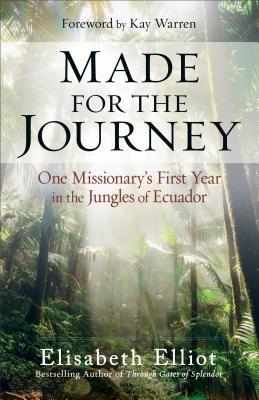
Book Review: Made for the Journey
Made for the Journey: One Missionary's First Year in the Jungles of Ecuador. 1998. Revell. 176 pages. [Source: Review copy]
First sentence: It is unsettling to me now to know that people who are making a tour of South America can take a short, easy side trip and see the Colorados.
This one was originally published as THESE STRANGE ASHES.
Made For the Journey is a memoir written by Elisabeth Elliot. In the book she recounts her first year as a missionary. This was before her marriage to Jim Elliot. Elisabeth worked with several other single women--some trained to be doctors/nurses--in a small jungle in Ecuador. Elisabeth's mission was to learn the language of the Colorados and translate the New Testament.
In the jungle, you might say, Elisabeth Elliot learned to wait. Things certainly weren't working according to her own time table.
In the book she shares the many lessons she learned--often the hard way--in the jungle during her first year.
The book brought to mind one section of Scripture.
As the rain and the snow
come down from heaven,
and do not return to it
without watering the earth
and making it bud and flourish,
so that it yields seed for the sower and bread for the eater,
so is my word that goes out from my mouth:
It will not return to me empty,
but will accomplish what I desire
and achieve the purpose for which I sent it. Isaiah 55:10,11
I wish I'd read this book before reading her fiction novel, No Graven Image. If you do read Made for the Journey, it would be worth your time to seek out the other as well. The books complement one another well.
© Becky Laney of Operation Actually Read Bible
First sentence: It is unsettling to me now to know that people who are making a tour of South America can take a short, easy side trip and see the Colorados.
This one was originally published as THESE STRANGE ASHES.
Made For the Journey is a memoir written by Elisabeth Elliot. In the book she recounts her first year as a missionary. This was before her marriage to Jim Elliot. Elisabeth worked with several other single women--some trained to be doctors/nurses--in a small jungle in Ecuador. Elisabeth's mission was to learn the language of the Colorados and translate the New Testament.
In the jungle, you might say, Elisabeth Elliot learned to wait. Things certainly weren't working according to her own time table.
In the book she shares the many lessons she learned--often the hard way--in the jungle during her first year.
The book brought to mind one section of Scripture.
As the rain and the snow
come down from heaven,
and do not return to it
without watering the earth
and making it bud and flourish,
so that it yields seed for the sower and bread for the eater,
so is my word that goes out from my mouth:
It will not return to me empty,
but will accomplish what I desire
and achieve the purpose for which I sent it. Isaiah 55:10,11
I wish I'd read this book before reading her fiction novel, No Graven Image. If you do read Made for the Journey, it would be worth your time to seek out the other as well. The books complement one another well.
© Becky Laney of Operation Actually Read Bible
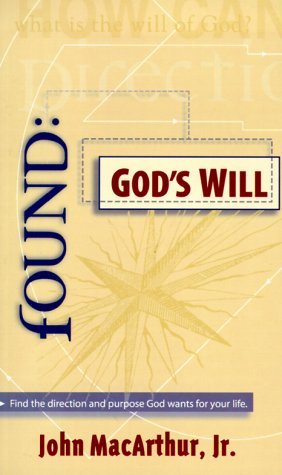
Book Review: Found: God's Will
Found: God's Will. John F. MacArthur Jr. 1972. 60 pages. [Source: Bought]
First sentence: As I travel around, one of the questions I am asked most often is, "How can a Christian know the will of God for his life?"
MacArthur argues that God's will is simple and easy to understand. There are five things that are God's will for every one. First, God wills everyone to be saved. If you are saved, if you are trusting in Jesus Christ for salvation, you are in God's will. Second, God wills everyone to be filled with the Spirit and to live in the Spirit. Third, God wills everyone to be sanctified. It isn't enough to profess your belief, one must live by it. Fourth, God wills everyone to be submissive. Every one has to submit to someone--authority is God-given authority unless submitting means violating God's direct commandments. Fifth, God wills everyone to suffer. To suffer?! Is suffering really God's will for believers?! Surely we're misreading this last one, right?! Nope. Read the Bible. It's there in black and white. (And perhaps red.) If you're saved, spirit-filled, sanctified, submissive, and suffering...then you are living in accordance with God's will and the rest is up to you.
Quote:
© Becky Laney of Operation Actually Read Bible
First sentence: As I travel around, one of the questions I am asked most often is, "How can a Christian know the will of God for his life?"
MacArthur argues that God's will is simple and easy to understand. There are five things that are God's will for every one. First, God wills everyone to be saved. If you are saved, if you are trusting in Jesus Christ for salvation, you are in God's will. Second, God wills everyone to be filled with the Spirit and to live in the Spirit. Third, God wills everyone to be sanctified. It isn't enough to profess your belief, one must live by it. Fourth, God wills everyone to be submissive. Every one has to submit to someone--authority is God-given authority unless submitting means violating God's direct commandments. Fifth, God wills everyone to suffer. To suffer?! Is suffering really God's will for believers?! Surely we're misreading this last one, right?! Nope. Read the Bible. It's there in black and white. (And perhaps red.) If you're saved, spirit-filled, sanctified, submissive, and suffering...then you are living in accordance with God's will and the rest is up to you.
Quote:
The more you study the Word of God, the more it saturates your mind and life. Someone is reported to have asked a concert violinist in New York's Carnegie Hall how she became so skilled. She said that it was by "planned neglect." She planned to neglect everything that was not related to her goal. Some less important things in your life could stand some planned neglect so that you might give yourself to studying the Word of God. Do you know what would happen? The more you study the Word of God, the more your mind would be saturated with it. It will be no problem then for you to think of Christ. You won't be able to stop thinking of Him.
To be Spirit-filled is to live a Christ-conscious life, and there is no shortcut to that. You can't go and get yourself super-dedicated to live a Christ-conscious life. The only way you can be saturated with the thoughts of Christ is to saturate yourself with the Book that is all about Him. And this is God's will, that you not only be saved but that you also be Spirit-filled. (30)
© Becky Laney of Operation Actually Read Bible
Subscribe to:
Posts (Atom)


