Showing posts with label Harry N. Abrams. Show all posts

Sunday, May 16, 2021

31. Go and Do Likewise


Go and Do Likewise: The Parables and Wisdom of Jesus. John Hendrix. 2021. [February] 40 pages. [Source: Review copy]

First sentence: Jesus's sandals were always dusty. Jesus didn't call any one place home. But he was not alone. Alongside Jesus were his students, the twelve disciples.

In 2016, John Hendrix gave us Miracle Man: The Story of Jesus. I definitely enjoyed it. I wasn't expecting a follow up book, but was pleasantly surprised to see that he has a new book out called Go and Do Likewise: The Parable and Wisdom of Jesus. 

The 'wisdom' shared here mainly comes from the Sermon on the Mount. (I would say with a few bits perhaps from the gospel of John.) The parables come mainly (though not exclusively) from the gospel of Luke. Expect The Good Samaritan, the Lost Sheep, the Prodigal Son, etc. 

What is shared, in my opinion, for better or worse, focuses on ethics: how to be a good, decent, kind human being. 

Hendrix definitely puts his own spin on the stories. What do I mean by spin? Adding his own interpretation and commentary. This isn't all that unusual for bible story books. I think every author is 'guilty' of it to a certain degree or another. But adding details--opinions, observations, making conclusions--to the text that simply aren't in the original (in any translation) can be theologically tricky. I think he adds what he adds for storytelling purposes. He wants to tell an engaging story to a young audience. He's not out to quote the Bible verse by verse by verse. 

The story of the Good Samaritan can be found in Luke 10:30-37. 

The original verse: And by chance a priest was going down on that road, and when he saw him, he passed by on the other side.

That's it. That's all the Bible says about the priest in the parable. Hendrix, however, spins a different tale:
But a priest of God, the ones you see in the temple, was also traveling this lonely road. As he looked upon the dying man, the priest feared for his own life--or perhaps didn't want to get his fine clothes dirty--and passed by him on the other side of the road without stopping to help.

The original verse: Likewise a Levite also, when he came to the place and saw him, passed by on the other side. 

Again, Hendrix spins a tale with motives: A short time later, a Levite, a person who also worked in the temple, came along the road. He, too, saw the wounded man, and blaming the man for his own carelessness, left him in a puddle of dirt and blood. 

Hendrix definitely spins the Beatitudes as well. The Beatitudes can be read in Matthew 5:3-12.

Original: Blessed are the poor in spirit, for theirs is the kingdom of heaven.
Hendrix: Blessed are those who feel like an empty jar. God will fill that emptiness with abundance.
Original: Blessed are those who mourn, for they shall be comforted.
Hendrix: Blessed are those who cry, for the Lord sees every tear. Each one, He will wipe away.
Original: Blessed are the merciful, for they shall receive mercy.
Hendrix: Blessed are those full of mercy, for they, too, will be shown grace.
Original: Blessed are the peacemakers, for they shall be called sons of God.
Hendrix: Blessed are those who work for peace. They understand what it means to be God's child.

He definitely doesn't include every single Beatitude. He leaves some off--not a criticism, just an observation. (He leaves off gentle, hunger and thirst, pure in heart, the persecuted). 

The narrative style is unique as are the visuals. The layout very much stresses the visual arts. The text is almost secondary in importance. This makes it slightly difficult to read in places. It also shifts it, in my opinion, to a slightly older audience. (As opposed to a beginning reader.)


© Becky Laney of Operation Actually Read Bible

Wednesday, January 2, 2019

Book Review: The Faithful Spy

The Faithful Spy: Dietrich Bonhoeffer and the Plot to Kill Hitler. John Hendrix. 2018. Harry N. Abrams. 176 pages. [Source: Review copy]

First sentence: This book follows the life of the man Dietrich Bonhoeffer. But it is equally a story of the German resistance. It is a story that often goes untold.

Premise/plot: This biography of Dietrich Bonhoeffer is told in 'graphic novel' format. As hinted in the above 'first sentence' the book balances the bigger picture with the personal.

The Faithful Spy gives a good overview of Hitler's rise to power and the terrors of the Third Reich and an excellent overview of the German Resistance and a handful of attempts to assassinate Adolf Hitler and overthrow the government. The personal story is that of Dietrich Bonhoeffer. From a young age he acted--thought--as a theologian. He grew up to be a pastor at a dangerous time. The "Christian" church was threatened. One had two choices: give in to Hitler's vision of the future and submit to his reign despite/in spite of one's personal beliefs OR resist and defy and stick to one's principles. Or in other words choose between having the Bible as the authority or Hitler. Bonhoeffer saw no choice--one could not in good conscience choose Hitler over Christ. Where Bonhoeffer did have a choice is to stay or to go. Before the war started, Bonhoeffer with help from friends managed to get to America. He could have waited out the war. He could have spoken out against Hitler from afar. He could have written, studied, taught. But after a few weeks in America he decided that he'd made a big mistake. His place was not one of safety in America, he belonged in Germany. Knowing that it very well could cost him everything--his freedom, his life--he returned to Germany. When opportunity came he joined the resistance and became a spy. He was involved to some degree with the failed attempts at assassination. He was eventually imprisoned, tortured, sentenced to death. But Bonhoeffer could not ignore the plight of 'the other.' To live out his beliefs--to put his doctrine in action--meant defying the Nazis and risking it all.

My thoughts: The Faithful Spy is a compelling read. (I read it in two days.) I haven't read much nonfiction written and illustrated in graphic format. The format worked well. I wouldn't say it added drama to the story--how could it? But it paid tribute perhaps to the natural drama of the story.

The book did not shy away from Dietrich Bonhoeffer as a theologian. Not many books published by a non-Christian (aka secular) publisher openly and unashamedly talk God from cover to cover. This one did. Bonhoeffer was a theologian. He was a believer, a student, a teacher, a preacher, a writer. His story could not be told accurately without talking doctrine, faith, God.

Some readers may not embrace the book because of the religious/spiritual aspects of it. But his legacy is intimately connected with his theology. There were many "spies" and many members of the resistance. Many died in Germany as prisoners. Not all were theologians.

There are other books written about his life that focus solely on his story and not on the bigger picture. I think this is an important book.

© Becky Laney of Operation Actually Read Bible

Sunday, September 4, 2016

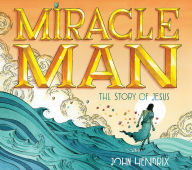
Book Review: Miracle Man


Miracle Man. John Hendrix. 2016. Harry N. Abrams. 40 pages. [Source: Library]

First sentence: Ages ago, in a dry and dusty land, the people were in need. The land was a sick place, in need of healing. The land was a blind place, in need of sight. The land was a thirsty place, in need of water...the kind of living water that would last forever.

Premise/plot: Miracle Man is a picture book for readers of all ages. It is the story of Jesus. It begins, not with his birth, but with his ministry. The book ends on the verge of the greatest miracle of all: his resurrection. Readers see the empty grave clothes, the stone rolled away, and read the words, "But God's Son, Jesus, the Miracle Man, had in store one last glorious miracle...."

My thoughts: I thought the storytelling was excellent. No story book--or picture book--will ever take the place of Holy Scripture--but writers can creatively craft a narrative worth reading and sharing.

I definitely enjoyed this one. It was one of those books that I wanted to reread a couple more times before turning back into the library. One of those books that I wanted to get everyone in my family to read so I could talk about it with someone.

Text: 5 out of 5
Illustrations: 4 out of 5
Total: 9 out of 10

© Becky Laney of Operation Actually Read Bible

Saturday, August 27, 2016

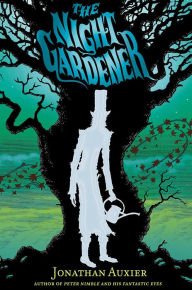
Book Review: The Night Gardener

The Night Gardener. Jonathan Auxier. 2014. Abrams. 350 pages. [Source: Bought]

First sentence: The calendar said early March, but the smell in the air said late October. A crisp sun shone over Cellar Hollow, melting the final bits of ice from the bare trees. Steam rose from the soil like a phantom, carrying with it a whisper of autumn smoke that had been lying dormant in the frosty underground.

Premise/plot: Molly and Kip are Irish orphans desperate for a new start. (Kip doesn't remember their parents death, and Molly is less than honest about why their parents aren't around.) They've been hired on as servants at a rundown, creepy estate. (The book is set in the Victorian era, by the way). The two soon understand why everyone warned them away from the job. There's something very, very wrong about the house, the family, and THE TREE. (It isn't too long after their arrival that Kip sees a mystery man wearing a top hat entering the house at the dead of night. And Molly, well, she sees his muddy footprints all throughout the house, and, even discovers his blown-away hat.) But desperate for work AND coming to love the little girl, Penny, she's reluctant to leave with no other place to go. And then she pieces together enough clues as to why the family stays…and their reason soon becomes her own…

My thoughts: I love this one. That would be a big understatement. I love, love, love, LOVE this one. It was published in 2014, I've already read it FOUR TIMES. 

I love the writing style, the atmospheric setting, the characterization, the symbolism, the layers of meaning. I notice something new every time I read it. It's such a wonderful, amazing book. One that every Christian should read!!!

Now is it officially a Christian book? No. Not really. Not at all. I'm sure there are plenty of readers who never "see" biblical truth in the pages of this middle grade fantasy. But I'm convinced it is there all the same. 

© Becky Laney of Operation Actually Read Bible

Sunday, March 8, 2015

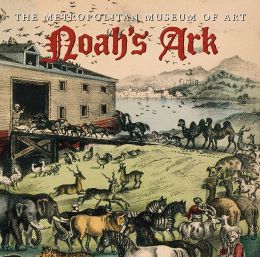
Book Review: Noah's Ark

Noah's Ark. Linda Falken. Illustrated by The Metropolitan Museum of Art. 2015. (April 2015) Harry N. Abrams. 32 pages. [Source: Review copy]

It came to pass, when people began to multiply on the face of the earth, God saw that their wickedness was great and their thoughts were evil. And the Lord said, "I will destroy every thing that I have created from the face of the earth, both humans and beasts, and the creeping things, and the birds of the air, for I am sorry that I have made them." 
But among the people, Noah found grace in the eyes of the Lord. 
And God said to Noah, "Build an ark of wood, for I will bring a flood of waters upon the earth, and every thing that is in the earth shall die. But you shall go into the ark with your wife, and your sons, and your sons' wives. 

This book is a beautifully illustrated adaptation of Noah's Ark. (The story of Noah can be found in Genesis 6 - 9.)

The introduction reads, "Artists, too, have long been fascinated by the imagery in the tale of Noah and the Great Flood. This book from the Metropolitan Museum of Art features works of art from the fifteenth century to the present day. In a range of media, from tapestries to engravings to paintings, the artists have captured both the fear and the hope inherit in this well-loved parable."

Though I disagree with the idea that Noah's ark is "a parable", I had to review this one here at Operation Actually Read Bible because it is so fascinating and beautiful. (Aside from the introduction, there is nothing in the text telling readers that it's a made-up story. And the introduction is not something to share with young readers anyway.)

The text itself is straightforward. I liked it very much.

The credits for the illustrations is thorough and fascinating in its own way. The book features the work of many artists. Descriptions of all works of art and brief biographies of artists are included. If you enjoy art at all, then this one is worth seeking out.

This book is good for sharing with little ones, but, it can prove equally interesting for adults as well.


© Becky Laney of Operation Actually Read Bible