Showing posts with label 2021. Show all posts

Thursday, July 9, 2026

5. KJV MacLaren Large Print Reference Bible


5. KJV (King James Version) MacLaren Large Print Reference (Thomas Nelson). 2021. 1504 pages. [Source: Gift] [5 stars, Bible, King James Bible]

First sentence: In the beginning God created the heaven and the earth. 

Start date: April 23, 2026
Finish date: July 9, 2026

I love the King James Bible. I love new King James Bibles. I love old King James Bibles. There are pros and cons to both old and new. This one is decidedly new. It uses comfort print font. It is 10.5 font size. The chapter and verses are in a distinctive blue. The copy I read was imitation or trutone or "leather" like. It was decent. DOUBLE column, not single. Words of Christ in BLACK. The cross references appear at the BOTTOM of the page. There are paragraph headers though it is verse by verse reference edition. This one is not broken into syllables with a pronunciation guide. (Older KJV Bibles often are like this). 

It is relatively light weight. The size of the font makes for a mostly comfortable reading experience. It isn't GIANT print or SUPER GIANT print. 

It would be a good introduction to the King James Bible. It isn't particularly intimidating, it has many of the things you'd expect in a "modern" Bible. It is line-matched. It does lay flat. 


© Becky Laney of Operation Actually Read Bible

Friday, July 25, 2025

57. Hand to Hold


57. Hand to Hold. JJ Heller. 2021. 40 pages. [Source: Library] [4 stars, picture book]

First sentence: Trees are made for climbing. Days are made for sun. Puddles are for jumping. Fields are made to run. Stars are made for counting and for wishes coming true. Sleep is made for dreaming, and I have dreams for you. Stones are made for skipping. Stories are to tell. Life is made for living. I pray you live it well.

Hand to Hold is a picture book adaptation of JJ Heller's lullaby, "Hand to Hold." 

I have only recently discovered JJ Heller's music. It was--and is--LOVE at first listen. While "Hand to Hold" isn't my absolute favorite and best song of her work, it is a great song. I can see why it was chosen to adapt in picture book format. It's a lovely picture book to share with little ones--toddlers, preschoolers, pre-K, etc. It would be good for a family read aloud as well with multiple ages of children. 

It's sweet, adorable, playful. And the message, of course, is solid. A parents' love is unconditional. 


© Becky Laney of Operation Actually Read Bible

Sunday, November 3, 2024

53. In the Lord I Take Refuge

53. In the Lord I Take Refuge: 150 Daily Devotions Through the Psalms. Dane C. Ortlund. 2021. 416 pages. [Source: Borrowed]

First sentence: Blessed is the man who walks not in the counsel of the wicked, nor stands in the ways of sinners, nor sits in the seat of scoffers; but his delight is in the law of the LORD, and on his law he meditates day and night.

The Psalter uses the English Standard Version. Each psalm is followed by a devotion by Dane C. Ortlund. 

Definitely this is a case of what you see is what you get. Love the psalms? Definitely worth it for getting the psalms on such nice paper. Love devotions? Great. The devotions go with the psalms--so no extra steps for reading more Scripture.

I divided the psalms into daily portions according to the arrangement of the Book of Common Prayer. Readers could read one per day, five per day, ten per day, whatever. Definitely this is a a book that you can take at your own pace. There is no need to feel pressured to read it in one month. 


© Becky Laney of Operation Actually Read Bible

Monday, September 30, 2024

DNF, On the Spectrum

On the Spectrum: Autism, Faith, and the Gifts of Neurodiversity. Daniel Bowman, Jr. 2021. 256 pages. [Source: Library] [DID NOT FINISH] [no stars given] 


I am not rating this book because I did not finish the book. I read *some* of the book. (I'll detail which chapters in a bit.) This is not a proper review. It is a partial review of what I did read. It is not meant to reflect the book as a whole because I did not finish the whole book.

On the Spectrum is a collection of essays written by an autistic poet who is a practicing progressive Episcopalian, a husband, a father, a lover of literature. (Personally, I thought he came across as a literary snob. But to each his own. Seriously. Love whatever authors you love. No judgment. His tastes aren't my taste from what little I read, however, again to each his own.)

The essays I read include: "Autism and the Church" (8 pages); "Service and the Spectrum" (12 pages); "The Insidious Nature of Bad Christian Stories" (8 pages).

Are those three essays enough to judge the book as a whole? NO. Of course not. That's why this is NOT a proper review. It was enough for me to taste and see that this book was not what I wanted. It would be horribly unfair to judge a book based on what it isn't. What the book is: Personal memoirs in the form of a collection of essays written by a man whose first love is poetry and *literature*.

Essays are not my typical read. I didn't understand that this is what the book is, a collection of essays. So while I was expecting the traditional format/structure of more traditional Christian nonfiction or christian living or dare I say even theology, this is a collection of personal essays. I think the subtitle is slightly misleading in that it doesn't really clarify that this is a book of essays.

Poetry is not my typical read either. Even though the book is not a book of poetry, you can't take the poet out of his writing style, his narrative. And that's not a bad thing, it's an authentic to himself thing.

Personal memoir. I believe that it would be safe to say that ALL of the essays are personal.

It isn't that faith is completely and totally absent from this one. It isn't. But based on the subtitle AND the fact that this is listed under the category or label Christian living, I was expecting another kind of book. I read chapters whose titles might indicate the presence of faith as a subject. It is entirely possible that other essays might reflect faith as well.

I will say that his faith--PROGRESSIVE EPISCOPALIAN--does not align with mine. He seems more likely to quote some of Oprah's favorite authors (in particular there were scores of Richard Rohr quotes If not scores, it felt like it. I only read a handful of essays but his name kept popping up. I just used the search feature to search, eleven times he is quoted and/or referenced)

"Autism and the Church" is an essay detailing the author's history with the church...the elements of church that were NOT working for him (though he couldn't quite put his finger on the why until his diagnosis) and his present experiences in his local church. One quote, "Since my diagnosis, I know I don't have to feel ashamed anymore. And that's perhaps the key takeaway I'd like to offer to fellow Christ followers: as you live and worship alongside your autistic neighbors, you can help free us from the shame we've carried." I think my favorite bit of this one was seeing how the Book of Common Prayer could be *extremely* comforting because of the structure and familiarity.

"Service and the Spectrum" is an essay all about BALANCE. How does one balance the need for self-preservation (taking care of one's self to avoid meltdowns and overwhelming the mind, the senses, etc.) with the need to "serve" the church and "bear fruit." This is a thought-provoking chapter with plenty of questions and one man's solution to those questions.

"The Insidious Nature of Bad Christian Stories" is an essay about how terrible, horrible, no good, very bad anything labeled "Christian" is. Which is perhaps slightly ironic since this one is I believe published by a Christian publisher. The main point of this one seems to be that the only good art is secular art. Are there bad Christian movies? Yes. But where I would disagree is the generality that ALL, no exceptions, are bad. It seems impossible to him that a good Christian movie could ever be made. But it isn't just films, he is criticizing anything and everything specifically "Christian." He first says that Christian art doesn't even deserve "serious critical attention" because obviously it is so poorly done and obviously bad. Actually the word he uses is CHILDISH.

What are some childish attitudes that bad Christian stories feed into and encourage?
  • The immature need to have correct beliefs, as opposed to the adult need to consider and examine diverse voices to develop critical thinking, empathy, and love.
  • The immature need to be continually comforted, rather than the adult need to be comforted when afflicted, but also afflicted and challenged by difficult art when one has become too comfortable, even complacent, in one's faith, relationships, work and leisure.
  • The immature need for clear answers to questions that have none, as opposed to the adult need to learn to live creatively with mystery and paradox.
  • The immature need to separate good and evil into clear camps at all times, as opposed to the adult need to learn to let the wheat and the tares grow together until the harvest
  • the immature confusing of real emotion and true empathy with shallow sentimentality and greeting card cliche, as opposed to the adult need to feel deeply through encounter and catharsis while confronting our own contradictions
  • The immature need to romanticize the past as opposed to the adult need to recognize the complications, flaws, and entrenched injustices of every era--and in that recognition, to nevertheless work in faith to love God and our neighbors.
  • The immature need to be in control as opposed to the adult need to wait on God through ambiguity. 

It would be easier to evaluate if he'd lowered himself enough to comment with specifics instead of generalizing everything and condemning it one and all.

Christian works [be they art, movies, books, music] will always, always, always have haters. That's true enough. Even within Christian circles you will find haters that slam on Christian stuff. For better or worse. Again often condemning anything and everything in a generalized grouping. So while plenty of readers would probably agree with Bowman, I cannot. Because generalizations just don't work for me.

So this last essay I read was a big NO to me.


© Becky Laney of Operation Actually Read Bible

Thursday, November 2, 2023

16. NASB 1977 Thompson Chain Reference Bible


NASB, 1977 Edition. Thompson Chain Reference Bible. (Leathersoft) God. 2021. 2240 pages. [Source: Bought]

First sentence: In the beginning God created the heavens and the earth.

Start date: September 24, 2023
Finish date: November 2, 2023

Was this my first time reading the NASB 1977? NO. I absolutely love, love, love, love this translation. This isn't even my first time reading the NASB 1977 in 2023. It is a true favorite.

Was this my first time reading the Thompson Chain Reference Bible? No. Though it was my first time to do so with the New American Standard text instead of the King James text. 

This is a double column, red letter reference bible. It utilizes the chain references [and the chain reference system] of Frank Charles Thompson. This is one of the older "legacy" "study" Bibles available. It is available in many different translations--KJV, NKJV, ESV, NASB 1977, NASB 1995, NIV 1984, probably NIV 2011. 

Traditionally, the Thompson Chain Reference Bibles have small font. This one does as well, though it might be slightly larger than the original. Maybe. My copies from the 1960s don't list a font size. This font size is 8.3. The newer ones have a larger font size. [The NASB 95 Thompson Chain Reference, for example, is supposed to have larger font.] 

This is a LARGE Bible. It is heavy. 


© Becky Laney of Operation Actually Read Bible

Thursday, October 26, 2023

14. NASB XL (Leathersoft)


NASB 1995 XL. God. Zondervan. 2021. 1664 pages. [Source: Bought] 

First sentence: In the beginning God created the heavens and the earth. The earth was formless and void, and darkness was over the surface of the deep, and the Spirit of God was moving over the surface of the waters. Then God said, “Let there be light”; and there was light.

I do love the New American Standard Bible. I love the 1977 and the 1995 most. Though there are others with that name. 1971 and 1973 are long out of print. 2020 is 'new'. I don't actively dislike the 2020. I don't, I'm not one of those extremists that must avoid it at all costs or a rant will be forthcoming. I am perfectly fine with the 2020. 

The format of this one IS unique. It's a square essentially. The columns are VERY wide as the pages themselves are very wide. This Bible takes up all of your lap. (For better or worse). The font size is generously large. It is purposefully bulky and awkward. 

I did enjoy this one MORE than the NRSV XL which I also reviewed this year. The paper was not extra wrinkly. You could look at the NRSV XL and the pages would start to wrinkle, fold, crumple. It was a MESS. 

I liked this one mostly. I love, love, love the translation. But it wasn't easy to read in lap. Maybe it wasn't meant to be. 

It is verse by verse. It is black letter. It is double column. The font size, as I mentioned, is large. It is comfort print. It has many things that are positive. I just didn't exactly love the square awkwardness. 

© Becky Laney of Operation Actually Read Bible

13. King James Version, Sovereign Personal Size Reference Bible


King James Version, Personal Size Sovereign Collection. God. Thomas Nelson Publishers. 1696 pages. [Source: Bought]

First sentence: In the beginning God created the heaven and the earth. And the earth was without form, and void; and darkness was upon the face of the deep. And the Spirit of God moved upon the face of the waters. 

This is not my first time to read the King James Version. It is one of my absolute favorite translations of the Bible. It is my first time to read the King James Bible in Nelson's new Sovereign collection. I could not find my Bible on GoodReads (not surprising). I found the 'fake leather' in PURPLE at HalfPrice books. 

I started the project on September 8, 2023. I finished on October 25, 2023. I had not originally planned to reread the King James Version again this year--since I'd just finished reading through it in the summer. Finding this Bible, it persuaded me to read it NOW, NOW, NOW. 

The layout of the Sovereign is excellent. I do think my copy at least had some problems with the red accent color. There were pages where the drop caps and verse numbers were very faint/faded. Plenty of chapters were strong, dark, easy to read. So it didn't end up being a deal breaker for me to see these discolorations. I do wonder if these variations might have been why HalfPrice was able to buy so many new to have on their shelves. (Perhaps this was a known issue with the lot?) 

About this edition:

Line-matched classic 2-column format [the Psalms are in single column format just so you know]
Extensive end-of-page cross references 
Translation notes [not sure if this goes under translation notes, but this edition features WORDS DEFINED. So the more 'archaic' words were defined for readers in the notes]
Presentation page
Bible book introductions
Words of Christ in red
Concordance
Full-color maps
Two satin ribbon markers
Gilded page edges
Durable and flexible Smyth-sewn binding
Clear and readable KJV Comfort Print [I adore the KJV Comfort Print. I believe this is my only KJV Bible so far to be in Comfort Print.]
9.5-point print size 

The font size AND weight were a good balance. It was easy to hold. GREAT to hold. It was natural and effortless as opposed to bulky and awkward. The font size was good overall. Some days my vision is weaker than others, but most of the time it worked well. 

I am not a believer in "the one." That is the concept or idea of a person using ONE and only ONE Bible to read forever and ever. I'm not even sure I believe in ONE translation to read forever and ever. But if I did, this one would probably be mine. I WOULD LOVE IT EVEN MORE IN BLACK LETTER, obviously. But this one comes so close to being perfectly perfect in terms of layout and weight. 

© Becky Laney of Operation Actually Read Bible

Thursday, October 5, 2023

68. More Than A Healer


More Than a Healer: Not the Jesus You Want But the Jesus You Need. Costi W. Hinn. 2021. [September] 192 pages. [Source: Library]

First sentence: As I was writing this book, events in the year 2020 unfolded rapidly: the pandemic, cultural upheaval, dramatic battles in the church, the American election. To say that it was a wild year is an understatement.

More Than A Healer is a fantastic read. I rarely check out books from the library and say I NEED to own that book, but, with this one I'm tempted. It is SO wonderful. Is it just about healing? No. It is a look at WHO Jesus has revealed himself to be in the Word of God. It is a close look at the Jesus who actually IS as opposed to the Jesus that we might imagine and reimagine in our heads. Sometimes imaginary Jesus makes his way into the pulpit as well. Imaginary Jesus definitely invades bookstores as well. 

This is a good old-fashioned meet the real Jesus book. There are nine chapters. 

He Is Healer
He Is Peace
He Is Savior
He Is Hope
He Is Comfort
He Is Good
He Is Love
He Is Justice
He Is Sovereign

Each book is PACKED with spiritual truth and insight and heavily saturated with the Word of God. And by that I mean it is written in light of Scripture and with close attention, dear reverence for Scripture. I do not mean cutting and pasting only. The Bible IS relevant whether people want to admit that or not. The Bible has truth--some of it comforting and reassuring, and some of it HARD and uncomfortable. 

I think one of the important thing he stresses is that you should be meeting Jesus in the Word of God and not blindly accepting and following a second-third-fourth hand Jesus. Anyone can say "Jesus said..." or "Jesus says..." but that doesn't necessarily mean that they are getting Jesus right. OR interpreting his words, his meaning correctly. It is unfortunate that it's commonplace to read our own meanings into Scripture instead of studying what the Word actually meant and means. 

I see this as a book to refer back to again and again. 

I think my favorite chapter might just be He Is Peace. I love, love, love the Alistair Begg story he shares! 

© Becky Laney of Operation Actually Read Bible

Monday, April 24, 2023

39. Go and Do Likewise


Go and Do Likewise: The Parables and Wisdom of Jesus. John Hendrix. 2021. [February] 40 pages. [Source: Review copy]

First sentence: Jesus's sandals were always dusty. Jesus didn't call any one place home. But he was not alone. Alongside Jesus were his students, the twelve disciples.

In 2016, John Hendrix gave us Miracle Man: The Story of Jesus. I definitely enjoyed it. I wasn't expecting a follow up book, but was pleasantly surprised to see that he has a new book out called Go and Do Likewise: The Parable and Wisdom of Jesus. 

The 'wisdom' shared here mainly comes from the Sermon on the Mount. (I would say with a few bits perhaps from the gospel of John.) The parables come mainly (though not exclusively) from the gospel of Luke. Expect The Good Samaritan, the Lost Sheep, the Prodigal Son, etc. 

What is shared, in my opinion, for better or worse, focuses on ethics: how to be a good, decent, kind human being. 

Hendrix definitely puts his own spin on the stories. What do I mean by spin? Adding his own interpretation and commentary. This isn't all that unusual for bible story books. I think every author is 'guilty' of it to a certain degree or another. But adding details--opinions, observations, making conclusions--to the text that simply aren't in the original (in any translation) can be theologically tricky. I think he adds what he adds for storytelling purposes. He wants to tell an engaging story to a young audience. He's not out to quote the Bible verse by verse by verse. 

The story of the Good Samaritan can be found in Luke 10:30-37. 

The original verse: And by chance a priest was going down on that road, and when he saw him, he passed by on the other side.

That's it. That's all the Bible says about the priest in the parable. Hendrix, however, spins a different tale:
But a priest of God, the ones you see in the temple, was also traveling this lonely road. As he looked upon the dying man, the priest feared for his own life--or perhaps didn't want to get his fine clothes dirty--and passed by him on the other side of the road without stopping to help.

The original verse: Likewise a Levite also, when he came to the place and saw him, passed by on the other side. 

Again, Hendrix spins a tale with motives: A short time later, a Levite, a person who also worked in the temple, came along the road. He, too, saw the wounded man, and blaming the man for his own carelessness, left him in a puddle of dirt and blood. 

Hendrix definitely spins the Beatitudes as well. The Beatitudes can be read in Matthew 5:3-12.

Original: Blessed are the poor in spirit, for theirs is the kingdom of heaven.
Hendrix: Blessed are those who feel like an empty jar. God will fill that emptiness with abundance.
Original: Blessed are those who mourn, for they shall be comforted.
Hendrix: Blessed are those who cry, for the Lord sees every tear. Each one, He will wipe away.
Original: Blessed are the merciful, for they shall receive mercy.
Hendrix: Blessed are those full of mercy, for they, too, will be shown grace.
Original: Blessed are the peacemakers, for they shall be called sons of God.
Hendrix: Blessed are those who work for peace. They understand what it means to be God's child.

He definitely doesn't include every single Beatitude. He leaves some off--not a criticism, just an observation. (He leaves off gentle, hunger and thirst, pure in heart, the persecuted). 

The narrative style is unique as are the visuals. The layout very much stresses the visual arts. The text is almost secondary in importance. This makes it slightly difficult to read in places. It also shifts it, in my opinion, to a slightly older audience. (As opposed to a beginning reader.)

ETA: It's been almost two years since I first read this picture book (for older readers). I definitely enjoyed rereading it. I enjoyed seeing the variety between the parables and the teachings. I wish that there were more books published like this one and Miracle Man. There just aren't that many.


© Becky Laney of Operation Actually Read Bible

Saturday, February 4, 2023

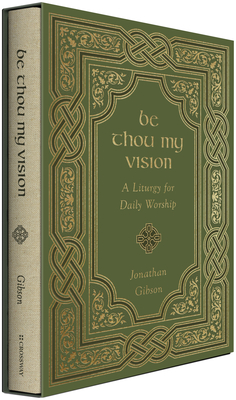
13. Be Thou My Vision


Be Thou My Vision: A Liturgy for Daily Worship. Jonathan Gibson. 2021. [November/December] 352 pages. [Source: Review copy]

First sentence: It may come as a surprise, but there is no explicit command in Scripture to have a time of worship each day, either as an individual or as a family. And yet it is a habit that every Christian believer or Christian family is encouraged to practice. The name of the habit may vary depending on one's Christian tradition or background--"devotion," "quiet time," or "personal or family worship"--but the basic elements of Bible reading and prayer are usually present. 

ETA: I first read this one in 2021. I liked--really liked quite a few things about it. I mentioned at the time that I wanted to give it a 'proper' go. To use it for a month--or two, or three--to see how well I liked it--or not. 

I started using the Be Thou My Vision devotional in December 2022. I also continued using it in January 2023. Now that I've read through it three times, I can now say that I definitely enjoy it. I do think it is solid and steady. 

Original review:

What you see is what you get. This is a LITURGY for DAILY WORSHIP. Thirty-one days of liturgical worship that can be repeated to infinity (and beyond). 

The structure of the liturgy for daily worship is:

CALL TO WORSHIP (thirty-one Scripture readings, these are taken from both Old and New Testaments)
ADORATION (thirty-one prayers--all focused on praise and adoration--taken from church history; I believe the doxology is included under this heading as well)
READING OF THE LAW (seven readings taken from Scripture--from both Old and New Testaments--regarding the law)
CONFESSION OF SIN (thirty-one prayers--all focused on confessing sin--taken from church history)
ASSURANCE OF PARDON (thirty-one Scripture readings--focusing on assurance of forgiveness of sins--taken from both the Old and New Testaments)
CREED (alternates three creeds, but one of the three creeds is divided into three; Apostles' Creed, Nicene Creed, Athanasian Creed)
PRAISE (Gloria Patri, two versions alternating weekly)
CATECHISM (refers you to an appendix where you'll read from the Heidelberg Catechism or the Westminster Shorter Catechism. These are undated; you are encouraged to read one question a day.)
PRAYER FOR ILLUMINATION (seven prayers from church history, repeated weekly)
SCRIPTURE READING (refers you to an appendix where they share the M'Cheyne reading plan. Here's where it gets confusing, the plan clearly has you reading FOUR chapters a day, but the book has you just reading one chapter a day????)
PRAYER OF INTERCESSION (thirty-one prayers from church history; you are also encouraged to pray on your own for personal, church, world needs)
LORD'S PRAYER (daily)

The book has five appendices: musical tunes for the Doxology and Gloria Patri, the two catechisms, the M'Cheyne reading plan, and the collects from the Book of Common Prayer, and author index. 

The book pulls in sources from all over--including the Book of Common Prayer. The structure is different from that of the Book of Common Prayer, and yet there are similarities to a certain degree. It does offer more variety in some ways. 

I think you could definitely improvise with this as well. You wouldn't have to read just one chapter from a daily reading plan that clearly and obviously has four readings. You wouldn't have to follow this reading plan at all.

I do wish that one of the sections was focused on the PSALMS and taking you through the Psalms each month. That's one of my favorite, favorite, favorite things about doing the Daily Offices from the Book of Common Prayer.

© Becky Laney of Operation Actually Read Bible

Tuesday, December 27, 2022

43. Under the Texas Mistletoe


Under the Texas Mistletoe. Karen Witemeyer. 2021. 320 pages. [Source: Gift]

First sentence: "It's a fool's errand, I tell you."

Under The Texas Mistletoe is a collection of three holiday-themed novellas by Karen Witemeyer. One is brand new--2021. One is first time in print [previously available as an e-book]. One is a reprint of a previously published novella [from another holiday novella collection]. The three novellas are A Texas Christmas Carol, An Archer Family Christmas, and Gift of the Heart. 

I enjoyed all three novellas. I don't know that I have a favorite exactly. Whatever story I happen to be reading at the time is my favorite. Of the three novellas, An Archer Family Christmas is the most melodramatic--in my opinion. But I am also super partial to the Archers so I can definitely overlook a little holiday drama. 

I really just felt so happy reading all three novellas. It was great to revisit Gift of the Heart. I do remember reading that one when it came out in another book. 

© Becky Laney of Operation Actually Read Bible

Monday, October 24, 2022

37. The First Songs of Christmas


The First Songs of Christmas. Nancy DeMoss Wolgemuth. 2021. 160 pages. [Source: Bought]

First sentence: One of the things I most love about being a child of God is that we have something to sing about. And one of the things I most love about the Bible is that it gives us songs to sing. Especially Christmas songs.

First sentence from day one: The Ancient of Days became a newborn. The One who created the first woman was born of a woman. 

What you see is what you get. A thirty-one devotional--intended for the month of December, obviously--that takes readers through the first songs of Christmas [as found in the Bible]. These first songs of Christmas are all found in the first two chapters of Luke. It wouldn't be such a bad idea to read either Luke 1 or Luke 2 in its entirety each day throughout the month. I always think it's great to look at the bigger context of how verses fit together. The devotions themselves look at the story just a few verses at a time--which is perfectly fine--but seeing the pieces all come together is wonderful too. 

So readers get a few Bible verses at the start, the devotional entry, a prayer, and further verses to read if they so desire. 

I liked this devotional. I bought it last year after Christmas. [I think it went on sale after Christmas]. I've been really wanting to read it and couldn't wait until December. After all, if I enjoyed it, I'd want to recommend it to YOU so you could read it in December. I definitely liked it. I'm not the biggest devotional reader, but, I do make exceptions for shorter devotionals. 

© Becky Laney of Operation Actually Read Bible

Tuesday, July 26, 2022

28. The London House


The London House. Katherine Reay. 2021. [November] 368 pages. [Source: Library]

First sentence: Caro hugged Martine, whispering close to her ear. 

There are essentially two main stories unfolding in Katherine Reay's The London House. There is a story within a story. Caroline Payne is being compelled to revisit a "dark family secret." A friend--or former friend, possibly still a true forever friend--is about to publish an article revealing her family's dark, scandalous past. She doesn't believe him--at first. Her father--who is dying--is irate. She cannot deny blind facts. But she can question their interpretation and possible biases by the author. His name is Mat Hammond, and they were college friends and classmates. The big "dark" "scandalous" secret is that her great-aunt Caroline Waite ran away with a Nazi lover [allegedly] and betrayed her country. The cover-up through the generations is that Caroline died as a child. 

Caroline promises to comment [or contribute] to the story...but only after she's done her own research into the past. She returns to her family's British home--THE LONDON HOUSE--and finds the diaries, letters, etc. from both her great-aunt and her grandmother. There are certainly "secrets" to be found, but do they fall in line with Mat's story??? Or does what she reads convince her that Mat's theories are all wrong??? Is the "scandalous secret" that simple and straight forward? 

Much of the plot is centered around events in the 1930s and early 1940s. In the years leading up to war and the war itself. Caroline [the aunt] wroked in Paris for a designer named Elsa Schiaparelli. There are some historical details woven into the story. Like discussion of the lobster dress. 

Quotes:
History reflects humanity. It isn't one dimensional, or even two-dimensional; it's multifaceted and far more complex and nuanced than we allow.
Humans are messy. Their history is going to be messy. 

© Becky Laney of Operation Actually Read Bible
Saturday, January 29, 2022

7. Tacos for Two


Tacos for Two. Betsy St. Amant. 2021. [October] 336 pages. [Source: Review copy]

First sentence: If Rory Perez could find a way to wad all the cilantro in the entire world into a ball and hurl it into outer space, it still wouldn't be far enough removed for her preference.

If You've Got Mail is your all-time favorite, favorite movie AND you live for Taco Tuesday, then Betsy St. Amant's newest book, Tacos for Two, was written just for you. (Probably). 

ColorMeTurquoise and StrongerMan99 are falling hard and fast for one another. These two have been chatting via Direct Messages on a dating app, "Love at First Chat." They've never met, but, they share a few things in common. One of which is they both love the movie You've Got Mail. 

Rory Perez and Jude Strong are thrown together a little too often for her liking. Rory inherited a food truck, a taco truck, from her aunt. It isn't that she doesn't love tacos, she does, but she doesn't love cooking. (She doesn't even like cooking, not even a little bit). Jude Strong HATES his family business--a law firm. His big dream is to own his own food truck--and tacos, well, tacos would be his first choice. To him, owning his own food truck would mean some freedom and independence... These two food trucks are about to be in direct competition with each other. And, well, conflicts are bound to happen. Can this small Texas town be big enough for two thriving taco trucks?

This romance is 1000% predictable. That isn't necessarily problematic. Again, if you love the movie If You've Got Mail (or one of the earlier films from which it derives--In the Good Old Summertime OR Shop Around The Corner), I think that predictability wouldn't be a deal breaker. This book does seem more derivative than many other Christian romances. 

I didn't have trouble suspending my disbelief for most of the book. However, when it came to Rory's party planning/designing, well, she lost me a bit. I had a hard time imagining a sophisticated, elegant, beautiful party where the guests are wearing formal wear when tacos and nachos are on the menu and the decorations include balloons. 

© Becky Laney of Operation Actually Read Bible

Tuesday, January 18, 2022

4. The Healing of Natalie Curtis


The Healing of Natalie Curtis. Jane Kirkpatrick. 2021. [September] 368 pages. [Source: Review copy]

First sentence: She followed the blind boy up through the crevice, up through the warm rocks the colors of weeping rainbows, up to a life beyond any she had known.

Jane Kirkpatrick's newest novel is based on a true story. Her heroine, Natalie Curtis, was a real person (1875-1921). The novel focuses on Curtis' work as an ethnomusicologist. When she went west with her brother, she wasn't particularly looking for a monumental life-change; she was in need of a change, and desperately needed a change. But still. She couldn't have predicted the direction her life would take. Curtis found meaning--if meaning is the right word--in visiting Native American tribes across the country and recording their music, transcribing and describing their songs and traditions. At the time, it was illegal--in many places for Native Americans to sing and dance and speak their own language. The push was to get the tribes--all tribes--"civilized" and speaking English. The quicker all tribes could assimilate, the better. (Not that they'd ever be seen as "equal" mind you.) She saw that the loss of this American folk music--this ethnic music--would be devastating and crushing. Within a generation or two, all would be irrevocably lost. She traveled the country, lived on and visited many reservations, recorded the music, took notes on the traditions, wanted to share the vastness, the richness of these cultures. She needed patrons to help support her financially and she needed support politically. It was controversial to say the least--going against "the code" of what was legal at the time. 

Her biography is interesting. I think the book seeks to capture her work. But at times it felt a bit draggy. (Not all the time, mind you.) It's just that these 368 pages felt more like 450 pages. 

It is based on a true story. The focus is always on her and her work. It never becomes a fluff piece trying to make it into a more traditional "Christian romance" title. 

But is it Christian fiction??? I would say it could easily pass as NOT. For better or worse. Curtis was not a missionary. It was never her goal, her mission, to proclaim the gospel, to spread Christianity, to instruct or teach the Christian faith. There is nothing remotely evangelical or "Christian" in the novel. 


© Becky Laney of Operation Actually Read Bible

Thursday, January 6, 2022

2. God Is My Hiding Place


God Is My Hiding Place: 40 Devotions for Refuge and Strength. Corrie ten Boom. 2021. [October] 174 pages. [Source: Review copy]

First sentence: In Germany I once met a woman who told me that 42 years prior, she had comitted a terrible sin and since then she had prayed every day for forgiveness.

God Is My Hiding Place is a devotional with collected pieces of Corrie ten Boom's writings. Corrie ten Boom, I believe, wrote quite a few books--including several devotional books. This book gathers together forty entries to serve as a 'new' devotional. I do not have any concern about 'recycled' pieces because there will always be a new audience. 

The devotional book might be a good starting place for those who are unfamiliar with her story, her life, her work. For those that are already familiar with her, this one will be a good fit as well. 

I am not the biggest fan of devotionals in general. I'm not. I always want a bit more SUBSTANCE than fluffy stories. But I'm making a bit of an exception with this one. Her stories are anything but fluffy. The entries are testimonies that point readers to God. 

There's a verse in Psalms that says LET THE REDEEMED OF THE LORD SAY SO. (Psalm 107:2). This book contains vignettes of just that. 

This is not theology. It isn't. It is devotional--one woman testifying in forty different entries--about how God has answered prayers, delivered her, provided for her, etc. 

I would say the overall theme of the book is that GOD HEARS (listens) to our prayers (cries) and that he is always faithful, good, and gracious. God in his grace provides answers to all prayers. (True, the answers are always in his own way, in his own timing, but God in his wisdom knows what is best and good for us.)

The devotional book also reveals her zeal for the Lord. 

© Becky Laney of Operation Actually Read Bible

Sunday, January 2, 2022

1. After Emmaus


After Emmaus: How the Church Fulfills the Mission of Christ. Brian J. Tabb. 2021. [November] 208 pages. [Source: Review copy]

First sentence: This is a book about reading the Bible with a focus on Christ and the church's mission in his name. 

Tabb continues, "I seek to show that Jesus's teaching about his suffering, resurrection, and mission in Luke's gospel anticipates his paradigmatic summary of the Scriptures in Luke 24:46-47. I also explain that the apostles and their associates follow the risen Lord's model for reading the Law, Prophets, and Writings with concerted focus on the Messiah and his mission. Finally, I contend that the church today should adopt the same hermeneutical lens in our Bible reading, for it grounds our gospel message and galvanizes us to participate in Christ's global work."

The good news is that the preface tells you EXACTLY what to expect from this book. It also does well in showcasing the narrative style. One gets a sense right away that this will be a scholarly read with big words that add complexity and depth to the subject.

The concept is simple enough: CHRIST IS TO BE FOUND IN ALL OF SCRIPTURE. In the Law, the Prophets, the Writings. All of the Old Testament and the New Testament. Christ is the center of it all. But this book seems to dress up this super simple concept that is essential to the faith (in my opinion) and complicates it with scholarly analysis and precision. 

I do agree with the basics of this one. "We all need the proper lenses when we read God's word so that we do not fail to see what is really there." Jesus is that lens. 

So After Emmaus is a scholarly analysis of LUKE and ACTS (more Luke than Acts perhaps). Tabb argues that a proper understanding of LUKE is the KEY to "getting" the gospel message and mission right. Everything we need to know about the GOSPEL and the MISSION of the church can be found in Luke (and Acts). One can use Luke/Acts to help unpack the rest of Scripture. 

The focus throughout remains on Jesus the Messiah. 


© Becky Laney of Operation Actually Read Bible

Tuesday, December 7, 2021

83. Every Word Unsaid


Every Word Unsaid. Kimberly Duffy. 2021. 352 pages. [Source: Review copy]

First sentence: Nothing brought Augusta Constance Travers more joy than slipping away. And nothing frustrated her more than the companion meant to keep her from doing so.

Gussie Travers, our heroine, is Miss Adventuress. She takes photographs on her Kodak camera and writes [fluff] travel pieces. Her work is supposed to be anonymous. No one is supposed to know that she comes from society. But. All secrets come to light...eventually. Such is the case with Gussie's "big" secret. Much to her family's shame and disapproval. A daughter that TRAVELS the country on her own??? A daughter that WORKS???? Who would ever want to marry such a strange and unnatural girl? 

After she is outed, Gussie travels to India--expenses paid by the newspaper/journal/magazine. She'll start her once-in-a-lifetime adventure (as Miss Adventuress) by spending some time with old family friends (who are conveniently living in India, don't you know). But to her utter SHOCK AND DISMAY they aren't exactly thrilled (jumping up and down at her arrival) because they are in the midst of a pandemic--bubonic plague. No worries for Miss Adventuress. Surely bubonic plague isn't dangerous or even all that contagious! She'll do just fine going wherever she wants and doing whatever she wants. No worries. She is free; she is independent. She is going to take photographs of everything and everybody! Hooray for full-time adventures!

She soon finds herself in love with the place and the people. Will she ever want to leave India? What if she wants more from life than adventure? What if she wants something completely different that she has always shunned before? 

I have a love/hate relationship with this book. On the one hand, it kept me reading. I loved the hero--a doctor. And it's a friend-to-lovers romance. Also possibly marrying your best friend's brother??? Regardless of which it truly is, it has some satisfying moments. On the other hand, there were plenty of moments when I truly did want to shout at the characters. There were moments where you doubted the characters had any intelligence at all. (These moments were few, thankfully!) 

Before reading this one, I had no idea of the 1897 Bombay Plague and the resulting Epidemic Disease Act of 1897. To be fair, I didn't learn much history from the novel. But it did make me curious enough to do an internet search to find out if the bubonic plague was a plot device--so the historical characters could voice strong opinions on pandemics and politics--or historical fact. I read this article. 

There were definitely things that I enjoyed/liked about this one. 

© Becky Laney of Operation Actually Read Bible

81. Be Thou My Vision


Be Thou My Vision: A Liturgy for Daily Worship. Jonathan Gibson. 2021. [November/December] 352 pages. [Source: Review copy]

First sentence: It may come as a surprise, but there is no explicit command in Scripture to have a time of worship each day, either as an individual or as a family. And yet it is a habit that every Christian believer or Christian family is encouraged to practice. The name of the habit may vary depending on one's Christian tradition or background--"devotion," "quiet time," or "personal or family worship"--but the basic elements of Bible reading and prayer are usually present. 

What you see is what you get. This is a LITURGY for DAILY WORSHIP. Thirty-one days of liturgical worship that can be repeated to infinity (and beyond). 

The structure of the liturgy for daily worship is:

CALL TO WORSHIP (thirty-one Scripture readings, these are taken from both Old and New Testaments)
ADORATION (thirty-one prayers--all focused on praise and adoration--taken from church history; I believe the doxology is included under this heading as well)
READING OF THE LAW (seven readings taken from Scripture--from both Old and New Testaments--regarding the law)
CONFESSION OF SIN (thirty-one prayers--all focused on confessing sin--taken from church history)
ASSURANCE OF PARDON (thirty-one Scripture readings--focusing on assurance of forgiveness of sins--taken from both the Old and New Testaments)
CREED (alternates three creeds, but one of the three creeds is divided into three; Apostles' Creed, Nicene Creed, Athanasian Creed)
PRAISE (Gloria Patri, two versions alternating weekly)
CATECHISM (refers you to an appendix where you'll read from the Heidelberg Catechism or the Westminster Shorter Catechism. These are undated; you are encouraged to read one question a day.)
PRAYER FOR ILLUMINATION (seven prayers from church history, repeated weekly)
SCRIPTURE READING (refers you to an appendix where they share the M'Cheyne reading plan. Here's where it gets confusing, the plan clearly has you reading FOUR chapters a day, but the book has you just reading one chapter a day????)
PRAYER OF INTERCESSION (thirty-one prayers from church history; you are also encouraged to pray on your own for personal, church, world needs)
LORD'S PRAYER (daily)

The book has five appendices: musical tunes for the Doxology and Gloria Patri, the two catechisms, the M'Cheyne reading plan, and the collects from the Book of Common Prayer, and author index. 

The book pulls in sources from all over--including the Book of Common Prayer. The structure is different from that of the Book of Common Prayer, and yet there are similarities to a certain degree. It does offer more variety in some ways. 

I think you could definitely improvise with this as well. You wouldn't have to read just one chapter from a daily reading plan that clearly and obviously has four readings. You wouldn't have to follow this reading plan at all.

I do wish that one of the sections was focused on the PSALMS and taking you through the Psalms each month. That's one of my favorite, favorite, favorite things about doing the Daily Offices from the Book of Common Prayer.

There are some things I'd definitely consider 'borrowing' and working into my daily devotions. 

I am considering giving this one a proper go. NOT replacing my Daily Offices, but maybe adding in another devotional time for a trial run to see how I like the layout and mechanics of it. I am so in love with the structure of the Daily Office that I don't see me abandoning that now. If, for example, I fall in love with daily time in the catechisms, I could always add that into the Daily Office. I will edit this review with further impressions--or maybe just do a new post???? We'll see.


© Becky Laney of Operation Actually Read Bible

Thursday, December 2, 2021

79. Christina's Carol


Christina's Carol. Adapted from Christina Rossetti. Illustrated by Tomie dePaola. 2021. [September] 32 pages. [Source: Library]

First sentence: 
In the bleak midwinter
Frosty wind made moan;
Earth stood hard as iron,
Water like a stone;
Snow had fallen, snow on snow,
Snow on snow,
In the bleak midwinter,
Long ago

"In the Bleak Midwinter" has become one of my favorite Christmas songs. I don't think I appreciated it when I was younger, it is a carol that has grown on me with more life experience. Christina Rosetti wrote In the Bleak Midwinter" (as a poem) in 1872.  

Apparently Tomie dePaola was working on the illustrations for this one before he died. His illustrations for the whole book were incomplete/unfinished. The book 'borrows' from his previous Christmas books depicting the nativity. (I for one could not spot the difference between old and new, but it looks like some reviewers can?)

The poem takes creative license with the details of Christ's birth certainly. But the theology grows in depth and substance with further verses. 


© Becky Laney of Operation Actually Read Bible