Friday, February 22, 2013

Book Review: Desiring God

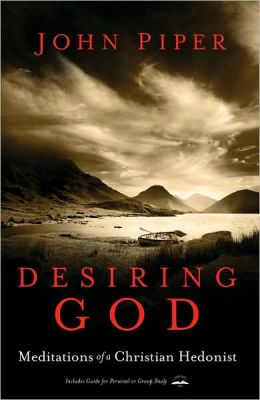
Desiring God. John Piper. 1986/1996. Multnomah. 358 pages.

I've been intending to read John Piper's Desiring God for years now. In the past, I've been intimidated and made excuses. This time I was determined to start and finish it. It was a much easier task than I thought it would be.

I found the opening chapters of Desiring God to be incredibly rich and thought provoking. And quote-worthy too! I absolutely loved his chapters on conversion and worship, for example. These opening chapters alone make this one worth reading; the book essentially focuses on two aspects of the christian life: our relationship with God and our relationship with others and/or the world.

Piper's argument in Desiring God can be summed up in this way:
The chief end of man is to glorify God BY enjoying him forever. (15)

The chapter titles:

  • The Happiness of God
  • Conversion
  • Worship
  • Love
  • Scripture
  • Prayer
  • Money
  • Marriage
  • Missions
  • Suffering

Favorite quotes:
We praise what we enjoy because the delight is incomplete until it is expressed in praise. If we were not allowed to speak of what we value, and celebrate what we love, and praise what we admire, our joy would not be full. So if God loves us enough to make our joy full, he must not only give us himself; he must also win from us the praises of our hearts--not because he needs to shore up some weakness in himself or compensate for some deficiency, but because he loves us and seeks the fullness of our joy that can be found only in knowing and praising him, the most magnificent of all Beings. (49)
For God, praise is the sweet echo of his own excellence in the hearts of his people. For us, praise is the summit of satisfaction that comes from living in fellowship with God. (53)
Why is conversion so crucial? What is there about God and man that makes it necessary? And what has God done to meet our desperate need? And what must we do to enjoy the benefits of his provision? These are huge questions. I attempt a summary answer with the following six truths from Scripture:
1) God created us for his glory. (Isaiah 43:6-7)
2) Therefore it is our duty to live for his glory. (1 Corinthians 10:31)
3) We have all failed to glorify God (Romans 3:23)
4) We are all subject to eternal condemnation. (Romans 6:23)
5) Jesus Christ came into the world to save sinners (1 Timothy 1:15; Romans 4:25)
6) Turn from sin and trust the Savior (Acts 3:19; Acts 16:31) 
Repentance and faith are our work. But we will not repent and believe unless God does his work to overcome our hard and rebellious hearts. This divine work is called regeneration. Our work is called conversion. (62)
Behind the repentance that turns away from sin and behind the faith that embraces Christ is the birth of a new taste, a new longing, a new passion for the pleasure of God's presence. (69-70)
The fuel of worship is the truth of God, the furnace of worship is the spirit of man, and the heat of worship is the vital affections of reverence, contrition, trust, gratitude, and joy. But there is something missing from this picture. There is furnace, fuel, and heat, but no fire. The fuel of truth in the furnace of our spirit does not automatically produce the heat of worship. There must be ignition and fire. This is the Holy Spirit. (77)
Love is the overflow of joy in God! It is first a deeply satisfying experience of the fullness of God's grace, and then a doubly satisfying experience of sharing that grace with another person. (103)
Faith is born and sustained by the Word of God, and out of faith grows the flower of joy. (127)
Not to pursue our joy every day in the Word of God is an abandonment of the revealed will of God. It is sin. (130)
© Becky Laney of Operation Actually Read Bible

Thursday, February 21, 2013

Nonfiction Books I Want...NOW!


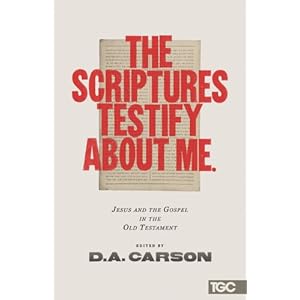
The Scriptures Testify About Me, edited by D.A. Carson. April 2013. Crossway.

Publisher description: The Bible’s storyline is grand in its sweep, beautiful in its form, and unified in its message. However, many Christians still struggle to understand how the Old and New Testaments fit together, especially in relation to the person and work of Jesus Christ. In this collection of expositions of various Old Testament texts, eight prominent evangelical pastors and scholars demonstrate what it looks like to preach Christ from the Old Testament. From the experience of the Israelites during the exodus, to the cryptic words about Melchizedek in the Psalms, this book offers readers a diverse collection of approaches to gospel-centered preaching from the Old Testament by some of the most skilled expositors of our day.


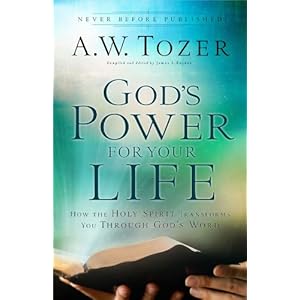
God's Power For Your Life: How the Holy Spirit Transforms You Through God's Word. A.W. Tozer. March 2013. Regal.

Publisher description: Live the Word in power.
A. W. Tozer, one of the twentieth century Church’s most profound thinkers and pastors, believed that reading the Bible wasn’t enough—the Word must come alive in the Christian’s life. It isn’t enough to read Scripture and then try to obey its commands; rather, living by the power of the Word is a Spirit-enabled transformation that leads to the Word becoming incarnate within the believer’s life. In God’s Power for Your Life, the tenth book in a new library of never-before-published work by the renowned writer, Tozer teaches readers how to allow themselves to be shaped by the Spirit’s work as they study of the Word of God.


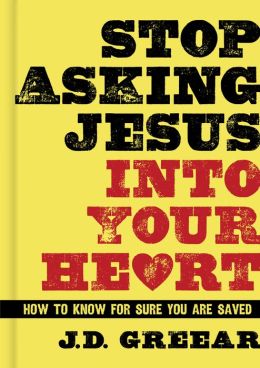
Stop Asking Jesus Into Your Heart by J.D. Greear. February 2013. B&H

Publisher description: “If there were a Guinness Book of World Records entry for ‘amount of times having prayed the sinner’s prayer,’ I’m pretty sure I’d be a top contender,” says pastor and author J. D. Greear. He struggled for many years to gain an assurance of salvation and eventually learned he was not alone. “Lack of assurance” is epidemic among evangelical Christians.
In Stop Asking Jesus Into Your Heart, J. D. shows that faulty ways of presenting the gospel are a leading source of the confusion. Our presentations may not be heretical, but they are sometimes misleading. The idea of “asking Jesus into your heart” or “giving your life to Jesus” often gives false assurance to those who are not saved—and keeps those who genuinely are saved from fully embracing that reality.
Greear unpacks the doctrine of assurance, showing that salvation is a posture we take to the promise of God in Christ, a posture that begins at a certain point and is maintained for the rest of our lives. He also answers the tough questions about assurance: What exactly is faith? What is repentance? Why are there so many warnings that seem to imply we can lose our salvation?
Such issues are handled with respect to the theological rigors they require, but Greear never loses his pastoral sensitivity or a communication technique that makes this message teachable to a wide audience from teens to adults.

Gods at War: Defeating the Idols That Battle For Your Heart by Kyle Idleman.  February 2013. Zondervan.

Publisher description: In gods at war, Kyle Idleman, bestselling author of not a fan, helps every believer recognize there are false gods at war within each of us, and they battle for the place of glory and control in our lives. What keeps us from truly following Jesus is that our hearts are pursuing something or someone else. While these pursuits may not be the 'graven images' of old, they are in fact modern day idols. Behind the sin you're struggling with, the discouragement you're dealing with, the lack of purpose you're living with is a false god that is winning the war for your heart. According to Idleman, idolatry isn't an issue---it is the issue. By asking insightful questions, Idleman reveals which false gods each of us are allowing on the throne of our lives. What do you sacrifice for? What makes you mad? What do you worry about? Whose applause do you long for? We're all wired for worship, but we often end up valuing and honoring the idols of money, sex, food, romance, success and many others that keep us from the intimate relationship with God that we desire. Using true, powerful and honest testimonies of those who have struggled in each area, gods at war illustrates a clear path away from the heartache of our 21st century idolatry back to the heart of God -- enabling us to truly be completely committed followers of Jesus.


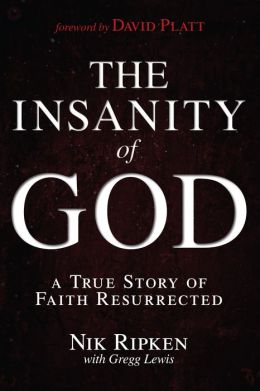
The Insanity of God: A True Story of Faith Resurrected by Nik Ripken. B&H.

Publisher description: The Insanity of God is the personal and lifelong journey of an ordinary couple from rural Kentucky who thought they were going on just your ordinary missionary pilgrimage, but discovered it would be anything but. After spending over six hard years doing relief work in Somalia, and experiencing life where it looked like God had turned away completely and He was clueless about the tragedies of life, the couple had a crisis of faith and left Africa asking God, "Does the gospel work anywhere when it is really a hard place? It sure didn't work in Somalia.

Nik recalls that, “God had always been so real to me, to Ruth, and to our boys. But was He enough, for the utter weariness of soul I experienced at that time, in that place, under those circumstances?” It is a question that many have asked and one that, if answered, can lead us to a whole new world of faith.

How does faith survive, let alone flourish in a place like the Middle East? How can Good truly overcome such evil? How do you maintain hope when all is darkness around you? How can we say “greater is He that is in me than he that is in the world” when it may not be visibly true in that place at that time? How does anyone live an abundant, victorious Christian life in our world’s toughest places? Can Christianity even work outside of Western, dressed-up, ordered nations? If so, how?

The Insanity of God tells a story—a remarkable and unique story to be sure, yet at heart a very human story—of the Ripkens’ own spiritual and emotional odyssey. The gripping, narrative account of a personal pilgrimage into some of the toughest places on earth, combined with sobering and insightful stories of the remarkable people of faith Nik and Ruth encountered on their journeys, will serve as a powerful course of revelation, growth, and challenge for anyone who wants to know whether God truly is enough.


Altar Ego by Craig Groeschel. February 2013. Zondervan.

Publisher description: You are NOT who you think you are. In fact, according to bestselling author Craig Groeschel in Altar Ego, you need to take your idea of your own identity, lay it down on the altar, and sacrifice it. Give it to God. Offer it up.
Why? Because you are who GOD says you are. And until you've sacrificed your broken concept of your identity, you won't become who you are meant to be.
When we place our false labels and self-deception on the altar of God's truth, we discover who we really are as his sons and daughters. Instead of an outward-driven, approval-based ego, we learn to live with an 'altar' ego, God's vision of who we are becoming.
Discover how to trade in your broken ego and unleash your altar ego to become a living sacrifice. Once we know our true identity and are growing in our Christ-like character, then we can behave accordingly, with bold behavior, bold prayers, bold words, and bold obedience.
Altar Ego reveals who God says you are, and then calls you to live up to it.


Weakness is the Way: Life with Christ Our Strength. J.I. Packer. Crossway. May 2013

Publisher description: Most people think of weakness as purely negative, but true Christianity embraces weakness as a way of life. In this collection of meditations on 2 Corinthians, renowned Bible scholar and theologian J. I. Packer reflects on the central importance of weakness for the Christian life. He exhorts readers to look to Christ for strength, affirmation, and contentment in the midst of their own sin and frailty. Now in his mid-eighties, Packer mediates on the truths of Scripture with pastoral warmth and exegetical care, drawing on lessons learned from the experience of growing older and coming face-to-face with his own mortality. Overflowing with wisdom gleaned from a life of obedience to Christ and dependence on his Word, this encouraging book ultimately directs readers to the God who promises to be ever-present and all-sufficient.

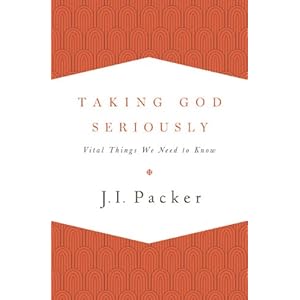
Taking God Seriously: Vital Things We Need to Know. J.I. Packer. Crossway. February 2013.

Publisher description: Explaining the essentials of the faith, renowned theologian and author Dr. J. I. Packer outlines the core commitments that are common to those of us who profess belief in Jesus. Here is a call to discipleship in mere Christianity—the business of taking God seriously.


Name Above All Names. Alistair Begg & Sinclair Ferguson. Crossway. May 2013.

Publisher description: The busyness of our lives and the diversions of this world have the tendency to distract us from the most important person we could ever know: Jesus Christ. Thankfully, God has given his people ample insights into the Savior in his Word. In this thoughtful treatise, two influential pastors guide everyday Christians through the entirety of the Bible, examining seven key aspects of Jesus’s identity and ministry. Beginning in Genesis and ending in Revelation, this book will help readers focus their gaze on Christ, whether studying the promised seed of the woman in Genesis 3 or the reigning lamb on the throne in Revelation 5. Drawing on decades of pastoral experience, Alistair Begg and Sinclair Ferguson have crafted a biblical resource sure to encourage genuine love for the Savior among God’s people for years to come.

© Becky Laney of Operation Actually Read Bible
Wednesday, February 20, 2013

Quoting Robert Murray M'Cheyne

From the sermons of Robert Murray M'Cheyne
But let Christ be revealed to an unconverted soul, let it not be merely a man speaking about Christ unto him, but let the spirit of God reveal him, and there is revealed, not a truth, but the truth. ~ M'Cheyne, sermon 1
Christ is the life of every soul that cleaves to him. ~ M'Cheyne, sermon 1
More souls are lost through want of consideration than in any other way. The reason why men are not awakened and made anxious for their souls is, that the devil never gives them time to consider. ~ M'Cheyne, sermon 2
Believers should live in daily consideration of the greatness and glory of Christ. ~ M'Cheyne, sermon 2
You are so busy looking at books, or looking at men, or looking at the world, that you have no time,  no heart, for looking at Christ. ~ M'Cheyne, sermon 2
Consider the greatness and glory of Christ, who has undertaken all in the stead of sinners, and you would find it quite impossible to walk in darkness, or to walk in sin. ~ M'Cheyne, sermon 2
It is good to consider your ways, but it is far better to consider Christ. ~ M'Cheyne, sermon 2
O happy believer, rejoice evermore. Live within sight of Calvary, and you will live within sight of glory. ~ M'Cheyne, sermon 2
Oh! what a wonderful thing the eye of faith is: it sees beyond the stars, it pierces to the throne of God, and there it looks on the face of Jesus making intercession for us, whom having not seen we love, in whom, though now we see him not, yet believing we rejoice with joy unspeakable and full of glory. ~ M'Cheyne, sermon 2
© Becky Laney of Operation Actually Read Bible
Tuesday, February 19, 2013

My Year With Spurgeon: Week #7

Last week, I didn't share any quotes from Morning and Evening. There was a GREAT entry for February 9 that I wanted to make sure I shared. Entries like this that make me think everyone should read Spurgeon!

Scripture references: Matthew 1:21, Hebrews 12:14, 2 Timothy 2:19
Many persons, if they are asked what they understand by salvation, will reply, "Being saved from hell and taken to heaven." This is one result of salvation, but it is not one tithe of what is contained in that boon. It is true our Lord Jesus Christ does redeem all His people from the wrath to come; He saves them from the fearful condemnation which their sins had brought upon them; but His triumph is far more complete than this. He saves His people "from their sins." Oh! sweet deliverance from our worst foes. Where Christ works a saving work, He casts Satan from his throne, and will not let him be master any longer. No man is a true Christian if sin reigns in his mortal body. Sin will be in us--it will never be utterly expelled till the spirit enters glory; but it will never have dominion. There will be a striving for dominion--a lusting against the new law and the new spirit which God has implanted--but sin will never get the upper hand so as to be absolute monarch of our nature. Christ will be Master of the heart, and sin must be mortified. The Lion of the tribe of Judah shall prevail, and the dragon shall be cast out. Professor! is sin subdued in you? If your life is unholy your heart is unchanged, and if your heart is unchanged you are an unsaved person. If the Saviour has not sanctified you, renewed you, given you a hatred of sin and a love of holiness, He has done nothing in you of a saving character. The grace which does not make a man better than others is a worthless counterfeit. Christ saves His people, not in their sins, butfrom them. "Without holiness no man shall see the Lord." "Let every one that nameth the name of Christ depart from iniquity." If not saved from sin, how shall we hope to be counted among His people. Lord, save me now from all evil, and enable me to honour my Saviour. ~ Charles Spurgeon, Evening, February 9
and this evening entry for February 13 taking inspiration from Romans 8:1:
Come, my soul, think thou of this. Believing in Jesus, thou art actually and effectually cleared from guilt; thou art led out of thy prison. Thou art no more in fetters as a bond-slave; thou art delivered now from the bondage of the law; thou art freed from sin, and canst walk at large as a freeman, thy Saviour's blood has procured thy full discharge. Thou hast a right now to approach thy Father's throne. No flames of vengeance are there to scare thee now; no fiery sword; justice cannot smite the innocent. Thy disabilities are taken away: thou wast once unable to see thy Father's face: thou canst see it now. Thou couldst not speak with Him: but now thou hast access with boldness. Once there was a fear of hell upon thee; but thou hast no fear of it now, for how can there be punishment for the guiltless? He who believeth is not condemned, and cannot be punished. And more than all, the privileges thou mightst have enjoyed, if thou hadst never sinned, are thine now thou art justified. All the blessings which thou wouldst have had if thou hadst kept the law, and more, are thine, because Christ has kept it for thee. All the love and the acceptance which perfect obedience could have obtained of God, belong to thee, because Christ was perfectly obedient on thy behalf, and hath imputed all His merits to thy account, that thou mightst be exceeding rich through Him, who for thy sake became exceeding poor. Oh! how great the debt of love and gratitude thou owest to thy Saviour!
"A debtor to mercy alone,
Of covenant mercy I sing;
Nor fear with Thy righteousness on,
My person and offerings to bring:
The terrors of law and of God,
With me can have nothing to do;
My Saviour's obedience and blood
Hide all my transgressions from view."

Monday, February 18, 2013

Book Review: Love's Enduring Promise (1980)

Love's Enduring Promise. Janette Oke. 1980. Bethany House. 239 pages.

Love's Enduring Promise is a comfortable read. I've read it half a dozen times at least since it is the second book in one of my favorite series that I read as a child. In this second novel, Marty and Clark have a family together. The first few chapters sees the birth of their first child together. The remaining chapters see their family expand even more: with Marty having more children and with the couple adopting two daughters. By the end of the book, Marty has seen three of her daughters (Missy, Nan, and Clae) become teachers and marry. I can't remember if any of her sons have married by the end of Love's Enduring Promise or not, but, if they haven't it's just a matter of time. Most of the family is all grown up by the novel's end, the others are still attending school. The book gives us quick glimpses of life in the community, and their home life together. But we don't spend much time with the family at any particular time, perhaps with the exception of when Nandry and Clae are first adopted and the family is going through an adjustment period as the girls settle into their new home and as they all prepare for some of the children to attend school. My favorite chapters in this one feature "thet Willie" who is so pesky in Missie's eyes as a child and quite lovable through her grown up eyes.

© Becky Laney of Operation Actually Read Bible
Sunday, February 17, 2013

Book Review: One Perfect Life

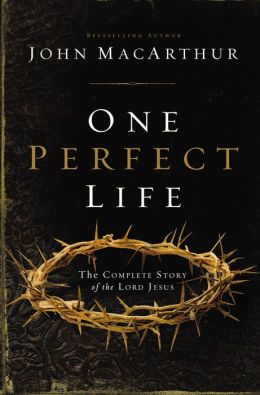
One Perfect Life. John MacArthur. 2013. Thomas Nelson. 520 pages.

The subtitle of One Perfect Life is, "The Complete Story of the Lord Jesus." And complete it is, compiling Scriptures from Genesis through Revelation in the New King James translation. There are eleven parts of the story divided into 215 readings. Each reading has a handful of MacArthur's study notes. So for those wanting to learn more, to understand more of the text, it's there.

  • Part 1: "Anticipating the Lord Jesus Christ"
  • Part 2: "The Beginning of the Gospel of Jesus Christ"
  • Part 3: "The Beginning of Jesus' Ministry"
  • Part 4: "From Passover AD 27 to Passover AD 28"
  • Part 5: "From Passover AD 28 to Passover AD 29"
  • Part 6: "From Passover AD to Passover AD 30"
  • Part 7: "The Final Journey to Jerusalem for Passover AD 30"
  • Part 8: "The Passion Week of the Messiah AD 30"
  • Part 9: "The Upper Room on the Night Before His Death"
  • Part 10: "The Crucifixion, Resurrection, and Ascension"
  • Part 11: "New Testament Reflections on the Gospel of Jesus Christ"

The first and last parts are quite interesting to me as they attempt to create one narrative from many sources of Scripture. For example, in the first reading, "Jesus Christ--the Preexistent Creator and Savior," the narrative is pieced together from these verses: Genesis 1:1, John 1:1-5a, 1 Corinthians 8:6, Ephesians 1:3-5, Colossians 1:15-18, Colossians 2:9, 2 Timothy 1:9, Titus 1:2, Hebrews 1:1b-3a. It reads--in part--like this,
In the beginning God created the heavens and the earth. In the beginning was the Word, and the Word was with God, and the Word was God. He was in the beginning with God. All things were made through Him, and without Him nothing was made that was made. There is one God, the Father, of whom are all things, and we for Him; and one Lord Jesus Christ, through whom are all things, and through whom we live, whom He has appointed heir of all things, through whom also He made the worlds; who being the brightness of His glory and the express image of His person, and upholding all things by the word of His power, is the image of the invisible God, the firstborn over all creation... (17)
From the eleventh section, we have a reading entitled "Salvation is by Grace Alone Through Faith Alone in Christ Alone." Its narrative is drawn from these texts: Acts 4:12, Acts 15:11a, Romans 3:23-26, Romans 4:2-5, Romans 4:24-25, Romans 5:1-2, Romans 8:1, Romans 8:29-39, Romans 11:6, Galatians 2:16, Galatians 3:11-14, Ephesians 1:13-14, Ephesians 2:8-9, Philippians 3:8-10a, 1 Timothy 2:5-6a, 2 Timothy 1:8b-11, Titus 3:4-7, Hebrews 7:25, and 1 John 2:1b-2. Here is how it reads--in part:
Therefore He is also able to save to the uttermost those who come to God through Him, since He always lives to make intercession for them. And if anyone sins, we have an Advocate with the Father, Jesus Christ the righteous. And He Himself is the propitiation for our sins, and not for ours only but also for the whole world. For there is one God and one Mediator between God and men, the man Christ Jesus, who gave Himself a ransom for all. Nor is there salvation in any other, for there is no other name under heaven given among men by which we must be saved. (509-510)
The focus of the entire book is, of course, on Jesus Christ as Savior and Lord, and on the gospel. The book not only reveals who Christ is, it reveals who we are--with or without Christ. The very last reading is a great invitation to come to Christ and be saved.

One Perfect Life is a powerful, compelling read. I was reminded of the hymn, "I Love To Tell The Story."

I love to tell the story
of unseen things above,
of Jesus and his glory,
of Jesus and his love.
I love to tell the story,
because I know 'tis true;
it satisfies my longings 
as nothing else can do.
and
I love to tell the story,
for those who know it best
seem hungering and thirsting
to hear it like the rest.
And when, in scenes of glory,
I sing the new, new song,
'twill be the old, old story
that I have loved so long. 

One Perfect Life is a book that is easy to love. The story may, at first, be familiar, but allow yourself to be fascinated by the drama and you might just be amazed.

Here is a very appropriate Dorothy Sayers' quote that I'd like to share (again):
Let us, in Heaven's name, drag out the Divine Drama from under the dreadful accumulation of slipshod thinking and trashy sentiment heaped upon it, and set it on an open stage to startle the world into some sort of vigorous reaction. If the pious are the first to be shocked, so much the worse for the pious--others will pass into the Kingdom of Heaven before them. If all men are offended because of Christ, let them be offended; but where is the sense of their being offended at something that is not Christ and is nothing like Him? We do Him singularly little honour by watering down His Personality till it could not offend a fly. Surely it is not the business of the Church to adapt Christ to men, but to adapt men to Christ. It is the dogma that is the drama--not beautiful phrases, nor comforting sentiments, nor vague aspirations to loving-kindness and moral uplift, nor the promise of something nice after death--but the terrifying assertion that the same God who made the world lived in the world and passed through the grave and gate of death. Show that to the heathen, and they may not believe it; but at least they may realize that here is something that one might be glad to believe.
I would definitely recommend this one.

© Becky Laney of Operation Actually Read Bible

Book Review: John Calvin and His Passion for the Majesty of God

John Calvin And His Passion for the Majesty of God. John Piper. 2008. 64 pages.

This book is a short biography of John Calvin written by John Piper. It isn't strictly a book about John Calvin or Calvin's theology. While some of the book deals specifically with Calvin and the times in which he lived, the book also presents a great argument for the importance of expository preaching. This book has a great deal to say about the Bible!

There are seven chapters and an appendix: "God Is Who He Is," "A Passion for the Glory of God in Christ," "Mastered by the Majesty and Word of God," "Ministry Made by the Majesty of the Word," "Marriage to Idelette," "Constant Trials," and "Constancy in Expounding the Word of God."

First paragraph:
John Calvin would approve that we begin with God rather than with him. Nothing mattered more to Calvin than the supremacy of God over all things. Focus your attention, then, on God's self-identification in Exodus 3:14-15. Here we will see the sun in the solar system of John Calvin's thought and life. (11)
From "God Is Who He Is"
Whether we want him to be there or not, he is there. We do not negotiate what we want for reality. God defines reality. When we come into existence, we stand before a God who made us and owns us. We have absolutely no choice in this matter. We do not choose to be. And when we are, we do not choose that God be. No ranting and raving, no sophisticated doubt or skepticism, has any effect on the existence of God. He simply and absolutely is. (12-13)
We cannot escape the simple and obvious truth that God must be the main thing in life. Life has to do with God because all the universe has to do with God, and the universe has to do with God because every atom and every emotion and every soul of every angelic, demonic, and human being belongs to God, who absolutely is. He created all that is, he sustains everything in being, he directs the course of all events, because "from him and through him and to him are all things. To him be glory forever. (Romans 11:36) (13)
Other favorite quotes:
Even precious truth about eternal life can be so skewed as to displace God as the center and goal. (16)
There is the key for Calvin: the witness of God to Scripture is the immediate, unassailable, life-giving revelation to our minds of the majesty of God that is manifest in the Scriptures themselves. The majesty of God is the ground of our confidence in his Word. (25)
I take that to mean that God witnesses to us of his reality and the reality of his Son and his Word by giving us life from the dead so that we come alive. His witness is the gift of spiritual life. His witness is that we come alive to his majesty and we see him for he is in his Word. In that instant, we do not reason from premises to conclusions--we see that we are awake, and there is not even a prior human judgment about it to lean on. (26)
Calvin had seen the majesty of God in the Scriptures. This persuaded him that the Scriptures were the very Word of God. He said, "We owe to the Scripture the same reverence we owe to God, because it has proceeded from Him alone, and has nothing of man mixed with it." (45)
The Scriptures were absolutely central because they were absolutely the Word of God and had as their self-authenticating theme the majesty and glory of God. (46)
Calvin reckoned that the continuous exposition of books of the Bible was the best way to overcome "the fearful abandonment of God's Word." (48)
Calvin had a horror of those who preached their own ideas in the pulpit. He said, "When we enter the pulpit, it is not so that we may bring our own dreams and fancies with us." He believed that by expounding the Scriptures as a whole, he would be forced to deal with all that God wanted to say, not just what he might want to say. (49)
God's Word is mainly about the majesty of God and the glory of God. That is the main issue in ministry. And even though the glory and majesty of God in his Word can be known in the still, small voice of whispered counsel by the bedside of a dying saint, there is something in it that cries out for expository exultation. This is why preaching will never die. And radical, pervasive God-centeredness will always create a hunger for preaching in God's people. (50)
© Becky Laney of Operation Actually Read Bible