Sunday, May 11, 2014

Week in Review: May 4-10

Third Millennium Bible

  • Psalms 61-150
  • Matthew 
  • 1 Thessalonians (3)
  • 2 Thessalonians (3)

NIV MacArthur

  • 2 Kings 5-13

ESV MacArthur

  • Joel
  • 1 Thessalonians
  • 2 Thessalonians 

ESV

  • 1 Thessalonians (3)
  • 2 Thessalonians (3)


NRSV Daily

  • 2 Chronicles 21-36
  • Ezra
  • Nehemiah
  • Esther
  • Job
  • Psalms 1-41

NASB

  • 1 Thessalonians
  • 2 Thessalonians

NKJV

  • 1 Thessalonians (3)
  • 2 Thessalonians (3)

© Becky Laney of Operation Actually Read Bible

Friday, May 9, 2014

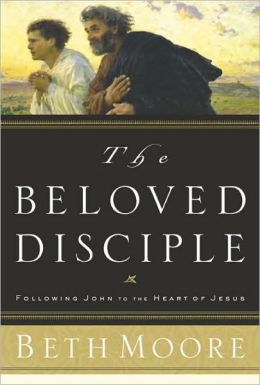
Book Review: The Beloved Disciple (2003)

The Beloved Disciple: Following John to the Heart of Jesus. Beth Moore. 2003. B&H. 352 pages. [Source: Bought]

The Beloved Disciple is a book I've meant to read for years now. It is a book that focuses in part on the life of the Apostle John (it does this by examining what we know of him--of his life--by what is revealed in the four gospels and the book of Acts); it also focuses in part on the works of the Apostle John (it does this by examining the gospel of John, his three letters, and the book of Revelation). I'll be honest. While I enjoyed the first part of the book, I really really really loved the second part of the book. I loved the focus on John, 1 John, 2 John, 3 John, and Revelation.

The first part of the book focuses on relationships, focuses on John's relationship with Jesus, and John's relationships with the other disciples. It's a creative approach, but built on a scriptural foundation as well. The second part of the book focuses more on reflections and doctrines. The first part, in other words, we see John as a young man. The second part, we see John as a very old man, a wise man focused on passing along what he knows, a man passionate to speak the truth.

This book definitely ministered to me. I found it to be WONDERFUL. I loved it so, so much!!!

Favorite quotes:
What do you say about yourself? What we don't say in words, we ultimately say in deeds. Daily we say all sorts of things about ourselves. Sometimes what we say about ourselves is not necessarily accurate, but it's what we believe.
How differently would we pray if Christ chose to manifest His presence? Would we pray differently if He sat in a chair right across from each of us, leaning forward to concentrate on what we're saying? Beloved, if only we would realize that though He's invisible to our sight, that's in essence what He does! He intercedes for us at the right hand of the Father. When we pray, He is so close to us, He may as well be leaning over the edge of heaven and bending down to hear. His presence through His Holy Spirit literally surrounds us as we pray. His eyes are fixed on our face. On every word we're saying. On every expression we're making. Can you imagine how the angels marvel over our boredom at times when we pray, as their faces behold our Father in heaven who is listening intently to every word?
We were created to be full. When we're not filled with the good things Christ came to bring us, we will grasp at anything as a substitute. An unsatisfied soul is an accident waiting to happen.
If the world population took a vote as to whether Jesus is the Son of God and not a single ballot was cast in His favor, He'd still be the Son of God. He doesn't need our permission or even our faith to be who He is.
Each of Christ's seven “I Am” statements in John's Gospel is relational! If you look again at all seven titles but look for how each title is associated with people, you will discover a blessing: John 6:35—He who comes to the Bread of Life will never go hungry. John 8:12—She who follows the Light of the world will never walk in darkness. John 10:7–9—Whoever enters through the Gate to the Sheep will be saved. John 10:11–14—He who belongs to the Good Shepherd receives protection and is known by the Shepherd. John 11:25—She who believes in the Resurrection and the Life will live, even though she dies. John 14:6—Whoever follows the Way and the Truth and the Life comes to the Father. John 15:1, 5—He who remains in the True Vine will bear much fruit. Christ is many things. He is truly the Great I AM. He is the Savior of the world. He fulfills numerous titles in the Word of God, but I believe the spiritual implication of the seven “I am” sayings in the broad approach of John's Gospel is this: Jesus Christ is everything we need. Every one of these titles is for us! Remember, He is the self-sufficient One! He came to be what we need. And not just what we need, but what we desire most in all of life. The I AM came to be with us. I could weep with joy!
You and I need nothing on this earth like more of the Holy Spirit. Do we need to love an unlovely person? Do we need extra patience? Could we use a little peace in the midst of chaos? Do we need to show an extra measure of kindness? Could anyone stand a little more faithfulness to God? Could anyone use a strong dose of self-discipline? How about a heaping soulful of joy? Take a look at Galatians 5:22–23. They all come with the fullness of the Holy Spirit! You see, we don't just need more patience. We need more of the Holy Spirit filling us and anointing us! Does anyone need deep insight from God's Word? An added measure of understanding? Anyone need the eyes of her heart enlightened to know the hope of her calling? Does anyone want to fulfill God's eternal purposes for her life and think with the mind of Christ instead of the misleading mind of mortal flesh? All of these come with “more” of the Holy Spirit! (see 1 Cor. 2). Child of God, don't just absorb this truth! Get up and celebrate it! God gives the Spirit without measure! He has all that you need. Or more properly stated, He is all that you need. Our fulfillment and greatest joy are in the flooding of the Holy Spirit of God in our lives. He is how we understand God's Word and will for our lives!
We will always give Satan plenty of ammunition to discourage us. If we don't literally camp in the love of Christ, we will talk ourselves out of untold fruit by dwelling on our own unworthiness. Accept the fact that we are unworthy and we're lavishly loved by a God of redemptive grace.
I believe this is what Christ was saying to them: I am going to leave you so that I can prepare rooms for you where you will one day dwell and indeed make yourself at home where I live in heaven. Until then, I have built a room in each of you where I can make Myself at home with you. This way I am at home with you in Spirit until you are at home with Me in heaven.
If we don't learn to get honest with God over our thought lives, we will never allow Him to teach us new ways to think. If we never develop renewed minds, consistent victory and glorious koinonia will tragically elude us. Dear one, God already knows your thought life! Our conviction is telling us not only that He knows but that He wants to apply His grace to the problem and correct it.
Agreeing with God over our forgiven state is just as important as agreeing with God over our sin! If Satan can't tempt us to hide our sin and refuse to confess, he'll tempt us not to accept our forgiven and purified state.
Fears are fillers. Mind fillers. Heart fillers. Soul fillers. The enemy fuels them because they leave virtually no space for the filling of the Spirit and the welcomed flood of divine love. Second Timothy 1:7 (KJV) tells us that God has not given us the spirit of fear but of power, and of love, and of sound mind. Does that tell you why Satan would want to do anything possible to supply us with fillers other than the Holy Spirit? Satan neither wants us to know who we could be nor what we could do. Lives full of God's power, love, and soundness of mind are a terrible threat to the kingdom of hell. After all he's done to me and to so many others, I want to be a threat. Don't you? How do we begin? By allowing God's perfect love to start driving out our destructive fears and condemning natures like an eighteen-wheeler plowing through a cornfield! Wholeness begins by deliberately and daily receiving the lavish, unreasonable, unfailing love of God all the way into our marrow. When life is too foggy to see the evidences of His love around us, behold it in His Word, dear one! Know it until you feel it.
I am convinced that virtually everything in an individual believer's life hinges on his or her deliberate belief and active acceptance of the lavish, unconditional love of God. I'm not sure we can be reminded too often of God's absolute priorities for our lives. No matter how different our personalities, gifts, styles of worship, or denominations, God's chief priority for every single one of us is that we love Him with everything in us (Mark 12:30).
© Becky Laney of Operation Actually Read Bible

Thursday, May 8, 2014

Book Review: What's Your Worldview? (2014)

What's Your Worldview? An Interactive Approach to Life's Big Questions. James N. Anderson. 2014. Crossway. 112 pages. [Source: Bought]

What's Your Worldview? is a unique nonfiction book written for believers and unbelievers alike. It is a choose your own adventure book. Yes, a choose your own adventure book!

You, the reader, will be asked a series of questions. Context will be provided for each question; context that will prepare you to think and answer the question asked of you. Go to the page it says, answer more questions, and, finally arrive at the answer to the big question: what's YOUR worldview?

The purpose of the book is simple:
To help you identify and clarify your worldview. To encourage you to consider the big questions and to think through some of the implications of various answers. To help you appreciate that there are important differences between worldviews—and that not all worldviews are created equal! 
What is a worldview?
Your worldview represents your most fundamental beliefs and assumptions about the universe you inhabit. It reflects how you would answer all the “big questions” of human existence, the fundamental questions we ask about life, the universe, and everything… worldviews play a central and defining role in our lives. They shape what we believe and what we’re willing to believe, how we interpret our experiences, how we behave in response to those experiences, and how we relate to others.
Worldviews are like belly buttons. Everyone has one, but we don’t talk about them very often.
So what sorts of questions are asked?
  • Is there any objective truth?
  • Is it possible to know the truth?
  • Is anything objectively good or bad?
  • Is there more than one valid religion?
  • Is there a God?
  • Is God a personal being?
  • Is God a perfect being?
  • Has God communicated with humans?
  • Has God communicated openly to humans?
  • Did Jesus of Nazareth rise from the dead?
  • Was Jesus of Nazareth divine?
  • Do good people go to heaven and bad people to hell?
  • Is everything ultimately one?
  • Is everything ultimately material in nature?
  • Is everything ultimately mental in nature?
  • Is the universe God?
  • Is the universe within God?
  • Is there only one God?
  • Was Muhammad a true prophet of God?
  • Was Moses a true prophet of God?
Not every reader will answer every question. YOUR answers provide the path to arriving at a conclusion.

What's Your Worldview? has a very interesting premise. I liked it very much. It is not a traditional book at all. It's not one that you read cover-to-cover. It's a book ideal for sharing, a book ideal for discussion. I think it would be a great choice for families, for small groups, for classes. It is a thoughtful book that requires your engagement. But it is also a reader-friendly book.

© Becky Laney of Operation Actually Read Bible

Wednesday, May 7, 2014

Book Review: Stepping Heavenward

Stepping Heavenward. Mrs. Elizabeth Prentiss. 1869/1998. Barbour Books. 352 pages. [Source: Bought]

January 15, 1831
How dreadfully old I am getting! Sixteen! Well, I don't see as I can help it. There it is in the big Bible in Father's own hand:
"Katherine, born Jan. 15, 1815."

Katherine Mortimer is the heroine of Mrs. Prentiss' instructive novel. The novel spans journal entries from 1831 through 1858. Readers see a young--yes, young despite the heroine's declaration that she is oh-so-old--mature into a wife and mother. Our heroine is far from perfect, that is the whole point essentially, to have a heroine who is self-aware enough to realize that she has flaws and weaknesses and that try as she might she can't "try" her way out of them. Just because the heroine is self-aware in some aspects, does not mean she is self-aware in all aspects.

I found Stepping Heavenward to have more strengths than weaknesses. Yes, the focus is on morality and spiritual growth. In today's culture, that may be seen as an automatic negative. A book that seeks to provide wisdom to its readers! How dreadfully old-fashioned! But all in all I liked it.
You cannot prove to yourself that you love God by examining your feelings toward Him. They are indefinite and they fluctuate. But just as far as you obey Him, just so far, depend upon it, you love Him. It is not natural to us sinful, ungrateful human beings to prefer His pleasure to our own or to follow His way instead of our own way, and nothing, nothing but love of Him can or does make us obedient to Him. (29)
Of course there is but one real preparation for Christian dying, and that is Christian living. (227)
Influence. There were people in Katherine's life who influenced her, who challenged her to think, who challenged her to act, who challenged her to decide. These influences weren't all obvious ones. Like her minister, Dr. Cabot. Yes, he was an influence, off and on, but others were as well. Some near her own age, but, many who were older. Influences also came from all classes.
Dear Mother! I wonder how I can ever forget what troubles she has had, and am not always sweet and loving. She has gone now, where she always goes when she feels sad, straight to God. Of course she did not say so, but I know Mother. (22)
It is a pleasant picture to see her with my little darlings about her, telling the old sweet story she told me so often and making God and Heaven and Christ such blissful realities. As I listen, I realize that it is to her I owe that early, deep-seated longing to please the Lord Jesus, which I never remember as having a beginning or an ending, though it did have its fluctuations. (235)
Our dear Helen has been given us for this emergency. Is it not strange that seeing our domestic life should have awakened in her some yearnings for a home and a heart and children of her own. She has said that there was a weary point in her life when she made up her mind that she was never to know these joys. But she accepted her lot gracefully. I do not know any other word that describes so well the beautiful offering she made of her life, first to God and then to us. He accepted it and has given her all the cares and responsibilities of domestic life without the transcendent joys that sustain the wife and the mother. She has been all in all to our children, and God has been all in all to her. And she is happy in His service and in our love. (336)
I had very mixed thoughts on Dr. Cabot. I'm not sure the author ever meant readers to question the advice of Dr. Cabot, but I certainly did! In particular, I thought this advice was AWFUL.
Listen to my sermons from week to week, and glean from them all the instruction you can, remembering that they are preached to you.
In reading the Bible I advise you to choose detached passages, or even one verse a day, rather than whole chapters. Study every word; ponder and pray over it till you have got from it all the truth it contains.
As to the other devotional reading, it is better to settle down on a few favorite authors and read their works over and over and over until you have digested their thoughts and made them your own. (88-9)
Becoming comfortable with being uncomfortable. Katherine spent years--and I do mean years--wanting to hold onto everything that was comfortable. She wanted to want God. She knew that she should be holy and good. But she wasn't willing to surrender herself. She was so very very far away from saying God's will be done. She very much wanted to stay in control and stay comfortable. But by the end of the novel, Katherine has finally, slowly but surely, transformed her thinking.

Difficult people. Katherine wanted EVERYONE in her life to be perfect and understanding. She did not like being around hard or difficult people because by being with them, her own weaknesses came to light. There were people in her life who were daily--hourly reminders even--that she was impatient and quick-tempered and oh-so-selfish. Katherine clung to the thought that if she were only surrounded by good and kind people, then she'd never have reason to ever lose control and lose her temper. But by being in community, a real community, Katherine learns that all of us have strengths and all of us have weaknesses, that we can't ever rely on any one person being perfectly good, perfectly kind, perfectly patient, perfectly wise. God was working on her, REALLY working on her, by bringing people into her life.

Family life. The book addresses questions like what does it mean to be a good daughter? what does it mean to be a good wife? what does it take to be a good mother? what does it take to be a good friend and neighbor? How can a person be more compassionate and less selfish? While some books, some romance books, focus on courtship and the big day--the wedding, this one spends most of the book focused on what comes next, on the relationship between husband and wife. Katherine had a lot of growing to do! Her expectations of marriage were something. She thought marriage meant she'd never, ever, ever be lonely again. That being married would take away her feeling sad or empty. She had a very specific idea of what a husband, a good husband, is like, and when her husband failed to live up to her dreams, then she had some growing up to do. Not that it was all on her side. The book reflects that marriage takes work. That husbands and wives have to work together and treat each other kindly but honestly. She should not make him try to fit her mold and he shouldn't try to make her fit his.
"Katy," he said, "If you can once make up your mind to the fact that I am an undemonstrative man, not all fire and fury and ecstasy as you are, yet loving you with all my heart, however it may seem, I think you will spare yourself much needless pain--and spare me also."
"But I want you to be demonstrative," I persisted (145)
Spiritual Disciplines. I must admit that Katherine's progress or lack of progress, her good intentions, her thousand-and-one attempts to "get right" with God was done realistically. It doesn't matter if the year is 1869 or 2014, some stories stay relevant. Katherine often felt she was alone in that she struggled constantly with prayer and Bible reading. What Katherine did not do in the novel, for better or worse, was study the Bible--as opposed to reading it devotionally. While it mentions that Katherine read spiritual books, I'm assuming that means nonfiction, no titles or authors are mentioned. For all her reading, she had a difficult time of grasping certain fundamental truths. For example, Katherine spent decades of her life stuck on try, on do. Katherine had a hard time grasping the concept that Christianity is a done religion. She got there. She did. But the journey was oh-so-long. And perhaps that is the point. That more often than not, people learn spiritual truths the hard way. That people do, in fact, mature in the faith, in what they believe, in what they know to be so. That a person can believe in God at sixteen, and yet, know him differently, know him better twenty or thirty years later.

I do not love to pray. I am always eager to get it over with and out of the way so as to have leisure to enjoy myself. I mean that this is usually so. This morning I cried a good deal while I was on my knees and felt sorry for my quick temper and all my bad ways. If I always felt so, perhaps praying would not be such a task. I wish I knew whether anybody exactly as bad as I am ever got to heaven at last? I have read ever so many memoirs, and they were all about people who were too good to live, and so died, or else went on a mission; I am not at all like any of them. (20)
Most of the time I spend on my knees I am either stupid, feeling nothing at all, or else my head is full of what I was doing before I began to pray or what I am going to do as soon as I get through. I do not believe anybody else in the world is like me in this respect. Then when I feel differently and can make a nice, glib prayer, with floods of tears running down my cheeks, I get all puffed up and think how much pleased God must be to see me so fervent in spirit. (64)

© Becky Laney of Operation Actually Read Bible

Tuesday, May 6, 2014

My Year With Spurgeon #18

Before Daybreak With Christ
Charles Spurgeon
1884
"And in the morning, rising up a great while before day, He went out, and departed into a solitary place, and there prayed. And Simon and they that were with Him followed after Him. And when they had found Him, they said unto Him, All men seek for You. And He said unto them, Let us go into the next towns, that I may preach there also for therefore came I forth. And He preached in their synagogues throughout all Galilee, and cast out devils." Mark 1:35-39
Dear Friends, there is always a connection, even if we do not see it, between that great crowd on Sunday, and the pleadings of the saints—a most intimate connection between the flocking converts of the ministry and those secret prayers which follow and precede it. There is such a connection that the two cannot be parted! God will not send great blessings in the way of open conversion if secret prayer is neglected.
There was about the Savior an intense desire to meet with God—to commune with the Father. Herein there is a living likeness between His prayers and ours, but yet His devotions must have been very different from ours because He had no sin to confess as we have. A large part of our communion with God must lie in our confession of sin, in our expression of personal weakness and in our pleading the righteousness of our Divine Redeemer.
But this Blessed One had no sins to admit before the Host High and no weakness to lament, for in Him was neither sin nor tendency to sin. I can conceive that much of His devotion was shown in converse with the Father, when His blessed mind, forever in agreement with the mind of God, spoke to God and God revealed Himself to Him. Intimate communion must have been the main ingredient of the Savior's prayers. Some of the sweetest devotion Christians ever enjoy does not lie in asking anything of the Father, but in the enjoyment of the Father, Himself. Two friends in closest communion do not spend their time in mutual explanations and setting things straight—nor even in asking favors of each other—they proceed to heart-to-heart conversation, known only to those who have enjoyed the like.
We are always in need and, therefore, our daily devotion must consist largely of petitions, but yet we are, by Divine Grace, the children of the Lord, and the child says many things to his Father beside that which takes the form of a request. Have we not, with joyful reverence, told our heavenly Father how we love Him? How we long to be more like He? How we desire to serve Him? That is how we talk—alone with God—our heart is to the heart of God as the echo to the living voice which calls to it. 
© Becky Laney of Operation Actually Read Bible

Monday, May 5, 2014

Book Review: Calvin on the Christian Life

Calvin on the Christian Life: Glorifying and Enjoying God Forever. Michael S. Horton. 2014. Crossway. 271 pages.

I love Michael Horton. And I love the idea of reading more John Calvin. I admit that I have read more about Calvin than actual works by Calvin, but, in theory, I love him too. I was so excited to get the chance to review Horton's newest book, Calvin on the Christian Life, published by Crossway. This is a wonderful book in an interesting series.
If caricatures are the price of historical fame, then Calvin may be one of the most famous leaders in history. For few figures have unfounded rumors by enemies been allowed to stand more persistently as historical fact. The “tyrant of Geneva,” a “Protestant Pope,” Calvin is reviled as a killjoy whose pastime was ruminating with relish on the fate of the damned and ensuring that the present life of his subjects was as close to that fate as possible. If later legends of a repressed Geneva evolved after Calvin’s death, his contemporary enemies created quite different caricatures.
The survival of such contradictory legends— Calvin the moralistic dictator and Calvin the debauched godfather of vice— is perhaps an indicator of the historical significance of Geneva, and Calvin in particular, for friend and foe alike. Even the popular legends of Calvin burning witches and ruling Geneva with an iron fist have become laughable as historians investigate the primary records.
As we explore Calvin’s view of the Christian life, we discover a teacher who arrived at his convictions not out of ivory-tower speculation or monastic contemplation, but out of constant crises, tests, disappointing setbacks, and personal suffering.
I loved this one. I absolutely loved, loved, loved it! Readers get the chance to learn more about John Calvin: his life and death, his contemporaries, his significance then and now. I loved how Horton puts EVERYTHING or perhaps almost everything into context. I love how he takes the time to explain Roman Catholicism (then, at least, as Calvin and Luther and others would have known it, seen it, experienced it). I love how he takes the time to introduce Calvin's contemporaries, other Reformers. I love seeing how they agree, or, when they agree. Or disagree as the case may be.

For example, in the introduction, Horton first discusses how he is similar to other Reformers; he then begins discussing his distinctive contributions to the Reformation.

  • First, Calvin insisted more than other Reformers that Scripture alone must determine faith and practice.
  • Second, the formula "distinction without separation" pervades Calvin's thinking. [Yes, in almost every chapter, Horton points this out and explains what Calvin means.]
  • Third, Calvin was a pioneering covenant theologian, emphasizing God's promise in Christ as the basis and a communion of saints as the result.

I love how passionate Calvin was, how passionate all the Reformers were when you think about it! This is a fascinating book, an informative book. But it isn't just a history lesson. Yes, everything is grounded in the past to a certain extent, but, it is also very much a theological book. The doctrines explored in this book still matter very much today! Truth is always relevant after all!

Calvin on the Christian Life is rich in quotations! Readers read about Calvin's beliefs in his own words. Yes, Horton does quote other scholars about Calvin. But, for the most part, if you're curious about Calvin and want a good introduction to his actual works, this one does a good job. I also love how rich it is in Scripture references.

Table of Contents:

  • Calvin on the The Christian Life (An Introduction)
  • Calvin on the Christian Life (In Context)
  • Knowing God and Ourselves
  • Actors and Plot
  • Christ the Mediator
  • Gifts of Union with Christ
  • How God Delivers His Grace
  • The Public Service as a "Celestial Theater" of Grace
  • Bold Access: Prayer as "the Chief Exercise of Faith"
  • Law and Liberty in the Christian Life
  • God's New Society
  • Christ and Caesar
  • Vocation: Where Good Works Go
  • Living Today from the Future: The Hope of Glory

Favorite quotes:
It takes the whole biblical gospel to make a whole Christian life.
Doctrine, worship and life are all of one piece. The doctrine is always practically oriented, and practice is always to be grounded in true doctrine.
At least in the popular imagination, especially in our self-obsessed culture, Calvin’s theology is so God-centered that there is no room for human beings. Consequently, it is seen as cold and rationalistic. We can only bow before an utterly sovereign God of blinding majesty. We do not need to go any further than the opening line of his Institutes to conclude otherwise: “Nearly all wisdom we possess, that is to say, true and sound wisdom, consists in two parts: the knowledge of God and of ourselves.” And these two are “inseparable.”
The place where we come to know God and ourselves most definitely is a person: Jesus Christ, both God and human. 
In Roman Catholic theology, general revelation is a stepping stone to redemption. In Calvin’s view, it is the rope by which we hang ourselves. We start not with mere ignorance— an absence of knowledge of or relationship with God— but with a positive knowledge and experience that we intentionally warp, twist, and mangle into idolatry.
Yet if we are to know this God as our Father, we must seek him where he has already found us: the eternal Son clothed in our flesh. 
If this world is a “marvelous theater,” then the Bible is its script through which we come to know the central plot and characters.
Scripture tells us how it came to be that we are no longer as we once were— and how it will be that we are no longer as we are now, or even were before the fall. Christ is the image of God who has taken our humanity with him beyond Adam’s probationary condition to everlasting glory. “Now we see how Christ is the most perfect image of God; if we are conformed to it, we are so restored that with true piety, righteousness, purity, and intelligence we bear God’s image.” Again, we must look to Christ to really know both God and ourselves.
The Reformers disagreed with Rome not merely about the sufficiency of grace (sola gratia), but also over the nature of grace itself. In Roman Catholic theology, grace is viewed as a substance infused into the soul to heal it. By cooperating with this transforming grace, one can attain final salvation. The sacraments function much like an intravenous tube injecting this grace into a somewhat weakened soul. The more that one cooperates with this grace, the more grace one receives. The Reformers saw a completely different definition of grace in Scripture. On a covenantal map, grace is not an impersonal substance but a gift that is given by one party to another. First and foremost, the gift is Christ himself, in whom all of the Father’s treasures are hidden. Grace is the favor and gift of the Father, in the Son, communicated by the Spirit through the gospel. First of all God’s favor toward those who deserve his wrath, it is also God’s gift of justification and the indwelling Spirit who brings renewal and guarantees our resurrection unto immortal life. In Calvin’s understanding, grace is given not as an aid to our spiritual ascent, so that we may attain to union with God; it is God’s free gift of union with Christ by his Spirit.
We must never forget that the place where the triumph of evil seemed so obvious and God's saving care seemed most hidden was at the cross.
We are indeed saved by works--that is, by perfect obedience to God's law--but it is Christ's not ours. He not only bore our guilt in our place on the cross, but fulfilled all righteousness in our place by his life. 
We are not just following Christ, but living in Christ and, by his Spirit, he is living in us. 
Christ dies for us, but he does not repent and believe for us. Repentance and faith are gifts that he gives us by his Word and Spirit, but we exercise them as a deliberate act of the will.
We only find God's goodness and grace where he has revealed it, in Christ and his gospel.
We cannot seek to eliminate emotions without insulting God himself. 
Biblical piety, according to Calvin, directs our faith toward God and our love toward our neighbor. 
© Becky Laney of Operation Actually Read Bible
Sunday, May 4, 2014

Worth Quoting #10 Is HE your THE?

For just a moment forget everyone else in the body of Christ and just think about your own approach to Jesus Christ. Is He a light to you, or the Light? Is He a way for you to follow—perhaps here and there in life—or is He the way you want to go? Is He a means to the afterlife in your opinion? In other words, deep down inside do you think that several world religions probably offer a viable way to life after death and Jesus is but one of them? Or is He the resurrection and the life? Be as honest as possible in your response to the following question: Beloved, is Christ an a among several other possibilities in this life to you or is He your THE?

-- From The Beloved Disciple by Beth Moore

© Becky Laney of Operation Actually Read Bible