Showing posts with label 2003. Show all posts

Friday, February 2, 2024

12. Simplify Your Spiritual Life


Simplify Your Spiritual Life. Donald S. Whitney. 2003. 208 pages. [Source: Library] [Christian nonfiction; theology; Christian living]

First sentence (from the introduction): The world is more complex than ever, and it becomes more so by the nanosecond. As a result, almost everyone eventually feels the need to simplify. For many people, simplifying means nothing more than "doing less." But simplifying is not so much about doing fewer things as it is about doing the right things. 

First sentence from chapter one: Does your spiritual life sometimes seem more like a burden than a blessing? Does your spirituality seem to exhaust you as often as it refreshes you? Have your spiritual practices become "just another thing to do" in an already overcrowded, stress-filled schedule? If so, then you need to simplify your spiritual life.

To be completely honest, I'm conflicted about this one. 

On the one hand, I do think the title isn't well-matched with the contents. This book isn't going to exactly "simplify" your spiritual life. If anything, I think the book would complicate your spiritual life. In other words, instead of "doing" two to three things as spiritual discipline--which I would say is a LOT for most people if we're being completely honest--it would be like here do these ten things to "simplify" your spiritual life. Are ALL the things beneficial to the spiritual life? Probably. Maybe. Mostly. Are all the things necessary to the spiritual life? Maybe. Maybe not. Truly grace and mercy covers all. One can't embrace the idea of "God doesn't love you more if you read your Bible AND God doesn't love you less if you don't read your Bible" and then stack up dozens of musts that are necessary to "being a Christian." 

The book reminds me of a FEW iconic I Love Lucy moments. One episode that this book brings to mind is the episode where Lucy (and Ethel) are working in the chocolate [candy] factory. The second episode this book brings to mind is the episode where Lucy (who wants to be in Ricky's show, of course) is "refreshing" her ballet skills so she can audition as a professional ballerina. 

Simplify this one does not. It just doesn't. It is authoritatively and practically giving you a dozen things to keep in mind if you want to grow spiritually. But it also feels like you've been thrown overboard in stormy seas with no life preserver.

One must always always always keep in mind that there are no short cuts in the spiritual life. If one picks up this book expecting to find short cuts, this is NOT that book. 

On the other hand, this one offers SHORT, super-practical chapters that are organized by topic. Probably a good third if not a good half are super-obvious as well. Like read your Bible. Read your Bible with a plan. Create a Bible-reading routine--a time, a place. Or don't watch television at all. Avoid the internet if you can help it. [Neither one of those would be easy advice to follow. Well-intentioned or not.] When it comes to prayer, pray without filler, pray through your plans for the day at the start of the day, pray Scripture, pray when walking, etc. Take your sin seriously. Don't be comfortable with sins--big or small. No sin is harmless to the soul. SING OFTEN. Be prepared to evangelize. 

There is genuinely good advice. Whitney is a big advocate of both PRAYING the psalms and SINGING the psalms. He also argues that you should be MEDITATING in addition to reading Scripture. Reading is the "exposure" to Scripture and meditating is the "absorption" of Scripture. He does give two different sets of questions to aid in meditation.

Here is his "Philippians 4:8" questions:
What is true about this, or what truth does it exemplify?
What is honorable about this?
What is right about this?
What is pure about this, or how does it exemplify pruity?
What is lovely about this?
What is admirable, commendable, or reputation-strengthening about this?
What is excellent about this (in other words, excels others of this kind)?
What is praiseworthy about this? 

And the "Joseph Hall" questions:

What is it (define and/or describe what it is) you are meditating upon?
What are its divisions or parts?
What causes it?
What does it cause, that is, what are its fruits and effects?
What is its place, location, or use?
What are its qualities and attachments?
What is contrary to, contradictory of, or different from it?
What compares to it?
What are its titles or names?
What are the testimonies or examples of Scripture about it?

Honestly, I'm not sure how helpful/beneficial these questions are. The first seems like you are asking the same question eight times. The second seems like you'd need a doctoral degree and two decades of pastoral experience to make head or tails of it.

He's not done yet, it's not enough to read and meditate on Scripture. One must read, meditate, and STUDY. 

He covers these basic categories a) personal Bible reading b) personal prayer c) family worship d) corporate worship e) journaling f) in-depth study (file folders and file cabinets are mentioned). 

His advice in journaling includes asking yourself these questions before you start:

Have I been fervent in prayer?
Have I after or before every deliberate conversation or action, considered how it might tend to God's glory?
Have I after any pleasure, immediately given thanks?
Have I planned business for the day?
Have I been simple and recollected in everything?
Have I been meek, cheerful, affable in everything I said or did?
Have I been proud, vain, unchaste, or enviable of others?
Have recollected in eating and drinking? Thankful? Temperate in sleep?
Have I thought or spoken unkindly of anyone?
Have I confessed all sins?

A few of those sound potentially beneficial. Others are more puzzling. The list comes from George Whitefield who lived in the eighteenth century which might explain why some of the questions are so confusing. 

He has a list of thirty-one journal prompts. [Not enough to tempt me to try journaling]

But here is his second list of TEN questions to help journal-writing:
1. What was the most important thing that happened today?
2. What did I learn today?
3. Where did I see God at work today?
4. What was the most significant thing that someone said to me today?
5. When was I most aware of the Lord today?
6. What was the most helpful thing I read today?
7. What should I have done differently today?
8. How can I simplify my life tomorrow?
9. What could I do to glorify God the most tomorrow?
10. What difference can I make in someone's life tomorrow?

The good news is that he does count nap-taking as a spiritual discipline or spiritual activity.


© Becky Laney of Operation Actually Read Bible

Friday, August 25, 2017

Book Review: Reformation Sketches

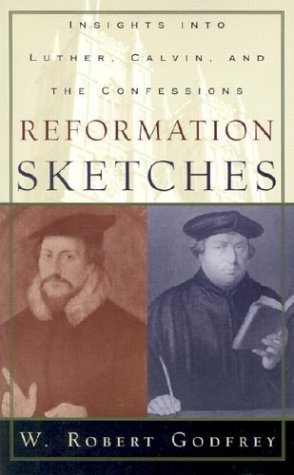
Reformation Sketches: Insights Into Luther, Calvin, and the Confessions. W. Robert Godfrey. 2003. 151 pages. [Source: Library]

First sentence: Around October 31, Martin Luther is remembered far and wide in the United States among evangelical protestants as a hero of the faith.

Premise/plot: Reformation Sketches gathers together previously published material by W. Robert Godfrey. Each of the seventeen chapters were originally published in the magazine Outlook. (http://www.reformedfellowship.net/) 

The first five chapters focus on Martin Luther. Of these five, by far, the BEST OF THE BEST is Luther on Law and Gospel. Two chapters focus on Philip Melanchthon. Five chapters focus on John Calvin. One chapter focuses on the French Reformation. One chapter focuses on Peter Martyr Vermigli. The final three chapters focus on Reformed Confessions of faith.

My thoughts: I enjoyed reading this one. I didn't love, love, love it. But I enjoyed it. I really thought the best chapter was the first chapter. I thought it was the most substantive. That being said, I also really loved the tenth chapter, "A Response to Trent." There were definitely chapters that I feel are worth reading. Some chapters focus more on history; other chapters focus more on ministry.

Monday, April 24, 2017

Book Review: The God I Love

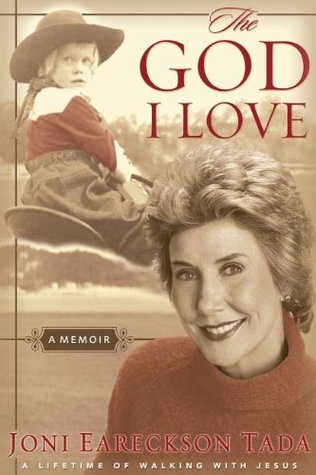
The God I Love. Joni Eareckson Tada. 2003. 368 pages. [Source: Bought]

I dug my toes into the sand of the Delaware beach, hugged my knees, and drew as close to the campfire as I could. The flames warmed our faces while behind us the night air chilled our backs. Huddled with my sisters and cousin, I smelled the burning logs and breathed in the fire’s heat. We all sat in awe of my father. He stood across the campfire from us, a figure a-swirl in rising heat and smoke, his face underlit by flame as if he were a prophet on Mount Sinai. We clutched each other as he wove his story.

This isn't Joni Eareckson Tada's first autobiography. It differs from Joni in that it explores more of her life before and after the diving accident and paralysis. One gets a better picture of her childhood, her family, her hobbies and interests, the times in which she lived, her faith and culture. One also gets a better picture of her faith and ministry after the accident. (Though her accident was no accident, but a work of God's providence.) Joni was published in 1976. So much has happened SINCE the publication of that book. Her marriage, her ministry, her mission trips, her public fight for the rights of the disabled, just to name a few! So even if you've read Joni, you don't know the whole story.

The God I Love, I noticed is almost a love letter to her father and mother--a big thank you. But above all, the focus is on God himself.

Quotes:
My earliest recollections of being stirred by the Spirit happened through hymns. Five-year-olds are able to tuck words into cubbyholes in their hearts, like secret notes stored for a rainy day. All that mattered to me now was that these hymns bound me to the melody of my parents and sisters. The songs had something to do with God, my father, my family, and a small seed of faith safely stored in a heart-closet.
God was only a little bigger than my father. The Lord may have filled the universe, but my dad filled mine. Whereas God kept the planets orbiting, my father was the center of our orbit. And whatever he commanded us was spoken not so much with words but through the sheer force of his own good character. In the spring of 1961, it was God’s responsibility to show young President Kennedy how to run a country, to keep the Russians on their side of the earth, to bring Adolf Eichmann to trial, to keep the Bomb from falling on Woodlawn Elementary, and The Creature from the Black Lagoon in his swamp and out of our neighborhood. Everything else was Daddy’s responsibility.
To not believe God was up there was, well, impossible. For one thing, there were the Ten Commandments posted at the front of our classroom, right underneath the American flag. No day at Woodlawn Elementary — at least back in the fifties and early sixties — dared start without a series of rituals: a U.S. Saving Stamps pitch to keep our country strong; the Pledge of Allegiance, to assure liberty and justice for all; the collection of lunch money (thirty-five cents for grilled cheese sandwich, tomato soup, carton of milk, and a Nutty Buddy); all capped off by a daily reading from the Bible.
I wanted to be on God’s side. So I became one of a mass of young people who searched, as one poet put it, for God and truth and right. Some of my passion was fostered by class discussions on segregation. We were assigned to read a book called Black Like Me by John Howard Griffin, the true story of a white man who colored his skin black and journeyed south to experience firsthand the stigma of segregation. The hate and horror this man faced left a deep impression on me. My search for truth and right began heating up. I memorized the protest songs of Peter, Paul, and Mary, as well as Joan Baez. I paid attention as the pastor of the little United Methodist Church we attended up by the farm pounded his pulpit about racism and social inequalities. I hung on every word of Mr. Lee as he urged us to examine the issues that were ripping society apart. We discussed injustices in the classroom and brought to light things that needed changing. “Let justice roll down like the mighty waters!” went the Bible verse, quoted from pulpits and coffeehouse stages alike. Yes, God was in. And if I was going to be on God’s side, I had to get better connected with him.
My hair. It became one of two miracles everyone whispered about those first few days at the University of Maryland Hospital. My shocking blonde hair had floated on the surface as I lay half submerged in the water. The other miracle was the blue crab that bit Kathy’s toe just before she stepped out of the shallows and onto the beach. Any other time, Kathy would have bolted to escape what she was convinced were zillions of hungry crabs. But this time, she didn’t race to the safety of her towel. Instead, she turned to warn her little sister. Her sister, whose bright-yellow hair, ebbing and flowing, told her something was wrong.
Something was happening, something for the first time since Jacque lay next to me in the night, singing “Man of Sorrows”: I was caught up in God’s thoughts about me, not my thoughts about him. I was lying in a stream of sunshine, consumed by his compassion for me, not by my anger and doubt about him. My thoughts didn’t even matter now — only his did. Only his mind, his heart. And his mind and heart were communicating clearly, as clearly as all those visionary moments I rode the horse trail, brushing past tree limbs, as clearly as all those nights by the ocean, under the stars. And he was saying, “Come unto me. Let me give you rest.” Yes, yes, I whimpered in my thoughts, I need rest, I just want rest. Rest and peace. God was oh-so clever. During all the chaos in my life, he remained silent for a long, long time. And then — voilà! — he broke through with a quick-witted surprise, a keen twist, an unexpected but brilliant turn of events — like this statue. I would bang-bang-bang on heaven’s door, firing daggers and darts, trying to manipulate him. I would blacken a white page with ink. I’d wail and sulk and thrash my head on a pillow to break my neck higher for spite. And then, this. God would answer, quietly and dramatically. Lying there, I didn’t try to analyze it much more than that. I simply looked into Jesus’ face and basked in his blessing. I hadn’t expected anything like this when I was wheeled into Johns Hopkins. I was here to get my nails cut out. But now I was thinking about other nails, staring at the scars they’d left in the hands of God’s Son. His nails for mine. Here was a God who understood my suffering.
“I like your wheelchair, Aunt Joni,” Kelly told me softly one evening. The two of us were sitting alone at the dinner table, waiting for the others to join us. “You do?” “Yeah,” she said, giving me her endearing grin. “I want one like yours when I grow up.” She caught me up short. All I could do was smile and shake my head at those impish eyes and thick eyelashes, the mop of brown hair cropped from the surgery, the freckles that flattened over her nose and cheeks when she laughed. Kelly scrunched her shoulders and leaned forward in her wheelchair, repeating, “Can I have one like yours?” I gulped hard. In her eyes, my wheelchair was more to be desired than a new collection of My Little Pony dolls or a spiffy new tea set for her and Kay. My chair was a joyride, a passport to adventure. Kelly assumed that my wheels had initiated me into a very special club, a club in which she wanted membership. Yet she didn’t seem to have a clue about the price one actually pays to join such a club. She seemed to discount the pain and the paralysis, the disappointment and the broken dreams. She utterly disregarded the dark side — it wasn’t even worth considering. All she longed for was a chance to be like me, to identify with me, to know Aunt Joni better. But something else was going on too. Those wise eyes of hers gave it away. Kelly wanted me to desire my wheelchair as much as she did. My niece wasn’t just admiring it — she wanted me to do the same. All along I had been trying to cheer her up, to tell her stories and play games with her, even be an example to her. But I had it all wrong. She was leading me. Out of the mouth of this babe, God was showing me how to embrace his will. “Your wheelchair’s neater than mine. I like yours best,” she said again. And you should too, she was saying. Kelly knew — at least, she sure seemed to know — that I was still bogged down by broken dreams. She sensed I still struggled with the dark side, that I didn’t quite know how to accept where I sat. For her, though, it was a cinch. Life had been hard on the farm, her parents argued a lot, and up until the diagnosis of cancer, you couldn’t get her near a tea set. But her suffering had pushed her into the arms of Jesus, and her gracious, openhearted way of accepting — no, embracing — his will had cracked open heaven’s floodgates of blessing. All my niece wanted to do now was talk about Jesus and his heaven, where she would pet giraffes and eat all the ice cream she wanted. Where she would ride bigger ponies, douse ketchup on everything, converse with Papa and Mama Bear, play with Baby Bear, and become an instant grownup.
“Think of a greater affliction — his affliction,” he added. “As you do, you can’t help but embrace him. And as you embrace him, you can’t help but love his will.” That meant something. It was being sure of something I hoped for — being certain of something I couldn’t see. It was, I realized, what having greater faith meant. Not faith in my ability to accept a wheelchair, but faith to embrace Christ, to trust him in spite of — no, because of — my problems. Again, I recalled the first time I tasted the power of the gospel that night in the hills of Virginia. How could I doubt the one who gave his life up for me? I remembered my friend Jacque singing to me in the hospital, the statue at Johns Hopkins, my pleasant life with Jay on the farm, Kelly — and, as always, the stars above the campfires. They were all part of the path Jesus had led me on thus far. How could I not believe him?
“Just make sure you keep pointing people to the Bible,” he finally offered. “Your life story can’t change anyone, but God’s Word can.”
The weaker we are, the harder we must lean on God — and the harder we lean on him, the stronger we discover him to be.
The truly handicapped among us are those who start their mornings on automatic cruise control, without needing God. But he gives strength to all who cry to him for help. So, who are the weak and needy? Who are those who need his help?” A brief pause in the dark shadow of recent events always allowed the point to come home. “It’s you. It’s me.”

© Becky Laney of Operation Actually Read Bible

Wednesday, October 12, 2016

Book Review: Questioning Evangelism

Questioning Evangelism. Randy Newman. 2003. Kregel. 272 pages. [Source: Bought]

What is Questioning Evangelism about? Is it anti-evangelism? I want to clarify from the start that it is not anti-evangelism. He is not questioning IF Christians need to evangelize. Rather he is insisting that they do need to evangelize, they just need to go about it better. He is "calling Christians to use questions in the venture of evangelism."

In the opening chapters, he mentions three basic skills needed to evangelize.

1) The first and most basic involves declaring the gospel, including the ability to clearly and concisely articulate the message of salvation. Declaring the gospel also includes the sharing of one’s own story or testimony. Every Christian needs fluency in articulating how the Lord changed his or her life and the difference that change makes daily.

2) The second evangelistic skill is ability in defending the gospel. Anticipating common questions, acquainting oneself with helpful discoveries from the past, and planning how to deliver this information in a logical sequence has to be part of “always being ready to make a defense” (1 Peter 3:15 NASB).

3) The third skill—and this is where Questioning Evangelism fits in—is built upon the foundations of declaring and defending the gospel. That skill is called dialoguing the gospel. Perhaps the most important component to this kind of evangelism is answering questions with questions rather than giving answers.

You might be thinking, is this biblical? is this right? Newman knows this, I think! And he writes, "I once did a study of how Jesus answered every question that was asked of Him in all four gospels. Answering a question with a question was the norm. A clear, concise, direct answer was a rarity." He continues, "Answering a question with a question, then, often has significant advantages over using direct answers. It brings to the surface the questioner’s assumptions."

The more I read, the more I liked the book. I could sense he genuinely cares that the gospel stays intact and is not compromised. Care more about the person and having an actual conversation with them, listening to them, seeking to understand them, and care less about staying on task and on script. Forget trying to get someone to make a decision during the course of one conversation. Forget about trying to check off from a list all the essential doctrines of the faith. Be in the moment, and, realize that God is sovereign. You are not responsible for persuading someone to come to faith.

I think one of my favorite, favorite chapters was on compassion. He writes, "When we plead for God to draw people to Him, we ourselves are drawn to those people. Making lists of those who are our “Ten Most Wanted” and keeping them in our Bibles can prompt prayers as well as soften hearts."
Answering a question with a question is part of a different style of sharing the Good News, one that I call rabbinic evangelism. Rabbis, using this style of debate, train their disciples to think about God and life. The method was used in Jesus’ day and is similar to what happens today in training schools called “yeshivas.”
Rabbinic evangelism is not simply a rational, logical argument. We must avoid the danger of thinking that a person’s reception of the gospel is simply based upon his or her ability to reason.
Rabbinic evangelism also is not a sales pitch. If we were to try and convince someone to “buy” the gospel, we’d shy away from some difficult words that need to be said.
Our failure to practice good listening hurts our attempts to convey the Good News.


© Becky Laney of Operation Actually Read Bible

Monday, March 16, 2015

Book Review: No Little People

No Little People. Francis A. Schaeffer. 2003. Crossway. 239 pages. [Source: Bought]

No Little People is a collection of sixteen sermons by Francis A. Schaeffer. This was my first time to read Schaeffer, and, it was a WONDERFUL introduction. The sixteen sermons are as follows:

  • No Little People, No Little Places
  • The Hand of God
  • The Weakness of God's Servants
  • The Lord's Work in the Lord's Way
  • Walking Through the Mud
  • Joseph
  • The Ark, The Mercy-Seat, and the Incense Altar
  • David: Lawful and Unlawful Vindication
  • Elijah and Elisha
  • The Three Men in the Fiery Furnace
  • What Difference Has Looking Made? (A Christmas Study)
  • Jesus Only
  • The Water of Life
  • The Book of Revelation: Future, Yet a Unity with the Present
  • What Is Enough
  • Ash Heap Lives
I've been sharing some quotes as I read this one, sharing them in my Quotes from the Cloud posts. I've found the book to be excellent. I've just LOVED, LOVED, LOVED it. It is a collection of sermons. Some sermons I've absolutely LOVED and found rich in truth and packed with insights. Other sermons I've thought were good, but, not necessarily amazing. I think there is something to speak to every reader certainly. One sermon might really touch you and meet your need for the day. But it wouldn't have to be the same sermon for everyone! I do think the book would give you a good idea on whether you like Schaeffer, and if you want to read more.

No Little People, No Little Places
Each Christian is to be a rod of God in the place of God for him. We must remember throughout our lives that in God’s sight there are no little people and no little places. Only one thing is important: to be consecrated persons in God’s place for us, at each moment. Those who think of themselves as little people in little places, if committed to Christ and living under His Lordship in the whole of life, may, by God’s grace, change the flow of our generation.
The Weakness of God's Servants
If someone asked us, “What is the Bible?” we probably would not begin our answer by saying, “The Bible is a realistic book.” Yet in the twentieth century this might be the best place to start—to stress the realism of the Bible in contrast to the romanticism which characterizes the twentieth-century concept of religion. To most modern people, truth is to be sought through some sort of leap from which we extract our own personal religious experiences. Many feel that the Bible should portray a romantic view of life, but the Bible is actually the most realistic book in the world. It does not glibly say, “God’s in His heaven—all’s right with the world!” It faces the world’s dilemmas squarely. Yet, unlike modern realism which ends in despair, it has answers for the dilemmas. And, unlike modern romanticism, its answers are not optimism without a sufficient base, not hope hung in a vacuum. So we should say at once to twentieth-century people: the Bible is a tough-fibered book.
Bible-believing Christians should never have the reaction designated by the term shocked. There is a type of Christian who constantly draws himself or herself up and declares, “I am shocked.” If he is, he is not reacting to reality as he should, for it is as much against the teaching of Scripture to romanticize men, himself or others as to explain away sin. We should not be surprised when a man demonstrates he is a sinner because, after all, we know that all men are sinners. When someone sits down to talk with me, I should convey to him (even if I do not express it in words) the attitude that he and I are both sinners. Nothing will help you as much in meeting people, no matter how far out they are or how caught they are in the modern awfulness, than for them to perceive in you the attitude “we are both sinners.” This does not mean that we minimize sin, but we can still exhibit that we understand him because we stand in the same place. We can say “us” rather than just “you.” To project shock as though we are better slams the door shut. Each of us does not need to look beyond himself to know that men and women are sinners.
Walking Through the Mud
To the extent that I am not conformed to the teaching of the Bible, the Word of God in my life, I am entrapped in the mire of the world. To the extent that I am not living on biblical principles, I am walking through mud and getting dirty. The same thing is true of the Christian congregation or Christian group. We must call sin sin, and resist it, not just explain it away psychologically.
The Ark, The Mercy-Seat, and the Incense Altar
It was Luther, when translating the Old Testament into German, who first used the term mercy-seat. It is a beautiful poetic phrase, but it also accurately communicates what the lid on the ark really was, a place of mercy. Yet if a person does not know the Hebrew word being translated, mercy-seat may confuse, because this word actually means the atonement cover—a covering not like a jar lid, but a covering in the sense of atonement. This is emphasized by the fact that Hebrews 9:5, in speaking of the “cherubim of glory shadowing the mercy seat,” uses a Greek word which means the propitiatory. Our hearts should well up when we consider Luther’s poetic translation of the term, and yet we must understand the term’s real force, the propitiatory, the atonement. The propitiatory covering was exactly the same size as the box. They matched. The atonement exactly covered the law. God is holy (He is always holy, He never ceases being holy), and God is love. Both must be affirmed. God is holy, God is love. Neither is primary, neither is secondary. Exodus 25:22 contains an important clause: “and there I will meet with thee.” God did not meet the Jews at the level of the law. He met them at the level of the mercy-seat. Undoubtedly, this is why Luther, loving the Lord as he did, called the covering the mercy-seat. He understood that this is where God meets everybody who is met by Him.
Jesus Only
The call to a nonChristian is to make Jesus the center of his life. The call to Christians is to remember that He is the center.
© Becky Laney of Operation Actually Read Bible

Thursday, March 14, 2013

Watching the Gospel of John

Can I talk about the film adaptation Gospel of John without gushing? I'm not sure. I just love it that much. What I love most about it is that it is word-for-word the ENTIRE gospel of John. The translation chosen for the film is the Good News Bible. As one of the simpler, most-basic translations in English, it does make it accessible for a wide audience range. The film--like the gospel--is intentional, evangelistic. (A good thing, a very good thing in my opinion.) The Scripture is enough--more than enough; you can't improve upon it.

The Gospel of John has always been a great why gospel. Why did Jesus come? Why did he face so much opposition? Why did he have to die? Why believe? Why have hope for this life and the next?

John was written "in order that you may believe that Jesus is the Messiah, the Son of God, and that through your faith in him you may have life." (John 20:30-31) All twenty-one chapters of John line up with that goal. In other words, all twenty-one chapters tell readers here is why you should believe that Jesus is the Son of God, why you should put your faith in him; He is who He says He is, He is the I AM.

I thought the film did a great job in showing why people would be drawn to Jesus, why it would be so easy to LOVE him, to follow him, to worship and adore Him, to believe that He is the Son of God. Here we see a charismatic Jesus. But. At the same time, I thought the film did a great job in showing why he faced so much opposition. This was not a mild, timid Jesus. People may try to make Jesus "just a good man" or "a good teacher." But here you will see his offensiveness reflected. He was loving, kind, and compassionate to those who saw themselves as blind, as weak, as in need of a Savior. But he wasn't afraid of outspoken confrontation either.

I recently read a wonderful book called Jesus + Nothing = Everything by Tullian Tchividjian. One thing I appreciated about The Gospel of John was that it kept Jesus at the center, or as Spurgeon might say the "top and bottom" of its theology. It didn't try to add anything to the message of Jesus. Another film I recently tried to watch did not do this well. It was Jesus + Herod + Herod's Wife + Herod's step-daughter/niece + Judas + Peter + some zealots + some Pharisees, Sadducees, and scribes + the Sanhedrin, etc. The list goes on and on. The film didn't focus on Jesus enough. Instead of focusing on Jesus' preaching or teaching or parables, or Jesus' miracles and ministry, it instead chose to keep adding in scene after scene of things of lesser importance. For example, Judas gets a lot of time on screen. Almost from the start, viewers see he has an agenda of his own, an agenda he never forgets about, an agenda that he carries with him as he "follows" Jesus. The focus on Judas in conversation with others, in my opinion, is a distraction. There's definitely a different focus or purpose to this film. On the plus side, it does give time to many of the other disciples, giving personality to them.

Highlights from the Gospel of John:
When Martha heard that Jesus was coming, she went out to meet him, but Mary stayed in the house. Martha said to Jesus, "If you had been here, Lord, my brother would not have died! But I know that even now God will give you whatever you ask him for."
"Your brother will rise to life," Jesus told her.
"I know," she replied, "that he will rise to life on the last day."
Jesus said to her, "I am the resurrection and the life. Those who believe in me will live, even though they die; and those who live and believe in me will never die. Do you believe this?'
"Yes, Lord!" she answered. "I do believe that you are the Messiah, the Son of God, who was to come into the world." (John 11:20-27)
"Do not be worried and upset," Jesus told them. "Believe in God and believe also in me. There are many rooms in my Father's house, and I am going to prepare a place for you. I would not tell you this if it were not so. And after I go and prepare a place for you, I will come back and take you to myself, so that you will be where I am. You know the way that leads to the place where I am going."
Thomas said to him, "Lord, we do not know where you are going; so how can we know the way to get there?"
Jesus answered him, "I am the way, the truth, and the life; no one goes to the Father except by me. Now that you have known me," he said to them, "you will know my Father also, and from now on you do know him and you have seen him." (John 14:1-7)
As Moses lifted up the bronze snake on a pole in the desert, in the same way the Son of Man must be lifted up, so that everyone who believes in him may have eternal life. For God loved the world so much that he gave his only Son, so that everyone who believes in him may not die but have eternal life. For God did not send his Son into the world to be its judge, but to be its savior. Those who believe in the Son are not judged; but those who do not believe have already been judged, because they have not believed in God's only Son. (John 3:14-18)

!Hero (Ten Years Later)

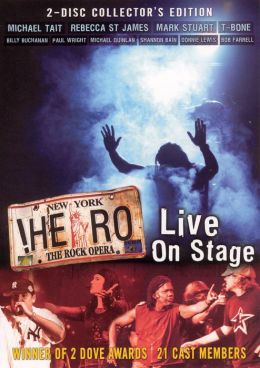
I recently watched !Hero, The Rock Opera. It had been a few years--at least--since I'd seen it. And it was perfect timing! This rock opera has a simple premise. What if Jesus, the promised Messiah, was not born in Bethlehem two-thousand years ago? What if the world had had to wait another two thousand years? What if Jesus' advent was here and now. What if his ministry took place on the streets of New York City? Instead of experiencing oppression at the hands of Roman soldiers, what if the world was ruled by ICON? This is a modern retelling of the gospel, of the life and work of Jesus. It loosely follows the gospel of John: water into wine, Nicodemus' visit, woman at the well, healing of the crippled man, feeding of the five thousand, etc. But there are other events taken from other gospels. Besides its modern setting, viewers should know it is a live concert starring Michael Tait (Jesus), Mark Stuart (Petrov), Rebecca St. James (Maggie), Nirva Dorsaint (Mother Mary), Michael Quinlan (Jude), Paul Wright (Agent Hunter).

The songs of !Hero

  • This Is How It Happened
  • A Few Good Men
  • Wedding Celebration
  • Fire of Love
  • Lose My Life With You
  • Man on a Mission
  • Secrets of the Heart
  • Stand Up and Walk
  • Do What You Gotta Do
  • Take My Hand
  • Love's Declaration
  • Raised in Harlem
  • They're Callin' Him Hero
  • Manna From Heaven
  • Hero
  • Leave Here
  • Stand by You
  • Say the Word
  • Intentions
  • Finally Home
  • Not In Our House
  • Murder On Their Minds
  • Party in the House Today
  • In Remembrance of Me
  • Shadowman
  • Hero's Agony
  • I Am
  • Kill the Hero
  • Execute
  • He's Not Here
  • The Truth Comes Out 

My favorite songs are He's Not Here, I Am, Manna From Heaven, Raised In Harlem, and Not In Our House. I also enjoy Finally Home and Love's Declaration.

© Becky Laney of Operation Actually Read Bible

Monday, December 10, 2012

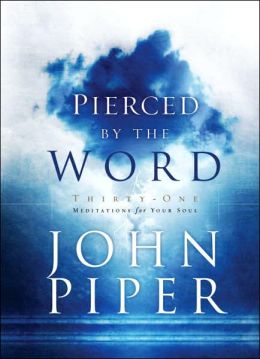
Book Review: Pierced by the Word

Pierced by the Word: Thirty-One Meditations for Your Soul. John Piper. 2003. Multnomah. 140 pages.

I really LOVED John Piper's devotional book, Pierced by The Word. Each devotion has substance. For example, last week I quoted a little of what he had to say about God's love. A week later, I'm still thinking about it--absorbing it. This book may be the devotional book for people who don't know they like reading devotional books. I think it would also be a GREAT introduction to John Piper because the entries are so manageable. (I've tried two or three times to read Desiring God, perhaps his most celebrated work, but I always get intimidated.) I would definitely recommend this one!

The devotions:

  • How Strange and Wonderful Is the Love of Christ!
  • God Is The Gospel
  • Pierced by the Word of God
  • Be Not Mere Shadows and Echoes
  • How To Drink Orange Juice to the Glory of God
  • Big, Sweeping--But Not Insipid--Prayers
  • What is Humility?
  • Wilderness, Worship, Treason, and God
  • How to Be a Refuge For Your Children
  • Going Deep With God By Having Him Carry Our Loads
  • Persevere in Prayer!
  • Dorothy Sayers on Why Hell is Nonnegotiable
  • To You Who Believe, He is Precious
  • What Does Jesus Want?
  • How Does the Law Help Me Know My Sin?
  • A Passion for Purity Versus Passive Prayer
  • The Battle for Breakfast Blessing
  • You Have One Precious Life
  • Terrorism, Justice, and Loving Our Enemies
  • How is God's Love Experienced in the Heart?
  • Reasons Believers in Christ Need Not Be Afraid
  • Embracing the Pain of Shame
  • How Jesus Helped His Disciples Increase Their Faith
  • The Strange Ways of Our Wonderful Builder
  • A*N*T*H*E*M: Strategies for Fighting Lust
  • Mealtime Prayers with the Pipers
  • It Is Never Right To Be Angry With God
  • The Church Was Spoken Against Everywhere
  • By What Death Will You Glorify God?
  • John G. Paton's Father
  • Helping People Have The Assurance of Salvation 

Favorite quotes:

From "Pierced by The Word of God"
The word of God is not a dead word or an inefficient word. It has life in it. And because it has life in it, it produces effects. There is something about the Truth, as God has revealed it, that connects it to God as a source of all life and power. God loves His Word. He is partial to His Word. He honors His Word with His presence and power. If we want our teaching or witness to have power and produce effects, let us stay close to the revealed Word of God. (22)
From "Wilderness, Worship, Treason and God"
There are seasons of pain and loss and grief and darkness when nothing is worth asking for but God. Everything else seems trivial, even life. (40)
From "Going Deep With God By Having Him Carry Our Loads,"
The Christian life is a life of being carried from beginning to end. (50)
From "Persevere in Prayer"
Oh, let us be a praying people, and let this year--and all our years--be saturated with prayers to the Lord of all power and all good. (51-52)
From "Dorothy Sayers on Why Hell is A Nonnegotiable"
If you live only for this world, you will care little for truth... But if you live for eternity, you will forego a few fads in order to be everlastingly relevant. (54)
From "To You Who Believe He Is Precious"
Have you ever thought that Jesus wants you to love Him not merely with your love but with the love which God the Father has for Him? How is this possible? It is possible because of the new birth. Becoming a Christian means getting a new nature, which is given by God. Practically speaking this means that God comes into our lives by the Holy Spirit and begins to give us new affections, new emotions, namely the emotions of God. It is the presence of God the Spirit in our lives that causes us to love Jesus with the love of God the Father.... To be ruled by the Spirit is to be ruled by a divine love for Jesus. (59)
In all the universe none is more precious to God the Father than His Son, Jesus Christ. That is how precious he should be to us. (60)

© Becky Laney of Operation Actually Read Bible

Saturday, March 26, 2011

Book Review: The World Jesus Knew


The World Jesus Knew. Anne Punton. 2003. Moody Publishers. 192 pages.


I found this to be a great read! I loved the design and layout. I loved the organization. I found it informative. I found it to be filled with information, perhaps this information won't dramatically change the way we live our day-to-day lives, but I do think it's information that can inform how we read Scripture, how we think about Jesus, how we think about the Bible. And that in and of itself might be reason enough to give this one a chance. 


From chapter eight:
We are all children of our own age and place and, unless we are taught differently, we will view the Bible from our own cultural perspective. Jesus, too, was thoroughly a child of his times, but how different they are from ours. How exciting and rewarding it is, therefore, to explore the common, daily life of the society in which he lived. (87)
Topics explored in this one:

  • The Home Jesus Entered
  • The Education Jesus Received
  • The Clothes Jesus Wore
  • The Language Jesus Spoke
  • The Countryside Jesus Crossed
  • Agricultural Methods Jesus Observed
  • Cultural Ways Jesus Followed
  • Religious Customs Jesus Kept
  • Festivals Jesus Celebrated
  • The Temple Jesus Loved
  • Prayers Jesus Prayed
  • The Synagogue Jesus Attended
  • The Scriptures Jesus Read
  • The Opposition Jesus Faced
  • Groups Jesus Knew

I would definitely recommend this one. I think it's a great resource for those interested in reading and studying the Bible. And I do think it's a GREAT resource for Sunday School teachers. 


© Becky Laney of Operation Actually Read Bible

Tuesday, July 6, 2010

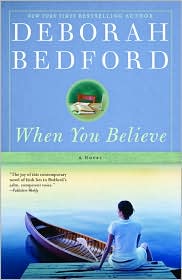
Book Review: When You Believe


When You Believe. Deborah Bedford. 2003/2009. Faith Words. 288 pages.

The afternoon started like any other afternoon. the first Tuesday of October was a solid, bright school day, and outside on the school steps, the sun fell across everyone's arms like a warm shawl.

Lydia Porter is a school guidance counselor. One day a student, Shelby Tatum, comes to her with a shocking story. She's being sexually abused. When Lydia asks her to name her abuser, Lydia is in for the shock of her life, because the man Shelby names is the love of Lydia's life, a man who has just asked her to marry him. Obligated in so many ways to report the abuse, Lydia does what she must. But it isn't easy. It is breaking her heart. Because she believes that Charlie, the man in question, couldn't have done this. But. She also believes that the abuse is real. Someone is abusing Shelby, even if that someone isn't Charlie. Someone needs to be Shelby's advocate. Someone needs to be there for Shelby. Someone needs to reassure Shelby that this is not her fault. That the abuse is not her fault. That she's not a bad person. But being there for Shelby--appearing to take her side--may cost her her happily ever after. Even if Charlie were to be proven innocent. Would he be able to forgive her for her role in this? Lydia is learning that some things you just have to trust God on.

When You Believe is a compelling contemporary novel. It explores what happens when accusations are made, how easy it is for a community, a school, a church family, to be torn apart by taking sides.

© Becky Laney of Operation Actually Read Bible