Friday, February 6, 2015

Book Review: Chiseled by the Master's Hand

Chiseled by the Master's Hand. Erwin Lutzer. 1993. Victor Publishing. 153 pages. [Source: Bought]

The subtitle of this one is: "Learn from Peter How God Sculpts Our Character To His Likeness." I appreciated this one. I did. Chapter by chapter, readers learn more about Peter. Various texts from the gospels and other New Testament books are examined and discussed. There are plenty of lessons, plenty of insights. Yes, this book is about Peter, to a certain extent, but it is even more a book about you and me and how we can be changed by Christ. It's easy to classify this one as a what-it-means-to-be-a-Christian or what-the-christian-walk-is-supposed-to-look-like book. If you want to use fancy words, justification and sanctification come to mine.

Would I recommend it? Yes! Though I wouldn't say this is the best Lutzer book I've ever read, I certainly enjoyed it and found it worth reading.

From chapter one:
When God chooses us, He shapes us so that everything standing in the way of our usefulness is cut away. His focus is not on what we do but on what we are in the hidden parts of the soul. The shaping of character is always His first priority. People, circumstances, and the unseen battles within the heart become His chisel to fashion us after His liking. He cuts away everything that isn't like Christ. The process is never finished in this life. Thankfully, we do not have to be perfect before we can know God intimately and be used for His glory. (9)
"You are!" is the diagnosis. "You shall be!" is the promise. (14)
From chapter two:
We are never in the wrong season, nor in the wrong circumstances, when we are obedient to Christ. (27)
From chapter three:
And how do we focus on Christ? Unfortunately, we often look for new spiritual secrets and neglect that which is most basic. First of all, we keep our focus through the Word of God--read it by the chapter, and memorize it by the verse. Though we've heard it before, we must be reminded to absorb the Scriptures internally. This will help us meditate and focus on Christ and His power alone. Second, there is prayer, those intimate moments when we share our cherished dreams and hopes with the Risen Christ. This intercession must be developed and strengthened. In His presence we can be honest, sharing our hurts or anger. Like David, we will find our soul refreshed. Then third, our songs/hymns can be used to lift our hearts to God. When the words are in our minds, they stay with us for the rest of the day. Finally, we must remember that there is strength within the body of Christ. Through the friendship and love of others we are encouraged to carry on. (49)
From chapter four:
There is a widespread assumption in America today that the religions of the world are essentially the same and only superficially different. However, the reverse is actually true: the religions of the world are superficially the same but fundamentally different. (55)
© Becky Laney of Operation Actually Read Bible

Thursday, February 5, 2015

Quotes From the Clouds #5

This year, I hope share weekly posts of quotes. These quotes are from authors I'm reading and enjoying from the Clouds of Witnesses Reading Challenge

For fellow participants, what I would LOVE, LOVE, LOVE to see is for people to share quotes from what they're reading. I'd love for you to share quotes occasionally with your readers and let me know about it. If you don't have a blog, you could always leave quotes in the comments here.

This week I'm quoting Martin Luther. 
Your salvation does not depend on the fact that you believe Christ to be the Savior of the godly, but that he is a Savior to you and has become your own. ~ Martin Luther, "A King Arrives"
Such a faith will work in you love for Christ and joy in him, and good works will naturally follow. If they do not, faith is surely not present; for where faith is, there the Holy Ghost is and must work love and good works. ~ Martin Luther, "A King Arrives"
He who believes in Christ must find riches in poverty, honor in dishonor, joy in sorrow, life in death, and hold fast to them in that faith which clings to the Word and expects such things. ~ Martin Luther, "A King Arrives"
What you think of him you will have; what you expect of him you will find; and as you believe so shall it be to you. He will still remain what he is, the King of life, of grace, and of salvation, whether he is believed on or not. ~ Martin Luther, "A King Arrives"
Before you can cry to God and seek him God must come to you and must have found you, as Paul says, Romans 10:14-15: “How then shall they call on him in whom they have not believed? and how shall they believe in him whom they have not heard? and how shall they hear without a preacher, and how shall they preach except they be sent?” God must lay the first stone and begin with you, if you are to seek him and pray to him. He is present when you begin to seek. ~ Martin Luther, "A King Arrives"
Learn then from this Gospel what takes place when God begins to make us godly, and what the first step is in becoming godly. There is no other beginning than that your king comes to you and begins to work in you. It is done in this way: The Gospel must be the first, this must be preached and heard. In it you hear and learn how all your works count for nothing before God and that everything is sinful that you work and do. Your king must first be in you and rule you. Behold, here is the beginning of your salvation; you relinquish your works and despair of yourself, because you hear and see that all you do is sin and amounts to nothing, as the Gospel tells you, and you receive your king in faith, cling to him, implore his grace and find consolation in his mercy alone. ~ Martin Luther, "A King Arrives"
This is what is meant by “Thy king cometh.” You do not seek him, but he seeks you. You do not find him, he finds you. For the preachers come from him, not from you; their sermons come from him, not from you; your faith comes from him, not from you; everything that faith works in you comes from him, not from you; and where he does not come, you remain outside; and where there is no Gospel there is no God, but only sin and damnation, free will may do, suffer, work and live as it may and can. ~ Martin Luther, "A King Arrives"
It is not enough that Christ saves us from the rule and tyranny of sin, death and hell, and becomes our king, but he offers himself to us for our possession, that whatever he is and has may be ours. [Romans 8:32] ~ Martin Luther, "A King Arrives"
We receive Christ not only as a gift by faith, but also as an example of love toward our neighbor, whom we are to serve as Christ serves us. ~ Martin Luther, "A King Arrives"
Thus it is not your good work that you give alms or that you pray, but that you offer yourself to your neighbor and serve him, wherever he needs you and every way you can, be it with alms, prayer, work, fasting, counsel, comfort, instruction, admonition, punishment, apologizing, clothing, food, and lastly with suffering and dying for him. ~ Martin Luther, "A King Arrives"
A good work is good for the reason that it is useful and benefits and helps the one for whom it is done; why else should it be called good! ~ Martin Luther, "A King Arrives"
Christ has done and accomplished everything for you, atoned for your sins, secured grace and life and salvation. Be content with this, only think how he can become more and more your own and strengthen your faith. Hence direct all the good you can do and your whole life to the end that it be good; but it is good only when it is useful to other people and not to yourself. ~ Martin Luther, "A King Arrives"

© Becky Laney of Operation Actually Read Bible

Wednesday, February 4, 2015

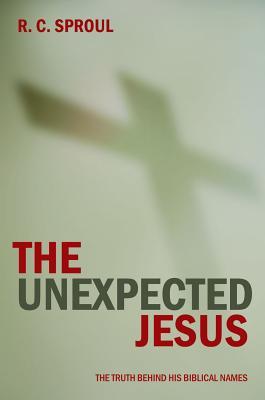
Book Review: The Unexpected Jesus

The Unexpected Jesus. R.C. Sproul. 2005. (AKA Mighty Christ in 1995). Christian Focus. 142 pages. [Source: Bought]

The Unexpected Jesus is a book about Jesus, about how the names and titles closely connected to Him reveal who he is and what he came to do. If you're looking for one book that tells you both about the person and the works of Jesus Christ, this would be a good fit. Especially for new believers. It's not too short, not too long. Twelve just-right chapters: six focusing on WHO Jesus is and six focusing on WHAT he did. Sproul addresses the basics. If you've read the gospels, you've come across these phrases, these titles, these names. Maybe you understood what you read. Maybe you didn't. But Sproul carefully examines them all and presents them clearly. (Son of Man, Son of God, Lamb of God,  Messiah or Christ, Lord, Lion, Prophet, Priest, King, etc. The presentation isn't examining these titles or names in isolation or out of context.)

As much as I liked the first half, I think I loved the second half a little bit more. It is a very clear presentation of the gospel.


  • The Need for Atonement
  • Sin and Redemption
  • Christ Our Ransom
  • Blessing or Curse?
  • Securing Our Faith
  • Justification by Faith

It is easy to recommend this one. It does keep it simple--relatively speaking at least. It isn't comprehensive or exhaustive. This isn't the most in-depth treatment of the subject. But it does have a clear focus and it is accessible. It works for me.

© Becky Laney of Operation Actually Read Bible
Tuesday, February 3, 2015

My Year with Spurgeon #5

The War of Truth
Charles Spurgeon
1857
“And Moses said unto Joshua, Choose us out men and go out, fight with Amalek; to-morrow I will stand on the top of the hill with the rod of God in mine hands.” — Exodus 17:9.
Christian men are not at war with any man that walks the earth. We are at war with infidelity, but the persons of infidels we love and pray for; we are at warfare with any heresy, but we have no enmity against heretics; we are opposed to, and cry war to the knife with everything that opposes God and his truth: but towards every man we would still endeavor to carry out the holy maxim, “Love your enemies, do good to them that hate you.” The Christian soldier hath no gun and no sword, for he fighteth not with men. It is with “spiritual wickedness in high places” that he fights, and with other principalities and powers than with those that sit on thrones and hold sceptres in their hands. I have marked, however, that some Christian men — and it is a feeling to which all of us are prone — are very apt to make Christ’s war a war of flesh and blood, instead of a war with wrong and spiritual wickedness. Have you never noticed in religious controversies how men will fall foul of each other! and make personal remarks and abuse each other? What is that but forgetting what Christ’s war is? We are not fighting against men; we are fighting for men rather than against them. We are fighting for God and his truth against error and against sin; but not against men. Woe, woe, to the Christian who forgets this sacred canon of warfare. Touch not the persons of men, but smite their sin with a stout heart and with strong arm.
But let us all do something for Christ. I will never believe there is a Christian in the world who cannot do something.
I will never have it that God created any man, especially any Christian man, to be a blank, and to be a nothing. He made you for an end. Find out what that end is; find out your niche, and fill it. If it be ever so little, if it is only to be a hewer of wood and drawer of water, do something in this great battle for God and truth.

© Becky Laney of Operation Actually Read Bible

Monday, February 2, 2015

Bible Review: Wycliffe New Testament 1388

Wycliffe New Testament 1388: An edition in modern spelling, with an introduction, the original prologues, and the Epistle to the Laodicieans. William R. Cooper, ed. 2002. British Library. 528 pages. [Source: Bought]

Can you imagine NOT having a Bible in your own language? Today we're used to dozens and dozens of translations to choose from--all in English, of course. But this wasn't always the case.

This New Testament is a translation from the Latin into English--the first of its kind. It was translated not by John Wycliffe himself, but, by his followers, the Lollards. The 1388 edition was published after Wycliffe's death in 1384. Essentially, the Lollards placed great value in the authority of the Scripture, and wanted the Bible to be translated into English so everyone could read it for themselves. The Bible was not for the religious or academic elite, but, for everyone.
After the initial translation was finished, talented scribes set to work copying out the Lollard text. With the dangerous associations of Lollardy, both Church and State sought its elimination, and in 1401 a statute was issued banning the Later Version upon pain of death. Lollards were prosecuted for their beliefs and their ownership of forbidden texts. The efforts, however, failed to stop the reproduction of the texts, and scribes continued to copy faithfully the Lollard texts, risking great danger to themselves. (vii)
Is this a translation for each and every believer? Probably not. But it is a joy and treat for some I imagine!

Is it reader-friendly and accessible? Yes and no. Your knowledge of the New Testament + the glossary + the context of the verse/passage = readability and accessibility.
For God loved so the world that He gave His one begotten Son, that each man that believes in Him perish not, but have everlasting life. For God sent not His Son into the world that He judge the world, but that the world be saved by Him. He that believes in Him is not deemed. But he that believes not, is now deemed, for he believes not in the name of the one begotten Son of God. And this is the doom, for light came into the world, and men loved more darkness than light, for their works were evil. (John 3:16-19)
Therefore Jews grouched of Him, for He had said, I am bread that came down from heaven. And they said, Whether this is not Jesus, the son of Joseph, whose father and mother we have known? How then says this that, I came down from heaven? Therefore Jesus answered and said to them, Nil ye grouch together. No man may come to Me but if the Father that sent Me draw him, and I shall again-raise him in the last day. (John 6:41-44)
Nil ye deem, that ye be not deemed. For in what doom ye deem, ye shall be deemed, and in what measure ye mete, it shall be meted again to you. But what see thou a little mote in the eye of thy brother, and see not a beam in thine own eye? Or how say thou to thy brother? Brother, suffer I shall do out a mote from thine eye, and lo, a beam is in thine own eye? Hypocrite! Do thou out first the beam of thine eye, and then thou shall see to do out the mote of the eye of thy brother. (Matthew 7:1-5)
Therefore, brethren, I beseech you by the mercy of God, that ye give your bodies a living sacrifice, holy, pleasing to God, and your service reasonable. And nil ye be conformed to this world, but be ye reformed in newness of your wit, that ye prove which is the will of God, good and well-pleasing, and perfect. (Romans 12:1-2)
For by grace ye are saved by faith, and this not of you, for it is the gift of God, not of works, that no man have glory. (Ephesians 2:8-9)
And do ye all things without grouchings and doubtings, that ye be without plaint and simple as the sons of God, without reproof in the middle of a shrewd nation and a wayward, among which ye shine as givers of light in the world. (Philippians 2:14-15)
Joy ye in the Lord evermore, eft I say, joy ye. (Philippians 4:4)
Savour ye those things that are above, not those that are on the earth. For ye are dead, and your life is hidden with Christ in God. (Colossians 3:2-3) 
Did I love it? Yes, I loved, loved, LOVED it. This is actually the second time I've read this one. I read it the first time in 2009, I believe? It's been a while. But it was a great way to start off the new year!!!

© Becky Laney of Operation Actually Read Bible

Sunday, February 1, 2015

Memory Work for February

Though I've not set out to memorize anything in decades, I'm going to make an effort in 2015 to memorize Scripture. For February, these are the verses I'll be working on. I'll still be reviewing January's verses as well (Revelation 21:3-4, Proverbs 3:5-6, Psalms 34:3, 8). 

Once again, I'll be using the ESV translation.

  • Oh come, let us worship and bow down; let us kneel before the LORD, our Maker! For he is our God, and we are the people of his pasture, and the sheep of his hand. (Psalm 95:6,7)
  • Sing to the LORD, bless his name; tell of his salvation from day to day. (Psalm 96:2)
  • Bless the LORD, O my soul, and all that is within me, bless his holy name! (Psalm 103:1)
  • Bless the LORD, O my soul, and forget not all his benefits, who forgives all your iniquity, who heals all your diseases, who redeems your life from the pit, who crowns you with steadfast love and mercy, who satisfies you with good so that your youth is renewed like the eagle's. (Psalm 103:2-5)
  • He does not deal with us according to our sins, nor repay us according to our iniquities. (Psalm 103:10)
  • For as high as the heavens are above the earth, so great is his steadfast love toward those who fear him; as far as the east is from the west, so far does he remove our transgressions from us. (Psalm 103:11-12)

© Becky Laney of Operation Actually Read Bible

Week in Review: January 25-31


We must believe that he is able to do what he will, wise to do what is best, and good, according to his promise, to do what is best for us, if we love him, and serve him. We must, with an entire submission and satisfaction, depend upon him to perform all things for us, and not lean to our own understanding, as if we could, by any forecast of our own, without God, help ourselves, and bring our affairs to a good issue. Those who know themselves cannot but find their own understanding to be a broken reed, which, if they lean to, will certainly fail them. In all our conduct we must be diffident of our own judgment, and confident of God’s wisdom, power, and goodness, and therefore must follow Providence and not force it. That often proves best which was least our own doing. We must not only in our judgment believe that there is an over-ruling hand of God ordering and disposing of us and all our affairs, but we must solemnly own it, and address ourselves to him accordingly. We must ask his leave, and not design any thing but what we are sure is lawful. We must ask his advice and beg direction from him, not only when the case is difficult (when we know not what to do, no thanks to us that we have our eyes up to him), but in every case, be it ever so plain, We must ask success of him, as those who know the race is not to the swift. We must refer ourselves to him as one from whom our judgment proceeds, and patiently, and with a holy indifferency, wait his award. In all our ways that prove direct, and fair, and pleasant, in which we gain our point to our satisfaction, we must acknowledge God with thankfulness. In all our ways that prove cross and uncomfortable, and that are hedged up with thorns, we must acknowledge God with submission. Our eye must be ever towards God. ~ Matthew Henry, commentary on Proverbs 3
NASB

  • 2 Kings 
  • 1 Chronicles
  • 2 Chronicles

Wycliffe

  • Matthew
  • Mark
  • Luke
  • Acts
  • Galatians
  • Ephesians
  • Philippians
  • Colossians
  • 1 Thessalonians
  • 2 Thessalonians
  • 1 Timothy
  • 2 Timothy
  • Titus
  • Philemon
  • Hebrews
  • James
  • 1 Peter
  • 2 Peter

© Becky Laney of Operation Actually Read Bible