Showing posts with label 2005. Show all posts

Tuesday, April 2, 2024

26. Isaiah: God Saves Sinners


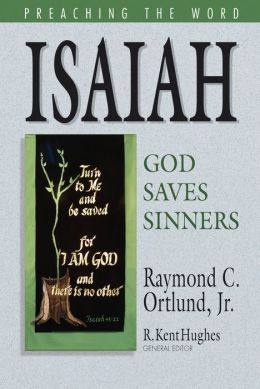
Isaiah: God Saves Sinners. Raymond C. Ortlund, Jr. R. (Preaching The Word Commentaries). Crossway. 2005. 496 pages. [Source: Bought]

First sentence from the preface: God saves sinners. We don’t believe that. We bank our happiness on other things. But God says to us, “I’m better than you think. You’re worse than you think. Let’s get together.” The prophet Isaiah wants to show us more of God and more of ourselves than we’ve ever seen before. He wants us to know what it means for us to be saved. Do we have the courage to listen? But God has opened a way for us to swim eternally in the ocean of his love. Our part is to look beyond ourselves and stake everything on God, who alone saves sinners.

First sentence from chapter one: We can know, because God has spoken.

This was my second time to read Raymond C. Ortlund's commentary on Isaiah. I first read it in April of 2015. I loved it just as much the second time. I read about five or six chapters a week over several weeks.

This commentary covers every chapter of Isaiah. It may not cover every verse of every chapter, but it does serve at the very least as an excellent overview of the book as a whole. And to be honest, this overview has so much depth and substance that most readers would not really feel cheated that perhaps it didn't cover every single verse and sentence. There is so much to unpack. 

This commentary is a great happy medium. It is more serious perhaps than J. Vernon McGee's super conversational commentaries. But it is not dry or scholarly. It is still very much written for you and me and everyone. It is meant to be read and understood by all believers. Not just those with a string of alphabet letters behind their name. 

I learned so much from each and every chapter. Here's a small taste of what to expect.

From the preface:
As a pastor, it’s not my job to protect people from the living God. My job is to bring people to God, and leave them there.
From chapter one the introduction to Isaiah:
Every day we treat God as incidental to what really matters to us, and we live by our own strategies of self-salvation. We don’t think of our choices that way, but Isaiah can see that our lives are infested with fraudulent idols. Any hope that isn’t from God is an idol of our own making... A salvation we don’t even know how to define, Isaiah is an expert at explaining to us. He wants to lead us into a life that outlasts our earthly expiration date.
J. I. Packer puts into words the greatness of the Isaianic message: God saves sinners. God — the Triune Jehovah, Father, Son and Holy Spirit; three Persons working together in sovereign wisdom, power and love to achieve the salvation of a chosen people, the Father electing, the Son fulfilling the Father’s will by redeeming, the Spirit executing the purpose of the Father and Son by renewing. Saves — does everything, first to last, that is involved in bringing man from death in sin to life in glory: plans, achieves and communicates redemption, calls and keeps, justifies, sanctifies, glorifies. Sinners — men as God finds them, guilty, vile, helpless, powerless, blind, unable to lift a finger to do God’s will or better their spiritual lot. God saves sinners. . . . Sinners do not save themselves in any sense at all, but salvation, first and last, whole and entire, past, present and future, is of the Lord, to whom be glory forever, amen!
If the world is not experiencing the grace of God, the church is being untrue to its destiny. 
From chapter two: Our Urgent Need: A New Self Awareness I
We need a sense of sin. We shouldn’t fear it or resent it. It is not destructive. It is life-giving, if we have the courage to let Christ save us. We are often told — or just whispered to — that what we need is more self-esteem. That is false. What we need is more humility and more Christ-esteem. 
What is conviction of sin? It is not an oppressive spirit of uncertainty or paralyzing guilt feelings. Conviction of sin is the lance of the divine Surgeon piercing the infected soul, releasing the pressure, letting the infection pour out. Conviction of sin is a health-giving injury. Conviction of sin is the Holy Spirit being kind to us by confronting us with the light we don’t want to see and the truth we’re afraid to admit and the guilt we prefer to ignore. Conviction of sin is the severe love of God overruling our compulsive dishonesty, our willful blindness, our favorite excuses. Conviction of sin is the violent sweetness of God opposing the sins lying comfortably undisturbed in our lives. Conviction of sin is the merciful God declaring war on the false peace we settle for. Conviction of sin is our escape from malaise to joy, from attending church to worship, from faking it to authenticity. Conviction of sin, with the forgiveness of Jesus pouring over our wounds, is life.
The reason we see so little repentance in the world is that the world sees so little repentance in the church.

The church survives because God saves sinners. He sees what we would become, left to ourselves, and in mercy he stretches out his hand and says, “I will not let you go.” That is why the evil inside every one of us doesn’t explode with its actual power, to our destruction (Romans 9:29). Apart from God’s preserving grace, we would relive the story of Sodom and Gomorrah. We are what they were. We deserve what they got. That’s what God says. And the only reason we’re still here is his overruling mercy saving us from ourselves. 
From chapter three: Our Urgent Need: A New Self Awareness II
Rebellion against God is our problem. But God saves rebels. And true worship is rebels like us waving the white flag of surrender before our rightful Lord in repentance.
Let’s ask ourselves, what do we think is unbearably repulsive to God, to his very soul, right down to the depths of the Divine Being? We might answer, hard-core crime, the exploitation of children, terrorist mayhem —that sort of thing. It might not occur to us that what the soul of God hates and is burdened and wearied by is the worship we offer him, if we are not in repentance. 
The problem with worship — it must take some form or other — is this: The more Biblical and beautiful its form becomes, the more useful it is as a mechanism for evading honest dealings with God and the more plausible as a substitute for repentance. 

From chapter four: Our Urgent Need, A New Self Awareness III
What is redemption? Redemption explains how God saves us. How does he? By paying a personal price. In real life, we sin our way right into bondage, and there’s no easy way out. If we try to cover it up or make excuses, we dig ourselves in deeper. Every day we create the conditions in which we literally deserve Hell. But what does God do? He offers to get us out of trouble at his own expense. He offers to absorb within himself the consequences we have set in motion. He pays the price, so that we don’t have to, because we can’t anyway. That’s redemption. If you have sinned your way into helplessness, where you deserve to reap what you have sown, you can be redeemed. God is not only willing to pay the price, he already has — at the cross of Christ. You can enter into redemption freely, by his grace.
We add nothing to the value of Jesus’ sacrifice, but his love does claim all that we are. The flip side of God paying the price is that we are no longer our own (1 Corinthians 6:19b, 20a). What else can we do but repent? We need to repent of our sins every day. We need to repent of our fifth-rate righteousness every day. We need to receive afresh, with the empty hands of faith, real righteousness from Jesus Christ every day. The cross becomes a redeeming power for us as we learn what it means to repent. 
From chapter five: The Transforming Power of Hope and Humility
We think too well of ourselves and too poorly of God to believe that his love for his glory and his love for us are one love, drawing him on to the final day when we will be forever happy with his glory alone. But how could it be otherwise? Human fulfillment is union with God.
Do you believe that there is enough glory in God to make you happy forever? If you don’t, why? What failing have you found in God? The gospel promises that his glory will remake the whole world. Stop valuing the idols you not only might lose but inevitably must lose. Learn to enjoy God. The triumph of his glory is enough to make your complete happiness forever invincible.
From chapter eight: 

If your heart does not leap at God’s grace in Christ, what you need is more grace. Nothing else can save you from your own deadness. Therefore, fear your own hardness of heart more than anything else.9 Beware of rigidity, ingratitude, a demanding spirit. Beware of an unmelted heart that is never satisfied. Beware of a mind that looks for excuses not to believe. Beware of the impulse that always finds a reason to delay response. Beware of thinking how the sermon applies to someone else. God watches how you hear his Word. If you are ever again to receive it with at least the capacity for response that you have at this very moment, hear it now.
From chapter thirteen:
The heart sings when we accept how little it matters that we are in control and how much it matters that God is in control for us, when we discover how little it matters that we are able and how much it suffices that God is able on our behalf. The day we step into the messianic kingdom and find that God has been true to his word, we redeemed will erupt in music as never before.


© Becky Laney of Operation Actually Read Bible

Thursday, January 26, 2023

8. Seeking the Face of God: Nine Reflections on the Psalms


Seeking the Face of God: Nine Reflections on the Psalms. 1957/1991/2005. 172 pages. [Source: Bought]

First sentence: There can be no doubt at all but that the greatest matter confronting every man and woman born into this world is that which is put before us by this statement in Psalm 14. [Psalm 14:1] Nothing surely, can be more important than this question of our relationship to God.

The book is a collection of nine sermons originally preached in 1957 by D. Martyn Lloyd-Jones. It was published in the UK in 1991 and the first American edition of this book was published in 2005. All nine sermons are expository sermons expositing verses and chapters from Psalms. Some chapters are linked closely together--same Psalm, different verses. Other chapters are more loosely connected. All have something vital/relevant to say to the church. 

These are *some* of the verses he discusses. I am missing one, sadly, and I thought I was doing such a good job of taking notes. Oh well. 

Psalm 14:1
Psalm 50:21 
Psalm 84:5-7
Psalm 78:41
Psalm 63:1-3
Psalm 63:1-3
Psalm 16:8
Psalm 27:1,3

Early chapters discuss what it is to be a fool, what makes one a fool, what is the greatest folly, etc. He surprised me a bit--in a good way--by then going on to say what is the SECOND greatest folly. That was a thought-provoking chapter. The answer--to spoil the surprise--is Christians who profess to believe but then live as if there were no God. In the past few decades--2005 or later--this wouldn't be a big surprise. This has been stated in various books. But in 1957, this might have been a jolt to those sitting in the pew. [I don't think this message would be preached from the pulpit these days--unless you are Paul Washer.] 

Quote: Is there any greater folly than the folly of saying there is no God? It is the folly of people who say they believe in God but who in the tenor of their lives and in the whole of their conduct daily forget God and live exactly as if He did not exist.

All of the chapters focus on man's relationship with God and God's relationship with man. 

I definitely enjoyed reading this one. I decided to read it now [it's been in my tbr pile probably for a decade] because Martyn Lloyd-Jones is quoted frequently in the ESV Church History Study Bible. 

Truth doesn't change. Absolute truth doesn't change. So these sermons are relevant and beneficial. Some of his observations and conclusions do seem a tiny bit dated. He argues, for example, that anyone who does not believe in God [aka unbeliever, the lost, unsaved] is lacking a worldview. He insists that they don't have "any path" or "a path" and that mentally they are just lacking a [systematic] way of viewing the world or making sense of the world. I would disagree with that. I think there are MANY, MANY, MANY worldviews prevalent today, actively being promoted today. There are a lot of "isms" if you will. 

Favorite quotes:

Some say, "It's unthinkable that God should ever show what the Bible calls the wrath of God. My whole conception of God excludes the very possibility of wrath. I could not believe in a God who shows this anger against sin and the sinner." So they cut it out, and they do that on the grounds that they cannot believe it, because to them it is unthinkable. So you see, it is their thought that determines everything: "Thou thoughtest that I was altogether such an one as thyself." They are making God in their own image. So they do not hesitate to lay down their ideas as to what God is like and what He ought to do and what He ought not to do. They give their ideas of the love of God, the wrath and the justice of God, and His righteousness. The whole thing is determined by their own thoughts. So they speak about these things, but their whole attitude toward God and toward religion has no basis and no authority whatsoever apart from their own postulates.

Ten times worse than being outside and saying, "There is no God at all" is going to God and to His house in a formal manner only, and indeed almost with the idea that we are conferring some benefit upon Him. How nice of us! How good of us to have gone to a place of worship! We preen and pride ourselves on it.

You will never make yourself feel that you are a sinner, because there is a mechanism in you as a result of sin that will always be defending you against every accusation. We are all on very good terms with ourselves, and we can always put up a good case for ourselves. Even if we try to make ourselves feel that we are sinners, we will never do it. There is only one way to know that we are sinners, and that is to have some dim, glimmering conception of God.

Christ came into the world and died. Why? To bring us to God. It is all about God. It is not some comfortable feeling that you and I have to strive for; it is not having your body healed or a thousand and one other things. The whole object of Christ and His death upon the cross, His burial, and His resurrection is to bring us to God. And the ultimate test of our profession of the Christian faith is our thoughts about God, our attitude in His presence, our reverence and godly fear because our God is a consuming fire.

There is nothing more awful and reprehensible than to talk about Him and then to forget all about Him, and to live as if He were not there at all. Are you calling upon God for salvation? Have you seen your desperate need of Him? Do you know that you will have to face Him in the Judgment?

Perhaps there will be, as it were, a tape-recording played back to you of all you have said about God and how you have spoken about Him and His laws and declared His statutes. And then it will be read out to you-the things that you have done, the life you have lived, your self-centeredness, your selfishness, the fact that your whole life was not surrendered to God and lived to His glory and to His praise.
It is a tremendous thing to say you believe in God, but look at the implications.

Christian truth is a kind of ellipse, and there is one focus-God; but there is also another focus-man. And if we are to enjoy the experience of this writer, we must be as right about man as we are about God.

Men and women must realize their need, and the only people who know what it is to enjoy the blessings of Christian salvation are those who have already discovered that need. The tragedy, ultimately, of so many, indeed of all outside Christ, is that they have never really seen their need. That is why they have never seen their need of Christ; that is why they do not fly to Him as Savior; they have never seen themselves as they really are.

There is no knowledge of God except in Jesus Christ and Him crucified. He is the sacrifice that is placed upon the altar: He has made "his soul an offering for sin" (Isa. 53:10). "I am the way, the truth, and the life," He says of Himself. "No man cometh unto the Father, but by me" (John 14:6).

We are God's people, and we are meant to show forth His praises, His excellencies, His virtues. So the question that we must ask ourselves is, are we doing that? Are we individually enjoying the blessings of the Christian life as we should? What do we find as we look back and review the past year?

If we are uncertain about our forgiveness, we are definitely limiting God, and we have no right to be like that. God is our Father, and a father never wants his children to be unhappy, to be uncertain about the relationship-such a thing is inconceivable. So we have this abundant teaching in the Bible to give us certainty and assurance. And if we do not have it, we are guilty of putting a limit upon what is possible.

So if you want to set the Lord always before you, spend much time in regular, daily reading of the Bible. And let it be systematic reading, not just picking it up at random and turning to a favorite psalm and then to somewhere in the Gospels. No; it must be Genesis to Revelation! Go through the Book year by year. I think any Christian should be ashamed who does not go through the entire Bible once a year. Go through it systematically.

God's Word speaks to you-listen to Him, and you will come into His presence. Set Him before you by reading the Bible. You can do this also in prayer-talking to God and listening to Him.

Set the Lord always before you-the Lord Himself, not merely activities in His kingdom-because if you do not do this, you will become very dry in all your activism. Your heart will become cold, and in the time of need and trouble and trial you will not know where you are, and you will be a poor witness to the faith and to the grace that you have received and that you hold.


© Becky Laney of Operation Actually Read Bible

Tuesday, May 14, 2019

Book Review: Job, Holman Old Testament Commentary #10

Job (Holman Old Testament Commentary #10) Steven J. Lawson. 2005. 400 pages. [Source: Bought]

First sentence: The story of Job is one of the best known in the entire Bible yet, strangely enough, one of the least understood.

If you've ever read Job and found it puzzling, then Steven Lawson's commentary was written with you (yes, you) in mind.

Lawson admits Job can often be confusing in the introduction when he quotes Churchill and applies it to Job. "Job is a riddle wrapped in a mystery inside an enigma." But is it worth reading? Lawson argues YES, YES IT IS.

There are many reasons why it's important for believers to read and study Job.
Addressed in this puzzling book are such confounding issues as: Why do the righteous suffer? Where is God when tragedy strikes? If God is all-loving, how can he allow human suffering? Does he not care? Is God worthy of worship in tough times? Or must he buy worshippers with blessings?...As you study the trials of Job, you will gain new insight into life's oldest enigmas—those dealing with sovereignty, Satan, and suffering.
Ultimately, he concludes that, "More than being a book about Job, it is, actually, a book about God. This is the primary lesson learned by Job as taught in this book. God is God. He will do as he pleases, when he pleases, with whom he pleases, without consulting his creatures, and he will do so for his own glory and the ultimate good of his people."

The commentary takes readers through the book chapter by chapter, verse by verse. Each chapter focuses on one chapter of Job. Each chapter has an introduction, the commentary, a conclusion or summary, application points, prayer, word studies, and a teaching outline. Everything is organized and clear.

I found the book to be insightful, relevant, and practical. For example, the application points for Job 2 are about handling temptation.
Every temptation is an opportunity to demonstrate our faith in God. How do we react to temptation? 1. Expect it. Each Christian should expect that Satan will launch his offensives against us. 2. Detect it. Every believer must sharpen his powers of discernment in spiritual warfare. 3. Reject it. Once the advance of the devil is detected, it must be firmly rejected.
From Job 3, the application points are for handling discouragement:
How do we deal with this discouragement? 1. Remember that even the strongest believer can become discouraged. 2. Believers can suffer deeply on many levels at one time. 3. Discouragement can cause God's people to lose perspective.
From Job 7, the focus is on God's glory and our suffering:
How can we go through tough experiences without losing focus on the “big picture” of God's glory?
1. Read the Bible. The Scripture is an anchor for the soul, a harbor and refuge for the storm-tossed life. There is no peace like the mind that is fixed on God through his Word. The soul is made strong when it is resting in God's truth. 2. Read Christian biographies. Read the biographies of great Christians who sacrificed their all for God. 3. Read the Puritans. The English Puritans of the sixteenth and seventeenth centuries had a strong faith and a way of communicating essential spiritual truths in a way that transcends time.
From Job 9, the application is on how to find comfort in times of suffering:
When hurting deeply, what are some practical steps believers can take to find comfort for their aching hearts? 1. Memorize and meditate on Scripture. The Word of God is always a soothing balm to a sorrowful heart. Scripture in the heart is the greatest healer of a troubled life. 2. Stay plugged in to Christian fellowship. Believers need the strength that other Christians can provide. 3. Have a prayer partner. 4. Minister to someone else. Take your focus off yourself and place it on others. 5. Listen to good Christian music. The psalmist says that God inhabits the praises of his people. 6. Maintain physical exercise. Walk, jog, ride a bike, plant a garden, or take up a new hobby.
From Job 23, the focus is on finding God.
Where can we find God? Several spiritual truths need to be kept in mind. 1. God is found in his Word. God primarily makes himself known in the pages of Scripture. The written Word of God is the chief place in which he has chosen to reveal himself to man. 2. God is represented by his Son. There is only one way to come before God, who is revealed in his Word, and that is through his Son, the Lord Jesus Christ. 3. God is revealed by his Spirit. All spiritual truth about God must be revealed by his Spirit. 

Quotes:


  • At the core of a healthy, vital relationship with God is a trembling heart that stands in awe of his majesty.
  • When answers are not forthcoming and trials overwhelm us, it is in these difficult times that the greatest worship is offered to God. Believers must respond as Job did in these dark hours by worshipping God.
  • If you are to remain strong in your faith, you must be vigilant in your spiritual life and remain firmly anchored to God.
  • “God has created me to do him some definite service. He has committed some work to me which He has not committed to another. I have a mission. I may never know it in this life, but I shall be told it in the next. Therefore, I will trust Him. Whatever I am, I can never be thrown away. If I am in sickness, my sickness may serve Him. If I am in sorrow, my sorrow may serve Him. He does nothing in vain. He knows what He is about. He may take away my friends. He may throw me among strangers. He may make me feel desolate, make my spirits sink, hide my future from me—still He knows what He is about.” ~ John Henry Newman
  • Believers must purpose to look to God, or they will be overwhelmed by feelings of despair.
  • Trusting God does not mean God's people do not experience pain. But it does mean they believe that God is at work through their adversity for their ultimate good. 
  • God is both a God of judgment and a God of love. But one without the other is not God.
  • C. S. Lewis quipped, “If Satan's arsenal of weapons were restricted to a single one, it would be discouragement.”
  • No matter how great our trial or suffering may be, God remains greater still.
  • Never will God deviate from his eternal purpose.
  • It is when discouragement threatens to overwhelm us that God's grace is multiplied in lives that are yielded to him.
  • We live for the glory of God; we suffer for the glory of God; we endure for the glory of God.
  • As believers, one way we honor God is by the way we go through our trials.
  • Half of the truth is no truth, and no truth is a lie. Thus Job had been listening to the devil's voice in the voice of Bildad.
  • Wrong thoughts about God inevitably lead to wrong thoughts about ourselves.
  • God will not take us home until we have fulfilled our purpose. While we have life and opportunity, we need to do what God has called us to do. 
  • If we are to truly know him, we must enter into the fellowship of his suffering. Human pain identifies us with Christ, who knew adversity in this world. He lived with the cross before him and suffered under the most grueling death imaginable.
  • Robert Murray McCheyne once stated, “If I could hear Christ praying for me in the next room, I would not fear a million enemies. Yet the distance makes no difference. He is praying for me.”
  • As Martin Luther once said, “I can only bring God's Word to the ear but can go no further. The Holy Spirit must take the Word from the ear to the heart.”
  • God's sovereignty over all heaven and earth should evoke awe in the hearts of all people.
  • True worship of God is fueled by a deepened knowledge of God. Head knowledge that does not lead to heart worship is worthless and leads only to pride. But when our knowledge of God is growing in depth and fervor, our worship will also grow in depth and fervor. Is your worship fueled by your knowledge of God?
  • “Let God have your life; He can do more with it than you can.” D. L. Moody


© Becky Laney of Operation Actually Read Bible

Monday, March 11, 2019

Book Review: God is the Gospel

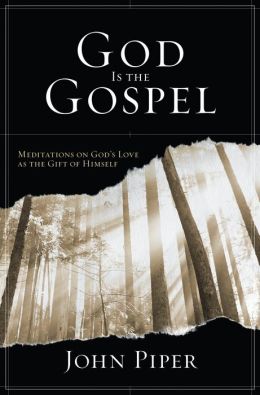
God is the Gospel: Meditations on God's Love as the Gift of Himself. John Piper. 2005. Crossway. 192 pages. [Source: Bought]

First sentence: Today--as it is in every generation--it is stunning to watch the shift away from God as the all-satisfying gift of God's love. It is stunning how seldom God himself is proclaimed as the greatest gift of the gospel. But the Bible teaches that the best and final gift of God's love is the enjoyment of God's beauty. 

The premise of this one is self-evident: God IS the gospel. Since that statement is more likely than not going to cause confusion, I'll rephrase it. What makes the good news good? Ultimately, what makes the good news GOOD. There are dozens of reasons why it's "good news". But really only one ultimate reason why it's GOOD NEWS.

To answer this question, it might be handy to ask another question: what is the chief end of man? The answer to that is TO GLORIFY GOD AND TO ENJOY HIM FOREVER.

Piper answers this one question [what ultimately makes the good news GOOD?] dozens of times throughout his book. In the introduction, his answer is concise: "The best and final gift of the gospel is that we gain Christ...this is the all-encompassing gift of God's love through the gospel--to see and savor the glory of Christ forever."

The saving love of God is God's commitment to do everything necessary to enthrall us with what is most deeply and durably satisfying, namely himself. 
The supreme demonstration of God's love was the sending of his Son to die for our sins and to rise again so that sinners might have the right to approach God and might have the pleasure of his presence forever. 
The good news is not that there is no pain or death or sin or hell. There is. The good news is that the King himself has come, and these enemies have been defeated, and if we trust in what he has done and what he promises, we will escape the death sentence and see the glory of our Liberator and live with him forever. 
Everything else in the gospel is meant to display God's glory and remove every obstacle in him (such as his wrath) and in us (such as our rebellion) so that we can enjoy him forever. God is the gospel. That is, he is what makes the good news good. Nothing less can make the gospel good news. God is the final and highest gift that makes the good news good. Until people use the gospel to get to God, they use it wrongly.
If God is not treasured as the ultimate gift of the gospel, none of his gifts will be gospel, good news. And if God is treasured as the supremely valuable gift of the gospel, then all the other lesser gifts will be enjoyed as well. 
The gospel would not be good news if it did not reveal the glory of Christ for us to see and savor. It is the glory of Christ that finally satisfies our souls. We are made for Christ, and Christ died so that every obstacle would be removed that keeps us from seeing and savoring the most satisfying treasure in the universe--namely Christ, who is the image of God.
We must make plain to people that if their hope stops short of seeing and savoring the glory of God in Christ, they are not fixing their hearts on the main thing and the best thing Christ died to accomplish--seeing and savoring the glory of God in the face of Christ with everlasting and ever-increasing joy. 
The affections of our joy should not rest on the gifts but ride the gift up to God himself. 
The aim of the gospel is not an easy life. It is deeper knowledge of God and deeper trust in God.
The highest act of love is the giving of the best gift, and if necessary, at the greatest cost, to the least deserving. This is what God did. 
God loves us by giving us himself to enjoy.  

God is The Gospel explores the gospel message and clarifying what the gospel is. Piper does this by turning to Scripture and expositing various passages. Piper also makes use of other theologians like John Calvin, Jonathan Edwards, and John Owens. (Though never to the exclusion of Scripture itself.) The book not only examines the CONTENT of the gospel--though Piper never loses sight of the fact that the gospel has specific content--but also the PURPOSE of the gospel. Not all gospel-centered books focus on the PURPOSE of the gospel. And the WHY is equally important to the WHEN, WHERE, and WHO.

Many of the "lesser things" discussed in God is the Gospel are worthy subjects. In fact there are dozens--if not hundreds or thousands--of books about these biblical topics. Subjects like justification, sanctification, forgiveness, prayer, worship, etc.

Piper can be bold.
Propitiation, redemption, forgiveness, imputation, sanctification, liberation, healing, heaven--none of these is good news except for one reason: they bring us to God for our everlasting enjoyment of him. If we believe all these things have happened to us, but do not embrace them for the sake of getting to God, they have not happened to us. Christ did not die to forgive sinners who go on treasuring anything above seeing and savoring God. And people who would be happy in heaven if Christ were not there, will not be there. The gospel is not a way to get people to heaven; it is a way to get people to God. It's a way of overcoming every obstacle to everlasting joy in God. If we don't want God above all things, we have not been converted by the gospel. 
The holiness of Christian people and the conversion of perishing people hang on seeing and savoring the glory of God in the gospel.
Only an artificial joy does not pass through sorrow for sin on its way to the thrill of being forgiven. 
All other gods must go. All other delights that are not delights in God must go--not because anything good must be taken away, but to make room for what is infinitely best, God himself. 
Death is a gift because it takes us more quickly to the great good of the gospel--seeing and savoring the glory of God in the face of Christ. 
The gospel is strange. Its goal is not my immediate ease. Its goal is my being so in love with Christ and so passionate about his glory that when my suffering can highlight his worth I will bear it gladly.  
How does faith in Christ relate to delight in Christ? How do trusting God and savoring the glory of God relate to each other? To answer this we should ask: What should faith trust Christ for? It would be defective to trust him to supply pornography. I only use this gross example to make the principle clear. Faith is not saving faith if it tries to trust Christ for the wrong things. So this makes clear that trust per se, without reference to what we trust him for, is not the seance of a saving relationship to Christ. Something else must be present in faith if it is to be saving faith that honors Christ rather than just using him. Saving faith must have a quality to it that tastes what is Christ-exalting and embraces it. 
If we are not captured by his personality and character, displayed in his saving work, then all our declarations of thanksgiving are like the gratitude of a wife to a husband for the money she gets from him to use in her affair with another man. 
It is a shocking thing to learn that one of today's most common descriptions of the cross--namely how much of our value it celebrates--may well be a description of natural self-love with no spiritual value. 
Whole systems of imitation Christianity can be built on distorted images of the love of God and the gospel of God. 
Being loved by God is the wonderful replacement of self as the foundation of our joy. God's best gift is not the gift of self-esteem. God's best gift is God--for our everlasting and ever-increasing enjoyment.
Woe to us if we speak of our existence, or our being, for its own sake. God has given us existence. 

Piper challenges readers to ponder, meditate, reflect, reconsider....he does this by asking unexpected questions and pushing beyond the quick and easy.
Do you feel more loved because God makes much of you, or because, at the cost of his Son, he enables you to enjoy making much of him forever? 
Does your happiness hang on seeing the cross of Christ as a witness to your worth, or as a way to enjoy God's worth forever? 
If you could have heaven, with no sickness, and with all the friends you ever had on earth, and all the food you ever liked, and all the leisure activities you ever enjoyed, and all the natural beauties you ever saw, all the physical pleasures you ever tasted, and no human conflicts or any natural disasters, could you be satisfied with heaven, if Christ was not there?
Do we preach and teach and lead in such a way that people are prepared to hear that question and answer with a resounding No? Have we presented the gospel in such a way that the gift of the glory of God in the face of Christ is marginal rather than central and ultimate? Can we really say that our people are prepared for heaven where Christ himself, not his gifts, will be the supreme pleasure? And if our people are unfit for that, will they even go there?
Why is it good news to you that your sins are forgiven? 
Why is it good news to you that you stand righteous in the courtroom of the Judge of the universe? 
How do all the gifts that flow to us from the gospel relate to God as the ultimate and all important gift of the gospel?

Piper also defines and clarifies.
Doctrine means teaching, explaining, clarifying. Doctrine is part of the gospel because news can't be just declared by the mouth of a herald--it has to be understood in the mind of a hearer. When the gospel is proclaimed, it must be explained. Gospel doctrine matters because the good news is so full and rich and wonderful that it must be opened like a treasure chest, and all its treasures brought out for the enjoyment of the world. Doctrine is the description of these treasures. Doctrine describes their true value and why and they are so valuable. 
Grace is the free blessing of God that flows from his heart to guilty, undeserving sinners. 
Justification has these two sides: the removal of sin because Christ bears our curse, and the imputation of righteousness because we are in Christ and his righteousness is counted as ours. 
Love is doing whatever you need to do to help people see and savor the glory of God in Christ forever and ever. Love keeps God central. Giving ourselves without giving God looks loving to the world. But it is not. We are a poor substitute for God. 
This is my second time to read the book. I loved, loved, loved it.


© Becky Laney of Operation Actually Read Bible

Tuesday, January 8, 2019

Book Review: A Garden in Paris

A Garden in Paris. Stephanie Grace Whitson. 2005. 285 pages. [Source: Bought]

First sentence: The only problem with her life, Mary thought, was that she didn't have one. 

Premise/plot: Mary Elisabeth McKibbin Davis is a fifty year old widow with a lot of regrets. The novel even opens with her contemplating suicide. (That is so not the typical start for a Christian novel.) But prompted by a cheesy, inspirational quote she dares to be brave, she dares to take the first few baby steps to living again. She writes an old friend--old lover--who lives in France. She tells him she'll be going to Paris in December and that he'll know where to meet her on Christmas Eve if he wants to see her again. She regrets how they ended things--abruptly with the oh-so-public announcement of her engagement.

Another regret Mary Davis has is that she does not have a good relationship with her daughter, Elizabeth. Her daughter (Liz) is barely civil to her--even when the two are in front of others, perhaps particularly when they're in front of others (like the board of the family business, like Liz's fiancé, Jeff.) Mary wants to be close(r) to her daughter but Liz seems unwilling to make the effort. 

Most of all Mary regrets that she let her husband take away all the bits and pieces that made her her. She finds herself asking Who am I? What do I want? Why am I here?

So Mary journeys to Paris to the shock and dismay of her daughter. Liz finds herself questioning many things WHO IS THIS PERSON? WHY IS MOTHER ACTING THIS WAY? Liz perhaps realizes that her mother is oh-so-human and worth noticing for a change.

My thoughts: I read this practically in one sitting. It is contemporary Christian fiction. My comfort zone is historical fiction or historical romance. It's rare for me to pick up contemporary titles. But I've enjoyed Stephanie Grace Whitson's historical novels so I thought I'd take a chance on this one too. It was so GOOD. 

I liked the focus on the relationship between mother and daughter and even the relationship between future son-in-law and mother-in-law. I liked how Jeff was Mary's advocate with Liz. 

I liked the be-true-to-yourself theme. 

I loved the characters. 


© Becky Laney of Operation Actually Read Bible

Monday, June 4, 2018

Book Review: Maggie's Dare

Maggie's Dare: The Great Awakening (Sisters in Time #3). Norma Jean Lutz. 2005. Barbour. 144 pages. [Source: Review copy]

First sentence: Maggie Baldwin struggled to restrain the excitement bubbling up inside her. Her younger brother, Caleb, at ate eight, could run about the Souder shipyard with abandoned glee. But at age twelve, she was expected to use decorum befitting a lady.

Premise/plot: Maggie cares tremendously what other people think of her. Specifically she cares about what other girls her age--richer girls from prominent families--think of her. She's included, for the most part, but doesn't feel properly IN the in group. She wants to dress like them, talk like them, think like them, essentially be them. But now and then she realizes that she doesn't really think like them, that she's different. One way in which she differs from her friends is that she sees slavery as wrong. They don't. So when she sees her friend's new slave--her friend's first slave--becoming sicker and sicker, she tries to intervene to save her life. (Her father is a doctor. She has been raised to be compassionate--and observant.) Will Maggie learn to be true to herself no matter the risk to her popularity?

My thoughts: I'm not sure this is the best introduction to 'the Great Awakening.' I'm not even sure it's an adequate introduction to 'the Great Awakening.' What we do get is an outsider's perspective from a girl who does little thinking for herself for the first hundred pages. Because her friends look down upon the 'new' revivalist preachers, she does. She parrots whatever they have to say whenever the subject comes up. She ignores what other people have to say on the subject. Even if their experiences are more first-hand. The fact that she does eventually open up her mind--or perhaps I should say the Spirit awakens her mind--is good and nice. But I can't help wishing that Maggie had come to her senses quicker.

The book may or may not be set in 1744. The cover says 1744. But I could have sworn that some sentence in the book dates it in either 1740 or 1741. I can't find it now. But I remember reading it and it sticking out as odd. I want to say it was discussion about Christmas or the New Year.

I liked plenty of the characters in this one--just not Maggie, until the end.


© Becky Laney of Operation Actually Read Bible

Wednesday, February 14, 2018

Book Review: A Pilgrim's Progress

John Bunyan's A Pilgrim's Progress. Geraldine McCaughrean. Illustrated by Jason Cockcroft. 1999/2005. 112 pages. [Source: Library]

First sentence: I had a dream last night. Like moonlight through the window of my cell it fell on me: not so big as to fall one night; large enough to fill the rest of my life.

Premise/plot: This is an adaptation--a retelling--of the classic allegorical novel, Pilgrim's Progress. Christian, in this version, is a young boy. Hopeful, Christian's companion along the way, is a young girl. The book has been completely rewritten as prose. And most--if not all the names--have been changed. For example, Obstinate and Pliable become Ob Stinate and Mr. Bendy.  Because Christian is a young boy--not a married man with a wife and children of his own--there is no room for the sequel. Also the order of events have been shuffled around a bit.

My thoughts: I enjoyed this one. I did. I can't say that I like it more than the original. But I'm not sure it was written to replace the original at all. I liked the writing, for the most part. I do like how it ended.
I cannot describe what Christian saw when he came face to face with the King, nor what Hopeful felt when all her hopes were fulfilled. I woke too soon. And besides, no one can dream the Unimaginable; I shall have to cross the River myself before I can say exactly what the City of Gold contains. I would not have chosen to wake. But I did. I am awake now. Time to get up then, I suppose, and continue the journey. I am on a pilgrimage, too, you see. Everyone is.

© Becky Laney of Operation Actually Read Bible

Wednesday, December 2, 2015

Book Review: Faith Alone

Faith Alone: A Daily Devotional. Martin Luther. Edited by James C. Galvin. 2005. Zondervan. 400 pages. [Source: Bought]

Looking for a devotional for next year? Now is the time to start looking. One tip I have for anyone looking to buy a new devotional, is to take advantage of kindle samples and look inside features. For this particular book, you have a little over two weeks worth of devotional entries. More than enough to help you decide if it is likely to be right for you!

Faith Alone is the devotional I picked out for myself last year. Did I like it? Did I love it? YES! Very, very much!

About the book:
These selections, originally written by Martin Luther between 1513 and 1546, have all been freshly translated into English for this devotional. The goal was to make this edition both accurate and easy to understand. I selected the readings primarily from Luther’s sermons, commentaries, and other devotional writings. These selections cover topics both theological and practical. Some of the theological themes you’ll find include the centrality of Christ, justification by faith alone, the authority of Scripture, and the importance of putting faith in God above human reason. Practical themes include the struggle against sin and temptation, prayer, humility, the handling of wealth and possessions, the value of everyday work, the importance of marriage and family, and love for neighbor. You may read one selection a day according to the date or explore themes using the subject index located in the back of the book. The verse at the beginning of each reading is usually the one that Luther was writing about or preaching on. At times I’ve attached a different verse that better fits the theme of the devotional thought. 
I read Faith Alone like I read most devotional books. Instead of reading one entry per day, I often read multiple entries several times a month. If I read it twice a month, I'd read about fifteen entries each time. If three or four times a month, about seven to ten entries at a time. I don't say that this is the absolute best way to read a devotional. But it seems to be a practical solution for me personally.

I thought I would share *one* quote from each month of the year in this review.

January
I understand what Jesus is saying here [John 14:6] in the simplest manner, so that it all applies to this one person, Christ. Jesus is called “the way” because he is the beginning, “the truth” because he is the one who helps us continue, and also “the life” because he is the end. For he must be everything—the beginning, the middle, and the end of our salvation. That is why we place him as the foundation stone on which the other stones are set and on which the entire roof is built. He is the first, middle, and last rung on the ladder to heaven (Genesis 28:12). For through him we must begin, continue, and finally reach the life beyond. So there is only one Christ, but he assumes different roles in our salvation experience. In the beginning it’s hard to find the way. Then life becomes more difficult as we continue to walk along the way. It becomes extremely tough when we have traveled on the way for a long time and are about to reach our final shelter—heaven. So if you hold on to Christ in faith, then you have started in the right place. If you remain with him, then you will be walking on the right path. If you persevere until the end, then you will be saved. Christ wants to pry our hearts away from trusting anything else. There is no other way, highway, bridge, or path for us than Christ alone. ~ January 19
February
When I feel anxious about sin and hell, I remind myself that when I have Christ, I have all that is necessary. Neither death, sin, nor the devil can hurt me. If I believe in Christ, I have fulfilled the law; it cannot accuse me. I have conquered hell; it cannot hold me. Everything that Christ has is mine. Through him, we obtain all his possessions and eternal life. Even if I am weak in faith, I still have the same treasure and the same Christ that others have. There’s no difference: we are all made perfect through faith in him, not by what we do. ~ February 4
March
We must do what God wants and stop thinking and worrying about what God hasn’t told us to do. Nothing is safer for us or more pleasing to God than when we trust in God’s Word instead of our own ideas. In his Word, we will find enough guidance about what we are to do. God requires us to have faith, to love, and to endure suffering. These three should be enough to keep us delightfully busy. We should deal with everything else as it comes along and let God worry about how it all turns out. ~ March 12
April
In summary, we must crucify the sinful nature for as long as we live on the earth. This means we are aware of its desires, but we don’t obey these desires. With the armor of God and with the spiritual weapons of faith, hope, and the sword of the Spirit, we fight against the sinful nature. With these nails, we fasten it to the cross so it is forced against its will to be subject to the Spirit. When we die, we put off the sinful nature completely. When we are resurrected, we will have a pure nature with no sinful passions or cravings. ~ April 9
May
You shouldn’t dare to reinterpret the Word of God your own way. It’s better to think, “I don’t understand these words. But before I change them, take something away from them, or add to them, I would rather leave them alone. I’ll give them to God.” The Scriptures should always be handled with reverence and respect. ~ May 22
June
We pray in response to God’s command and promise. We offer our prayers to God in the name of Christ, and we know that what we ask for will be given to us. We experience God’s help in all kinds of needy situations. And if relief doesn’t come soon, we still know that our prayers are pleasing to God. We know that God has answered us because he gives us the strength to endure. ~ June 11
July
The devil knows what prayer can accomplish. That’s why he creates so many obstacles and makes it so inconvenient for us that we never get around to prayer. ~ July 16
August
All the stories in Holy Scripture, if they are interpreted correctly, point toward Christ. ~ August 12
September
I have learned from my own experience that praying is often the most difficult thing to do. I don’t hold myself up as a master of prayer. In fact, I admit that I have often said these words coldly: “God, have mercy on me.” I prayed that way because I was worried about my own unworthiness. Yet ultimately the Holy Spirit convinced me, “No matter how you feel, you must pray!” God wants us to pray, and he wants to hear our prayers—not because we are worthy, but because he is merciful. ~ September 2
October
But those who have any kind of love and desire for the Word should gratefully acknowledge that these attitudes are poured into them by the Holy Spirit. For we are not born with these attitudes and cannot acquire them through the law. This transformation rests completely and absolutely in the hand of the Almighty. So when we eagerly listen to preaching about Jesus Christ, the Son of God—who for our sakes became a human being and subjected himself to the law to save us—then God sends the Holy Spirit into our hearts through this preaching. Therefore, it’s very useful for us to remember that we have the Holy Spirit. ~ October 13
November
We should learn to remind ourselves of Christ’s victory. In Christ, we already have everything that we need. We live only to spread this message of victory to other people. With our words and example, we tell them about the victory that Christ secured for us and gave to us. Christ, our victor, accomplished everything. We don’t need to add anything to it. We don’t need to wipe away our own sins or try to conquer death and the devil. Everything has already been done for us. We’re not fighting the real battle. We’re only suffering now in order to share in Christ’s victory. Christ says, “I have already won. Accept my victory. Sing about it and glorify it. Take comfort in it.” We know from the past that when believers were severely tested, the Holy Spirit reminded them of Christ’s victory and strengthened them so that they could endure everything. They could even face martyrdom, relying on Christ’s victory. May God help us also to hold on to Christ’s victory during our troubles and when we’re dying. ~ November 14
December
So the gospel is a joyful message about Christ our Savior. Whoever preaches correctly preaches the gospel and nothing but joy. How can our hearts have a greater joy than knowing that Christ has been given to us to be our own? So the nature of the gospel is revealed, not just by teaching the story and life of Christ, but also by personalizing it and offering it to all who believe. What would it help me if Christ were born a thousand times, and the news of his birth was sung to me every day with wonderful music, if I didn’t understand that his death was for me and that I should make it my own? ~ December 23

© Becky Laney of Operation Actually Read Bible

Monday, July 20, 2015

Book Review: Humility

Humility. C.J. Mahaney. 2005. Multnomah. 176 pages. [Source: Borrowed]

Humility is a funny thing. On the one hand, it's an extremely desirable trait. Most of us, as Christians, would say we want to be humble, right? Or at least we want to be thought of as humble. At the same time, few of us have given attention to what being humble actually means. Even fewer have considered what it takes to grow in humility. 

I absolutely loved, loved, LOVED reading C.J. Mahaney's Humility. It is a short book that every believer needs to read. One reason, of course, is that everyone--believer or not--struggles with pride. Becoming a Christian does not remove that struggle with pride. Though the type of pride might shift around a bit and become spiritual pride, or, pride in our spiritual health or growth. Pride wears hundreds of masks after all. And thinking you've conquered all there is to conquer, and that the battle against pride or the battle against self is won once and for all, can be dangerous. (Now, we know that Christ has won the victory, and, that ultimately, that victory will be ours. But the battle is daily. And just because Christ has won, doesn't mean that we can relax and let down our guard against sin. Our problem is that we don't always recognize sin as sin.) Mahaney's book is about humility and pride--being humble and being proud. It is in many ways a book about how to live the Christian life.

In part one, Mahaney shows us "The Promise of Humility" and "The Perils of Pride." In part two, the focus shifts to greatness: "Greatness Redefined" and "Greatness Demonstrated." (The subtitle of this book is TRUE GREATNESS.) In part three, the book turns super-practical. The chapters are: "As Each Day Begins," "As Each Day Ends," "For Special Focus," "Identifying Evidences of Grace," "Encouraging Others," "Inviting and Pursuing Correction," "Responding Humbly to Trials," and "A Legacy of Greatness."

I love the book because it's honest, straight-forward, practical, and above all biblical. The book doesn't waste your time. It's concise and relevant.

Quotes:
Humility is honestly assessing ourselves in light of God's holiness and sinfulness. That's the twin reality that all genuine humility is rooted in: God's holiness and our sinfulness. Without an honest awareness of both these realities (and we'll reflect on both throughout this book), all self-evaluation will be skewed and we'll fail to either understand or practice true humility. (22)
The sad fact is that none of us are immune to the logic-defying, blinding effects of pride. Though it shows up in different forms and to differing degrees, it infects us all. The real issue is not if pride exists in your heart; it's where pride exists and how pride is being expressed in your life. Scripture shows us that pride is strongly and dangerously rooted in all our lives, far more than most of us care to admit or even think about. (29)
Pride is when sinful human beings aspire to the status and position of God and refuse to acknowledge their dependence upon Him. (31)
As sinfully and culturally defined, pursuing greatness looks like this: Individuals motivated by self-interest, self-indulgence, and a false sense of self-sufficiency pursue selfish ambition for the purpose of self-glorification. Contrast that with the pursuit of true greatness as biblically defined: Serving others for the glory of God. (44)
Here's an essential truth: To learn true humility, we need more than a redefinition of greatness; we need even more than Jesus' personal example of humble service. What we need is His death. (47)
Prior to our conversion we were sin's prisoners, and even after our conversion we continue to fight the presence of sin, though we're freed from the power and penalty of sin. And if you aren't aware of this danger, you'll never sufficiently appreciate the significance of His death. It's this captivity to sin and continued tendency to sin that necessitates the Savior's death as a ransom for many. That's the price ransom requires: the life of God's only Son. (53)
Sin--including especially the sin of pride--is active, not passive. Sin doesn't wake up tired, because it hasn't been sleeping. When you wake up in the morning, sin is right there, fully awake, ready to attack. So rather than be attacked by sin in the morning, I've chosen to go on the offensive. I've chosen to announce to sin, "I'm at war with you. I know you're there, and I'm after you." From the moment I awake, I've learned to make statements to God about my dependence upon God, and in this way I'm humbling myself before God. (69)
We watch our hearts and study our hearts in the shadow of the cross as a means of protecting our hearts from the daily presence and opposition of sin. If you don't watch, you'll inevitably weaken. (132)

© Becky Laney of Operation Actually Read Bible

Friday, April 17, 2015

Book Review: Isaiah: God Saves Sinners

Isaiah: God Saves Sinners. Raymond C. Ortlund, Jr. R. (Preaching The Word Commentaries). Crossway. 2005. 496 pages. [Source: Bought]

I could gush about this commentary on Isaiah for days if not weeks and weeks. I won't lie. It did take me months to read it all. I tried to read a chapter or two per week. But it wasn't a chore or a duty to keep on reading it. Far from it. It was a book I picked up with pleasure and joy. For each chapter is packed with information and insight and grace and hope. No matter the chapter, there was always something thought-provoking or engaging. So even if you don't typically read commentaries--consider this one! It isn't so much a commentary--though it does examine every verse and chapter of the book of Isaiah--as it is a collection of expository sermons preached from the book of Isaiah.

This book is one of the best books I've ever read. It has depth and substance, but it's oh-so-accessible. Yes, five hundred pages is a commitment. But taken a chapter or two at a time, it's well worth your time. And I do recommend reading it slowly, and, alongside the book of Isaiah. I think the more of yourself you give to the reading, the more you'll learn. Engage with the text. Consider it. Be willing to ask hard questions and be honest with your answers.

I learned so much from each and every chapter. Here's a small taste of what to expect.

From the preface:
God saves sinners. We don’t believe that. We bank our happiness on other things. But God says to us, “I’m better than you think. You’re worse than you think. Let’s get together.” The prophet Isaiah wants to show us more of God and more of ourselves than we’ve ever seen before. He wants us to know what it means for us to be saved. Do we have the courage to listen? But God has opened a way for us to swim eternally in the ocean of his love. Our part is to look beyond ourselves and stake everything on God, who alone saves sinners.
As a pastor, it’s not my job to protect people from the living God. My job is to bring people to God, and leave them there.
From chapter one the introduction to Isaiah:
Every day we treat God as incidental to what really matters to us, and we live by our own strategies of self-salvation. We don’t think of our choices that way, but Isaiah can see that our lives are infested with fraudulent idols. Any hope that isn’t from God is an idol of our own making... A salvation we don’t even know how to define, Isaiah is an expert at explaining to us. He wants to lead us into a life that outlasts our earthly expiration date.
J. I. Packer puts into words the greatness of the Isaianic message: God saves sinners. God — the Triune Jehovah, Father, Son and Holy Spirit; three Persons working together in sovereign wisdom, power and love to achieve the salvation of a chosen people, the Father electing, the Son fulfilling the Father’s will by redeeming, the Spirit executing the purpose of the Father and Son by renewing. Saves — does everything, first to last, that is involved in bringing man from death in sin to life in glory: plans, achieves and communicates redemption, calls and keeps, justifies, sanctifies, glorifies. Sinners — men as God finds them, guilty, vile, helpless, powerless, blind, unable to lift a finger to do God’s will or better their spiritual lot. God saves sinners. . . . Sinners do not save themselves in any sense at all, but salvation, first and last, whole and entire, past, present and future, is of the Lord, to whom be glory forever, amen!
If the world is not experiencing the grace of God, the church is being untrue to its destiny.
From chapter two: Our Urgent Need: A New Self Awareness I
We need a sense of sin. We shouldn’t fear it or resent it. It is not destructive. It is life-giving, if we have the courage to let Christ save us. We are often told — or just whispered to — that what we need is more self-esteem. That is false. What we need is more humility and more Christ-esteem.
What is conviction of sin? It is not an oppressive spirit of uncertainty or paralyzing guilt feelings. Conviction of sin is the lance of the divine Surgeon piercing the infected soul, releasing the pressure, letting the infection pour out. Conviction of sin is a health-giving injury. Conviction of sin is the Holy Spirit being kind to us by confronting us with the light we don’t want to see and the truth we’re afraid to admit and the guilt we prefer to ignore. Conviction of sin is the severe love of God overruling our compulsive dishonesty, our willful blindness, our favorite excuses. Conviction of sin is the violent sweetness of God opposing the sins lying comfortably undisturbed in our lives. Conviction of sin is the merciful God declaring war on the false peace we settle for. Conviction of sin is our escape from malaise to joy, from attending church to worship, from faking it to authenticity. Conviction of sin, with the forgiveness of Jesus pouring over our wounds, is life.
The reason we see so little repentance in the world is that the world sees so little repentance in the church.

The church survives because God saves sinners. He sees what we would become, left to ourselves, and in mercy he stretches out his hand and says, “I will not let you go.” That is why the evil inside every one of us doesn’t explode with its actual power, to our destruction (Romans 9:29). Apart from God’s preserving grace, we would relive the story of Sodom and Gomorrah. We are what they were. We deserve what they got. That’s what God says. And the only reason we’re still here is his overruling mercy saving us from ourselves.
From chapter three: Our Urgent Need: A New Self Awareness II
Rebellion against God is our problem. But God saves rebels. And true worship is rebels like us waving the white flag of surrender before our rightful Lord in repentance.
Let’s ask ourselves, what do we think is unbearably repulsive to God, to his very soul, right down to the depths of the Divine Being? We might answer, hard-core crime, the exploitation of children, terrorist mayhem —that sort of thing. It might not occur to us that what the soul of God hates and is burdened and wearied by is the worship we offer him, if we are not in repentance.
From chapter four: Our Urgent Need, A New Self Awareness III
What is redemption? Redemption explains how God saves us. How does he? By paying a personal price. In real life, we sin our way right into bondage, and there’s no easy way out. If we try to cover it up or make excuses, we dig ourselves in deeper. Every day we create the conditions in which we literally deserve Hell. But what does God do? He offers to get us out of trouble at his own expense. He offers to absorb within himself the consequences we have set in motion. He pays the price, so that we don’t have to, because we can’t anyway. That’s redemption. If you have sinned your way into helplessness, where you deserve to reap what you have sown, you can be redeemed. God is not only willing to pay the price, he already has — at the cross of Christ. You can enter into redemption freely, by his grace.
We add nothing to the value of Jesus’ sacrifice, but his love does claim all that we are. The flip side of God paying the price is that we are no longer our own (1 Corinthians 6:19b, 20a). What else can we do but repent? We need to repent of our sins every day. We need to repent of our fifth-rate righteousness every day. We need to receive afresh, with the empty hands of faith, real righteousness from Jesus Christ every day. The cross becomes a redeeming power for us as we learn what it means to repent.
From chapter five: The Transforming Power of Hope and Humility
We think too well of ourselves and too poorly of God to believe that his love for his glory and his love for us are one love, drawing him on to the final day when we will be forever happy with his glory alone. But how could it be otherwise? Human fulfillment is union with God.
Do you believe that there is enough glory in God to make you happy forever? If you don’t, why? What failing have you found in God? The gospel promises that his glory will remake the whole world. Stop valuing the idols you not only might lose but inevitably must lose. Learn to enjoy God. The triumph of his glory is enough to make your complete happiness forever invincible.

© Becky Laney of Operation Actually Read Bible

Friday, April 3, 2015

Book Review: God is the Gospel

God is the Gospel: Meditations on God's Love as the Gift of Himself. John Piper. 2005. Crossway. 192 pages. [Source: Bought]

God is the Gospel is not the most reader-friendly Piper book I've read. It's definitely theology. He has an argument to make, and, his goal is to persuade readers of the soundness of his argument. To simplify his argument, I'd say the book was about proving that God IS the gospel, that "the gospel" is ALL about reconciliation and relationship. The gospel is good news ONLY because it brings us back into right relationship to God. The gospel isn't necessarily about--or only about--deliverance from sin or hell. It is about us now being able to GLORIFY GOD and delight in Him forever and ever. The book has a strong premise. It does. And I agree with plenty of what he has to say. But he can be wordy and heavy on the notes. And he LOVES to quote Jonathan Edwards. (Edwards isn't the easiest theologian to try to comprehend. It's easier to read what others say about him.)

For the engaged reader, I think there is plenty of theological richness to discover and explore. He asks plenty of questions. And he gives readers plenty to think about. For example:
The critical question for our generation--and for every generation--is this: If you could have heaven, with no sickness, and with all the friends you ever had on earth, and all the food you ever liked, and all the leisure activities you ever enjoyed, and all the natural beauties you ever saw, all the physical pleasures you ever tasted, and no human conflict or any natural disasters, could you be satisfied with heaven, if Christ was not there? And the question for Christian leaders is: Do we preach and teach and lead in such a way that people are prepared to hear that question and answer with a resounding No? How do we understand the gospel and the love of God? (15)
Our question is not merely, what is the gospel? Our question is: What is the ultimate good of the gospel that makes all the aspects of the good news good? What is the goal of the gospel that, if we miss it, takes all the good out of the gospel? What do we mean when we say God is the gospel? (23)
I liked this one. I did. But I'm not sure I loved it as much as I wanted to love it.

Quotes:
The saving love of God is God's commitment to do everything necessary to enthrall us with what is most deeply and durably satisfying, namely himself. Since we are sinners and have no right and no desire to be enthralled with God, therefore God's love enacted a plan of redemption to provide that right and that desire. The supreme demonstration of God's love was the sending of his Son to die for our sins and to rise again so that sinners might have the right to approach God and might have the pleasure of his presence forever. In order for the Christian gospel to be good news it must provide an all-satisfying and eternal gift that undeserving sinners can receive and enjoy. For that to be true, the gift must be three things. First, the gift must be purchased by the blood and righteousness of Jesus Christ, the Son of God. Our sins must be covered, and the wrath of God against us must be removed, and Christ's righteousness must be imputed to us. Second, the gift must be free and not earned. There would be no good news if we had to merit the git of the gospel. Third, the gift must be God himself, above all his other gifts. (13-14)
Gospel doctrine matters because the good news is so full and rich and wonderful that it must be opened like a treasure chest, and all its treasures brought out for the enjoyment of the world. Doctrine is the description of these treasures. Doctrine describes their true value and why they are so valuable. Doctrine guards the diamonds of the gospel from being discarded as mere crystals. (22)
God is the final and highest gift that makes the good news good. Until people use the gospel to get to God, they use it wrongly. (42)
Propitiation, redemption, forgiveness, imputation, sanctification, liberation, healing, heaven--none of these is good news except for one reason: they bring us to God for our everlasting enjoyment of him… The gospel is not a way to get people to heaven; it is a way to get people to God. It's a way of overcoming every obstacle to everlasting joy in God. If we don't want God above all things, we have not been converted by the gospel. (47)
© Becky Laney of Operation Actually Read Bible

Wednesday, February 4, 2015

Book Review: The Unexpected Jesus

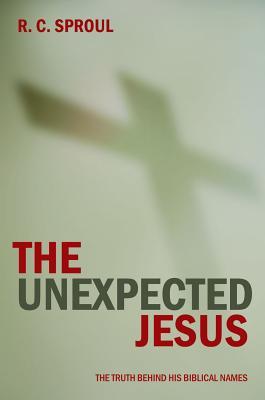
The Unexpected Jesus. R.C. Sproul. 2005. (AKA Mighty Christ in 1995). Christian Focus. 142 pages. [Source: Bought]

The Unexpected Jesus is a book about Jesus, about how the names and titles closely connected to Him reveal who he is and what he came to do. If you're looking for one book that tells you both about the person and the works of Jesus Christ, this would be a good fit. Especially for new believers. It's not too short, not too long. Twelve just-right chapters: six focusing on WHO Jesus is and six focusing on WHAT he did. Sproul addresses the basics. If you've read the gospels, you've come across these phrases, these titles, these names. Maybe you understood what you read. Maybe you didn't. But Sproul carefully examines them all and presents them clearly. (Son of Man, Son of God, Lamb of God,  Messiah or Christ, Lord, Lion, Prophet, Priest, King, etc. The presentation isn't examining these titles or names in isolation or out of context.)

As much as I liked the first half, I think I loved the second half a little bit more. It is a very clear presentation of the gospel.


  • The Need for Atonement
  • Sin and Redemption
  • Christ Our Ransom
  • Blessing or Curse?
  • Securing Our Faith
  • Justification by Faith

It is easy to recommend this one. It does keep it simple--relatively speaking at least. It isn't comprehensive or exhaustive. This isn't the most in-depth treatment of the subject. But it does have a clear focus and it is accessible. It works for me.

© Becky Laney of Operation Actually Read Bible

Wednesday, May 28, 2014

Book Review: Redeeming Love

Redeeming Love. Francine Rivers. 2005. Multnomah. 464 pages. [Source: Bought]

I had heard so many great things about Francine Rivers' Redeeming Love. I was not disappointed with this retelling of the book of Hosea. Redeeming Love is historical fiction. It is set, for the most part, in California in the 1850s. Readers meet a prostitute named Angel. She is angry, bitter, more than a little resigned to her fate.

Angel may hate, hate, hate her life, but can she honestly believe that there is a way out for herself? No. Not really. Not in this life. She may hate being used and abused my men. She may hate the person who runs the brothel. But is she clinging to hope that she'll get her happily ever after? She's too realistic for that. Her life is an unhappy one: it always has been; it always will be. After all, her mother was a mistress. She's an illegitimate child. Rejected forever by her father, but, accepted conditionally by her mother. After her mother's death, she was sold as a child--eight, I believe--into prostitution. It's not that she has never dreamed of starting over. She has dreamed. In the past. But she's been hurt and disappointed so many times. It hurts Angel too much to hope.

Enter Michael Hosea. He is a farmer. He's come into town to sell his crops. He sees Angel. God tells him that she is the one. That Angel--one of the most expensive prostitutes in town--is the one he is supposed to marry and spend his life with. To say he doesn't have some doubt, well, that wouldn't be accurate. He has questions, plenty of questions--among them why and how! But ultimately, Michael Hosea becomes convinced that God is truly calling him to marry Angel, to save Angel from a life of prostitution. He becomes her savior, her redeemer, he buys her--if you will. He's gentle, kind, compassionate, respectful, loving, and patient. He loves her with hesed love.
"Hesed is one-way love. Love without an exit strategy. When you love with hesed love, you bind yourself to the object of your love, no matter what the response is... Hesed is a stubborn love" (Paul Miller, A Loving Life, 24)
Angel has done nothing to earn his love, to win his respect, to deserve his kindness and patience. Physically Angel may be lovely to look at, but, inside she's a mess. She's broken by shame and guilt. She's angry and scared. Being surrounded by such love doesn't make her feel good, it makes her feel bad because she's holding onto who she was, who she may still be. Wearing a wedding ring doesn't make her feel married, doesn't make her feel loved. She doesn't always see herself the way her husband sees her.

The book is intense, I'd say. The book deals with adult subject matter, but, not in an inappropriate way for most (adult) readers. In other words, while parents can hand a copy of Love Comes Softly to their young daughters, the same can't be said for Redeeming Love. The message is wonderful. The book is very well written. But it's not for children.

Have you read Redeeming Love? What did you think?

© Becky Laney of Operation Actually Read Bible

Friday, October 4, 2013

Book Review: The Strength of His Hand

The Strength of His Hand. Lynn Austin. 2005. Bethany House. 336 pages. [Source: Bought]

The Strength of His Hand is the third book in Lynn Austin's Chronicles of the Kings series. The first novel is Gods and Kings; the second novel is Song of Redemption. Hezekiah and Hephzibah have a strong marriage at the start of The Strength of His Hand, but, what Hezekiah doesn't know about his wife will change EVERYTHING and endanger the kingdom itself. For in this adaptation, Austin has Hezekiah's discovery of his wife's idolatry (he catches her worshipping an idol; he learns of her vow to sacrifice their first child) prove almost fatal. The direct cause being burns from a fire. In much pain--physically and emotionally--Hezekiah is certain that he must divorce Hephzibah immediately, that she lose her position as his queen. Hezekiah's illness is nearly fatal, that is completely biblical. Hezekiah seeks Isaiah and more importantly seeks God. God in his mercy extends his life by fifteen years and gives a sign to Hezekiah and the world of that promise of life. But what will Hezekiah do with those fifteen years? And will he extend mercy to others?

The Strength of His Hand focuses more on war and politics than on romance. (Song of Redemption focuses on the relationship between Eliakim and Jerusha and Hezekiah and Hephzibah). Hezekiah is a flawed king. At his best, he remembers to seek God, to trust in God and God alone, to listen to wise advice from godly men. At his worst, well, he's overly confident that he is in a good place with God and that nothing can shake him or harm his kingdom. He is proud of what good he is doing for God. He starts making decisions first and only later thinking about what God might have wanted him to do.

The Strength of His Hand still focuses on the Assyrians, but it also introduces the Babylonians.

Main characters include: Hezekiah, Shebna, Eliakim, Hephzibah, Jerusha, and Isaiah.

© Becky Laney of Operation Actually Read Bible

Friday, September 27, 2013

Book Review: Song of Redemption

Song of Redemption. Lynn Austin. 2005. Bethany House. 352 pages. [Source: Bought]

Song of Redemption is the sequel to Lynn Austin's Gods & Kings.  Now that Hezekiah is king, he has a unique opportunity. He can lead his nation back to God. He can read and study the law; perhaps, more importantly, he can follow it and require that others follow it as well. Of course, he cannot command his subjects to truly believe and have faith in Yahweh. But, he can forbid idol worship, destroy idols, and encourage rightful worship of the one true God. Not everyone in his kingdom is excited about the reforms. Even within the royal palace there are those that see this transformation as a big, big mistake.

Song of Redemption stars Hezekiah and his wife Hephzibah, Hilkiah and his son Eliakim, and two Israelite refugees: Jerusha and Maacah. Jerusha's story is truly haunting. While attending a wedding celebration with her family, the Assyrians attack killing many and kidnapping others. Jerusha is not killed; instead she becomes a slave. She travels with the invaders. She is repeatedly raped. Her life is a living nightmare.

Song of Redemption is an intense novel. Judah has stopped paying tribute to the Assyrians. War could come at any moment. And when Israel is defeated, their own defeat seems inevitable. Many fear the worst. Hezekiah clings to his faith. He believes that God can and will save them no matter the odds. His faith will surely be tested....

Song of Redemption has two strong relationships. Eliakim and Jerusha. Eliakim believes in God, but does he BELIEVE in God? Does his faith go beyond the surface? Is it a transforming faith? Jerusha comes into his father's house a broken woman. Her faith in God and in humanity being shaken. She doesn't feel worthy of a normal life, of friendship of family of love. Austin clearly illustrates redemption through Jerusha's story and her love story with Eliakim. Another woman readers get to know is Hephzibah. At the start of the novel, she was Hezekiah's only true wife but his least favorite in his harem. He'd had no use for her since completing the obligatory wedding week. She longs for love and a true marriage. She longs for a child or two. Hezekiah's new faith means that he turns away from his concubines and seeks a faithful and loving relationship with his wife. Here is an opportunity for both to grow in faith and love for better or worse. Unfortunately, Hephzibah is one of those in the palace who does not believe in God. She is a secret idol worshipper. Hephzibah is presented sympathetically as a sorrowful woman with a need so deep that only God can fill it.

Austin's biblical fiction is worth reading!
"Has Yahweh revealed to you what's going to happen to our nation--to our people?"
The prophet's expression changed, as if he had glimpsed something wonderful and terrible, awesome and dreadful. "Yes," Isaiah said. "But who has believed our message and to whom has the arm of the Lord been revealed? God has shown me things I'm not sure I fully understand yet. I've seen the promised seed of Abraham, the righteous Servant of Yahweh, a Light for the Gentiles and a stumbling block to our people--the Messiah, who will reign on the throne forever."
"Will God send the Messiah now--to deliver us from Assyria?"
The question seemed to annoy Isaiah. "You don't understand. He will be your offspring, but you and I won't see Him. And when He does come, many will hear Him but not understand."
"Rabbi, what about our present crisis?" (323-4)
© Becky Laney of Operation Actually Read Bible