Sunday, September 20, 2015

Fall 2015 Bingo Card


If you want to join me, you can. Otherwise, this is just an on-my-own project. I hope to read at least eight books, but, I'd love to get all sixteen read!!!

© Becky Laney of Operation Actually Read Bible

Upcoming Plans


  • To continue to read Galatians, by the end of the month, I hope to have read it 30 times!
  • To begin reading the New Testament in the Message. I've received a review copy of The Message 100.  Since I can't possibly read the whole Bible in one month, I'm choosing to read the Bible starting with Matthew. That should give me a good idea of what the Bible has to offer readers. (I might also skim through some of the Old Testament). 
  • My goal for the next three months--October, November, December--is to read the whole Bible in the NIV translation. I'm not exactly sure if I'll be focusing in on just one copy of the NIV Bible. Or if I'll be reading from several different Bibles. A post should be coming soon for my first impressions of the NIV Zondervan Study Bible, which was newly released in August. It has a LOT of notes. So I know I can't read the whole Bible--notes too--in just three months. So I may also be supplementing with a text-only Bible. I plan to do a "first impressions" post and then a review a month or so later. 
  • I'm contemplating hosting a "Fall Bingo" challenge, even if it's just me. But I haven't created my bingo card yet. And fall starts this Wednesday! So let me know if you perhaps would be interested in joining in yourself. (Comments are set to be moderated. So don't worry if your comment doesn't appear right away. And that's assuming anyone else wants to join in!) 


© Becky Laney of Operation Actually Read Bible

Week in Review: September 13-19

In the last days the mountain of the Lord’s temple will be established as the highest of the mountains; it will be exalted above the hills, and peoples will stream to it. Many nations will come and say,
“Come, let us go up to the mountain of the Lord, to the temple of the God of Jacob. He will teach us his ways, so that we may walk in his paths.” The law will go out from Zion, the word of the Lord from Jerusalem. He will judge between many peoples and will settle disputes for strong nations far and wide. They will beat their swords into plowshares and their spears into pruning hooks. Nation will not take up sword against nation, nor will they train for war anymore. Everyone will sit under their own vine and under their own fig tree, and no one will make them afraid, for the Lord Almighty has spoken. All the nations may walk in the name of their gods, but we will walk in the name of the Lord our God for ever and ever. “In that day,” declares the Lord, “I will gather the lame; I will assemble the exiles and those I have brought to grief. I will make the lame my remnant, those driven away a strong nation. The Lord will rule over them in Mount Zion from that day and forever. Micah 4:1-7 (NIV)
ESV Reader's Bible

  • Ezekiel
  • Daniel
  • Hosea
  • Joel
  • Amos
  • Obadiah
  • Jonah
  • Micah
  • Nahum
  • Habakkuk
  • Zephaniah
  • Haggai
  • Zechariah
  • Malachi
  • 1 Timothy
  • 2 Timothy
  • Titus
  • Philemon
  • Hebrews
  • James
  • 1 Peter
  • 2 Peter
  • 1 John
  • 2 John
  • 3 John
  • Jude 
  • Revelation

NIV Zondervan Study Bible

  • Micah
  • Ephesians
  • 1 Timothy
  • 2 Timothy
  • Philemon

NRSV

  • Galatians

NKJV

  • Galatians

NASB

  • Galatians


RSV

  • Galatians

NIV Pursuit of God Bible

  • Galatians (2)

© Becky Laney of Operation Actually Read Bible

Friday, September 18, 2015

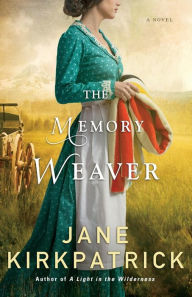
Book Review: The Memory Weaver

The Memory Weaver. Jane Kirkpatrick. 2015. Revell. 352 pages. [Source: Review copy]

The Memory Weaver by Jane Kirkpatrick fictionalizes the life of Eliza Spalding Warren and her family. Unfortunately, in my opinion, it presupposes the reader's knowledge of the Spalding and Whitman families, and most crucially the Whitman Massacre of 1847 (also known as Walla Walla massacre). The way the story unfolds doesn't exactly clarify what happened in a timely way. One simply knows that the heroine--whom we meet as a teen--survived something horrible as a child, something that still haunts her day and night, something that left her broken inside. I will admit that the way the story unfolds probably helps build the novel's drama. But I was a little too confused for the first half of the novel to really find it satisfying.

The Memory Weaver essentially has two heroines. Eliza Spalding Warren (the daughter) and Eliza Spalding. Readers first meet Eliza Spalding Warren, the main character, as a teen. The novel chronicles her life from that point on, mainly focusing on her relationships with her father, her sisters, and her would-be husband, and later with her own children. Plenty of the novel is focused on her turbulent marriage. The second heroine is revealed solely through diary entries. For most of the novel, readers know more than the main character. It is only towards the very end of the book that Eliza Spalding Warren is given her mother's diaries to read. It is through these diary entries that glimpses of what happened start to come to light. If the book has a message, it is that there is always more than one way to "see" any given situation. And that memories can be distorted and miss out on important details. Eliza Spalding Warren rehearses the story of her life in her head, but, the way she remembers things doesn't exactly match well with how others remember it.

For those that enjoy historical fiction for the HISTORY, then this one may prove quite satisfying. For those that enjoy historical fiction mainly for strong romantic elements, then this one may prove quite unsatisfying. It is NOT a love story or romance. The focus is on the brokenness of the characters and the need for a Savior that delivers, redeems, and heals. None of the characters are necessarily "likable" and all are quite imperfect and flawed. That's almost the point. We're all broken; our lives are incredibly messy; none of us love others as we should; we are all impatient and frustrated; we all lose it sometimes; none of us extend mercy and forgiveness as we should. So the novel has strengths certainly. Readers can learn from what they read.

© Becky Laney of Operation Actually Read Bible

Thursday, September 17, 2015

Quotes from the Cloud #37

This year, I hope share weekly posts of quotes. These quotes are from authors I'm reading and enjoying from the Clouds of Witnesses Reading Challenge

For fellow participants, what I would LOVE, LOVE, LOVE to see is for people to share quotes from what they're reading. I'd love for you to share quotes occasionally with your readers and let me know about it. If you don't have a blog, you could always leave quotes in the comments here.
A fierce battle has been raging in this world since the very beginning. Cain wanted to choose God on his own terms. He wanted God to value his work and his offering instead of his brother’s. The world has followed Cain’s example from that day until now. The world always wants to turn this verse in John around and say, “I don’t want to be chosen by God; I want to choose him first.” But God cannot and will not tolerate this. He turns their words back around and says, “You cannot and should not choose me. I must choose you. It won’t happen the way you imagine, but the way I want it to. I want to be your Lord and Master. I don’t want to be mastered by you.” ~ Martin Luther, Faith Alone, September 1
We naturally think, “I’m frightened by the sight of God, so I can’t look to heaven for help. I know that I’m a sinner and that God hates sin. How can I pray?” With these thoughts, an intense battle begins inside us. Because we know we are sinners, we may think we have to postpone praying until we feel worthy. Or we look for other people to assure us that we have done enough good works to have confidence in our own worthiness. Only then do we pray, “God, have mercy on me.” But we were born in sin. If we had to wait until we felt pure and free from all sin before we prayed, we would never pray. When surrounded by our own sinfulness—even while drowning in our sins—we should cry out to God, just as David did in this psalm [Psalm 51]. Then we won’t have to postpone our prayer. What purpose do the words “Have mercy on me, O God, according to your unfailing love” serve if the only people who pray them are pure and don’t need any mercy? No matter how sinful we feel, we must encourage ourselves to cry out to God, “Have mercy! I have learned from my own experience that praying is often the most difficult thing to do. I don’t hold myself up as a master of prayer. In fact, I admit that I have often said these words coldly: “God, have mercy on me.” I prayed that way because I was worried about my own unworthiness. Yet ultimately the Holy Spirit convinced me, “No matter how you feel, you must pray!” God wants us to pray, and he wants to hear our prayers—not because we are worthy, but because he is merciful. ~ Martin Luther, Faith Alone, September 2
The whole history of the church has been a history of onward marches, and then of quick retreats — a history which I believe is, on the whole, a history of advance and growth, but which read chapter by chapter, is a mixture of success and repulse, conquest and discouragement. ~ Charles Spurgeon, "Light at Evening Time"

© Becky Laney of Operation Actually Read Bible

Wednesday, September 16, 2015

Book Review: Poetic Wonder of Isaac Watts

Poetic Wonder of Isaac Watts. Douglas Bond. 2013. Reformation Trust. 163 pages. [Source: Borrowed]

The Poetic Wonder of Isaac Watts is one of many titles in the Long Line of Godly Men series published by Reformation Trust. This particular title is not my favorite-and-best from the series, but, overall the series is excellent and worthy of your time.

Several chapters focus on the life and times of Isaac Watts. Readers learn about his childhood, his family life, his career as a pastor, educator, and writer. Readers learn, for example, that by the time he was a teenager, he was writing poems and hymns. Bond did a good job, in my opinion, of providing enough historical and cultural context for understanding and appreciating Isaac Watts. Readers may not be aware at how controversial hymn-writing really was without this context. Most churches only sang Psalms, and, the idea of singing anything other than Psalms was shocking.

Most of the book focuses on his writing career: his hymns and poems. Chapter titles include, "Watts' Sermon Hymns," "Watts as Lyric Poet," "Watts as Hymn Writer," "Watts as Poet Theologian," "Watts as Children's Poet," and "Watts as Psalm Interpreter."

The concluding chapter seeks to show that Watts' hymns are still relevant and necessary for contemporary times. He urges editors to leave Watts' lyrics alone, for the most part, and give congregations theologically RICH worship songs.
Every biblically mature generation in the church will want to contribute poetry and music to the church's worship--but, alas, so will every biblically immature one. Watts makes an excellent role model to guide the new generation of poets who presume to write lyrics for the corporate worship of God's people. 
Some of Watts hymns include:


  • Alas! and Did My Savior Bleed?
  • Joy to the World
  • Marching to Zion
  • Our God, Our Help in Ages Past
  • When I Survey the Wond­rous Cross


  • I love "Before the Skies."


    © Becky Laney of Operation Actually Read Bible

    Tuesday, September 15, 2015

    My Year With Spurgeon #37

    Instability
    Charles Spurgeon
    1857
    Genesis 49:4
    PERFECT stability has ceased from the world since the day when Adam fell.
    Perfect stability belongs alone to God he alone, of all beings, is without variableness or shadow of a turning.
    First, then, to ALL Christians, permit me to address myself. Our father Adam, spoilt us all; and, although the second Adam has renewed us, he has not yet removed from us the infirmities, which the first Adam left us as a mournful legacy. We are none of us stable as we should be.
    It is a great mercy for us that frames and slings are not always the index of our security, for we are as safe when we are mourning as we are when we are singing; but verily, if our true state before God had changed as often as our experience of his presence, we must have been cast into the bottomless pit years ago.
    We are no doubt all of us insane to a degree; there is some little thing in us, which if we saw in another we should regard as being a little madness. I would therefore, my brother, deal very leniently with you, but at the same time let me very solemnly address you as a Christian minister speaking to a professedly Christian man. My brother, how much moral weight you lose in the church, and in the world by your perpetual instability.
    You shall have enough of God’s comfort to keep you alive, but not enough to give you joy in your spirit and consolation in your heart. Oh, I beseech you ponder a little. Study the Word more, know what is right, and defend what is right. Study the Law more, know what is right, and do what is right. Study God’s will more, know what be would have you do, and then do it. For an unstable Christian never can excel.
    © Becky Laney of Operation Actually Read Bible