Showing posts with label Borrowed. Show all posts

Saturday, August 22, 2026

20. Connect: How To Grow Your Church in 28 Days Guaranteed


20. Connect: How to Grow Your Church in 28 Days Guaranteed. Don Corder. 2019. 233 pages. [Source: Borrowed] [3 stars, christian nonfiction]

First sentence: The vision of every church is the first macro--the Great Commission: to make disciples of all people everywhere: From that macro-vision, churches today more or less adopt a vision that is either attractional or missional. The attractional churches want to build crowds. The missional churches want to make disciples.

Premise/plot: Don Corder is "guaranteeing" church growth in 28 days. Do I believe it? Nope. He does offer twenty-eight chapters worth of ideas. But those ideas would take a LOT longer than one month to implement. In fact, I would argue that this "28 day" plan is the work of years--yes YEARS plural. The chapters are meant to build on each other, I believe. But some ideas are more likely to be doable than others. And all of them require not just the work of three or four people but the work of dozens and dozens of people. So if you don't have dozens of vision-filled, inspired, passionate people who want to pour themselves--heart, mind, soul, body--into these projects, well, the guarantee is looking less and less likely. 

Main points: 

CONNECTION comes before evangelism and conversion. You have to have connections with people before the other can happen. 
Assume that people want to come to church to find answers, and want to come to YOUR church to find those answers.
Assume that people want to give out their contact information and be communicated with several times a week or at least weekly.
People don't like to read -- communicate in very short paragraphs if words are necessary, video messages have more of a likelihood to be watched than a paragraph read. Keep both videos and paragraphs short. 
Host community outreach events where the goal is to get names, names, and more names. The point of the event is not Christian-related but just something--anything--to get them on your property and the name and contact information provided. 
Don't assume that people that don't come to your church regularly are gone. 
Focus on those that just come once a month or less and work on getting those to come back and come regularly. 
Forget the golden rule and treat others the way they want to be treated. Ask regularly how can I serve YOUR needs and wants.
See those coming in the door as customers and your church as a product and brand. 

My thoughts: It was a quick read. I read the first three days a few months ago. I read the last twenty-five in one sitting. I think the assumption is that the church in question is "only" a few hundred people and wanting to grow. OR maybe five or six hundred people and wanting to grow. At one point he was talking about how to fill your church with 1500 people. I think the book assumes many, many, many things. More than one pastor, for example, and perhaps even more staff that are working full-time throughout the week. There's even a talk of YOUR CHURCH'S BOOKSTORE. 

The focus is on numbers, numbers, more numbers. The numbers in the pews each week. The numbers in your DATABASE. The number of members. The money. 

I think my favorite quote was "We can't serve the people we wish we had. We can only serve those [that] actually come; and more importantly, come back. They're the reason we're here."

I think the title is misleading. And the ideas are far-fetched for many. That being said, I think the author does challenge readers to think outside of the box. To not assume that everyone thinks like you. 


© Becky Laney of Operation Actually Read Bible

Sunday, November 3, 2024

53. In the Lord I Take Refuge

53. In the Lord I Take Refuge: 150 Daily Devotions Through the Psalms. Dane C. Ortlund. 2021. 416 pages. [Source: Borrowed]

First sentence: Blessed is the man who walks not in the counsel of the wicked, nor stands in the ways of sinners, nor sits in the seat of scoffers; but his delight is in the law of the LORD, and on his law he meditates day and night.

The Psalter uses the English Standard Version. Each psalm is followed by a devotion by Dane C. Ortlund. 

Definitely this is a case of what you see is what you get. Love the psalms? Definitely worth it for getting the psalms on such nice paper. Love devotions? Great. The devotions go with the psalms--so no extra steps for reading more Scripture.

I divided the psalms into daily portions according to the arrangement of the Book of Common Prayer. Readers could read one per day, five per day, ten per day, whatever. Definitely this is a a book that you can take at your own pace. There is no need to feel pressured to read it in one month. 


© Becky Laney of Operation Actually Read Bible

Tuesday, June 4, 2024

31. NKJV Spurgeon and the Psalms


NKJV Spurgeon and the Psalms, Maclaren Series, Thomas Nelson. Devotions by Charles Spurgeon. Psalms by God. 2022. 548 pages. [Source: Borrowed]

First sentence: Blessed is the man
Who walks not in the counsel of the ungodly,
Nor stands in the path of sinners,
Nor sits in the seat of the scornful;

What I didn't love.....

The pages are VERY thin. There is a LOT of ghosting. Depending on the length of the psalm on the page, you can read other psalms through the paper. Thomas Nelson has published some great Bibles with minimal ghosting. I know that it is possible for them to design a Bible well, with minimal ghosting and beautiful layout.

These are short devotions. Do not expect Treasury of David. Just don't. If you've read even a little of Treasury of David you might expect something substantive and meaty about each psalm. These are short, concise devotions. Not exactly fluffy and superficial but not as substantive as reading other Spurgeon books.

What I loved....

Each psalm gets its own page. Each psalm has a "devotion" by Charles Spurgeon. I absolutely love the premise of a stand-alone book of psalms. I love the light-weight, take-it-with-you notion of reading and rereading Psalms. Psalms are meant to be read again-again-again. The book of Psalms should be SO familiar and beloved by Christians. This book does encourage you to make psalms part of your daily life.

It uses the New King James Version. 

© Becky Laney of Operation Actually Read Bible

Sunday, November 26, 2023

83. O Come, O Come Emmanuel


O Come, O Come Emmanuel: A Liturgy for Daily Worship from Advent to Ephiphany. Jonathan Gibson. 2023. 380 pages. [Source: Borrowed]

First sentence: Christmas is my favorite time of year.

Premise/plot: O Come, O Come Emmanuel is a companion book to Jonathan Gibson's Be Thou My Vision (2021). The original provides readers with thirty days of liturgical daily worship. It weaves traditional liturgical elements with Scripture and church history. O Come, O Come Emmanuel has devotions for November 28th through January 6th. Is it absolutely necessary? Perhaps not. After all, one could simply use the original Be Thou My Vision in December and January like you have been doing the rest of the year. What has changed between the two books? The Scripture readings are specifically chosen for the season--about a chapter sometimes not even a full chapter. The catechism portion is reduced to those questions that specifically deal with the incarnation. The meditations are about the incarnation as well. But I would say the basic structure and most of the elements are exactly the same as the original. (I forgot to mention that each day has a 'song' to read or sing.) 

Is this one more substantive than your average advent devotional? Probably. Is it more substantive than the original Be Thou My Vision? No. It's about the same. If you have the first book, this one is a luxury addition. 

Scripture readings include:
Genesis 3:1-15
Genesis 22:1-19
Genesis 49:1-12
Numbers 24:1-19
Deuteronomy 18:1-22
2 Samuel 7:1-16
Psalm 2
Psalm 16
Psalm 45
Psalm 68
Psalm 89
Psalm 110
Psalm 118
Job 19
Isaiah 7:10-17; and Isaiah 9:1-7
Isaiah 11
Isaiah 40
Isaiah 42
Isaiah 49
Isaiah 50
Isaiah 52:13-53:12
Jeremiah 23:1-6; 33:14-26
Micah 5
Zechariah 9:9-17; 13:1-9; Malachi 3:1-4
Luke 1:26-56
Luke 1:57-80
Luke 2:1-21
Luke 2:22-40
Matthew 1:1-25
John 1:1-18
Colossians 1:1-20
Ephesians 3:1-12
Romans 1:1-17
Philippians 2:1-11
Isaiah 60
Hebrews 1
Hebrews 2
John 5
Psalm 72
Matthew 2

© Becky Laney of Operation Actually Read Bible

Monday, April 10, 2023

37. In Her Sights


In Her Sights (Pink Pistol Sisterhood #1) Karen Witemeyer. 2023. 108 pages. [Source: Borrowed]

First sentence: Every legacy started from a single act of courage.

Premise/plot: Tessa James, our heroine, has a huge crush on Jackson Spivey. His hobby is guns and shooting. To try to catch his eye, Tessa wants to immerse herself in that world. So, of course, she just happens to seek out the show starring Annie Oakley [aka Mrs. Frank Butler.] If she can "catch a man with a gun" maybe she can too. Meanwhile, in the prologue, Annie Oakley [aka Mrs. Frank Butler] had been gifted a gun--a pink pistol--by a grieving father. [To be honest, I'm not sure if his daughter died by her own hand or if it was natural causes. But her heart was broken when she was disappointed by love/lust.] At her discretion, she is to gift this "courtship" pistol to a young woman who needs some help with hope--hope in finding true love. When Tessa admits openly, hey, I'm here to learn how to shoot because I want a man, well Annie's job is over. She'll pass this pink courting pistol on....with a special note in its case.

Will Tessa's new pistol bring her good luck when it comes to winning her crush? Happily ever afters have to be earned even in wee little novellas.

My thoughts: I have zero interests in guns or shooting--pink or not. I did like the musical Annie Get Your Gun, so there was that at least. (Though I'm not absolutely positive that musical was historically accurate. Did she really catch her man with a gun??? Maybe. I just thought it was a catchy song.) 

I think in a full-length novel the balance between character development, relationship development, and melodrama [aka CONFLICT] is naturally better. I felt in this novella, at least, the balance was off. There was just as much melodrama as if it was a full-length novel but not nearly as much to balance it out in terms of character development. It was a very short journey in terms of relationship development. Like SO short. And then almost after the fact there was conflict added. 

I do typically love, love, love Witemeyer's novels. (Yes, even her novellas.) But I was more meh with this one than I usually am. I think a full-length novel would have had time to win me over. 

© Becky Laney of Operation Actually Read Bible

Monday, May 27, 2019

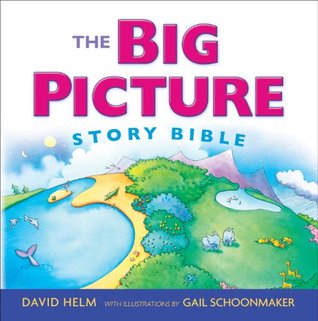
Book Review: The Big Picture Story Bible

The Big Picture Story Bible. David R. Helm. Illustrated by Gail Schoonmaker. 2004. Crossway Books. 451 pages. [Source: Borrowed]

First sentence from the Old Testament section: The Bible is God's story, and it begins with these big words: "In the beginning, God created the heavens and the earth." Do you know how God created everything? Simply by speaking words. Imagine, making the world with words! Strong words. Powerful words. With words God created everything!

First sentence from the New Testament section: Years passed without a single word from God. And the years turned into many years, and the many years turned into hundreds of years. And the great promises of God seemed to fade away. Israel became less important in the world. Other nations became great--strong nations, powerful nations, whose kings ruled over God's people. One such king...was Caesar Augustus.

The Big Picture Story Bible is one of my favorite bible story books. Why? Because it presents the Bible not as a series of entertaining, informational, educational, inspirational stories but as a unified story. The Bible does in fact have a big picture. If you miss the big picture, you miss the point. By understanding--grasping, appreciating--the big picture, you are enabling yourself to appreciate the smaller as well because you can see how everything fits, everything belongs.

The Big Picture Story Bible has twenty-six illustrated stories. Together they tell one big story. These stories build upon one another. They are interconnected. Everything is building up to the big climax--the appearance of Jesus Christ. The first eleven stories cover the Old Testament. The remaining fifteen stories cover the New Testament.

The Bible is for believers young and old. The story it tells is grand, glorious, but above all TRUE and TRUSTWORTHY. Yet people of all ages can struggle to read the Word for themselves. Perhaps because it seems so strange and otherworldly. Perhaps because it is intimidating. Perhaps because they don't know where to begin. A familiarity with the BIG PICTURE of the Bible could be the very boost one needs to begin to ACTUALLY read the Bible.

The Big Picture Story Bible gives readers of all ages the orientation they need to grasp not only the story but the theology behind the story. It covers the basics of the gospel, the good news of Jesus Christ. It is not so thorough and comprehensive that it would ever--could ever--take the place of the Word itself. That would be silly. But by showing you the structure of the Word, how everything fits together, how every story belongs to the whole, it can be a considerable help.

I think this one is for readers of all ages. I definitely think parents with children should have this one in their homes. (Christian parents and grandparents). Parents have an awesome responsibility to teach and instruct their children in the faith. It isn't anyone else's responsibility to do so for you. It is a great task, but it isn't an impossible one. It's never too early. It's never too late. You might feel overwhelmed, but you can learn alongside your children. You can go on this glorious, wonderful journey together.

But I also think adults without children could benefit from this one as well. There are a million excuses why believers don't read the Bible. Grasping the big picture and holding onto the big picture could be a great stepping stone into actually reading the Bible and tasting for yourself the sweetness of the Lord.


© Becky Laney of Operation Actually Read Bible

Monday, January 21, 2019

Book Review: Together: United Methodists of Temple, Tabernacle, and Table

Together: United Methodists of Temple, Tabernacle, and Table. Stanley R. Copeland and Scott Gilliland. 2018. 190 pages. [Source: Borrowed]

First sentence: "Where are we going?"

Together is a book specifically written to address controversial issues facing the United Methodist denomination--specifically in terms of the 'way forward' or future vision. Should the denomination stay united or be divided over issues of human sexuality? Should the denomination--as a whole--decide matters decisively or should local churches within the denomination be allowed to follow their consciences--to be as conservative, as moderate, or as liberal as they please? Can we all agree to disagree?

Two authors--both pastors at Lovers Lane United Methodist Church--argue that it is important to be united--to stay united.
Nothing you can make that can't be made
No one you can save that can't be saved
Nothing you can do but you can learn how to be you in time
It's easy
All you need is love
All you need is love, love
Love is all you need ~ The Beatles
They argue that God, Jesus, and the Holy Spirit are both fixed and free. In fact fixed and free is one of the mantras that is repeated--not only in this book but in the One Church Movement that they are advocating. But what does that mean exactly? Well, they use the example of how the Israelites had a FREE moving way to worship in the wilderness and a FIXED way to worship in the nation of Israel. Somehow the fact that one was made of cloth and one of stones is supposed to be a super-symbolic metaphor for how we are supposed to worship in the twenty-first century. I believe these three chapters showcase some mighty fine doublespeak.

God is God is God is God is God is God. God does not change, there is no fluctuation. He doesn't become more of this and less of that or more of that and less of this. God is the same yesterday, today, and forever. The Israelites wandering in the desert weren't "free" to worship God as they saw fit. They weren't "free" to worship him on their own terms. They weren't "free" to reinterpret God's words to mean what they wanted them to mean. The rules and ceremonies regarding worship weren't more "fixed" and "absolute" and "determined" than they were in the desert. They weren't. The tabernacle was never a casual, free-and-easy, go-with-the-flow way to do church. One wasn't wearing jeans and flip-flops and the other wearing suit and tie. Both temple and tabernacle were holy and sacred, set apart. For at all times God was to be FEARED as the one, true God. God was holy, holy, holy no matter the outward appearance of the place of worship.

Sadly I am not even sure this is where the authors were going with all this "free" and "fixed" talk. Perhaps they are under the delusion that God is changeable and that he is changing all the time. Every single generation has the opportunity--the responsibility--to see where God is at now and what he's saying now. Where God was at ten generations ago--three generations ago--it doesn't matter. All that matters is what is God is saying now to you and me.

But the book goes beyond the "fixed" and "free" metaphor. That's only a tiny bit of what the book is about. The book is also about how we are to trust one another always. I am to trust that you are listening to the Holy Spirit in your life and you are to trust that I am listening to the Holy Spirit in my life. The same Spirit that is leading me to believe one way is also leading you to believe another way. But because we both love the same Jesus Christ it will all be okay. You are not to judge me and I am not to judge you. It doesn't really matter if we agree on this issue or that issue or even any issue so long as we agree that Jesus is great. The name of Jesus unites us all together and if there's one thing Jesus hates it's squabbling and fussing. Unity above all else. Love is all that matters.

Essentially the book seems to be arguing that there is no one right way to interpret any passage of Scripture. The Holy Spirit speaks to each one of us as individuals.

I can only imagine how much easier Paul's life would have been if he'd subscribed to this philosophy of doing church.

Hey brothers! How's it going?! I've been hearing some mighty strange stuff about you guys. But you know what? It's all good. All good, I tell you. No stress, no worries. Just sit back, relax, and keep rolling with the Spirit. Keep on keeping on! Aren't you glad that I'm no longer that judgmental guy who went around trying to force people to agree with me all the time?! But I've learned to relax and let go and let God! I'm cool, you're cool, we're all cool. Bye for now!

Paul could have avoided sending letters altogether and just sent postcards.

I won't address the issue of human sexuality here for the review. It's unnecessary. Their approach to interpreting any passage of Scripture--any practice or doctrine--is troubling enough without focusing in on one issue alone. The issue--as I see it--isn't about who you love or how you love.

It is simply this: what is truth? who determines truth? is truth absolute? is truth universal? does truth evolve and change? is truth determined person by person or by committee? who says what is true and what isn't true? is the Bible true? what do you mean if you say the Bible is true? do you mean my interpretation of the Bible is true and your interpretation of the Bible is false? do you mean that the Bible means exactly what God determines it means? do you mean that the meaning of the Bible changes, evolves, grows, expands over time as we do? do you read your interpretation into a passage? or do you draw your interpretation out of a passage? are you coming with a teachable spirit? are you willing to let the Spirit convict you--yes you--of sin? are you coming to the Bible looking to be justified? are you coming to the Bible looking for an argument? are you coming to the Bible with others in mind? are you looking for verses to shout at other people in arguments? are you willing to grow in the spirit even if it means countering culture? are you willing to let God be God? are you willing to allow that you may never understand or grasp God? is it up to us to keep the Word relevant? what is the gospel? what is sin? why did Jesus die? are we called to be holy? do doctrines ever matter?

© Becky Laney of Operation Actually Read Bible
Wednesday, July 11, 2018

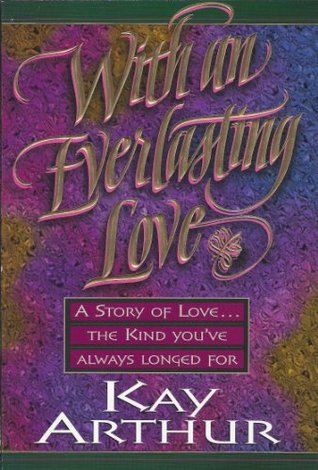
Book Review: With an Everlasting Love

With an Everlasting Love. Kay Arthur. 1995. Harvest House. 144 pages. [Source: Borrowed]

First sentence: "Any Jew who has not a wife is no man." It was written in the Talmud. That settled it. The time had come for his son Joshua to take a wife. There could be no more delay. Shaddai paced the floor saying these things aloud to himself, as he awaited Joshua's return.

Premise/plot: Shaddai and Joshua have agreed upon a bride, a young woman named Christianna. Half-Jew, half-Gentile, Christianna never expected such a match. To be honest, she never expected a match at all. Shunned by both Jews and Gentiles alike, Christianna had no expectations of being any man's wife. Joshua. Well, Joshua's goodness--his righteousness--is almost legendary. The idea that ANY woman at all was worthy being his wife was ridiculous. There couldn't be a more unlikely choice than Christianna. But his choice is a forever-and-ever choice. He just has to woo her and wait.

My thoughts: I really enjoyed this allegory. I enjoyed it much more than I thought I would. As a story, a romance, it works. As a theology textbook perhaps not so much. I think the book does a good job in showing Christ's unconditional love for the church, and also in showing how the church faces temptation at the hands of the world, or in this case, Kosmos.

I would recommend this one.

© Becky Laney of Operation Actually Read Bible

Tuesday, October 17, 2017

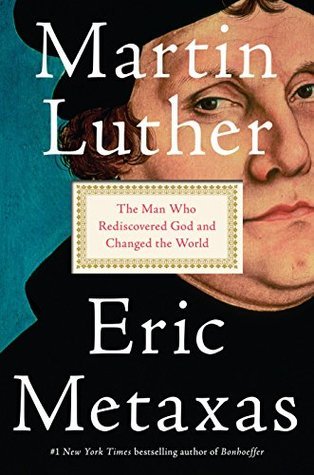
Book Review: Martin Luther

Martin Luther: The Man Who Rediscovered God and Changed the World. Eric Metals. 2017. Viking. 416 pages. [Source: Borrowed from friend]

First sentence: There is no beginning to the story of Martin Luther.

I have read a good many biographies of Martin Luther in recent years. Some have been short. Some have been long. Some have focused on the historical. Some have focused solely on the theological. Some have been compelling. Some have been boring.

I'll be honest. Concise isn't always better. There is such a thing as keeping Luther's life story so basic, so simple, so compact that it becomes dull, dry, BORING. The problem isn't that Luther led a dull life with hardly anything ever happening. Far from it! The problem is that putting Martin Luther into context--historically, spiritually, theologically--takes a lot of words and details. Rob a biography of good, substantive, meaty details, and it becomes dull. Metaxas' biography thrives on details. Readers need details--not just about Martin Luther himself--but about everything. Luther cannot be understood apart from his times, apart from his contemporaries, apart from his writings. Can Luther be understood fully? Can any man--or woman--be understood fully?! Any biographer who thinks they have grasped everything there is to grasp and know everything there is to know, and can explain the inner workings of Luther's heart and mind from birth to death aren't to be trusted. Luther is not simple. His biography shouldn't be simple either.

I would definitely recommend this one. I found it a compelling read, though not a quick one. The bad news: Metaxas' chapters are super-long. This almost forces you to slow down your reading--to take time with the text. That's also the good news. There is something to be said for going slow and steady through a book. Martin Luther is worth spending time with, worth engaging. And you just don't get that when you rush through a book.

In a world in which we nearly always associate the Bible with churches--and churches with the Bible--it is difficult to imagine a time when the two had almost no connection. That this changed so dramatically is yet another measure of Luther's immense impact on history. (52) 
By the time Luther entered the monastic life, the one book that novices were allowed to read was in fact the Bible. We know that immediately upon entering the monastery, Luther was lent one that was bound in red leather, for he recollected this often in his later years. It seems that Luther did not receive the book lightly, for he not only read it but almost devoured it. (53)
Strangely enough, once a novice became a monk, he was no longer allowed to keep his Bible. At that point, he must limit himself to only reading scholarly books, and those while in his cell. It seems that only in Luther's private time in the library of the monastery did he have access to the Bible after his novitiate. 
Staupitz saw that for Luther the Bible was not a book like Aristotle's Ethics or like a volume of Livy or Cicero. It was the living Word of God and therefore could not be read like any other book. It was inspired by God, and when one read it, one must do so in such a way--with such closeness and intimacy--that one fully intended to feel and smell the breezes of heaven. If one missed this aspect, one missed the whole point. For Staupitz, to read any other book like this was to be a fool, but to read the Bible in any other way than this was to be twice the fool. (68)
Therefore, one must not merely see what the devil could see, which is to say the words on a page, but see what only God could see and would reveal to those who desired it, which was in the words and around them too. (77)
The difference between Luther and many other Christians in this is that he is not afraid to make explicit what is clearly implicitly understood. The idea that all Bible verses are technically equal by dint of being part of the "Word of God" should not prohibit us from saying that some verses are more important than others. Some would say that we can somehow find the Gospel in every jot and tittle of Scripture, because it is alive and should not be read the way we read other books, but even if this is the case, we will look much harder in some verses than in others, where it is on the very surface for everyone to see. (293)


© Becky Laney of Operation Actually Read Bible
Friday, July 7, 2017

Book Review: Lifted

Lifted: Experiencing the Resurrection Life. Sam Alberry. 2010/2012. P&R. 142 pages. [Source: Borrowed]

First sentence: It was dark and raining and I was late.

If you're a believer, chances are that you believe in the resurrection. But I have a question for you, how often do you think about the resurrection? Do you think about it a couple of times a year? Like on Good Friday, Easter Sunday, or perhaps even a funeral? Sam Allberry invites you to think deeply about the resurrection and see how it changes everything about how you live your life day to day. The resurrection is not just a doctrine to be paraded out a couple of times a year. The resurrection is to be a lived doctrine. It should have an impact on your life.

The book has four chapters: "Assurance," "Transformation," "Hope" and "Missions." In the first chapter, readers learn that the resurrection assures us of who Jesus is and of what Jesus has done. In the second chapter, he talks about rebirth or new life. Because of the resurrection, we have received new life in Him and through Him. (2 Corinthians 5:17) In the third chapter, he distinguishes between Christian hope and worldly hope. Worldly hope is something we want, something we wish for. But there are no certainties, no guarantees, no true assurances that it will ever come to be. Christian hope is founded on something certain: God himself. "The Bible speaks of hope as something we have. It is about looking forward to something that is certain. There is no degree of risk or disappointment. It cannot be frustrated by anyone." When our lives are built upon hope--hope found in God himself--then our lives will reflect it. In the fourth chapter, he addresses an unpopular issue: God's future judgment or wrath. The resurrection, he argues, is proof that Jesus will return as judge. This judgment is good, righteous, and certain. Because of the resurrection, we have a mission--an ongoing mission--to share the gospel with anyone and everyone.

Quotes:

  • The resurrection means that we can be assured of our salvation. It confirms two things: that Jesus is who he says he is, and that he's done all that he said he would. The Savior is vindicated in the face of all who rejected his claims. Salvation is assured in the face of all our doubts. (21)
  • What we need to see is this: the resurrection is the consequence and demonstration of our salvation because death is the consequence and demonstration of our sin. (36)
  • Sin is not deciding to break the rules, it's deciding to make the rules. (37)
  • Being raised with Christ should change our perspective. We need to see reality in the light of where we now are. Things are now different in resurrection life. We are not where we were, and we need to keep up with that. We need to set our hearts and minds on things above. Notice that it will take some determination on our part. It's not automatic. (60)
  • Whenever people begin a statement about God with, "I like to think of God as…' they are telling you a certain amount about themselves and nothing at all about God. Reality is not based on our likes and dislikes. (124)
  • For God not to judge us, and for our lives not to be held accountable, would mean that we didn't ultimately matter to him. So the fact that he will one day judge the world is actually a good thing. It means we have value and purpose. It means wrongdoing will not go unpunished. And since God knows all things, fairness and equity are guaranteed. There will be no injustice when this God makes his judgment. (126)
  • Mission is about attitude, not geography; what we're doing, not where we are; a particular priority, not a particular place. It is about an attitude that has come to terms with the resurrection of Jesus and what that means for the world. God has exalted him to be worshipped. He is confirmed as the Judge of all, and in his rising the day of judgment has been fixed and confirmed. People need to be reached with his gospel of forgiveness, hope, and new life. (136)


© Becky Laney of Operation Actually Read Bible
Wednesday, April 26, 2017

Book Review: Unveiled Hope

Unveiled Hope: Eternal Encouragement from the Book of Revelation. 1997. 244 pages. [Source: Borrowed]

First sentence: As I write these words I am sitting at the foot of the Swiss Alps in the little fishing village of Iseltwald, just outside of Interlaken.

Scotty Smith and Michael Card walk readers through the book of Revelation in Unveiled Hope. Scotty Smith's sections are prefaced "From the Word," and Michael Card's sections are prefaced "From the Song."

Is it a commentary? Yes and no. Is it a devotional? No and yes.
It does not go chapter by chapter, verse by verse. It is not an analysis of Revelation word by word or phrase by phrase. It is not a dry, scholarly approach intent on cramming your mind with hundreds of facts and details. The purpose seems to be to awaken a deep, passionate desire and longing for the LORD--to cultivate a heart of WORSHIP, of devotion. It serves the purpose of a devotional certainly. But. People have such narrow ideas of what a devotional is: One or two pages of text that can be read in under five minutes, preferably with cup of coffee or tea in hand, something clear enough that can be read with foggy early-morning mind. The chapters in Unveiled Hope vary in length.  But most are about twenty pages long!!!

One thing the book is emphatically not is a book about end-times prophecy.

Chapter 1: Revelation 1
Chapter 2: Revelation 2-3
Chapter 3: Revelation 4
Chapter 4: Revelation 5:1-8; 11-14
Chapter 5: Revelation 5:9-10
Chapter 6: Revelation 6:1-8:1
Chapter 7: Revelation 8:2-10:11; 11:15-19
Chapter 8: Revelation 11:1-14
Chapter 9: Revelation 12-14
Chapter 10: Revelation 15-18
Chapter 11: Revelation 19
Chapter 12: Revelation 20
Chapter 13: Revelation 21-22
Epilogue: Revelation 22:6-21

I love, love, love, LOVE, love-like-crazy the book of Revelation. The key for me was learning to read the book in one glorious sitting. Reading the whole book at once--one is overwhelmed magnificently with the glory of God, with the weight of his glory, with the incredible depth and beauty of the good news. How could you see the book as anything but a worship book?! When read in one sitting, one doesn't have time to be scared about this verse or that verse; one doesn't have time to speculate.

This book was a good fit for me--for the most part.

Quotes:
I personally have received more help in enduring my everyday problems from studying Revelation than from any other portion of God's Word in the nearly thirty years I have been a Christian. And I have received more guidance for how to live the Christian life and how to begin a new church from this book than from any other. Revelation is not just a guidebook for dealing with the end times; it is a guidebook for every day of our lives. ~ Scotty Smith
It is primarily written to call us to live to the glory of God, right here and now, with hearts filled with His peace. ~ Scotty Smith
No other book in the Bible gives us a more inviting and overwhelming picture of Jesus. Here is Jesus as He really is. Jesus, as He wants to be known. Jesus, who alone is worthy of our adoration, our affection, and our allegiance. ~ Scotty Smith
One of the greatest joys and one of the most sobering realities in the Christian life is to realize that we serve a God who has chosen to reveal Himself and to give us His written Word. ~ Scotty Smith 
Every generation of Christians needs to be reminded that our God reigns. The sovereignty of God, just like the grace of God, is a major theme that permeates all twenty-two chapters of Revelation. ~ Scotty Smith

Friday, January 6, 2017

Book Review: Loving the Old Testament

A Christian's Pocket Guide to Loving the Old Testament. Alec Motyer. 2015/2016. Christian Focus. 144 pages. [Source: Borrowed]

First sentence: The Bible is God's gift to us as a domestic and personal 'means of grace.'

Premise/plot: Do you love the Old Testament? Do you want to love the Old Testament? Do you wonder what makes the Old Testament so important--so essential--to the faith? Or perhaps you wonder why there is an Old Testament at all. Perhaps you think all we need--all we really need--is the New Testament. Alec Motyer's little 'pocket guide' to loving the Old Testament is a lovely little book.

My thoughts: I love the Old Testament. I do. I love the Bible cover-to-cover. I read the Bible cover-to-cover. Motyer didn't have to persuade me to give the Old Testament a chance. But. I think this little book serves as a lovely little reminder to the Christian church--to Christians in general--that the Old Testament IS very much worth reading. In fact, Motyer argues that we could not know Jesus properly without the Old Testament. (19)

Have you ever given the Old Testament that much weight in your theology?

Favorite quotes:
Never be afraid to exalt the sovereignty of God to the nth degree and beyond. It's the pillow on which we can lay our heads. We are only safe in this world because it's His world. (37)
Salvation was (not simply made possible but) actually accomplished on Passover night. Before Passover they could not leave Egypt; after Passover they could not stay. Before Passover they were a slave people, helpless and hopeless, under an edict of extermination; at Passover they became a pilgrim people, dressed for the road, a people liberated to walk with God. (69)
© Becky Laney of Operation Actually Read Bible

Monday, August 1, 2016

Book Review: Stressed Out

Stressed Out. Todd Friel. 2016. New Leaf Press. 205 pages. [Source: Borrowed]

First sentence: If you go to a medical doctor with a sprained toe and tell him your elbow hurts, you will get a prescription, some exercises, and a nifty elbow brace, but your toe will not get the help it needs. The same thing is true for your emotions.

Premise/plot: When is anxiety a sin? And when is anxiety not a sin? Todd Friel addresses both kinds of anxiety in his newest book. First, he addresses two kinds of anxiety that are not a sin. Organic anxiety is something malfunctioning in your body that is causing your emotions to be out of sorts. He insists there is no shame in organic anxiety, and, believers should not feel guilty for something they cannot help. It is not a sin to grieve, to mourn, to cry, to be sad, to be disappointed. There is a time and place for these darker emotions. And dark emotions are not necessarily sinful.

From chapter four on, Todd Friel only addresses the anxiety that is a sin. He first stresses that it is indeed a sin. He then proceeds to say that the fact that it is a sin is great news for us. Because the Bible tells us exactly what to do with sin, and, in fact does more than that. Believers joined in Christ and filled with the Spirit have the POWER to overcome sin. The cure for anxiety is the gospel of Jesus Christ. Not to be misunderstood, the cure for anxiety is a person--Jesus Christ Himself.

Chapters five through sixteen focus on twelve anxiety relievers taken straight from Scripture.

Chapters seventeen and eighteen focus on the application. How can you apply Scripture to your life? How can you take this great news and make it yours?

My thoughts: While I am glad that Todd Friel acknowledges organic anxiety, I wish he was even more informed. I wished he would go where few go in Christian circles--THE GUT. I think there is still widespread ignorance of how influential the GUT is in terms of how our brains work and our emotions. The GUT definitely plays a HUGE role in what we think and how we feel. If your gut is anything less than healthy, there's a good chance that your brain is less than healthy as well. My advice to Christians and non-Christians is the same: BECOME AS INFORMED AS YOU CAN BE in terms of your guts. The more you know about how your body actually works, the better. You need to know about serotonin. You need to know about leaky gut. If leaky gut is your problem, the changes you make in your life may do a great deal to relieve your anxiety and other health issues. Health issues that you may think of as being completely unrelated to one another. It doesn't help that doctors can be just as uninformed or misinformed as you and me. It may take some research for you to find the answers you need. (In our lives we're so tempted to treat the symptoms as if the symptoms are the main thing, the main issue--to ignore the fact that the symptoms are an indicator of a root problem. Why keep treating the symptoms and perhaps add more symptoms through side effects when what you need is to find the root cause?!)

But I am glad that he doesn't necessarily link disorders like obsessive compulsive disorder to spiritual failure.

Here is one of my favorite quotes: "You are not your brain. Your brain is not what makes you, you. You are a spiritual being with a body." (14)

And here is another good one: "Your anxiety should scream at you, 'You need help with your thinking.' God's response to your cries is, 'I am ready, willing, and able to fix you.' (22)

Most of the book, however, does approach anxiety with the 'it-is-a-sin' approach. Todd Friel writes, "If we do not submit to the Word and agree with God that our anxiety is a sin, then we will not be helped. God resists the proud, but He offers grace to the humble (James 4:7)." (27)

Essentially, the cure involves getting to know God. It isn't just focus more on God and less on yourself, though that is tempting to equate. Is the God you believe in and trust in the God revealed in the Bible? God cannot be known apart from the Bible. And if you don't know the God of the Bible, if you do not know how he has revealed himself, or, who he has revealed himself to be, then you don't know God. If your God is a God of your imagination of your own creation, then your faith may be misplaced faith. And it is only faith in the true God, the God that is I AM, that can save you from yourself, save you from your anxiety. How can you trust a God you don't know?

Know your Bible. Not just in order to accumulate facts. But read your Bible to KNOW A PERSON. See the Bible for what it is--the Word of God, the LIVING word of God. With the very Spirit of God as your teacher, counselor, guide--the path and the light for the path--you can be confident that whatever happens, God is FOR you and not against you.

I love that Friel does address the sovereignty of God and also our sanctification. Neither subject is particularly popular these days. But both are essential for understanding the Christian life.

I would definitely recommend this one.

© Becky Laney of Operation Actually Read Bible

Monday, July 11, 2016

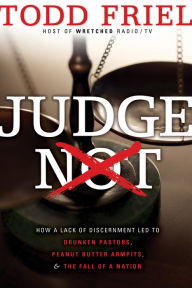
Book Review: Judge Not

Judge Not. Todd Friel. 2015. 320 pages. [Source: Borrowed]

If you're familiar with the teaching of Todd Friel, you should know exactly what to expect from this book: bold, emphatic opinions expressed with a good dose of snark.

Six out of seven parts focus on what is wrong with Christianity today, with today's church. The seventh part--let's be honest, it's just one chapter--focuses on the solution.

Part One: Discernment Disasters (3 chapters)
Part Two: Ecclesiastical Calamities (9 chapters)
Part Three: Theological Train Wrecks (7 chapters)
Part Four: Wonky Evangelical Movements (9 chapters)
Part Five: Toxic Trends (7 chapters)
Part Six: Bad Attitudes (4 chapters)
Part Seven: The Solution (1 chapter)

The book is argument driven. He makes some very bold statements from the very beginning. Statements like, "The single largest moral influence in America is the Protestant church. If American culture is ailing morally, it is because the Protestant church is ailing." And, "the church became Burger King telling the world they can have God their way. Needless to say, God is not a hamburger." Both of these statements come from the book's introduction.

In part one, Friel argues that Christians NEED to be discerning. He seeks to teach readers what discernment is and isn't. How they can put discernment into practice in their own lives.

In part two, Friel discusses mainly what churches are doing wrong--in his opinion. Here are some of the chapter titles, "Pastors Who Think Jesus Needs Help," "Happy-Clappy Church," and "Manipulative Altar Calls."

In part three, Friel turns to theology, to theological train wrecks. I personally think this section is the most important in the book. The chapters include, "Twisting Scripture," "Hearing from God," "Describing Hell Inaccurately," "Making God the Red Cross," "Giving Wrong Salvation Instructions, part one and two," and "Compromising on Creation." The two chapters on GIVING WRONG SALVATION INSTRUCTIONS make this one well worth reading.

In parts four and five, Friel focuses on movements and trends. In some ways, he is demonstrating the discernment he was talking about in the first part. He discusses a little bit of everything--from the worship band Jesus Culture to purity rings and daycare.

In the sixth part, he focuses on how bad attitudes do a disservice to Christianity. This section, I think, is important to keep in mind. I really would recommend his chapter, "Being Disgusted by Homosexuals." (He also addresses the issue of immigration.)

The seventh part is more a conclusion. In it he mainly states the obvious. (Read the Bible. Obey the Bible.) The book, in some ways, is a bit unbalanced. He spends all but five pages focusing on the negative and only five on what Christians can do about everything that is "wrong" and "messed up" with the church.

I just want to say this. When I agreed with him, I found myself really agreeing with him. When I disagreed with him, I found myself REALLY disagreeing with him. I do think he gets some things wrong. And I think he doesn't always practice what he preaches. (Who does, though?)

One place I do disagree with him is on Christian music and Christian worship music. I am curious to see how much he really, truly listens to Christian music. When he listens, does he have an open mind? OR does he listen with his snarky hat on, combing through each line, each word, always, always assuming the worst theological intentions of the SONGWRITER and the SINGER. While I wouldn't say he has a zero tolerance policy for worship music written in the past hundred years, I would say that he has a one strike and your out policy. It seems if he finds one line in one song, then he holds a grudge against the songwriter and/or the singer. If one line in one song is iffy, then, you shouldn't listen to any of that person's music ever. It might be contaminated too.

I disagree with him for several reasons. First, he seems to be presuming that hymns are always theologically better, of more substance and value. I have found bad theology in hymns as well as contemporary worship music. Hymns do not always signal sound theology. If you're going to be discerning in what you listen to, then be fair and critical of hymns as well. Second, he seems to take the worst examples and present them as the norm, as if each and every worship song is the same. There are hundreds if not thousands of worship songs. Quality varies. And while it's true a percentage of songs do fit with what he is saying, that's not to say that most of them do. Third, he outright condemns singing songs written or performed by songwriters of denominations he does not agree with. For example, he calls out Matt Maher for being Catholic, and, says ALL charismatic songs should be avoided. I believe songs should be used discriminately (with discernment) on their content alone. It's one thing to object to the lyrics of a song.

I do agree, however, on some things. Worship matters. How we worship--why we worship matters. And songs should carefully be examined and considered. I do think that the songs we sing in worship should be of good, high quality--musically and theologically. I think that our hearts and minds should be engaged together in worship. I think we have a tendency to go through the motions in church, singing the words but not meaning the words and really connecting. I do think the Holy Spirit uses music to minister to us. Not just hymns. Not just worship songs. The Spirit brings meaning to the song. In other words, anyone can sing Tis So Sweet To Trust in Jesus or Amazing Grace, but, it takes the Spirit for us to EXPERIENCE the meaning of those beloved songs.

© Becky Laney of Operation Actually Read Bible
Monday, July 4, 2016

Book Review: How Church Can Change Your Life

How Church Can Change Your Life. Josh Moody. 2015. Christian Focus Publications. 76 pages. [Source: Borrowed]

First sentence: Why another book on church?

Premise/plot: Josh Moody seeks out to answer ten commonly asked questions about church. The questions:

  • Is church only for Christians?
  • Do I need to go to church if I am a Christian?
  • Which church is the true church?
  • Why are there so many different kinds of churches?
  • What is the point of baptism and communion?
  • Why is preaching important?
  • Why is there so much politics in church life?
  • Should I go back if I have been hurt by church?
  • What should I look for in a healthy church?
  • How can I serve in a church?

Each chapter asks and answers one question. If you're skimming the book, the answers are almost always found about a paragraph or perhaps two paragraphs before the "story" section of each chapter. The first portion of each chapter explains/describes the question and ultimately answers it. The second portion of the chapter is just a story to illustrate a person who might have that question. Each chapter concludes with a few discussion questions.

My thoughts: I liked it. I liked that it was a quick and relevant read. While one could certainly read it straight through, I think it's also the kind of book that you could use as a resource and just read the chapters that you're currently interested in.

© Becky Laney of Operation Actually Read Bible

Wednesday, June 15, 2016

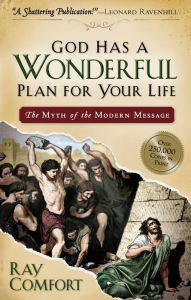
Book Review: God Has A Wonderful Plan For Your Life

God Has A Wonderful Plan For Your Life. Ray Comfort. 2010. Living Waters. 128 pages. [Source: Borrowed]

I loved reading Ray Comfort's God Has A Wonderful Plan for Your Life: The Myth of the Modern Message. The subtitle says it all in my opinion. We live in a culture and society that plays around with the gospel message, with the purity of the gospel message. Sometimes the problem isn't so much on what is being said as it is what is being left unsaid.

In Comfort's book, he argues that sinners--and let's be up front, that is what all of us are (Romans 3:23)--don't need to hear the gospel message. I'll clarify. To start with the gospel message without first starting with the law is confusing and ineffective. The good news is only good news--to their ears, to their hearts and minds--if they feel the impact of the bad news. To talk of a Savior who saves people from their sins when they don't feel lost or in need of saving, when they haven't a clue the depth of their sin makes the good news irrelevant or optional.

What the world needs is the straight-forward, never changing law. The Spirit uses the law to open our eyes, open our hearts, and bring us to our knees. Only when we've been humbled by the law, brought to the realization that we are not good enough, that we will never be good enough through our trying and striving and working and pleading and wrestling, can we come to a place of putting faith and trust in Jesus, the one who says IT IS FINISHED. The law shows us our need, the gospel shows us God's provision for our need.

I read somewhere, and I know Comfort's quoted it in one of his books or sermons, that you've got to get people lost before you can get them saved. That's certainly the spirit of this book.

Comfort is critical of the message of the twenty-first century church. A church too focused perhaps on getting people into their doors and programs. A church too focused perhaps on getting people to be happy.

Comfort calls Christians to be completely honest and upfront about what Christianity is and isn't. Christianity is not about being happy and having an abundant, prosperous life. Christianity isn't about living the dream. It is about putting Christ first and loving HIM more than you love the world, more than you love yourself. It is about delighting in Him above all else. Making him your ONE THING.

So does knowing this make a difference in how you evangelize? Should it make a difference in how you evangelize? He argues that it should. He's passionately, zealously concerned about the world, about the unsaved.

Comfort talks of their being a 95% failure rate among the newly converted. The newly converted being those that the church counts as being saved through coming forward, saying a prayer, being baptized, etc. These are church accounts and not a true spiritual reckoning perhaps. But the point he makes is this. Out of all the thousands that may profess a belief in Christ, over 95 of them will have failed--will have vanished--within a few months or within a year. This notion of "trying on" or "experimenting" with Christianity is a big, big, flop.

These statistics remind me of all the diet books I've read. Diets fail. The diet industry knows--to a certain extent, how could they not--dieting doesn't work. But they write dozens if not hundreds of books each year to sell you on their brand of dieting; each one telling you that THEIR diet is different
from anything and everything you might have tried. Buy this book. Buy into this system. It is a business. A business with a lot of repeat customers. Is religion any different really? I'm not talking about true Christianity. I'm talking religion. I'm talking about what passes for Christianity in some circles. I'm talking about all the books being published about how to get people into your church, how to get people excited about this, that, or the other thing. Focused on improving your life in a certain number of easy steps. Books focused on things that aren't necessarily wrong, just not life-and-death important. People need to be saved. People need hard truths.

One section of the book asks the question, if you could talk to the people who were going to die on September 11, 2001, what would you tell them? What message would you try to sell them or preach to them. Would it be that God is the answer to their loneliness problem? That they need Jesus and not alcohol? Would you tell them that God can help their troubled marriage? Or would you get more to the point? In our quest to be as unoffensive as possible, are we playing hide and seek with the doctrine of heaven and hell?


© Becky Laney of Operation Actually Read Bible
Friday, May 27, 2016

Book Review: The Passionate Preaching of Martyn Lloyd-Jones

Passionate Preaching of Martyn Lloyd Jones. Steven J. Lawson. 2016. Reformation Trust. 180 pages. [Source: Borrowed]

The Passionate Preaching of Martyn Lloyd-Jones is one of the biographies in Reformation Trust's Long Line of Godly Men series. This title is written by one of my favorite authors/speakers Steven J. Lawson. (I thought I loved him before watching the sermon series The Doctrines of Grace in the Gospel of John. Now I love, love, LOVE him.) I am also very fond of Martyn Lloyd-Jones. This is not my first title to read in the series, and, it won't be my last. I'd love to read as many as I can actually! I think it's a great way to approach biographies.

In the first chapter, readers get a relatively brief introduction to his life--birth through death. This is roughly twenty-five pages! I'd say it was a just-right amount of biographical context.

In the second chapter, the focus shifts to the ministry. The argument is that ministers should be sovereignly called. The chapter includes six distinguishing marks of divine calling. 1) Inner compulsion 2) Outside influence 3) Loving concern for others 4) Overwhelming constraint 5) Sobering humility 6) Corporate Confirmation. Lloyd-Jones did not believe that theological training in a seminary was necessary or always beneficial. He also did not believe in lay preaching. All are called to be witnesses but not all called to PREACH. Preaching is not the same as teaching or witnessing.

In the third chapter, the focus shifts to the Bible--the Word of God--and the role the Bible should have in the life of the minister and the life of the church. Many chapters within this book focus on preaching from the Bible, expository preaching from the Bible, going verse-by-verse-by-verse through whole books of the Bible. But this chapter focuses more generally on the authority and power of the Bible. The Bible is divine, the very word of God. I loved, loved, loved this chapter.
We can be perfectly certain that the Church has lost her authority and power from the moment she ceased to firmly believe in the authority of the Word of God. ~ Lloyd-Jones
From the moment that the idea began to gain currency that the Bible was the history of the quest of mankind for God, rather than God's revelation of Himself and the only way of salvation to mankind, the Church began to decline and to wane in her influence and in her power. From the time the Church threw overboard the great evangelical doctrines, and substituted for them a belief in the moral and spiritual evolution of mankind, and began to preach a social gospel rather than a personal salvation--from that moment church attendance really became a mere matter of form, or a merely pleasant way of gratifying one's appetite for ceremony, ritual, oratory, and music. ~ Lloyd-Jones
We all therefore have to face this ultimate and final question: Do we accept the Bible as the Word of God, as the sole authority in all matters of faith and practice, or do we not? Is the whole of my thinking governed by Scripture, or do I come with my reason and pick and choose out of Scripture, or do I come with my reason and pick and choose out of Scripture and sit in judgment upon it, putting myself and modern knowledge forward as the ultimate standard and authority? The issue is crystal clear. Do I accept Scripture as a revelation from God, or do I trust to speculation, human knowledge, human learning, human understanding, and human reasons OR, putting it still more simply, Do I pin my faith to, and subject all my thinking to, what I read in the Bible? Or do I defer to modern knowledge, to modern learning, to what people think today, to what we know at this present time which was not known in the past? It is inevitable that we occupy one or the other of those two positions. ~ Lloyd-Jones
Do not read the Bible to find texts for sermon, read it because it is the food that God has provided for your soul, because it is the Word of God, because it is the means whereby you can get to know God. Read it because it is the bread of life, the manna provided for your soul's nourishment and well-being. ~ Lloyd-Jones
The purpose of studying the Scripture is to arrive at its doctrine. ~ Lloyd-Jones
I believe the paramount and most urgent duty at the moment is not to defend the Bible, not to argue about the Bible--I believe we are called upon at the present moment to declare the Bible: to announce the eternal truths contained in the Bible. ~ Lloyd-Jones
The fourth chapter begins by making a distinction between teaching and preaching. How did Martyn Lloyd-Jones define the terms "preacher" and "preaching"?
The first thing, obviously, is that he is a speaker. He is not primarily a writer of books, he is not an essayist or a literary man; the preacher is primarily a speaker. So if the candidate has not got the gift of speech, whatever else he may have, he is not going to make a preacher. He may be a great theologian, he can be an excellent man at giving private advice and counseling, and many other things, but by basic definition, if a man has not got the gift of speech he cannot be a preacher. ~ Lloyd-Jones
The business of the preacher is to bring the Bible alive to them, to show them what is in it to thrill them as they hear it from him. ~ Lloyd-Jones
It then shifts to focus specifically on expository preaching. Did you know there are three types of expository preaching? Experiential preaching--expository preaching that assumes the audience is Christian and teaching application--how to live a Christian life. Evangelistic preaching--expository preaching directed to unbelievers. Instructional preaching--expository preaching designed to teach doctrines and theology.

The fifth chapter makes distinctions between lectures and sermons. This chapter would be completely practical for ministers. It is focused on sermon preparations, etc. For example, the necessity to have at least a sermon outline, if not a full draft of what one will say.

The sixth chapter is about how all sermons should be divinely-focused and seek at all times to unveil God. This may just be the best chapter in the book. Maybe. They're all so good though!
I can forgive a man a bad sermon, I can forgive the preacher almost anything if he gives me a sense of God, if he gives me something for my soul, if he gives me the sense that though he is inadequate in himself, he is handling something which is very great and glorious, if he gives me some dim glimpse of the majesty and glory of God, the love of Christ my Savior, and the magnificence of the gospel. If he does that, I am his debtor, and I am profoundly grateful to him. ~ Lloyd-Jones
The goal of preaching is to plant within people the knowledge of God, a sense of wonder for His divine holiness, and an overwhelming realization of His ardent love for sinners. ~ Lawson
The goal of all our seeking and all our worship and all our endeavor should not be to have a particular experience; it should not be to petition certain blessings; it should be to know God Himself--the Giver not the gift, the source and the fount of every blessing, not the blessing itself. ~ Lloyd-Jones
The Word of God is, first and foremost, a presentation of the awesome majesty of God. ~ Lawson
The preaching of God must begin with expounding the absolute holiness of God. Lloyd-Jones said every other area of truth must be viewed in light of this divine attribute. ~ Lawson
You will never have a knowledge of sin unless you have a true conception of the holiness of God. ~ Lloyd-Jones
It is the holiness of God that demands the cross, so without starting with holiness there is no meaning in the cross. It is not surprising that the cross has been discounted by modern theologians; it is because they have started with the love of God without His holiness. It is because they have forgotten the life of God, His holy life, that everything in Him is holy; with God love and forgiveness are not things of weakness or compromise. He can only forgive sin as He has dealt with it in His own holy manner, and that is what He did upon the cross. ~ Lloyd-Jones
The seventh chapter focuses on doctrine and theology. Preachers should have a good and solid grasp of systematic theology and biblical theology.
Preaching must always be theological, always based on a theological foundation...there is no type of preaching that should be non-theological. ~ Lloyd-Jones
Each doctrine in Scripture is inseparably joined to every other doctrine. Preaching must be aimed at teaching what he called "doctrinal certainties" that unify the entire Bible in one cohesive body of truth. ~ Lawson
It is our business to face the Scriptures. One advantage in preaching through a book of the Bible, as we are proposing to do, is that it compels us to face every single statement, come what may, and stand before it, and look at it, and allow it to speak to us. ~ Lloyd-Jones
The eighth chapter focuses on Lloyd-Jones being Reformed. This chapter specifically focuses on tracing the doctrines of grace through his works.
Instead of labeling the doctrine he was preaching, Lloyd-Jones opted to simply explain the text of Scripture. ~ Lawson
The ninth chapter is the final chapter. It focuses on the Holy Spirit and the role of the Spirit both in the minister and in the church.
The Holy Spirit must be active in true preaching, active not only in owning the truth as it is heard, but active in anointing the preacher himself. ~ Lloyd-Jones
Lloyd-Jones insisted that without the power of the Spirit, a man in the pulpit is merely reading his notes and repeating words. ~ Lawson
© Becky Laney of Operation Actually Read Bible

Monday, May 16, 2016

Book Review: The Rhyme Bible Storybook


The Rhyme Bible Storybook. L.J. Sattgast. Illustrated by Laurence Cleyet-Merle. 1996/2012. Zonderkidz. (Zondervan) 344 pages. [Source: Borrowed]

First "sentence":
The world was once/ As dark as night,/ But then God said/ "Let there be light!/ The light appeared;/ It shone so bright!/ And so began/ The day and night.
This children's bible story book contains twenty-five stories: seventeen from the Old Testament, eighteen from the New Testament. There are seven stories originating from Genesis. Two stories are about Moses. Joshua, Samuel, David, Elijah, Jonah, Daniel, Esther, and Nehemiah all get one story apiece. The New Testament stories come from the four gospels Matthew, Mark, Luke, and John. Readers learn about Jesus from his miraculous birth to his ascension into heaven.

Each story is told completely in rhyme. (That is one of the reasons this bible is so unique.) While it might be a stretch to say that every single poem is creatively unique and thoroughly engaging, it would be more than fair to say that the author does a good job with narrative voice. Some stories--or poems--I really, really love. Some I merely liked.

"Jonah Goes To Ninevah"
God said to Jonah,
"I have a little task.
Get up and go to Ninevah
And do what I ask.
The people are wicked,
So tell them to obey."
But Jonah got on board a ship
And sailed the other way~
(Uh-oh, Jonah,
You better go to Ninevah!) p. 136-137
The stories vary in length between eight to twelve pages. The book has a generous proportion of illustrations providing a nice balance between text and illustration.

I really enjoyed reading this one.

© Becky Laney of Operation Actually Read Bible
Monday, April 11, 2016

Book Review: Why Bother With Church?

Why Bother With Church? Sam Allberry. 2016. Good Book Company.  [Source: Borrowed]

Why Bother With Church is a short book, definitely a quick read. It is part of The Good Book Company's Questions Christians Ask series.

The book defines what a church is and seeks to explain why it is important for individual Christians to be a part of a local church family. Furthermore, it goes behind-the-scenes to discuss how a church functions and what makes a good church. The final chapter focuses on how YOU can be a good church member and serve the body of Christ.

The book is straight-forward, well-organized, short and straight to the point. This is how he defines church: "the church is the gathering in a particular location of God's people, as his people, in his presence, to hear and respond to his word" (17). Does it surprise you to learn that church is not a building, but, a people!

Favorite quote: "It is the truth of God's Word that brings the church into existence and shapes all that she is to be. But there is also a way in which God's truth depends on the church: not that the church approves or decides on what the truth is, but that the church is the means by which God's truth reaches into his world. The church is the earthly outlet for God's truth, the embassy that represents him" (19).

Saturday, March 12, 2016

Book Review: Healed of Cancer

Healed of Cancer. Dodie Osteen. 1986/2003. Lakewood Church. 81 pages. [Source: Borrowed]

Do I believe that Dodie Osteen had liver cancer and was miraculously cured of that cancer? Yes, I don't call into question those (bare) facts at all. I do not even disagree with her decision to go home instead of to stay in the hospital, or, to not seek further medical treatment. In her case, it makes sense. She was told that without treatment, she would probably live two to three weeks, and, with chemotherapy she would probably live three to five weeks. The treatment options were almost nonexistent. For reference, this was in 1981, so quite a few decades ago!

Dodie Osteen was not going home to die, however, she was going home to live. She says her healing (practically) began the moment she left the hospital as she and her family--her immediate family, her extended family, her church family--began to pray for her healing. For the record, she does recognize a few vital facts: every type of cancer is different; some types of cancer can be treated (should be treated) the traditional way through medical treatment under the care of doctors and surgeons; that she is not advocating that every single person--no matter the diagnosis--refuse medical treatment. However, she does think every person has the right to refuse treatment so they can trust in God alone to heal them.

The book makes clear that the author took her healing seriously, as did her family. She refused to rest or to relax. She went so far as to say in this little booklet that taking a nap or "sleeping in" in the mornings would be a sign of unbelief or lack of faith. To her way of thinking, to show a lack of faith would be disastrous. How could God heal her if she admitted her weakness, her exhaustion, her pain?! The only way to be healed was to live as if the healing was a done deal, a finished matter. No taking it easy, no change of routine, no slackening in the work load, no asking for help, no allowing anyone to help, no admitting how her body--or her mind--was actually feeling. I want to make clear this was HER thinking, HER conclusion.

The premise of the book is simple: the author believes that she is alive only because of the Bible. That it was by claiming--confessing, professing, clinging--"healing verses" that saved her life. I too believe that there is life to be found in the Word of God, and that the Bible is a powerful, authoritative book--a book like no other. But there are differences of opinion. BIG differences of opinion.

The first section tells her story. It is the longest chapter in the book. The second chapter--or section--shares 40 verses (often taken out of context, though not always*) that she used to "win the battle over cancer." These are verses that she still prays daily to keep her cancer from coming back. She advocates believers speaking directly to the devil and also to the cancer cells in their bodies. Believers are to rebuke the cancer cells and claim their healing. The book prints out the healing verses, and each verse has a sentence or two of commentary by the author. The third chapter is composed of three statements by physicians all supporting two things: she had cancer; she now does not have cancer. The fourth chapter is frequently asked questions. In this section she reiterates again that every single person is different, that every type of cancer is different, that she is not saying that everyone should refuse medical treatment.

So. I mentioned there are some differences of opinion...

I believe that God can heal, that He is certainly more than capable of healing people. God is all-powerful, nothing is beyond Him, nothing is impossible for Him. But I do not believe, like the author, that when a person is not healed that it is a sign of either them "choosing to be sick" instead of "choosing to have abundant life." In other words, it is not a lack of faith--a sign of unbelief--if a believer is not healed or even dies. Christians can die of cancer; their death is not the result of their lack of faith. It is not the weakness of a believer's faith that leads to death. The author assumes that it is always, always, always the will of God for believers to live--to live a long, abundant, happy, free-from-pain-and-suffering life. That it couldn't possibly be within God's will for believers to die, to be sick, to suffer pain, to be weak. But is this true? Or is the author picking and choosing verses to back her up--to back her theological worldview?

I'll be happy to admit that every person with a theological worldview--which is essentially almost everyone in the faith--can be guilty of this. Some may be a lot guilty; some may be a little guilty. But I think the only way to live a life pleasing to God is to embrace ALL of Scripture, to embrace God's WHOLE revelation. Furthermore, it is crucial to read the Bible in context. Not just to pull a verse here and there. OR in the author's case half of a verse here and there. We are not to pack a verse full of the meaning we want it have, but to let the verse mean exactly what it means--no more, no less.

There's a chance you think I might be exaggerating. I'll share some quotes so you know that I'm not exaggerating the author's position:
Many people suffer and die needlessly because they do not know what the Word of God says about healing. (p. 54, her "commentary" on 2 Corinthians 1:20)
When I was sick, I had to cast down imaginations concerning symptoms, and, you will too. Make your thoughts obey you. (p. 55, her "commentary" on 2 Corinthians 10:4-5)
Then it lists the blessings and the curses. God tells us to diligently obey and observe carefully His commandments. That is when we receive from him. (p. 39, her "commentary" on Deuteronomy  28:1-2)
I prayed 'Father, I plead my case to You and I ask You to show me things that have been wrong in my life that I can correct. (p. 43, her "commentary" on Isaiah 43:25-26)
If you follow His commandments, forgiving others, tithing, obeying His commandments, then God will bless you. (p. 47, her "commentary" on Malachi 3:10)
It is God's will for you to be well. If you do not believe that, you need to change your thinking. It is not God who has made you sick, it's the devil." (p. 48, her "commentary" on Matthew 8:2-3)
You can personalize this verse and read it this way: "Whatever I stop on earth will be stopped in heaven, and whatever I permit and allow on earth will be permitted and allowed in heaven." (p. 49, her "commentary" on Matthew 18:18)
The Bible says we are snared by the words of our mouth (see Proverbs 6:2). So watch what you say. Confess, "I believe I am healed," and you will be. (p. 50, her "commentary" on Mark 11:22-23)
Believers should pray for healing. I am not saying that they shouldn't. But to assume--or to presume or demand--that the only possible answer to their prayer is complete healing is not quite right or sound.

God does teach through sickness, weakness, pain, suffering, affliction. God, I think makes it clear that he does use our pain, suffering, weakness, sickness to transform us into who he would have us to be. He is shaping us through our circumstances, and using us to bring glory to His name.  Our lives do have purpose. Being weak is not a sign of weak faith.

The author is adamant this is not so. That our sickness, our suffering, does not serve a purpose except to reveal our lack of faith or our disobedience which is "blocking" our healing.

God has never promised us a pain-free, affliction-free life! Just the opposite! In this world we will have trouble, we will suffer. We can choose to praise God through the trials and sufferings or choose to learn nothing and become angry, bitter, and ungrateful. God has promised to be with us, to comfort us, to walk with us no matter the circumstance. But we are to expect some groans in this life.

Here are some Bible verses that I would like to highlight.
Blessed be the God and Father of our Lord Jesus Christ, the Father of mercies and God of all comfort, who comforts us in all our affliction, so that we may be able to comfort those who are in any affliction, with the comfort with which we ourselves are comforted by God. For as we share abundantly in Christ's sufferings, so through Christ we share abundantly in comfort too. If we are afflicted, it is for your comfort and salvation; and if we are comforted, it is for your comfort, which you experience when you patiently endure the same sufferings that we suffer. Our hope for you is unshaken, for we know that as you share in our sufferings, you will also share in our comfort. 2 Corinthians 1:3-7
Three times I pleaded with the Lord about this, that it should leave me. But he said to me, “My grace is sufficient for you, for my power is made perfect in weakness.” Therefore I will boast all the more gladly of my weaknesses, so that the power of Christ may rest upon me. For the sake of Christ, then, I am content with weaknesses, insults, hardships, persecutions, and calamities. For when I am weak, then I am strong. 2 Corinthians 12:8-10
The Lord will fulfill his purpose for me; your steadfast love, O Lord, endures forever. Do not forsake the work of your hands. Psalm 138:8
I wait for the Lord, my soul waits, and in his word I hope; my soul waits for the Lord more than watchmen for the morning, more than watchmen for the morning. Psalm 130:5-6
Heal me, O Lord, and I shall be healed; save me, and I shall be saved, for you are my praise. Jeremiah 17:14
And he said, “Naked I came from my mother's womb, and naked shall I return. The Lord gave, and the Lord has taken away; blessed be the name of the Lord.” Job 1:21
Though the fig tree should not blossom, nor fruit be on the vines, the produce of the olive fail and the fields yield no food, the flock be cut off from the fold and there be no herd in the stalls, yet I will rejoice in the Lord; I will take joy in the God of my salvation. Habakkuk 3:17-18
Likewise the Spirit helps us in our weakness. For we do not know what to pray for as we ought, but the Spirit himself intercedes for us with groanings too deep for words. And he who searches hearts knows what is the mind of the Spirit, because the Spirit intercedes for the saints according to the will of God. And we know that for those who love God all things work together for good, for those who are called according to his purpose. For those whom he foreknew he also predestined to be conformed to the image of his Son, in order that he might be the firstborn among many brothers. And those whom he predestined he also called, and those whom he called he also justified, and those whom he justified he also glorified. Romans 8:26-30
What then shall we say to these things? If God is for us, who can be against us? He who did not spare his own Son but gave him up for us all, how will he not also with him graciously give us all things? Who shall bring any charge against God's elect? It is God who justifies. Who is to condemn? Christ Jesus is the one who died—more than that, who was raised—who is at the right hand of God, who indeed is interceding for us. Who shall separate us from the love of Christ? Shall tribulation, or distress, or persecution, or famine, or nakedness, or danger, or sword? As it is written, “For your sake we are being killed all the day long; we are regarded as sheep to be slaughtered.” No, in all these things we are more than conquerors through him who loved us. For I am sure that neither death nor life, nor angels nor rulers, nor things present nor things to come, nor powers, nor height nor depth, nor anything else in all creation, will be able to separate us from the love of God in Christ Jesus our Lord. Romans 8:31-39 
Rejoice in the Lord always; again I will say, rejoice. Philippians 4:4
Not that I am speaking of being in need, for I have learned in whatever situation I am to be content. I know how to be brought low, and I know how to abound. In any and every circumstance, I have learned the secret of facing plenty and hunger, abundance and need. I can do all things through him who strengthens me. Philippians 4:11-13
I believe that I shall look upon the goodness of the Lord in the land of the living! Wait for the Lordbe strong, and let your heart take courage; wait for the Lord! Psalm 27:13-14
The Lord is my strength and my shield; in him my heart trusts, and I am helped; my heart exults, and with my song I give thanks to him. Psalm 28:7
*Exodus 15:26, Exodus 23:25, Deuteronomy 7:15; Deuteronomy 28:1-2, Deuteronomy 30:19, Joshua 21:45, 1 Kings 8:56b, Psalm 89:34, Psalm 91:16, Psalm 103:1-5, Psalm 105:37, Psalm 107:20, Psalm 118:17, Proverbs 4:20-22, Isaiah 41:10, 13; Isaiah 43:25-26, Isaiah 53:5; Jeremiah 1:12, Jeremiah 30:17, Hosea 4:6a, Joel 3:10b; Nahum 1:9b, Malachi 3:10; Matthew 8:2-3, Matthew 8:17, Matthew 18:18, Matthew 18:19, Matthew 21:21-22; Mark 11:22-23; Mark 11:24, Mark 16:17-18, Luke 10:19, John 9:31; John 10:10; Romans 4:19-21; Romans 8:11; 2 Corinthians 1:20; 2 Corinthians 10:4-5, Galatians 3:13-14, Ephesians 6:10-13, Philippians 2:13, 2 Timothy 1:7, Hebrews 4:12, Hebrews 10:23; Hebrews 10:25; Hebrews 10:35, Hebrews 11:11, Hebrews 13:8, James 1:5, James 3:17, James 4:7-8, James 5:14-15, 1 Peter 2:24, 1 Peter 5:7-9; 1 John 3:21-22; 1 John 5:14-15, 3 John 2, Revelation 12:11

© Becky Laney of Operation Actually Read Bible